Begin Your Forever in Timeless Egypt
Egypt Honeymoon Packages
Celebrate your love with a private, tailor-made Egypt honeymoon package designed for unforgettable moments. Drift along the Nile at sunset, wander through ancient temples, and unwind in handpicked boutique hotels. With your own guide, personal driver, and 24/7 support, your honeymoon becomes a seamless blend of romance, discovery, and pure Egyptian magic.
How to Approach Your Egypt Honeymoon
Two ready-made honeymoon itineraries sit above. Either is a strong starting point. Any of our other Egypt tours can also be tuned into a honeymoon at the planning stage.
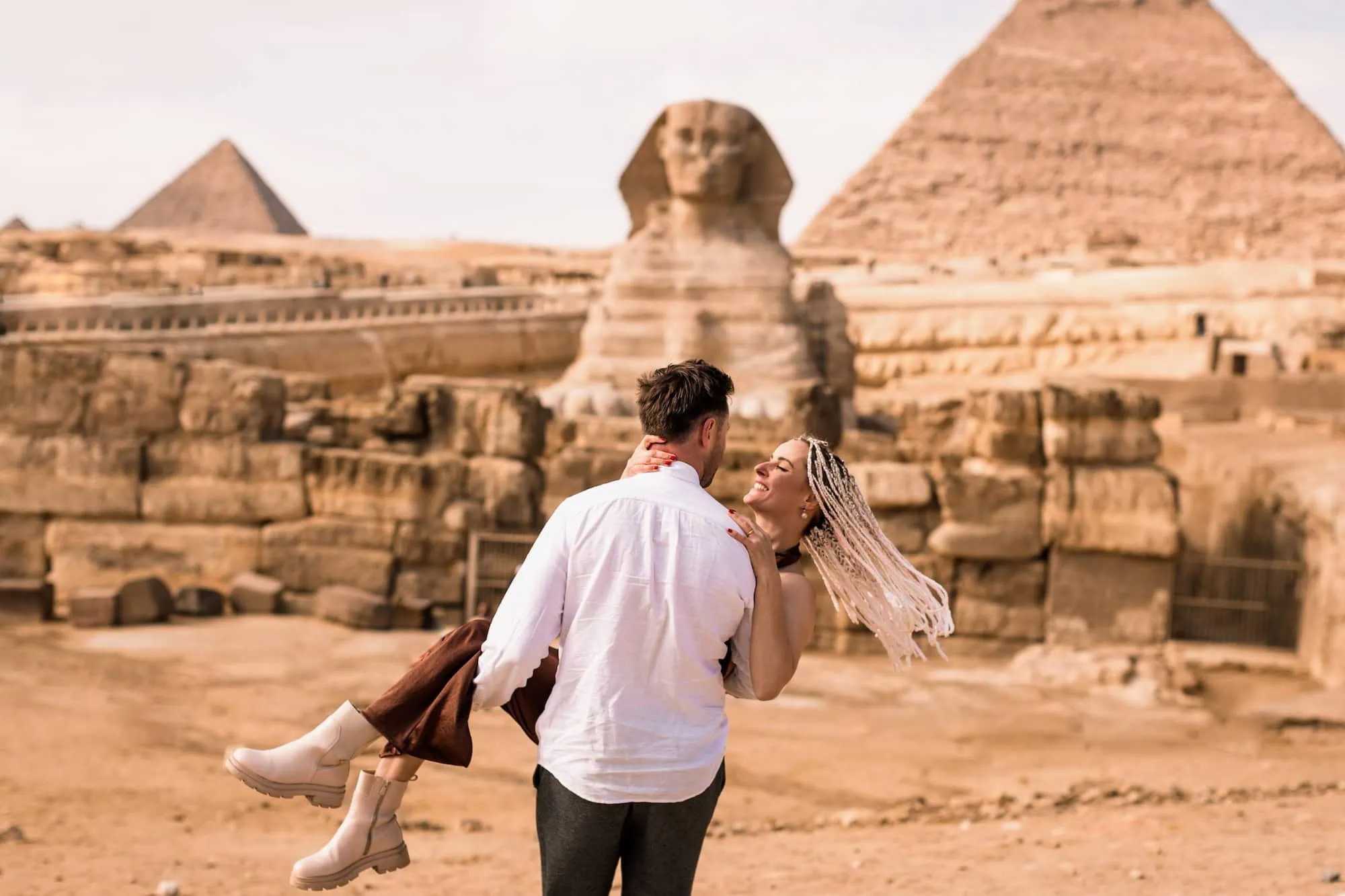
The 8-Day Cairo & Nile Cruise is our most popular honeymoon. Three days in Cairo and at the Pyramids, then a 4-day Luxor-to-Aswan cruise on a 5-star ship. The 12-Day version adds Abu Simbel and more time at each site. Both are private from day one.
Either can be upgraded with honeymoon touches:
- Suite cabin on the Nile cruise (instead of standard)
- Hotel room upgrade at check-in
- Private sunset felucca for two
- Candlelit dinner arrangement (rooftop, Nile-side, or at the desert camp)
- Couples’ spa treatment on the Red Sea
- Welcome touches like champagne, flowers, or cake in the room
All bookable. We just need to know at the planning stage so we can hold the right rooms and brief the right people.
Or start from a blank page. We’ve been planning Egypt trips since 1955 and we’re TripAdvisor Travelers’ Choice winners 2020–2025. A Travel Concierge builds your trip from one conversation. Seven days or fifteen. Cairo-only or with the Red Sea. Egypt plus Jordan. A slow dahabiya instead of a luxury Nile ship. Hot air ballooning at sunrise, the Old Cataract Hotel, a White Desert overnight. Custom quote within 1 to 12 hours.
The rest of this article covers timing, romantic moments, and where to go.
Table of Contents
The Four Sides of Egypt Honeymoon Packages
Most Egypt honeymoons combine some mix of these four. The best ones know which to weight.
1. Private Sites, Private Pace
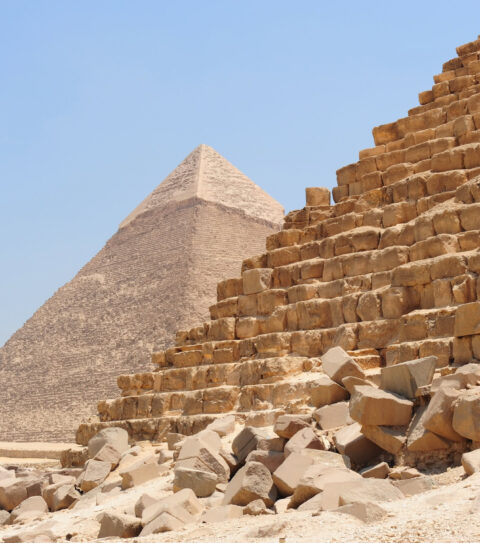
The romance of Egypt’s ancient sites isn’t really about the monuments. It’s about the way you experience them. Every tour we run is private from the start: just the two of you with a private Egyptologist guide and your own driver, in an air-conditioned vehicle, with our 24/7 support always reachable. No coach group. No fixed pace. No one waiting on you. Picture standing inside the Great Pyramid with the chambers explained quietly to just the two of you, or wandering Karnak in the late afternoon while the columns turn gold.
Whatever your language, you’ll be matched with an Egyptologist guide who speaks it — English, Italian, Spanish, Portuguese, German, French, and others available on request.
2. Nile Cruises Built Around You
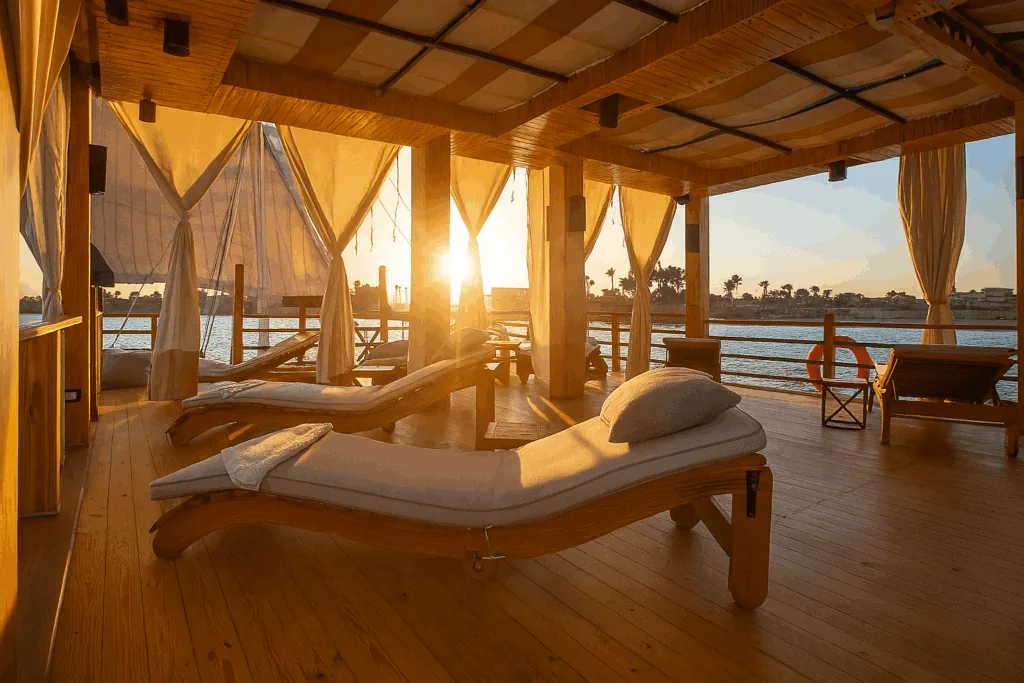
The Nile cruise is the structural backbone of most honeymoons we build. You unpack once, the boat moves at night, and each morning brings a new temple followed by an afternoon by the rooftop pool. Two cruise styles work well for couples.
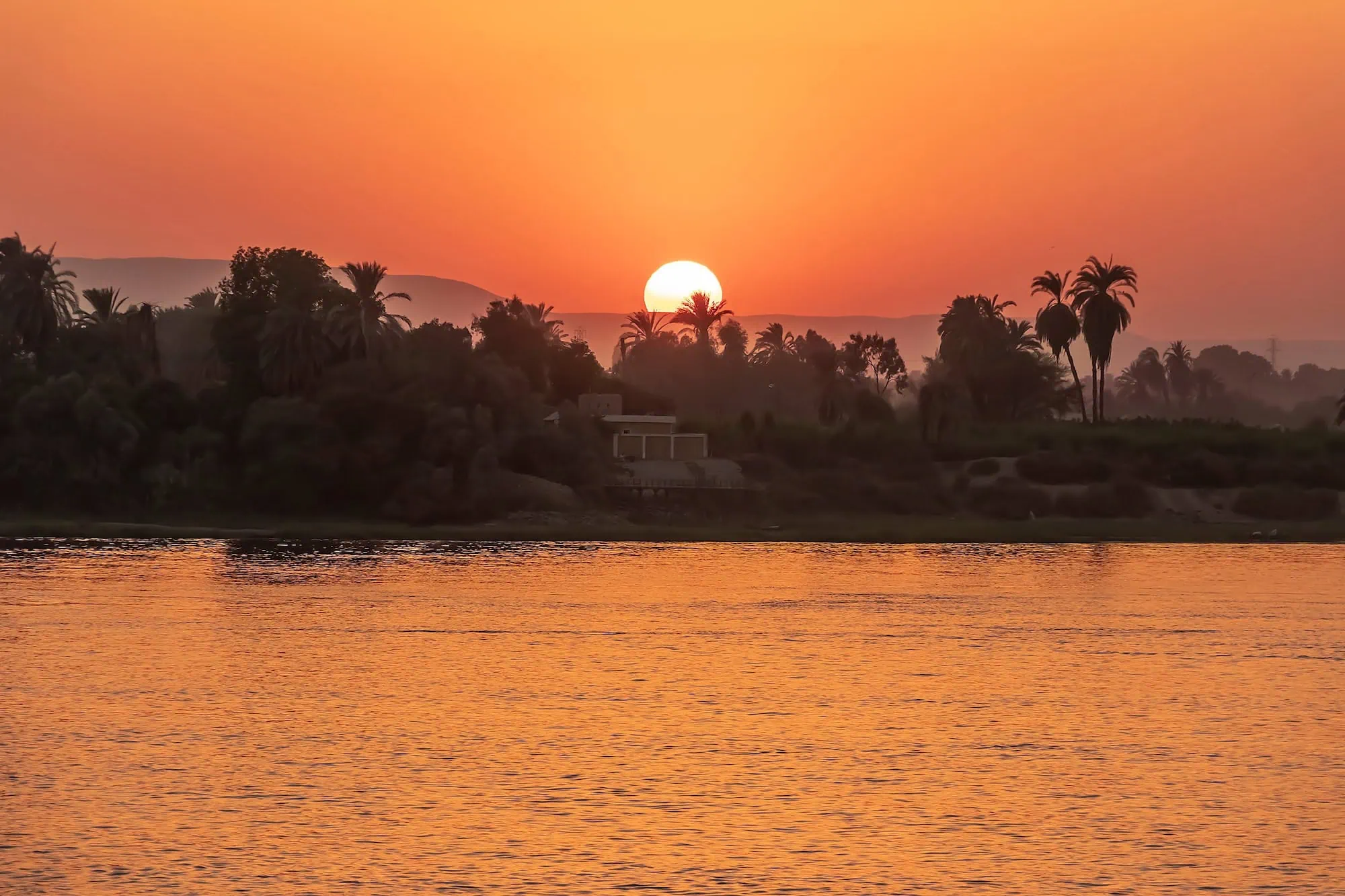
Luxury Nile Cruises carry 50–150 guests on refined 5-star ships sailing between Luxor and Aswan. Suite cabins with panoramic windows or balconies are the honeymoon upgrade we’d suggest first; they sell out earliest, so booking the right cabin category at booking time matters. Onboard: pool decks, evening folkloric performances, traditional Arabic dining, spa services. Included shore excursions are small group format (around 12 guests sharing a guide with fellow passengers); fully private excursions can be arranged on request.
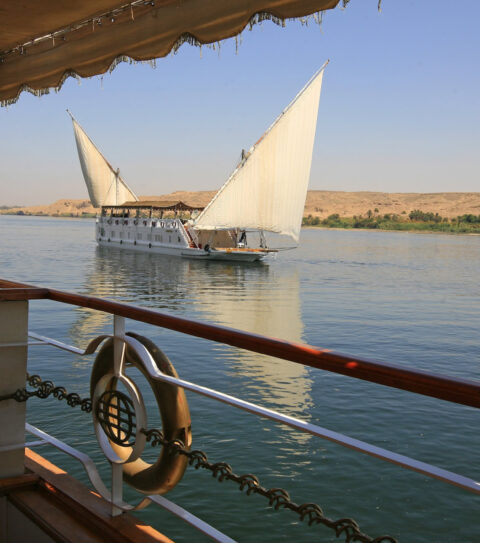
Dahabiya Nile Cruises are the slow-luxury alternative. Eight to sixteen guests on a traditional twin-mast sailing vessel, no diesel engine, sailing between Esna or Luxor and Aswan past quieter villages and reaches the bigger ships can’t access. Because the whole boat is one group, the experience feels essentially private, and the few onboard couples often have the deck and dining room to themselves between meals. Outside the cruise itself, all your land touring in Cairo, Luxor city, and Aswan city is fully private.
3. Desert Camps and Star-Heavy Skies
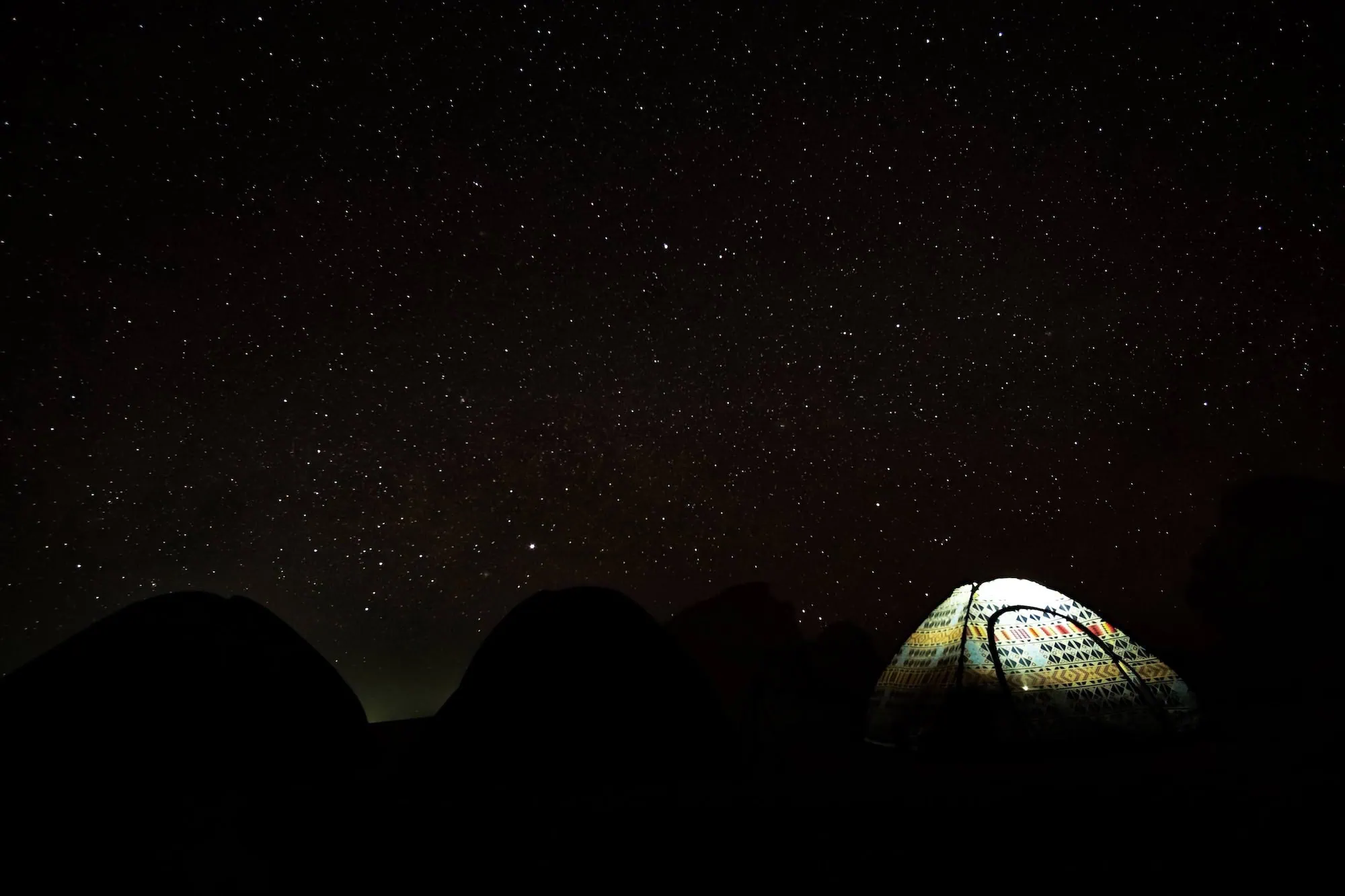
The White Desert, three hours west of Cairo, is the trip’s wildcard. Surreal chalk formations, no light pollution, a sky that genuinely does what travel writers claim it does. We arrange overnight camps with proper bedding, a chef-cooked dinner, and a Bedouin host who’ll boil tea over a fire while pointing out the constellations the pharaohs sailed by. It’s a one or two-night extension to the standard Cairo–Nile circuit, and most couples who do it list it as the trip’s quiet surprise. Adventure without the rough edges.
4. The Red Sea, When You’re Ready to Slow Down
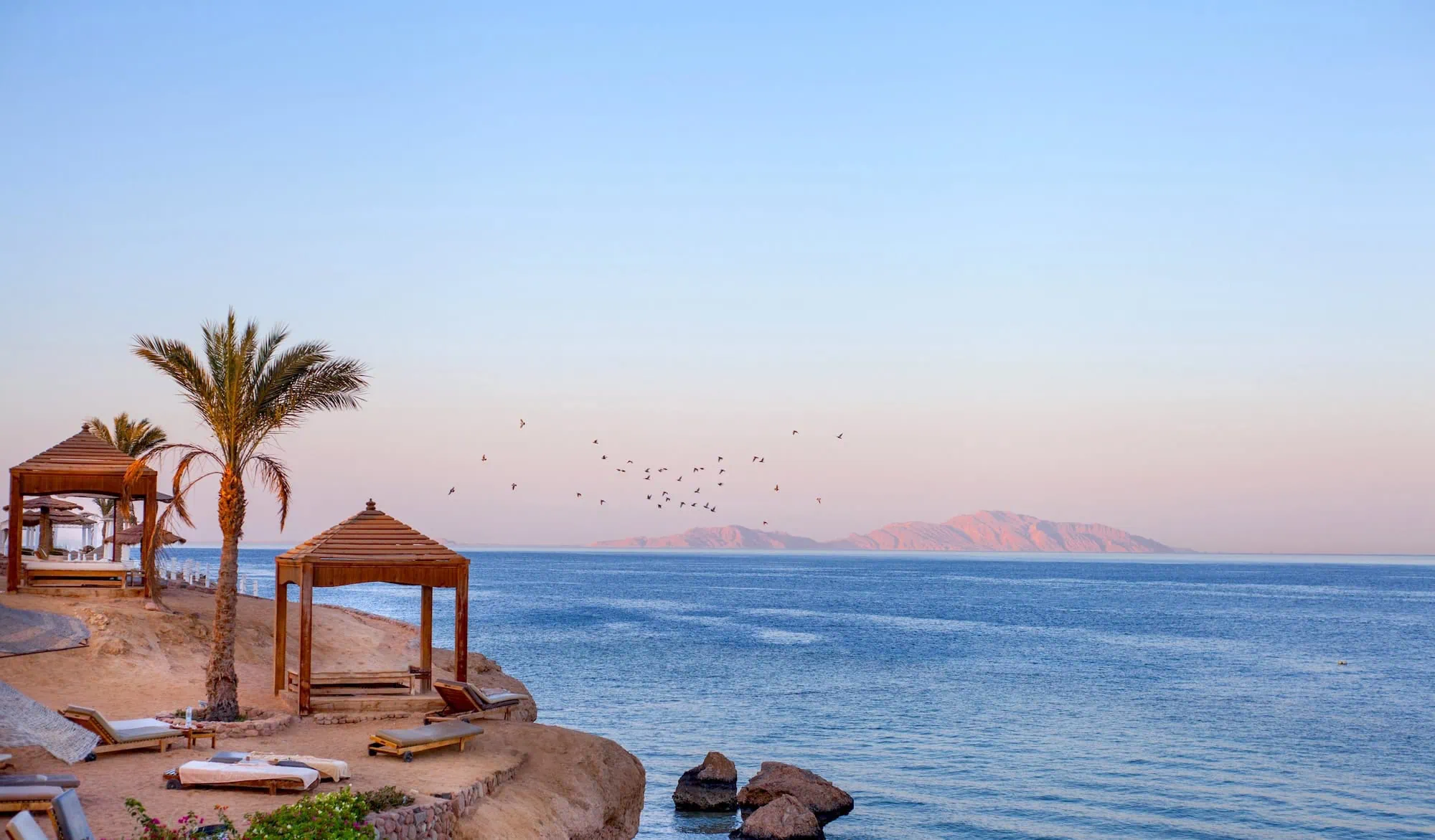
After eight or ten days of pharaohs and temples, the Red Sea is the trip’s exhale. Hurghada, Sharm El Sheikh, and Marsa Alam each work for different couples. Hurghada is the largest with the widest hotel and dive-centre selection. Sharm El Sheikh has world-class house reefs (clownfish and turtles five metres from shore, often) and dramatic Sinai mountain backdrops. Marsa Alam is the quietest, suited to couples who want fewer crowds and don’t mind a longer transfer. Pair any of them with Cairo and a Nile cruise for the full Combined Cairo, Nile Cruise & Red Sea itinerary.
When Should You Actually Go?
October to April is the simple answer. Here’s what each window actually feels like, and which months reward couples specifically.
October through April offers ideal weather, with daytime temperatures of 20–25°C (68–77°F) and cool, comfortable evenings. Summer months can exceed 35°C (95°F), making early-morning starts essential, though our private tours adjust pacing accordingly. Within the comfortable window, four sub-seasons offer slightly different things.
October and March are the sweet spots. Comfortable temperatures, hot air balloon flights running reliably over Luxor’s West Bank, Nile water levels ideal for cruise operations, and fewer European holidaymakers than December and February. We push couples toward these two months when their dates are flexible.
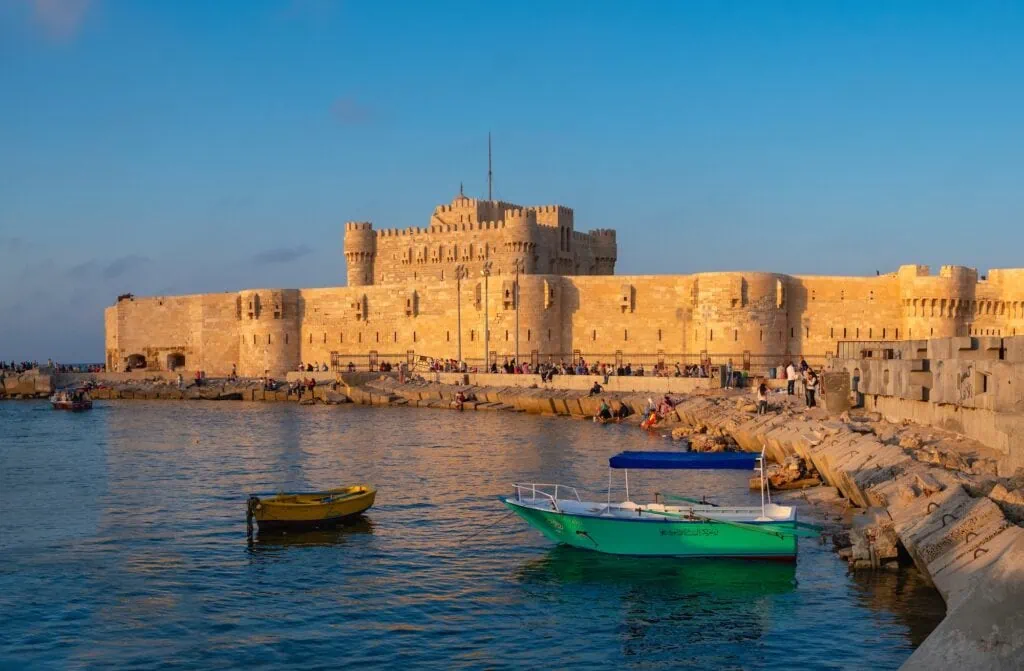
November through February brings cooler days (rarely above 20°C / 68°F at midday, evenings cool enough for a light jacket on the cruise sun deck). Christmas and New Year’s weeks are popular and book up six months ahead. Egypt’s winter sun is gentler, photographs are softer, and Alexandria’s Mediterranean coast becomes more enjoyable than in shoulder season.
April and May stay comfortable with longer daylight, though late April starts pushing toward summer heat in Aswan and the desert.
June through September is genuinely hot. Some couples still travel then: fewer crowds at every site, lower hotel rates, the Nile cruise fully air-conditioned. We shift the schedule to 6:30 a.m. starts, midday hotel breaks, and late-afternoon temple visits.
For honeymoons specifically, book 3 to 6 months ahead during shoulder season and 6 to 9 months ahead during Christmas, Easter, and February half-term. Suite cabins on Nile cruises sell out earliest.
The Moments That Tend to Define the Trip
The standouts couples write home about. Most honeymoon itineraries weave at least three or four into the trip.
Some Egypt moments do the photographic work. Some do the emotional work. The honeymoon-defining ones tend to do both at once.
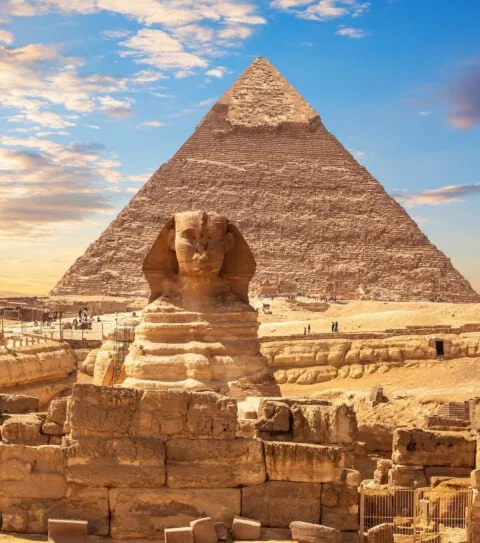
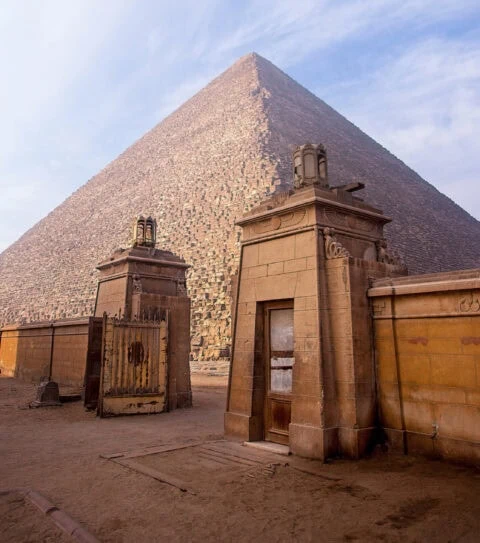
Standing inside the Great Pyramid together. The chambers are quiet, the acoustics deep, and there’s a strange weight to being inside something built 4,500 years ago. The visit takes 10 minutes. The feeling lasts.
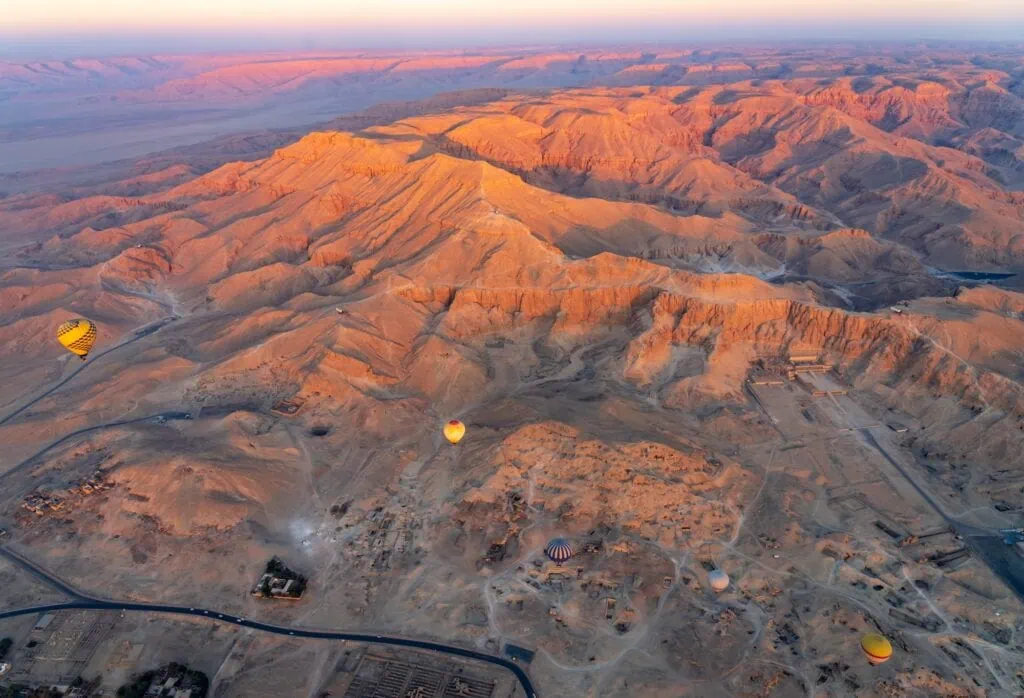
Sunrise hot air ballooning over Luxor’s West Bank. A 4:30 a.m. start, then drifting silently above the Valley of the Kings as the desert turns from purple to gold. Most flights conclude with a champagne breakfast on landing. Worth the early start.
A private felucca at golden hour. Felucca sailboats are unchanged in design for centuries. The wind in the cotton sail, no engine, just the gentle slap of water against wood. Booking a private felucca for two (rather than the standard shared) is one of the upgrade calls that genuinely changes the experience. Aswan and Luxor both have good launching points.
Sound and light shows after dark. The Karnak and Philae complexes both run carefully orchestrated evening shows that turn the temples into illuminated theatre. Romantic without trying to be.
A night under the desert sky. The White Desert and the Western Desert generally offer some of the cleanest night skies you’ll ever sit under. Our overnight camps include comfortable bedding, gourmet dinner, and a guide who knows the constellations.
Candlelit dinners arranged on request. A rooftop in Cairo, a Nile-view terrace in Aswan, the deck of your cruise ship after the other guests have turned in, or a setup at the desert camp. Tell us the night you want it and we book the setting.
Where to Actually Go
The four-city core, plus the additions that turn a holiday into a honeymoon.
Cairo and Giza
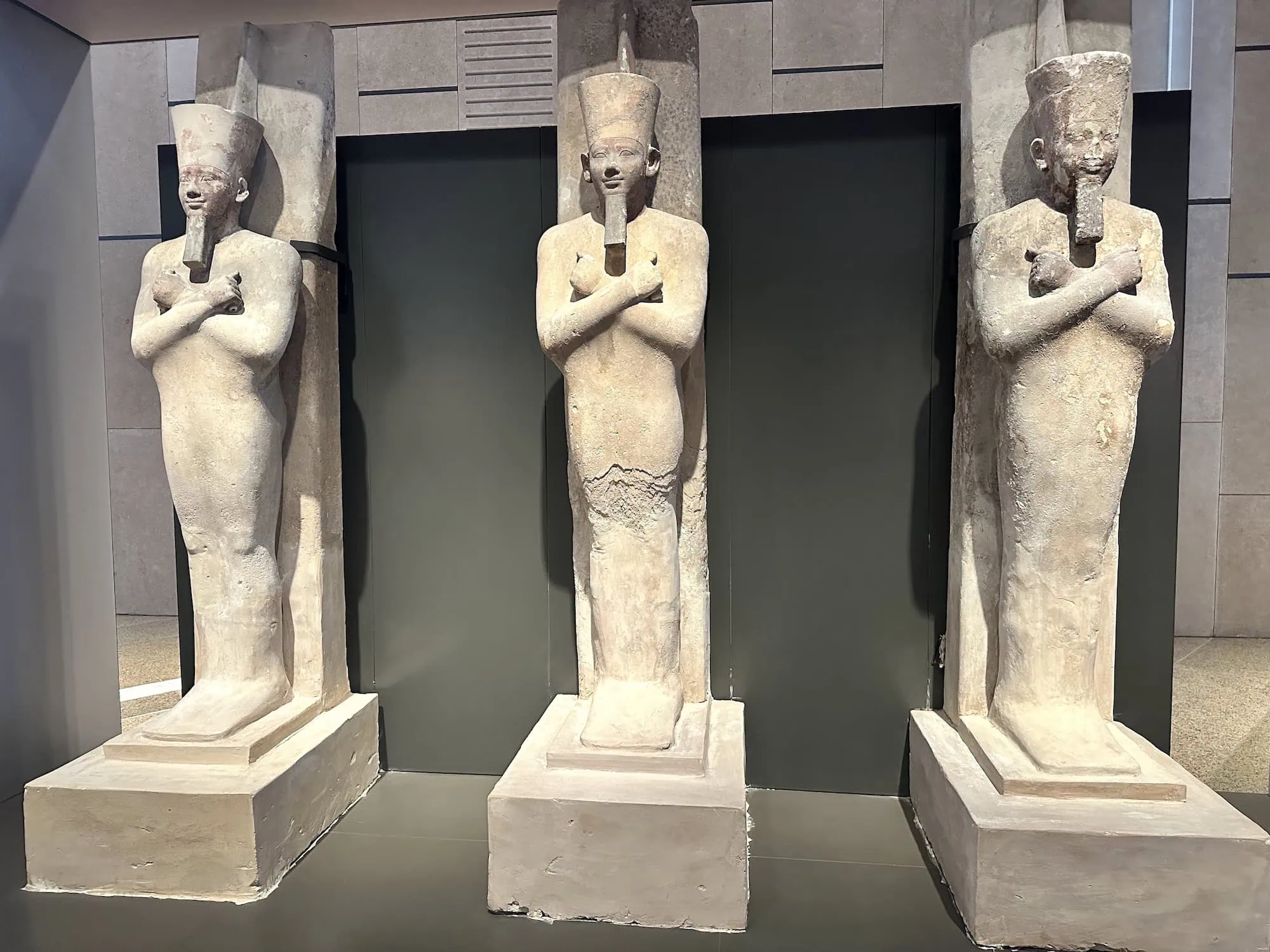
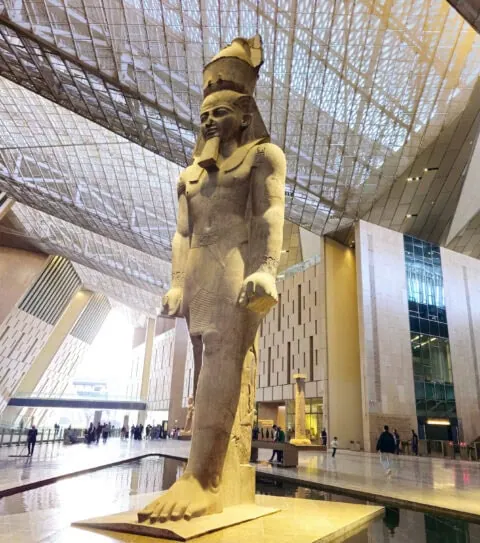
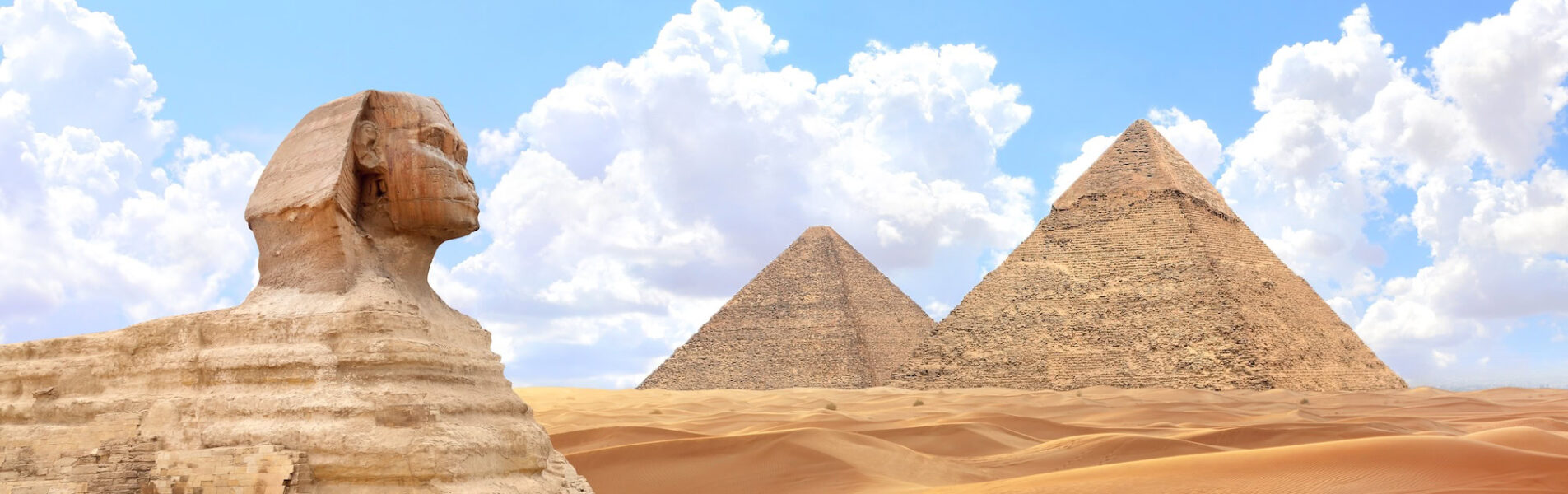
Plan three full days minimum. Cairo holds the Pyramids, the Sphinx, and the Grand Egyptian Museum, with the GEM now the centerpiece. Now fully open, it houses the entire Tutankhamun collection (the golden mask, the inner shrines, more than 5,000 of his artefacts displayed together for the first time in history) plus the most comprehensive pharaonic collection anywhere. Allow 3 hours minimum, 4 if you want to do justice to the upper galleries.
Giza’s pyramid complex rewards early starts. Aim for an 8 a.m. arrival to catch the soft morning light before tour buses appear, and book Great Pyramid interior access in advance (daily limit on entries). For honeymoons, we like adding a private dinner at a rooftop overlooking the lit Pyramids that evening. The Egyptian Museum at Tahrir Square is the complementary stop, with older statuary and everyday-life objects, and the Royal Mummies Hall at the National Museum of Egyptian Civilization is the third tier for couples drawn to the more contemplative side of the trip.
Luxor
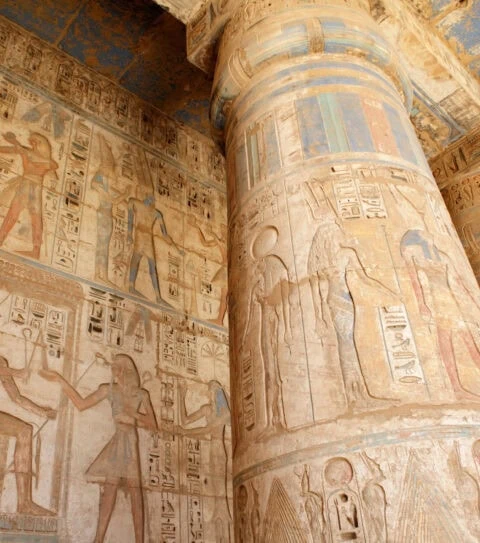
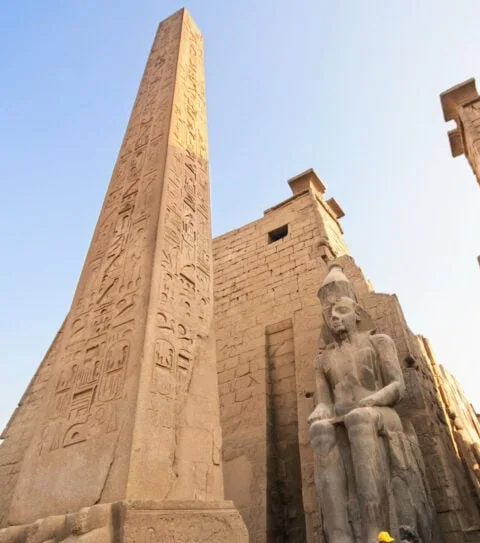
Luxor is an open-air museum where every street corner reveals something. The Karnak Temple complex spans over 100 hectares (247 acres), with the Hypostyle Hall’s 134 columns the dependable “wait, how did they DO this” moment. Late afternoon visits work better than mornings here, with fewer tour groups and softer light. The evening sound and light show is the romantic version.
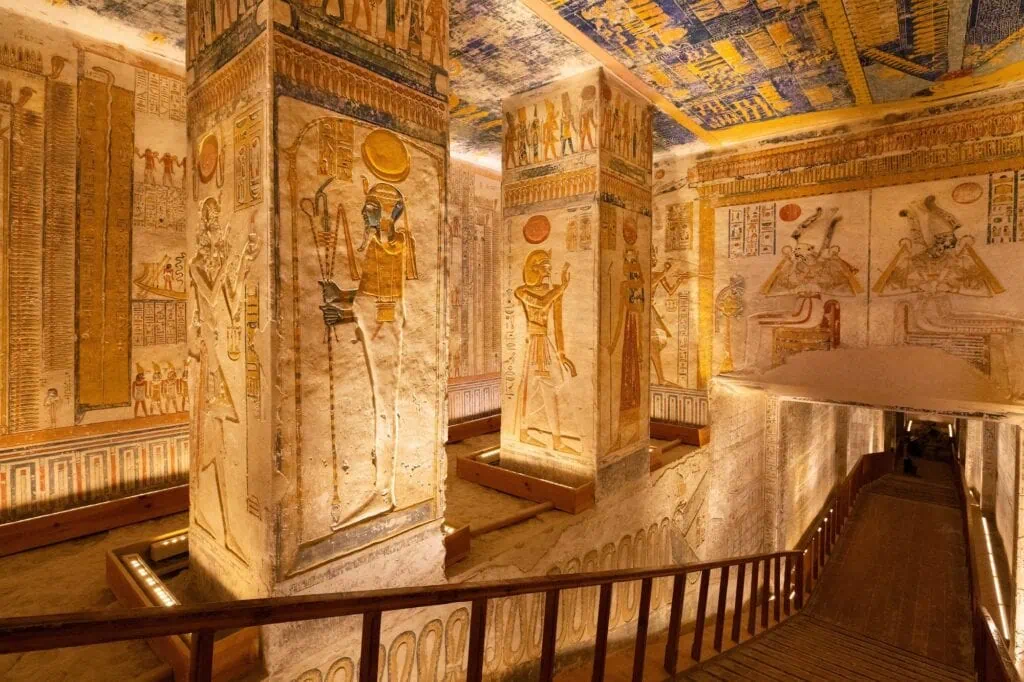
The West Bank holds the Valley of the Kings. Several tombs limit daily visitors to protect the wall paintings, which means small numbers and unhurried visits. Many couples specifically request Nefertari’s tomb, where the wall art is some of the finest preserved anywhere in Egypt and the iconography centres on a queen and her king. The 2.7 km Avenue of Sphinxes connecting Luxor and Karnak temples (over 1,000 sphinxes, recently fully reopened) makes a beautiful walk at sunset.
Aswan
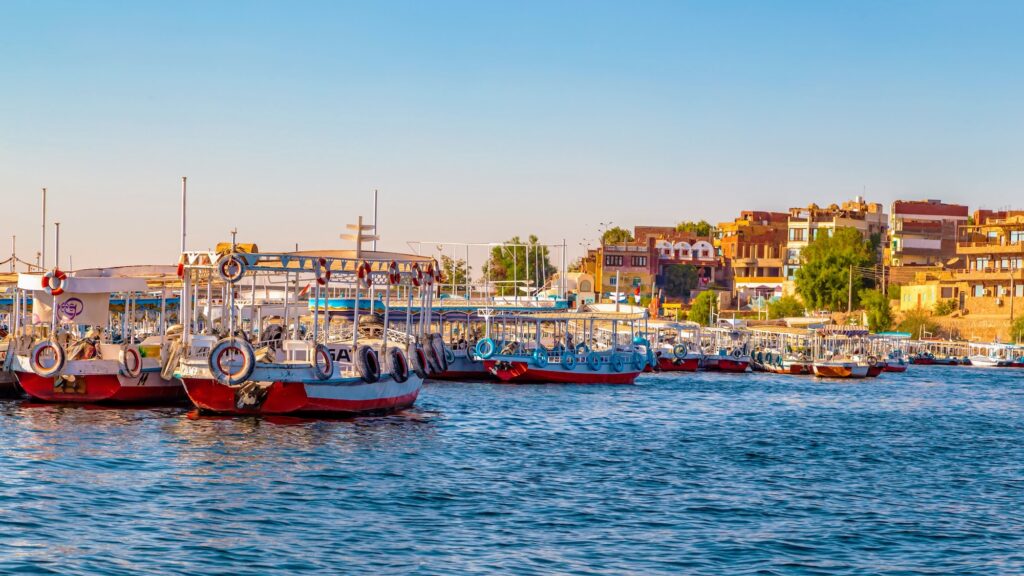
Aswan is where most honeymoon itineraries slow down. The Old Cataract Hotel (where Agatha Christie wrote Death on the Nile) still anchors the romantic-luxury option, with terrace tea served against the view that inspired the book. Philae Temple, relocated to Agilkia Island during the High Dam construction, requires a short boat ride that adds quiet adventure to the visit.
The Nubian villages on the West Bank welcome couples for cooking lessons and craft demonstrations. Painted houses, drum circles, and the kind of warm hospitality that ends in genuine friendships. From Aswan, a same-day flight reaches Abu Simbel; alternatively, a Lake Nasser cruise extension reaches the temples by water and sleeps you on the lake.
Red Sea Resorts
Hurghada works for couples who want underwater adventure paired with broad resort choice. PADI dive centres run accessible certification courses for couples wanting to learn together, and snorkel-from-the-beach access is widely available. Sharm El Sheikh works for couples drawn to Sinai: Ras Mohammed National Park (some of the world’s best-preserved coral), Mount Sinai sunrise hikes, Saint Catherine’s Monastery for the historical-spiritual element. Marsa Alam is the quieter outlier, suited to couples who want fewer people and don’t mind the longer transfer.
Cultural Experiences That Don’t Feel Performed
The slower, smaller things that often make the strongest memories.
The big moments are easy to plan. The small ones tend to stick longer.
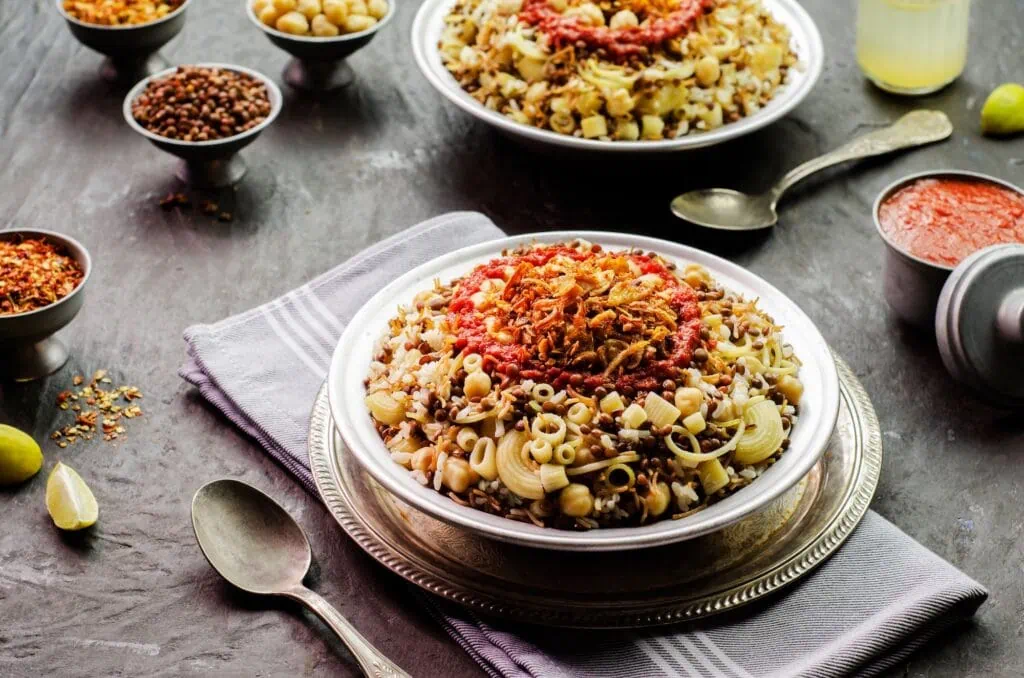
Private cooking classes. Egyptian cuisine is built on a few foundational dishes done well: koshari (the rice-lentil-pasta national favourite), ful medames, fresh flatbread, and a parade of mezze. We arrange classes either in local homes (a host couple teaching alongside you) or with chefs at our partner hotels. Both work. Both leave you with two or three recipes you’ll cook back home.
Traditional music and dance performances in intimate settings provide cultural education through entertainment. Rather than large tourist shows, private performances by master musicians using traditional instruments like the oud and qanun create personal concerts where couples can ask questions about musical heritage and cultural significance. Some performers teach basic dance steps, creating playful moments that break down cultural barriers.
Live music in intimate settings. We can arrange private performances by master musicians playing the oud and qanun, in small concerts in courtyards or hotel terraces. The music is the music, not background noise. Some musicians teach a few simple steps if you want.
Khan el-Khalili in Cairo. The 700-year-old bazaar is overwhelming at peak hours but quiet enough to actually browse from 9 to 11 a.m. or after 5 p.m. Carpets, brass, jewellery, hand-stitched leather, hand-blown glass. Bargaining is expected. Your guide handles the cultural mechanics so you can focus on what you actually like.
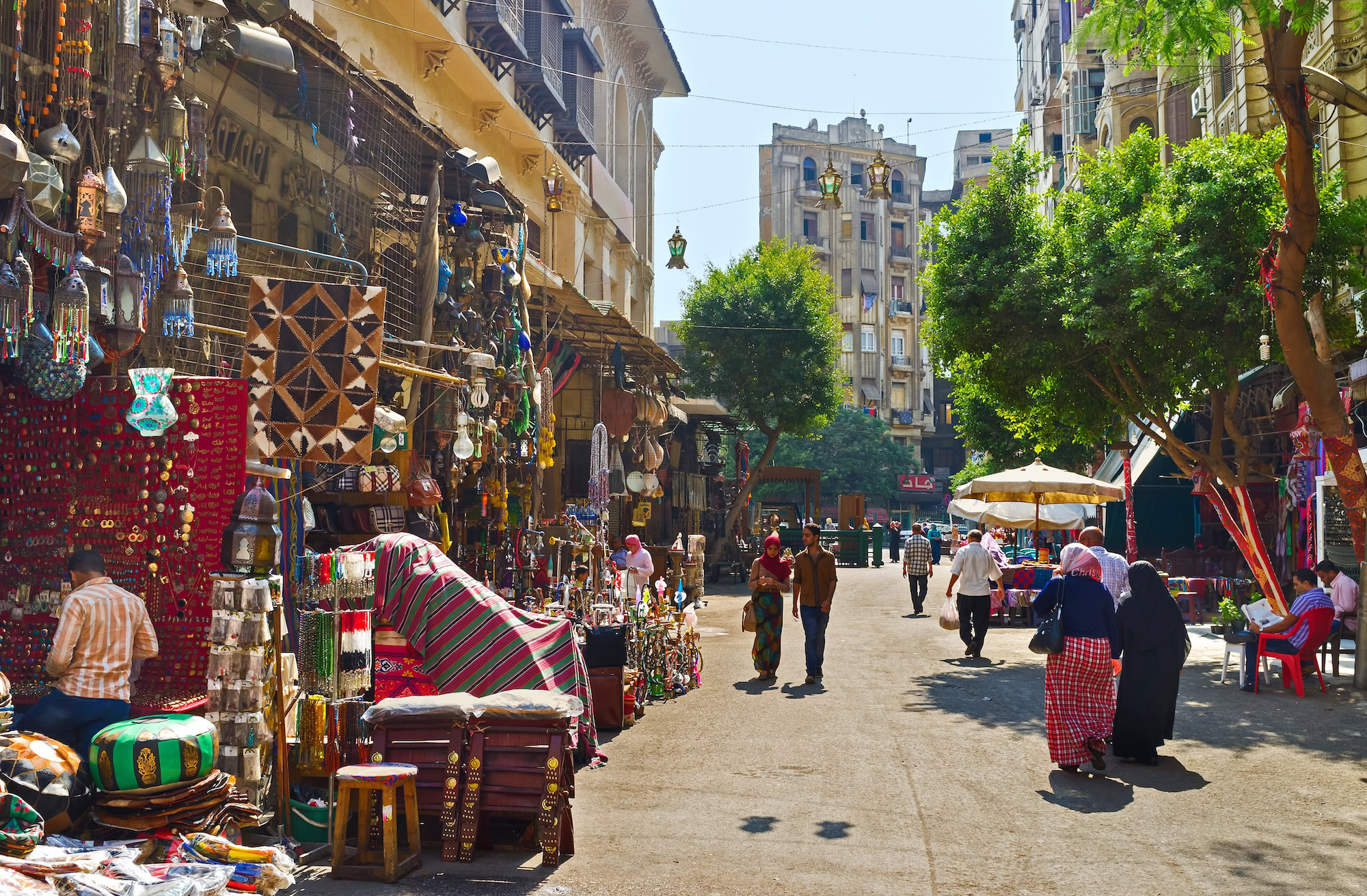
Professional guides help you understand bargaining customs while ensuring fair prices for quality goods. Many couples enjoy selecting home décor items together—carpets, brass work, or jewelry that will remind them of their honeymoon for years to come.
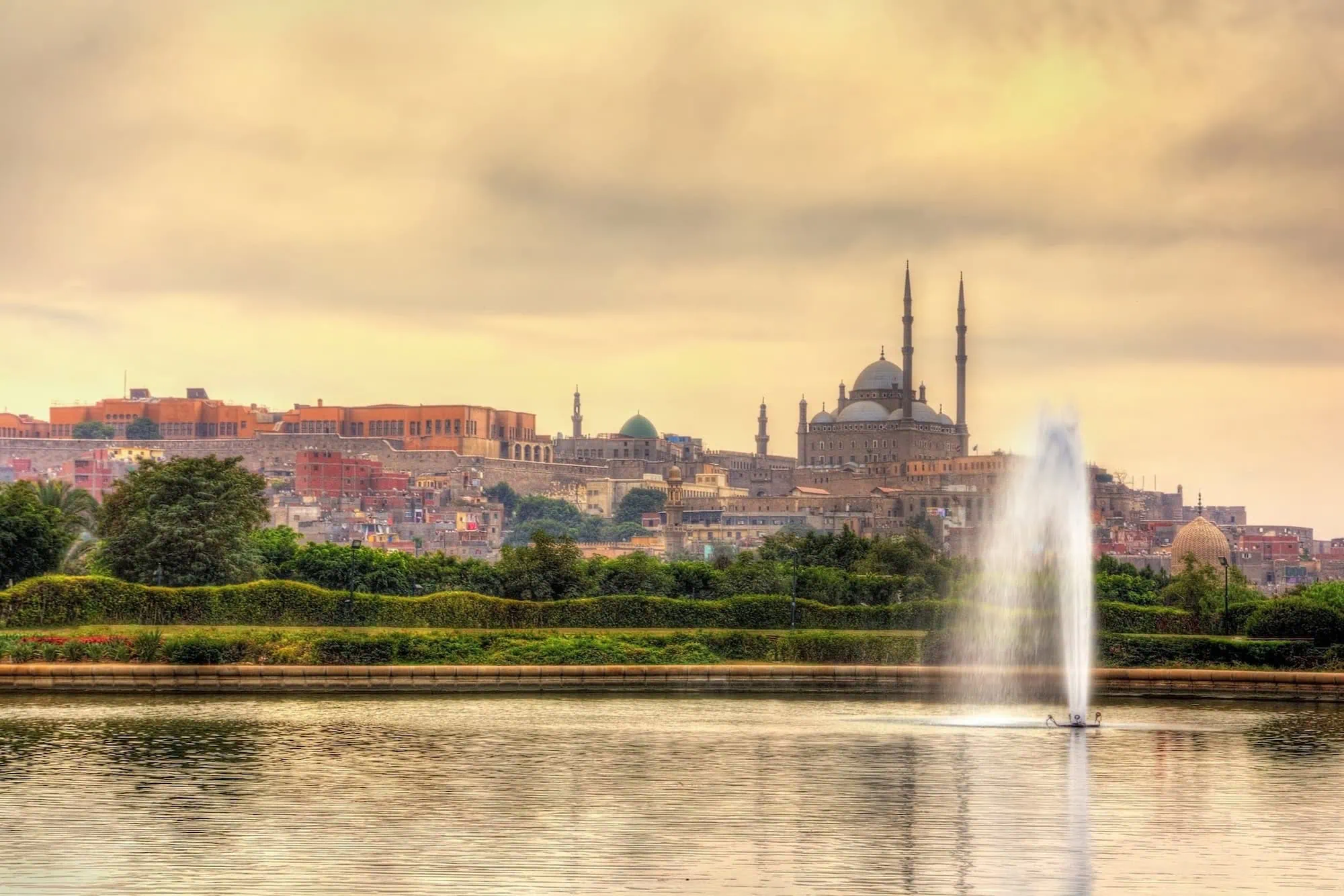
Old Cairo, Coptic and Islamic. Coptic Cairo holds early Christian churches built into Roman fortifications. Islamic Cairo holds the Citadel of Salah El-Din with the soaring Muhammad Ali Mosque, plus the Sultan Hassan complex, Al-Azhar, and quiet medieval streets. Two complete civilizations layered on each other within the same city.
Saint Catherine’s, if you’re heading to Sinai. One of the world’s oldest continuously inhabited monasteries, with an icon collection that survived the iconoclast period. Mount Sinai’s sunrise hike is a 2 a.m. start with a real reward. Most couples skip it; the ones who do it almost always say it was the trip’s high point.
The Practical Stuff
Visas, money, safety, and the boring details that actually matter.
Visas and Entry
Most travelers, including U.S., U.K., E.U., Canadian, Australian, and many Latin American nationalities, can obtain a 30-day tourist visa on arrival at Cairo International Airport for $25 USD, or apply for an e-visa online before departure. Always verify current regulations for your specific nationality before travel, and your Travel Concierge can provide complete documentation guidance for both of you.
Currency, Tipping, Card Use
Major hotels, cruises, and tour operators take credit cards. Egyptian pounds (EGP) handle local markets, taxis, and small restaurants, and ATMs are reliable in tourist areas. Tipping (called baksheesh) is part of the culture: budget around $50 per couple per day to cover guides, drivers, hotel staff, and restaurant service. Your Travel Concierge will brief you on customary amounts before arrival.
Safety and 24/7 Support
We’ve safely run private Egypt tours since 1955. Tourist areas are heavily protected, hotels and resorts maintain strong security standards, and you’ll travel with a private guide and personal driver throughout. Our 24/7 support team is reachable from the moment you land. We strongly recommend full travel insurance covering medical, evacuation, and trip cancellation, particularly for honeymoons given the booking value.
Connectivity
Wi-Fi is reliable at major hotels, on cruises, and in most restaurants. International roaming or a local SIM card handles connectivity on the move. Most couples want to stay reachable for emergencies but actually disconnect at the temples. Bring portable chargers (pyramids and tomb visits eat batteries fast) and a waterproof phone case for Red Sea snorkelling.
Beyond Egypt: Pair It Up
Two-plus weeks gives you room to layer Egypt with one of four neighbours. Each works for a different kind of honeymoon.
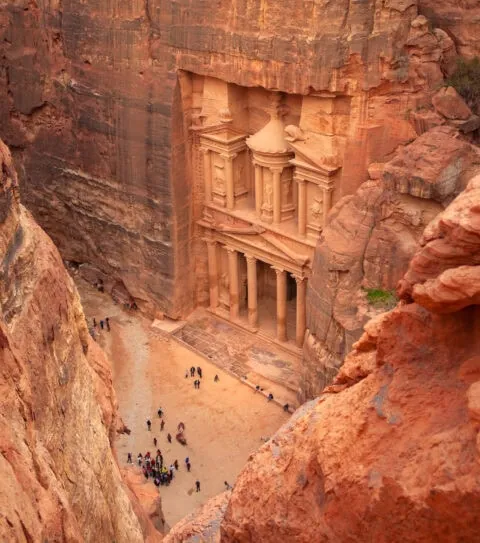
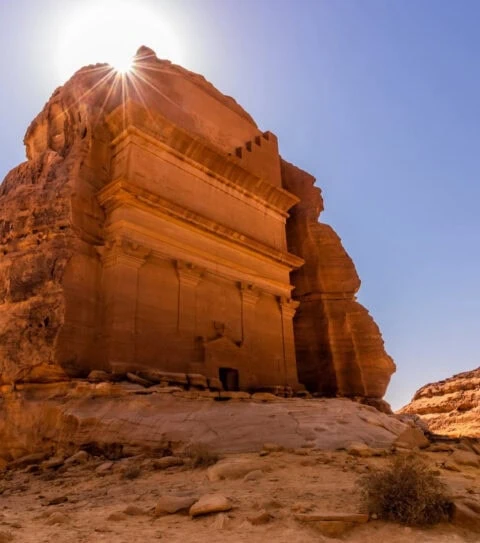
- Egypt + Jordan: Petra at sunrise, then a luxury Bedouin camp in Wadi Rum. History layered on history.
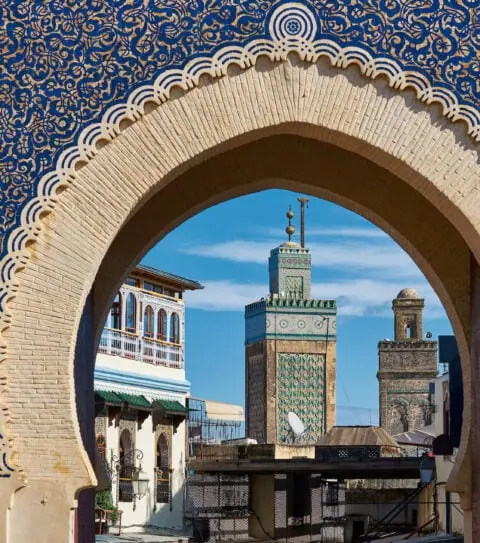
- Egypt + Morocco: Marrakech riads, an overnight in the Sahara, the blue lanes of Chefchaouen. Slow and sensory.
- Egypt + Turkey: Istanbul on the Bosphorus, then sunrise ballooning over Cappadocia’s fairy chimneys. The most photogenic pairing.
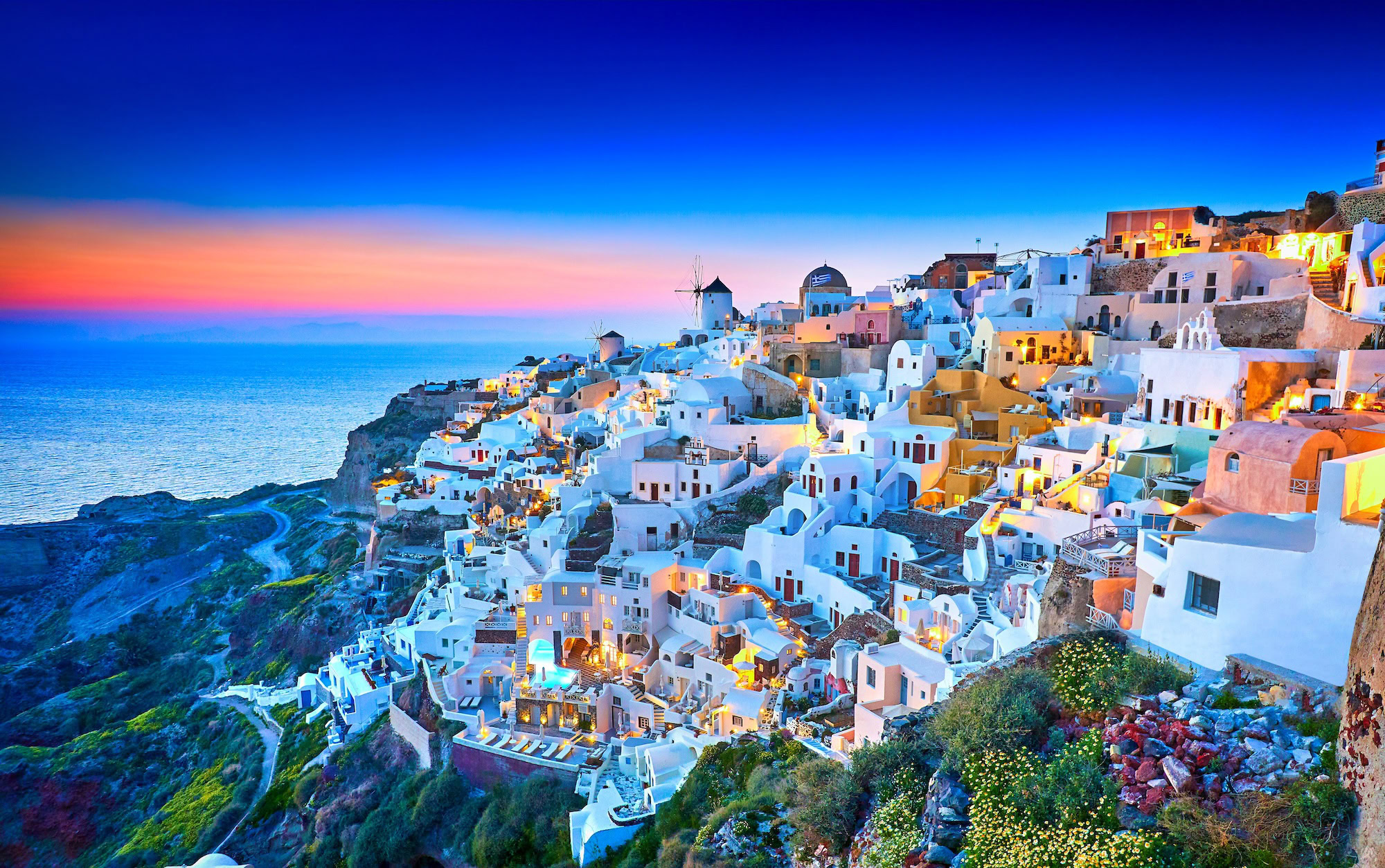
- Egypt + Greece: Athens plus a few of the islands. Santorini if you want the postcard, Milos or Naxos if you don’t.
Tell your Travel Concierge which pairing pulls you in. We handle the timing, visas, and connecting flights.
How the Planning Process Actually Works
Most couples haven’t planned a trip this big together before. There’s a lot of detail in a honeymoon (cabin categories, restaurant bookings, room upgrades, surprise touches), and very little appetite for getting any of it wrong. A first-draft itinerary lands in your inbox within 1 to 12 hours of your first conversation with your Travel Concierge.
The part that matters more is the back-and-forth that follows. We swap hotels, adjust the cruise category, change the cabin from standard to suite, add or drop excursions, layer in the romantic touches, and refine the budget until both of you are happy. Most couples go through two to four or even more rounds of revisions before booking. There’s no pressure to commit at any stage. The itinerary is only finalised when you’re 100% satisfied and ready to confirm.
Ready to Start Planning Your Honeymoon?
Tell your Travel Concierge what kind of honeymoon you have in mind: the cities you’re drawn to, the date range, and the romantic touches that matter most to you (suite cabins on the Nile, candlelit dinners, sunset feluccas, room upgrades, surprise champagne, or all of the above). They’ll send a fully personalized itinerary back, with hotels, cruise options, included experiences, and a clear price quote, typically within 1 to 12 hours. Every detail is adjustable until you’re happy.
Frequently Asked Questions
Eight to twelve days hits the sweet spot for most couples. Long enough for Cairo, a Nile cruise, and a few days of Red Sea time or an Abu Simbel extension. Short enough that no one needs a holiday after the holiday. Seven days is workable for couples on tight leave; fourteen-plus days opens the door to multi-country itineraries.
October and March are the standout months. Comfortable temperatures, balloon flights running reliably, lower crowd density than the December–February peak, and Nile water levels ideal for cruising. November through February is also excellent if you don’t mind cooler evenings. Summer (June–August) is hot but doable with the right schedule and lower prices.
Yes, and we’d suggest deciding early. Suite cabins on Nile cruises, hotel room upgrades on arrival, sunset feluccas reserved for the two of you, couples’ spa treatments, candlelit dinners arranged on a rooftop or aboard your cruise, surprise welcome touches like champagne and flowers in the room: all of these are available, but we need to know during the planning conversation so we can hold the right rooms, book the right tables, and brief our partners. Your Travel Concierge will walk you through the options.
Yes. Tourist areas are heavily protected, our partner hotels and resorts maintain strong security standards, and you’ll travel privately with your own Egyptologist guide and personal driver throughout. Our 24/7 support team is reachable from anywhere on the itinerary. We’ve been running private tours since 1955.
Budgets vary widely by hotel category, cruise level, and trip length. Comfortable mid-range honeymoons cost less than couples often expect; ultra-luxury options (suite cabins on the cruise, the Old Cataract Hotel in Aswan, premium Cairo hotels, helicopter transfer to Abu Simbel) sit at the top. Tell your Travel Concierge your rough budget range and they’ll build accordingly. The price quote arrives within 1 to 12 hours.
Easily. Vegetarian, vegan, gluten-free, halal, kosher, and most allergies are routinely handled at our partner hotels and onboard cruises. Tell your Travel Concierge during planning so we can brief everyone in advance.
Comfortable broken-in walking shoes (you’ll log surprising distances at temples), light layers for cool evenings, modest cover-ups for temple and mosque visits (covering shoulders and knees), a sun hat, high-SPF sunscreen, a refillable water bottle, formal-ish attire for upscale dining, and swimwear for cruise pools and Red Sea time. Power: Type C/F plugs, 220V.
Done right, very romantic. The trick is the cabin. Standard cabins are comfortable but compact; suite cabins with panoramic windows or balconies change the experience entirely. Book the suite at the time of booking (they’re the first cabins to sell out). Onboard, dining is intimate, deck space is generous, evenings are quiet, and the slow rhythm of the river is genuinely conducive to slowing down together.
English is widely spoken in tourist areas. More importantly, your private Egyptologist guide will be fluent in your preferred language. Whatever your language, you’ll be matched with an Egyptologist guide who speaks it — English, Italian, Spanish, Portuguese, German, French, and others available on request.
The combination is hard to find anywhere else: 4,500 years of history, world-class luxury accommodations, a private river journey that doubles as your hotel, world-class diving and beach time on the Red Sea, and remarkably reasonable pricing for the level of experience. Most couples leave saying it was their best trip together, and they’ve already done the obvious destinations.
Yes. Every tour we run is 100% customizable. Tell your Travel Concierge what matters to you (temples-heavy, beach-heavy, slower pace, more adventure, specific hotels, balloon flight or no) and we’ll build the trip accordingly.
Plenty. Rooftop restaurants in Cairo with the lit Pyramids on the horizon, Nile-side terraces in Aswan and Luxor, the Old Cataract Hotel’s terrace, beachfront restaurants in Sharm and Hurghada, and private candlelit setups we can arrange almost anywhere on request.
Yes. Egypt pairs naturally with Jordan, Morocco, Turkey, and Greece, all of which we run as multi-country itineraries. Honeymoon-friendly combinations include Egypt + Jordan (Pyramids and Petra, around 12–14 days), Egypt + Greece (history plus island time), Egypt + Morocco (markets and the Sahara), and Egypt + Turkey (Istanbul plus Cappadocia ballooning). Two-week-plus durations work best.
Three to six months ahead is the standard window. Six to nine months ahead during Christmas, New Year, Easter, and February half-term, or if you’re set on a specific suite category on a specific cruise. Suite cabins and the Old Cataract Hotel are typically the first to sell out.
Design Your Custom Tour
Explore Egypt your way by selecting only the attractions you want to visit