Tours to Egypt from South Africa
Flights from Johannesburg to Cairo take just eight hours – closer than you might think.
Egypt beckons South African travelers with its unparalleled blend of ancient mysteries and modern comfort. From the moment you set foot in Cairo International Airport, you’re stepping into a land where pharaohs once ruled and the mighty Nile has carved civilizations for millennia.
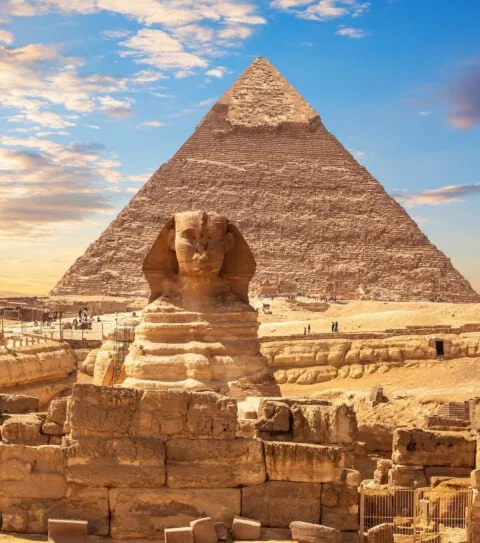
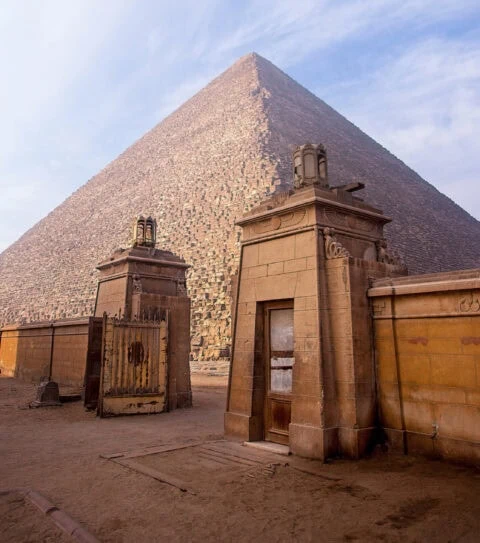
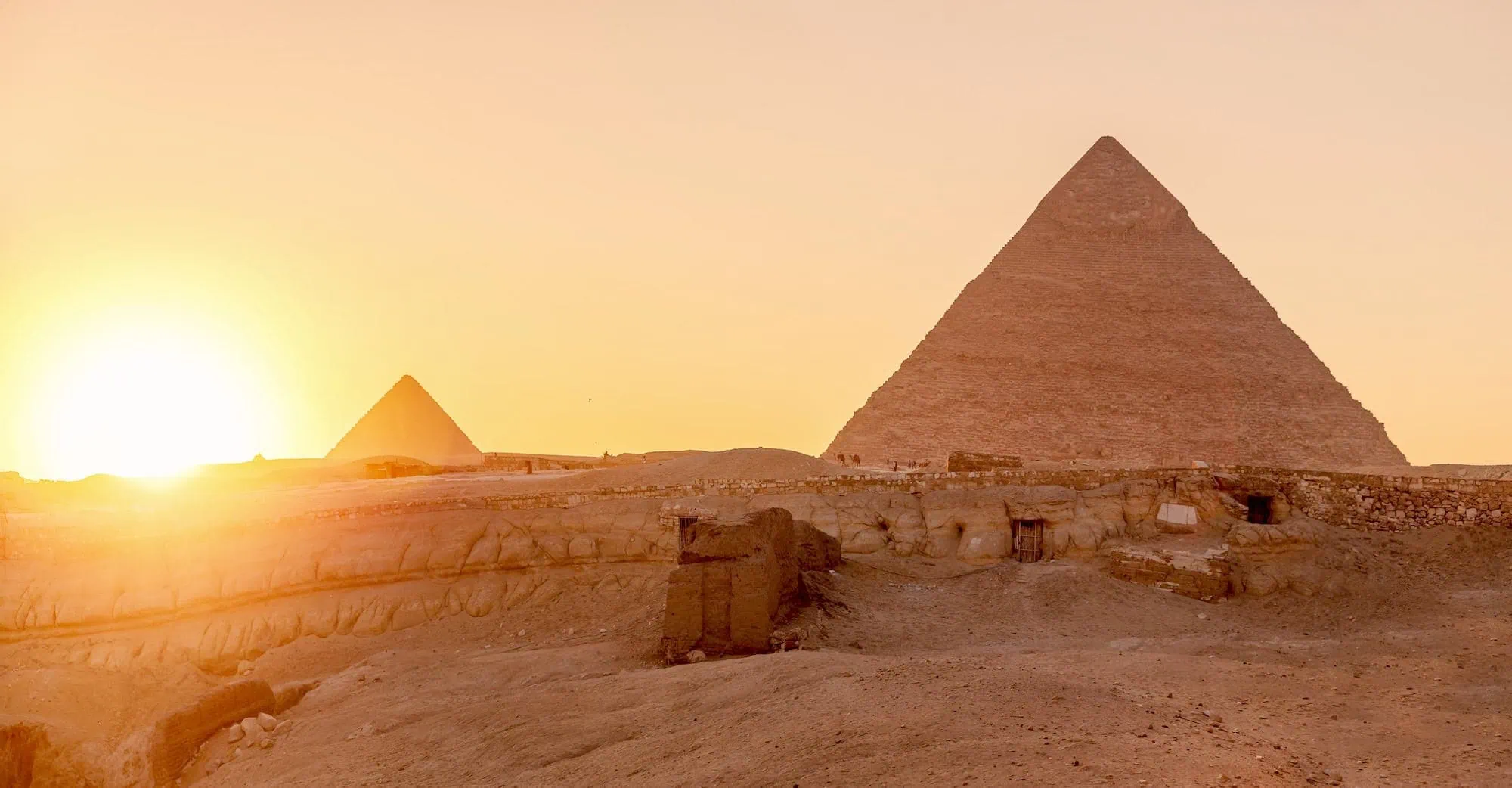
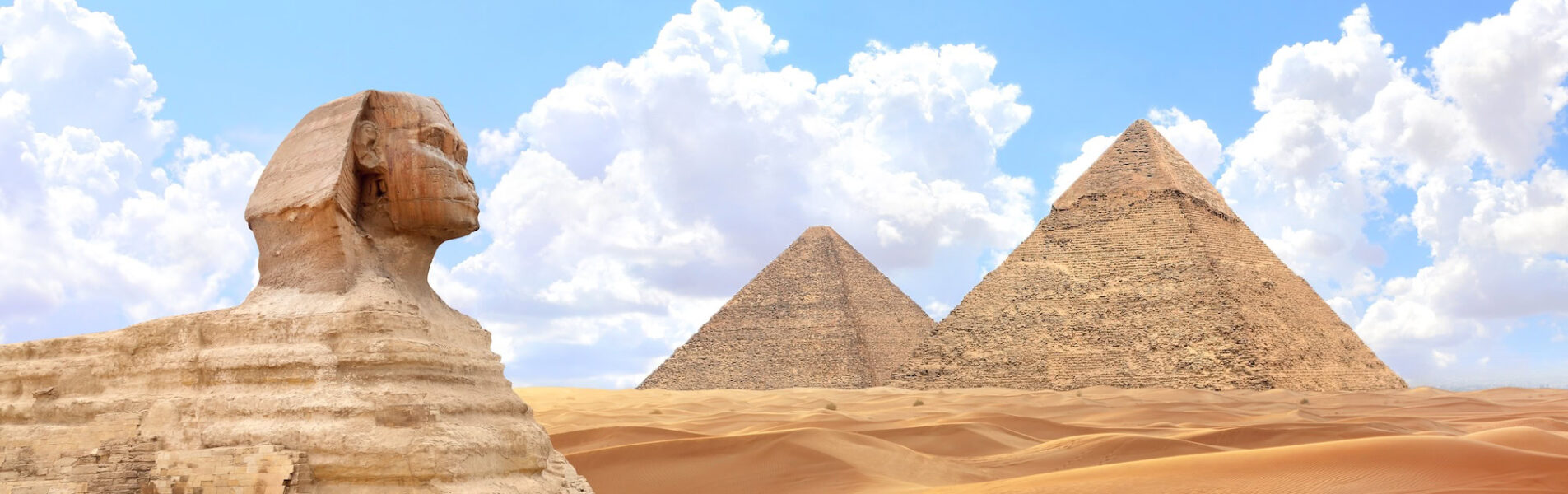
We’ve crafted comprehensive tour packages specifically for South African visitors, understanding your travel preferences, time zones, and the unique perspective you bring to exploring this timeless destination. Our Egypt tours from South Africa eliminate the complexity of international travel planning while ensuring you experience every iconic moment – from standing before the Great Pyramid of Giza to sailing the legendary Nile River between Luxor and Aswan.
Why South Africans Choose Egypt for Their Next Adventure
The cultural connections run deeper than you might expect. Both nations share rich archaeological heritage, diverse landscapes, and warm hospitality that makes South African visitors feel surprisingly at home. Egypt offers something familiar yet exotic – ancient civilizations that rival the San rock art you know, desert landscapes reminiscent of the Karoo, and vibrant markets that echo the energy of South African street culture.
Direct Flight Connections Make Egypt Accessible
EgyptAir operates direct flights from OR Tambo International Airport to Cairo, with convenient departure times at 11:45 pm (23:45), arriving at 7:30 am (07:30) local time. This schedule allows you to maximize your vacation days while minimizing jet lag. The eight-hour flight time means you’re closer to the pyramids than you are to Cape Town from Johannesburg.
Emirates and Qatar Airways provide excellent alternatives with single connections through Dubai or Doha, often at competitive prices. These routes give you flexibility in scheduling and sometimes include brief stopovers that add an extra dimension to your journey.
Currency Advantages Work in Your Favor
The South African rand typically offers favorable exchange rates against the Egyptian pound, making your vacation budget stretch further. While the rand has fluctuated globally, Egypt remains an affordable luxury destination where world-class experiences come at surprisingly reasonable prices.
Restaurant meals average 150-400 EGP ($5-13 USD) per person, while admission to major attractions like the Giza pyramid complex costs 540 EGP ($17 USD). This affordability means you can indulge in private guides, luxury Nile cruises, and authentic cultural experiences without breaking your travel budget.
Visa Requirements Streamlined for South Africans
South African passport holders can obtain tourist visas on arrival at Cairo International Airport for $25 USD, valid for 30 days. The process takes 15-20 minutes and requires only your passport (valid for at least six months) and the visa fee in US dollars. We recommend carrying exact change to expedite the process.
European visitors follow the same procedure, while Latin American travelers should check specific requirements as some nationalities require advance visa applications. The Egyptian Ministry of Foreign Affairs maintains updated visa information for all nationalities on their official website.
Our Signature Egypt Experiences Designed for South African Travelers
We understand South African travel preferences – you appreciate authentic cultural experiences, value excellent service, and want to maximize your time away from home. Our Egypt tours reflect these priorities through carefully curated itineraries that balance must-see attractions with genuine local encounters.
Private guides accompany you throughout your journey, sharing insights that go beyond standard tourist information. These qualified Egyptologists speak excellent English and understand how to present Egypt’s complex history in engaging, accessible ways. Unlike large group tours where you’re herded between attractions, our private experiences allow for spontaneous discoveries and personalized attention to your interests.
Classic Egypt: Pyramids to Philae Temple
Our most popular package combines Cairo’s iconic highlights with a luxury Nile cruise from Luxor to Aswan.
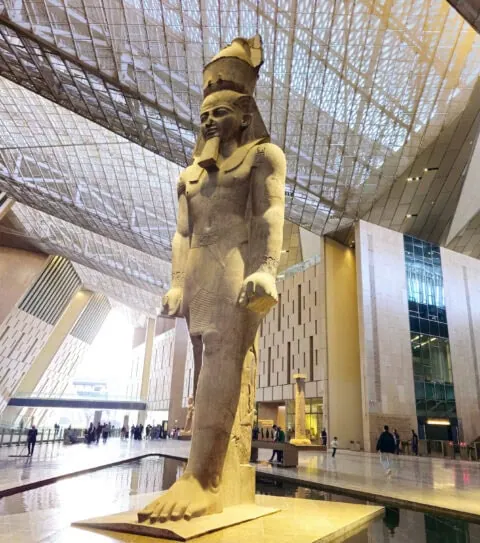
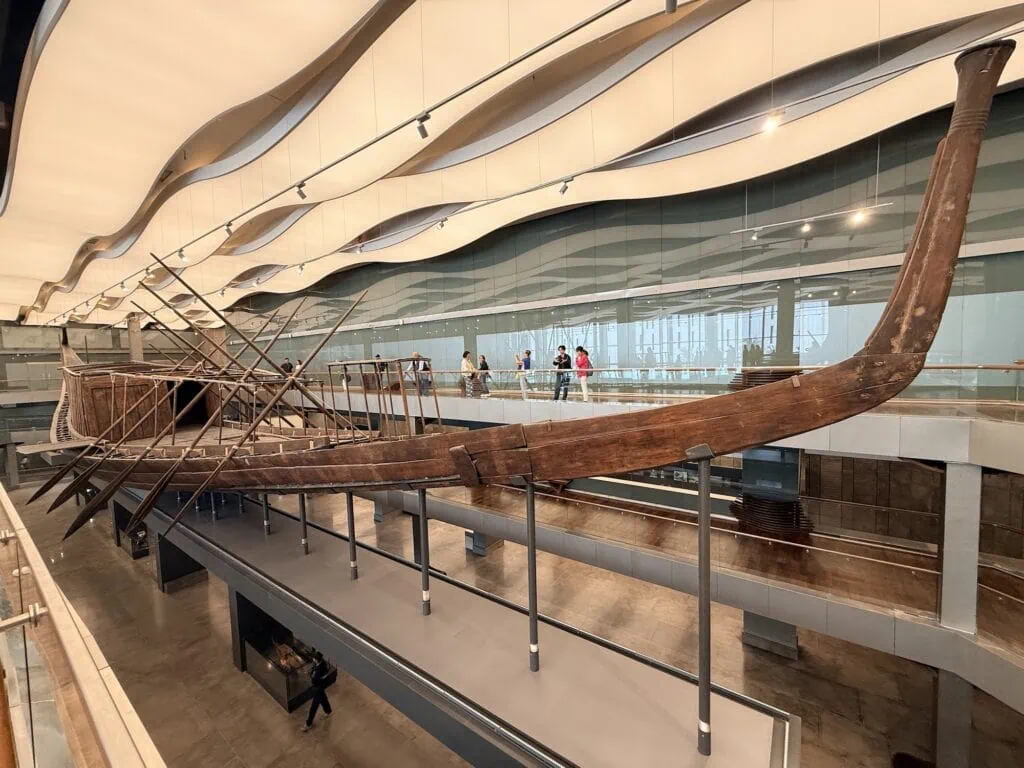
You’ll spend three days discovering the city’s greatest treasures – the Giza pyramid complex, the Grand Egyptian Museum with its world-class Tutankhamun collection, and the vibrant atmosphere of Khan el-Khalili bazaar.
The journey continues with a short flight to Luxor, where your Nile cruise experience begins.
The four-day cruise between Luxor and Aswan includes guided excursions to the Valley of the Kings, Karnak Temple complex, and the remarkable Abu Simbel temples. While these excursions are conducted as small group experiences with up to 12 participants (ensuring a more intimate setting than typical large tours), you’ll maintain the personalized attention that makes our service distinctive.
Your cruise ship becomes a floating hotel, offering comfortable accommodations while the timeless Nile landscape drifts past your window. Evening entertainment includes traditional Egyptian music and dance performances, providing cultural context to complement your daytime explorations.
Red Sea Extension: Ancient History Meets Beach Relaxation
Many South African travelers appreciate combining cultural exploration with beach time. Our Red Sea extensions to Hurghada or Sharm El Sheikh provide the perfect balance after intensive sightseeing in Cairo and the Nile Valley.
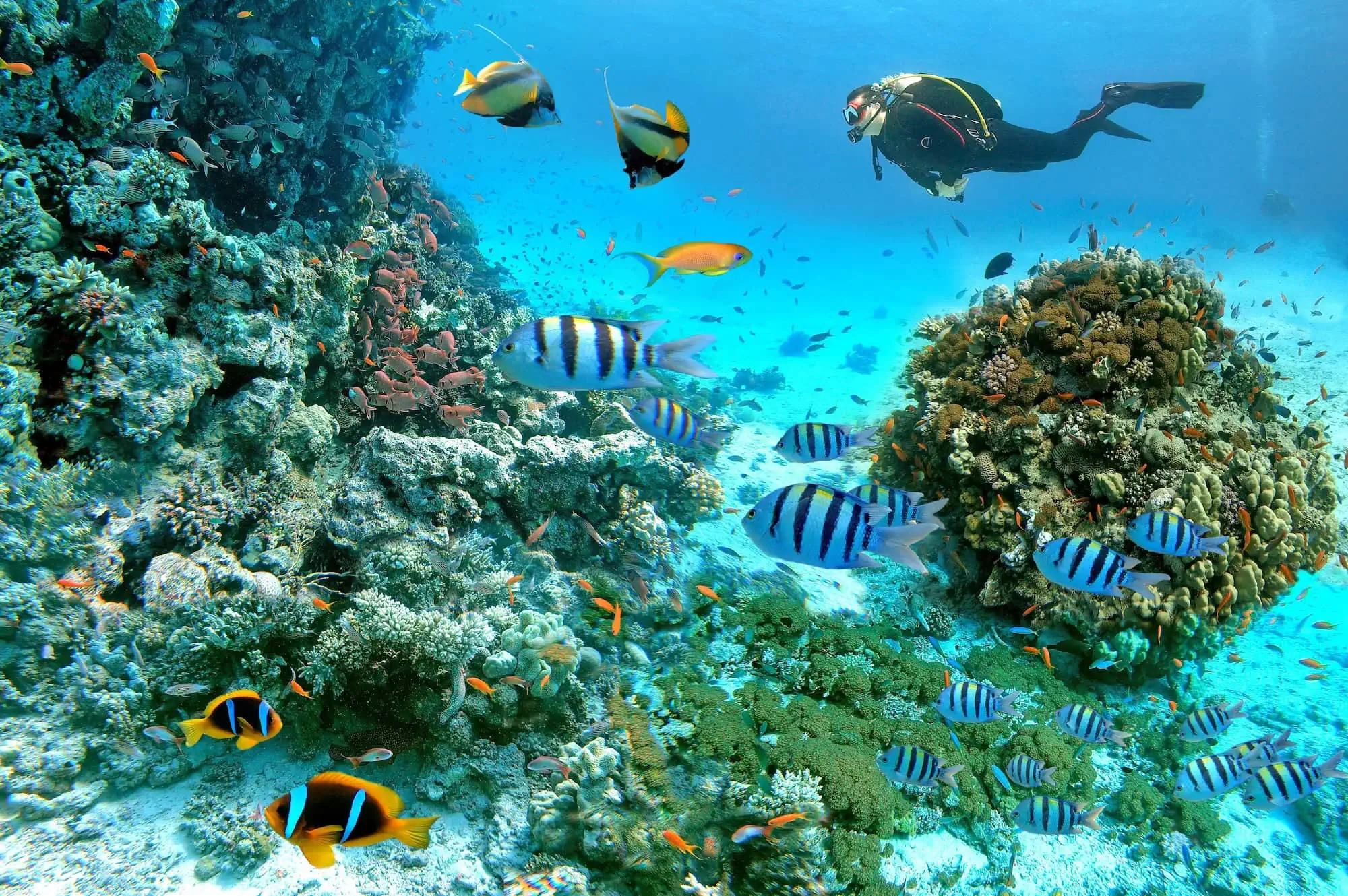
Hurghada offers world-class diving and snorkeling in coral reefs that rival those you know from Sodwana Bay. The Red Sea’s crystal-clear waters reveal underwater gardens of soft corals and tropical fish species found nowhere else on Earth. Sharm El Sheikh provides similar marine experiences with the added attraction of Mount Sinai nearby – where Moses reportedly received the Ten Commandments.
Both destinations feature luxury resorts with international standards of service, spa facilities, and multiple dining options. After days spent exploring tombs and temples, these coastal retreats provide welcome relaxation while maintaining the high service standards you expect.
Planning Your Egypt Adventure from South Africa
The logistics of international travel can feel overwhelming, but we’ve streamlined every aspect of your Egypt experience. From the moment you inquire about our tours until you return to South African soil, our team manages the details that make the difference between a good trip and an extraordinary one.
Our Cairo-based operations team monitors your flight arrival, ensuring smooth airport transfers regardless of delays or schedule changes. We maintain direct relationships with hotels, cruise operators, and local guides, allowing us to address any issues immediately rather than working through intermediaries.
Best Times to Visit Egypt from South Africa
Egypt’s climate offers year-round travel opportunities, but certain seasons provide optimal conditions for South African visitors. October through April delivers comfortable temperatures ranging from 20-25°C (68-77°F), perfect for outdoor exploration and sightseeing. These months align well with South African school holidays, making family travel convenient.
May through September sees higher temperatures, often reaching 35-40°C (95-104°F) in Upper Egypt. However, this period offers several advantages: fewer crowds at major attractions, lower accommodation rates, and the unique experience of seeing Egypt as locals live it. Early morning and evening activities remain comfortable, while midday hours are perfect for air-conditioned museum visits or cruise ship relaxation.
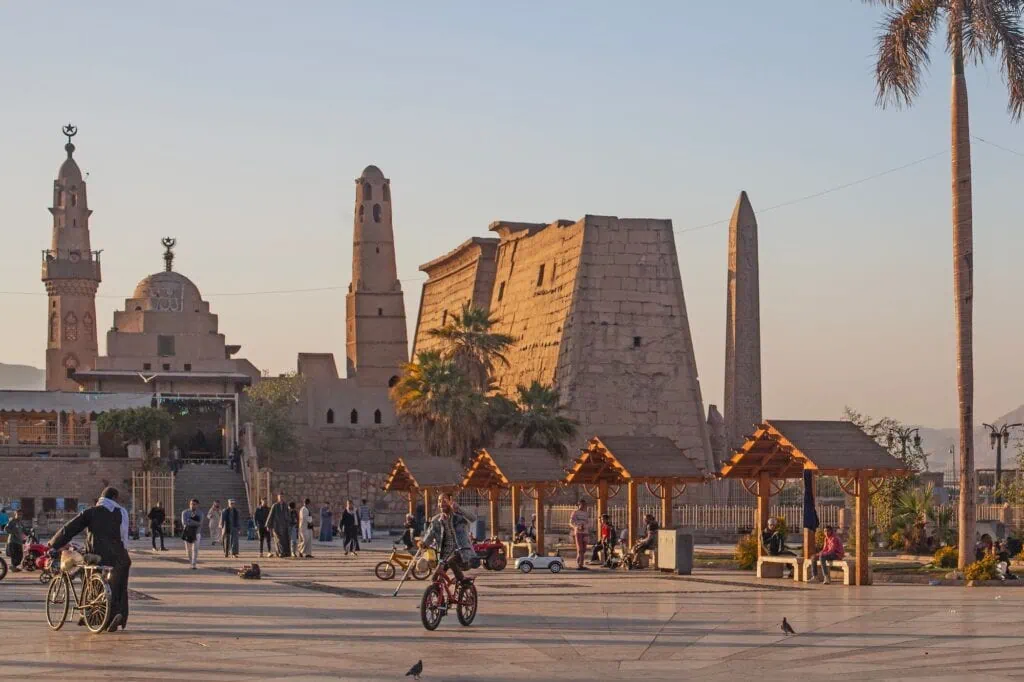
The Nile cruise season runs year-round, but water levels are typically highest from August through October, following the annual flood cycle that has sustained Egyptian civilization for millennia. During these months, the river appears at its most majestic, with lush green banks contrasting dramatically with the surrounding desert landscape.
Packing Essentials for Egypt Travel
Conservative dress codes apply at religious sites throughout Egypt. Long pants and shirts with sleeves (covering shoulders) are required for both men and women when visiting mosques and certain temples. Lightweight, breathable fabrics work best in Egypt’s climate while respecting local customs.
Comfortable walking shoes are essential – you’ll be exploring ancient sites with uneven surfaces and climbing steps in pyramids and temples. A wide-brimmed hat and high-SPF sunscreen protect against intense desert sun, while a light jacket handles air-conditioned interiors and cooler evening temperatures.
Camera equipment requires special consideration. Photography tickets are required at most attractions (typically 300 EGP or $10 USD), and flash photography is prohibited inside tombs and museums to preserve ancient artifacts. Bring extra memory cards and battery packs, as Egypt provides countless photographic opportunities.
Water bottles and basic medications should be packed, though pharmacies are widely available in tourist areas. While tap water is generally safe for locals, we recommend bottled water for international visitors to avoid any digestive adjustment issues.
Luxury Nile Cruising: The Highlight of Your Egypt Experience
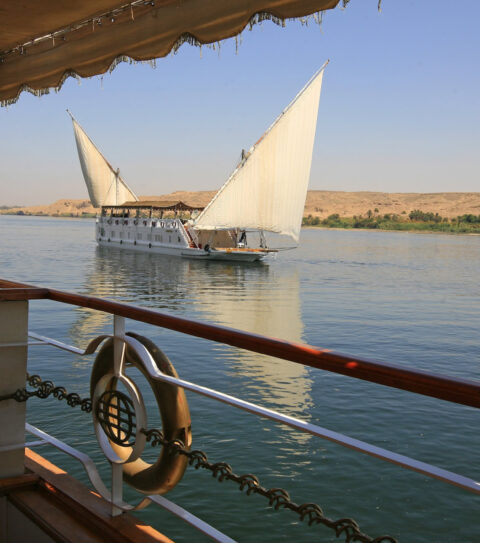
Nothing compares to watching the sun set over the Nile from your cruise ship’s deck, knowing you’re following the same river route that carried pharaohs and ancient traders thousands of years ago. Our luxury Nile cruises provide the perfect blend of historical exploration and comfortable travel, with modern amenities that ensure every moment is enjoyable.
Your floating hotel features air-conditioned cabins with private bathrooms, a swimming pool for afternoon relaxation, and dining rooms serving both international and authentic Egyptian cuisine. The upper deck provides panoramic views of the Nile Valley’s timeless landscape – palm groves, mud-brick villages, and archaeological sites that reveal themselves around each river bend.
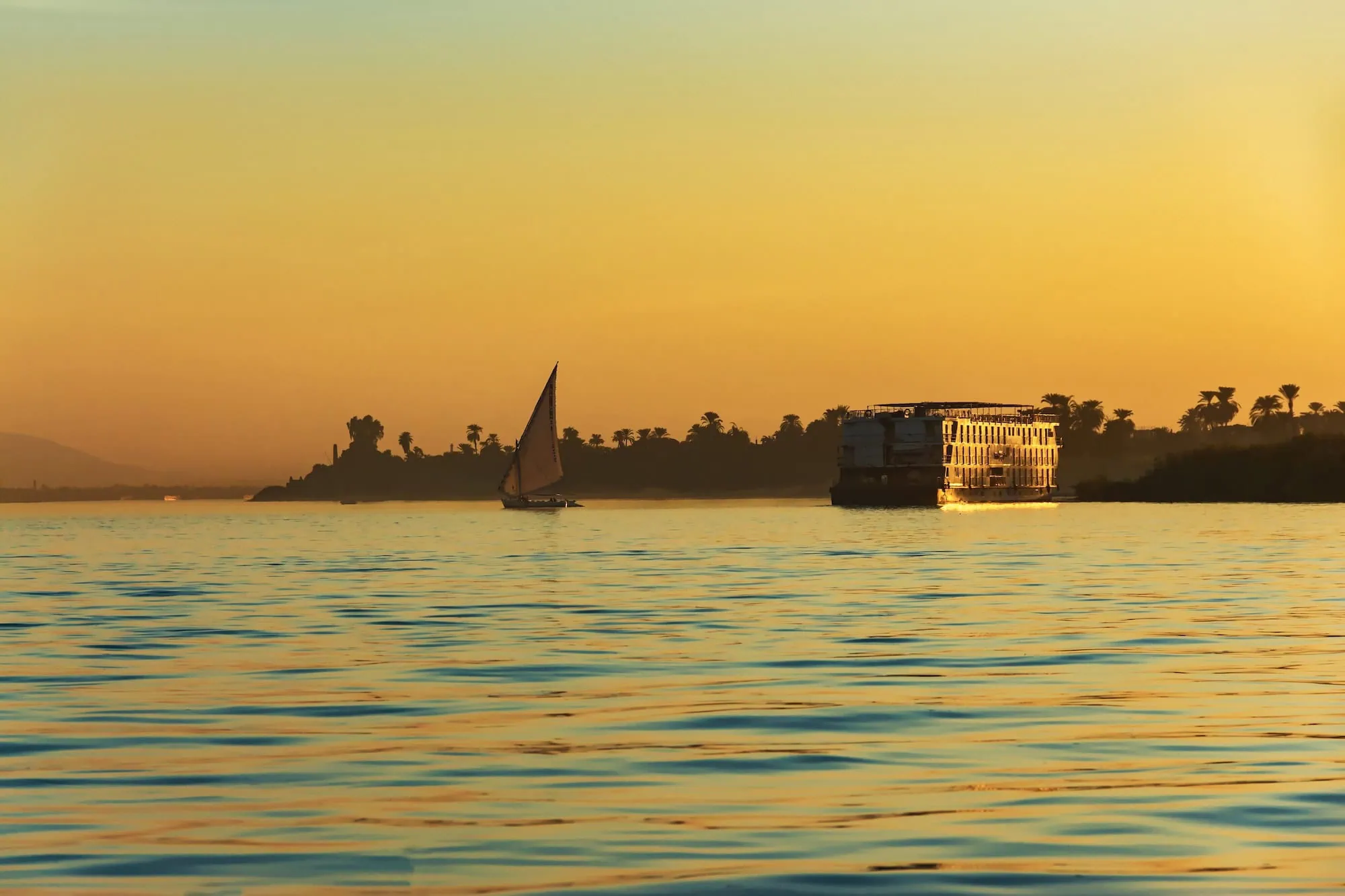
Daily excursions explore the greatest concentration of ancient monuments found anywhere on Earth. Professional Egyptologists guide you through temple complexes that span 4,000 years of continuous civilization, explaining the religious beliefs, political systems, and daily life of ancient Egyptians in ways that bring these incredible sites to life.
Luxor: The World’s Greatest Open-Air Museum
Your Nile cruise begins in Luxor, built on the site of ancient Thebes – capital of the Egyptian Empire at its peak. The East Bank houses the massive Karnak Temple complex, where generations of pharaohs added their contributions to create Egypt’s largest religious site.
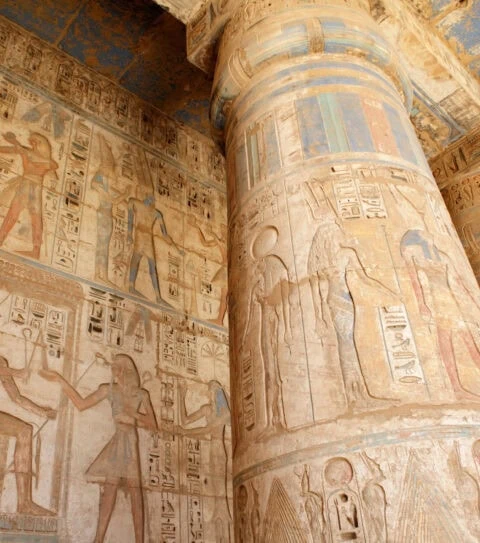
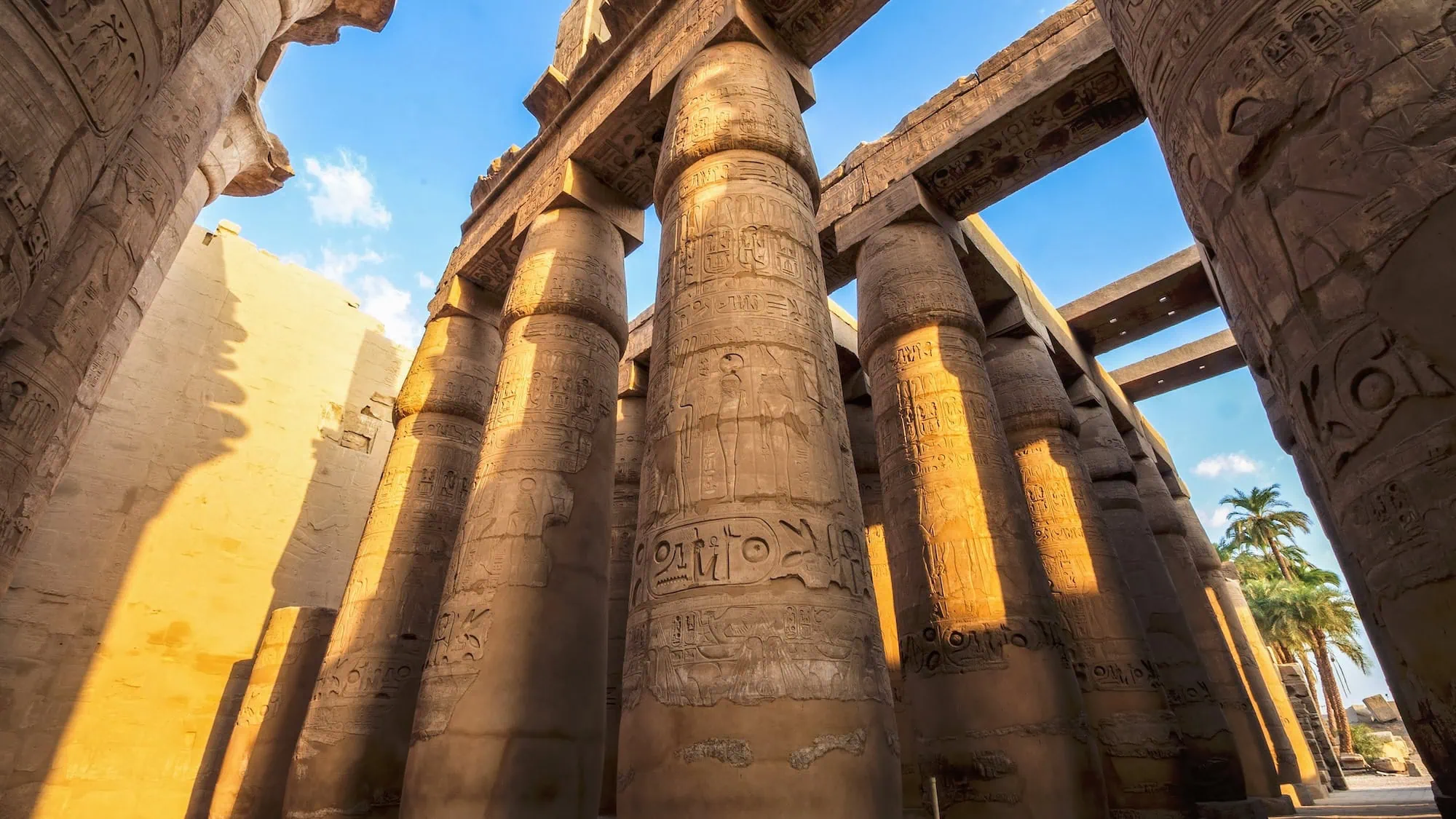
Walking through Karnak’s Great Hypostyle Hall feels like entering a stone forest – 134 massive columns rise 24 meters (79 feet) overhead, each decorated with hieroglyphic inscriptions and colorful reliefs that retain their original pigments after millennia. The sacred lake where priests once performed ritual purifications still reflects the ancient stones, creating moments of profound connection with Egypt’s spiritual heritage.
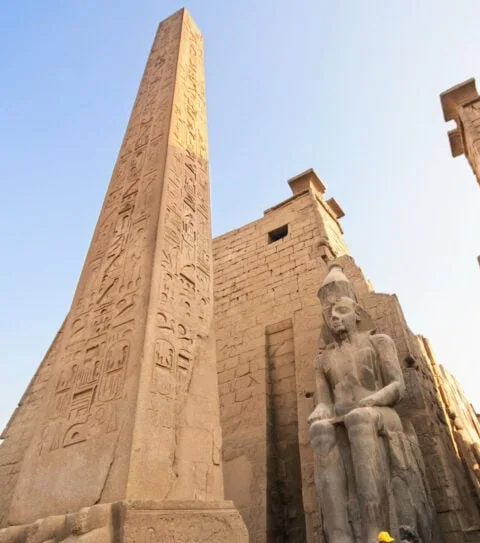
Luxor Temple, connected to Karnak by a 3-kilometer avenue of sphinxes currently being excavated, served different ceremonial functions. Built primarily during the New Kingdom period (1550-1077 BCE), this temple complex demonstrates the architectural evolution that made Egyptian building techniques legendary throughout the ancient world.
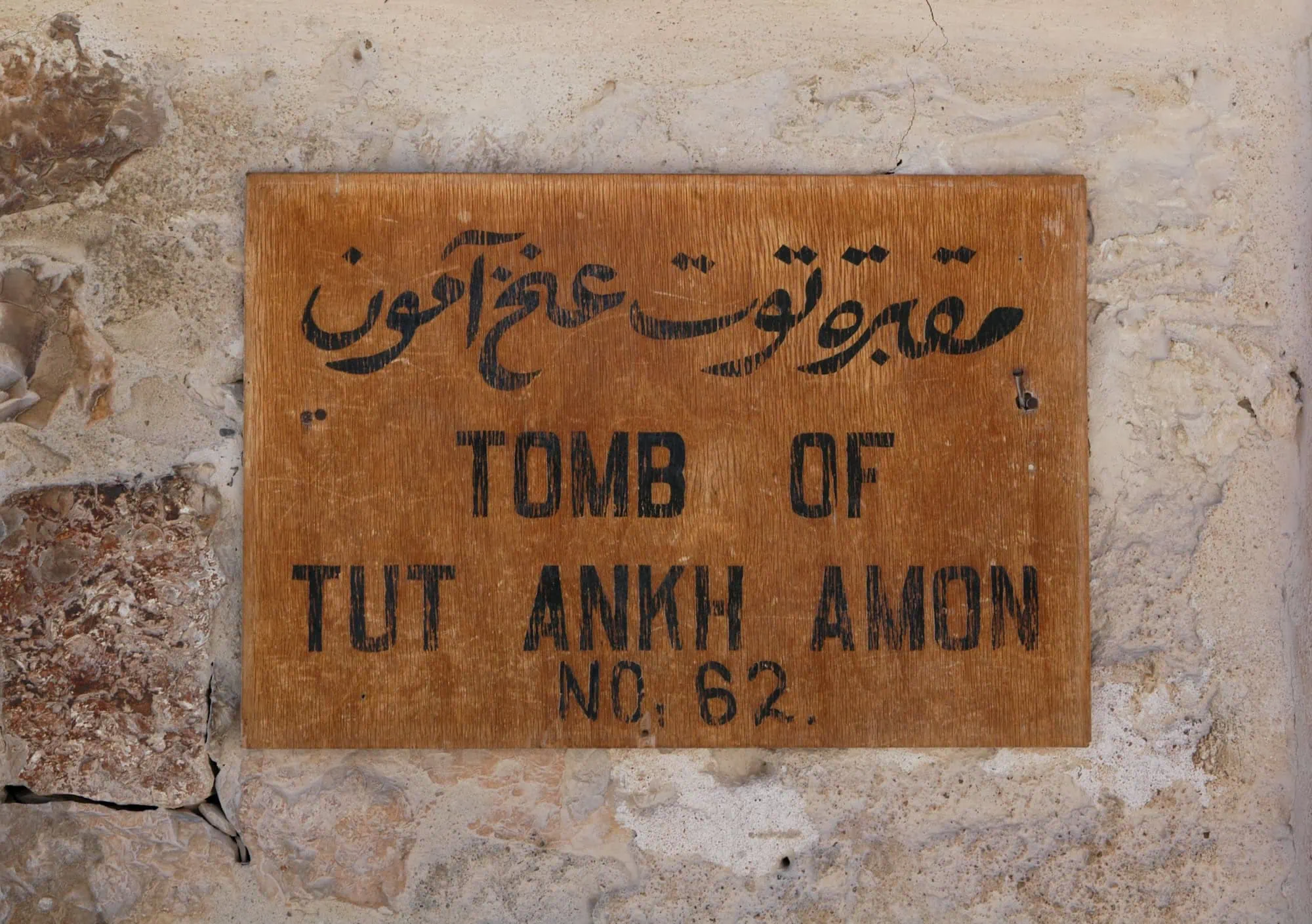
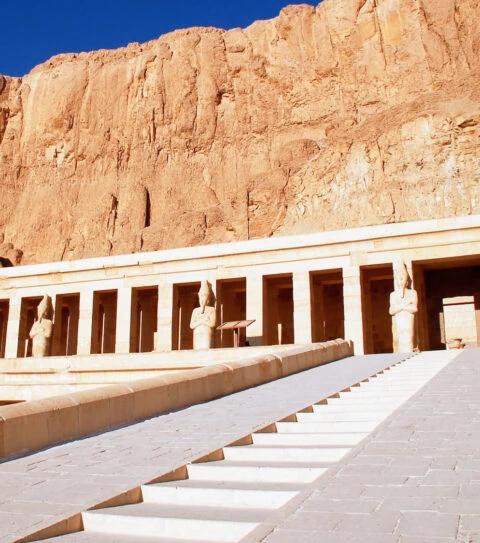
The West Bank reveals why Luxor became synonymous with ancient Egyptian grandeur. The Valley of the Kings contains over 60 royal tombs carved into limestone cliffs, including the famous tomb of Tutankhamun discovered by Howard Carter in 1922. These underground chambers showcase the artistic mastery that decorated pharaohs’ eternal resting places with detailed scenes of the afterlife journey.
Edfu and Kom Ombo: Hidden Gems Along the Nile
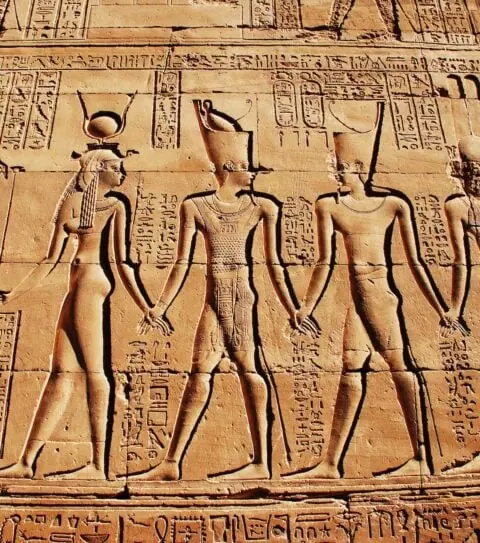
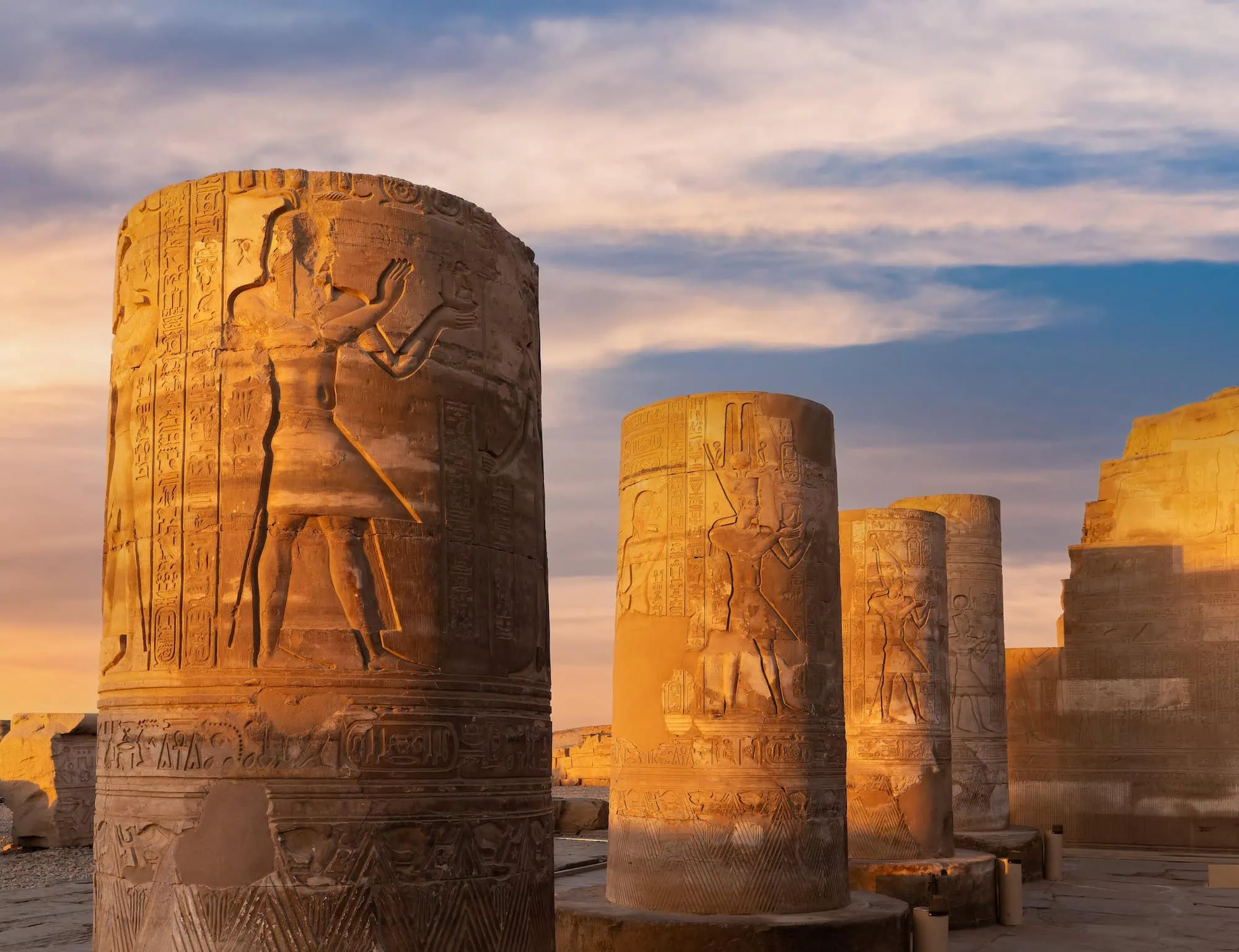
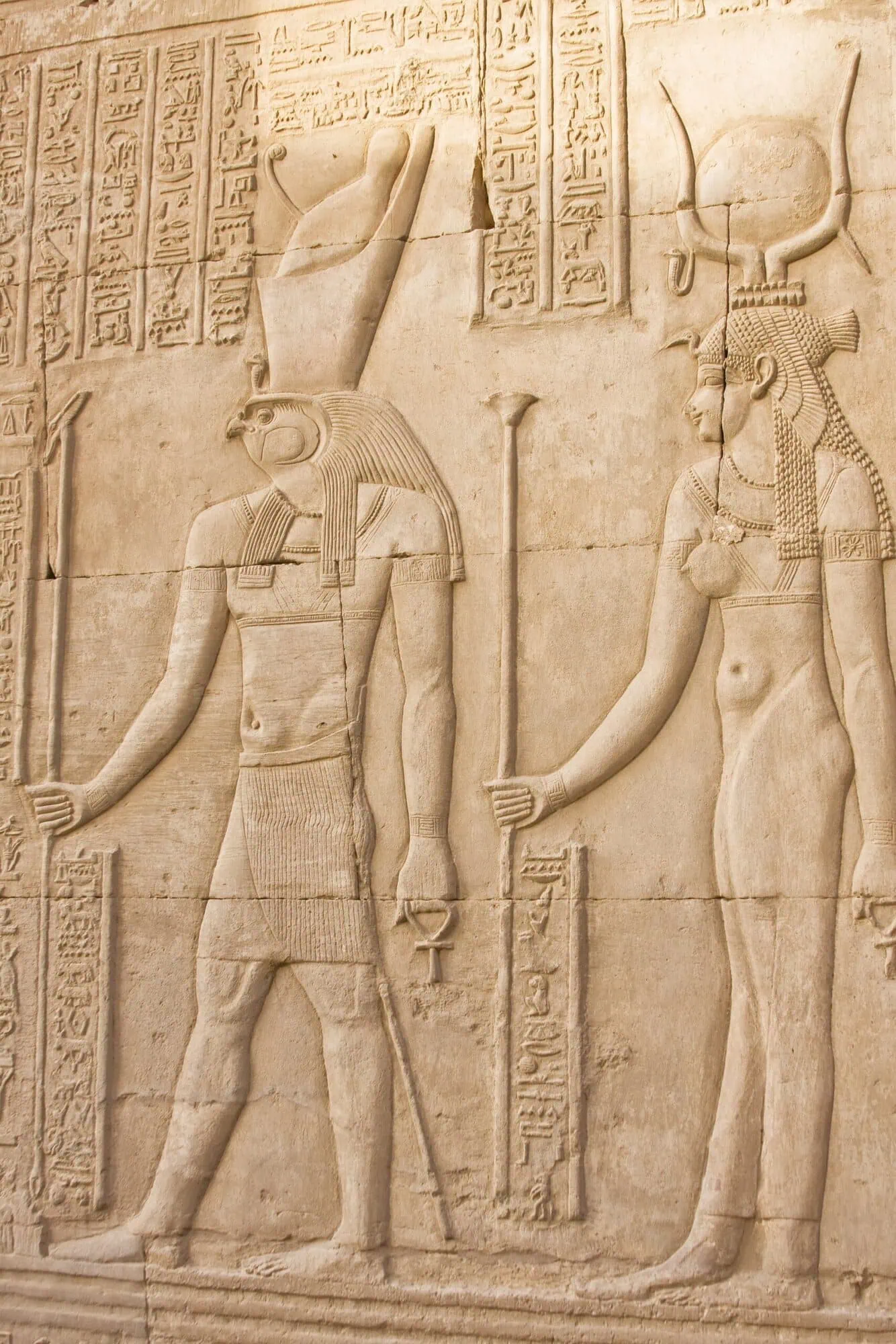
Your cruise stops at smaller temples that often prove more memorable than famous sites. Edfu Temple, dedicated to the falcon god Horus, remains Egypt’s best-preserved ancient temple. Built during the Ptolemaic period (237-57 BCE), its walls contain detailed hieroglyphic texts describing ancient Egyptian religious ceremonies and mythology.
Horse-drawn carriages transport you from the riverbank to the temple entrance, adding an authentic touch that enhances the historical atmosphere. Inside, the temple’s intact roof creates dramatic lighting effects as sunbeams filter through ancient stone openings, illuminating reliefs that depict the eternal battle between order and chaos.
Kom Ombo Temple presents unique dual dedication to both Sobek (the crocodile god) and Haroeris (a form of Horus). This unusual arrangement creates symmetrical architecture where every hall, chamber, and courtyard has a twin. The temple’s riverside location provides stunning sunset photography opportunities while you explore rooms that once housed sacred crocodiles.
Aswan: Southern Gateway to Nubian Culture
Your Nile cruise concludes in Aswan, Egypt’s southernmost city and gateway to ancient Nubia. The High Dam controls the Nile’s flow and creates Lake Nasser, one of the world’s largest artificial lakes. This engineering marvel represents modern Egypt’s continuing relationship with the river that gave birth to its civilization.
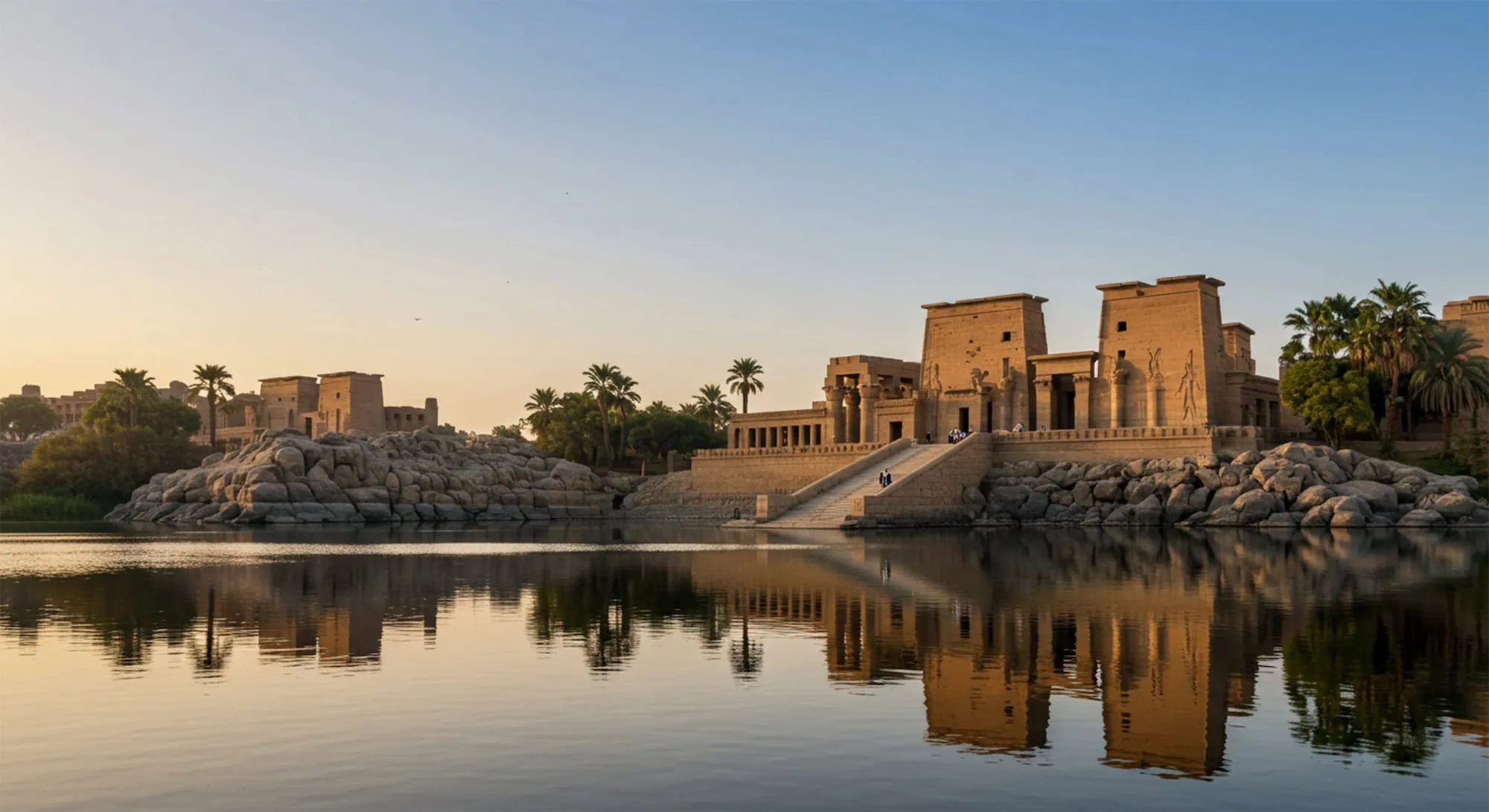
Philae Temple, relocated to Agilkia Island when the High Dam was constructed, demonstrates international cooperation in preserving world heritage. UNESCO’s rescue operation moved the entire temple complex stone by stone, maintaining its original orientation and relationship to the Nile. The temple’s island setting creates one of Egypt’s most romantic archaeological experiences.
Traditional felucca sailing boats offer peaceful afternoon excursions around Aswan’s islands. These white-sailed vessels have carried passengers on the Nile for thousands of years, providing wind-powered transportation that connects you directly to Egypt’s timeless river culture.
Abu Simbel: Ramesses II’s Monument to Eternity
A day excursion from Aswan takes you to Abu Simbel, Ramesses II’s most ambitious architectural project. These twin temples, carved directly into sandstone cliffs overlooking Lake Nasser, represent the pinnacle of ancient Egyptian monumental art. The Great Temple’s facade features four colossal statues of Ramesses II, each standing 20 meters (66 feet) tall.
The temple’s interior chambers extend 60 meters (197 feet) into the cliff, decorated with reliefs depicting Ramesses II’s military victories and religious ceremonies. The astronomical alignment creates a phenomenon where sunlight penetrates the temple sanctuary twice yearly (February 22 and October 22), illuminating statues of the pharaoh and gods while leaving the statue of Ptah (god of darkness) in shadow.
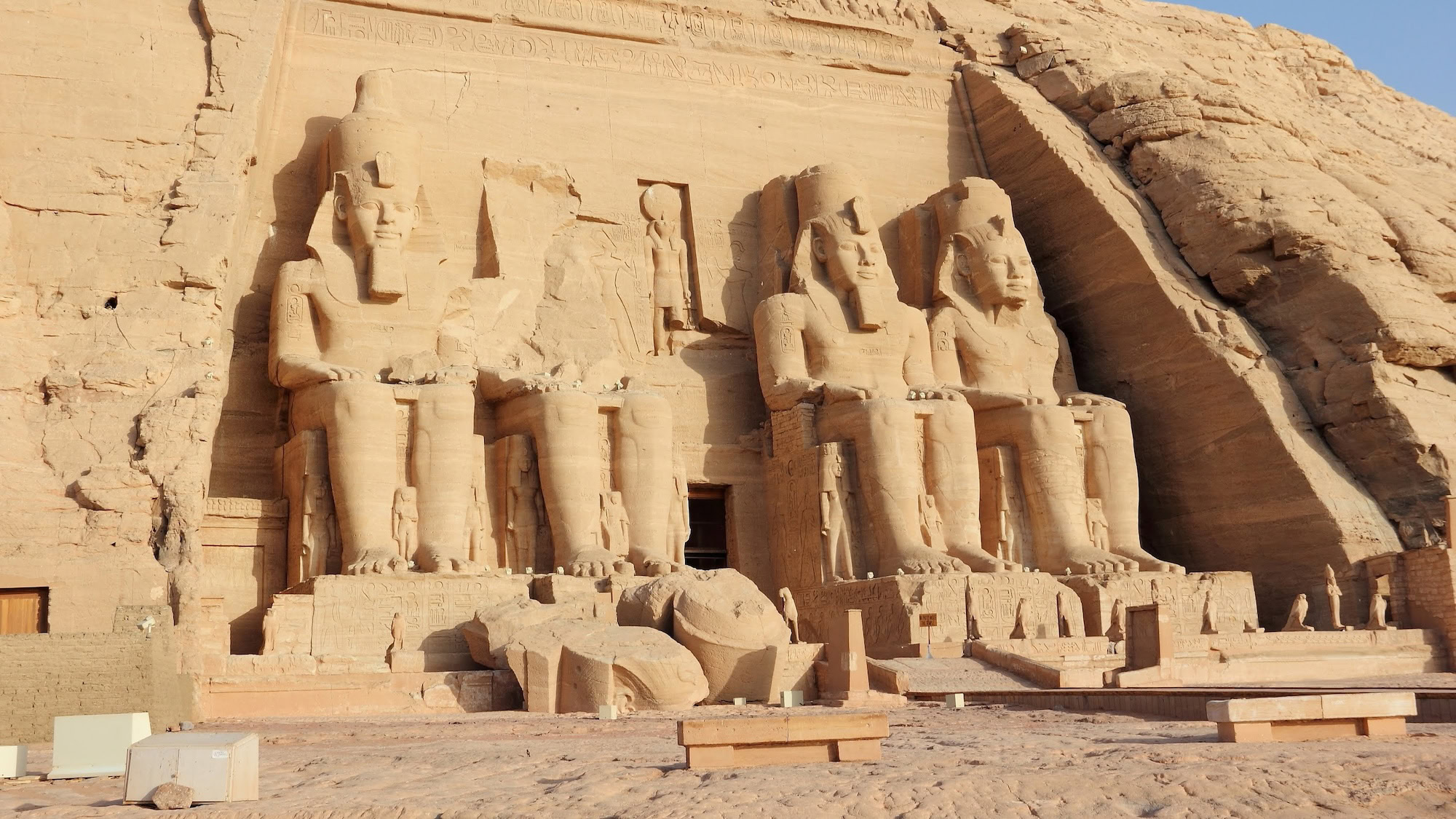
Like Philae Temple, Abu Simbel was relocated when the High Dam created Lake Nasser. This UNESCO rescue project required cutting the temples into 1,036 blocks weighing up to 30 tons each, then reconstructing them 65 meters (213 feet) higher and 200 meters (656 feet) back from their original location.
Frequently Asked Questions
Plan minimum 7-10 days to experience Cairo, Luxor, and Aswan comfortably without rushing.
Yes, Egypt maintains robust tourism security with dedicated tourist police and established safety protocols.
Domestic flights take 1.5 hours and operate multiple times daily, while overnight trains offer scenic journeys.
No special vaccinations are required for South African travelers, though routine immunizations should be current.
Budget $30-50 USD per day for meals and allow $200-400 USD for quality souvenirs.
Major credit cards work at hotels and tourist establishments, though carry US dollars for tips.
All meals, guided excursions, accommodation, and transportation between sites are included with professional guides.
October through April offers ideal temperatures (20-25°C/68-77°F) for sightseeing and exploration.
Book 2-3 months ahead for optimal flight prices and hotel availability during peak seasons.
Private tours offer personalized pacing, expert guides, and flexibility to spend more time at captivating sites.
Long pants and shirts covering shoulders are required at religious sites with comfortable walking shoes.
Tipping (baksheesh) is customary – budget $3-5 USD per day for guides and $2-3 USD for drivers.
Design Your Custom Tour
Explore Egypt your way by selecting only the attractions you want to visit