Private. Custom. Since 1955.
Egypt Tours from Australia
Since 1955, Egypt Tours Plus has designed private Egypt tours from Australia, each one planned around the traveller rather than a fixed group. Your package is 100% customisable, with an expert Egyptologist guide and a personal driver alongside you throughout. Tell our specialists what you most want to see, and they’ll build the itinerary entirely around you.
Your Guide to Egypt Tours from Australia
This guide brings together everything an Australian traveller needs to plan a private Egypt tour with confidence: the flight routes and connecting hubs between the two countries, the best months to go, how many days to set aside, what a tour package costs and includes, the visa process for Australian passport holders, and the on-the-ground practicalities once you land.
Table of Contents
Why Australian Travellers Choose Egypt Tours Plus
Planning an Egypt trip from Australia is a different exercise than it is for travellers in Europe or Asia. The flight is long, Egypt sits eight to nine hours behind the eastern states, and little about the destination resembles home.
Those realities reward working with a team that handles them every day. Egypt Tours Plus has arranged Egypt tours from Australia since 1955, and the entire service is built so that the distance ends up being the only demanding part of the trip.
Fully Private Tours, No Fixed-Departure Groups
Every one of our private Egypt tour packages is built for your party alone. All land touring is fully private, with your own guide and driver throughout, and the only small-group element is the shore excursions on a Luxury Nile Cruise, shared with fellow passengers from your vessel.
There is no shared coach, no fixed departure date to fit into, and no itinerary decided by anyone but you. An Australian family travelling with grandparents can take the Pyramids slowly, while a couple chasing the best photography light can reach Luxor’s west bank before the day-trip crowds. Because the plan belongs to you, it can shift mid-trip: a slower morning added in Aswan, a site swapped in Cairo, none of it needing a group’s agreement.
Egyptologist Guides Who Speak Clear, Fluent English
Your guide on every touring day is a qualified Egyptologist, not a general escort working from a script. They have studied the temples and tombs you will be standing in front of, and they explain them in clear, fluent English with the easy, good-humoured rapport most Australian travellers warm to. Guides who also speak Italian, Spanish, German, French, and other languages are available on request, though for the majority of Australian visitors the real benefit is simply that nothing gets lost in translation.
24/7 In-Country Support and a Dedicated Travel Concierge
From your first enquiry, a single dedicated Travel Concierge takes ownership of your trip. They build the first-draft itinerary, refine it with you over as many rounds as it takes, and stay reachable while you are on the ground. The time gap is exactly why that matters: when it is mid-afternoon at your hotel in Aswan, it is already late evening back east, so a local team answering in real time means a delayed train or a last-minute change is sorted in Egypt rather than left waiting for Australia to wake. Support runs around the clock, every day you are travelling.
Awarded TripAdvisor Travelers’ Choice Every Year Since 2020
Recognition like this is earned through reviews, not advertising. Egypt Tours Plus has received the TripAdvisor Travelers’ Choice award every year from 2020 through 2025, which places it among the highest-rated operators worldwide as judged by travellers themselves. For Australians committing to a long-imagined trip and a long flight to reach it, that kind of consistent track record is a plain, practical reason for confidence well before any deposit is paid.
Flights from Australia to Egypt: Routes and Logistics
Egypt has no direct air link with Australia, so every journey involves at least one stop, almost always at a major Gulf or Asian hub. Total travel time runs from about 18 hours out of Perth to roughly 21 to 24 hours from the eastern capitals, and longer again on two-stop fares. The reassuring part is that the airlines flying these routes use modern long-haul aircraft on well-timed schedules, and the final leg into Cairo is short. Here is how the options break down by region, and what to expect on arrival.
No Direct Flights From Australia
There are currently no non-stop services between any Australian city and Cairo, so a single connection through a major hub is the standard way to travel. In practice this is rarely a drawback. The busiest hubs for Australian travellers, Dubai, Doha, Abu Dhabi, and Singapore, are among the best-connected airports in the world, with frequent onward departures to Cairo and a short final leg of roughly three and a half to five hours.
A well-placed connection also lets you stretch your legs, shower in a lounge, and start resetting your body clock before the last stretch. Your Travel Concierge can talk you through the routing that best suits your departure city, while the international ticket itself is one you book directly with the airline.
Main Connecting Hubs and Airlines
Four gateways handle the large majority of Australia-to-Egypt traffic:
- Dubai (DXB): Emirates serves all five mainland state capitals, with Emirates or EgyptAir flying the onward leg to Cairo. This is usually the fastest routing from most cities.
- Doha (DOH): Qatar Airways, partnered with Virgin Australia, connects every major Australian airport, with Qatar Airways and EgyptAir operating the short hop into Cairo.
- Abu Dhabi (AUH): Etihad provides another Gulf option from the eastern cities, with onward connections to Cairo.
- Singapore (SIN): Singapore Airlines pairs with onward services into Egypt, a sensible choice for travellers who would rather break the trip in Asia than the Middle East.
Because many of these are codeshares between an Australian or Gulf carrier and EgyptAir, you can usually book the whole journey on one ticket, with luggage checked through to Cairo.
Recommended Routes by Australian Region
East Coast (Sydney, Melbourne, Brisbane, Canberra). From the eastern capitals, the quickest options are one-stop services through Dubai or Doha, putting Cairo within about 21 to 24 hours of leaving home, connection included. Departures tend to leave in the evening, giving you an overnight first leg, a daytime connection at the hub, and an evening arrival into Cairo. Sydney and Melbourne have the widest choice of flights and the keenest fares, while Brisbane and Canberra travellers often route through the same hubs, sometimes via Sydney first.
Perth and Western Australia. Perth is Australia’s closest major city to Egypt, and it shows. One-stop services through Dubai or Doha reach Cairo in around 18 hours, several hours quicker than from the east coast, and Qantas also offers a routing via Johannesburg with EgyptAir. For Western Australians, that shorter total makes even a slightly more compact Egypt itinerary well worth taking.
Adelaide and the Smaller Cities. Adelaide sits between the two, with Emirates and Qatar Airways connections placing Cairo roughly 19 to 22 hours away. Travellers from Hobart, Darwin, or regional centres usually connect through Sydney, Melbourne, or Perth before joining a Gulf carrier, and your Travel Concierge can help compare the timing once your dates are set.
Time Zone and Jet Lag
Because Australia and Egypt lie in opposite hemispheres, the time gap shifts with each country’s daylight saving. Egypt now observes daylight saving from late April to late October, sitting two hours ahead of GMT in winter and three in summer. For the eastern states, that places Cairo between 7 and 9 hours behind home, with the wider 9-hour gap falling during the Australian summer. Perth, which does not use daylight saving, runs about 5 to 6 hours ahead of Cairo, and Adelaide somewhere between.
Travelling west into a longer day, most Australian visitors find the adjustment gentler than the journey home. Arriving in the evening, getting a proper night’s sleep, and easing into the next morning is usually enough to bring you onto Egyptian time by your first full day. And because your itinerary is private, that first day can be paced exactly as lightly as you want it.
Note: Airline schedules, routings, and journey times from Australia shift through the year, and seats on the best connections sell early in peak periods. Your Travel Concierge can recommend the strongest options from your home airport as part of planning your trip.
Popular Egypt Tour Package Options from Australia
Most Australian travellers start from one of four itinerary shapes and adjust from there. None of them is fixed. Each can be lengthened, combined, or pared back to fit the time you have and the things you most want to see.
Classic 8 to 10-Day Egypt Tour
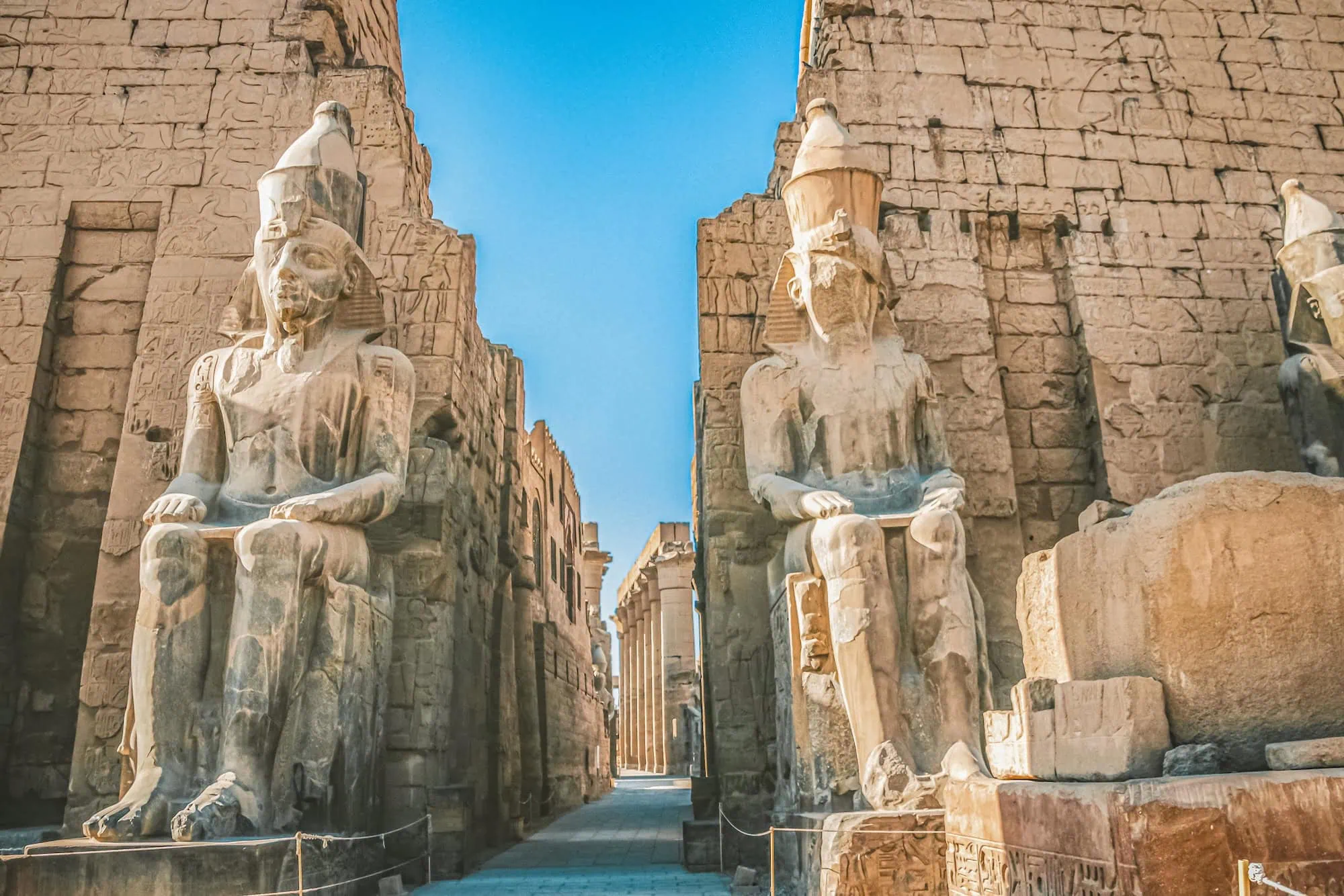
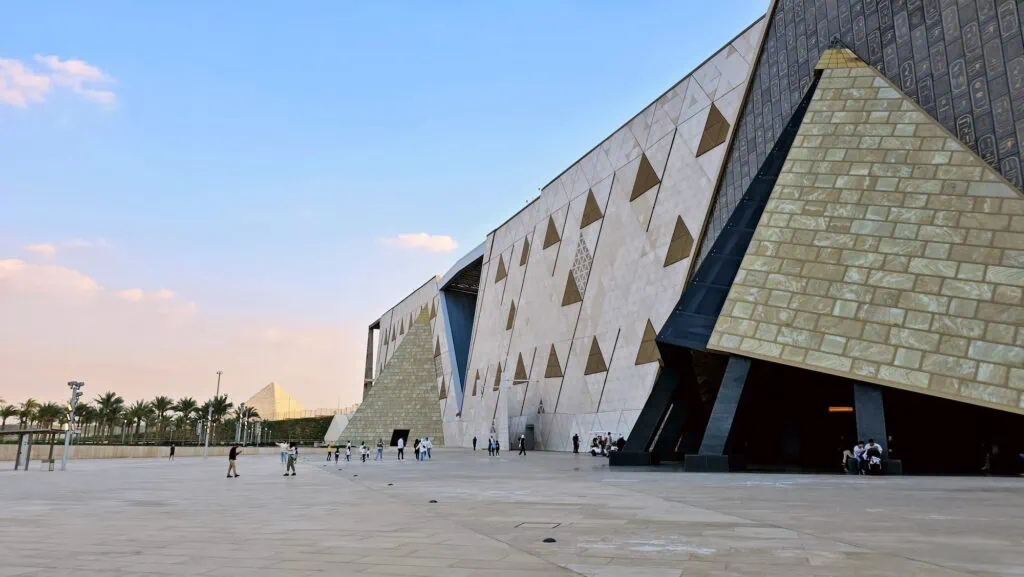
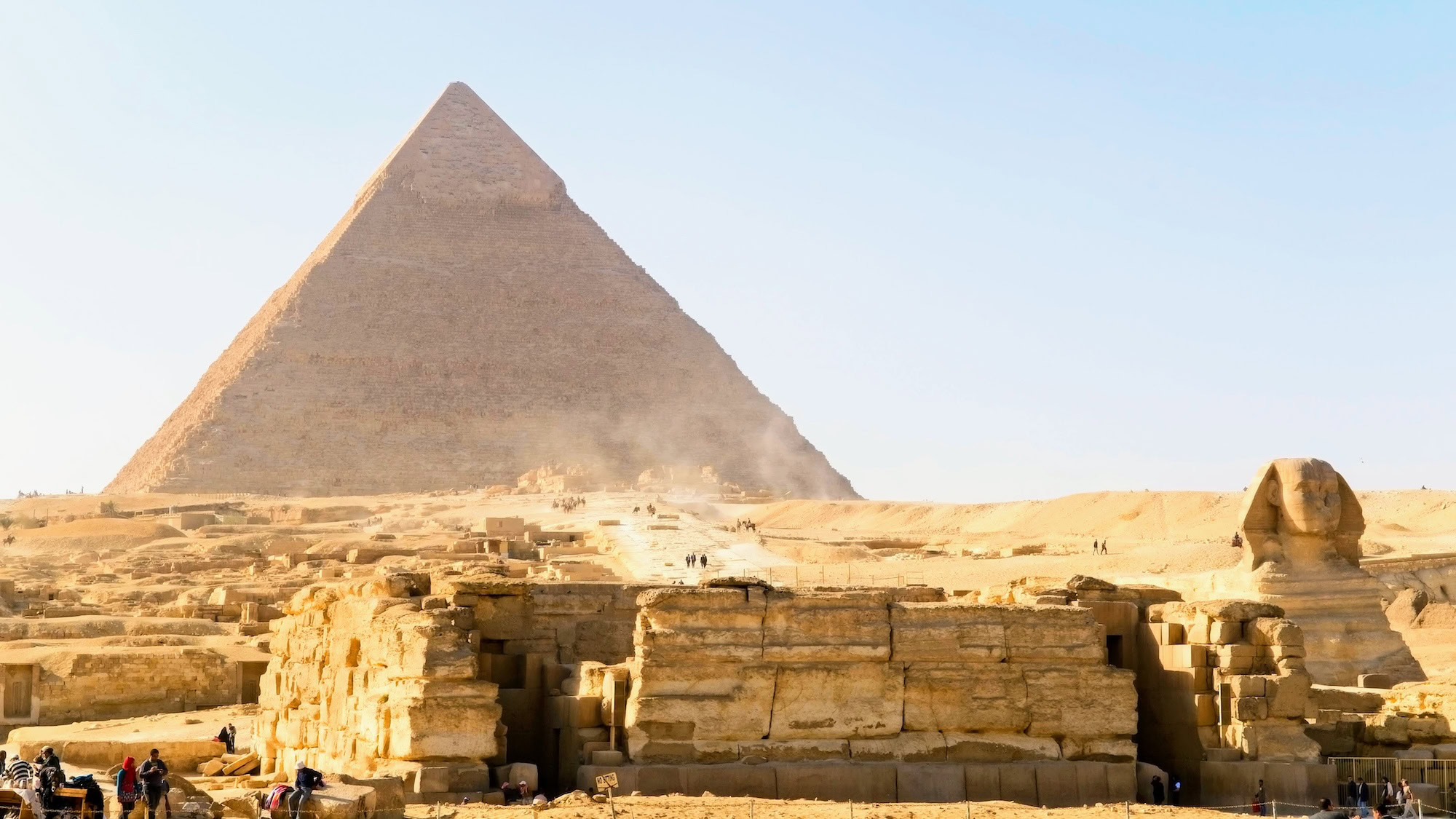
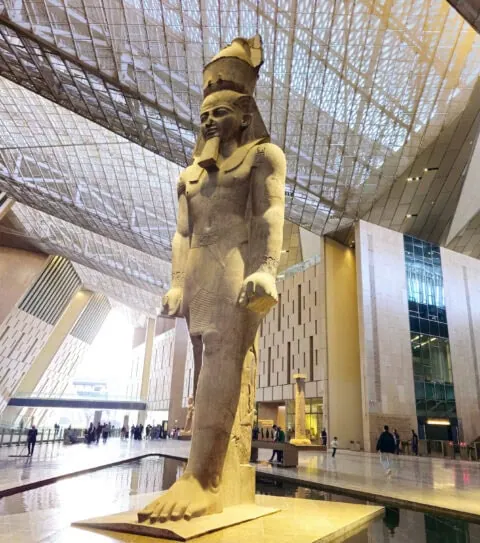
The most-booked choice for first-time Australian visitors pairs a few days in Cairo with a Nile cruise between Luxor and Aswan. You take in the Pyramids and the Grand Egyptian Museum at Giza, fly south, and join a Luxury Nile Cruise vessel that sails the classic stretch past Edfu and Kom Ombo, with your Egyptologist guide and a personal driver alongside you on every touring day. The 8-day version covers the essentials at a steady pace, while 10 days leaves room for Abu Simbel or an unhurried extra day in Cairo.
Recommended: Egypt Tours with Nile Cruise
Egypt Tour with Dahabiya Cruise
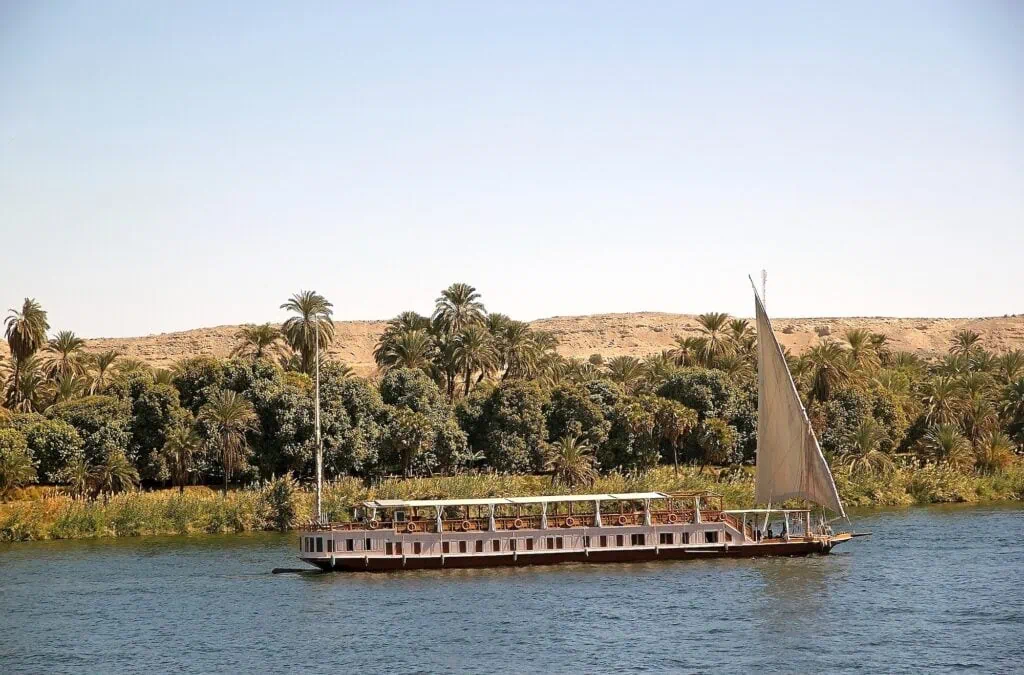
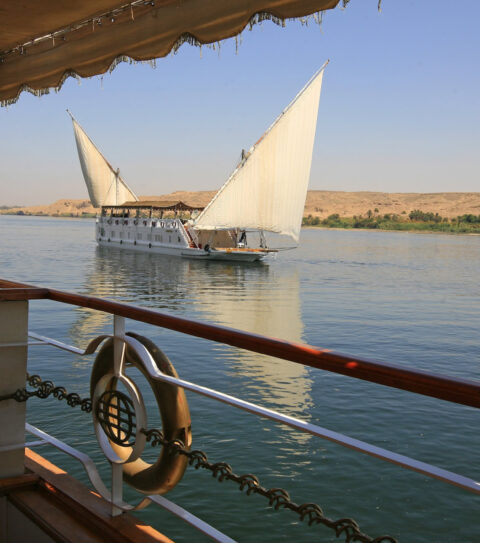
For travellers who want the Nile at its quietest, a dahabiya changes the whole rhythm of the trip. These traditional twin-masted sailing vessels carry just 8 to 16 guests, so the boat feels close to private, and they moor at small islands and riverbank villages the larger vessels pass straight by. The sailing days are slow and unhurried, the meals are cooked fresh on board, and the stretch between Esna and Aswan unfolds much as it would have a century ago. It is the natural pick for honeymooners, photographers, and anyone who would rather drift than keep to a timetable.
Egypt and Red Sea Combination
Egypt’s Red Sea coast is the usual way to fold in some downtime after the temples, and it pairs especially well with a culture-heavy first week. A few days on the coast bring warm, clear water and some of the most vivid coral reefs anywhere, which divers and snorkellers from Australia tend to rate alongside the best back home.
Hurghada is the most established base and the easiest to reach; Marsa Alam, further south, has quieter shores and superb reefs close in; and Sharm El Sheikh, over on the Sinai coast, combines diving with striking desert-and-sea scenery. Adding the Red Sea usually takes a full itinerary to somewhere between 10 and 15 days.
Recommended: Cairo, Nile Cruise and Red Sea Holidays

Egypt with Multi-Country Extension
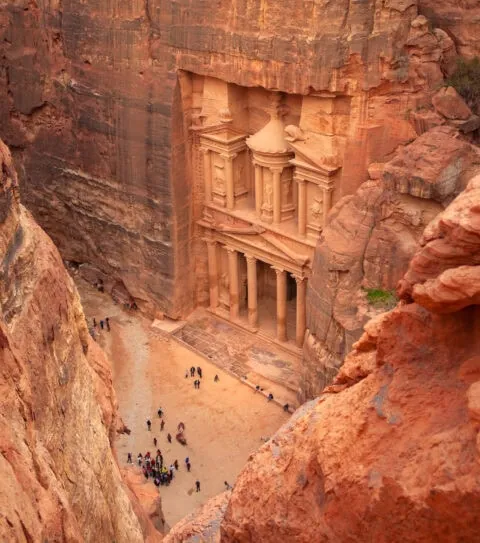
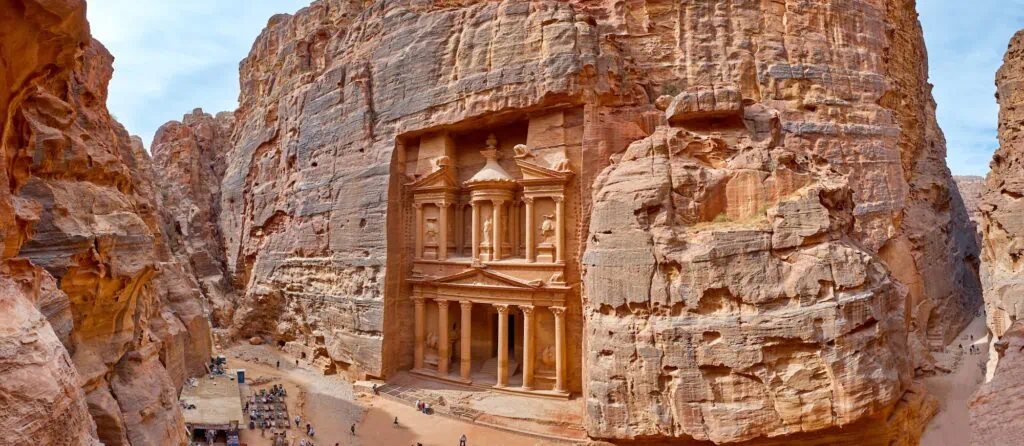
Because the flight from Australia is such a commitment, many travellers make the most of it by adding a second country to the same trip. Egypt with Jordan is the most popular pairing, with Petra and Wadi Rum a short flight from Cairo. Others combine Egypt with Greece for islands and classical history, with Dubai for a sharp modern contrast, with Turkey for Istanbul and Cappadocia, or with Morocco for a fuller North African journey that needs a little more time to do properly.
Multi-country trips generally run between 14 and 23 days, and your Travel Concierge can balance the pace so neither country ends up rushed.
Best Times to Travel to Egypt from Australia
Egypt’s most comfortable travel season runs from October to April, when daytime temperatures across the country settle into the low-to-mid 20s Celsius (around 68 to 77°F). For Australian travellers that window lines up neatly with your own spring, summer, and early autumn, and in particular with the long December and January school break, which falls right in the middle of Egypt’s finest weather. The one stretch to weigh carefully is the Australian winter, June to August, which is Egypt’s hottest time of year. Here is how the months compare.
Peak Season: December and January
These two months bring Egypt’s best conditions: warm, dry days made for the Pyramids, Luxor’s temples, and long afternoons on deck, with cool, pleasant evenings. They also coincide with the Australian summer holidays, Christmas and New Year, and Australia Day, which makes this the most popular time for Australian families to travel and the easiest period to fit around school terms.
The trade-off is demand. This is Egypt’s busiest and priciest window, and the best Luxury Nile Cruise vessels and Cairo hotels fill months ahead. If you are set on travelling over the December and January break, booking early is the single most useful thing you can do.
Sweet-Spot Months: October, November, February, March and April
For many Australians these are the months that strike the best balance. The weather is still excellent, the crowds are thinner than at peak, and prices ease. October and November follow the Australian spring school break and the Melbourne Cup long weekend, while February and March offer warm, quiet sightseeing once the summer rush has passed. April is lovely too, and lands on the Easter holidays and the autumn school break, though Easter itself is a high-demand period in Egypt, so it pays to lock in dates ahead. Anzac Day at the end of April makes a handy anchor for a longer trip.
Shoulder Season: May and September
May and September sit on either side of the hot months and reward flexible travellers with noticeably better value and fewer visitors. Cairo and the Red Sea stay comfortable, though Luxor and Aswan in the deep south start to warm up, especially by late May and early September. Because your tour is private, your guide can simply begin the touring days earlier, finishing the outdoor sites before the midday heat and leaving afternoons for the pool or the cruise deck. September also catches the start of the Australian Term 3 school holidays.
Off-Peak: June, July and August
These are Egypt’s hottest months, with temperatures regularly climbing past 35°C (95°F) and higher still in Luxor and Aswan. They also overlap the Australian winter and the July school holidays, so they suit families tied to that break and travellers chasing the lowest prices and emptiest sites.
Egypt is entirely doable in summer with the right approach: early-morning sightseeing, plenty of water, air-conditioned vehicles throughout, and more time built in on the Red Sea coast, where a sea breeze takes the edge off the heat. It simply asks for a little more planning, which your Travel Concierge handles as part of shaping the itinerary.
Egypt’s two highest-demand windows are Christmas through New Year and Easter week. Rates at the best hotels and on the top Luxury Nile Cruise vessels run well above mid-season, and the finest options sell out four to six months ahead. For travel over either period, the earlier you confirm, the better your choice.
How Many Days for an Egypt Tour from Australia?
The single biggest factor for Australian travellers is the flight. Reaching Egypt takes the better part of a day, sometimes closer to two with connections, and the same again coming home.
One thing worth making clear up front: the lengths below count time on the ground in Egypt. Your international flights sit on top, so an 8-day tour means eight days in Egypt, with a travel day at each end before and after. That flying time stays the same whether you stay a week or a month, so the longer you spend in Egypt, the more the journey pays itself back.
The frameworks below are the ones most Australian travellers build from.
8-Day Egypt Tour from Australia
Eight days is the shortest itinerary that still does Egypt justice: a few days in Cairo for the Pyramids and the Grand Egyptian Museum, then a flight south for a Nile cruise between Luxor and Aswan. It works if your leave is limited, or if you are folding Egypt into a longer trip with a stopover elsewhere.
The honest caveat for Australians is the arithmetic. Those eight days are all in Egypt, but with up to two travel days at each end, the flying still makes up a large share of your total time away, which is exactly why most who come this far choose to stay longer.
Our 8-day Egypt tours show what fits into the week.
10 to 12-Day Egypt Tour from Australia
This is the range most Australian travellers settle on, and for good reason. Ten days covers a complete first visit without rushing, with room to add Abu Simbel or a gentler pace through Cairo to the classic Nile route. Twelve opens space for a second thread entirely: a few days on the Red Sea coast to unwind, a Lake Nasser cruise down to Abu Simbel, or extra time in the south. For the length of flight involved, ten to twelve days is the sweet spot between seeing enough and keeping the trip manageable.
Browse our 10-day Egypt tours and 12-day Egypt tours for ideas.
14-Day Egypt Tour from Australia
Two full weeks let you travel Egypt unhurried, and they open a genuine fork in the road. One path goes deeper into Egypt alone: the Western Desert oases, a longer Lake Nasser cruise, quieter sites that shorter trips skip, and unrushed days in each city.
The other crosses a border, pairing Egypt with a near neighbour such as Jordan, where Petra and Wadi Rum sit a short flight from Cairo. Either way, fourteen days is enough to stop counting days and simply travel. Our 14-day Egypt tours cover both styles.
15+ Days: Multi-Country Routes
Because the flight from Australia is such a commitment, a good number of travellers turn the trip into a broader journey across two or even three countries. Jordan is the shortest add-on, often just three or four extra days. Greece, Turkey, and Dubai ask for a little more, and Morocco, further west and a full destination in its own right, sits best on the longer itineraries. Most two-country trips run between 14 and 23 days in total, with three-country routes longer again. Your Travel Concierge can balance the time so each leg gets its due rather than feeling like a stopover.
Our 15-day Egypt tours and multi-country tours show how the longer routes come together.

Egypt Tour Package Inclusions and Pricing
Every Egypt Tours Plus package is quoted as a single price covering the Egypt portion of your trip from arrival to departure. That includes your accommodation in the hotel category you choose, all domestic flights between Egyptian cities, and your private Egyptologist guide alongside you on every touring day, together with a personal driver and a modern air-conditioned vehicle.
It also covers entrance fees to the major sites, all airport and hotel transfers, and your Nile cruise or dahabiya segment with every meal taken on board.
Breakfast is included at each hotel, and 24/7 in-country support runs for the length of your stay.
A few things sit outside the package, and it helps to budget for them separately. The main one is your international flights to and from Cairo, which you book directly. Beyond that, plan for the Egyptian entry visa (US$25), travel insurance, lunches and dinners away from the cruise, drinks with meals, and the customary gratuities for your guide, driver, and cruise crew.
Optional extras such as a sunrise hot-air balloon over Luxor or special-access tickets to certain tombs are simple to add, and your Travel Concierge will price them in if you want them.
What an Egypt Tour Costs
Because every tour is built from scratch, there is no single sticker price. Most Australian travellers fall within three broad bands, quoted per person per day and based on two sharing a room:
- Mid-range: US$200 to US$350 per person per day. Comfortable four-star hotels, a standard Luxury Nile Cruise vessel, and the full private guide-and-driver service.
- Premium: US$400 to US$600 per person per day. Five-star hotels, superior cruise vessels or a dahabiya, and more refined dining and touring.
- Luxury: US$600 to US$1,000 and up per person per day. The finest hotels and suites, top-tier or privately chartered vessels, and the most exclusive access Egypt offers.
At recent exchange rates these bands work out to roughly AUD $280 to $490, AUD $560 to $840, and AUD $840 and up per person per day. The rate shifts regularly, so treat those as a guide.
To see exact figures, switch the site’s currency to Australian dollars using the currency selector in the menu, and every price you come across while browsing, including the sample tours above, will display in AUD.
One pricing note worth keeping in mind: over the peak periods, particularly Christmas through New Year and Easter week, five-star hotels and the top cruise vessels can run 25 to 50 percent above their mid-season rates. Travelling in the sweet-spot or shoulder months covered above is the simplest way to stretch your budget further.

Australia-Specific Practical Information
Egypt Visa Requirements for Australian Citizens
Australian passport holders need a tourist visa for Egypt, and the simplest route is the official online e-visa. You apply before you fly, pay US$25 for a single-entry visa valid for 30 days, and receive the approval by email to print and carry. Apply at least a week ahead to allow for processing. A visa on arrival is also available at Cairo airport for the same fee, though the e-visa spares you the queue after a long flight. Make sure your passport has at least six months’ validity beyond your travel dates and a blank page for the entry stamp.
If your trip takes in a second country such as Jordan, your Travel Concierge will flag any separate visa that leg requires.
Australian Embassy in Cairo
Australia’s embassy in Egypt is in Cairo at the World Trade Centre, 11th Floor, 1191 Corniche El Nil, Boulaq, on the main line +20 2 2770 6600.
For a genuine emergency outside office hours, Australians can reach the Australian Government’s 24-hour Consular Emergency Centre on +61 2 6261 3305 from overseas.
It is worth saving both numbers before you go, though in practice your Egypt Tours Plus team is your first point of contact on the ground and will step in long before official channels are needed.
Time Zone
Cairo sits 7 to 9 hours behind Australia’s eastern states depending on the season, around 5 to 6 hours behind Perth, and between the two for Adelaide. In practice, a call home to the east coast works best in your Egyptian morning, when it is early evening back in Australia. Most travellers settle into local time within a day of arriving.
Travel Insurance for Australian Travellers
Travel insurance is strongly recommended for any trip to Egypt, and it pays to choose a policy that covers overseas medical treatment and emergency evacuation alongside the usual cancellation and baggage cover. Australian travellers have plenty of well-regarded choices, including Cover-More, Allianz, 1Cover, InsureandGo, and World Nomads, and comparison sites make them easy to weigh up.
Check the policy suits everything you have planned, since a Nile cruise, Red Sea diving or snorkelling, and desert excursions are all worth confirming are included.
Australia’s reciprocal health-care arrangements do not extend to Egypt, so private travel cover is your safety net.
Credit Cards and Currency
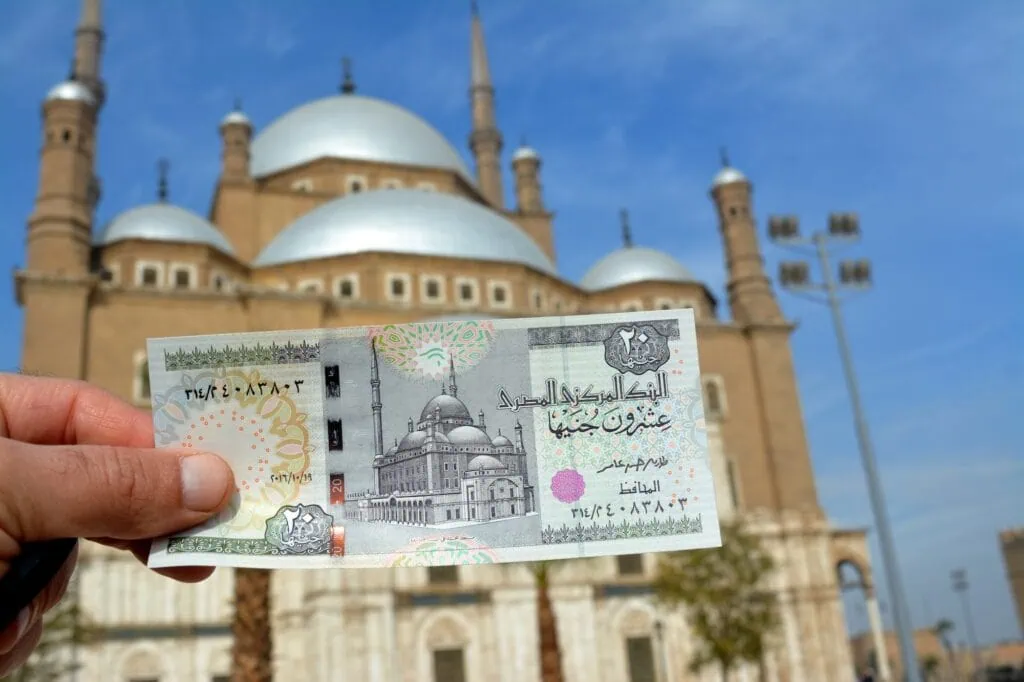
Egypt’s currency is the Egyptian pound (EGP). Major hotels, restaurants, and Egypt Tours Plus itself accept Visa and Mastercard, but cash is still the norm for tips, market stalls, and small everyday purchases. ATMs are widely available in Cairo and the tourist centres, and US dollars are often accepted and sometimes preferred for larger items. Let your Australian bank know you are travelling so your cards are not blocked, and carry a mix of both. Bringing roughly AUD $300 to $600 per person in cash, to change into pounds on arrival or spend as US dollars, comfortably covers tips and incidentals for most trips. There is no need to buy Egyptian pounds before leaving Australia, as the rate is better in Egypt.
Health and Vaccinations
No vaccinations are required to enter Egypt from Australia, but it is sensible to be up to date on routine immunisations, and a doctor or travel clinic can advise on extras such as hepatitis A and typhoid based on your plans. Stick to bottled or filtered water rather than tap, which is easy since your hotels and cruise provide it, and the same care with freshly washed salads and street food heads off most upset stomachs. Pack any regular medication in its original packaging with enough for the whole trip, as some items can be hard to match locally. For current advice, the Australian Government’s Smartraveller service at smartraveller.gov.au is the best source, and registering your trip there lets the embassy reach you if needed.
Phone and Internet
The three big Australian carriers, Telstra, Optus, and Vodafone, all offer international roaming day passes that work in Egypt, though the cost mounts over a longer trip. For better value, a local Egyptian SIM from Vodafone, Orange, or Etisalat is inexpensive and easy to buy on arrival with your passport, while an eSIM bought before you leave does the same job without swapping cards. Either way, most hotels and Nile cruise vessels provide free Wi-Fi, so staying in touch is rarely a problem.
One practical note: Egypt uses Type C and Type F sockets at 220 volts, so your Australian Type I plugs will not fit. A universal travel adapter solves it, and most modern phone and laptop chargers handle 220 volts without a separate converter.
Your Egypt Tour from Australia, Designed Around You
Every Egypt Tours Plus journey from Australia is shaped around your group, your interests, and the time you have. Whether you are picturing a 12-day first visit over the December school holidays, a relaxed two weeks that pairs the Nile with a Red Sea stay, or a three-week journey across Egypt and Jordan, your dedicated Travel Concierge builds the itinerary around what matters most to you.
Tell us your rough dates and what draws you to Egypt, and your first-draft itinerary comes back within 1 to 12 hours.
From there we shape it together, and most Australian travellers go through two to four rounds of changes before everything feels right. There is no commitment and no pressure along the way, and the plan is finalised only once you are 100% happy with it.
Awarded TripAdvisor Travelers’ Choice every year from 2020 through 2025, and trusted by thousands of travellers, Australian and international alike, since 1955.
Frequently Asked Questions
For most first-time visitors from Australia, ten to twelve days hits the sweet spot. That gives you a few days in Cairo for the Pyramids and the Grand Egyptian Museum, a Nile cruise between Luxor and Aswan, and enough room to add Abu Simbel or a couple of relaxed days without feeling rushed.
Eight days is the shortest that still does Egypt justice, and it works if your leave is tight or you are adding Egypt to a longer trip. Given the long flight, though, most travellers feel the journey pays off better across ten days or more.
To fold in the Red Sea, twelve days and up works well; a second country like Jordan is best from fourteen.
No. Your package covers the full Egypt portion of the trip, including all domestic flights between Egyptian cities, but the international flights to and from Cairo are booked separately by you.
This is standard for tailor-made travel and it works in your favour, since you can use your preferred airline, frequent-flyer points, or a routing that suits your departure city. Your Travel Concierge is glad to advise on the best connections from Sydney, Melbourne, Perth, or wherever you are flying from.
Everything on the ground is taken care of: airport transfers, your private guide and driver, hotels, the Nile cruise, entrance fees, and 24/7 support.
There are no direct flights, so every route involves at least one stop, usually at a Gulf hub such as Dubai, Doha, or Abu Dhabi, or via Singapore.
From the eastern capitals, expect around 21 to 24 hours in total including the connection, with the quickest one-stop services routing through Dubai or Doha. Perth is noticeably closer at around 18 hours, while Adelaide sits between the two.
The final leg into Cairo is short, just three and a half to five hours from the Gulf hubs, and the modern long-haul aircraft on these routes make the distance more comfortable than it sounds.
Yes. Australian passport holders need a tourist visa, and the easiest option is the official online e-visa. It costs US$25 for a single entry valid for 30 days. You apply before you travel, then print the approval to carry with you.
Apply at least a week ahead to allow for processing. A visa on arrival is also available at Cairo airport for the same price, though the e-visa saves you queuing after a long flight.
Your passport needs at least six months’ validity beyond your travel dates and a blank page for the stamp.
Egypt’s main tourist regions, Cairo, the Nile valley, Luxor, Aswan, and the Red Sea resorts, are well set up for visitors, with a visible tourist police presence and infrastructure built around travellers. Millions of international visitors travel there safely each year.
Our itineraries deliberately stay within these established areas and do not include North Sinai, which carries official travel warnings. Travelling privately, with your own guide and driver rather than on public transport, adds a further layer of reassurance.
Before you go, check the Australian Government’s current advice at smartraveller.gov.au and register your trip there. Our 24/7 in-country team is also on hand throughout your stay should anything come up.
On land, everything is private. Through Cairo, Luxor, Aswan, and the rest of the itinerary it is your party alone, with your own Egyptologist guide and personal driver, no fixed departures and no coach to share. You set the pace, linger where you like, and reshape days as you go.
The honest exception is the Nile cruise. Shore excursions from a Luxury Nile Cruise vessel are small-group visits of around 12 guests per Egyptologist, shared with other passengers from your ship. If you prefer, fully private excursions can be arranged at additional cost, while on a dahabiya the 8 to 16 guests aboard mean excursions feel essentially private anyway.
So the small-group element begins and ends at the cruise stops. Everything else is built around your party alone.
Egypt runs two hours ahead of GMT, shifting to three hours ahead during its daylight saving from late April to late October. Because Australia’s daylight saving falls in the opposite half of the year, the gap moves with the season.
From the eastern states, Cairo is 7 to 9 hours behind, with the wider gap during the Australian summer. Perth, which doesn’t change its clocks, runs about 5 to 6 hours ahead of Cairo, and Adelaide lands in between.
Travelling west into a longer day, most Australians find the adjustment fairly gentle, and a private itinerary means your first day can be paced as lightly as you like.
October to April is Egypt’s most comfortable season, with warm, dry days in the low-to-mid 20s Celsius, ideal for sightseeing. For Australians this lines up neatly with your spring, summer, and early autumn.
December and January bring the best weather and coincide with the summer school holidays, which makes them the most popular and the busiest, so book early. The shoulder months, October, November, February, March, and April, offer excellent conditions with thinner crowds and better value.
The Australian winter, June to August, is Egypt’s hottest stretch. It is still doable with early starts and time on the Red Sea, and it suits families tied to the July break or anyone chasing the lowest prices.
Because every tour is custom-built, there is no fixed price, but most travellers fall into three bands, quoted per person per day based on two sharing: mid-range at US$200 to $350, premium at US$400 to $600, and luxury at US$600 to $1,000 and up.
The difference comes down to hotel category, the cruise vessel, and how exclusive the experiences are. At recent exchange rates the bands work out to roughly AUD $280 to $490, $560 to $840, and $840 and up per day, though the rate moves.
To see prices in Australian dollars as you browse, switch the currency to AUD using the selector in the site menu.
For most trips, three to six months ahead is comfortable. It secures your preferred hotels and cruise vessel and gives you time to lock in good international flights from Australia, which is the longer lead item.
If you are travelling over a peak period, especially the December to January summer holidays or Easter week, aim for six months or more. These are Egypt’s busiest windows, and the best properties and cruise cabins fill early.
That said, we can often arrange trips on shorter notice, so it is always worth asking. Your Travel Concierge will tell you honestly what is realistic for your dates.
Yes, it is strongly recommended. Choose a policy that covers overseas medical treatment and emergency evacuation as well as cancellation and lost baggage, since Australia’s reciprocal health-care agreements do not extend to Egypt.
Well-regarded options for Australians include Cover-More, Allianz, 1Cover, InsureandGo, and World Nomads, and comparison sites make them easy to weigh up.
Check the cover suits your plans. If you intend to dive or snorkel on the Red Sea, or join a desert excursion, confirm those activities are included, as some policies treat them as extras.
Yes. You can pay for your tour using an Australian Visa or Mastercard, and your Travel Concierge will walk you through the secure payment options when you book.
On the ground in Egypt, cards are accepted at major hotels, restaurants, and larger shops, but cash is still the norm for tips, markets, and small purchases. Let your Australian bank know you are travelling so your cards aren’t blocked.
It is worth carrying some cash too, around AUD $300 to $600 per person, to change into Egyptian pounds on arrival or use as US dollars for incidentals.
Light, breathable clothing in natural fabrics works best, along with a hat, sunglasses, and strong sunscreen, since the Egyptian sun is intense even in the cooler months. Bring comfortable closed shoes for the sites, which are often uneven and dusty.
Pack something to cover shoulders and knees for mosques and churches, a light layer for cool desert evenings and over-air-conditioned interiors, and swimwear if you are heading to the Red Sea or a cruise with a pool.
Don’t forget a universal travel adapter, as Egypt uses Type C and F sockets that your Australian plugs won’t fit, plus any regular medication in its original packaging.
Absolutely. Customisation is the whole point. Because every itinerary is private and built from scratch, it can be shaped around whatever draws you to Egypt.
That might mean a deeper focus on history and archaeology with extra time at the temples and tombs, diving or snorkelling on the Red Sea, a photography-led pace, a honeymoon, a family trip with activities the kids will enjoy, or an accessible itinerary with the right support. Multi-country journeys pairing Egypt with Jordan, Greece, Turkey, Dubai, or Morocco are equally straightforward.
Tell your Travel Concierge what matters most, and they will build the trip around it.

Design Your Custom Tour
Explore Egypt your way by selecting only the attractions you want to visit