

Monastery of St. Simon the Tanner: Egypt’s Hidden Marvel
The world’s largest Christian church sits carved into cliffs overlooking Cairo. What began as a miraculous legend in the 10th century has evolved into one of Egypt’s most extraordinary religious sites.
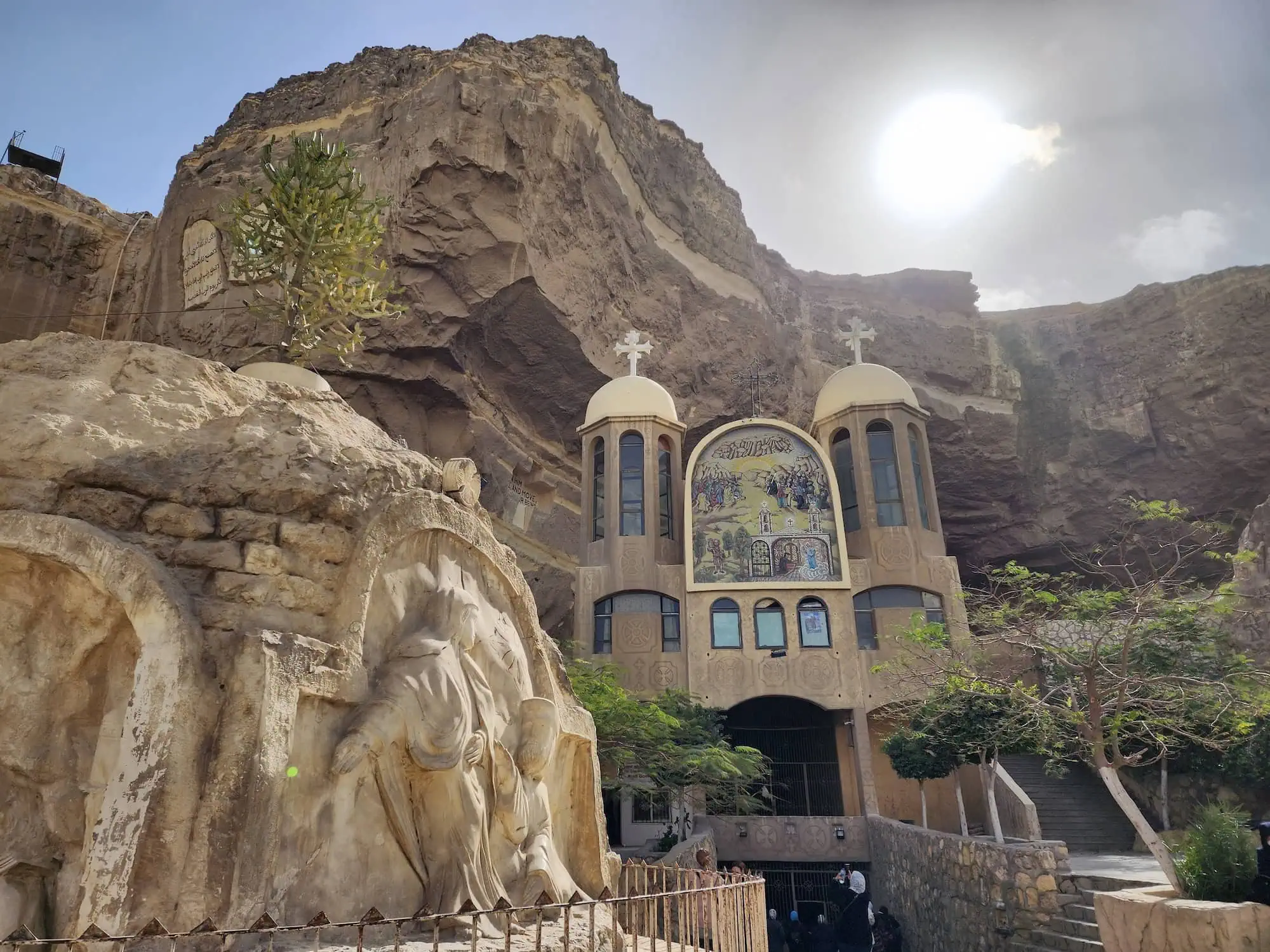
The Monastery of St. Simon the Tanner stands as a testament to faith, community resilience, and architectural innovation. Built into the limestone cliffs of Mokattam Hills, this remarkable complex serves thousands of worshippers while telling the story of Egypt’s Coptic Orthodox heritage.
Located in what locals call Garbage City, the monastery transforms a challenging urban landscape into a place of profound spiritual significance. We’ve witnessed countless visitors emerge from this unique destination deeply moved by both its physical grandeur and the community spirit that thrives here.
Table of Contents
The Legend Behind the Mountain-Moving Saint
Saint Simon the Tanner occupies a special place in Coptic Orthodox tradition, forever linked to one of Christianity’s most dramatic miracles. During the reign of Caliph al-Muizz in the 10th century, Egypt’s Christian community faced a theological challenge that would test their faith in the most literal way possible.
The story centers on a debate between religious leaders, where Christians were asked to prove their faith by moving Mokattam Mountain. According to tradition, Saint Simon, a humble leather worker known for his deep devotion, led the Christian community in three days of prayer and fasting. When the mountain reportedly moved, it established Simon’s place in religious history and created the spiritual foundation for today’s monastery.
Abraham the Syrian, the Coptic Orthodox Patriarch at the time, played a crucial role in organizing the Christian response. Historical accounts describe how the entire Coptic community united behind this miraculous event, which occurred during a period of significant religious tension in medieval Cairo.
Historical Context of 10th Century
The Fatimid period brought unique challenges for Egypt’s Christian population. Caliph al-Muizz, while generally tolerant of religious diversity, presided over a society where theological debates carried high stakes for minority communities.
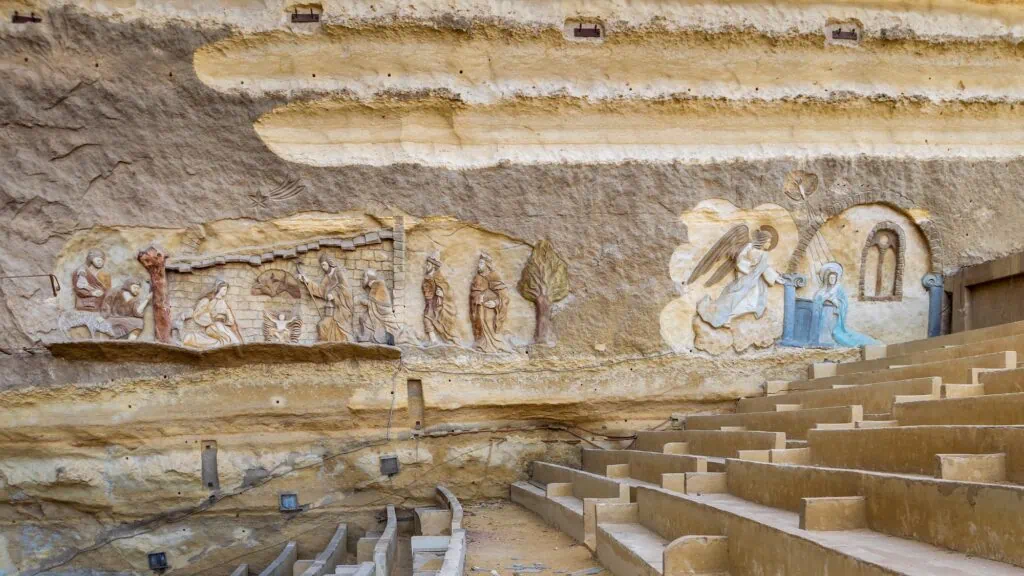
The Miracle’s Lasting Impact
This foundational miracle established not just a religious precedent, but also strengthened the bonds within Egypt’s Coptic Orthodox community. The mountain-moving story continues to inspire believers and provides the spiritual backdrop for modern pilgrimages to the monastery site.
Cave Church Architecture and Sacred Spaces
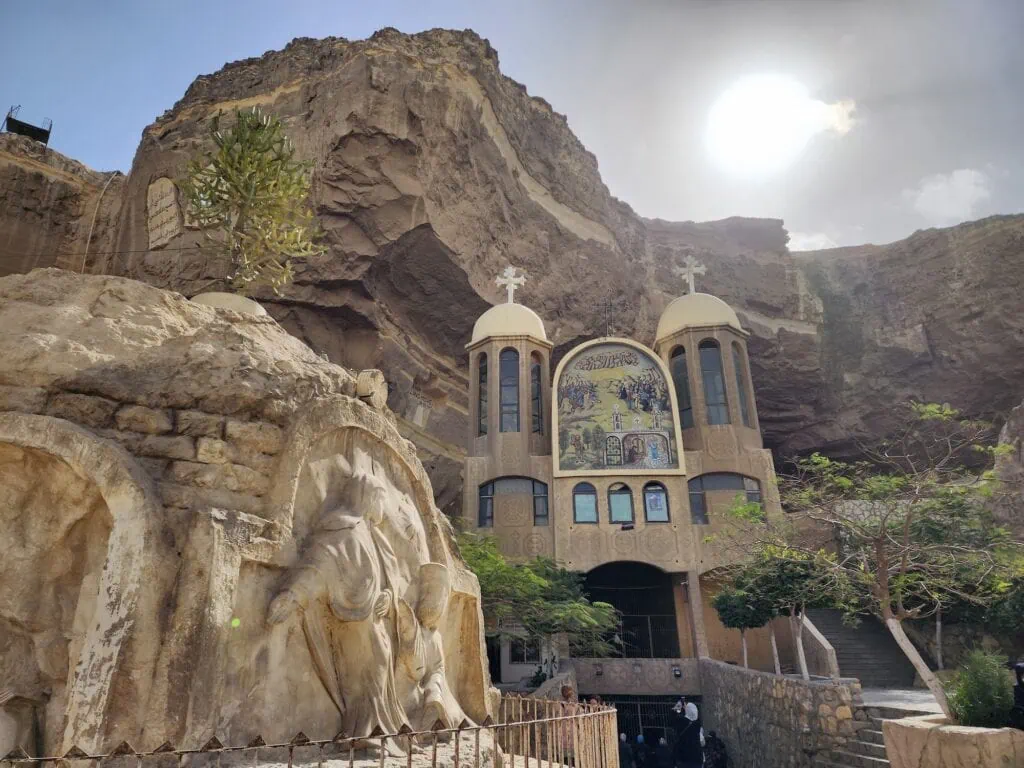
The monastery complex represents one of the most innovative approaches to religious architecture in the modern Middle East. Construction began in the 1970s when the Zabbaleen community, Cairo’s traditional garbage collectors, settled in the Mokattam Hills area and established their spiritual center.
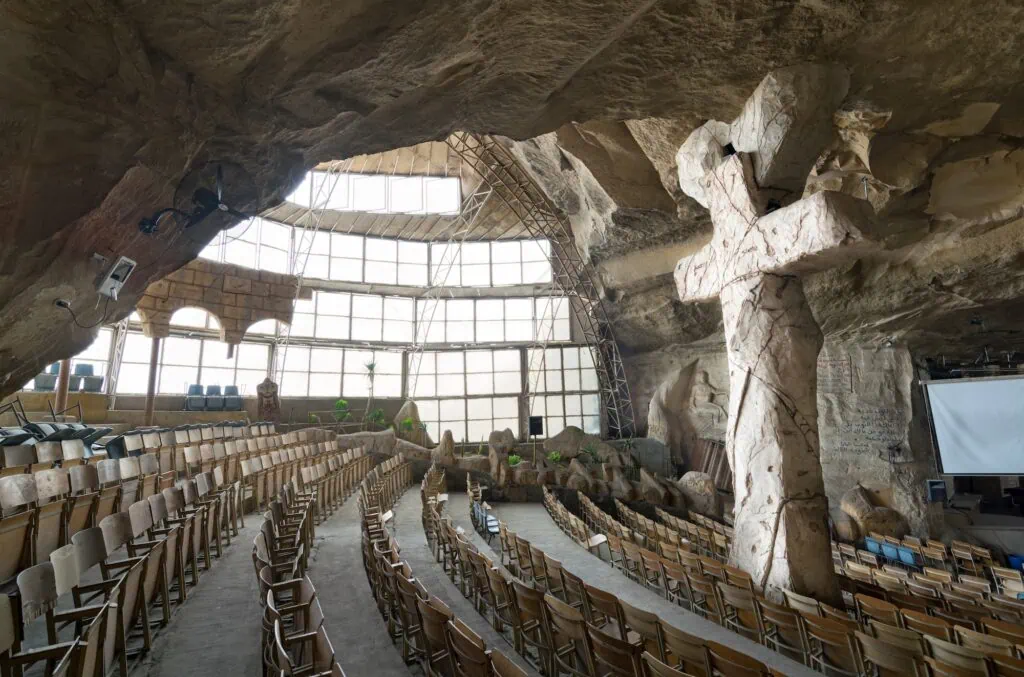
The main Cave Church utilizes a pre-existing natural cave, expertly carved and expanded to accommodate up to 2,000 worshippers around a central pulpit. Engineers and craftsmen worked directly with the limestone cliff face, creating a space that feels both intimate and cathedral-like. The acoustic properties of the rock formation naturally amplify voices and music, eliminating the need for extensive sound systems.
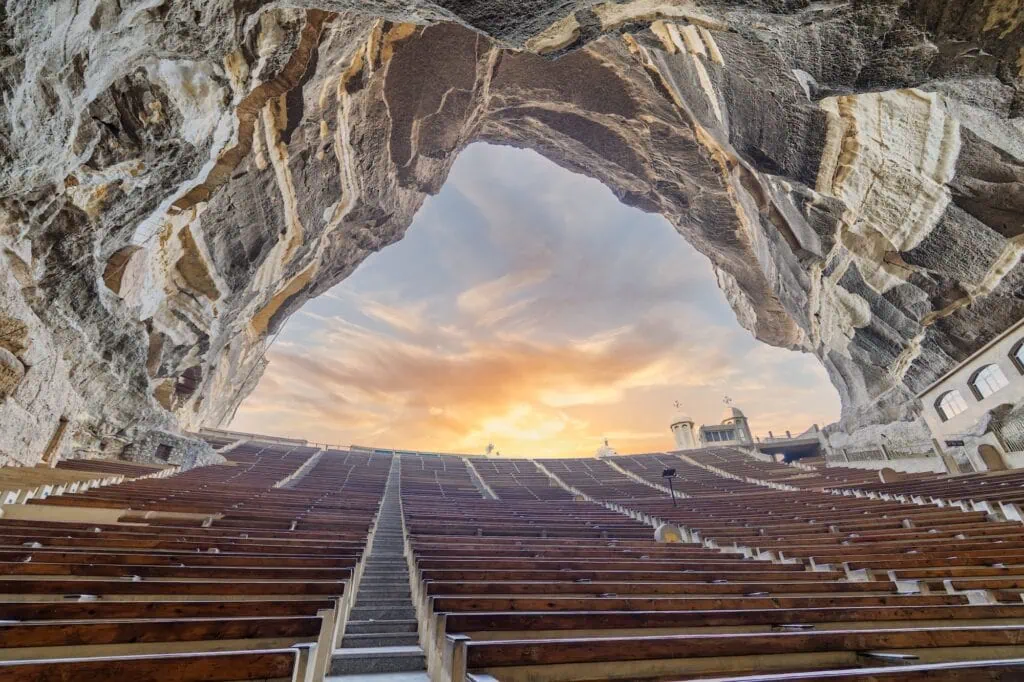
Seven individual chapels comprise the full monastery complex, each carved into the native limestone with remarkable precision. The construction method preserves the natural beauty of the rock while creating functional worship spaces that serve different liturgical needs throughout the year.
Architectural Innovation in Religious Design
The monastery’s builders faced unique challenges in creating accessible worship spaces within cliff formations. Solutions included careful attention to natural lighting, ventilation systems that work with the cave structure, and accessibility considerations for elderly and disabled visitors.
Living Faith in the Zabbaleen Community
The monastery serves as more than a tourist attraction – it functions as the spiritual heart of the Zabbaleen community, whose members have lived and worked in this area for generations. This community of Coptic Orthodox Christians has built a remarkable society around recycling and waste management, demonstrating resilience and resourcefulness that extends far beyond their religious practices.
Their settlement history dates back to the 1960s, when rural families migrated to Cairo and established what would become one of the world’s most efficient informal recycling operations. The community processes approximately 4,000 tons of Cairo’s waste daily, achieving recycling rates that exceed many formal municipal programs worldwide.
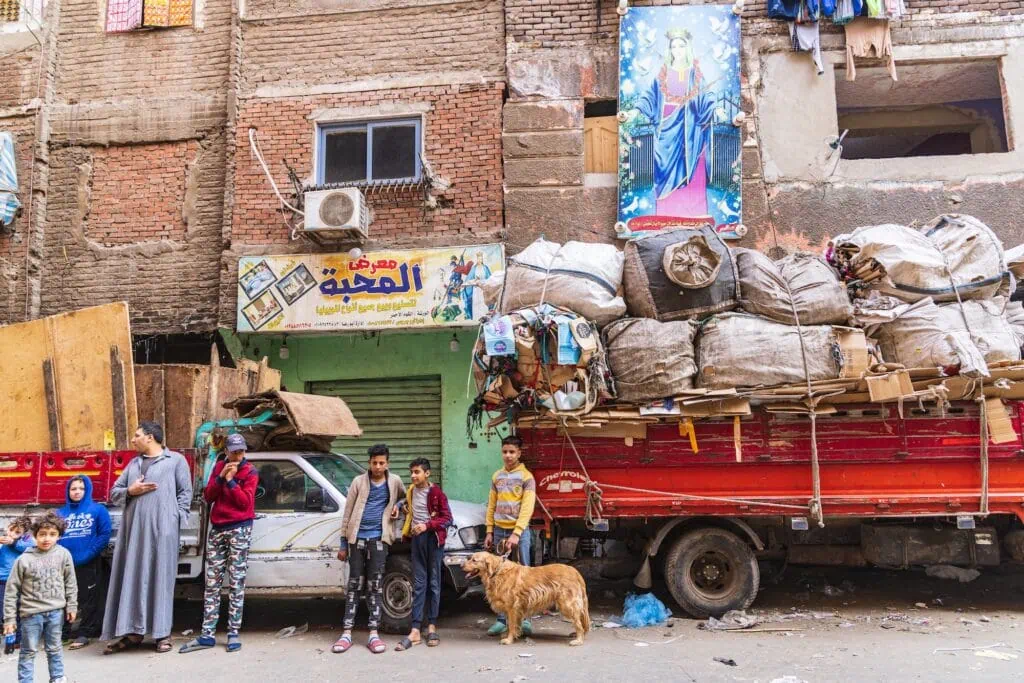
Educational facilities within the monastery complex provide schooling for local children and adult literacy programs. These services address practical needs while strengthening community bonds and preserving Coptic Orthodox traditions for future generations.
Religious events throughout the year bring together Zabbaleen families and visitors from across Egypt. Major celebrations include Easter services, feast days honoring Saint Simon, and regular weekly worship that maintains the spiritual rhythm of community life.
The monastery’s role extends to providing social services including healthcare referrals, marriage ceremonies, and support for families facing economic challenges. This comprehensive approach reflects the traditional role of monasteries in Coptic Orthodox communities.
Community Resilience and Modern Challenges
Despite facing economic pressures and urban development challenges, the Zabbaleen community continues to thrive around their spiritual center. The monastery provides stability and identity in a rapidly changing urban environment.
Cultural Heritage Preservation
Traditional Coptic Orthodox practices, including distinctive liturgical music and seasonal celebrations, are actively maintained through monastery programs that engage both older and younger community members.
Visiting the Monastery Complex
Access to the monastery requires traveling through Manshiyat Nasser, commonly known as Garbage City, which presents both logistical considerations and cultural opportunities for visitors. The journey itself offers insights into Cairo’s urban complexity and the innovative communities that call this area home.
Transportation options include private vehicles with experienced drivers who know the narrow streets, or organized tours that provide cultural context along with transportation. We recommend morning visits between 9:00 am (09:00) and 11:00 am (11:00) when lighting conditions are optimal for photography and community activities are at their peak.
The monastery welcomes visitors of all faiths, though modest dress requirements apply as with any religious site in Egypt. Shoulder and knee coverage is essential, and head coverings are available for those who wish to wear them during their visit.
Photography is generally permitted in most areas of the complex, though flash photography may be restricted during active worship services. The dramatic interplay of natural and artificial lighting creates stunning visual opportunities, particularly in the main Cave Church where carved details emerge from the limestone walls.
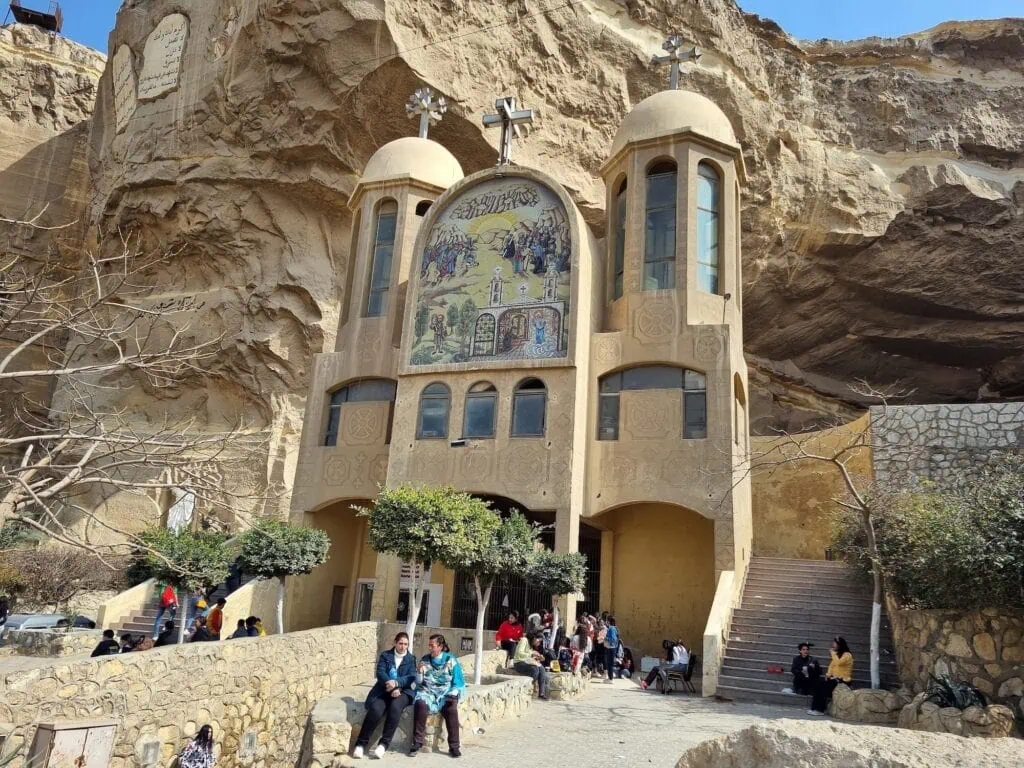
Tourist facilities include basic restrooms and a small gift shop featuring locally made crafts and religious items. The gift shop supports community artisans while offering visitors meaningful souvenirs that reflect the monastery’s spiritual and cultural significance.
Planning Your Visit
Most visits last 60 to 90 minutes, allowing time to explore the main church, several of the smaller chapels, and the educational center exhibits. Longer visits can include time for quiet reflection or participation in scheduled prayer services.
Safety and Cultural Sensitivity
While the monastery area is generally safe for tourists, we recommend visiting as part of a guided tour or with local contacts who can provide cultural context and ensure respectful interaction with community members.
Spiritual Significance in Modern Egypt
The Monastery of St. Simon the Tanner stands as one of the most important pilgrimage destinations for Egypt’s Coptic Orthodox population, which comprises approximately 10% of the country’s total population. Regular pilgrimages bring believers from across Egypt and the broader Coptic diaspora to participate in worship and connect with their spiritual heritage.
The monastery’s regional significance extends beyond Egypt’s borders, attracting Coptic Orthodox visitors from Sudan, Ethiopia, and Coptic communities in North America and Australia. This international connection strengthens global Coptic identity while maintaining the monastery’s role as an authentically Egyptian spiritual center.
Religious festivals throughout the liturgical year transform the monastery complex into a celebration of faith, music, and community. The Feast of Saint Simon the Tanner draws particularly large crowds, with services conducted in traditional Coptic as well as Arabic to accommodate worshippers from different backgrounds.
Contemporary Christian Life in Islamic Context
The monastery demonstrates how Christian communities maintain their religious practices while contributing positively to Egypt’s diverse religious landscape. This model of peaceful coexistence offers valuable insights for interfaith relations throughout the Middle East.
Global Coptic Orthodox Connections
International partnerships with Coptic Orthodox communities worldwide help support the monastery’s educational and social service programs while sharing Egyptian Coptic traditions with global audiences.
Cultural and Educational Programs
Beyond its primary function as a place of worship, the monastery operates extensive educational programs that serve both the local Zabbaleen community and visitors interested in learning about Coptic Orthodox traditions. These programs include language classes, religious education, and vocational training that helps community members develop skills for Egypt’s evolving economy.
The monastery’s library contains important Coptic Orthodox texts and historical documents related to Saint Simon’s miracle and the development of Christianity in Egypt. Scholars and researchers can access these materials by appointment, contributing to ongoing academic study of Egyptian Christianity.
Cultural exchange programs bring together Coptic Orthodox youth from different regions of Egypt, fostering connections that strengthen religious identity while building leadership skills for the next generation of community leaders.
Visiting delegations from international religious organizations regularly tour the monastery as part of interfaith dialogue initiatives. These visits promote understanding between different Christian denominations and between Christian and Muslim communities in Egypt.
Combine Your Visit with Cairo’s Top Attractions
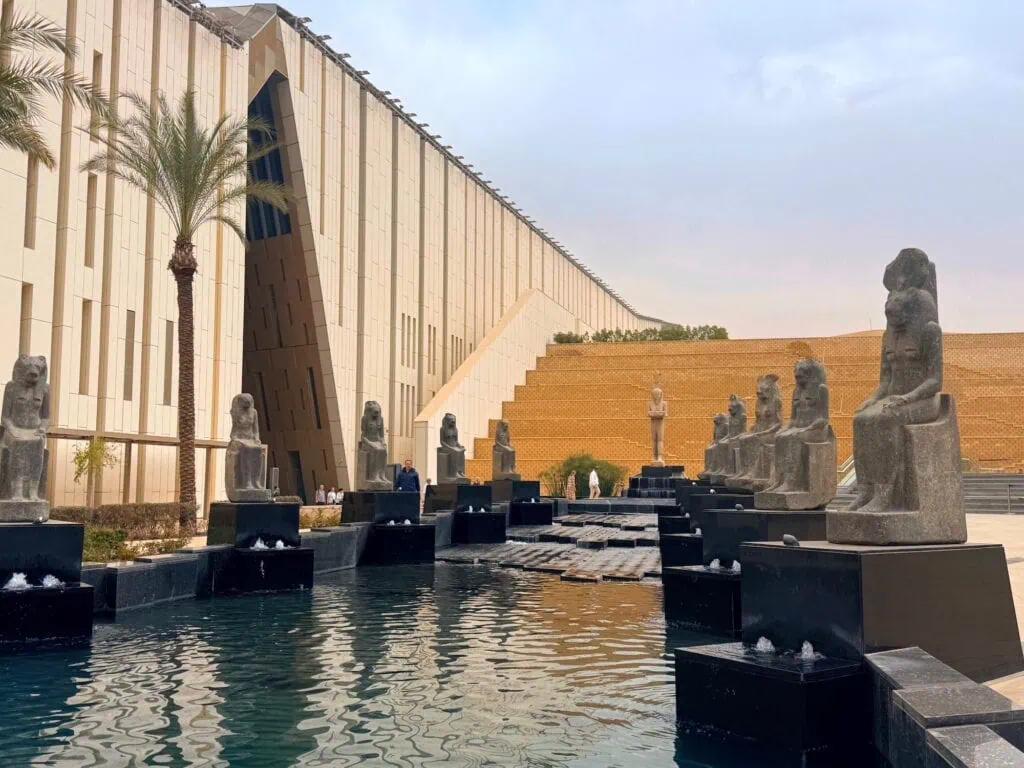
This unique experience can easily be combined with other highlights in Cairo to create a well-rounded and immersive day. Many travelers choose to pair a visit to the Monastery of St. Simon the Tanner with iconic sites such as the Giza Pyramids, the Grand Egyptian Museum, or a guided tour of Old Cairo’s historic churches and mosques. For those interested in deeper cultural insight, the monastery visit can also be integrated with a walk through the Zabbaleen community or combined with other Coptic landmarks like the Hanging Church and the Coptic Museum.
With Egypt Tours Plus, all itineraries are fully customizable, allowing you to seamlessly blend spiritual, historical, and cultural experiences into one cohesive private tour tailored to your interests.
Discover One Of Cairo’s Most Unique Spiritual Sites
The Monastery of St. Simon the Tanner offers a truly unexpected side of Cairo—where faith, artistry, and community come together in a remarkable setting carved into the rock. With EgyptToursPlus, we incorporate distinctive experiences like this into a seamless journey that blends iconic landmarks with hidden gems for a richer, more authentic Egypt experience.
You choose your travel dates, your pace, and the experiences that shape your route. From private guided visits and smooth transportation to carefully selected accommodations and expert planning, we tailor every detail around you—ensuring a comfortable, personal, and effortlessly coordinated journey from start to finish.
Frequently Asked Questions
The Monastery of St. Simon the Tanner is located in Cairo’s Mokattam Hills about 12 km southeast of Downtown Cairo, with travel times typically ranging from 25 to 45 minutes depending on traffic. Private taxis, ride-share apps, or organized tours are the easiest transportation options because the final approach passes through the densely populated Manshiyat Naser district. Public transportation can be confusing for first-time visitors unfamiliar with the area. Morning departures usually avoid Cairo’s heaviest congestion and provide the most comfortable experience.
The Monastery of St. Simon the Tanner generally welcomes visitors daily from 8:00 am to 5:00 pm, although worship services and religious events always take priority over tourism access. The Cave Church remains an active place of worship for Cairo’s Coptic Orthodox community, particularly on Fridays, Sundays, and major feast days when attendance can reach thousands of worshippers. Visitors arriving earlier in the day usually experience smaller crowds and cooler temperatures. Confirm holiday schedules in advance during Easter, Christmas, and major Coptic celebrations.
Photography is permitted in most areas of the Monastery of St. Simon the Tanner, including the massive Cave Church amphitheater, although flash photography may be restricted during religious services. Visitors should always ask permission before photographing worshippers, monks, or members of the surrounding Zabbaleen community out of cultural respect. The church’s carved stone walls, elevated seating, and panoramic hilltop setting make it one of Cairo’s most visually distinctive religious sites. Morning light between 9:00 am and 11:00 am typically produces the clearest interior photographs.
Visitors to the Monastery of St. Simon the Tanner should wear modest clothing that covers shoulders and knees, consistent with expectations at active Coptic Orthodox religious sites in Egypt. Lightweight long sleeves, comfortable walking shoes, and breathable fabrics work best because the Mokattam Hills area can become hot and dusty, especially from May through September. Head coverings are available at the entrance for visitors who need them. Conservative dress also helps visitors blend respectfully into the surrounding residential and worship environment.
Yes, non-Christians are welcome to respectfully observe worship services at the Monastery of St. Simon the Tanner, although Orthodox sacraments such as communion remain reserved for baptized church members. The Cave Church regularly hosts large Coptic liturgies conducted in Arabic and Coptic, often accompanied by chanting and traditional hymns. Visitors interested in religious culture often find these services one of the most memorable experiences in Coptic Cairo. Arriving quietly and avoiding photography during prayers helps maintain the worship atmosphere.
There is no official admission fee for visiting the Monastery of St. Simon the Tanner, although voluntary donations are encouraged to support church maintenance, charitable programs, and local community services. The monastery serves both religious and social roles within the Mokattam area, including educational and outreach activities connected to Cairo’s Zabbaleen community. Visitors often contribute small donations in appreciation of free access to one of Egypt’s most unusual modern religious landmarks. Carrying small Egyptian pound notes is helpful for donations and local purchases.
Most visitors spend between 60 and 90 minutes at the Monastery of St. Simon the Tanner, allowing time to explore the Cave Church, surrounding chapels, carved biblical reliefs, and panoramic viewpoints over Cairo. Travelers interested in Coptic history or community life sometimes stay longer, especially when combining the visit with guided cultural tours through Manshiyat Naser. The site’s massive amphitheater seating and cliffside setting reward slow exploration rather than rushed sightseeing. Weekday mornings generally provide the calmest atmosphere for extended visits.
Services at the Monastery of St. Simon the Tanner are conducted primarily in Arabic and Coptic, the ancient liturgical language of Egypt’s Orthodox Christian tradition. During major religious celebrations, church staff and volunteers sometimes provide limited English explanations for international visitors unfamiliar with the rituals. The chanting, incense, and acoustics inside the Cave Church create a distinctive spiritual atmosphere even for non-Arabic speakers. Visitors interested in understanding the liturgy more deeply benefit from attending with knowledgeable local guides or translators.
Basic restroom facilities are available at the Monastery of St. Simon the Tanner, although amenities remain relatively simple compared to major commercial tourist attractions in central Cairo. Visitors should expect practical community-based facilities rather than luxury tourism infrastructure because the monastery functions primarily as an active religious center serving local worshippers. Carrying tissues, hand sanitizer, and bottled water is advisable for day trips into the Mokattam Hills area. Most organized tours schedule additional comfort stops before or after the monastery visit.
Yes, many visitors combine the Monastery of St. Simon the Tanner with guided visits to Cairo’s Zabbaleen community, the largely Coptic Christian recycling district surrounding the monastery in Manshiyat Naser. The community became internationally known for its sophisticated recycling system that historically processed much of Cairo’s waste. Respectful cultural sensitivity is essential because this is a living residential neighborhood rather than a staged tourist attraction. Guided visits help visitors understand the area’s social history while avoiding intrusive or inappropriate behavior.
Morning visits between 9:00 am and 11:00 am offer the best conditions for exploring the Monastery of St. Simon the Tanner, with cooler temperatures, softer lighting, and less traffic entering Mokattam Hills. The elevated location provides especially clear views across Cairo during early daylight hours before haze and afternoon heat intensify. Morning timing also increases the chance of observing daily community activity around the monastery and nearby Zabbaleen district. Avoiding late afternoon traffic can significantly reduce return travel times into central Cairo.
The Monastery of St. Simon the Tanner is generally considered safe for tourists, particularly when visited with organized transportation or experienced local guides familiar with Mokattam Hills and Manshiyat Naser. Like many densely populated urban districts, the surrounding area can feel unfamiliar to first-time visitors because of narrow roads, heavy local activity, and limited English signage. Standard precautions such as keeping valuables secure and respecting local customs are usually sufficient. Guided tours also help visitors navigate the neighborhood more comfortably and efficiently.
Design Your Custom Tour
Explore Egypt your way by selecting only the attractions you want to visit