

Mosque of Al Azhar – A Sight of Splendor in Cairo
Standing in the heart of Islamic Cairo since 970 AD, Al-Azhar Mosque remains one of the world’s most significant centers of Islamic learning.
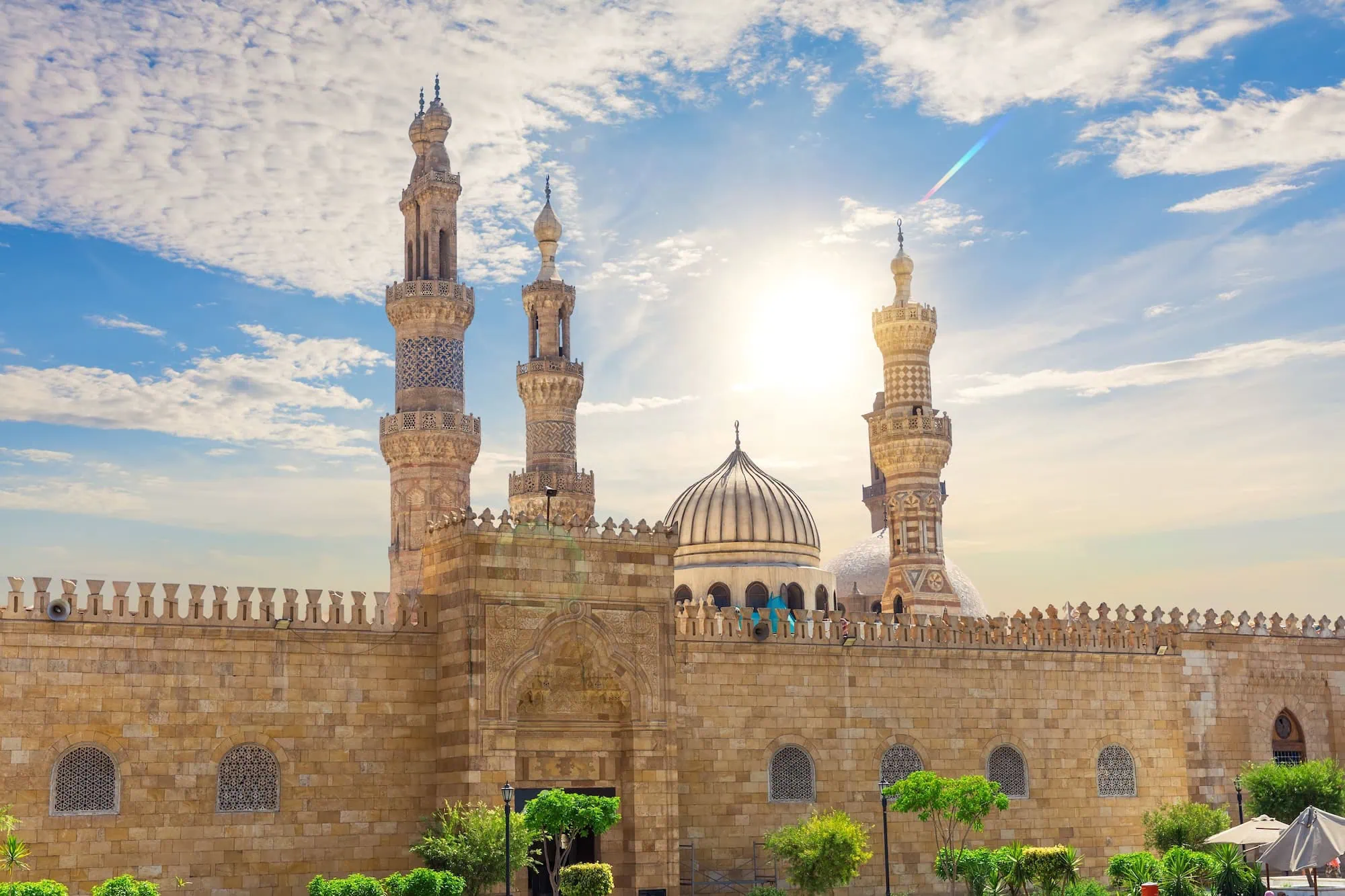
This remarkable institution has witnessed the rise and fall of dynasties, adapted to changing times while preserving ancient traditions, and continues to guide millions of Muslims worldwide.
More than just a place of worship, Al-Azhar represents the soul of Islamic scholarship—where theology meets philosophy, and where centuries-old wisdom shapes modern thought. The mosque’s towering minarets and expansive courtyards have welcomed scholars, students, and pilgrims for over a millennium, making it an essential destination for anyone seeking to understand Egypt’s profound spiritual heritage.
Our carefully designed tours offer privileged access to areas often closed to casual visitors, ensuring you experience this sacred space with the respect and understanding it deserves.
Table of Contents
The Fatimid Foundation and Early Evolution
Al-Azhar Mosque emerged during the golden age of the Fatimid Caliphate, when Cairo was being established as a new capital. Commander Jawhar al-Siqilli laid the first stone on behalf of Caliph al-Mu’izz, creating what would become the cornerstone of Islamic education in the medieval world.
From Shia Origins to Sunni Authority
The mosque’s early years reflected Fatimid Shia beliefs, serving both religious and political purposes. Scholars gathered in its halls to study Islamic jurisprudence, theology, and Arabic literature under Ismaili doctrine. However, the arrival of Saladin in 1171 marked a dramatic transformation.
The Kurdish leader converted the institution to Sunni Islam, fundamentally reshaping its theological direction and ensuring its survival through subsequent dynastic changes.
The Birth of Al-Azhar University
What truly distinguished Al-Azhar was its evolution into a university—arguably the world’s second-oldest continuously operating institution of higher education. Students from across the Islamic world traveled to Cairo to study under renowned scholars. The curriculum expanded beyond religious studies to include mathematics, astronomy, medicine, and philosophy.
This comprehensive approach to education established Al-Azhar’s reputation as the premier center of Islamic learning.
Architectural Foundations
The original mosque covered a much smaller area than today’s sprawling complex. Early Fatimid architecture emphasized geometric patterns and elegant proportions, creating spaces that encouraged contemplation and study. The prayer hall featured a simple mihrab pointing toward Mecca, while surrounding areas provided accommodation for students and visiting scholars.
Mamluk Grandeur and Ottoman Refinement
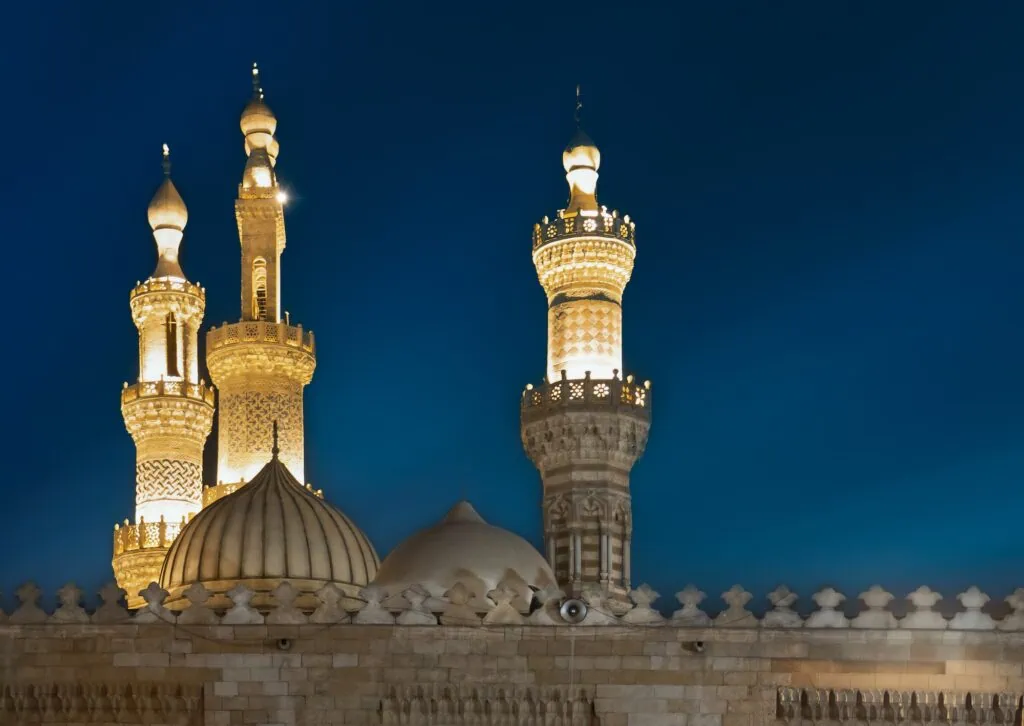
Al-Azhar underwent significant expansion during the Mamluk period, when Egypt’s military elite invested heavily in religious architecture. The Mamluks added the mosque’s most distinctive features, including several minarets that create the skyline we recognize today.
Sultan Qaitbay contributed the elegant minaret bearing his name, while other rulers added prayer halls, student dormitories, and libraries. These additions weren’t merely functional—they represented the rulers’ desire to be remembered as patrons of learning and piety. Each new structure incorporated contemporary architectural trends while respecting the mosque’s sacred character.
Ottoman Architectural Integration
When the Ottomans conquered Egypt in 1517, they approached Al-Azhar with remarkable sensitivity. Rather than imposing Turkish architectural styles, they enhanced existing structures and added elements that complemented the Fatimid and Mamluk foundations. The Ottoman contributions include the beautiful main entrance, decorative tiles, and the harmonious integration of different architectural periods that visitors admire today.
The Modern University Within Ancient Walls
Today’s Al-Azhar University operates from this historic complex, bridging medieval Islamic scholarship with contemporary academic disciplines. Students pursue traditional Islamic studies alongside modern subjects like engineering, medicine, and business administration. Faculty members include internationally recognized scholars who publish in both Arabic and Western languages.
The university’s fatwas (religious rulings) influence Muslim communities worldwide, making Al-Azhar a powerful voice in contemporary Islamic discourse. This unique combination of ancient tradition and modern relevance attracts students from over 100 countries, creating a truly international community within Cairo’s historic heart.
Academic Prestige and Global Influence
Al-Azhar’s graduates hold influential positions across the Muslim world. Government ministers, judges, university professors, and religious leaders often trace their education to these hallowed halls. The university’s approach to Islamic jurisprudence emphasizes moderation and tolerance, countering extremist interpretations through scholarly debate and rigorous academic standards.
Preserving Manuscripts and Knowledge
The university maintains one of the world’s largest collections of Islamic manuscripts. These priceless documents preserve centuries of Islamic thought, scientific discoveries, and literary achievements. Conservation efforts protect these treasures while making them accessible to researchers using modern digital technologies.
Visiting Al-Azhar: A Journey Through Living History
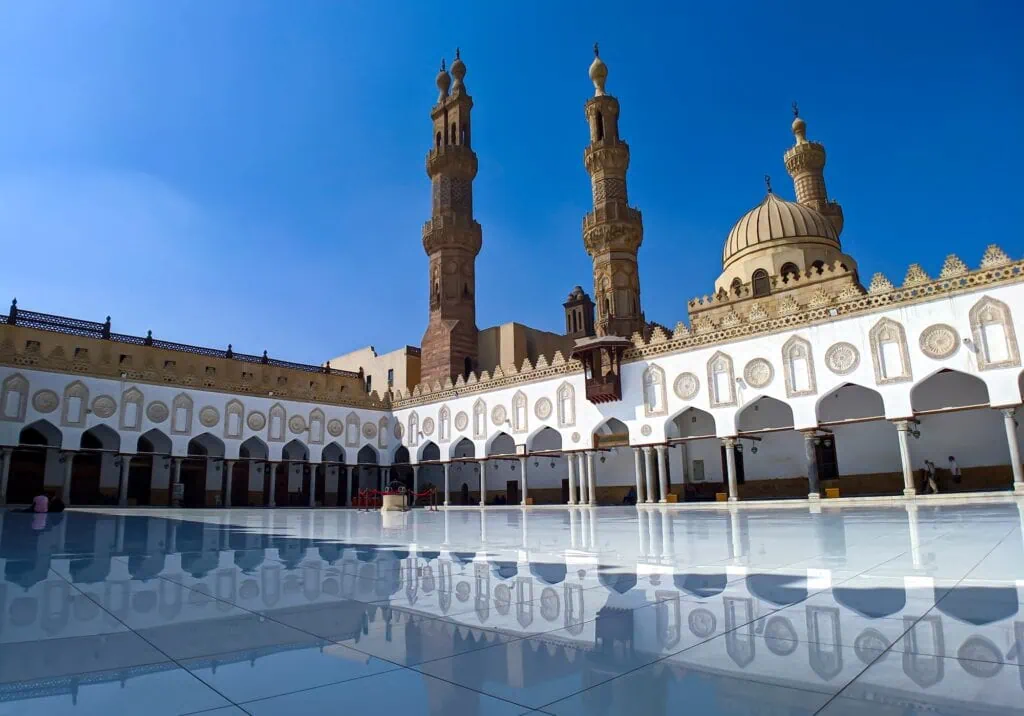
Entering Al-Azhar Mosque requires understanding both its sacred nature and rich historical significance. The main entrance leads visitors through a sequence of courtyards, each revealing different architectural periods and religious functions. The central courtyard serves as the mosque’s heart, where students traditionally gathered for lessons under the open sky.
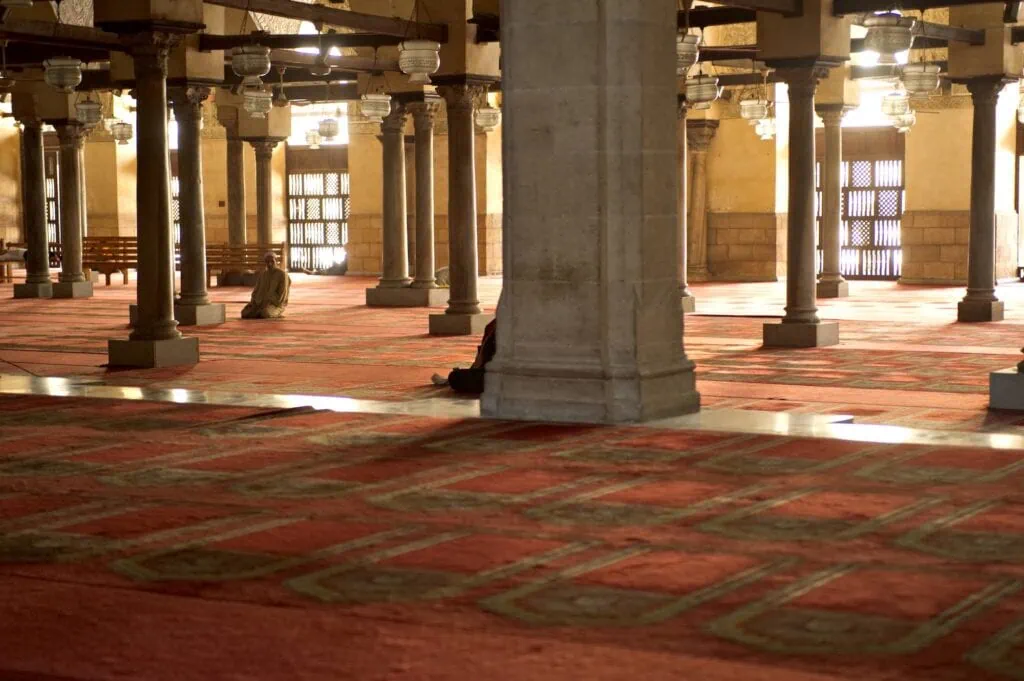
Surrounding arcades provide shelter and create intimate spaces for prayer and study. Multiple mihrabs indicate direction toward Mecca while showcasing different artistic styles from various periods. The mihrab installed during the Fatimid period displays intricate geometric patterns, while later additions reflect Mamluk and Ottoman aesthetic preferences.
Climbing the accessible minaret provides breathtaking views across Islamic Cairo, allowing visitors to appreciate the mosque’s position within this UNESCO World Heritage site. The panoramic vista encompasses other significant Islamic monuments, creating a visual narrative of Cairo’s religious heritage. During the five daily prayer times, the mosque fills with worshippers, creating an authentic spiritual atmosphere that transcends mere historical interest.
Guided visits with our expert Egyptologists provide essential context for understanding the complex layers of history, architecture, and theology that make Al-Azhar unique. We ensure respectful dress code compliance and appropriate timing to avoid disrupting religious services.
Best Times for Photography and Contemplation
Early morning visits offer the most peaceful experience, when soft light illuminates the courtyard’s ancient stones and modern pilgrims begin their daily prayers. Late afternoon provides dramatic shadows that emphasize the architectural details, particularly around the various minarets and decorative elements.
Understanding Islamic Architecture
Al-Azhar showcases evolution in Islamic architectural thought. Notice how geometric patterns become more complex over time, how calligraphy styles change between different periods, and how each dynasty left its distinctive mark while respecting the mosque’s fundamental character.

Al-Azhar’s Role in Contemporary Islamic Thought
Beyond its historical significance, Al-Azhar continues shaping modern Islamic discourse through fatwa pronouncements and scholarly publications. The mosque’s leadership regularly addresses contemporary issues affecting Muslim communities worldwide. Recent declarations have covered topics ranging from bioethics and environmental protection to women’s rights and interfaith dialogue.
This ongoing relevance makes Al-Azhar more than a historical monument—it remains a living institution actively engaged with modern challenges.
Combating Extremism Through Scholarship
Al-Azhar’s scholars have consistently opposed extremist interpretations of Islam, using rigorous textual analysis and traditional methodology to refute radical ideologies. The institution’s moderate approach emphasizes Islam’s compatibility with modern life while maintaining theological authenticity. This position has sometimes created controversy but has also earned international respect for Al-Azhar’s intellectual courage.
Educational programs now include courses on comparative religion, encouraging dialogue between different faith traditions. These initiatives reflect Al-Azhar’s commitment to promoting understanding rather than division, continuing a tradition of intellectual openness that has characterized the institution for centuries.
Planning Your Al-Azhar Experience
Al-Azhar Mosque welcomes respectful visitors throughout the week, with specific hours designated for tourist access. Located in the Khan el-Khalili area of Islamic Cairo, the mosque integrates perfectly with other significant monuments including the Citadel of Saladin and numerous medieval madrasas.
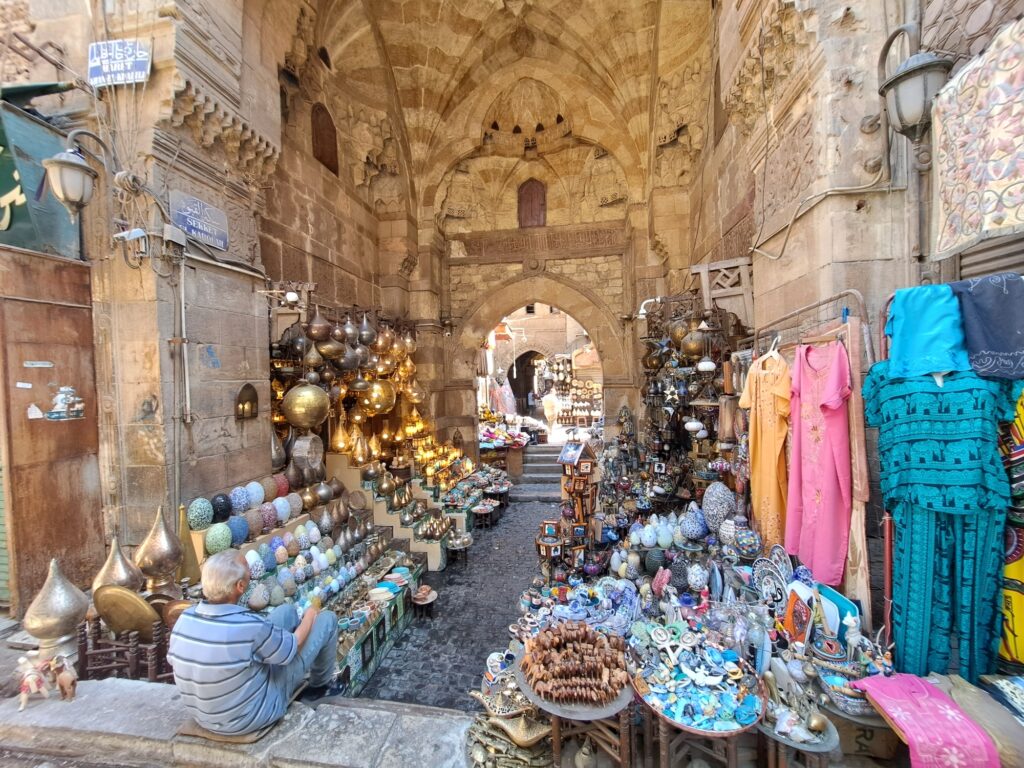
Our private guided tours provide comprehensive historical context while ensuring cultural sensitivity and appropriate etiquette. Expert guides explain architectural evolution, highlight significant artifacts, and share stories that bring the mosque’s millennium-long history to life. We coordinate timing to avoid prayer services while maximizing opportunities for photography and peaceful contemplation.
Experience The Heart Of Islamic Cairo
The Mosque of Al Azhar stands as one of the most influential and historic landmarks in Egypt, where faith, scholarship, and architectural beauty come together in a truly timeless setting. With Egypt Tours Plus, we integrate experiences like this into a thoughtfully curated journey that connects Cairo’s rich heritage with the country’s most iconic sights.
You choose your travel dates, your pace, and the experiences that shape your itinerary. From private guided visits and seamless city exploration to premium accommodations and expert planning, we tailor every detail around you—ensuring a smooth, enriching, and deeply personal Egypt experience.
Frequently Asked Questions
Al-Azhar Mosque is generally open to visitors daily from 9:00 am to 5:00 pm, although tourist access pauses during the five daily prayer times and special religious events. Friday visits can be more restricted because of large congregational prayers, particularly around midday. Founded in 970 AD during the Fatimid period, Al-Azhar remains both an active mosque and one of the world’s oldest Islamic educational institutions. Morning visits between 9:00 am and 11:00 am usually provide the calmest atmosphere and best lighting for photography.
Yes, Al-Azhar Mosque requires modest clothing for all visitors because it remains an active center of worship and Islamic scholarship. Women should cover their hair, arms, and legs fully, while men should avoid shorts or sleeveless clothing. Lightweight long sleeves and breathable fabrics are ideal because Cairo temperatures frequently exceed 35°C (95°F) during summer. Scarves are often available at the entrance for unprepared visitors. Respectful dress helps preserve the mosque’s spiritual atmosphere and allows smoother entry during busy periods.
Yes, Al-Azhar Mosque welcomes respectful non-Muslim visitors interested in Islamic history, architecture, and religious culture. Founded more than 1,050 years ago, the mosque serves as both a major spiritual center and the heart of Al-Azhar University, one of Sunni Islam’s most influential institutions. Visitors are expected to remain quiet during prayers and avoid entering restricted worship areas during active services. Guided tours are especially valuable because much of the mosque’s educational and theological significance is not immediately visible to casual visitors.
A typical guided visit to Al-Azhar Mosque lasts between 90 minutes and 2 hours, allowing time to explore the prayer halls, courtyards, minarets, and surrounding Islamic Cairo streets. Visitors interested in Islamic scholarship or architecture often stay longer because the mosque combines Fatimid, Mamluk, and Ottoman design elements added across multiple centuries. Many travelers pair Al-Azhar with nearby Khan el-Khalili and Al-Muizz Street in the same itinerary. Arriving early helps avoid both tour-group congestion and midday heat.
Photography is generally permitted inside Al-Azhar Mosque, although flash photography during prayer times or close-up photos of worshippers are discouraged out of respect for religious practice. The mosque’s marble courtyard, carved arches, hanging lamps, and historic minarets make it one of Cairo’s most photogenic Islamic landmarks. Tripods and professional filming equipment may require advance approval depending on security conditions. Early morning visits usually provide the clearest interior lighting and the fewest interruptions from crowds or organized religious activities.
What makes Al-Azhar different from other Cairo mosques?
A: Al-Azhar Mosque stands apart from other Cairo mosques because it functions simultaneously as a historic monument, an active place of worship, and the center of Al-Azhar University, one of the oldest continuously operating universities in the world. Established in 970 AD by the Fatimids, the mosque has shaped Sunni Islamic scholarship for more than a millennium. Its architecture also reflects several dynasties, including Fatimid, Mamluk, and Ottoman additions. Few religious sites combine academic influence, historical importance, and daily worship on such a large scale.
Some sections of Al-Azhar University can be visited with advance permission or organized educational tours, although many academic and administrative areas remain restricted to students and staff. The university, founded shortly after the mosque in the 10th century, attracts thousands of students from across the Muslim world each year. Visitors are more commonly granted access to historic courtyards and select learning areas rather than active classrooms. Booking through experienced local operators improves the likelihood of accessing permitted university sections.
The main courtyards and ground-level prayer areas at Al-Azhar Mosque are generally accessible for visitors with limited mobility, although some historic sections involve stairs, uneven stone flooring, or narrow passages. Upper levels and minaret access are not wheelchair-friendly because of the medieval architectural layout. Visitors requiring assistance should consider guided tours that can plan easier routes through Islamic Cairo’s crowded streets and monument entrances. Early weekday mornings usually provide the most manageable visiting conditions for mobility-impaired travelers.
Al-Azhar Mosque combines naturally with nearby Islamic Cairo landmarks such as Khan el-Khalili Bazaar, Al-Muizz Street, Sultan Hassan Mosque, and the Citadel of Saladin within a single full-day itinerary. The mosque sits near the heart of medieval Cairo, making walking tours especially efficient for travelers interested in architecture and street life. Many visitors begin at Al-Azhar in the morning and continue into the bazaars during the afternoon. Evening visits around Khan el-Khalili are particularly atmospheric after sunset lighting begins.
Advance booking is not always mandatory for entering Al-Azhar Mosque, but reserving guided visits in advance is strongly recommended during peak tourism months from October through April. Organized tours help coordinate entry timing around prayers, explain historical context, and navigate the surrounding Islamic Cairo district more efficiently. Larger groups and educational visits may also require additional coordination with local authorities or mosque administrators. Early reservations become especially valuable during Ramadan and major Islamic holidays when visitor numbers increase significantly.
Guided tours of Al-Azhar Mosque are commonly available in English and Arabic, with many professional operators also offering French, German, Spanish, and Italian-speaking guides. Because the mosque’s significance involves theology, architecture, and Islamic scholarship, knowledgeable multilingual guides greatly improve the visitor experience beyond simple sightseeing. Egypt Tours Plus regularly arranges certified Egyptologist and heritage-specialist guides for Islamic Cairo itineraries. Travelers interested in deeper academic or religious context should request specialized guides when booking in advance.
Yes, visiting schedules at Al-Azhar Mosque may change during Ramadan, Eid celebrations, and major Islamic observances because worship activities take priority over tourism access. Evening prayers during Ramadan attract especially large crowds, transforming the mosque into one of Cairo’s most active religious gathering places after sunset. Some sections may temporarily close during sermons or extended nightly prayers such as Taraweeh. Visitors seeking a quieter cultural experience should arrive early in the morning during religious periods rather than after sunset.

Design Your Custom Tour
Explore Egypt your way by selecting only the attractions you want to visit