

Mosque of Amr Ibn Al-As – The First Mosque Ever Built in Africa
Cairo holds stories from centuries past.
The Mosque of Amr Ibn Al-As stands as Egypt’s oldest surviving Islamic building, erected in 641 CE by one of Prophet Muhammad’s closest companions. This historic site marked the beginning of Islamic architecture in both Egypt and Africa, evolving from a simple mud-brick shelter into today’s marble-pillared complex. Located in Old Cairo’s Fustat neighborhood, the mosque has continuously served its community for over 1,380 years, making it a living testament to Islamic heritage and devotion.
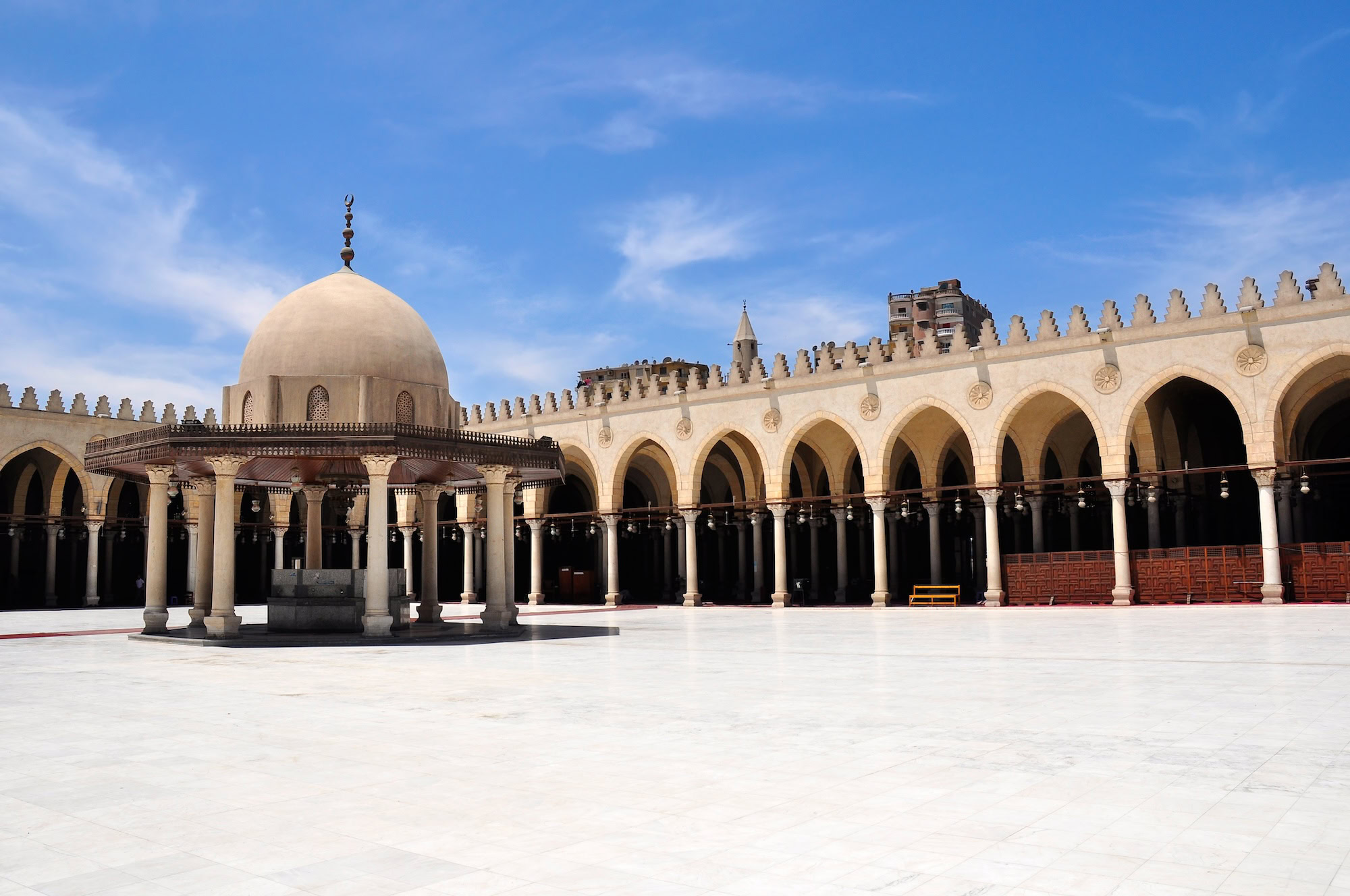
We’ll explore this remarkable site’s transformation through dynasties, its role as an early center of learning, and what makes it essential for understanding Egypt’s Islamic foundations.
Historical Foundation and Early Islamic Conquest
General Amr ibn al-As arrived in Egypt in 640 AD as part of the expanding Islamic empire. After successfully conquering the region, he established his military encampment at Al-Fustat, which would grow into one of the Islamic world’s most important cities. The decision to build Egypt’s first mosque came naturally from the need to provide a proper place of worship for the growing Muslim community.
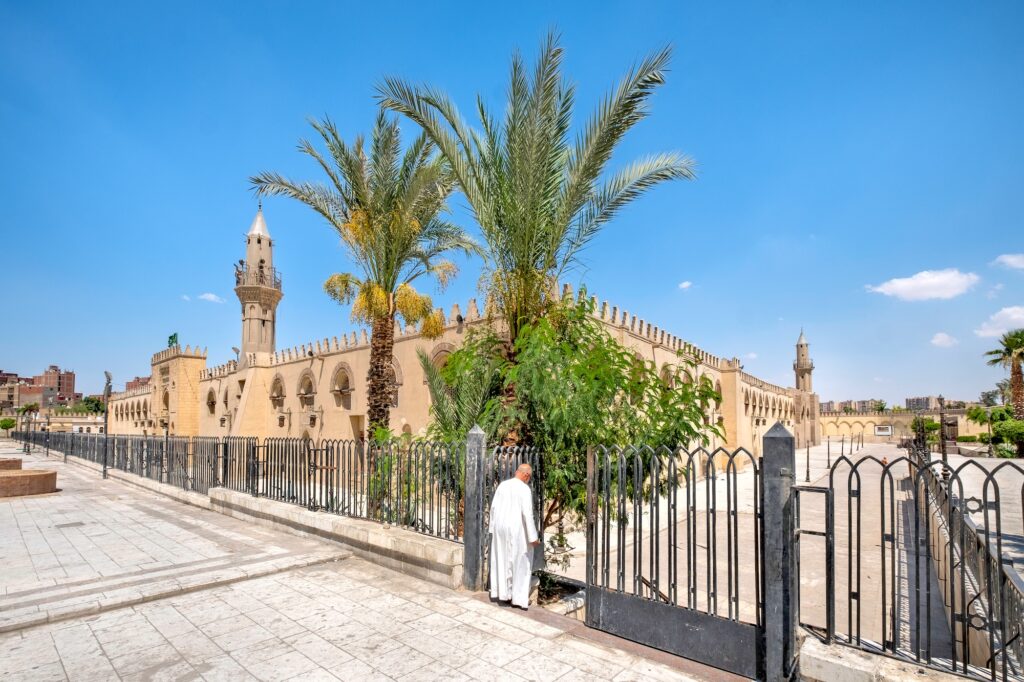
The Companion’s Legacy
Amr ibn al-As held special significance as one of the sahabah, the Prophet Muhammad’s direct companions. His military genius and administrative skills made him the ideal leader for Egypt’s Islamic transition. The mosque he founded reflected the modest principles of early Islamic architecture, avoiding ornate decoration in favor of functional simplicity. This approach honored the Prophet’s teachings about humility in worship spaces.
Strategic Location Choice
The site selection in Al-Fustat proved remarkably strategic. The area developed from the original Arab army encampment into a thriving urban center. Fustat’s location provided easy access to both the Nile River and existing trade routes, ensuring the mosque would serve not just local residents but also traveling merchants and scholars. This positioning helped establish the mosque as a regional hub for Islamic learning and commerce.
Building the First African Mosque
Construction began in 642 CE using locally available materials. The original structure featured mud-brick walls and palm-frond roofing, reflecting practical building methods suited to Egypt’s climate.
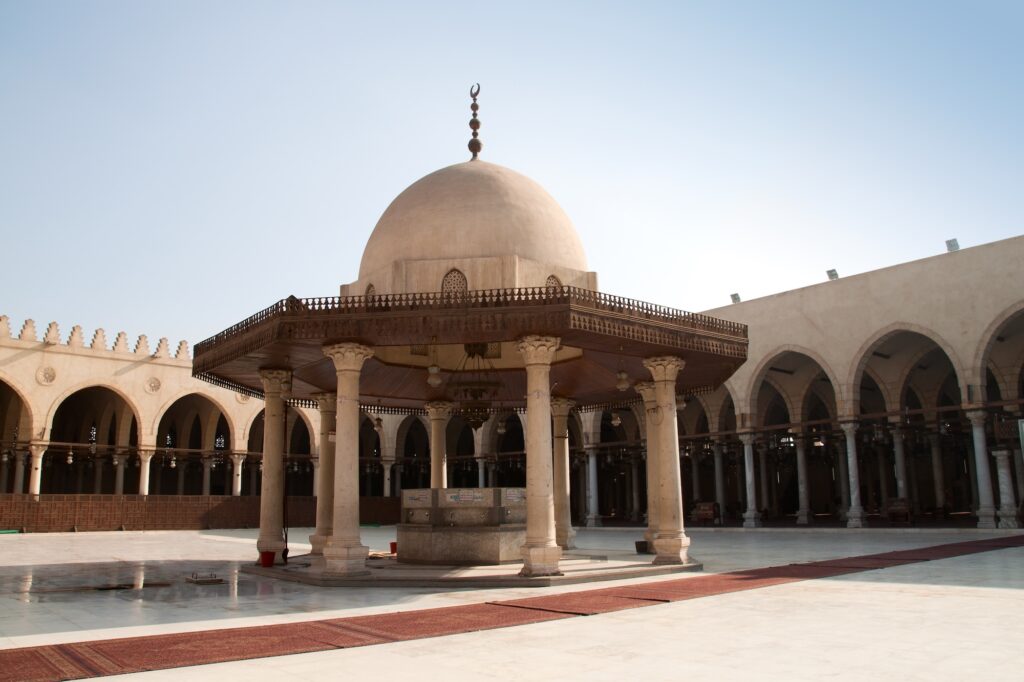
Despite its simple materials, the mosque followed traditional Islamic architectural principles with a clear qibla wall facing Mecca and an open courtyard for community gatherings. This became the architectural template for subsequent mosques throughout Egypt and North Africa.
Architectural Evolution Through the Dynasties
The mosque’s appearance today bears little resemblance to its 7th-century origins. Each ruling dynasty left distinct architectural fingerprints, creating layers of Islamic artistic expression spanning over a millennium.
Extensive reconstruction occurred during the Umayyad period, when rulers expanded the prayer hall and added decorative elements. The Abbasids continued this transformation, introducing more sophisticated engineering techniques and artistic details. However, the most dramatic changes came under Fatimid rule, when the mosque received significant expansions and marble columns that still define its appearance today.
Medieval Transformations
The 12th and 13th centuries brought both destruction and renewal. Political upheavals and natural disasters damaged the structure repeatedly, yet each reconstruction incorporated contemporary architectural innovations. Medieval builders replaced the original mud-brick construction with stone and marble, creating the sprawling complex visitors see today. These changes reflected both practical necessity and evolving aesthetic preferences across different Islamic dynasties.
Modern Preservation Challenges
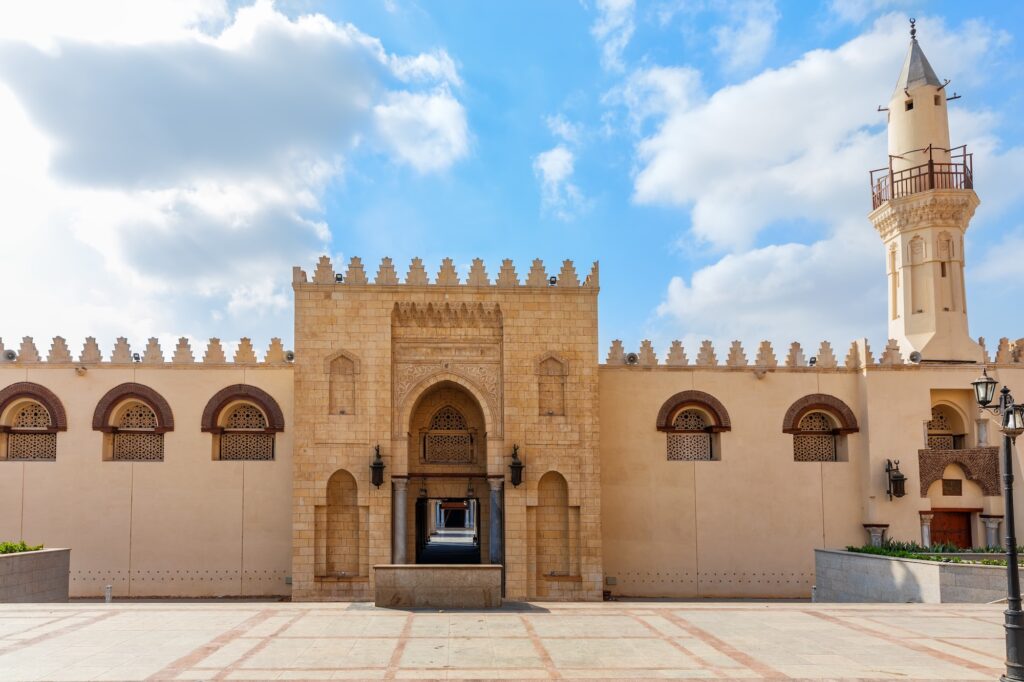
By the 19th century, centuries of reconstruction had completely obscured the original building’s appearance. Napoleon Bonaparte’s troops found the mosque in decay when they arrived in 1798, leading to extensive discussions about preservation versus reconstruction. The current structure represents a 19th-century interpretation of Islamic architectural traditions rather than an authentic 7th-century building. This reality presents ongoing challenges for historians attempting to understand early Islamic architecture in Egypt.
Center of Islamic Learning and Scholarship
Before Al-Azhar Mosque claimed prominence, the Mosque of Amr Ibn Al-As served as Egypt’s premier center for Islamic education and scholarship. Students traveled from across the Islamic world to study theology, law, and Arabic literature within its walls.
The mosque’s reputation for learning stemmed from its connection to the original companions and their direct knowledge of Islamic teachings. Early scholars who taught here helped establish important legal precedents and theological interpretations that influenced Islamic thought throughout North Africa. The library housed rare manuscripts and commentaries that became essential references for Islamic jurisprudence.
Academic Traditions
Teachers at the mosque followed rigorous educational methods, emphasizing memorization of the Quran alongside deep study of hadith literature. Students participated in scholarly debates and discussions that advanced Islamic intellectual traditions. The mosque’s position as a learning center attracted not only religious scholars but also mathematicians, astronomers, and physicians who contributed to the Islamic Golden Age’s scientific achievements.
Scholarly Networks
The mosque facilitated connections between scholars across the Islamic empire. Visiting teachers from Baghdad, Damascus, and Cordoba brought diverse perspectives and knowledge to Cairo’s intellectual community. These exchanges enriched local scholarship while spreading Egyptian Islamic thought to distant regions. The mosque’s role in these scholarly networks helped establish Cairo’s reputation as a major center of Islamic learning, setting the stage for Al-Azhar’s later prominence.
Daily Life and Continuous Worship
Throughout its long history, the mosque has never ceased functioning as an active place of prayer. This continuous religious activity connects modern worshippers directly to the earliest Islamic community in Egypt. The mosque maintains five daily prayer services, Friday congregational prayers, and special observances during Islamic holidays.
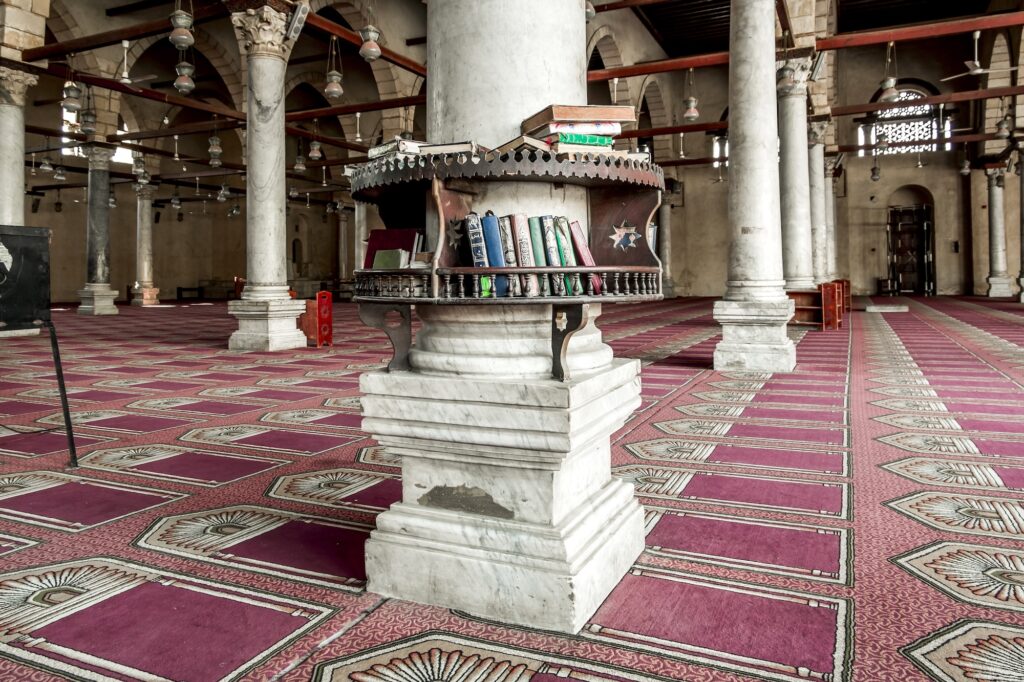
The current congregation includes both local residents and international visitors. Many worshippers appreciate the mosque’s historical significance and find spiritual meaning in praying where Islam first took root in Africa. The mosque’s atmosphere combines reverence for its ancient heritage with the practical needs of contemporary Muslim worship.
Regular community activities extend beyond formal prayers to include Quranic study groups, religious lectures, and social gatherings. The mosque serves families in the surrounding Fustat neighborhood while welcoming Muslims from across Cairo and beyond. This blend of local and broader community involvement reflects the mosque’s historical role as both neighborhood institution and regional landmark.
Prayer Hall Atmosphere
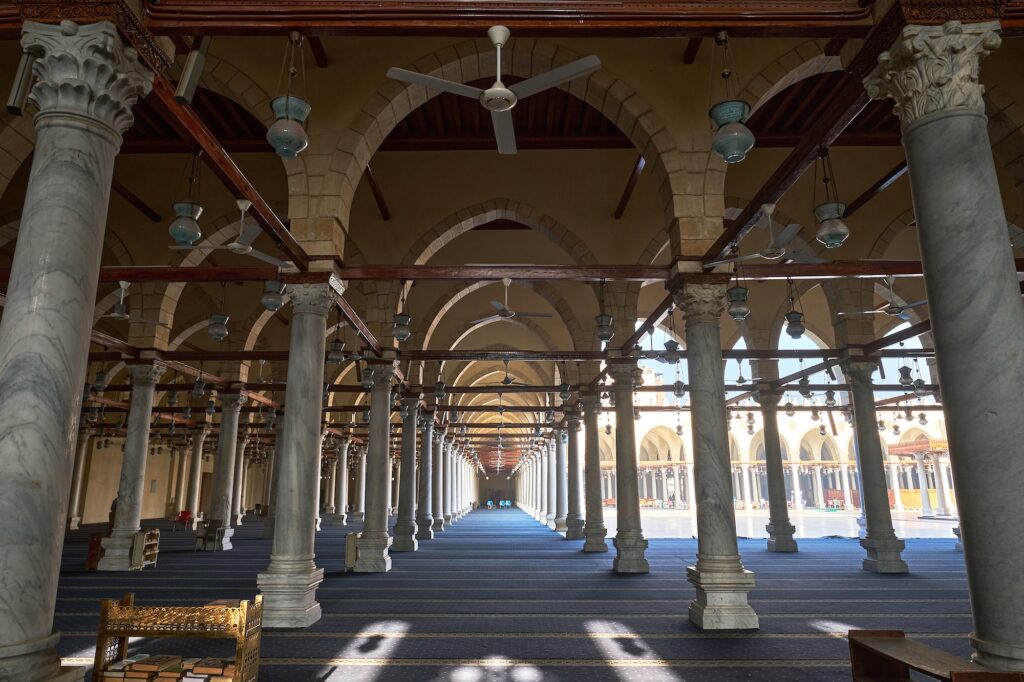
The main prayer hall accommodates hundreds of worshippers beneath its marble columns and arched ceiling. Sunlight filters through traditional Islamic geometric patterns, creating a serene environment for reflection and prayer. The qibla wall features beautiful calligraphy indicating the direction of Mecca, while the minbar provides an elevated platform for Friday sermons.
Community Integration
The mosque’s integration into modern Cairo demonstrates Islam’s enduring presence in Egyptian society. Local families often choose the mosque for important religious ceremonies, including weddings and memorial services. Children from the neighborhood attend Quranic classes, maintaining educational traditions that date back over a millennium. This ongoing community engagement ensures the mosque remains a living institution rather than merely a historical monument.
Visiting Egypt’s First Mosque Today
Modern visitors can explore the mosque daily from 9:00 am to 4:00 pm (09:00 to 16:00). The site requires respectful attire and footwear removal before entering prayer areas. Women can borrow appropriate robes at the entrance if needed. Photography is generally permitted in courtyard areas, though visitors should respect prayer times and worshippers’ privacy.
Tourist Experience and Reverence
The mosque offers a unique opportunity to experience authentic Islamic architecture while learning about Egypt’s Islamic heritage. Unlike some tourist-focused sites, this remains a functioning religious institution where visitors witness genuine devotional practices. The contrast between ancient historical significance and contemporary religious life creates a powerful educational experience.
Guided tours provide historical context and architectural explanations, though independent exploration allows for more personal reflection. The mosque’s location in Old Cairo makes it easy to combine with visits to other historical sites, including nearby Coptic Christian churches and the Roman fortress remains.
Cultural Significance for Modern Egypt
The mosque represents more than historical curiosity for contemporary Egyptians. It symbolizes Islam’s deep roots in Egyptian culture and the country’s central role in Islamic civilization. Government preservation efforts and community support demonstrate ongoing commitment to maintaining this connection to Egypt’s Islamic heritage.
We organize private tours that combine the mosque with other significant Islamic sites in Cairo, providing comprehensive understanding of Egypt’s rich Islamic architectural traditions. Our expert guides explain the historical context while respecting the site’s religious significance, ensuring visitors gain both knowledge and cultural appreciation during their Egypt experience.
Frequently Asked Questions
When was the Mosque of Amr Ibn Al-As built?
Construction began in 642 CE, making it Egypt’s oldest mosque and the first built in Africa.
Who was Amr ibn al-As?
He was one of Prophet Muhammad’s companions who conquered Egypt and established the first Islamic community there.
What remains of the original 7th-century building?
Nothing from the original structure survives due to extensive reconstructions over the centuries.
Why is this mosque historically significant?
It marks the beginning of Islamic architecture in Egypt and Africa, serving continuously for over 1,380 years.
Can tourists visit during prayer times?
Visitors should avoid entering during the five daily prayers but can observe from designated areas.
What should visitors wear when entering?
Modest clothing covering arms and legs is required, with robes available for women if needed.
How does it compare to other Cairo mosques?
While simpler than Ibn Tulun or Al-Azhar, its historical significance as Egypt’s first mosque makes it unique.
Where exactly is the mosque located?
In Old Cairo’s Fustat neighborhood, near other historic Coptic and Islamic sites.
What role did it play in Islamic education?
It served as Egypt’s premier center of Islamic learning before Al-Azhar Mosque gained prominence.
Why did the mosque require so many reconstructions?
Political changes, natural disasters, and architectural developments led different dynasties to rebuild and expand the structure.
What architectural styles are represented?
The current building reflects 19th-century reconstruction incorporating elements from Umayyad, Abbasid, and Fatimid periods.
Is the mosque still actively used for worship?
Yes, it maintains regular prayer services and serves both local residents and visiting Muslims daily.
Design Your Custom Tour
Explore Egypt your way by selecting only the attractions you want to visit