

Mosque of Ibn Tulun – Unexpected Survivor of Ancient Egypt
Step inside one of the world’s most remarkable Islamic monuments. The Mosque of Ibn Tulun stands as Egypt’s oldest surviving mosque, a testament to 9th-century architectural brilliance that continues to captivate visitors over eleven centuries later.
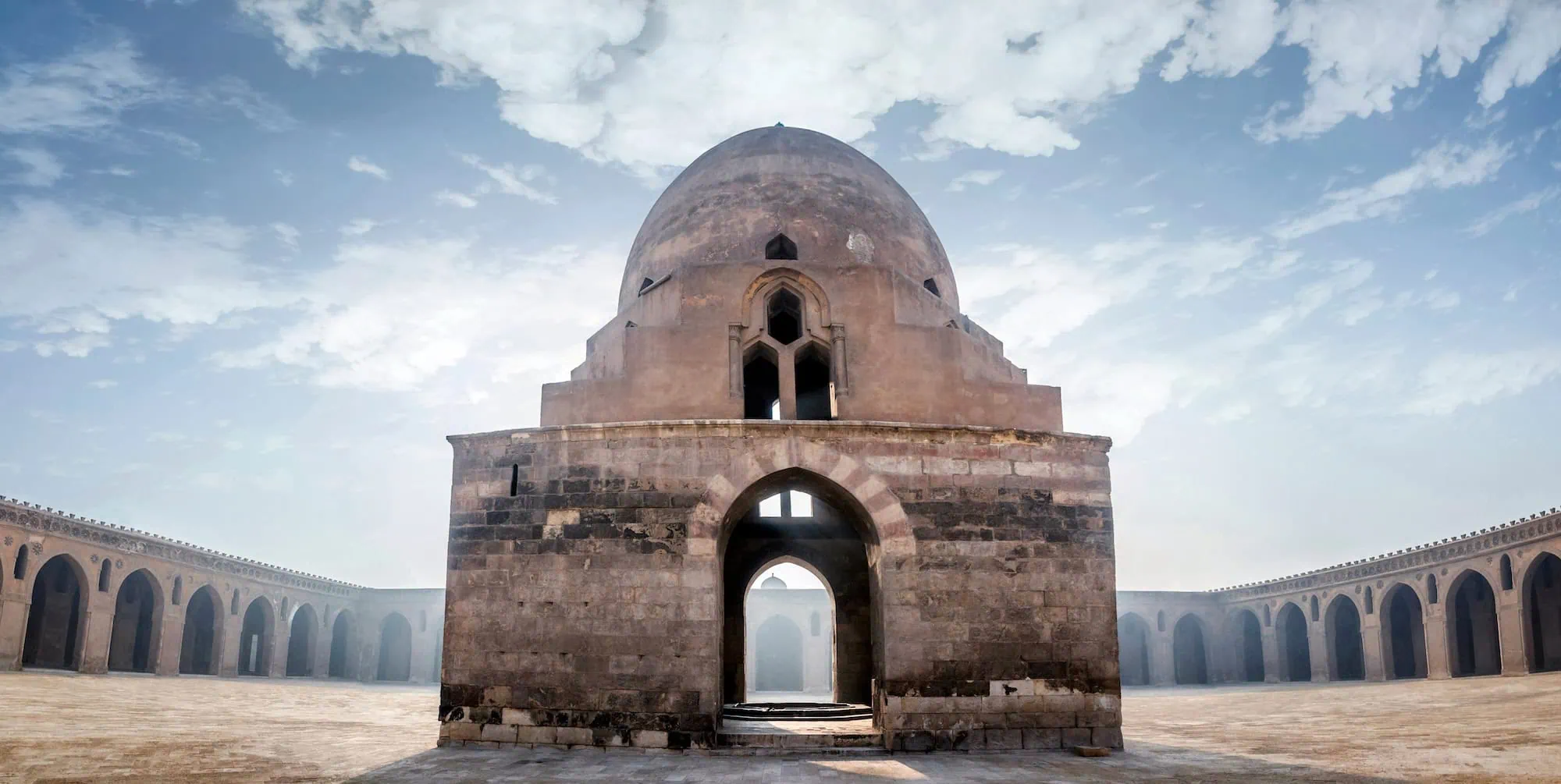
Built between 876 and 879 CE by Ahmad ibn Tulun, this extraordinary structure represents the pinnacle of Abbasid architectural influence in Egypt, featuring design elements that echo the great mosques of Samarra in Iraq.
Unlike many of Cairo’s other historic mosques, Ibn Tulun has retained much of its original character through careful preservation, offering an authentic glimpse into medieval Islamic design and spirituality. We’ve guided countless travelers through this magnificent complex, watching their expressions transform as they encounter the mosque’s unique spiral minaret and intricate stucco decorations for the first time. The experience never gets old.
Table of Contents
Historical Legacy of Ahmad ibn Tulun’s Vision
The mosque emerged during a pivotal moment in Egyptian history when Ahmad ibn Tulun sought to establish his independent dynasty. This Turkish governor of Egypt and Syria commissioned the structure as the centerpiece of his new capital, Al-Qata’i, which covered an area larger than present-day Cairo.
Foundation of the Tulunid Dynasty
Ahmad ibn Tulun arrived in Egypt in 868 CE with ambitious plans that extended far beyond military conquest. He envisioned a cultural renaissance that would rival the Abbasid capital of Baghdad. The mosque became the cornerstone of this vision, designed not merely as a place of worship but as a symbol of political independence and architectural innovation.
Construction began in 263 AH (876 AD) using locally sourced materials and techniques adapted from Iraqi traditions. The project employed hundreds of skilled craftsmen, many brought from Samarra specifically for their expertise in stucco decoration and geometric design.
Design Inspiration from Samarra
The architectural DNA of Ibn Tulun’s mosque traces directly to the Abbasid heartland. The spiral minaret, known locally as the Malwiya, mirrors the famous minaret of the Great Mosque of Samarra. This connection wasn’t accidental – Ahmad ibn Tulun had spent considerable time in the Abbasid court and understood the political power of architectural symbolism.
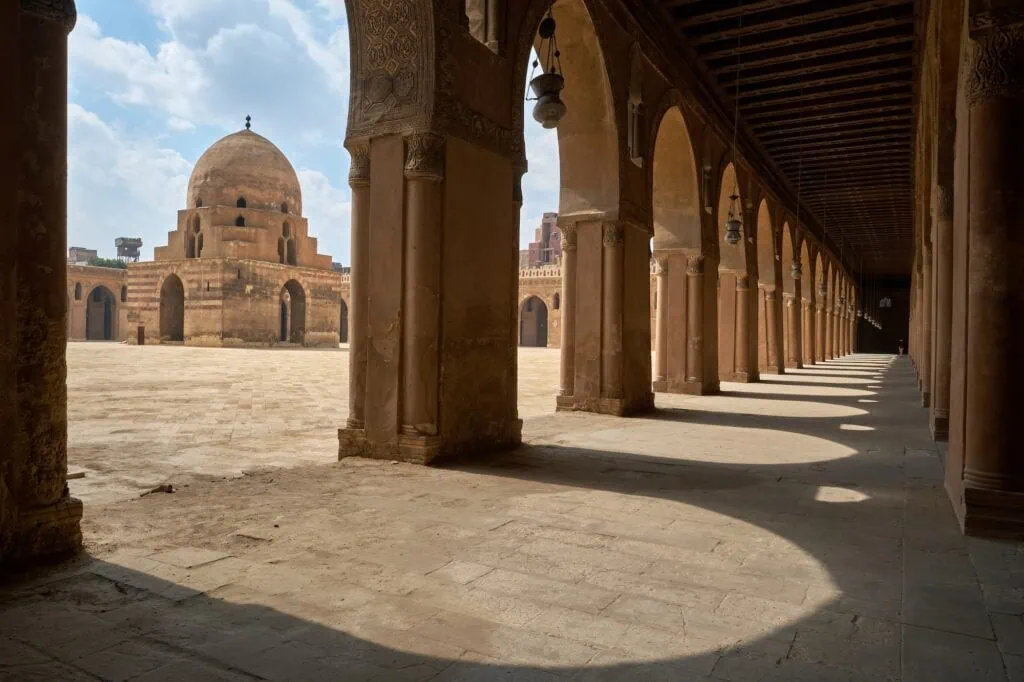
The pointed arches surrounding the courtyard represent another Samarra influence, creating a rhythmic pattern that guides the eye naturally around the prayer space. These arches, supported by sturdy brick piers, demonstrate the successful adaptation of Iraqi techniques to Egyptian materials and climate conditions.
The Ziyada System
Unique among Cairo’s mosques, Ibn Tulun incorporates a ziyada – an outer enclosure that creates a buffer zone between the sacred interior and the bustling city beyond. This feature, common in early Abbasid architecture, serves both practical and spiritual purposes. The ziyada provides space for overflow during major religious gatherings while maintaining the mosque’s contemplative atmosphere.
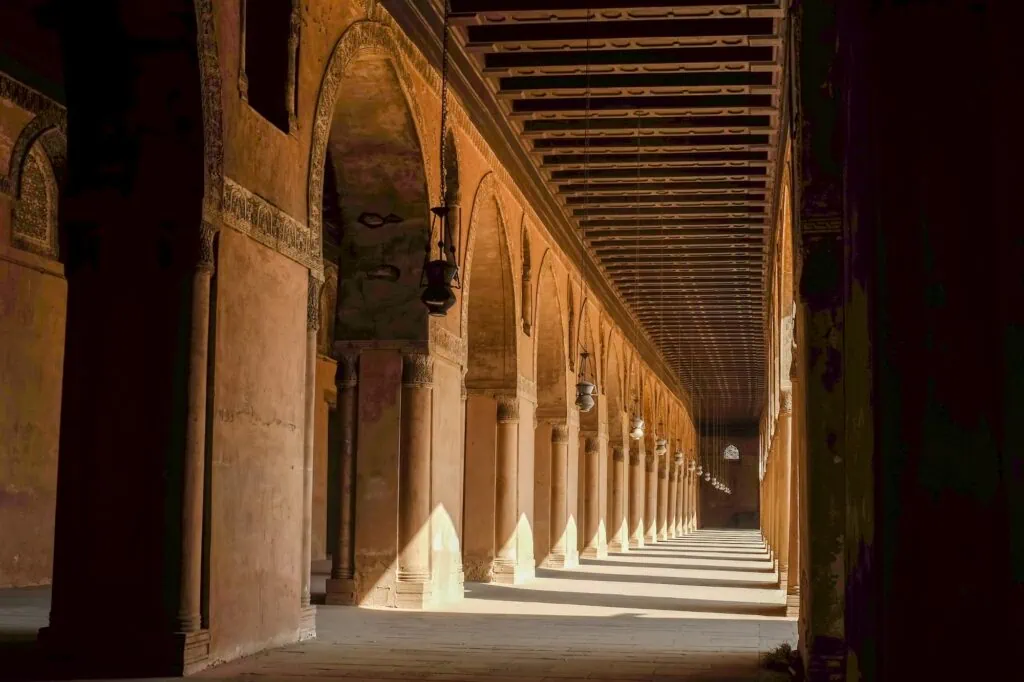
Architectural Masterpiece in Red Brick
Few buildings demonstrate medieval engineering prowess quite like the Mosque of Ibn Tulun. The structure spans approximately 26,318 square meters (283,280 square feet), making it one of the largest mosques in the world by area. The builders chose red brick as their primary material, a departure from the stone construction typical of earlier Egyptian monuments.
This choice allowed for more flexible design possibilities and faster construction while creating the warm, earth-toned aesthetic that characterizes the mosque today. The brick walls rise to impressive heights, their surfaces adorned with geometric patterns carved in stucco that remain remarkably well-preserved.
The Legendary Spiral Minaret
Standing 40 meters (131 feet) tall, the spiral minaret dominates the mosque’s southeastern corner. Its unique helical design creates an external staircase that winds around the tower’s exterior, offering visitors breathtaking views of historic Cairo. The minaret’s design serves practical purposes beyond its visual impact – the external stairway prevents structural stress on the interior walls while providing natural ventilation.
Local legend claims the minaret’s design came to Ahmad ibn Tulun in a dream, though architectural historians trace its origins to similar structures in Samarra. Regardless of its inspiration, the minaret remains one of the most photographed landmarks in Cairo and continues to function as originally intended, calling the faithful to prayer five times daily.
Stucco Decorations and Islamic Art
The mosque’s interior walls showcase some of the finest stucco work from the Abbasid period. Intricate geometric patterns, stylized plant motifs, and Quranic inscriptions cover vast expanses of the prayer hall, demonstrating the high level of artistic achievement during the Tulunid era. These decorations avoid figurative representation, adhering strictly to Islamic artistic principles while creating visually stunning patterns that seem to pulse with mathematical precision.
The mihrab, indicating the direction of Mecca, features particularly elaborate stucco work. Six mihrabs actually exist within the mosque, though the main mihrab in the qibla wall receives the most attention from visitors and worshippers alike.
Religious Significance and Daily Life
Beyond its architectural importance, the Mosque of Ibn Tulun remains an active center of worship serving Cairo’s Sayyida Zaynab neighborhood. The mosque opens its doors for the five daily prayers, Friday congregational services, and special observances during Ramadan and other Islamic holidays. During Ramadan, the mosque takes on special significance as community members gather for iftar meals and evening prayers.
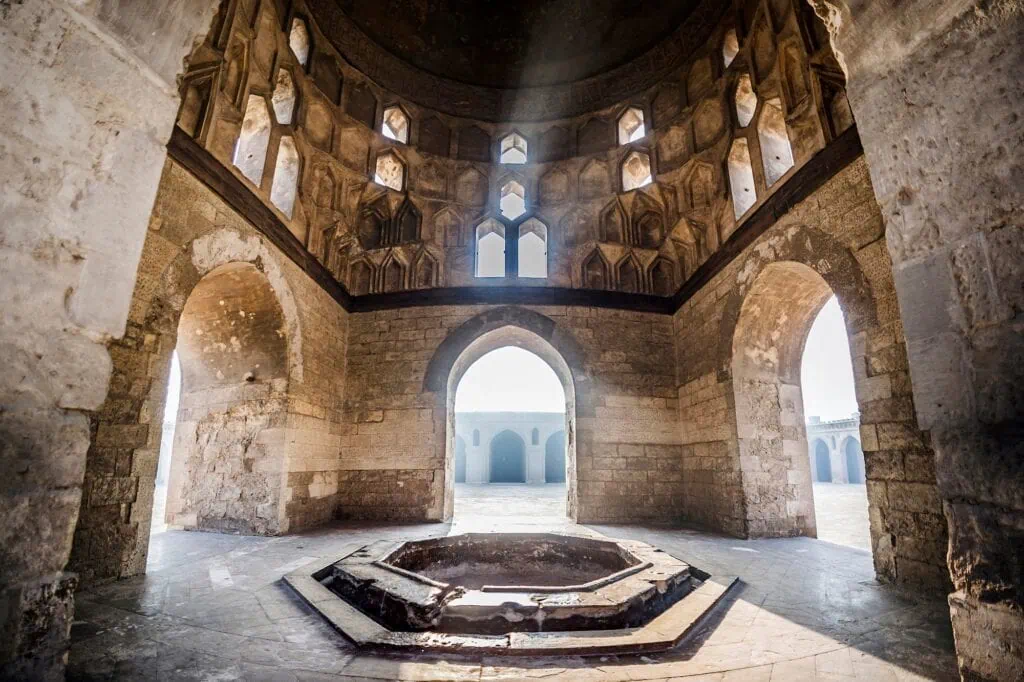
The large courtyard accommodates hundreds of worshippers, while the surrounding galleries provide shaded prayer space during Cairo’s intense summer heat.
The Six Mihrabs
Each of the mosque’s six mihrabs serves a specific function within the Islamic prayer tradition. The primary mihrab faces Mecca, while the others accommodate different prayer times and seasonal variations in the sun’s position. This multiple-mihrab system reflects the sophisticated understanding of Islamic religious practices during the 9th century and demonstrates the mosque’s original designer’s attention to liturgical detail.
Contemporary visitors often express amazement at the mosque’s acoustic properties. The courtyard design naturally amplifies the imam’s voice during prayers, ensuring that congregants in the farthest corners can hear clearly without modern sound systems.
Restoration Through the Ages
The mosque’s remarkable preservation results from centuries of careful maintenance and strategic restoration projects. The most significant restoration occurred between 1296 and 1299 under Sultan Lajin during the Mamluk period. Lajin had sought refuge in the mosque during a period of political turmoil and promised extensive renovations if he regained power.
True to his word, he funded comprehensive repairs that saved many of the original stucco decorations and strengthened the structural foundations. The Mamluk additions, including enhanced mihrab decorations and improved drainage systems, blend seamlessly with the original Tulunid design.
Modern conservation efforts began in the 20th century under the Egyptian Ministry of Tourism and Antiquities. These projects focus on preserving the original materials while ensuring visitor safety and accessibility. Recent work has included careful cleaning of the stucco decorations, structural reinforcement of the minaret, and installation of discrete lighting systems that illuminate the mosque’s beauty without compromising its historical integrity.
Challenges of Urban Preservation
As Cairo has grown around it, the mosque faces unique preservation challenges. Air pollution affects the exterior surfaces, while groundwater changes threaten the foundations. Conservation specialists work continuously to monitor these environmental factors and implement protective measures that respect the monument’s historical character.
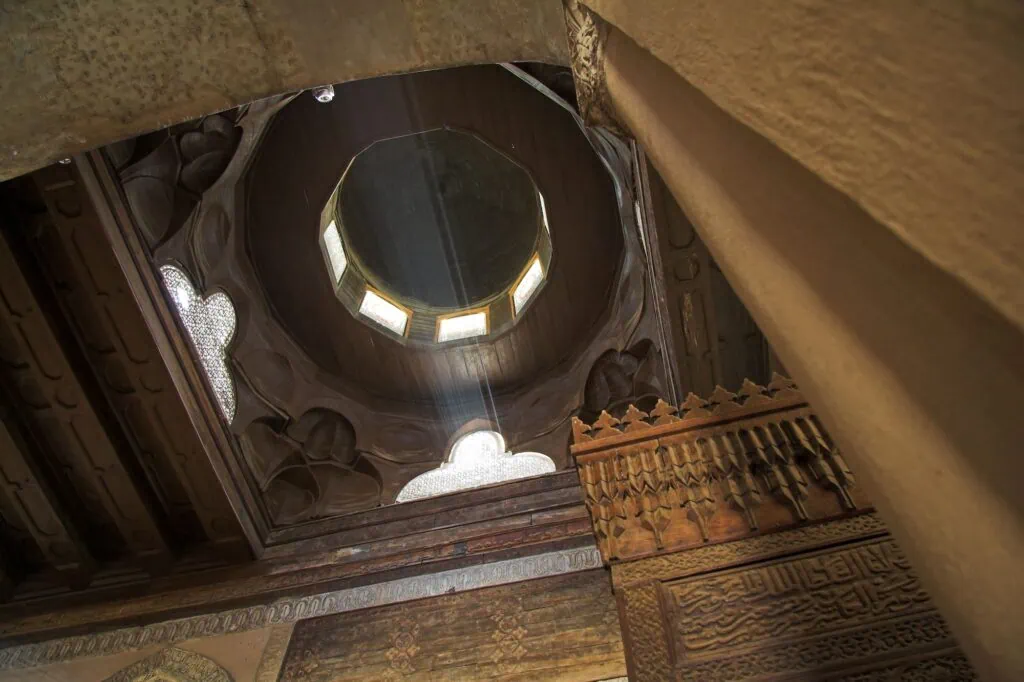
We often recommend visiting during the early morning hours when the light filtering through the pointed arches creates dramatic shadows across the courtyard – and when conservation work is typically at its quietest.
Visiting the Mosque Today
Modern visitors find the Mosque of Ibn Tulun refreshingly accessible compared to Cairo’s more crowded tourist sites.
Practical Information for Travelers
The mosque welcomes visitors daily from 9:00 am to 4:00 pm (09:00 to 16:00), with brief closures during prayer times. Entry is free, though donations for maintenance are welcomed. Visitors must dress modestly, covering arms and legs, and women should bring a headscarf. Shoes must be removed before entering the prayer hall, though protective shoe covers are provided.
Located in the Sayyida Zaynab district, the mosque sits on Jebal Yashkur hill, offering slight elevation above the surrounding neighborhood. The location provides excellent views of the Citadel and modern Cairo’s skyline, particularly from the minaret’s upper levels.
Photography and Respectful Tourism
Photography is permitted throughout most of the complex, with restrictions only during active prayer times. The interplay of light and shadow through the pointed arches creates exceptional photographic opportunities throughout the day. Many visitors find the geometric patterns of the stucco decorations particularly compelling subjects for detailed photography.
We always advise our guests to spend time simply sitting in the courtyard, absorbing the mosque’s peaceful atmosphere. The contrast between the bustling streets outside and the serene interior courtyard provides a powerful reminder of the mosque’s original purpose as a spiritual sanctuary.
Cultural Context and Etiquette
Understanding basic Islamic etiquette enhances any visit to Ibn Tulun. Visitors should speak quietly, avoid pointing feet toward the mihrab when seated, and respect worshippers’ need for concentration during prayer times. The mosque’s active religious function takes precedence over tourism, creating opportunities for cultural exchange when approached with genuine respect and curiosity.
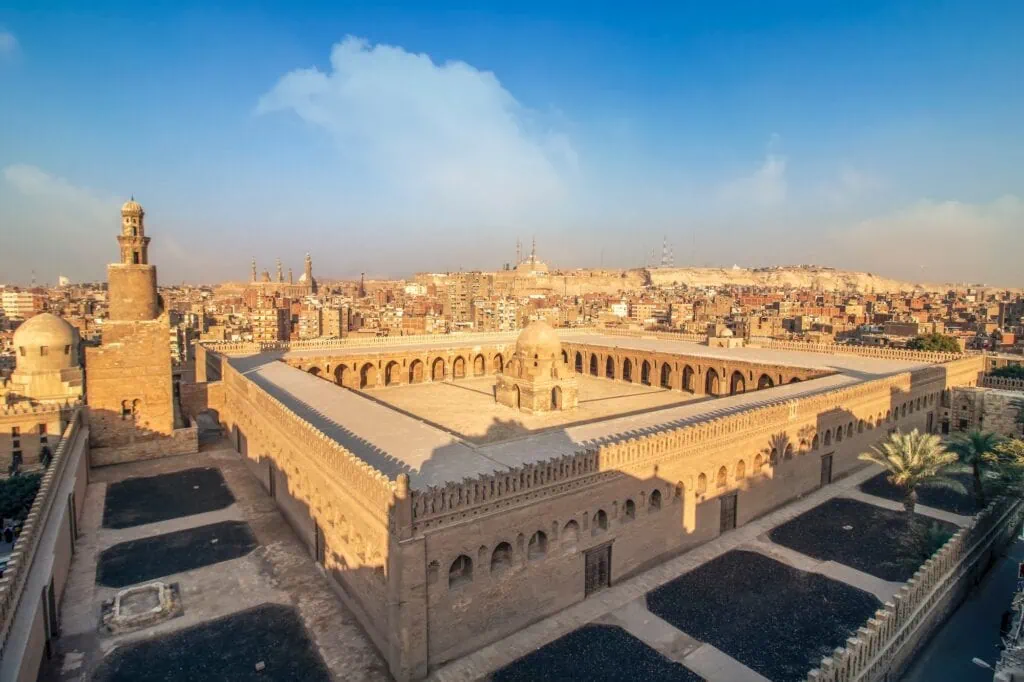
Architectural Influence and Legacy
The Mosque of Ibn Tulun’s influence extends far beyond its physical boundaries in medieval Cairo.
Impact on Egyptian Architecture
Later mosque designs throughout Egypt drew inspiration from Ibn Tulun’s innovations. The pointed arch system, adapted from Abbasid models, became a standard feature in Egyptian Islamic architecture. The integration of decorative stucco work influenced craftsmen for generations, establishing techniques that appear in monuments throughout the Fatimid, Ayyubid, and Mamluk periods.
The mosque’s scale and proportions set new standards for congregational mosque design in Egypt. Its vast courtyard and surrounding galleries provided a template for accommodating large communities while maintaining intimate spiritual spaces for individual prayer and reflection.
Recognition in Modern Times
UNESCO’s recognition of Historic Cairo as a World Heritage Site includes the Mosque of Ibn Tulun among the area’s most significant monuments. This designation has brought international attention to the mosque’s architectural and historical importance while providing resources for ongoing conservation efforts.
Academic institutions worldwide study Ibn Tulun’s design principles, particularly the successful adaptation of Mesopotamian architectural concepts to Egyptian conditions. Architecture schools regularly use the mosque as a case study in historical preservation and adaptive cultural exchange.
Contemporary Relevance
Modern architects continue drawing inspiration from Ibn Tulun’s design solutions. The mosque’s natural ventilation systems, created through careful orientation and the courtyard’s proportions, offer sustainable building strategies relevant to contemporary environmental concerns. The integration of decorative elements with structural function provides models for architects seeking to combine aesthetic beauty with practical performance.
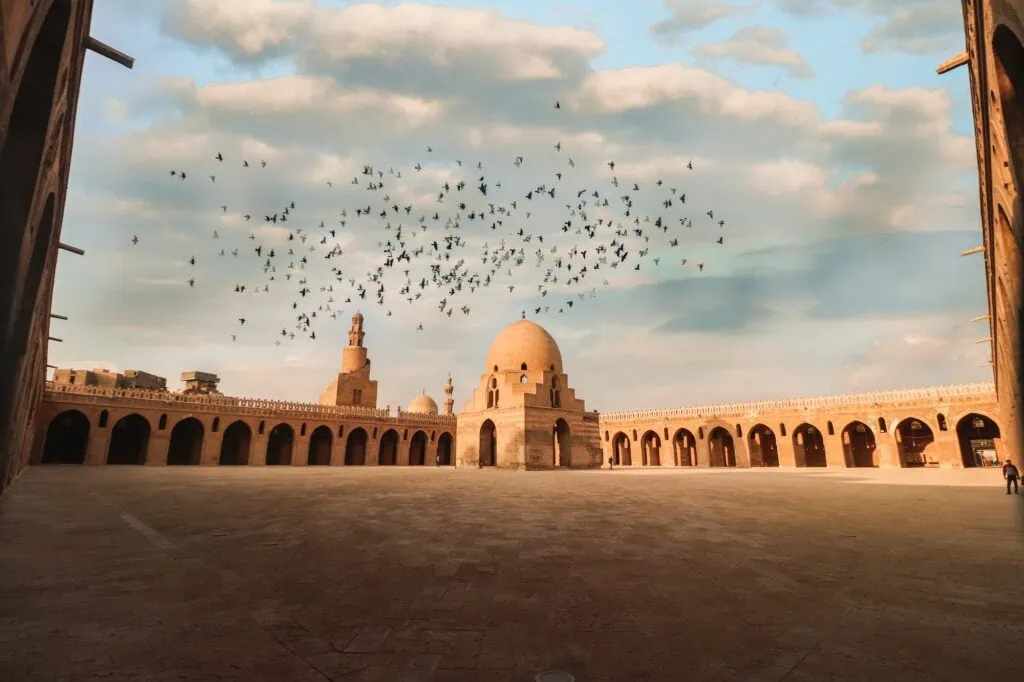
We’ve noticed increasing interest among our guests in understanding how historical Islamic architecture addresses climate challenges – questions that Ibn Tulun’s design answers with remarkable sophistication.
The Mosque in Popular Culture
Beyond its religious and architectural significance, the Mosque of Ibn Tulun has captured imaginations in literature, film, and art. The mosque’s dramatic architecture provided the setting for scenes in the James Bond film “The Spy Who Loved Me,” introducing its unique spiral minaret to global audiences. This exposure brought increased international tourism while raising awareness of Cairo’s rich Islamic architectural heritage.
Contemporary Egyptian artists frequently feature the mosque in their works, using its geometric patterns and monumental scale to explore themes of cultural identity and historical continuity. The building’s photogenic qualities have made it a favorite subject for photographers documenting Cairo’s architectural treasures.
Travel writers consistently rank Ibn Tulun among Cairo’s must-see monuments, praising its authentic atmosphere and well-preserved medieval character. Unlike some of Cairo’s more reconstructed historical sites, the mosque offers visitors a genuine encounter with 9th-century Islamic civilization.
Planning Your Visit with Egypt Tours
Drawing on decades of experience guiding travelers through Egypt’s most iconic landmarks, we understand what makes a visit to the Mosque of Ibn Tulun truly memorable. Our expert guides bring Islamic architecture and Egyptian history to life, adding depth and context that elevate your experience beyond a standard sightseeing stop.
When exploring historic Cairo, many travelers combine Ibn Tulun with nearby highlights such as the Citadel of Salah El-Din, home to the stunning Mosque of Muhammad Ali, or continue into Coptic Cairo to discover some of the city’s oldest churches. This creates a well-rounded cultural itinerary within a compact area.
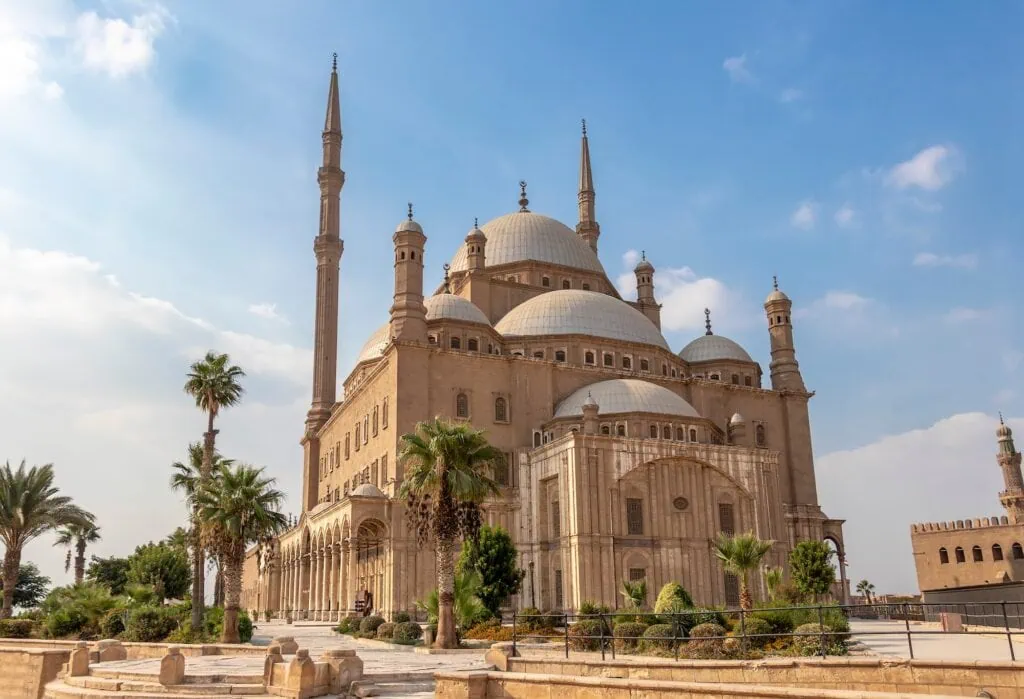
We carefully schedule visits to avoid peak crowds while ensuring the best natural lighting for photography and quiet reflection. Whether your interest lies in architectural innovation, Islamic heritage, or simply experiencing a peaceful escape from Cairo’s vibrant energy, we tailor each visit to your preferences.
Your journey is supported by modern, air-conditioned vehicles and experienced drivers who efficiently navigate Cairo’s dynamic streets, maximizing your time at each site.
The Mosque of Ibn Tulun is more than a historic structure, it is a living testament to creativity, faith, and endurance. Let us help you experience it with the insight, comfort, and attention it deserves.
Discover One Of Cairo’s Architectural Masterpieces
The Mosque of Ibn Tulun stands out with its vast open courtyard and distinctive design, offering a rare sense of space and serenity in the heart of historic Cairo. With Egypt Tours Plus, we seamlessly include landmarks like this in a well-crafted journey that connects Cairo’s rich heritage with Egypt’s most iconic experiences.
You choose your travel dates, your pace, and the experiences that shape your itinerary. From private guided visits and smooth logistics to handpicked accommodations and expert planning, we tailor every detail around you—ensuring a refined, comfortable, and fully personalized Egypt journey.
Frequently Asked Questions
Most visitors spend 45 minutes to 1 hour exploring the Mosque of Ibn Tulun, including time to walk the vast courtyard, examine the carved stucco details, and climb the famous spiral minaret. Built between 876 and 879 CE, the mosque covers roughly 26,000 square meters, making it one of Cairo’s largest Islamic monuments. Photography enthusiasts and architecture lovers often stay longer because of the mosque’s unusually open layout and panoramic city views. Arrive early to enjoy quieter conditions and softer lighting.
Yes, the Mosque of Ibn Tulun welcomes respectful non-Muslim visitors during designated visiting hours outside the five daily prayer periods. As one of Cairo’s most historically important mosques, the site functions both as an active place of worship and a major cultural monument dating back to the 9th century. Visitors are expected to dress modestly, speak quietly, and avoid interrupting worshippers. Morning visits between 9:00 am and 11:00 am usually provide the calmest atmosphere and easiest access for sightseeing.
No, entry to the Mosque of Ibn Tulun is generally free, although donations supporting preservation and maintenance are appreciated by mosque staff. Unlike several major Cairo monuments with formal ticket systems, Ibn Tulun remains primarily a functioning religious site rather than a commercial museum attraction. Visitors may occasionally encounter small local administrative charges for camera equipment or special access areas, depending on current policies. Carrying small Egyptian pound notes is useful for donations and nearby local purchases.
Visitors to the Mosque of Ibn Tulun should wear modest clothing covering shoulders, arms, and legs because the building remains an active religious site. Women are encouraged to carry a headscarf for entering prayer areas, and all visitors must remove shoes before stepping onto carpeted interior sections. Loose, breathable fabrics are strongly recommended during Cairo’s warmer months, when temperatures frequently exceed 35°C (95°F). Comfortable walking shoes are important because the surrounding historic district includes uneven stone streets and staircases.
Yes, visitors can usually climb the external spiral staircase of the Mosque of Ibn Tulun’s distinctive minaret for elevated views across historic Cairo. Inspired by the Great Mosque of Samarra in Iraq, the minaret is one of the mosque’s most recognizable architectural features and offers sweeping views toward the Citadel and Old Cairo skyline. The staircase is narrow and moderately steep, so visitors with mobility limitations or vertigo may prefer to remain below. Morning climbs provide clearer visibility and cooler temperatures.
Yes, guided tours of the Mosque of Ibn Tulun are widely available and significantly improve understanding of the monument’s Abbasid-era architecture and historical importance. Expert guides explain details many independent visitors miss, including the mosque’s carved stucco decoration, pointed arches, and rare original brick construction from the 9th century. Egypt Tours Plus frequently includes Ibn Tulun within broader Islamic Cairo itineraries alongside nearby sites like the Gayer-Anderson Museum. Guided visits are especially valuable because informational signage at the mosque itself remains limited.
Early morning is generally the best time to visit the Mosque of Ibn Tulun because temperatures are cooler, crowds are lighter, and sunlight falls evenly across the massive courtyard. Between 9:00 am and 11:00 am, photographers can capture cleaner architectural shots with less shadow contrast and fewer tour groups. Late afternoon also creates dramatic lighting effects along the arcades and minaret staircase, especially during winter months. Avoid Friday midday visits when prayer attendance increases significantly and visitor movement becomes more restricted.
The Mosque of Ibn Tulun is located in Cairo’s Sayyida Zaynab district, approximately 4 km south of Tahrir Square and reachable by taxi, ride-sharing apps, or organized tours. While the mosque is centrally positioned, the surrounding medieval street network can be confusing for first-time visitors navigating independently. Many travelers combine the site with nearby attractions such as the Gayer-Anderson Museum and Sultan Hassan Mosque in a half-day itinerary. Private transportation saves considerable time compared with navigating multiple public transit connections.
Photography is permitted throughout most areas of the Mosque of Ibn Tulun, including the courtyard, arcades, and minaret exterior, provided visitors remain respectful during active worship periods. The mosque’s enormous open courtyard, geometric arches, and weathered brick textures make it one of Cairo’s most photogenic Islamic landmarks. Flash photography should be avoided near worshippers or interior prayer spaces to maintain a respectful atmosphere. Late afternoon sunlight creates especially striking contrasts across the mosque’s sandstone and brick surfaces.
The main courtyard and primary ground-level sections of the Mosque of Ibn Tulun are accessible for many wheelchair users, although some uneven stone surfaces and raised thresholds may create challenges. The historic 9th-century structure was not designed with modern accessibility standards, so stair access is unavoidable for the minaret and certain elevated sections. Visitors with mobility concerns often benefit from traveling with companions or organized tours familiar with the site layout. Morning visits usually allow easier movement before larger groups arrive.
The Mosque of Ibn Tulun stands apart from other Cairo mosques because of its exceptional preservation, enormous scale, and rare Abbasid architectural style dating to the 9th century. Unlike heavily restored monuments such as Al-Azhar or Sultan Hassan, Ibn Tulun retains much of its original spatial design and austere brick construction. Its vast open courtyard and spiral minaret create a more atmospheric and historically authentic experience than many later Ottoman or Mamluk mosques. Historians often consider it Cairo’s best-preserved early Islamic monument.
Several major cultural attractions lie within walking distance of the Mosque of Ibn Tulun, including the Gayer-Anderson Museum, the Museum of Islamic Art, and the historic Sayyida Zaynab district. The neighboring Gayer-Anderson Museum occupies two restored Ottoman houses connected directly to the mosque and contains antique furnishings, manuscripts, and Islamic art collections. Many visitors also combine Ibn Tulun with nearby Citadel and Sultan Hassan Mosque tours for a deeper understanding of medieval Cairo. A half-day itinerary works particularly well in this area.
Design Your Custom Tour
Explore Egypt your way by selecting only the attractions you want to visit