

Temple of Khnum – A Must-See Attraction in the Quiet Town of Esna
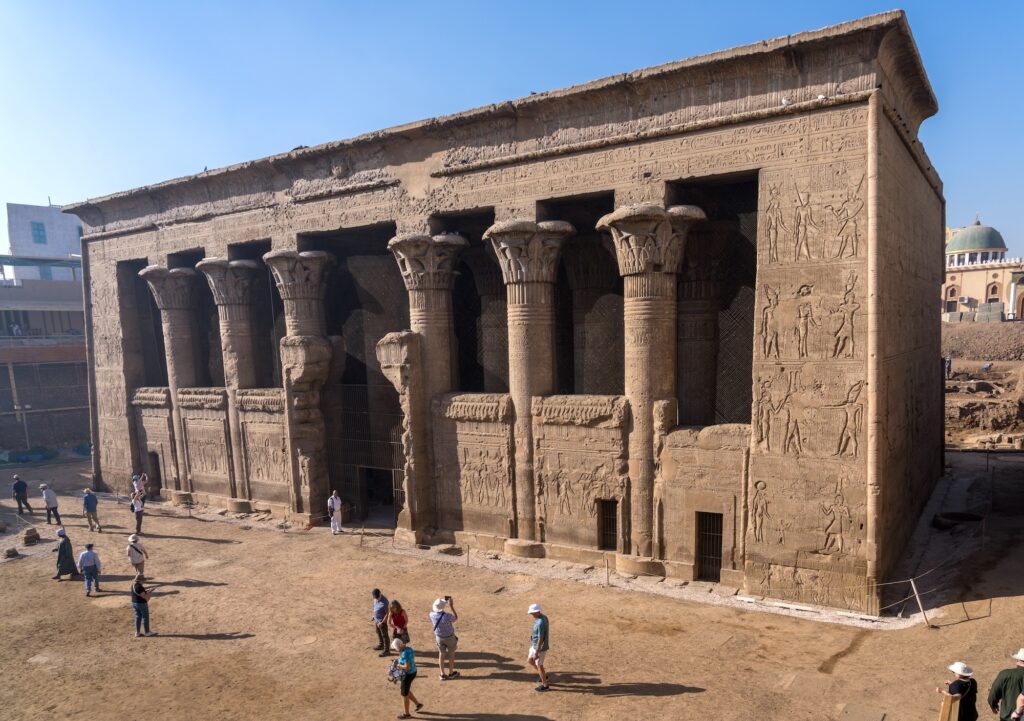
The Temple of Khnum stands nine meters beneath modern street level in Esna. This extraordinary sanctuary, dedicated to the ram-headed creator deity Khnum and his divine family, represents one of the most remarkably preserved examples of Ptolemaic and Roman architectural collaboration in Egypt.
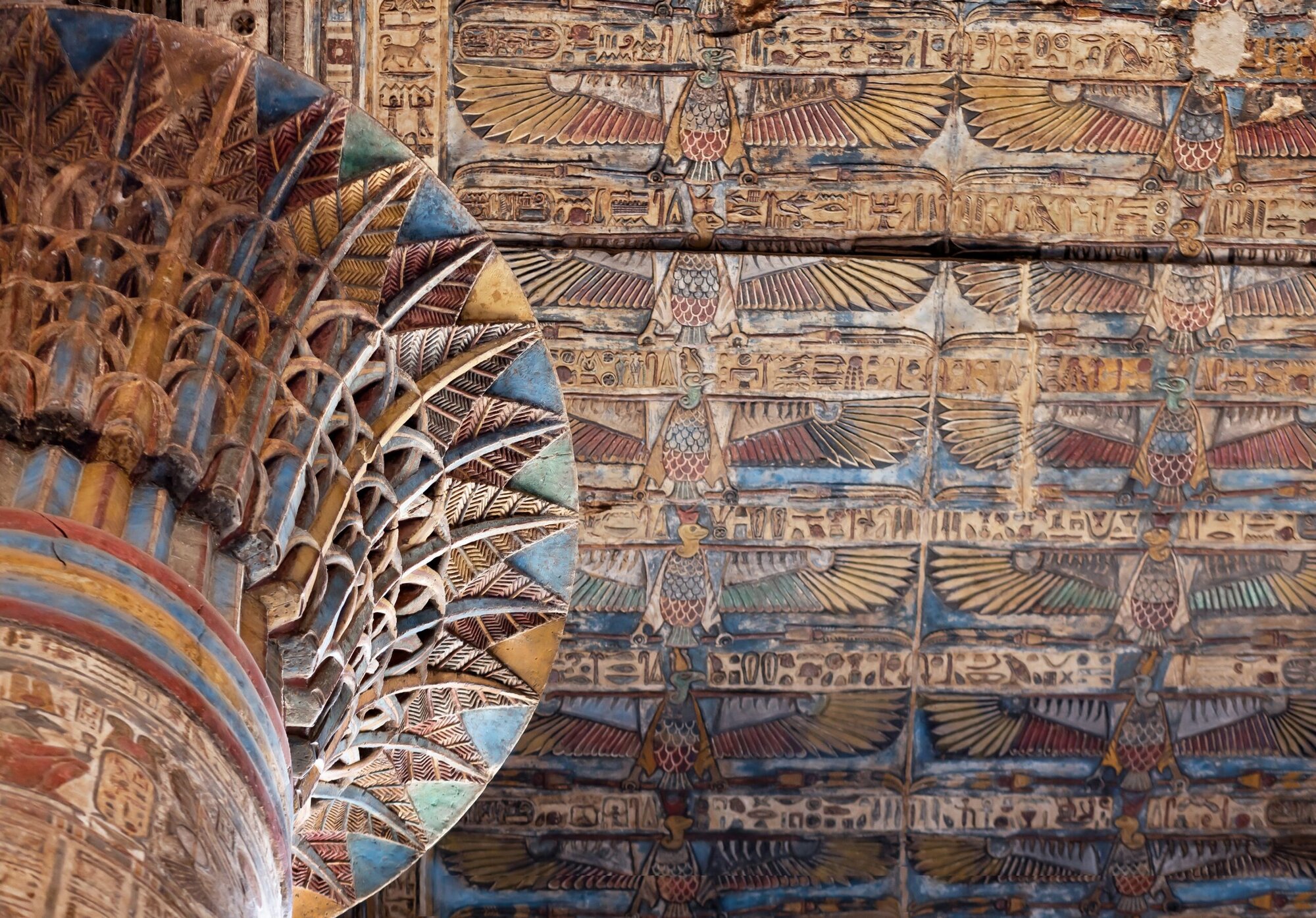
Located 55 kilometers (34 miles) south of Luxor on the Nile’s west bank, the temple’s survival through millennia of sand accumulation has created an archaeological treasure that continues to reveal new secrets about ancient Egyptian religious practices, astronomical knowledge, and artistic mastery. Today’s visitors descend into what feels like stepping back 2,000 years, where vibrant ceiling decorations and towering sandstone columns create an atmosphere of divine grandeur that few ancient sites can match.
Architectural Splendor of Hypostyle Hall
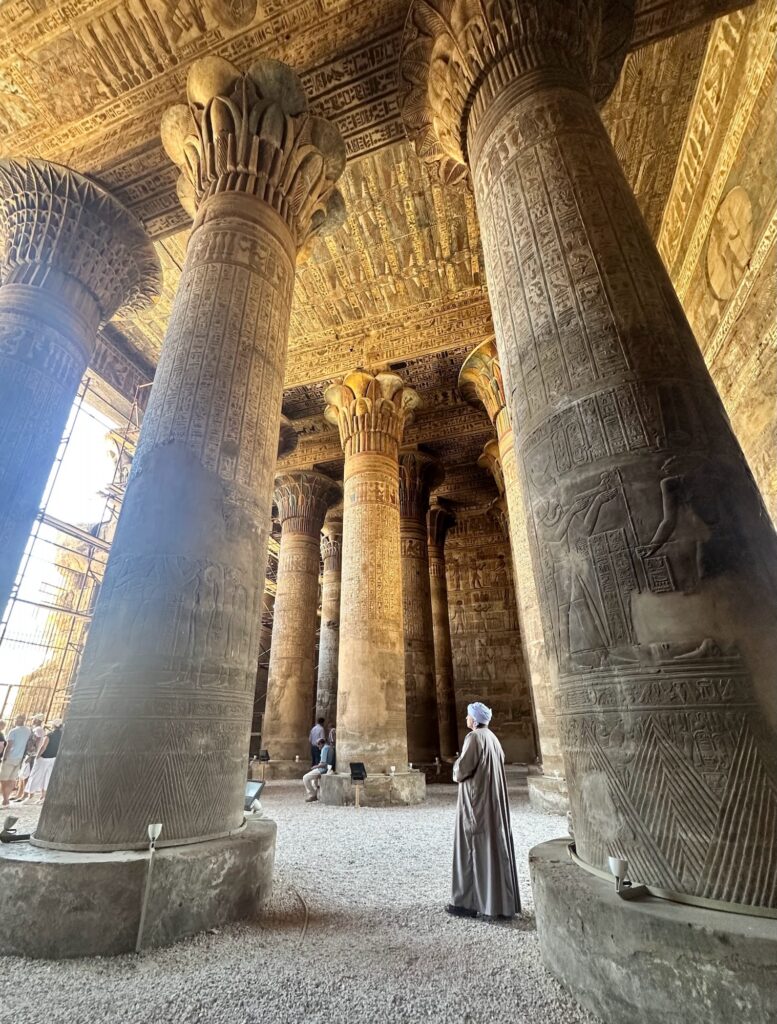
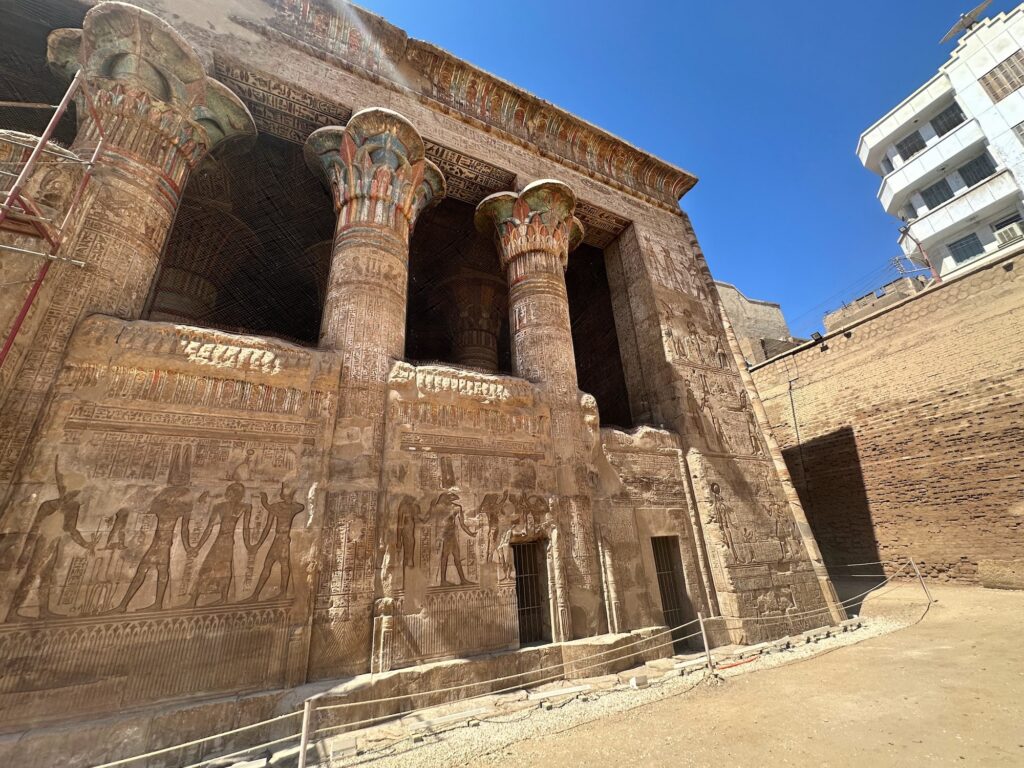
The temple’s crowning achievement lies in its magnificent hypostyle hall, constructed entirely from rich red sandstone during the Roman period. Twenty-four imposing columns rise in four perfectly aligned rows, each crowned with capitals showcasing diverse botanical motifs that transform the space into a stone garden of ancient artistry.
Column Capitals: Nature’s Divine Inspiration
Every column capital tells a unique story through its intricate floral designs. Lotus buds unfurl alongside palm fronds, while papyrus clusters intermingle with grape vines and date palm leaves. The craftsmanship demonstrates how Roman architects honored Egyptian traditions while introducing their own aesthetic sensibilities.
Ceiling Astronomy: The Latopolitan Zodiac
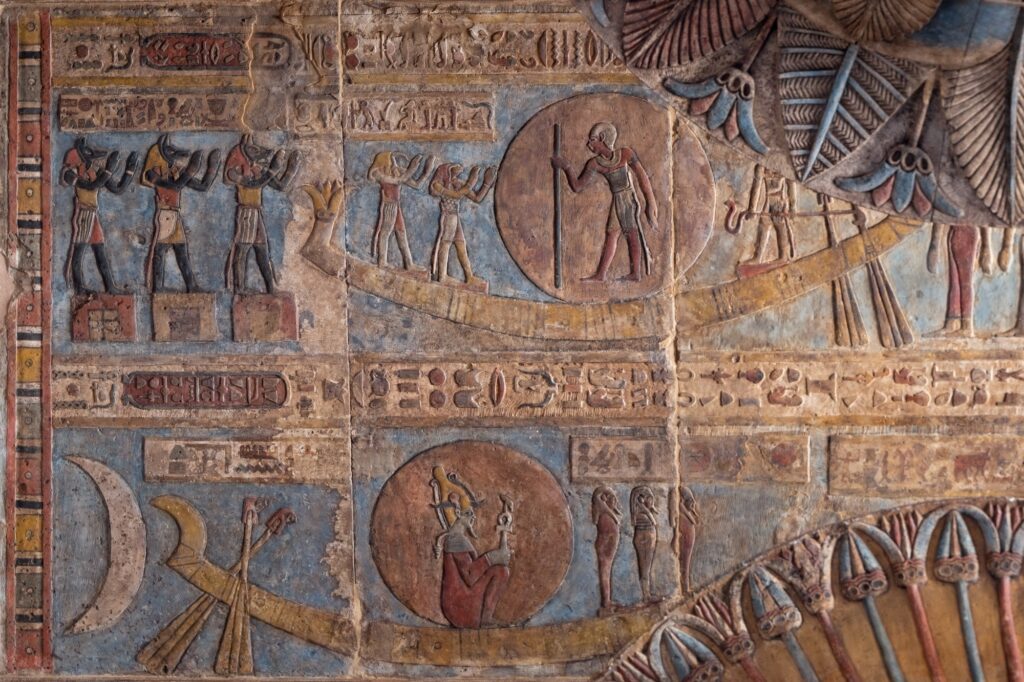
Above these architectural marvels stretches one of Egypt’s most sophisticated astronomical displays. The famous Latopolitan Zodiac decorates multiple ceiling bays, featuring detailed star maps, constellation figures, and celestial observations that guided ancient festivals and agricultural cycles. Each astronomical section connects to specific religious celebrations throughout the year.
Sacred Spatial Design
The hall’s proportions follow ancient Egyptian mathematical principles, creating acoustic properties that enhanced religious ceremonies. Sound travels distinctively through the space, amplifying hymns and ritual proclamations while maintaining intimate conversation areas between columns.
Religious Significance and Divine Family
The Temple of Khnum served as the primary sanctuary for a complex divine family whose roles encompassed creation, fertility, and protection across Upper Egypt. Khnum himself, depicted with a ram’s head, held dominion over the annual Nile flood and the creation of human souls on his potter’s wheel.
Ancient texts describe him molding each person’s ka (life force) from sacred clay, determining their destiny and character. His creative powers extended beyond humans to include all living creatures, making him one of Egypt’s most essential deities.
Menhit, his fierce lioness consort, brought protection and war prowess to the divine household. Originally worshipped in Nubia, her cult merged with Khnum’s following as trade relationships strengthened between Egypt and its southern neighbors. Nebtu, the second divine wife, governed local agricultural fertility and women’s health concerns.
Their son Heka personified magical power itself, representing the divine force that made all religious rituals effective. Together with Neith, the ancient weaving goddess who joined their sacred circle, this divine family addressed virtually every aspect of human existence from birth to afterlife preparation.
Festival Calendar and Celebrations
Temple records describe an elaborate festival schedule spanning 90 days annually, beginning with New Year celebrations. These festivals included processions where divine statues traveled between temples, elaborate offering ceremonies, and community feasts that strengthened bonds between priests and local populations.
Historical Development Through Millennia
Construction began during Thutmose III’s reign in the 18th Dynasty, establishing the temple’s foundations on a site considered sacred for generations. The original structure remained modest until Ptolemaic rulers transformed it into a major religious center during their 300-year dynasty.
Ptolemaic Expansion Period
Ptolemy VI Philometor initiated the temple’s dramatic expansion around 180-145 BC, creating the basic layout that visitors see today. Subsequent Ptolemaic rulers added decorative elements, expanded the sanctuary areas, and commissioned the intricate relief work that covers interior walls. The project demonstrated these Greek-descended pharaohs’ commitment to maintaining Egyptian religious traditions while introducing Hellenistic artistic influences.
Roman Enhancement Era
Roman emperors continued construction and decoration well into the 3rd century AD. Emperor Claudius added significant architectural elements, while later rulers contributed increasingly elaborate ceiling decorations and wall reliefs. The final hieroglyphic inscriptions date to Emperor Decius’ reign (249-251 AD), making them among the latest formal hieroglyphic texts ever carved in ancient Egypt.
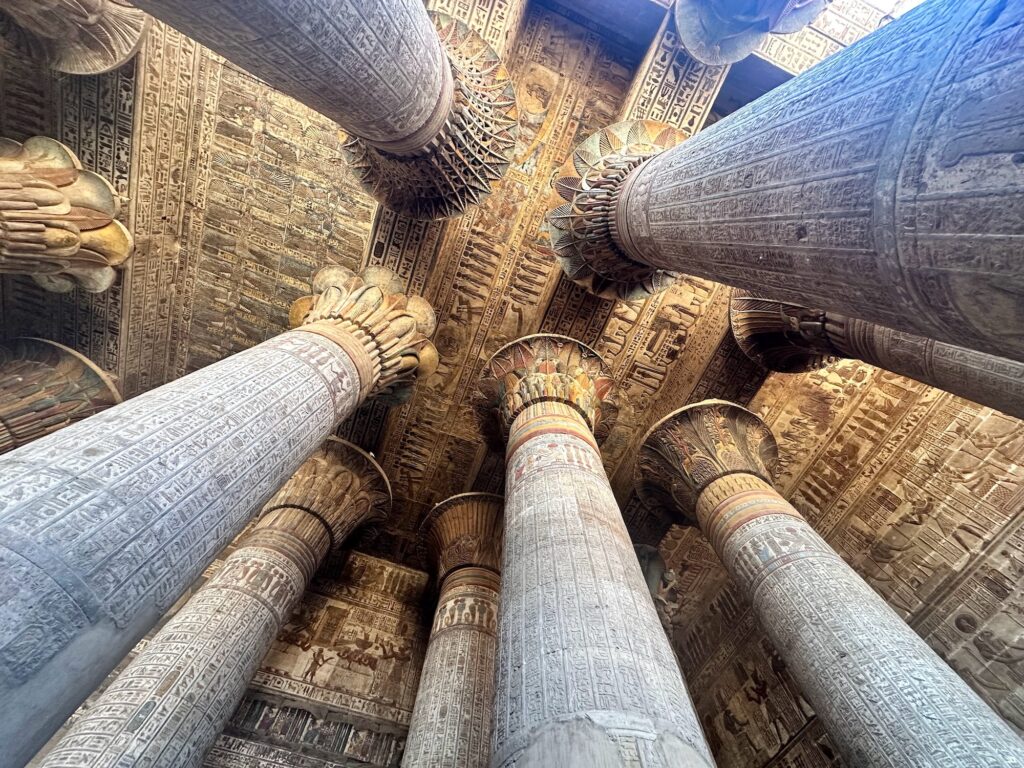
Remarkably, Roman emperors appear throughout the temple dressed as traditional pharaohs, performing ancient Egyptian religious ceremonies before the gods. These depictions show how completely Roman rulers adopted Egyptian religious practices to maintain legitimacy among their subjects.
Medieval Preservation
During the Islamic period, the temple gradually filled with sand and debris, inadvertently creating perfect preservation conditions. Local residents built homes and workshops above the buried structure, unknowingly protecting it from intentional destruction that affected many other ancient sites. By the 19th century, the temple lay completely hidden beneath Esna’s modern town.
Modern Rediscovery and Conservation
French scholar Vivant Denon first documented the temple in 1799 during Napoleon’s Egyptian expedition, though much remained buried beneath accumulated debris. Early excavations revealed the extraordinary state of preservation, with original colors still vibrant on ceiling decorations and wall reliefs.
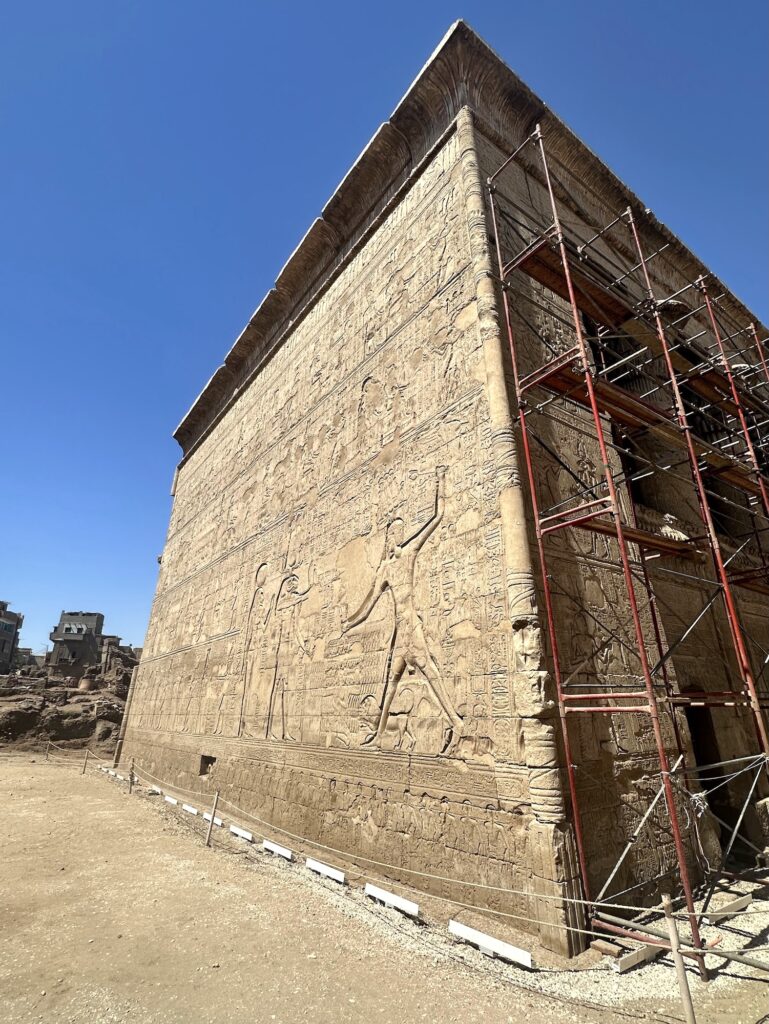
A joint German-Egyptian conservation team began comprehensive restoration work in recent years, removing centuries of soot from cooking fires and modern pollution. Using distilled water and specialized cleaning techniques, conservators have restored brilliant blues, reds, and golds to their original intensity. This painstaking process reveals details invisible to visitors for over a century.
Current Research Projects
The University of Tübingen leads ongoing documentation efforts, creating detailed records of every inscription and artistic element. Professor Christian Leitz and his team work to translate previously unknown religious texts, uncovering new information about ancient festivals, religious practices, and astronomical observations.
Archaeological investigations continue around the temple’s perimeter, searching for additional structures and attempting to understand the site’s complete ancient layout. Ground-penetrating radar has identified promising areas for future excavation.
Planning Your Temple Visit
We organize private guided tours that allow intimate exploration of this remarkable site, typically combined with other Esna attractions and Luxor temple visits. Our expert guides provide detailed explanations of the astronomical ceiling decorations, religious symbolism, and architectural innovations that make this temple unique.
The temple opens daily from 6:00 am to 4:00 pm (06:00 to 16:00), though we recommend morning visits when lighting conditions best illuminate the ceiling decorations. Photography requires a separate permit, available on-site for an additional fee.
Access involves descending into the excavated pit via stone steps, so comfortable walking shoes are essential. The enclosed space can feel warm during summer months, making early morning or late afternoon visits most comfortable.
Most visitors spend 45-60 minutes exploring the hypostyle hall thoroughly, though photography enthusiasts often prefer longer visits to capture the ceiling decorations properly. We ensure adequate time for detailed examination of the astronomical elements and religious scenes that make this temple extraordinary.
Combining with Nile Cruise Itineraries
The Temple of Khnum fits perfectly into Luxor-Aswan cruise schedules, as most vessels pass through Esna’s lock system directly adjacent to the temple. While ship captains negotiate the lock procedures, passengers can explore this archaeological marvel before continuing their Nile journey.
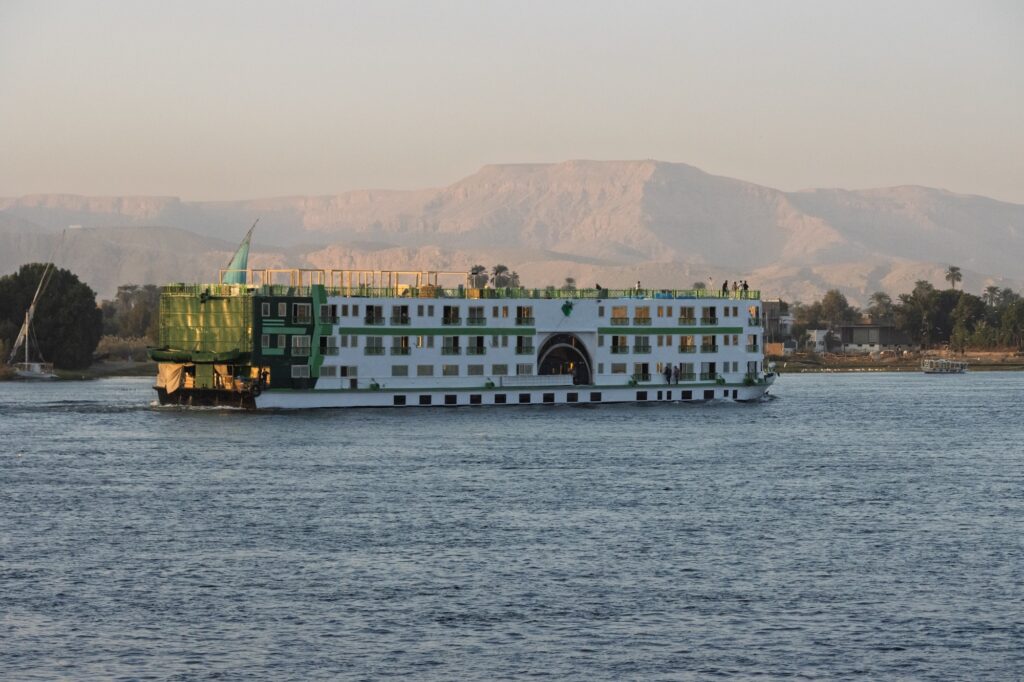
Our cruise extensions include private transportation from the dock to the temple entrance, maximizing your time for exploration rather than logistics. This arrangement proves especially valuable since cruise schedules allow limited time in Esna.
Frequently Asked Questions
How deep underground is the Temple of Khnum located?
The temple floor sits approximately 9 meters below current street level.
Which Egyptian gods are worshipped at this temple?
The temple honors Khnum, Menhit, Nebtu, Heka, and Neith forming a divine family.
When was the Temple of Khnum built?
Construction began under Thutmose III around 1479 BC with final decorations completed around 250 AD.
What makes the ceiling decorations special?
The Latopolitan Zodiac features sophisticated astronomical displays with detailed star maps and constellation figures.
Can visitors take photographs inside the temple?
Photography requires a separate permit available at the entrance with additional fees.
How long does a typical temple visit take?
Most visitors spend 45-60 minutes exploring thoroughly with astronomy enthusiasts preferring longer visits.
Is the temple accessible for visitors with mobility limitations?
Access requires descending stone steps which may prove challenging for walking difficulties.
What’s the best time of day to visit?
Morning visits between 8:00-11:00 am offer optimal lighting conditions and fewer crowds.
Are guided tours available in multiple languages?
We provide expert guides fluent in English, French, German, and Arabic languages.
How does this temple compare to others in Egypt?
Temple of Khnum offers uniquely preserved Roman-period decorations and astronomical ceiling art.
What should visitors wear when exploring the temple?
Comfortable walking shoes with good grip are essential plus light layers for warmth.
Can the temple visit be combined with other Esna attractions?
We combine temple visits with Esna’s traditional market, pottery workshops, and scenic views.
Design Your Custom Tour
Explore Egypt your way by selecting only the attractions you want to visit