

Top Temples in Luxor
Luxor holds the world’s largest collection of ancient temples.
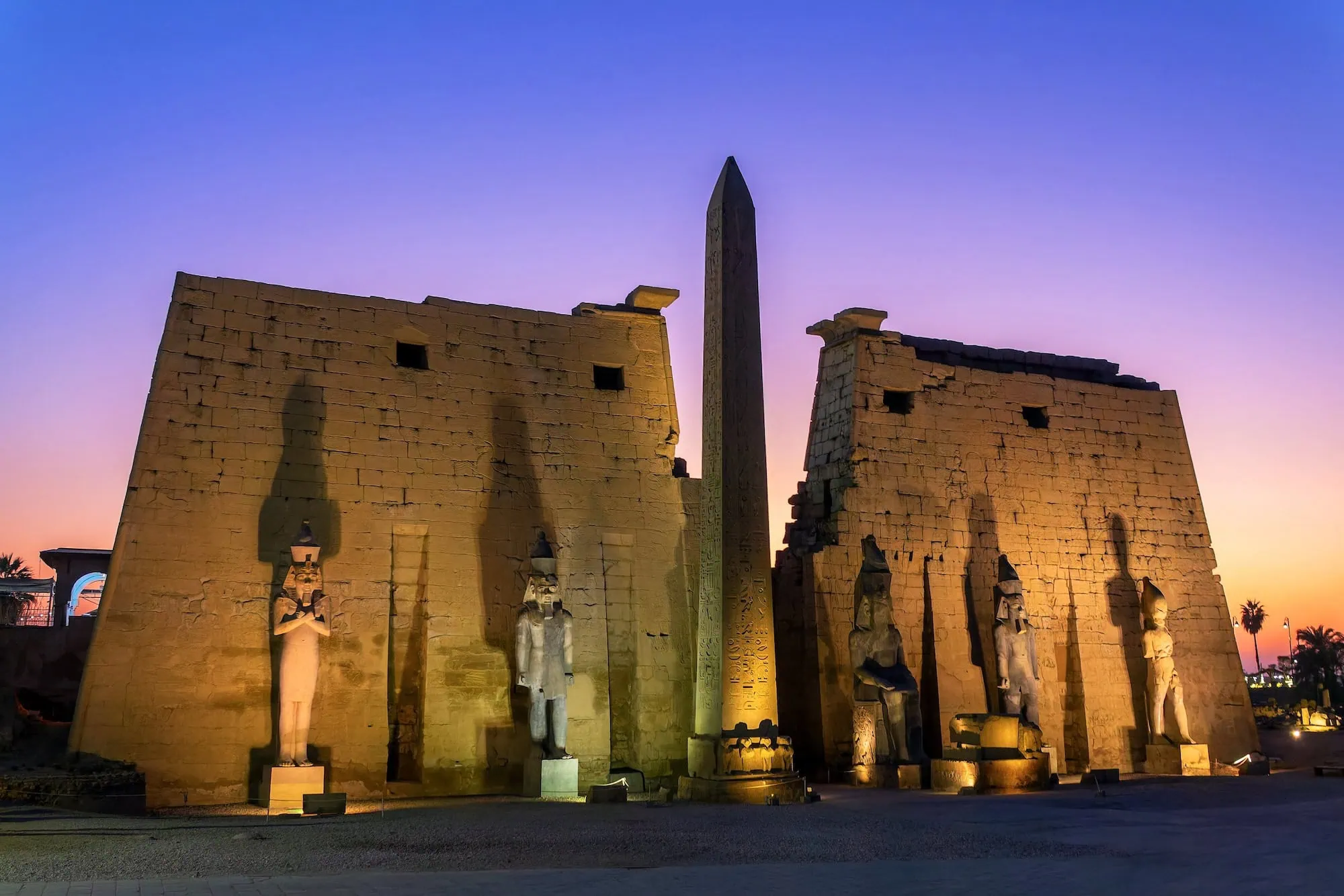
Walking through these sacred spaces feels like stepping into a living museum where pharaohs once ruled and gods were worshipped for over 3,000 years. The east bank of the Nile showcases two of Egypt’s most magnificent temple complexes – Karnak and Luxor Temple – while the west bank reveals mortuary temples carved into cliffsides and hidden in desert valleys.
Our decades of expertise means we understand exactly how to maximize your temple experience. From timing your visits to avoid crowds to decoding the intricate hieroglyphs covering every surface, we ensure every Egypt tour package reveals the true magic of these ancient sites.
Table of Contents
Karnak Temple Complex: The Ancient World’s Greatest Religious Monument
No temple complex on Earth matches Karnak Temple‘s sheer scale and historical significance.
The Precinct of Amun-Ra: Heart of Ancient Thebes
Covering over 100 hectares (247 acres), Karnak served as the primary religious center for the Egyptian empire. Thirty different pharaohs contributed to its construction over 1,500 years, creating an architectural timeline that spans multiple dynasties. The Precinct of Amun-Ra forms the largest section, where priests once performed daily rituals to maintain cosmic order.
The complex housed up to 40,000 inhabitants at its peak, including priests, scribes, and craftsmen who maintained this sacred city within a city.
Hypostyle Hall: Ancient Engineering Marvel
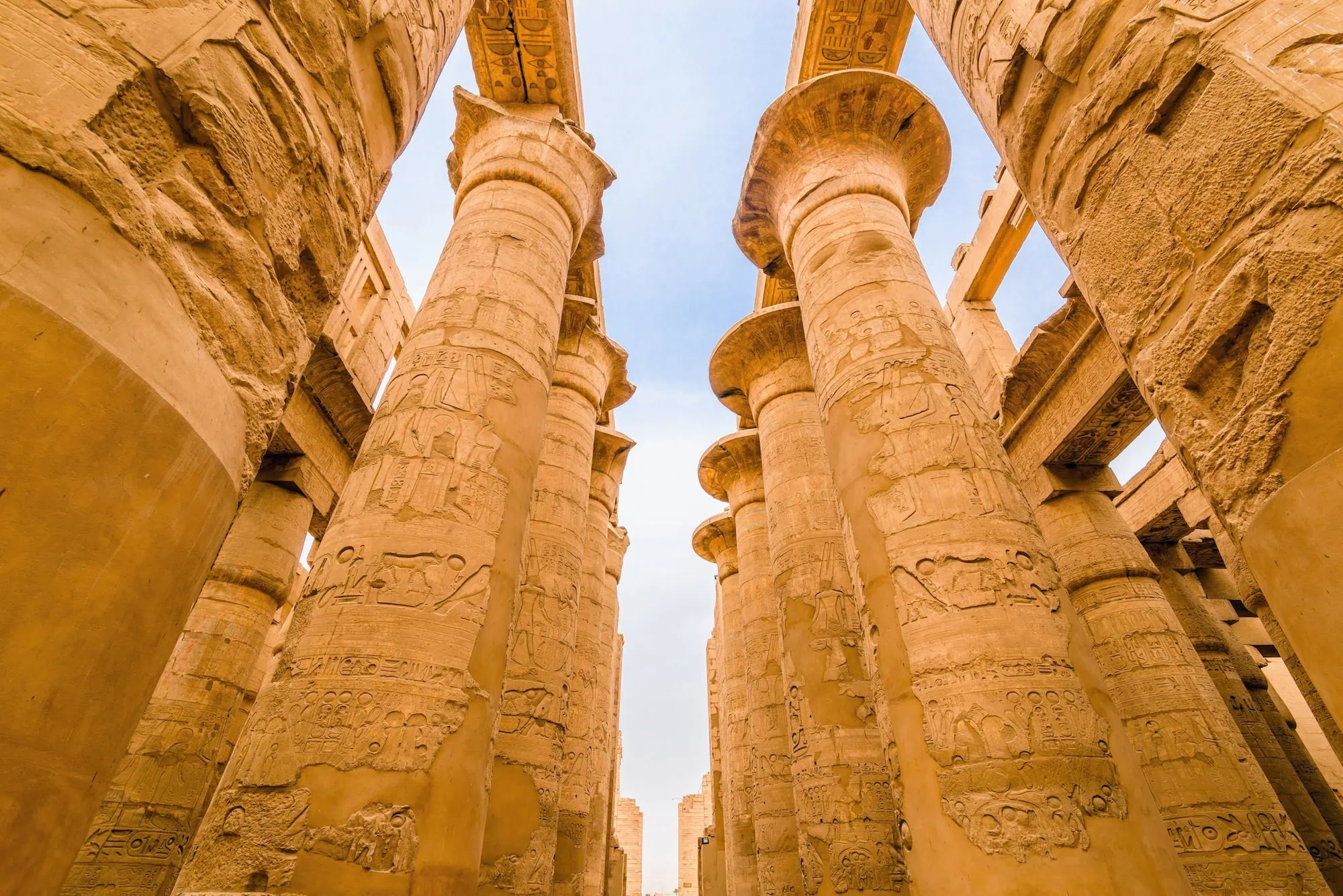
The Great Hypostyle Hall contains 134 massive columns arranged in 16 rows, creating a stone forest that stretches 103 meters (338 feet) wide. Each central column rises 21 meters (70 feet) high and measures 10 meters (33 feet) in circumference – large enough for 50 people to stand on top.
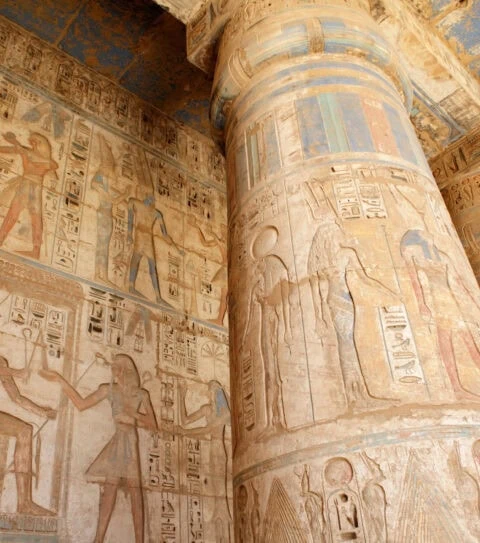
Intricate hieroglyphs cover every surface, telling stories of pharaonic victories and religious ceremonies. The original roof system created a mystical atmosphere where shafts of sunlight illuminated specific carvings during religious festivals.
Obelisks and Sacred Architecture
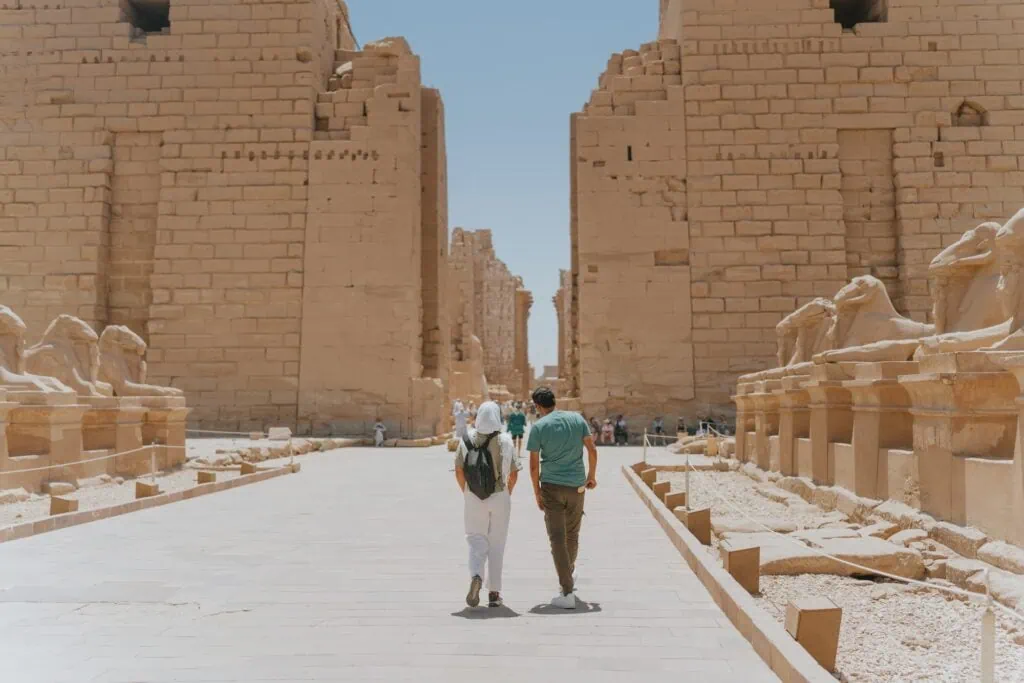
Queen Hatshepsut’s red granite obelisk stands 30 meters (97 feet) tall, making it the tallest standing obelisk in Egypt. Its perfectly preserved hieroglyphs detail her divine right to rule, carved deep enough to survive millennia of sandstorms. The Avenue of Sphinxes originally connected Karnak to Luxor Temple, creating a 2.7-kilometer (1.7-mile) processional route lined with over 1,300 sphinx statues.
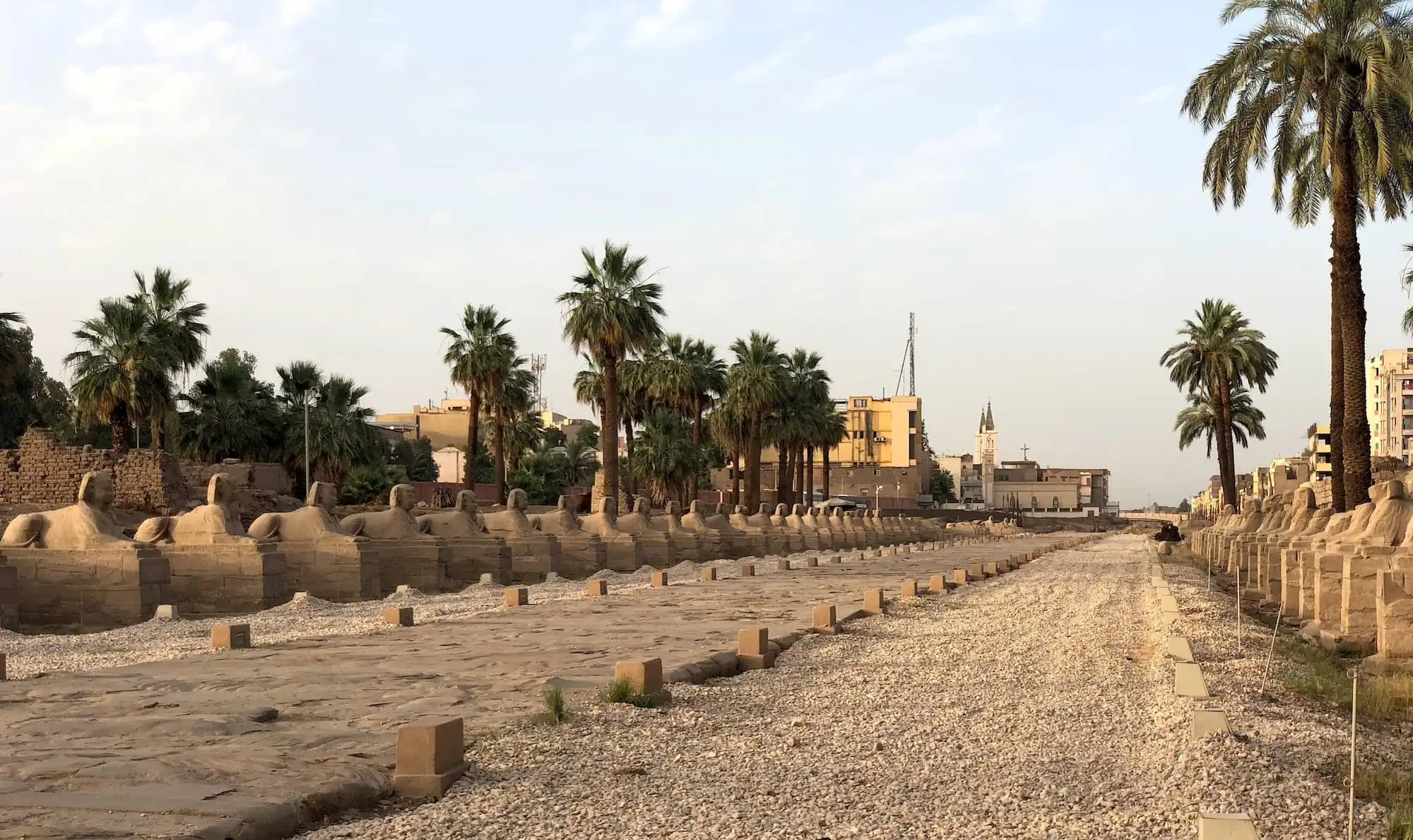
Archaeological teams continue uncovering sections of this ancient ceremonial pathway, with restoration work revealing the grandeur of pharaonic processions.
Luxor Temple: Where Pharaohs Became Gods
Built specifically for the Festival of Opet, Luxor Temple served as the coronation site for Egyptian royalty. Unlike other temples dedicated to specific deities, Luxor Temple focused on the divine transformation of pharaohs.
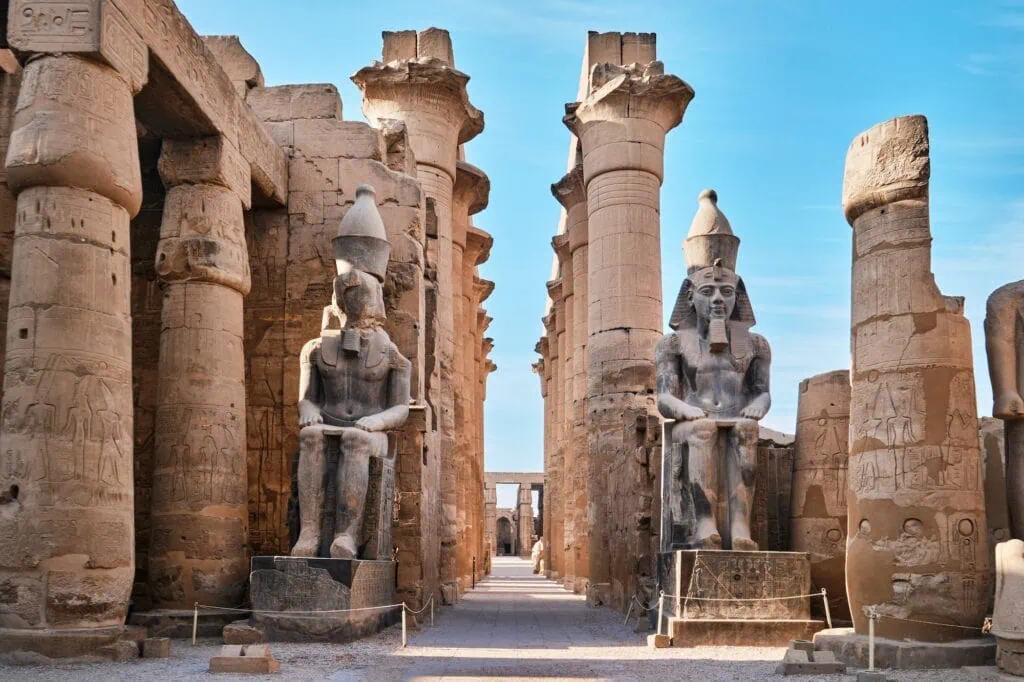
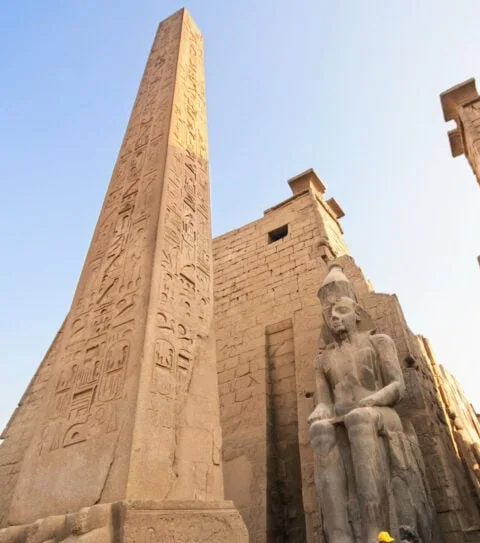
Amenhotep III constructed the original temple around 1400 BCE, while Ramesses II added the iconic entrance pylon and massive statues that still dominate the structure today. The temple’s unique east-west orientation aligns with the Nile’s flow, symbolizing the journey from life to afterlife.
Continuous Sacred Use Through Millennia
Luxor Temple holds the remarkable distinction of serving religious purposes for over 3,400 years without interruption. Romans converted sections into military headquarters, early Christians built churches within the temple walls, and today the Abu Haggag Mosque sits atop ancient columns, demonstrating how sacred spaces adapt while maintaining their spiritual significance.
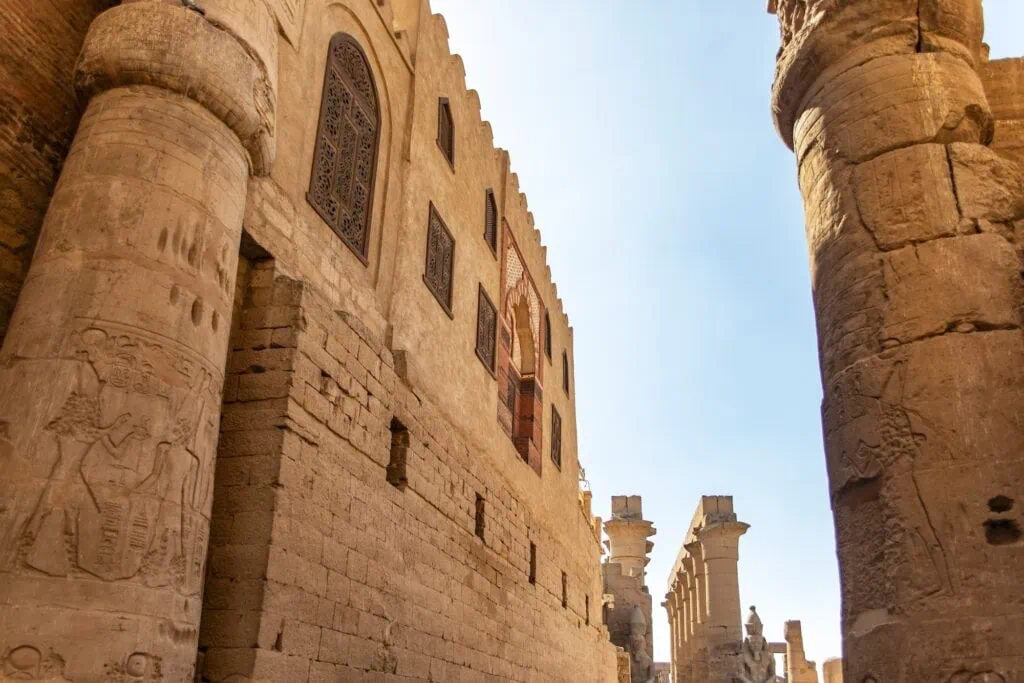
This layered history creates a fascinating architectural palimpsest where Islamic minarets rise beside pharaonic statues.
Festival of Opet: Ancient Egypt’s Most Important Celebration
The annual Festival of Opet transformed Luxor into a city-wide celebration where Amun’s sacred barque traveled from Karnak to Luxor Temple. Priests carried golden shrines containing divine statues along the Avenue of Sphinxes while thousands of worshippers lined the processional route. These ceremonies reinforced the pharaoh’s divine authority and renewed the kingdom’s spiritual connection to the gods.
Modern sound and light shows recreate elements of these ancient festivals, allowing visitors to experience echoes of ceremonies that once defined Egyptian religious life.
Mortuary Temples of the West Bank
The western bank of the Nile served as the realm of the dead, where pharaohs built elaborate mortuary temples to ensure their eternal afterlife.
Temple of Hatshepsut: Female Power Carved in Stone
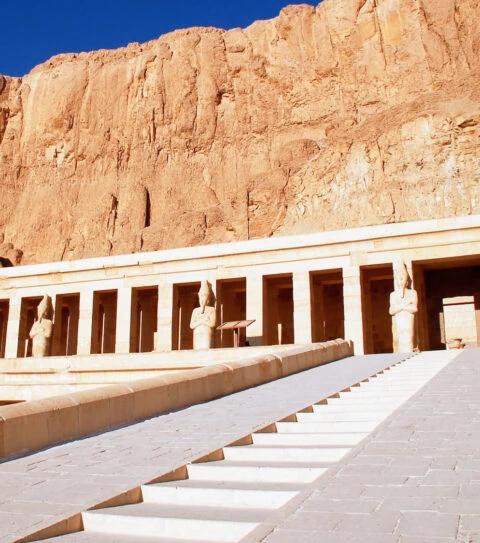
Hatshepsut’s mortuary temple represents one of ancient Egypt’s most innovative architectural achievements. Built directly into the limestone cliffs of Deir el-Bahari, its three terraced levels create a modern-looking design that seems centuries ahead of its time. The female pharaoh who ruled for 22 years commissioned reliefs depicting her divine birth and successful trading expeditions to the mysterious land of Punt.
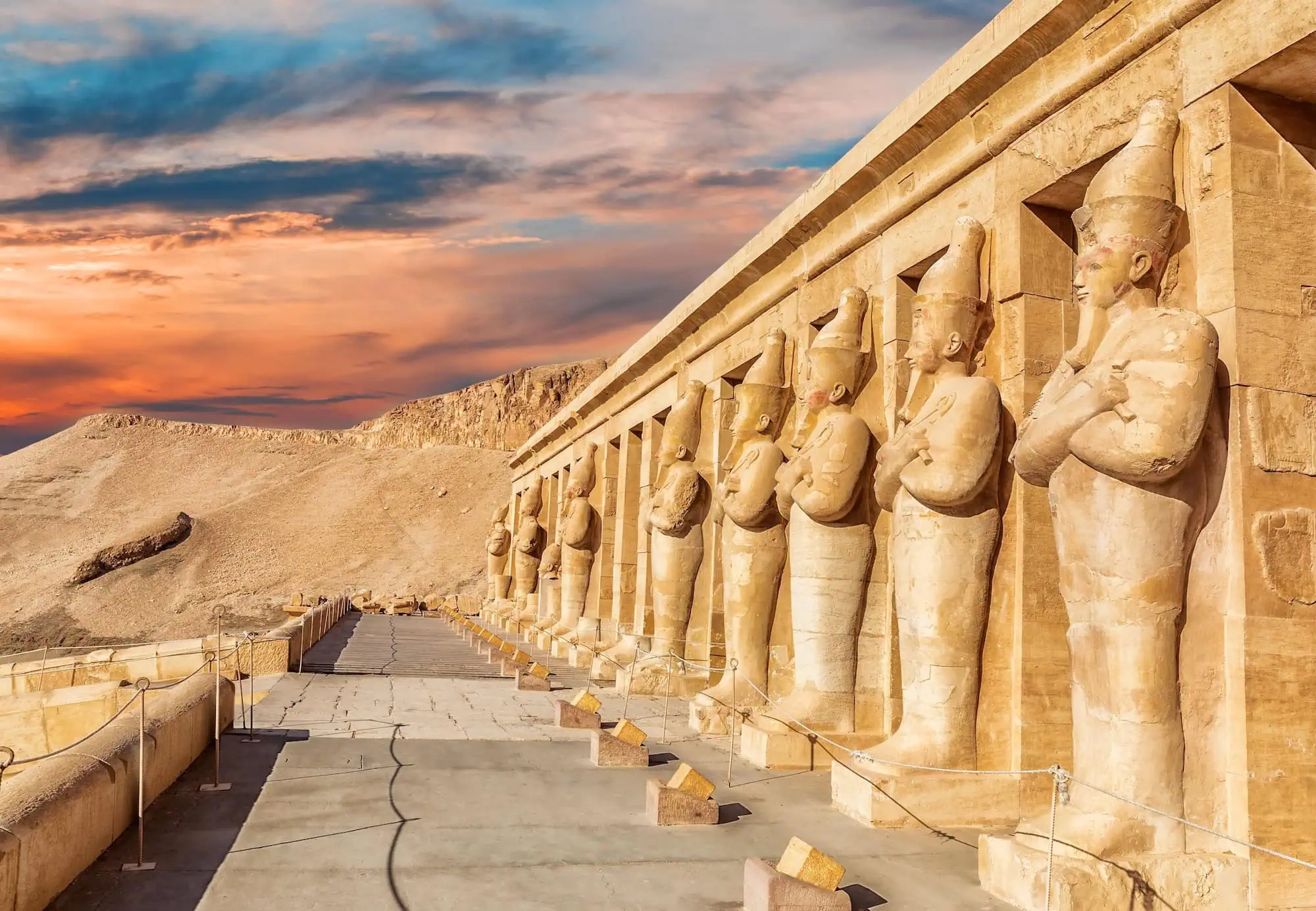
Restoration work has revealed original painted decorations that once covered the entire temple in brilliant colors. The temple’s unique design influenced later Greek architecture, proving Hatshepsut’s vision extended far beyond her own era.
Ramesseum: Monument to Royal Ego
Ramesses II, known as Ramesses the Great, constructed his mortuary temple as a monument to his own greatness. The Ramesseum once featured a 57-ton statue of the pharaoh, now lying in fragments that inspired Percy Bysshe Shelley’s poem “Ozymandias.” Massive pylons depict Ramesses’ victory at the Battle of Kadesh, where Egyptian propaganda transformed a strategic stalemate into glorious triumph.
The temple complex included royal palaces, storage facilities, and schools where scribes learned hieroglyphic writing.
Medinet Habu: Ramesses III’s Fortress Temple
Medinet Habu, the best-preserved mortuary temple in Egypt, showcases the military might of the country’s last great pharaoh. Massive walls depict naval battles against the mysterious Sea Peoples, providing historians with crucial insights into Bronze Age conflicts. The temple’s fortress-like design reflects the uncertain times of the late New Kingdom when Egypt faced increasing external threats.
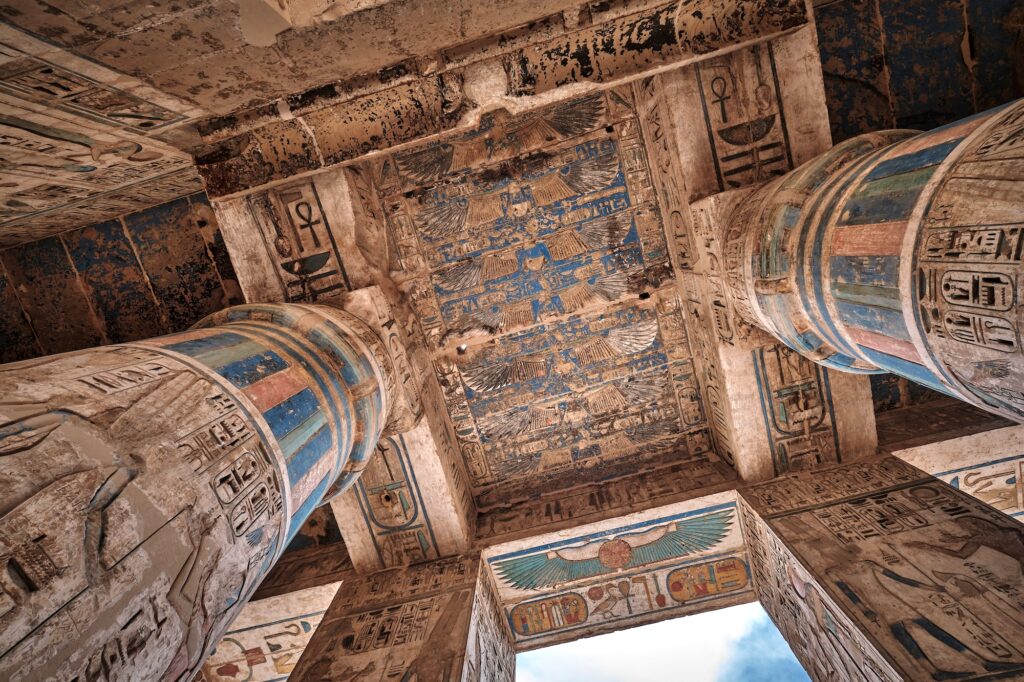
Vivid battle scenes cover the exterior walls, showing Ramesses III defending Egypt against invasion attempts that ultimately contributed to the Bronze Age collapse across the Mediterranean.
Planning Your Temple Experience
Optimal Visiting Strategy
Early morning visits to Karnak Temple (starting at 6:00 am/06:00) provide cooler temperatures and better photography light before tour groups arrive. Luxor Temple opens until 10:00 pm (22:00), making sunset visits particularly magical when golden light illuminates the sandstone columns. West bank temples require full-day exploration, with Hatshepsut’s temple best visited mid-morning when cliff shadows provide natural cooling.
We recommend dedicating at least two full days to properly explore Luxor’s temple complexes, allowing time to absorb the historical significance without rushing.
Transportation Between Sites
The east bank temples (Karnak and Luxor) lie within easy walking distance of most hotels, while west bank sites require vehicle transport across the Nile. Modern air-conditioned vehicles make the desert heat manageable, and private drivers familiar with optimal timing help maximize your temple experience. Ferry crossings provide scenic Nile views, though private vehicle transfers via Luxor Bridge offer more flexibility.
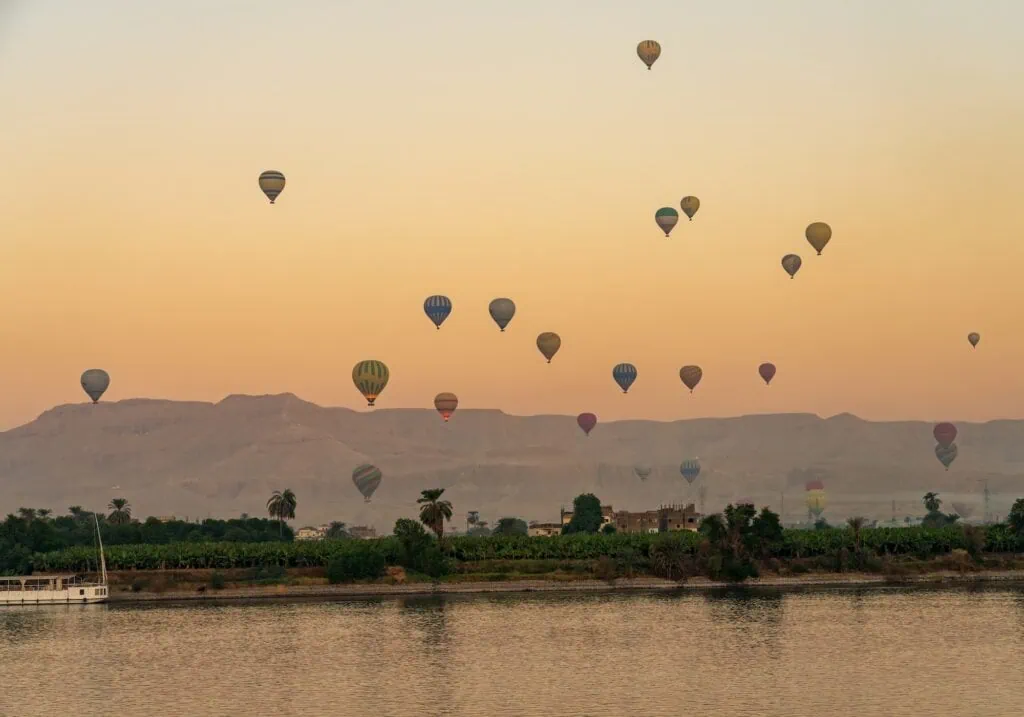
Hot air balloon rides at sunrise reveal the temples’ relationship to the surrounding landscape, showing how ancient builders chose locations that maximized symbolic and practical advantages.
Photography and Cultural Considerations
Interior photography requires separate tickets at most temples, though the investment proves worthwhile for capturing hieroglyphic details impossible to see clearly with standard lighting. Respectful clothing (covered shoulders and knees) shows proper consideration for these sacred spaces, and many areas still function as active religious sites requiring appropriate behavior.
Professional photography equipment may require special permits, and drone usage faces strict regulations due to security concerns around archaeological sites.
Archaeological Discoveries and Ongoing Research
Recent Excavations Reveal New Insights
Archaeological teams working in Luxor continue making significant discoveries that reshape our understanding of ancient Egyptian temple life. Recent excavations near Amenhotep III’s mortuary temple uncovered a 3,000-year-old “lost city” complete with workshops, bakeries, and administrative buildings. These finds provide unprecedented insights into daily life around the great temples.
Ground-penetrating radar surveys suggest many more structures remain buried beneath centuries of Nile sediment and wind-blown sand.
Conservation Challenges and Solutions
Modern conservation efforts face the dual challenge of protecting ancient stonework while allowing continued public access. Salt damage from rising groundwater threatens limestone foundations, while tourist traffic gradually erodes floor surfaces and painted decorations. UNESCO World Heritage status provides international support for preservation projects, though funding remains a constant challenge.
Innovative techniques like digital mapping and 3D modeling help archaeologists document temples in unprecedented detail before deterioration occurs.
Spiritual Significance and Cultural Legacy
Understanding Ancient Egyptian Religious Practices
Temple rituals followed precise daily schedules designed to maintain cosmic balance. Priests performed purification ceremonies, offered food to divine statues, and chanted prayers that echoed through hypostyle halls. These practices continued uninterrupted for thousands of years, creating spiritual traditions that influenced later religious developments throughout the Mediterranean world.
The complex theological relationships between different deities required extensive priestly training and specialized knowledge passed down through generations.
Modern Spiritual Tourism
Contemporary visitors often report profound spiritual experiences while exploring these ancient sacred spaces. The temples’ astronomical alignments, mathematical proportions, and symbolic decorations create environments that seem designed to induce contemplative states. Whether approaching these sites from historical, architectural, or spiritual perspectives, most people find their understanding of human civilization fundamentally expanded.
Our expert guides help visitors understand both the historical facts and cultural significance that make these temples continuing sources of inspiration and wonder.
What’s the Best Way to Experience the Temples of Luxor?
The best way to experience the top temples in Luxor — Karnak, Luxor Temple, Hatshepsut, Medinet Habu, and the Ramesseum — is on a private guided tour combined with a multi-day Nile cruise that continues south to Edfu, Kom Ombo, and Philae. It’s the only way to follow the same sacred route the ancient Egyptians did.
See all our Luxor and Nile cruise itineraries — private guided, fully personalized, and crafted by Egypt specialists with 70+ years of heritage.
Frequently Asked Questions
Plan at least 3-4 full days to properly explore Karnak, Luxor Temple, and the major west bank mortuary temples without feeling rushed.
Karnak served as the main religious complex for multiple deities, while Luxor Temple focused specifically on royal ceremonies and the Festival of Opet.
Early morning (6:00-9:00 am/06:00-09:00) offers cooler temperatures and better lighting, while late afternoon provides dramatic shadows and fewer crowds.
Most temples have uneven ancient stone surfaces, though main areas of Karnak and Luxor Temple can accommodate wheelchairs with assistance.
Photography tickets are required for interior shots and cost additional fees beyond standard admission prices.
Start with Karnak Temple Complex to understand the broader historical context, then visit Luxor Temple to see royal ceremonial architecture.
Standard admission ranges from $10-15 USD per temple, with additional fees for special areas like tomb chambers and photography permits.
While not required, qualified guides provide essential historical context and can explain hieroglyphic meanings that enhance the experience significantly.
Modest clothing covering shoulders and knees shows respect for these sacred sites and protects against intense sun exposure.
Limited dining options exist near temple sites, so plan for packed lunches or return to Luxor city center for proper meals.
Design Your Custom Tour
Explore Egypt your way by selecting only the attractions you want to visit