

Pompey’s Pillar – Alexandria’s Tallest Tourist Attraction
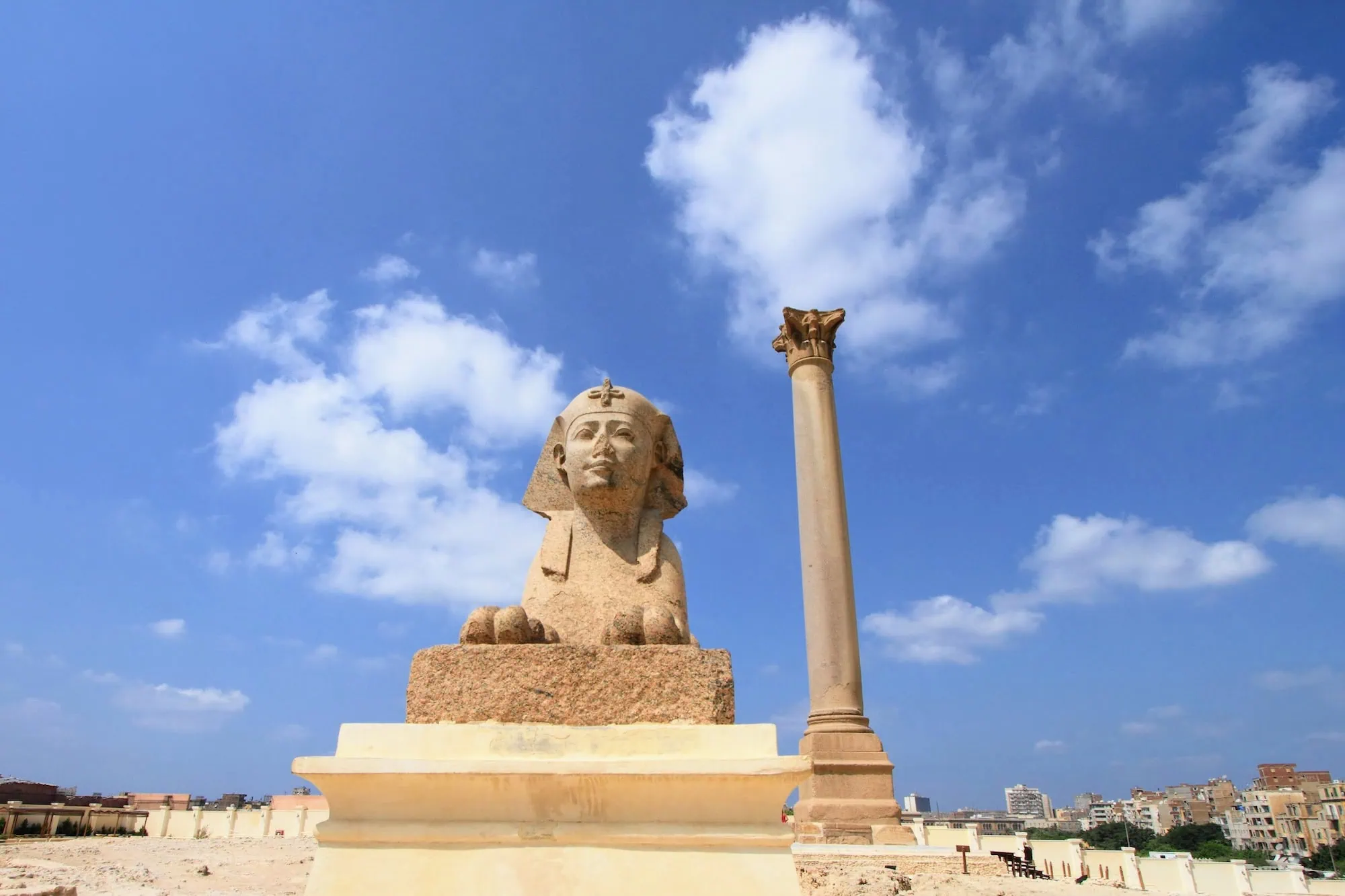
History sometimes leaves us with names that mislead more than they explain. Pompey’s Pillar in Alexandria is a perfect example: a monument famous not only for its scale, but also for a name that has nothing to do with the Roman general Pompey.
Despite this historical confusion, the pillar remains one of the most impressive surviving monuments of Roman Egypt and a powerful reminder of Alexandria’s imperial past.
Table of Contents
A Monument of Roman Power in Egypt
Pompey’s Pillar was erected between 298 and 302 AD during the reign of Emperor Diocletian, one of Rome’s most significant late emperors. The monument was built to honor Diocletian after he successfully restored order in Alexandria following a rebellion and siege.
Carved from a single block of red Aswan granite, the column stands approximately 26.85 meters (88 feet) high, including its base and Corinthian capital. It is considered the tallest surviving ancient monument in Alexandria and one of the largest monolithic columns ever erected in the Roman world. The weight of the column is commonly estimated at around 280–300 tons, highlighting the extraordinary engineering capabilities of Roman builders.
Originally, the column likely supported a statue of Emperor Diocletian, reinforcing its role as a symbol of imperial authority.
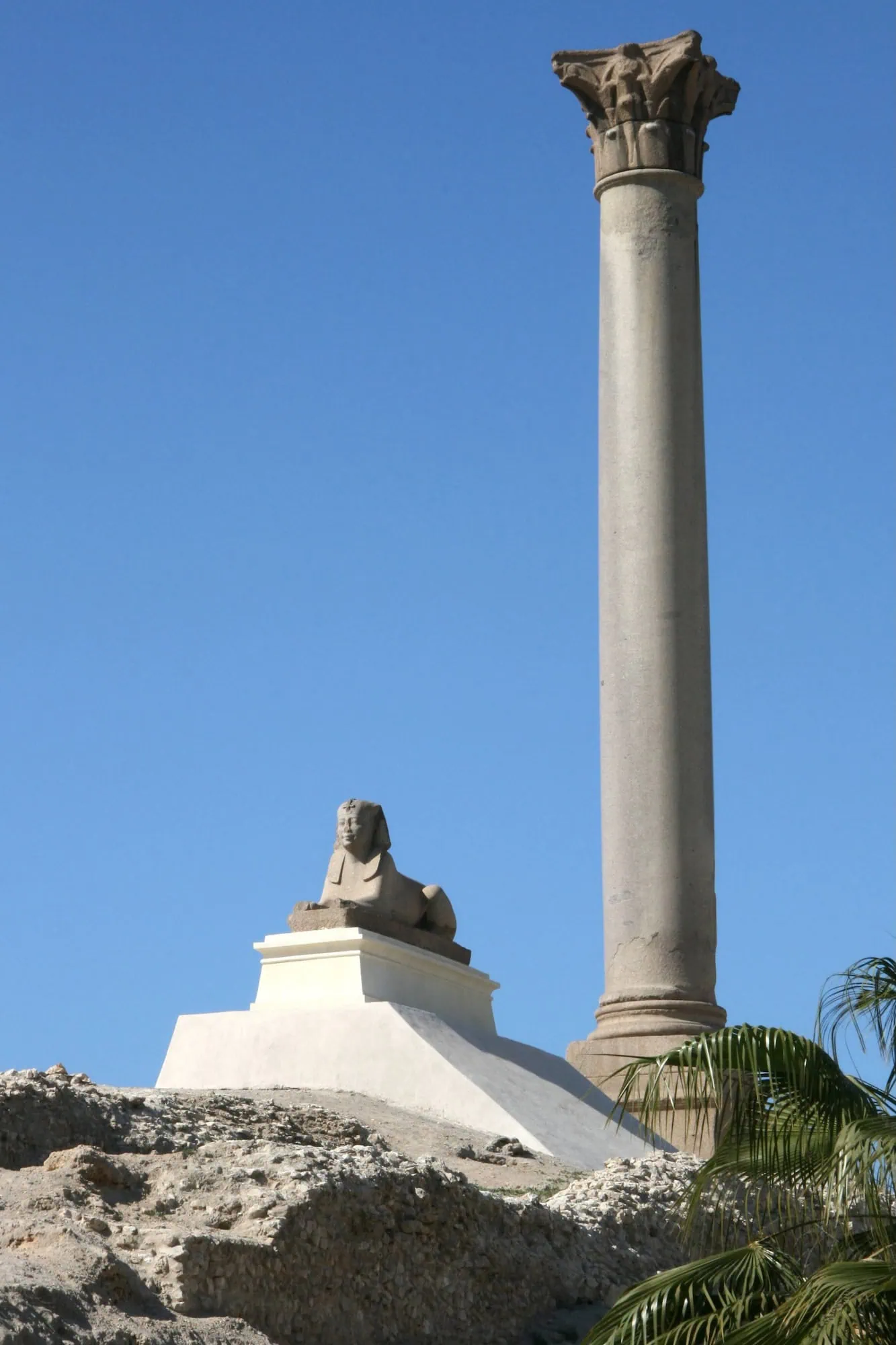
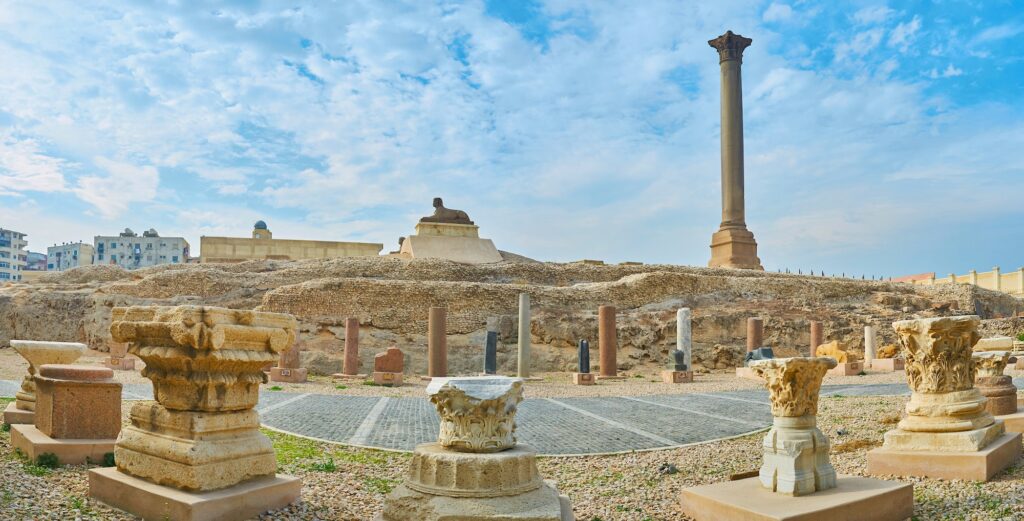
The pillar stands within the archaeological remains of the Serapeum, a vast temple complex dedicated to the Greco-Egyptian god Serapis. The Serapeum was one of Alexandria’s most important religious and cultural centers during the Roman period and was closely associated with scholarship and civic life.
Although sometimes mistakenly linked to the Great Library of Alexandria, Pompey’s Pillar was not part of the Library itself, but rather part of the wider religious landscape of the ancient city.
The Origin of the Name “Pompey’s Pillar”
The monument has no connection whatsoever to Pompey the Great, who was assassinated in Egypt in 48 BC—more than three centuries before the pillar was erected.
The name arose during the medieval period, when European travelers misread the Greek inscription at the base of the column. The inscription refers to Publius, the Roman prefect of Egypt who oversaw the monument’s dedication. Over time, the name was mistakenly associated with Pompey, and the error became firmly embedded in historical and travel literature.
Modern epigraphic studies have long since confirmed the correct interpretation.
Archaeological Significance
Pompey’s Pillar is one of the few standing structures that survived Alexandria’s centuries of earthquakes, religious conflict, and urban transformation. Excavations around the site have uncovered statues, sphinxes, coins, and architectural fragments that provide valuable insight into the religious and civic life of Roman Alexandria.
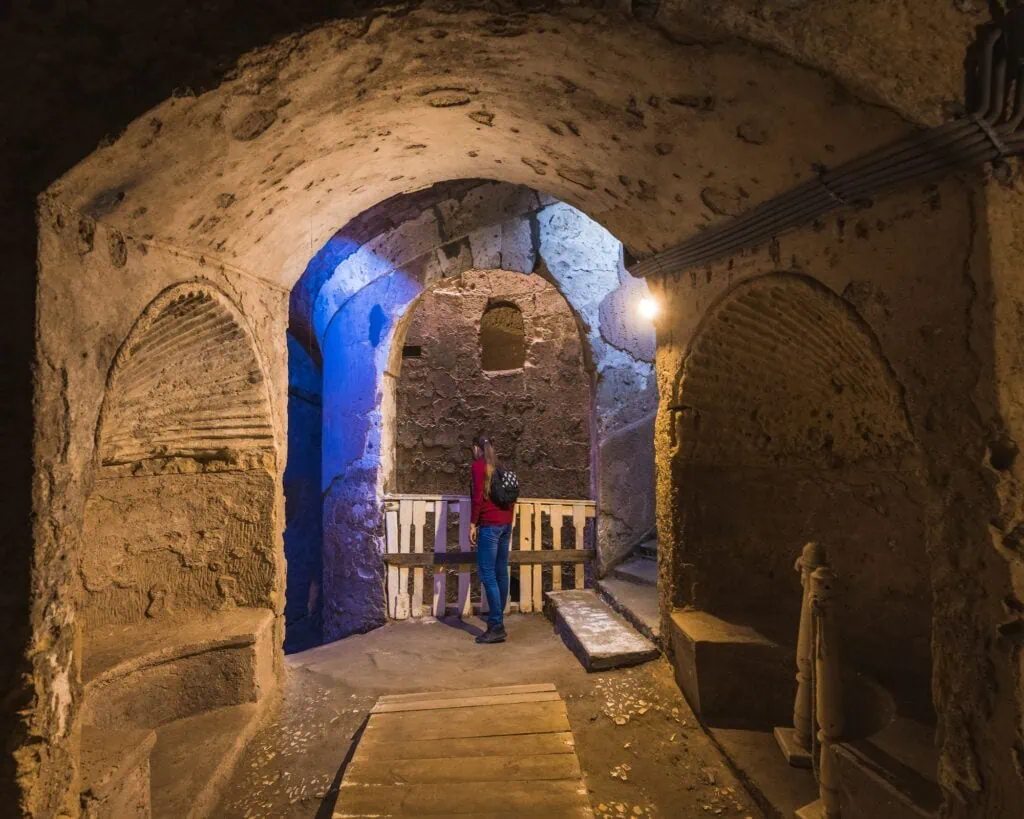
Beneath the site, visitors can explore underground chambers and galleries that once formed part of the Serapeum complex, adding further depth to the experience.
Visiting Pompey’s Pillar Today
Located in Alexandria’s historic district, Pompey’s Pillar is easily accessible and typically included in tours of the city’s Roman-era landmarks. The site is open year-round, with guided tours available for visitors seeking deeper historical context.
Early morning and late afternoon visits offer the most favorable light conditions, particularly for photography. Standard photography is permitted on-site, while drone usage requires special authorization.
Pompey’s Pillar is often combined with visits to other nearby attractions, such as the Roman Theatre, the Catacombs of Kom El Shoqafa, and the Alexandria National Museum.
Why Pompey’s Pillar Matters
More than just a solitary column, Pompey’s Pillar represents the final chapter of monumental classical architecture in Alexandria. It reflects the city’s transformation under Roman rule and stands as a rare, vertical survivor of a once-glorious urban landscape.
As the tallest surviving ancient monument in Alexandria, it remains a powerful symbol of imperial ambition, engineering mastery, and the layered history that defines this Mediterranean city.
Stand Beneath The Legacy Of Pompey’s Pillar
Pompey’s Pillar rises as one of Alexandria’s most striking landmarks—an enduring symbol of the city’s layered history and grandeur. With EgyptToursPlus, we seamlessly include this iconic site in a private journey that connects Alexandria’s rich heritage with Egypt’s most unforgettable cultural and historical experiences.
You choose your travel dates, your pace, and the experiences that shape your route. From coastal city exploration to ancient wonders and refined comfort along the way, we tailor every detail around your preferences—ensuring a smooth, expertly planned, and deeply personal travel experience.
Frequently Asked Questions
Pompey’s Pillar is a massive Roman triumphal column in Alexandria erected between 298 and 302 AD to honor Emperor Diocletian after he suppressed a rebellion in Egypt. Standing nearly 27 meters (88 feet) tall, it is the largest ancient monolithic column still standing in Egypt outside Rome’s influence. The pillar originally formed part of the Serapeum complex dedicated to the Greco-Egyptian god Serapis. Its red Aswan granite shaft weighs an estimated 285 tons and remains one of Alexandria’s most recognizable archaeological landmarks.
No, Pompey’s Pillar has no historical connection to the Roman general Pompey the Great, who died in Egypt in 48 BCE. The monument was actually built more than 300 years later in honor of Emperor Diocletian during the Roman imperial period. Medieval travelers mistakenly associated the column with Pompey after misinterpreting inscriptions connected to a Roman official named Publius. Despite the error, the name “Pompey’s Pillar” became widely used in European writings and remains the accepted modern title today.
The name “Pompey’s Pillar” originated from a medieval misunderstanding of a Greek inscription mentioning the Roman official Publius. European travelers and chroniclers incorrectly linked the name Publius to Pompey the Great, the famous Roman general assassinated in Egypt in 48 BCE. Over centuries, this mistaken identification became embedded in maps, travel accounts, and archaeological literature. Although historians now recognize the monument as honoring Emperor Diocletian, the traditional name continues to be used in Alexandria tourism and scholarship.
Pompey’s Pillar stands approximately 26.85 meters (88 feet) high, including its base and Corinthian capital, making it the tallest surviving ancient monument in Alexandria. The red granite shaft alone measures about 20.5 meters (67 feet) and was carved from a single block quarried in Aswan, more than 800 kilometers south of Alexandria. Its enormous scale demonstrated Roman imperial engineering power during the reign of Diocletian. The column originally stood within the grand Serapeum religious complex overlooking ancient Alexandria.
The best time to visit Pompey’s Pillar is between October and April when Alexandria’s Mediterranean climate remains cooler and more comfortable for outdoor sightseeing. Winter daytime temperatures usually range from 18-24°C (64-75°F), compared to summer highs that can exceed 32°C (90°F) with heavy humidity. Morning visits between 9:00 am and 11:00 am often provide softer photography lighting and fewer crowds. Combining the pillar with nearby Roman and Greco-Egyptian sites creates an efficient half-day archaeological itinerary.
Personal photography is generally permitted at Pompey’s Pillar and throughout the surrounding Serapeum ruins, making the site popular with history and architecture photographers. The elevated platform around the column offers wide angles of both the monument and the surrounding archaeological remains. Commercial filming, drones, and professional production equipment may require advance authorization from Egyptian antiquities authorities. Early morning and late afternoon visits usually produce the best lighting conditions because the granite surface reflects harsh midday sunlight strongly.
Yes, Pompey’s Pillar is surrounded by several major Alexandria attractions within a short driving distance or guided tour route. Nearby sites include the Catacombs of Kom El Shoqafa approximately 1 km away, the Roman Theatre in Kom El-Dikka, and the Alexandria National Museum. The Bibliotheca Alexandrina and Citadel of Qaitbay can also be added to a full-day itinerary exploring the city’s Greco-Roman and medieval heritage. Combining multiple sites helps visitors understand Alexandria’s layered history across more than 2,000 years.
Pompey’s Pillar stands in the Kom El-Dikka district of Alexandria within the archaeological remains of the ancient Serapeum, a major Greco-Roman religious complex dedicated to the god Serapis. The site sits southwest of central Alexandria and approximately 4 km from the modern Corniche waterfront. During antiquity, the Serapeum ranked among the city’s most important temples and was closely associated with Alexandria’s intellectual and religious life. Today, the pillar remains the most visible surviving structure from the complex.
Design Your Custom Tour
Explore Egypt your way by selecting only the attractions you want to visit