

Mountain of the Dead, Siwa – Brace Yourself for the Afterlife
Hidden within Egypt’s vast Western Desert lies one of the country’s most remarkable archaeological treasures.
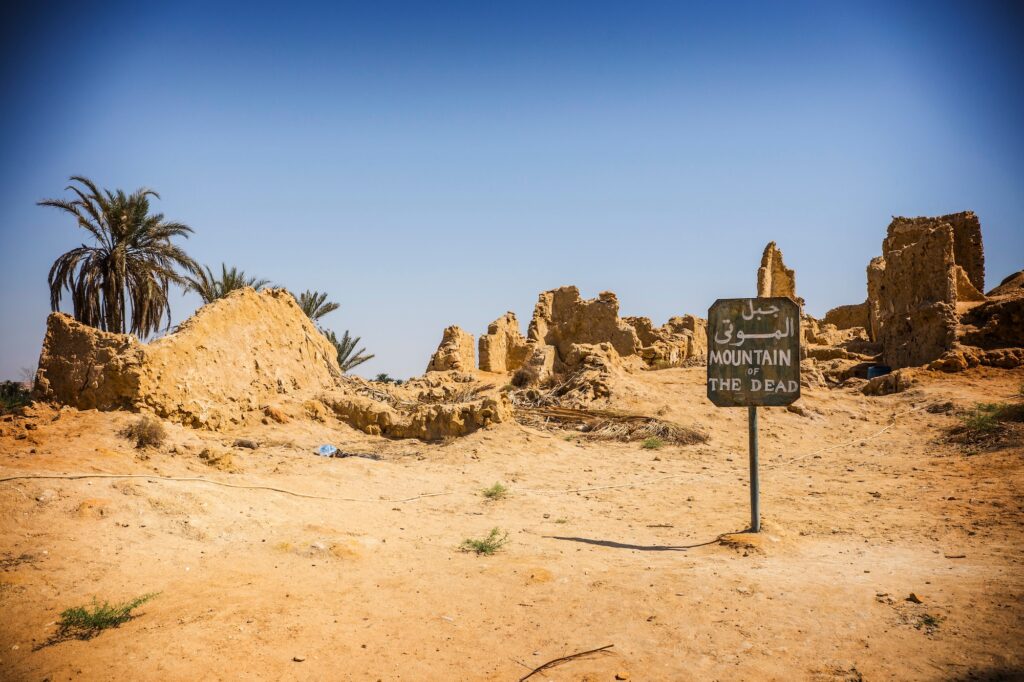
The Mountain of the Dead, known locally as Gebel al-Mawta, stands as a silent sentinel over Siwa Oasis, harboring thousands of ancient tombs carved directly into its limestone bedrock. This cone-shaped burial ground represents over two millennia of Egyptian funeral traditions, where pharaonic practices merged with Greco-Roman customs to create something entirely unique. The mountain’s terraced slopes reveal layer upon layer of history, each tomb telling stories of Siwa’s multicultural past.
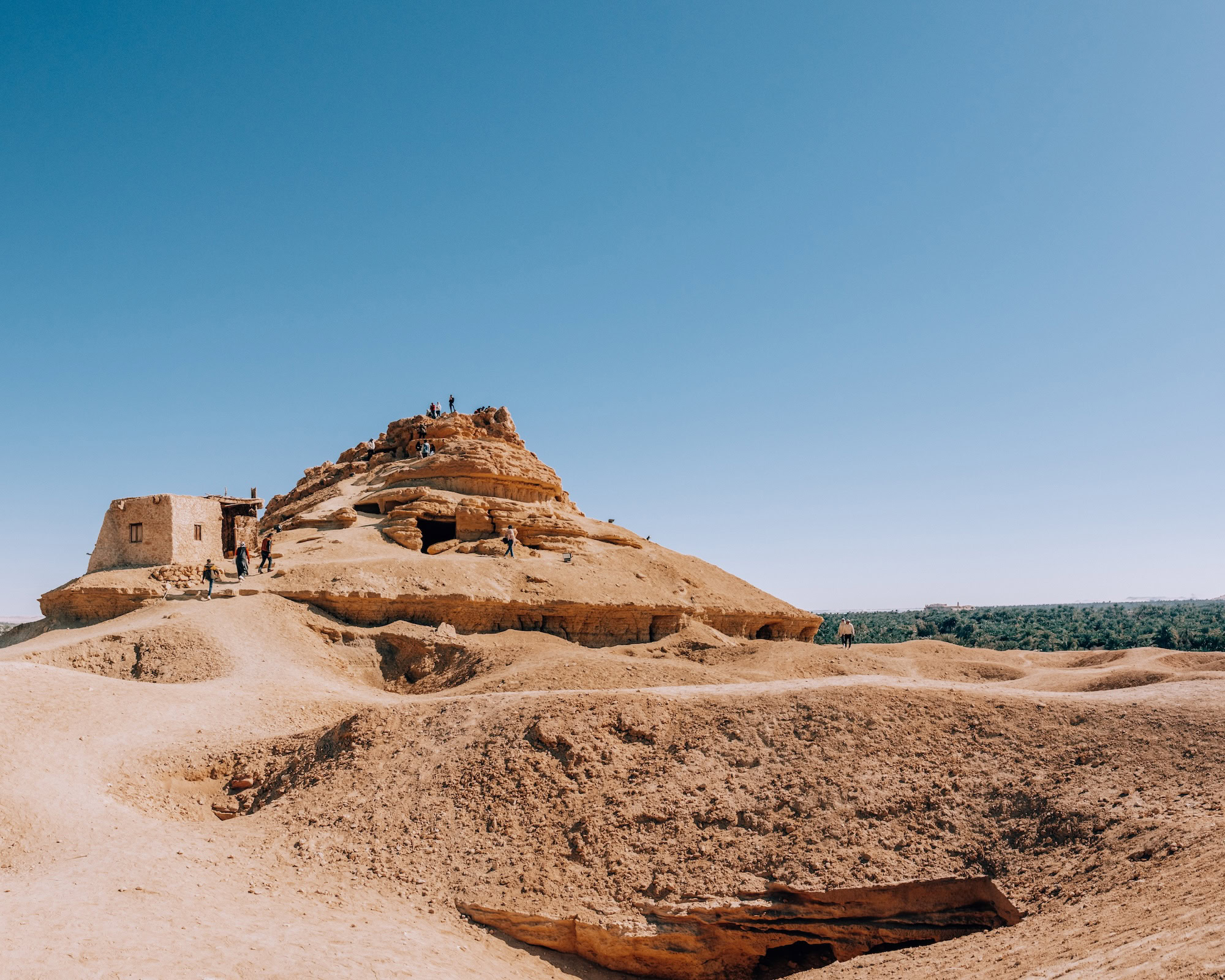
For travelers seeking an authentic Egyptian experience beyond the crowds of Giza and Luxor, this remote necropolis offers profound insights into ancient burial practices and desert life. The site combines archaeological significance with breathtaking desert vistas, making every visit both educational and inspiring.
Archaeological Significance of Gebel al-Mawta
The necropolis dates primarily to Egypt’s Late Period and Ptolemaic era, spanning roughly from 664 BC to 30 BC. During this time, Siwa served as a crucial crossroads where Egyptian traditions encountered Greek and Roman influences.
Tomb Construction and Layout
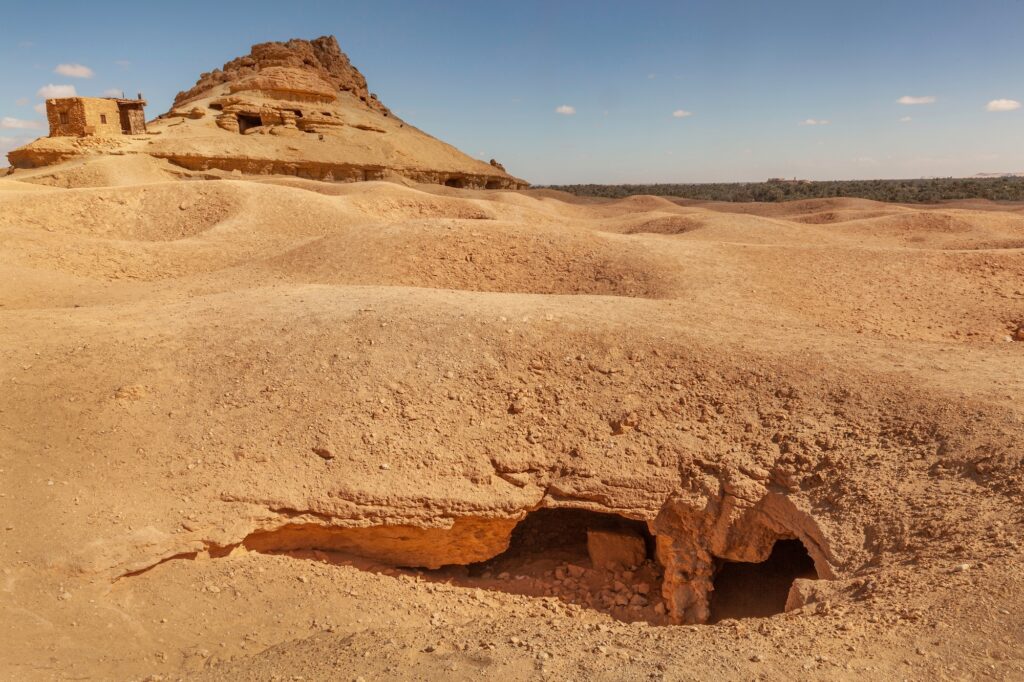
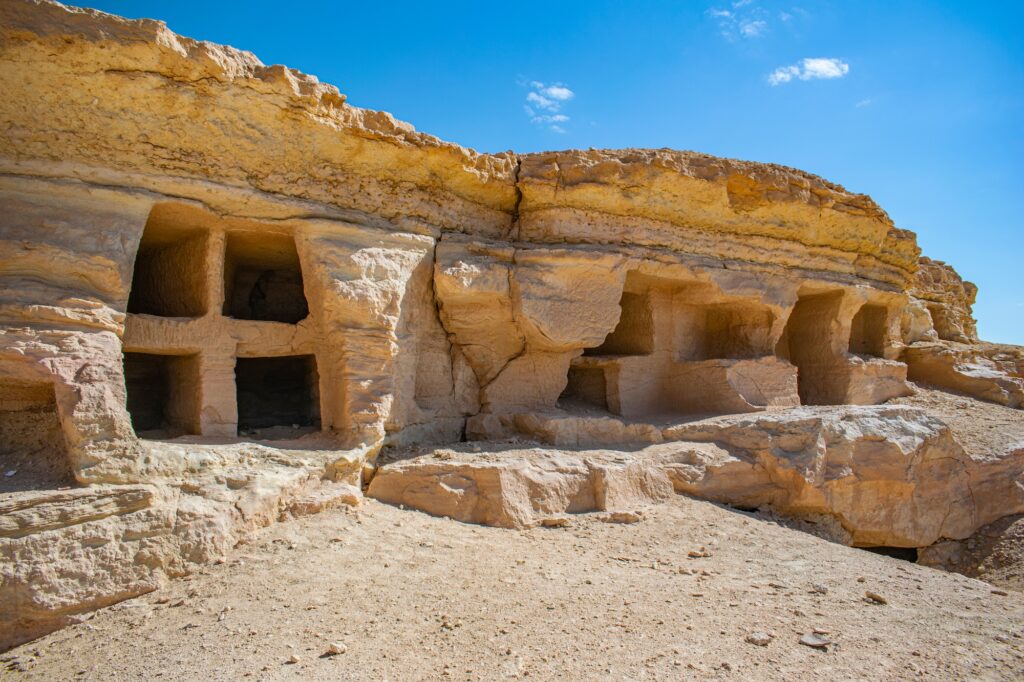
Skilled artisans carved these burial chambers directly into the mountain’s soft limestone, creating networks of interconnected rooms that follow the natural contours of the rock face. The largest tombs feature multiple chambers, including entrance halls, burial rooms, and storage areas for grave goods. Many chambers reach impressive heights of 3-4 meters (10-13 feet), demonstrating the considerable effort invested in their construction.
The terraced arrangement reflects careful urban planning. Wealthy families secured prominent positions on higher terraces, while smaller tombs occupy lower levels. This hierarchy mirrors ancient Egyptian social structures, where status determined burial location and tomb complexity.
Dating and Historical Periods
Archaeological evidence places most tombs within the 26th Dynasty through the Ptolemaic period. However, some chambers show signs of reuse during Roman times, indicating the site’s continued importance for centuries. Carbon dating and pottery analysis confirm continuous burial activity from approximately 700 BC through 200 AD.
The mountain contains an estimated 3,000-4,000 individual burial sites, though many remain unexcavated. This makes Gebel al-Mawta one of Egypt’s largest provincial necropolises, rivaling better-known sites in the Nile Valley.
Famous Tombs and Remarkable Decorations
Four decorated tombs stand out for their exceptional preservation and artistic merit. These chambers showcase the cultural fusion that defined Ptolemaic-era Egypt.
The Tomb of Si-Amun represents the necropolis’s crown jewel. This elaborate burial chamber belonged to a wealthy Greek settler who adopted Egyptian funeral practices. Vibrant paintings cover the walls, depicting traditional scenes from the Egyptian Book of the Dead alongside Greek mythological elements. The ceiling features astronomical decorations showing constellations and zodiac signs, blending Egyptian and Hellenistic traditions.
Nearby, the Tomb of Mesu-Isis demonstrates pure Egyptian styling. Hieroglyphic inscriptions identify the tomb owner as a priest of Amun, Siwa’s patron deity. The walls showcase classic Egyptian funeral scenes: the weighing of the heart, the journey through the underworld, and presentations to Osiris. These paintings retain their original colors remarkably well, protected by the desert’s dry climate.
The Crocodile Tomb’s Unique Features
The third significant tomb earns its nickname from prominent crocodile imagery throughout its chambers. Crocodiles held special significance in Siwa, representing both protection and fertility. The main burial chamber features a stunning ceiling painting where sacred crocodiles guard the deceased’s journey to the afterlife.
This tomb also contains some of the necropolis’s best-preserved mummy cases. These wooden sarcophagi combine Egyptian and Greek artistic styles, featuring traditional Egyptian proportions decorated with Hellenistic flourishes.
Military Discoveries During World War II
The fourth notable tomb gained fame through an accidental World War II discovery. British forces, seeking shelter during the North Africa campaign, uncovered a previously sealed chamber containing multiple burials. Military archaeologists documented exceptional grave goods, including jewelry, pottery, and textiles that provided crucial insights into Siwa’s ancient trade connections.
Cultural Fusion in Burial Practices
The Mountain of the Dead exemplifies Egypt’s cultural adaptability during the Ptolemaic period. Local traditions merged with foreign influences to create distinctive funeral practices found nowhere else in Egypt.
Tomb paintings reveal this cultural blending clearly. Egyptian gods appear alongside Greek deities, while traditional pharaonic burial scenes incorporate Hellenistic artistic techniques. The deceased often bear Egyptian names written in Greek script, reflecting Siwa’s bilingual society.
Burial goods demonstrate international trade connections. Archaeologists discovered pottery from Greece, jewelry from Nubia, and textiles from as far as India. These artifacts prove Siwa’s importance as a trading hub connecting the Mediterranean world with sub-Saharan Africa.
Religious practices also evolved uniquely in Siwa. The Oracle of Amun, which famously validated Alexander the Great’s divine status, influenced local burial customs. Many tombs contain oracle-related imagery, showing how religious authority shaped funeral traditions.
The necropolis continued serving Siwa’s diverse population throughout the Roman period. Some chambers show Christian symbols alongside traditional Egyptian decorations, demonstrating religious continuity despite political changes. This religious tolerance created burial practices unlike those found elsewhere in Roman Egypt.
Planning Your Visit Experience
Practical Access Information
The site sits approximately 1.5 km (0.9 miles) northeast of Siwa town center, easily accessible by foot, bicycle, or local transport. A well-maintained path leads from the main road to the entrance gate. The walk takes about 20 minutes through date palm groves and traditional mud-brick neighborhoods.
Operating hours run from 8:00 am (08:00) to 5:00 pm (17:00) daily, with extended summer hours until 6:00 pm (18:00) from May through September. We recommend visiting during early morning or late afternoon to avoid midday heat and enjoy optimal photography lighting.
Entry fees remain modest at 30 Egyptian pounds for foreign visitors, with additional charges for photography permits. Students receive discounts upon presenting valid international student identification.
Best Times and Weather
Siwa’s desert climate creates distinct seasonal visiting patterns. Winter months (November through March) offer comfortable temperatures ranging from 15-25°C (59-77°F), perfect for exploring the outdoor site. Summer temperatures frequently exceed 40°C (104°F), making early morning visits essential.
Spring (April-May) and autumn (October-November) provide ideal conditions with mild temperatures and minimal wind. These shoulder seasons also feature fewer tourists, allowing more intimate exploration of the tombs.
The dry climate helps preserve the site’s ancient decorations while creating comfortable visiting conditions year-round. However, we always recommend bringing sun protection, comfortable walking shoes, and adequate water.
Guided Tour Options
Professional guides enhance the Mountain of the Dead experience significantly. Local experts provide historical context, point out easily missed details, and explain the complex religious symbolism found throughout the tombs.
We offer specialized archaeological tours led by qualified Egyptologists who bring decades of expertise to each visit. Our private guides customize explanations to match your interests, whether you focus on art history, religious practices, or archaeological techniques.
Small group tours accommodate up to 12 participants, creating intimate educational experiences while maintaining the site’s peaceful atmosphere. These guided visits typically last 2-3 hours, allowing thorough exploration of the major decorated tombs plus time for questions and photography.
Conservation and Preservation Efforts
The Mountain of the Dead faces ongoing preservation challenges despite its remote location. Natural weathering, occasional rainfall, and increased tourism all threaten the ancient decorations.
Egyptian authorities work continuously to protect the site’s integrity. Recent conservation projects include installing protective barriers around the most vulnerable paintings, improving drainage systems, and implementing controlled access to prevent overcrowding in delicate tomb chambers.
Climate change poses new challenges as shifting weather patterns bring unexpected rainfall to this traditionally arid region. Conservators now monitor humidity levels within sealed tombs and adjust ventilation systems accordingly.
Tourist education plays a crucial role in preservation efforts. Visitors must respect photography restrictions in certain chambers, avoid touching painted surfaces, and follow designated pathways to minimize impact on fragile decorations.
International cooperation supports ongoing conservation work. UNESCO advisors collaborate with Egyptian specialists to develop long-term preservation strategies, ensuring future generations can appreciate these remarkable archaeological treasures.
The site’s remote location provides natural protection but complicates conservation logistics. All materials and equipment must travel across hundreds of kilometers of desert, making major restoration projects complex undertakings requiring careful planning and significant resources.
Integrating with Your Siwa Experience
Combining with Other Attractions
The necropolis pairs excellently with Siwa’s other historical sites. The nearby Temple of the Oracle, where Alexander the Great received divine confirmation of his status, sits just 2 km (1.2 miles) away. Visiting both sites on the same day provides comprehensive insights into ancient Siwa’s religious and cultural importance.
The Old Town of Shali, with its distinctive mud-brick architecture, offers another compelling combination. These medieval ruins demonstrate architectural continuity from ancient times through the Islamic period, showing how desert communities adapted building techniques to local conditions.
Desert Adventure Integration
Many travelers combine the Mountain of the Dead with broader Western Desert explorations. The Great Sand Sea, starting just beyond Siwa’s date palm groves, offers world-class desert adventures including sandboarding, camel trekking, and overnight camping under pristine starry skies.
Hot springs scattered throughout the oasis provide refreshing breaks between archaeological visits. Cleopatra’s Pool, fed by natural springs, offers swimming opportunities in crystal-clear water surrounded by date palms.
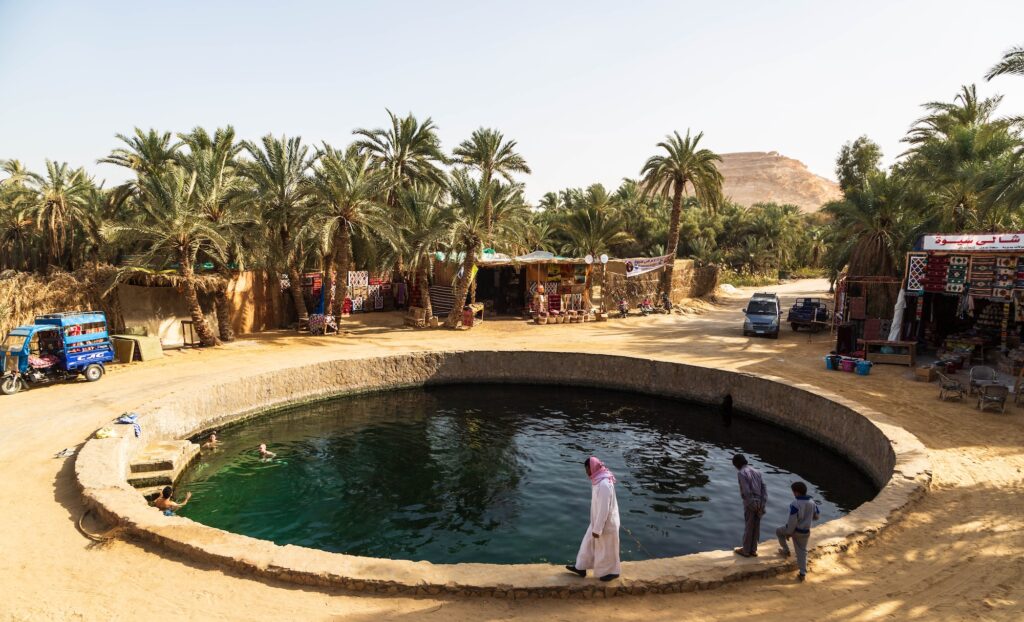
We design custom itineraries that seamlessly blend historical exploration with adventure activities. Our experienced drivers navigate desert routes safely while our guides ensure you understand both ancient history and modern Bedouin culture.
Photography and Documentation
The site offers exceptional photography opportunities throughout the day. Early morning light illuminates the eastern tomb entrances beautifully, while late afternoon sun creates dramatic shadows across the terraced slopes.
Inside the decorated tombs, photography requires special permits and careful technique. Flash photography damages ancient pigments, so we recommend bringing high-ISO capable cameras for low-light conditions. Our guides know which tombs offer the best lighting at different times.
Drone photography requires special permits from Egyptian authorities and must comply with strict regulations near archaeological sites. We can assist with permit applications for serious photographers, though approval processes typically require several weeks.
Frequently Asked Questions
How long does a typical visit take?
Most visitors spend 2-3 hours exploring the site, including decorated tombs and summit views.
Are the tomb decorations original?
Yes, paintings date to antiquity and represent Egypt’s best-preserved provincial tomb art.
Can children visit safely?
Site is suitable for children over 8 who can handle terrain and respect preservation.
Is photography allowed inside tombs?
Photography permits cost additional fees and flash photography is prohibited for preservation.
How does it compare to Valley of the Kings?
While smaller, Siwa offers unique Egyptian-Greco-Roman cultural fusion rarely seen elsewhere.
Do I need a guide or can I explore independently?
Independent exploration possible, but guides significantly enhance understanding of complex symbolism.
What should I bring for the visit?
Comfortable walking shoes, sun protection, water, and camera are essential for exploring.
Are there bathroom facilities on site?
Basic facilities available at entrance gate, but use Siwa town facilities beforehand.
Can I visit during Ramadan?
Yes, site remains open during Ramadan with modified hours and respectful customs.
How far is it from Cairo?
Siwa lies 560 km southwest of Cairo, requiring overnight bus or domestic flight.
Is the climb to the summit difficult?
Moderate ascent suitable for most fitness levels with marked paths and rest areas.
What makes Siwa’s tombs unique in Egypt?
Cultural fusion between Egyptian, Greek, and Roman traditions creates unique artistic styles worldwide.
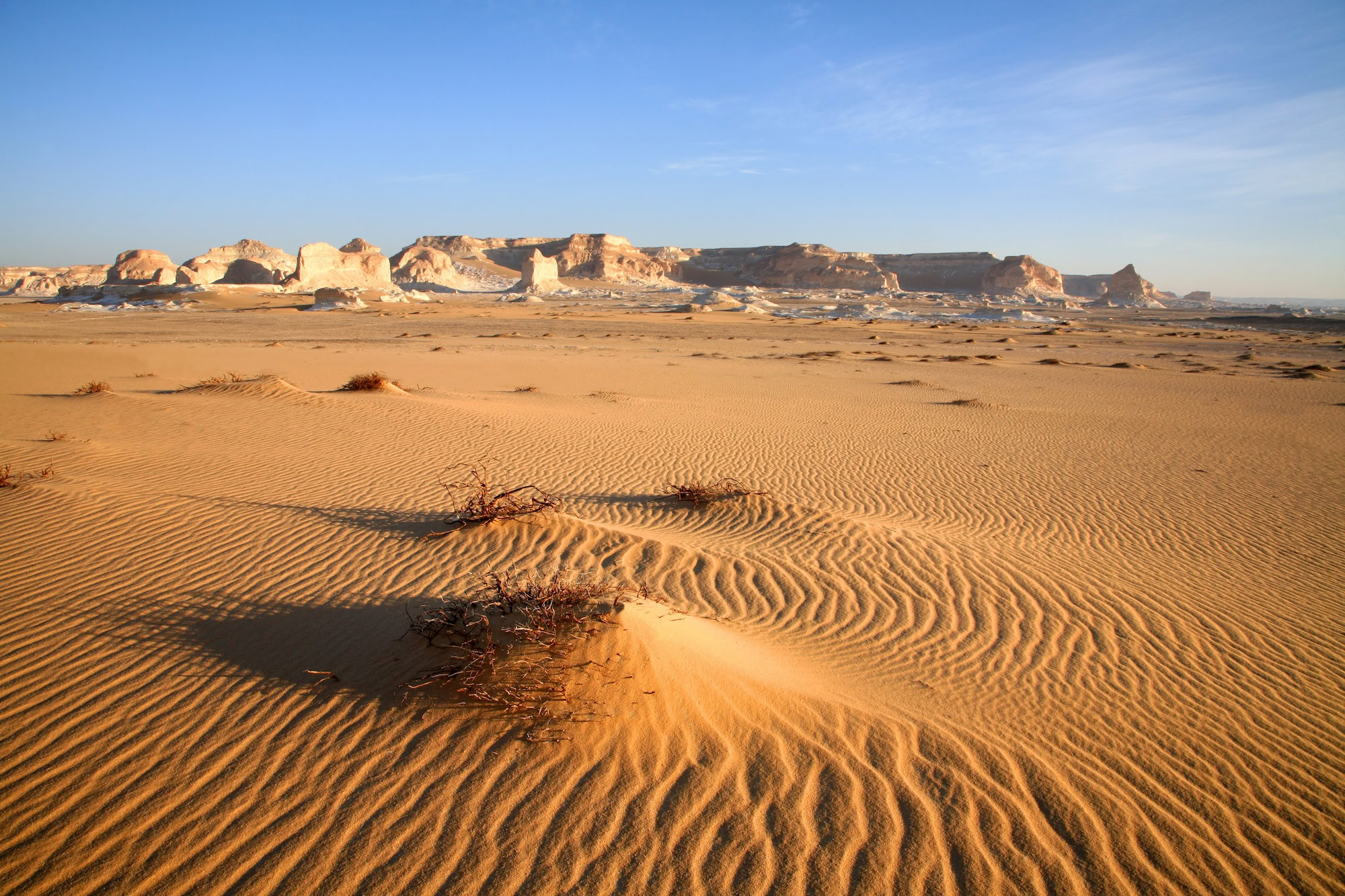
Design Your Private Western Desert Adventure
Travel with your own expert guide, private 4×4 vehicle, and a route tailored to you.