

Visiting Ben Ezra Synagogue in Old Coptic Cairo
Standing in the narrow alleys of Old Cairo, one ancient building holds centuries of secrets.
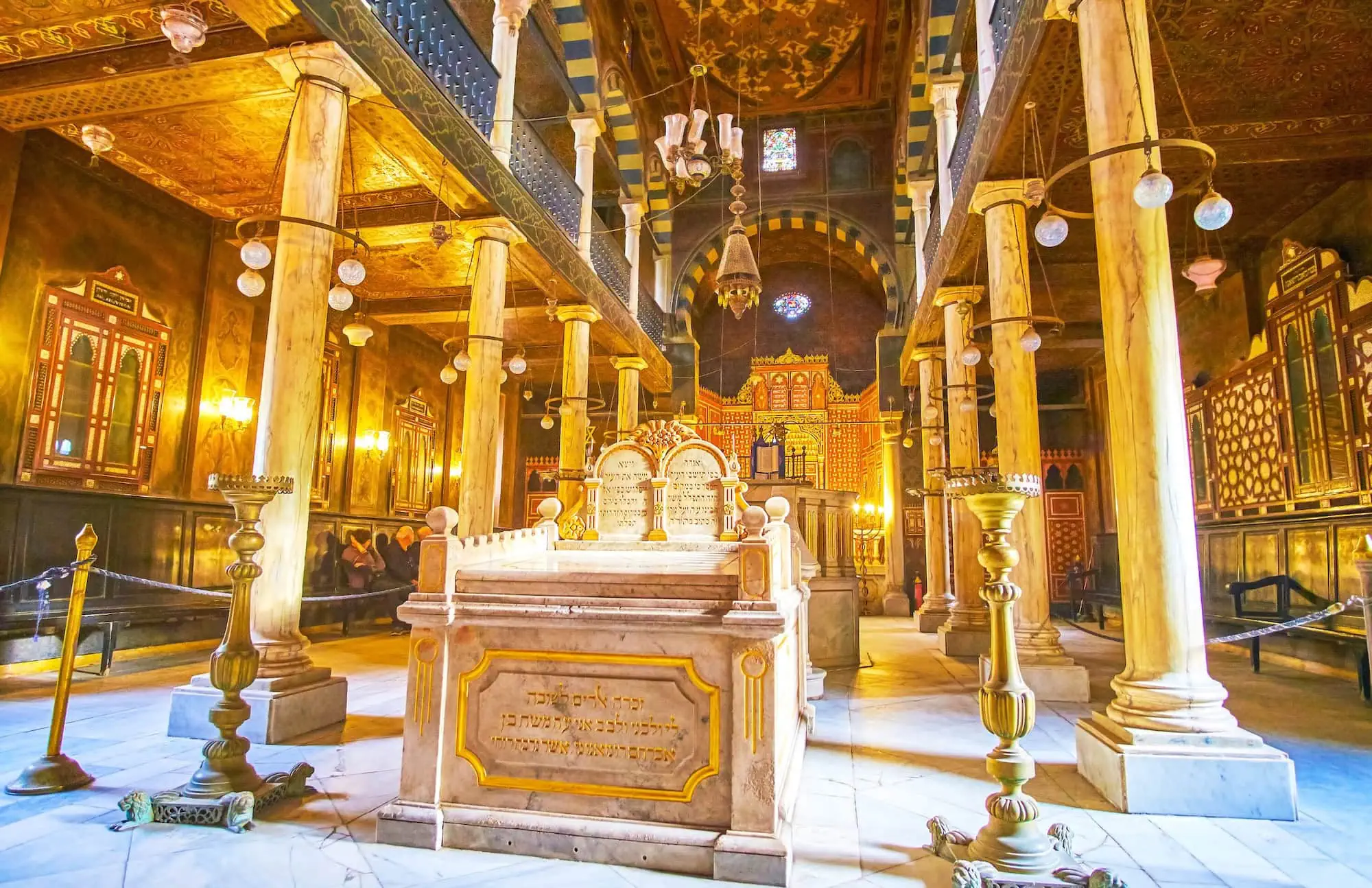
The Ben Ezra Synagogue represents far more than religious architecture – it’s a treasure trove that revolutionized our understanding of medieval Jewish life. Located in the historic Coptic Cairo district, this remarkable structure houses the world’s most significant collection of Jewish manuscripts and documents. The synagogue’s geniza, a sacred storage room, preserved over 300,000 manuscript fragments that scholars consider among history’s most important archaeological discoveries.
We’ve explored this extraordinary site extensively, witnessing how it connects Egypt’s diverse religious heritage with global Jewish history. The synagogue’s restoration and ongoing preservation efforts demonstrate Egypt’s commitment to protecting its multicultural legacy for future generations.
Table of Contents
Historic Origins and Moses Connection
The synagogue’s legendary beginnings trace back to the 6th century, built on ground sacred to multiple faiths.
According to ancient traditions, this site marks the exact location where Pharaoh’s daughter discovered baby Moses among the Nile’s reeds. While historians debate these claims, the connection remains deeply meaningful to visitors from around the world. The current structure dates to the 19th century, replacing earlier buildings destroyed by various conflicts and natural disasters.
Abraham ibn Ezra’s Legacy
The synagogue bears the name of Abraham ibn Ezra, the renowned 12th-century Jewish scholar and poet. Ibn Ezra never actually visited Cairo, yet his intellectual contributions to Jewish philosophy and biblical commentary earned him this lasting honor. The naming reflects the high regard medieval Jewish communities held for scholarly achievement.
His writings on Hebrew grammar and biblical interpretation influenced Jewish thought across the Mediterranean. The choice to honor him demonstrates how intellectual legacy transcends geographical boundaries.
Architectural Foundation and Design
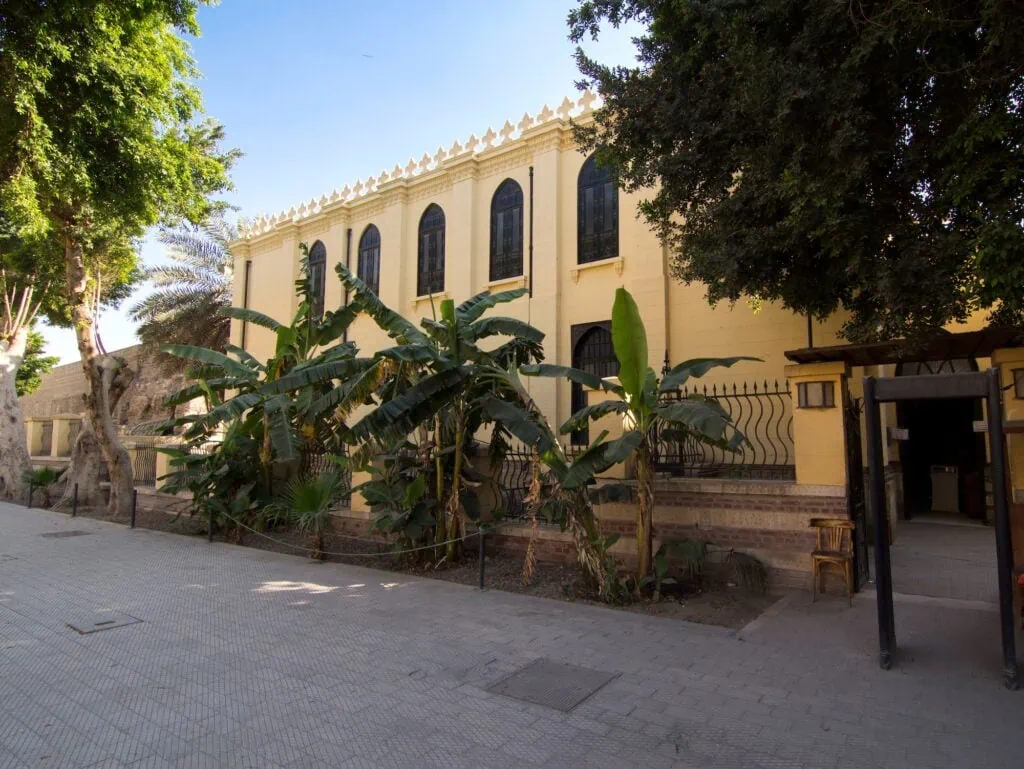
Byzantine and Islamic architectural influences blend seamlessly throughout the structure. The building follows traditional synagogue layouts with distinct areas for worship and community gathering. Original construction used local limestone, creating walls thick enough to provide natural cooling in Cairo’s intense heat.
Restoration work in recent decades revealed intricate wood carvings and decorative metalwork. These elements showcase the sophisticated craftsmanship of Cairo’s medieval artisan communities.
Religious Significance Across Centuries
Jewish communities in Cairo maintained continuous worship at this site for over a millennium. During the synagogue’s peak period, it served as the spiritual center for Egypt’s vibrant Jewish population. Religious ceremonies, scholarly debates, and community celebrations all took place within these walls.
The synagogue’s importance extended beyond local worship – it became a destination for Jewish pilgrims traveling between Europe and the Holy Land.
The Revolutionary Cairo Geniza Discovery
Solomon Schechter’s 1896 expedition to the synagogue changed historical scholarship forever.
Cambridge University’s Schechter received fragments from two Scottish sisters who had visited Cairo. Recognizing their extraordinary value, he traveled to Egypt and negotiated access to the synagogue’s geniza – a sacred repository where worn religious texts were stored rather than destroyed. What he found exceeded all expectations: over 300,000 manuscript fragments spanning 1,000 years of Jewish, Christian, and Islamic history.
The geniza preserved everything from religious commentaries to personal letters, business contracts to medical prescriptions. These documents revealed daily life details that formal histories never recorded. Scholars discovered correspondence from Maimonides, medieval trade networks, and evidence of remarkable religious tolerance in medieval Cairo.
Maimonides and Medieval Jewish Life
The great philosopher Moses Maimonides served as leader of Cairo’s Jewish community during the 12th century. Documents from the geniza include his personal correspondence, revealing insights into his medical practice and religious leadership. His famous “Guide for the Perplexed” was written while living in nearby Fustat.
Maimonides’ letters show him treating both Jewish and non-Jewish patients, demonstrating the integrated nature of medieval Cairo society. His influence on Jewish philosophy continues today.
Architectural Treasures and Sacred Spaces
Walking through the synagogue reveals centuries of artistic and spiritual devotion preserved in stone and wood.
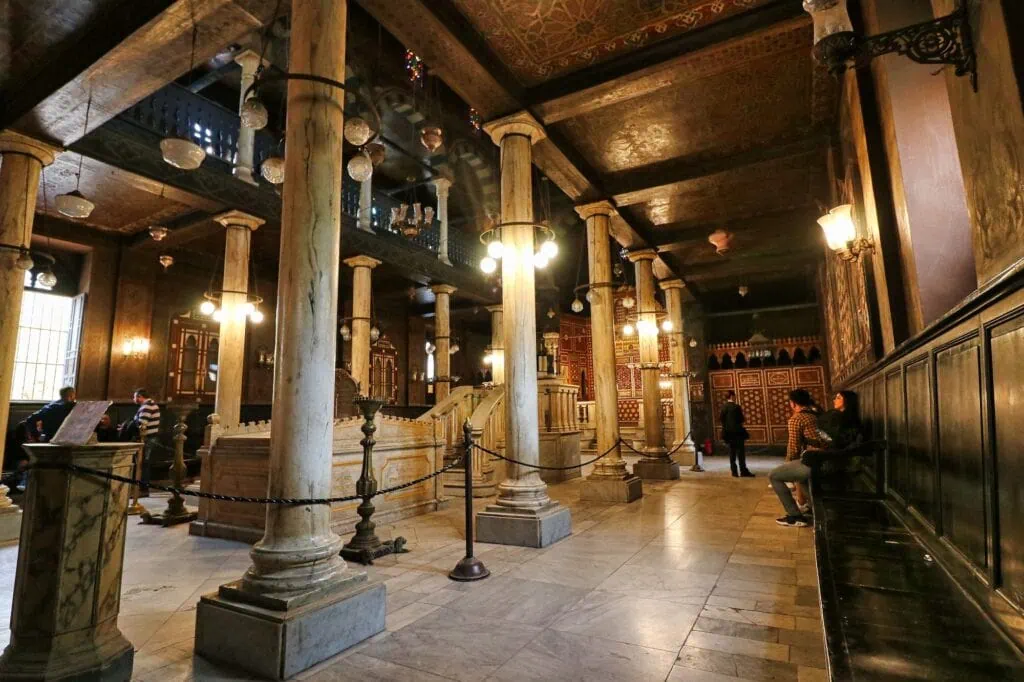
The main sanctuary features a magnificent wooden bimah (reading platform) positioned at the chamber’s center. Intricate geometric patterns carved into the platform reflect both Jewish tradition and local Egyptian artistic styles. The ark housing Torah scrolls displays beautiful mother-of-pearl inlay work, creating shimmering patterns that change with the light throughout the day.
Hebrew inscriptions adorn the walls, including passages from the Ten Commandments carved in elegant calligraphy. These inscriptions blend seamlessly with arabesque decorative elements, showing how Jewish craftsmen adapted local artistic traditions. The women’s gallery, accessed by narrow stairs, provides views of the entire sanctuary while maintaining traditional separation.
Restoration specialists have carefully preserved original painted ceiling decorations. These colorful geometric designs mirror patterns found in Cairo’s Islamic monuments, illustrating the city’s unified aesthetic tradition across religious boundaries. The synagogue’s mihrab-like niche demonstrates how Jewish architecture incorporated successful design elements from surrounding Islamic buildings.
Natural light enters through carefully positioned windows, creating dramatic shadows that shift throughout prayer times. Original oil lamps and later gas fixtures show the building’s adaptation to changing technologies while maintaining its spiritual atmosphere.
Modern Restoration and Cultural Preservation
Egypt’s recent restoration efforts showcase the nation’s commitment to preserving its diverse religious heritage.
Prime Minister Mostafa Madbouly officially reopened the synagogue in 2023 following extensive renovation work. The decade-long project addressed structural damage while preserving historical authenticity. Restoration specialists used traditional materials and techniques, ensuring the building maintains its original character while meeting modern conservation standards.
The Drop of Milk Association, representing Egypt’s remaining Jewish community, collaborated closely with government restoration teams. Their involvement ensured that religious traditions and cultural sensitivities were respected throughout the process. Modern climate control systems now protect remaining manuscripts and artifacts from Cairo’s extreme temperatures and humidity.
Tourism Development and Access
The restored synagogue now welcomes thousands of international visitors annually. Professional guides provide detailed explanations of the site’s historical significance and religious importance. Visitor facilities include multilingual information displays and carefully designed lighting that highlights architectural details without damaging sensitive materials.
Photography restrictions inside the sanctuary protect both religious sanctity and artifact preservation. These policies respect Jewish tradition while allowing visitors to appreciate the space’s spiritual atmosphere.
Educational Programs and Cultural Exchange
The synagogue hosts academic conferences and interfaith dialogue sessions. Scholars from Cambridge University Library, which houses the largest geniza collection, regularly participate in research presentations. These programs promote understanding of Egypt’s multicultural past and present commitment to religious diversity.
International partnerships with Jewish museums worldwide facilitate ongoing research and cultural exchange initiatives.
Visiting Ben Ezra Synagogue Today
Planning your visit requires understanding both practical details and cultural expectations for this sacred site.
The synagogue operates as a museum Monday through Sunday from 9:00 am to 4:00 pm (09:00-16:00). Entry fees are modest, with discounts available for students and groups. We recommend allocating 90 minutes for a complete visit, including time to explore the surrounding Coptic Cairo district.
Modest dress requirements apply to all visitors regardless of religious background. Long pants and covered shoulders are mandatory, and head coverings are recommended for both men and women. These requirements show respect for the site’s continuing religious significance.
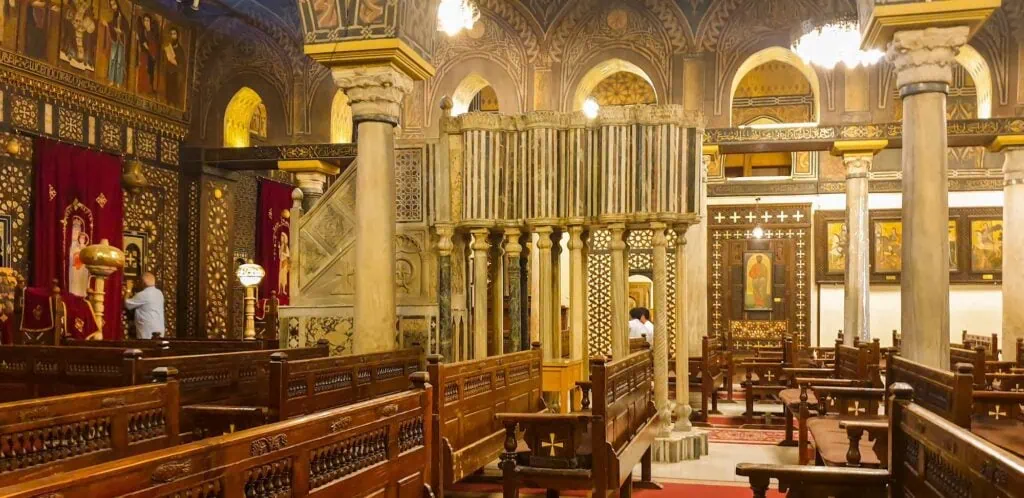
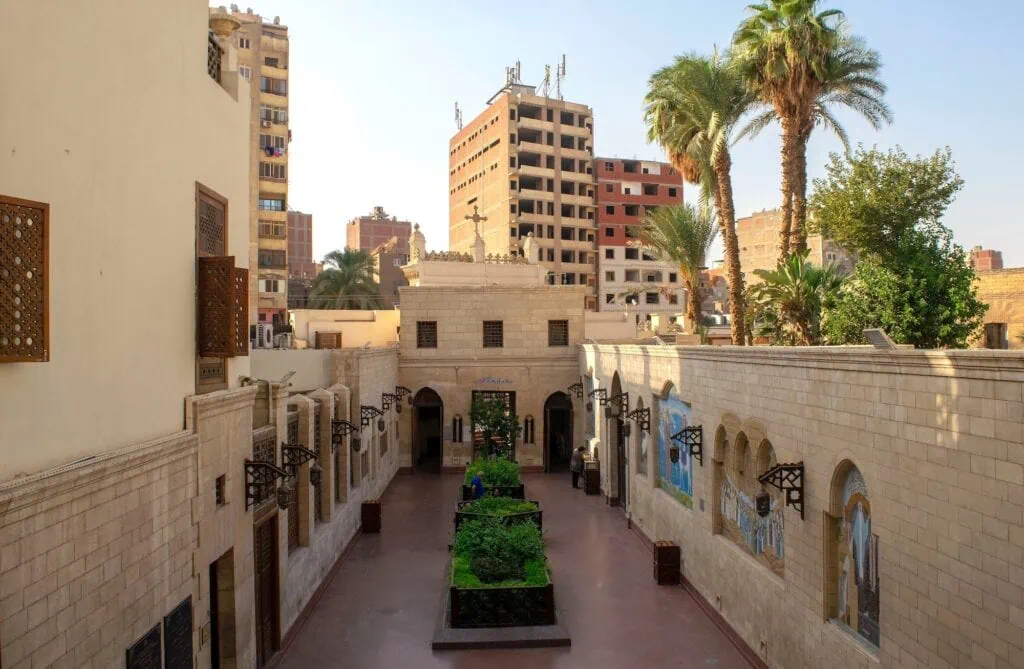
The synagogue’s location within Old Cairo’s narrow streets can challenge first-time visitors. We suggest combining your visit with nearby attractions including the Hanging Church and Coptic Museum. This approach provides comprehensive understanding of Cairo’s diverse religious communities.
Getting There and Local Context
Metro Line 1 (Helwan-Al Marg) reaches Mar Girgis station, placing you within walking distance of Coptic Cairo. Taxi services and ride-sharing apps provide direct access, though traffic conditions can affect travel times significantly. Early morning visits typically encounter fewer crowds and more comfortable temperatures.
The surrounding neighborhood features restaurants serving traditional Egyptian cuisine. Local vendors offer guidebooks and souvenirs, though prices may require negotiation.
Guided Tours and Expert Insight
Professional tour guides provide valuable context that enhances understanding of the synagogue’s complex history. We offer private tours with Egyptologists specializing in Jewish heritage, ensuring accurate historical information and cultural sensitivity. Our guides explain the geniza discovery’s significance and connection to ongoing academic research worldwide.
Cairo tours often combine the synagogue with other religious sites, creating comprehensive exploration of Cairo’s interfaith heritage. These experiences highlight Egypt’s historical tradition of religious coexistence and cultural exchange.
Explore Cairo’s Rich Cultural Layers
Ben Ezra Synagogue reveals a fascinating chapter of Egypt’s diverse heritage, where history, faith, and legend come together in one of Old Cairo’s most meaningful sites. With EgyptToursPlus, we thoughtfully include places like this in a broader journey that connects cultural depth with Egypt’s most iconic highlights.
You choose your travel dates, your pace, and the experiences that shape your itinerary. From private guided visits and seamless city touring to carefully selected stays and expert planning, we tailor every detail to you—ensuring a smooth, enriching, and fully personalized Egypt experience.
Frequently Asked Questions
Early morning between 9:00 am and 11:00 am provides the most comfortable conditions for visiting Ben Ezra Synagogue, with cooler temperatures and lighter tour traffic in Coptic Cairo. The synagogue sits within a compact historic district that becomes busier by midday, especially during peak tourism months from October through April. Morning light also improves photography in the surrounding courtyard and nearby Roman fortress area. Visitors combining the synagogue with the Hanging Church and Coptic Museum should plan to arrive shortly after opening time.
Photography inside the main sanctuary of Ben Ezra Synagogue is generally prohibited to protect the site’s religious atmosphere and preserve delicate historic interiors. Restrictions may vary slightly during special events or guided visits, but visitors should expect tighter controls than at many standard museums in Cairo. Exterior photography and images in surrounding public areas are usually permitted without issue. Staff and security personnel actively enforce photography policies, so asking permission before taking pictures is strongly recommended.
Most visitors should allow around 60-90 minutes to properly explore Ben Ezra Synagogue and appreciate its architecture, historical displays, and surrounding Coptic Cairo landmarks. Although the synagogue itself is relatively compact, its importance lies in the history connected to the Cairo Geniza and Egypt’s once-thriving Jewish community. Many travelers combine the visit with the Hanging Church, Saints Sergius and Bacchus Church, and the Coptic Museum nearby. Guided visits usually provide much deeper historical context than independent exploration alone.
Visitors to Ben Ezra Synagogue should wear modest clothing, including covered shoulders and clothing extending below the knees, out of respect for the site’s religious and cultural significance. While the synagogue primarily functions today as a historic monument and museum, conservative dress standards similar to churches and mosques in Cairo are still expected. Lightweight clothing works best because temperatures in Coptic Cairo can become very warm outside winter months. Carrying a scarf or light layer is practical for entering nearby religious sites during the same visit.
Yes, Ben Ezra Synagogue welcomes visitors of all religious backgrounds and functions primarily today as a historic and cultural monument rather than an active daily synagogue. Located in Cairo’s Coptic Cairo district, the site attracts tourists, historians, and religious pilgrims interested in Egypt’s Jewish heritage and medieval scholarship. Entry procedures may include security screening because of the synagogue’s historical importance. Respectful behavior and adherence to visitor guidelines are expected regardless of religious affiliation or nationality.
Ben Ezra Synagogue is located in the Coptic Cairo district of Old Cairo, near the Coptic Museum, the Hanging Church, and the remains of the ancient Babylon Fortress. The synagogue sits approximately 7 km south of downtown Cairo and can be reached easily via Mar Girgis Metro Station on Cairo Metro Line 1. Its location within one of Egypt’s oldest continuously inhabited neighborhoods makes it easy to combine with broader historical walking tours. Morning visits help avoid heavier midday traffic in the district.
The Cairo Geniza discovery at Ben Ezra Synagogue produced more than 300,000 manuscript fragments spanning roughly 1,000 years of Jewish, Middle Eastern, and Mediterranean history. These documents included religious texts, business records, personal letters, legal contracts, and trade correspondence dating from the 9th to 19th centuries. Scholars from Cambridge University and other institutions used the collection to reconstruct everyday medieval life across Egypt and the wider Islamic world. Few archival discoveries anywhere rival the Geniza’s historical depth and diversity.
Ben Ezra Synagogue functions primarily today as a museum and historical site, although occasional religious ceremonies and cultural events are still held for Egypt’s small remaining Jewish community. Cairo once supported tens of thousands of Jewish residents during the late 19th and early 20th centuries, but the community declined significantly after the mid-20th century. The synagogue’s preservation now focuses largely on heritage tourism and historical education. Visitors should expect a museum atmosphere rather than active daily congregational worship.
Guided tours of Ben Ezra Synagogue are commonly available in English and Arabic, while French, Hebrew, German, and other language options can often be arranged through advance booking. Professional guides usually combine the synagogue with broader Coptic Cairo itineraries because several important religious landmarks sit within walking distance. Egypt Tours Plus frequently arranges multilingual Egyptologist guides who explain the synagogue’s architectural features and Geniza history in greater depth. Advance reservations are especially useful during peak tourism season between October and April.
Ben Ezra Synagogue sits within walking distance of several major Coptic Cairo attractions, including the Hanging Church, the Coptic Museum, Saints Sergius and Bacchus Church, and sections of the ancient Roman Babylon Fortress. The entire district functions as one of Cairo’s most historically layered neighborhoods, combining Christian, Jewish, and Roman heritage within a compact area. Most visitors spend half a day exploring the surrounding monuments comfortably on foot. Combining the district with the Egyptian Museum or Islamic Cairo also works well logistically.
Entry to Ben Ezra Synagogue typically costs around 60 Egyptian pounds for international visitors, with discounted pricing sometimes available for students carrying valid identification. Ticket policies may change seasonally or during restoration projects because the site falls under Egypt’s protected heritage management system. Many organized Coptic Cairo tours include admission within broader sightseeing packages covering nearby churches and museums. Carrying small cash denominations in Egyptian pounds is helpful because card payment options can be inconsistent.
According to local tradition, Ben Ezra Synagogue stands near the place where Pharaoh’s daughter discovered the infant Moses hidden among reeds along the Nile River. While historians cannot verify the story archaeologically, the tradition became deeply associated with Old Cairo over centuries of Jewish and Christian pilgrimage. The synagogue’s location near the ancient Nile branch and Babylon Fortress strengthened this religious connection historically. Today, the legend remains one of the site’s most widely discussed cultural and spiritual associations.
Design Your Custom Tour
Explore Egypt your way by selecting only the attractions you want to visit