

Valley of the Nobles – 500 Tombs of Theban Nobles and High Officials
Ancient Egypt’s most intimate stories unfold in unexpected places.
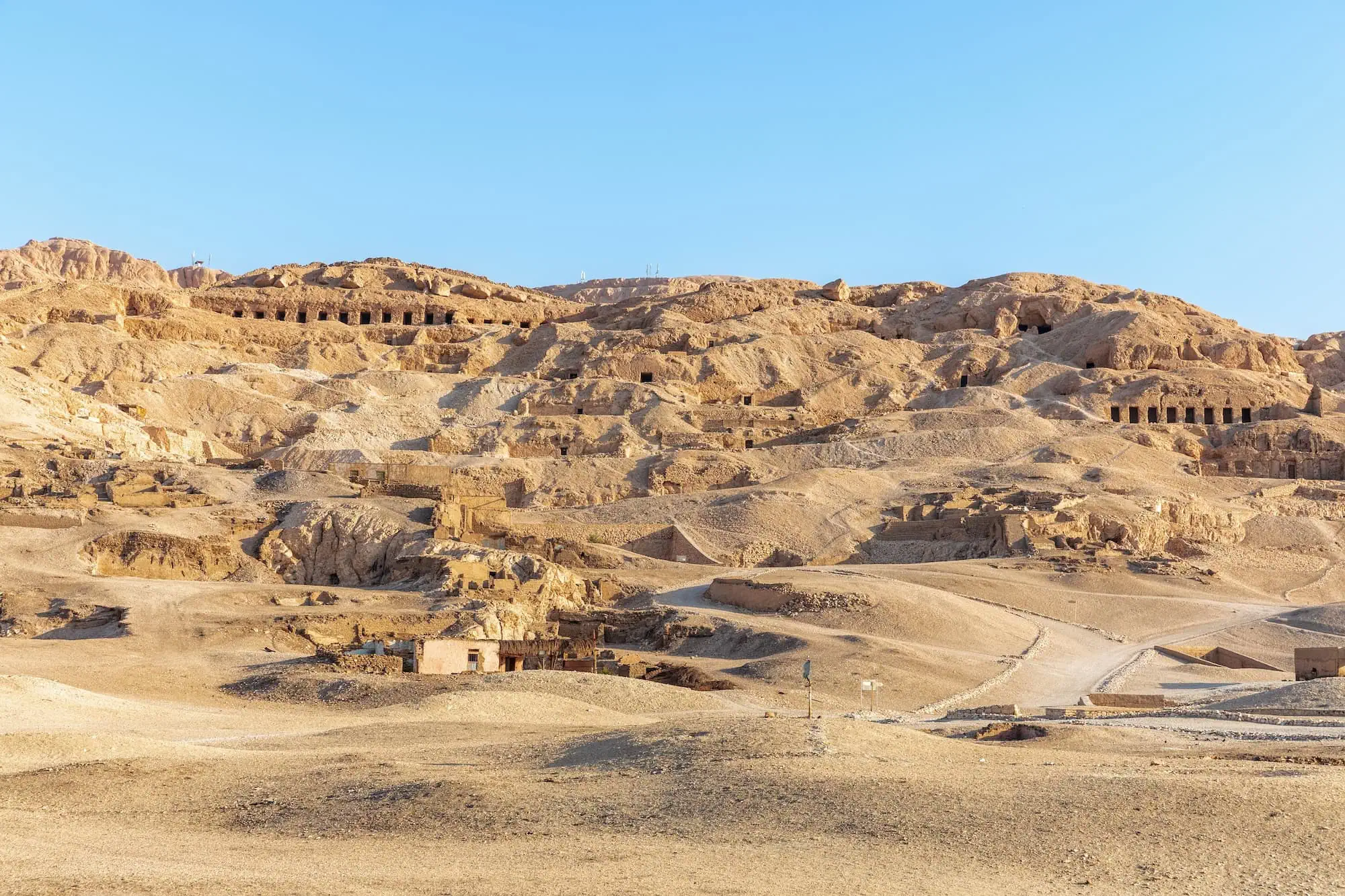
While millions flock to the Valley of the Kings for pharaonic grandeur, we find that the Valley of the Nobles offers something far more personal – glimpses into how real people lived, worked, and dreamed over 3,000 years ago. These rock-cut tombs showcase daily life through vibrant murals that capture everything from harvest festivals to administrative duties. Unlike royal burial chambers focused on divine journey to the afterlife, noble tombs celebrate earthly achievements and social connections.
The 450 documented tombs scattered across Luxor’s West Bank represent one of archaeology’s most comprehensive windows into New Kingdom society. Here, viziers, scribes, mayors, and court officials commissioned artists to immortalize their professional accomplishments alongside intimate family moments.
Table of Contents
Meet the Power Players Behind Ancient Thebes
The Theban necropolis housed Egypt’s administrative elite during the height of the New Kingdom. These weren’t minor officials seeking reflected glory – many wielded genuine political influence.
Rekhmire: The Ultimate Government Administrator
Tomb TT 100 belongs to perhaps ancient Egypt’s most documented civil servant. Rekhmire served as vizier under Thutmose III, effectively running the empire’s day-to-day operations. Over 600 detailed images cover his burial chamber walls, depicting tribute ceremonies from foreign lands including Nubia, Syria, and the Aegean islands.
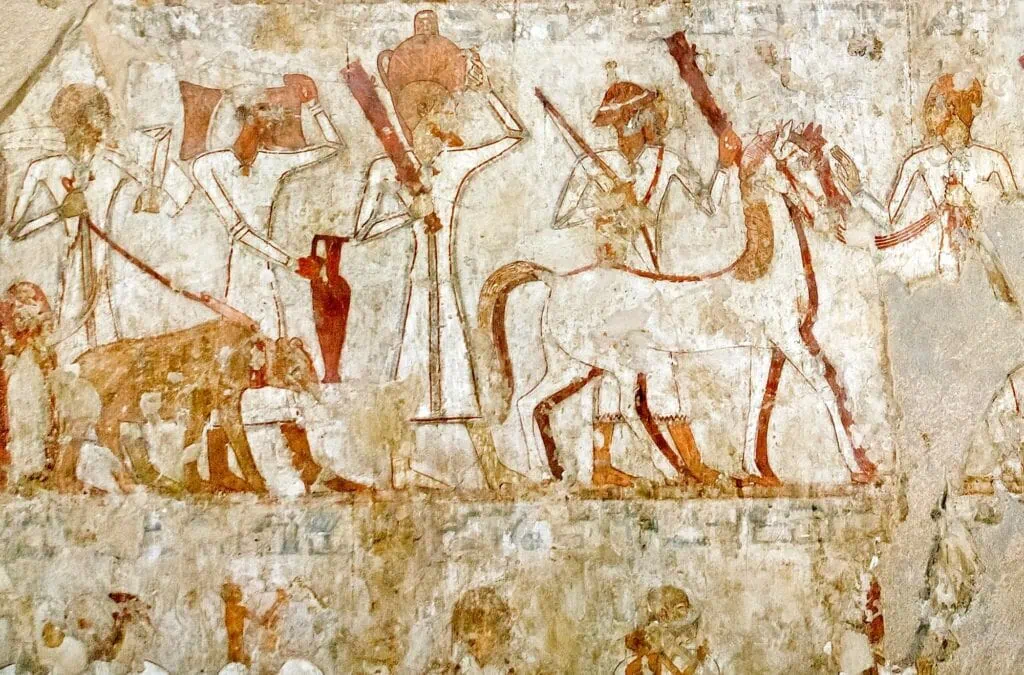
The tomb’s entrance hall showcases Rekhmire overseeing craftsmen producing furniture, jewelry, and weapons for the royal court. These scenes provide archaeologists with invaluable documentation of ancient manufacturing techniques and trade relationships.
Sennefer: The Wine-Loving Mayor of Thebes
TT 96 earned the nickname “Tomb of the Vines” for its extraordinary ceiling decorations. Mayor Sennefer served during Amenhotep II’s reign, overseeing Thebes’ bustling markets and residential districts.
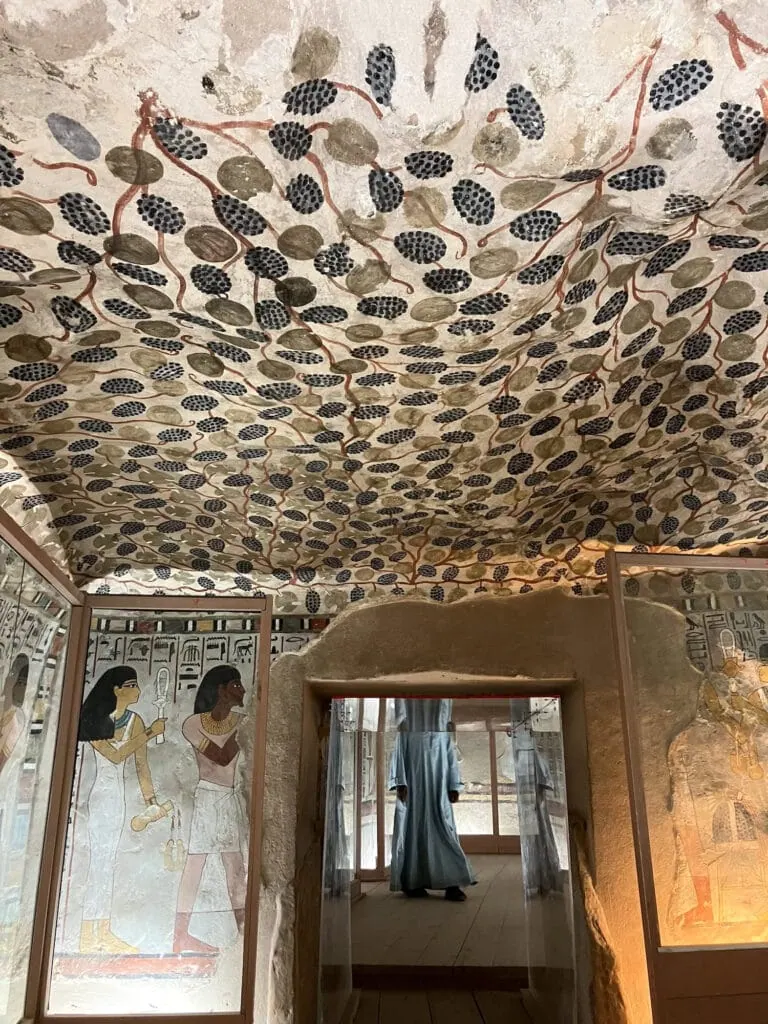
Skilled artisans transformed the chamber’s naturally uneven rock surface into an advantage. Rather than smoothing irregularities, they painted elaborate grapevines that follow every contour and crevice. The effect creates an immersive vineyard canopy overhead – fitting for someone who likely managed wine production throughout the region.
Nakht: Scribe and Stargazer
Tomb TT 52 captures rural Egyptian life with remarkable detail. Nakht worked as both royal scribe and astronomer under Thutmose IV, but his tomb celebrates agricultural cycles rather than astronomical calculations.
Vivid fishing and hunting scenes cover the walls alongside harvest celebrations where workers sing and dance. Musicians play harps and flutes while servants prepare elaborate banquets. These images reveal how even educated officials maintained strong connections to Egypt’s agricultural foundation.
Daily Life Preserved in Stone
The nobles’ tombs diverge dramatically from royal burial traditions. Where pharaonic chambers focus on divine transformation and eternal kingship, these spaces celebrate human achievement and social bonds. Families appear together in garden settings, couples embrace affectionately, and children play beneath their parents’ feet.
Administrative scenes dominate many chambers, showing officials receiving reports, inspecting granaries, and settling legal disputes. These weren’t vanity projects – they documented genuine responsibilities that kept Egypt’s complex bureaucracy functioning. Scribes recorded taxes, judges heard cases, and engineers supervised construction projects from Memphis to the Nubian border.
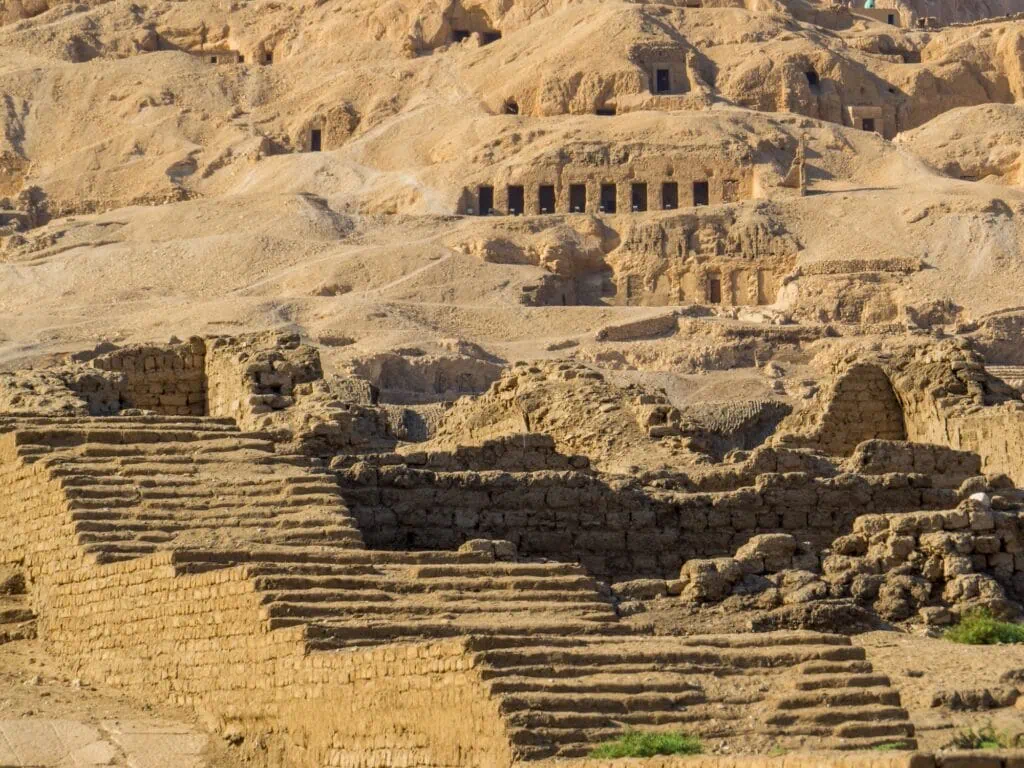
The artistic quality rivals anything found in royal tombs, suggesting these commissioners could afford master craftsmen. Color palettes remain remarkably vibrant after three millennia, protected by the dry desert climate and careful positioning away from seasonal flooding.
Professional Pride on Display
Court officials used tomb decoration to highlight career achievements. Military commanders showed battle victories, architects displayed completed temples, and diplomats recorded successful negotiations with neighboring kingdoms.
Ramose’s tomb (TT 55) demonstrates this professional documentation perfectly. As “Mayor and Vizier of Thebes,” he served during the transition from Amenhotep III to Akhenaten – a turbulent period requiring exceptional diplomatic skills. His tomb walls show the artistic evolution from traditional Egyptian style toward Amarna period innovations, essentially documenting one of art history’s major transitions through personal experience.
Artistic Innovation in Noble Chambers
Many noble tombs showcase experimental artistic techniques that later influenced royal workshops. The Amarna period’s characteristic naturalism appears earlier in private commissions, suggesting nobles sometimes led rather than followed artistic trends.
Female figures receive particularly sophisticated treatment in these chambers. Wives and daughters aren’t merely decorative additions but appear as full participants in family and professional life. Some tomb scenes show women supervising household staff, participating in religious ceremonies, and even conducting business transactions.
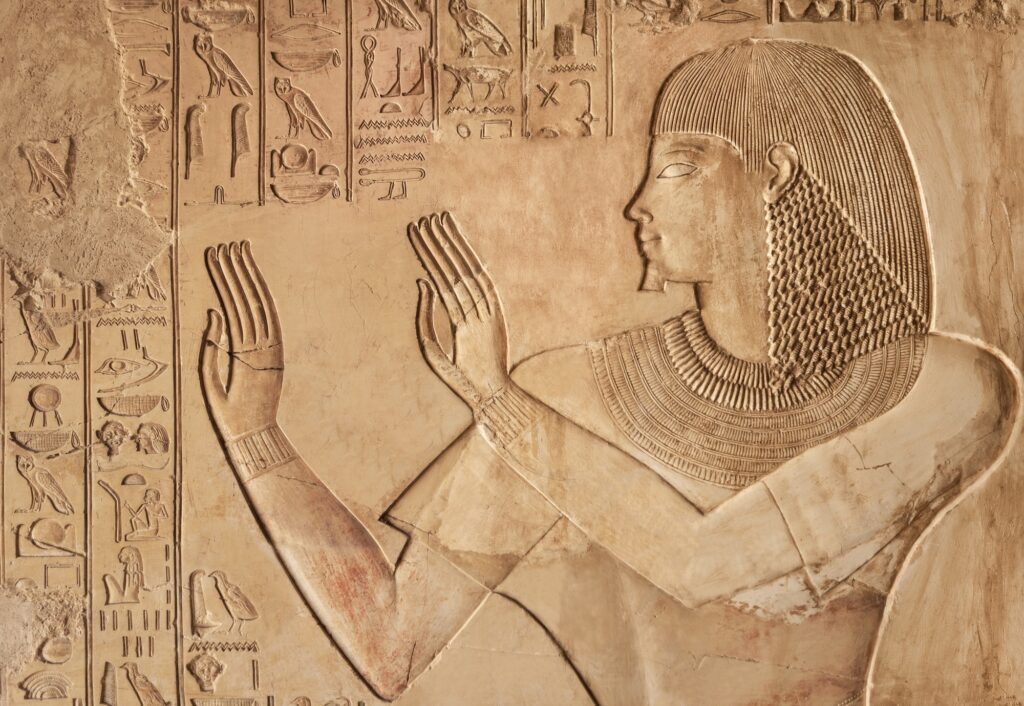
Color symbolism evolved here too. Traditional Egyptian art strictly codified color usage – blue for divinity, green for resurrection, gold for eternal flesh. Noble tomb artists experimented with subtle variations that added emotional depth without abandoning symbolic meaning entirely.
The rock-cut architecture itself pushed technical boundaries. Engineers carved multi-chamber complexes following natural limestone formations rather than forcing predetermined designs. This adaptive approach created unique spatial experiences that enhanced each tomb’s storytelling function.
Cultural Shifts Captured in Stone
Tomb decoration evolved throughout the New Kingdom, reflecting changing social attitudes and religious practices. Early Eighteenth Dynasty nobles emphasized traditional themes – successful careers, family harmony, and proper religious observance.
Later periods introduced more personal elements. Private gardens, intimate conversations, and leisure activities gained prominence alongside professional achievements. This shift suggests growing emphasis on individual personality rather than purely institutional roles.
Planning Your Valley of Nobles Visit
We recommend allocating a full morning for the Valley of the Nobles, allowing time to appreciate artistic details that rapid touring misses. The site opens at 6:00 am (06:00) during summer months and 7:00 am (07:00) in winter, with last entry one hour before closing.
Standard admission covers access to three selected tombs, typically including Sennefer, Nakht, and one rotating chamber. Premium tickets allow entry to Rekhmire and Ramose’s tombs for additional fees. Photography permits cost extra but provide worthwhile documentation of these extraordinary artistic achievements.
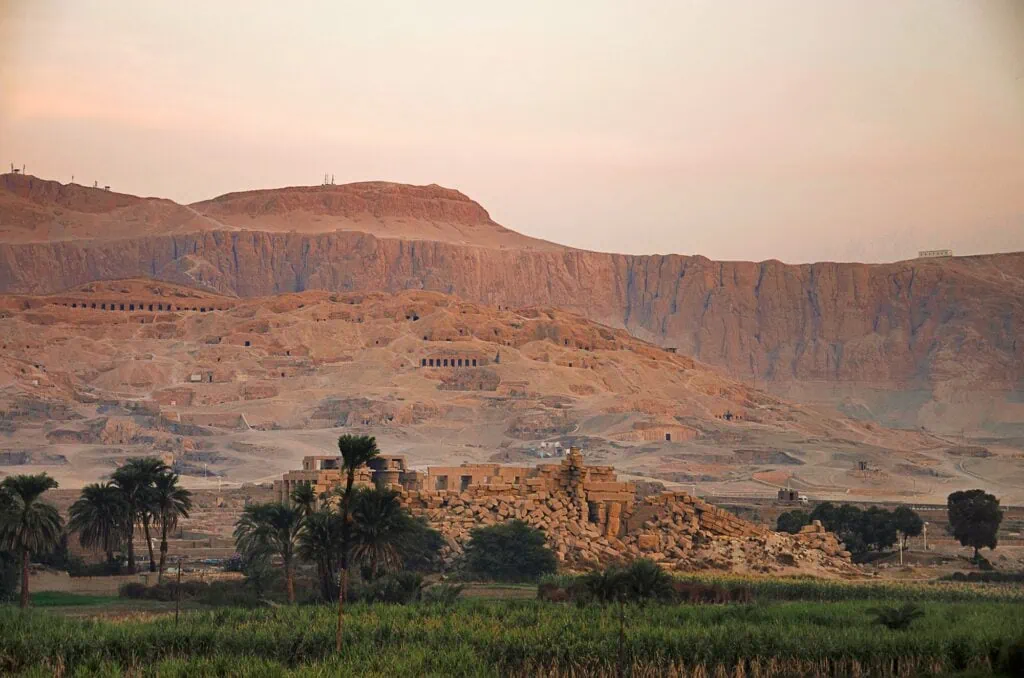
The location sits approximately 15 minutes by vehicle from central Luxor hotels. We arrange private transportation with knowledgeable guides who enhance the experience through historical context and artistic interpretation. Our guides speak multiple languages and adapt presentations to match your interests – whether focusing on archaeological techniques, ancient Egyptian daily life, or artistic evolution.
Combining with Other West Bank Sites
Many visitors pair the Valley of the Nobles with nearby attractions for comprehensive West Bank exploration. Deir el-Medina, the workers’ village, provides fascinating contrast by showing how ordinary Egyptians lived compared to the administrative elite documented in noble tombs.
Medinet Habu temple complex showcases the official religious and military propaganda that these same nobles would have helped implement. The juxtaposition between private tomb decoration and public temple art reveals different aspects of New Kingdom culture.
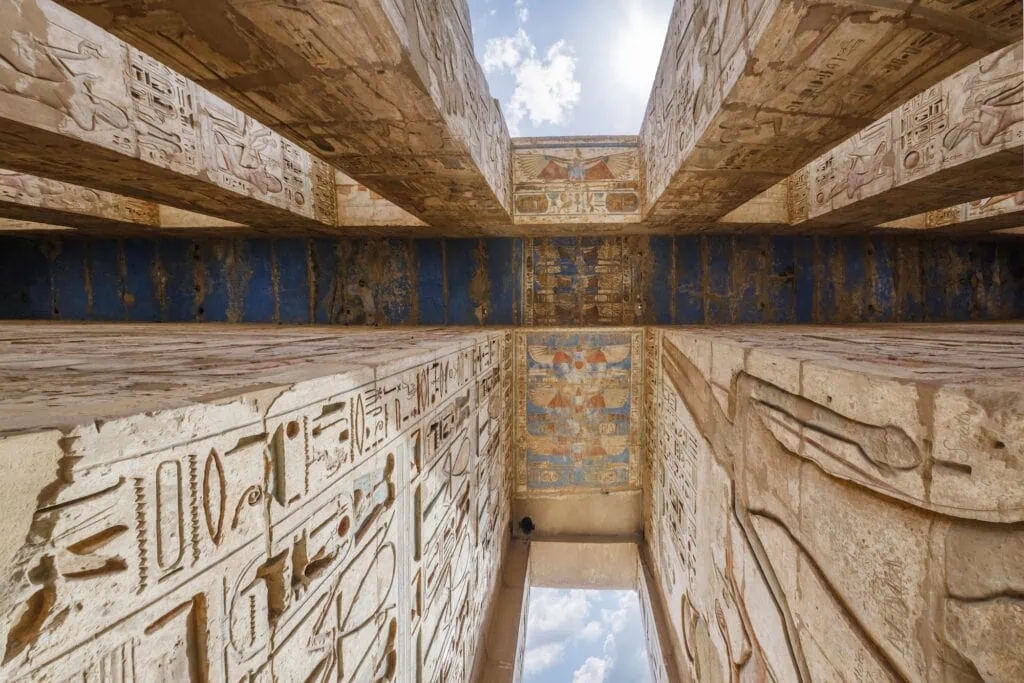
Our private day tours accommodate flexible scheduling, allowing adequate time at each location without rushing. We coordinate timing to avoid peak crowds while ensuring optimal lighting for photography and detailed examination.
Understanding Conservation Efforts
Modern preservation work continues protecting these ancient masterpieces from environmental damage and tourist impact. Climate control systems maintain stable temperature and humidity levels inside the most significant tombs.
Limited daily visitor numbers help minimize cumulative damage while ensuring sustainable tourism revenue for ongoing conservation. Some chambers rotate accessibility, allowing restoration work while keeping alternatives available for visitors.
Professional archaeologists continue documenting previously unstudied tombs throughout the necropolis. Recent discoveries include previously unknown burial chambers and sophisticated decoration programs that expand understanding of New Kingdom society.
Practical Information for Modern Explorers
Best visiting times: Early morning provides cooler temperatures and better lighting for photography. Late afternoon offers dramatic shadows but higher temperatures during summer months.
Recommended duration: Allow 2-3 hours for thorough exploration of accessible tombs. Rushed visits miss subtle artistic details that make these chambers special.
Physical requirements: Tomb access involves uneven stone steps and narrow passages. Comfortable walking shoes with good traction help navigate safely.
Photography guidelines: Flash photography damages ancient pigments and is strictly prohibited. Natural lighting often suffices for modern camera equipment.
Group size considerations: Smaller groups enhance the experience by reducing crowding in narrow chambers and allowing guides more time for detailed explanations.
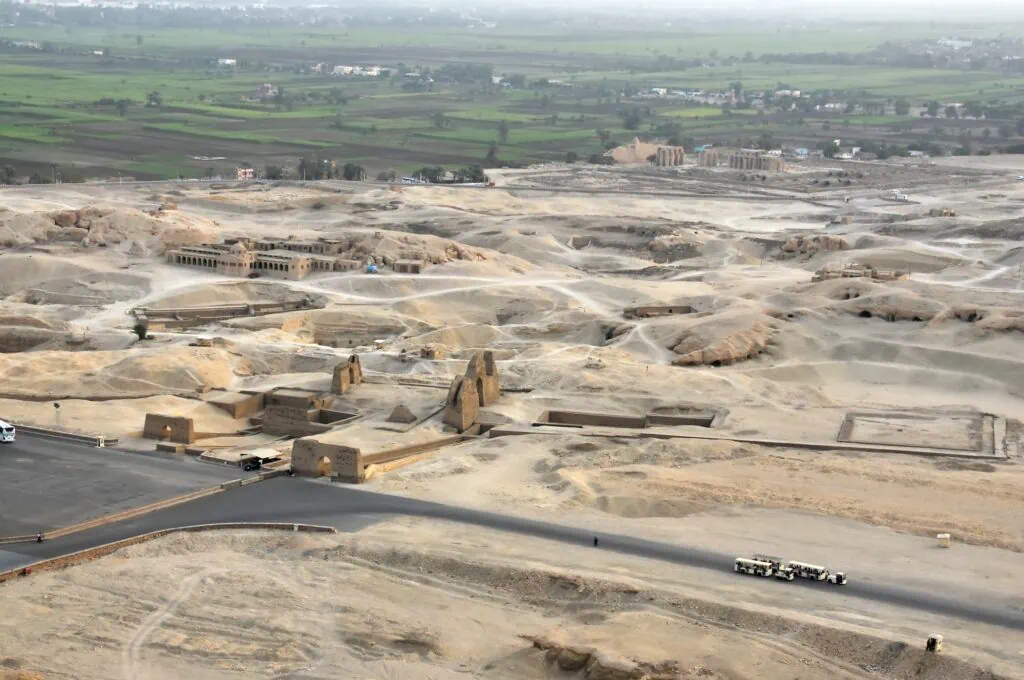
We provide comprehensive support including entrance fees, transportation, professional guiding, and coordination with other Luxor attractions. Our decades of experience operating in Luxor ensures smooth logistics and maximum educational value from your visit.
Discover The Stories Behind The Elite Of Ancient Egypt
The Valley of the Nobles offers a fascinating and more personal glimpse into ancient Egyptian life—where beautifully decorated tombs reveal the daily lives, achievements, and beliefs of high-ranking officials. With EgyptToursPlus, we seamlessly include this unique site in a private journey that goes beyond the famous landmarks, adding depth and authenticity to your experience in Luxor.
You choose your travel dates, your pace, and the experiences that shape your route. From exclusive tomb visits and expert-guided insights to Nile cruises and refined comfort throughout, we tailor every detail around your preferences—ensuring a smooth, immersive, and deeply personal travel experience.
Frequently Asked Questions
Standard Valley of the Nobles tickets typically include entry to three tombs, while certain high-profile tombs require separate supplementary tickets or rotating access permits. The necropolis contains more than 400 tombs spread across the Theban hills on Luxor’s West Bank, although only a limited number are open to visitors at any given time for conservation reasons. Most travelers comfortably explore three to five tombs during a half-day visit. Prioritize your selections in advance because walking between clusters takes additional time.
The Valley of the Nobles differs from the Valley of the Kings because the tombs emphasize daily life, professions, agriculture, banquets, and family achievements instead of royal divinity and funerary mythology. Nobles wanted to preserve records of their earthly accomplishments, so many walls show fishing scenes, workshops, farming, diplomacy, and craftsmen at work during the New Kingdom period around 1550-1070 BCE. These paintings provide unusually detailed insight into ordinary elite life in ancient Thebes. Many historians consider them among Egypt’s most human and relatable tomb decorations.
Yes, most paintings inside the Valley of the Nobles are original New Kingdom artworks created more than 3,000 years ago and preserved naturally by Luxor’s dry desert climate. Many tombs still display vivid pigments including deep blues, reds, yellows, and greens applied directly onto plastered limestone walls. Unlike heavily restored monuments elsewhere, several noble tombs retain remarkable authenticity and visible brushwork from ancient artisans. Conservation teams now carefully monitor humidity and visitor numbers to help protect these fragile paintings from deterioration.
A meaningful visit to the Valley of the Nobles usually takes 2 to 3 hours, depending on how many tombs you enter and whether you hire a guide. The tombs are spread across hillside pathways on Luxor’s West Bank, and several contain detailed painted chambers that reward slow observation rather than quick sightseeing. Travelers particularly interested in art, hieroglyphs, or photography often stay longer. Morning visits are generally more comfortable because midday temperatures in Luxor can exceed 38°C (100°F) during summer months.
Older children often enjoy the Valley of the Nobles because the tomb scenes tell visual stories about daily life, animals, farming, music, and ancient professions rather than only religious rituals. The colorful artwork and smaller chamber layouts can feel more approachable than massive temple complexes such as Karnak. Younger children, however, may struggle with narrow passageways, steep paths, and hot temperatures on the West Bank hillsides. Families visiting with children should schedule early morning tours and bring water, hats, and comfortable shoes.
The best time to visit the Valley of the Nobles is between October and April, when Luxor’s temperatures are cooler and walking conditions on the exposed hillside paths are far more comfortable. Winter daytime temperatures generally range between 20°C and 28°C (68°F-82°F), while summer afternoons frequently exceed 40°C (104°F). Early morning visits are strongly recommended year-round because sunlight enters several tomb chambers beautifully before midday crowds arrive. January and February offer especially pleasant conditions for extended archaeological exploration.
Advance reservations are not always required for the Valley of the Nobles, but booking ahead during peak travel months can help secure access to premium tombs and licensed Egyptologist guides. Visitor numbers increase significantly between October and April, especially around Christmas, New Year, and Easter travel periods. Some tombs also rotate opening schedules for conservation purposes, which can affect same-day availability. Travelers combining the Valley of the Nobles with the Valley of the Kings or Hatshepsut Temple often benefit from prearranged transportation and timed itineraries.
Many visitors consider photography permits worthwhile because the Valley of the Nobles contains some of ancient Egypt’s finest surviving painted scenes, including vivid agricultural, musical, and ceremonial imagery rarely seen elsewhere. Unlike the darker royal tombs in the Valley of the Kings, several noble tombs feature brighter, more intimate artwork that photographs exceptionally well in natural reflected light. Photography policies can change, however, and flash use is generally prohibited to protect pigments. Serious photographers should confirm current regulations before arriving at the ticket office.
The Valley of the Nobles is located on Luxor’s West Bank approximately 5 kilometers from central Luxor and can usually be reached in 15 to 20 minutes by private car or taxi. Most visitors cross the Nile using the bridge south of the city or by local ferry before continuing west toward Sheikh Abd el-Qurna. Organized tours often combine the site with the Valley of the Kings, Medinet Habu, or Hatshepsut Temple in a single itinerary. Early departures help avoid traffic and midday desert heat.
Independent visits to the Valley of the Nobles are completely possible, but experienced guides add significant value by explaining symbolism, social history, and the identities of the tomb owners. Many wall scenes depict complex rituals, administrative duties, or agricultural activities that are easy to overlook without interpretation. Egyptologist guides also help visitors prioritize the most impressive tombs because only selected chambers are open at any time. Guided visits are especially useful for understanding differences between noble and royal burial traditions in ancient Thebes.
The Tomb of Sennefer and the Tomb of Rekhmire are among the most highly recommended tombs in the Valley of the Nobles because of their exceptional preservation and artistic detail. Sennefer’s burial chamber is famous for its vine-covered ceiling that creates the impression of standing beneath a painted garden canopy, while Rekhmire’s tomb preserves detailed administrative and tribute scenes from the reign of Thutmose III. Other notable tombs include those of Ramose and Nakht. Arrive early because popular tombs attract the largest tour groups.
Basic visitor facilities including restrooms, shaded seating, and small refreshment vendors are available near the Valley of the Nobles entrance area, although services remain limited compared to larger Egyptian tourist sites. The tombs themselves are located across exposed hillside terrain with little natural shade, so carrying bottled water is essential, especially during warmer months. Food options nearby are minimal, and most organized tours schedule comfort stops before or after the visit. Travelers should wear comfortable shoes suitable for rocky paths and uneven stone surfaces.

Design Your Custom Tour
Explore Egypt your way by selecting only the attractions you want to visit