

Experience the Philae Temple Sound and Light Show in Aswan
The night transforms ancient stones into living history. Standing before the illuminated Philae Temple as darkness falls, you’ll witness one of Egypt’s most captivating cultural experiences.
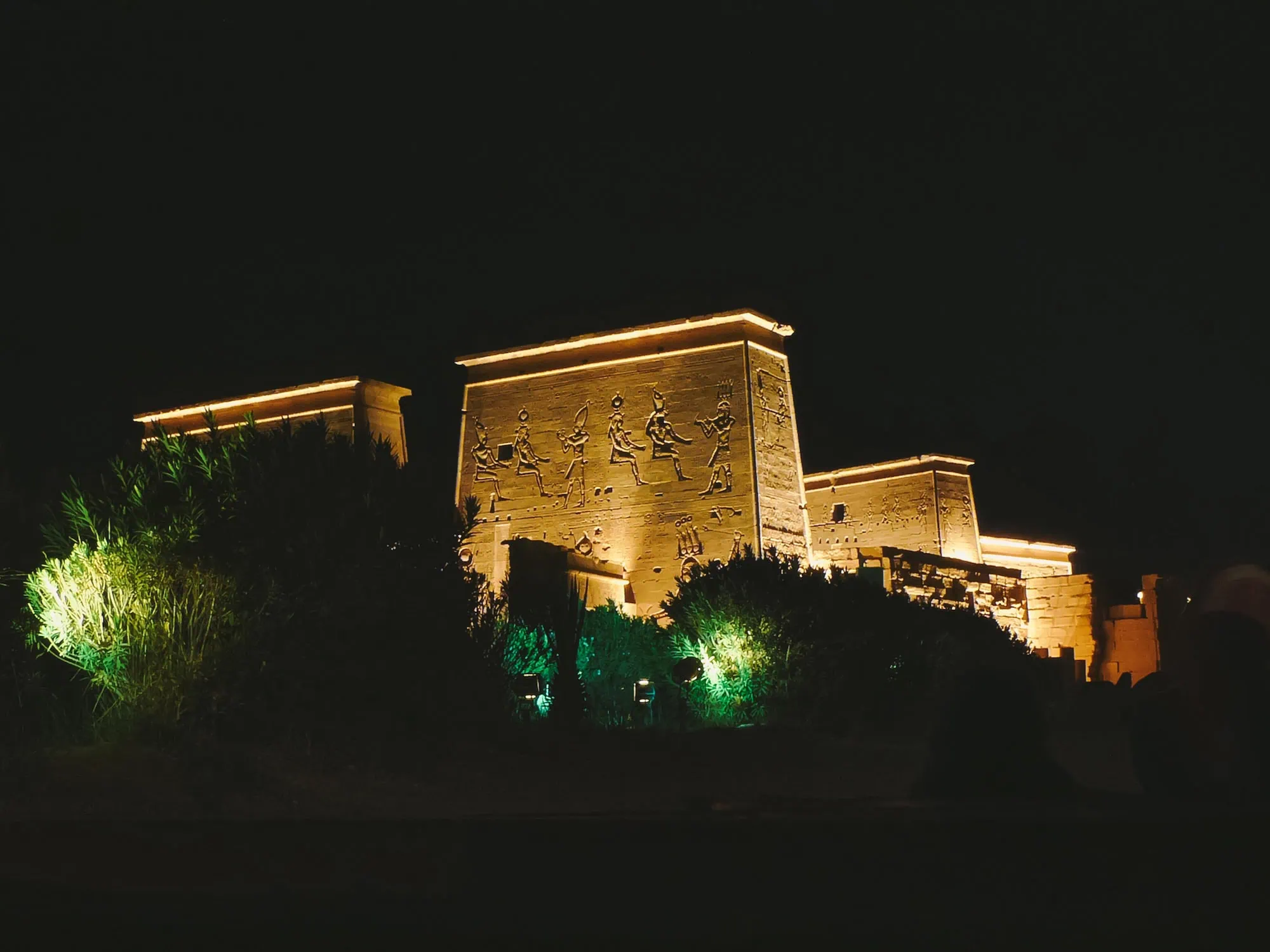
The Sound and Light Show at Philae brings together Egyptian mythology, architectural grandeur, and cutting-edge technology to tell the timeless story of Isis and Osiris, making it one of the most memorable evening experiences within the surrounding Aswan landscape. What makes this particular show extraordinary isn’t just its stunning location on Agilkia Island, but how it transforms your understanding of ancient Egyptian civilization through an immersive journey that appeals to all your senses.
We’ve been guiding travelers through Egypt’s most remarkable experiences for decades, and the Philae Temple Sound and Light Show remains one of our most recommended evening adventures.
Table of Contents
What Makes the Show Special
Ancient Egyptian temples weren’t meant to be seen only in daylight. At Philae, the evening illumination reveals architectural details and artistic elements that daylight often obscures, creating an atmosphere that mirrors how these sacred spaces were originally experienced during religious ceremonies.
The Temple’s Dramatic Setting
Philae Temple sits majestically on Agilkia Island, accessible only by boat across the waters of Lake Nasser. This isolation adds to the mystique. The temple complex, dedicated to the goddess Isis, was painstakingly relocated stone by stone during the 1960s UNESCO rescue operation.
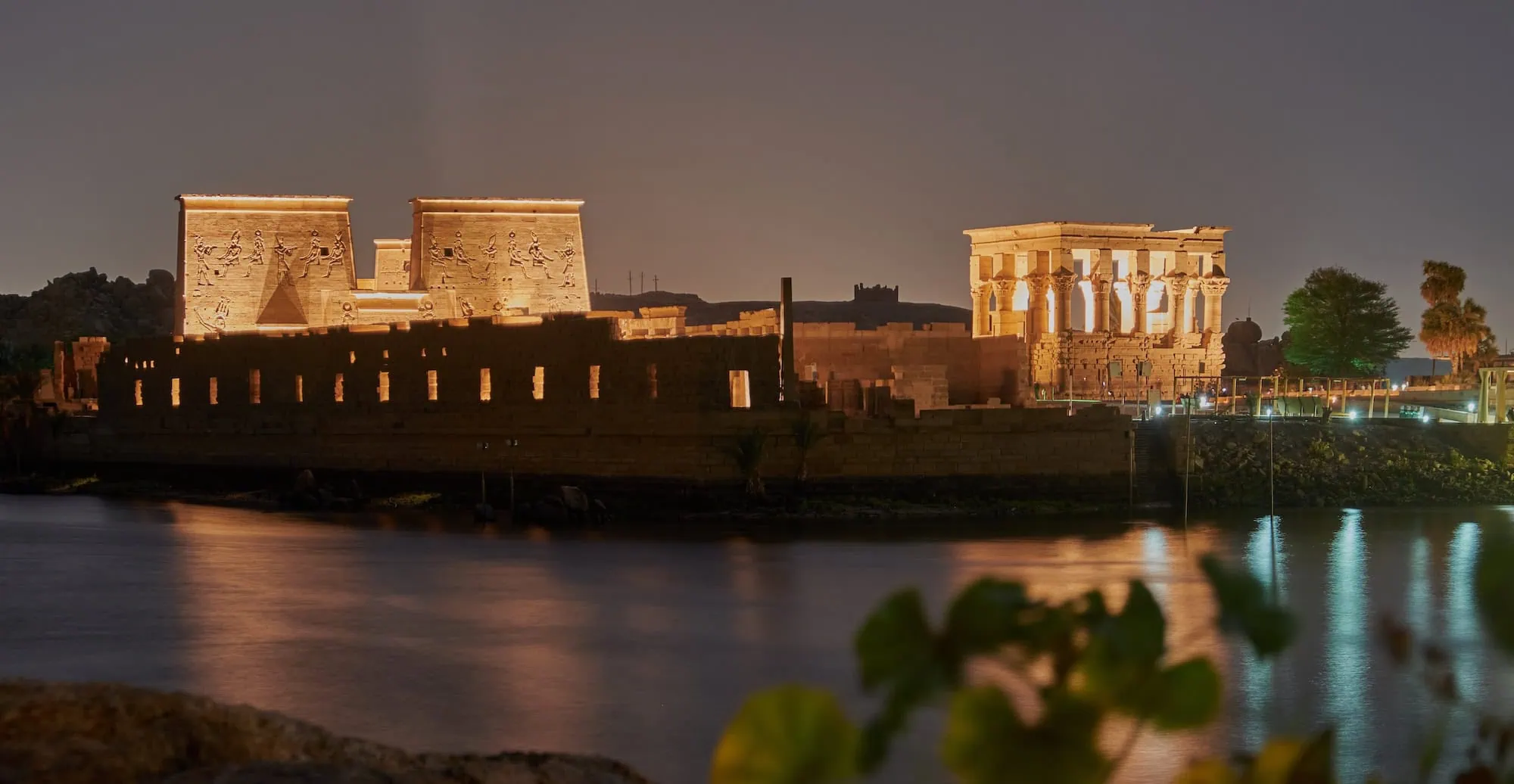
The original Philae Island faced permanent flooding after construction of Egypt’s modern Nile control project, prompting an unprecedented international effort to safeguard humanity’s cultural heritage for future generations.
Multilingual Storytelling Experience
The show operates in ten different languages, ensuring accessibility for international visitors. French, German, Spanish, and Italian presentations run alongside English and Arabic versions throughout the week. Each language version maintains the same dramatic narrative structure.
Cultural references are adapted for better audience connection. This attention to linguistic detail enhances understanding and emotional engagement with the ancient Egyptian story being told.
Advanced Lighting Technology
Modern projection mapping technology transforms the temple’s sandstone surfaces into dynamic canvases. The system uses strategically positioned speakers to create surround sound effects that make conversations between ancient gods feel remarkably real.
These technological elements never overshadow the temple’s natural beauty. Instead, they enhance your appreciation for the craftsmanship of ancient builders while maintaining respect for the sacred space.
The Mythological Story Behind Experience
The Sound and Light Show centers on the eternal love story of Isis and Osiris, two of ancient Egypt’s most important deities. This isn’t merely entertainment – it’s an introduction to religious beliefs that shaped Egyptian civilization for thousands of years.
Isis, the goddess of magic and motherhood, searches tirelessly for her murdered husband Osiris across the known world. Her devotion and magical powers eventually restore Osiris to life, making him ruler of the underworld.
The story explores themes of love conquering death, the cycle of seasons, and the promise of eternal life. These concepts resonated deeply with ancient Egyptians and continue to fascinate modern audiences worldwide.
The narrative unfolds through conversations between gods, each voice distinctly characterized through the audio system. Horus, the falcon-headed god and son of Isis and Osiris, serves as both narrator and participant in the divine drama.
Different sections of the temple complex represent different chapters in the story. The First Pylon serves as a dramatic backdrop for Osiris’s death and dismemberment by his jealous brother Seth.
Architectural Highlights Enhanced by Illumination
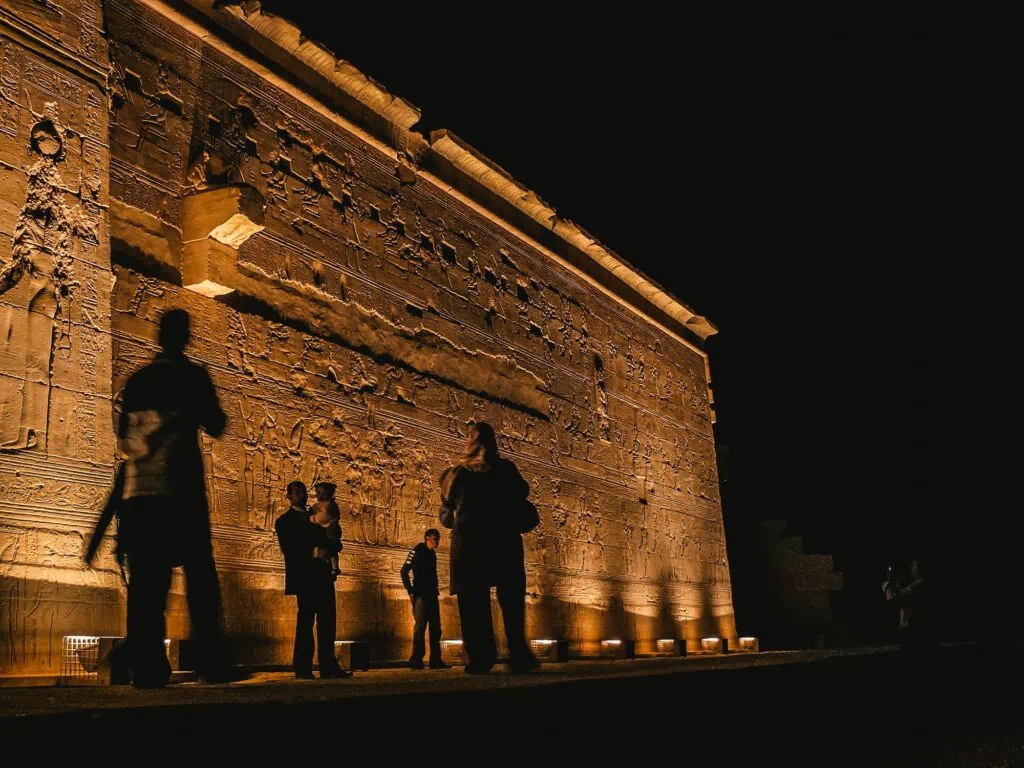
Standing 18 meters high, the First Pylon creates an imposing entrance to the temple complex. Evening lighting emphasizes the intricate hieroglyphic carvings that cover its surface, including scenes of Ptolemy XII making offerings to various deities.
The golden illumination makes these 2,000-year-old carvings appear freshly carved. During the show, this massive gateway becomes a projection screen for key moments in the Osiris myth.
Interior Courtyards and Halls
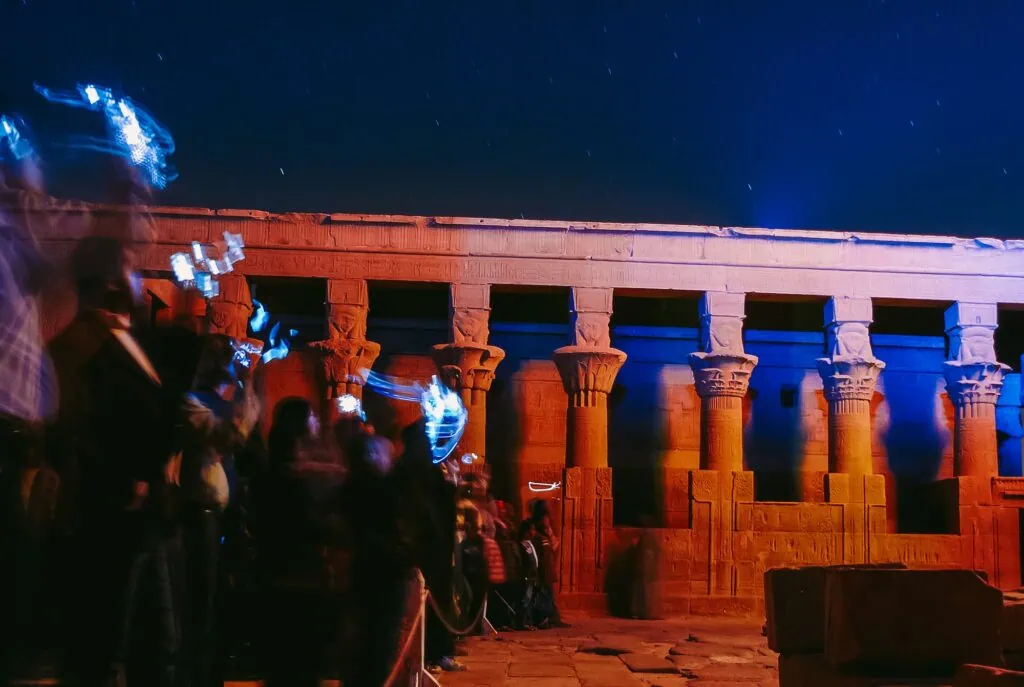
The temple’s interior spaces gain new dimensions under artificial lighting. Columns topped with elaborate capitals featuring palm fronds, lotus flowers, and papyrus plants cast dramatic shadows that shift throughout the performance.
These architectural details, often missed during daytime visits, become focal points during the evening show. The Hypostyle Hall, with its forest of columns supporting a stone roof, creates an intimate setting for the more personal moments of the Isis and Osiris story.
Trajan’s Kiosk Features
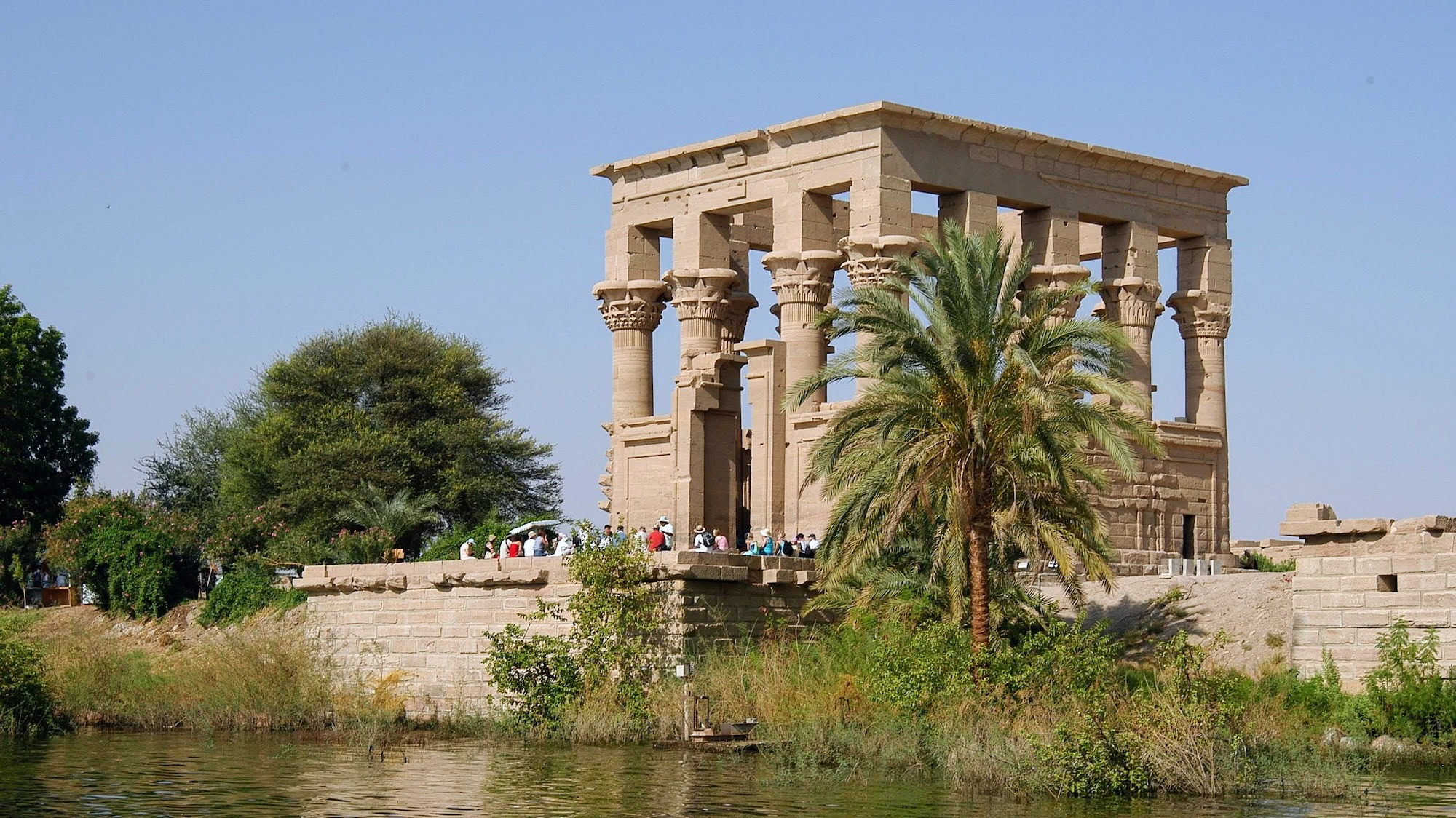
Trajan’s Kiosk, positioned at the temple’s southern end, provides the show’s most photogenic backdrop. This Roman-era addition to the Ptolemaic temple demonstrates how sacred spaces evolved across different historical periods.
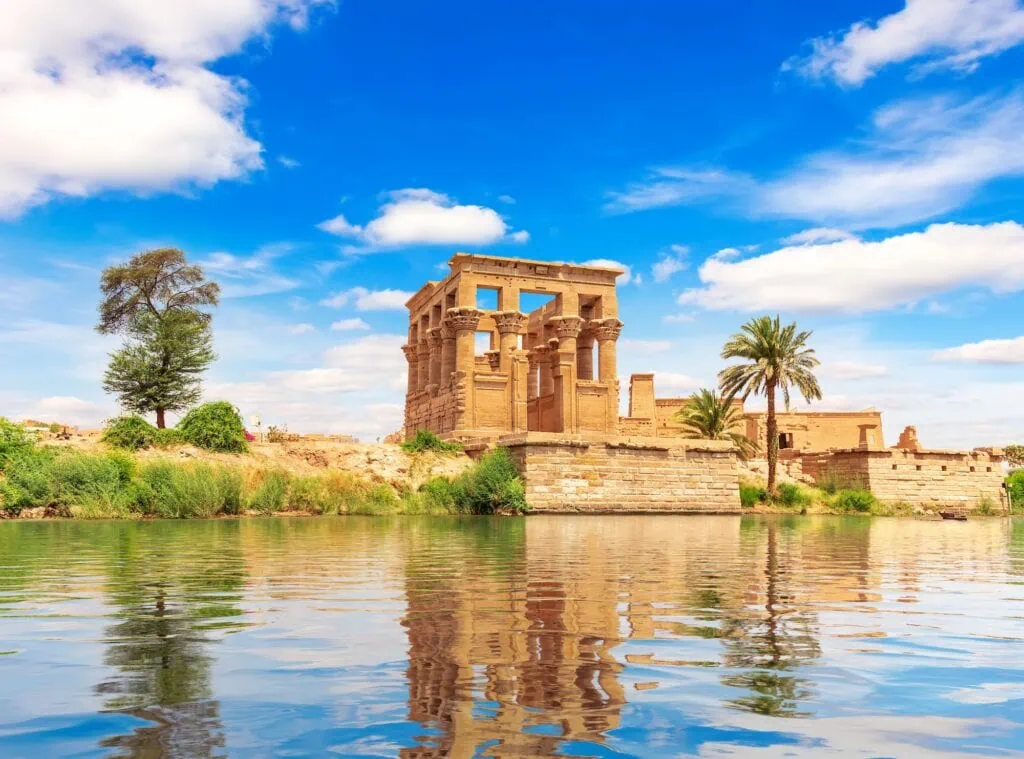
The fourteen columns, each topped with distinctive floral capitals, frame views of Lake Nasser and create a sense of openness. This contrasts beautifully with the more enclosed temple areas throughout the complex.
Practical Visit Information
Language schedules change seasonally, but English presentations typically run three times weekly during peak season from October through April. Arabic shows occur daily, reflecting local demand for this cultural experience.
Summer schedules from May through September offer fewer presentations due to reduced tourist numbers, but the experience remains equally impressive. Advance booking through authorized tour operators ensures guaranteed seating and eliminates uncertainty about language availability.
The show begins after sunset, with exact start times varying by season. In winter, performances typically begin between 6:00 pm (18:00) and 7:00 pm (19:00), while summer shows start later, usually around 8:00 pm (20:00) or 9:00 pm (21:00).
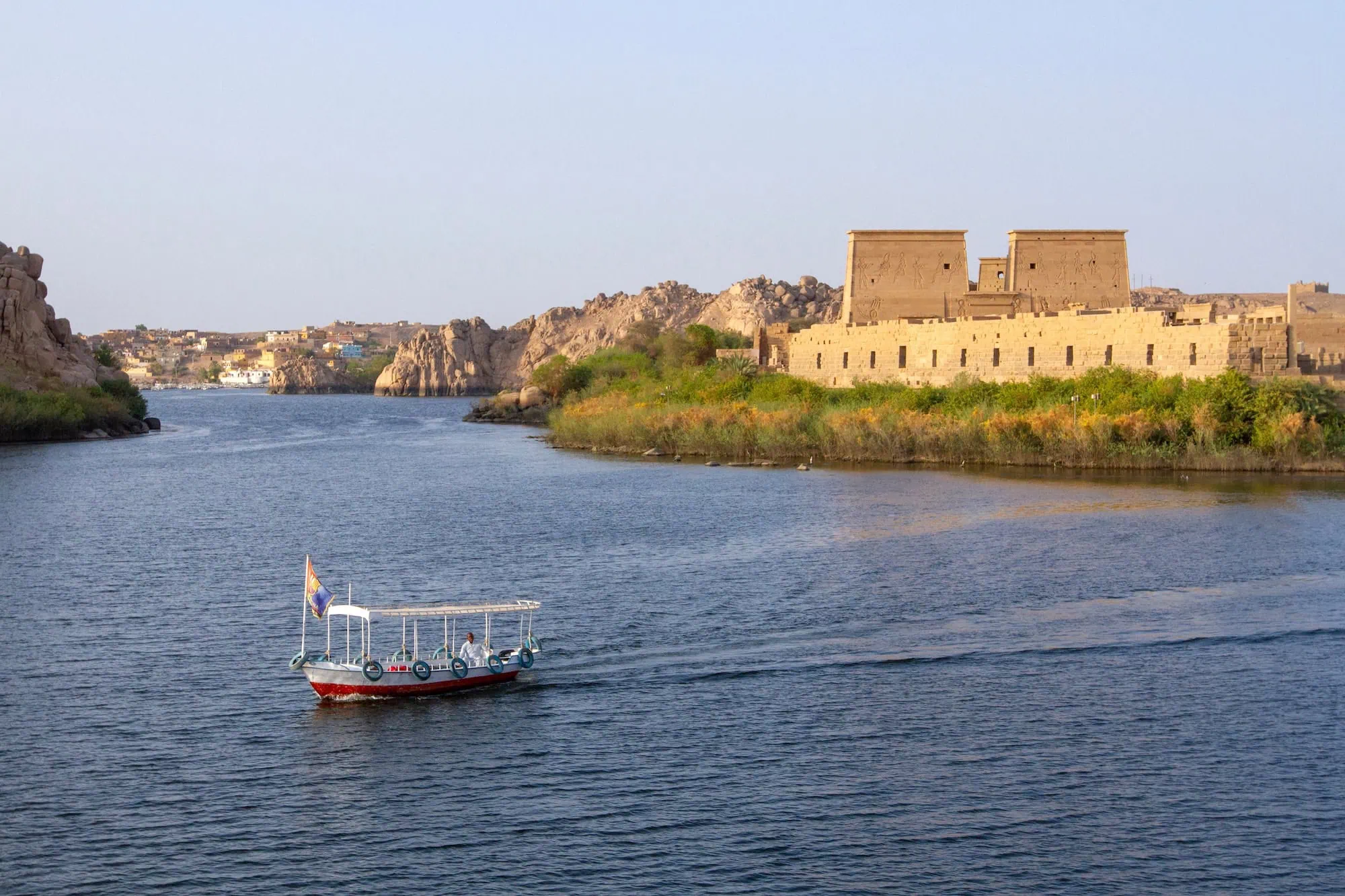
Transportation to Philae requires coordination since the temple sits on an island, accessible only by motorboat from the Philae Marina near the old Aswan Dam. Most visitors arrive via organized tours that include round-trip transportation from Aswan hotels.
Comparing to Other Egyptian Shows
Egypt offers several Sound and Light Shows at different archaeological sites, each with distinct characteristics. Philae stands out for its intimate island setting and mythological focus, contrasting with the historical emphasis of shows at other locations.
The Karnak Temple show in Luxor covers 4,000 years of pharaonic history through a walking tour among massive temple complexes. Karnak’s scale impresses, but Philae’s cohesive storytelling and manageable size create a more immersive experience.
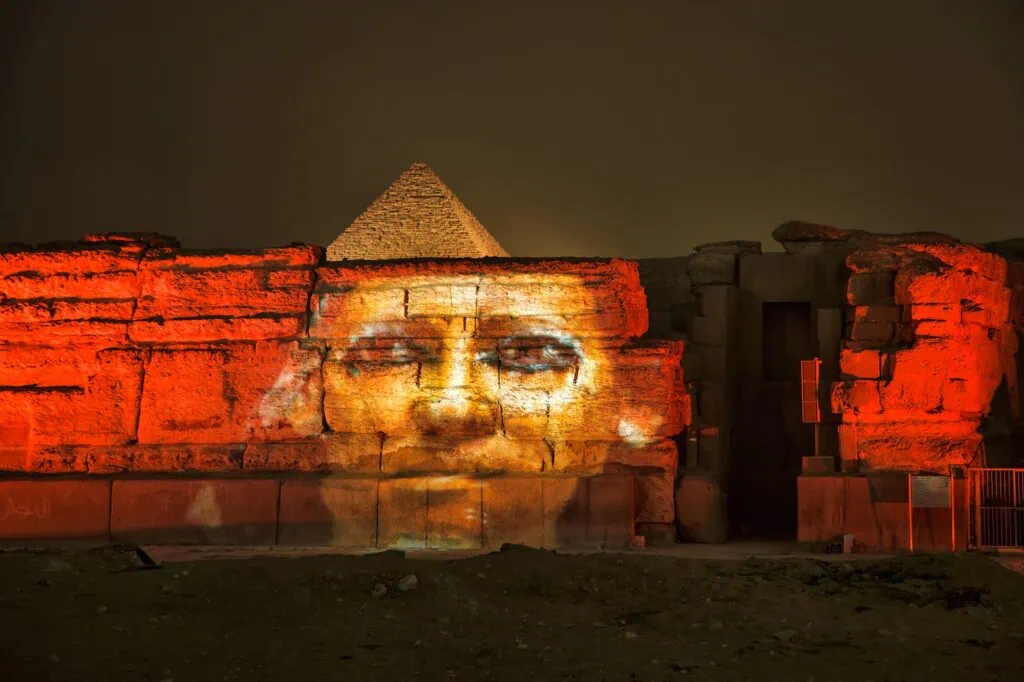
Giza’s Pyramid show emphasizes ancient engineering achievements and the pyramid-building era. The Great Sphinx serves as narrator, recounting Old Kingdom history against the backdrop of humanity’s most recognizable monuments.
Photography During the Show
Photography policies vary, but most performances allow non-flash photography during designated portions of the show. The changing light effects create unique opportunities for capturing the temple’s architectural details under different colored illumination.
Golden hour lighting immediately before the show begins offers excellent opportunities for traditional temple photography. The warm natural light complements the sandstone construction beautifully.
As artificial lighting takes over, the contrast between illuminated temple surfaces and dark water creates dramatic compositions. Wide-angle lenses capture the full temple complex within single frames, while longer focal lengths isolate specific architectural elements.
Planning Your Evening Experience
Peak season from December through February brings comfortable evening temperatures averaging 15–21°C (60–70°F), creating ideal conditions for enjoying open-air performances at many of Aswan’s most popular Aswan attractions. The shoulder seasons offer similarly excellent weather — often with fewer crowds — making them a great choice for travelers planning to explore the city in depth.
Summer visits require preparation for heat that can exceed 38°C (100°F) in the late afternoon before the show. Winter evenings can feel surprisingly cool, especially with Lake Nasser’s moderating influence, so bringing an extra layer is always a smart idea.
The Philae Temple Sound and Light Show pairs naturally with daytime visits to other Aswan attractions. Morning felucca sailboat rides around Elephantine Island provide a relaxing start to days that conclude with evening temple illumination.
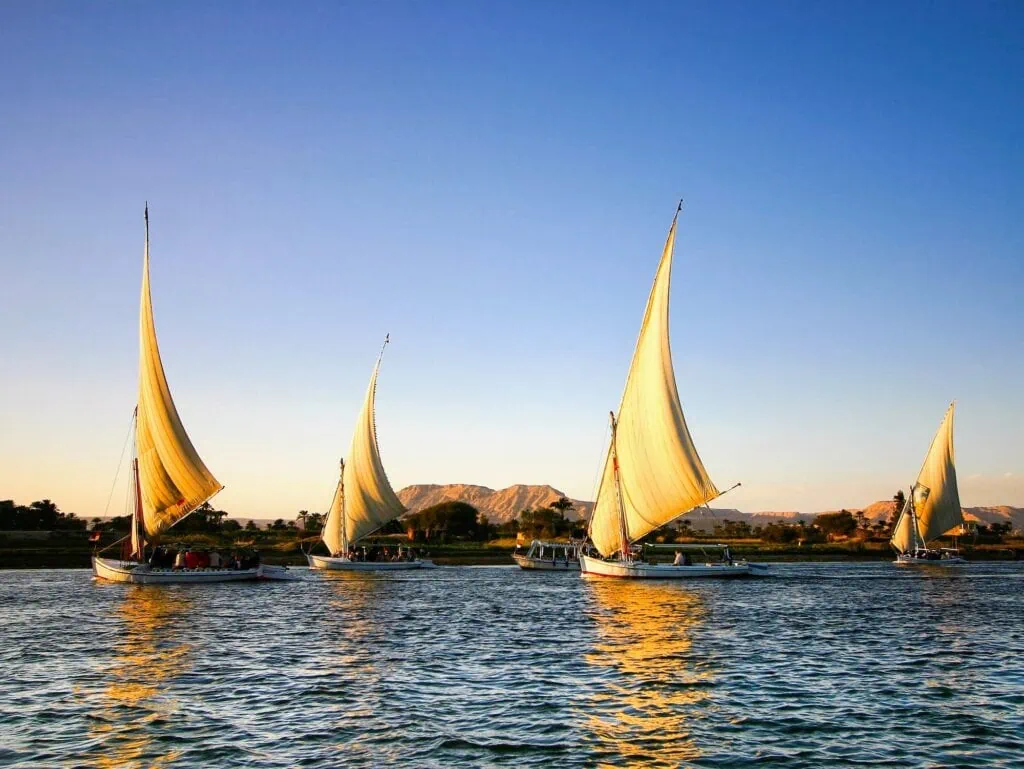
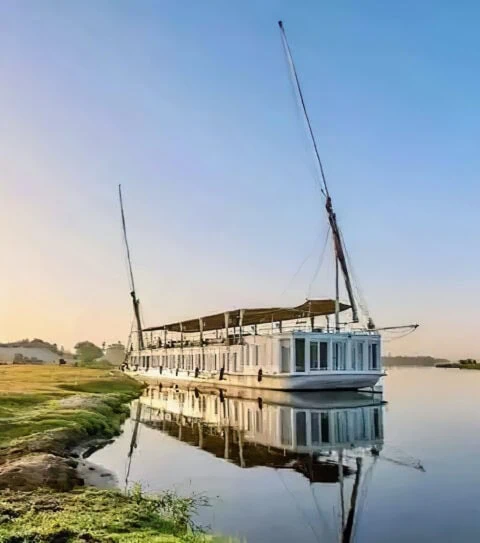
We organize comprehensive Aswan experiences that place the Philae Sound and Light Show as a memorable finale after days of exploration along the Nile. These itineraries are often part of Nile Cruises or more intimate private dahabiya tours through Upper Egypt, where private guides provide rich historical context during daytime temple visits—deepening your appreciation of the evening performance.
Experience Philae After Dark In A Whole New Light
The Philae Temple Sound and Light Show transforms this iconic site into a truly magical experience—where illuminated temples, storytelling, and the quiet Nile create an unforgettable evening. With Egypt Tours Plus, we seamlessly include this unique highlight in a private journey that blends daytime exploration with extraordinary moments after sunset.
You choose your travel dates, your pace, and the experiences that shape your route. From cultural landmarks and Nile-side evenings to refined comfort throughout, we tailor every detail around your preferences—ensuring a smooth, immersive, and deeply personal travel experience.
Frequently Asked Questions
The Philae Temple Sound and Light Show typically lasts 45 minutes to 1 hour, including the short motorboat transfers between Philae Marina and Agilkia Island. Visitors walk through illuminated temple courtyards while narrated stories explain the history of Isis, Osiris, and ancient Nubian-Egyptian culture. Evening boat rides across the Nile add to the atmosphere, especially after sunset when the temple lighting reflects across the water. Arriving 20-30 minutes early helps ensure smoother boarding and better seating positions.
The Philae Sound and Light Show is offered in 10 languages, including English, French, German, Spanish, Italian, Arabic, Japanese, Russian, Chinese, and Portuguese. Each language presentation follows scheduled time slots throughout the evening, with English usually receiving the highest number of performances during peak tourism seasons. Advance booking is recommended because some language sessions operate only once nightly and can fill quickly between October and April. Confirming your preferred language before arrival avoids last-minute scheduling issues.
Yes, many visitors explore Philae Temple during daylight hours and return in the evening for the Sound and Light Show because the two experiences feel completely different. Daytime visits highlight detailed carvings, hieroglyphs, and architecture, while nighttime presentations focus on storytelling, music, and dramatic illumination across the temple complex. Separate tickets are required for daytime entry and evening performances. Combining both visits provides a more complete understanding of the temple dedicated to the goddess Isis.
The Philae Sound and Light Show is generally suitable for children because the illuminated temples, boat rides, music, and storytelling create an engaging atmosphere for families visiting Aswan. Older children often enjoy the dramatic lighting effects projected across ancient walls and columns dating back to the Ptolemaic and Roman periods. Very young children may become restless during the 45-60 minute performance, particularly during narration-heavy sections. Evening temperatures along the Nile are usually more comfortable for families than daytime temple visits.
Visitors should wear comfortable outdoor clothing and practical walking shoes for the Philae Sound and Light Show because the experience includes boat transfers, stone pathways, and open-air seating areas around the temple. Light jackets or shawls are recommended between November and February when Nile evenings can become surprisingly cool after sunset, especially on the water. Summer evenings remain warm but lightweight clothing is still advisable. Closed shoes provide better stability on occasionally uneven ancient stone surfaces.
Non-flash photography is generally permitted during the Philae Sound and Light Show, although policies may vary depending on current Egyptian antiquities regulations and crowd management procedures. Flash photography is typically discouraged because it disrupts both the visual effects and other visitors’ viewing experience. Smartphones and standard cameras usually work well in the illuminated temple environment, especially during slower walking segments between narration points. Visitors using professional video or tripod equipment may need additional permissions arranged in advance.
All visitors attending the Philae Sound and Light Show reach the temple by motorboat departing from Philae Marina near the old Aswan Dam, approximately 15 minutes south of central Aswan. The temple sits on Agilkia Island in the Nile, making boat transportation mandatory for both daytime and nighttime visits. Most organized tours include round-trip transfers, entrance tickets, and boat coordination. Evening crossings are especially scenic because illuminated temple columns gradually appear against the dark Nile waters.
Walk-up tickets for the Philae Sound and Light Show are sometimes available at the marina ticket office, but advance reservations are strongly recommended during peak travel months between October and April. Popular language sessions, particularly English and French, can sell out quickly when multiple Nile cruise groups arrive simultaneously in Aswan. Booking early also helps secure preferred seating positions and smoother transportation arrangements. Travelers visiting during Egyptian holidays should reserve several days in advance whenever possible.
The Philae Sound and Light Show usually operates in normal weather conditions because Aswan’s desert climate remains dry and stable for most of the year. Performances may occasionally be delayed or rescheduled during unusually strong winds, heavy rain, or safety concerns affecting Nile boat transportation to Agilkia Island. Severe weather disruptions are relatively uncommon in Upper Egypt compared to Mediterranean coastal cities. Visitors traveling during winter months should still monitor local conditions because evening winds on the Nile can occasionally intensify.
Booking the Philae Sound and Light Show at least 48-72 hours in advance is recommended during high season because evening performances often reach capacity, especially for English-language sessions. Nile cruise schedules and organized tour groups create strong demand between October and March when temperatures across Aswan are most comfortable. Last-minute tickets may still be available during summer months, but preferred language options can become limited. Early reservations also simplify transportation planning and evening scheduling around other Aswan attractions.
Ancient Wonders of Aswan, Modern Comfort
Sail the Nile Through Aswan Like a Pharaoh
Design Your Custom Tour
Explore Egypt your way by selecting only the attractions you want to visit