

Citadel of Qasr Ibrim – The Only Survivor in Lower Nubia
Standing alone above Lake Nasser’s waters, this fortress tells a story two millennia in the making.
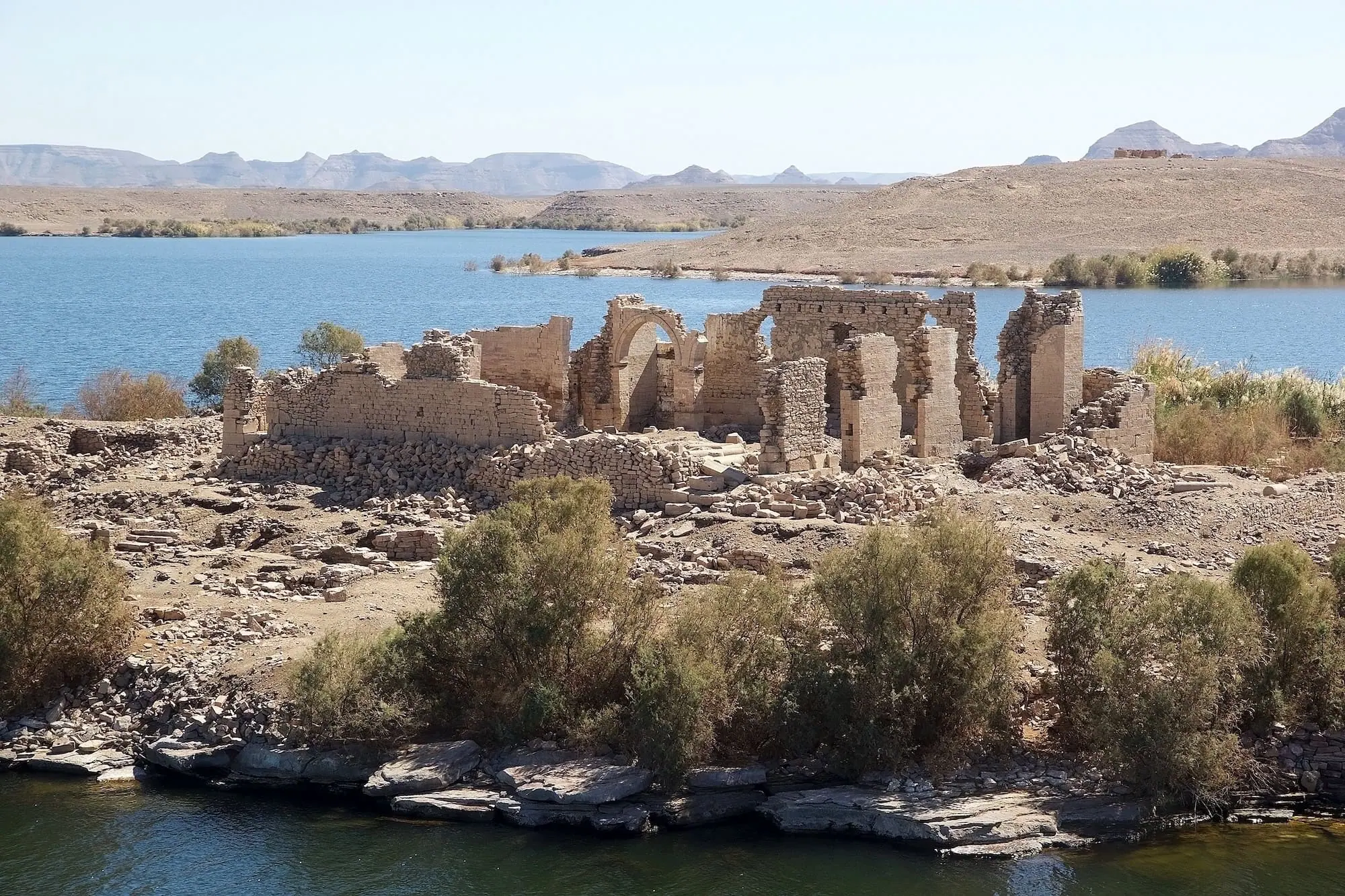
Qasr Ibrim represents something truly extraordinary in the landscape of ancient monuments—it’s the only major archaeological site in Lower Nubia that survived the creation of the Aswan High Dam. While countless other temples and settlements now rest beneath Lake Nasser’s waters, this remarkable citadel continues to occupy its original location, transformed from a hilltop stronghold into an island fortress. The site offers an unparalleled window into Nubian civilization, having served as an economic, political, and religious center with occupation spanning from the eighth century BC into the early 19th century.
What makes Qasr Ibrim particularly significant is its role as a time capsule of cultural transitions. The citadel witnessed the rise and fall of the Napatan kingdom, Roman occupation, the flourishing of Meroitic culture, and later became one of the main Christian centers in Nubia before ultimately falling to Islamic rule.
Table of Contents
A Fortress Born of Strategic Necessity
The citadel’s commanding position wasn’t chosen by accident. Located 235 kilometers south of Aswan, Qasr Ibrim controlled the vital trade routes between Egypt and the middle Nile region.
Military Architecture Through Ages
The fortress complex built upon pharaonic foundations reveals layers of architectural evolution. Taharqa’s temple, dating to the 25th Dynasty, formed the religious heart of the early settlement. Roman engineers later expanded the defensive works, creating fortifications that would serve the site for centuries.
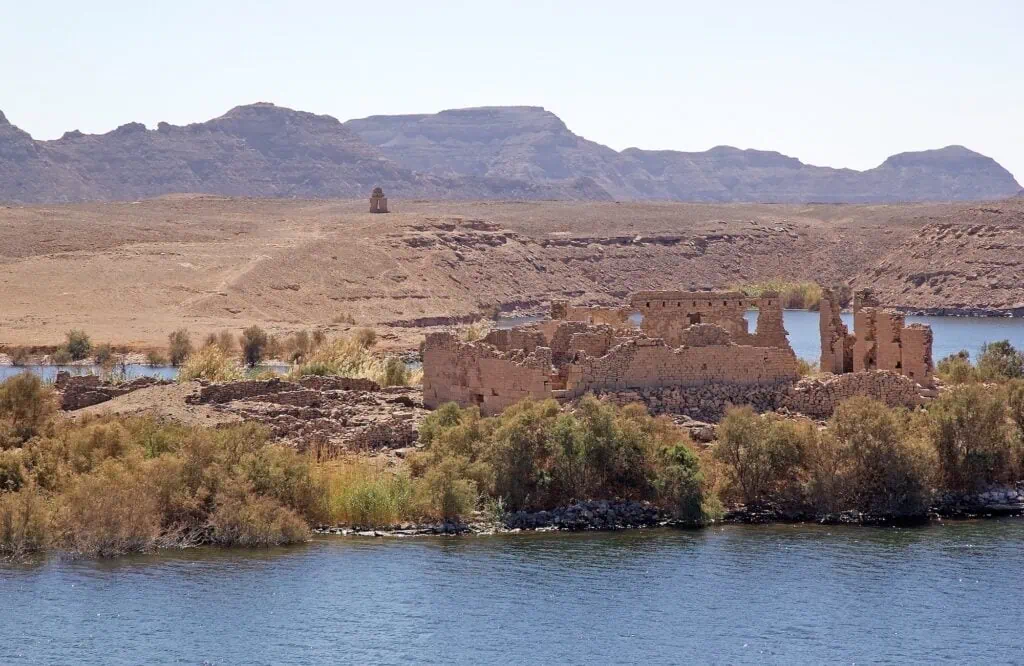
During the New Kingdom period, monuments dating back to that era were carefully reused and integrated into newer constructions. This practice of architectural recycling wasn’t mere convenience—it represented a conscious effort to maintain cultural continuity across changing political landscapes.
The Island Transformation
When Lake Nasser’s waters rose in the 1960s, Qasr Ibrim underwent its most dramatic change in two millennia. The surrounding landscape vanished beneath the artificial lake, leaving only the highest point of the ancient settlement visible above the waterline. Today, waves lap directly against the fortress walls, creating a scene both haunting and beautiful.
The transformation brought unexpected benefits for preservation. The isolation has protected the site from modern development pressures and unauthorized access, though it has also made comprehensive archaeological work more challenging.
Archaeological Treasures Beyond Compare
Qasr Ibrim has yielded the largest collection of Old Nubian documents ever discovered. These manuscripts, preserved by the arid climate and later protected by the site’s isolation, provide unprecedented insights into medieval Nubian society, religion, and daily life.
The exceptional preservation conditions allowed organic materials to survive in remarkable condition. Textiles, leather goods, wooden artifacts, and botanical remains offer detailed evidence of economic activities, trade networks, and agricultural practices spanning more than a millennium. Documents written in nine different languages—including Old Nubian, Coptic, Arabic, and Greek—demonstrate the cosmopolitan nature of this frontier community.
Among the most significant discoveries are administrative records from the Eparch of Nobatia period, when Qasr Ibrim served as a major political center. These documents illuminate the complex relationship between local Nubian rulers and the broader Byzantine and Islamic worlds. The site also preserved rare examples of Meroitic script, contributing crucial evidence for understanding this still partially deciphered writing system.
Artifacts Now on Display
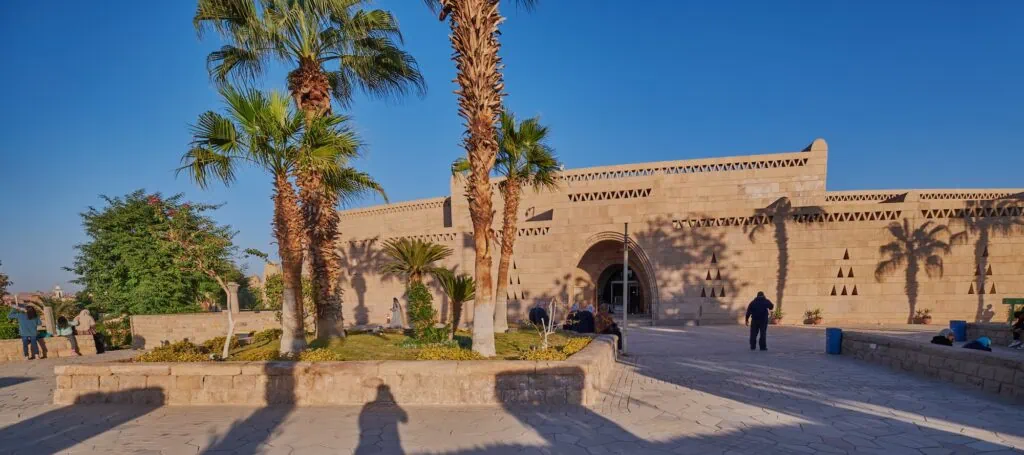
Many of the most important finds have been relocated to the Nubian Museum in Aswan, where they form a cornerstone of the institution’s collection. The careful curation and preservation of these materials ensures that future generations can study the rich cultural heritage that Qasr Ibrim represents.
Religious Evolution and Cultural Resistance
What sets Qasr Ibrim apart from other Nubian sites is its extraordinary religious history.
The Last Pagan Stronghold
The citadel earned distinction as one of the last bastions of ancient Egyptian religious traditions in Nubia. Long after Christianity had taken root elsewhere in the region, traditional temple worship continued at Qasr Ibrim. The transition to Christianity, when it finally came, was gradual rather than sudden.
Christian Center of Learning
During the medieval period, Qasr Ibrim transformed into one of Nubia’s most important Christian centers. The site became a bishopric, and its religious schools attracted students from across the Nubian kingdoms. Magnificent churches rose among the ancient temples, creating a unique architectural landscape that blended pharaonic, Roman, and Byzantine influences.
The Christian community at Qasr Ibrim developed distinctive artistic traditions, evident in the decorated pottery, religious manuscripts, and architectural details that archaeologists have uncovered. Wall paintings and carved reliefs demonstrate sophisticated theological understanding and artistic skill.
Islamic Conquest and Final Chapter
The fortress fought against Islamic expansion until the 16th century—longer than almost any other Christian stronghold in the region. When Ottoman forces finally took control using Bosnian mercenaries, they ended over a thousand years of Christian rule at the site.
Even under Islamic control, Qasr Ibrim maintained its strategic importance, serving as an administrative center until the early 19th century. The final abandonment in 1813 marked the end of continuous occupation stretching back over two millennia.
Visiting the Forbidden Fortress
Qasr Ibrim presents a unique challenge for modern visitors—you can see it, but you cannot set foot on it.
Lake Nasser Cruise Access
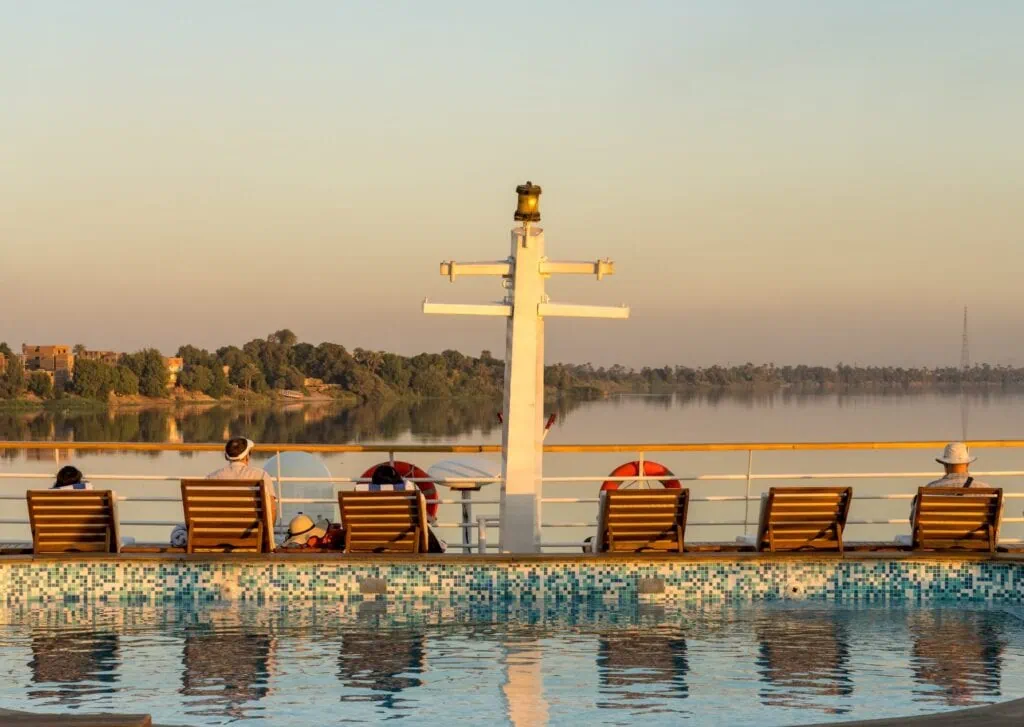
The only way to experience Qasr Ibrim today is from the deck of a Lake Nasser cruise vessel. These boats approach close enough for passengers to capture detailed photographs of the fortress walls and remaining structures. The experience offers a dramatic perspective that few other archaeological sites can match—the approach by water recreates something of how ancient travelers would have encountered this imposing stronghold.
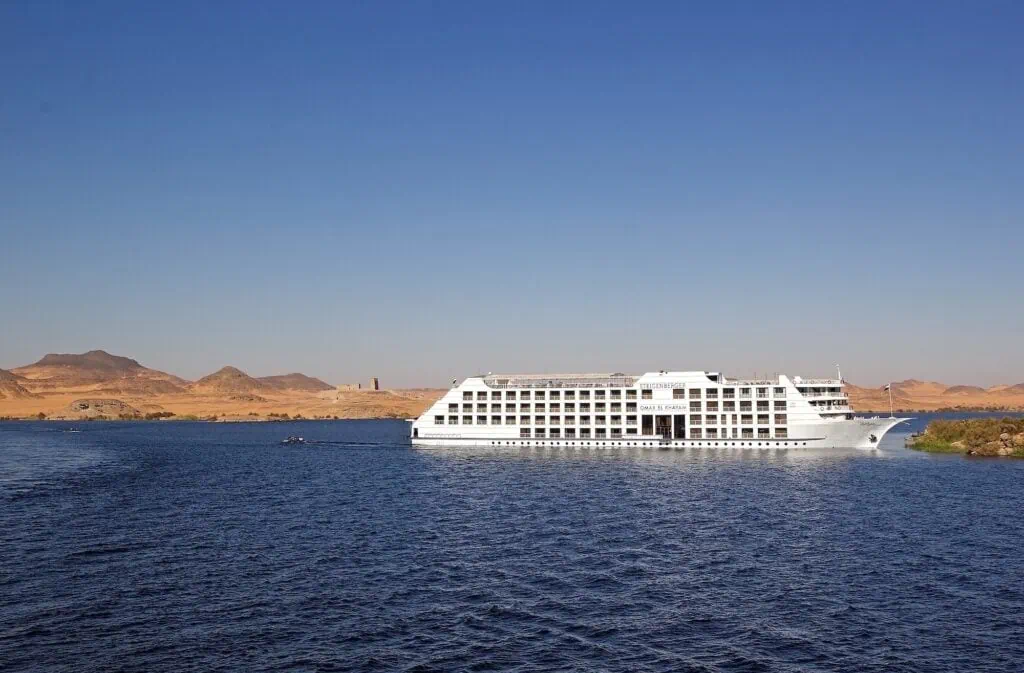
Cruise passengers often describe the sight as both magnificent and melancholy. The fortress appears to float on the lake’s blue waters, its ancient stones bearing witness to countless generations of human occupation. The surrounding silence, broken only by lapping waves, adds to the site’s mystique.
Photography and Observation
Despite access restrictions, Qasr Ibrim offers exceptional photographic opportunities. The changing light throughout the day creates different moods and perspectives. Early morning visits often provide the clearest views, while sunset photographs can be particularly striking as the ancient stones glow against the darkening sky.
Cruise itineraries typically include dedicated time for photography and interpretation by qualified guides who can explain the visible architectural features and their historical context.
Archaeological Significance and Future Research
The restricted access that frustrates casual visitors serves an important purpose—protecting one of Africa’s most significant archaeological sites from damage and looting.
Ongoing Research Programs
International archaeological teams continue to study Qasr Ibrim using non-invasive techniques and limited seasonal excavations. Remote sensing technology, underwater archaeology around the island’s base, and detailed analysis of previously collected materials continue to reveal new information about life at this remarkable site.
Recent studies have focused on environmental archaeology, using plant and animal remains to reconstruct ancient climate conditions and agricultural practices. These findings contribute to broader understanding of how Nubian societies adapted to changing environmental conditions over time.
Conservation Challenges
The island’s unique situation creates specific conservation challenges. Wave action, though gentle on this sheltered section of Lake Nasser, gradually erodes the fortress’s base. Temperature fluctuations and seasonal water level changes also stress the ancient masonry.
Current preservation efforts focus on stabilizing vulnerable structures and monitoring change over time. Advanced documentation techniques ensure that detailed records exist should future restoration become necessary.
The Living Legacy of Qasr Ibrim
Though visitors cannot walk its streets or explore its chambers, Qasr Ibrim continues to serve as a powerful symbol of cultural resilience and adaptation. The fortress stands as testament to Nubia’s role as a crossroads of civilizations, where Egyptian, Mediterranean, African, and Middle Eastern influences merged to create something uniquely Nubian.
We recommend experiencing Qasr Ibrim as part of a comprehensive Lake Nasser cruise, which allows you to appreciate the site within its broader historical and geographical context. Our expert guides can explain the fortress’s significance while you observe its dramatic silhouette against the lake’s vast expanse. This approach provides the historical depth and cultural understanding that makes encountering Qasr Ibrim truly meaningful rather than merely visually impressive.
The citadel’s story continues today through ongoing research, museum displays, and the experiences of travelers who witness its solitary grandeur from the water. In this way, Qasr Ibrim fulfills its ancient role as a bridge between cultures and a guardian of memory across the flowing boundaries of time.
Witness The Legacy Of Qasr Ibrim From The Nile
Rising above Lake Nasser, the Citadel of Qasr Ibrim stands as one of Egypt’s most unique historical sites—seen from the water, rich in layers of history, and unlike any other stop along the Nile. With EgyptToursPlus, we seamlessly incorporate this remarkable landmark into a private journey that blends remote discoveries with Egypt’s most iconic experiences.
You choose your travel dates, your pace, and the experiences that shape your route. Whether as part of a Lake Nasser cruise or a wider exploration of southern Egypt, we tailor every detail around your preferences—ensuring a smooth, refined, and deeply personal travel experience from start to finish.
Frequently Asked Questions
No, visitors cannot enter the Citadel of Qasr Ibrim because Egyptian authorities restrict all public access to protect one of Nubia’s most important active archaeological research sites. The fortress survived the flooding caused by the Aswan High Dam and Lake Nasser, but its fragile mudbrick, manuscripts, and organic remains remain highly vulnerable to human impact. Archaeologists continue excavations and conservation work there today. Visitors instead view the site from Lake Nasser cruise boats positioned nearby for photography and guided interpretation.
A Lake Nasser cruise is the only practical and officially permitted way to see Qasr Ibrim today, since the citadel itself is closed to visitors for preservation reasons. Cruise vessels traveling between Aswan and Abu Simbel approach close enough for detailed viewing, photography, and historical commentary from Egyptologists on board. Early morning sail-bys usually provide the clearest desert light and calmest water conditions. Binoculars or zoom lenses significantly improve visibility of the fortress walls and cliff structures.
Qasr Ibrim survived the flooding of Lake Nasser because the fortress was built on a naturally elevated sandstone cliff high above the Nile Valley floor. When the Aswan High Dam created the reservoir in the 1960s, most surrounding Lower Nubian settlements and temples disappeared underwater, but Qasr Ibrim remained above the new waterline. Its survival makes it unique among ancient Nubian cities. Today the citadel appears isolated like an island fortress surrounded entirely by Lake Nasser waters.
Archaeological discoveries at Qasr Ibrim are exceptional because the hyper-arid Nubian climate preserved fragile organic materials rarely surviving elsewhere in Africa or the Middle East. Researchers uncovered textiles, seeds, leather goods, wooden objects, and the world’s largest collection of Old Nubian manuscripts spanning more than 1,000 years. These finds provide unusually detailed evidence about daily life, trade, religion, and language evolution in medieval Nubia. Few desert archaeological sites anywhere preserve written archives on this scale and condition.
Qasr Ibrim was continuously occupied for more than 2,000 years, from roughly the 8th century BC until its abandonment in 1813 AD during Ottoman-era regional instability. Few African settlements demonstrate such a long uninterrupted sequence of habitation across ancient Egyptian, Roman, Christian Nubian, and Islamic periods. This continuity makes the site exceptionally valuable to historians studying political and cultural change over centuries. Archaeological layers at Qasr Ibrim effectively document the entire transformation of Nubian civilization through multiple empires and religions.
Qasr Ibrim witnessed successive phases of ancient Egyptian religion, Christianity, and Islam over more than two millennia of occupation in Nubia. Early inhabitants worshipped Egyptian deities connected to pharaonic rule, while the city later became a major Christian center during the medieval Kingdom of Makuria, complete with churches and bishops. Islamic influence expanded after Arab and Ottoman contact in later centuries. Few archaeological sites in Africa preserve such a clear religious timeline across pagan, Christian, and Islamic eras in one location.
Many of the most important artifacts from Qasr Ibrim are displayed at the Nubian Museum in Aswan, which opened in 1997 to preserve material rescued during the UNESCO Nubian Monuments Campaign. Additional manuscripts, textiles, and archaeological objects are housed in research institutions and museums in the United Kingdom and elsewhere. The Nubian Museum provides the best contextual introduction because exhibits explain how Qasr Ibrim functioned politically, religiously, and economically within ancient Nubia and along Nile trade routes.
Archaeologists at Qasr Ibrim discovered documents written in at least nine languages, including Old Nubian, Greek, Arabic, Coptic, Meroitic, and Latin, reflecting the site’s role as a multicultural frontier settlement. These manuscripts span more than 1,000 years and include legal records, religious texts, private letters, and administrative accounts. The concentration of Old Nubian writings is especially important because surviving examples of the language are extremely rare elsewhere. Linguists continue using these texts to reconstruct medieval Nubian history and literacy.
Qasr Ibrim lies approximately 235 kilometers (146 miles) south of Aswan along the western shore of Lake Nasser in southern Egypt. Most visitors reach the site indirectly aboard multi-day Lake Nasser cruises traveling between Aswan and Abu Simbel, since no public road access exists to the citadel itself. Cruise itineraries typically pass Qasr Ibrim on the second or third day depending on sailing direction. Travelers should expect remote desert scenery with very limited nearby infrastructure beyond cruise operations.
The best time to view Qasr Ibrim is early morning or late afternoon, when lower sun angles create stronger contrast on the sandstone fortress walls and temperatures remain significantly cooler. Winter months from October through March provide the most comfortable Lake Nasser cruising conditions, with daytime temperatures generally ranging between 20-30°C (68-86°F). Midday heat and desert haze can reduce visibility for photography. Booking a cabin with unobstructed lake views also improves the overall viewing experience during approach.
Qasr Ibrim occupied a strategically critical position overlooking Nile trade and military routes connecting Egypt with Nubia and central Africa. Its elevated cliffs provided natural defenses while allowing rulers to monitor commercial traffic, taxation, and troop movement along the river corridor. Control of this region was economically valuable because caravans transported gold, ivory, livestock, and exotic goods through Nubia for centuries. The fortress location also made large-scale military assaults difficult, which explains its repeated reuse by multiple civilizations over time.
Most ancient settlements, temples, and cemeteries surrounding Qasr Ibrim now lie beneath Lake Nasser after the completion of the Aswan High Dam in the 1960s. UNESCO coordinated one of the world’s largest archaeological rescue operations to relocate monuments such as Abu Simbel and Philae before flooding began, but countless smaller sites disappeared underwater permanently. Qasr Ibrim’s survival above the reservoir level therefore became historically extraordinary. Today the fortress stands as the only major ancient Nubian settlement still remaining in its original location.

Design Your Custom Tour
Explore Egypt your way by selecting only the attractions you want to visit