The Eastern Desert in Egypt – Come Marvel at the Natural Beauty
Stretching beyond the Nile River’s eastern bank lies Egypt’s most rugged landscape.
The Eastern Desert spans approximately 223,000 square kilometres (86,100 square miles), creating a stark contrast to the fertile Nile Valley. This vast wilderness extends from the river’s edge to the Red Sea coast, encompassing dramatic mountain ranges, ancient mining sites, and unique desert ecosystems. While many visitors focus on Egypt’s western deserts, the Eastern Desert offers an entirely different experience – one shaped by volcanic peaks, coastal plains, and millennia of geological transformation.
Our decades of expertise in Egyptian desert exploration have shown us that this region holds some of the country’s most spectacular yet overlooked treasures. From prehistoric rock art to modern oil fields, the Eastern Desert tells a story of both ancient civilization and contemporary economic importance.
Geographic Boundaries and Landscape Features
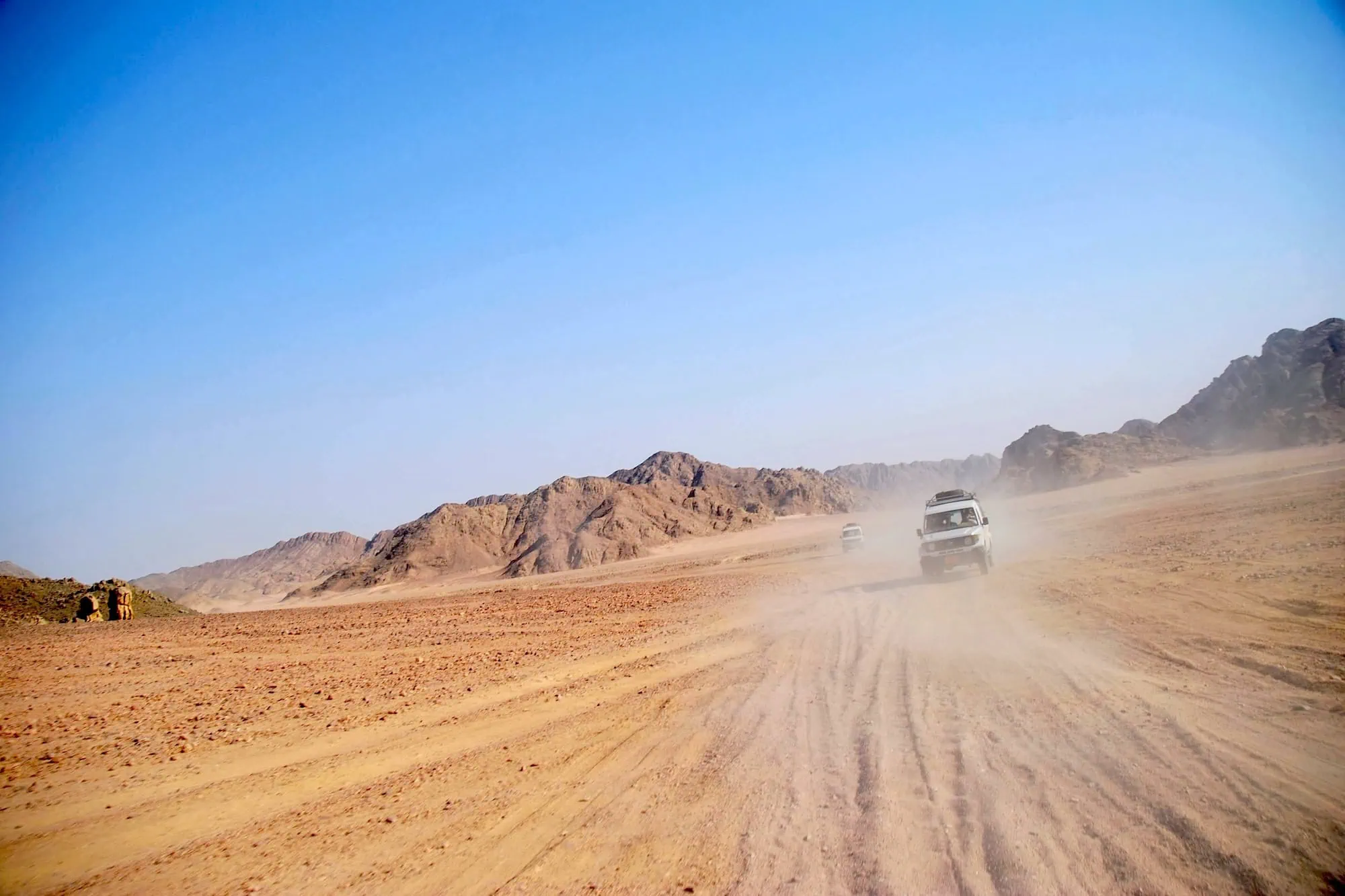
The Eastern Desert occupies roughly 85,690 square miles of northeastern Africa, making it Egypt’s second-largest desert region. Unlike the Western Desert’s endless sand seas, this terrain rises abruptly from the Nile Valley in a series of rolling highlands and rocky plateaus.
The Red Sea Hills Formation
The Red Sea Hills dominate the eastern landscape, running parallel to the Red Sea coast for hundreds of kilometres. These ancient mountains reach their highest point at Gabal Sha’ib El Banat, towering 2,187 metres (7,175 feet) above sea level. The range consists primarily of Precambrian crystalline rocks, some dating back three billion years.
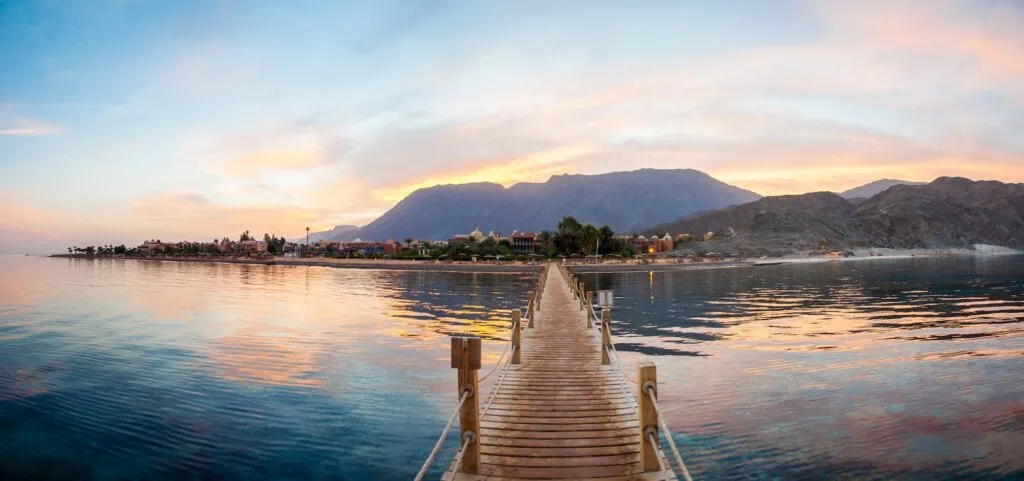
Volcanic activity shaped much of this mountainous terrain. Igneous rock formations create the backbone of the hills, while limestone deposits from ancient ocean floors add geological complexity. The dramatic elevation changes – from sea level at the Red Sea to mountain peaks exceeding 1,500 metres (4,921 feet) – create diverse microclimates within the desert environment.
Wadi Networks and Drainage Patterns
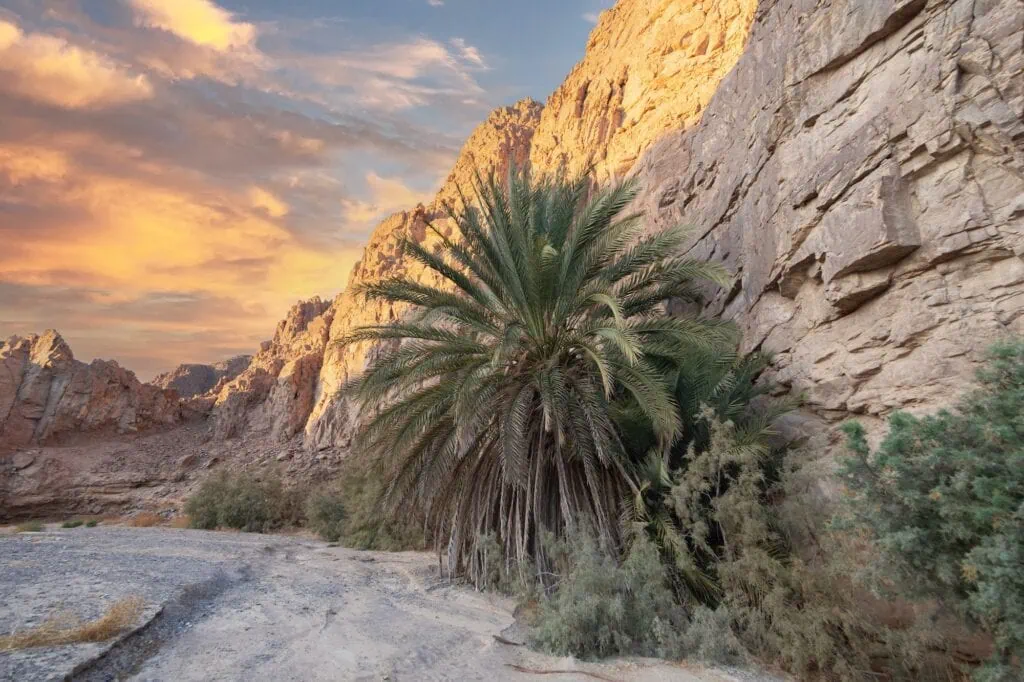
Extensive wadi systems carve through the Eastern Desert, creating natural corridors between the Nile Valley and Red Sea coast. These dry river beds fill with torrential flows during rare rainfall events, supporting temporary vegetation and wildlife corridors.
The Gulf of Suez marks the desert’s northeastern boundary, where oil-rich sedimentary basins have formed over millions of years. This coastal region features salt marshes and unique marine-influenced ecosystems rarely found in other Egyptian desert areas.
Ancient Geological History and Formation
Between 100 and 35 million years ago, much of the Eastern Desert lay beneath the Tethys Ocean. Marine sediments accumulated on the ocean floor, eventually forming limestone and other sedimentary rock layers that we observe today throughout the region.
The ocean’s gradual retreat during the Oligocene period exposed vast areas of basement complex – some of Earth’s oldest rock formations. These Precambrian rocks, formed billions of years ago, now surface across much of the desert’s interior. Tectonic forces associated with Red Sea rifting uplifted these ancient formations, creating the mountainous landscape we see today.
Climate Evolution and Environmental Changes
The African Humid Period, occurring roughly 14,500 to 5,000 years ago, dramatically transformed the Eastern Desert’s environment. Increased monsoon rainfall supported grasslands and wooded areas where arid landscapes now dominate. Archaeological evidence reveals human settlements and abundant wildlife during this wetter period.
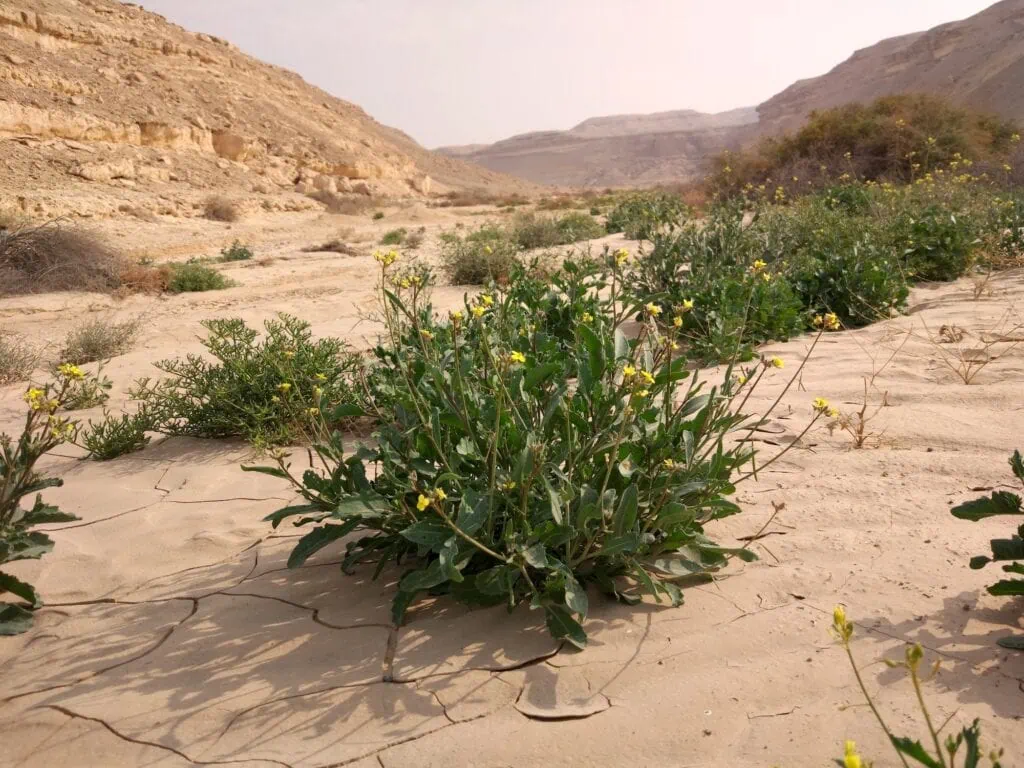
Climate change intensified desert conditions over subsequent millennia. Today’s environment reflects thousands of years of increasing aridity, with adapted plant and animal species surviving in this challenging landscape.
Natural Resources and Economic Significance
The Eastern Desert contains some of Egypt’s most valuable mineral deposits, including gold, emeralds, and various industrial minerals. Ancient Egyptian texts document gold mining operations dating back over 4,000 years, with many sites still yielding precious metals today.
Historical Mining Operations
Pharaonic period inscriptions throughout the region detail extensive mining activities. Copper, iron, and precious stone extraction supported ancient Egyptian civilization’s technological advancement and trade relationships. The famous emerald mines near the Red Sea produced gems coveted throughout the ancient Mediterranean world.
Modern geological surveys have identified significant deposits of phosphates, manganese, and asbestos. These industrial minerals contribute substantially to Egypt’s export economy.
Contemporary Energy Resources
Oil and natural gas fields in the Gulf of Suez and Eastern Desert proper generate considerable revenue for Egypt. The Golden Triangle development project, encompassing Qena, Safaga, and Quseir, aims to expand mining operations and create new economic opportunities in previously underdeveloped desert areas.
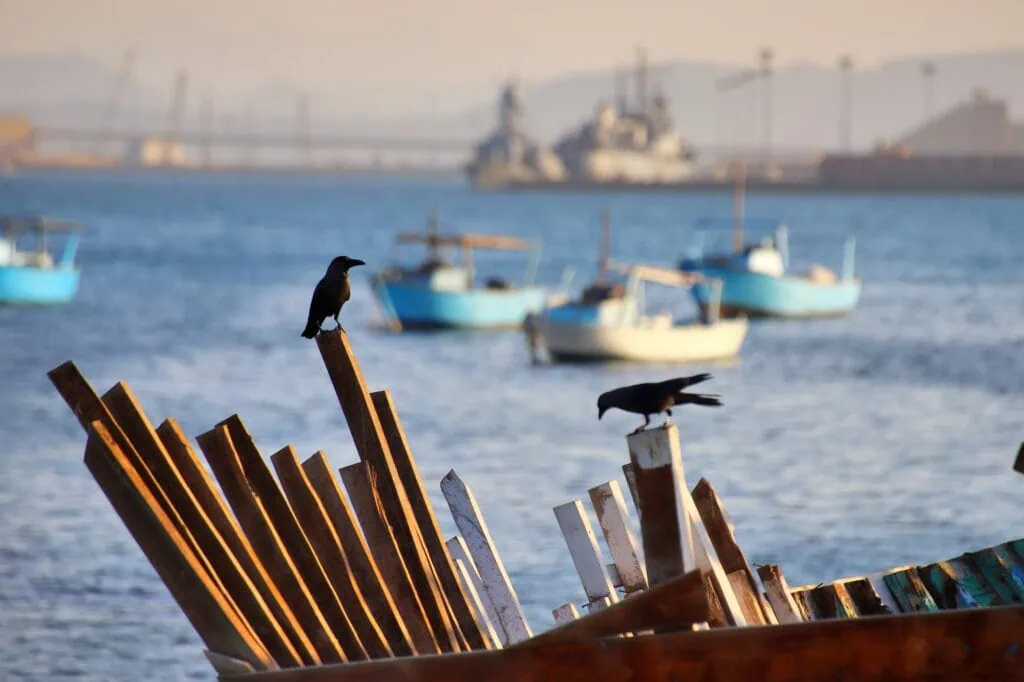
Sulfur deposits and limestone quarries provide raw materials for Egypt’s construction and chemical industries. The proximity to Red Sea ports facilitates efficient export of these valuable resources.
Desert Ecosystems and Wildlife Adaptation
Despite harsh conditions, the Eastern Desert supports remarkable biodiversity. Approximately 75 plant species have adapted to the arid environment, developing specialized survival mechanisms including water storage tissues and extensive root systems.
Vegetation patterns vary with elevation and proximity to water sources. Coastal areas feature salt marsh communities dominated by Avicennia marina mangroves, while inland regions support drought-resistant shrubs and ephemeral annuals that complete their life cycles during brief wet periods.
Endemic and Endangered Species
The fennec fox, golden spiny mouse, and Nubian ibex represent the desert’s mammalian diversity. These species exhibit remarkable adaptations to extreme temperature fluctuations and water scarcity. The critically endangered Arabian leopard occasionally appears in remote mountain areas, though sightings remain extremely rare.
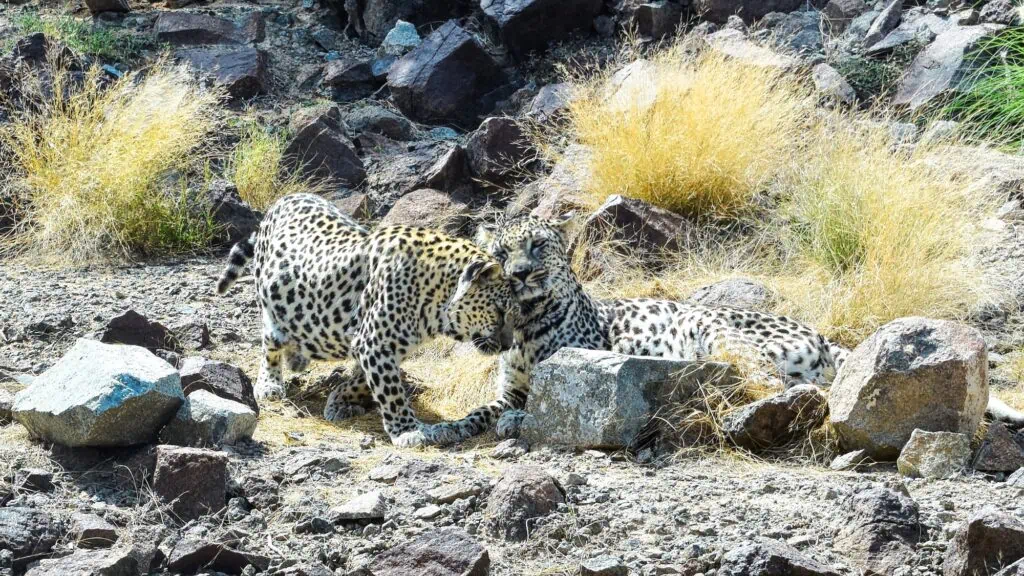
Bird species include various raptors, desert larks, and seasonal migrants using the Red Sea flyway. Reptile diversity encompasses numerous lizard species, snakes, and the distinctive Egyptian cobra.
Conservation Challenges and Efforts
Human activities, including mining expansion and infrastructure development, threaten fragile desert ecosystems. Climate change exacerbates these pressures through increased temperatures and altered precipitation patterns.
Protected areas within the Eastern Desert aim to preserve critical habitats and endangered species populations. The Dorcas gazelle, once widespread throughout the region, now survives only in protected reserves and remote mountain areas.
Cultural Heritage and Archaeological Treasures
Rock art galleries throughout the Eastern Desert preserve prehistoric cultural expressions dating back thousands of years. Predynastic and Dynastic period inscriptions document ancient trade routes, religious practices, and daily life in this challenging environment.
Ancient Trade Routes
Historical caravan routes connected Nile Valley civilizations with Red Sea ports and Arabian Peninsula markets. These paths, marked by rock cairns and ancient wells, facilitated trade in gold, emeralds, and exotic goods from distant lands.
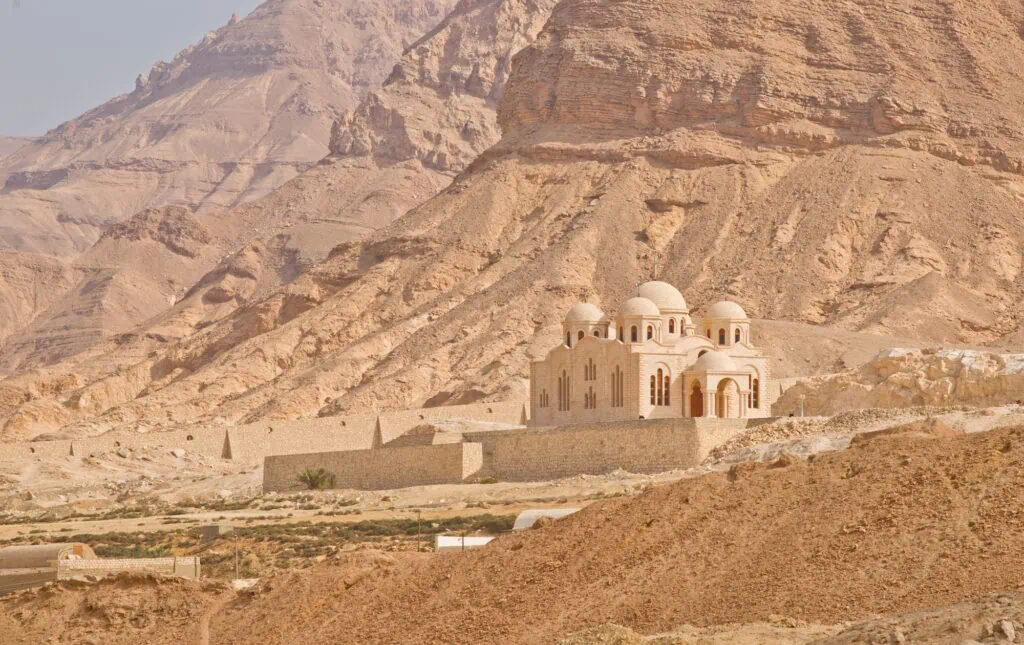
Coptic monasteries built in remote desert locations demonstrate early Christian communities’ adaptation to harsh environments. Saint Anthony’s Monastery, founded in the 4th century AD, continues operating as one of Christianity’s oldest monastic communities.
Modern Tourism and Recreation
The Eastern Desert’s unique landscape attracts adventure tourists seeking authentic desert experiences. Sandboarding, rock climbing, and desert trekking offer alternatives to traditional Nile Valley tourism. Red Sea resort towns like Hurghada and El Gouna provide luxury accommodations for visitors exploring both desert and marine environments.
We organize private desert expeditions that combine archaeological sites, geological formations, and wildlife observation. Our experienced guides ensure safe, educational experiences while respecting fragile desert environments and archaeological heritage.
Frequently Asked Questions
The Eastern Desert covers approximately 20% of Egypt’s total land mass.
The Eastern Desert features mountainous terrain, proximity to the Red Sea, and abundant mineral resources.
October through April offers the most comfortable temperatures for desert exploration.
Venomous snakes and scorpions inhabit the region, but encounters are rare with proper precautions.
Many historical mining areas are accessible with proper permits and experienced guides.
Current extraction includes oil, natural gas, gold, phosphates, limestone, and various industrial minerals.
The Red Sea Hills reach maximum elevations exceeding 2,000 metres above sea level.
Desert-adapted species like fennec foxes, various lizards, and numerous bird species can be observed.
Drought-resistant shrubs, succulent plants, and seasonal wildflowers adapted to extreme aridity characterize the plant communities.
The mountain range creates orographic effects, causing higher precipitation on eastern slopes and diverse microclimates.
Several ancient monasteries continue operating, including Saint Anthony’s Monastery, one of Christianity’s oldest communities.
Desert travel typically requires permits from Egyptian authorities, which experienced tour operators handle as part of expedition planning.
Design Your Custom Tour
Explore Egypt your way by selecting only the attractions you want to visit