

Deir El Hagar Temple – An Ancient Wonder Preserved by Nature
Hidden deep within the Western Desert’s Dakhla Oasis, Deir El Hagar Temple stands as one of Egypt’s most remarkable surviving Roman monuments.
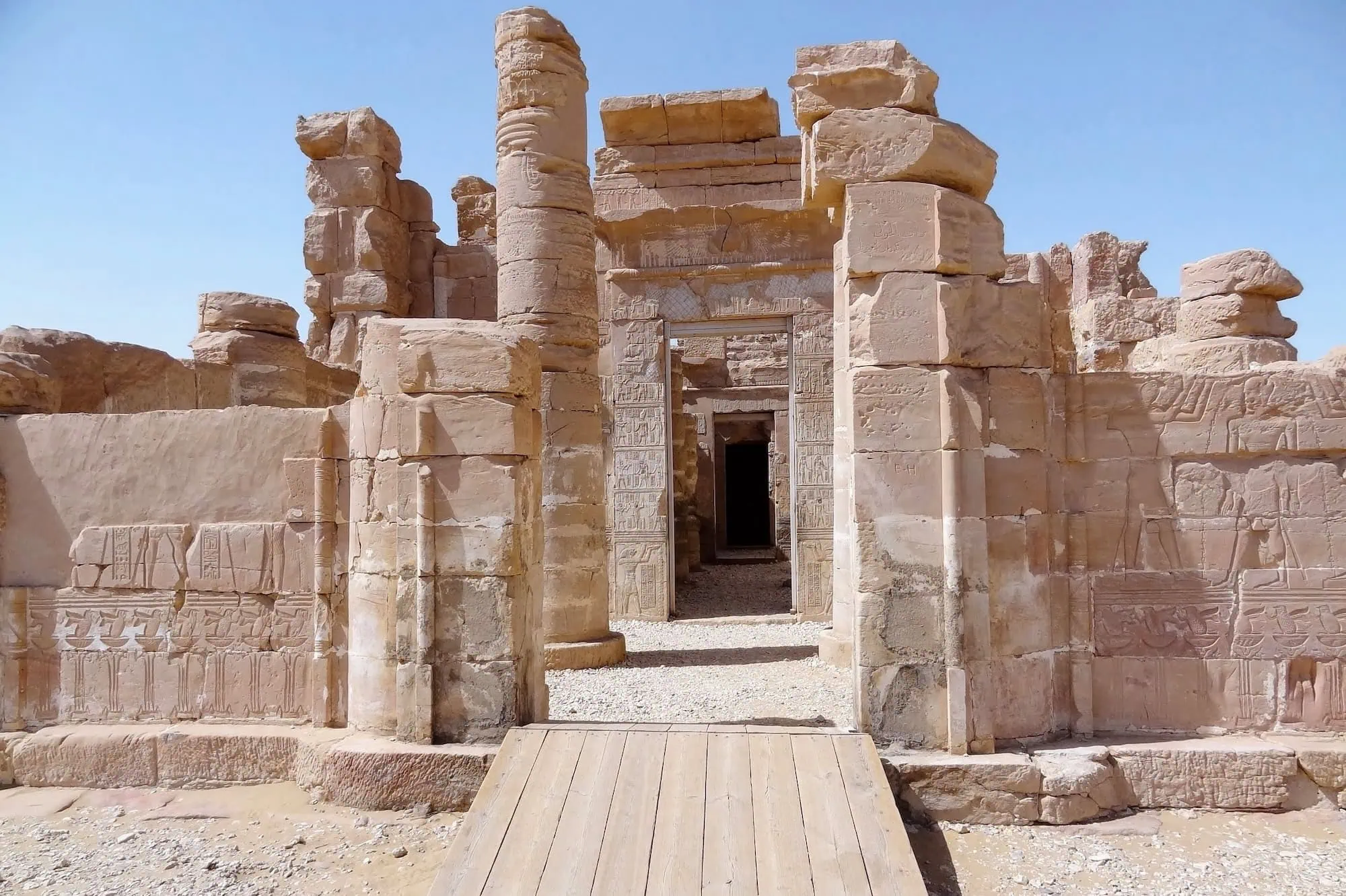
While tourists flock to the grand temples of Luxor and Cairo, this sandstone sanctuary remained buried beneath desert sand for centuries, protecting its intricate hieroglyphs and architectural details from the elements. Built during Emperor Nero’s reign between 54-68 CE and expanded under Emperor Domitian, the temple offers an intimate glimpse into Roman-era religious practices in ancient Egypt.
We’ve guided countless travelers through this hidden gem, watching their amazement as they step into rooms where ancient priests once performed sacred rituals to the Theban triad. What makes this site particularly special is its remarkable state of preservation and the fascinating graffiti left by early European explorers who rediscovered it in the 19th century.
Table of Contents
Roman Architecture Meets Egyptian Tradition
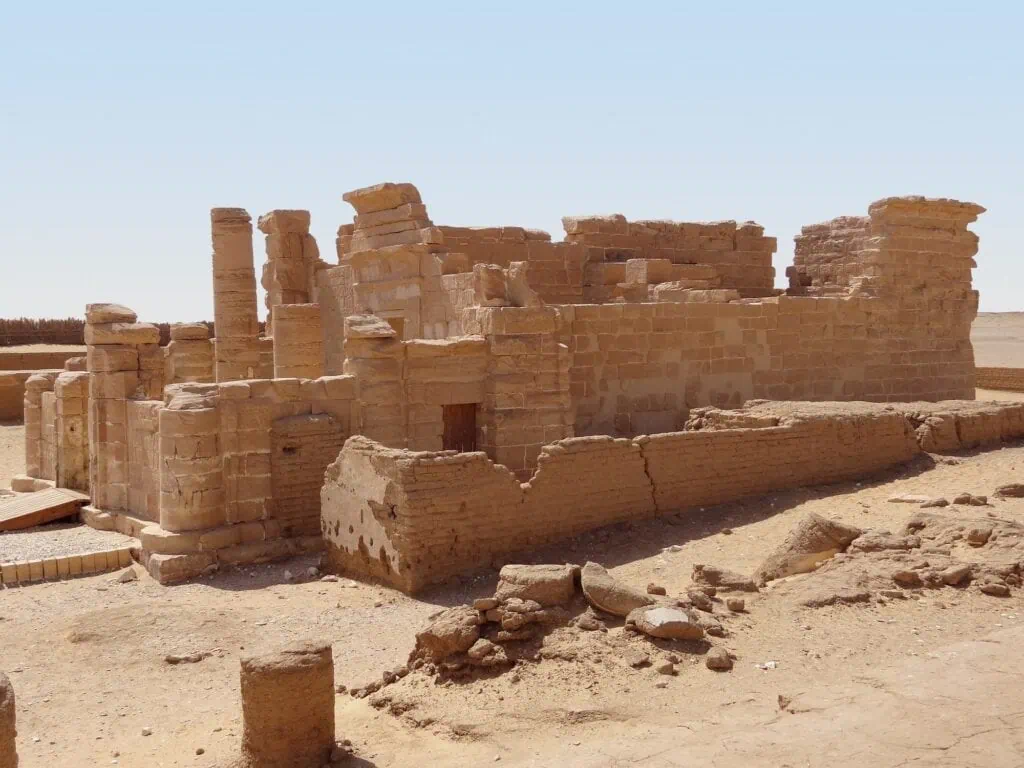
The temple demonstrates sophisticated Roman engineering adapted for desert conditions. Constructed entirely from local sandstone quarried from nearby formations, the structure follows traditional Egyptian temple layouts while incorporating distinct Roman architectural elements. The main sanctuary stretches approximately 20 meters (66 feet) in length, with walls rising to heights of nearly 8 meters (26 feet).
Sacred Spaces Within the Temple Complex
The entrance leads through a partially reconstructed porch that originally featured columns supporting a decorated roof. Inside, you’ll discover interconnected chambers that served specific religious functions. The main hall showcases beautifully preserved relief panels depicting the Theban triad of Amun, Mut, and Khonsu receiving offerings from Roman emperors dressed in traditional pharaonic regalia.
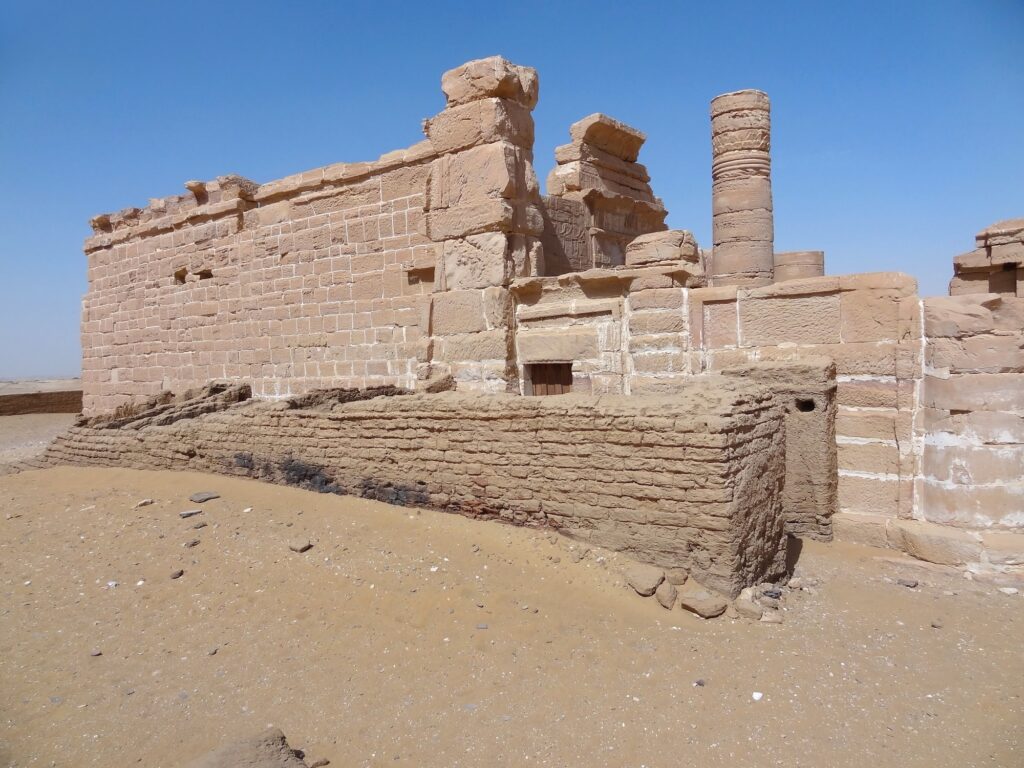
The sanctuary’s inner sanctum contains some of the finest astronomical ceiling decorations found in any Roman-period Egyptian temple. Painted scenes show the goddess Nut stretching across the heavens while constellations mark important agricultural seasons. These celestial maps helped priests determine optimal times for festivals and religious ceremonies.
Architectural Features That Set It Apart
The mud-brick enclosure wall surrounding the main temple reveals how Roman administrators managed religious complexes in remote oasis communities. Archaeological evidence suggests this wall also protected a processional way used during annual festivals. Unlike cult temples designed for daily worship, Deir El Hagar functioned primarily as a festival temple where communities gathered for seasonal celebrations.
Restoration work completed in recent decades has stabilized the structure while preserving original decorative elements. Modern techniques protect the sandstone from further erosion while maintaining the temple’s authentic appearance.
Discovery and Early Exploration
Sir Archibald Edmondstone first documented the temple during his diplomatic missions across North Africa in the early 1800s. His detailed sketches and notes provided Europe with its first accurate descriptions of this remote sanctuary. Bernadino Drovetti, the French consul-general, visited shortly afterward, adding his own observations about the site’s remarkable preservation.
The German explorer Gerhard Rohlfs left extensive graffiti on the temple walls during his crossing of the Western Desert in 1874. These inscriptions, while controversial by modern archaeological standards, now serve as historical records of early desert exploration. Other 19th-century visitors including Houghton and various members of diplomatic missions have left their marks throughout the chambers.
The Temple’s Long Sleep
For nearly 1,500 years, shifting desert sands gradually buried the entire complex. This natural burial proved to be the temple’s salvation, protecting delicate wall paintings and hieroglyphic inscriptions from wind erosion and human interference. When archaeologists began systematic excavation in the 20th century, they found chambers filled with sand but otherwise intact.
Religious Significance and Divine Purpose
The temple served the Dakhla Oasis community as a center for worshipping the Theban triad alongside local deities. Priests conducted rituals honoring Amun-Ra as the supreme solar deity, Mut as the divine mother, and Khonsu as the moon god who governed time and healing. The complex also included shrines dedicated to Seth, reflecting the region’s unique religious traditions.
Wall reliefs throughout the sanctuary depict Emperor Nero and later Domitian participating in traditional Egyptian religious ceremonies. These scenes show Roman rulers adopting pharaonic dress and performing ancient rituals, demonstrating their respect for local religious customs while asserting imperial authority.
Inscriptions identify several priests by name, including references to Jehuti and Nahem Tanit who served during the temple’s early decades. These individuals managed daily operations, maintained sacred objects, and organized seasonal festivals that brought together communities from across the oasis region.
Festival Celebrations and Community Gatherings
Archaeological evidence suggests the temple hosted major festivals coinciding with agricultural seasons crucial to oasis farming. During these events, processional routes connected the main sanctuary with temporary structures where pilgrims could participate in religious ceremonies. The “Place of Coming Home” inscription hints at the temple’s role in welcoming seasonal workers and traders.
The astronomical ceiling decorations include references to Osiris constellation patterns that helped determine optimal planting and harvest times. This practical application of religious symbolism demonstrates how temple priests served both spiritual and administrative functions in remote desert communities.
Visiting Deir El Hagar Today
The temple complex opens daily from 8:00 am (08:00) to 5:00 pm (17:00) during winter months, with slightly adjusted hours during summer heat. Entry fees are modest compared to Egypt’s major archaeological sites, typically around 60 EGP for international visitors. We recommend visiting during early morning or late afternoon when the desert light enhances the sandstone’s natural colors and makes photography particularly rewarding.
Planning Your Desert Journey
Most travelers reach Deir El Hagar as part of comprehensive journey through Egypt’s Western Desert that include multiple oasis destinations. The temple lies approximately 2 kilometers (1.2 miles) from the main Dakhla settlement, accessible via a well-maintained dirt road suitable for standard tour vehicles. Our experienced drivers know the optimal routes and can arrange visits that maximize your time at this remarkable site.
The nearest visitor center provides informative displays about Roman-era oasis life and the temple’s restoration process. English-language information panels explain the significance of major wall reliefs and architectural features. Clean restroom facilities and a small gift shop are available for visitor convenience.
What to Bring for Desert Exploration
Desert conditions require specific preparations regardless of season. Temperatures can reach 45°C (113°F) during summer months, while winter days might only reach 25°C (77°F) before dropping significantly after sunset. We always advise bringing sun protection, plenty of water, and comfortable walking shoes with good traction for sandy surfaces.
Comparing Deir El Hagar with Other Oasis Temples
While smaller than famous monuments like Karnak or Philae, this temple offers advantages that larger sites cannot match. The intimate scale allows detailed examination of individual relief panels and architectural elements. Visitors can spend quality time in each chamber without crowds interfering with photography or contemplation.
The temple’s festival function differs significantly from cult temples designed for daily worship. This specialized purpose resulted in unique architectural features and decorative programs not found elsewhere in Egypt. The processional elements and community gathering spaces reflect social patterns specific to oasis settlements during Roman administration.
Other Western Desert temples like those at Hibis or Bagawat served different religious and administrative functions. Each site contributes unique insights into how Roman officials managed diverse religious communities across Egypt’s remote regions. Deir El Hagar represents the most complete example of Roman festival temple architecture surviving anywhere in the country.
Integration with Modern Desert Tourism
Our desert expeditions often combine Deir El Hagar visits with explorations of nearby archaeological sites and natural formations. The Farafra Oasis and its dramatic White Desert landscapes provide stunning contrasts to the historical focus of Roman temples. These multi-day journeys allow travelers to experience both Egypt’s ancient heritage and its spectacular desert environments.
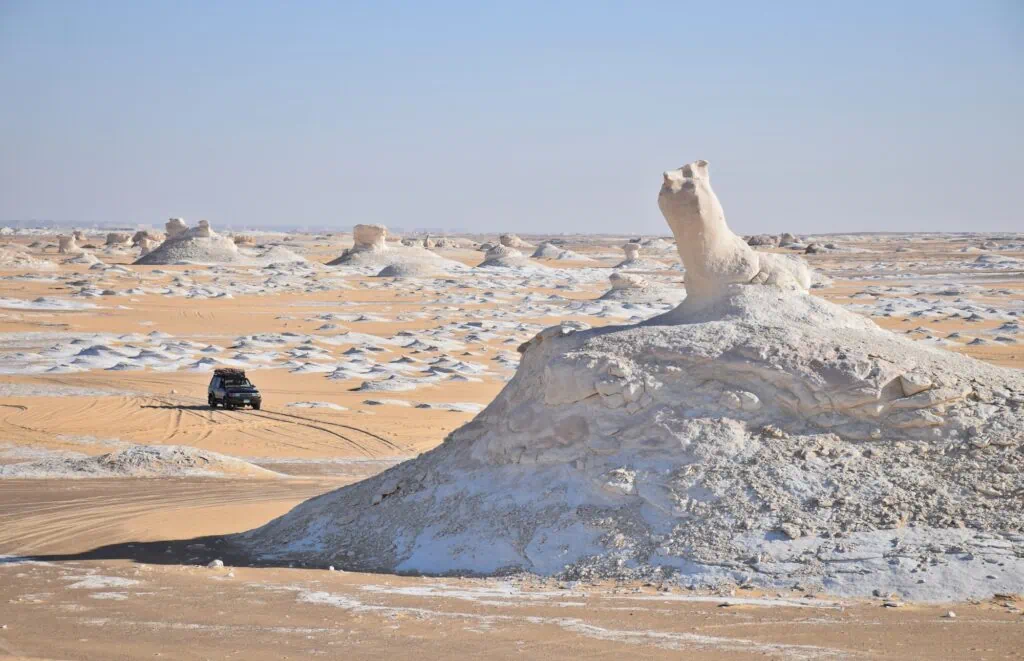
The temple works particularly well as part of Sahara crossing adventures that showcase the region’s diverse attractions. From Roman archaeology to crystalline rock formations, the Western Desert offers experiences impossible to find along the traditional Nile Valley tourist routes.
Preservation Efforts and Archaeological Research
Modern conservation techniques have stabilized the temple’s sandstone construction while preserving original decorative elements. International archaeological teams work alongside Egyptian specialists to document previously unexplored areas and protect the site from environmental threats. Climate-controlled storage facilities now house the most fragile artifacts discovered during recent excavations.
Research continues into the temple’s role within broader Roman administrative networks across North Africa. New findings regularly emerge about trade connections, religious practices, and community organization in ancient oasis settlements. These discoveries enhance our understanding of how Roman rule adapted to local conditions in Egypt’s remote desert regions.
Future Archaeological Potential
Extensive areas around the main temple remain unexplored, potentially containing additional structures, burial sites, or settlement remains. Ground-penetrating radar surveys have identified subsurface anomalies that may represent buried buildings or ceremonial features. Systematic excavation of these areas could significantly expand knowledge about Roman-era oasis communities.
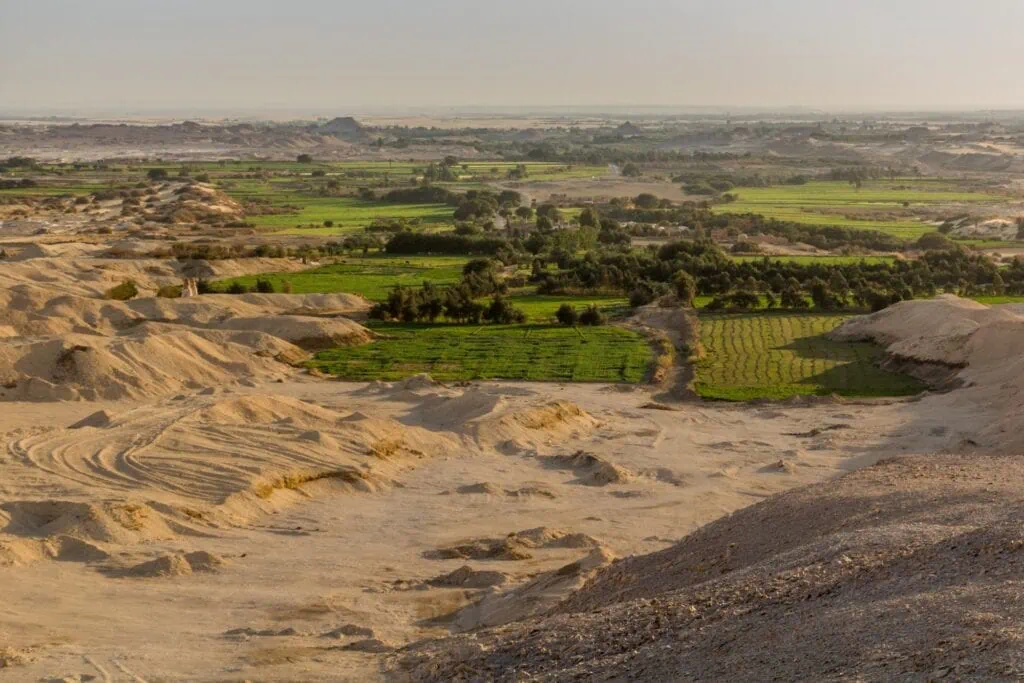
The site’s excellent preservation conditions suggest that future discoveries may include organic materials, textiles, or written documents that rarely survive in more humid archaeological contexts. Such finds would provide unprecedented insights into daily life at this remote desert sanctuary.
Uncover The Quiet Majesty Of Deir El Hagar Temple
Hidden within the Dakhla Oasis, Deir El Hagar Temple offers an intimate encounter with Egypt’s ancient past—far from the crowds, surrounded by desert stillness and timeless atmosphere. With Egypt Tours Plus, we seamlessly weave this remarkable site into a broader private journey, connecting remote oases with Egypt’s most iconic experiences.
You choose your travel dates, set your pace, and define the experiences and route that suit you best. Whether you’re drawn to off-the-beaten-path discoveries or a balanced itinerary with comfort throughout, we handle every detail with care—delivering a smooth, personalized journey shaped around you.
Frequently Asked Questions
Deir El Hagar Temple was constructed during the Roman period, beginning under Emperor Nero between 54 and 68 CE and continuing under later emperors including Domitian. Unlike older Pharaonic temples along the Nile, this sanctuary reflects Roman control of Egypt’s Western Desert oases during the 1st century CE. The temple’s inscriptions and reliefs still preserve the names of Roman rulers alongside traditional Egyptian gods. Its mixed Roman-Egyptian identity makes it one of Dakhla Oasis’s most historically distinctive monuments.
Deir El Hagar remained remarkably preserved because desert sand buried much of the complex for nearly 1,500 years, shielding its reliefs and painted surfaces from weathering and vandalism. Egypt’s hyper-arid climate in Dakhla Oasis also limited moisture damage that destroyed many ancient sites elsewhere. As excavations gradually uncovered the temple during the 19th and 20th centuries, archaeologists found surprisingly intact carvings and astronomical ceilings. Early morning visits reveal the surviving colors and relief details most clearly under softer desert light.
The temple primarily honored the Theban triad of Amun, Mut, and Khonsu, while also incorporating regional desert deities worshipped throughout Dakhla Oasis. This combination reflected how Roman-era Egyptians blended national religious traditions with local oasis beliefs. Relief scenes inside the sanctuary depict offerings to Amun alongside references to Seth and other protective desert-associated gods. The temple’s religious role was closely connected to agriculture, fertility, and maintaining stability in one of Egypt’s harshest desert environments.
Deir El Hagar is unusually compact by Egyptian temple standards, measuring only about 20 meters (66 feet) in length, which makes it far smaller than monumental complexes such as Karnak or Luxor Temple. Its modest scale allows visitors to study wall carvings, painted ceilings, and hieroglyphic inscriptions from very close range without overwhelming crowds. The intimate layout also reflects its role as a local oasis sanctuary rather than a major state pilgrimage center. Smaller size often means richer detail visibility for photographers and history enthusiasts.
The temple’s painted ceilings are notable for their astronomical imagery, including constellations, celestial symbols, and seasonal markers connected to ancient Egyptian religious calendars. Priests used these astronomical references to determine the timing of festivals, rituals, and agricultural cycles important for oasis communities dependent on limited water resources. Some painted pigments remain visible despite nearly 2,000 years of age because the dry desert climate slowed deterioration. Ceiling details are easiest to observe during guided visits when lighting conditions are carefully managed.
Early European explorers including Sir Archibald Edmondstone, Bernadino Drovetti, and German explorer Gerhard Rohlfs documented Deir El Hagar during 19th-century expeditions through Egypt’s Western Desert. Their travel accounts introduced the remote oasis temple to European scholars and helped stimulate later archaeological interest in Dakhla Oasis. Many of these explorers traveled under extremely difficult desert conditions long before paved roads and modern navigation existed. Their sketches and notes remain valuable historical records for understanding the temple before modern restoration work.
Independent visits to Deir El Hagar are possible, but most travelers choose guided tours because Dakhla Oasis is remote and public transportation options remain limited. The temple sits deep within Egypt’s Western Desert, several hours from major cities, and local guides provide valuable historical interpretation that significantly improves the experience. Guided excursions also simplify navigation between nearby archaeological sites and oasis villages. Travelers combining multiple Western Desert destinations usually benefit most from organized transportation and local logistical support.
Early morning and late afternoon are the best times to visit Deir El Hagar because temperatures are cooler and angled sunlight highlights the temple’s relief carvings and painted surfaces. Midday desert heat in Dakhla Oasis can exceed 35°C (95°F) even outside peak summer months, making extended exploration less comfortable. Photographers especially prefer the softer golden light shortly after sunrise or before sunset. Winter visits between October and March generally provide the most pleasant overall conditions for archaeological touring.
Deir El Hagar differs from major Nile Valley temples because it functioned primarily as a regional oasis festival and community sanctuary rather than a vast state-controlled religious center like Karnak. Its smaller size, Roman-period construction, and desert setting created a more intimate architectural style focused on local worship practices. Unlike heavily urbanized Nile monuments, the temple stands in an isolated desert landscape that closely resembles its ancient environment. Visitors often find the quieter atmosphere more immersive and easier to appreciate in detail.
Deir El Hagar offers basic visitor amenities including restrooms, shaded areas, informational displays, and limited services for travelers exploring Dakhla Oasis. Facilities are modest compared to major Egyptian tourist centers because the temple sits in a remote desert region with lower visitor numbers. Travelers should still bring sufficient water, snacks, and sun protection since nearby commercial services are limited. Organized tours generally include transportation, bottled water, and scheduled stops at additional oasis attractions during the same excursion.
Yes, Dakhla Oasis contains several important archaeological and natural attractions near Deir El Hagar, including Al Qasr Islamic village, the Roman burial site of Muzawaka, ancient mudbrick settlements, and natural hot springs. Many travelers combine these locations into one or two full sightseeing days across the oasis region. The diversity of sites allows visitors to experience Pharaonic, Roman, Islamic, and Bedouin history within a relatively compact area. Multi-site itineraries also make the long journey into the Western Desert more rewarding.
Visitors to Deir El Hagar should bring sun protection, comfortable walking shoes, bottled water, sunglasses, and lightweight clothing suitable for dry desert conditions. Temperatures in Dakhla Oasis can fluctuate significantly between daytime heat and cooler evenings, especially from November through February. A camera with extra battery storage is useful because the temple’s preserved reliefs and surrounding desert scenery are highly photogenic. Closed-toe footwear is strongly recommended because sandy terrain and uneven stone surfaces can become slippery or difficult to navigate.
Design Your Private Western Desert Adventure
Travel with your own expert guide, private 4×4 vehicle, and a route tailored to you.