

Crystal Mountain Egypt – A Fairytale Mountain that Sparkles
Crystal Mountain rises from Egypt’s western desert like a natural monument to geological time.
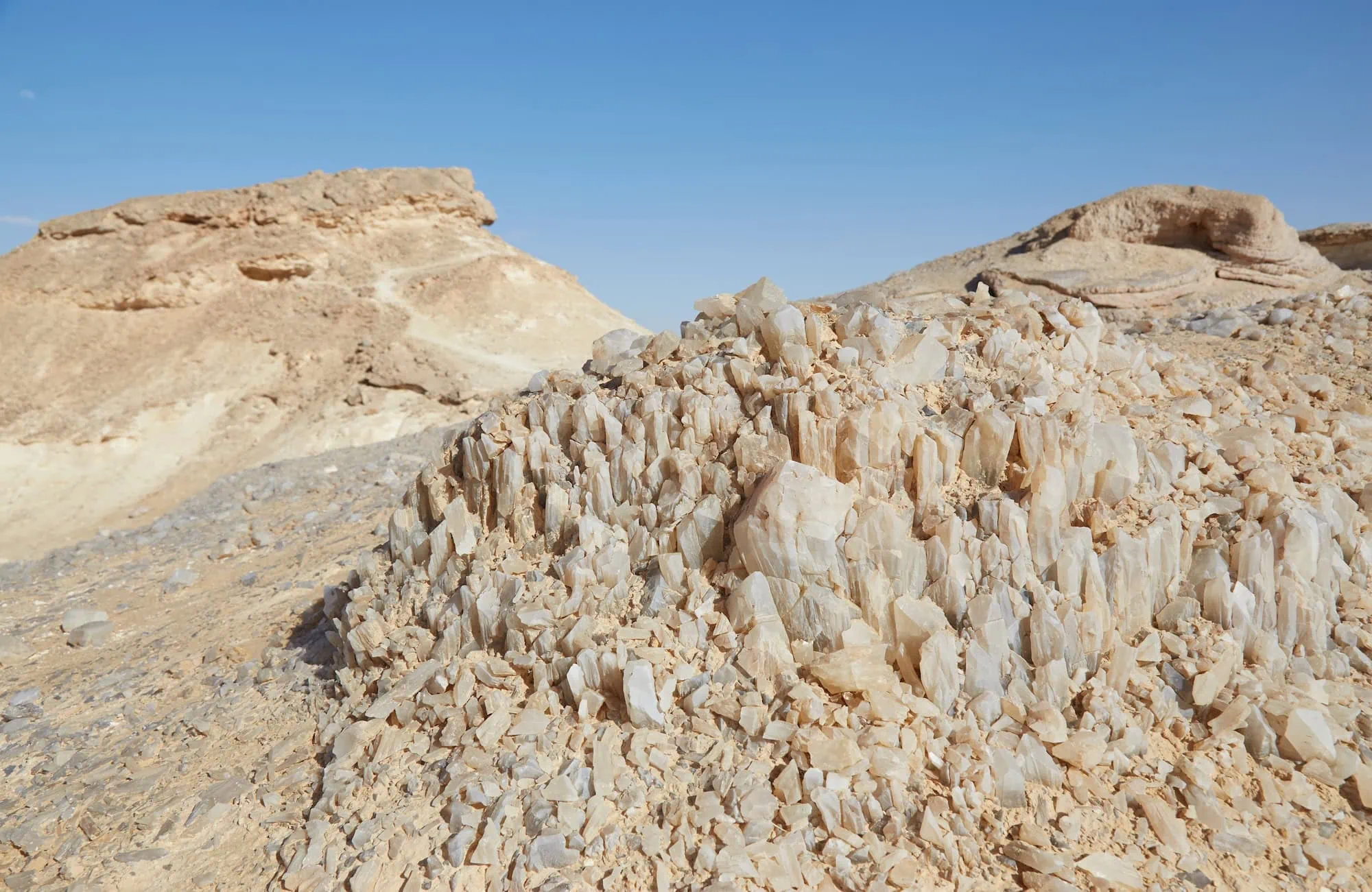
For millions of years, this unique formation has stood as testimony to Earth’s incredible capacity for creating beauty from pressure and time. Located between the Bahariya and Farafra oases, approximately 120 km (75 miles) from Farafra, this remarkable site draws visitors who seek to witness one of nature’s most extraordinary mineral displays. The mountain’s surface sparkles with embedded crystals that catch desert sunlight, creating an almost otherworldly appearance that has captivated travelers, geologists, and adventurers alike.
What makes this destination particularly fascinating is the ongoing scientific debate about its true composition and the remarkable story of how ancient seas transformed into today’s crystalline wonder.
Table of Contents
Geological Formation and Mineral Composition
The story begins deep beneath ancient seas during the Eocene and Cretaceous periods, roughly 40 to 65 million years ago.
Barite and Calcite Crystals
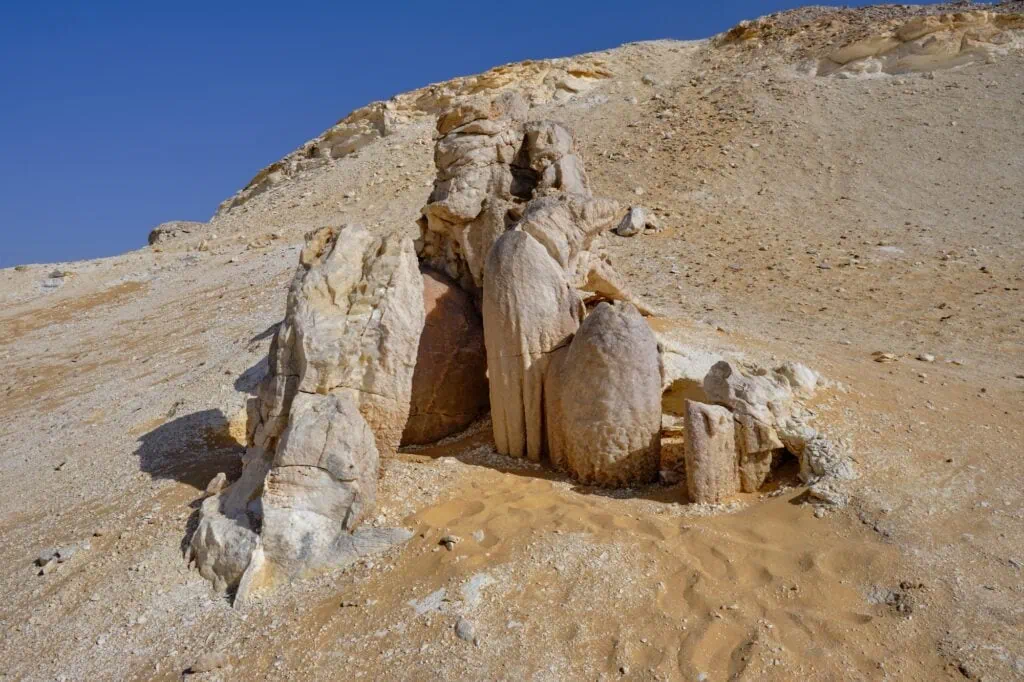
Contrary to popular belief, Crystal Mountain consists primarily of barite (BaSO4) and calcite (CaCO3), not quartz as commonly assumed. These minerals formed when aqueous volcanic solutions interacted with existing limestone formations, creating the spectacular crystal displays we see today. The barite crystals exhibit a hardness of 3.0 to 3.5 on the Mohs scale, making them relatively soft compared to quartz.
The calcium carbonate components developed through complex chemical processes involving ancient seawater and sedimentary deposits. During the Maastrichtian period, this area lay beneath tropical seas where marine organisms contributed to massive chalk formations.
Paleokarst Terrain Development
The mountain’s foundation rests on paleokarst terrain from the Khoumann formation. This geological structure resulted from collapsed breccia and ancient cave systems that existed when Egypt experienced dramatically different climatic conditions. During the Oligocene period, monsoon-influenced tropical rainforests covered much of what is now the Western Desert.
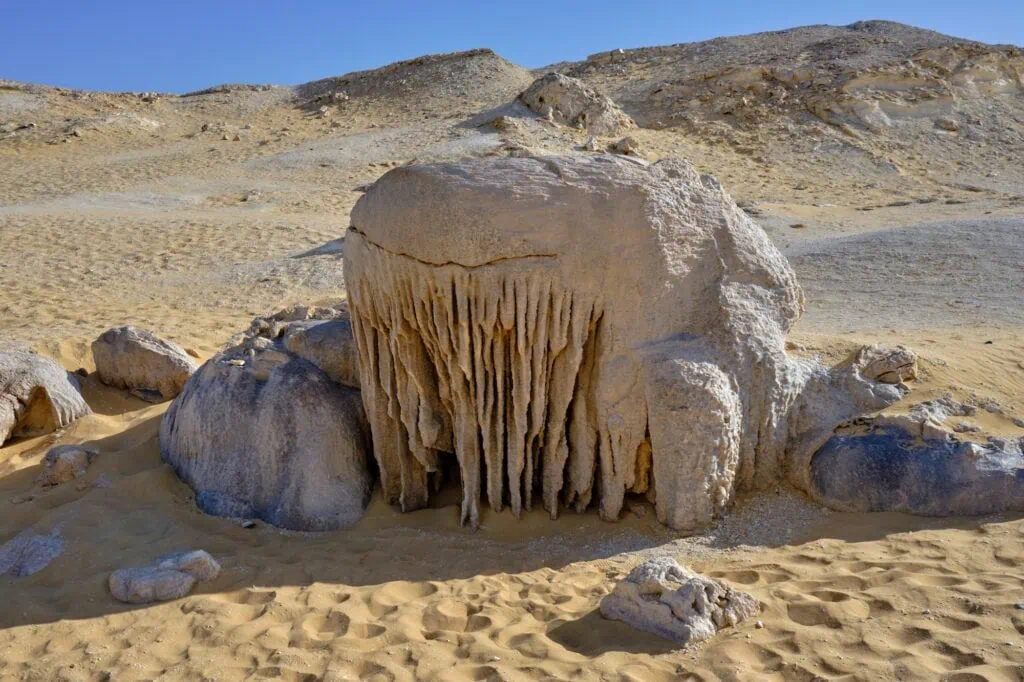
These paleoclimatic conditions created perfect environments for mineral concentration and crystal growth within limestone matrices.
Geographic Context Within Western Desert
Crystal Mountain occupies a strategic position along the ancient trade routes connecting Egypt’s western oases.
Situated at coordinates 27°39′43″N 28°25′45″E, the formation serves as a natural landmark between the Bahariya Oasis and Farafra Oasis. The surrounding White Desert landscape provides dramatic contrast, with its chalk formations and wind-sculpted rocks creating an alien-like environment. This location places Crystal Mountain approximately 160 km (100 miles) southwest of the Bahariya Oasis, making it accessible during multi-day desert expeditions.
The proximity to both oases historically made this area a stopping point for caravan routes. Modern travelers often visit as part of comprehensive Tours to Egypt’s Western Desert that include the White Desert National Park, Black Desert, and various hot springs scattered throughout the region.
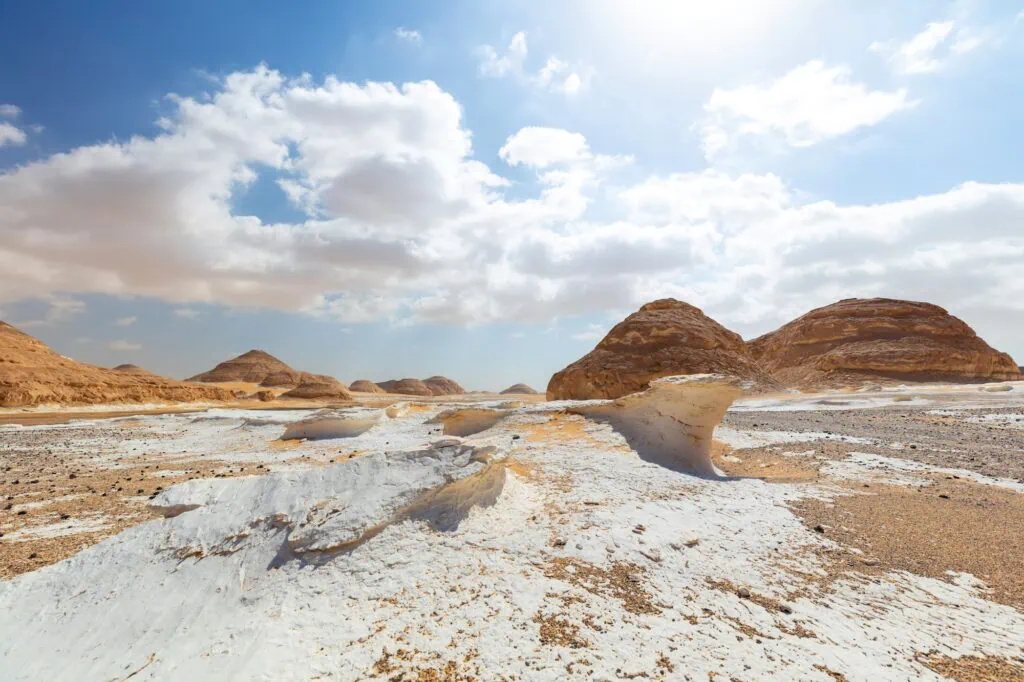
The elevation provides panoramic views across the desert floor, where visitors can observe the transition from crystalline formations to the distinctive white chalk landscapes that define this unique ecosystem.
Crystal Types and Mineral Diversity
Beyond the dominant barite and calcite formations, Crystal Mountain hosts an impressive variety of secondary minerals.
Desert Roses and Formations
Local formations include desert roses – distinctive crystalline structures that develop through evaporation processes in arid environments. These formations create intricate patterns resembling flower petals, though they consist entirely of mineral deposits rather than organic material.
Stalagmites and stalactites from ancient cave systems remain visible throughout the area. These formations preserve evidence of past water activity and provide insight into the region’s hydrological history during wetter climatic periods.
Metamorphic Rock Integration
The crystal formations integrate with metamorphic limestone bedrock that underwent significant pressure and heat transformation. This process created the oblong and rectangular crystal shapes that characterize the mountain’s appearance. Some formations display combinations of multiple mineral types within single crystalline structures.
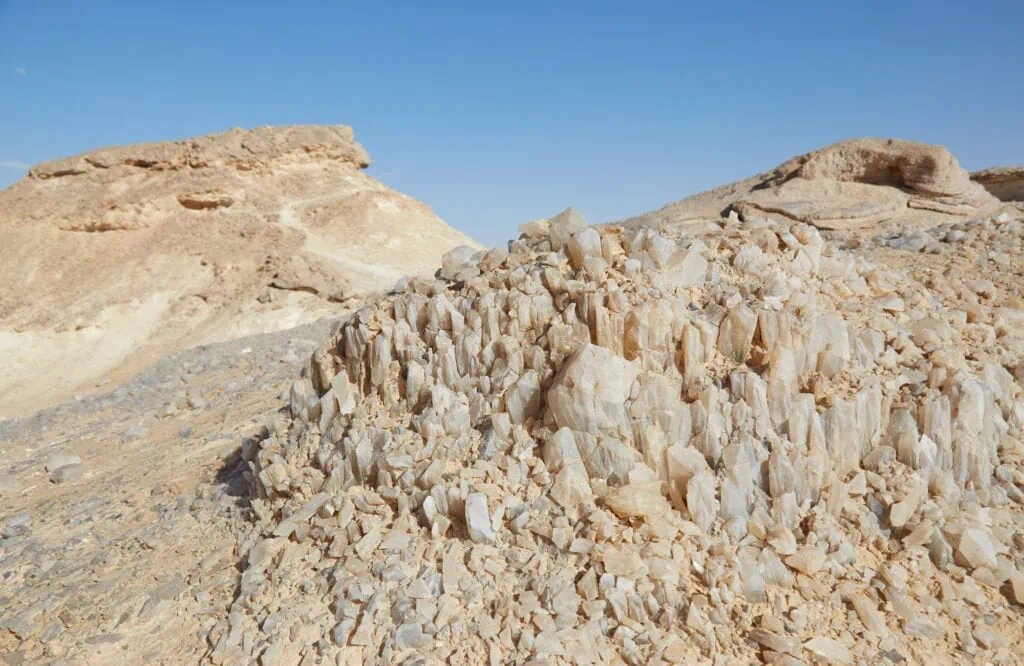
The geological diversity extends beyond visible surface features. Underground, mineral veins continue through rock layers, suggesting extensive crystal networks beneath the exposed formations.
Conservation Status and Environmental Protection
Since 2008, Crystal Mountain has operated under protected status as part of Egypt’s natural heritage preservation system.
The Ministry of Environment designated the area as a protected site following concerns about tourist collection of crystal specimens. Visitors frequently attempted to remove crystals as souvenirs, threatening the geological integrity of formations that required millions of years to develop. Current regulations prohibit any removal or damage to mineral formations.
We strongly encourage all visitors to observe these conservation guidelines. The crystals remain fragile despite their ancient origins, and even small impacts can cause irreversible damage. Photography provides the best way to capture memories while preserving this natural wonder for future generations.
Local guides play crucial roles in conservation efforts by educating visitors about the site’s geological significance and proper viewing techniques. The protected status extends beyond the immediate crystal formations to include surrounding desert ecosystems that support specialized plant and animal communities adapted to extreme arid conditions.
Visiting Crystal Mountain: Practical Information
Most visitors access Crystal Mountain as part of organized desert expeditions departing from Cairo or Bahariya Oasis.
The journey requires specialized desert vehicles due to challenging terrain and remote location. Standard passenger cars cannot navigate the sandy tracks and rocky areas surrounding the formation. Professional tour operators provide essential navigation, safety equipment, and geological expertise that enhances the overall experience.
Optimal Viewing Conditions
Early morning hours offer the best lighting conditions for observing crystal formations. Desert temperatures remain more comfortable before 10:00 am (10:00), and softer sunlight creates ideal conditions for photography without harsh shadows obscuring mineral details.
Late afternoon visits provide equally spectacular experiences as setting sun angles highlight different crystal facets. Many visitors describe sunset viewing as particularly magical when golden light interacts with sparkling mineral surfaces.
Duration and Physical Requirements
Plan approximately 45 minutes to one hour for comprehensive exploration of accessible areas. The site involves moderate climbing over rocky terrain, requiring reasonable physical fitness and appropriate footwear. Sturdy hiking boots provide necessary ankle support and protection against sharp rock edges.
Climbing to higher vantage points rewards visitors with panoramic views across the White Desert landscape. These elevated positions offer unique photographic opportunities and broader perspective on the geological relationships between different formations.
Scientific Significance and Research Value
Crystal Mountain contributes valuable data to understanding regional geological processes and paleoclimatic reconstructions.
Research teams study mineral compositions to reconstruct ancient environmental conditions and trace geological evolution across millions of years. The site provides insight into how desert regions developed from former marine environments through continental drift and climate change.
Current scientific investigations focus on understanding the specific conditions that created such concentrated crystal formations. Researchers examine relationships between volcanic activity, sedimentary deposits, and mineral precipitation to develop comprehensive models of geological development in arid regions.
The formation serves as a natural laboratory for studying crystallization processes under extreme conditions. These studies contribute to broader understanding of mineral formation mechanisms and their applications in various scientific fields.
International geological surveys regularly reference Crystal Mountain when studying similar formations worldwide. The site’s well-preserved state and accessibility make it valuable for educational purposes and ongoing research programs examining desert geology.
Travel Integration with Western Desert
Crystal Mountain works exceptionally well as part of comprehensive Western Desert itineraries that showcase Egypt’s diverse geological landscapes.
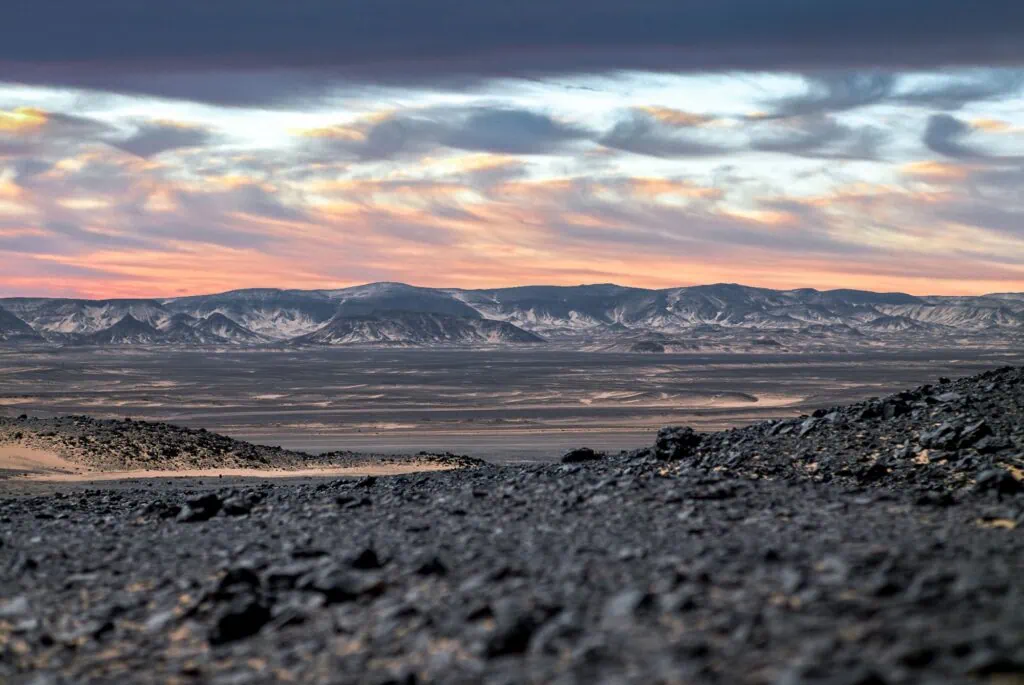
Most visitors combine the crystal formation with White Desert camping experiences, creating multi-day adventures that reveal the region’s full spectacular range. The Black Desert offers contrasting volcanic landscapes, while nearby hot springs provide relaxation opportunities after long days of desert exploration.
Farafra Oasis serves as the primary base for Crystal Mountain expeditions. This charming settlement provides accommodation options, local guides, and essential supplies for desert travel. The oasis culture offers insight into traditional desert life and adaptation strategies developed over centuries.
We recommend planning three to four days minimum for adequate exploration of Crystal Mountain and surrounding Western Desert attractions. This timeframe allows proper acclimatization to desert conditions while providing sufficient time to appreciate each destination’s unique characteristics without rushing.
Our expert guides possess decades of experience navigating Western Desert terrain and understanding geological formations throughout the region. We provide modern 4×4 vehicles equipped with safety equipment, navigation systems, and communication devices essential for safe desert travel. Our personalized approach ensures each group receives detailed explanations about geological processes, local ecology, and cultural significance of sites visited.
See The Desert Sparkle At Crystal Mountain
Crystal Mountain stands out as one of Egypt’s most unique natural wonders—where shimmering formations rise from the desert in a landscape that feels almost otherworldly. With EgyptToursPlus, we seamlessly include this striking stop in a private journey that blends Sahara exploration with Egypt’s most iconic experiences.
You choose your travel dates, your pace, and the experiences that shape your route. From desert adventures to cultural highlights and comfortable stays, we tailor every detail around your preferences—ensuring a smooth, refined, and deeply personal journey from start to finish.
Frequently Asked Questions
Crystal Mountain lies approximately 370 km (230 miles) southwest of Cairo in Egypt’s Western Desert, with most journeys taking 6 to 7 hours by road through Bahariya Oasis. The route typically combines paved highway driving with off-road desert travel inside White Desert National Park. Because of the distance and remote terrain, most travelers visit as part of a 2-day or 3-day desert safari rather than a same-day excursion. Early departures from Cairo help avoid midday desert heat and maximize sightseeing time.
Crystal Mountain primarily contains barite and calcite crystal formations, although many visitors mistakenly believe the site is composed of quartz. The exposed mineral veins glitter intensely under desert sunlight, creating the mountain’s famous translucent appearance. Desert rose formations and fossil-rich limestone are also visible throughout the surrounding area, reflecting millions of years of geological activity during the Eocene epoch roughly 34 to 56 million years ago. Morning and late afternoon light produce the most dramatic crystal reflections for photography.
No, removing crystals or mineral specimens from Crystal Mountain is illegal because the site has been protected under Egyptian environmental regulations since 2008. Authorities classify the area as part of the fragile White Desert ecosystem, and souvenir collecting has historically damaged exposed formations. Visitors are encouraged to photograph the crystals rather than touch or remove them. Responsible tourism helps preserve the mountain’s unusual geology for future travelers and ongoing scientific study within Egypt’s Western Desert conservation zones.
October through April provides the best conditions for visiting Crystal Mountain, with daytime temperatures typically ranging between 20°C and 28°C (68°F to 82°F). Summer temperatures in the Western Desert regularly exceed 40°C (104°F), especially between June and August, making outdoor exploration physically demanding and potentially unsafe during midday hours. Winter mornings can still feel cold before sunrise, particularly on overnight camping trips. Most experienced guides schedule hikes and photography stops during cooler morning or sunset periods.
Most visitors spend between 45 minutes and one hour exploring Crystal Mountain, including time for short climbs, photography, and geological observation. The site itself is relatively compact compared to nearby White Desert formations, but uneven rocky surfaces slow movement in some areas. Travelers usually combine the stop with Black Desert, Aqabat Valley, or White Desert National Park during the same safari itinerary. Arriving earlier in the day often provides quieter conditions before larger convoy groups reach the area.
Visitors do not need technical climbing equipment for Crystal Mountain, but sturdy hiking shoes, sun protection, and adequate drinking water are essential for safe desert travel. The terrain includes loose rocks, sharp mineral surfaces, and sandy sections that can become slippery or unstable underfoot. Most organized desert tours provide first-aid kits, GPS navigation, and emergency communication systems because mobile signal coverage remains inconsistent throughout the Western Desert. Lightweight long sleeves and sunglasses also improve comfort during windy conditions.
No, standard passenger vehicles are generally unsuitable for reaching Crystal Mountain because the final approach involves deep sand tracks and unpaved desert terrain inside protected areas. Most visitors travel in 4×4 vehicles such as Toyota Land Cruisers operated by experienced desert drivers familiar with Western Desert navigation routes. Sudden soft sand sections and isolated conditions make self-driving risky without proper equipment and local expertise. Guided convoys also provide additional safety in remote regions with limited infrastructure.
Yes, Crystal Mountain can be suitable for children, particularly those over age 6 or 7 who are comfortable walking on uneven rocky terrain under desert conditions. The site involves light climbing, exposed edges, and strong sun exposure rather than technical hiking, so close adult supervision remains important throughout the visit. Families often combine Crystal Mountain with sandboarding, White Desert camping, and hot spring stops during multi-day safaris. Bringing extra water, hats, and snacks significantly improves comfort for younger travelers.
Crystal Mountain is known for exposed mineral and crystal formations, while the nearby White Desert features massive chalk rock sculptures shaped by wind erosion over millions of years. Crystal Mountain appears darker and more compact, with glittering barite and calcite veins embedded in rocky ridges. White Desert National Park, by contrast, contains bright white limestone formations resembling mushrooms, animals, and icebergs across open desert plains. Most Western Desert itineraries combine both sites because they are located within the same broader region.
Crystal Mountain formed when mineral-rich volcanic solutions interacted with ancient limestone deposits during the Eocene period, gradually creating concentrated barite and calcite crystal formations over millions of years. Geological uplift and desert erosion later exposed these mineral veins above ground, producing the sparkling ridge visible today in Egypt’s Western Desert. Scientists consider the site unusual because so many crystals remain naturally exposed on the surface rather than buried underground. Wind erosion continues slowly reshaping the formation even now.
Guided tours are not legally mandatory for Crystal Mountain, but they are strongly recommended because the site sits deep within Egypt’s remote Western Desert with limited signage, infrastructure, and emergency support. Professional desert guides provide navigation expertise, safety planning, vehicle recovery equipment, and historical context about nearby formations such as the Black Desert and White Desert National Park. Independent travelers frequently underestimate desert distances and terrain conditions. Multi-stop guided safaris also simplify permits, meals, and overnight camping logistics.
Crystal Mountain is commonly visited alongside White Desert National Park, the Black Desert, Farafra Oasis, and natural desert springs such as Bir Sitta and Ain Khadra. The Black Desert features volcanic hills covered in dark basalt rock, while White Desert contains surreal chalk formations shaped by centuries of wind erosion. Farafra Oasis provides basic accommodations and access to traditional oasis culture roughly 50 km away. Most Western Desert itineraries combine several of these locations during 2-day or 3-day overland expeditions.
Design Your Private Western Desert Adventure
Travel with your own expert guide, private 4×4 vehicle, and a route tailored to you.