

Qasr Al-Azraq – The Blue Fortress that Outlived other Desert Castles
Standing strong in Jordan’s eastern desert, Qasr Al-Azraq tells centuries of history through its distinctive black basalt walls.
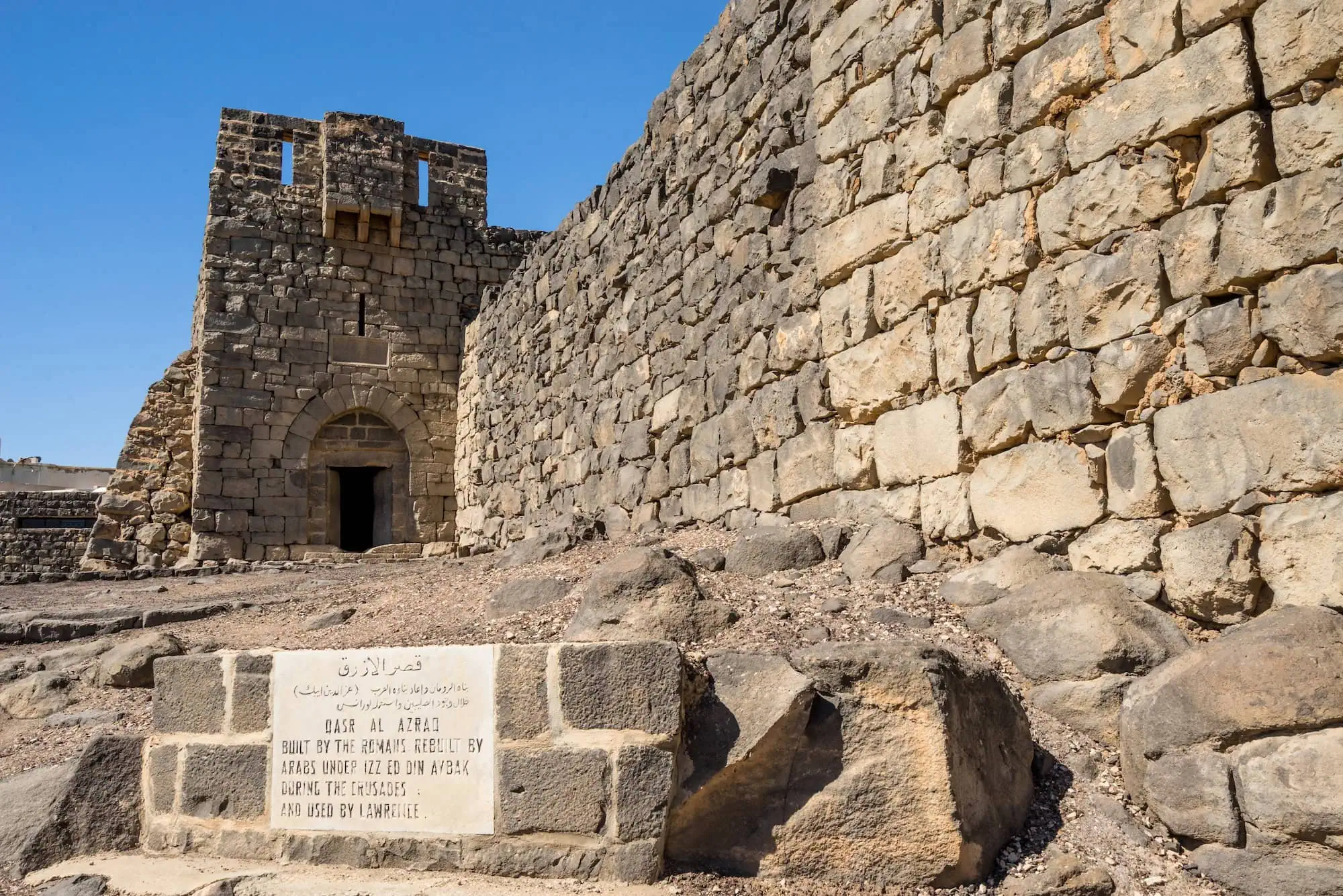
Built by the Romans in the 3rd century AD, this remarkable fortress has witnessed the rise and fall of empires. From Byzantine renovations to Ayyubid reconstructions in 1237, each era has left its mark on the structure. The castle later gained international fame as T.E. Lawrence’s winter headquarters during the Arab Revolt (1917–1918), where he wrote parts of Seven Pillars of Wisdom.
Located just 80 kilometers east of Amman, Qasr Al-Azraq offers visitors a unique connection to both ancient military strategy and modern Middle Eastern history.
This iconic desert fortress is often included in our Best Egypt and Jordan tours, where you can experience Jordan’s desert castles alongside world-famous highlights like Petra, Wadi Rum, and the Nile.
We’ll guide you through everything you need to know about visiting this extraordinary site.
Table of Contents
Historical Significance Through the Centuries
Qasr Al-Azraq’s strategic importance stems from its location at the only permanent water source in a vast desert region spanning 12,000 square kilometers. The Romans under Emperor Septimius Severus (193-211 AD) recognized this tactical advantage and established the original fort to control the Wadi Sirhan trade route connecting Jordan to Saudi Arabia.
Roman Foundation and Byzantine Expansion
The fortress began as a modest Roman military outpost designed to protect desert caravans and monitor tribal movements. Archaeological evidence, including Diocletian inscriptions, confirms continuous Roman occupation through the 4th century.
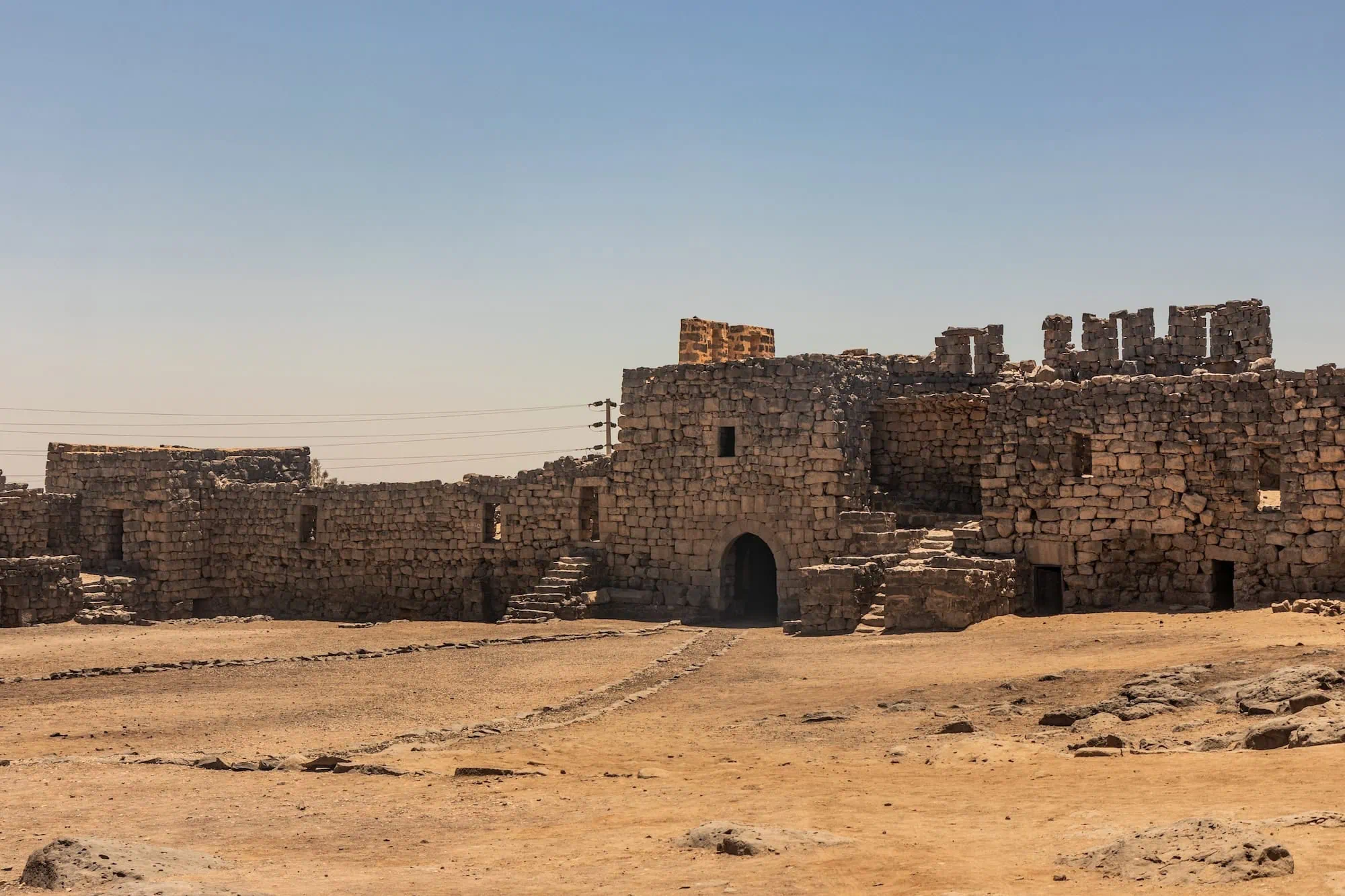
During Byzantine rule, administrators expanded the structure significantly, adding defensive walls and improving living quarters for garrison troops.
Ayyubid Reconstruction in 1237
The most dramatic transformation occurred under the Ayyubids in 1237 AD, who essentially rebuilt the entire complex using local black basalt stone. This reconstruction created the fortress we see today, with its distinctive square design measuring 80 meters on each side.
The central mosque, built during this period, demonstrates the Islamic influence on the site’s architectural evolution.
Ottoman Military Use
Turkish forces utilized Qasr Al-Azraq as a desert patrol base for centuries, maintaining its military function well into the early 20th century. The Ottomans appreciated the same strategic advantages that attracted earlier rulers: water access, defensive positioning, and control over regional trade routes.
Lawrence of Arabia’s Desert Headquarters
T.E. Lawrence transformed this ancient fortress into the nerve center of the Arab Revolt during the harsh winter of 1917-1918.
Lawrence chose Qasr Al-Azraq specifically because its massive stone walls provided protection from desert winds while its central location allowed easy communication with Arab tribal leaders across the region. He established his headquarters in the upper rooms, coordinating military operations that would ultimately help defeat Ottoman forces in the region.
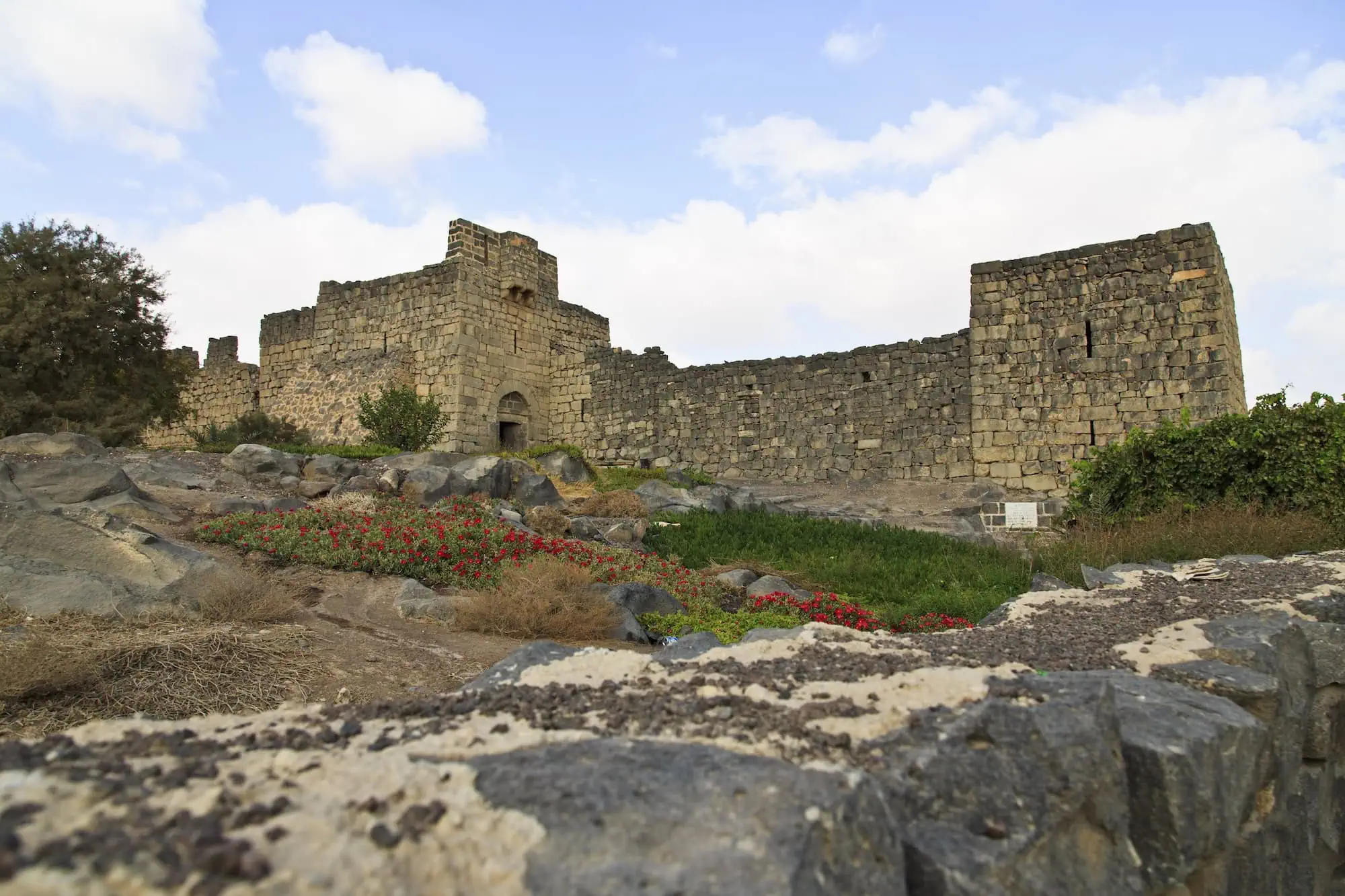
The British officer found the castle’s isolation perfect for strategic planning, writing extensively about the “haunting silence” that surrounded the fortress at night.
His personal accounts describe the practical challenges of desert warfare, including the constant battle against sand infiltration and the difficulty of maintaining communication lines. Lawrence’s time at Azraq proved pivotal in building the tribal alliances necessary for capturing Damascus and other major Ottoman strongholds.
Architectural Marvel of Black Basalt Construction
The castle’s most striking feature remains its construction entirely from local black basalt stone, creating a dramatic contrast with Jordan’s typically golden desert landscape.
Massive Stone Engineering
Each wall rises from foundations built with enormous basalt blocks, some weighing several tons. The corner towers demonstrate sophisticated engineering techniques, with interlocking stones that have withstood earthquakes and centuries of desert conditions without mortar.
The main gate features the famous massive stone door, balanced so perfectly that visitors can still move it with gentle pressure despite weighing hundreds of kilograms.
Central Courtyard Design
The fortress follows a classic square layout with a central courtyard surrounded by rooms on multiple levels. This design maximized defensive capabilities while providing shelter for horses, supplies, and garrison members.
The upper levels offered commanding views across the desert, essential for spotting approaching enemies or friendly forces.
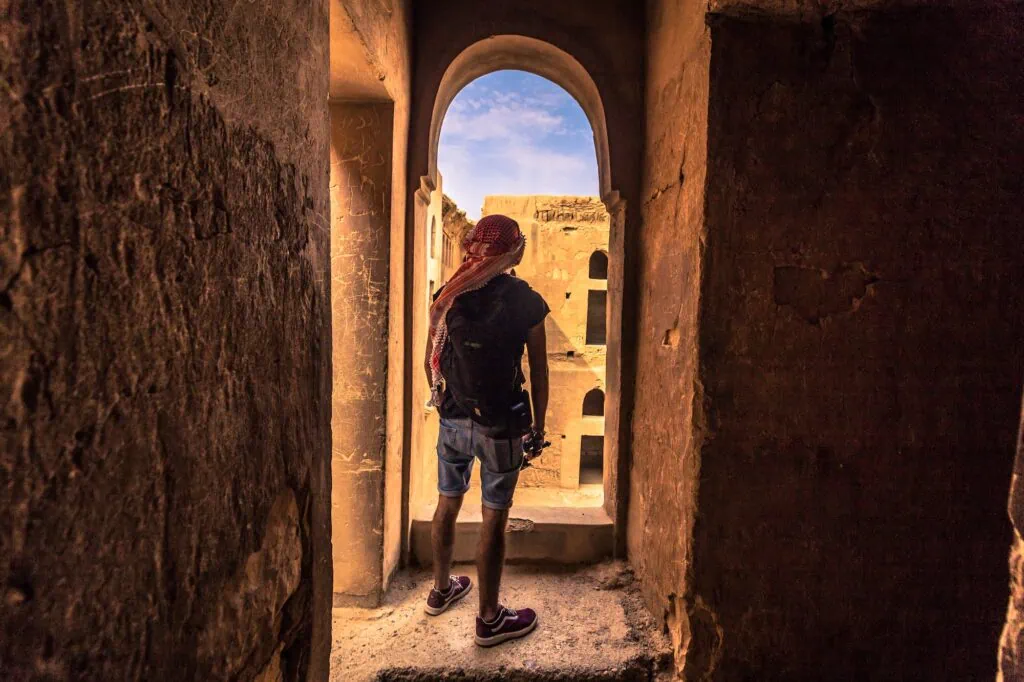
Unique Architectural Details
Unlike other desert castles built primarily from limestone, Qasr Al-Azraq’s basalt construction required different building techniques. The darker stone absorbs more heat during the day but provides better insulation during cold desert nights.
Carved stone drainage systems still visible today demonstrate the builders’ understanding of desert climate challenges.
The central mosque features a mihrab pointing toward Mecca, with decorative elements that blend Islamic architectural traditions with practical fortress requirements. Stone window frames include intricate geometric patterns that allowed light while maintaining defensive strength.
Planning Your Visit to Qasr Al-Azraq
Reaching this desert fortress requires some planning, but the journey offers insights into Jordan’s diverse landscapes and regional character.
Getting There from Amman
The drive from Amman takes approximately 1.5 hours along well-maintained highways heading east toward the Iraqi border. Most visitors combine Qasr Al-Azraq with other Desert Castles like Qasr Al-Kharana and Qusayr Amra, creating a full day of historical exploration.
Private transportation provides flexibility for photography and extended exploration time at each site.
Public transportation options exist but require multiple connections through Azraq town center. Many travelers prefer joining organized tours that include professional guides familiar with each castle’s unique historical context.
Entry Information and Costs
The site charges a modest entrance fee of 1 Jordanian Dinar, though visitors holding Jordan Passes receive complimentary access. Opening hours run from 8:00 am (08:00) to 4:00 pm (16:00) during winter months, extending to 5:00 pm (17:00) in summer.
The ticket booth provides basic information brochures in multiple languages, including detailed maps of the complex.
Security staff at the entrance can provide helpful context about current restoration projects and recommended walking routes through the castle. Photography remains unrestricted throughout the site, though tripods may require special permission for professional shoots.
What to Expect During Your Tour
The self-guided exploration typically requires 45-60 minutes for most visitors, though history enthusiasts often spend considerably longer examining architectural details. The castle’s compact size means all major features remain easily accessible, including the famous movable stone door, Lawrence’s former quarters, and the central mosque.
Walking surfaces consist primarily of original stone paving, so sturdy footwear provides better stability and comfort. The structure offers limited shade, making early morning or late afternoon visits more comfortable during summer months.
Winter visits can be quite pleasant, with crisp desert air and excellent visibility for photography.
Desert Castles Trail Experience
Qasr Al-Azraq anchors Jordan’s famous Desert Castles trail, offering visitors the chance to explore multiple historical sites in a single day journey from Amman.
The three main castles – Qasr Al-Azraq, Qasr Al-Kharana, and Qusayr Amra – each represent different periods of Middle Eastern history and architectural approaches. This circuit provides comprehensive insight into how successive civilizations adapted desert fortress design to meet changing military and administrative needs.
Most organized tours allocate 2-3 hours for the complete circuit, including travel time between sites.
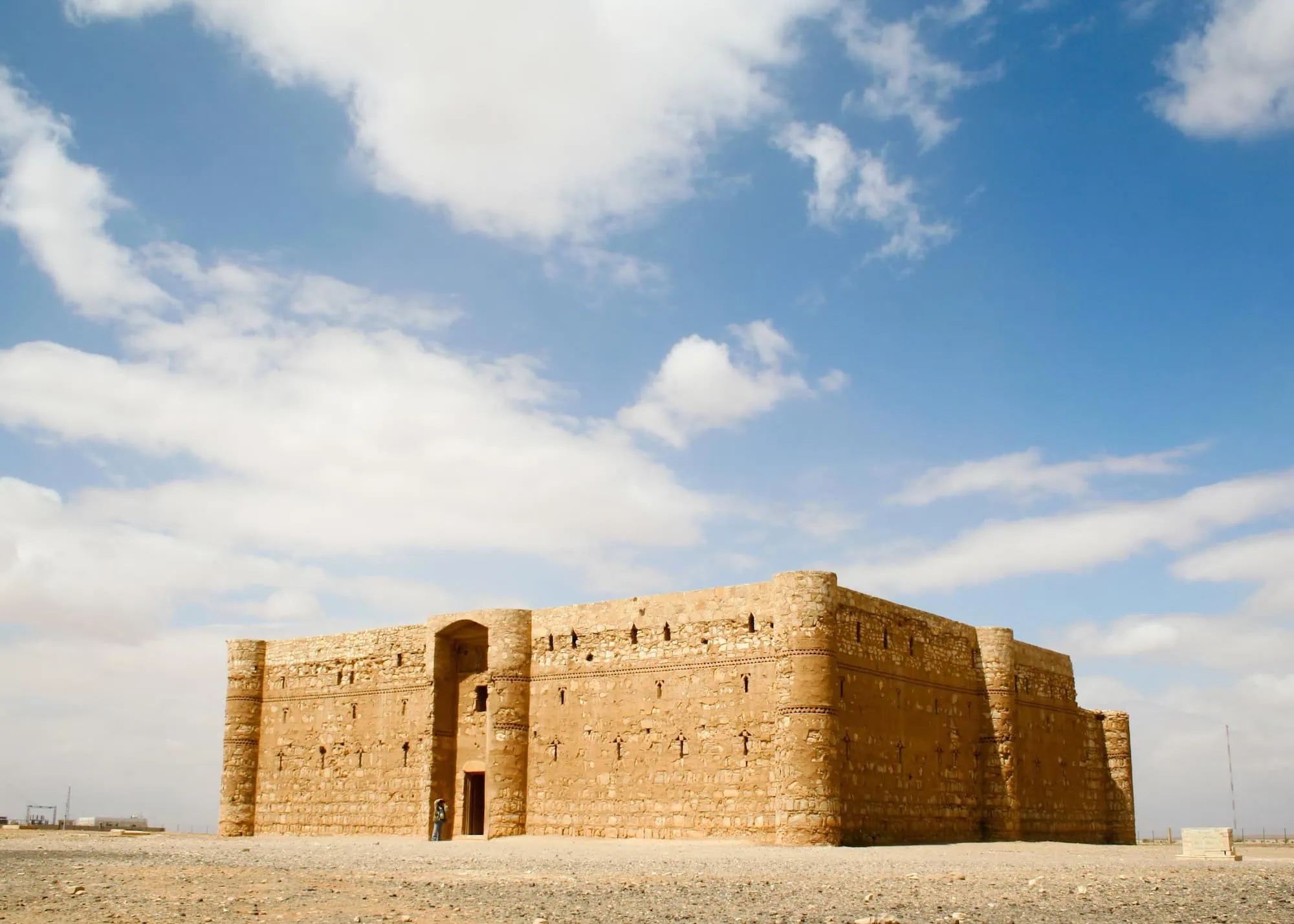
Qasr Al-Azraq typically serves as either the first or final stop, depending on tour routing preferences. Its Lawrence of Arabia connection often generates the most visitor interest, while its architectural uniqueness provides striking contrast with the other limestone castles.
Professional guides can explain the strategic relationships between these desert fortresses and their role in controlling ancient trade routes.
We recommend starting early to avoid midday heat and to take advantage of optimal lighting conditions for photography. The desert setting provides exceptional opportunities for capturing the interplay between ancient architecture and Jordan’s stunning natural landscapes.
The Azraq Oasis Community
Modern Azraq town, located near the castle, offers visitors glimpse into contemporary Jordanian life in this historically strategic location.
The community maintains its connection to the area’s water resources, though modern development has significantly reduced the oasis’s original size. Local residents often work in tourism-related services or in nearby industrial facilities, creating an interesting blend of ancient heritage and modern economic realities.
Several modest restaurants serve traditional Jordanian meals, while small shops offer basic supplies for travelers. The town’s character reflects its position along major transportation routes, with influences from various cultural traditions that have passed through this desert crossroads over centuries.
Frequently Asked Questions
Allow 45-60 minutes for a thorough self-guided tour of the castle complex, plus additional time for photography.
Yes, the castle is easily explored independently with clear pathways and informational plaques.
Early morning (8:00-10:00 am) or late afternoon (2:00-4:00 pm) offer comfortable temperatures and excellent lighting.
The main courtyard and ground floor remain accessible, though upper levels require climbing original stone stairs.
Its black basalt construction makes it visually distinct, while its Lawrence of Arabia connection sets it apart historically.
Yes, visitors can carefully push the massive basalt door, which remains perfectly balanced after centuries.
Basic restroom facilities and a small visitor information center are available at the site.
Personal photography is unrestricted, though commercial shoots may require advance permission from site administrators.
Entry fee is 1 Jordanian Dinar for individual tickets, while Jordan Pass holders receive complimentary access.
Comfortable walking shoes, sun protection, water, and a camera are essential for your visit.
Basic guesthouses operate in Azraq town, though most visitors prefer day trips from Amman.
Design Your Custom Tour
Explore Egypt and Jordan your way by selecting only the attractions you want to visit