

Qasr Amra – Possibly the Most Fascinating of Jordan’s Desert Castles
The faded splendor of an 8th-century desert palace holds secrets that challenge everything we thought we knew about early Islamic art.
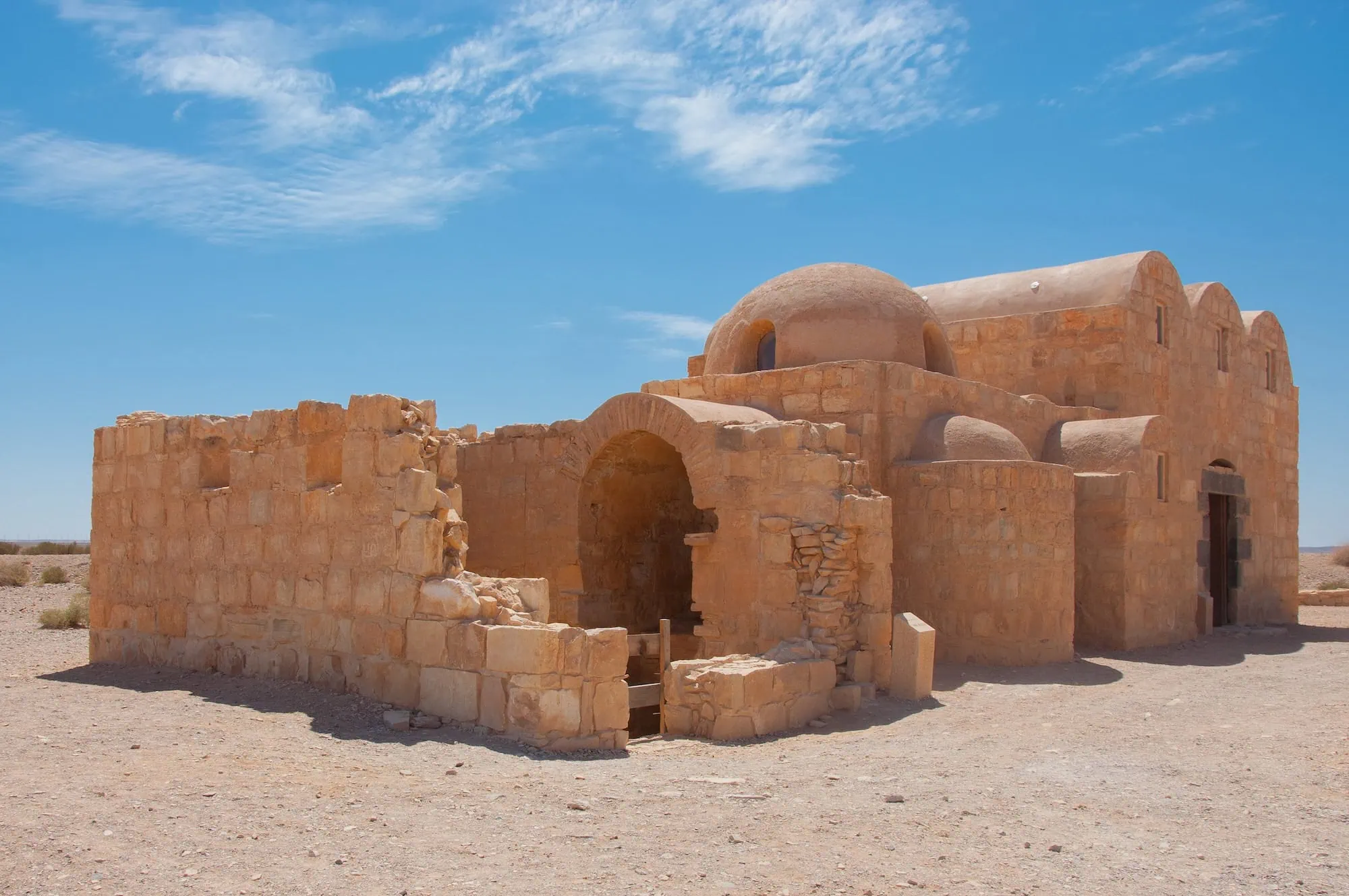
Qasr Amra stands as one of Jordan’s most remarkable archaeological treasures—a UNESCO World Heritage Site offering an unprecedented glimpse into the sophisticated cultural world of the Umayyad dynasty. Built between 723 and 743 CE by the future caliph Walid II, this extraordinary desert complex features the most complete cycle of secular frescoes from the early Islamic period. The vibrant murals—depicting hunting scenes, zodiac constellations, and Byzantine-influenced artwork—represent a unique artistic achievement bridging Eastern and Western cultural traditions.
What makes Qasr Amra truly exceptional is its dual role as architectural marvel and historical document. The limestone and basalt structure functioned as a royal bathhouse and reception hall, complete with sophisticated hydraulic systems rivaling Roman engineering. Today, visitors can explore these ancient chambers while admiring artwork that has survived more than 1,200 years in Jordan’s harsh desert climate.
Qasr Amra is a highlight on many of our Egypt and Jordan luxury tours, where you can explore Jordan’s desert castles alongside iconic experiences such as Petra, Wadi Rum, and a Nile cruise through Egypt.
We’ll guide you through everything you need to know before visiting this extraordinary UNESCO site.
Table of Contents
The Artistic Legacy of Umayyad Civilization
Qasr Amra’s frescoes represent the most significant collection of figurative art from the early Islamic period. The famous Six Kings painting dominates the reception hall, depicting six rulers paying homage to the Umayyad caliph in a composition that speaks to the dynasty’s international ambitions.
The Zodiac Dome: Celestial Art in Stone
The bathhouse caldarium features an extraordinary dome painted with constellations and zodiac symbols. This astronomical ceiling represents one of the earliest known star maps in Islamic art, combining Hellenistic traditions with Islamic scholarship. The zodiac dome demonstrates how Umayyad artists freely incorporated diverse cultural elements, creating a unique visual language that reflected their empire’s cosmopolitan character.
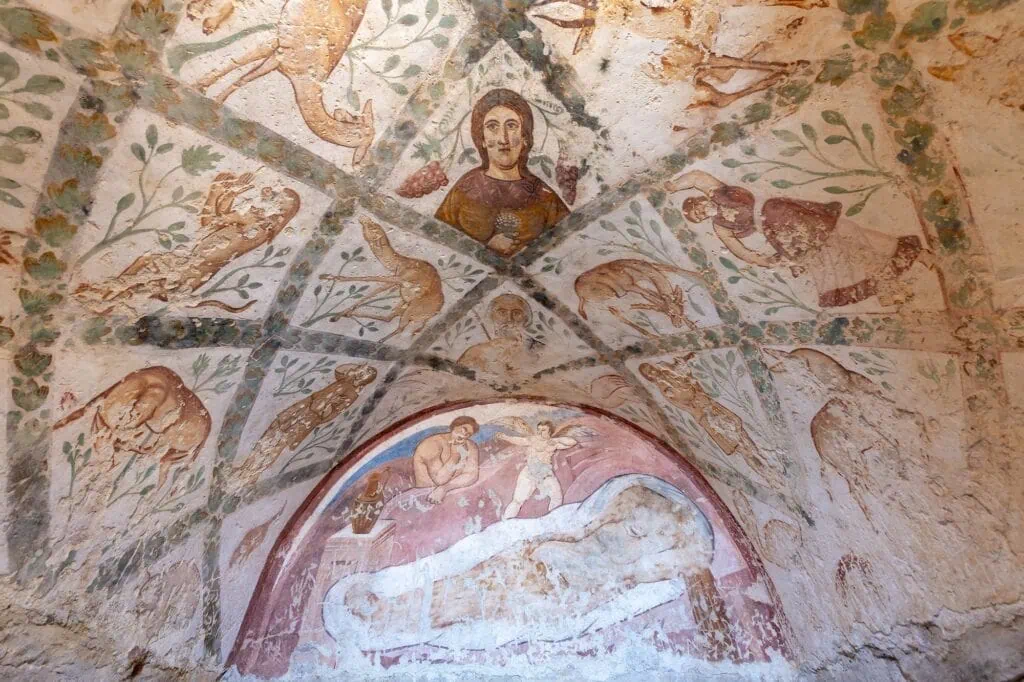
Archaeological research has revealed that these celestial paintings served both decorative and practical purposes. The positioning of certain constellations suggests the murals functioned as a primitive calendar system, helping determine seasonal activities and agricultural cycles in the surrounding desert region.
Hunting Scenes and Royal Iconography
Throughout the complex, dynamic hunting scenes showcase the artistic sophistication of Umayyad court painters. These murals depict various animals – lions, gazelles, ostriches, and wild donkeys – in naturalistic poses that demonstrate keen observation of desert wildlife. The hunting imagery reinforced royal authority while celebrating the aristocratic lifestyle of the Umayyad elite.
The reception hall’s main fresco cycle includes controversial depictions of partially clothed figures, representing a level of artistic freedom rarely seen in later Islamic art. This secular approach to decoration reflects the cultural confidence of early Umayyad society and their willingness to embrace diverse artistic traditions.
Byzantine Influences and Cultural Exchange
Art historians have identified strong Byzantine influences in Qasr Amra’s painting techniques and compositional elements. The use of perspective, facial modeling, and architectural backgrounds clearly derives from late antique artistic traditions. This cultural fusion created a distinctive Umayyad style that influenced subsequent Islamic art development across the Mediterranean world.
Architectural Innovation in the Desert
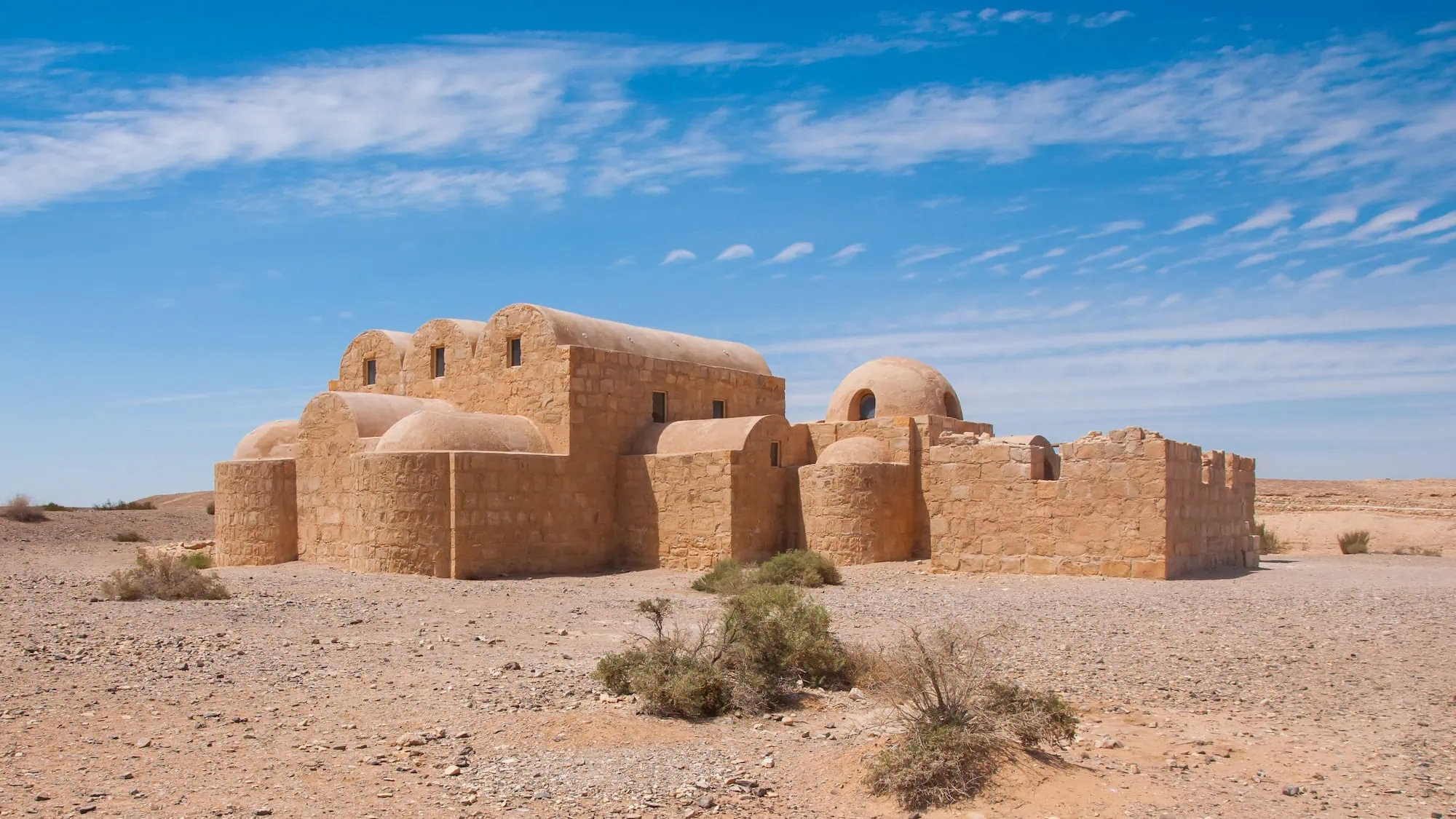
The architectural design of Qasr Amra reveals sophisticated understanding of both Roman bathhouse traditions and desert environmental challenges. The complex consists of a large reception hall connected to a traditional three-room bathhouse sequence following Roman thermal bath principles.
Engineering Excellence in Harsh Conditions
The builders demonstrated remarkable engineering skills in creating a functional bathhouse system in the arid eastern desert of Jordan. Underground water channels, hypocaust heating systems, and steam circulation mechanisms show advanced technical knowledge adapted to local conditions. Archaeological investigations have revealed that the complex received water from a nearby well system, with elaborate distribution networks ensuring adequate supply for the bathing facilities.
The construction materials – primarily limestone blocks with basalt details – were carefully selected for their durability in extreme temperature variations. Modern conservation analysis has shown that the original builders understood thermal expansion principles, incorporating flexible joints and expansion chambers that allowed the structure to survive centuries of seasonal stress.
Recent architectural surveys using 3D scanning technology have revealed previously unknown construction details. The vault systems demonstrate sophisticated understanding of load distribution, while decorative elements served structural as well as aesthetic functions. The integration of practical engineering with artistic vision represents one of the finest examples of early Islamic architecture.
UNESCO World Heritage Recognition and Conservation
Qasr Amra achieved UNESCO World Heritage status in 1985 under criteria recognizing its outstanding universal value as a masterpiece of human creative genius. The designation acknowledges both the site’s artistic significance and its role in demonstrating cultural exchange between Byzantine and Islamic civilizations.
Ongoing Conservation Challenges
The World Monuments Fund has led several major conservation projects at Qasr Amra, addressing threats from moisture penetration, salt damage, and structural deterioration. The remote desert location presents unique challenges for preservation work, requiring specialized techniques adapted to extreme environmental conditions.
Recent conservation efforts have focused on stabilizing the fragile fresco surfaces using innovative consolidation materials. Shellac removal projects have revealed previously hidden details in the murals, while careful cleaning has restored much of the original color intensity. The work requires international collaboration between Jordanian authorities, European conservation specialists, and funding organizations.
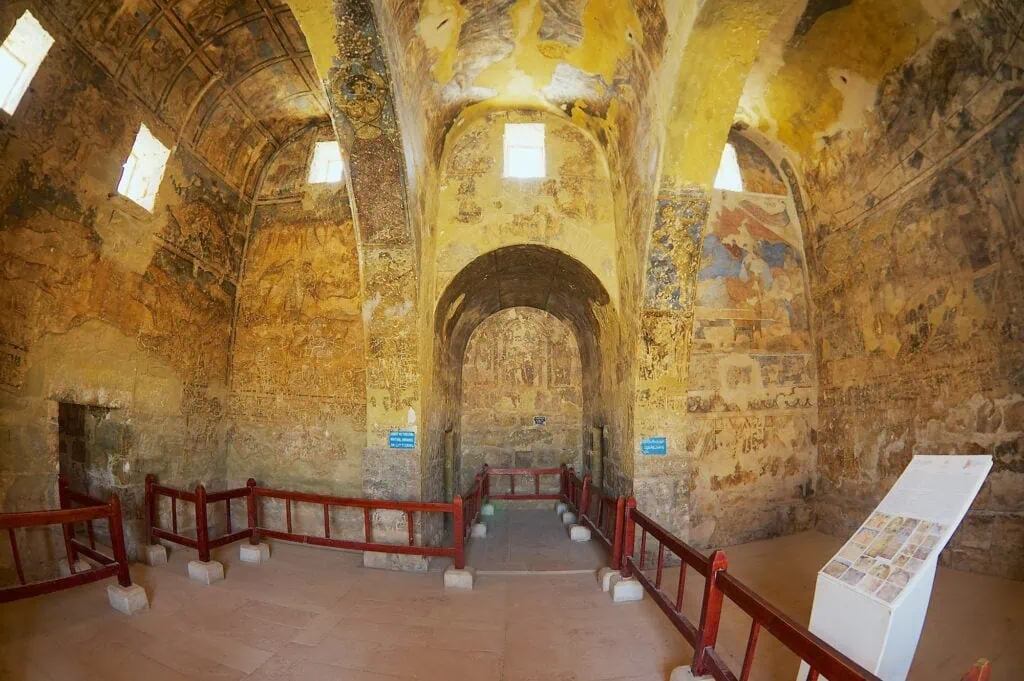
Climate change poses new threats to the site’s preservation. Rising temperatures and changing precipitation patterns affect the delicate balance of humidity levels that help preserve the ancient paintings. Monitoring systems now track environmental conditions continuously, allowing conservators to respond quickly to dangerous changes.
Research Discoveries and Dating Evidence
Archaeological research at Qasr Amra has yielded important discoveries about Umayyad history and culture. Arabic inscriptions discovered during recent conservation work have confirmed the traditional dating of the complex to the reign of Walid II, providing crucial chronological evidence for early Islamic architectural development.
Pigment analysis of the frescoes has revealed sophisticated artistic techniques, including the use of expensive imported materials like ultramarine blue. This evidence of costly pigments supports historical accounts of the Umayyad court’s wealth and cultural ambitions.
Planning Your Visit to Qasr Amra
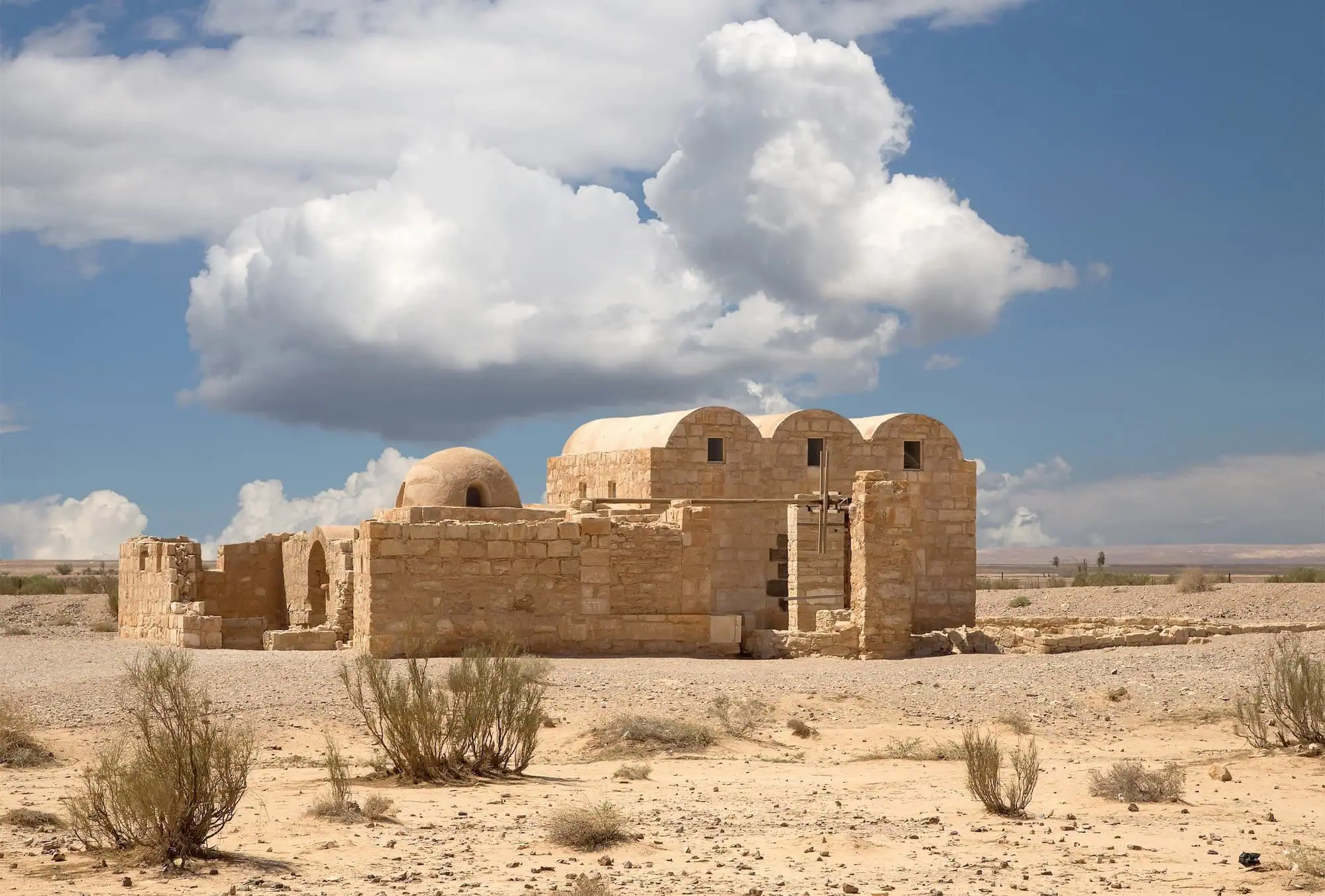
Qasr Amra lies approximately 85 kilometers (53 miles) east of Amman along Highway 40, making it an accessible day trip destination for visitors exploring Jordan’s desert castle route. The site forms part of a circuit that includes nearby Qasr al-Azraq and Qasr Kharana, offering travelers the opportunity to experience multiple examples of Umayyad architecture.
Practical Information for Travelers
A single ticket priced at 1 Jordanian Dinar provides access to Qasr Amra, Al Azraq Castle, and Kharana Castle, making it an economical way to explore three significant historical sites. The visitor center at Qasr Amra offers multilingual information displays and English-speaking guides who provide detailed explanations of the site’s historical and artistic significance.
We recommend visiting during the cooler months between October and April, when desert temperatures are more comfortable for extended exploration. Early morning visits offer the best lighting conditions for photographing the frescoes, while the golden hour before sunset provides dramatic illumination of the exterior architecture.
What to Expect During Visit
The main structure is compact enough to explore thoroughly in 60 to 90 minutes, but we suggest allowing additional time to appreciate the artistic details and photographic opportunities. The site is fully accessible for visitors with mobility limitations, with paved pathways connecting all major areas.
Professional photography is permitted without additional fees, though flash photography is prohibited to protect the delicate frescoes. The visitor center provides detailed maps and historical context that enhance understanding of what you’ll see inside the ancient structure.
Our guides can arrange combined visits to multiple desert castles, providing transportation in modern, air-conditioned vehicles and expert commentary throughout the journey. This approach maximizes your time while ensuring comfortable travel across Jordan’s eastern desert region.
Historical Context: The Umayyad Desert Retreat
Walid Ibn Yazid commissioned Qasr Amra during his time as crown prince, years before ascending to the caliphate as Walid II in 743 CE. Historical sources describe him as a cultured but controversial figure who challenged traditional Islamic social conventions through his patronage of secular arts and entertainment.
The desert location served multiple purposes beyond royal recreation. These remote retreats allowed Umayyad princes to engage in activities that might prove controversial in the main urban centers of Damascus or Jerusalem. Archaeological evidence suggests the complex hosted extended stays by the royal court, complete with elaborate entertainment and cultural events.
The choice of location in Jordan’s eastern desert reflects the strategic importance of this region during the Umayyad period. Trade routes connecting Syria with Arabia passed through this area, making it a logical choice for a royal residence that could serve both recreational and administrative functions.
Understanding Walid II’s historical reputation helps explain the unique character of Qasr Amra’s decoration. His commitment to artistic patronage and cultural experimentation created an environment where artists could explore themes and techniques that would later be discouraged in Islamic art.
The Broader Desert Castle Network
Qasr Amra belongs to a remarkable network of Umayyad structures scattered across Jordan’s eastern desert, collectively known as the “desert castles.” Each structure served different functions within the broader Umayyad administrative and recreational system, from hunting lodges to agricultural centers to defensive outposts.
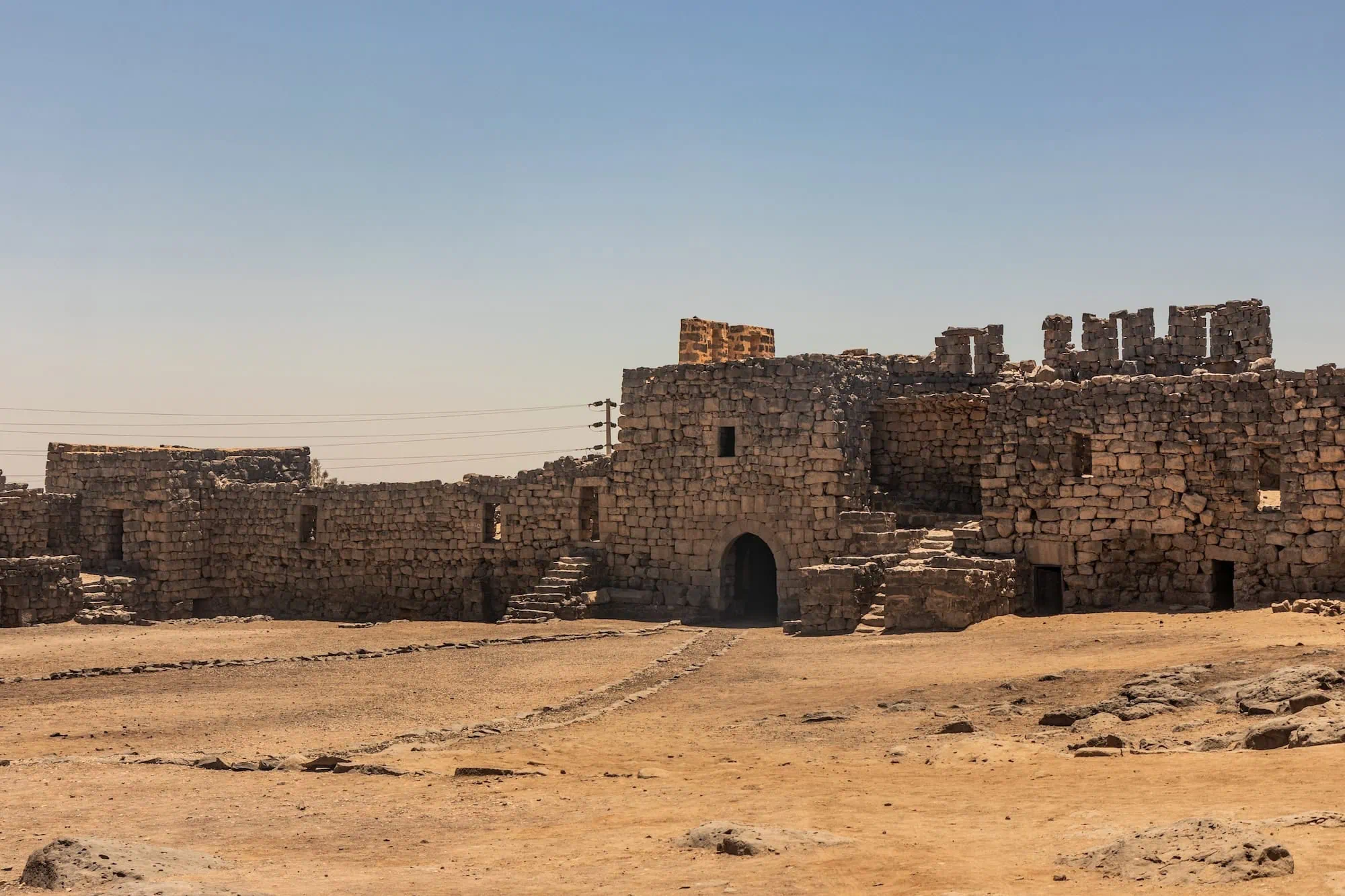
The proximity to other significant sites like Qasr al-Azraq and Qasr Kharana suggests coordinated planning and construction efforts. This network demonstrates the Umayyad dynasty’s systematic approach to controlling and developing the desert regions of their empire.
Trade route connections linked these desert installations with major Umayyad cities, creating a sophisticated communication and supply network. Archaeological evidence indicates regular movement of people, goods, and information between the various castle sites and the main population centers.
Frequently Asked Questions
Plan 1-2 hours to fully explore the site and appreciate the frescoes in detail.
A combined ticket costs 1 JD and includes access to three desert castles.
October through April offers the most comfortable desert weather conditions for exploration.
Yes, English-speaking guides are available at the visitor center to enhance your experience.
The site is located 85 kilometers (53 miles) east of Amman via Highway 40.
Photography is permitted but flash photography is prohibited to protect the artwork.
Yes, paved pathways provide access to all major areas of the archaeological site.
It contains the most complete cycle of early Islamic secular frescoes anywhere in the world.
The murals date to between 723-743 CE, making them over 1,200 years old.
The World Monuments Fund leads ongoing projects to stabilize and preserve the ancient artwork.
Yes, the combined ticket allows access to three castles that can be visited in a single day trip.
Design Your Custom Tour
Explore Egypt and Jordan your way by selecting only the attractions you want to visit