

Rabat Attractions – Your Guide to Morocco’s Capital City
Rabat surprises most travelers with its calm elegance.
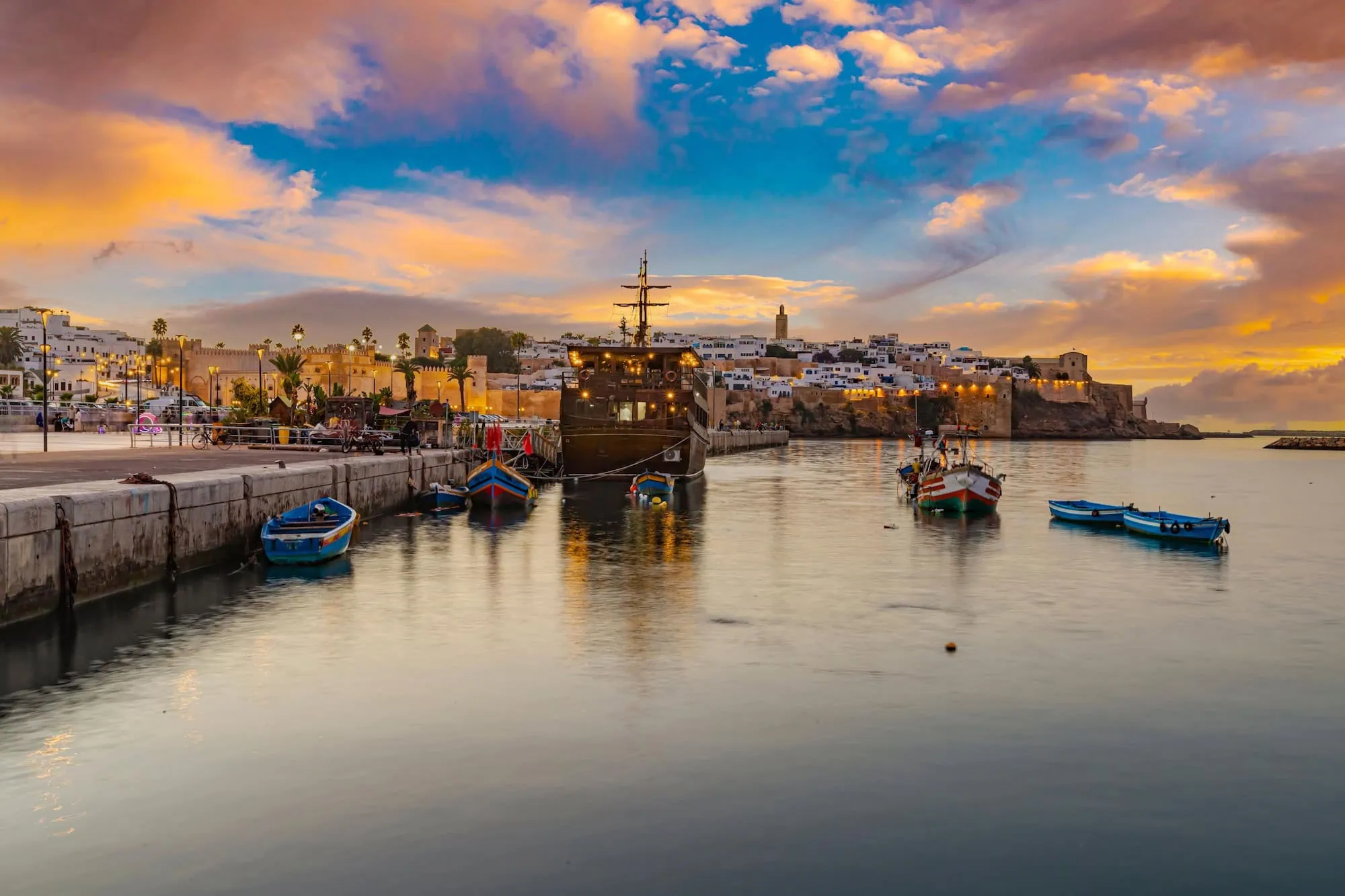
While many visitors head straight to Marrakech or Fes, Morocco’s capital offers a different experience—where historic depth meets modern refinement without the intensity of larger cities. Set along the Atlantic Ocean, this UNESCO-listed destination blends coastal beauty with centuries of cultural heritage.
Rabat can be included in our Egypt and Morocco tours, where Morocco’s imperial cities are combined with Egypt’s ancient landmarks for a diverse and enriching journey.
From the scenic Kasbah des Oudayas overlooking the ocean to the iconic Hassan Tower, Rabat’s attractions reveal a layered history in a more relaxed setting. The city’s balance of architecture, history, and atmosphere makes it an essential stop on any well-planned itinerary.
Having explored every corner of this coastal capital, we highlight the key experiences that define Rabat—from historical sites to peaceful riverside walks along the Bouregreg.
Historic Fortifications and Royal Heritage
The heart of Rabat’s appeal lies in its remarkable preservation of Morocco’s imperial past. These monuments tell the story of dynasties that shaped North African history while maintaining their original grandeur.
Kasbah des Oudayas: A Citadel Above the Atlantic
Perched dramatically on cliffs overlooking the Atlantic Ocean, this 12th-century citadel represents one of Morocco’s most photogenic destinations. The maze of narrow streets painted in brilliant white and cobalt blue creates an almost Mediterranean atmosphere that feels worlds away from typical Moroccan cities. Originally built by the Almohad dynasty as a fortress to control the Bouregreg River, the Kasbah has evolved into a living neighborhood where residents still call the ancient walls home.
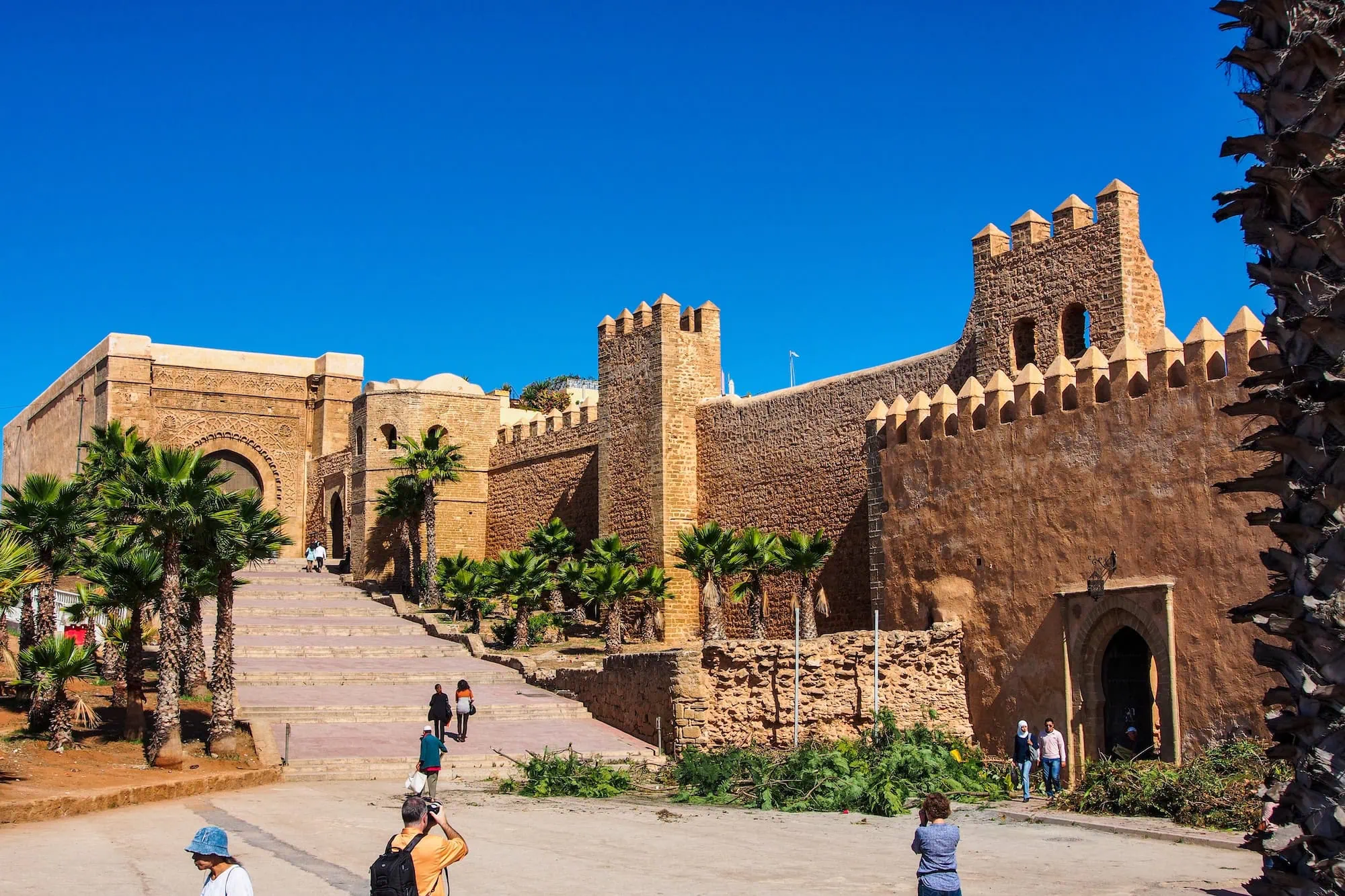
Walking through the ornate entrance gate, you’ll discover charming doorways adorned with traditional geometric patterns. Cats lounge peacefully in sunny corners while the scent of mint tea drifts from hidden courtyards. The view from the ramparts across the Atlantic is breathtaking at sunset, when golden light bathes the white buildings.
The Andalusian Gardens within the citadel walls offer a peaceful retreat filled with orange trees, roses, and fountains. These formal gardens were designed during the French Protectorate period but maintain the classical Moorish aesthetic that makes them perfect for contemplation.
Hassan Tower and Mohammed V Mausoleum Complex
Rising 44 meters (144 feet) into Rabat’s skyline, Hassan Tower stands as an ambitious dream frozen in stone. Sultan Yacoub al-Mansour intended this minaret to anchor what would have been the world’s largest mosque in the 12th century, but construction halted after his death in 1199. Today, the red sandstone tower presides over a field of 200 remaining columns that hint at the mosque’s intended massive scale.
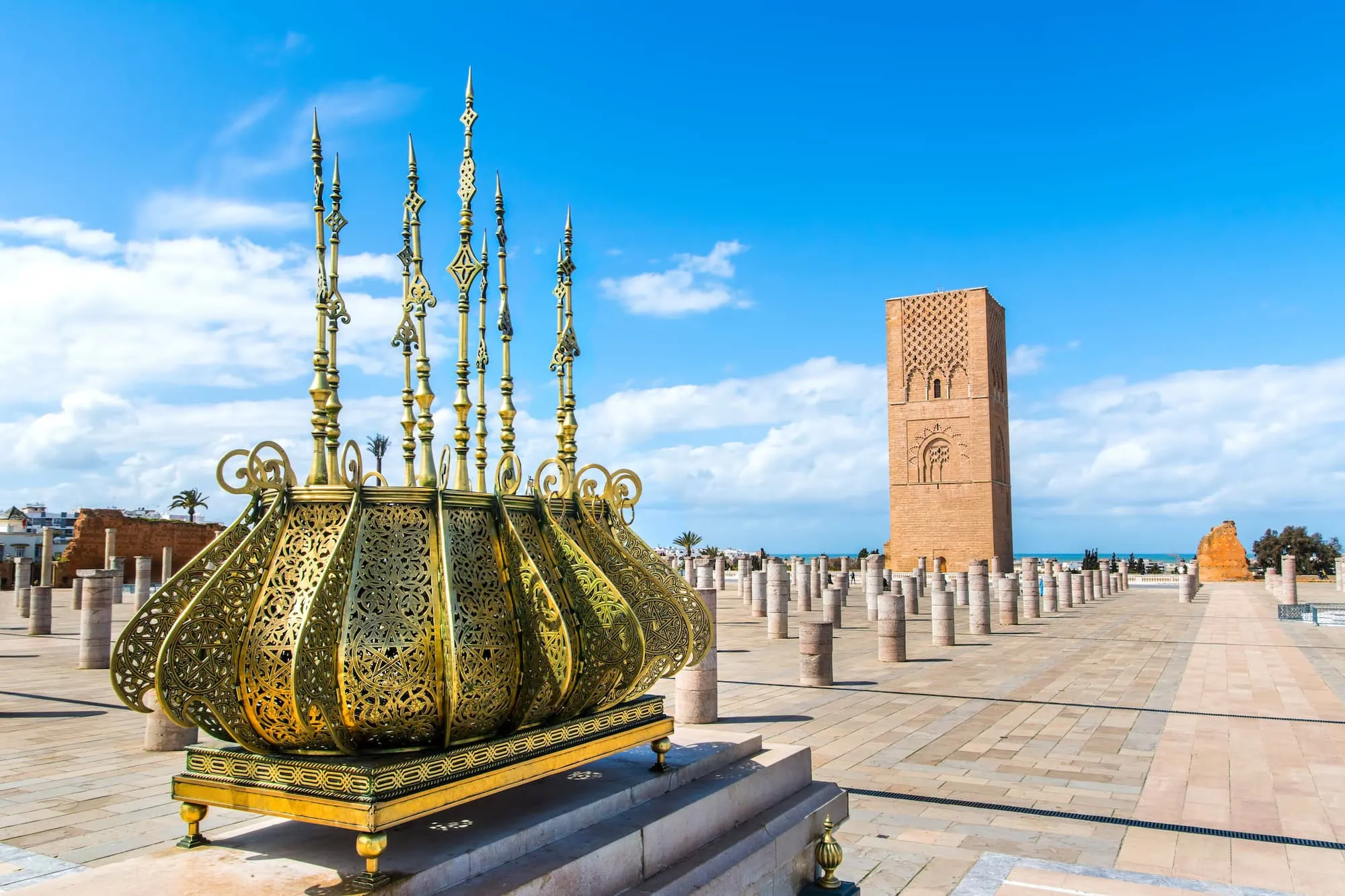
Adjacent to the tower, the Mohammed V Mausoleum houses the tombs of three Moroccan kings in a stunning display of contemporary Islamic architecture. The building’s white marble exterior and intricate zellij tilework demonstrate the pinnacle of Moroccan craftsmanship. Guards in traditional dress stand at attention while visitors admire the hand-carved cedar ceiling and golden tomb chambers.
The combination of ancient ambition and modern reverence creates a powerful atmosphere. Early morning visits avoid crowds and provide the best photography opportunities when soft light illuminates the tower’s weathered surfaces.
Archaeological Wonders and Ancient Mysteries
Rabat’s position as a strategic location attracted civilizations across millennia. The archaeological sites here offer tangible connections to Roman colonizers, Islamic dynasties, and the natural world that has reclaimed these spaces over time.
Chellah: Where Rome Meets Medieval Islam
This sprawling necropolis combines layers of history that few archaeological sites can match. Originally the Roman city of Sala Colonia, Chellah later became an Islamic burial ground during the Marinid period in the 14th century. Walking through the site feels like traveling through time as Roman ruins give way to Islamic tombs and minarets.
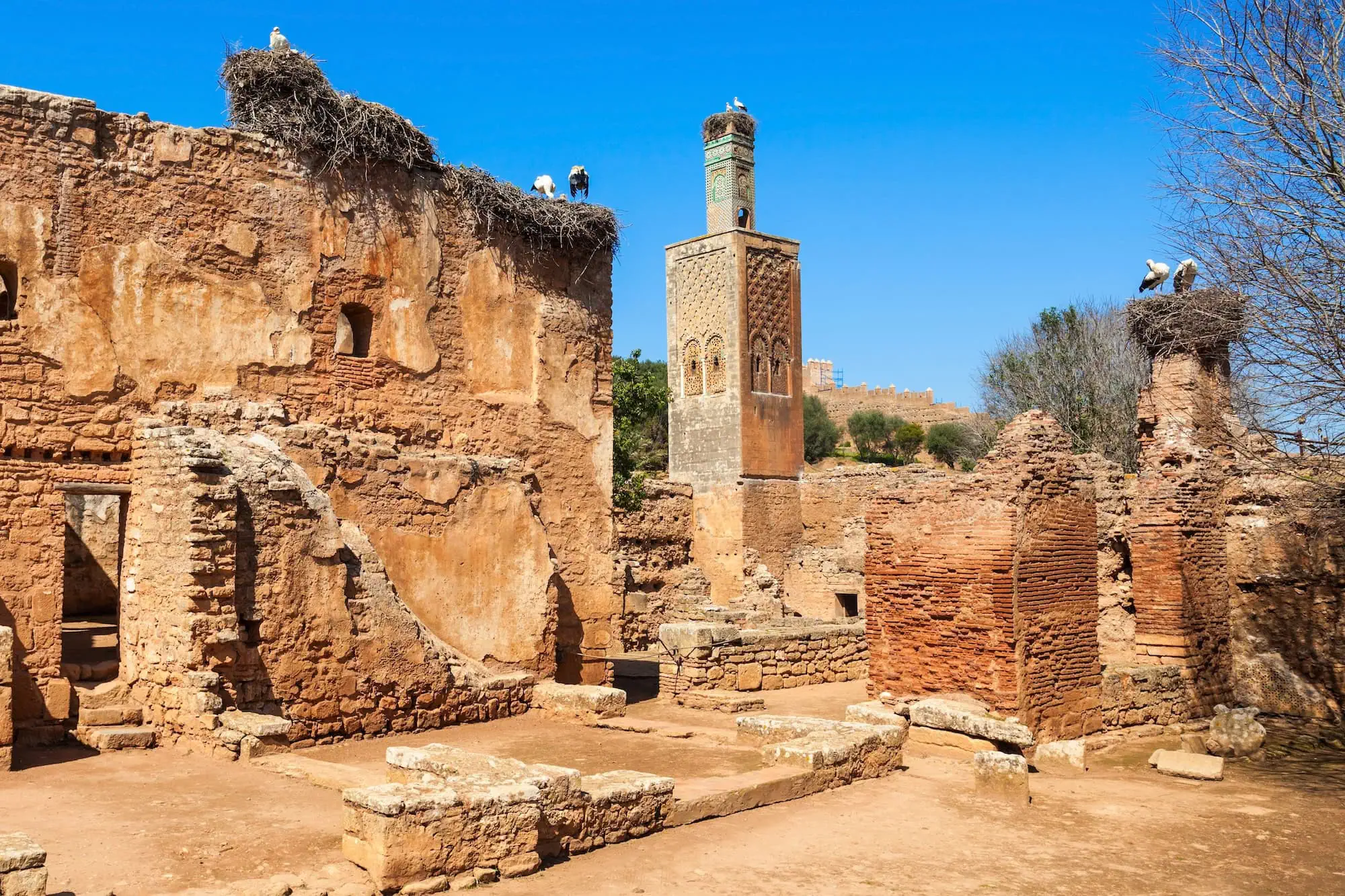
The Roman sections include recognizable bath houses, forums, and residential areas with Latin inscriptions still visible on weathered stones. Islamic additions feature beautiful geometric patterns on tomb markers and the remains of a mosque and madrasa. White storks have made Chellah their permanent home, building massive nests atop the ancient minarets and creating an unexpected wildlife sanctuary.
Sacred pools within the complex attract local women who believe the waters hold healing properties. The combination of historical significance and natural beauty makes Chellah particularly compelling for visitors interested in Morocco’s pre-Islamic heritage. Late afternoons provide the most atmospheric lighting for exploring the ruins.
Cultural Experiences and Local Life
Beyond monuments and museums, Rabat offers authentic Moroccan experiences without the aggressive commercialism found in larger tourist centers. These attractions provide insight into contemporary Moroccan culture and daily life.
Rabat’s medina stands apart from its counterparts in other imperial cities through its notably relaxed atmosphere. The narrow streets radiating from Rue des Consuls create a perfect environment for leisurely exploration without constant pressure from vendors. Local shoppers outnumber tourists, creating an authentic neighborhood feeling where traditional crafts and daily necessities coexist naturally.
The souks here specialize in items actually used by locals rather than tourist trinkets. You’ll find high-quality Rabati carpets with distinctive Turkish influences, traditional leather goods, and brass items crafted by local artisans. Prices remain reasonable compared to other Moroccan cities, and bargaining feels more like friendly conversation than aggressive negotiation.
Small cafes tucked into side streets offer excellent mint tea and Moroccan pastries. The atmosphere encourages lingering conversations and people-watching as daily life unfolds around you. Evening visits reveal the medina at its most social, when families gather and children play in the narrow passages.
Coastal Beauty and Natural Settings
Rabat’s position on the Atlantic coast provides natural beauty that complements its historical attractions. These outdoor spaces offer different perspectives on the city while providing opportunities for relaxation and recreation.
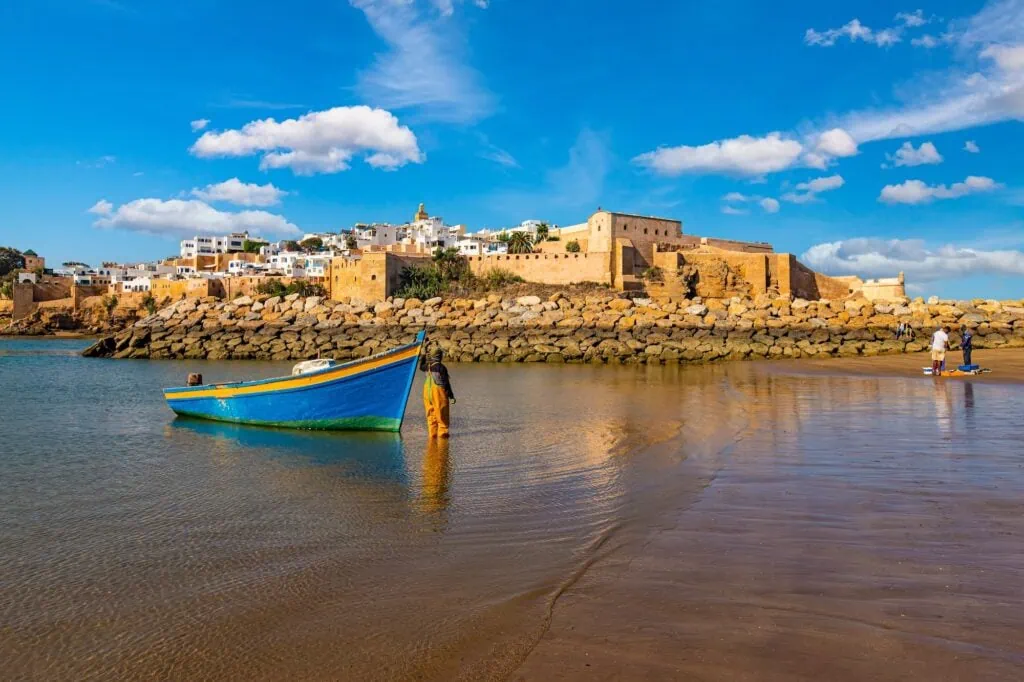
Bouregreg River and Marina District
The Corniche Bouregreg creates a scenic riverside promenade that connects Rabat to its neighboring city Salé. Modern development has transformed this area into an attractive waterfront destination while maintaining views of the historic Kasbah across the water. Walking or cycling along the promenade provides constantly changing perspectives of both cities.
The marina hosts restaurants, cafes, and boat trips that showcase Rabat from the water. Sunset boat tours reveal the Kasbah’s clifftop position most dramatically, while dinner cruises combine excellent seafood with panoramic city views. Fishermen still work from traditional boats, adding authentic character to the modern marina facilities.
Beach Access and Atlantic Coast
Rabat’s beaches extend south from the Kasbah toward Temara, offering both developed resort areas and more natural stretches of sand. The Atlantic provides consistent waves for surfing, though water temperatures remain cool year-round. Plage de Rabat closest to the city center attracts families and young people, especially on weekends when local beach culture comes alive.
Beach clubs and restaurants along the coast serve fresh seafood while providing comfortable settings for extended relaxation. The contrast between Morocco’s imperial architecture and Atlantic beach life creates a unique atmosphere found nowhere else in the country.
Modern Attractions and Contemporary Culture
Rabat’s role as Morocco’s political and administrative capital brings contemporary attractions that showcase the country’s modern development and cultural evolution.
The Mohammed VI Museum of Modern and Contemporary Art represents Morocco’s commitment to cultural advancement. International and Moroccan artists display works that bridge traditional themes with contemporary expressions, creating conversations between Morocco’s heritage and its future aspirations. Rotating exhibitions ensure repeat visits reveal new perspectives on Moroccan artistic development.
Rabat Zoo demonstrates modern approaches to wildlife conservation while entertaining families with naturalistic habitats for African species. The facility emphasizes education about Moroccan wildlife and environmental conservation, making it particularly valuable for travelers interested in the country’s natural heritage beyond historical sites.
The Theatre Royal designed by Zaha Hadid exemplifies Rabat’s architectural ambitions. Even when performances aren’t scheduled, the building’s flowing lines and innovative design represent Morocco’s embrace of international architectural excellence. The surrounding Agdal district showcases contemporary Moroccan urban planning and lifestyle.
Practical Experiences and Local Traditions
Rabat offers opportunities to experience traditional Moroccan customs in authentic settings that welcome visitors while maintaining their cultural integrity.
Traditional hammams throughout the city provide authentic spa experiences that remain central to Moroccan social life. Unlike tourist-oriented facilities in other cities, Rabat’s neighborhood hammams serve primarily local residents who maintain traditional bathing customs passed down through generations. The experience involves hot steam rooms, vigorous scrubbing with rough mitts, and relaxation areas where the social aspects of hammam culture become apparent.
Local attendants guide first-time visitors through the process while respecting cultural sensitivities. The physical benefits of deep cleansing combine with cultural immersion to create memorable experiences that enhance understanding of Moroccan daily life. Most facilities provide separate areas or times for men and women, ensuring comfort for all visitors.
Cooking classes in private homes offer intimate introductions to Moroccan cuisine preparation. Local families share traditional recipes while explaining the cultural significance of various dishes and ingredients. These experiences provide deeper cultural connections than restaurant meals alone, while supporting local families economically.
Frequently Asked Questions
Two to three days allow comfortable exploration of all major sites including the Kasbah, Hassan Tower, Chellah, and the medina, with time for coastal activities.
Yes, Rabat is generally considered Morocco’s safest major city with less aggressive vendors and a more relaxed atmosphere throughout tourist areas.
March through May and September through November offer ideal weather with mild temperatures around 20-25°C (68-77°F) and minimal rainfall.
The Atlantic Ocean remains cool even in summer at 18-22°C (64-72°F), making swimming more comfortable from June through September.
The drive takes approximately 1.5 hours (120 km/75 miles) via highway, with reliable bus and train connections also available.
Most attractions are well-marked, but guides enhance understanding of historical context, especially at Chellah and the Mohammed V Mausoleum complex.
Conservative clothing covering shoulders and knees is required. Women should bring scarves for potential head covering at certain locations.
Yes, but negotiations are typically more relaxed than in other Moroccan cities, with less aggressive tactics from vendors.
Most sites close at sunset, typically 6:00 pm (18:00) in winter and 7:00 pm (19:00) in summer, though specific hours vary seasonally.
The palace interior is not open to tourists, but visitors can photograph the ornate main gate and observe the impressive architecture from outside.
Walking works well for the medina and Kasbah, while taxis or rental cars are convenient for reaching Chellah and coastal areas efficiently.
Design Your Custom Tour
Explore Egypt & Morocco your way by selecting only the attractions you want to visit