

Bab Agnaou – One of Marrakech’s 19 Famous Historical Gates
Walking through Marrakech, most travelers spot the towering stone archway long before they understand its significance.
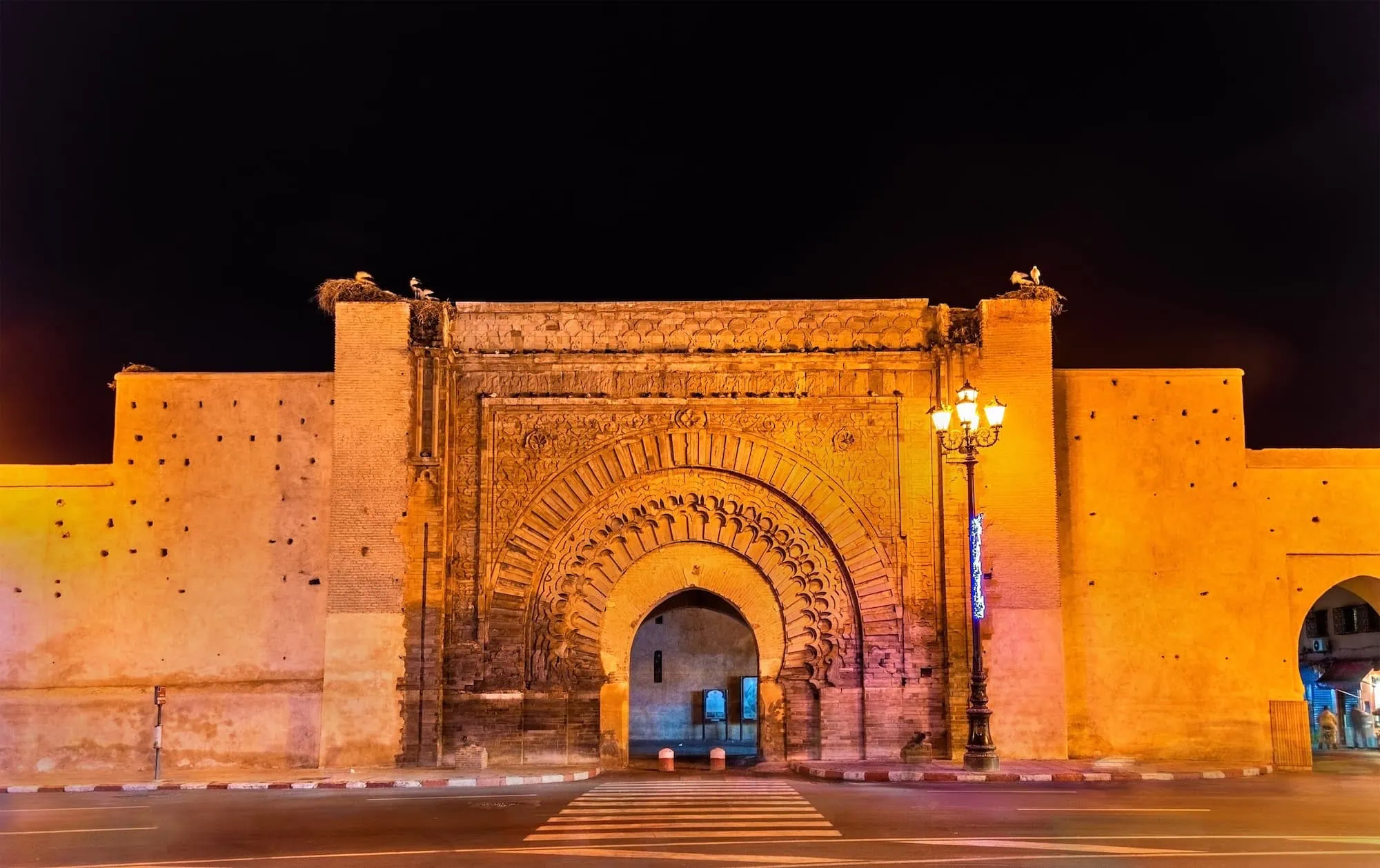
Bab Agnaou stands as one of Morocco’s most stunning examples of Almohad architecture, built between 1188 and 1190 during the reign of Abu Yusuf Ya’qub al-Mansur. This monumental gate served as the main public entrance to the royal kasbah, earning its nickname “Gate of the Palace.” The intricate stone carvings, Kufic Arabic inscriptions, and floral motifs showcase the artistic mastery of 12th-century Moroccan craftsmen. Today, thousands of visitors pause here daily to photograph its weathered sandstone facade and marvel at nearly nine centuries of history.
Our decades of guiding travelers through Marrakech have shown us that Bab Agnaou represents more than just another photo opportunity. It’s a portal connecting the bustling medina with the serene royal quarter, where every carved detail tells part of Morocco’s imperial story.
Historical Significance of Morocco’s Royal Gateway
The Almohad dynasty chose this location strategically when they established Marrakech as their capital in the 12th century. Abu Yusuf Ya’qub al-Mansur commissioned the gate as part of his grand vision to create an impregnable royal citadel within the city walls.
The Almohad Dynasty’s Architectural Legacy
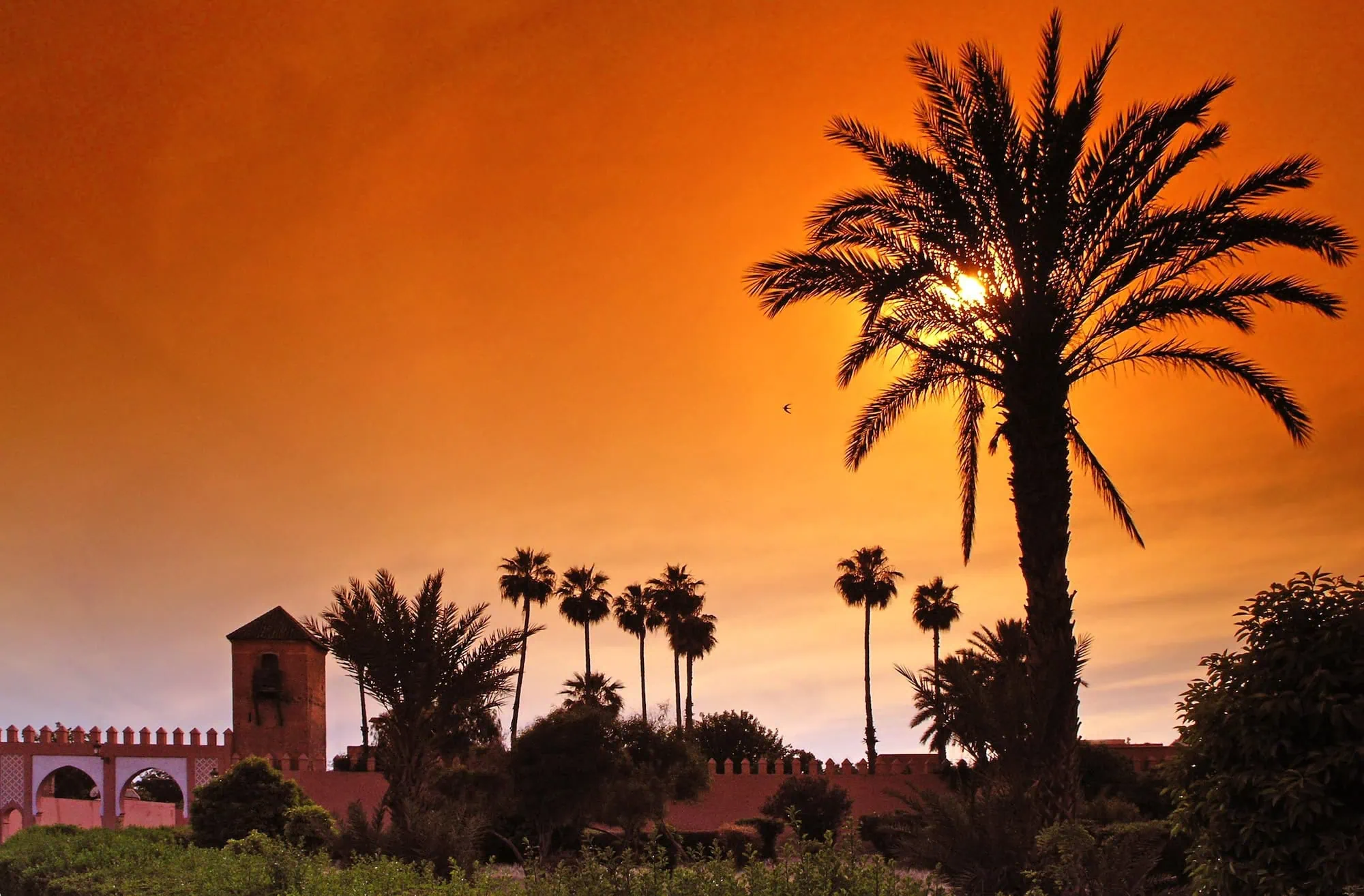
During the late 1100s, the Almohads transformed Marrakech into one of the Islamic world’s most magnificent cities. Bab Agnaou represented the pinnacle of their architectural achievements, combining defensive functionality with artistic beauty. The gate’s design influenced Islamic architecture across the Maghreb region for centuries.
The Almohad rulers demanded that their royal entrance reflect both military strength and cultural sophistication. Master craftsmen from across the empire contributed their skills, creating a masterpiece that has survived wars, earthquakes, and eight centuries of weathering.
Strategic Location Within the Kasbah
The gate’s positioning allowed controlled access between the public medina and private royal quarters. Guards could monitor all traffic while merchants and dignitaries passed through this ceremonial entrance to conduct business with the sultan’s court.
Unlike other city gates designed purely for defense, Bab Agnaou served diplomatic purposes. Foreign ambassadors and tribal leaders would enter through this magnificent archway, immediately understanding the wealth and power of the Almohad rulers.
Etymology and Cultural Names
“Agnaou” derives from the Berber word meaning “mute” or “deaf,” though historians debate whether this referred to the gate’s original guards or its imposing, silent presence. Alternative historical names include Bab al-Qasr (Palace Gate) and Bab al-Kuhl, each reflecting different periods of Moroccan history.
Local Marrakech residents still use these traditional names interchangeably, depending on their family’s historical connections to different quarters of the old city.
Architectural Marvel of Stone and Script
Standing beneath the horseshoe arch, visitors immediately notice the exceptional craftsmanship that sets Bab Agnaou apart from other Moroccan gates. Every surface displays deliberate artistic choices that elevate this structure beyond mere functionality.
The local sandstone construction has weathered beautifully over eight centuries, developing a warm patina that photographers particularly appreciate during golden hour lighting. Unfortunately, modern pollution has accelerated deterioration in some areas, making conservation efforts increasingly urgent. The original red sandstone came from quarries outside Marrakech, transported by camel caravan and shaped by master masons who signed their work through subtle geometric patterns.
Intricate Stone Carving and Decoration
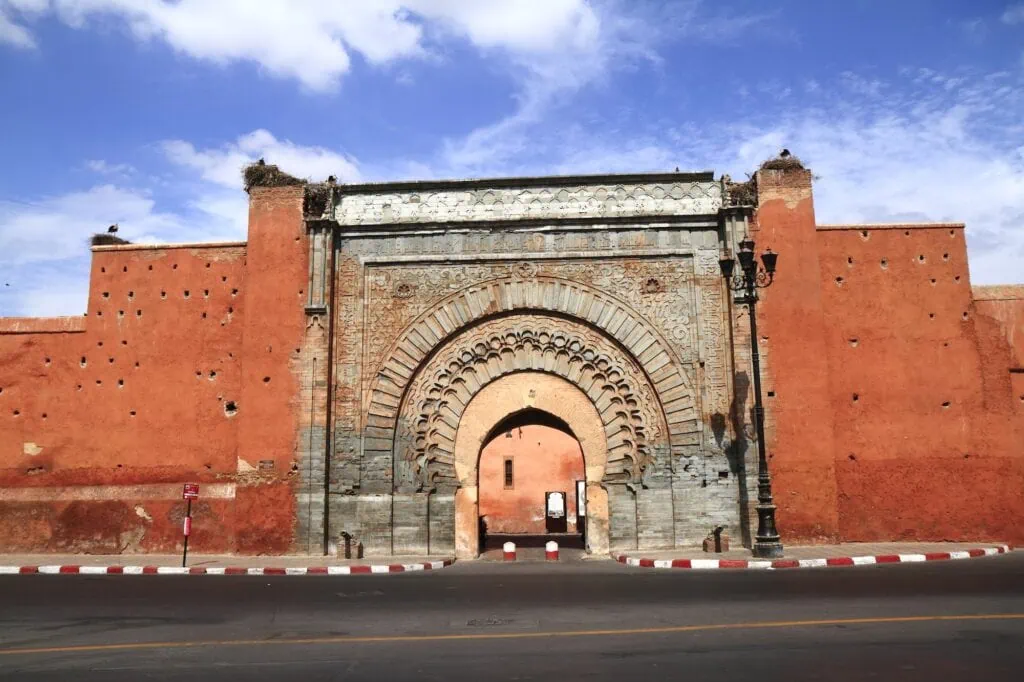
The gate’s most striking feature remains its elaborate stone-carved decoration covering the entire archway surface. Floral motifs interweave with geometric patterns, creating visual depth that changes throughout the day as shadows shift across the carved relief. These arabesques follow strict Islamic artistic principles, avoiding representational imagery while achieving remarkable beauty through mathematical precision.
Each decorative element serves both aesthetic and symbolic purposes. The flowing vine patterns represent paradise gardens, while the interlocking geometric designs reflect the infinite nature of divine creation according to Islamic philosophy.
Kufic Arabic Inscriptions
Skilled calligraphers carved Quranic verses in elegant Kufic script around the archway’s perimeter. These inscriptions invoke divine protection for all who pass beneath the gate while praising Allah’s greatness and mercy. The text includes Surah Al-Fatihah passages and verses specifically chosen for royal entrances.
Reading these inscriptions requires significant Arabic language skills, as Kufic script differs markedly from modern Arabic writing. The angular, geometric letterforms complement the gate’s architectural lines while maintaining perfect readability for educated 12th-century observers.
Modern restoration efforts have carefully preserved these inscriptions, though some letters show wear from centuries of exposure to Marrakech’s intense sun and occasional winter rains.
Visiting Bab Agnaou Today
Photography enthusiasts find optimal lighting conditions during early morning hours around 8:00 am (08:00) and late afternoon from 4:00 pm (16:00) onward. The gate remains freely accessible throughout the day, though nearby traffic can make capturing clean shots challenging during busy periods.
Getting There and Access Information
Bab Agnaou sits at the intersection of Avenue Mohammed V and the kasbah walls, easily walkable from most Marrakech accommodations within the medina. Visitors can approach from either the Jemaa el-Fnaa direction or through the quieter residential streets near the Saadian Tombs.
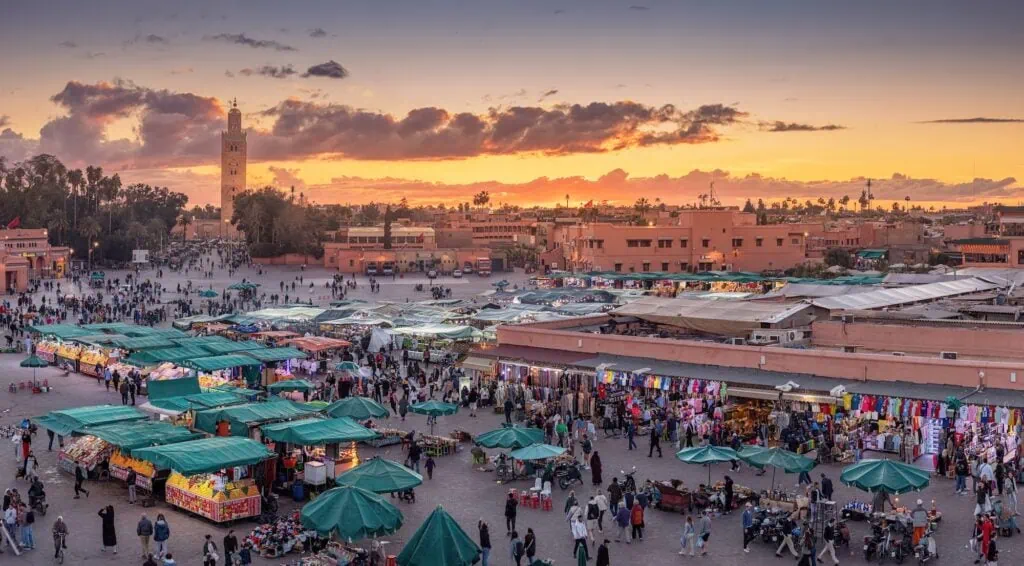
The gate itself requires no entrance fee, as it remains part of the public thoroughfare connecting different city quarters. However, parking near the site can be limited, especially during peak tourist seasons from October through April.
Best Photography Opportunities
The afternoon light creates dramatic shadows across the carved surfaces, while morning visits offer softer illumination for detailed close-ups of the stone work and inscriptions. Many photographers position themselves across the street to capture the full architectural context.
Local storks frequently nest atop the gate during spring months, adding unexpected wildlife elements to architectural photography. These large birds have become unofficial guardians of the monument, returning year after year to the same nesting spots.
Conservation Challenges and Efforts
Environmental factors continue threatening the gate’s structural integrity. Air pollution from increased vehicle traffic has darkened the original sandstone, while temperature fluctuations cause gradual expansion and contraction damage to the carved details.
Moroccan heritage authorities regularly inspect the monument and perform necessary maintenance, though major restoration projects require international funding and expertise. UNESCO has provided technical assistance for some conservation work, recognizing Bab Agnaou’s importance to world architectural heritage.
Visitors can support preservation efforts by following photography guidelines and avoiding touching the carved surfaces, as oils from human hands accelerate stone deterioration.
Exploring the Royal Kasbah District
Beyond the gate, the historic kasbah quarter contains several major attractions within easy walking distance. This royal neighborhood maintains a quieter atmosphere compared to the bustling central medina.
Saadian Tombs Complex
The famous Saadian Tombs lie just 200 meters (650 feet) from Bab Agnaou, housing elaborate mausoleums for 16th and 17th-century royal family members. These tombs remained sealed for centuries before French archaeologists rediscovered them in 1917. The intricate marble work and cedar wood ceilings provide stunning contrasts to Bab Agnaou’s more austere stone architecture.
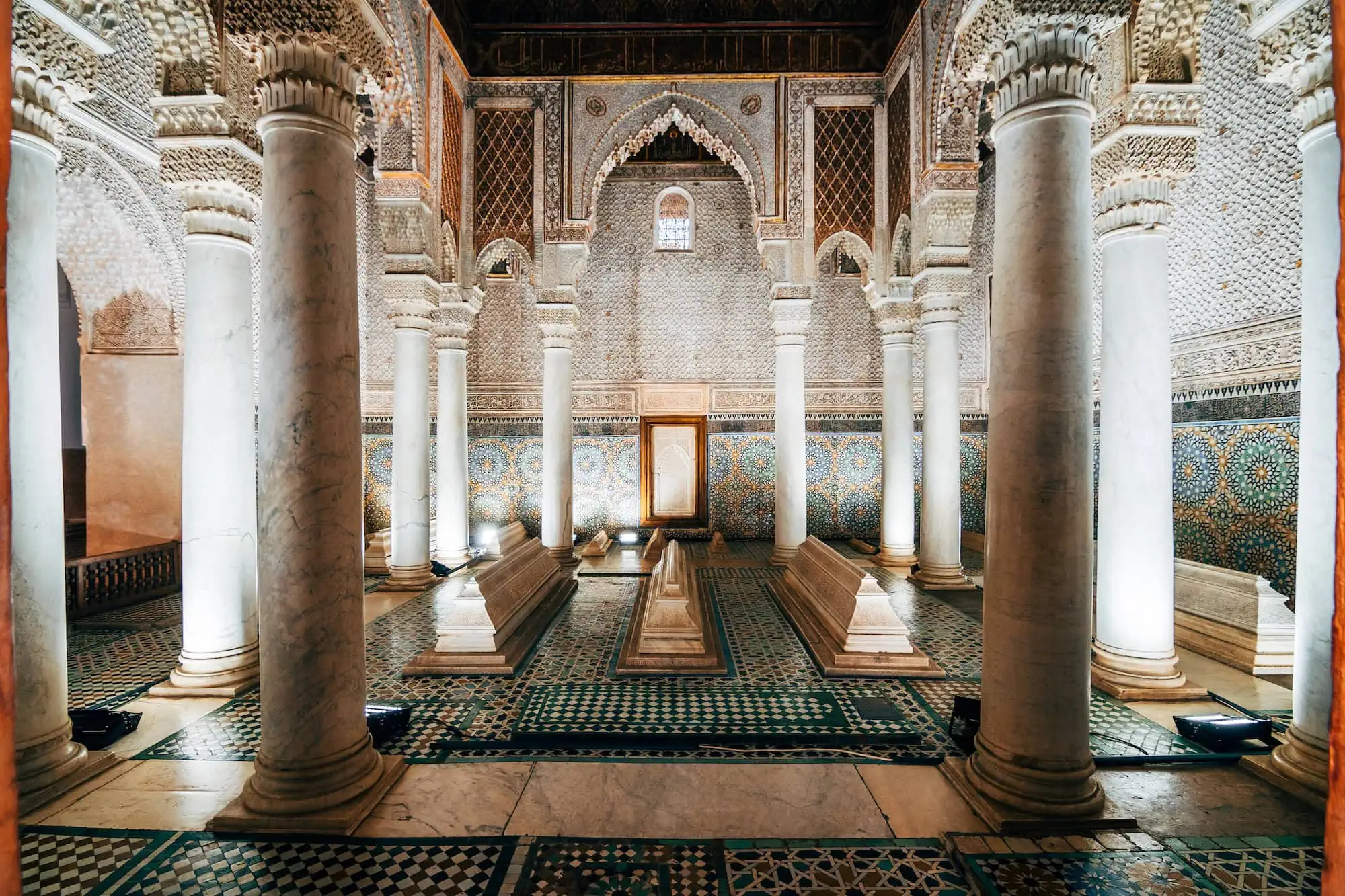
Visiting both sites consecutively allows travelers to compare different periods of Moroccan royal artistic expression. The tombs require a separate entrance fee, currently 70 dirhams for international visitors.
El Badi Palace Ruins
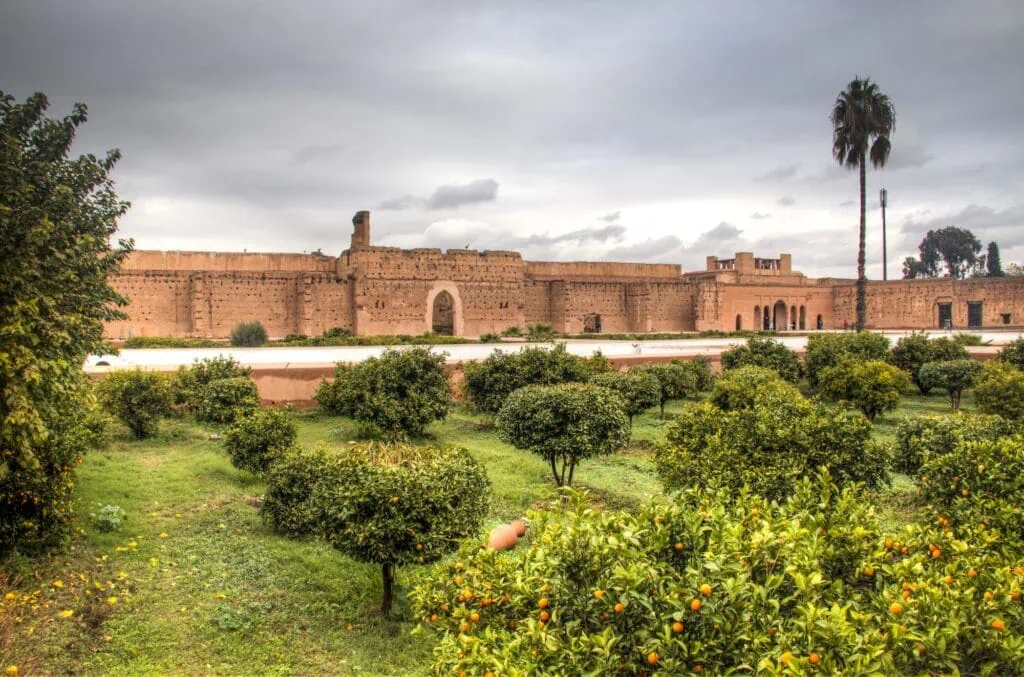
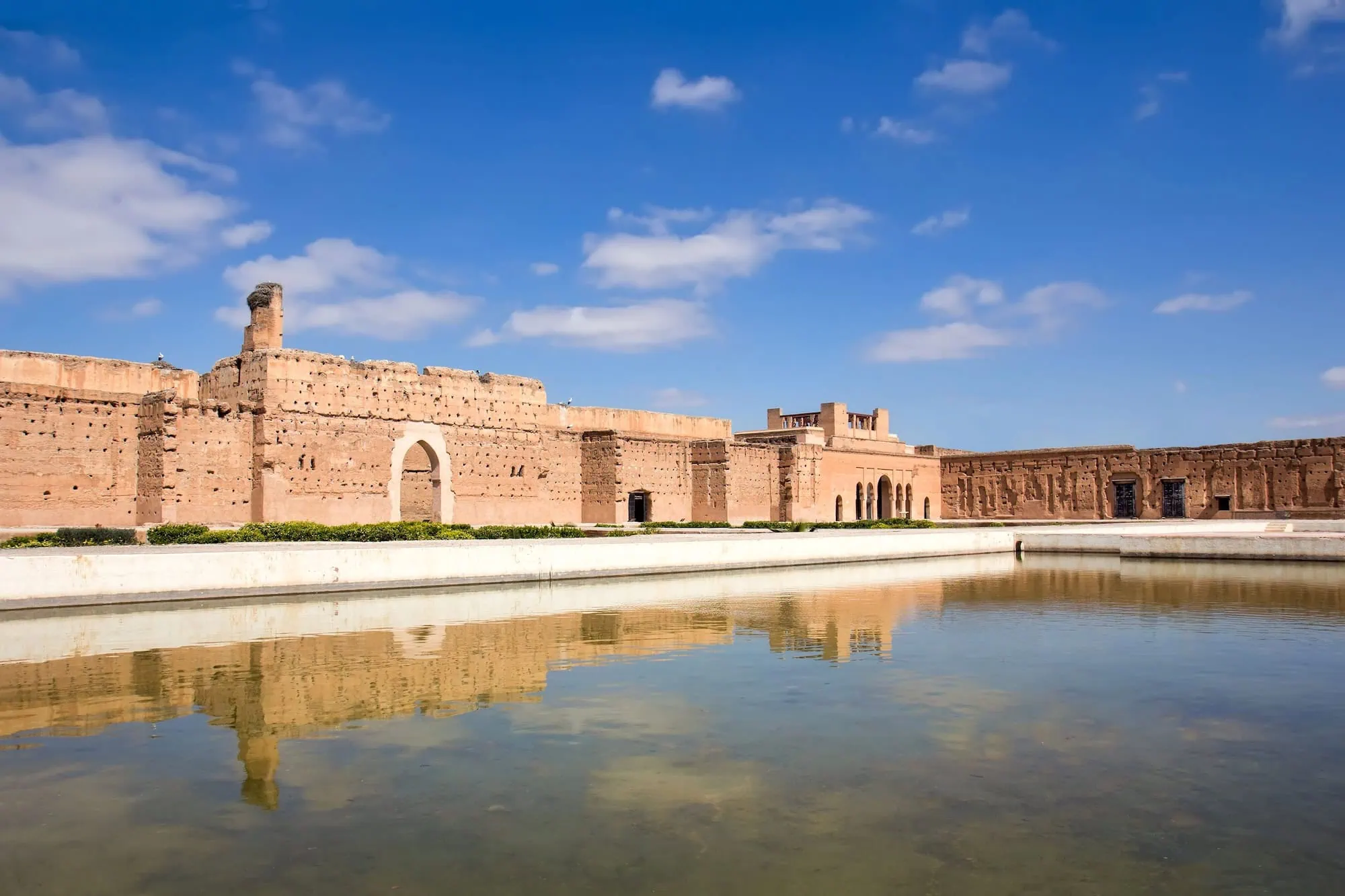
Walking northwest from the gate leads to the extensive ruins of El Badi Palace, once considered among the world’s architectural wonders. Sultan Ahmad al-Mansur built this palace during Morocco’s golden age, using marble from Italy, gold from Sudan, and precious materials from across three continents.
Today’s atmospheric ruins hint at the original grandeur while providing excellent views over Marrakech’s skyline from the elevated platforms. We recommend allowing 45-60 minutes for a complete palace exploration.
Traditional Neighborhoods
The residential streets surrounding Bab Agnaou showcase authentic Marrakech life away from tourist crowds. Local residents maintain traditional riads with beautiful interior courtyards, though these remain private family homes rather than public attractions.
Small neighborhood mosques serve local communities while traditional hammams continue operating as they have for generations. Respectful visitors can glimpse this living heritage while walking between major monuments.
Connection to Marrakech’s UNESCO Heritage
Although individual monuments like Bab Agnaou aren’t separately listed, they form integral components of Marrakech’s UNESCO World Heritage designation covering the entire medina. This recognition acknowledges the exceptional preservation of medieval Islamic urban planning and architecture.
The gate exemplifies the sophisticated defensive systems that protected North African cities during the medieval period. Similar fortification techniques spread throughout the Maghreb region, though few examples survive with Bab Agnaou’s level of decorative refinement. Comparison with contemporary gates in Rabat and Fez reveals how Almohad architects adapted regional traditions to local conditions and materials.
Architectural Influence Across Morocco
Bab Agnaou’s design influenced later Moroccan royal architecture, particularly during the Marinid and Saadian periods. Elements like the horseshoe arch proportions and decorative carving techniques appear in palaces and mosques built centuries later. The gate served as an architectural textbook for subsequent generations of Moroccan craftsmen.
Royal gates in other imperial cities including Meknes and Fez show clear stylistic connections to Bab Agnaou’s innovations. These relationships demonstrate how artistic traditions traveled along trade routes and through craftsman guilds across medieval Morocco.
International Recognition and Study
Architecture schools worldwide study Bab Agnaou as an exemplar of Islamic decorative arts and military architecture integration. The monument appears in numerous academic publications analyzing medieval fortification design and ornamental stone carving techniques.
International conservation experts regularly visit to examine preservation methods and share knowledge with Moroccan heritage specialists. These collaborations help ensure that restoration work follows global best practices while respecting local traditions.
Planning Your Morocco Adventure
Experiencing Bab Agnaou provides an ideal introduction to Marrakech’s layered history and artistic heritage. We design personalized itineraries that position this monument within broader explorations of imperial Morocco’s architectural treasures.
Our expert guides bring decades of local knowledge to enhance your understanding of sites like Bab Agnaou. Rather than rushing past for quick photos, we encourage the time needed to appreciate the craftsmanship details and historical significance that make Morocco’s heritage so remarkable.
Whether you’re planning a focused Marrakech visit or an extensive Morocco journey, Bab Agnaou offers profound insights into the artistic achievements and cultural values that shaped this fascinating country. We’re here to ensure your Morocco adventure creates lasting memories while supporting local communities and heritage preservation efforts.
Frequently Asked Questions
The name translates roughly to “Gate of the Mute” or “Silent Gate” from the original Berber language.
The gate was constructed between 1188-1190 CE, making it approximately 835 years old as of 2024.
Yes, the gate remains an active thoroughfare connecting the medina with the kasbah quarter.
Early morning around 8:00 am or late afternoon after 4:00 pm provide optimal lighting conditions.
No, the gate is free to visit as it’s part of the public street system.
Most visitors spend 15-30 minutes photographing and examining the architectural details.
The Saadian Tombs are 200 meters away, El Badi Palace is a 5-minute walk.
The gate is included within Marrakech’s medina UNESCO World Heritage designation.
The gate represents 12th-century Almohad architecture with horseshoe arches and geometric stone carving.
Visitors should avoid touching the stone carvings to prevent deterioration of the ancient surfaces.
Yes, many Marrakech walking tours include the gate as part of historical medina explorations.
Moroccans consider the storks’ annual return a sign of good fortune for the monument.
Design Your Custom Tour
Explore Egypt & Morocco your way by selecting only the attractions you want to visit