

Things to Do in Fez – Getting the Most Out of Your Stay
Morocco’s ancient capital pulses with medieval energy.
Fez stands as Morocco’s cultural heart, where centuries-old traditions thrive within labyrinthine medina walls. The city’s UNESCO World Heritage medina houses the world’s oldest continuously operating university, leather tanneries that have functioned for over a thousand years, and architectural masterpieces that showcase Islamic craftsmanship at its finest.
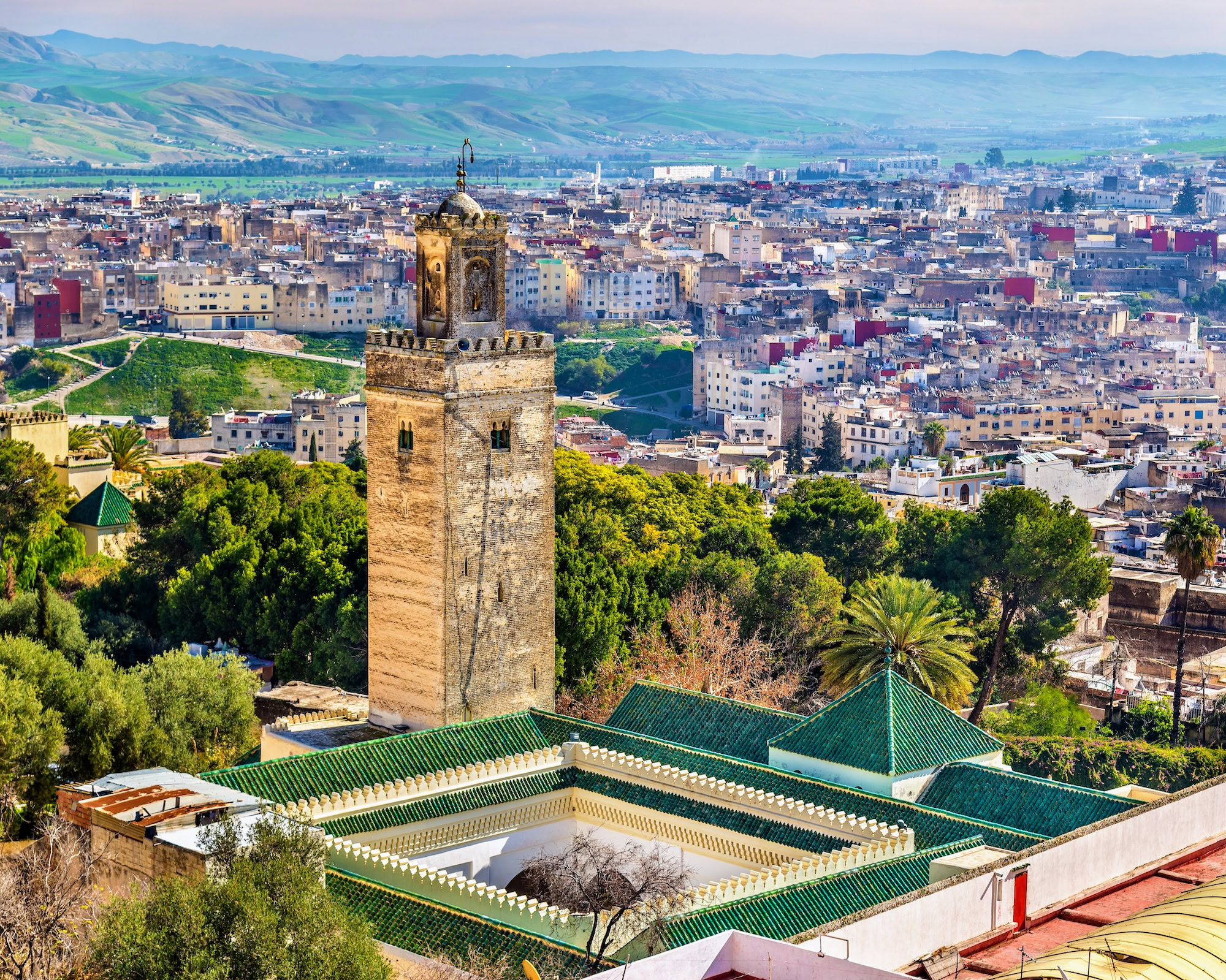
Whether you’re drawn to the spiritual atmosphere of historic madrasas, the sensory overload of traditional souks, or the authentic experience of staying in a restored riad, Fez offers an unfiltered glimpse into Morocco’s imperial past. Our decades of expertise guiding travelers through Morocco’s complex cultural landscape ensures you’ll discover both famous landmarks and hidden corners that most visitors miss.
Step Into the Medieval Heart of Fez el-Bali
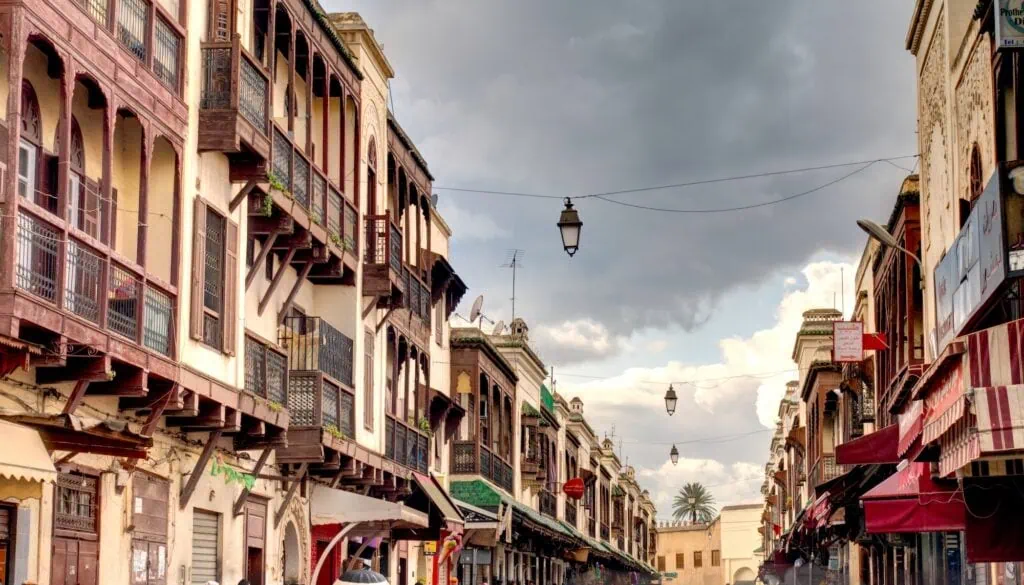
The medina of Fez el-Bali transports you nine centuries back in time. Narrow alleyways wind between towering walls, creating a maze where GPS fails and instinct becomes your guide.
Navigate the World’s Largest Car-Free Urban Zone
Getting deliberately lost in these passages reveals the medina’s authentic rhythm. Donkeys carrying goods still serve as the primary transportation system, their bells echoing off ancient stone walls. The 9,400 narrow streets create a network so complex that even locals sometimes need directions.
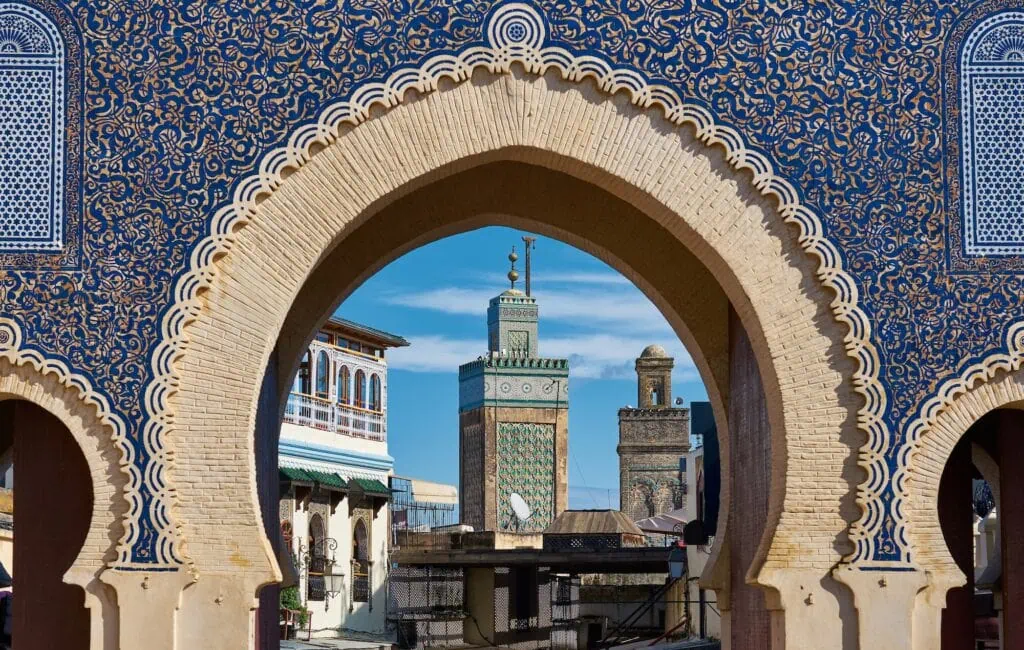
Start your exploration early morning when shopkeepers arrange their displays and children head to Quranic schools. The Blue Gate (Bab Boujloud) serves as the main entrance, its intricate tile work setting expectations for the architectural wonders ahead. From here, follow the main arteries toward Kairaouine Mosque, but allow spontaneous detours down side passages where craftsmen work in centuries-old workshops.
Experience the Living Heritage
Fes el-Bali isn’t a museum – it’s home to over 150,000 residents who maintain traditional lifestyles. Watch families gather water from ancient fountains, observe children playing games passed down through generations, and witness the daily call to prayer echo from multiple minarets simultaneously.
The medina’s organic layout reflects Islamic urban planning principles, with residential quarters organized around neighborhood mosques and public baths. Each district maintains its own bakery, mosque, and hammam, creating self-contained communities within the larger whole.
Discover Architectural Masterpieces That Define Moroccan Craftsmanship
Fez showcases the pinnacle of Marinid dynasty architecture through buildings that have survived wars, natural disasters, and centuries of use.
The Bou Inania Madrasa represents the most elaborate example of Islamic educational architecture in Morocco. Completed in 1355, this theological college demonstrates how learning and beauty intertwined in medieval Islamic culture. Every surface displays intricate geometric patterns, Arabic calligraphy, and carved cedar wood that required master craftsmen years to complete.
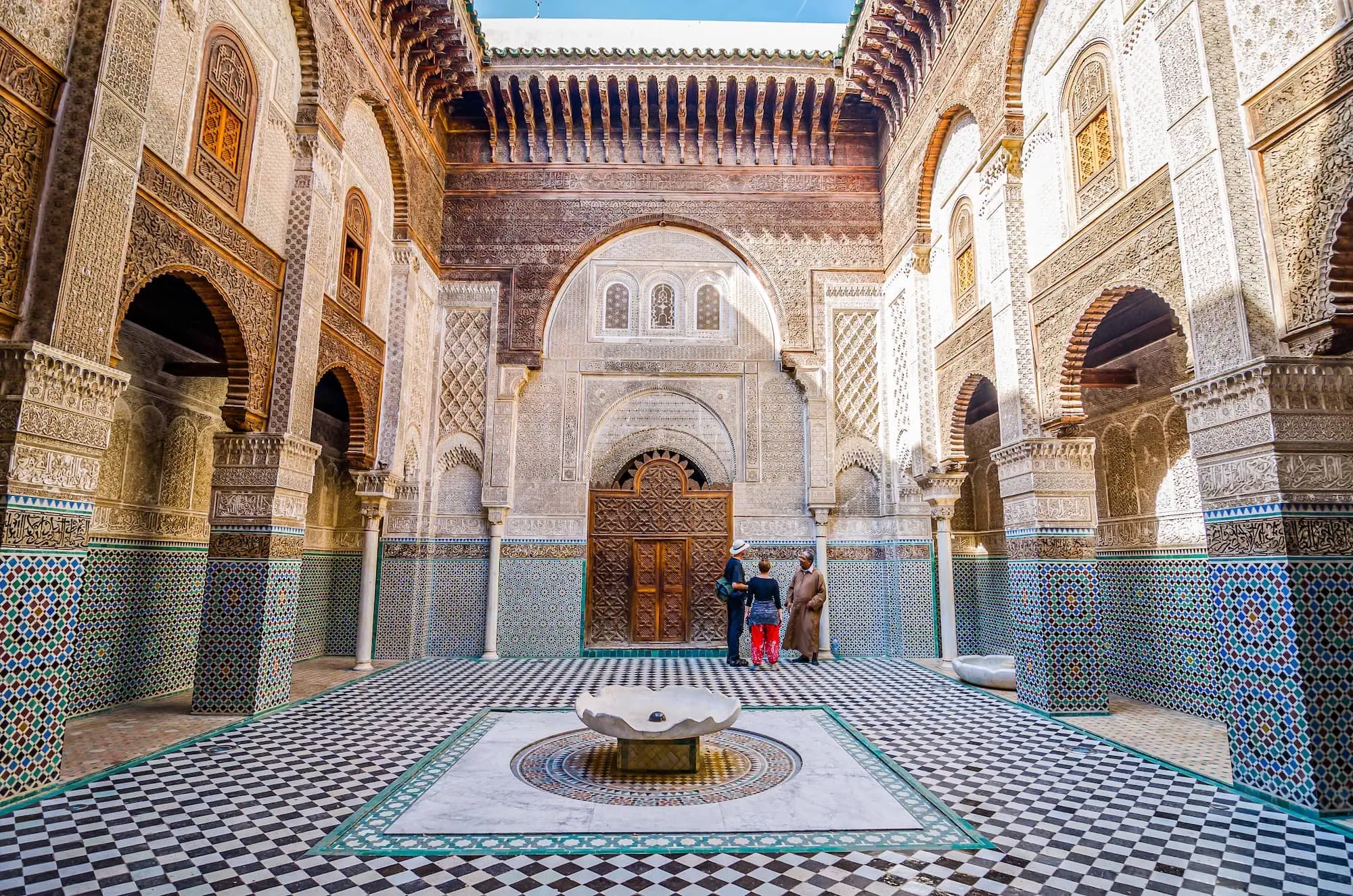
Step through the entrance portal to find a central courtyard where students once debated religious texts under the guidance of renowned scholars. The prayer hall’s mihrab showcases marble columns imported from Salé, while the minaret serves as both a call to prayer and an architectural statement visible throughout the medina. Unlike many historical sites, Bou Inania Madrasa welcomes non-Muslim visitors, making it accessible for cultural exploration.
Al-Attarine Madrasa, built earlier in the 14th century, offers a more intimate architectural experience. Named after the spice sellers’ souk nearby, this smaller madrasa focuses visitor attention on detailed craftsmanship rather than grand scale. The courtyard’s proportions create perfect acoustics, where whispered conversations carry clearly across the space.
Royal Palace and Government Quarter
The Royal Palace of Fez (Dar al-Makhzen) presents Morocco’s continuing monarchy through architecture that spans multiple dynasties. While the interior remains closed to public visits, the brass doors and surrounding walls demonstrate royal patronage of traditional crafts. These doors, among the world’s largest brass doors, require teams of craftsmen working in specialized techniques passed down through family workshops.
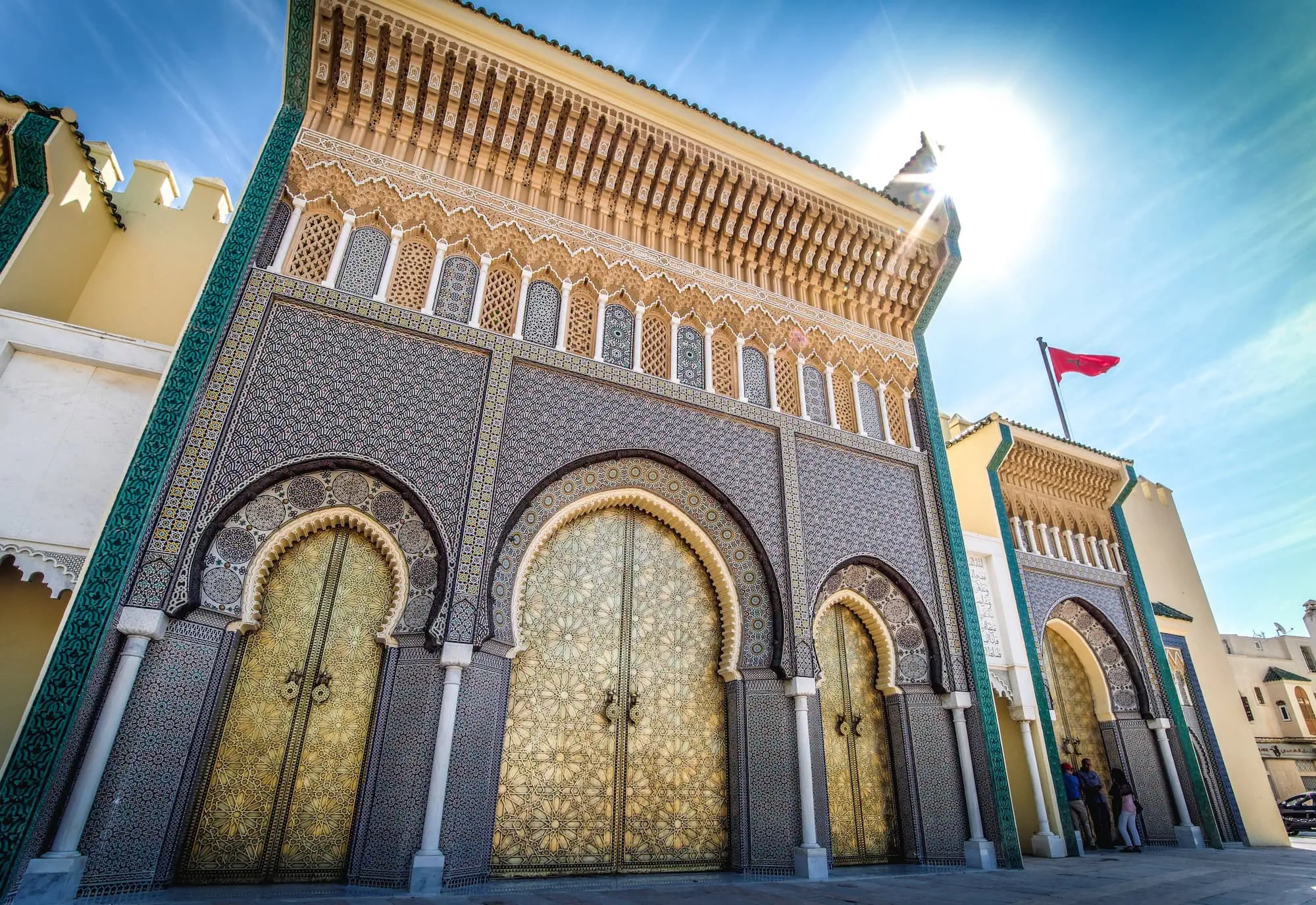
The palace complex includes gardens, administrative buildings, and royal workshops where court artisans create pieces for official ceremonies. Walking the perimeter reveals different architectural periods, from Almoravid foundations to modern renovations that maintain historical authenticity while accommodating contemporary governmental needs.
Witness Ancient Industries Still Thriving Today
The Chouara Tannery Experience
Leather production in Fez follows the same processes used 1,000 years ago. The Chouara Tannery, largest of the city’s three remaining tanneries, processes thousands of animal hides monthly using traditional methods that create the distinctive Moroccan leather prized worldwide.
Workers stand waist-deep in stone vats filled with natural dyes derived from plants, minerals, and other organic materials. The red dye comes from poppy flowers, yellow from turmeric and saffron, while brown derives from henna. These natural coloring agents require specific timing and temperature control that tannery masters learn through decades of apprenticeship.
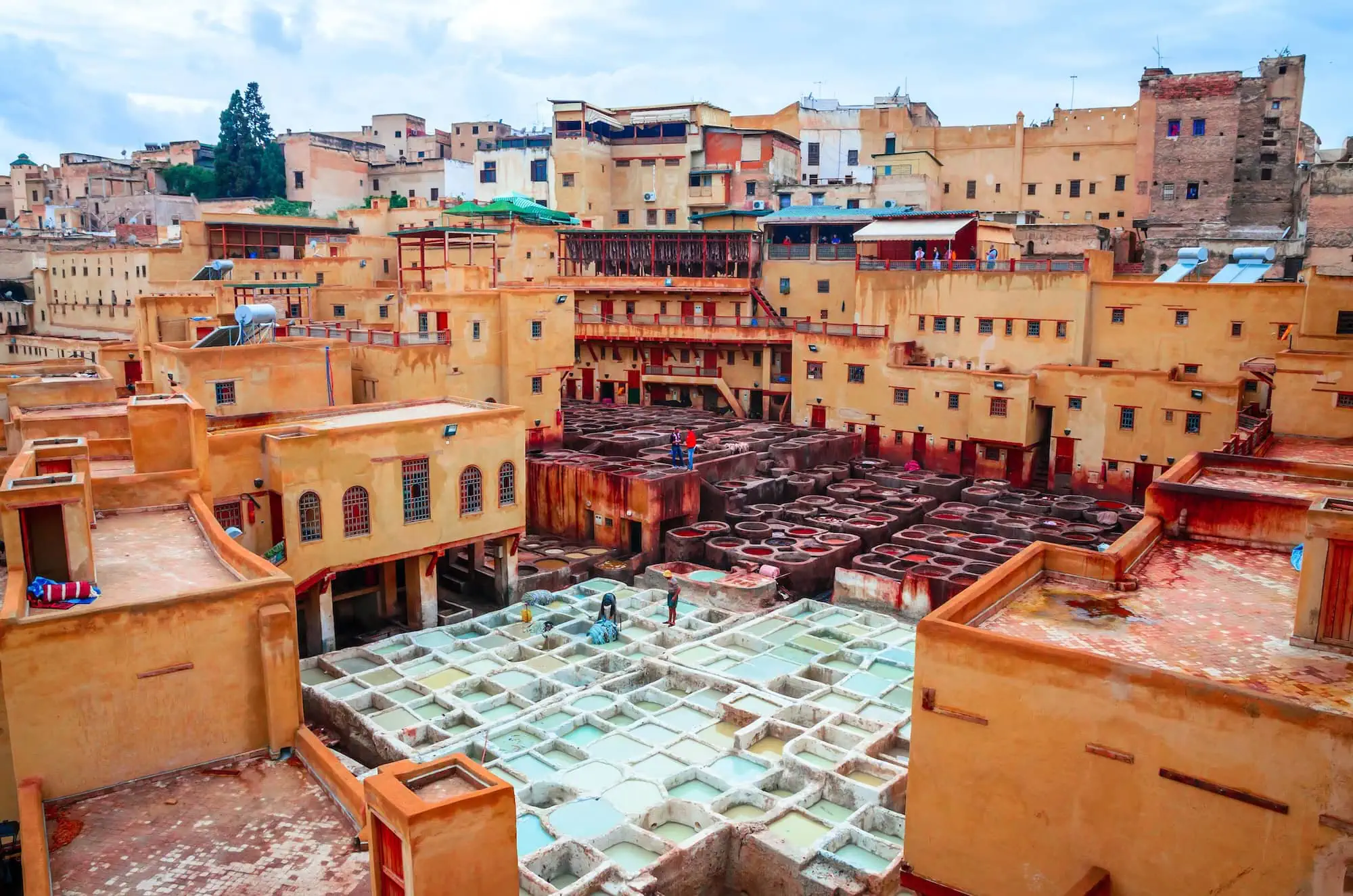
Visit during morning hours when work activity peaks and lighting conditions optimize photography. Leather shops surrounding the tannery viewpoints offer mint leaves to counteract the strong ammonia odors – a traditional courtesy that has served visitors for centuries. The finished products, from soft babouches (traditional slippers) to sturdy bags and jackets, represent the final stage of this ancient industrial process.
Craftsman Quarters and Artisan Workshops
Metalworking, wood carving, and textile production continue in family workshops scattered throughout the medina. The Seffarine Square hosts copper and brass workers who hammer sheets of metal into intricate patterns, their rhythmic hammering providing a constant soundtrack to medina life.
Cedar wood workshops produce the geometric screens (mashrabiya) that adorn traditional Moroccan buildings. Master carpenters work without power tools, using techniques that create joints so precise that no nails or glue are required. These workshops welcome visitors interested in understanding traditional building methods, though purchasing decisions should wait until you’ve compared quality and prices across multiple vendors.
Carpet weaving cooperatives, often run by women’s associations, demonstrate the months-long process of creating authentic Moroccan rugs. Each region produces distinctive patterns and color combinations, with Fez specializing in intricate geometric designs that reflect the city’s scholarly mathematical traditions.
Immerse Yourself in Spiritual and Educational Heritage
The University of Al Karaouine claims the distinction as the world’s oldest continuously operating university, founded in 859 CE by Fatima al-Fihri. This institution educated students from across the Islamic world and Europe during the Middle Ages, contributing to the preservation and transmission of classical knowledge during Europe’s Dark Ages.
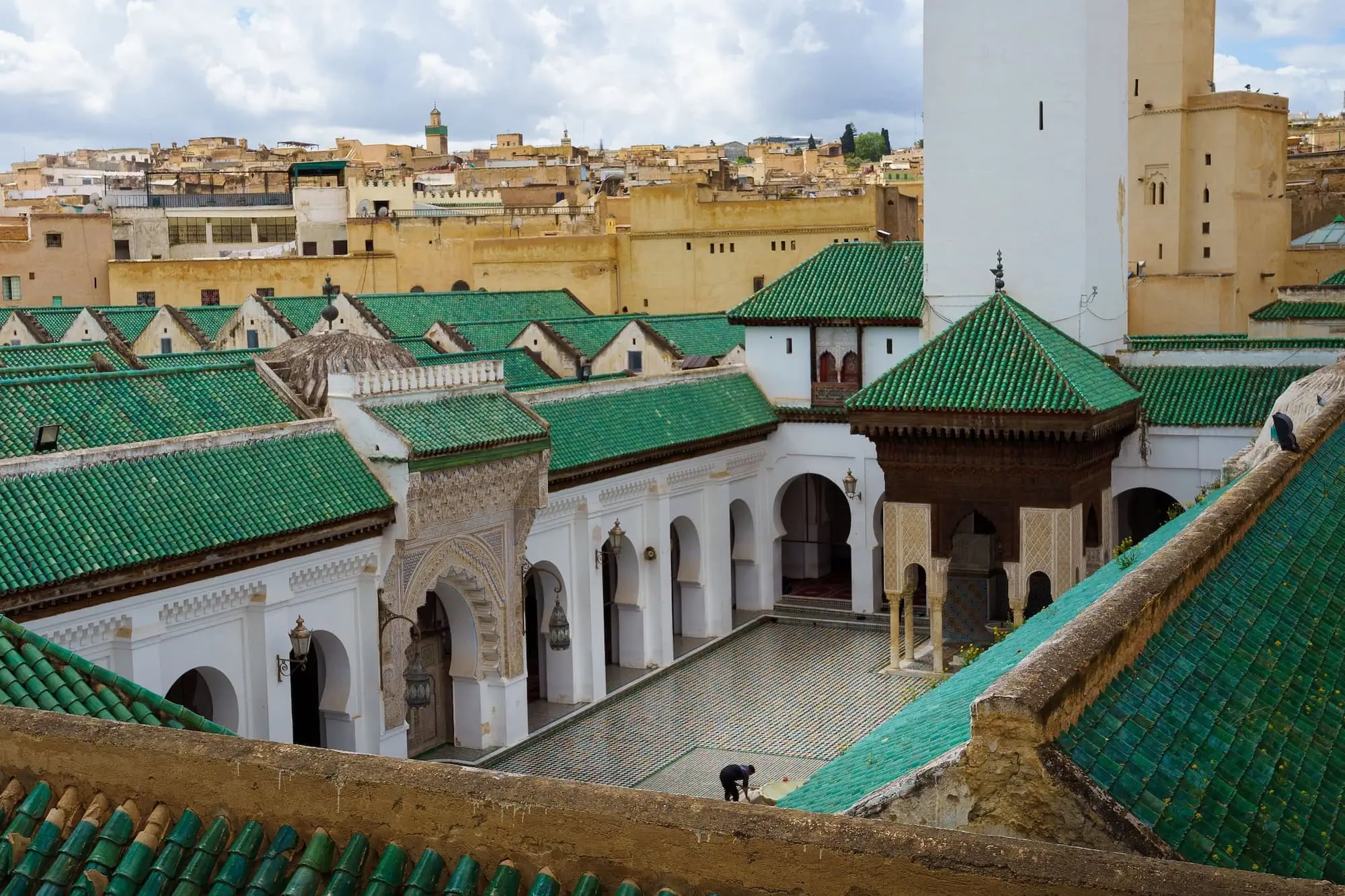
Non-Muslims cannot enter the mosque’s prayer areas, but the complex’s outer courtyards and the university’s historical impact create meaningful cultural engagement. The library houses manuscripts dating to the 9th century, including works on astronomy, medicine, and philosophy that influenced both Islamic and European intellectual development. These texts demonstrate Fez’s role as a bridge between different civilizations.
Historic Madrasas Beyond the Famous Names
While Bou Inania and Al-Attarine madrasas receive most attention, smaller theological colleges throughout the medina offer intimate architectural experiences without crowds. Madrasa Sahrij and Madrasa Sbaiyine showcase similar decorative techniques on smaller scales, allowing detailed examination of carved stucco, painted wood, and geometric tile work.
These lesser-known madrasas often function as active religious schools, where modern students study traditional Islamic sciences using methods refined over centuries. Respectful visitors can observe the continuing educational traditions that have made Fez a center of learning for over a millennium.
The Mausoleum of Moulay Idriss II honors the founder of Fez and serves as the city’s most important pilgrimage site. While non-Muslims cannot enter the shrine itself, the surrounding area demonstrates the continuing spiritual significance of Fez in Moroccan religious life. Pilgrims from throughout Morocco visit throughout the year, with the annual moussem (religious festival) drawing hundreds of thousands of participants.
Experience Authentic Moroccan Hospitality and Cuisine
Riad Accommodation and Traditional Hospitality
Staying in a restored riad transforms your Fez experience from tourism to cultural immersion. These traditional houses, built around central courtyards, follow architectural principles that create natural cooling and privacy while fostering family community life.
Historic riads maintain original features like carved cedar wood ceilings, hand-painted tiles (zellij), and rooftop terraces that provide medina views impossible from street level. Many riad owners descend from merchant families who built these houses during Fez’s commercial golden age, bringing personal historical knowledge to guest interactions.
Breakfast on a riad rooftop as morning call to prayer echoes from surrounding minarets creates an sensory introduction to Moroccan daily rhythms. Evening tea service, often accompanied by traditional sweets and conversation about local history, extends the cultural education beyond formal sightseeing activities.
Culinary Traditions and Local Specialties
Fez cuisine reflects the city’s position as Morocco’s cultural capital, where palace cooking techniques influenced household traditions. Local specialties include pastilla, a sweet and savory pastry traditionally filled with pigeon meat and almonds, wrapped in delicate warqa pastry and dusted with cinnamon and powdered sugar.
The medina’s food stalls and small restaurants offer authentic versions of Moroccan classics adapted to local tastes. Mechoui (slow-roasted lamb), often prepared in communal ovens throughout residential neighborhoods, represents traditional cooking methods where families share cooking facilities and social time.
Traditional Fassi (Fez-style) tagines use specific spice combinations and cooking techniques that differ from other Moroccan regions. The famous olive and lemon preserved chicken tagine originated in Fez palace kitchens, while lamb and prune tagines reflect the city’s historical connections to sub-Saharan trade routes.
Hammam Culture and Wellness Traditions
Public baths (hammams) in Fez maintain social and cultural functions beyond simple hygiene. These community gathering spaces follow traditional gender segregation, with specific hours designated for men and women, creating spaces for social interaction within Islamic cultural guidelines.
Traditional hammam experiences include three rooms at different temperatures, progressing from warm to hot to very hot, followed by cooling and relaxation areas. Local attendants provide traditional black soap massages using eucalyptus-infused products that deep-clean and soften skin through techniques passed down through generations of hammam workers.
Historic hammams like Hammam Seffarine operate continuously since medieval times, their architectural features including star-shaped ceiling openings that provide natural lighting and ventilation. These buildings demonstrate Islamic engineering solutions for public health and social needs that modern spa culture attempts to replicate.
Explore Beyond the Medina Walls
Mellah Jewish Quarter and Cultural Diversity
The Mellah, Fez’s historic Jewish quarter, preserves Morocco’s multicultural heritage through architecture and community spaces that reflect centuries of Muslim-Jewish coexistence. Established in the 15th century, this neighborhood housed Jewish refugees from Spain while maintaining distinctive architectural features that blend Moroccan and Andalusian styles.
The Ibn Danan Synagogue, restored in recent decades, represents one of Morocco’s most important Jewish heritage sites. Its interior decoration combines Hebrew religious symbols with traditional Moroccan geometric patterns, demonstrating the cultural synthesis that characterized Moroccan Jewish communities. The adjacent Jewish cemetery, with its distinctive white-painted tombs, serves as a pilgrimage site for Jewish visitors from around the world.
Traditional Jewish houses in the Mellah feature larger windows and more ornate balconies than typical medina architecture, reflecting different cultural approaches to privacy and community interaction. Many buildings now house Muslim families, creating a neighborhood where architectural heritage transcends religious boundaries.
Marinid Tombs and Panoramic Views
The Marinid Tombs, perched on hills overlooking Fez, provide the city’s best panoramic views while honoring the dynasty that created many of Fez’s most important monuments. These 14th-century royal burial sites combine religious architecture with strategic positioning that demonstrates the Marinid rulers’ vision for their capital city.
Sunset visits to the tombs offer dramatic lighting conditions for photography while avoiding the day’s heat. The elevated position reveals the medina’s full extent, with its maze of rooftops, minarets, and courtyard gardens creating patterns visible only from this perspective. Modern Fez extends beyond the medina walls, providing context for understanding how the historical city relates to contemporary Morocco.
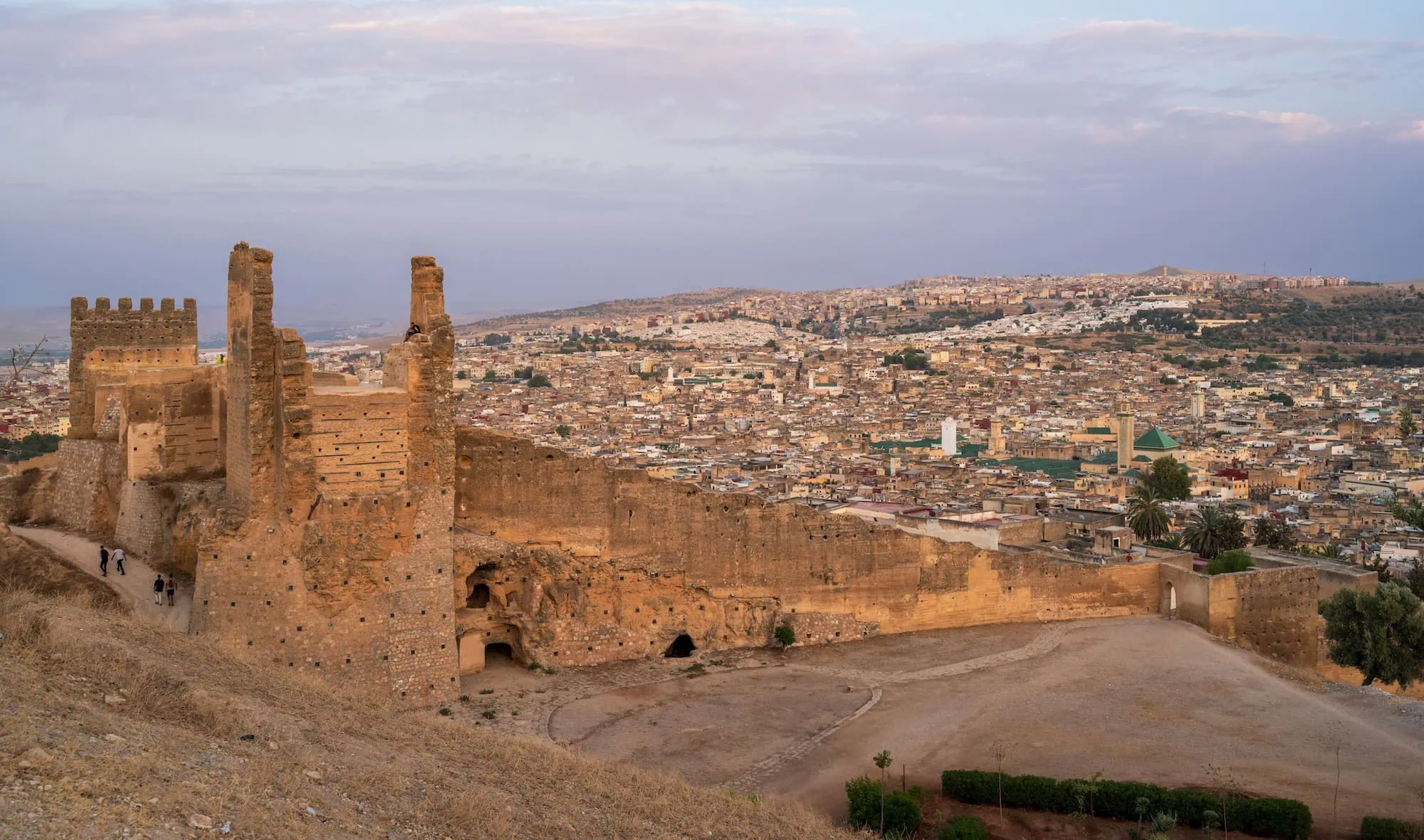
The tomb architecture itself follows Marinid decorative traditions, though centuries of weathering have softened the original carved details. Recent restoration efforts preserve structural integrity while maintaining the romantic ruins atmosphere that has attracted visitors since colonial times.
New Fez and French Colonial Heritage
Fez el-Jdid (New Fez), built by the Marinids in the 13th century, showcases different urban planning approaches than the organic growth of Fez el-Bali. Wide boulevards, planned squares, and systematic neighborhood organization reflect medieval attempts at organized city development.
The French Protectorate period (1912-1956) added another architectural layer through the Ville Nouvelle, designed according to colonial urban planning principles that separated European and Moroccan populations. Today, this area houses government offices, modern hotels, and commercial districts that serve as Fez’s contemporary business center.
Boulevard Hassan II connects the historical medinas with the modern city center, creating a linear progression through different periods of Moroccan urban development. Walking this route demonstrates how Fez adapted to changing political circumstances while maintaining its cultural core identity.
Plan Your Fez Adventure
Getting Around and Transportation
Fez’s medina prohibits motorized vehicles, making walking the primary transportation method for exploring historical areas. Comfortable walking shoes with good grip become essential equipment, as many streets include uneven stone surfaces and occasional steps that can challenge footing.
Petit taxis (small red taxis) serve transportation between the medina, train station, airport, and modern city districts. These taxis use meters, though drivers may attempt fixed-price negotiations for tourist routes. Insisting on meter usage or agreeing on prices before starting trips prevents misunderstandings.
The Fez train station connects directly to Casablanca, Rabat, and Marrakech through Morocco’s modern rail network. High-speed trains reduce travel times significantly, making day trips between major cities feasible for travelers with limited time.
Timing and Seasonal Considerations
Spring (March-May) and autumn (September-November) provide optimal weather conditions for medina exploration, with temperatures ranging from 15-25°C (59-77°F) and minimal rainfall. Summer temperatures often exceed 35°C (95°F), making extensive walking challenging during midday hours.
Religious observance affects business hours and cultural activities throughout the year. During Ramadan, many restaurants close during daylight hours, though tourist-oriented establishments often remain open. The evening Iftar (fast-breaking) meal creates festive street atmospheres as families gather for communal dining.
Friday prayers (around 12:00 pm/12:00) temporarily increase foot traffic near major mosques, creating crowded conditions in central medina areas. Planning major sightseeing activities for earlier morning or afternoon hours avoids these peak periods.
Shopping and Authentic Crafts
Authentic Moroccan crafts require careful evaluation to distinguish quality handwork from mass-produced imitations. Traditional leather goods should feel supple and display consistent coloring, while genuine carpets show slight irregularities that indicate hand weaving rather than machine production.
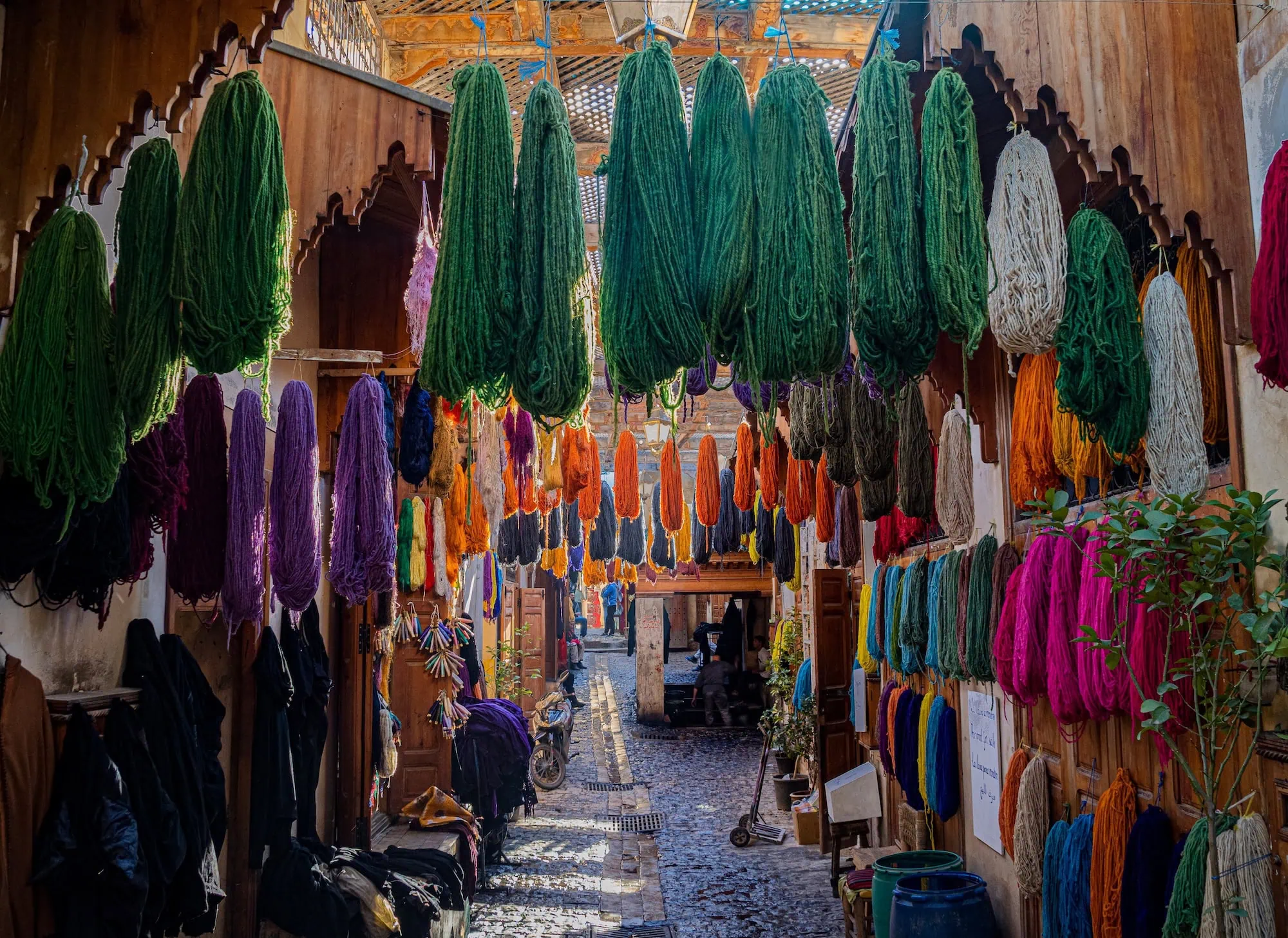
Price negotiations form an expected part of Moroccan commerce, with initial asking prices typically 2-3 times the final selling price. Patient, respectful bargaining demonstrates cultural awareness while ensuring fair transactions for both buyers and sellers.
Export regulations restrict certain antique items, particularly those over 100 years old or items with cultural heritage significance. Reputable dealers provide documentation for valuable purchases, while customs officials at Mohammed V Airport can provide guidance on export requirements for specific items.
Frequently Asked Questions
Three to four days allows thorough medina exploration, major monument visits, and cultural experiences.
Yes, the medina is generally safe during daylight hours for solo travelers.
Not mandatory, but guides provide valuable historical context and navigate complex medina layouts effectively.
Modest clothing covering shoulders and knees, plus comfortable walking shoes with good grip.
Most active mosques restrict entry to Muslims, though Bou Inania Madrasa welcomes non-Muslim visitors.
Budget 50-200 USD for quality leather, 100-500 USD for authentic carpets, 10-30 USD for crafts.
Morning hours (9:00 am-11:00 am) offer optimal lighting and manageable odor levels.
Cash is preferred for medina purchases, though modern hotels and restaurants accept cards.
Carry a physical map, note distinctive landmarks, and ask locals for directions.
Standard travel vaccinations including hepatitis A and typhoid are recommended.
Bottled water is recommended for drinking, tap water is safe for basic hygiene.
Arabic and Berber are official, French is widely understood, English increasingly common in tourism.
Design Your Custom Tour
Explore Egypt & Morocco your way by selecting only the attractions you want to visit