

Ajloun Castle – A Famous Landmark Reminiscent Of A Complex Past
Perched high above the green hills of northern Jordan, Ajloun Castle stands as a powerful reminder of the region’s medieval history.
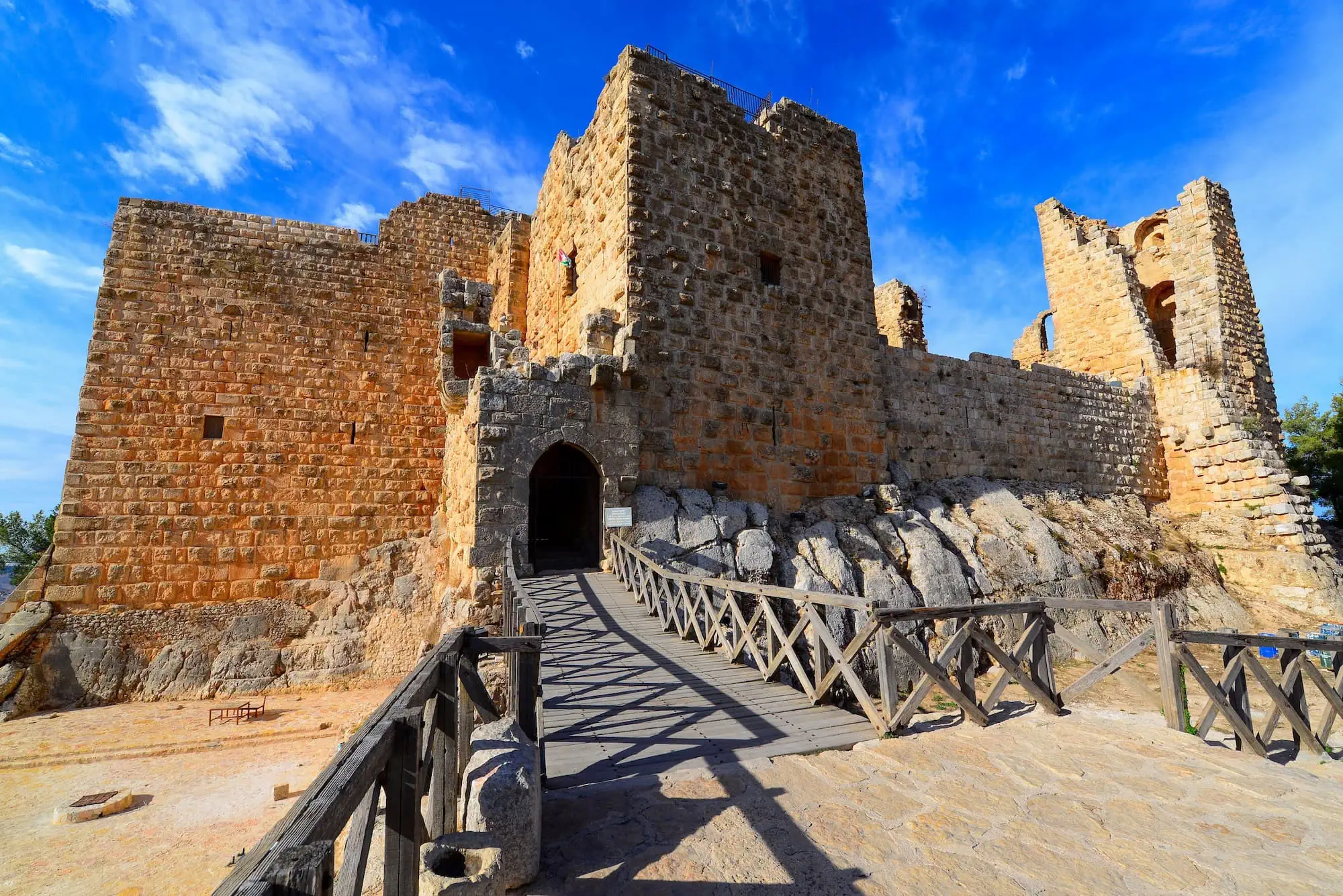
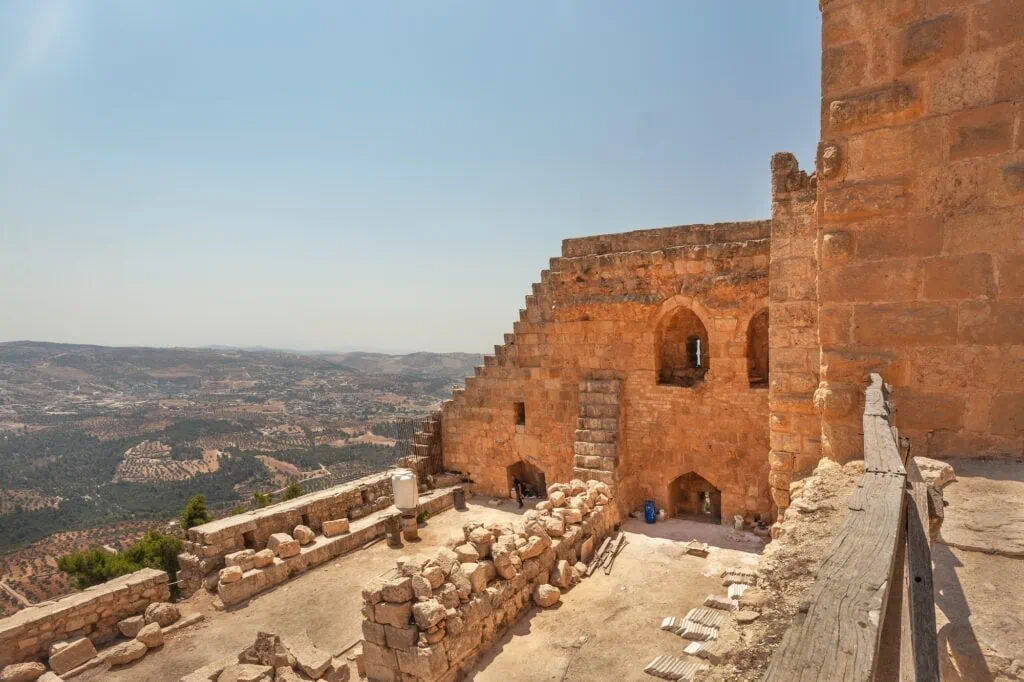
Constructed in the 12th century during the era of Saladin, this impressive fortress was designed to defend against Crusader advances and protect key trade routes. As one of the finest examples of Islamic military architecture in the Levant, Ajloun Castle combines strategic positioning with sophisticated design. Its towers and thick stone walls rise from Mount ‘Auf, offering sweeping views across the Jordan Valley.
For centuries, the castle played a vital role in controlling trade routes between Damascus and Egypt while functioning as part of a wider defensive network. Today, visitors can walk through its corridors, climb its towers, and experience a site where history, architecture, and landscape come together.
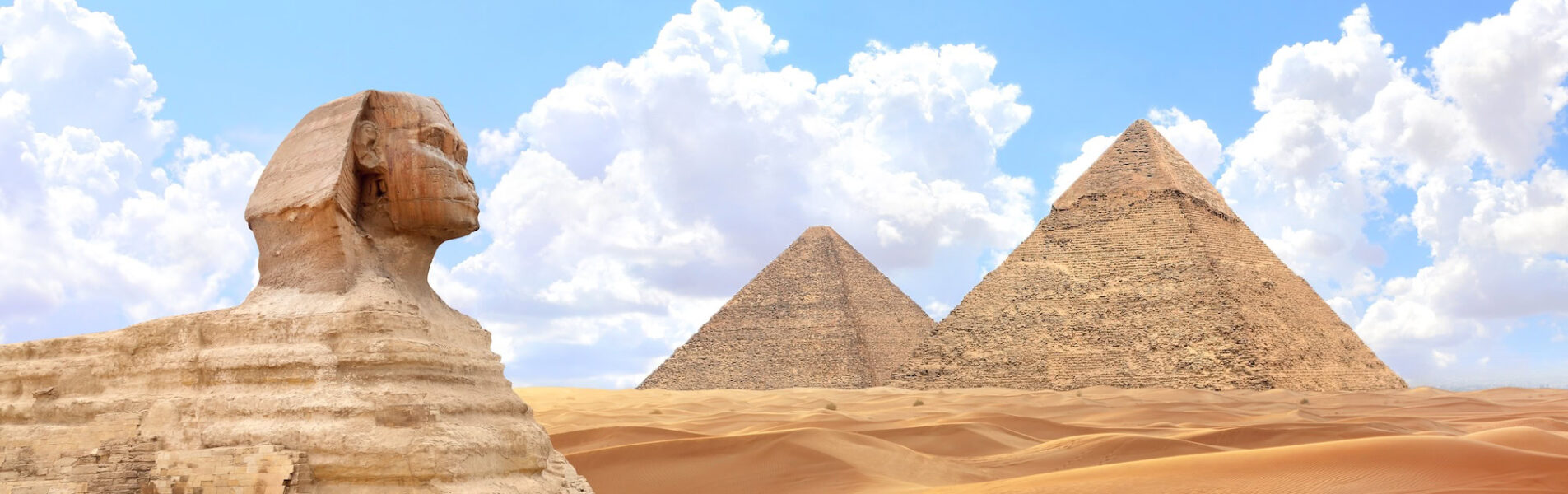
To explore Ajloun Castle alongside Petra, Wadi Rum, and Egypt’s iconic landmarks, discover our Egypt and Jordan vacation packages.
Table of Contents
Architectural Masterpiece of Medieval Defense
The fortress showcases extraordinary military engineering through its sophisticated defensive systems. Corner towers rise strategically from thick curtain walls, creating overlapping fields of fire that would have devastated any attacking force.
Stone Walls That Tell Stories
Arrow slits pierce the fortress walls with mathematical precision, each positioned to eliminate blind spots while protecting defenders. The main gatehouse features a complex entry system with multiple barriers and defensive chambers.
These architectural elements demonstrate the advanced understanding of siege warfare during the Ayyubid period. Walking through the restored sections, visitors encounter massive stone blocks weighing several tons each.
Towers and Defensive Networks
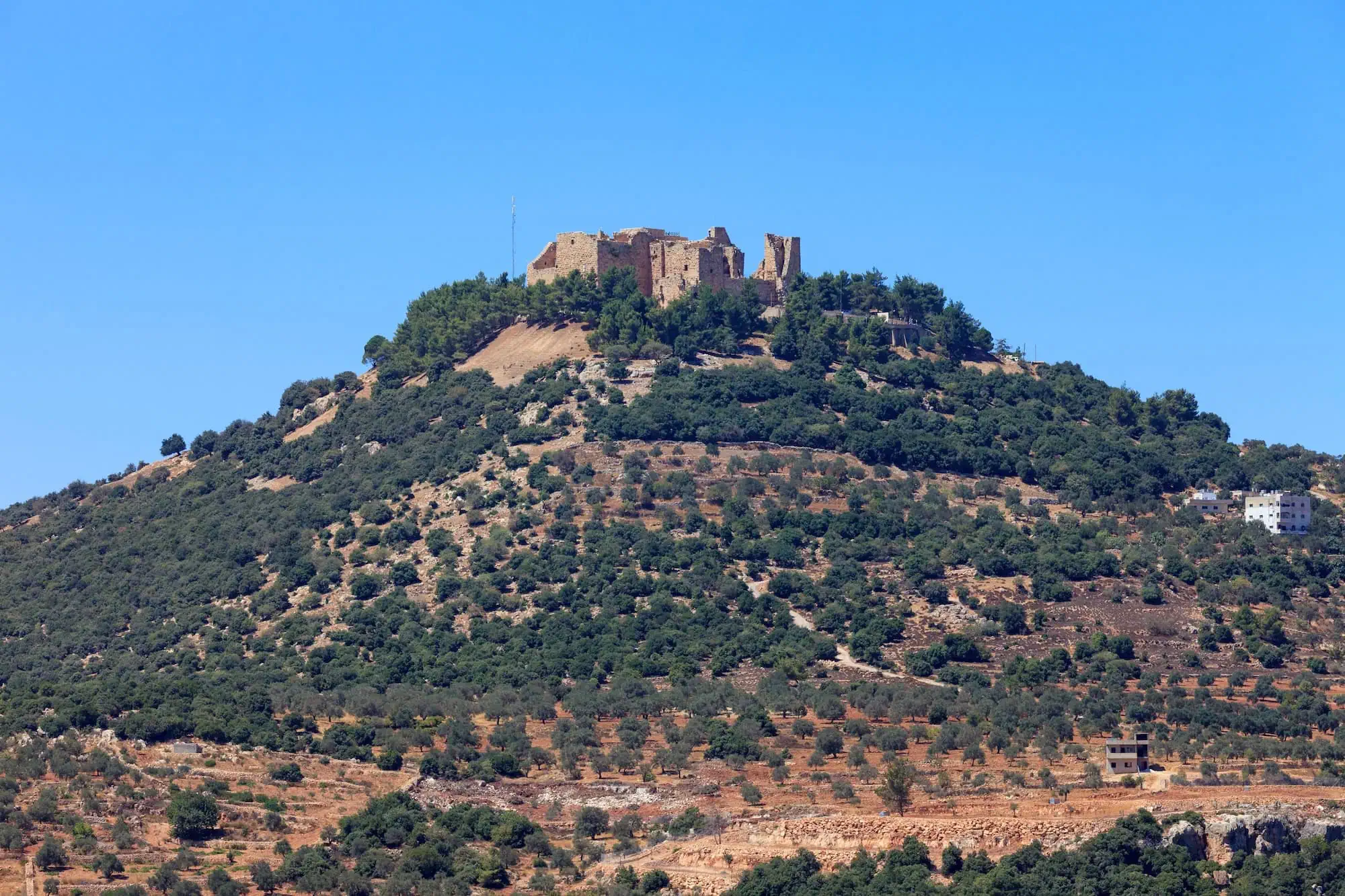
Six corner towers provided comprehensive surveillance of approaching threats from all directions. Each tower contained multiple levels with specific defensive functions – from storage areas to command posts overlooking the surrounding valleys.
The southwestern tower offers particularly stunning views toward the Jordan Valley and Sea of Galilee. The castle’s moat system, though partially filled today, once created an additional barrier around the fortress perimeter.
Engineering Excellence
Master stonemasons employed advanced techniques to ensure structural stability across centuries. The fortress withstood numerous earthquakes, Mongol sieges, and natural weathering through careful architectural planning.
Interior chambers feature sophisticated ventilation systems and water collection methods that sustained garrison forces during extended sieges.
Historical Legacy of Strategic Warfare
Izz al-Din Usama ibn Munqidh oversaw construction beginning in 1184, creating a fortress that would dominate regional politics for generations. The timing proved crucial as Crusader kingdoms pressed inland from coastal strongholds, threatening Muslim-controlled territories.
Saladin’s military planners chose this location after careful geographical analysis. The mountaintop position provided natural defensive advantages while commanding critical transportation corridors.
During the Crusades, Ajloun served as a forward observation post monitoring Belvoir Fortress and other Frankish positions across the Jordan River. Signal fires could relay messages to Damascus within hours, creating an early warning system that proved invaluable during military campaigns.
Mamluk Administration
Following Ayyubid decline, Mamluk rulers expanded and modernized the fortress between 1214 and 1215. They added new defensive features while transforming it into an administrative center governing surrounding agricultural lands.
Later Mongol invasions tested these improvements severely. The fortress successfully resisted initial attacks but suffered significant damage during prolonged campaigns.
Exploring the Museum and Archaeological Treasures
The Ajloun Archaeological Museum houses fascinating artifacts uncovered during restoration projects and local excavations. Ancient pottery reveals daily life details from different historical periods, while weapons and tools demonstrate technological evolution across centuries.
Ceramic collections span from Byzantine monastery remains discovered beneath the castle foundations through Ottoman administrative documents. These archaeological layers tell complex stories of cultural transition and political change in medieval Jordan.
Military equipment exhibits include arrowheads, sword fragments, and siege warfare tools recovered from castle excavations. These artifacts provide tangible connections to historical events described in medieval chronicles.
Display cases contain coins from various dynasties that controlled the fortress, illustrating economic networks spanning from Egypt to Baghdad. Interactive exhibits explain siege tactics and defensive strategies employed by both Muslim and Crusader forces.
Spectacular Views and Natural Setting
Panoramic vistas from castle walls reveal why medieval commanders valued this position so highly. The Jordan Valley stretches eastward toward modern-day Israel and Palestine, while northern views encompass Syrian highlands and Lebanese mountains on clear days.
Spring months transform surrounding landscapes into green carpets dotted with wildflowers and ancient olive trees. The Ajloun Forest Reserve begins just minutes from the castle entrance, offering hiking trails through oak forests and Mediterranean vegetation.
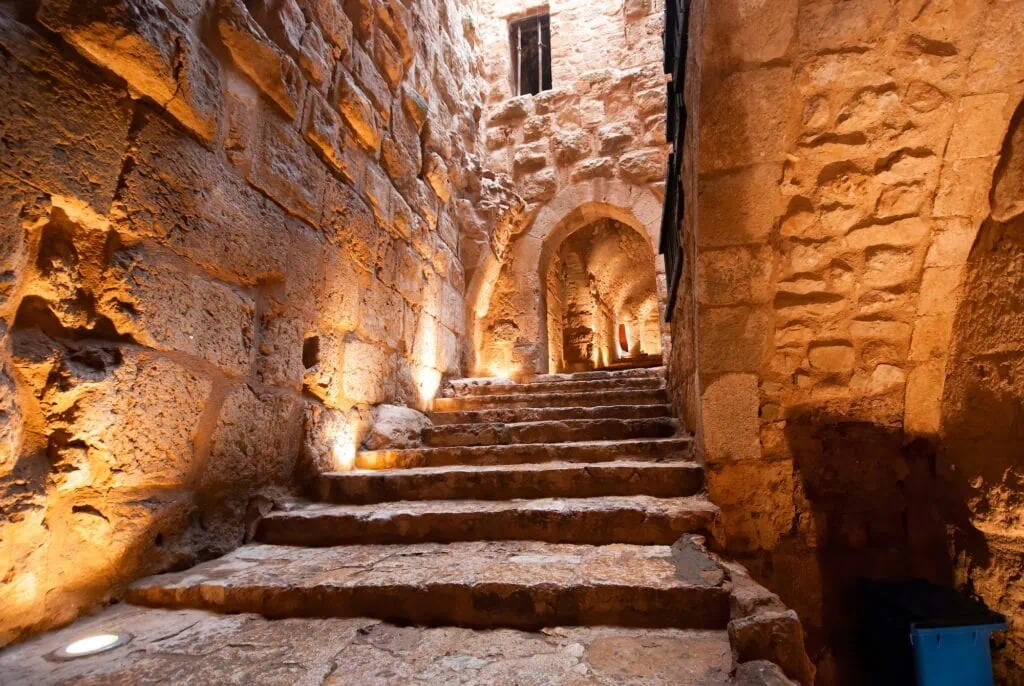
Photography opportunities abound throughout different times of day. Sunrise illuminates the Jordan Valley from elevated ramparts, while sunset creates dramatic silhouettes against tower profiles.
The cable car system offers alternative perspectives for visitors preferring aerial views over the demanding uphill walk. This modern addition connects the castle with lower parking areas while providing scenic transportation through forested slopes.
Practical Visit Information for Modern Travelers
Entrance fees cost 3 Jordanian dinars for international visitors, while Jordan Pass holders receive complimentary admission. The castle opens daily from 8:00 am to sunset, with extended summer hours accommodating late afternoon visits.
We recommend allowing 2-3 hours minimum to explore all accessible areas and museum exhibits thoroughly.
Transportation and Access
Located 50 kilometers north of Amman, the fortress requires approximately one hour driving time through scenic mountain roads. Private transportation offers the most flexibility for visit timing and route planning.
The uphill approach path challenges visitors with limited mobility, though the rewarding views justify the physical effort for most travelers. Comfortable walking shoes become essential given uneven stone surfaces and steep gradients throughout castle grounds.
Planning Your Experience
Morning visits often provide clearer atmospheric conditions for photography and sightseeing. Afternoon tours can extend into early evening during summer months when sunset views create memorable experiences.
Combining Ajloun Castle with nearby attractions creates comprehensive day trips. Jerash archaeological site lies within 20 minutes driving distance, offering complementary Roman and Byzantine historical perspectives.
Guided tour options range from basic historical overviews to detailed architectural analyses led by archaeological specialists. We arrange private expert guides who customize presentations according to visitor interests and knowledge levels.
Frequently Asked Questions
Most visitors need 2-3 hours to see all accessible areas including the museum, towers, and defensive walls.
Spring (March-May) and autumn (September-November) offer ideal weather conditions with clear views and comfortable temperatures.
Yes, though parents should supervise carefully around elevated areas and steep stairs for safety reasons.
On clear days, visitors can spot the Sea of Galilee, Jordan Valley settlements, and distant fortress ruins.
International visitors pay 3 Jordanian dinars, while Jordan Pass holders enter free with their passes.
Basic refreshment stands operate near the parking area, though bringing water is recommended especially during summer.
Sturdy walking shoes, sun protection, and layered clothing work best given elevation changes and exposed stone surfaces.
Parking areas are located below the fortress, requiring a 500-meter uphill walk along an ancient stone path.
Professional guides offer tours in Arabic, English, and other languages by arrangement with advance booking recommended.
The fortress combines well with Jerash ruins, Amman city tours, or Jordan Valley excursions as comprehensive itineraries.
Design Your Custom Tour
Explore Egypt and Jordan your way by selecting only the attractions you want to visit