

Babylon Fortress – A Fortified Ancient City that was Like No Other
One fortress changed the course of Egyptian history forever.
Built around 300 AD under Emperor Diocletian, Babylon Fortress stood as Rome’s most strategic stronghold in Egypt, commanding the vital trade routes along the Nile. This massive Roman fortification witnessed the rise and fall of empires, serving as a bridge between pharaonic Egypt and the Islamic world. Today, we guide visitors through this remarkable archaeological site where ancient walls still echo with stories of conquest, faith, and cultural transformation that shaped modern Egypt.
Located in Old Cairo, the fortress remains tell a story that spans over 1,700 years, offering travelers an extraordinary window into Egypt’s layered past.
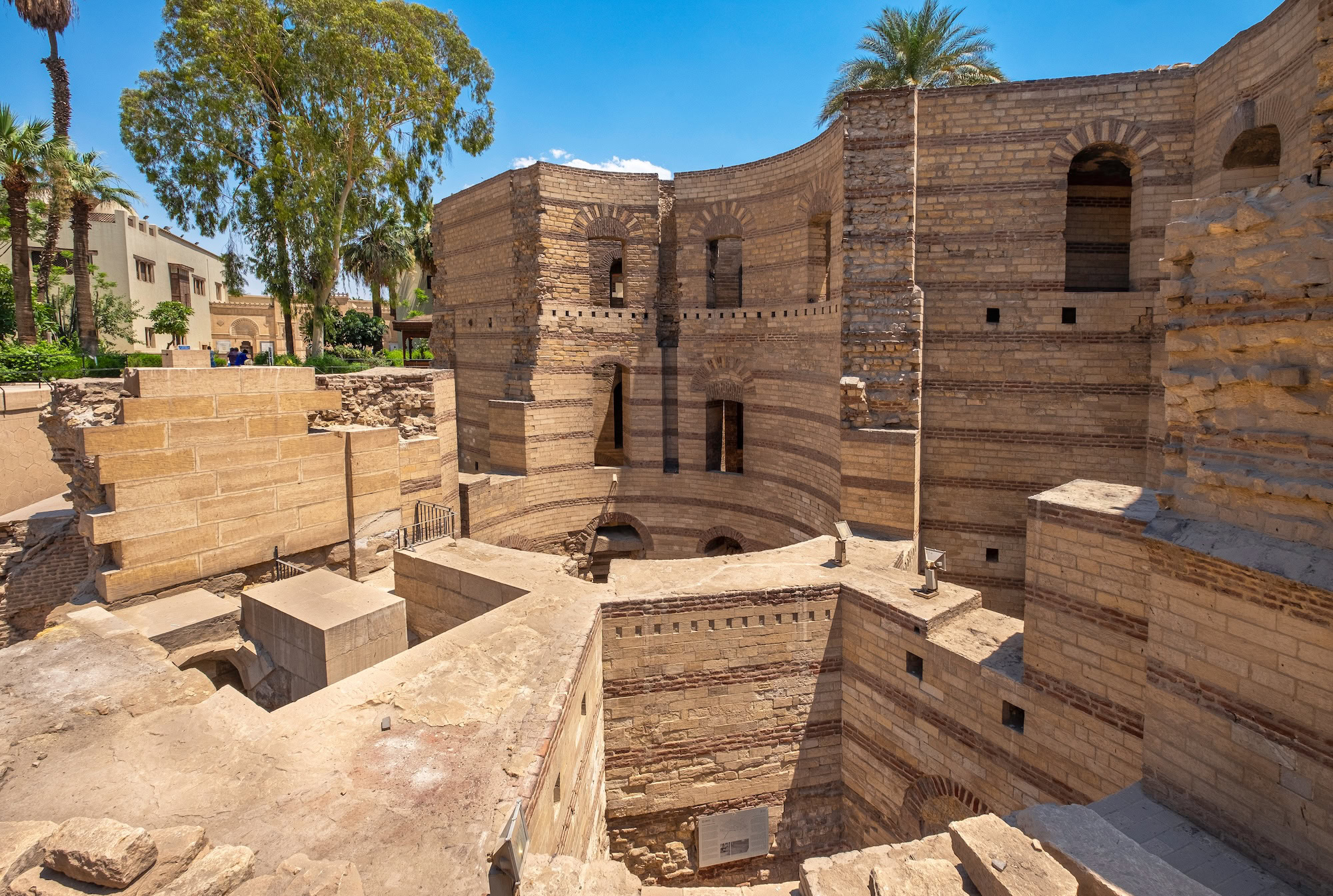
Roman Engineering Marvel in the Heart of Egypt
The strategic brilliance of Babylon Fortress becomes clear when you understand its location. Roman engineers positioned this mighty stronghold at the confluence of the Nile Delta and the river’s main channel, creating an impenetrable checkpoint for all river traffic. The fortress controlled access to both Upper and Lower Egypt while securing the vital Canal of the Pharaohs that connected the Nile to the Red Sea.
Architectural Features That Dominated the Landscape
Two massive round towers anchored the fortress design, rising dramatically above the Nile’s eastern bank. These towers, built with recycled materials from ancient pharaonic temples and distinctive red brick, created an imposing silhouette that reminded all who passed of Rome’s absolute authority. The walls stretched across strategic high ground, incorporating natural defensive advantages with sophisticated Roman military engineering.
Archaeological excavations reveal sophisticated drainage systems, barracks arrangements, and storage facilities that supported hundreds of soldiers. The fortress design reflected Rome’s understanding that controlling Egypt meant controlling the empire’s grain supply and eastern trade routes.
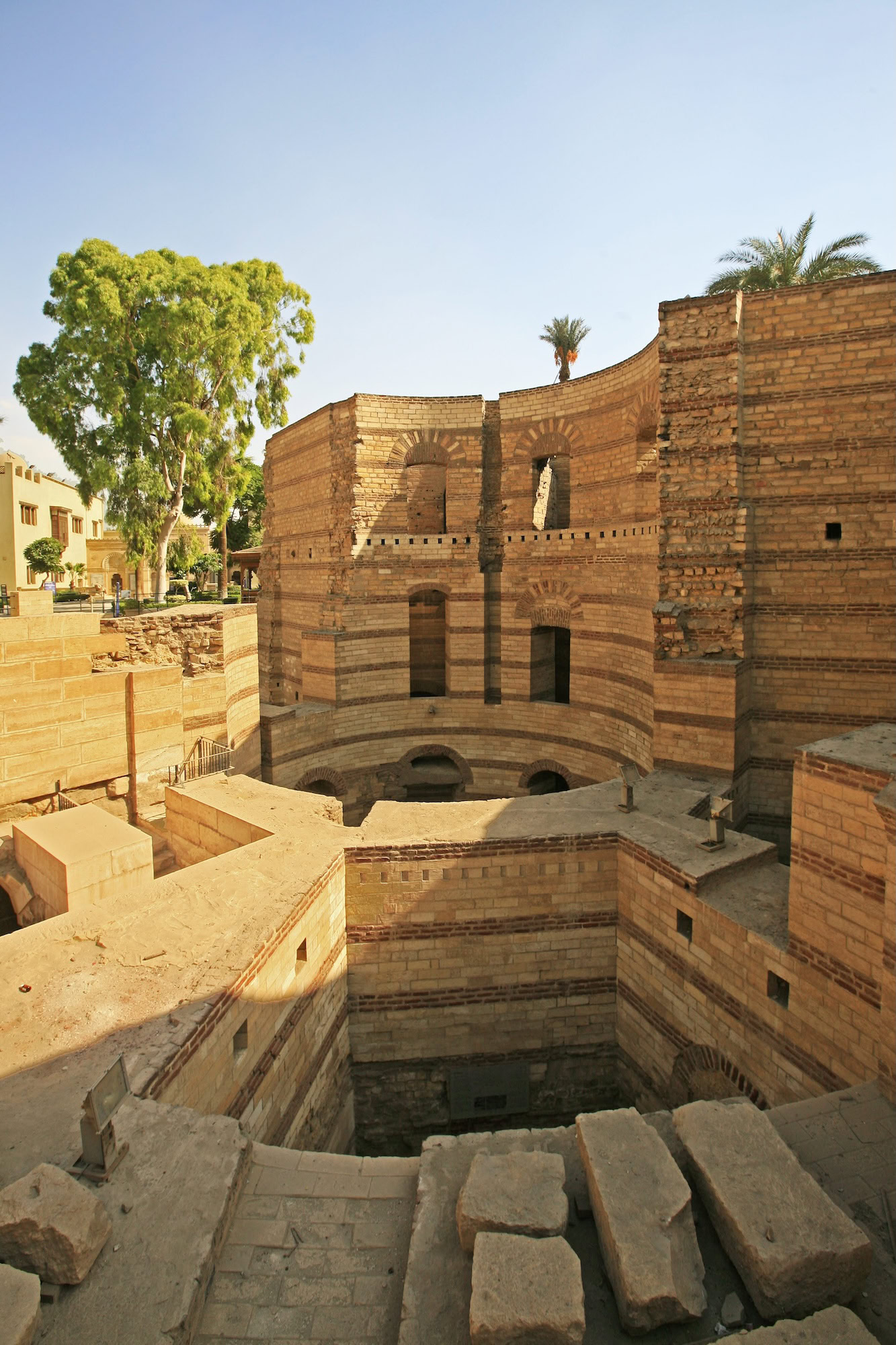
Strategic Control of Ancient Trade Routes
Every caravan traveling between Africa and Asia passed through Babylon Fortress territory. Roman officials collected customs duties on ivory from Sudan, spices from India, and silk from distant China. The fortress served as more than a military installation – it functioned as an economic powerhouse that generated enormous revenue for the Roman Empire.
Canal traffic required official permits issued from the fortress, giving Rome complete oversight of maritime commerce between the Mediterranean and Indian Ocean trade networks.
The Great Siege That Changed History
Amr ibn al-As arrived at Babylon Fortress in 640 AD with 4,000 Arab cavalry, facing what seemed an impossible task. The fortress had withstood centuries of attacks, its walls designed by Rome’s finest military engineers to repel any assault. Yet this seven-month siege would determine whether Egypt remained part of the Byzantine Empire or joined the rapidly expanding Islamic world.
Byzantine defenders commanded superior numbers and held every tactical advantage. Their position on elevated ground provided clear sightlines across the surrounding terrain. Massive grain stores and deep wells meant the fortress could withstand extended sieges. The arrival of Byzantine reinforcements seemed certain to break any Arab offensive.
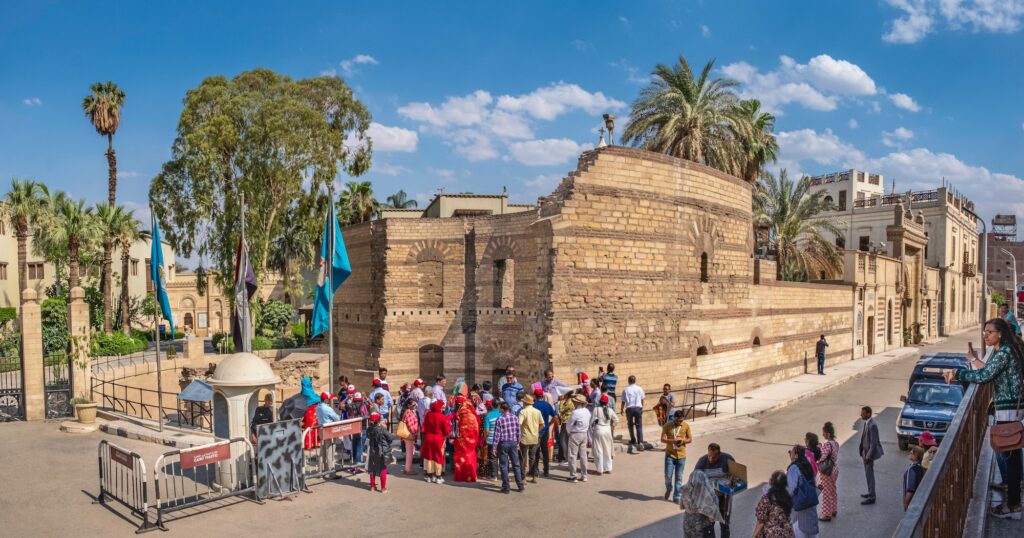
However, Amr’s forces employed patient siege tactics that gradually wore down the defenders’ resolve. Rather than launching costly frontal assaults, the Arab army established a complete blockade that prevented supply deliveries and reinforcement arrivals. Winter months brought additional hardships for the trapped Byzantine garrison. Local Coptic Christian populations, facing persecution under Byzantine rule, began providing intelligence and support to the besieging forces.
The fortress surrender in 641 AD marked the end of over 300 years of Roman and Byzantine control in Egypt. This victory opened the path to Alexandria and completed the Arab conquest of the entire Nile valley.
Center of Christian Life Under Byzantine Rule
Babylon Fortress served as headquarters for the Coptic Christian bishop during the Byzantine period. Within the fortress walls, elaborate churches provided spiritual guidance for Egypt’s Christian population. Religious ceremonies, administrative meetings, and theological discussions shaped daily life throughout the compound.
The Byzantine government used the fortress as a base for collecting taxes from Coptic monasteries and churches across Egypt. This financial pressure created significant tension between the ruling authorities and local Christian communities. Many Coptic leaders viewed the Arab conquest as liberation from oppressive Byzantine taxation and religious persecution.
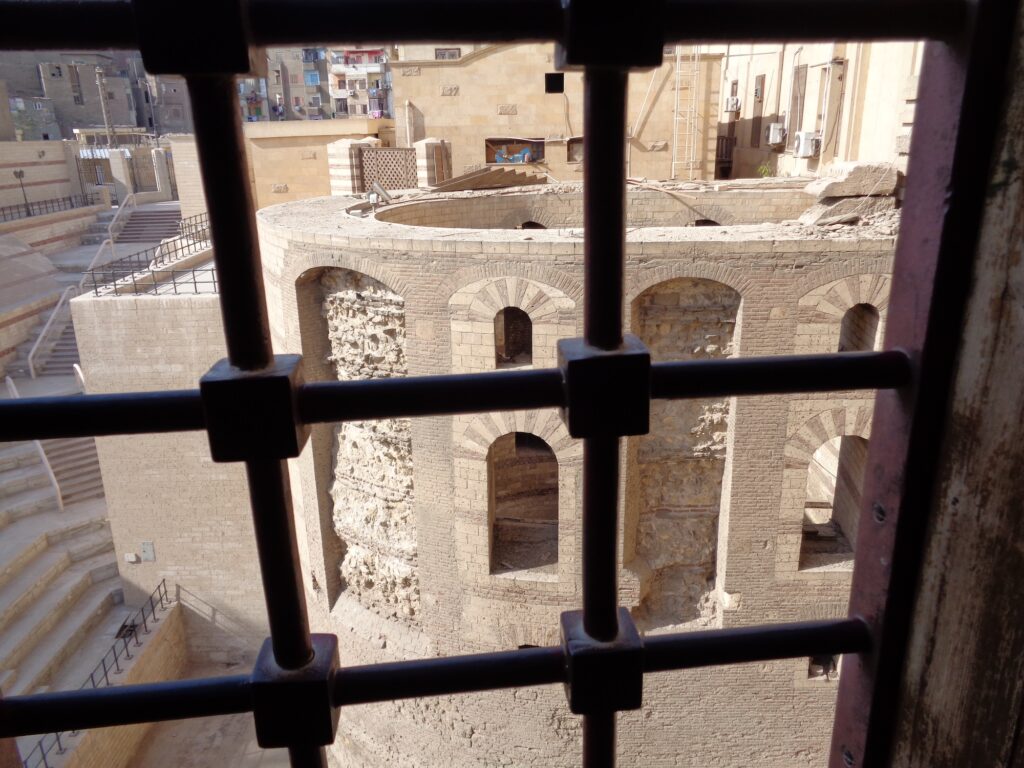
Christian manuscripts copied within the fortress walls preserved important theological texts and biblical translations. Scribes working in fortress scriptoriums maintained connections with Christian communities throughout the eastern Mediterranean world.
Religious Architecture Within the Walls
Multiple churches operated within the fortress complex during the Byzantine era. The Church of Saints Sergius and Bacchus, built directly above ancient Roman foundations, became a pilgrimage destination for Coptic Christians throughout Egypt. Sacred relics and religious artifacts drew faithful visitors from distant provinces.
Baptismal fonts carved from ancient granite blocks provided spaces for religious ceremonies that continued century-old Christian traditions. Elaborate frescoes decorated church interiors, depicting biblical scenes and early Christian martyrs in distinctly Egyptian artistic styles.
Modern Coptic Cairo: Built on Ancient Foundations
Today’s Coptic Cairo district encompasses the original Babylon Fortress footprint, creating one of Egypt’s most concentrated archaeological zones. We guide visitors through narrow streets where every step reveals layers of history spanning pharaonic, Roman, Byzantine, and Islamic periods.
The famous Hanging Church (Saint Virgin Mary’s Coptic Orthodox Church) sits directly atop the ancient fortress’s southern gatehouse. Walking through the church, visitors can peer through glass panels to see original Roman foundations still visible 15 meters (49 feet) below. This architectural continuity demonstrates how religious communities adapted ancient structures for new spiritual purposes.
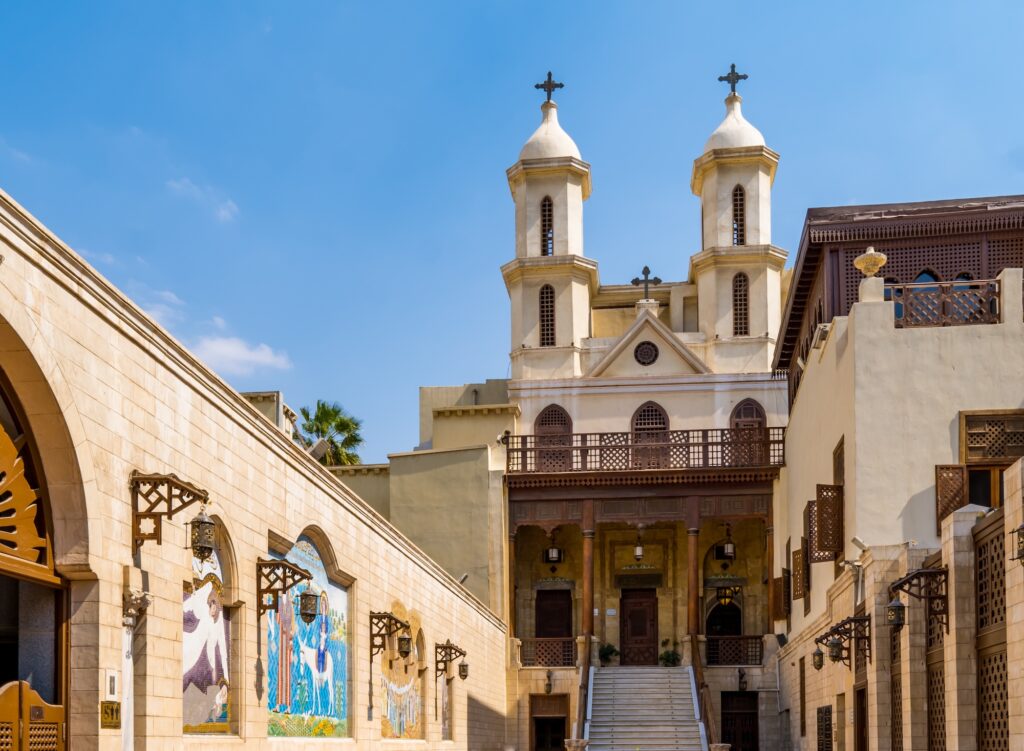
Saint George’s Coptic Orthodox Church occupies the northern fortress tower, its circular design following the original Roman architectural footprint. The church’s unique round nave provides an intimate worship space that connects modern Coptic Christians with their ancient heritage.
Archaeological Treasures in the Coptic Museum
The Coptic Museum, established within the former fortress grounds, houses the world’s largest collection of Egyptian Christian artifacts. Our private guides explain how monastery workshops produced exquisite textiles, woodcarvings, and illuminated manuscripts that rival any medieval European monastery’s output.
Museum exhibits trace the evolution from pharaonic religious symbols to early Christian iconography. Visitors discover how ancient Egyptian artistic traditions influenced Coptic Christian art, creating a unique aesthetic that appears nowhere else in the Christian world.
Stone reliefs display Coptic inscriptions alongside hieroglyphic texts, illustrating Egypt’s gradual transition from ancient pagan traditions to Christian faith. These bilingual inscriptions provide invaluable insights into how ordinary Egyptians experienced religious transformation during the Roman period.
Planning Your Visit to Babylon Fortress
Coptic Cairo offers multiple entry points for exploring the ancient fortress site. The main entrance through Mari Girgis Street provides direct access to the Coptic Museum and major churches. Early morning visits (8:00 am / 08:00) allow photography in ideal lighting conditions before tourist crowds arrive.
We recommend dedicating half a day to fully appreciate the archaeological complexity of this historic site. Our expert guides customize tours based on your specific interests, whether focusing on Roman military engineering, early Christian history, or Islamic conquest narratives.
The fortress location connects easily with other Old Cairo attractions. Many visitors combine Babylon Fortress tours with Islamic Cairo exploration or Giza pyramid excursions for comprehensive historical perspectives.
Practical Visitor Information
Museum admission costs 80 Egyptian pounds (approximately $3 USD) for international visitors. Church entries require modest dress codes – we advise covering shoulders and wearing long pants. Photography permits cost additional fees in some locations, though exterior photographs remain unrestricted.
Our air-conditioned vehicles provide comfortable transportation from central Cairo hotels, with journey times typically requiring 15-20 minutes depending on traffic conditions. Private bathroom facilities and refreshment areas are available within the museum complex.
Guided tour options range from 2-hour focused visits to comprehensive 4-hour explorations that include multiple churches and extended museum time. We provide audio enhancement equipment for larger groups to ensure everyone hears detailed historical explanations clearly.
Egypt Tours Plus: Your Gateway to Ancient History
With over two decades of expertise guiding international visitors through Egypt’s most significant archaeological sites, we create personalized experiences that bring ancient history to life. Our award-winning guides combine academic knowledge with storytelling skills that make complex historical periods accessible and engaging for all ages.
We provide private transportation in modern, climate-controlled vehicles with professional drivers who understand Cairo’s challenging traffic patterns. Our 24/7 customer support ensures peace of mind throughout your Egyptian adventure, while our tailored itineraries accommodate individual interests and physical abilities.
Every Egypt Tours Plus guide holds official certification and undergoes continuous education about recent archaeological discoveries and historical research. This commitment to excellence earned us recognition from international travel organizations and consistently positive reviews from thousands of satisfied travelers.
Frequently Asked Questions
When was Babylon Fortress originally constructed?
The fortress was built around 300 AD during Emperor Diocletian’s reign.
How long did the Arab siege last?
The siege lasted seven months, from late 640 AD until early 641 AD.
Can visitors see original Roman fortress walls today?
Yes, substantial sections remain visible throughout the Coptic Cairo district.
What is the best time to visit Coptic Cairo?
Early morning hours offer cooler temperatures and ideal lighting for photography.
How much time should I plan for exploring the fortress site?
We recommend half a day to fully appreciate the archaeological site.
Is the Coptic Museum included in church visits?
No, the museum requires separate admission, though combination tickets are available.
What dress code applies for visiting the churches?
Modest dress required: covered shoulders, long pants, and closed-toe shoes.
Can I take photographs inside the historic churches?
Photography policies vary by church; some allow interior photos while others restrict.
How far is Babylon Fortress from central Cairo hotels?
Most downtown Cairo hotels are 15-20 minutes away by private vehicle.
Are guided tours available in multiple languages?
Yes, we provide certified guides in English, French, German, Spanish, and Arabic.
What makes this fortress historically significant?
It controlled strategic trade routes and served as gateway for Arab conquest.
Is the site suitable for visitors with mobility limitations?
Some areas require climbing stairs, but modified tours are available with advance notice.
Design Your Custom Tour
Explore Egypt your way by selecting only the attractions you want to visit