

El Badi Palace – The Incomparable Palace that Died
Built to Showcase Unmatched Power and Wealth, Then Left to Fade into Silence – The Rise and Fall of Morocco’s Most Ambitious Royal Palace.
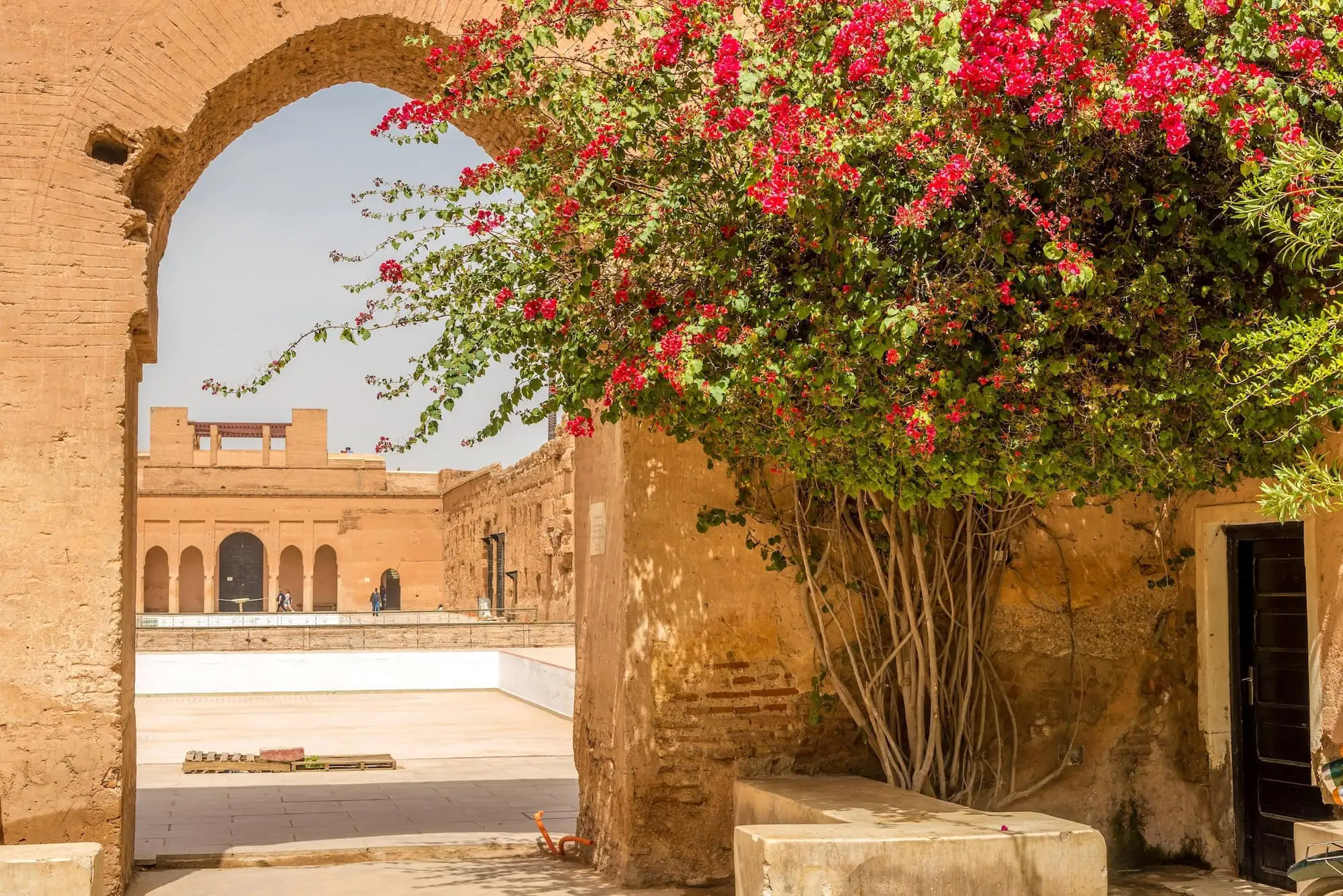
When you stand in the vast courtyard of El Badi Palace, you’re witnessing the echoes of one of history’s greatest architectural achievements. Built in 1578 by Sultan Ahmad al-Mansur to celebrate his victory over Portuguese forces at the Battle of the Three Kings, this palace once rivaled the grandest courts of Europe and the Ottoman Empire.
El Badi Palace can be included in our Egypt and Morocco Tours, where Morocco’s imperial history is combined with its vibrant cities and Egypt’s ancient wonders for a rich and immersive travel experience.
The Saadian ruler invested fifteen years and immense wealth from sugar trade and gold mines to create what was once described as a wonder of the world. Today, visitors encounter impressive ruins that still reflect its former grandeur—massive walls, expansive courtyards, and traces of intricate decoration.
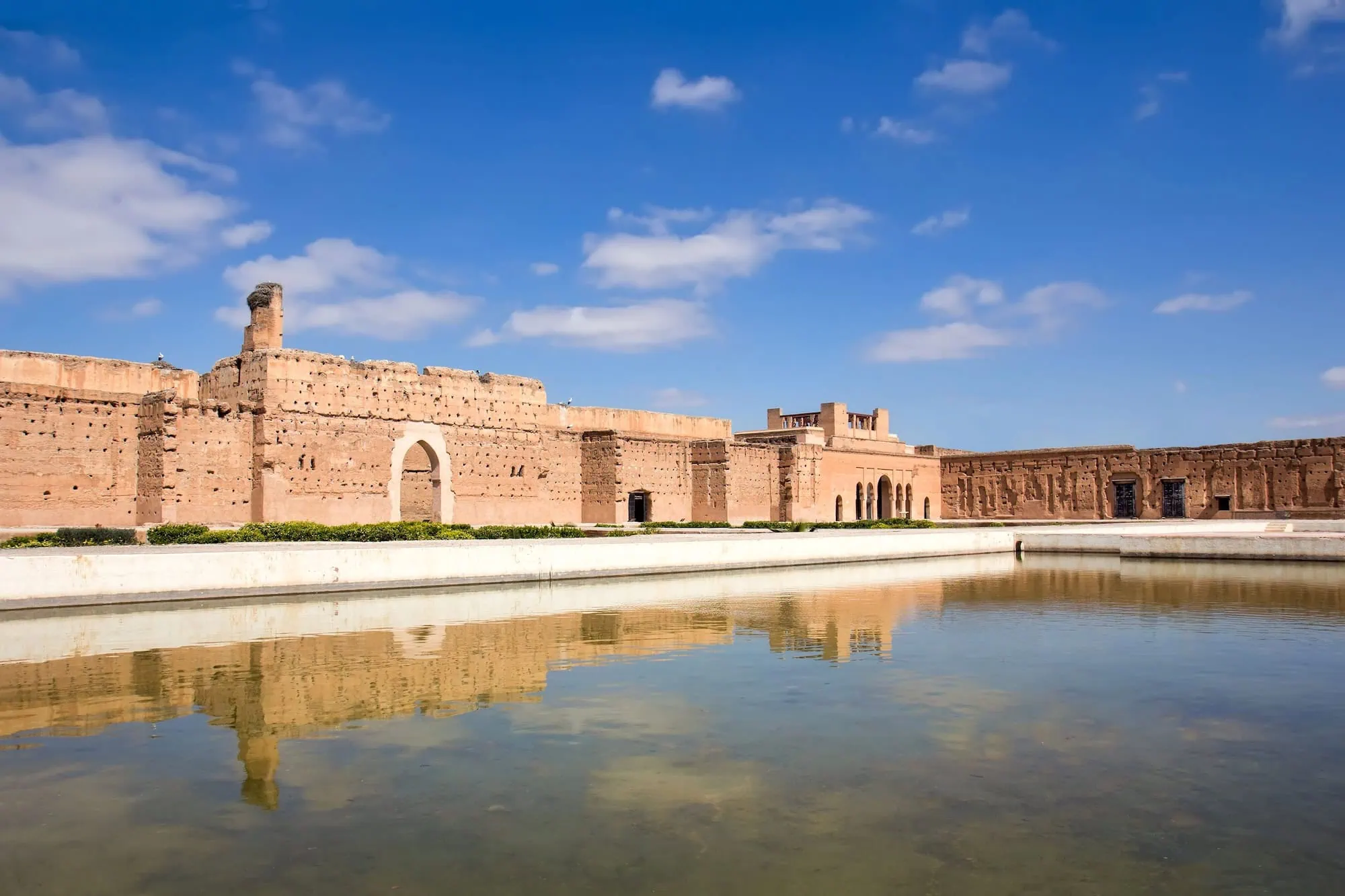
As you explore the site, the scale and ambition become clear, offering a deeper understanding of Morocco’s golden age. With years of experience guiding travelers through Marrakech, we’ve seen how this monument consistently leaves a lasting impression on those who walk through its historic remains.
Historical Significance and the Saadian Dynasty
When Sultan Ahmad al-Mansur commissioned El Badi Palace in December 1578, he was creating more than just a royal residence. The name “El Badi” translates to “The Incomparable” in Arabic, referencing one of the 99 Names of God in Islamic tradition. This choice reflected the sultan’s ambitious vision and his position as ruler of one of North Africa’s most powerful dynasties.
Construction took fifteen years to complete, finishing in 1593, and required materials sourced from across the known world. Italian marble, gold from Sudan, and precious stones from India were transported to Marrakech through complex trade networks that demonstrated the Saadian dynasty’s far-reaching influence. The palace served as the centerpiece of diplomatic ceremonies and royal celebrations for over a century.
Foreign ambassadors frequently wrote home describing the overwhelming grandeur they encountered, with over 300 rooms decorated in gold, turquoise, and crystal. These accounts provide glimpses into a level of luxury that few modern travelers can fully imagine.
The Golden Age of Moroccan Architecture
El Badi Palace represented the peak of Saadian architectural achievement. Traditional Moroccan building techniques merged with European innovations, creating spaces that felt both familiar and revolutionary to contemporary visitors. Master craftsmen from Cordoba, Granada, and other centers of Islamic art contributed their expertise to the project.
The intricate mosaics, carved cedar wood details, and sophisticated water management systems demonstrated technical skills that had been refined over centuries of cross-cultural exchange.
Political Context and Royal Ambitions
Sultan Ahmad al-Mansur’s victory at Alcácer Quibir had eliminated Portuguese threats to Moroccan independence and provided enormous wealth through ransom payments and captured treasure. The palace construction became a statement of political strength, designed to impress rivals and allies throughout the Islamic world and Christian Europe.
Architectural Marvel and Layout
The ruins reveal sophisticated engineering that supported a complex of extraordinary scale and ambition.
Central Courtyard Design
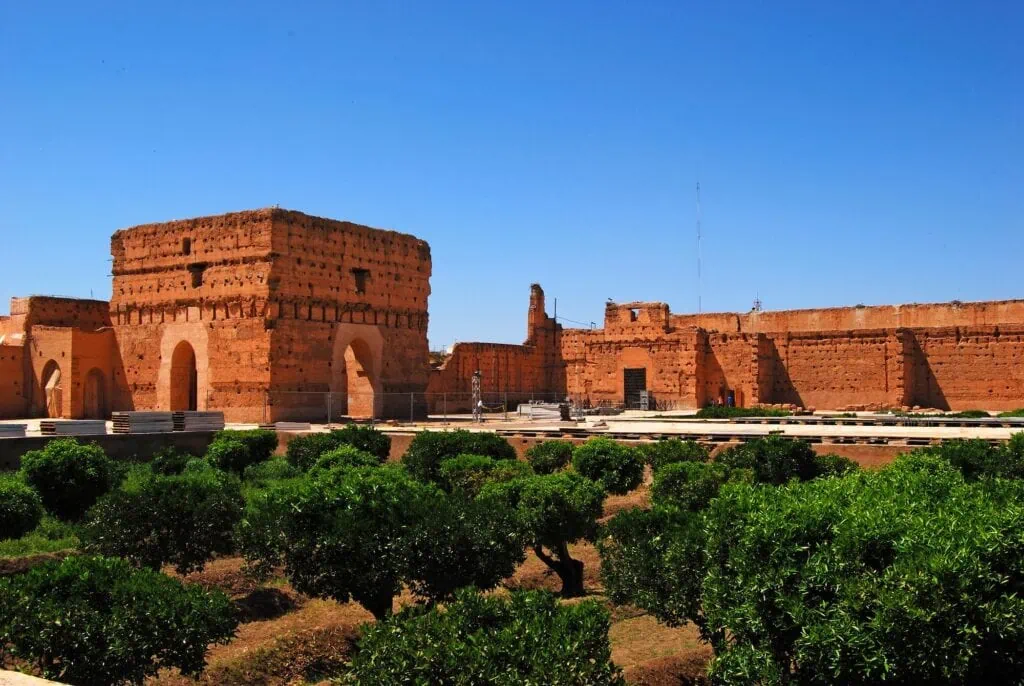
A massive rectangular courtyard forms the palace’s heart, measuring approximately 135 by 110 meters. Four enormous sunken gardens, known as menara, created geometric patterns that could be viewed from raised pavilions surrounding the space. The central pool, fed by underground channels, provided cooling effects while reflecting light throughout the complex.
Two main pavilions faced each other across the courtyard. The southern pavilion, called the Qubba al-Khamsiniyya, hosted the most important ceremonies. The northern structure served for daily administrative functions and smaller gatherings.
Water Features and Garden Integration
Sophisticated hydraulic systems channeled water throughout the palace grounds. Underground qanat networks, inspired by Persian irrigation techniques, supplied fountains, pools, and the elaborate gardens that once filled the sunken areas with orange trees, roses, and aromatic herbs.
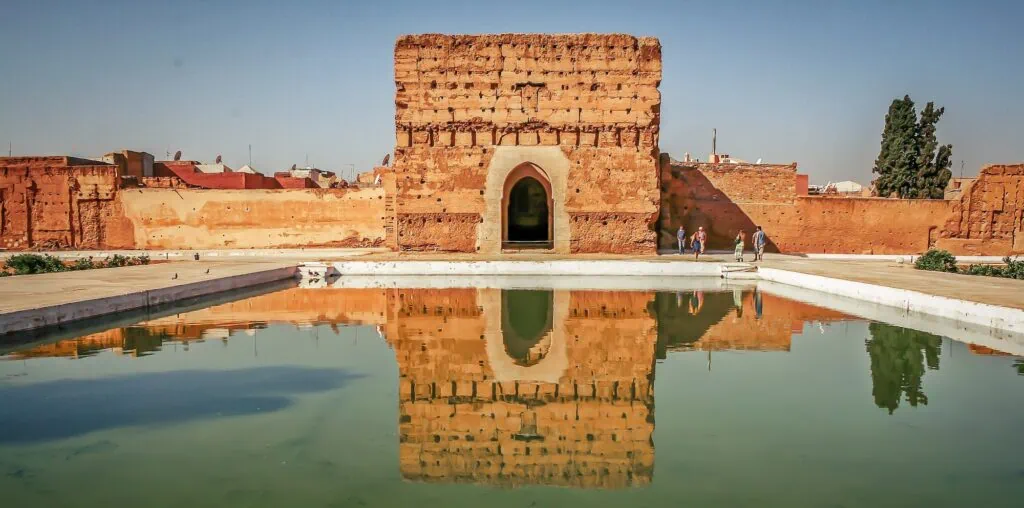
The Saadian builders understood how water movement could create microclimates within the arid Marrakech environment. Strategically placed fountains and reflecting pools lowered temperatures while the sound of flowing water provided acoustic relief from the busy city beyond the palace walls.
The Decline Under Moulay Ismail
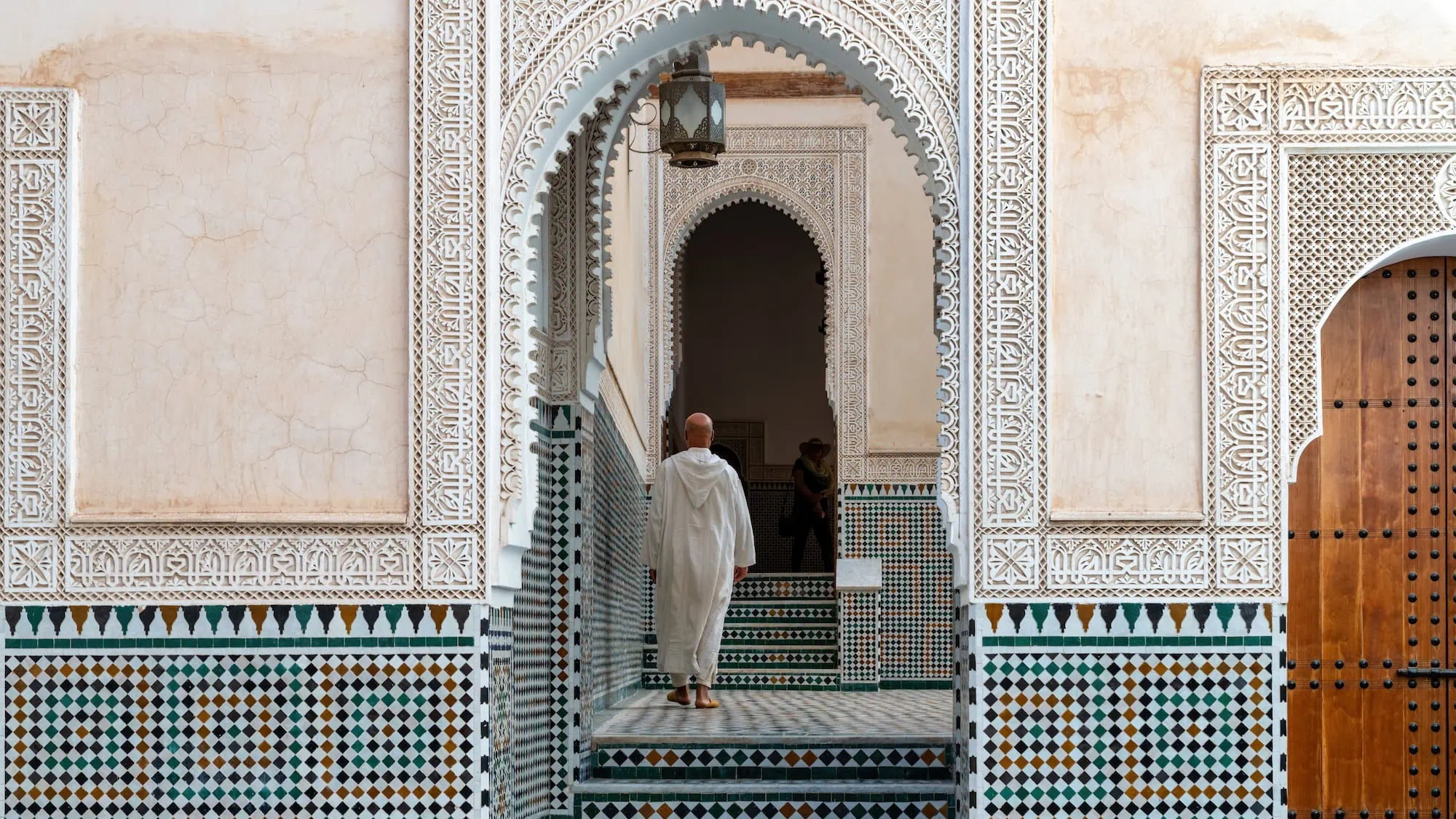
El Badi Palace’s destruction began in 1696 when Sultan Moulay Ismail systematically stripped the complex of its valuable materials. The Alaouite ruler, who had established his capital in Meknes, ordered the dismantlement to supply materials for his own building projects. Gold leaf, marble columns, intricate woodwork, and precious stones were carefully removed and transported north.
This process took ten years to complete and left behind the skeletal structure visitors encounter today. Contemporary accounts describe the methodical nature of this destruction, with specialized craftsmen assigned to remove specific elements without damaging their potential for reuse. The irony wasn’t lost on observers that one magnificent palace was being sacrificed to create another.
Political Motivations Behind Destruction
Moulay Ismail’s decision reflected both practical needs and symbolic politics. The Alaouite dynasty sought to establish legitimacy by diminishing Saadian monuments while redirecting their wealth toward new projects. Destroying El Badi Palace served as a clear statement that the previous dynasty’s era had definitively ended.
Your Visit to El Badi Palace Today
Modern visitors can explore the palace ruins daily from 9:00 am to 5:00 pm (09:00 to 17:00), with entrance fees set at 100 Moroccan dirhams for adults.
What You’ll Experience
The massive walls and foundation structures provide a framework for understanding the original layout. Climbing to elevated viewing points offers perspectives on the courtyard’s geometric design and the relationship between different architectural elements. Many visitors find these vantage points ideal for photography, particularly during the golden hour before sunset.
White storks have made nests throughout the ruins, adding an unexpected natural element to the historical setting. These large birds, which migrate annually between Morocco and Europe, have become an integral part of the palace’s current character.
Archaeological Insights
Ongoing conservation work occasionally reveals new details about construction techniques and decorative elements. Recent excavations have uncovered fragments of original tilework and foundation stones that help archaeologists understand how different sections connected.
Comparing El Badi to Other Marrakech Attractions
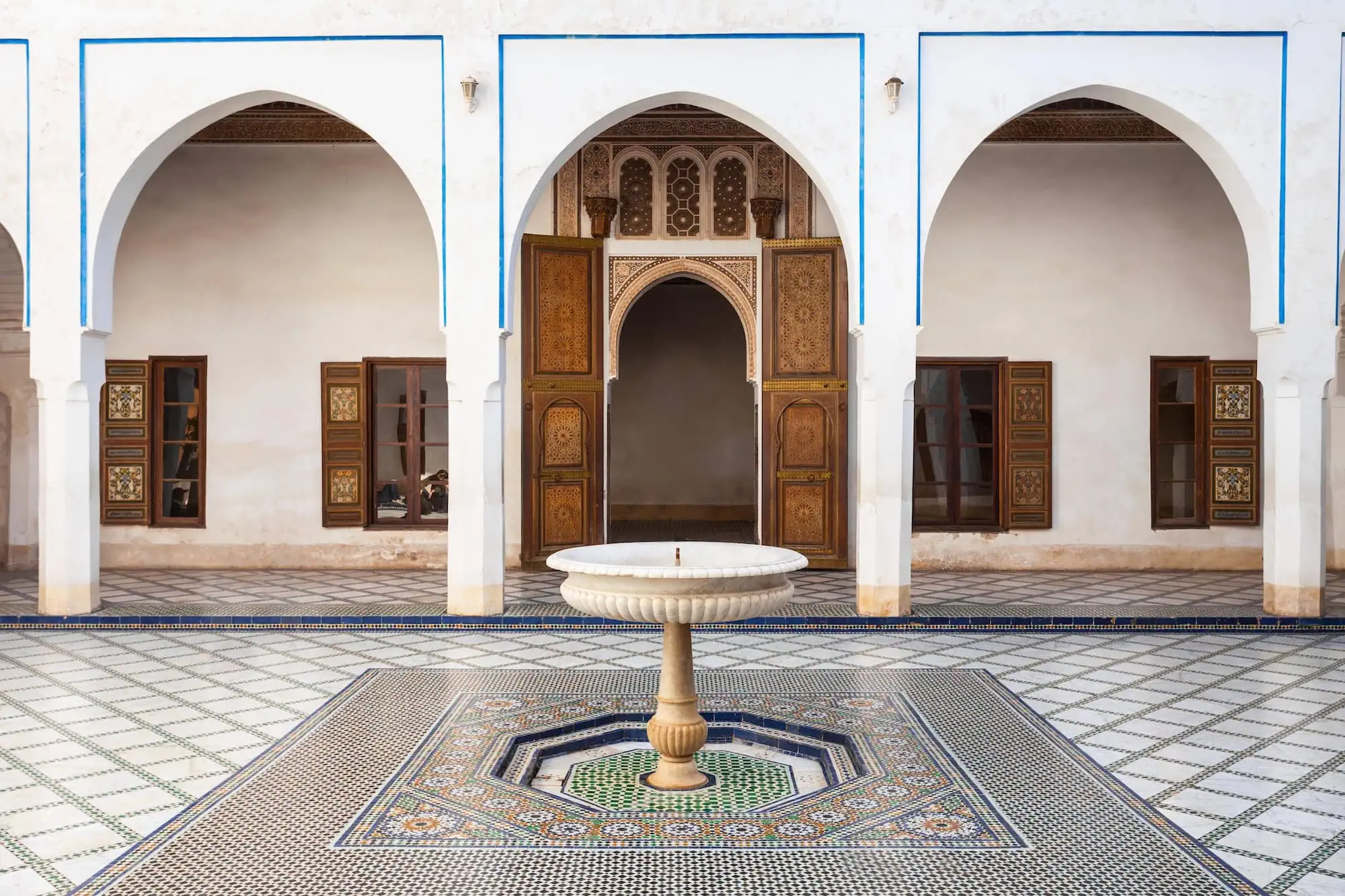
Unlike the intact Bahia Palace with its crowded tour groups, El Badi Palace offers space for contemplation and imagination. The ruins format appeals particularly to visitors interested in archaeology and historical processes rather than completely preserved decorative arts.
The Famous Koutoubia Minbar
One of Morocco’s most significant artistic treasures resides within El Badi Palace. The Koutoubia Minbar, crafted in Cordoba during the 12th century, represents the pinnacle of Islamic woodworking artistry. Made from cedar wood and decorated with intricate marquetry involving over 1,000 individual pieces, this pulpit originally served the Koutoubia Mosque.
Master craftsmen in Al-Andalus required years to complete the complex geometric patterns and calligraphy that cover every surface. The minbar’s preservation within the palace creates an opportunity to examine Islamic art’s technical sophistication up close. Detailed inlay work demonstrates mathematical principles applied to decorative design, while the overall form reflects theological concepts about divine order and beauty.
Planning Your Visit: Practical Information
Entry requires purchasing tickets at the main gate, with standard admission covering access to all publicly accessible areas of the complex.
Best Times to Visit
Early morning visits, particularly between 9:00 am and 10:30 am (09:00 to 10:30), offer the most comfortable temperatures and optimal lighting conditions for photography. Late afternoon hours provide dramatic shadows that emphasize the ruins’ architectural details.
What to Bring
Comfortable walking shoes are essential, as the site involves uneven surfaces and some climbing. Sun protection becomes critical during midday hours, when shade is limited within the open courtyard areas.
Guided Tour Options
We offer private guided experiences that illuminate the palace’s historical context and architectural significance. Our expert guides provide insights into Saadian political history, construction techniques, and the broader cultural forces that shaped medieval Morocco.
English-speaking guides can connect El Badi Palace to broader historical narratives involving the Reconquista, Ottoman expansion, and trans-Saharan trade networks. These connections help visitors understand how events in Morocco influenced and responded to developments throughout the Mediterranean world.
Frequently Asked Questions
Allow 1-2 hours to explore the ruins thoroughly and appreciate the architectural details.
Yes, both palaces are located in Marrakech’s historic district within walking distance of each other.
The open layout works well for families, though parents should supervise children near elevated areas.
Basic facilities are located near the main entrance.
The palace sits in the Kasbah district, accessible by taxi, walking from Jemaa el-Fnaa square, or as part of a guided tour.
Standard admission covers the main courtyard, ruins, and the Koutoubia Minbar display.
Photography is permitted throughout the ruins, though flash photography may be restricted in certain indoor exhibition areas.
Both locations offer insights into past civilizations through archaeological remains, though El Badi Palace provides more recent history and Islamic architectural traditions.
Conservation projects may limit access to certain sections, though the main courtyard and primary viewing areas typically remain open.
While self-exploration is possible, guided tours significantly enhance understanding of the historical and architectural significance.
The Saadian Tombs, El Badii Palace, and the Mellah district are all within walking distance.
Limited shade is available in remaining covered sections and along the courtyard perimeter walls.
Design Your Custom Tour
Explore Egypt & Morocco your way by selecting only the attractions you want to visit