

Luxor West Bank – Home to Some fof Egypt’s Most Famous Sites
The pharaohs chose this sacred ground for their eternal rest.
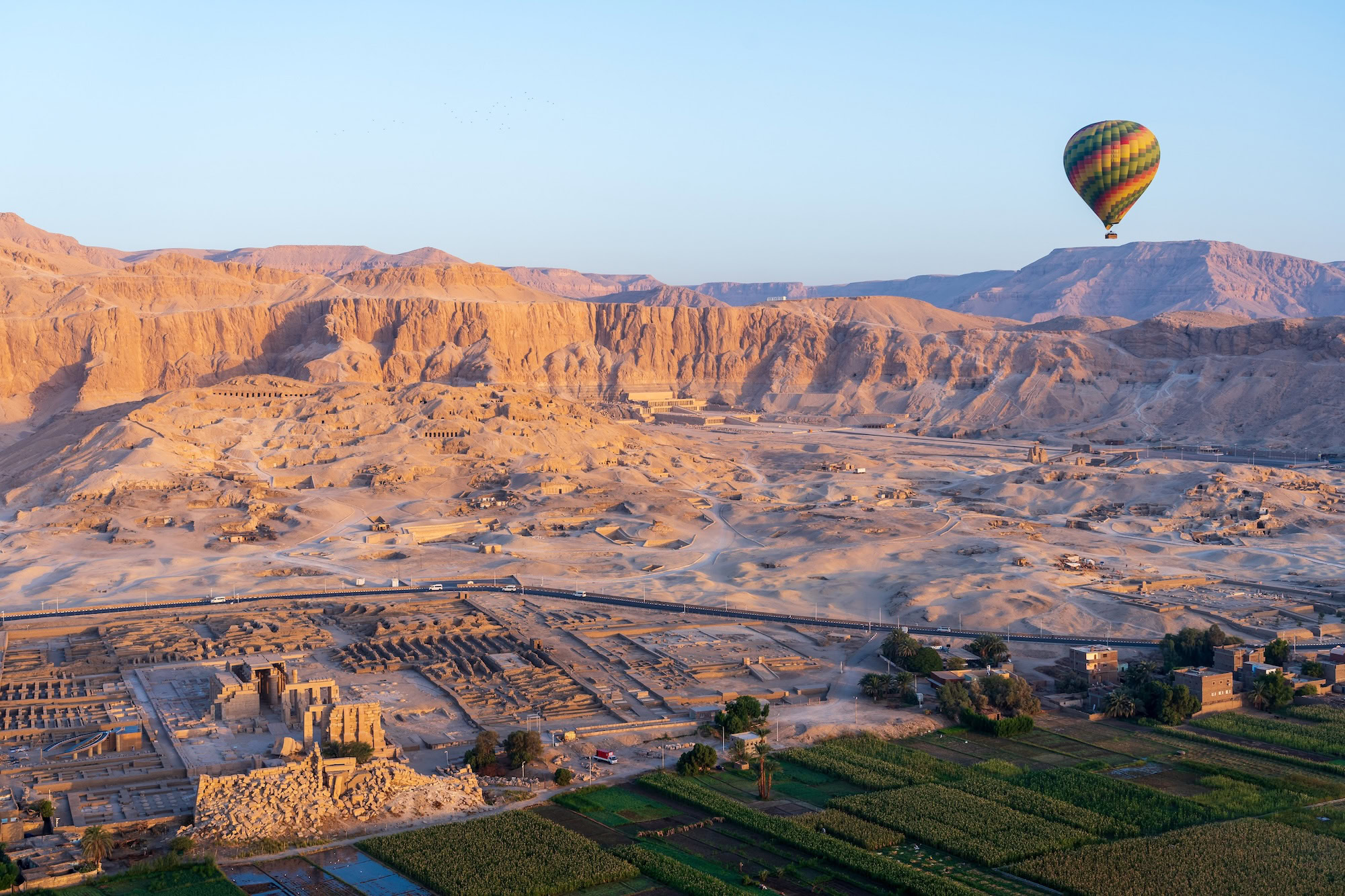
Standing on the western shores of the Nile River in Luxor, the West Bank represents one of archaeology’s most concentrated treasures. Here, within the ancient Theban Necropolis, lie the elaborate tombs of Egypt’s greatest rulers alongside magnificent mortuary temples that have survived over 3,000 years. While most visitors stay on Luxor’s bustling East Bank, crossing the river reveals a landscape where royal burial sites and architectural marvels await discovery in the shadow of desert cliffs.
We’ve explored these ancient grounds extensively and understand what makes each site special. Our decades of experience guiding travelers through Egypt ensures you’ll experience the West Bank’s wonders with proper context and insider knowledge.
Ancient Royal Burial Grounds That Changed History
The Valley of the Kings stands as Egypt’s most famous royal cemetery, where over 60 tombs were carved into limestone cliffs during the New Kingdom period (1550-1070 BCE).
Valley of the Kings: Where Pharaohs Rest
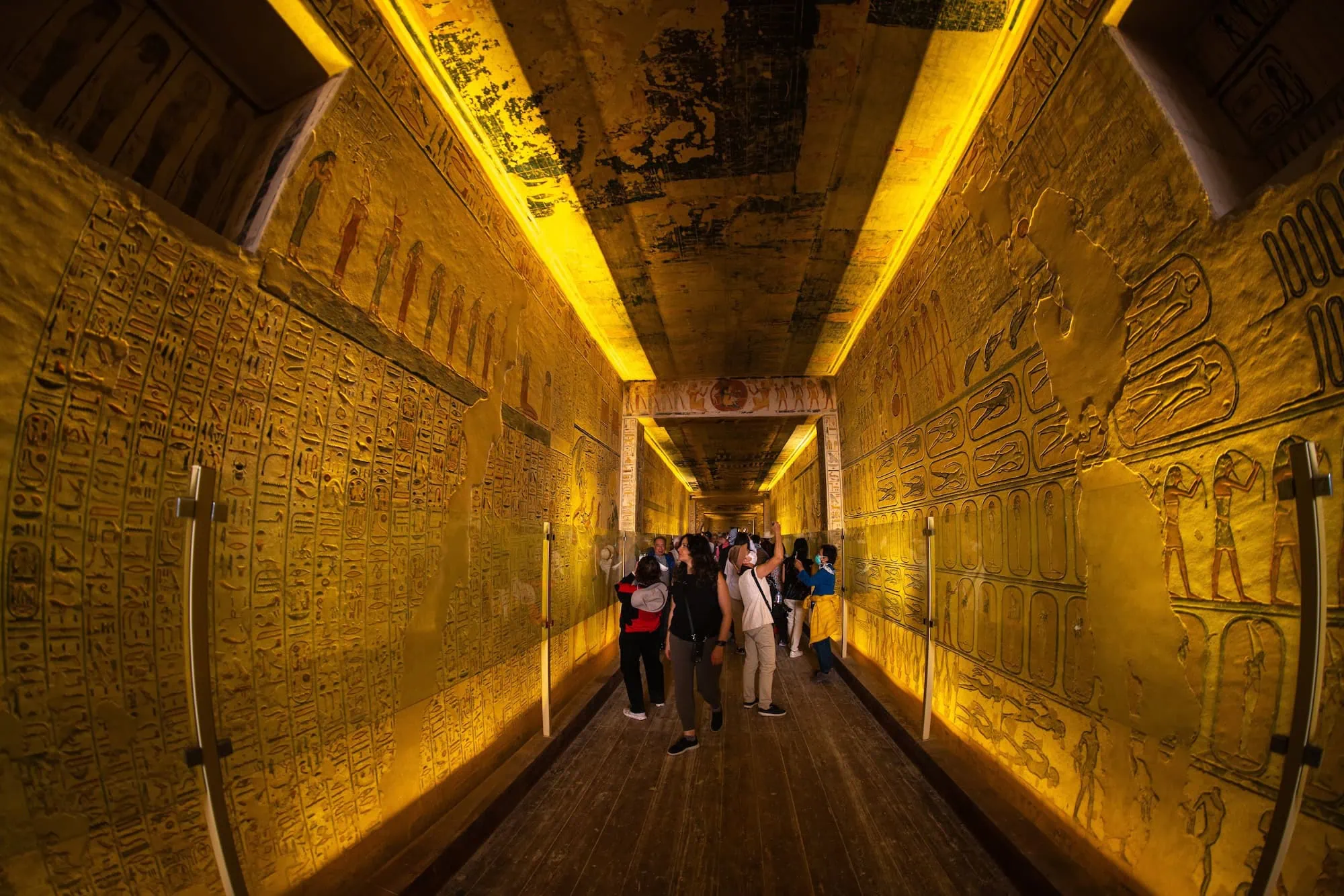
This narrow valley became the exclusive burial ground for Egypt’s most powerful rulers. Unlike the earlier pyramid burials, these tombs were hidden deep within mountain walls to protect royal treasures from grave robbers. The strategy worked partially – while most tombs were eventually plundered, their elaborate wall paintings and architectural features remain largely intact.
Tutankhamun’s tomb, discovered by Howard Carter in 1922, contained the most complete pharaonic burial assemblage ever found. Though smaller than many royal tombs, its intact treasures revolutionized our understanding of ancient Egyptian burial practices. The tomb’s four chambers held over 5,000 artifacts, including the famous golden burial mask.
Ramesses VI’s tomb features some of the valley’s most spectacular ceiling paintings depicting the pharaoh’s journey through the afterlife. The tomb’s astronomical ceiling shows detailed star maps and religious texts that guided the deceased ruler through the underworld. These intricate decorations required years of skilled craftsmanship to complete.
Valley of the Queens: Royal Women’s Eternal Domain
Adjacent to the kings’ valley, this cemetery honored royal wives, children, and high-ranking officials. Queen Nefertari’s tomb stands as the most beautiful burial chamber in Egypt, featuring wall paintings so vivid they appear freshly completed. The tomb’s restoration, completed in the 1990s, preserved colors and details that showcase ancient artistic mastery.
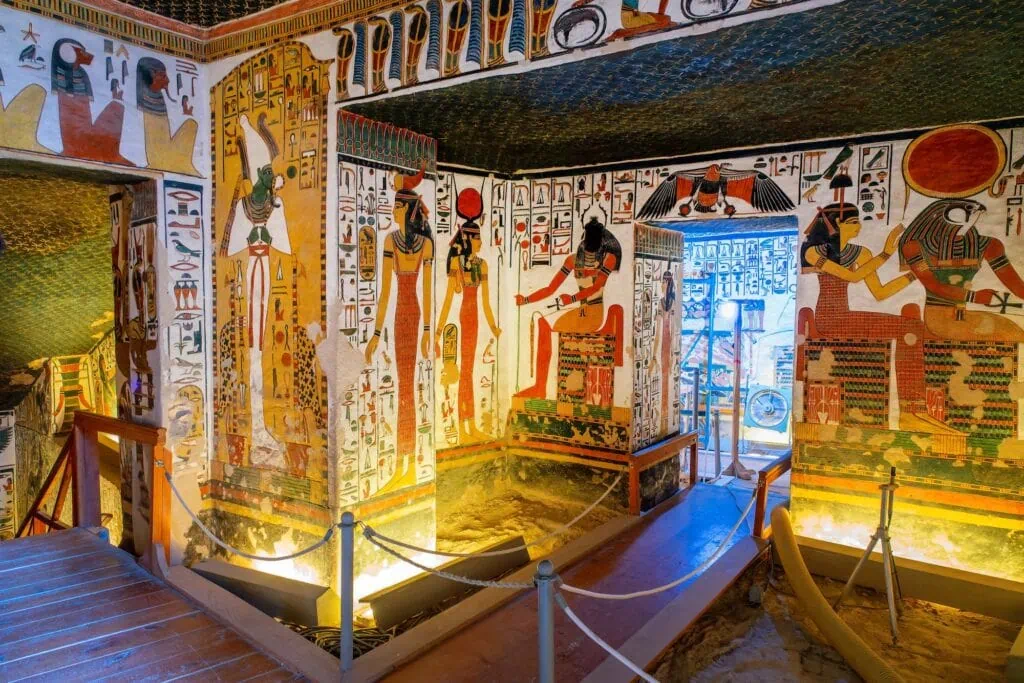
The valley contains approximately 80 tombs, though only a handful remain open to visitors. Prince Amenhotep’s tomb displays unique scenes of childhood and family life rarely seen in royal burials. These intimate depictions provide glimpses into personal relationships within Egypt’s royal families.
Architectural Wonders Along the Sacred Mountain
Deir el-Bahari: Hatshepsut’s Mountainside Masterpiece
Queen Hatshepsut’s mortuary temple represents one of ancient architecture’s most innovative designs. Built directly into limestone cliffs, the three-tiered structure seems to emerge naturally from the rock face. Its terraced gardens once flourished with exotic plants and trees imported from distant lands.
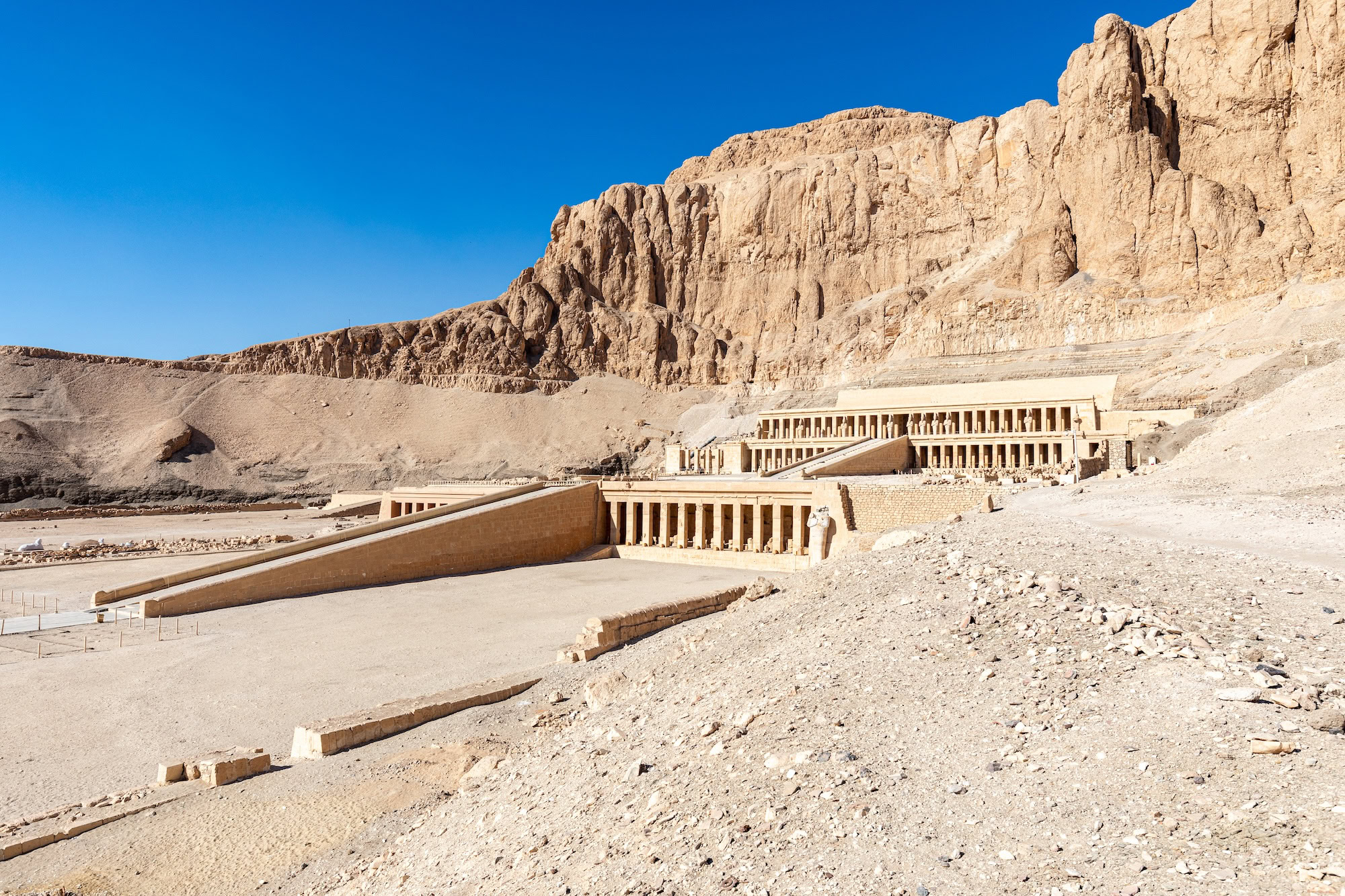
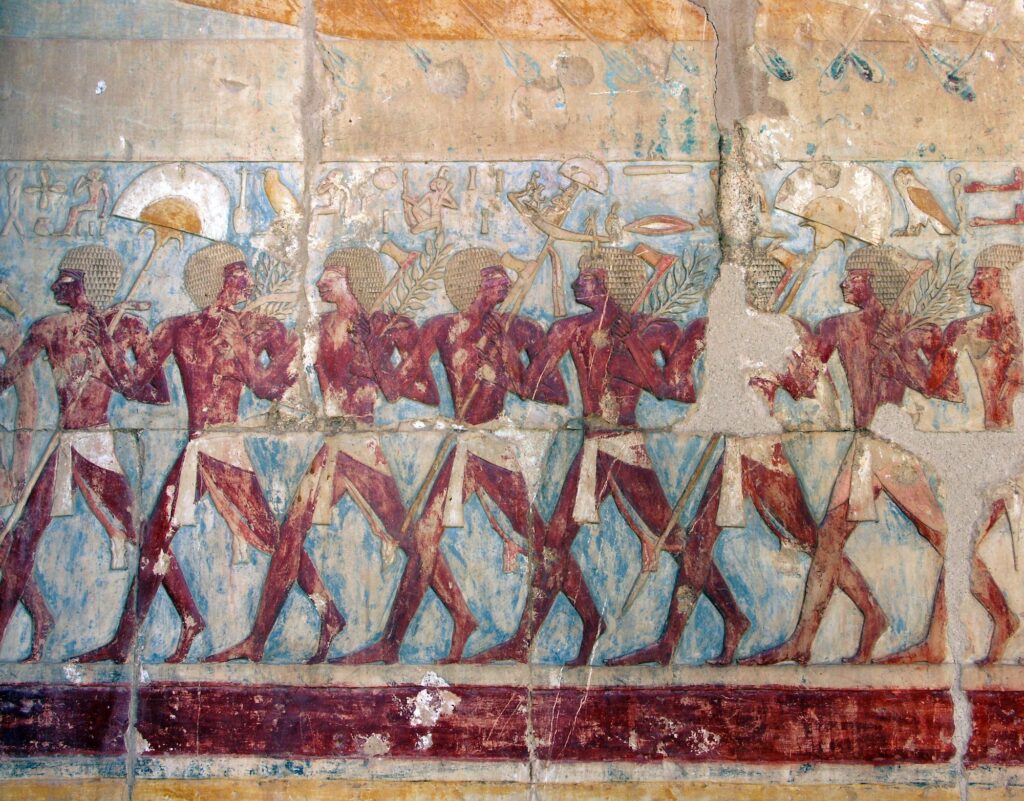
The temple’s reliefs chronicle Hatshepsut’s divine birth and successful trading expeditions to the mysterious land of Punt. These detailed carvings show loading ships with gold, ivory, ebony, and incense – evidence of Egypt’s extensive trade networks during the 18th Dynasty.
Medinet Habu: Ramesses III’s Fortress Temple
This massive temple complex served both religious and defensive purposes during ancient times. Ramesses III designed it as his mortuary temple while incorporating fortress-like walls and strategic defensive features. The site includes smaller temples, administrative buildings, and workshops that supported the main complex.
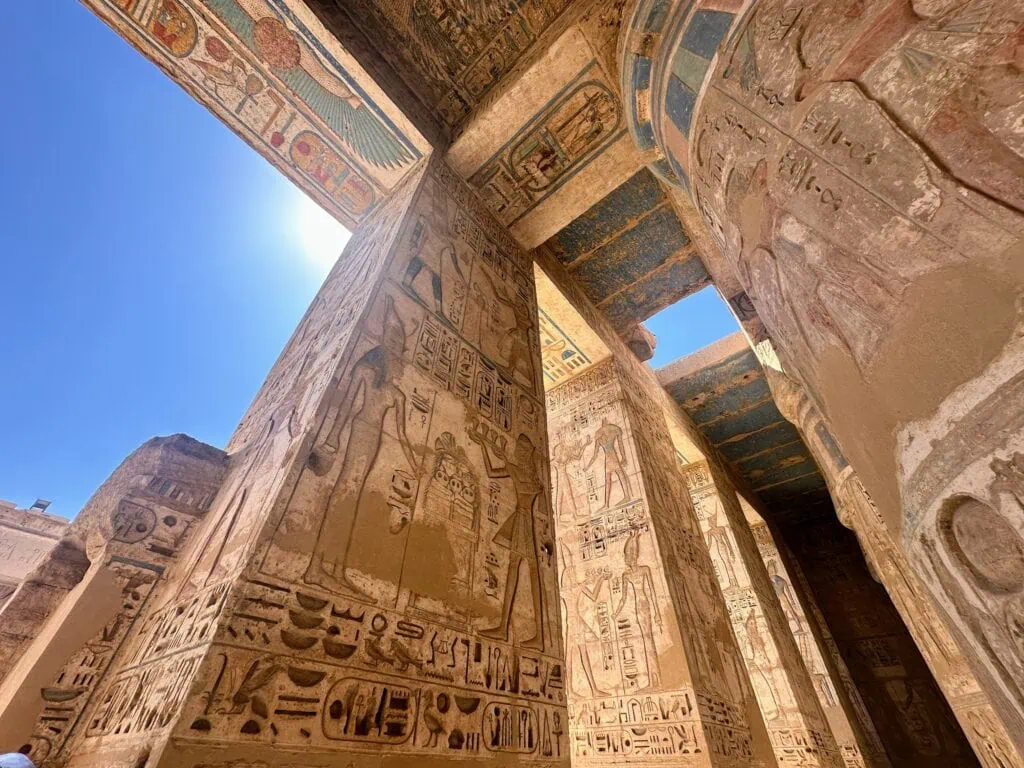
The temple’s outer walls display detailed battle scenes from Ramesses III’s military campaigns against the Sea Peoples. These reliefs provide historians with crucial information about ancient warfare tactics and Mediterranean politics during the 12th century BCE.
Practical Navigation and Hidden Treasures
Getting around the West Bank requires planning, but the rewards justify the effort. Most visitors arrive by ferry from Luxor’s East Bank, then use taxis, bicycles, or organized transportation to reach individual sites.
The Ramesseum, Ramesses II’s mortuary temple, showcases the pharaoh’s architectural ambitions despite its partially ruined state. Scattered stone fragments include pieces of a colossal statue that once stood 17 meters (56 feet) tall, demonstrating the monument’s original grandeur.
Deir el-Medina village housed the skilled craftsmen who built and decorated royal tombs. Their own burial chambers feature remarkably preserved paintings depicting daily life, religious beliefs, and artistic techniques. These tombs offer intimate perspectives on the lives of ancient Egypt’s master artisans.
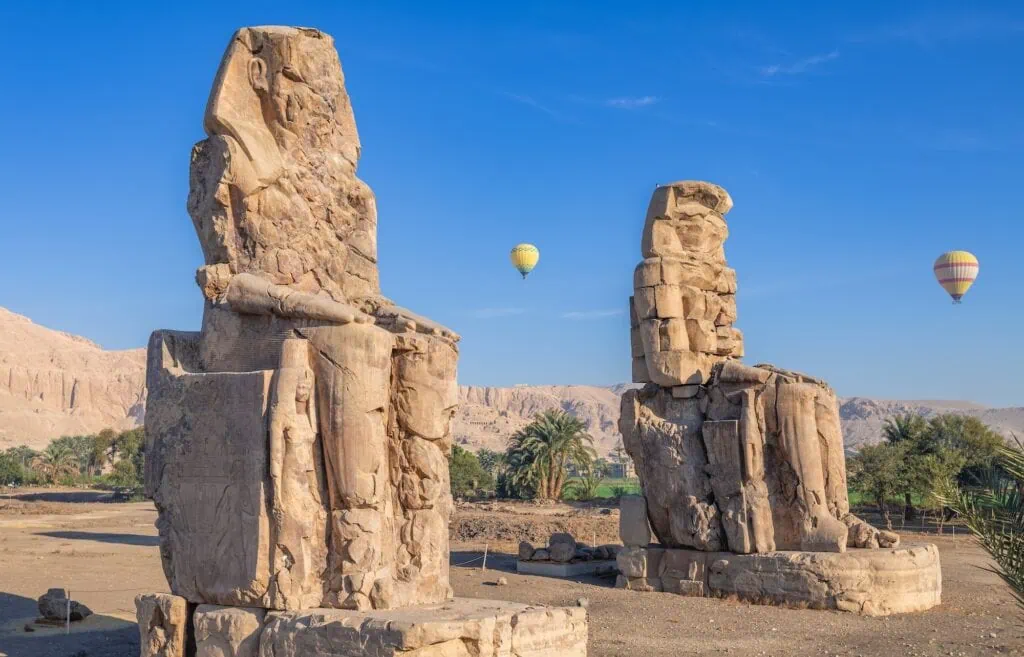
The Colossi of Memnon, two massive seated statues of Amenhotep III, guard the entrance to what was once Egypt’s largest mortuary temple. Standing 18 meters (60 feet) high, these weathered giants have watched over the valley for over 3,400 years. Ancient Greek visitors reported that one statue produced haunting sounds at dawn, though modern repairs have silenced this phenomenon.
Transportation and Ticket Options
Ferry services operate regularly between East and West banks, with the journey taking approximately 10 minutes. Local taxis and minibuses provide connections between archaeological sites, though negotiating fair prices requires patience and basic Arabic phrases.
Most sites require separate entrance tickets, with photography permits available for additional fees. The Valley of the Kings allows access to three tombs with standard tickets, while special tombs like Tutankhamun’s require premium passes. Plan to spend full days exploring, as sites are spread across several kilometers of desert terrain.
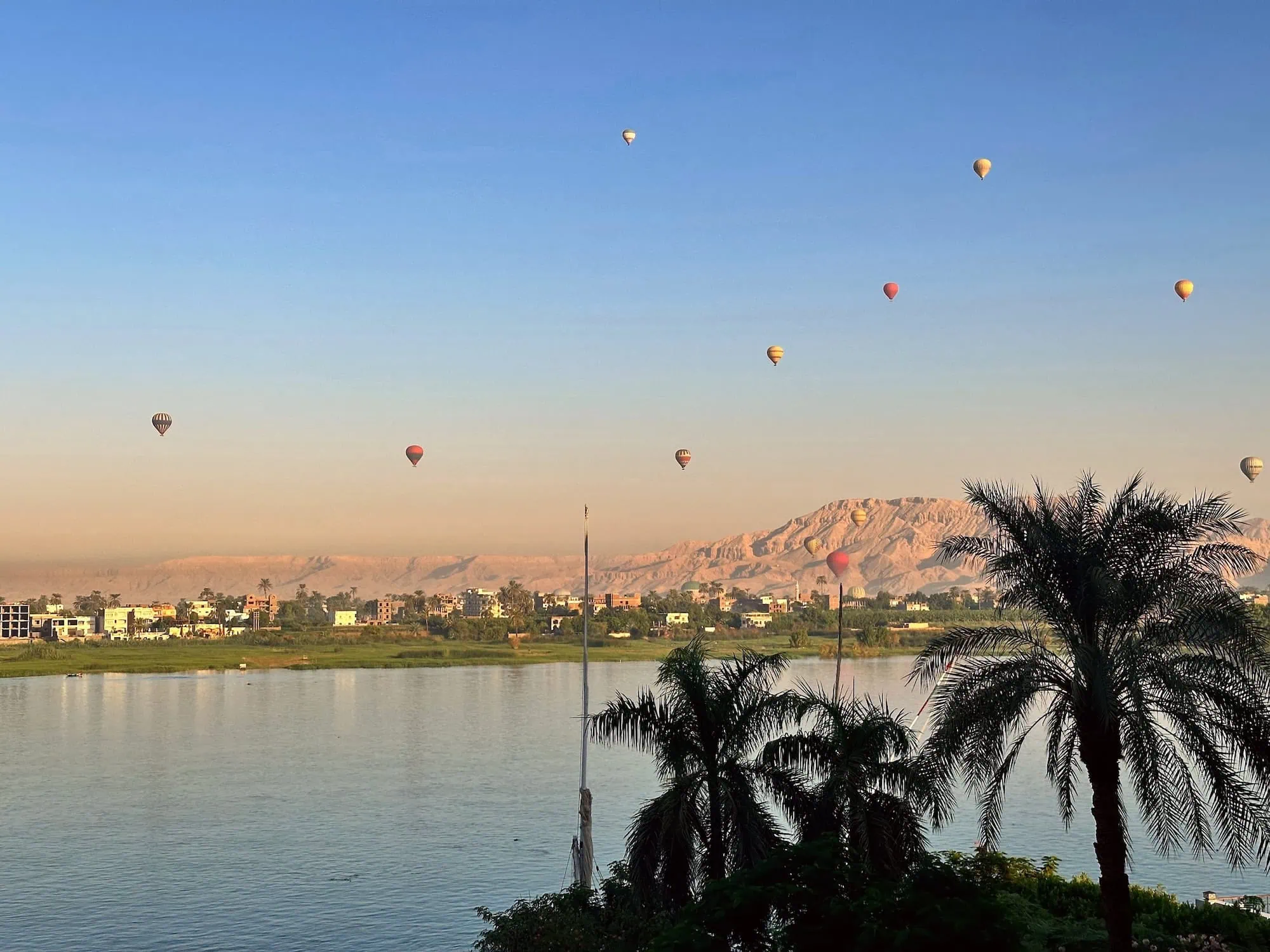
Hot air balloon rides offer spectacular aerial views of the entire West Bank area during early morning hours. These flights provide unique perspectives on site layouts and help visitors understand the ancient landscape’s geographic relationships.
Ancient Engineering and Modern Conservation
The tomb builders faced enormous engineering challenges when carving elaborate burial chambers into solid rock. Teams of workers used copper tools, wooden ramps, and innovative lighting systems to create underground palaces spanning multiple levels and chambers.
Wall paintings required sophisticated artistic planning and execution. Artists first sketched designs in red ochre, then refined details with black ink before applying final colors. Pigments included gold leaf, lapis lazuli, and locally sourced minerals that have retained their brilliance across millennia.
Preservation Challenges and Solutions
Modern conservation efforts address threats from tourism, environmental factors, and structural deterioration. The Getty Conservation Institute has worked extensively on tomb preservation, developing new techniques for stabilizing wall paintings and controlling humidity levels.
Water damage from ancient irrigation and modern infrastructure poses ongoing challenges to site preservation. Archaeological teams continuously monitor structural integrity while implementing protective measures that balance conservation needs with visitor access.
Climate control systems in major tombs help preserve delicate artwork while accommodating tourist visits. These installations represent significant investments in protecting Egypt’s cultural heritage for future generations.
Planning Your West Bank Discovery
Essential Sites and Time Management
A comprehensive West Bank visit requires minimum two full days, though three days allows for more relaxed exploration. Start early to avoid afternoon heat, particularly during summer months when temperatures exceed 40°C (104°F).
Priority sites include the Valley of the Kings, Hatshepsut’s temple, and the Valley of the Queens for first-time visitors. Archaeological enthusiasts should also visit Deir el-Medina and the Ramesseum for deeper historical understanding.
Seasonal Considerations and Comfort
Winter months (December through February) offer the most comfortable visiting conditions, with daytime temperatures around 25°C (77°F). Spring and autumn provide moderate weather, while summer visits require early morning starts and frequent shade breaks.
Comfortable walking shoes are essential, as sites involve considerable walking on uneven surfaces. Sun protection, including wide-brimmed hats and sunscreen, prevents heat-related discomfort during extended outdoor exploration.
Archaeological Discoveries That Reshaped History
Howard Carter’s Revolutionary Find
Carter’s discovery of Tutankhamun’s intact tomb transformed Egyptology and captured global imagination. The find demonstrated that ancient Egyptian burial practices were far more elaborate than previously understood, with intricate ceremonies and extensive grave goods accompanying royal burials.
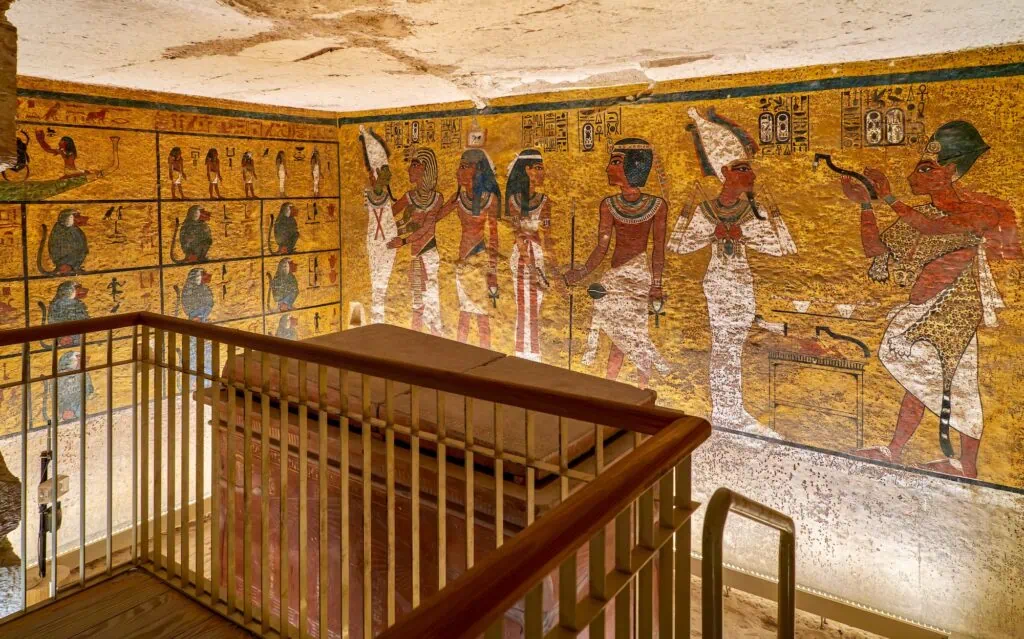
The tomb’s contents revealed sophisticated metalworking, jewelry crafting, and textile production techniques. Detailed analysis of artifacts continues providing new insights into ancient Egyptian technology, religious beliefs, and international trade relationships.
Ongoing Excavations and Future Discoveries
Archaeological teams continue uncovering new tombs and artifacts throughout the West Bank area. Recent discoveries include previously unknown burial chambers and workshop areas that expand understanding of ancient construction techniques and daily life.
Ground-penetrating radar and other advanced technologies help archaeologists locate buried structures without disturbing existing monuments. These non-invasive techniques promise exciting future discoveries while respecting site integrity.
Connecting with Local Culture and Community
Modern Village Life
West Bank villages maintain traditional crafts and agricultural practices alongside tourism activities. Local families often have connections to archaeological work spanning multiple generations, creating deep knowledge of site histories and hidden features.
Traditional pottery workshops and weaving centers operate near archaeological sites, offering opportunities to observe ancient techniques still practiced today. These activities provide cultural context that enriches historical site visits.
Village markets feature locally produced goods including traditional foods, textiles, and handicrafts. Interacting respectfully with local communities enhances travel experiences while supporting local economies that coexist with archaeological preservation efforts.
At Egypt Tours Plus, our private guides bring decades of archaeological knowledge and local connections that transform West Bank visits into immersive educational experiences. Our expert team ensures you access the most significant sites while understanding their historical context and modern preservation challenges.
Frequently Asked Questions
How long should I spend exploring Luxor’s West Bank?
Plan minimum two full days for essential sites, though three days allows more comprehensive exploration and relaxed pacing.
What’s the best time of day to visit West Bank tombs?
Early morning hours (7:00 am to 10:00 am) offer cooler temperatures and better lighting for photography inside tombs.
Can I photograph inside the tombs and temples?
Photography requires separate permits for most sites, with flash photography prohibited to protect ancient wall paintings.
Which tomb is most worth the extra cost?
Nefertari’s tomb in the Valley of the Queens offers the most spectacular and well-preserved wall paintings, justifying premium ticket prices.
How do I get from East Bank hotels to West Bank sites?
Take the public ferry across the Nile, then use taxis or bicycles for site transportation, or arrange private transportation through tour operators.
Are West Bank sites accessible for people with mobility limitations?
Most tombs require climbing stairs and navigating uneven terrain, making them challenging for visitors with mobility restrictions.
What should I bring for a full day of West Bank exploration?
Pack water, sun protection, comfortable shoes, camera, cash for tickets, and light snacks for energy during long site visits.
Is it safe to explore the West Bank independently?
The area is generally safe for independent travelers, though hiring local guides enhances security and provides valuable historical context.
How many tombs can I visit with standard Valley of the Kings tickets?
Standard tickets include access to three tombs, with additional premium tickets required for special tombs like Tutankhamun’s.
When do West Bank archaeological sites close for the day?
Most sites close at 5:00 pm (17:00) during winter months and 6:00 pm (18:00) during summer, with last entries one hour before closing.
Can I combine West Bank visits with East Bank temple tours?
Yes, many visitors split time between both banks during multi-day Luxor stays, though each area deserves dedicated full days for proper exploration.
What currency do West Bank vendors and ticket offices accept?
Egyptian pounds are preferred, though major sites accept US dollars and euros at current exchange rates for ticket purchases.
Design Your Custom Tour
Explore Egypt your way by selecting only the attractions you want to visit