

Monastery of St. Catherine – And the Legend of a Monk
Standing alone in Egypt’s rugged Sinai Peninsula, one remarkable place has remained virtually unchanged for over 1,400 years.
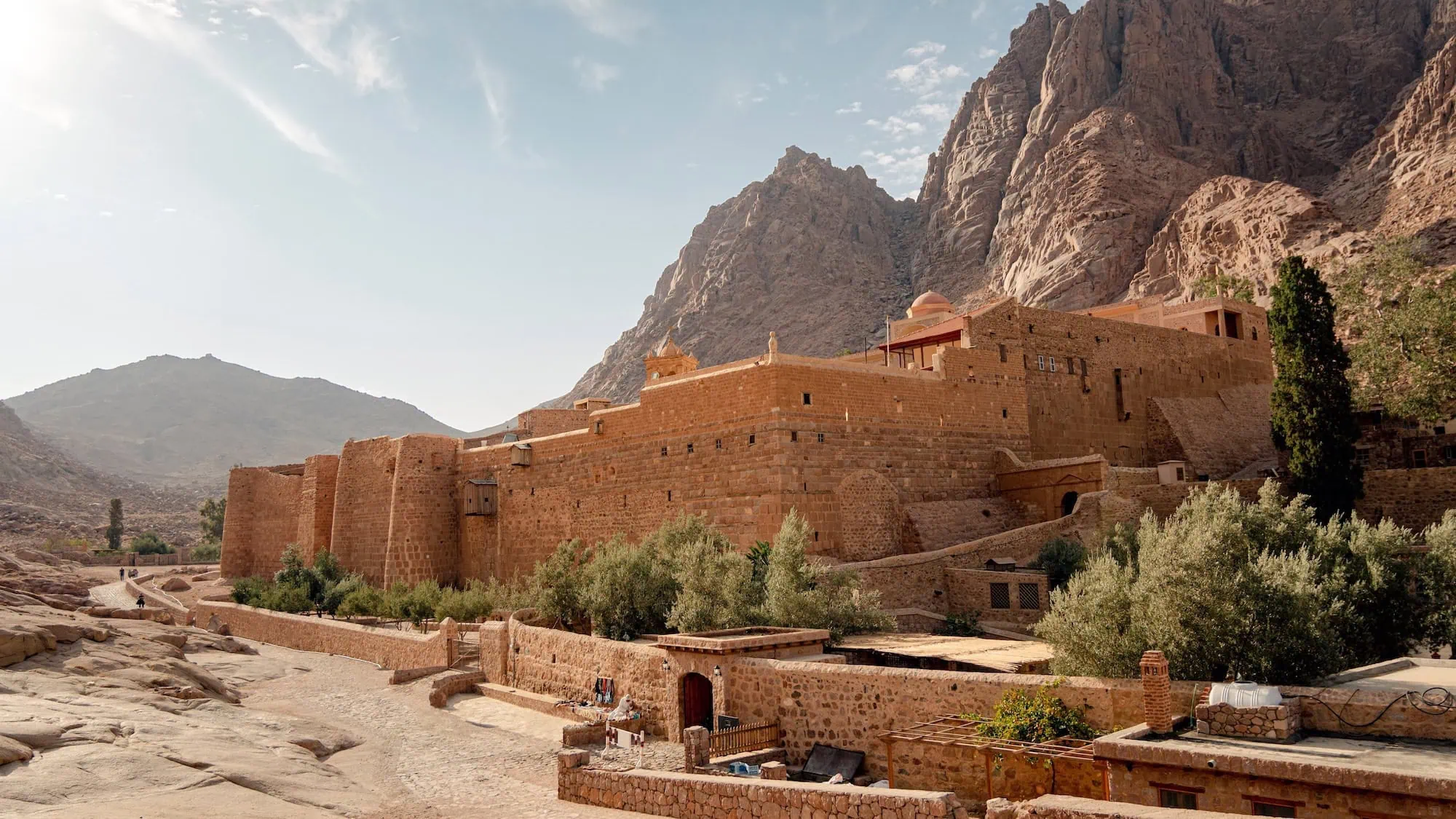
The Monastery of Saint Catherine represents something extraordinary in our modern world – an unbroken chain of monastic life that stretches back to the 6th century. Built by Byzantine Emperor Justinian I between 548 and 565 AD, this fortress-like sanctuary sits at the foot of Mount Sinai, where Moses is believed to have received the Ten Commandments. What makes this place truly unique is its sacred significance to Christianity, Islam, and Judaism alike, earning it recognition as a UNESCO World Heritage Site and attracting scholars, pilgrims, and travelers from around the globe.
More than just an ancient building, Saint Catherine’s houses treasures that survived the destruction of countless wars, political upheavals, and the passage of time itself.
Table of Contents
The Sacred Foundation and Biblical Connections
Saint Catherine’s Monastery stands on what many consider the holiest ground in the Abrahamic faiths. According to biblical tradition, this exact location is where God appeared to Moses in the burning bush, marking the spot where divine revelation first touched human consciousness. The monastery was built to enclose and protect this sacred site, with the original burning bush still growing within the monastery walls.
Moses and Mount Sinai’s Legacy
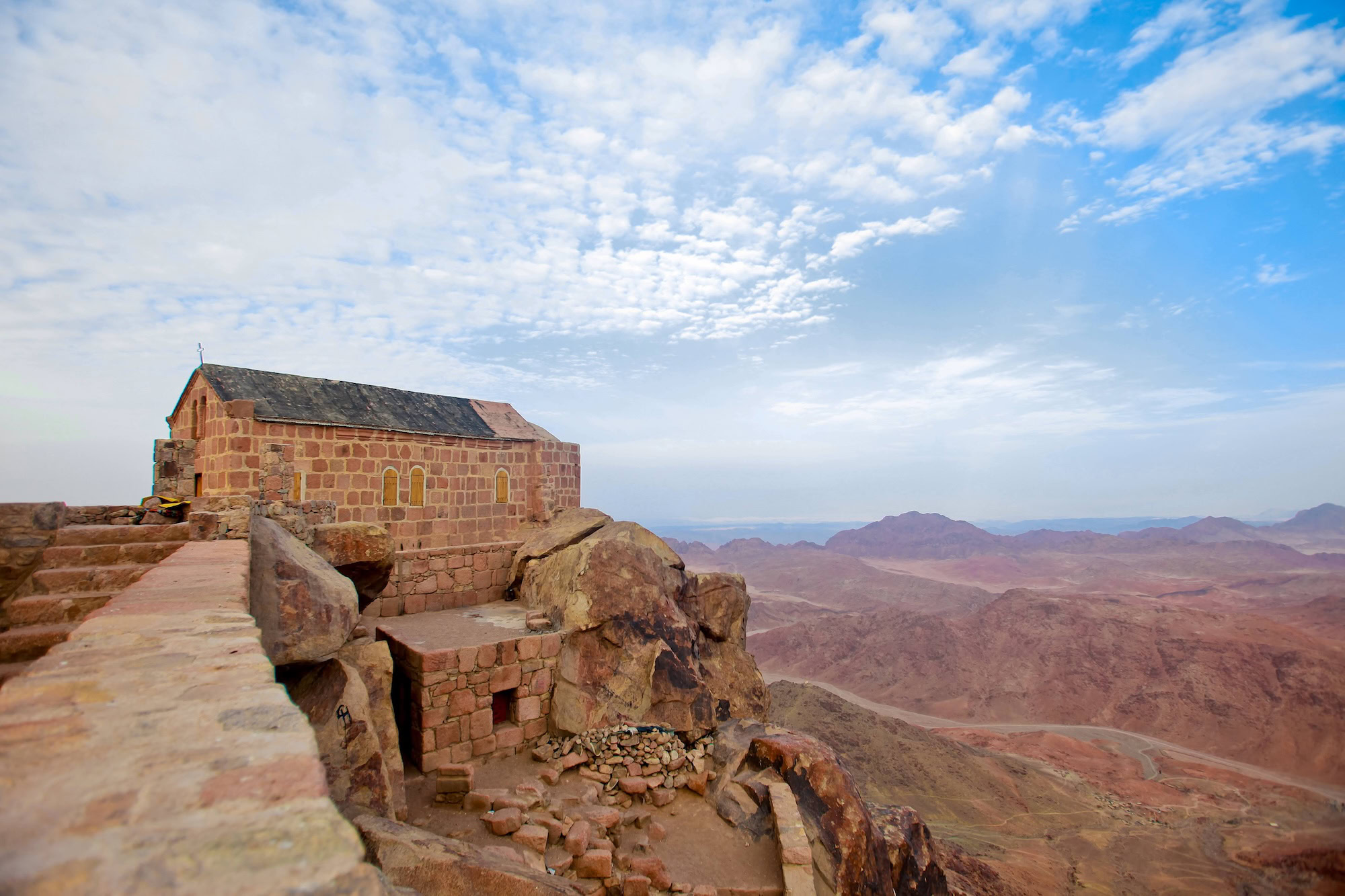
The connection to Moses runs deeper than the burning bush alone. Mount Sinai, towering above the monastery at 2,285 meters (7,497 feet), is traditionally identified as Mount Horeb where Moses received the stone tablets containing the Ten Commandments. Pilgrims have climbed this mountain for centuries, following the Steps of Repentance carved by monks, seeking to experience the same divine presence that Moses encountered.
The Well of Moses
Within the monastery grounds lies another biblical connection – the Well of Moses, where tradition holds that Moses first met Jethro’s daughters. This well still provides fresh water to the monastery, representing the continuity between ancient biblical narratives and present-day monastic life.
Interfaith Reverence and Religious Harmony
What sets Saint Catherine’s apart from other Christian monasteries is its recognition by all three Abrahamic faiths. Muslims revere the site for its connection to Moses (known as Musa in Islam), while Jews honor it as the place where their foundational law was received. This triple sacred status has protected the monastery through various conquests and political changes, with Islamic rulers traditionally granting it special protection.
Byzantine Architecture and Fortress Design
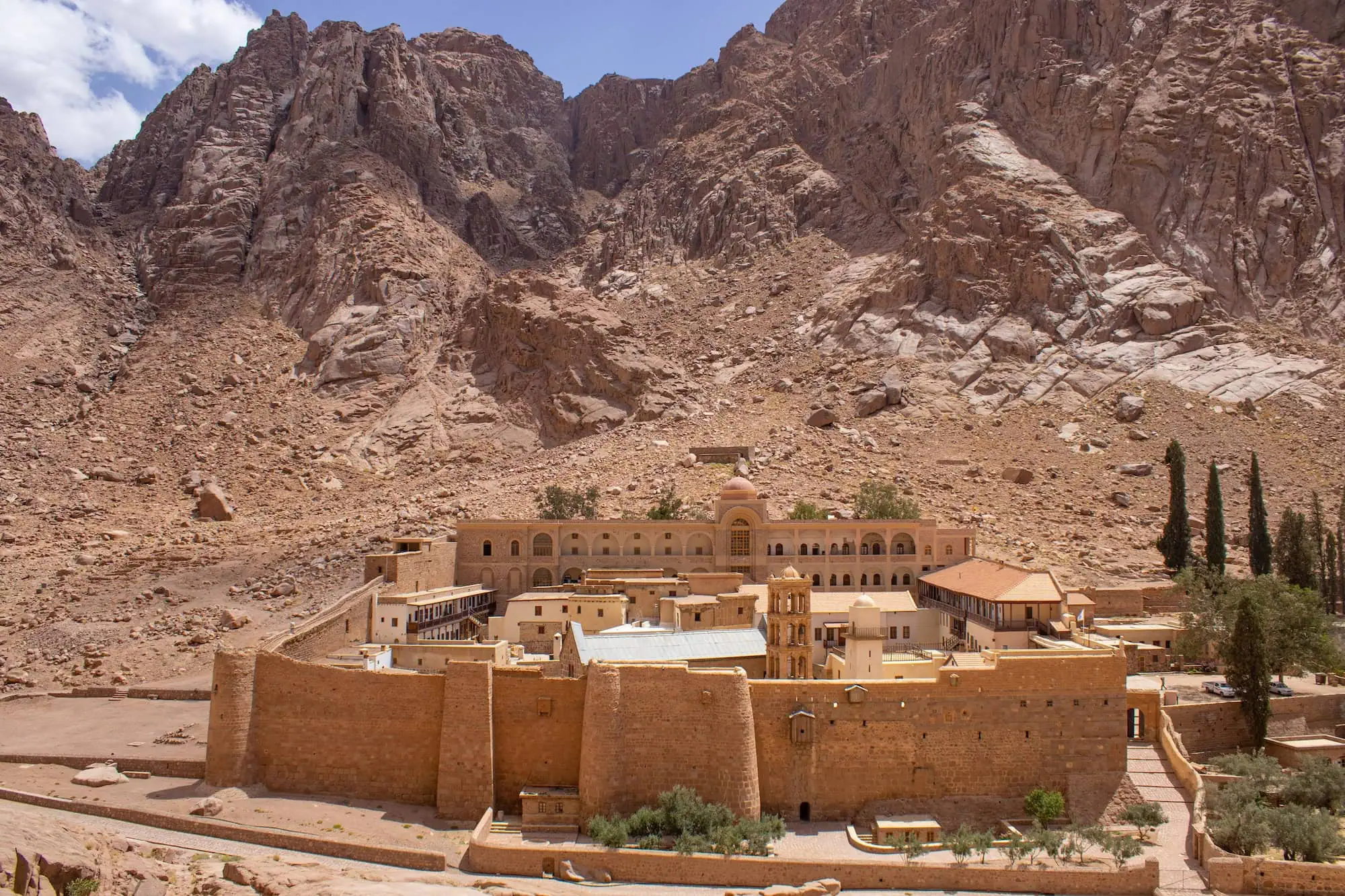
Emperor Justinian I commissioned this monastery not just as a place of worship, but as a fortress capable of protecting its inhabitants from desert raiders and political upheavals. The massive granite walls, rising 12-15 meters high, create an almost impregnable sanctuary in the desert.
The architectural design reflects both spiritual and practical considerations. Byzantine builders used local granite to construct walls that have withstood earthquakes, flash floods, and human conflicts for over fourteen centuries. The monastery’s rectangular layout, measuring approximately 76 by 85 meters, follows traditional fortress design while incorporating elements specifically adapted to monastic life.
The Basilica of Transfiguration
At the monastery’s heart stands the Basilica of the Transfiguration, completed around 565 AD. This church represents some of the finest surviving examples of early Byzantine religious architecture. The basilica’s three naves are supported by twelve granite columns, each crowned with capitals featuring carved crosses and other Christian symbols. The wooden roof, constructed using a rare king post truss system, has remained largely unchanged since the 6th century.
Architectural Adaptations for Monastic Life
The monastery’s design ingeniously balances defensive needs with monastic requirements. Living quarters, storage areas, and workshops are built directly into the fortress walls, maximizing space while maintaining security. The famous rope and pulley system, once the only way to enter the monastery, demonstrates how the monks adapted their architecture to changing security needs while preserving their isolation.
Treasures Beyond Measure
Saint Catherine’s Monastery houses collections that scholars consider among the most important in the Christian world. Protected by the monastery’s remote location and the respect accorded to it by successive rulers, these treasures survived the Byzantine Iconoclastic period when countless religious artworks were destroyed elsewhere.
The icon collection, numbering over 2,000 pieces, includes the world’s finest examples of pre-iconoclastic art. Many icons are painted in the encaustic technique, using heated wax as a medium, creating luminous colors that remain vivid after centuries. The famous Christ Pantocrator icon, dating from the 6th or 7th century, is considered one of the earliest and most beautiful depictions of Jesus in Christian art.
The library contains the world’s second-largest collection of early codices and manuscripts, surpassed only by the Vatican. Among its treasures is a portion of the Codex Sinaiticus, one of the oldest complete manuscripts of the Christian Bible, and the Syriac Sinaiticus, a palimpsest containing some of the earliest biblical texts in Syriac.
Recent technological advances have revolutionized manuscript study at Saint Catherine’s. Multispectral imaging reveals hidden texts beneath the surface of palimpsests, uncovering lost works of literature, theology, and history. These discoveries continue to reshape our understanding of early Christianity and medieval scholarship.
The Living Monastic Community
Today, approximately 25 Greek Orthodox monks maintain the ancient traditions of Saint Catherine’s. These men, representing various nationalities but united in their Orthodox faith, continue a way of life that has remained essentially unchanged for seventeen centuries.
Daily Rhythms and Practices
The monastic day begins before dawn with prayers and continues through a structured schedule of worship, work, and contemplation. The monks maintain the monastery’s buildings, care for its collections, and welcome the thousands of pilgrims and visitors who arrive each year. Their spiritual tradition draws heavily from the Hesychast movement, emphasizing inner prayer and mystical experience.
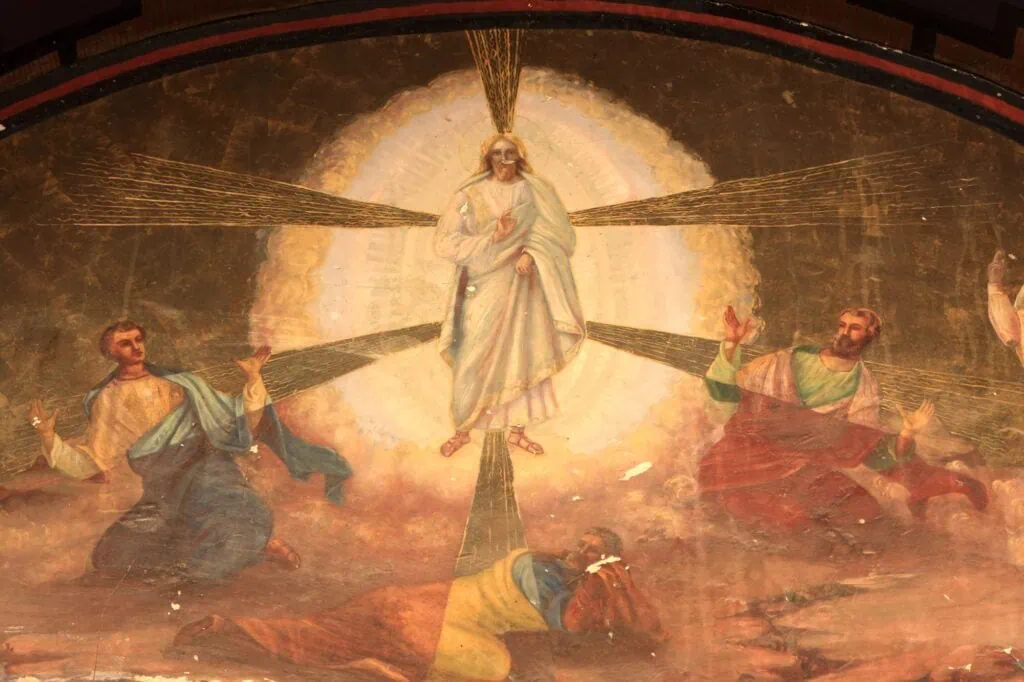
Saints and Spiritual Heritage
Over one hundred and seventy saints have emerged from the Sinai desert, with many spending time at Saint Catherine’s. John Climacus, author of “The Ladder of Divine Ascent,” served as abbot here in the 7th century. His spiritual writings continue to influence Orthodox monasticism worldwide. Gregory of Sinai, another influential spiritual teacher, helped spread Hesychast practices throughout the Orthodox world.
Modern Challenges and Preservation
The monastic community faces contemporary challenges while maintaining ancient traditions. Managing increasing tourism, preserving fragile manuscripts and icons, and maintaining the monastery’s infrastructure requires constant attention. The monks work with international conservation experts to ensure these irreplaceable treasures survive for future generations.
UNESCO Recognition and Global Significance
In 2002, UNESCO designated Saint Catherine’s Monastery as a World Heritage Site, recognizing both its outstanding universal value and urgent need for protection. This designation acknowledges the monastery’s unique position as a site sacred to three major world religions and its role as a repository of irreplaceable cultural treasures.
Conservation Efforts and Collaboration
The UNESCO designation brought international attention to conservation needs at Saint Catherine’s. Climate change, tourism pressure, and the natural aging of ancient materials pose ongoing threats to the monastery’s collections and architecture. Collaborative efforts between the monastic community, Egyptian authorities, and international institutions focus on preserving manuscripts, stabilizing ancient buildings, and managing visitor access.
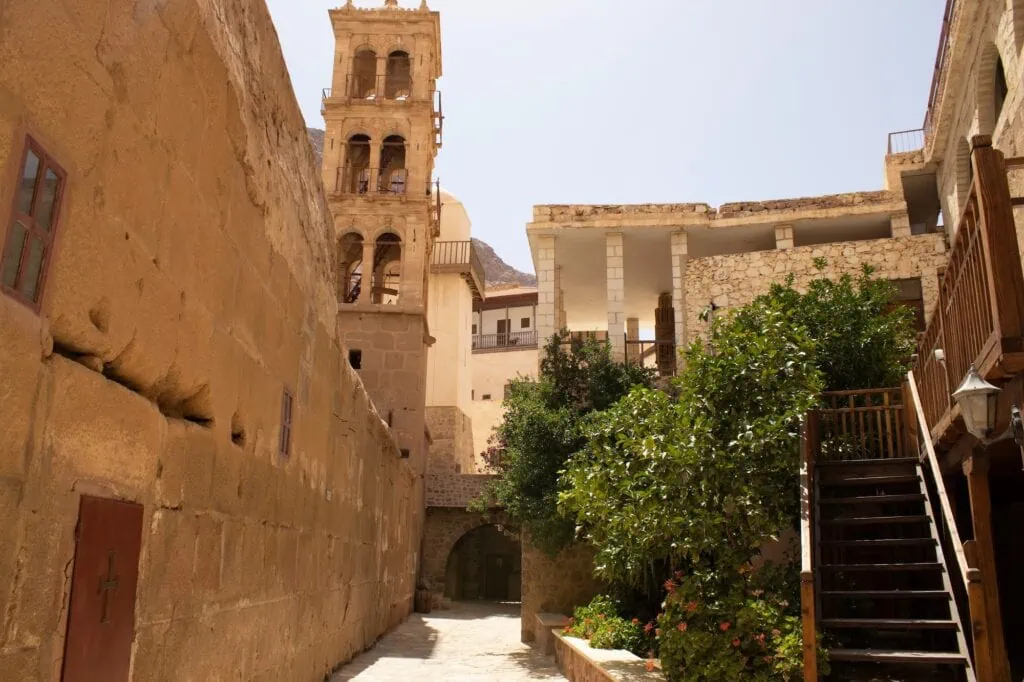
Balancing Access and Preservation
Managing tourism while maintaining the monastery’s spiritual character presents unique challenges. The monks and Egyptian authorities work together to balance public access with conservation needs. Visitor numbers are carefully managed, and certain areas remain restricted to protect both the monastic community’s privacy and the most fragile artifacts.
Planning Your Visit to Sacred Site
Saint Catherine’s Monastery welcomes visitors daily except Fridays and Sundays, typically from 9:00 am to 12:00 pm (09:00-12:00). The monastery is located approximately 230 kilometers (143 miles) from Sharm El Sheikh, making it accessible for day trips from Red Sea resorts.
We at Egypt Tours Plus understand that visiting Saint Catherine’s requires more than just transportation – it demands cultural sensitivity and historical context. Our expert guides provide deep insights into the monastery’s significance while respecting its sacred nature and the monks’ daily routines. With our decades of experience in Egyptian tourism, we ensure your visit contributes positively to the monastery’s preservation efforts while giving you an unforgettable encounter with living history.
The journey to Saint Catherine’s takes you through some of Egypt’s most dramatic desert landscapes. Our modern vehicles and professional drivers navigate the mountain roads safely, while our guides share stories about Bedouin culture and desert life that add depth to your experience.
Climbing Mount Sinai Journey
Many visitors combine their monastery visit with climbing Mount Sinai to witness sunrise from the summit. This challenging hike typically begins around 2:00 am (02:00) to reach the peak by dawn. Our guides know the mountain intimately and can arrange this experience safely, whether you choose the longer camel path or the more direct Steps of Repentance route.
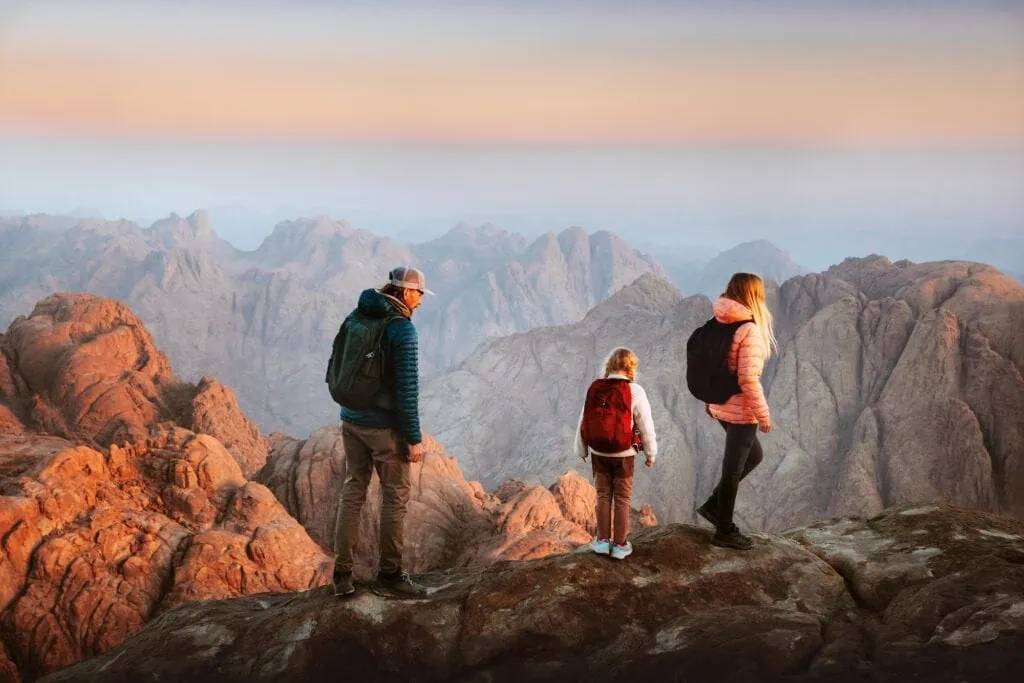
What to Expect During Visit
Inside the monastery, you’ll see the Basilica of the Transfiguration, the Burning Bush, selected icons and manuscripts, and the monastery’s unique architecture. Photography restrictions apply in certain areas to protect artifacts. The visit typically lasts 2-3 hours, allowing time to absorb the profound sense of history and spirituality that permeates every corner of this ancient sanctuary.
Practical Considerations
Modest dress is required for all visitors – long pants and covered shoulders for both men and women. The monastery can be quite cool, especially in winter months when temperatures may drop to 5°C (41°F) at night. Our tours include all necessary arrangements and guidance to ensure your visit is both respectful and memorable.
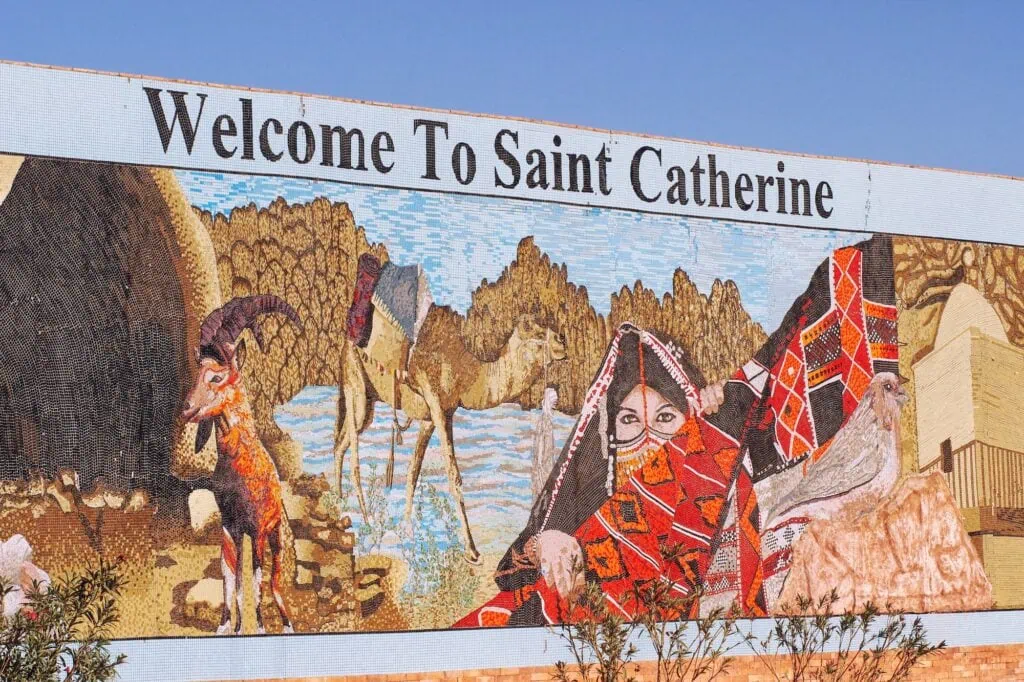
Experience The Sacred Legacy Of St. Catherine’s Monastery
Set at the foot of Mount Sinai, the Monastery of St. Catherine is one of the world’s most profound spiritual landmarks—where history, faith, and dramatic landscapes come together in a truly unforgettable setting. With EgyptToursPlus, we seamlessly connect this iconic site to a private journey that blends Sinai’s unique atmosphere with Egypt’s most celebrated destinations.
You choose your travel dates, your pace, and the experiences that shape your itinerary. From spiritual highlights and desert landscapes to comfortable stays and smooth transitions, we tailor every detail with care—ensuring a refined, effortless, and deeply personal journey from start to finish.
Frequently Asked Questions
Saint Catherine’s Monastery was built between 548 and 565 AD under Byzantine Emperor Justinian I, making it more than 1,450 years old and one of the world’s oldest continuously operating Christian monasteries. Located at the foot of Mount Sinai in Egypt’s South Sinai region, the monastery survived major regional conflicts that destroyed many comparable religious sites. Its fortified granite walls, some reaching 12 meters (39 feet) high, helped preserve its churches, icons, and manuscripts for nearly 15 centuries.
Yes, visitors can see the burning bush traditionally associated with Moses and the Book of Exodus inside Saint Catherine’s Monastery courtyard. According to long-standing Christian, Jewish, and Islamic tradition, this is the location where Moses encountered God on Mount Horeb. The monastery was intentionally constructed around the sacred site in the 6th century by order of Emperor Justinian I. Access to the bush area may occasionally be restricted during religious ceremonies or high pilgrimage periods.
Saint Catherine’s Monastery houses more than 2,000 religious icons, including some of the oldest surviving Christian icons in the world dating from the 6th and 7th centuries. Many survived because the monastery lay outside the Byzantine Empire’s main centers during the 8th-century Iconoclasm, when countless sacred images were destroyed. The collection includes rare encaustic icons painted with heated wax techniques rarely preserved elsewhere. Art historians consider the monastery second only to the Vatican in Christian manuscript and icon importance.
Yes, Saint Catherine’s Monastery holds deep significance for Judaism, Christianity, and Islam because of its association with Moses and Mount Sinai. Jewish tradition identifies the area with the giving of the Ten Commandments, while Christians revere it as one of the earliest monastic centers in the world. Islamic tradition also honors Moses as a prophet, and the monastery historically received protection from Muslim rulers, including a charter traditionally linked to Prophet Muhammad. This multi-faith importance makes the site globally unique.
Climbing Mount Sinai requires moderate fitness and typically takes 2 to 3 hours using the longer camel path or 1 to 2 hours via the steeper “Steps of Repentance” route. The summit stands approximately 2,285 meters (7,497 feet) above sea level, and most sunrise climbs begin shortly after midnight from Saint Catherine village. The trail is non-technical but includes uneven stones, steep sections, and cold pre-dawn temperatures. Most healthy travelers complete the climb successfully with steady pacing and proper footwear.
Visitors to Saint Catherine’s Monastery can view selected ancient manuscripts and learn about famous texts including portions of the Codex Sinaiticus, one of the earliest known Christian Bibles from the 4th century. The monastery library contains more than 3,000 manuscripts in Greek, Arabic, Syriac, Georgian, and other languages, making it one of the world’s most important manuscript collections after the Vatican Library. Many fragile originals remain protected from public handling to preserve their condition for future scholarship.
Yes, approximately 20 to 30 Greek Orthodox monks still live at Saint Catherine’s Monastery and continue daily monastic traditions established more than 1,400 years ago. The monastery remains an active religious community rather than only a historical attraction, with monks maintaining prayer services, liturgical rituals, and preservation work throughout the complex. Visitors often encounter clergy moving between chapels, gardens, and courtyards during the morning visiting hours. This living spiritual continuity distinguishes the monastery from many archaeological sites in Egypt.
Saint Catherine’s Monastery generally opens to visitors from 9:00 am to 12:00 pm daily except Fridays, Sundays, and major religious holidays when access may be limited. The restricted schedule exists because the monastery remains an active religious institution with regular worship and monastic routines. Most guided tours from Sharm El Sheikh or Dahab arrive shortly after opening to avoid crowding and heat later in the morning. Early arrival also provides better lighting for photography in the monastery courtyard.
Saint Catherine’s Monastery lies approximately 230 km from Sharm El Sheikh, 130 km from Dahab, and around 470 km southeast of Cairo in Egypt’s Sinai Peninsula. Travel time from Sharm El Sheikh usually ranges between 2.5 and 3.5 hours by road depending on security checkpoints and weather conditions. Many travelers combine the monastery with an overnight Mount Sinai climb because both sites sit within the same mountain area. Private transfers offer significantly more flexibility than large group buses.
No special permits are required for most tourists visiting Saint Catherine’s Monastery, although modest dress and passport identification are expected at security checkpoints. Visitors should cover shoulders and knees because the monastery remains an active Greek Orthodox religious site rather than solely a museum. Certain chapels, monastic quarters, and library sections remain closed to the public to protect religious privacy and fragile artifacts. Organized tours simplify checkpoint procedures and transportation logistics through the Sinai region.
Yes, travelers can stay overnight in Saint Catherine town, where guesthouses, eco-lodges, and small hotels support visits to both the monastery and Mount Sinai. Overnight stays are especially popular because most Mount Sinai sunrise climbs begin between midnight and 2:00 am. Accommodation in the area is generally simple rather than luxury-focused, reflecting the remote desert setting at roughly 1,500 meters (4,920 feet) elevation. Booking ahead during Christmas, Easter, and winter pilgrimage season is strongly recommended.
Photography inside Saint Catherine’s Monastery is restricted in areas containing ancient icons, manuscripts, and sacred liturgical objects to protect fragile materials from light exposure and crowding. Outdoor courtyards and some public sections generally allow standard photography, although flash use may still be discouraged. The monastery preserves artworks dating back more than 1,300 years, including delicate encaustic icons highly sensitive to environmental damage. Visitors should always follow instructions from monastery staff and posted signs inside the complex.
Don’t miss Egypt’s greatest treasures
Highlights of Egypt

Design Your Custom Tour
Explore Egypt your way by selecting only the attractions you want to visit