

Nubian Museum Aswan – Gateway to Ancient African Kingdoms
Ancient treasures tell stories spanning millennia.
The Nubian Museum stands as one of Egypt’s most remarkable cultural institutions, preserving the rich heritage of a civilization that once ruled both Egypt and Sudan. Located in Aswan, this architectural masterpiece houses over 3,000 artifacts that chronicle the fascinating history of Nubian culture, from prehistoric times through the Islamic period. Our expertly guided visits reveal layers of African history often overlooked in traditional Egyptian tours, offering travelers an authentic glimpse into the Kingdom of Kush and its enduring legacy.
Understanding this museum’s significance transforms any visit to southern Egypt into a deeper cultural journey.
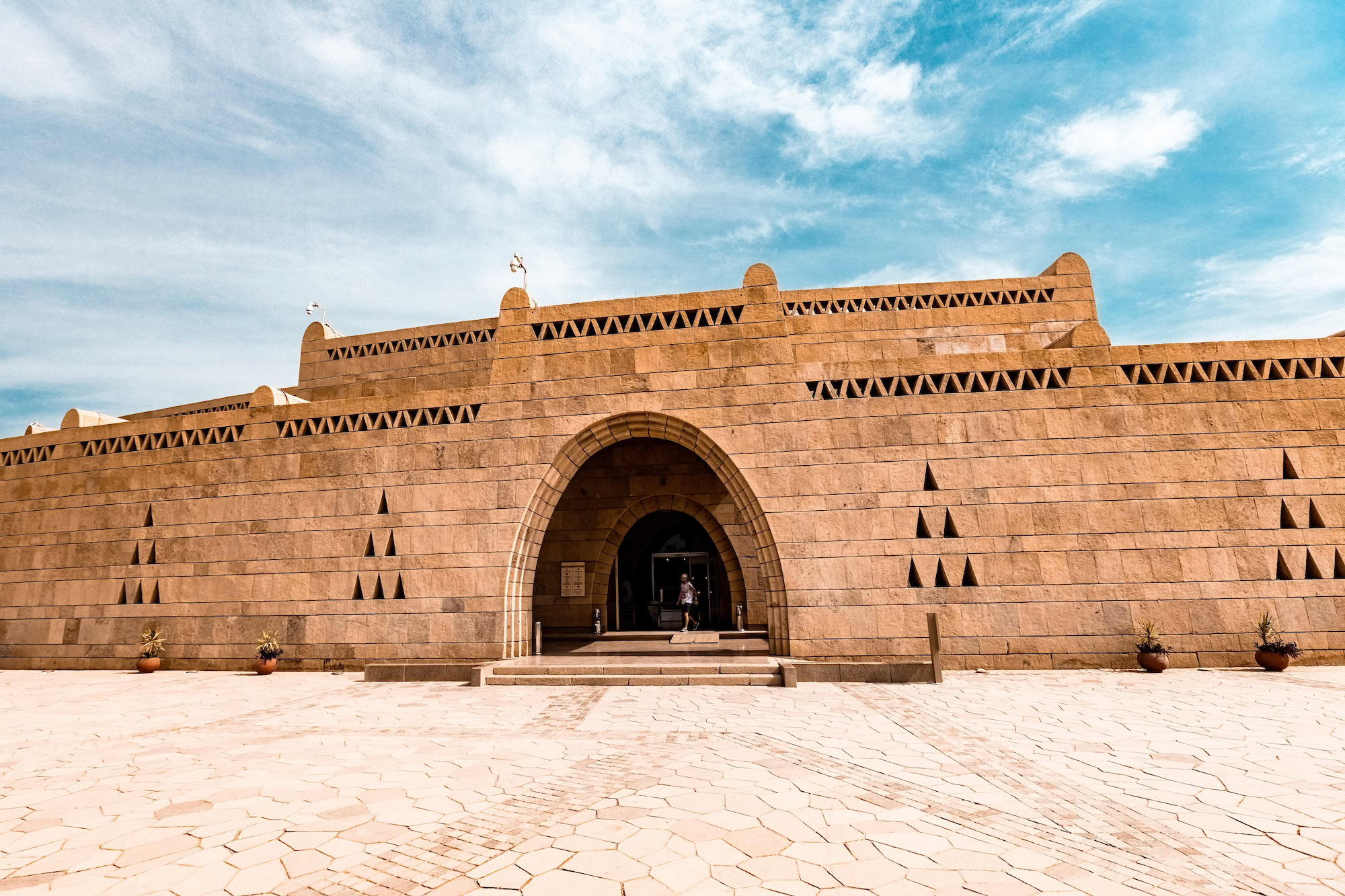
UNESCO’s Cultural Rescue Mission
The museum exists because of one of history’s most ambitious preservation efforts. When the Aswan High Dam threatened to flood vast areas of Nubian territory in the 1960s, UNESCO launched an unprecedented salvage campaign to rescue countless archaeological treasures and monuments.
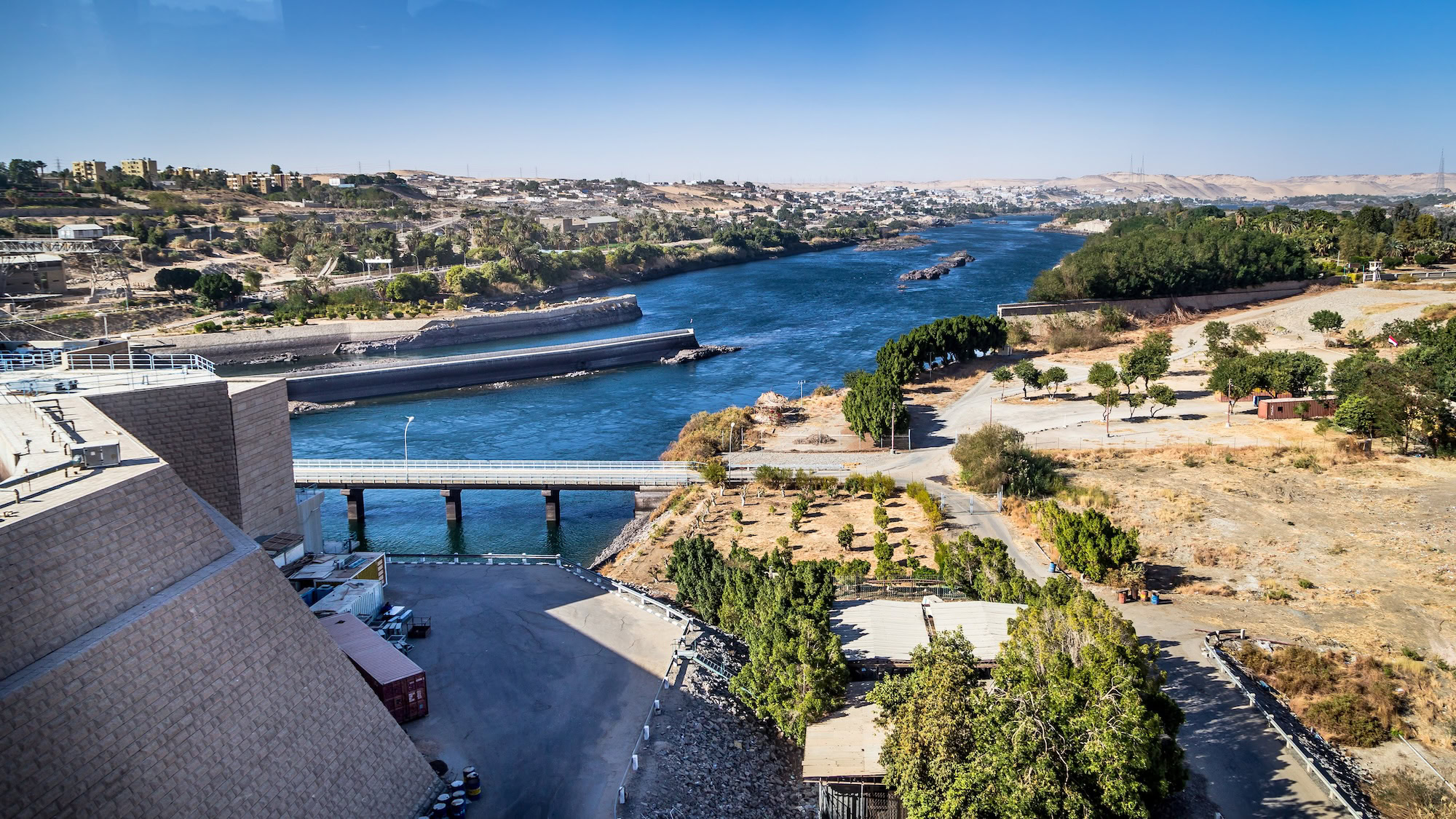
This international collaboration saved temples, artifacts, and entire communities from submersion. The project relocated Abu Simbel and Philae Temple while systematically documenting Nubian archaeological sites before they disappeared beneath Lake Nasser’s waters. Teams of archaeologists worked against time, excavating settlements that had existed for thousands of years.
The Relocation Challenge
Moving entire populations required careful planning and cultural sensitivity. Nubian communities had lived along the Nile for generations, maintaining traditions dating back to ancient times. The displacement affected not just people, but cultural practices tied to specific landscapes and sacred sites.
Documentation efforts captured oral histories, architectural styles, and traditional crafts before communities moved to new locations. These records now form essential parts of the museum’s cultural preservation mission.
International Cooperation
Twenty-four countries contributed expertise, funding, and resources to the UNESCO campaign. Archaeological teams from around the world collaborated to save Nubian heritage, establishing precedents for international cultural preservation that continue today.
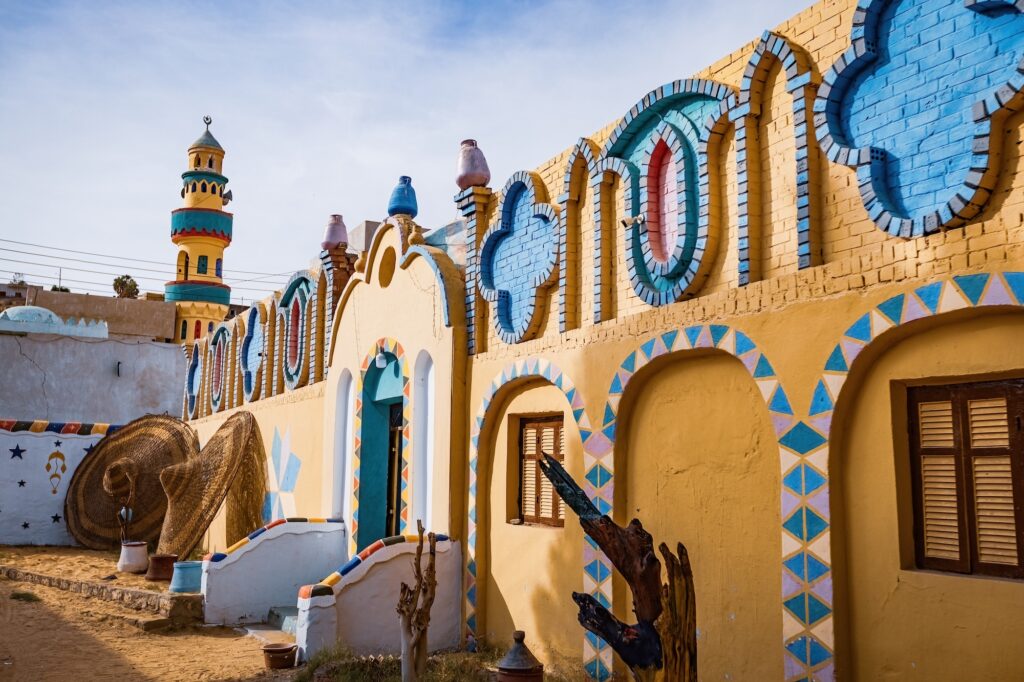
The success of this massive undertaking demonstrated how global cooperation could protect cultural heritage threatened by development projects.
Architectural Excellence and Cultural Integration
Mahmoud Al-Hakim designed the museum to reflect traditional Nubian architectural principles while meeting modern exhibition standards. The building’s form echoes ancient Nubian building techniques, with curved walls and natural stone surfaces that blend seamlessly with Aswan’s landscape. Rather than imposing foreign architectural styles, the design celebrates local building traditions that have adapted to the region’s climate for centuries.
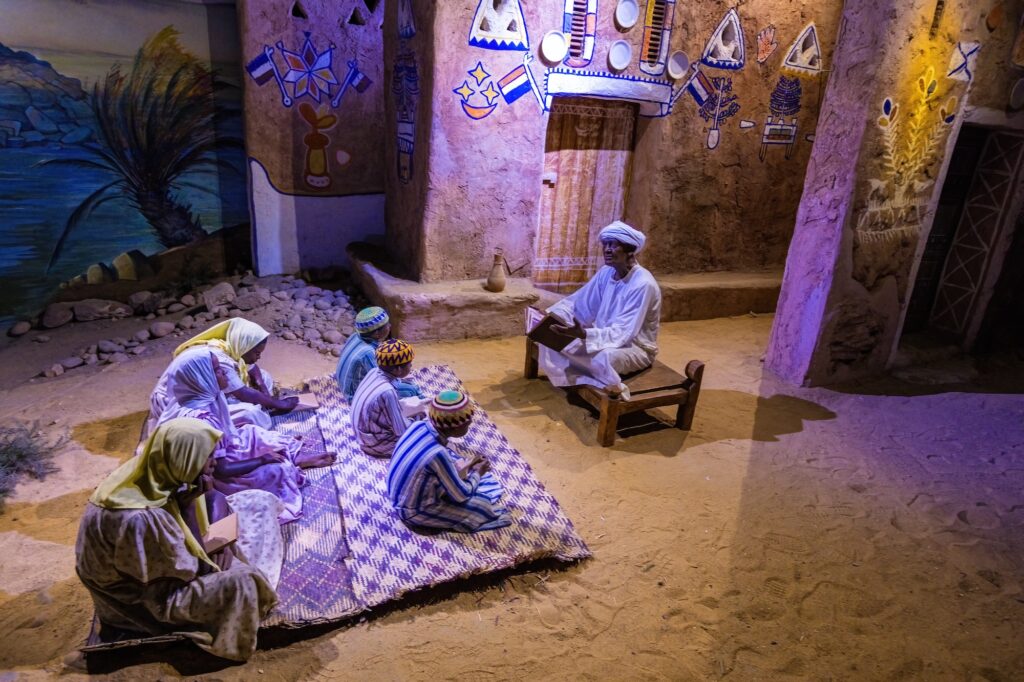
Pedro Ramirez Vazquez, the renowned Mexican architect who consulted on the project, brought international museum design expertise while respecting indigenous architectural wisdom. The collaboration produced a structure that functions both as a modern museum and as an architectural statement about cultural continuity. Natural lighting illuminates galleries through carefully positioned windows, reducing harsh artificial lighting while protecting delicate artifacts.
The museum’s 50,000 square meters include exhibition halls, research facilities, and educational spaces designed to serve both international visitors and local communities. Storage areas maintain climate control for thousands of additional artifacts not currently on display. The building received the prestigious Agha Khan Award for Architecture, recognizing its successful integration of cultural sensitivity with functional design excellence.
Collections Spanning Five Millennia
Walking through the galleries reveals the depth and sophistication of Nubian civilization across different historical periods.
Prehistoric Nubian Culture
The earliest artifacts showcase sophisticated pottery traditions and tool-making techniques that predate pharaonic Egypt. Stone implements demonstrate advanced understanding of materials and craftsmanship. Ceramic vessels display decorative patterns that influenced later artistic traditions throughout the Nile Valley.
The Kingdom of Kush Era
Royal artifacts from the Kingdom of Kush period represent some of the museum’s most significant treasures. The statue of King Shabitko stands as a masterpiece of ancient African sculpture, demonstrating the artistic achievements of Nubian rulers who conquered Egypt during the 25th Dynasty. Gold jewelry exhibits the wealth and craftsmanship of Kushite royal courts.
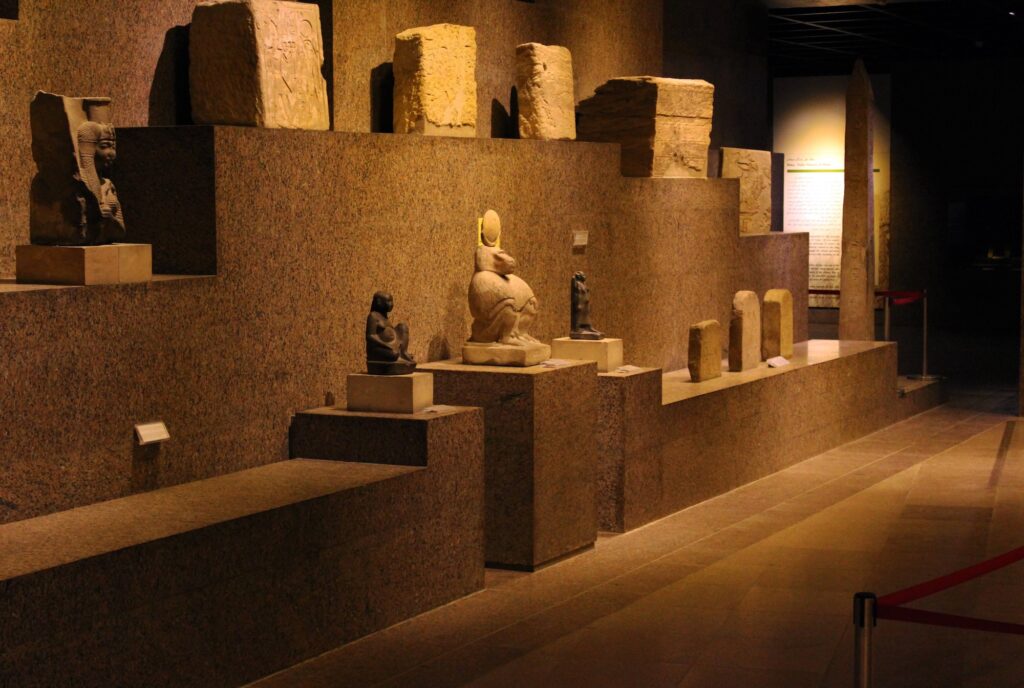
Religious artifacts reveal how Nubian rulers adopted and adapted Egyptian religious practices while maintaining distinct cultural elements. Temple reliefs show Nubian pharaohs performing traditional Egyptian ceremonies while displaying unique stylistic characteristics.
Islamic Period Artifacts
Later periods showcase how Nubian communities adapted to changing political and religious influences. Islamic period artifacts demonstrate cultural continuity despite major historical transitions. Traditional crafts evolved to incorporate new artistic influences while preserving essential Nubian design elements.
Contemporary Nubian Culture
Modern exhibits celebrate living Nubian traditions, connecting ancient heritage with contemporary communities. Traditional costumes, musical instruments, and household objects demonstrate cultural continuity across millennia. These displays honor communities displaced by the High Dam construction while preserving their cultural legacy.
Visitor Experience and Educational Programs
Museum facilities accommodate diverse visitor interests through carefully designed educational programming. We arrange private guided tours with Egyptologists who specialize in Nubian history, providing context often missing from standard museum visits. These expert guides explain connections between artifacts and broader historical themes, helping visitors understand Nubian civilization’s role in ancient world history.
Interactive displays engage visitors of all ages, with hands-on exhibits that demonstrate ancient techniques and cultural practices. Educational workshops allow deeper exploration of specific topics like ancient Nubian languages, traditional crafts, or archaeological methods used during the UNESCO salvage campaign.
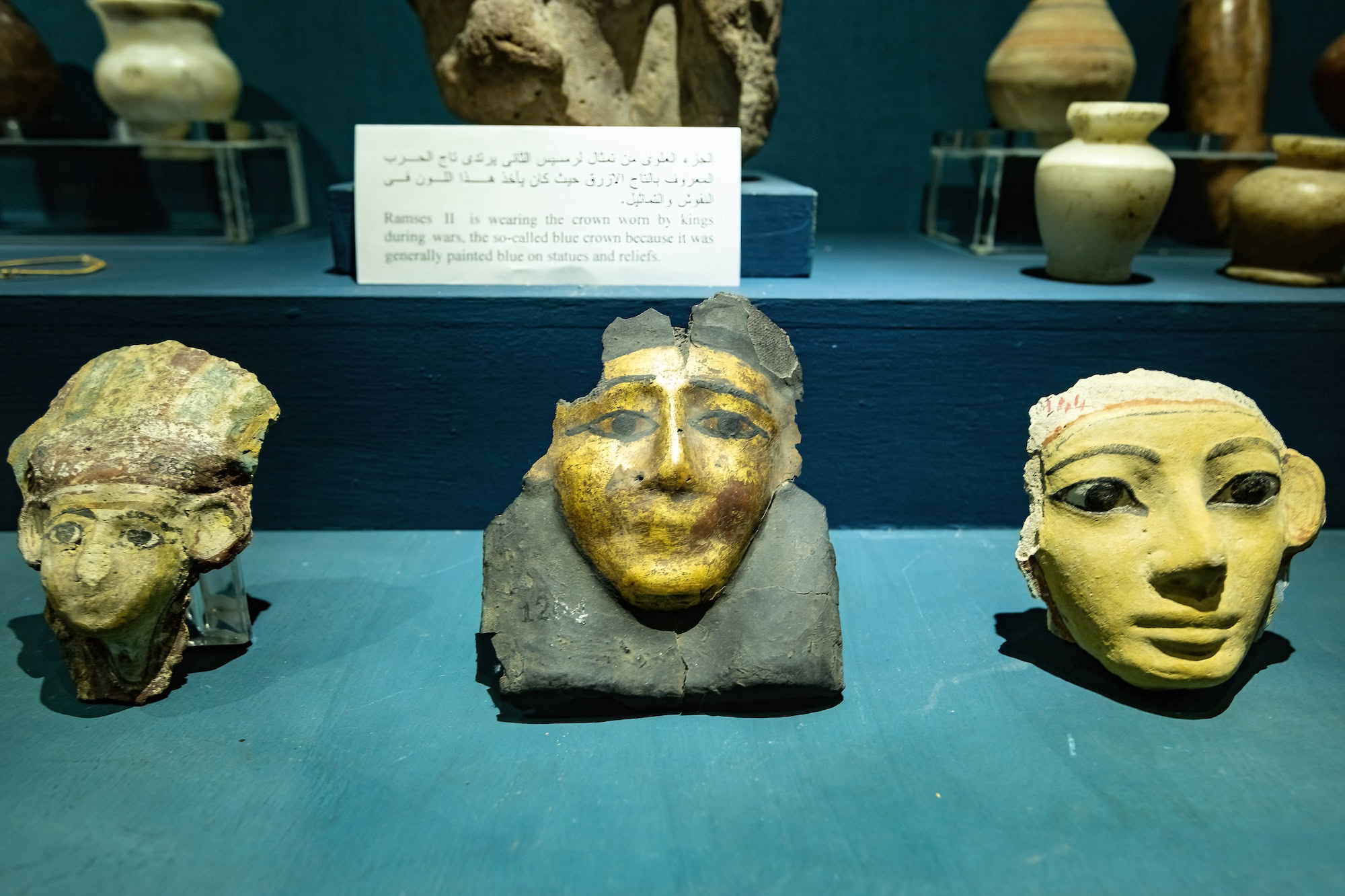
The museum library houses extensive research materials for scholars studying Nubian culture, archaeology, and history. Research facilities support ongoing studies that continue expanding knowledge about this remarkable civilization.
Modern amenities include climate-controlled galleries, accessible pathways, and comprehensive visitor services. The museum shop features authentic Nubian crafts and scholarly publications about the region’s history and culture.
Planning Your Museum Visit
Location on El Fanadek Street makes the museum easily accessible from central Aswan. We typically schedule museum visits during morning hours when lighting conditions optimize artifact viewing and temperatures remain comfortable for extended exploration.
Allow minimum three hours for comprehensive museum exploration. Our guided tours provide essential historical context while ensuring you experience the most significant exhibits and understand their cultural importance. Private guides tailor explanations to visitor interests, whether focusing on archaeology, art history, or contemporary Nubian culture.
Museum photography policies permit personal photography in most galleries, though flash photography is prohibited to protect artifacts. Professional photography requires advance permission and may involve additional fees.
Combining visits with nearby highlights such as the Unfinished Obelisk and Philae Temple allows travelers to experience several of Aswan’s most important Aswan attractions in one seamless itinerary. We coordinate transportation between sites to ensure you spend more time discovering the city’s archaeological treasures and less time on logistics.
Accessibility features accommodate visitors with mobility needs, including wheelchair access to all major galleries and exhibition areas.
Frequently Asked Questions
What makes the Nubian Museum different from other Egyptian museums?
The Nubian Museum specifically preserves African cultural heritage often overlooked elsewhere, focusing on the Kingdom of Kush and contemporary Nubian communities rather than pharaonic Egyptian culture alone.
How long should I plan for a museum visit?
Allow 2-3 hours minimum for a comprehensive visit, or 4-5 hours if you want to explore exhibits in detail and participate in educational activities.
Are guided tours available in languages other than Arabic?
Yes, we provide expert guides fluent in English, French, German, Spanish, and other languages, with specialization in Nubian history and archaeology.
Can I purchase authentic Nubian crafts at the museum?
The museum shop features genuine Nubian handicrafts, books about the region’s history, and replicas of significant artifacts found in the collections.
Is the museum suitable for children?
Interactive exhibits and hands-on displays engage younger visitors, while educational programs adapt content for different age groups and learning styles.
What photography restrictions apply inside the museum?
Personal photography is permitted in most areas without flash, though some special exhibits may restrict photography to protect particularly sensitive artifacts.
How does this museum connect to the UNESCO World Heritage sites nearby?
The museum provides essential context for understanding Abu Simbel and Philae Temple, explaining the cultural significance of monuments rescued during the international salvage campaign.
Are there seasonal considerations for visiting the museum?
Indoor climate control makes the museum comfortable year-round, though morning visits during summer months provide the most pleasant experience overall.
Can I combine a museum visit with other Aswan attractions?
Yes, we coordinate comprehensive Aswan tours that include the museum alongside attractions like the Unfinished Obelisk, Philae Temple, and traditional Nubian villages.
What makes this museum architecturally significant?
Mahmoud Al-Hakim’s design integrates traditional Nubian architectural elements with modern museum functionality, earning recognition through the prestigious Agha Khan Award for Architecture.
Do you offer specialized tours for archaeology enthusiasts?
Our Egyptologist guides provide in-depth archaeological context, explaining excavation techniques, artifact analysis methods, and ongoing research projects related to Nubian civilization.
How do I arrange a private guided tour of the museum?
Contact our team to arrange expert guides who specialize in Nubian history and archaeology, ensuring you gain deep insights into this remarkable cultural heritage during your visit.
Ancient Wonders of Aswan, Modern Comfort
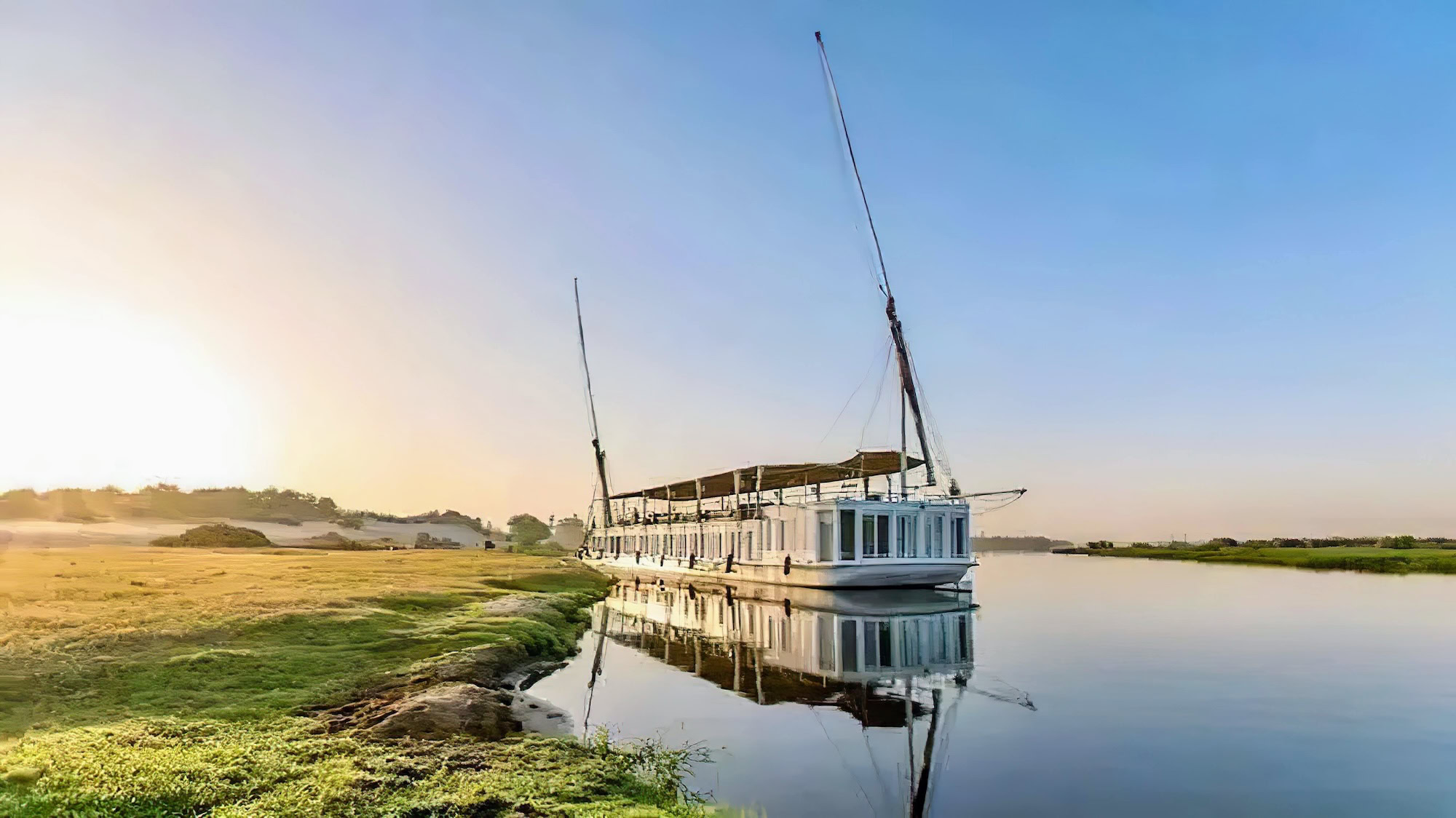
Sail the Nile Through Aswan Like a Pharaoh

Design Your Custom Tour
Explore Egypt your way by selecting only the attractions you want to visit