

Qasr Al Farafra – A Town Untainted and Frozen in Time
Step into history itself.
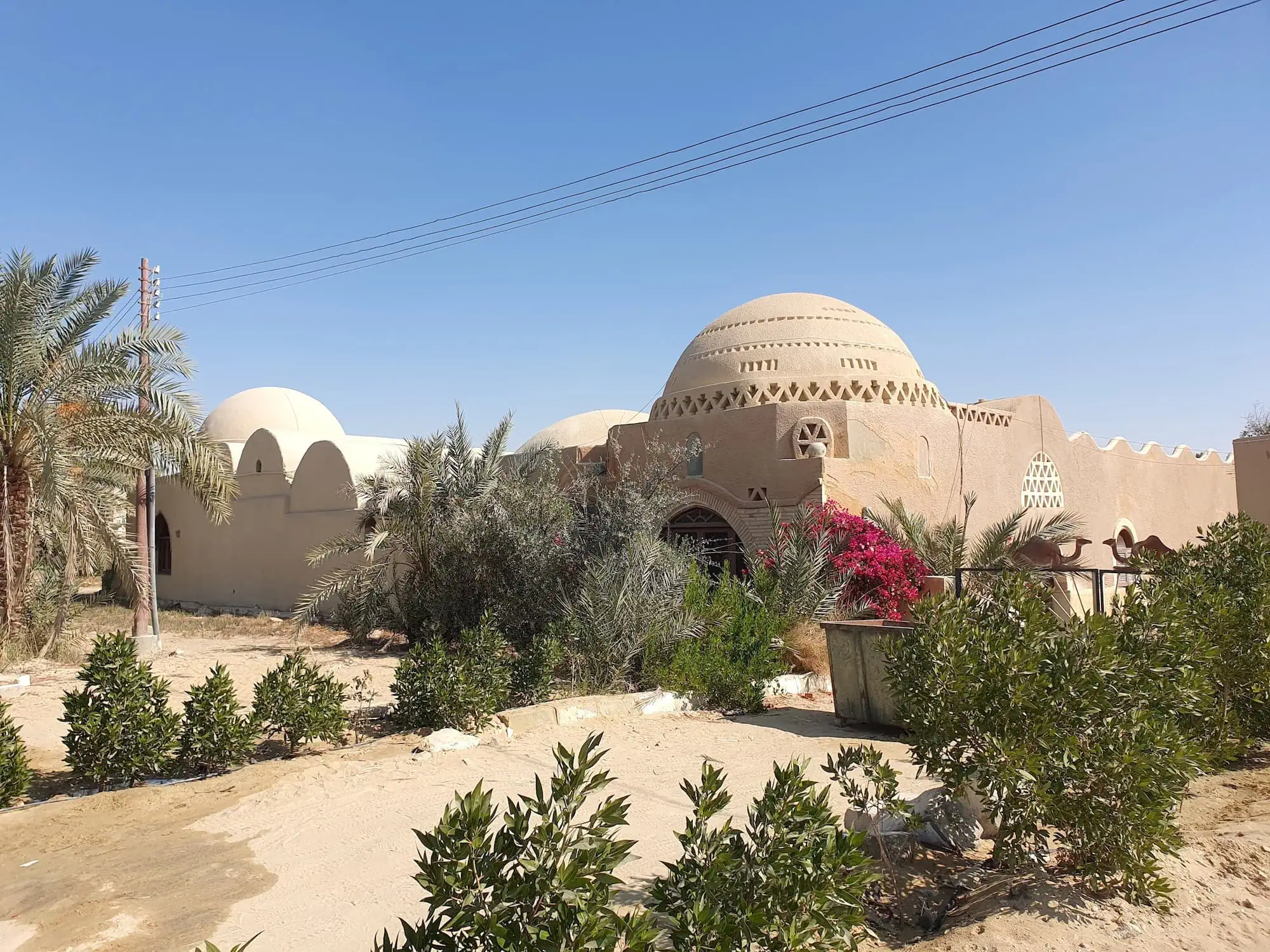
Walking through Qasr Al Farafra feels like discovering a secret that time forgot. This remarkable medieval town, nestled deep in Egypt’s Western Desert, has remained virtually untouched by modern development for over 800 years.
Mud-brick buildings stand exactly as they did centuries ago, their earth-colored walls telling stories of ancient caravan routes, Roman fortifications, and Bedouin traditions that continue to this day.
We’ve guided countless travelers through this extraordinary destination, watching their amazement as they realize they’re experiencing one of Egypt’s most authentic historical sites. No tourist crowds, no modernization – just pure, unfiltered history waiting to be explored.
Table of Contents
Discovering Egypt’s Most Preserved Medieval Settlement
Qasr Al Farafra stands as Egypt’s most remarkable example of medieval architecture preservation. The town’s isolation in the Farafra depression, roughly 980 km² of untouched Western Desert, protected it from the concrete invasion that transformed most Egyptian settlements.
Ancient Foundations and Roman Heritage
Roman fortress ruins anchor the town’s eastern edge, remnants of strategic fortifications that once protected vital caravan routes crossing the Western Desert. These stone foundations reveal how Roman engineers chose this location for its natural defensive advantages within the depression’s geography.
The fortress served as a crucial rest point where caravans could resupply with water from the area’s numerous wells before continuing their journeys.
Archaeological evidence suggests continuous habitation since the late Pleistocene period, making this one of Egypt’s oldest continuously occupied sites. Hieroglyphic inscriptions found in the area reference this location during the Ptolemaic period, when it served administrative functions for the surrounding oasis communities.
Medieval Architecture That Defies Time
Eight centuries of mud-brick construction techniques remain perfectly preserved throughout the settlement. Traditional buildings showcase sophisticated engineering – thick walls that regulate internal temperatures, flat roofs designed for desert climate conditions, and narrow passages that provide shade and wind protection.
We often watch visitors run their hands along walls that medieval craftsmen built using techniques passed down through generations. The same extended families who constructed these buildings still call Qasr Al Farafra home, maintaining their ancestors’ architectural legacy through careful restoration using identical materials and methods.
The Living Community Within Ancient Walls
Four extended families form this tight-knit community, their daily routines echoing patterns established centuries ago. Religious observance remains central to community life, with traditional mosques serving as gathering places where residents maintain customs largely unchanged since medieval times.
During Ramadan, the entire settlement transforms as families gather for traditional celebrations that have remained consistent for generations. This continuity creates an atmosphere where visitors experience authentic cultural practices rather than tourist-oriented performances.
Exploring the Town’s Functional Medieval Infrastructure
Medieval urban planning reveals itself through Qasr Al Farafra’s perfectly preserved infrastructure. Every structure served specific community functions, from olive oil production to grain storage, creating a self-sufficient settlement model.
Traditional Workshops and Production Facilities
Ancient olive mills demonstrate sophisticated medieval engineering techniques. Massive stone grinding wheels, operated by donkey power, processed olives using methods that remained efficient for centuries. Adjacent madrassas provided education while traditional ovens baked bread using locally harvested grains.
Stables housed the camels and donkeys essential for transportation across the Western Desert. These animals connected Qasr Al Farafra to other oasis communities in Dakhla and Bahariya, maintaining trade relationships that sustained the settlement’s economy.
The town’s layout reflects medieval priorities – production facilities positioned for optimal workflow, residential areas providing family privacy, and communal spaces fostering social cohesion. Walking these narrow passages today, visitors follow pathways designed by medieval planners who understood desert living requirements.
Water Systems and Desert Survival
Over 100 wells and natural hot springs supply this desert community with abundant water resources. Medieval engineers developed sophisticated irrigation systems that channel water throughout the settlement, supporting both human needs and limited agricultural production.
Bir Sitta and other sulfur-rich springs provide therapeutic waters that residents have valued for generations. These natural resources explain why this location remained continuously inhabited despite the Western Desert’s challenging conditions.
The White Desert Gateway Experience
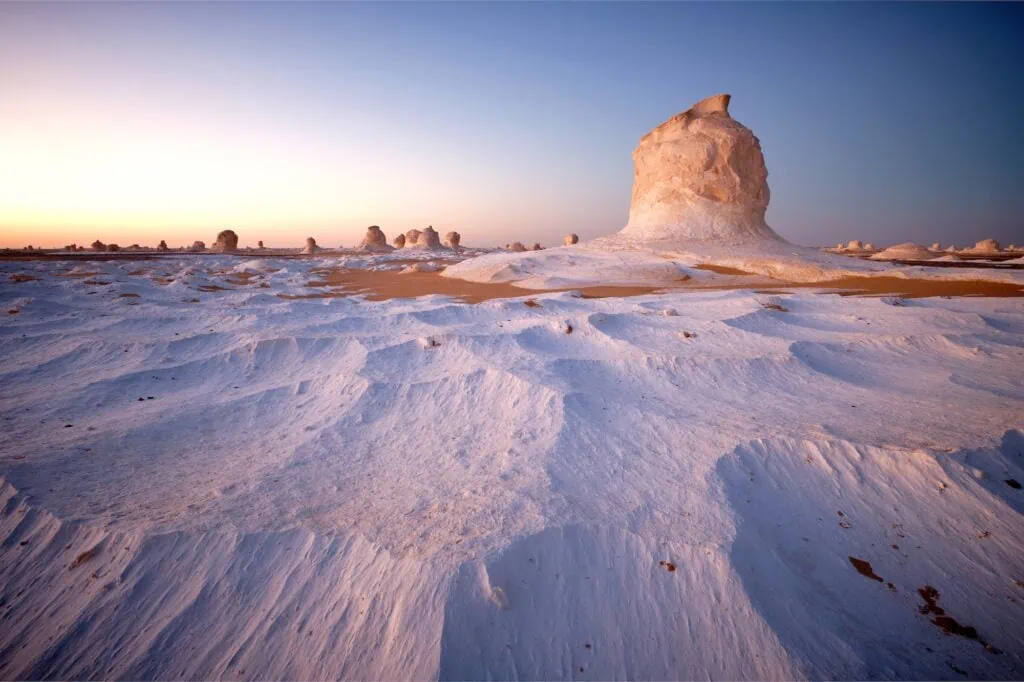
Qasr Al Farafra serves as the primary access point for Egypt’s stunning White Desert National Park, covering 3,010 square kilometers of protected landscape. This proximity makes the medieval town an ideal base for exploring one of Egypt’s most spectacular natural attractions.
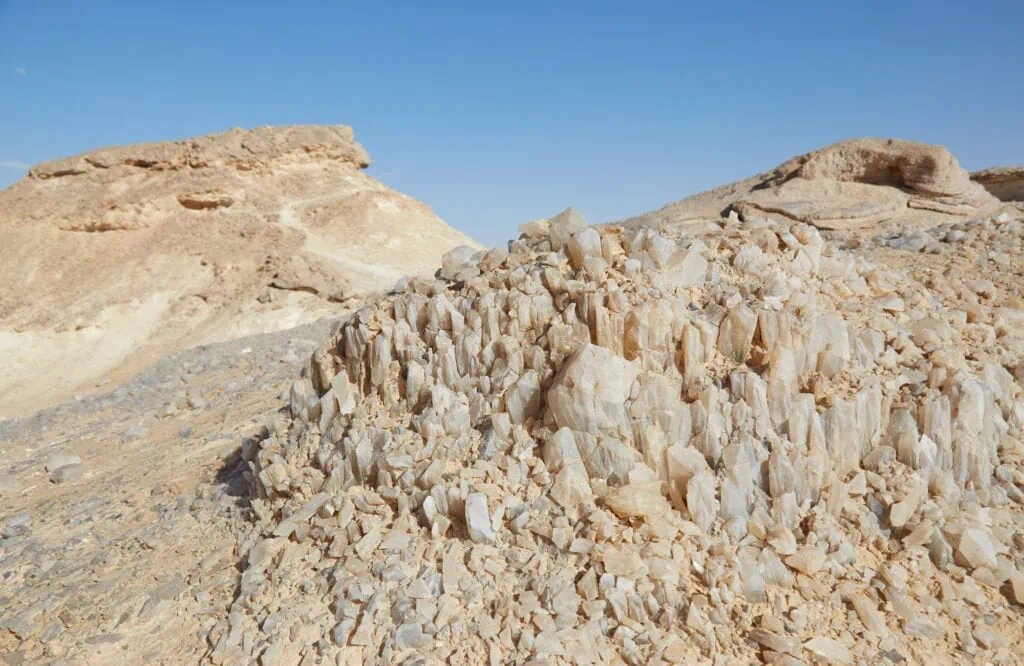
Crystal Mountain rises just kilometers away, its shiny quartz ridge forming a natural arch that sparkles in desert sunlight. Known locally as Hagar al-Makhrum, this geological formation demonstrates the unique mineral compositions found throughout the Farafra depression.
National park regulations protect this fragile ecosystem while allowing controlled tourism access. Safari expeditions departing from Qasr Al Farafra provide visitors with opportunities to witness endangered species like Rhim gazelle and rare Dorcas gazelle in their natural habitat.
We coordinate White Desert excursions that combine historical exploration in Qasr Al Farafra with overnight camping among the limestone formations. This combination allows travelers to experience both cultural and natural heritage in a single journey through Egypt’s Western Desert.
The town’s traditional buildings provide authentic accommodation options for visitors planning extended White Desert expeditions. Local families offer hospitality that connects travelers with Bedouin customs while providing practical access to one of Egypt’s most protected natural environments.
Cultural Heritage and Bedouin Traditions
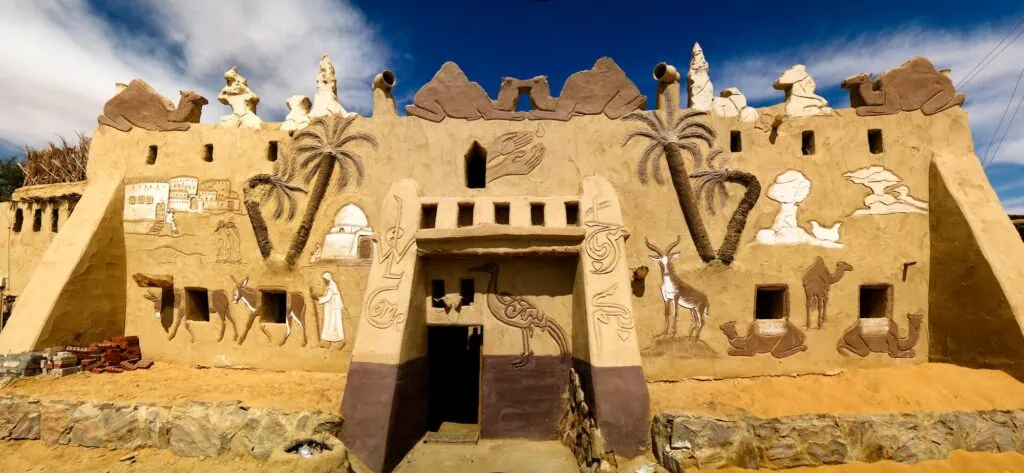
Bedouin culture permeates every aspect of life in Qasr Al Farafra, from architectural techniques to daily customs. Colorful traditional drawings adorn building walls, depicting stories and symbols that connect current residents with their nomadic ancestors.
The Badr Museum preserves local artistic traditions through sculptures and paintings that illuminate ancient Egyptian customs. Local artists continue creating works that reflect their unique cultural perspective, blending Bedouin heritage with influences from centuries of desert trade.
Religious observance maintains traditional patterns established by the settlement’s founders. Morning prayers echo through narrow passages as they have for generations, creating a rhythm of daily life that visitors find both peaceful and profoundly authentic.
Community celebrations follow seasonal patterns tied to agricultural cycles and religious observances. These events provide opportunities for visitors to witness traditions that have survived unchanged in this isolated desert location.
Extended family structures ensure cultural continuity through carefully maintained oral traditions. Elders share stories that preserve historical knowledge about caravan routes, desert survival techniques, and the settlement’s role in regional trade networks.
Planning Your Visit to This Medieval Treasure
Transportation to Qasr Al Farafra requires careful planning due to the town’s remote location in Egypt’s Western Desert. Most visitors arrive via organized tours that provide reliable vehicles and experienced guides familiar with desert driving conditions.
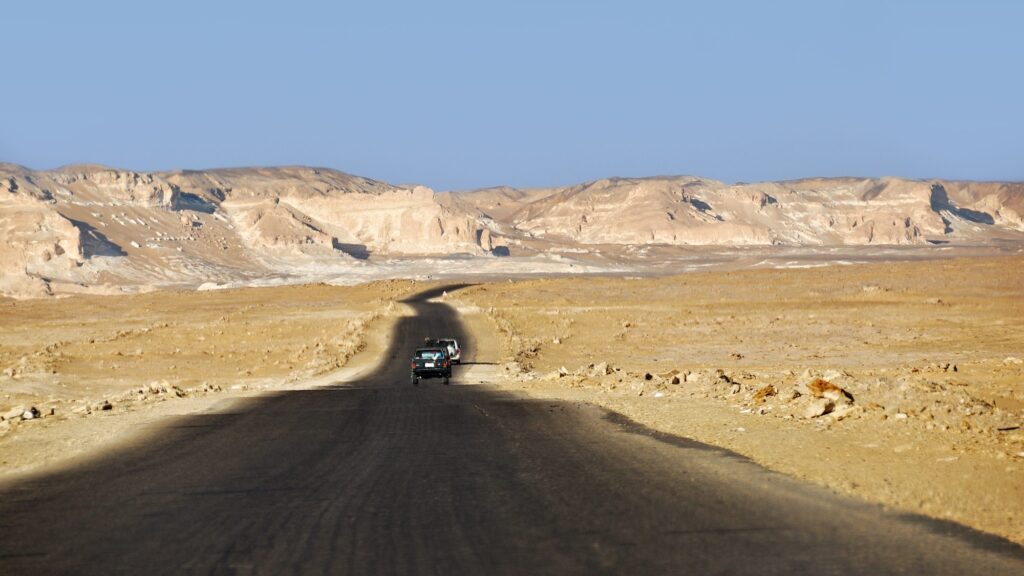
The journey from Cairo takes approximately six hours through spectacular desert landscapes. We recommend departing early morning to arrive during optimal lighting for photography and exploration of the medieval architecture.
Accommodation options include traditional guesthouses within the historic settlement itself. These family-owned establishments provide authentic experiences while maintaining the comfortable amenities modern travelers expect.
Walking tours represent the only way to properly explore the town’s narrow medieval passages. Vehicles cannot navigate these historic thoroughfares, making foot exploration essential for appreciating the settlement’s architectural details and community atmosphere.
Climate considerations affect visit timing significantly. The hot desert climate averages 23.9°C (75°F) but can reach extreme temperatures during summer months. We recommend visits between October and April for optimal comfort during extended walking exploration.
Experience The Authentic Charm Of Qasr El Farafra
In the heart of the Farafra Oasis, Qasr El Farafra offers a glimpse into traditional desert life—simple, genuine, and deeply connected to its surroundings. With Egypt Tours Plus, we weave this authentic experience into a thoughtfully designed private journey, blending remote oasis culture with Egypt’s most iconic highlights.
You choose your travel dates, set your pace, and shape every part of your itinerary. From desert exploration to cultural encounters and comfortable stays, we tailor each detail around your preferences—ensuring a seamless, refined, and truly personal travel experience.
Frequently Asked Questions
Qasr Al Farafra is estimated to be between 500 and 800 years old, with portions of the fortified settlement dating to Egypt’s late medieval Islamic period. The mudbrick structures were built using traditional oasis construction methods designed to withstand extreme desert heat and sandstorms in the Western Desert. Archaeologists believe the settlement expanded gradually around defensive needs, water access, and caravan trade routes linking Farafra Oasis to Dakhla and Bahariya. Early morning visits provide the best lighting for photographing the narrow historic alleyways.
No, vehicles cannot enter the historic core of Qasr Al Farafra because the medieval lanes were originally designed for foot traffic and pack animals rather than modern cars. Many passageways are extremely narrow, with low mudbrick walls and tight corners that preserve the settlement’s traditional defensive layout. Visitors explore entirely on foot, which allows closer access to architectural details and local daily life. Comfortable walking shoes are essential because surfaces can be uneven and sandy throughout the old quarter.
Yes, Qasr Al Farafra offers small guesthouses and family-run eco-lodges that combine traditional oasis architecture with basic modern comforts such as private bathrooms, electricity, and home-cooked meals. Most accommodations are locally owned and built from mudbrick materials that naturally regulate indoor temperatures in the desert climate. Staying overnight also provides easier access to nearby White Desert excursions and sunset experiences. Travelers visiting between October and February should reserve accommodations in advance because room availability is limited.
The White Desert National Park begins immediately outside Farafra Oasis, making Qasr Al Farafra one of the closest and most practical gateways to the region’s famous chalk rock formations. Most desert tours reach major White Desert landmarks within 30 to 60 minutes by 4×4 vehicle, depending on the route and camping location. The proximity allows travelers to combine cultural exploration in the old town with sunset safaris and overnight desert camping. Afternoon departures are especially popular for photography and cooler temperatures.
Qasr Al Farafra is one of Egypt’s few surviving medieval oasis settlements where traditional mudbrick architecture, narrow defensive streets, and community life remain visibly intact. Unlike heavily restored historical sites, the old town still reflects authentic desert living patterns shaped by climate, water scarcity, and caravan trade across the Western Desert. The settlement’s compact layout also demonstrates how oasis communities protected themselves from heat and raids centuries ago. Visitors interested in vernacular architecture often consider Farafra one of Egypt’s most underrated heritage destinations.
Yes, several extended local families still inhabit parts of Qasr Al Farafra and continue maintaining traditional mudbrick homes using inherited building techniques passed down for generations. These structures rely on thick earthen walls and shaded passages to naturally reduce indoor temperatures during summer months that can exceed 40°C (104°F). The continued residential use gives the settlement a living cultural identity rather than the atmosphere of an abandoned archaeological site. Visitors should remain respectful because parts of the old town are still private homes.
October through April offers the best conditions for visiting Qasr Al Farafra, with daytime temperatures generally ranging between 20°C and 28°C (68°F to 82°F) and significantly cooler evenings. Summer temperatures in the Western Desert frequently exceed 40°C (104°F), which makes walking through exposed alleyways uncomfortable during midday hours. Winter months also provide clearer skies for photography and easier access to nearby desert attractions. Morning and late afternoon visits are ideal because the mudbrick architecture photographs beautifully in softer desert light.
Yes, Qasr Al Farafra incorporates basic modern utilities such as electricity and water access, but these systems are integrated carefully to preserve the settlement’s traditional appearance and historical character. Many homes still rely on thick mudbrick walls, shaded courtyards, and natural airflow rather than modern cooling systems because these methods remain highly effective in desert environments. The balance between preservation and practical living makes the town unusual among Egypt’s historical oasis settlements. Visitors should expect simple infrastructure rather than luxury urban amenities.
A full day is usually sufficient to explore Qasr Al Farafra’s medieval streets, local workshops, viewpoints, and nearby desert landscapes at a comfortable pace. Travelers combining the settlement with White Desert excursions or overnight camping often stay two days or longer in Farafra Oasis. Guided walking tours typically last 1 to 3 hours depending on interest in architecture, local history, and cultural interaction. Late afternoon visits are especially rewarding because cooler temperatures and golden desert light enhance both photography and walking conditions.
The Farafra Depression surrounding Qasr Al Farafra supports several desert-adapted species, including Dorcas gazelles, fennec foxes, desert birds, and occasionally the endangered Rhim gazelle in remote protected areas. Birdwatchers may also spot kestrels, larks, and migratory species passing through the Western Desert during seasonal migrations. Wildlife sightings are less common during the hottest parts of the day because animals remain sheltered from extreme heat. Early morning desert excursions provide the highest chances for observing active wildlife and clearer desert visibility.
Yes, local guides from Farafra Oasis offer walking tours through Qasr Al Farafra that explain the settlement’s architecture, tribal history, and desert survival traditions in far greater detail than independent visits usually provide. Many guides belong to families with longstanding connections to the oasis, which adds personal insight into local customs and restoration methods. Tours often combine the old town with nearby White Desert excursions or handicraft workshops. Hiring a guide also supports community-based tourism within this remote desert region.
Visitors exploring Qasr Al Farafra should bring comfortable walking shoes, sun protection, bottled water, sunglasses, and lightweight clothing suitable for dry desert conditions. A hat and sunscreen are particularly important because shaded areas can be limited outside the narrow inner passages of the settlement. Photographers may also want wide-angle lenses for capturing the compact medieval streets and mudbrick architecture. Respectful behavior is essential because the old town remains an active community where residents still live and work year-round.
Design Your Private Western Desert Adventure
Travel with your own expert guide, private 4×4 vehicle, and a route tailored to you.