

Ancient Egypt’s Eternal Resting Place
Death was only the beginning. For nearly a millennium, Egypt’s most powerful rulers and elite transformed a dramatic limestone landscape on the west bank of the Nile into what is now known as the Theban Necropolis—one of the most extraordinary burial grounds in the ancient world.
Beneath desert cliffs where the sun sets each evening, pharaohs, queens, nobles, and officials prepared for their journey into the afterlife. Used primarily from the Middle Kingdom through the end of the New Kingdom, the Theban Necropolis represents ancient Egyptian civilization at its cultural, religious, and artistic peak. Its tombs, temples, and settlements continue to shape our understanding of ancient beliefs about death, eternity, and divine order.
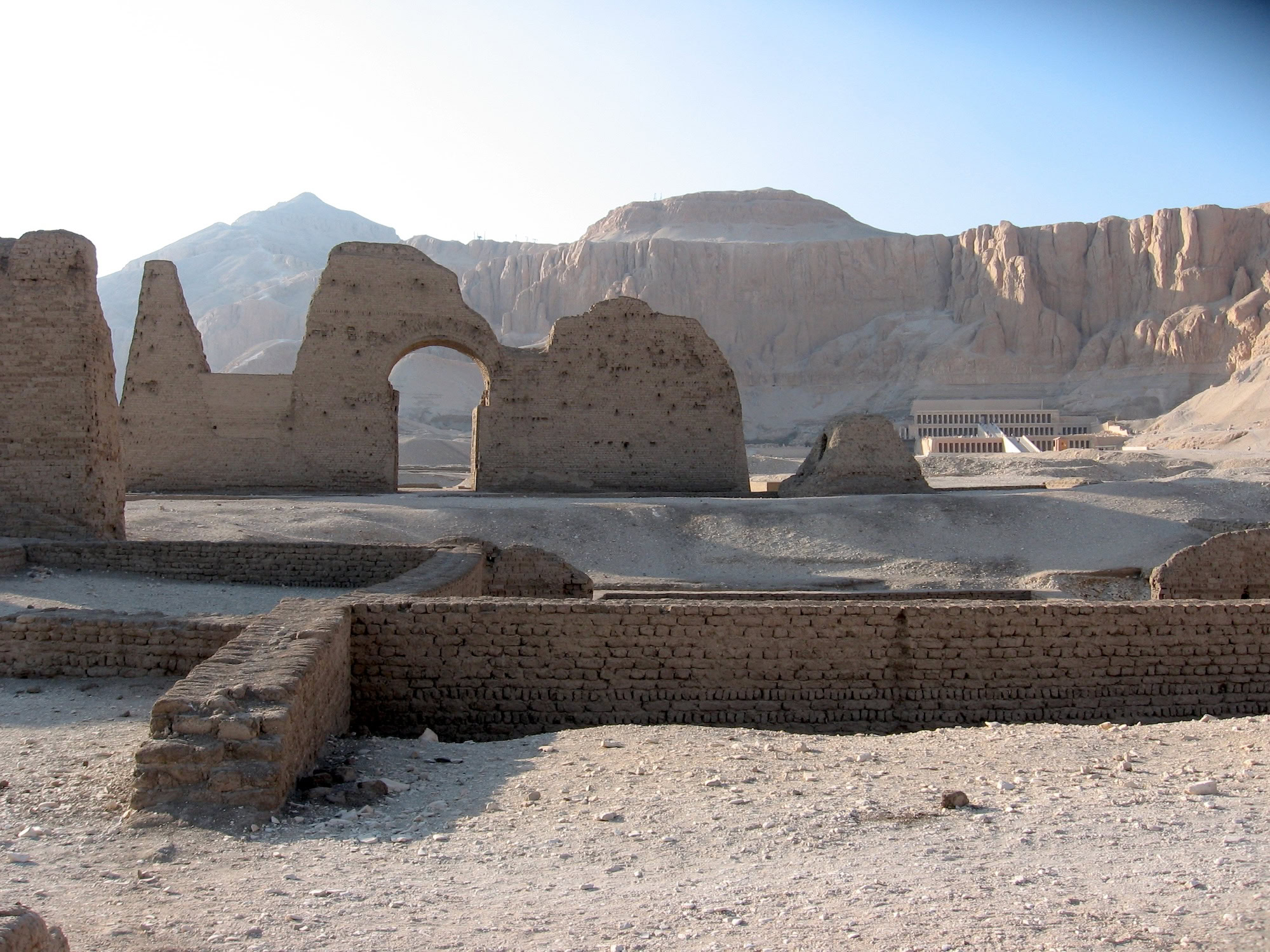
Royal Heart of Egypt’s Greatest Dynasty
Ancient Thebes (modern Luxor) rose to prominence during the Middle Kingdom and reached its height as Egypt’s capital in the New Kingdom. It was both the political center of the empire and the religious heart of the cult of Amun, whose priesthood wielded immense influence alongside the pharaohs.
The west bank of the Nile became the sacred landscape of death, deliberately chosen for royal burials and monumental memorial temples that ensured the eternal existence of Egypt’s rulers.
Valley of the Kings
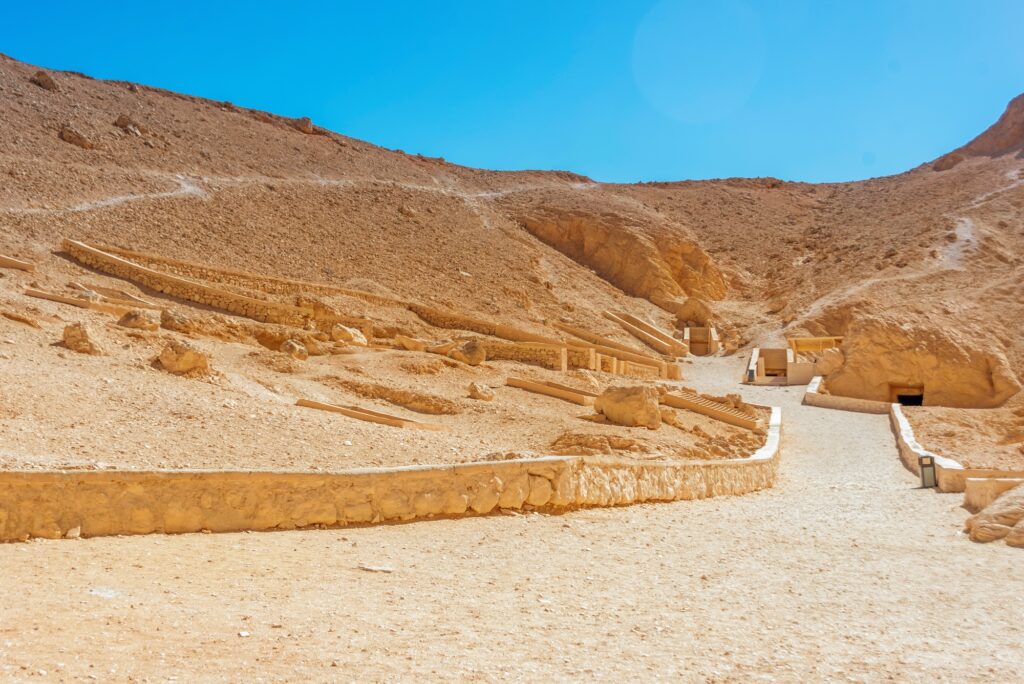
The Valley of the Kings is the most famous part of the Theban Necropolis. Over sixty tombs have been identified here, most intended for New Kingdom pharaohs, though not all were completed or used.
Tutankhamun’s tomb is the best-known discovery, largely because it was found nearly intact in 1922. However, the tomb of Seti I is the longest and among the most spectacular, extending more than 130 meters into the mountain and featuring exceptionally detailed wall reliefs. The tomb of Ramesses VI is renowned for its astronomical ceiling, depicting ancient Egyptian concepts of the cosmos and the afterlife.
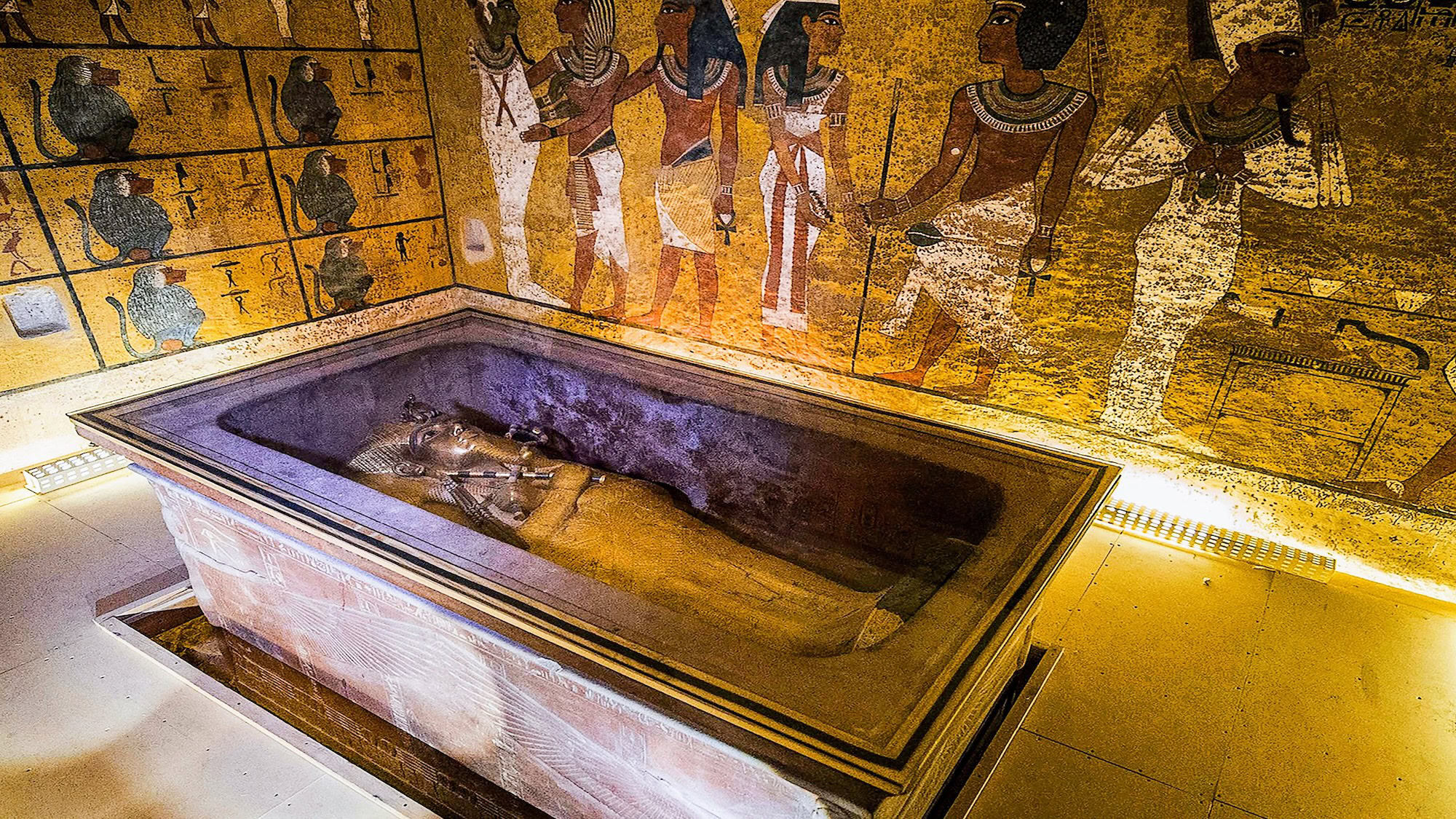
Each royal tomb follows a general architectural progression: descending corridors lead through decorated chambers toward the burial chamber, where stone sarcophagi once held nested coffins and mummified pharaohs. While most royal mummies were removed in antiquity to protect them from tomb robbers, the tombs themselves remain extraordinary works of religious art and engineering.
Valley of the Queens
South of the Valley of the Kings lies the Valley of the Queens, the burial place of royal wives and children. More than ninety tombs are known here, many preserving some of the finest wall paintings in ancient Egypt.
The tomb of Queen Nefertari, wife of Ramesses II, is often described as the pinnacle of ancient Egyptian tomb art. Its vibrant colors and refined figures have earned it the nickname “the Sistine Chapel of Ancient Egypt.” Due to its fragility, access is strictly limited to preserve the paintings.
The valley also contains tombs of princes and princesses, decorated with protective deities guiding them safely through the afterlife.
Mortuary Temples of the West Bank
The mortuary temples of the Theban Necropolis were monumental structures built to honor deceased pharaohs and sustain their cults through daily rituals and offerings. These temples also served as powerful statements of royal legitimacy and divine favor.
The Temple of Hatshepsut at Deir el-Bahari stands as one of the most innovative architectural achievements of ancient Egypt, harmoniously integrated into the surrounding cliffs. Medinet Habu, the mortuary temple of Ramesses III, is famous for its detailed reliefs depicting military victories and religious ceremonies.
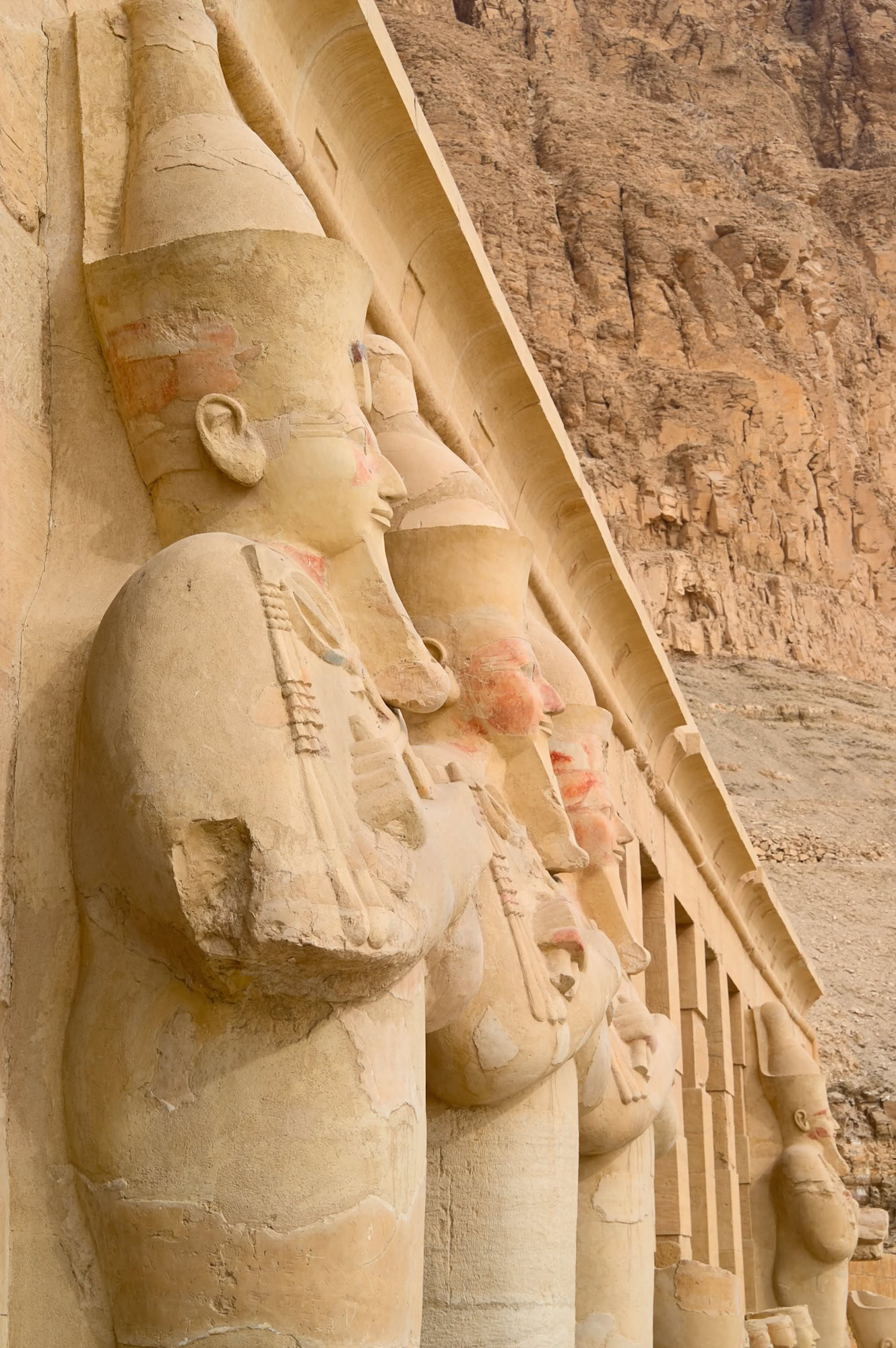
While mortuary temples were not physically connected to royal tombs, they were ritually linked. Priests performed offerings to sustain the pharaoh’s ka (life force), ensuring his continued existence in the afterlife.
Noble Tombs and Elite Society
Beyond the royal valleys, hundreds of tombs belonging to nobles, high priests, and senior officials spread across the hillsides of the Theban Necropolis. These private tombs provide invaluable insight into daily life, administration, religious practices, and social hierarchy during Egypt’s golden age.
Wall scenes depict banquets, agricultural work, craftsmanship, religious festivals, and family life—subjects rarely shown in royal tombs. Biographical inscriptions record careers, titles, and expressions of loyalty to the pharaoh and the gods.
Deir el-Medina: Village of the Tomb Builders
The artisans who constructed and decorated the royal tombs lived in the planned village of Deir el-Medina. For over four centuries, generations of skilled craftsmen devoted their lives to tomb construction, wall painting, and stone carving.
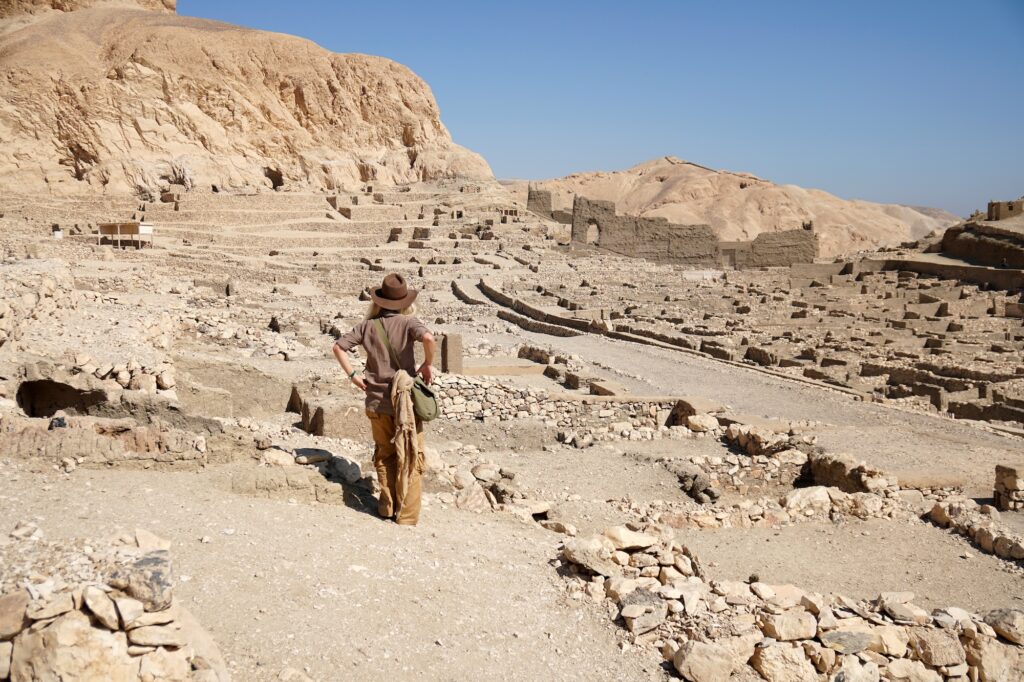
Archaeological finds from the village—including letters, legal documents, and personal objects—offer one of the most detailed records of working-class life from the ancient world. The private tombs of these artisans often feature artwork of exceptional quality, reflecting both their skills and their close association with royal projects.
Archaeological Discoveries That Changed History
The Royal Cache of TT320
In 1881, a hidden tomb at Deir el-Bahari (TT320) revealed one of the most important discoveries in Egyptology: a cache of more than fifty royal mummies. During the political instability of the 21st Dynasty, priests secretly reburied pharaohs—including Ramesses II and Seti I—to protect them from widespread tomb robbery.
This discovery transformed scholarly understanding of ancient Egyptian burial practices and preservation efforts.
Ongoing Research and Technology
Modern archaeological work in the Theban Necropolis uses non-invasive methods such as ground-penetrating radar, digital documentation, and environmental monitoring. These techniques occasionally reveal new features or refine interpretations, while helping protect fragile wall paintings and structures from damage.
UNESCO World Heritage Site
The Theban Necropolis forms part of the UNESCO-listed “Ancient Thebes with its Necropolis”, recognized for its outstanding universal value. International conservation efforts focus on stabilizing tombs, controlling humidity, and managing visitor impact.
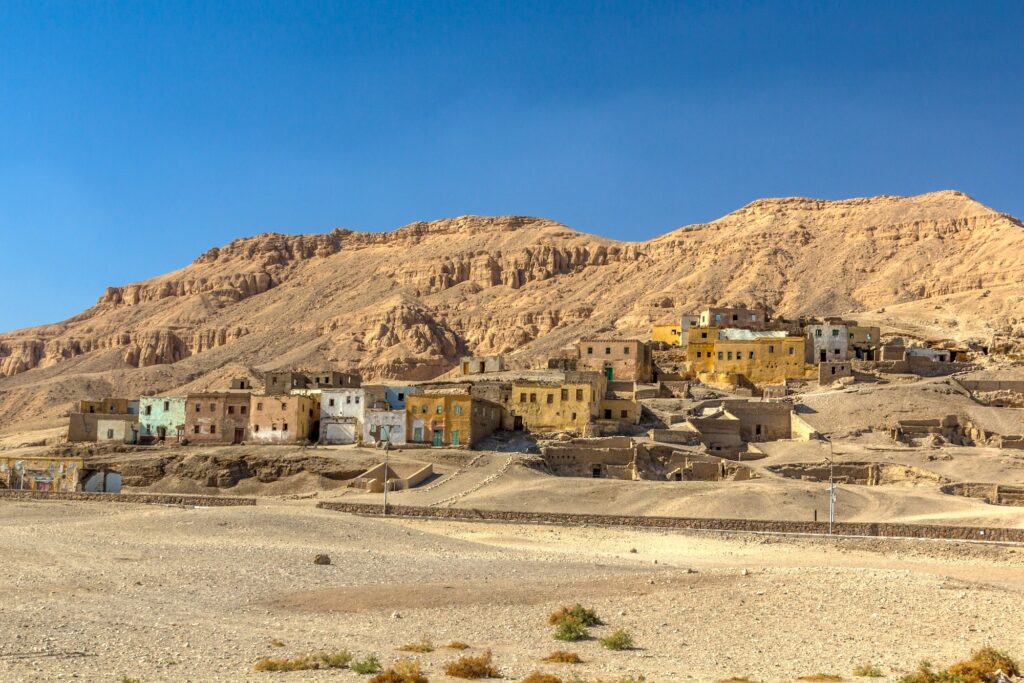
Climate change, groundwater fluctuations, and mass tourism present ongoing challenges, making careful preservation and visitor management essential for the site’s long-term survival.
Spiritual Geography of Death
The west bank of the Nile held deep symbolic meaning for ancient Egyptians. Associated with sunset and the realm of Osiris, it represented the transition from life to rebirth. The surrounding cliffs were seen as protective barriers, safeguarding the dead and aiding their transformation into divine beings.
Religious symbolism, landscape features, and ritual tradition shaped the placement of tombs and temples across the necropolis, reinforcing the connection between earth, sky, and the afterlife.
Planning Your Visit
Best Times and Access
The most comfortable period to explore the Theban Necropolis is from October to April, when temperatures are moderate. Summer temperatures can exceed 45°C (113°F), making tomb visits physically demanding.
Tickets and Access
Only a selection of tombs is open at any given time to limit wear and allow conservation work. Special tickets are required for high-profile tombs such as Tutankhamun, Seti I, and Nefertari. Most tombs involve steep stairs and narrow passages and are not wheelchair accessible.
Visitor Experience
Individual tomb visits are typically limited to 15–20 minutes. Modern lighting systems illuminate wall paintings without damaging pigments, allowing visitors to appreciate colors and details that remain remarkably vivid after more than three thousand years.
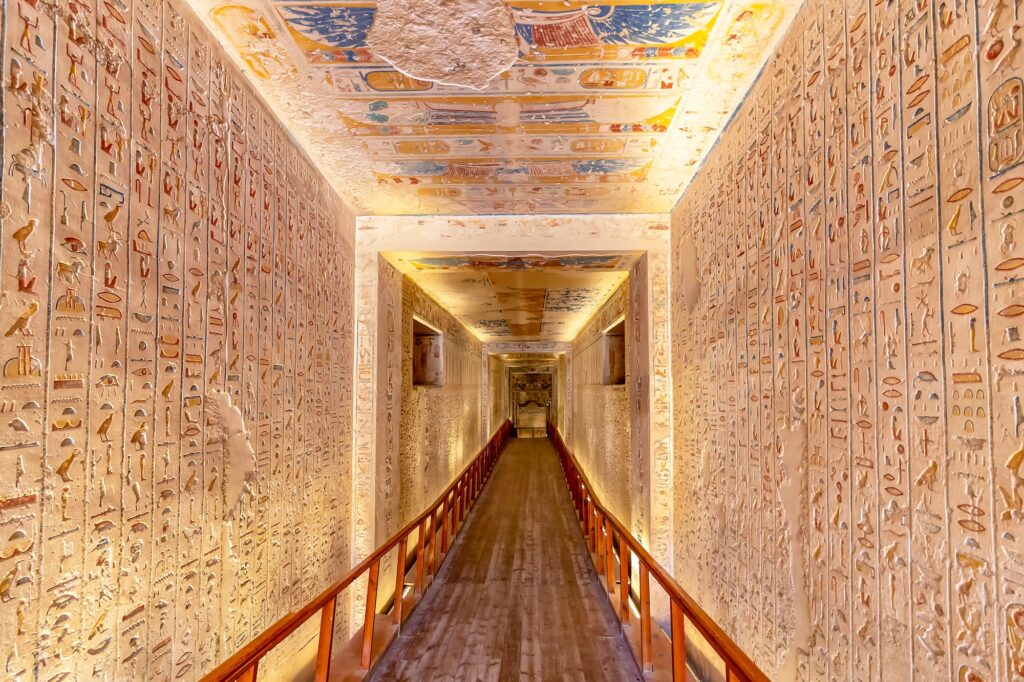
Individual tomb visits typically last 15-20 minutes due to conservation requirements and visitor volume management. Our expert guides provide historical context and artistic interpretation that transforms your experience from simple sightseeing into profound cultural understanding.
Frequently Asked Questions
How many tombs can visitors enter in the Theban Necropolis?
Approximately 15-20 tombs remain open for public visits, rotating based on conservation needs and seasonal maintenance schedules.
What makes Theban Necropolis different from the Giza pyramids?
While Giza represents Old Kingdom royal burials, Theban Necropolis showcases New Kingdom practices with elaborate underground tombs and detailed wall paintings.
How long should I plan for a complete Theban Necropolis visit?
A comprehensive exploration requires 2-3 full days to visit major royal tombs, noble burials, and mortuary temples without rushing.
Are the tomb paintings original or reproductions?
All accessible tomb decorations are original ancient Egyptian artwork, protected by strict climate control and limited daily visitor numbers.
Why were so many royal mummies moved from their original tombs?
Ancient priests relocated royal remains during the 21st Dynasty to protect them from systematic tomb robberies that threatened pharaohs’ afterlife preparations.
What should I wear when visiting underground tombs?
Comfortable walking shoes with good grip are essential, as tomb floors can be uneven and stairs steep. Light, breathable clothing works best.
Can I visit all the royal tombs in Valley of the Kings?
Only a selection remains open to visitors, with special tickets required for the most spectacular examples like Tutankhamun and Seti I.
What makes Queen Nefertari’s tomb so special?
Her tomb contains the best-preserved wall paintings in ancient Egypt, featuring vibrant colors and intricate detail representing the pinnacle of pharaonic art.
Are there facilities for disabled visitors?
Most tomb entrances involve steep stairs and narrow passages that unfortunately make them inaccessible for wheelchair users, though viewing areas provide some visual access.
How do archaeologists continue discovering new tombs?
Modern ground-penetrating radar and satellite imaging reveal previously unknown burial chambers, with new discoveries announced regularly in this archaeologically rich landscape.
What role did the Nile River play in choosing this burial location?
The west bank’s association with sunset and Osiris’s realm made it spiritually ideal for eternal rest, while the river’s annual floods symbolized death and rebirth cycles.
Why do some tombs remain closed to the public?
Ongoing conservation work, structural instability, or extreme fragility of wall paintings requires restricted access to preserve these irreplaceable archaeological treasures for future generations.
Design Your Custom Tour
Explore Egypt your way by selecting only the attractions you want to visit