

Topkapi Palace in Istanbul – The Home Of Sultans For 400 Years
Experience firsthand where Ottoman sultans ruled an empire spanning three continents.
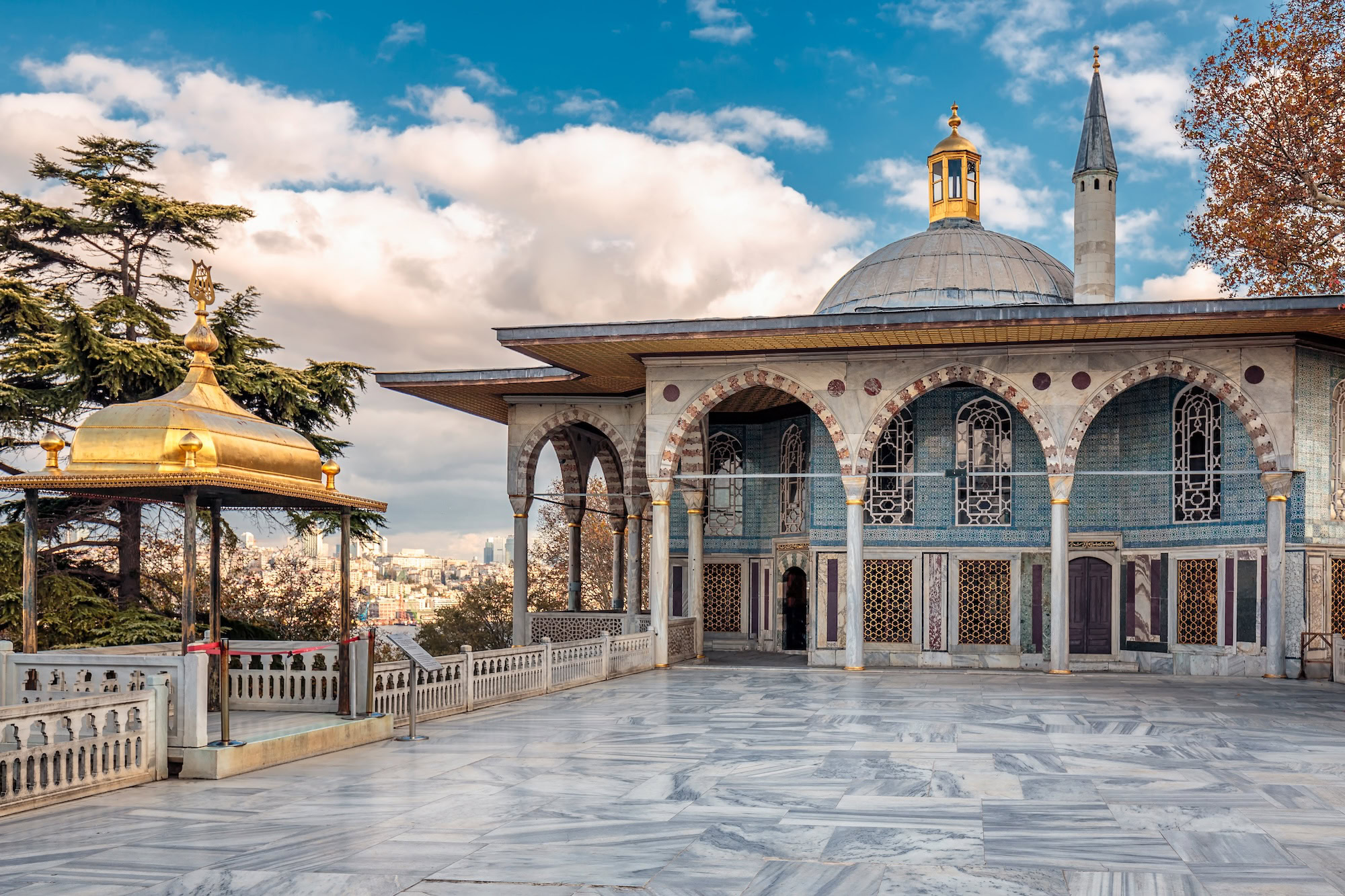
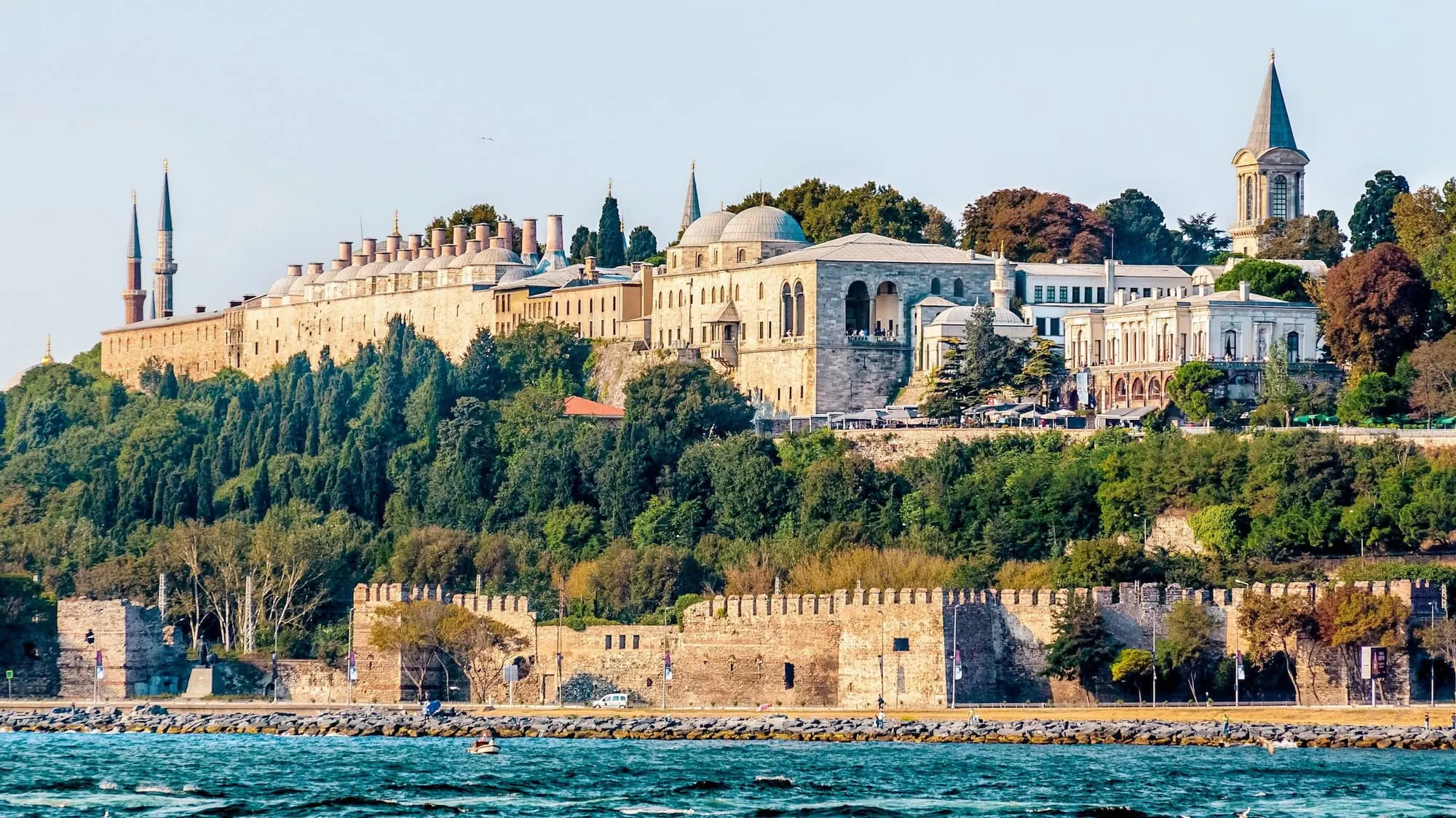
Most travelers arrive in Istanbul with the Blue Mosque and Hagia Sophia on their must-see lists. The nearby Topkapi Palace often becomes the unexpected highlight of their visit. This vast complex served as the administrative and political heart of the Ottoman Empire for nearly four centuries.
Topkapi Palace can be included in our Egypt and Turkey Holiday Packages, where Istanbul’s imperial heritage is combined with Egypt’s ancient civilizations for a rich and immersive journey.
Within its walls, empires expanded, dynasties rose and fell, and decisions were made that shaped regions from Europe to the Middle East. Unlike many European palaces, Topkapi feels alive with history—filled with stories of court life, political strategy, and the intrigue of the imperial harem.
With years of experience guiding visitors through these historic courtyards, we know how to help you uncover the most important highlights and hidden details that make this UNESCO World Heritage Site truly unforgettable.
Table of Contents
Planning Your Topkapi Palace Visit
Your visit begins before you even arrive at the palace gates. Smart planning makes all the difference.
Skip-the-Line Tickets and Timing
Purchase tickets online in advance to avoid the queues. Queues often stretch for an hour during peak season. The combined ticket for Topkapi Palace and the Harem costs 2,750 Turkish Lira (approximately $95). Palace-only tickets are 2,000 TL ($70).
These prices may seem steep. Consider that you’re accessing one of the world’s most significant historical sites. The collections rival the Louvre.
Opening hours run from 9:00 am to 6:00 pm April through October. The palace closes an hour earlier during winter months. We always recommend arriving by 10:00 am to beat the tour groups that arrive around midday.
Getting There and What to Bring
The palace sits in Istanbul’s historic Sultanahmet district. It’s easily reached via the T1 tram to Gülhane station. From there, it’s a pleasant five-minute walk through Gülhane Park. Alternatively, take the tram to Sultanahmet station and walk ten minutes past Hagia Sophia.
Comfortable walking shoes are essential. You’ll cover several kilometers across courtyards. You’ll climb stone steps and walk through various buildings. Bring water, especially in summer. Istanbul’s heat can be intense by midday.
Audio Guides and Group Tours
Audio guides cost an additional 100 TL. They provide valuable context that enhances your understanding dramatically. The palace can feel overwhelming without proper explanation of what you’re seeing.
Our private guided tours include expert commentary. We bring these spaces to life. We connect architectural details to historical events in ways that make the experience truly memorable.
The Four Sacred Courtyards
Topkapi Palace unfolds through four distinct courtyards. Each served different functions in Ottoman court life. Understanding their purposes helps you appreciate the sophisticated hierarchy that governed this vast empire.
The First Courtyard welcomed visitors from across the known world. Ambassadors from Venice, envoys from Persia, and merchants from distant lands all passed through these gates. Today, you’ll find ticket booths and the archaeological museum here. Imagine the controlled chaos of an international diplomatic center where dozens of languages mixed daily.

Security increased dramatically as you moved inward. The Second Courtyard housed the palace kitchens. These kitchens fed up to 10,000 people daily at the empire’s height. The preserved kitchen complex now displays an incredible collection of Chinese porcelain – the largest outside China. This collection was acquired through centuries of trade along the Silk Road.
The Heart of Imperial Power
The Third Courtyard was sacred space. Only the sultan, his immediate family, and selected officials could enter. Here stood the Audience Hall where sultans received foreign dignitaries. Their throne was positioned to project absolute authority.
The Treasury buildings surrounding this courtyard contain some of the world’s most spectacular gems. This includes the famous Spoonmaker’s Diamond and the Topkapi Dagger.
The Fourth Courtyard served as the sultan’s private retreat. These terraced gardens overlooking the Bosphorus provided respite from governing pressures. Small pavilions like the Baghdad Kiosk offered intimate spaces for reflection or private meetings with trusted advisors.
Exploring the Imperial Treasury
Few museum collections match the Treasury’s concentrated wealth and historical significance.
The Treasury occupies four chambers. Each is more spectacular than the last. The first room displays ceremonial weapons inlaid with precious stones. These weren’t mere decorations. They were symbols of imperial power carried into battle by sultans who led from the front.
The famous Topkapi Dagger is encrusted with emeralds. It tells the story of a diplomatic gift that never reached its intended recipient due to political upheaval.
Room two houses the Spoonmaker’s Diamond. This 86-carat stone is surrounded by smaller diamonds that catch light from every angle. Local legend claims it was found by a poor fisherman and traded for three wooden spoons – hence the name. Whether true or not, the story reflects how objects of immense value sometimes traveled through the most humble hands.
Religious relics fill the third chamber. The cloak and sword of Prophet Muhammad represent the Ottoman sultans’ role as guardians of Islamic holy sites. These weren’t tourist attractions but active elements of court ceremony. They were brought out during religious festivals to reinforce the sultan’s spiritual authority alongside his temporal power.
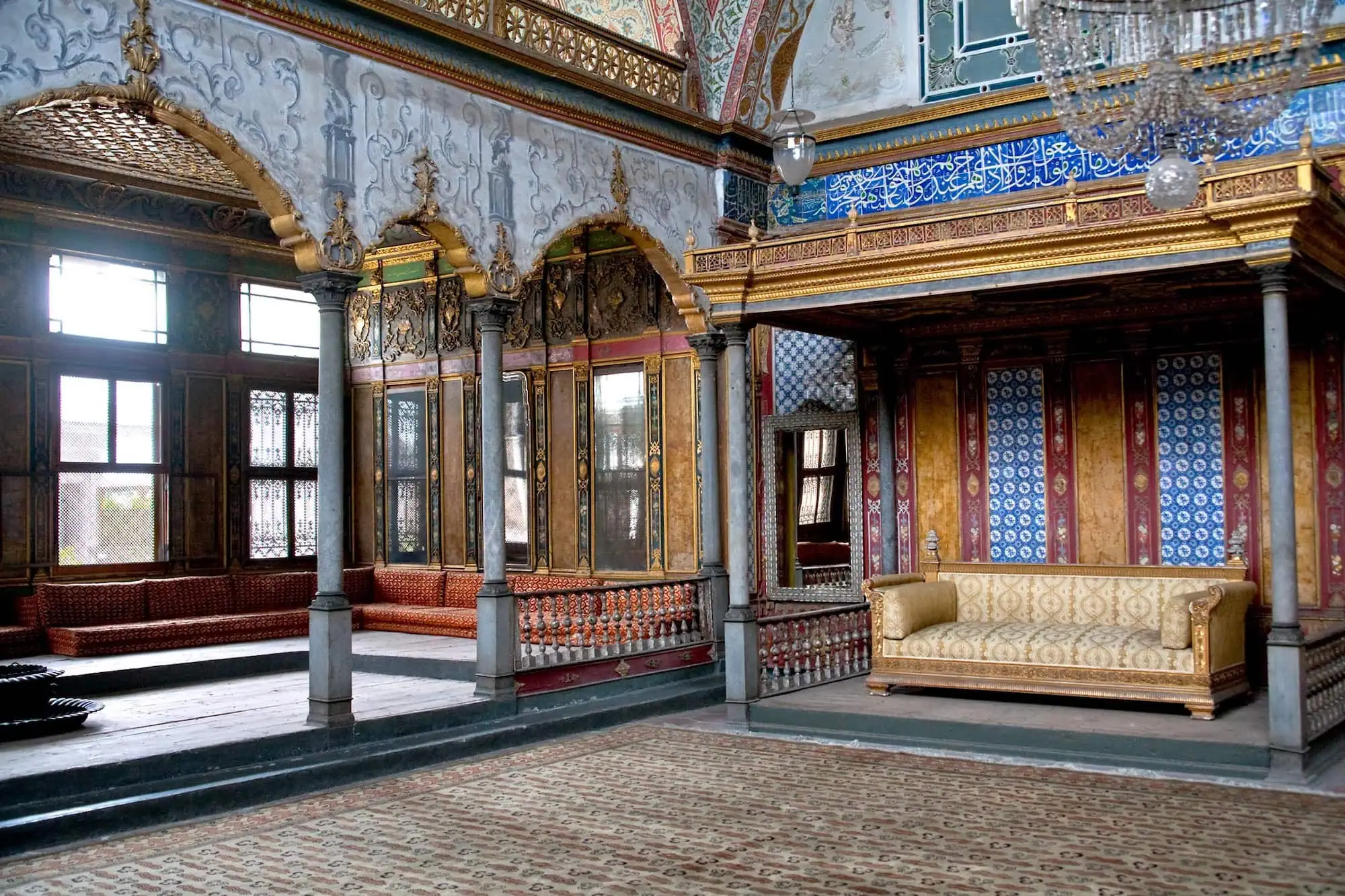
The fourth room showcases the imperial throne. It’s crafted from walnut wood and encrusted with thousands of precious stones. Sitting on this throne, sultans received tribute from vassal states stretching from modern-day Hungary to the gates of Vienna.
Life Inside the Imperial Harem
The Harem represents one of history’s most misunderstood institutions. It requires separate admission but is essential for understanding Ottoman court life.
Beyond Western Stereotypes
Western imagination often reduces the Harem to orientalist fantasies. The reality was far more complex. This was essentially the private family quarters of the palace. It housed the sultan’s mother, wives, children, and female servants.
The Sultan’s mother was known as the Valide Sultan. She wielded enormous political influence. She often served as regent and advisor.
Competition among the sultan’s consorts was intense but governed by strict protocols. Women arrived from across the empire. Some came as gifts from provincial governors. Others were captured in military campaigns. Still others were sent by ambitious families seeking political connections. Education was paramount. Women learned multiple languages, poetry, music, and statecraft.
The apartments reflect this hierarchy clearly. The Valide Sultan’s rooms feature the finest decorations and prime locations overlooking the Golden Horn. Lesser consorts occupied progressively smaller spaces. Servants lived in dormitory-style quarters.
Architecture Tells Stories
Intricate tilework covering the walls wasn’t merely decorative. Iznik ceramics tell stories through their patterns. Tulips represent the Ottoman dynasty. Pomegranates symbolize fertility. Geometric patterns reflect Islamic artistic traditions.
The famous Fruit Room showcases this artistry at its finest. Hand-painted tiles depict every fruit imaginable in stunning detail.
The Harem’s baths deserve special attention. These marble-clad spaces functioned as social centers. Women gathered to share news, negotiate alliances, and educate their children away from male oversight. The sophistication of the heating and plumbing systems rivals modern engineering.
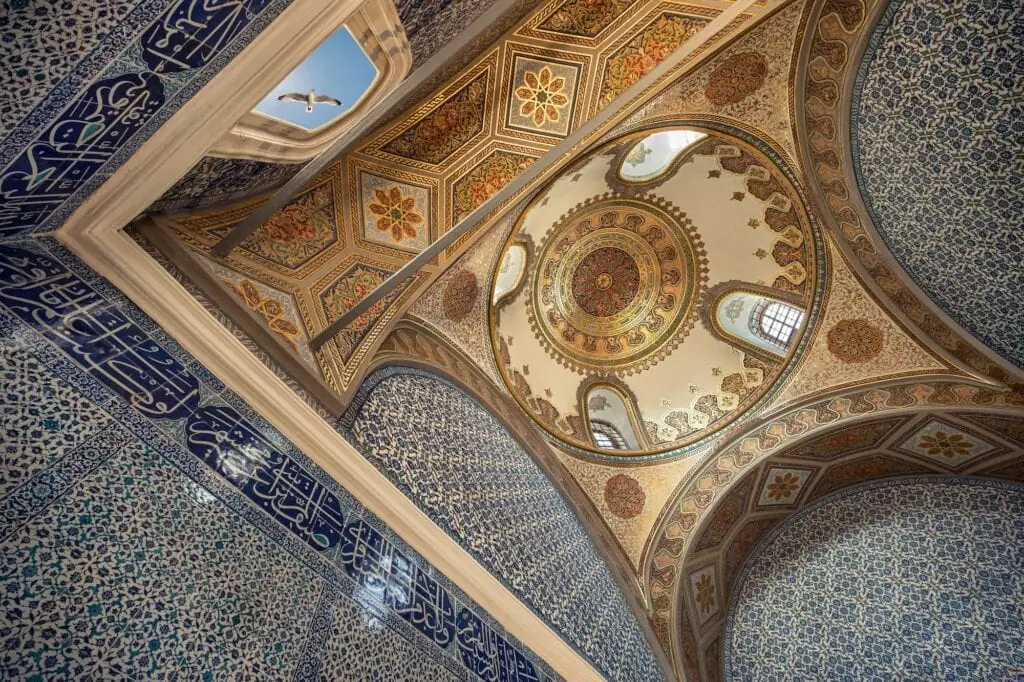
Small details reveal daily life. Niches in bedroom walls held personal belongings and books. Window screens allowed women to observe palace courtyards without being seen. Hidden passages connected apartments. This enabled private communications that often influenced imperial policy.
Sacred Relics and the Holy Mantle
The Palace houses one of Islam’s most sacred collections. This is often overlooked by casual visitors but deeply meaningful to understanding Ottoman identity. These chambers require respectful behavior. Remove hats, speak quietly, and follow the designated path.
Prophet Muhammad’s cloak, sword, and other personal items arrived in Istanbul after the Ottoman conquest of Egypt in 1517. Possessing these relics transformed Ottoman sultans from mere rulers into guardians of Islamic holy sites. This legitimized their authority across the Muslim world.
The annual ceremony of displaying these items drew pilgrims from across the empire.
The Holy Mantle itself remains one of the most venerated objects in the Islamic world. Displayed behind protective glass, this simple woolen garment represents spiritual authority that transcended political boundaries. When diplomatic crises arose with European powers, sultans would visit this chamber seeking divine guidance.
Hair from the Prophet’s beard, his footprint preserved in silver, and letters bearing his seal create an atmosphere of profound reverence. Many visitors find this the most moving part of their palace experience. This happens regardless of their personal faith background.
Gardens and Pavilions
The palace’s elevated gardens offer spectacular views while revealing the more human side of imperial life. These weren’t formal European-style gardens but intimate spaces designed for contemplation and private gatherings.
The Tulip Garden blooms magnificently each spring. This reflects the Ottoman Empire’s role in introducing tulips to European gardens. During the famous Tulip Period of the early 18th century, these flowers became symbols of refined culture and artistic achievement. Sultans hosted poetry readings and musical performances among these beds.
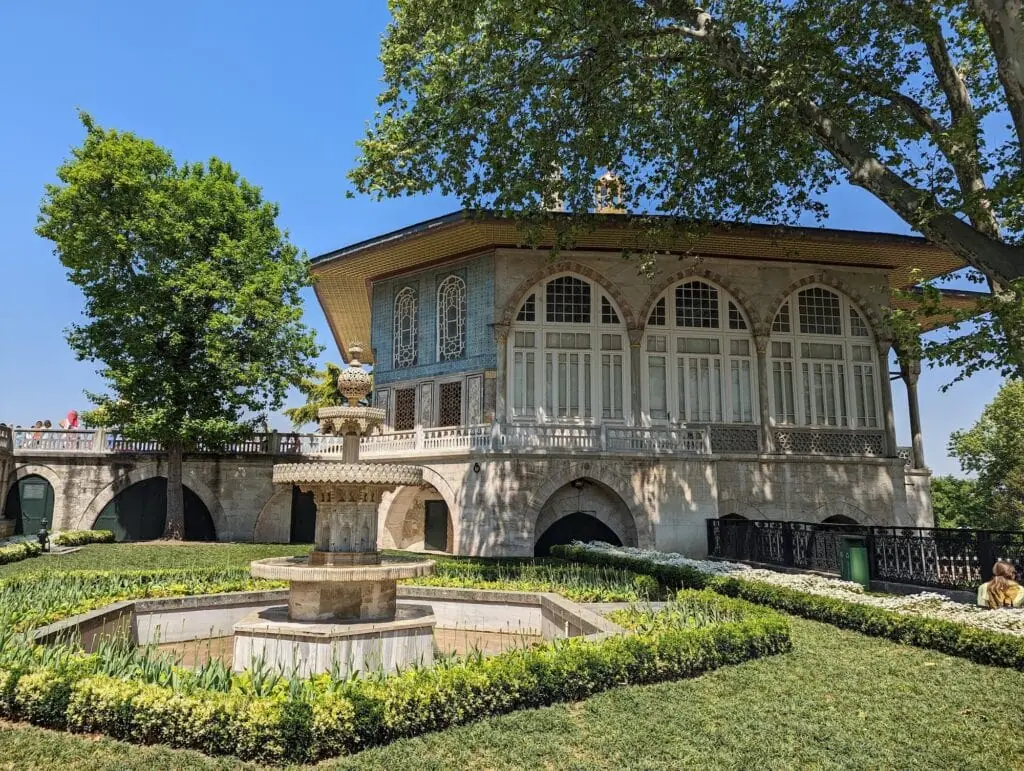
Small pavilions scattered throughout the gardens served specific purposes. The Baghdad Kiosk commemorated Ottoman military victories in Iraq. Its interior features stunning examples of Iznik tilework and mother-of-pearl inlay work. The Revan Kiosk celebrates the conquest of Yerevan. Its geometric patterns create optical illusions as you move around the space.
From the palace’s highest terrace, you can see three bodies of water: the Bosphorus, Golden Horn, and Sea of Marmara. This strategic position explains why humans have built fortifications here for over 2,500 years. From ancient Greek settlements through Byzantine walls to Ottoman palaces.
Practical Tips for Your Visit
Plan three to four hours minimum for a thorough exploration. Many visitors underestimate the palace’s size and complexity. They rush through chambers that deserve careful attention.
Photography and Etiquette
Photography is permitted in most areas but forbidden in the Holy Relics chambers and certain Treasury rooms. Flash photography damages historic materials. It’s prohibited throughout. Be respectful in sacred spaces. Many Turkish visitors come here for spiritual as well as cultural reasons.
Crowds peak between 11:00 am and 3:00 pm, particularly during summer months and weekends. Early morning or late afternoon visits offer more peaceful experiences with better lighting for photography. The palace looks particularly beautiful during golden hour. Warm light illuminates the courtyards and Bosphorus views.
Combining with Other Attractions
Topkapi Palace works perfectly with other Sultanahmet attractions. Hagia Sophia and the Blue Mosque are within walking distance. Don’t try to see everything in one day. The sensory overload diminishes your appreciation of each site.
We recommend pairing the palace with a visit to nearby Hagia Irene. This is often included in combination tickets. This Byzantine church turned Ottoman armory provides fascinating contrast to the palace’s Islamic architecture.
Weather Considerations
Istanbul weather can change quickly, especially during spring and fall. Much of your visit occurs outdoors. Dress in layers and bring a light jacket even on seemingly warm days. Summer visits require sun protection. The courtyards offer limited shade during midday hours.
Winter visits have their own charm. Fewer crowds and dramatic skies over the Bosphorus await. Check opening hours as they vary seasonally.
Why Topkapi Palace Matters Today
This isn’t just another historic site but a window into how multicultural empires functioned. This was before the modern nation-state system emerged. The Ottoman Empire governed Christians, Jews, Muslims, and dozens of ethnic groups through flexible administrative systems that modern political scientists still study.
The palace collections reflect global trade networks that connected Europe, Asia, and Africa centuries before modern globalization. Chinese porcelain sits alongside European clockwork, Islamic manuscripts, and African ivory. This shows how Istanbul functioned as a cosmopolitan crossroads.
Understanding Ottoman history helps explain much about modern Turkey, the Balkans, and the Middle East. Political boundaries drawn after World War I often ignored ethnic and cultural connections. The Ottoman system had accommodated these for centuries. Many contemporary conflicts trace back to the empire’s collapse and the challenging process of creating new national identities.
Through our decades of guiding visitors here, we’ve seen how the palace sparks conversations about cultural tolerance, artistic achievement, and the complex legacy of imperial rule. These aren’t abstract historical lessons but living questions about how diverse societies can coexist and thrive.
Frequently Asked Questions
Allow 3-4 hours minimum to see the main sections properly, including the Harem.
Yes, the Harem provides essential context and features some of the palace’s finest architectural details.
Absolutely, though audio guides or professional guides significantly enhance the experience.
Early morning (9:00-10:00 am) or late afternoon offer smaller crowds and better lighting conditions.
No strict dress code, but modest clothing shows respect, especially in sacred areas.
Yes, but online purchase is strongly recommended during peak season to avoid queues.
Partially accessible, though some areas require climbing stairs. Contact the museum in advance.
Prioritize the Treasury, Second Courtyard kitchens, and at least one Harem section.
Water is permitted and recommended, but food must be consumed outside the grounds.
Unique for its authentic Ottoman atmosphere and more intimate access to royal spaces.
Permitted in most areas except Holy Relics chambers and certain Treasury rooms.
Winter visits offer fewer crowds and dramatic Bosphorus views, though weather can be unpredictable.

Design Your Custom Tour
Explore Egypt and Turkey your way by selecting only the attractions you want to visit