The Most Impressive Ancient Egyptian Obelisks and Statues
Ancient Egyptian stonework defies time itself. For over three millennia, pharaohs commissioned monuments that would outlast their dynasties, their kingdoms, and even their gods.
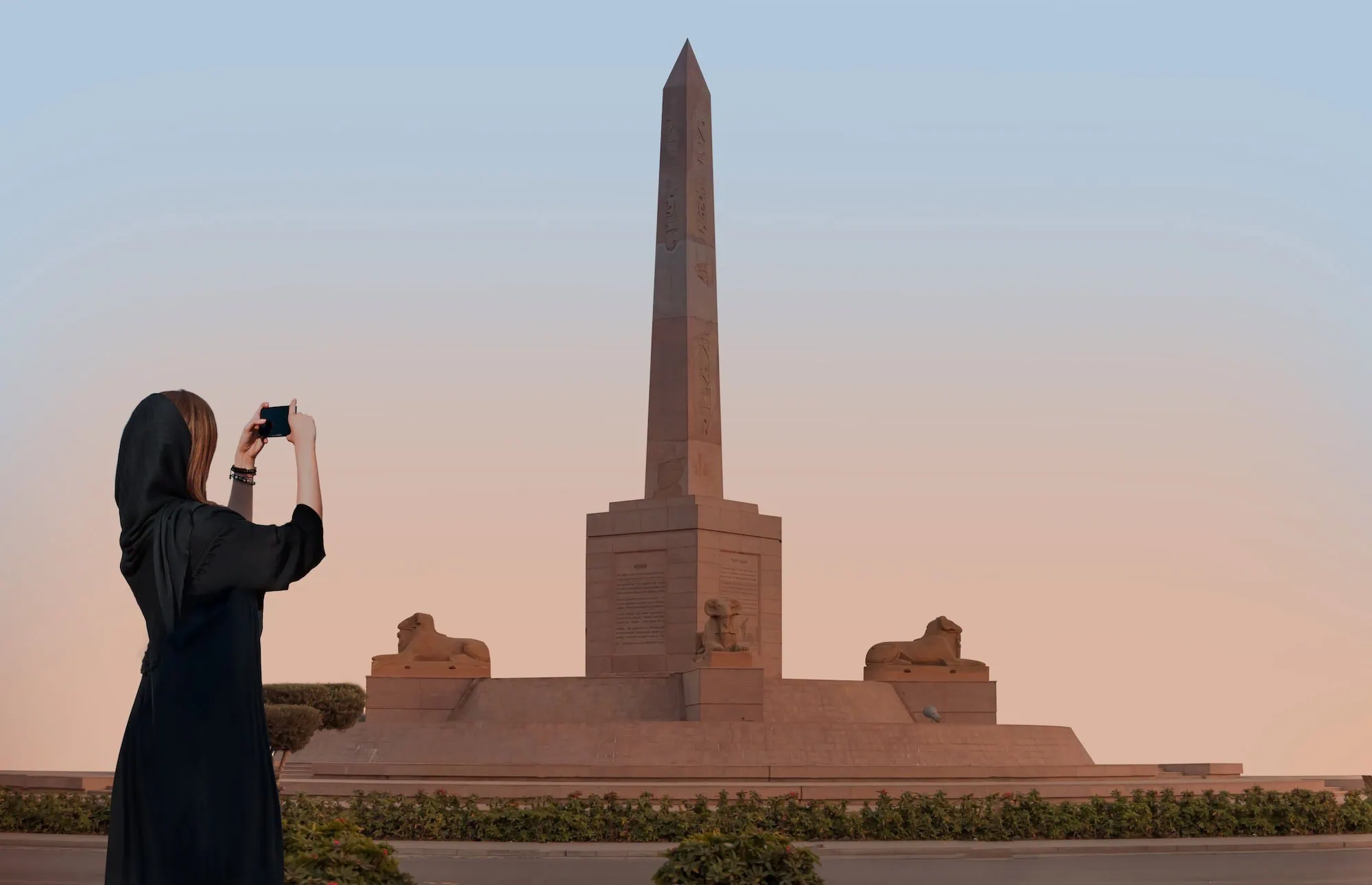
These towering obelisks and colossal statues from ancient Egypt weren’t merely artistic expressions—they were declarations of divine authority carved in granite and sandstone. From the temple complexes of Karnak to the piazzas of Rome, these masterpieces continue to inspire awe in modern visitors.
Each monument tells a story of ambition, skill, and the relentless pursuit of immortality through stone. What makes these structures truly remarkable isn’t just their scale, but their precision.
Table of Contents
The Towering Majesty of Egyptian Obelisks
Egyptian obelisks represent the pinnacle of ancient engineering ambition. These four-sided tapering monuments, typically carved from single blocks of red granite, served as solar symbols connecting earth to the heavens. Ancient engineers moved multi-ton blocks across continents, carved hieroglyphic inscriptions with surgical accuracy, and created proportions that remain mathematically perfect after millennia of weathering.
Karnak’s Twin Monuments
At Karnak Temple, two massive obelisks flank the entrance to the sacred complex. Hatshepsut commissioned the taller of these monuments, which rises 97 feet into the desert sky. The precision required to quarry, transport, and erect such monoliths demonstrates sophisticated understanding of physics and logistics that modern engineers still admire.
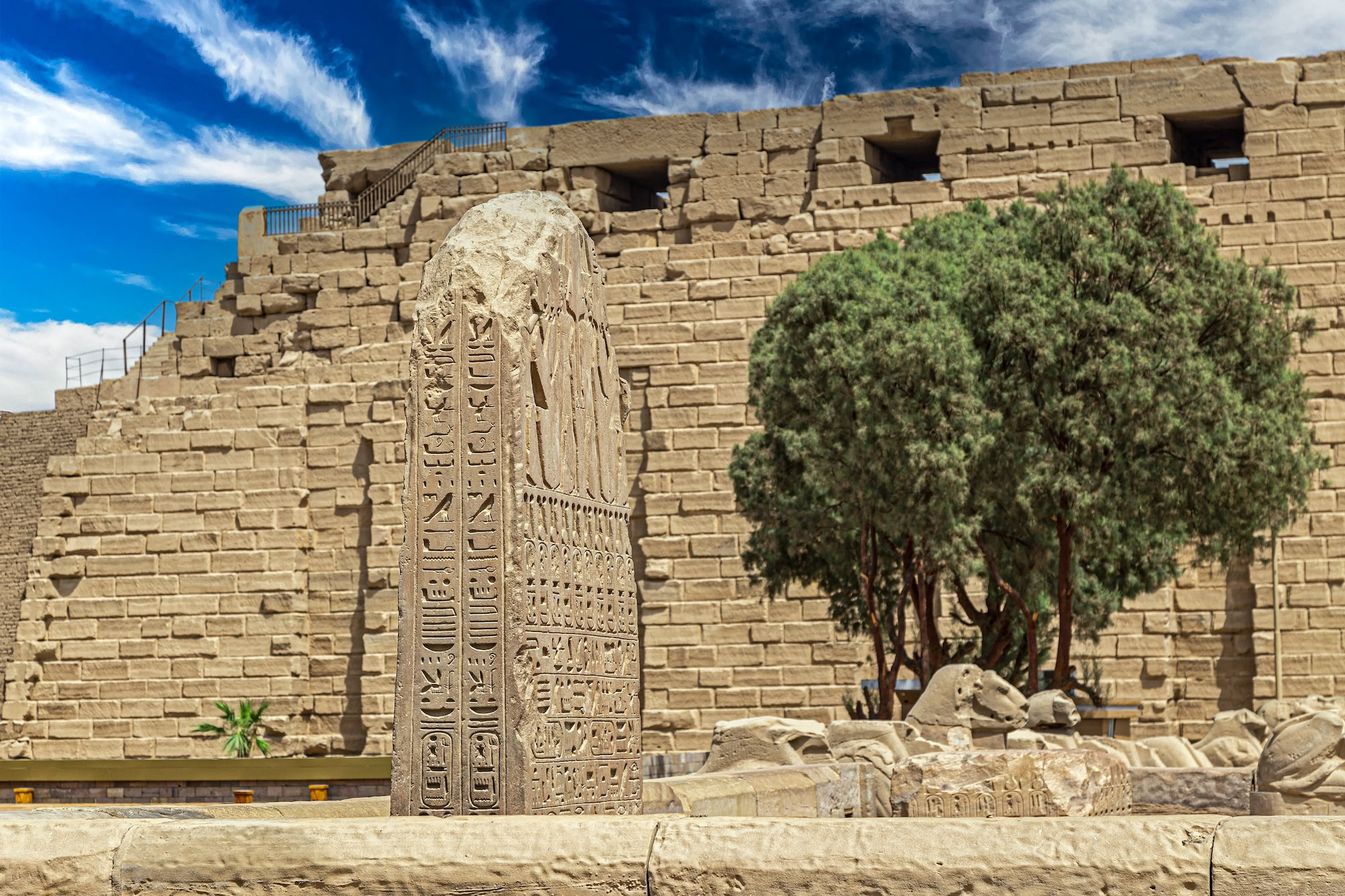
The hieroglyphic inscriptions covering all four faces detail Hatshepsut’s divine right to rule. Each symbol was carved with meticulous attention to depth and clarity, ensuring the pharaoh’s message would remain legible for millennia.
Luxor’s Surviving Giant
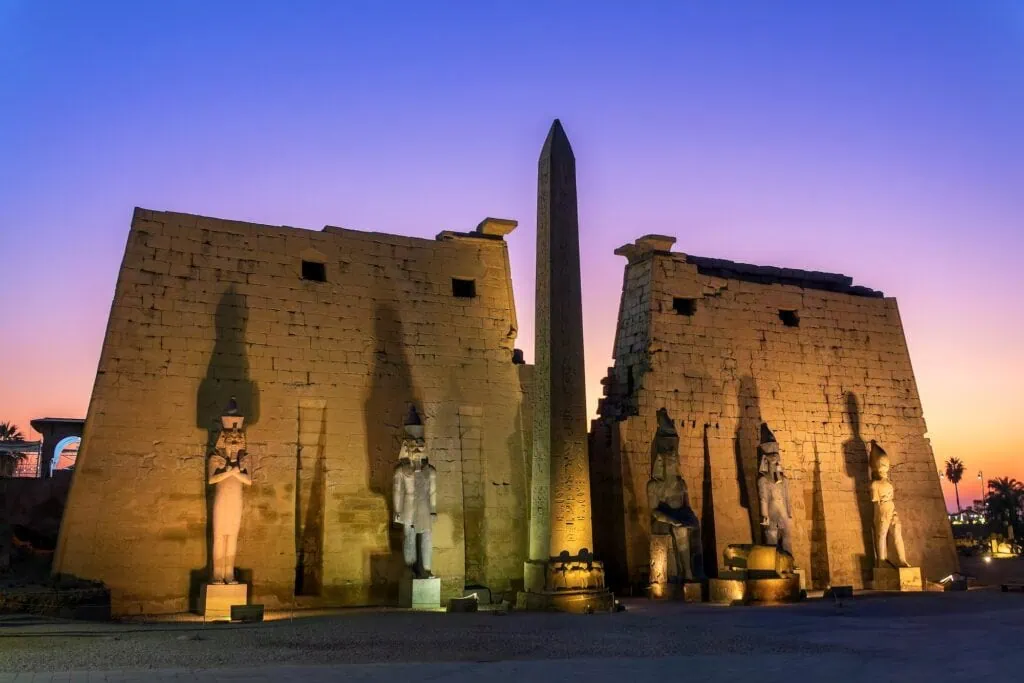
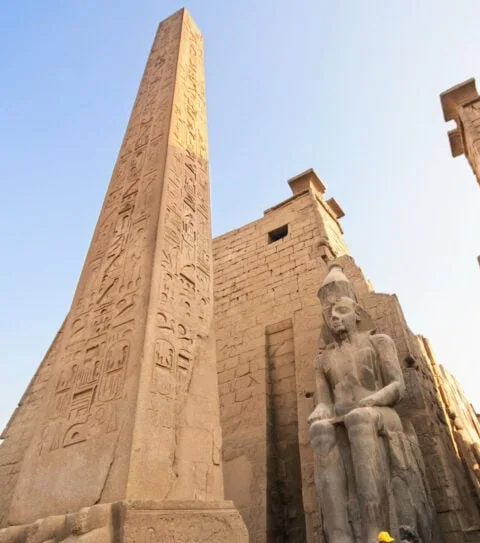
Originally, two obelisks graced the entrance to Luxor Temple. Today, only one remains in its original position, while its twin stands in Place de la Concorde in Paris. This remaining obelisk bears the cartouches of Ramesses II, celebrating his military victories and divine status.
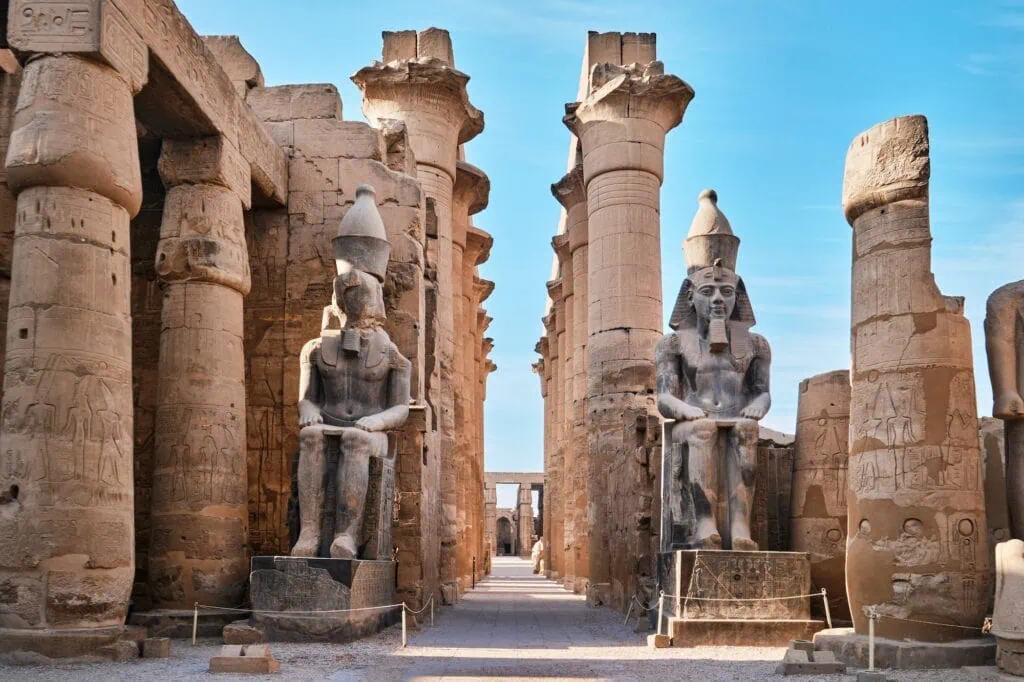
The surviving monument showcases the remarkable preservation possible in Egypt’s dry climate. Colors in the hieroglyphs remain visible, and the granite surface retains its polished finish despite centuries of sandstorms.
Rome’s Egyptian Collection
Ironically, Rome houses more standing obelisks than Egypt itself. Augustus initiated this collection by transporting the Flaminio Obelisk from Heliopolis. This 24-meter monument now stands in Piazza del Popolo, where it has marked the northern entrance to the city for centuries.
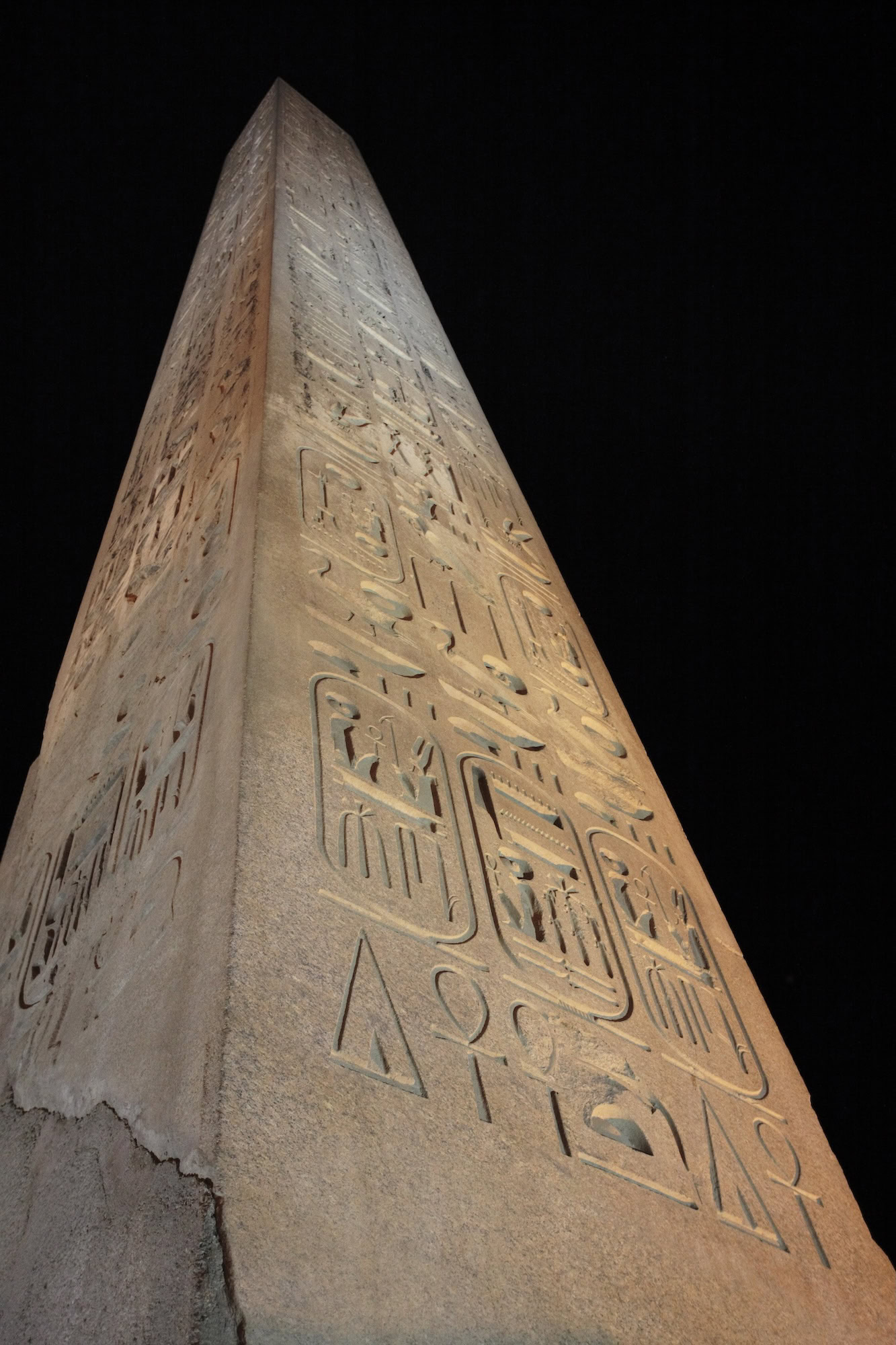
The logistics of ancient obelisk transport remain partially mysterious. Roman engineers developed specialized ships and rolling techniques to move these monuments across the Mediterranean. Some obelisks weigh over 230 tons—equivalent to 160 modern automobiles.
Colossal Statues That Commanded Reverence
Ancient Egyptian sculptors created statues designed to overwhelm observers with their sheer magnitude and artistic perfection. The Colossi of Memnon stand as eternal guardians in the Theban necropolis. These 20-meter-tall seated figures of Amenhotep III originally flanked his mortuary temple, which has long since crumbled to dust.
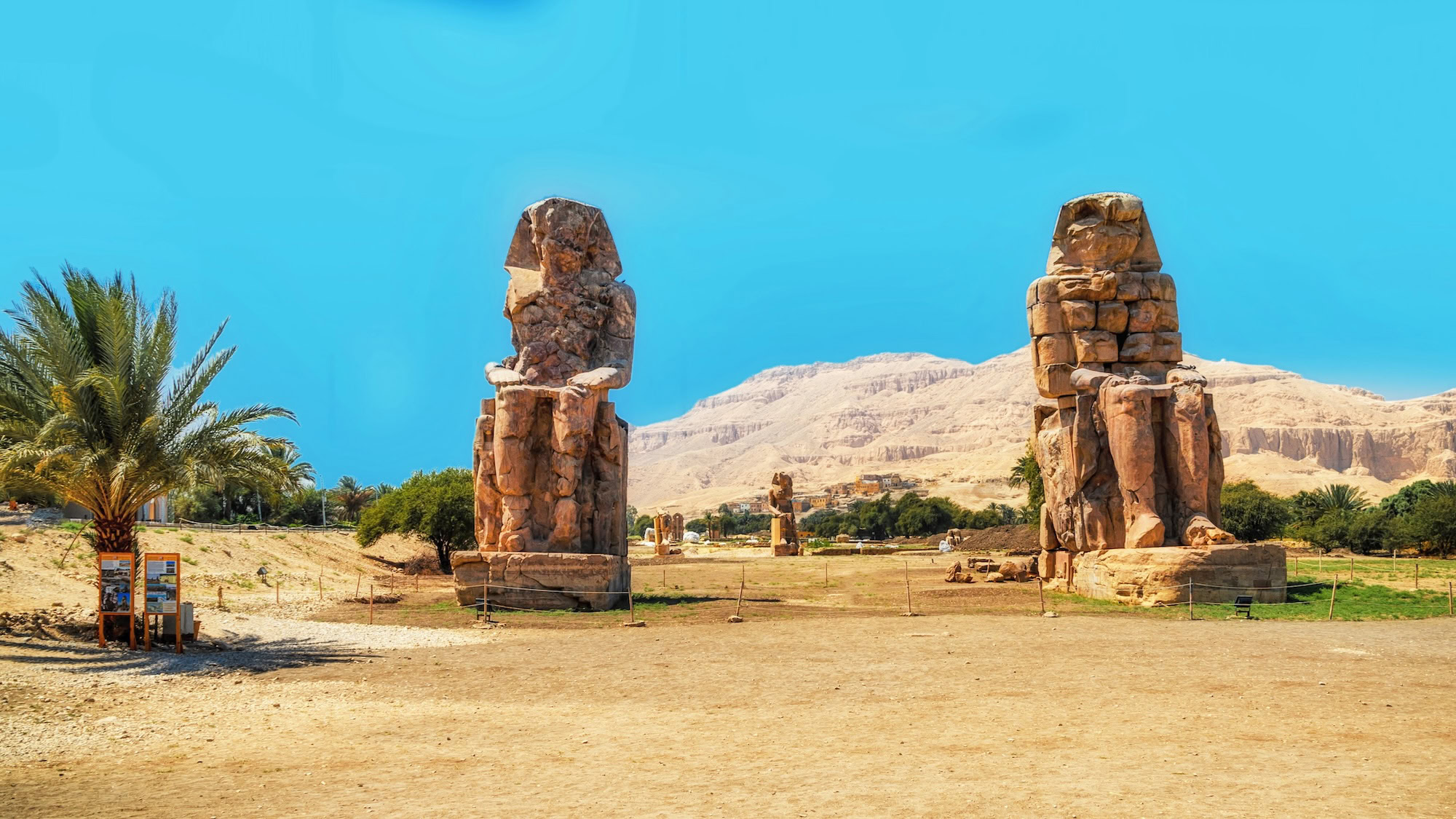
Each statue weighs approximately 720 tons and was carved from single blocks of quartzite sandstone transported from quarries near modern-day Cairo. The northern colossus became famous in antiquity for producing mysterious sounds at dawn—a phenomenon that attracted Roman tourists including Emperor Hadrian.
Abu Simbel’s Pharaonic Theater
Ramesses II created perhaps the most psychologically powerful statues in ancient Egypt at Abu Simbel. Four colossal seated figures of the pharaoh, each standing 20 meters tall, dominate the facade of the Great Temple. The positioning creates an optical illusion—as visitors approach, the statues appear to grow exponentially in size.
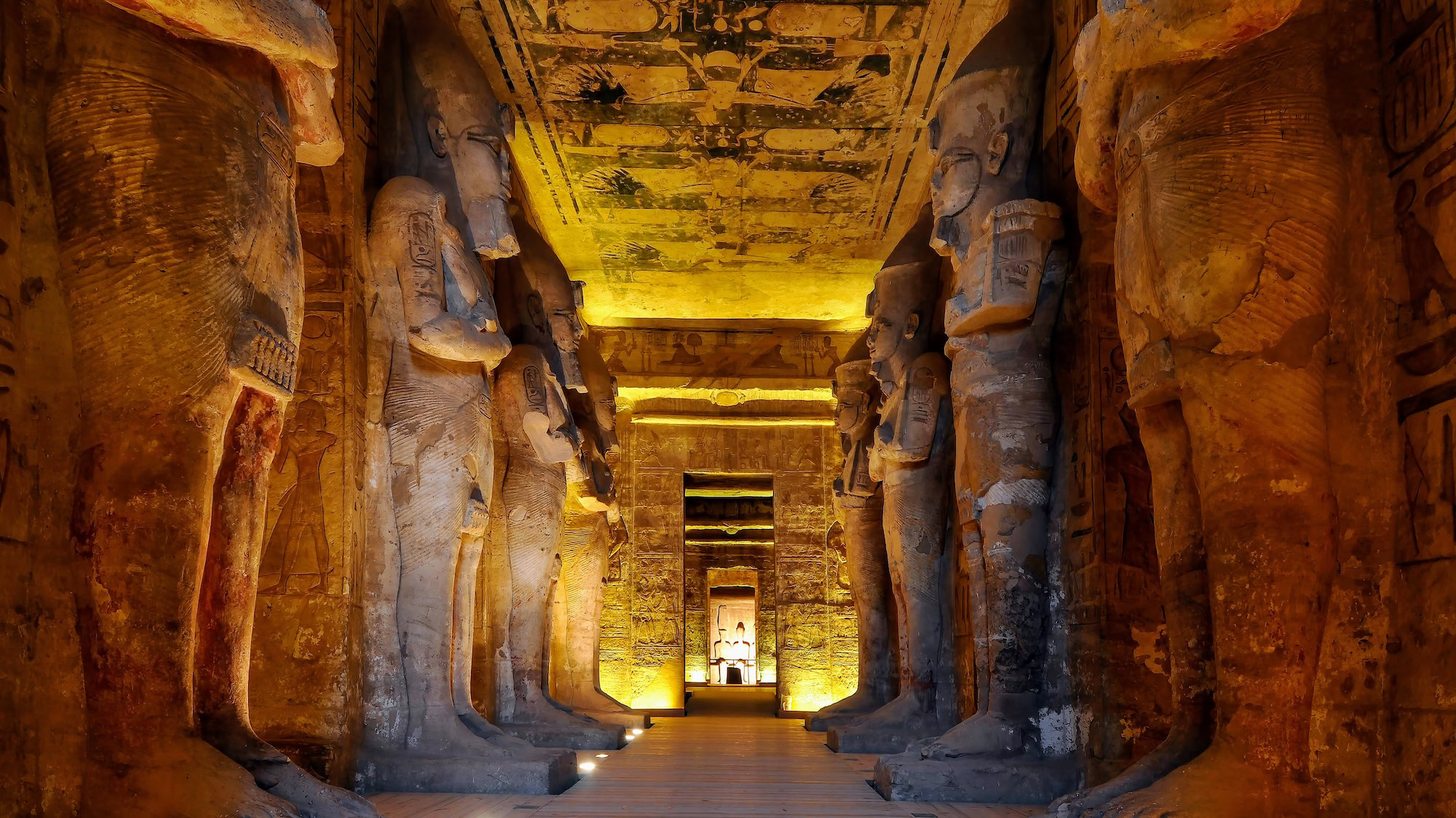
The temple’s interior contains additional seated statues of Ramesses II depicted as the god Osiris. This divine representation reinforced the pharaoh’s status as both temporal ruler and eternal deity.
Sacred Guardians: The Sphinx Monuments
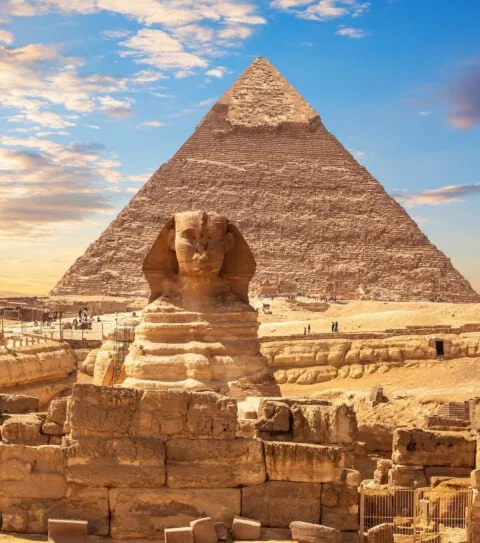
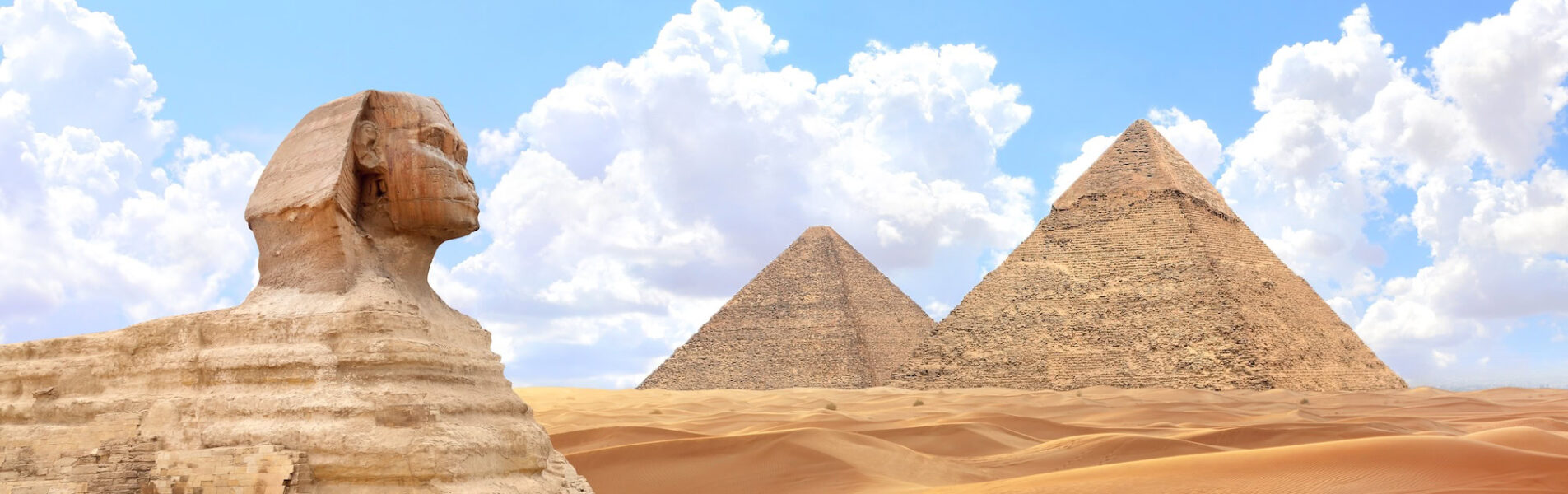
The Great Sphinx of Giza represents the ultimate fusion of human intelligence and animal power. Carved from a single limestone outcrop, this 73-meter-long monument has guarded the pyramid complex for over 4,500 years. Recent archaeological evidence suggests the Sphinx originally bore the face of Khafre, builder of the second pyramid at Giza.
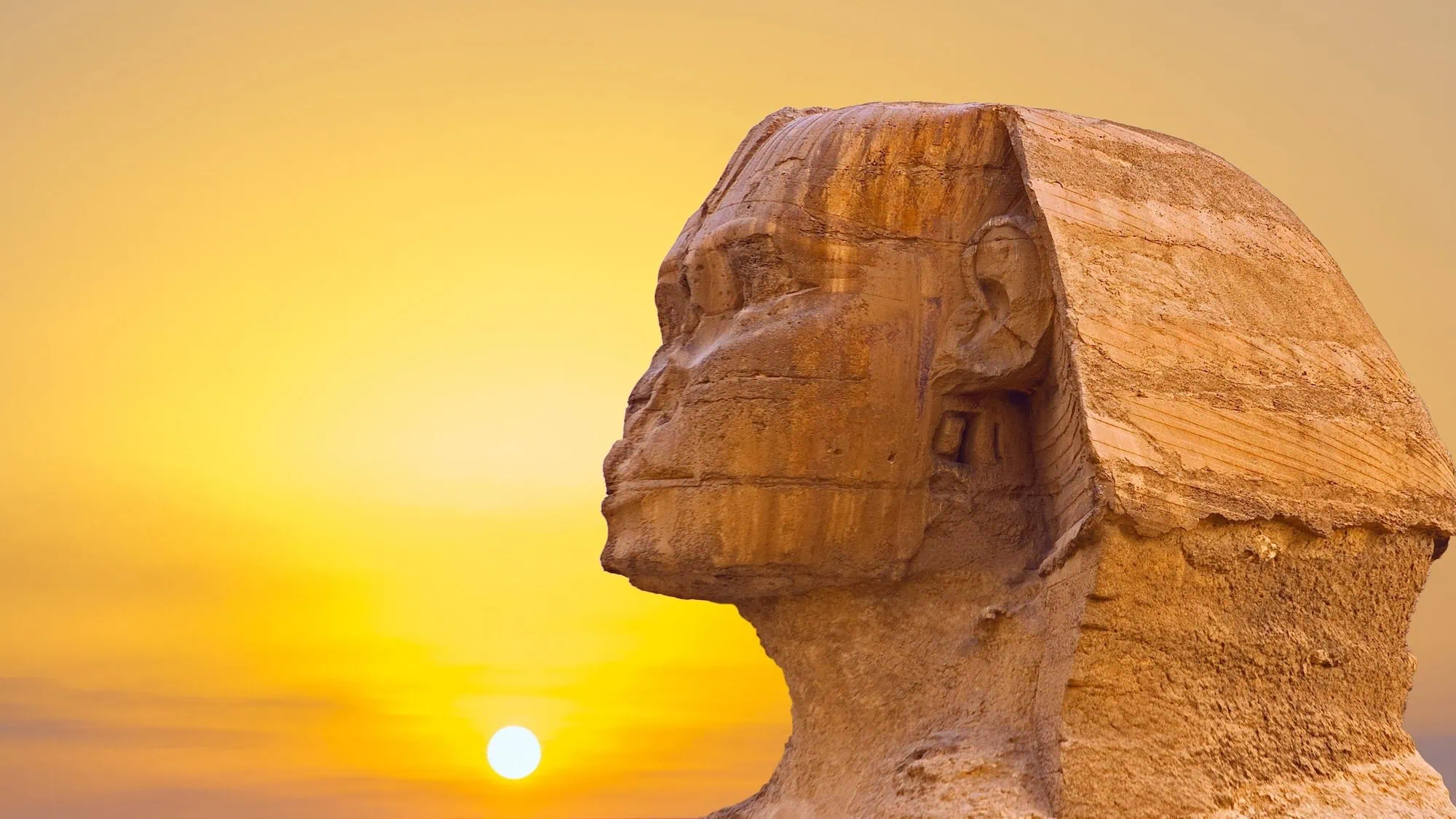
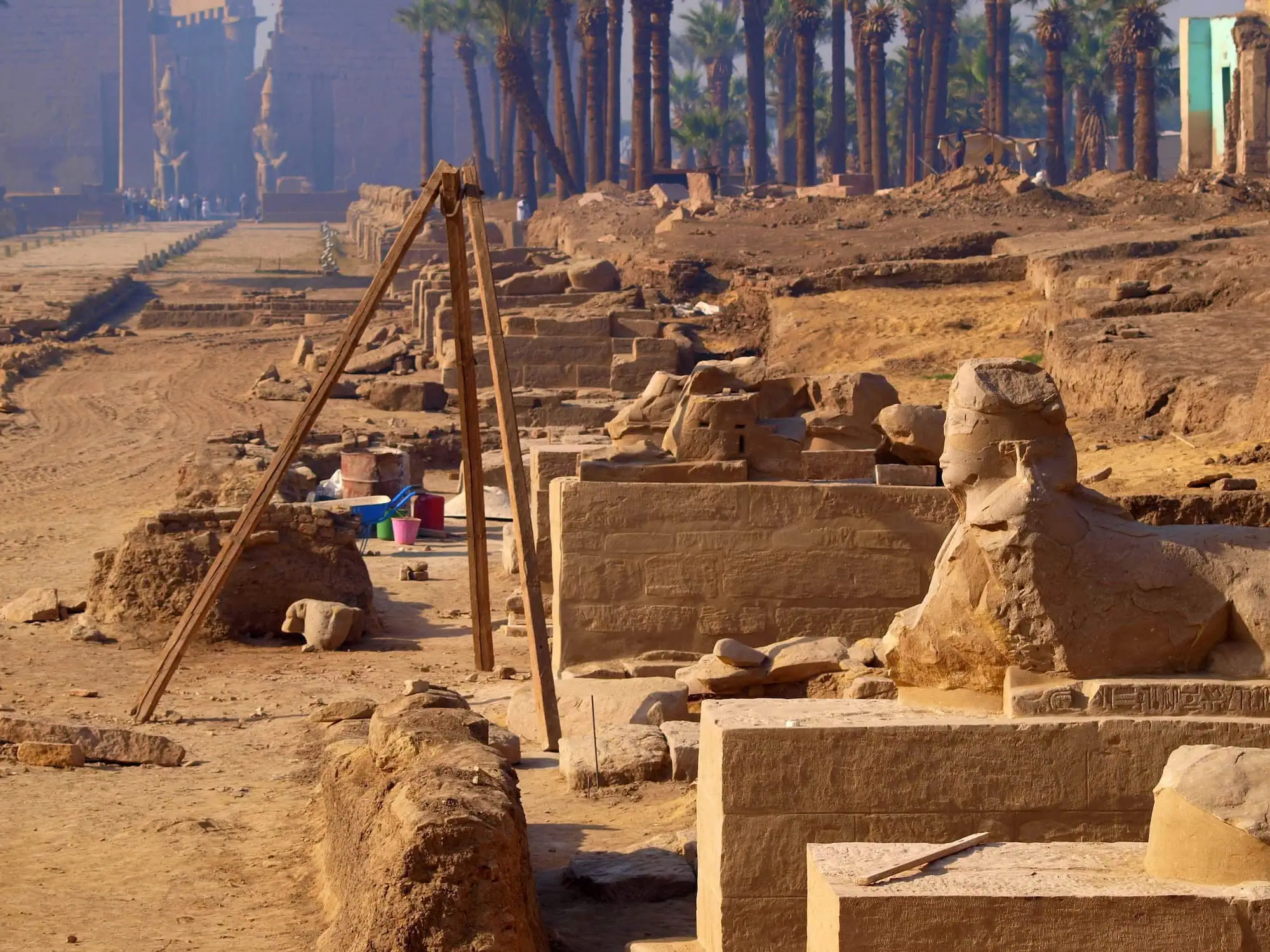
The monument’s body shows clear signs of water erosion, sparking debates about Egypt’s ancient climate and the Sphinx’s true age. Smaller sphinx statues lined processional routes throughout Egypt. The avenue connecting Karnak and Luxor temples once featured over 1,000 ram-headed sphinxes, each carved with Amenhotep III’s cartouche.
Temple Complexes: Architectural Symphonies in Stone
Karnak’s Overwhelming Scale
Karnak Temple represents 2,000 years of continuous construction and modification. The Hypostyle Hall alone contains 134 columns, each capable of supporting a modern apartment building. These columns create a forest effect that originally supported a ceiling decorated with astronomical scenes.
Thutmose III added numerous obelisks to Karnak, including one that now stands in Central Park, New York. The temple’s various pharaohs competed to outdo their predecessors, creating an architectural timeline spanning Egypt’s most powerful dynasties.
Luxor’s Evening Grandeur
Luxor Temple reveals its true magnificence after sunset when strategic lighting illuminates the colonnade and statuary. The temple’s relatively compact size compared to Karnak allows visitors to appreciate individual architectural elements more clearly.
International Obelisk Destinations
Egyptian obelisks now grace major cities worldwide, creating an unexpected global network of pharaonic monuments. Paris claims the western obelisk from Luxor Temple, gifted by Muhammad Ali Pasha in 1829. London’s Cleopatra’s Needle actually predates the famous queen by centuries, originally carved for Thutmose III before Ramesses II added his own inscriptions.
New York’s Central Park obelisk, known as Cleopatra’s Needle, stands as Manhattan’s oldest outdoor monument. The complex process of moving this 220-ton granite shaft from Alexandria to New York took nearly a year and required specially designed transportation equipment.
These international locations offer unique perspectives on Egyptian artistry. Viewing an obelisk against a backdrop of European architecture or American skyscrapers emphasizes both the timeless appeal and cultural adaptability of Egyptian design principles.
Preservation Challenges and Modern Conservation
Ancient Egyptian monuments face unprecedented threats in the modern era. Air pollution, tourism impact, and climate change create preservation challenges unknown to ancient builders. The relocation of Abu Simbel represents one of archaeology’s greatest achievements.
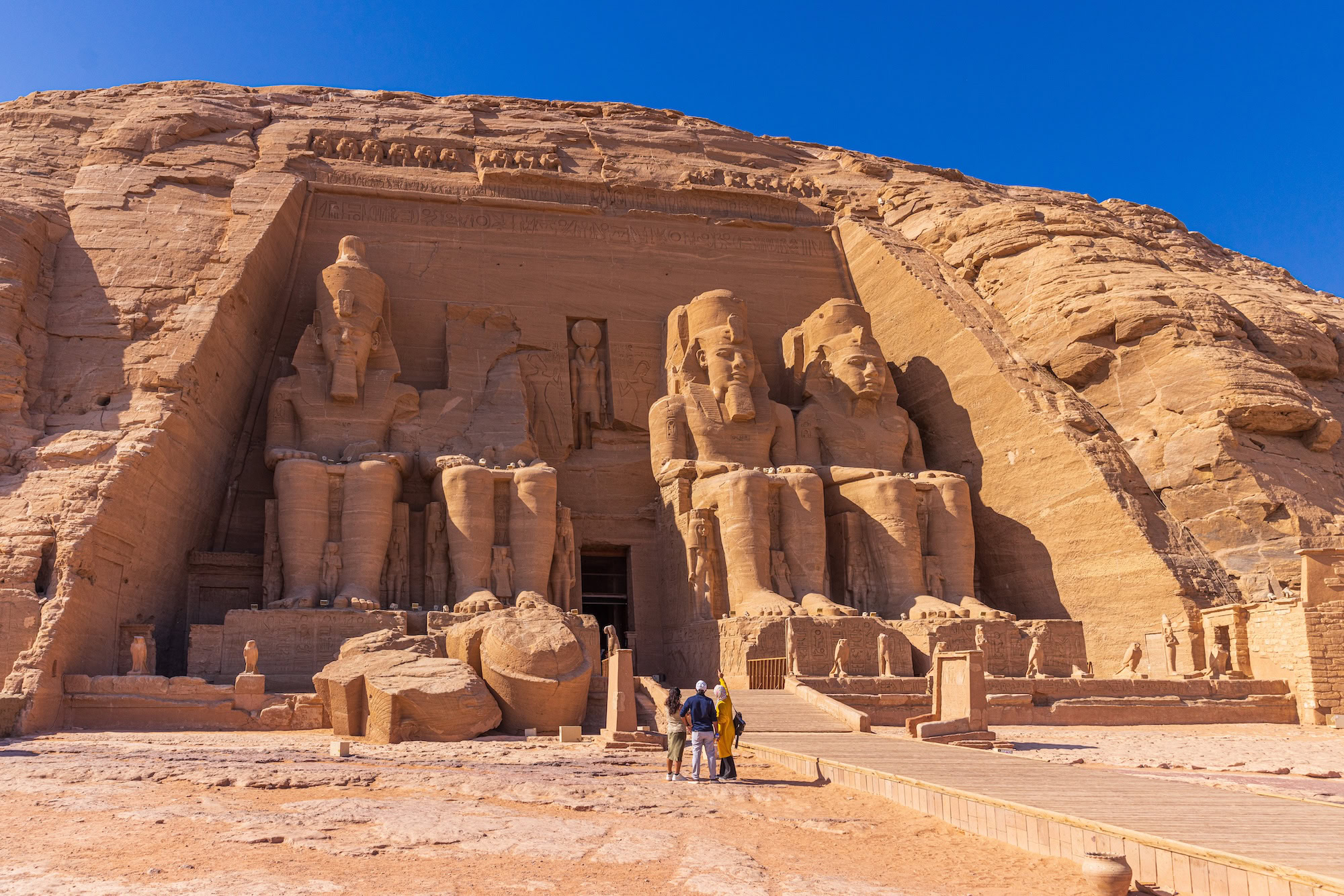
When the Aswan High Dam threatened to submerge Ramesses II’s temples, UNESCO coordinated an international effort to cut the monuments into blocks and reassemble them 65 meters higher. This massive undertaking preserved not only the structures but also their precise solar alignment—the temple interior still illuminates on Ramesses II’s birthday and coronation day.
Modern Documentation Techniques
Contemporary archaeologists employ laser scanning and 3D modeling to create permanent digital records of monuments. These techniques capture details invisible to traditional photography, including tool marks that reveal ancient construction techniques.
Ground-penetrating radar has revealed previously unknown chambers within several monuments, suggesting many secrets remain buried beneath Egypt’s most famous sites. Recent discoveries at Saqqara continue to yield new statues and hieroglyphic inscriptions, demonstrating that our understanding of Egyptian monumental art remains incomplete.
Planning Your Monument Journey
Egypt’s monuments require strategic planning to appreciate fully. Peak tourist seasons can diminish the contemplative experience these sites deserve, while extreme temperatures affect both comfort and photography conditions. We recommend dedicating separate days to major sites rather than attempting rushed combinations.
Karnak deserves a full morning for proper exploration, while Luxor Temple reveals different moods throughout the day. Our expert guides provide historical context that transforms stone carvings into vivid narratives of royal ambition and religious devotion.
Consider timing your visit during Egypt’s cooler months between October and March. Temperatures ranging from 68°F to 86°F (20°C to 30°C) provide comfortable conditions for extended outdoor exploration. Early morning visits, particularly around 7:00 am (07:00), offer the best lighting for photography and the most peaceful atmosphere for contemplation.
Turn the Timing Tips Into a Real Trip
Knowing the cool months and the 7 a.m. openings only goes so far. The trip changes when someone is decoding the reliefs while you’re standing in front of them, and when the schedule is built around your priorities instead of a coach group’s.
Our Egypt packages combine both. Early arrivals at Karnak, Luxor Temple, and the West Bank tombs are baked into the planning, with a private Egyptologist guide reading the carvings as you walk through them. Tell your Travel Concierge which monuments matter most to you. First-draft itinerary back in your inbox within 1 to 12 hours.
Frequently Asked Questions
Approximately 30 large obelisks with hieroglyphic inscriptions survive worldwide.
Ramesses II commissioned more surviving monuments than any other pharaoh.
Ancient engineers used copper tools, wooden rollers, and specially constructed ships.
The Great Sphinx is the world’s largest monolithic statue carved from one limestone outcrop.
Roman emperors transported obelisks as victory trophies and diplomatic gifts.
Early morning hours between 6:00 am and 9:00 am provide optimal lighting.
Karnak’s massive complex requires 3-4 hours for thorough exploration.
Archaeological excavations continue revealing new statues and inscriptions at sites like Saqqara.
Temple obelisks celebrated religious themes while commemorative ones marked royal achievements.
Modern Egyptology provides highly accurate translations of most hieroglyphic texts.
Abu Simbel provides spectacular sunrise illumination and Luxor Temple dramatic evening shadows.
Many monuments incorporate precise astronomical alignments including Abu Simbel’s solar illumination.
Design Your Custom Tour
Explore Egypt your way by selecting only the attractions you want to visit