

Al Hussein Mosque – One of the Holiest Islamic Sites in Egypt
Step through massive wooden doors and enter centuries of devotion.
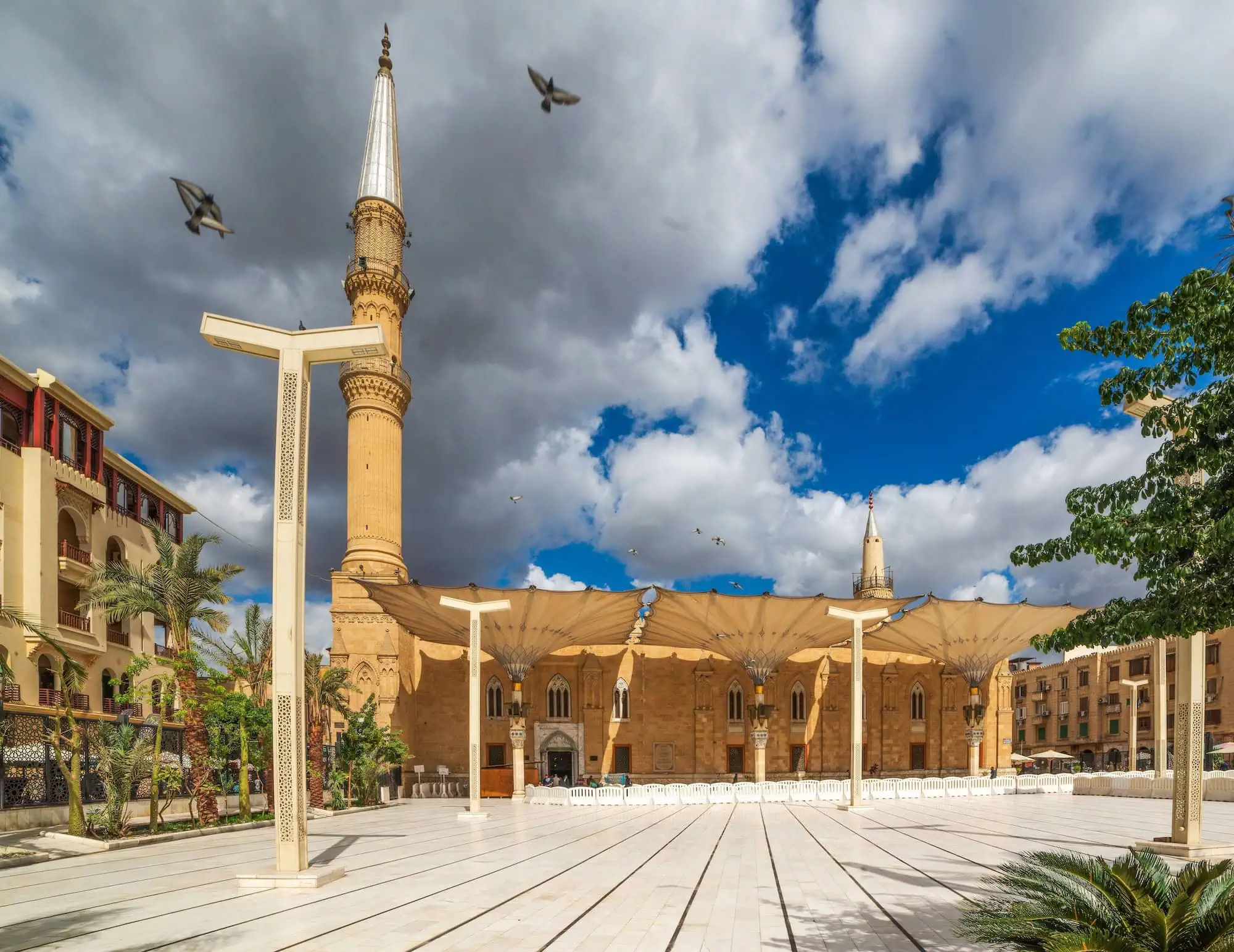
The Al-Hussein Mosque stands where faith meets history in Cairo’s bustling Islamic quarter, holding within its walls what many consider Egypt’s most precious Islamic relic. Built originally in 1154 CE during the Fatimid era, this sacred site has drawn millions of pilgrims and visitors who come to pay respects at the shrine believed to house the head of Husayn ibn Ali, grandson of Prophet Muhammad.
The mosque’s location near the famous Khan el-Khalili bazaar makes it both a spiritual destination and a gateway to experiencing authentic Islamic Cairo.
Whether you seek spiritual connection or architectural wonder, this mosque offers an experience that bridges the sacred and the historical in ways few places can match.
Table of Contents
The Sacred Legacy of Husayn ibn Ali
The mosque’s profound religious significance stems from its connection to one of Islam’s most revered figures.
The Martyred Grandson
Husayn ibn Ali, the Prophet Muhammad’s grandson through his daughter Fatima, met his fate at the Battle of Karbala in 680 CE. His death became a defining moment in Islamic history, particularly for Shia Muslims who view him as the third Imam. According to Islamic tradition, his head was eventually brought to Cairo and enshrined here.
This makes the mosque one of the holiest sites in Egypt and a major pilgrimage destination for Muslims worldwide.
Pilgrimage and Spiritual Significance
We witness countless pilgrims arrive daily, many traveling thousands of miles to pray at this sacred shrine. The atmosphere inside carries the weight of centuries of devotion. Visitors often describe feeling an overwhelming sense of peace and spiritual connection.
During religious holidays, particularly during the month of Muharram, the mosque becomes a focal point for Islamic commemorations.
The Prophetic Relics
Beyond the shrine itself, the mosque houses what’s believed to be one of the world’s oldest complete manuscript copies of the Quran. Religious scholars and faithful visitors alike come to view these precious Islamic artifacts.
The manuscript represents not just religious significance but also incredible historical value, offering glimpses into early Islamic calligraphy and preservation techniques.
Architectural Evolution Through the Ages
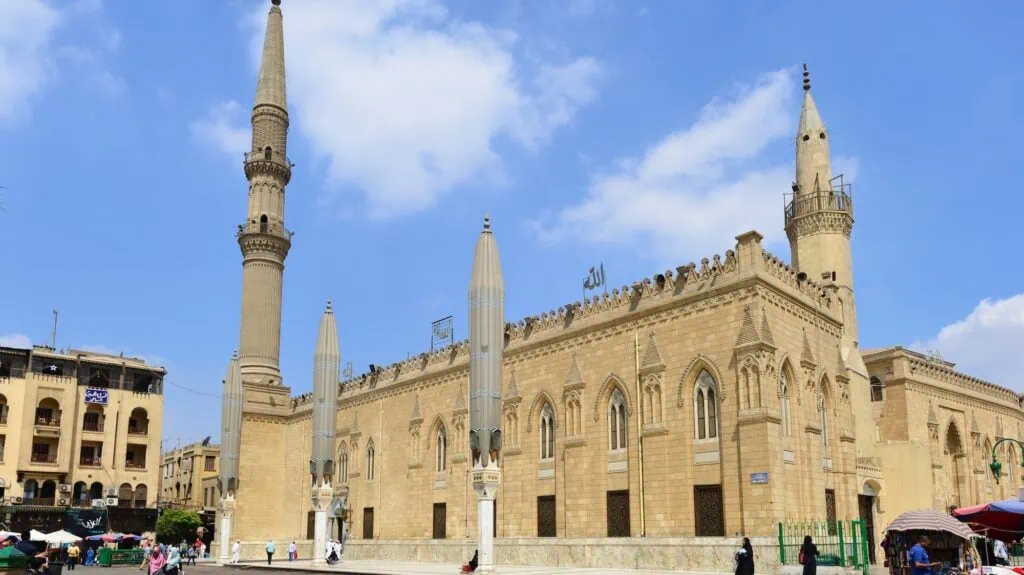
Every renovation has added layers to this architectural masterpiece while preserving its sacred essence. The original Fatimid structure from 1154 CE established the mosque’s foundation, but subsequent rulers and periods left their distinctive marks. During the Ayyubid period, significant expansions occurred.
The Ottomans later contributed their own architectural elements, creating the diverse stylistic blend visible today.
The most dramatic transformation came in 1874 under Khedive Ismail, who ordered a complete reconstruction in the Gothic Revival style popular during that era. This unusual architectural choice makes the mosque unique among Cairo’s Islamic monuments. Steel canopies and modern materials were incorporated during recent renovations, including major restoration work completed in 2022 under President El-Sisi’s administration.
The 2022 Presidential Renovation
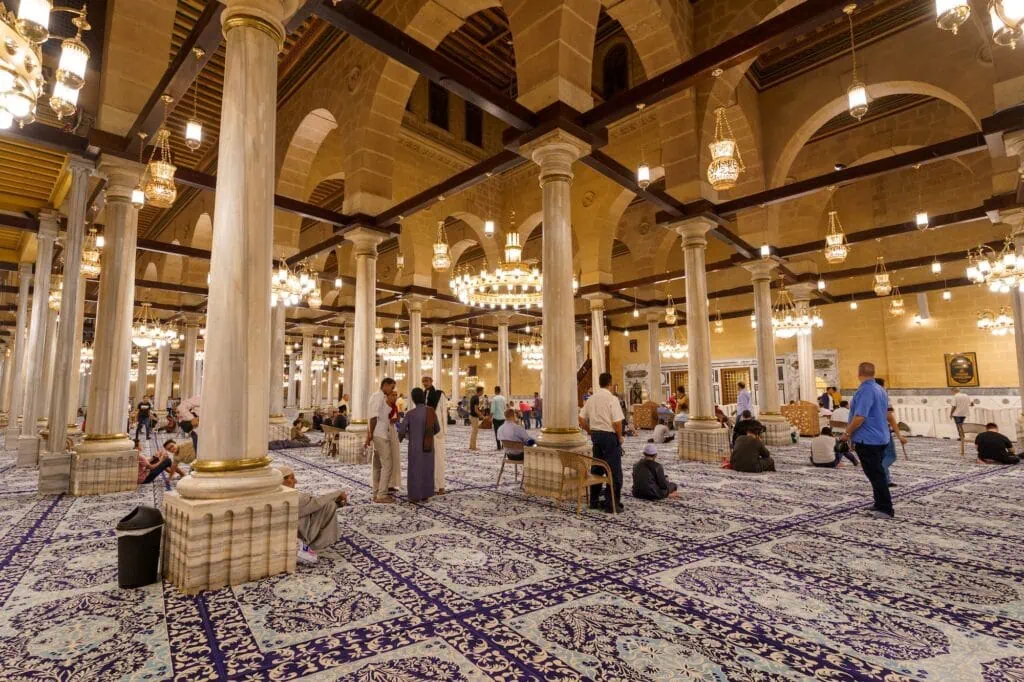
President El-Sisi personally inaugurated the mosque following extensive restoration work that preserved historical elements while adding modern amenities. The renovation included new marble floors, enhanced lighting systems, and improved accessibility features.
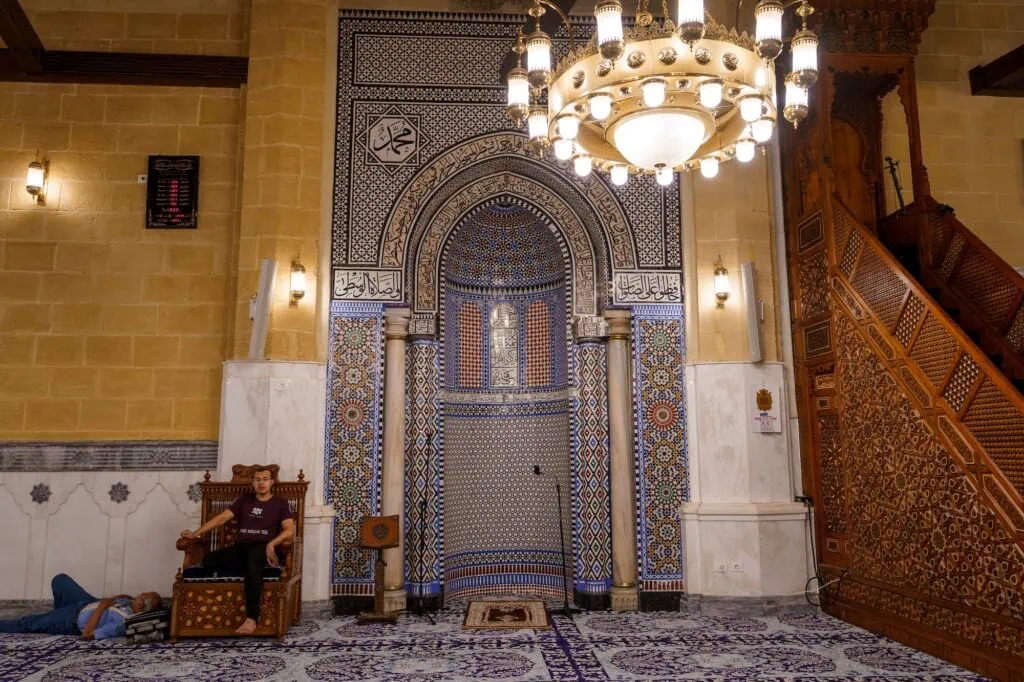
Traditional Islamic geometric patterns were carefully restored throughout the interior spaces.
Planning Your Visit to Al-Hussein Mosque
Timing makes all the difference when experiencing this sacred space properly.
The mosque welcomes visitors throughout most of the day, typically opening after the dawn prayer and remaining accessible until evening prayers. Friday afternoons tend to be busiest due to weekly congregational prayers, so weekday mornings often provide quieter experiences. We recommend allowing at least one hour to fully appreciate the mosque’s spiritual atmosphere and architectural details.
Dress codes require modest clothing covering arms and legs completely. Women should bring scarves to cover their hair before entering. Shoes must be removed at designated areas, so wearing easily removable footwear simplifies the process. Photography rules vary, with some areas permitting photos while others restrict cameras entirely out of respect for worshippers.
The mosque sits in the heart of Islamic Cairo, surrounded by centuries-old streets and traditional markets. Khan el-Khalili bazaar lies just steps away, making it easy to combine spiritual visits with cultural exploration. Street vendors nearby sell traditional Islamic items, prayer beads, and small souvenirs, though bargaining is expected.
The Living Heritage of Islamic Cairo
Beyond the mosque walls, Islamic Cairo unfolds as one of the world’s largest collections of historic Islamic architecture.
Khan el-Khalili Connection
The famous bazaar adjacent to the mosque has operated continuously for over 600 years. Craftsmen still work in traditional workshops, creating metalwork, jewelry, and textiles using techniques passed down through generations.
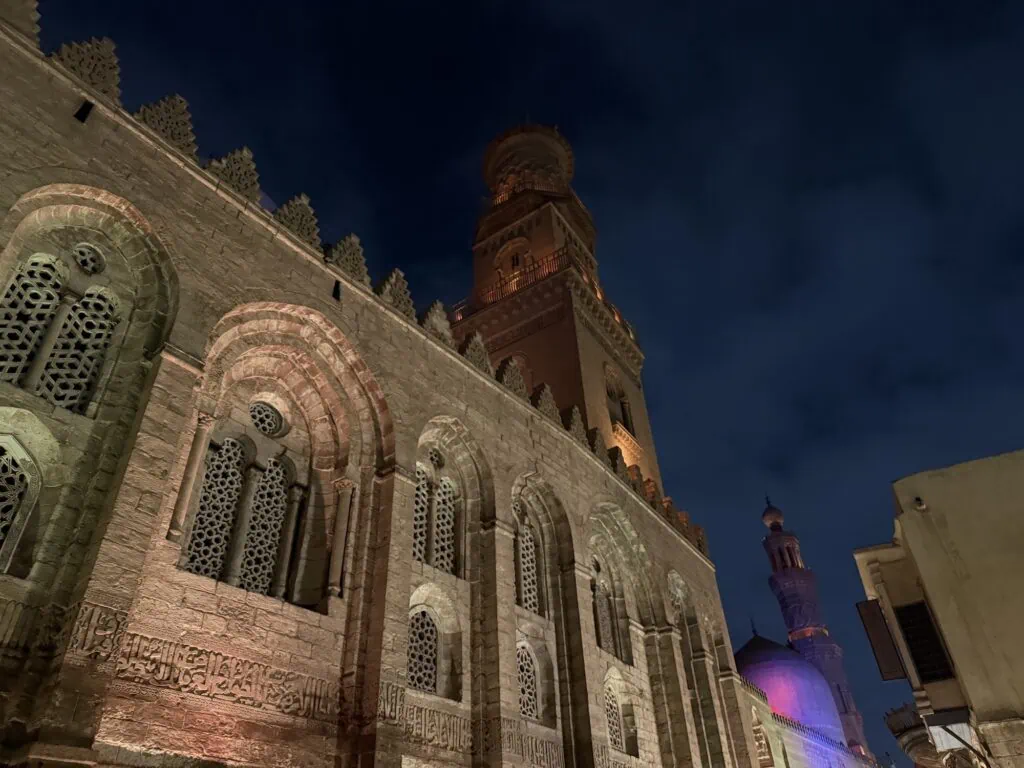
The relationship between mosque and market reflects Islamic urban planning principles where commerce and faith intersected naturally.
UNESCO World Heritage Context
The entire Islamic Cairo district, including Al-Hussein Mosque, forms part of a UNESCO World Heritage Site. This recognition acknowledges the area’s extraordinary concentration of mosques, madrasas, hammams, and fountains dating from the Islamic era.
Walking these streets provides context for understanding the mosque’s role within this larger historical fabric.
Daily Rhythms and Community Life
Local families have worshipped here for generations, creating community bonds that extend far beyond prayer times. We observe how the mosque serves not just as a place of worship but as a community center where people gather, children learn Quranic recitation, and social connections strengthen.
Street cafes nearby buzz with conversations about daily life, politics, and faith, continuing traditions that span centuries.
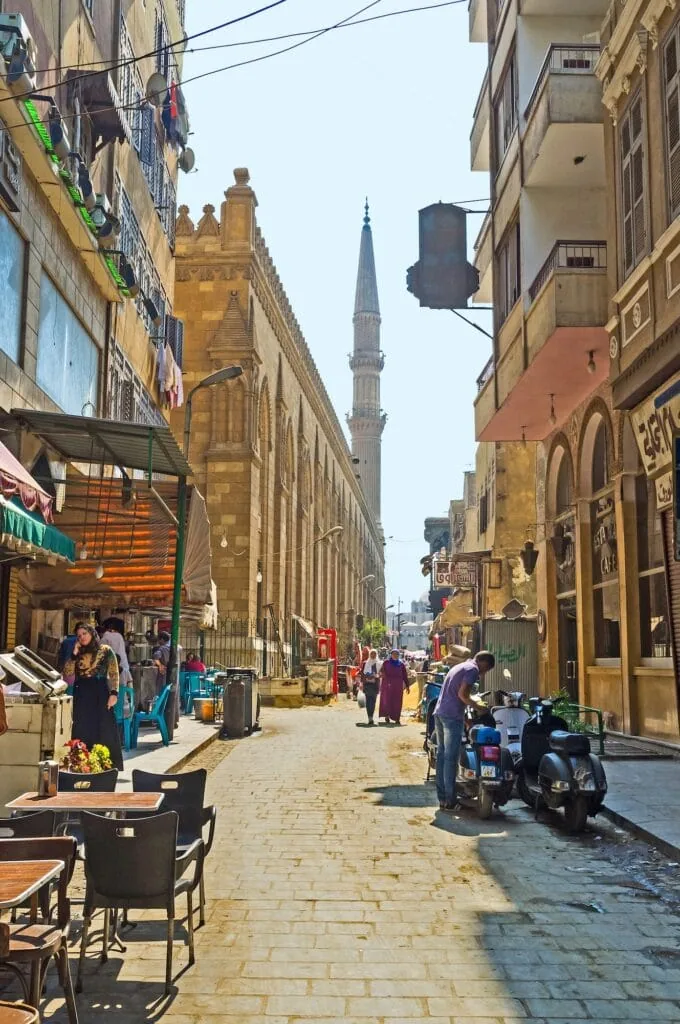
The call to prayer echoes five times daily from the mosque’s minarets, marking time for the entire neighborhood. During Ramadan, the area transforms as families break their fast together and evening prayers draw larger crowds.
Spiritual Experiences and Modern Pilgrimage
Contemporary visitors find various ways to connect with this ancient sacred space.
Prayer and Contemplation
Many visitors, regardless of their faith background, report profound experiences of peace and reflection within the mosque. The ornate interior, with its geometric patterns and calligraphic inscriptions, creates an environment conducive to contemplation.
We’ve noticed how the space naturally encourages quiet reflection, even among tourist groups.
Educational Opportunities
Islamic scholars occasionally offer informal discussions about the mosque’s history and significance. These conversations provide deeper understanding of Islamic traditions and the historical context surrounding Husayn ibn Ali’s legacy.
Cultural Bridge Building
The mosque serves as an important bridge between Egypt’s Islamic heritage and international understanding. Respectful non-Muslim visitors often gain new appreciation for Islamic art, architecture, and spiritual traditions.
Educational groups frequently include the mosque in broader studies of medieval Islamic civilization and contemporary Egyptian culture.
Feel The Spirit Of Historic Cairo
Al Hussein Mosque is one of Cairo’s most revered and atmospheric landmarks, where spiritual significance meets the vibrant rhythm of the surrounding streets. With EgyptToursPlus, we seamlessly include experiences like this in a thoughtfully designed journey that connects cultural depth, iconic sites, and authentic local moments across Egypt.
You choose your travel dates, your pace, and the experiences that shape your itinerary. From private guided exploration and curated cultural encounters to premium accommodations and effortless logistics, we tailor every detail around you—ensuring a smooth, enriching, and deeply personal travel experience.
Frequently Asked Questions
Al-Hussein Mosque is distinguished by housing the shrine traditionally believed to contain the head of Husayn ibn Ali, grandson of the Prophet Muhammad, making it one of the holiest Islamic sites in Egypt. Located in the heart of Islamic Cairo beside Khan el-Khalili, the mosque attracts both worshippers and international visitors throughout the year. Its spiritual significance extends beyond architecture because it remains an active pilgrimage destination, especially during Islamic commemorations linked to Husayn and the Prophet’s family.
Yes, non-Muslim visitors are welcome at Al-Hussein Mosque outside active prayer times, provided they dress modestly and behave respectfully inside the sacred areas. As one of Cairo’s most important religious sites, the mosque remains fully active for worship while also serving as a major historical attraction. Certain shrine sections may occasionally be restricted depending on religious activities or crowd levels. Weekday mornings generally provide the most comfortable conditions for non-Muslim visitors exploring the mosque and surrounding Islamic Cairo district.
Most visitors should plan 1 to 2 hours for Al-Hussein Mosque, allowing enough time to explore the prayer hall, observe the shrine area, and walk through the surrounding streets of Islamic Cairo. The mosque sits directly beside Khan el-Khalili bazaar and near Al-Azhar Mosque, making it easy to combine several major landmarks into a half-day itinerary. Visitors interested in architecture, religious history, or photography often stay longer. Early arrivals experience quieter conditions and less congestion from tour groups.
Weekday mornings between 9:00 am and 11:00 am are generally the best times to visit Al-Hussein Mosque because temperatures are cooler and visitor numbers remain lower. Friday afternoons become significantly busier due to congregational prayers, especially during Ramadan and major Islamic holidays. Evening visits offer a different atmosphere, with the surrounding Khan el-Khalili district becoming lively with cafes, lanterns, and local shoppers. Visitors seeking photography and quieter exploration should avoid major religious celebration periods whenever possible.
Photography is permitted in some sections of Al-Hussein Mosque, but restrictions may apply near the shrine and during active worship services. Because the mosque functions as a deeply important religious site rather than only a tourist monument, visitors should always ask permission before photographing worshippers or sensitive interior areas. Flash photography is generally discouraged inside prayer spaces to maintain a respectful atmosphere. Exterior photography around the mosque plaza and nearby Khan el-Khalili streets is widely popular, especially during evening hours.
Visitors to Al-Hussein Mosque should wear modest clothing that fully covers shoulders, arms, and legs in accordance with Islamic religious customs. Women are expected to wear headscarves inside prayer areas, and shoes must be removed before entering carpeted worship sections. Lightweight clothing is recommended during Cairo’s warmer months, when temperatures often exceed 35°C (95°F). Comfortable walking shoes are also important because visits commonly include nearby Islamic Cairo streets, bazaars, and historic monuments with uneven stone pathways.
Al-Hussein Mosque is located in Islamic Cairo beside Khan el-Khalili bazaar, approximately 4 km northeast of Tahrir Square and accessible by taxi, ride-sharing apps, metro, or organized tours. The nearest metro stop is Bab El Shaaria Station, followed by a short walk through historic streets. Because traffic congestion in central Cairo can be unpredictable, many visitors prefer private transportation or guided tours for convenience. Combining the mosque with Al-Azhar Mosque and Khan el-Khalili creates one of Cairo’s most efficient walking itineraries.
Yes, guided tours of Al-Hussein Mosque are widely available and particularly valuable because the site combines religious, historical, and cultural significance that casual visitors may not fully understand independently. Professional guides explain the Fatimid origins of the mosque, the traditions surrounding Husayn ibn Ali, and the role the mosque plays in modern Egyptian religious life. Egypt Tours Plus often includes Al-Hussein within broader Islamic Cairo itineraries alongside Khan el-Khalili and Al-Azhar Mosque. Guided visits also help visitors navigate etiquette respectfully.
Al-Hussein Mosque sits in the center of Islamic Cairo, surrounded by major attractions including Khan el-Khalili bazaar, Al-Azhar Mosque, Al-Muizz Street, and numerous medieval Islamic monuments. Most of these landmarks are reachable within 5 to 15 minutes on foot, making the area one of Cairo’s best districts for walking tours. Visitors can combine religious architecture, traditional markets, historic cafes, and street photography within a single itinerary. Evening visits are especially popular because the district becomes lively after sunset.
Al-Hussein Mosque was originally constructed in 1154 CE during the Fatimid era, although much of the present structure reflects major rebuilding campaigns completed in 1874 under Khedive Ismail. Additional restoration work and renovations continued into the 21st century, including extensive upgrades completed in 2022. The mosque’s layered architecture reflects centuries of Egyptian Islamic history, combining Fatimid origins with Ottoman and modern Egyptian influences. Its long religious continuity contributes greatly to its importance within Sunni and Shia traditions alike.
No entrance fee is generally required to visit Al-Hussein Mosque, although donations supporting maintenance and charitable activities are appreciated. Unlike many museum-style historical sites in Cairo, the mosque functions primarily as an active religious institution serving worshippers throughout the day. Visitors may still encounter optional local contributions for services, guides, or shoe storage depending on current arrangements. Carrying small Egyptian pound notes is useful when visiting both the mosque and the nearby Khan el-Khalili market district.
Yes, Al-Hussein Mosque remains open during major Islamic holidays, but visitors should expect significantly larger crowds during Ramadan, Eid celebrations, and Muharram commemorations connected to Husayn ibn Ali. These periods create an especially vibrant spiritual atmosphere, with increased worship activity, Quran recitations, and evening gatherings throughout Islamic Cairo. While culturally rewarding, holiday visits can involve tighter security, slower movement, and restricted access to certain interior sections. Visitors seeking quieter sightseeing should choose ordinary weekdays outside major religious observances.
Design Your Custom Tour
Explore Egypt your way by selecting only the attractions you want to visit