

Valley of the Kings – Unearth the Hidden Treasures
Picture pharaohs’ tombs carved deep into desert rock, holding treasures and secrets for thousands of years.
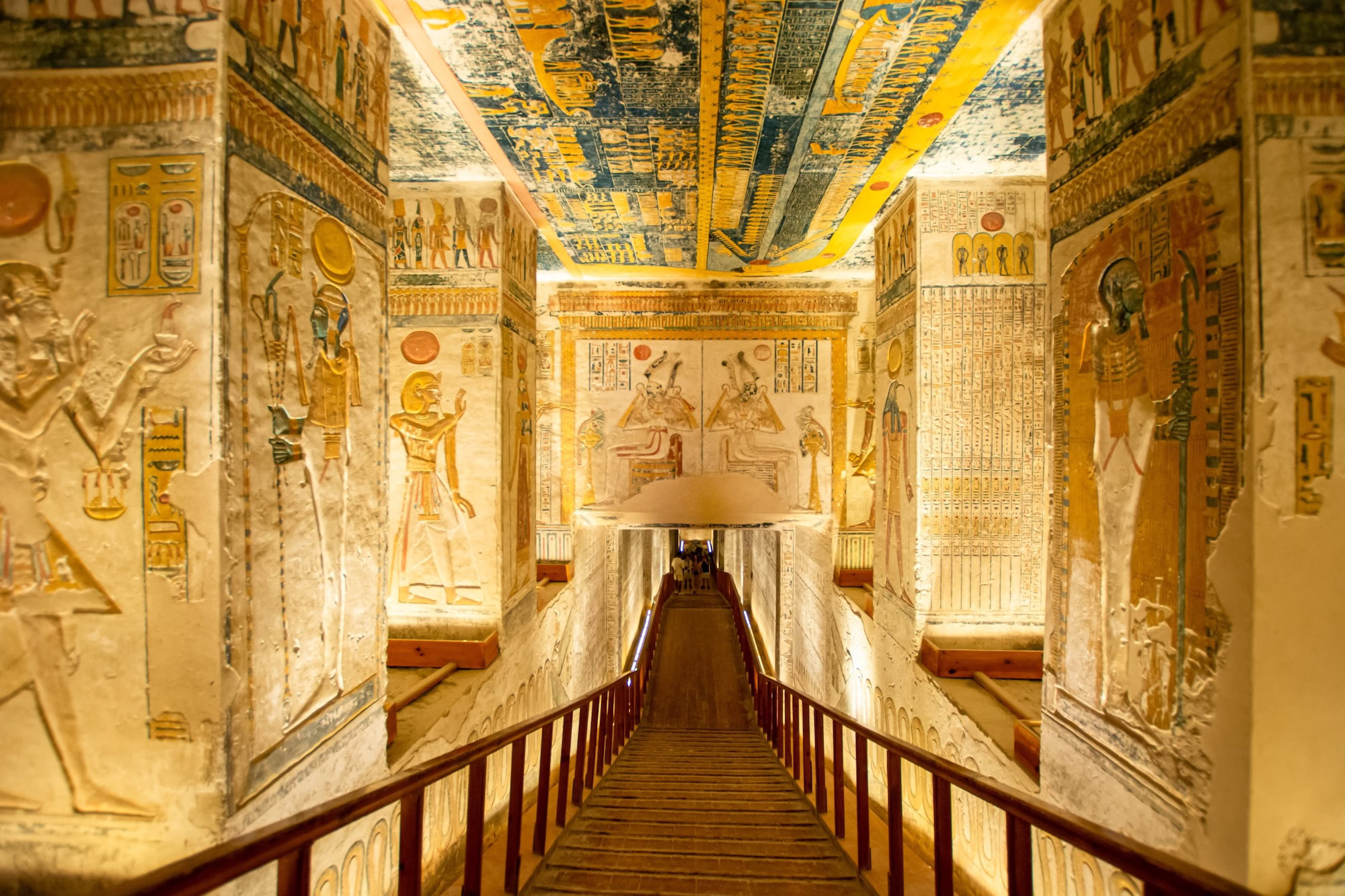
For nearly five centuries during Egypt’s New Kingdom period (c. 1550–1069 BC), this remote valley served as the sacred burial ground for pharaohs and powerful nobles. The rulers of the Eighteenth, Nineteenth, and Twentieth Dynasties chose this desolate location across from ancient Thebes, believing the pyramid-shaped peak of al-Qurn would guide their souls to the afterlife. Today, 65 documented tombs make the Valley of the Kings one of Egypt’s most significant archaeological sites and a UNESCO World Heritage destination that continues to reveal new discoveries.
We organize private guided visits to this extraordinary site, ensuring you experience the most important tombs with expert commentary and comfortable transportation from your Luxor accommodation.
Table of Contents
The Sacred Geography of Ancient Egypt
The ancient Egyptians selected this isolated valley with deliberate intention. Thutmose I became the first pharaoh buried here around 1493 BC, breaking centuries of tradition that favored pyramid construction in northern Egypt.
Why This Remote Valley Became Royal
The natural pyramid shape of al-Qurn mountain symbolized the primeval mound from which life emerged in Egyptian mythology.
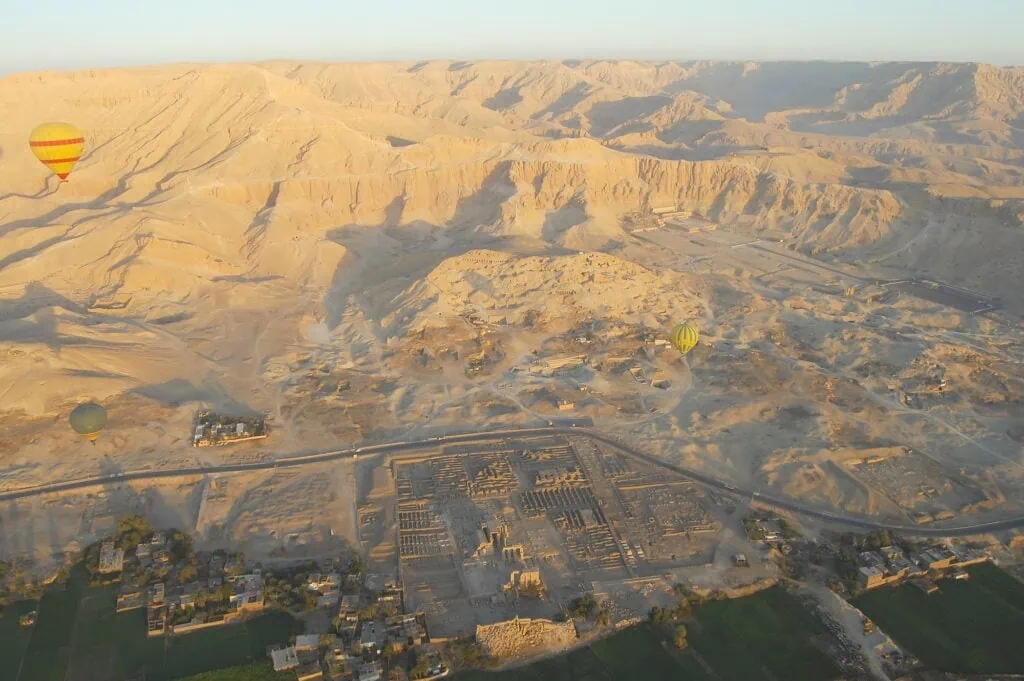
This geological formation convinced royal architects that divine forces had prepared this location specifically for pharaonic burials. The valley’s isolation also provided security against tomb robbers, though this protection proved limited over the millennia.
East Valley Versus West Valley
Most visitors explore the East Valley, which contains 62 of the documented tombs including those of Tutankhamun, Ramesses II, and Seti I. The West Valley houses only four tombs, including that of Amenhotep III, but receives far fewer tourists. Both valleys showcase the evolution of royal tomb architecture across different dynasties.
Geological Features That Shaped History
The limestone cliffs provided ideal conditions for tomb construction, soft enough to carve yet stable enough to preserve wall paintings and hieroglyphic inscriptions for millennia. Underground water channels occasionally threatened tomb integrity, leading ancient builders to develop sophisticated drainage systems that archaeologists still study today.
The Golden Age of Royal Burials
New Kingdom pharaohs transformed burial practices completely. Instead of building visible monuments like pyramids, they commissioned elaborate underground complexes designed to hide royal mummies and treasures from thieves.
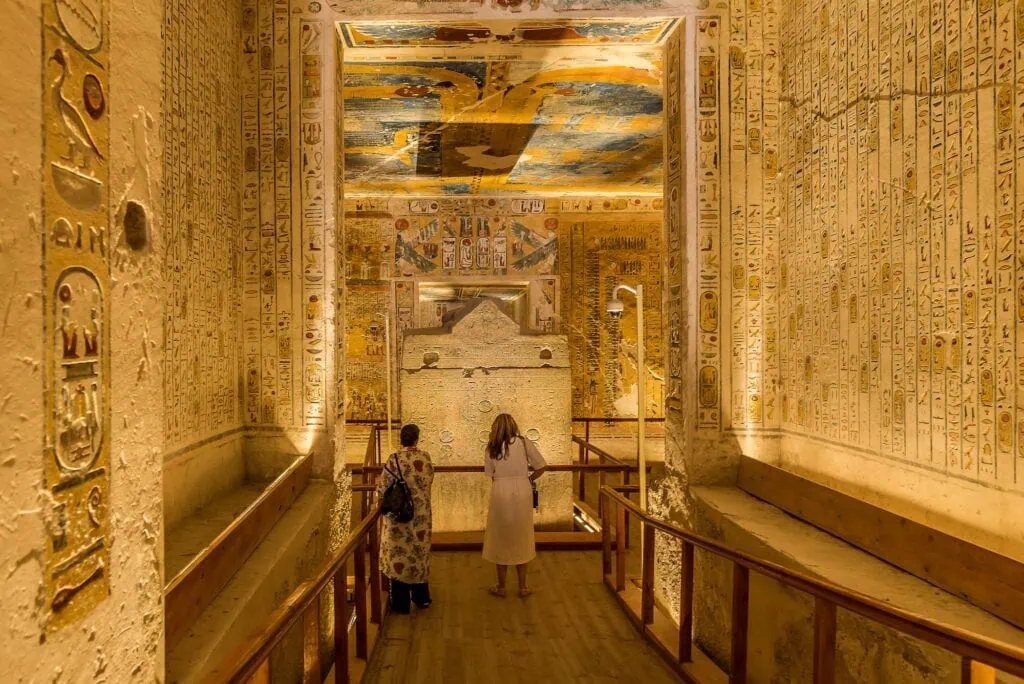
The construction process typically required decades. Teams of skilled craftsmen, including stone carvers, painters, and scribes, worked by oil lamp light to create corridors descending 100 meters (328 feet) into solid rock. Each tomb followed strict religious protocols, with specific chambers designated for different stages of the pharaoh’s journey to the afterlife. Wall decorations depicted scenes from the Book of the Dead and other sacred texts, providing the deceased ruler with magical protection and guidance.
Tutankhamun’s tomb, discovered intact by Howard Carter in 1922, revealed the incredible wealth buried with royal mummies. Golden masks, jewelry, chariots, and furniture filled multiple chambers, suggesting that robbed tombs originally contained even greater treasures. The young pharaoh’s burial goods alone required ten years to catalog and study.
The Role of the Theban Project
Kent Weeks and his team have documented every known tomb since 1978, creating detailed maps and conservation plans. Their work revealed KV5, the largest tomb in the valley, which housed dozens of sons of Ramesses II. This ongoing research continues to reshape our understanding of royal burial practices and family relationships among New Kingdom dynasties.
Famous Tombs and Their Royal Occupants
Tutankhamun’s Tomb (KV62)
The most famous discovery in archaeological history happened when Howard Carter found this nearly intact burial in November 1922. Unlike other royal tombs, Tutankhamun’s four chambers remained largely untouched by ancient thieves. The teenage pharaoh’s golden funeral mask, now displayed in the Grand Egyptian Museum, became an international symbol of ancient Egyptian artistry.
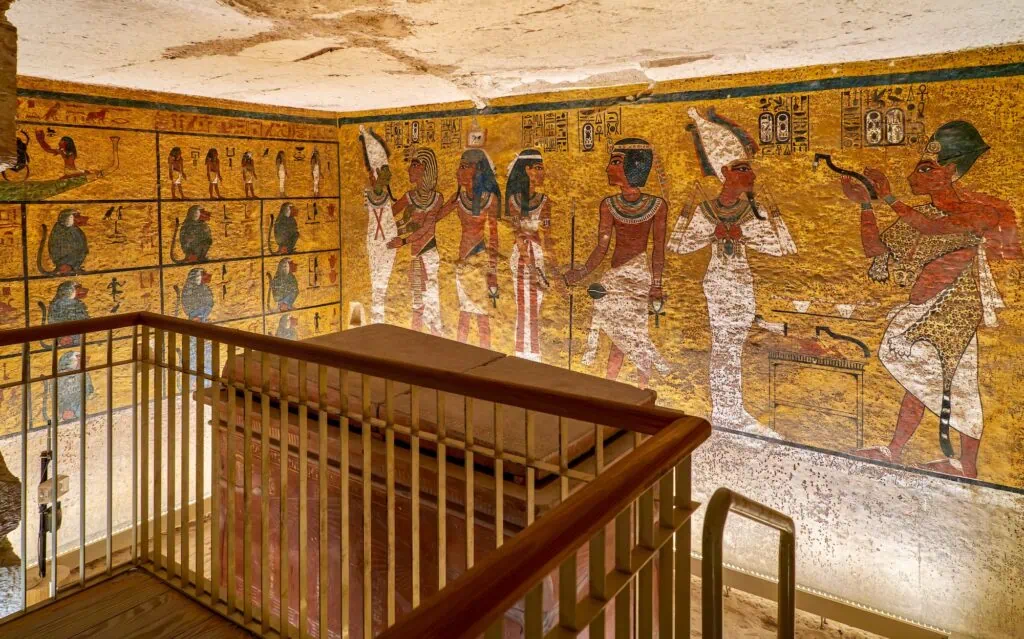
Visitors can enter the tomb’s antechamber and burial chamber, though photography requires additional fees. The original mummy remains in the tomb within a climate-controlled glass case, allowing visitors to see the actual pharaoh who ruled Egypt over 3,300 years ago.
Ramesses VI’s Tomb (KV9)
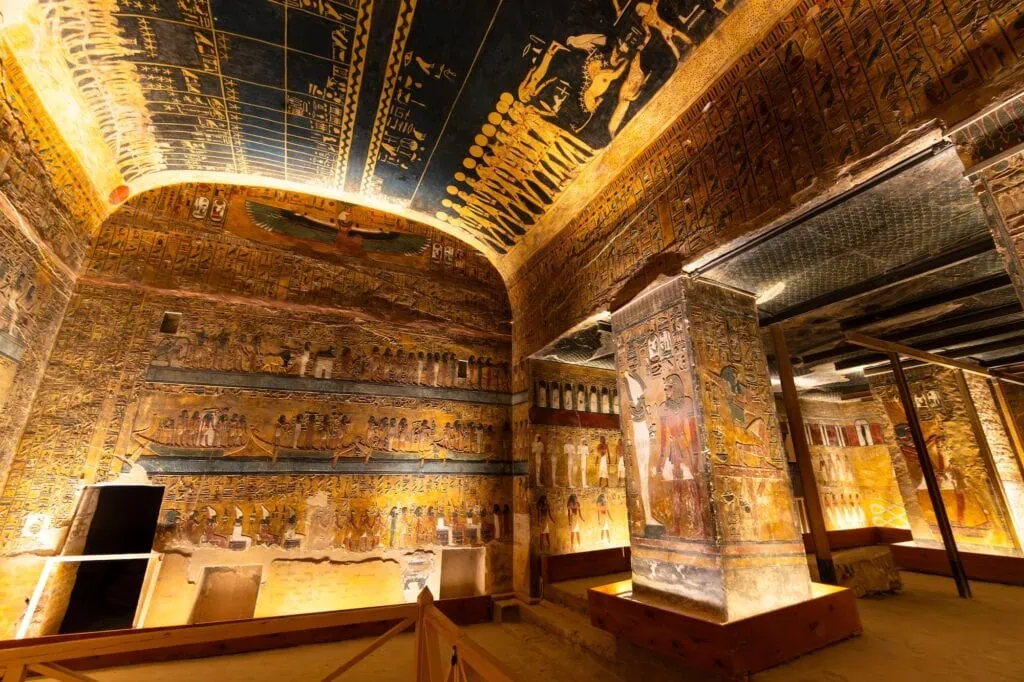
This tomb showcases some of the valley’s finest wall paintings and hieroglyphic texts. The 117-meter (384-foot) corridor descends through nine chambers, each decorated with scenes from the Book of Gates and Book of Caverns. The astronomical ceiling in the burial chamber displays constellations and religious symbols that guided the pharaoh’s celestial journey.
Seti I’s Tomb (KV17)
Often called the most beautiful tomb in the valley, KV17 extends 137 meters (449 feet) into the cliff face. Giovanni Battista Belzoni discovered this masterpiece in 1817, finding wall paintings so vivid that colors appear freshly applied. The tomb requires special tickets and limits daily visitors to preserve its delicate artwork.
Archaeological Discoveries and Modern Excavations
Recent decades have produced remarkable finds that continue rewriting Egyptian history. In 2005, archaeologists discovered KV63, a storage chamber filled with mummification materials and wooden sarcophagi. Though it contained no royal mummy, this find demonstrated that the valley still holds undiscovered secrets.
Otto Schaden’s team found KV64 in 2011, revealing a 22nd Dynasty burial that showed how later periods reused the sacred valley. Ground-penetrating radar surveys suggest additional undiscovered tombs may exist, particularly in areas previously considered fully explored.
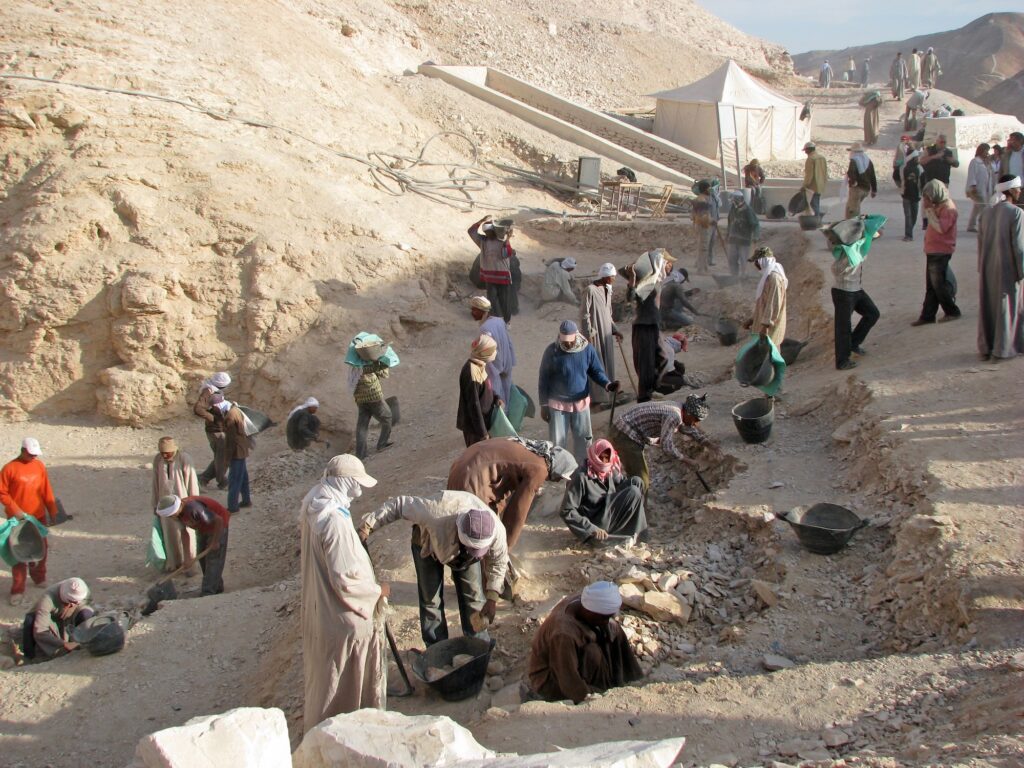
The Theban Mapping Project continues documenting tomb architecture, wall decorations, and hieroglyphic inscriptions. Their digital archive preserves deteriorating artwork and provides researchers worldwide with detailed tomb plans and photographic records.
Conservation efforts now focus on controlling humidity and carbon dioxide levels that damage wall paintings. Glass barriers protect the most fragile decorations while allowing visitors to observe ancient artistry up close.
Technology Reveals Hidden Chambers
Recent scanning technology detected possible hidden chambers behind walls in Tutankhamun’s tomb, though further investigation proved inconclusive. Similar techniques applied to other tombs may reveal previously unknown architectural features or storage areas.
Planning Your Visit to Valley
Ticket Information and Tomb Access
Standard admission includes access to three tombs from a rotating selection. Popular options typically include the tombs of Ramesses VII, Ramesses IX, and Ramesses IV. Special tickets for Tutankhamun’s tomb, Seti I’s tomb, or Ramesses VI’s tomb cost additional fees but provide access to the valley’s most spectacular sites.
We recommend purchasing tickets in advance during peak tourist seasons (October through April) to guarantee access to your preferred tombs. Photography tickets allow pictures inside most tombs, though flash photography remains prohibited to protect wall paintings.
Best Visiting Times and Advice
The valley opens at 6:00 am (06:00) and closes at 4:00 pm (16:00) during winter months. Early morning visits avoid crowds and afternoon heat, which can exceed 40°C (104°F) during summer months. The desert location provides no shade, making sun protection essential.
Comfortable walking shoes help navigate uneven surfaces and steep tomb entrances. Many tombs require descending narrow staircases and corridors, which may challenge visitors with mobility limitations.
Transportation and Location
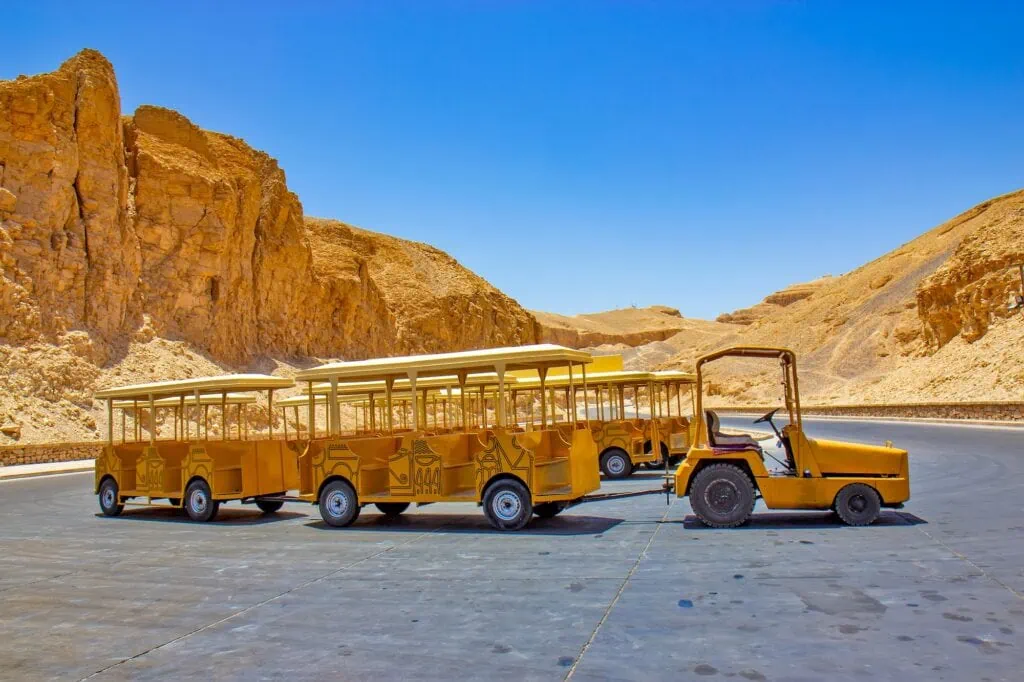
The valley lies approximately 5 km (3.1 miles) from Luxor’s West Bank ferry terminal. We provide private, air-conditioned vehicles for comfortable transportation to the site. The journey includes scenic views of the Nile River and agricultural areas along the West Bank.
Our private guides enhance your visit with detailed explanations of tomb decorations, historical context, and religious significance that bring ancient Egyptian civilization to life.
Step Into The Heart Of Ancient Egypt
The Valley of the Kings is where Egypt’s greatest pharaohs were laid to rest—an awe-inspiring landscape filled with hidden tombs, vivid wall art, and timeless mystery. With EgyptToursPlus, we turn this iconic site into the centerpiece of a private journey that connects Luxor’s legendary treasures with the rest of Egypt’s unforgettable highlights.
You choose your travel dates, your pace, and the experiences that shape your route. From exclusive tomb visits and guided exploration to Nile cruises and refined comfort throughout, we tailor every detail around your preferences—ensuring a seamless, expertly crafted, and deeply personal travel experience.
Frequently Asked Questions
Standard Valley of the Kings tickets usually include entry to three tombs, and most visitors comfortably complete these visits within 2 to 3 hours. Located on Luxor’s West Bank, the valley contains more than 60 known royal tombs from Egypt’s New Kingdom period, although only a rotating selection remains open at one time for conservation purposes. Premium tombs such as Tutankhamun’s KV62 or Seti I’s tomb require separate tickets. Arriving early helps avoid heat, crowds, and longer entry lines at popular tombs.
Photography is permitted inside many Valley of the Kings tombs, although visitors typically need a separate photography ticket purchased at the entrance. Flash photography is strictly prohibited because repeated bursts of light can damage pigments and wall paintings preserved for more than 3,000 years. Certain premium tombs may also restrict video recording or professional equipment such as tripods and stabilizers. Early morning visits often provide better conditions for exterior photography around the valley before crowds and heat intensify.
Visitors to the Valley of the Kings should bring bottled water, a sun hat, comfortable walking shoes, sunscreen, and lightweight breathable clothing suitable for Upper Egypt’s desert climate. The archaeological zone offers very limited shade between tomb entrances, and summer temperatures in Luxor regularly exceed 100°F (38°C) by midday. Many tomb interiors also involve steep descents and uneven stone flooring. Carrying only small personal items generally makes movement through security checkpoints and narrow passageways easier.
Children can safely visit the Valley of the Kings when supervised by adults, although some tombs contain steep staircases, narrow corridors, and low ceilings that may challenge younger visitors. The site’s royal tombs often fascinate children because of their colorful wall paintings, hieroglyphs, and stories about pharaohs such as Tutankhamun and Ramesses II. Some chambers also become warm and crowded during peak hours. Morning visits are generally more comfortable for families because temperatures rise quickly across Luxor’s West Bank after midday.
The Valley of the Kings is located approximately 13 km (8 miles) from central Luxor, with most journeys taking 30 to 45 minutes depending on Nile crossing times and traffic conditions. Visitors staying on Luxor’s East Bank typically travel by bridge, ferry, or organized transport before reaching the royal necropolis on the West Bank. Many itineraries combine the valley with nearby attractions such as Hatshepsut Temple and the Colossi of Memnon. Early departures usually reduce waiting times and avoid peak afternoon heat.
Accessibility at the Valley of the Kings is limited because the tombs were carved into steep desert cliffs more than 3,000 years ago. While visitor centers and some pathways have improved in recent years, many tombs still require descending long staircases and navigating uneven stone surfaces that can be difficult for mobility-impaired travelers. Some entrances are more manageable than others depending on slope and corridor width. Visitors with accessibility concerns should discuss suitable tomb options with guides before beginning their tour.
East Valley tickets cover the main section of the Valley of the Kings, including famous tombs such as Tutankhamun’s KV62 and Ramesses VI’s KV9, while West Valley access requires separate admission. The East Valley contains the majority of open royal tombs and receives most tourist traffic because of its concentration of major archaeological discoveries. The quieter West Valley includes fewer tombs, most notably the tomb of Amenhotep III. Travelers seeking less crowded experiences often appreciate the West Valley’s more isolated atmosphere.
The most recent officially numbered tomb discovery in the Valley of the Kings was KV64, uncovered in 2011 and associated with 22nd Dynasty burials. Archaeologists continue conducting excavations and radar surveys throughout Luxor’s West Bank because experts believe undiscovered chambers and burial areas may still exist beneath the desert surface. The Valley of the Kings has produced major finds for more than two centuries, including Howard Carter’s discovery of Tutankhamun’s tomb in 1922. Ongoing conservation work also regularly reveals new inscriptions and artifacts.
Most visitors spend approximately 20 to 30 minutes inside each Valley of the Kings tomb, depending on crowd levels, photography, and personal interest in the wall artwork. Larger or more elaborate tombs, such as those of Ramesses V-VI or Seti I, often require additional time because of their extensive corridors and detailed funerary scenes. Walking between tomb entrances and resting in the desert heat also adds time to the overall experience. A complete visit usually takes between 2 and 4 hours.
Premium tomb pricing in the Valley of the Kings is mainly based on conservation costs, visitor demand, and the historical importance of specific burial chambers. Tombs such as Tutankhamun’s KV62 and Seti I’s KV17 contain exceptionally detailed artwork and fragile preservation conditions that require stricter climate management and limited daily visitor numbers. These restrictions reduce wear on paintings and ancient surfaces dating back more than 3,000 years. Higher ticket prices also help fund ongoing archaeological conservation and restoration work across Luxor’s royal necropolis.
Independent visits to the Valley of the Kings are entirely possible, although guided tours provide much deeper historical interpretation and help visitors choose tombs efficiently. The site contains dozens of numbered royal tombs with different artistic styles, burial layouts, and dynastic histories spanning Egypt’s 18th through 20th Dynasties. Egypt Tours Plus and other experienced operators often tailor visits around specific interests such as art, archaeology, or famous pharaohs. Guides also help travelers navigate changing tomb availability and ticket rules more smoothly.
Large backpacks, tripods, selfie sticks, drones, and bulky camera equipment are generally prohibited inside Valley of the Kings tombs because of security and preservation regulations. Tomb corridors are narrow, fragile, and often crowded, so limiting oversized items helps protect ancient wall paintings and improve visitor movement through confined spaces. Small cameras and personal belongings are usually permitted following standard security screening at the entrance area. Carrying only essential items also makes descending steep staircases and navigating underground passages more comfortable.
Design Your Custom Tour
Explore Egypt your way by selecting only the attractions you want to visit