

Philae Temple – A Relocated Ancient Temple of Isis
Standing on its peaceful island refuge, this ancient sanctuary captivates visitors with stories spanning millennia.
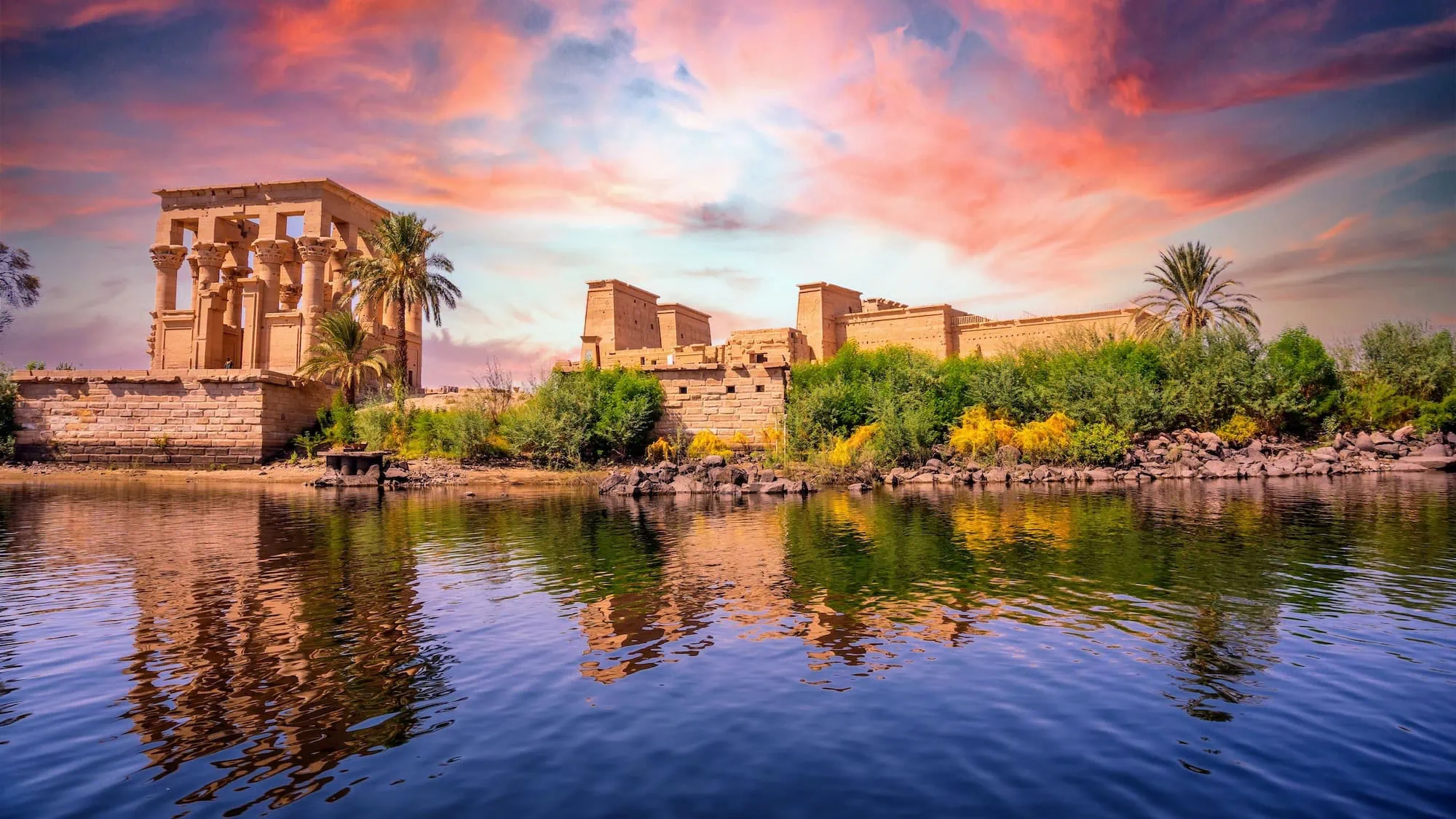
The original Philae sat beneath the Nile’s waters decades ago, a casualty of modern engineering and ancient preservation needs in the wider Aswan area. What you visit today represents one of archaeology’s greatest rescue missions – an entire temple complex relocated stone by stone to higher ground.
We’ve seen countless travelers experience that moment of wonder when they first glimpse the towering pylons rising from Agilkia Island — a reminder that Egypt’s authentic antiquity and modern miracle can exist side by side on guided journeys that include a Nile cruise or a more intimate Dahabiya Cruise.
The Temple of Isis remains as spiritually powerful today as it was during its centuries as Egypt’s last functioning pharaonic sanctuary.
Table of Contents
Sacred History of the Isis Temple Complex
Priests once chanted daily prayers here when Philae served as the premier destination for Isis worship throughout the ancient world. The Ptolemaic rulers began construction around 280 BCE, transforming a rocky island into Egypt’s most beautiful religious center.
Construction Through the Ages
Ancient architects spent over 800 years perfecting this masterpiece. Ptolemaic pharaohs laid the foundation with the main Temple of Isis, featuring massive stone pylons that still dominate the skyline.
Roman emperors continued expansion, adding colonnades and decorative elements that blend Egyptian tradition with classical influences. The complex reached its final form under Byzantine rule, when Christian symbols were carved alongside hieroglyphic inscriptions.
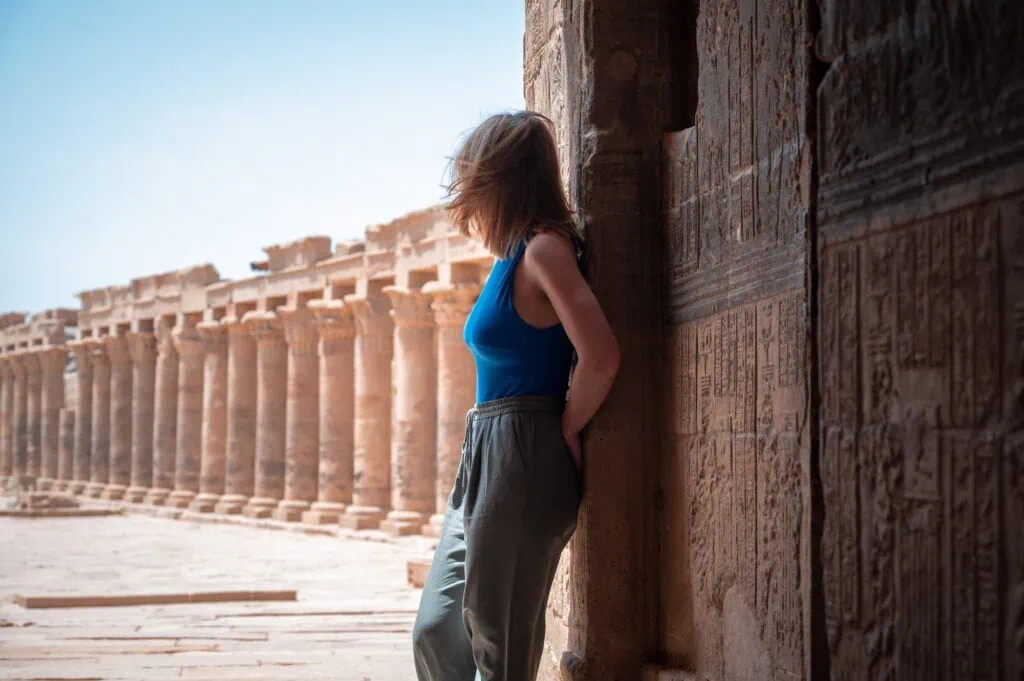
Each building period left distinct architectural fingerprints. The earliest structures showcase pure Egyptian design with lotus capitals and traditional relief carving. Later additions reveal Greco-Roman influences through Corinthian columns and more naturalistic figure work.
The Last Hieroglyphic Inscription
History’s final hieroglyphic inscription was carved here in 394 CE by a priest named Esmet-Akhom. This moment marked the end of a 3,000-year writing tradition that had documented pharaonic civilization from its earliest dynasties.
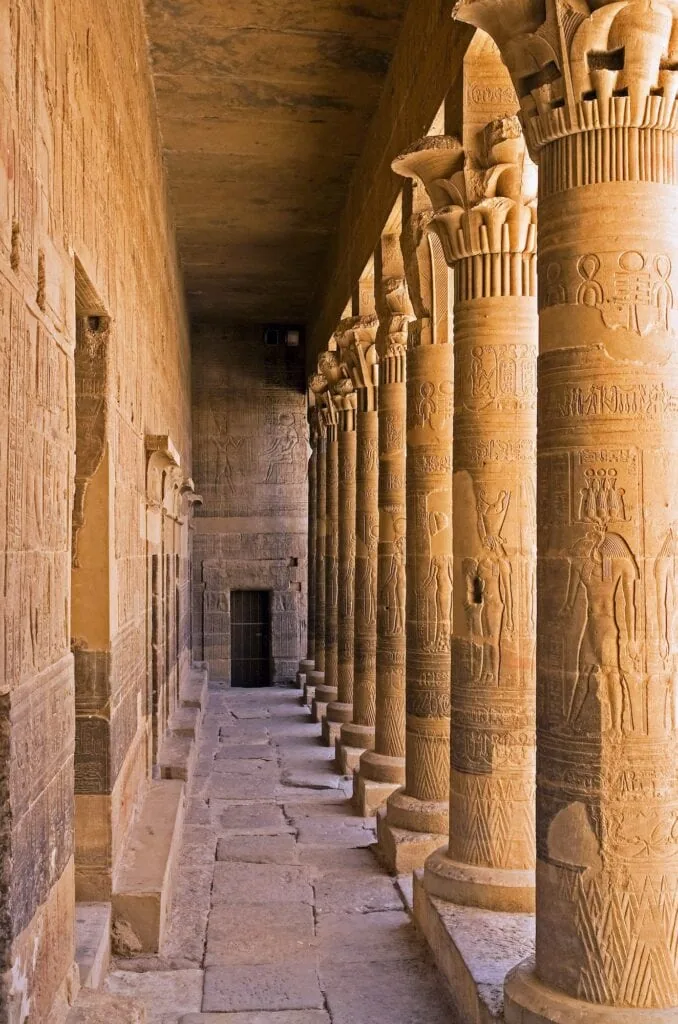
The inscription itself honors the sacred falcon, maintaining religious traditions even as the ancient world transformed around them.
Center of Ancient Pilgrimage
Devotees traveled from across the Mediterranean world to reach this holy island. The Isis cult attracted followers from Rome to Ethiopia, making Philae one of antiquity’s most international religious sites.
Pilgrims brought offerings of gold, incense, and precious stones, enriching the temple treasuries and funding continuous construction projects.
UNESCO’s Monumental Rescue Mission
The rising waters of Lake Nasser in the 1960s threatened to submerge this irreplaceable heritage forever.
Engineers faced an unprecedented challenge when the Aswan High Dam project began flooding Nubia’s ancient sites. Philae spent part of each year underwater, with waves gradually eroding decorative reliefs and weakening foundation stones.
UNESCO launched one of history’s most ambitious archaeological projects, dismantling the entire complex piece by numbered piece. Teams worked through flooding seasons, racing against time and rising waters to document every carved surface before removal.
The relocation to Agilkia Island required reshaping the new site to match Philae’s original contours, a process similar to the preservation efforts undertaken at Kalabsha Temple. Workers blasted away rock formations and built up low areas, creating an artificial landscape that would properly frame the ancient buildings.
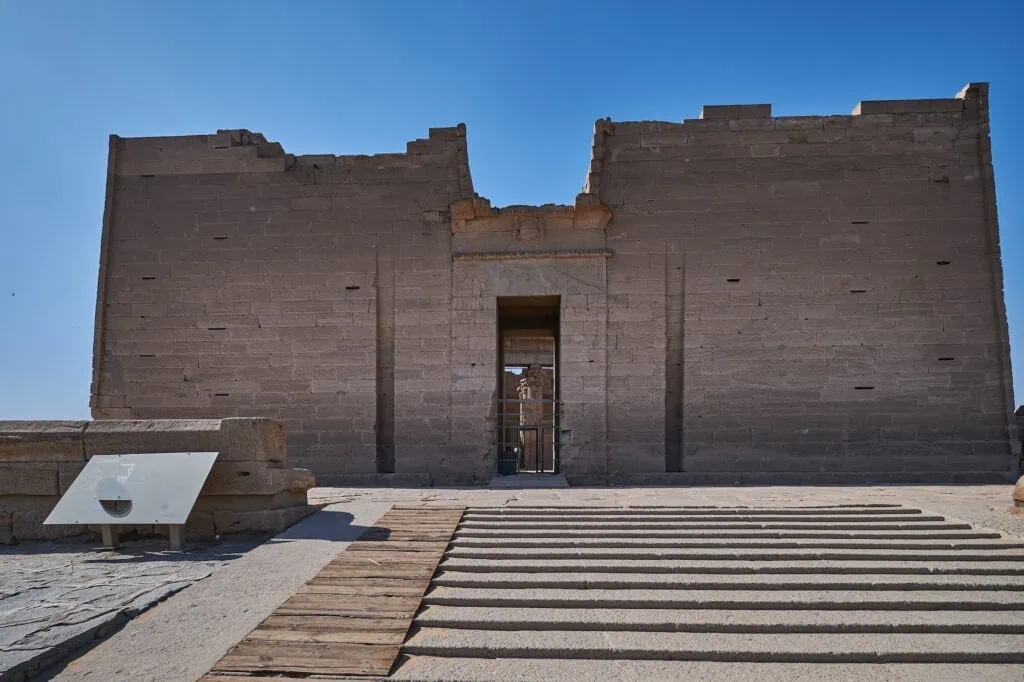
The project took nearly a decade and cost millions of dollars, but preserved these treasures for future generations. Modern laser scanning and 3D modeling help conservators monitor the relocated structures for any signs of settling or weathering. The rescue succeeded so completely that many visitors never realize they’re standing on a reconstructed island.
Architectural Marvels and Sacred Spaces
The Great Pylon and First Court
Approaching by boat reveals why ancient pilgrims felt such awe entering this sacred precinct. The First Pylon towers 60 feet above the water, its walls depicting Ptolemy XII conquering Egypt’s enemies under the watchful eyes of Isis and Horus.
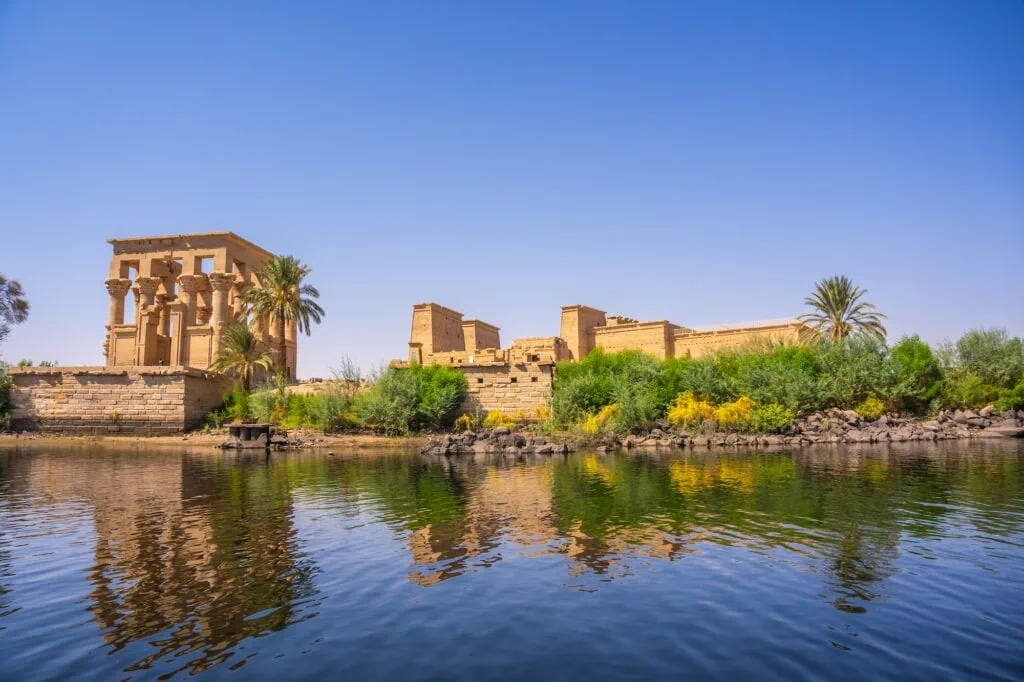
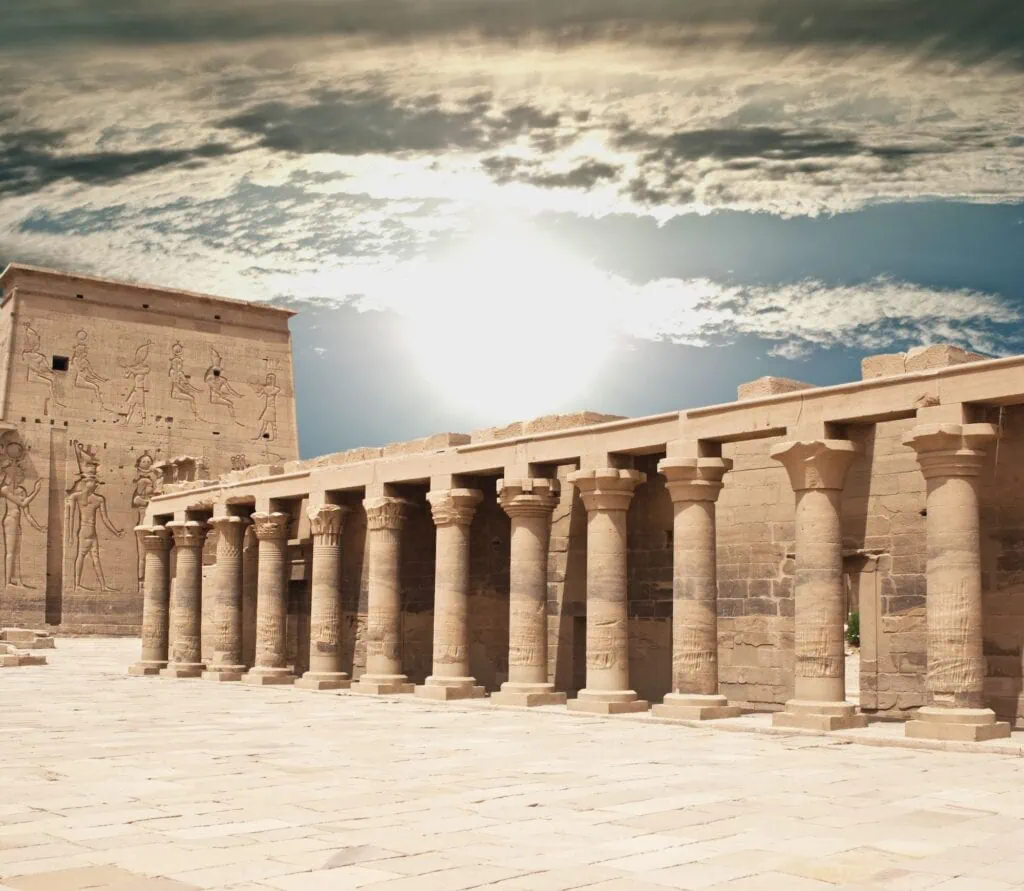
Massive wooden flagpoles once flew colorful banners from slots still visible in the stone surface. The forecourt beyond creates a sense of gathering and anticipation. Covered colonnades provided shade for pilgrims awaiting ceremonies, while carved reliefs told stories of divine protection and royal devotion. Side chambers housed temple archives and ceremonial equipment used during major festivals.
Birth House of Isis
The Mammisi celebrates Horus’s divine birth through some of Egypt’s most intimate religious art. Protective deities surround the birth scenes, including the god Bes whose unusual appearance was believed to ward off evil spirits. The building’s smaller scale creates an appropriately reverent atmosphere for these sacred mysteries.
The Inner Sanctuary
Only high priests could enter the holy of holies where Isis’s golden statue once received daily offerings of food, incense, and prayers. The granite naos still contains the foundation deposit placed during consecration ceremonies over 2,000 years ago.
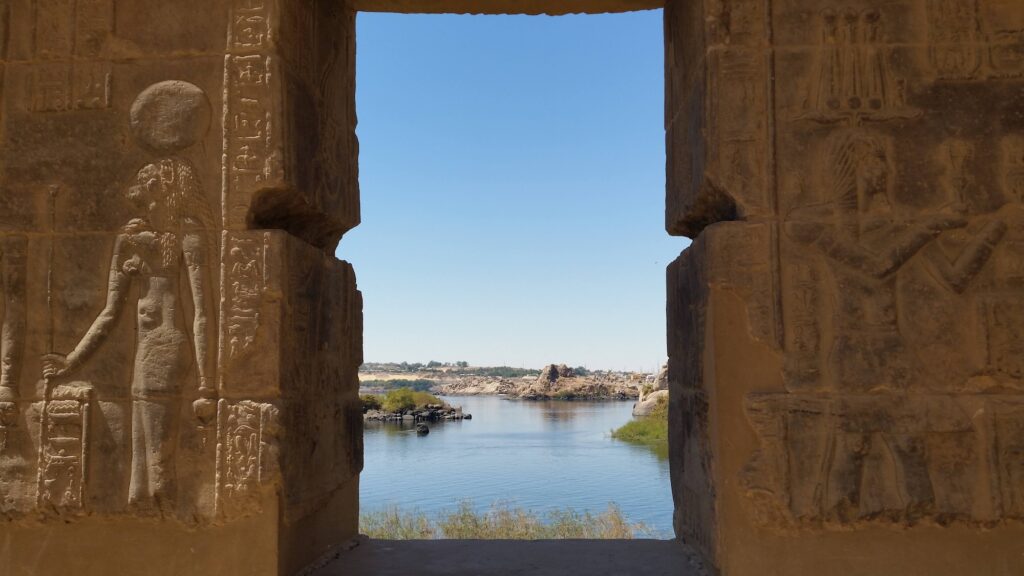
Window in the eastern wall
Columns and Capitals Throughout
Each column tells its own story through carefully carved capitals featuring lotus flowers, palm fronds, and composite designs blending multiple plant forms. The craftsmanship reveals individual artistic personalities working within strict religious conventions.
Some columns show subtle differences in proportions and details that help archaeologists understand construction sequences.
Religious Significance and Mythology
The Isis legend gave this temple its profound spiritual power throughout the ancient world. According to myth, Isis gathered the scattered pieces of her murdered husband Osiris, demonstrating the eternal triumph of love over death.
Her tears for Osiris were said to cause the Nile’s annual flood, connecting her worship directly to Egypt’s agricultural prosperity. Horus, their son, represented divine kingship restored through Isis’s protective power. Every pharaoh claimed to be Horus reborn, making Isis the symbolic mother of all Egyptian rulers. The temple ceremonies reinforced these connections through elaborate festivals celebrating royal legitimacy and divine protection.
The cult’s appeal extended far beyond Egypt’s borders because Isis offered personal salvation and protection to all believers regardless of social status. Roman soldiers, Greek merchants, and Nubian chieftains all sought her blessings for safe travels and prosperous endeavors. Mystery initiations promised secret knowledge about life after death, attracting educated elites throughout the Mediterranean world.
Visiting Philae Temple Today
Getting There
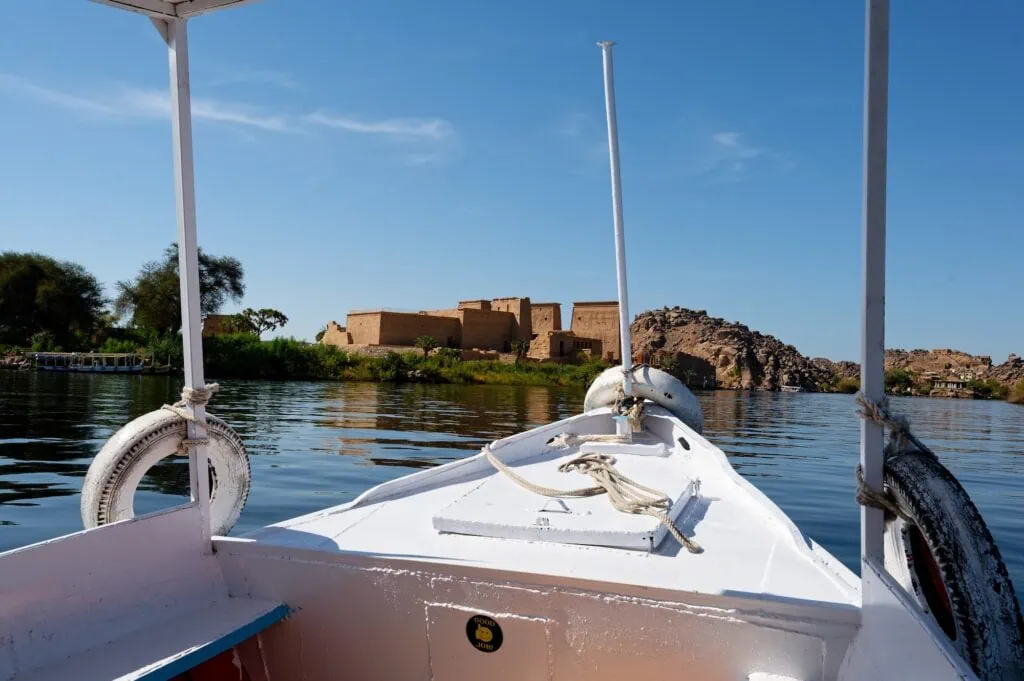
We arrange comfortable motorboat transfers from the Aswan marina, creating anticipation as the temple complex emerges from morning mist over the water. The journey takes approximately 15 minutes, allowing time to appreciate how ancient pilgrims must have felt approaching this sacred island.
Public boats also run throughout the day, though schedules vary seasonally. Private transfers offer more flexibility for photography and extended exploration time.
What to Expect During Your Visit
Philae Sound and Light Show transforms evening visits into magical experiences, with colored illumination highlighting architectural details invisible during daytime tours. Narration in multiple languages tells the Isis story while dramatic music echoes off ancient stones.
Walking paths connect all major structures, though uneven surfaces require careful footing in some areas. The island layout follows ancient processional routes that guided pilgrims through increasingly sacred spaces toward the inner sanctuary.
Photography and Exploration
Early morning light creates the most dramatic shadows for architectural photography. The western side offers excellent views of the complete temple complex reflected in the Nile’s calm waters.
Interior chambers contain the best-preserved reliefs, though lighting can be challenging without flash equipment. Many reliefs still retain traces of their original colors, particularly in protected areas that stayed dry during the flooding years. The quality of carving reaches exceptional levels in the birth house and inner sanctuary areas.
Planning Your Philae Adventure
Consider combining your temple visit with other places commonly visited around Aswan, such as the Unfinished Obelisk and the Nubian Museum, for a complete archaeological experience. Abu Simbel lies just a few hours south, making multi-day Nubian heritage tours particularly rewarding for serious history enthusiasts.
We customize temple visits based on your interests, whether you prefer detailed historical explanations, photography-focused tours, or quiet contemplation time in these sacred spaces. Our expert guides know which angles capture the best photos and can explain the complex religious symbolism found throughout the complex.

The temple complex requires 2-3 hours for thorough exploration, though the peaceful island setting encourages longer visits for reflection and appreciation. Sunset timing creates particularly beautiful lighting conditions for both photography and spiritual contemplation.
Sail Into The Magic Of Philae Temple
Set on a serene island in the Nile, Philae Temple offers a truly enchanting experience—where graceful architecture, rich mythology, and peaceful surroundings come together in perfect harmony. With EgyptToursPlus, we seamlessly include this iconic highlight in a private journey that connects Aswan’s beauty with Egypt’s most unforgettable cultural landmarks.
You choose your travel dates, your pace, and the experiences that shape your route. From Nile-side exploration to ancient wonders and refined comfort throughout, we tailor every detail around your preferences—ensuring a smooth, expertly planned, and deeply personal travel experience.
Frequently Asked Questions
The best time to visit Philae Temple is between 8:00 and 10:00 am, when temperatures are cooler, boat traffic is lighter, and photography conditions are strongest. Morning sunlight illuminates the temple’s eastern-facing reliefs and columns without the harsh glare common in Aswan after midday, especially from May through September when temperatures often exceed 38°C (100°F). Early visits also avoid the largest Nile cruise groups arriving later in the day. Book the first available boat transfer for the quietest experience.
Most visitors spend 2 to 3 hours at Philae Temple, including round-trip motorboat transfers from Philae Marina and time exploring the island complex thoroughly. The site contains multiple major structures including the Temple of Isis, Trajan’s Kiosk, Hadrian’s Gate, and smaller shrines spread across Agilkia Island. Travelers interested in hieroglyphs, photography, or the UNESCO relocation story often stay longer. Allow extra time during winter high season when boat queues and entrance lines can slow access.
Visitors can explore Philae Temple independently, but an expert guide adds important historical and religious context that is difficult to understand from signage alone. The temple complex contains layered Ptolemaic, Roman, and early Christian history spanning more than 600 years, with reliefs dedicated primarily to Isis, Osiris, and Horus. Egyptologist guides explain symbolism, unfinished carvings, and reused structures that many travelers overlook independently. Guided visits are especially valuable for understanding the UNESCO rescue project completed in the 1970s.
Visitors to Philae Temple should bring comfortable walking shoes, bottled water, sun protection, sunglasses, and a camera because most of the island is exposed to direct sunlight year-round. Temperatures in Aswan frequently exceed 35°C (95°F) during summer afternoons, and the reflective Nile water intensifies heat and glare. Lightweight clothing and a hat are strongly recommended, especially for midday tours. Flash photography may be restricted in certain interior chambers to protect surviving pigments and stone surfaces.
Philae Temple can be challenging for visitors with significant mobility limitations because Agilkia Island contains uneven ancient stone paving, scattered staircases, and boat boarding areas without full accessibility infrastructure. Some pathways between major monuments are relatively flat, but wheelchairs and walkers may still encounter difficulty navigating narrow passages and worn surfaces. Boat access from the marina also requires careful stepping during embarkation and disembarkation. Visitors needing assistance should arrange private transportation and support in advance for smoother access.
Philae Temple differs from many Egyptian temples because of its dramatic island setting, exceptional preservation, and late construction during the Ptolemaic and Roman periods. While temples such as Karnak emphasize monumental scale, Philae offers a more elegant and intimate atmosphere centered on the cult of Isis, one of the ancient Mediterranean world’s most influential goddesses. Many carvings retain unusually sharp detail because the site remained protected by Nile waters for centuries. The combination of architecture, scenery, and mythology makes Philae especially memorable.
The UNESCO rescue mission at Philae Temple became one of the world’s most important archaeological preservation projects, proving that entire ancient monuments could be dismantled and reconstructed successfully. Between 1972 and 1980, engineers and archaeologists moved the complex stone by stone from flooded Philae Island to higher ground on Agilkia Island after construction of the Aswan High Dam. The project followed similar rescue operations at Abu Simbel and helped establish international standards still used in heritage conservation worldwide today.
Agilkia Island itself has very limited visitor facilities, so travelers should use restrooms and purchase food or drinks before boarding boats at Philae Marina near the Aswan High Dam. Small souvenir stalls and refreshment vendors sometimes operate near the dock area, but there are no full restaurants within the archaeological complex itself. Because visits involve boat transfers and outdoor walking in strong sun, carrying water is essential year-round. Travelers visiting midday should prepare carefully for the heat and limited shade.
Yes, many travelers combine Philae Temple and Abu Simbel in a single day, although the schedule requires a very early departure and several hours of road travel. Abu Simbel lies approximately 280 kilometers south of Aswan, while Philae Temple is located near the Aswan High Dam just 20 minutes from central Aswan. Most combined itineraries begin before dawn and return in the evening after both UNESCO World Heritage sites are explored. Private tours make timing smoother and reduce logistical stress significantly.
Philae Temple is unique because it was one of the final active centers of ancient Egyptian religion and later became the focus of a major UNESCO international rescue campaign. Worship of Isis continued there into the 6th century CE, centuries after many other pharaonic temples had closed under Roman rule. The monument also survived relocation from its original island after flooding caused by the Aswan High Dam. Few ancient sites combine religious continuity, architectural beauty, and modern preservation history so completely.
During the UNESCO rescue mission, every stone block at Philae Temple was individually numbered, photographed, mapped, and documented before dismantling began. Engineers and archaeologists created detailed reconstruction diagrams so the monuments could be reassembled accurately on Agilkia Island approximately 500 meters away from the original site. Thousands of blocks weighing several tons each were moved carefully between 1972 and 1980. This meticulous recording process became a global model for future archaeological relocation and conservation projects.
Yes, the Philae Temple Sound and Light Show operates throughout the year with seasonal timetable adjustments based on tourism demand and sunset hours. Evening performances illuminate the Temple of Isis with multilingual narration available in languages including English, French, Spanish, Italian, and Arabic. Most shows last approximately 45 to 60 minutes including boat transfers from the marina. Winter evenings between October and March are especially popular because of cooler temperatures and comfortable outdoor conditions. Advance booking is recommended during peak travel months.
Ancient Wonders of Aswan, Modern Comfort
Sail the Nile Through Aswan Like a Pharaoh
Design Your Custom Tour
Explore Egypt your way by selecting only the attractions you want to visit