


Journey through history with comfort and confidence
Egypt and Turkey Tours
Our Egypt and Turkey Tours bring you from the temples of the pharaohs to the vibrant streets of Istanbul in an epic, tailor-made adventure. With 70+ years of expertise, private guides, and your own personal driver, every step is arranged for comfort and confidence.
Egypt and Turkey Tours: Two of the Mediterranean’s Great Civilisations on One Trip
How Cairo, the Nile, Istanbul, and Cappadocia fit into a single 12–18 day itinerary across the eastern Mediterranean’s ancient capitals.
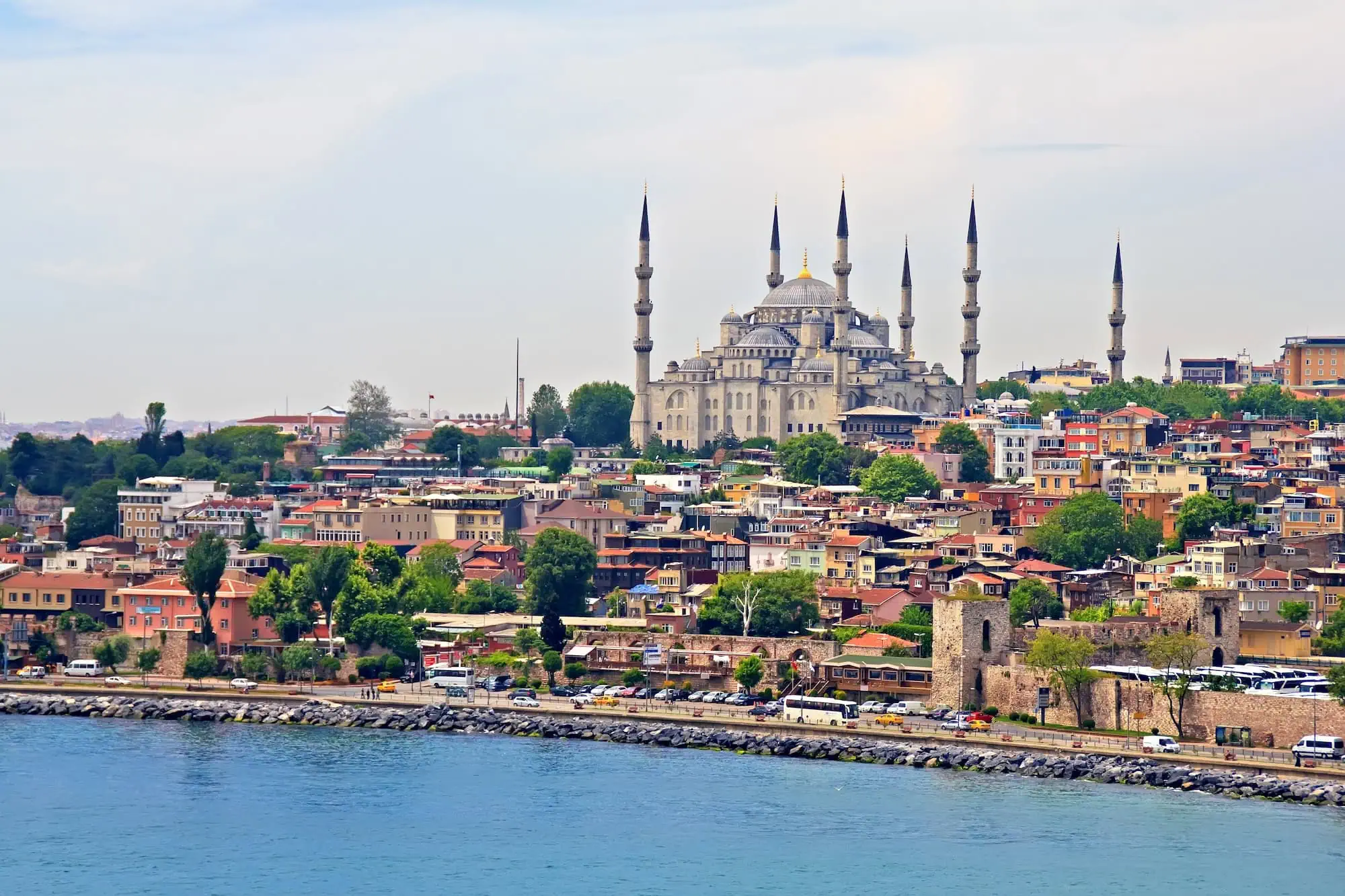
Two great old cities, two dawn balloon flights, one Nile cruise. Most Egypt and Turkey trips are built around four anchors: Cairo and the Pyramids, the Nile between Luxor and Aswan, Istanbul on the Bosphorus, and Cappadocia’s fairy chimneys, across 12 to 18 days.
The hidden argument for the pairing is that the two countries share more than they look like they do. Pharaonic, Hellenistic, Roman, Byzantine, Islamic — the same civilisational layers run through both, in different proportions. Hagia Sophia in Istanbul and the Hanging Church in Cairo are reading the same Byzantine script. Topkapi Palace and the Citadel of Saladin are reading the same imperial-Islamic one.
The trip is logistically simple. Direct daily flights between Cairo and Istanbul run around 2h 50m on Turkish Airlines and EgyptAir, with a one-hour time difference. The planning is the dense part — too many cities, too many empires, too many decisions about what to skip. We’ve been running Egypt journeys since 1955, with TripAdvisor Travelers’ Choice 2020 through 2026, and we run Egypt and Turkey trips end-to-end through one Travel Concierge from first email to return home.
Table of Contents
Why Egypt and Turkey Pair So Well
Three reasons the pairing works as a single trip rather than two stitched-together vacations.
A short direct flight, one-hour time difference
Cairo–Istanbul runs around 2h 50m, scheduled multiple times daily on Turkish Airlines and EgyptAir. No European hub layover, no overnight transit. The two countries are also only one hour apart in time zone, so jet lag stays minimal between legs. The inter-country flight slots cleanly into the middle of a 12–18 day itinerary as a single travel day.
Compatible travel windows, with one shared sweet spot
Egypt runs best October–April. Turkey runs best April–October. The pairings overlap meaningfully in two windows: April–early June and late September–October.
Outside those, you accept a tradeoff. Winter trips give you Egypt at its best and Istanbul cold and quiet, with Cappadocia under snow and balloon flights more often grounded by weather. Summer trips give you Turkey’s coast at its best and Egypt punishing — we adjust the Egypt pace if you go that way.
Two surviving great cities of the old Mediterranean
This is the deeper case for the pairing. Cairo and Istanbul are the two cities where Pharaonic, Hellenistic, Roman, Byzantine, and Islamic layers are most visible side by side, in different proportions. The full historical case is laid out in the dedicated section below.
How We Build an Egypt + Turkey Trip
The standard combined itinerary runs 12 to 18 days. Anything under 11 cuts at least one country meaningfully short.
The day split
For a 14-day trip:
- 8 days in Egypt (Cairo, fly to Aswan or Luxor, 4-day Nile cruise, optionally Abu Simbel)
- 5 days in Turkey (3 days Istanbul + 2 days Cappadocia is the standard split)
- 1 inter-country travel day
For 12 days, we typically cut Abu Simbel and one Cairo day. For 18 days, we add Abu Simbel in Egypt and Ephesus or Pamukkale in Turkey.
Order of travel
Either direction works. Turkey-first eases you into the trip — Istanbul’s pace is closer to a European city break, gentler than Cairo as an arrival shock for many travellers, and Egypt then becomes the climactic finale.
Egypt-first works if you’re tying Egypt to a Jordan or Saudi extension, or if you want Istanbul as the closing leg of a longer Mediterranean trip. Cairo arrival is also the stronger long-haul hub for many North American and Latin American return connections.
Cruise or no cruise
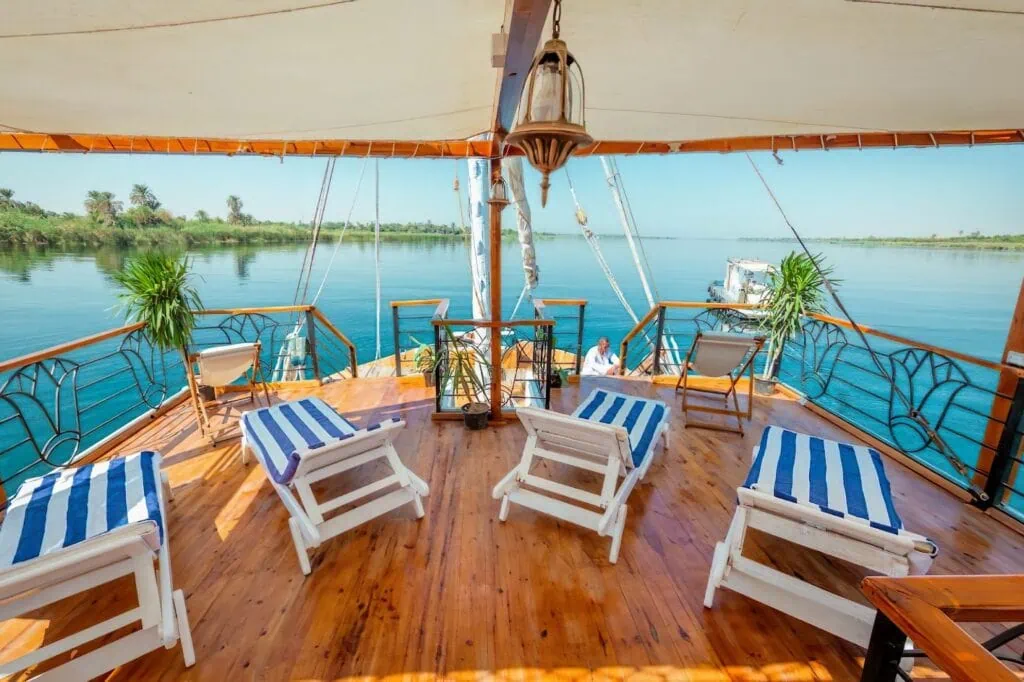
We strongly recommend keeping the Nile cruise in the Egypt segment. Without it you can still see Cairo and Luxor as land-based touring, but you lose Edfu, Kom Ombo, Philae, and the slow-paced river days that are most of what people remember from Egypt.
The standard cruise inclusion is a 4-day / 3-night Luxor–Aswan sailing on a Luxury Nile Cruise vessel. Longer 5-, 6-, 7-, and 8-night cruises are available. A 3- to 5-night Dahabiya (8–16 guests, traditional twin-mast sailing vessel) is the alternative if you prefer a smaller, quieter ship.
Where Three Empires Met: The Egypt–Turkey Cultural Bridge
The standard tourist understanding of Egypt and Turkey is roughly: pyramids in one country, Hagia Sophia in the other, two unrelated trips. That picture is missing the connecting thread.
Three civilisational layers run through both countries, in different proportions. The trip becomes interesting when you start reading them in parallel.
The Greek and Hellenistic layer
Alexander the Great founded Alexandria in Egypt in 331 BC and a network of Hellenistic cities across Anatolia. His successors split the empire — the Ptolemies got Egypt and ruled it as Greek-speaking kings for nearly 300 years (305–30 BC, ending with Cleopatra VII); the Seleucids and others ruled Anatolia until Rome absorbed it.
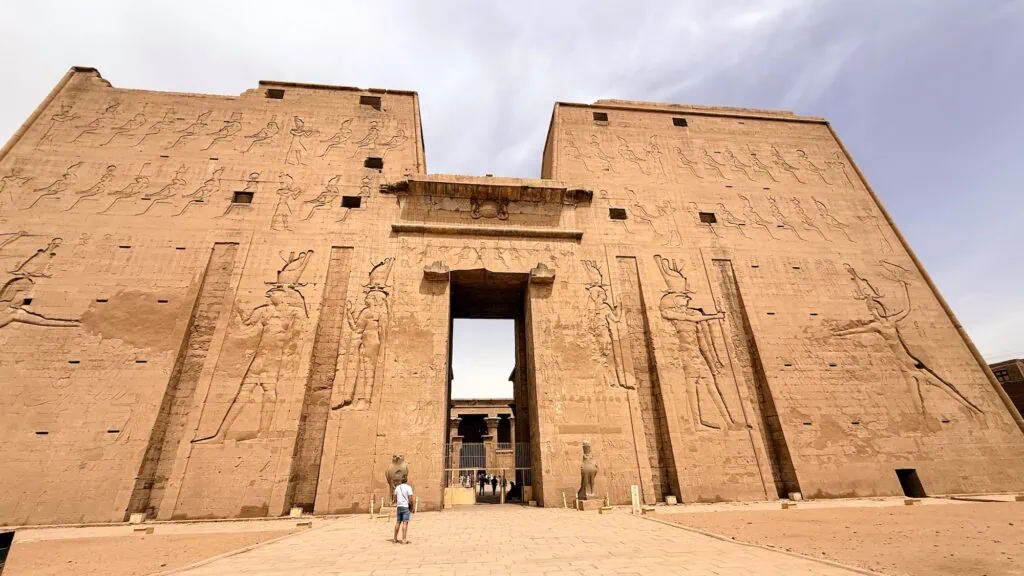
The Egyptian Ptolemaic temples at Edfu, Kom Ombo, Dendera, and Philae are Greek architecture grafted onto Egyptian temple plans. In Turkey, the Hellenistic legacy survives most legibly at Ephesus and Pergamon.
The Roman and Byzantine layer
Egypt became a Roman province in 30 BC and a Byzantine province from 395 AD until the Arab conquest in 641. Constantinople (modern Istanbul) was capital of the Eastern Roman / Byzantine Empire from 330 AD to 1453, the longest-running imperial capital in European history.
Hagia Sophia, built in 537 AD under Justinian, is the surviving monumental statement of Byzantine Christianity. Coptic Cairo, with the Hanging Church (Al-Muallaqa), preserves the Egyptian-Christian half of the same Byzantine world.
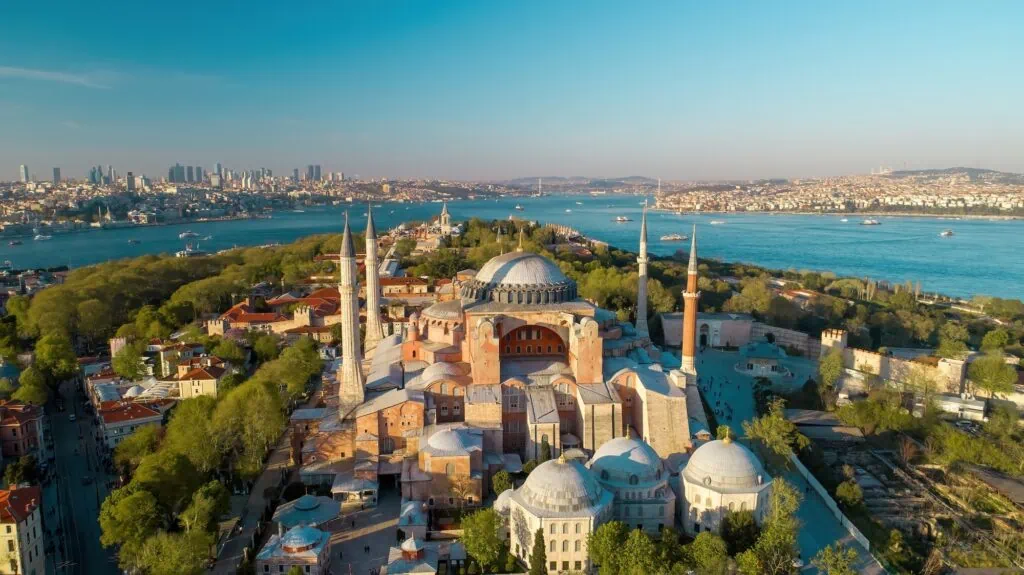
The Islamic layer
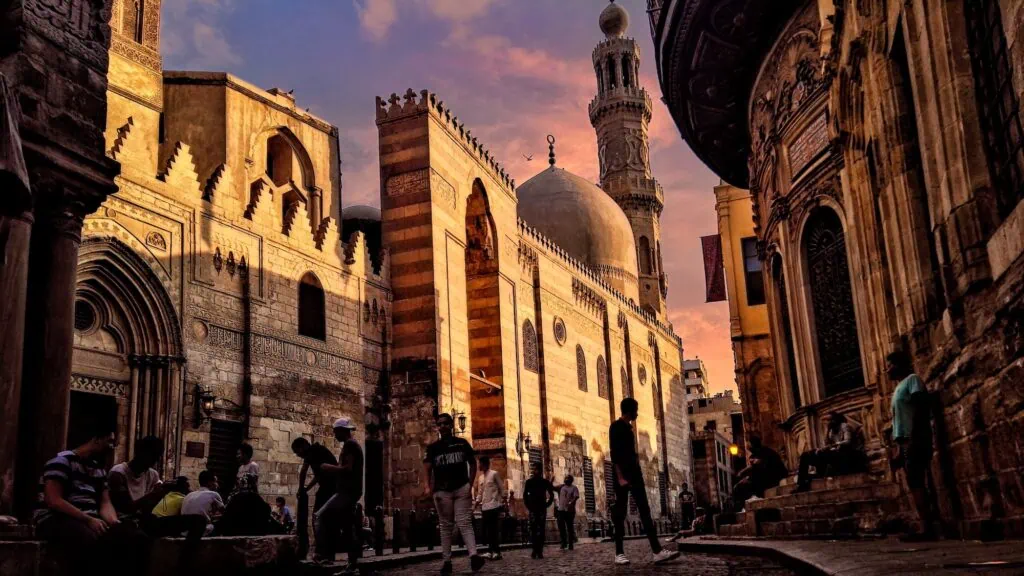
Cairo became the capital of the Fatimid Caliphate in 969 AD, and over the following six centuries the city accumulated the densest concentration of medieval Islamic monuments anywhere in the world. The UNESCO-listed Historic Cairo includes the Citadel of Saladin, the Mosque of Muhammad Ali, Khan El Khalili (founded 1382), and dozens of mosques and madrasas.
Constantinople became Istanbul in 1453 when the Ottomans took the city, and the Ottoman dynasty ruled both Turkey and Egypt from there until the early 20th century. Topkapi Palace, the Blue Mosque, and the Grand Bazaar are the headline Ottoman monuments. The Mamluk-era Citadel, Muhammad Ali Mosque and Khan El Khalili in Cairo are their pre-Ottoman Egyptian equivalents.
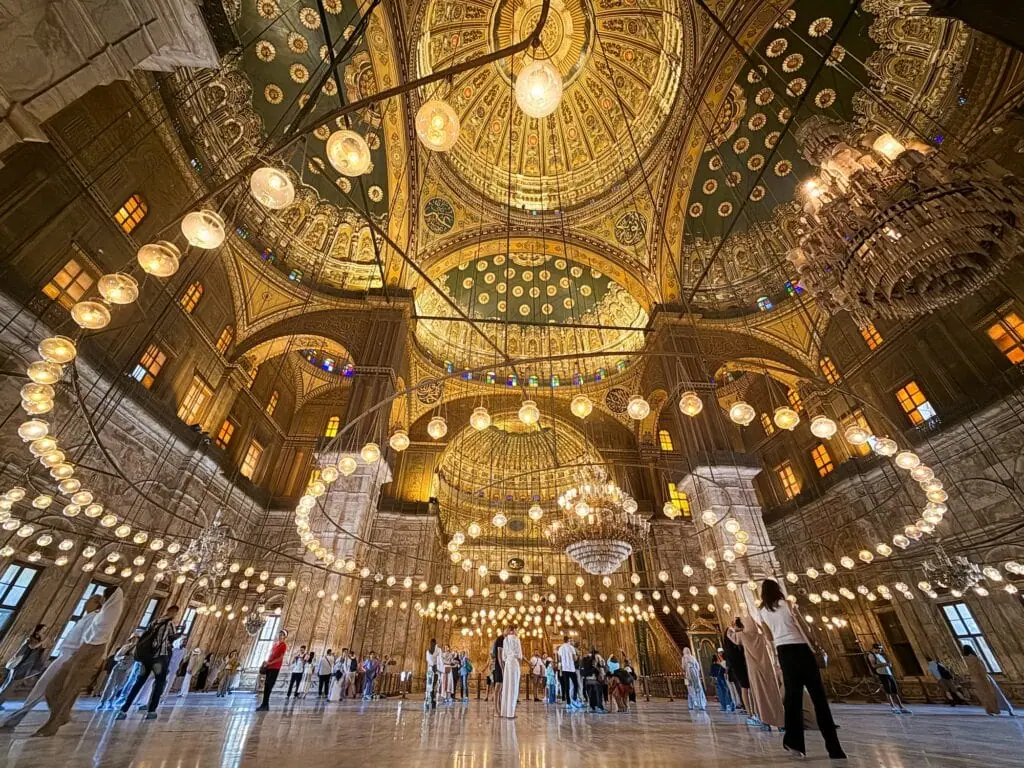
What this looks like on the trip
The architectural conversation between the two countries is the trip’s deeper argument. Hagia Sophia and the Hanging Church are reading the same Byzantine-Christian liturgy. Topkapi and the Citadel of Saladin are reading the same imperial-Islamic governance. The Hellenistic temples on the Nile and at Ephesus are reading the same Greek architectural vocabulary, applied to different gods.
A bonus: two of the world’s great balloon-flight destinations
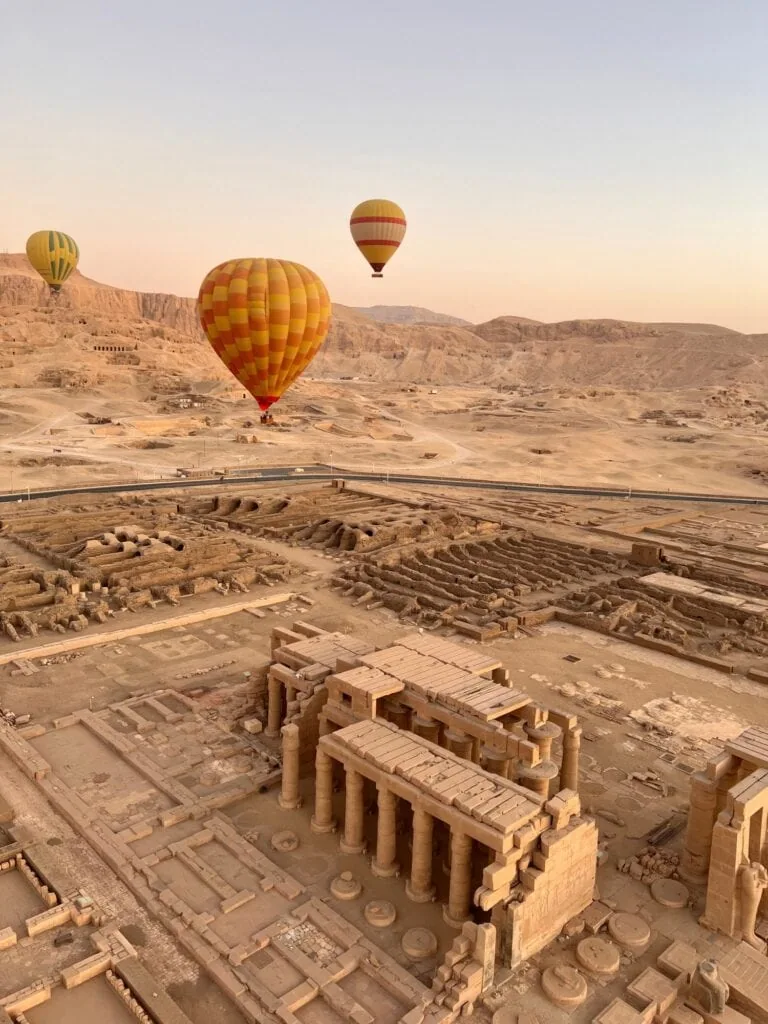
Cappadocia and Luxor are two of the world’s most established hot-air-balloon destinations, both running large fleets of dawn flights over remarkable landscapes — fairy chimneys in Cappadocia, the Theban necropolis in Luxor. Travellers doing both countries often book balloon flights in both, which is an experience pairing that exists almost nowhere else.

What Egypt Gives You
The Egypt segment anchors on three regions: Cairo and the Pyramids, the Nile valley, Luxor, Aswan and Abu Simbel.
Cairo and the Pyramids
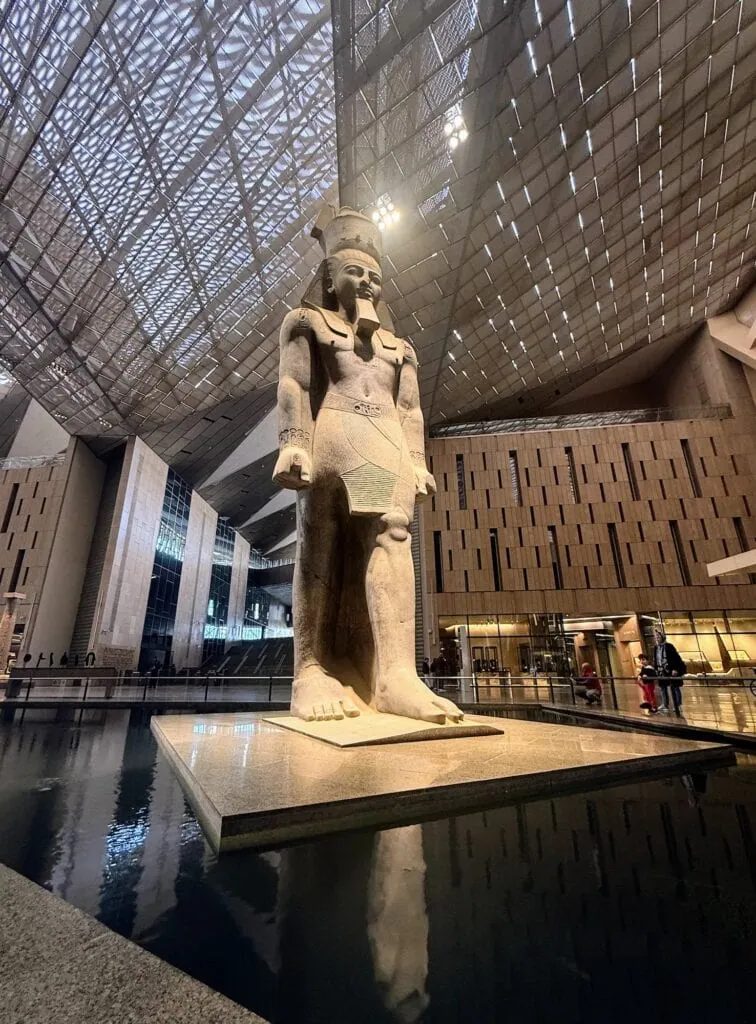
The Grand Egyptian Museum (GEM) opened fully in 2025 and is the primary museum stop. The full Tutankhamun collection (5,000+ items) is displayed together for the first time in history.
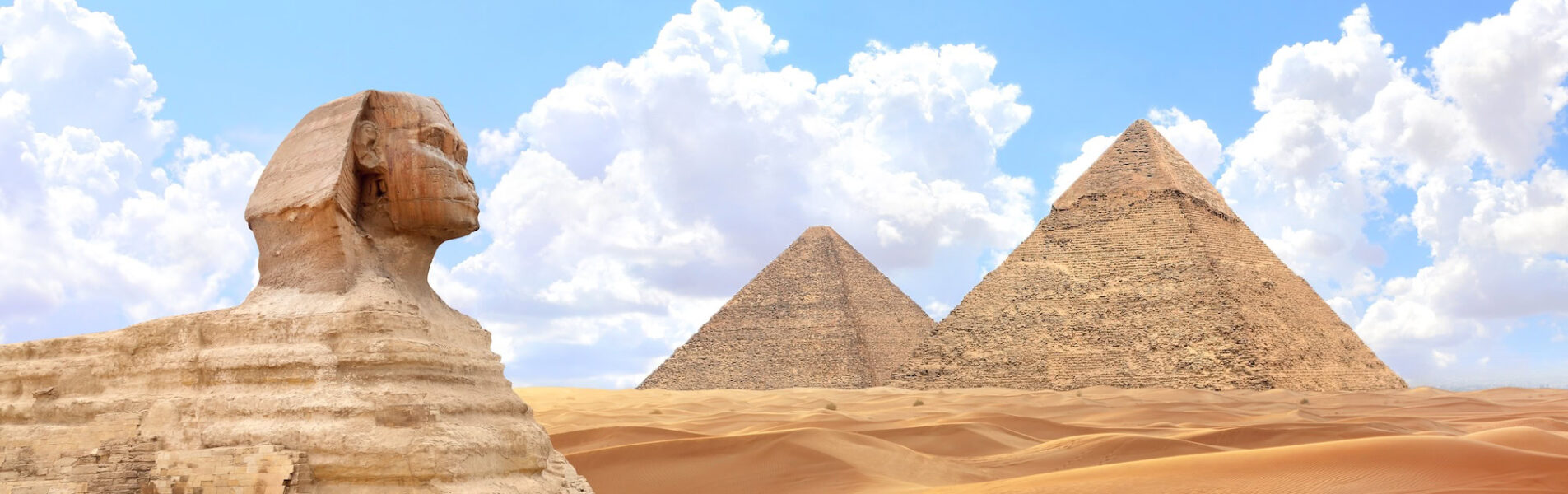
The Pyramids of Giza and the Sphinx are a short drive away on the same plateau. The older Step Pyramid at Saqqara and the Bent and Red Pyramids at Dahshur fold into a single day-trip extension.
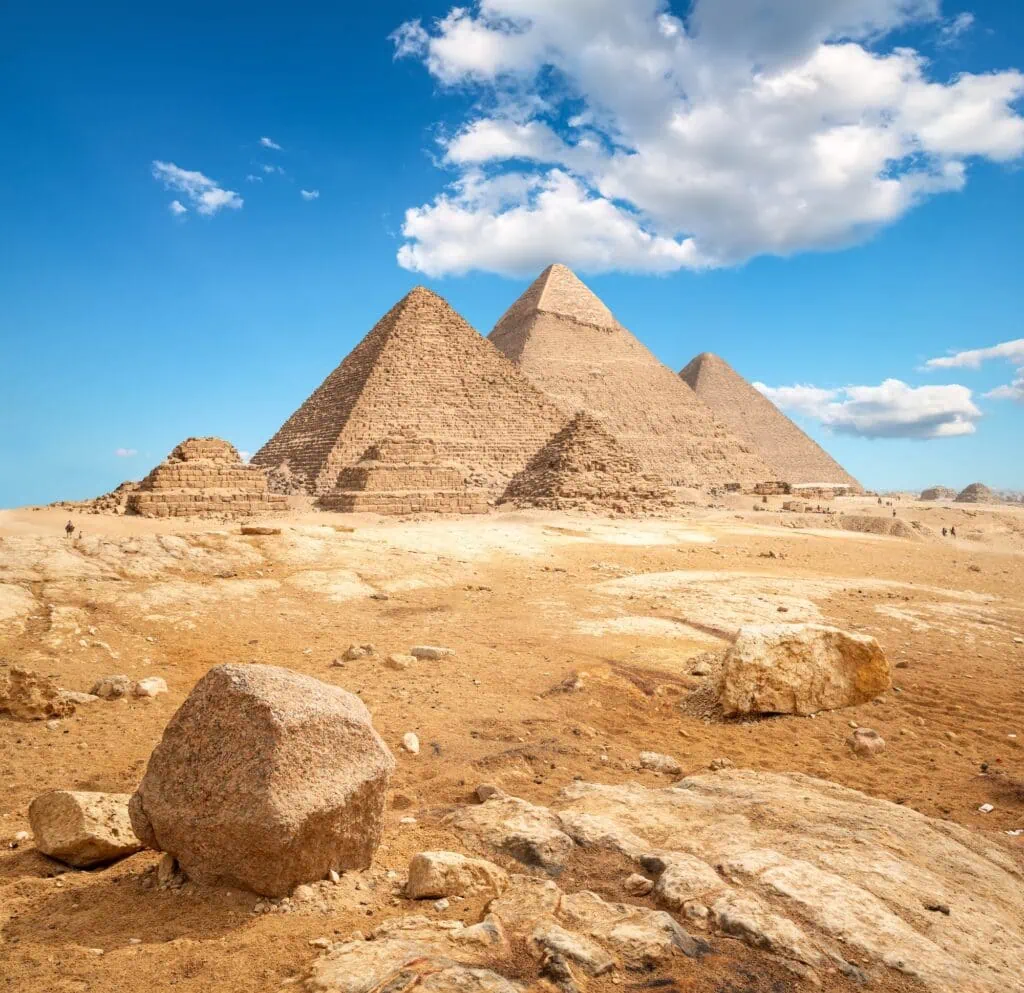
In medieval Cairo, the standard stops are Khan el-Khalili (founded 1382), Coptic Cairo with the Hanging Church (Al-Muallaqa), and the Citadel of Saladin with the Mosque of Muhammad Ali. These are the Egyptian half of the cross-country empire conversation.
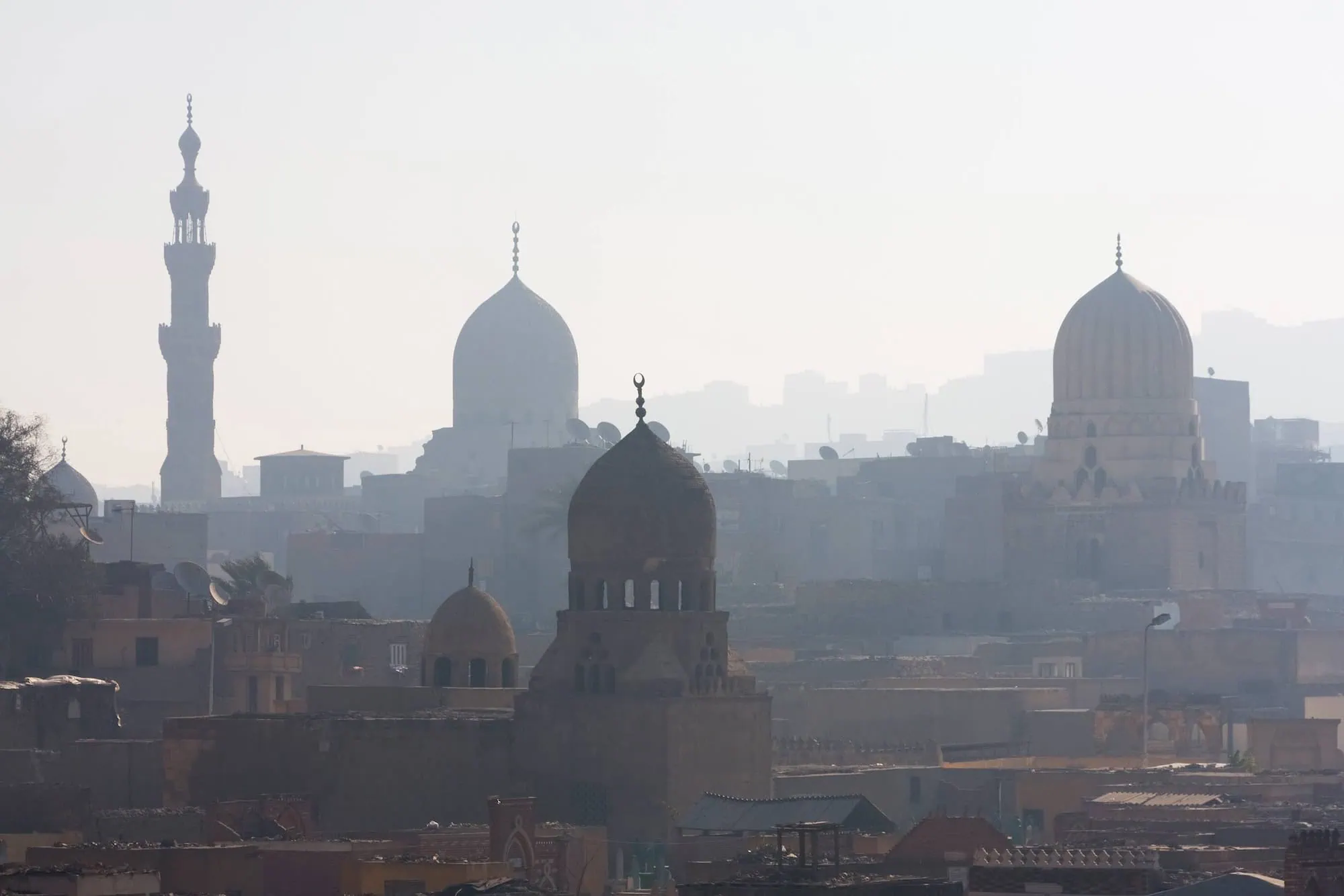
Luxor (East Bank and West Bank)
The Karnak temple complex on the East Bank includes the Hypostyle Hall with its 134 sandstone columns and the 2.7 km Avenue of Sphinxes (over 1,000 sphinxes line the route between Karnak and Luxor Temple).
On the West Bank, Hatshepsut’s Mortuary Temple at Deir el-Bahari and the Valley of the Kings tombs are the headline visits.
Luxor is also Egypt’s hot-air-balloon capital. Dawn flights launch from the West Bank and drift over the Theban necropolis — the natural pairing with Cappadocia for travellers booking both balloon experiences.
Aswan and Abu Simbel
The Philae Temple complex (relocated to Agilkia Island in the 1970s after the Aswan High Dam was built) is the primary Ptolemaic-era stop in Aswan. The Greek architectural details visible at Philae are the Egyptian half of the Hellenistic conversation that Turkey continues at Ephesus.
Abu Simbel, Ramses II’s relocated temple complex on Lake Nasser, is the headline optional add-on. We offer three ways to do it:
- 45-minute flight from Aswan and back (1 added day)
- Small-group road convoy from Aswan, 3 hours each way, pre-dawn departure (1 added day, the only Abu Simbel option that is not private)
- 3- to 4-night Lake Nasser cruise from Aswan, taking in relocated Nubian temples along the way (3–4 added days)
Land-based touring in Cairo, Luxor, and Aswan is fully private throughout: just your party plus your Egyptologist guide and personal driver.
What Turkey Gives You
The Turkey segment anchors on two essential places: Istanbul and Cappadocia. Three optional add-ons (Ephesus, Pamukkale, the Aegean coast) extend the trip.
Istanbul
A 3- to 4-day stop. The core sites cluster in the Sultanahmet quarter, walkable in two days: Hagia Sophia (Byzantine, 537 AD), the Blue Mosque (Ottoman, 1616), Topkapi Palace (Ottoman, 15th–19th century, with its Imperial Treasury and Harem), the Basilica Cistern (Byzantine, 6th century), and the Grand Bazaar (founded 1455, one of the oldest covered markets in the world).
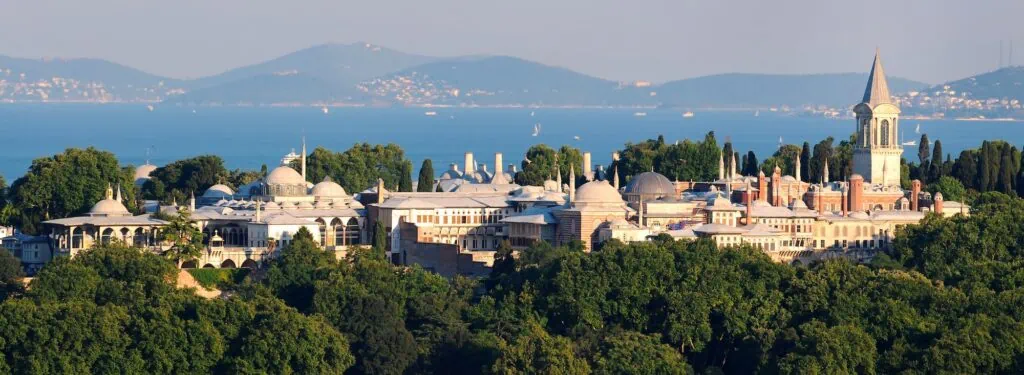
Beyond Sultanahmet, a Bosphorus cruise (1.5 to 4 hours) is the essential half-day. It gives you both the Asian and European sides of the city in one go, with the Ottoman waterside mansions (yalı) along the strait. The Galata Tower, the Spice Bazaar, and the Chora Church (Byzantine mosaics) fill out the third or fourth day.
Cappadocia
A 2- to 3-day stop. The hot-air-balloon flight at dawn over the fairy chimneys of Göreme is the headline experience and the reason most travellers come. Flights launch year-round but cancel more often in winter due to wind and weather.
On the ground, the centrepiece is the Göreme Open-Air Museum, a UNESCO site of rock-cut Byzantine churches with surviving frescoes from the 10th–12th centuries. The underground cities at Derinkuyu and Kaymaklı (eight to ten levels deep, used as refuge by early Christians) and the Ihlara Valley hike round out the standard programme.
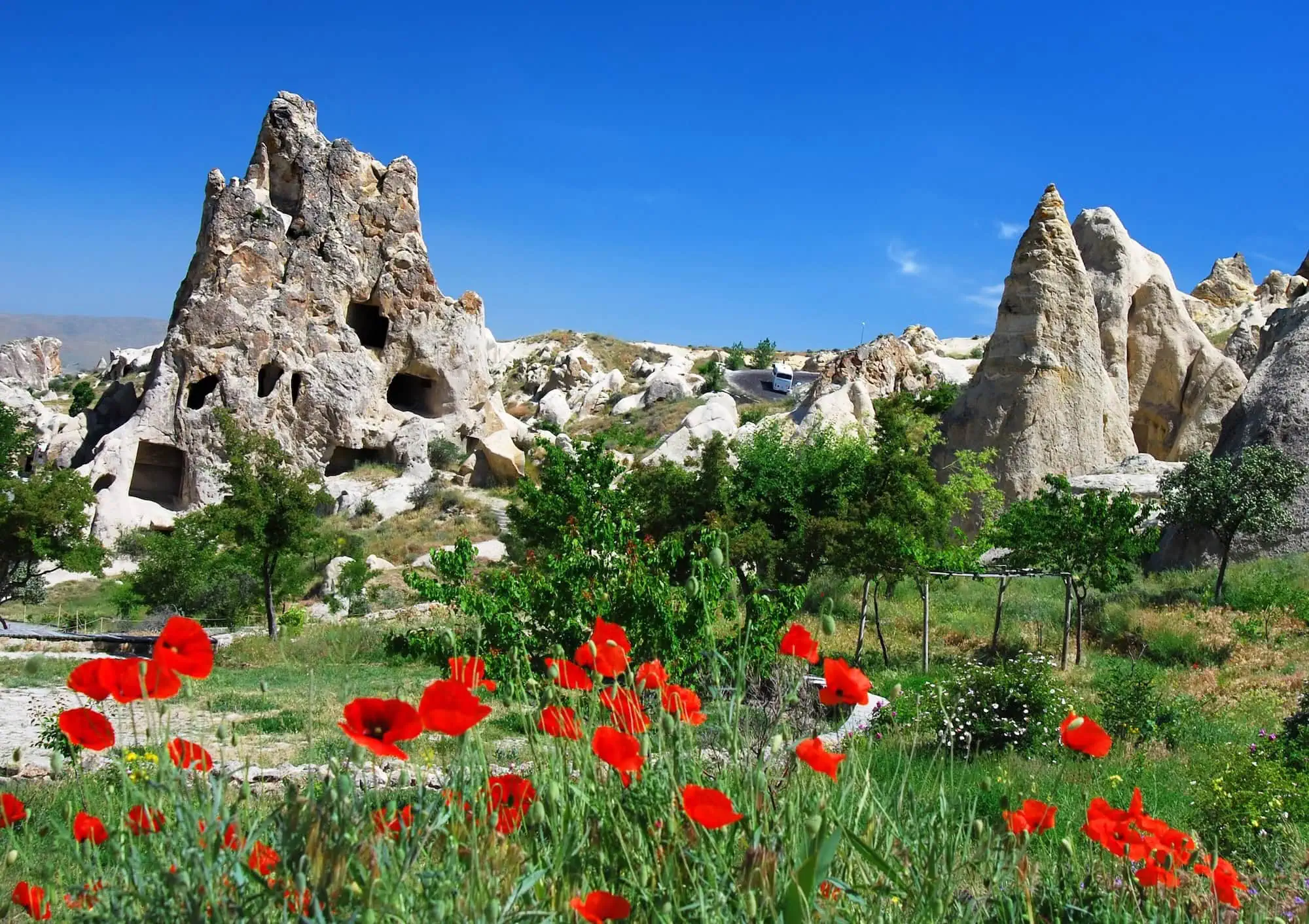
Most travellers stay in cave hotels carved directly into the volcanic rock — the signature Cappadocia accommodation experience.
Optional add-ons: Ephesus, Pamukkale, the Aegean coast
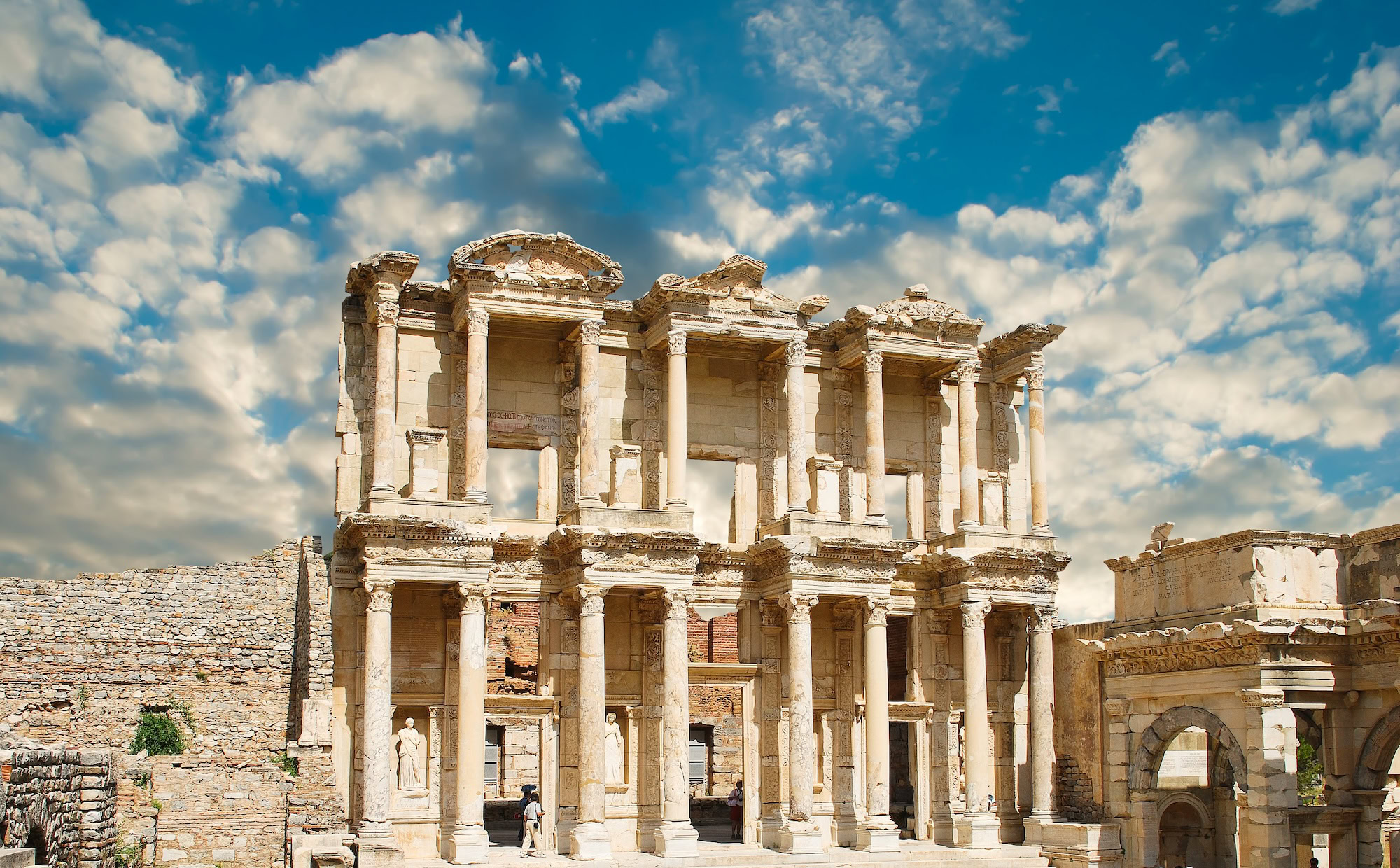
Ephesus (1–2 days, flight from Istanbul to Izmir, then transfer): one of the best-preserved Roman cities in the Mediterranean, with the Library of Celsus, the Great Theatre, and the surviving foundations of the Temple of Artemis (one of the Seven Wonders of the Ancient World).
Pamukkale (1 day): white travertine terraces formed by mineral springs, paired with the Hellenistic-Roman ruins of Hierapolis directly above.
Antalya / Turkish Riviera (2–3 days): Mediterranean beach time, with Greco-Roman sites at Aspendos, Side, and Perge nearby.
All Turkey land-based touring is fully private throughout: your party, your guide, your driver.
Hotels Across Both Countries
Each tour itinerary on the site lists the specific hotels included in that package. Those are our recommended starting points, picked for location, comfort, and consistency of service. Anything below is alternatives or upgrades you can request when you’re tuning the trip with your Travel Concierge.
In Egypt
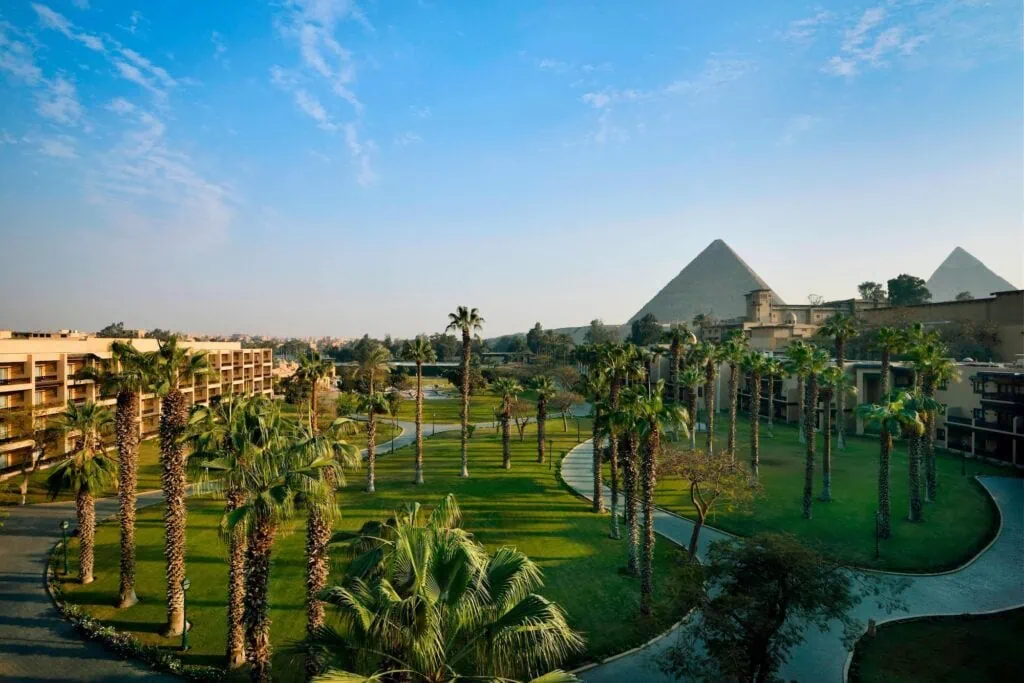
The historic anchor properties are worth knowing about even if you end up choosing something else: Marriott Mena House in Giza (pyramid views from the room balcony), Sofitel Winter Palace in Luxor (late-19th-century landmark, walking distance to Luxor Temple), and Sofitel Legend Old Cataract in Aswan (colonial-era property overlooking the Nile and Elephantine Island; this is the hotel where Agatha Christie stayed and which is widely associated with the inspiration for Death on the Nile). For modern Cairo luxury, Four Seasons-tier downtown and Nile-side hotels are the alternative.
In Istanbul
You choose between three categories. Top-tier international five-star hotels along the Bosphorus are the most-requested category, with views over the strait and easy boat access. Ottoman-era heritage hotels in restored historic buildings near Sultanahmet are atmospheric, smaller, and within walking distance of the major sites. Modern boutique hotels in Beyoğlu sit on the contemporary side of the city, near the Galata Tower.
In Cappadocia
The dominant category is cave hotels — rooms and suites carved directly into the volcanic rock. Options range from upper-luxury (private terraces with balloon views, fireplaces, hammams) to mid-range cave guesthouses with the same architectural character at a lower price point. Almost everyone stays in a cave hotel; a small number of conventional resorts exist outside the heritage core but miss the point.
For Ephesus or Pamukkale extensions
International five-star resorts dominate. Your Travel Concierge will recommend the specific properties that match your category, dates, and budget. Any can be swapped during the planning rounds.
Visas, Practicalities, and Money
Visas
Most travelers, including U.S., U.K., E.U., Canadian, Australian, and many Latin American nationalities, can obtain a 30-day Egypt tourist visa on arrival at Cairo Airport for $25 USD, or apply for an e-visa online before departure.
Turkey is now visa-free for many of the same nationalities. As of 2024–2025, U.S., U.K., Spanish, Portuguese, Polish, Belgian, Dutch, and most other E.U. passport holders are exempt from visas for tourist stays up to 90 days. Australian, Canadian, and some other nationalities still require an eVisa (around $50 USD, applied online, processed within minutes to hours). Brazilian and Argentinian passport holders are visa-free for 90 days. Visa rules change periodically — your Travel Concierge confirms the current rule for your specific passport when planning the trip.
Guides and language
Whatever your language, you’ll be matched with an Egyptologist guide who speaks it — English, Italian, Spanish, Portuguese, German, French, and others available on request. The same applies on the Turkey side: your guides are local, multilingual, and fluent in the language your trip is run in.
Cruise excursions
A note on cruise shore excursions, since this is where some operators over-promise. On Luxury Nile Cruises, shore excursions run as small group experiences (around 12 guests per Egyptologist), shared with fellow ship passengers. Fully private excursions can be arranged on request at additional cost. On Dahabiyas, the boat itself is small enough that excursions feel essentially private.
All your land-based touring in Cairo, Luxor, Aswan, Istanbul, and Cappadocia is fully private throughout: just your party plus your guide and driver.
Money and currency
Egypt uses the Egyptian pound (EGP) and Turkey the Turkish lira (TRY). The Turkish lira has been volatile in recent years; we quote and confirm Turkey-side pricing in U.S. dollars or euros to insulate your trip from currency swings.
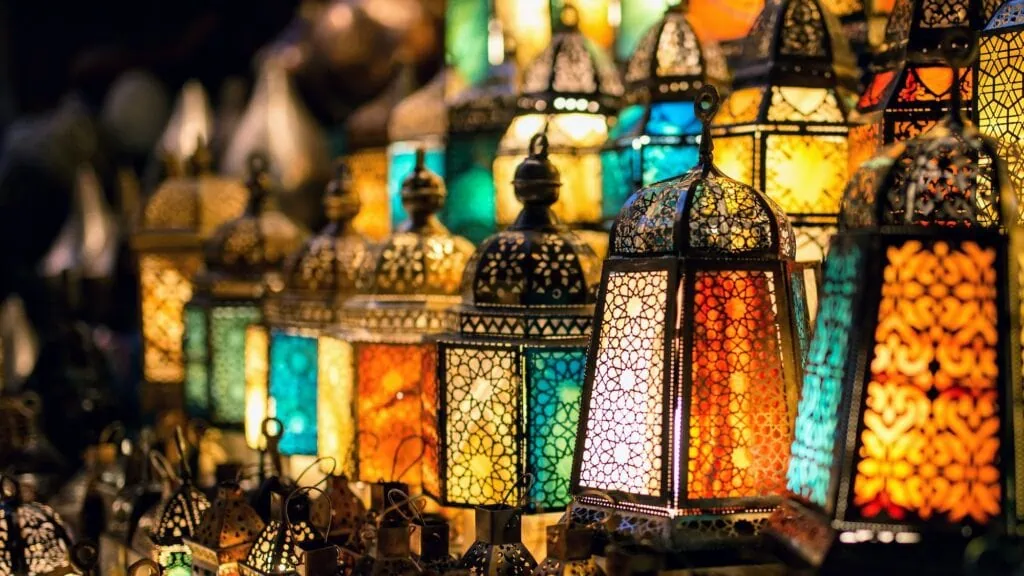
ATMs in Cairo, Luxor, Istanbul, and Cappadocia accept international Visa and Mastercard. Cards are widely accepted in Turkish hotels, restaurants, and shops; Egypt is more cash-led for small purchases, tips, and souk transactions. The Grand Bazaar in Istanbul and Khan El Khalili in Cairo both run on cash and bargaining.
Best Time to Travel
The cross-country sweet spot is April–early June and late September–October. Both countries run comfortably in those windows, and Cappadocia balloon flights are at their most reliable.
April–May and September–October (the optimal shoulders)
Egypt’s south (Aswan, Luxor) sits in the high 20s°C / low 80s°F; Cairo is mild. Istanbul runs in the mid- to high-teens°C / low to mid-60s°F, comfortable for walking. Cappadocia is similar in the day, cool at night. Balloon-flight cancellation rates are at their lowest.
June–August (mixed)
Egypt becomes difficult. Aswan, Luxor, and the Western Desert routinely exceed 40°C / 104°F. Turkey’s coast is at peak (and crowded), while Istanbul and Cappadocia are warm but manageable. We run summer trips and adjust the Egypt pace: earlier start times, longer mid-day pauses, shorter outdoor stretches.
November–March (peak Egypt, slow Turkey)
Egypt runs comfortably (20–25°C / 68–77°F), with peak demand around Christmas and Easter. Istanbul gets cold and rainy (5–10°C / 41–50°F). Cappadocia gets snow, which is photogenic but increases balloon-flight cancellations. December–February trips work, but expect to lose more days to weather on the Turkey side.
Ramadan
Ramadan moves earlier each year by about 11 days. Touring runs normally during Ramadan, but restaurant hours, monument access, and the rhythm of cities can be different in both countries. Your Travel Concierge will flag if your dates overlap and adjust the itinerary accordingly.
Pairing With a Third Country
Egypt + Turkey fits naturally into a wider regional trip.
Greece
The most thematically natural addition. The Hellenistic-Mediterranean arc that runs through Egypt’s Ptolemaic temples and Turkey’s Ephesus completes itself in Athens (the Acropolis, the Greco-Roman Agora) and on the Greek islands. Adds 4–6 days.
→ 18-Day Turkey, Greece, Egypt Tour
Jordan
For travellers wanting to add a third ancient civilisation. Petra and Wadi Rum slot in cleanly between Egypt and Turkey, adding 4–5 days.
→ 19-Day Egypt, Turkey and Jordan Tour
Dubai or the UAE
A modern-luxury counterpoint to the heritage-heavy core trip. Usually 3–4 days, easy connections via Istanbul.
→ 16-Day Turkey, Egypt, Dubai, Abu Dhabi Tour
Mention which countries interest you and your Travel Concierge will model durations and pricing across the options. Or skip ahead and build your own multi-country itinerary — choose your countries, dates, and pace, and we’ll send back a tailor-made quote within 1 to 12 hours.
How the Planning Process Actually Works
The complexity of an Egypt and Turkey trip sits in three places.
- 1. Cappadocia balloon-day allocation: weather cancellations happen, so you want a buffer day on the Cappadocia leg if the flight is high-priority.
- 2. The Istanbul-vs-Cappadocia day split: most travellers default to 3+2, but 2+3 works for Cappadocia-focused trips and 4+1 for Istanbul-focused.
- 3. The Egypt segment depth: cruise length, Abu Simbel option, Cairo days.
- None of those are hard on their own. They interact, and they resolve through conversation.
Your Travel Concierge builds a first-draft itinerary based on one conversation: your dates, who’s travelling, what you want included, pace preferences, hotel category, and how the time should split between Egypt and Turkey. The first draft typically lands in your inbox within 1 to 12 hours.
What follows is the back-and-forth, and it’s the part that matters most. We swap hotels, change cabin categories on the cruise, restructure the Cappadocia days around your balloon-flight priority, push or pull Ephesus or Pamukkale extensions in or out, add or remove Abu Simbel, and tune the trip until every piece sits right.
Most travelers go through two to four rounds of revisions before booking, though some take significantly more until every detail is locked. There’s no pressure to commit at any stage. The itinerary is finalised only when you’re 100% satisfied and ready to confirm.
Ready to Plan Your Egypt and Turkey Tour?
The Pyramids of Giza, the Grand Egyptian Museum, a Nile cruise between Luxor and Aswan, Hagia Sophia and Topkapi in Istanbul, the Bosphorus, and a dawn balloon flight over Cappadocia: the whole arc, one trip, planned end-to-end.
Tell us your dates, who’s travelling, and what matters most, and your dedicated Travel Concierge will have a tailor-made Egypt and Turkey itinerary back in your inbox within 1 to 12 hours.
We’ve been crafting Egypt journeys since 1955, with TripAdvisor Travelers’ Choice 2020 through 2026 in our pocket. Every Egypt and Turkey trip we run is built as one continuous experience: coordinated flights, coordinated transfers, one Travel Concierge from first email to return home, in both countries.
Frequently Asked Questions
12 to 18 days is the working range. Twelve is the floor and means cutting either Abu Simbel in Egypt or Cappadocia in Turkey to a tight schedule. Fourteen is the comfortable mid-point that fits Cairo, the Nile, Istanbul, and Cappadocia. Eighteen lets you add Abu Simbel in Egypt and Ephesus or Pamukkale in Turkey.
Either direction works. Turkey-first eases you into the trip — Istanbul’s pace is closer to a European city break than Cairo’s intensity, which makes it a gentler arrival shock for many travellers, and Egypt becomes the climactic finale.
Egypt-first works if you’re tying Egypt to a Jordan or Saudi Arabia leg before Turkey, or if you want Istanbul as the closing leg of a longer Mediterranean trip.
Turkish Airlines and EgyptAir operate multiple direct daily flights between Cairo and Istanbul. Flight time is around 2h 50m. Turkey is one hour ahead of Egypt year-round. The inter-country flight is one travel day in the middle of your itinerary.
Standard inclusions: domestic flights, accommodations, full-board on the Nile cruise, entrance fees to standard sites, your private guide and driver throughout the land portion in both countries, airport meet-and-greet, and 24/7 support.
Excluded: international flights to Cairo or Istanbul and and inter-country flights, tipping, optional add-ons (Cappadocia balloon flight, interior pyramid access, Abu Simbel, Ephesus extension, Bosphorus dinner cruise upgrades), personal expenses, and travel insurance.
Each tour itinerary on the site lists the precise inclusions and exclusions for that specific package — those are the authoritative reference, and your Travel Concierge will confirm everything in your final itinerary.
All land-based touring in both Egypt and Turkey is fully private throughout. Your party, your guide, your driver.
The single exception is the cruise segment in Egypt. On Luxury Nile Cruises, shore excursions run as small-group experiences (around 12 guests per guide) shared with fellow ship passengers — that’s the structural reality of how cruise excursions work industry-wide. Fully private cruise excursions can be arranged on request at additional cost. On Dahabiyas (8–16 guests aboard), the ship is small enough that excursions feel essentially private.
Yes, and we strongly recommend it. The standard inclusion is a 4-day / 3-night Luxor–Aswan sailing on a Luxury Nile Cruise vessel. Longer 5-, 6-, 7-, and 8-night cruises are available, and a 3- to 5-night Dahabiya is the alternative if you want a smaller, quieter ship.
Yes. We offer three options:
- 3- to 4-night Lake Nasser cruise from Aswan that takes in relocated Nubian temples along the way (adds 3–4 days)
- 45-minute flight from Aswan and back (adds 1 day)
- Small-group road convoy from Aswan, 3 hours each way, pre-dawn departure (the cost-effective option, the only Abu Simbel option that is not private, adds 1 day)
Yes. The most common additions are Greece (the most thematically natural, completing the Hellenistic-Mediterranean arc), Jordan (Petra and Wadi Rum), and Dubai or the UAE. Three-country trips run 17 to 24 days. Mention which interest you and your Travel Concierge will model the durations.
Balloon flights run year-round. The most reliable months are April–October, when wind and weather conditions cancel the fewest flights. November–March still operates, but cancellation rates are higher (snow, wind, fog), and a buffer day in Cappadocia is recommended if the balloon flight is a trip priority.
Flights launch at dawn and last around 60 minutes in the air. The full experience, including pre-flight check-in and post-flight champagne ceremony, is about 3 hours.
Cold and often rainy, but very visitable. Istanbul winter daytime temperatures sit around 5–10°C / 41–50°F; nights drop close to freezing. The major sites — Hagia Sophia, Topkapi, the Blue Mosque, the Grand Bazaar — are largely indoor or covered, so winter touring works fine if you pack for the cold.
The main winter trade-off is the Bosphorus cruise (cold and choppy), Cappadocia balloon reliability (lower), and outdoor walking pace generally. Spring and autumn shoulders are objectively better.
April–May and September–October is the comfortable cross-country window. Cairo, Luxor, and Aswan run 20–28°C / 68–82°F by day in those months. Istanbul and Cappadocia run mid- to high-teens°C / low-60s°F.
Summer brings 35–40°C+ across Egypt’s interior and warm-to-hot conditions in Turkey. Winter brings comfortable Egypt and cold, sometimes snowy, Turkey. We adjust the pace to the season.
Whatever your language, you’ll be matched with an Egyptologist guide who speaks it — English, Italian, Spanish, Portuguese, German, French, and others available on request. The same applies on the Turkey side: your guides are local, multilingual, and fluent in the language your trip is run in.
Egypt: a 30-day tourist visa on arrival at Cairo Airport for $25 USD, or an e-visa online before departure.
Turkey: visa-free for 90 days for U.S., U.K., most E.U., Brazilian, and Argentinian passports. Australian, Canadian, and some other nationalities require an eVisa (around $50 USD, applied online, processed within minutes to hours). Visa rules change periodically — your Travel Concierge confirms the current rule for your specific passport when planning the trip.
Yes. Both Egypt and Turkey are stable, well-policed tourism destinations with established infrastructure for international travellers. Istanbul, Cappadocia, Cairo, Luxor, and Aswan are all routinely visited by millions of international travellers each year.
Your Travel Concierge briefs you on local customs (dress at religious sites, photography etiquette, Ramadan adjustments), and your private guide is on-site to handle anything practical. We’ve been running tours in Egypt since 1955.
Yes. Vegetarian, vegan, gluten-free, halal, and most allergen-aware diets are straightforward in both countries, and we flag your needs to hotels, cruise kitchens, and restaurants in advance.
Both Turkish and Egyptian cuisines have a strong vegetable, pulse, and grain base, so vegetarian travellers tend to eat very well — Turkish meze, Egyptian koshari, the entire Mediterranean side of both kitchens.
Three things.
First, we’ve been crafting Egypt journeys since 1955, with TripAdvisor Travelers’ Choice 2020 through 2025 — seventy years of operational depth on the Egypt side, the longer of the two legs.
Second, your trip is planned and managed by one dedicated Travel Concierge end-to-end: same point of contact for the Cairo arrival, the inter-country flight, the Cappadocia cave hotel, and the return.
Third, every itinerary is 100% customisable, with the first draft back in your inbox within 1 to 12 hours and as many revision rounds as it takes before you’re 100% satisfied.
Design Your Custom Tour
Explore Egypt and Turkey your way by selecting only the attractions you want to visit