

Manial Palace – A Look at Royal Life in the 19th and 20th Centuries
Step into Cairo’s most intimate royal sanctuary.
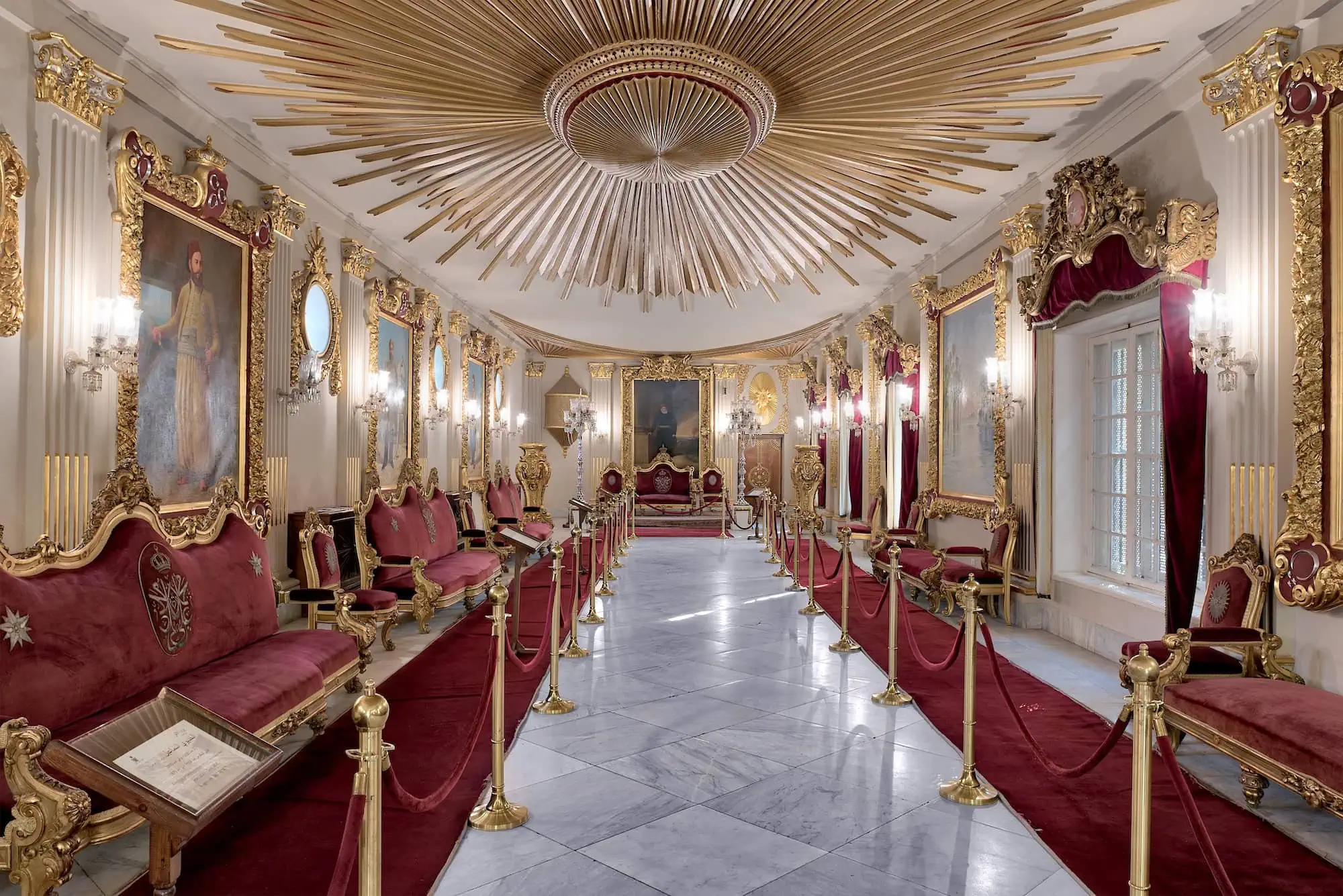
The Manial Palace stands as one of Egypt’s most extraordinary architectural achievements, where Islamic art traditions from across the Mediterranean converge in stunning harmony. Built by Prince Mohamed Ali Tewfik between 1899 and 1929, this remarkable complex showcases the sophisticated artistic vision of Egypt’s royal family during a transformative period in the nation’s history. Unlike the grand monuments that define Cairo’s skyline, the Manial Palace offers visitors an intimate encounter with Egyptian royalty, Persian craftsmanship, and Ottoman elegance.
What makes this palace truly special isn’t just its beauty, but how it captures the cultural crossroads where Egypt has always stood. We’ll guide you through this hidden gem that most travelers overlook, revealing why it deserves a place on every Egypt itinerary.
Table of Contents
Prince Mohamed Ali Tewfik: The Visionary Behind the Palace
Prince Mohamed Ali Tewfik personally selected every detail of his palace, creating what would become one of Cairo’s most sophisticated cultural landmarks.
Born into the Mohammed Ali dynasty, the prince was far more than Egyptian royalty. He was an accomplished botanist, poet, and patron of the arts who traveled extensively throughout the Islamic world, collecting inspiration and artifacts that would later fill his palace halls. His European education combined with deep appreciation for Islamic heritage created a unique perspective that shaped every aspect of the palace design.
The prince began construction in 1899, dedicating three decades to perfecting his vision. He didn’t simply hire architects and walk away – he remained intimately involved in selecting materials, supervising craftsmen, and ensuring that each room reflected his sophisticated understanding of Islamic artistic traditions.
The Prince’s Collections and Scholarly Pursuits
Mohamed Ali Tewfik assembled one of the Middle East’s most impressive private collections during his lifetime. His travels through Syria, Morocco, and Andalusia brought back rare manuscripts, textiles, and decorative objects that now fill the museum displays.
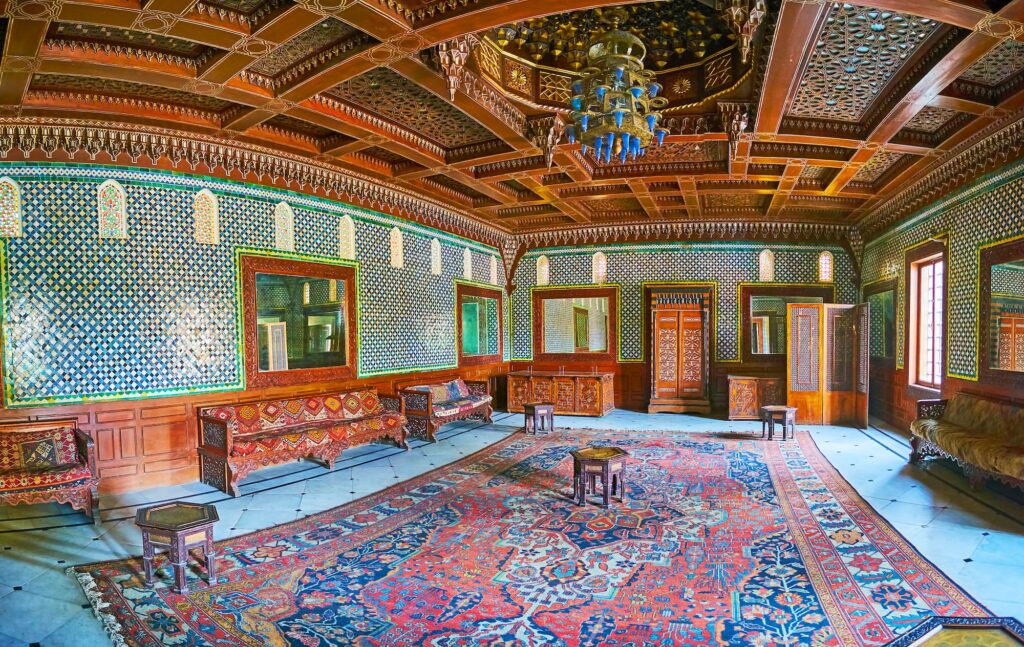
The prince’s botanical expertise influenced the palace gardens, where he cultivated rare plants from across the Mediterranean region. His scholarly nature meant that every acquisition was carefully documented and thoughtfully integrated into the palace’s overall aesthetic vision.
Political Context and Royal Heritage
The Mohammed Ali family’s rule transformed Egypt from a Ottoman province into a modern nation-state. Prince Mohamed Ali Tewfik lived during this crucial transition period, witnessing Egypt’s emergence as a regional power while maintaining deep connections to Islamic artistic traditions.
Following the 1952 Revolution, the Egyptian government nationalized the family’s assets, transforming the private residence into a public museum. This transition preserved the prince’s vision while making his extraordinary collections accessible to visitors from around the world.
Architectural Fusion: Where Islamic Styles Meet
The palace represents an unprecedented dialogue between different Islamic architectural traditions, creating something entirely new while honoring ancient craftsmanship techniques. Ottoman elements blend seamlessly with Mamluk stonework, while Persian tile patterns complement Andalusian geometric designs. This isn’t mere decoration – it’s a sophisticated artistic statement about Islamic civilization’s shared heritage across different regions and centuries.
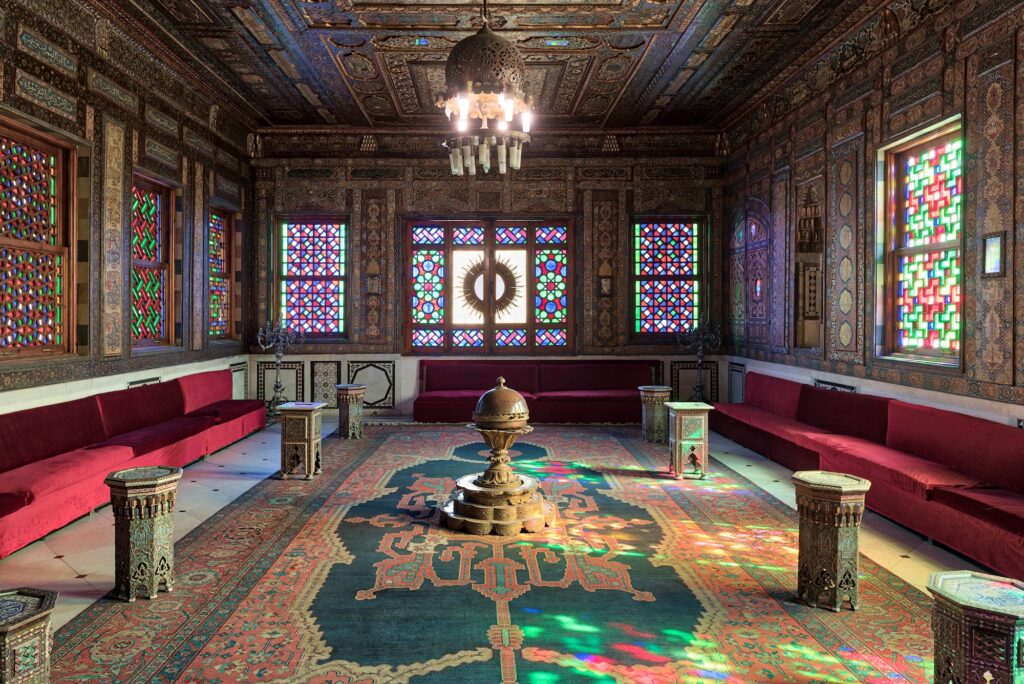
Fatimid influences appear in the intricate metalwork throughout the Reception Palace, where bronze and silver details echo Cairo’s medieval artistic traditions. The Levantine touches manifest in the delicate mother-of-pearl inlays that decorate furniture and wall panels, techniques that connect the palace to Damascus and Aleppo’s renowned craftsmen.
European Art Nouveau and Rococo elements appear sparingly but effectively, particularly in the Residence Palace’s private quarters. These Western influences never dominate but rather complement the Islamic themes, creating an early example of what we might today call global design sensibility.
The Throne Palace: A Masterpiece of Ceremonial Architecture
The Throne Palace showcases the most elaborate decorative work in the entire complex. Here, Mamluk-inspired stone carving reaches extraordinary heights of sophistication, with geometric patterns that seem to flow like living organisms across walls and ceilings.
The throne room itself features a stunning ceiling painted with traditional Islamic astronomical motifs, representing the prince’s interest in both art and science. Gold leaf details catch the light streaming through carefully positioned windows, creating an almost ethereal atmosphere during certain times of day.
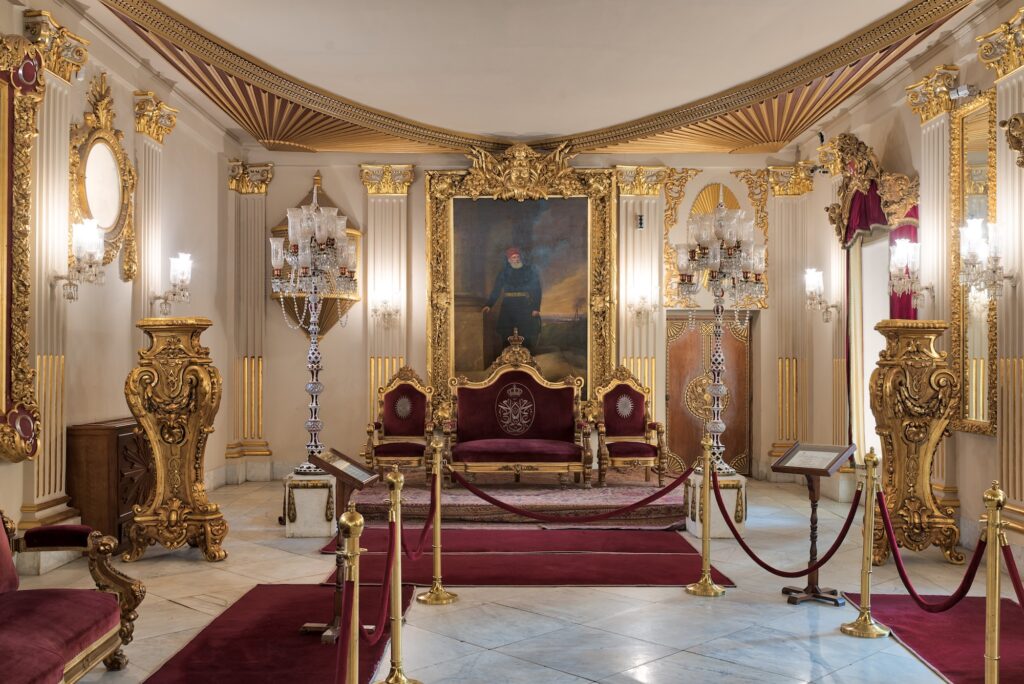
Persian carpet designs inspired the floor patterns throughout this section, executed in rare marble inlays that required years of skilled craftsmanship to complete. Every surface tells part of the story of Islamic artistic achievement across different cultures and time periods.
Exploring the Palace Complex: Three Distinct Architectural Experiences
Residence Palace: Private Royal Life
The Residence Palace reveals how Egyptian royalty lived during the early 20th century. Private apartments showcase European furniture alongside Islamic decorative arts, creating comfortable living spaces that honored both traditions. Moroccan textiles complement French furniture, while Syrian woodwork frames European paintings.
Bathrooms feature some of the complex’s most innovative design work, with Turkish tile patterns creating stunning visual effects. The prince’s personal study contains his extensive library, including rare Islamic manuscripts and European botanical texts that reflect his scholarly interests.
Bedrooms demonstrate the sophisticated comfort that characterized royal life, with climate control systems advanced for their time and decorative schemes that promoted rest and contemplation.
Reception Palace: Formal Entertaining
Designed for official functions and diplomatic receptions, this section of the complex showcases the most formal aspects of palace design. Large halls accommodate significant gatherings while maintaining intimate scale through careful proportions and lighting design.
The main reception hall features a remarkable painted ceiling that incorporates astronomical themes alongside traditional Islamic geometric patterns. Seating areas follow Ottoman traditions while incorporating European comfort innovations.
Dining facilities reflect international sophistication, with table settings and decorative schemes that could accommodate guests from across the diplomatic spectrum. The palace served as an important venue for cultural and political gatherings during the prince’s lifetime.
Clock Tower and Mosque: Spiritual and Temporal Markers
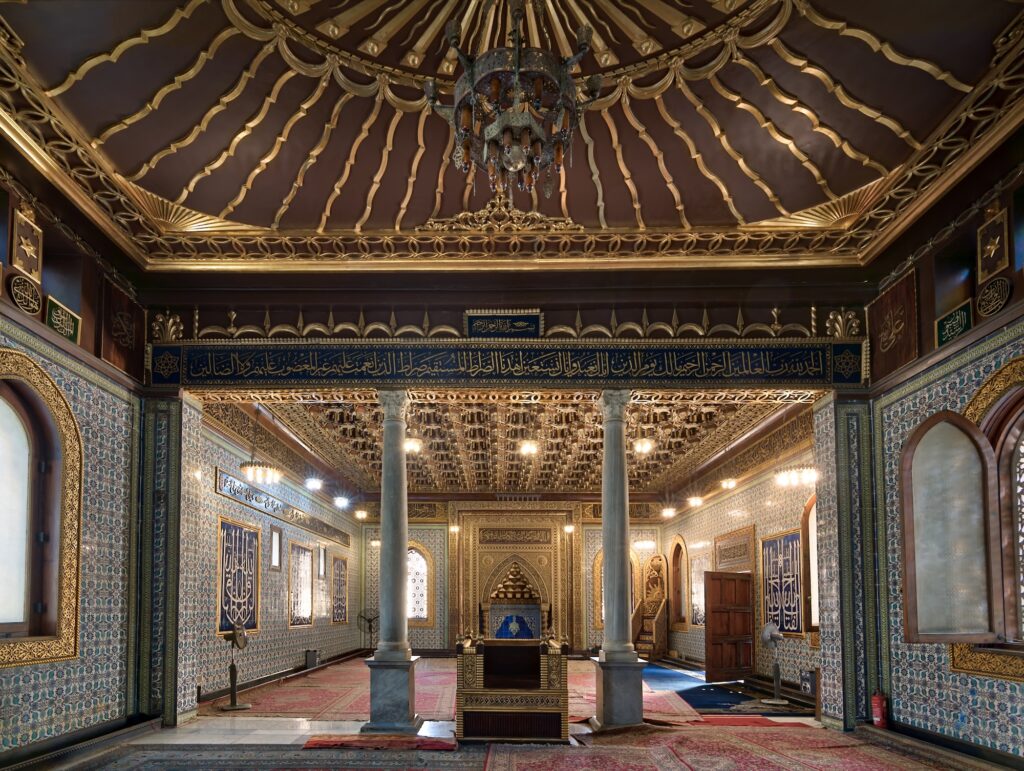
The mosque within the palace complex represents one of Cairo’s most beautiful small religious buildings. Its mihrab features exceptional calligraphy and geometric tilework that creates a sense of spiritual focus and contemplation.
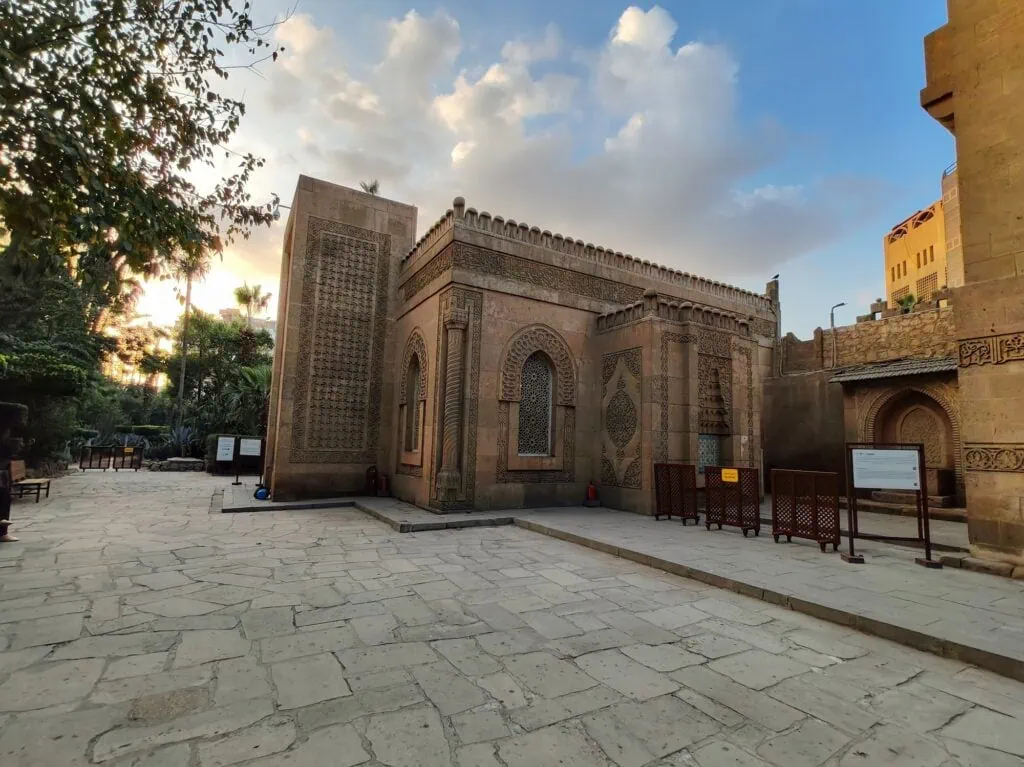
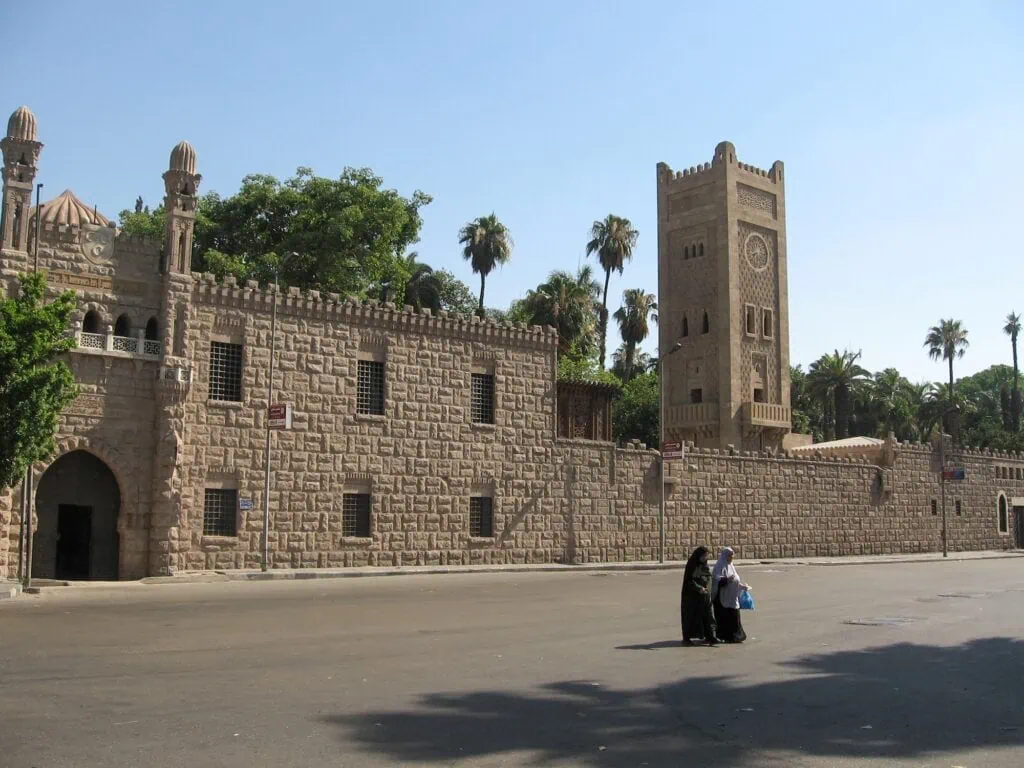
The clock tower serves both practical and symbolic functions, marking time while providing architectural vertical emphasis that balances the complex’s horizontal spread. Its design incorporates elements from multiple Islamic traditions while serving very modern timekeeping needs.
These structures demonstrate how the prince integrated religious observance and daily routine into his palace design, creating spaces that honored both spiritual and temporal aspects of Islamic life.
Museum Collections: Treasures Spanning Centuries
Walking through the museum sections feels like traveling through time and across the Islamic world. Each room contains carefully curated displays that reflect Prince Mohamed Ali Tewfik’s sophisticated collecting sensibility and deep knowledge of Islamic artistic traditions.
Textiles and Decorative Arts
The textile collection includes rare examples of Mamluk weaving, Ottoman court garments, and Persian carpets that rank among the world’s finest examples. Many pieces show the cultural exchange that characterized Islamic civilization, with patterns and techniques that traveled along trade routes connecting Spain to Central Asia.
Decorative objects range from everyday items used in palace life to ceremonial pieces reserved for special occasions. Islamic metalwork, ceramics, and woodworking demonstrate the high artistic standards maintained throughout the Islamic world during different historical periods.
Manuscripts and Calligraphy
The palace houses an exceptional collection of illuminated manuscripts representing various Islamic scholarly and artistic traditions. These include Quranic texts with extraordinary calligraphy, scientific treatises, and literary works that showcase the intellectual achievements of Islamic civilization.
Calligraphy examples demonstrate different regional styles and historical periods, from Andalusian manuscripts to Ottoman court documents. Many pieces show the integration of text and decorative arts that characterized Islamic book production.
Historical Artifacts and Personal Items
Personal belongings of the Mohammed Ali family provide intimate glimpses into royal life during Egypt’s transition to modernity. These include ceremonial weapons, jewelry, and everyday objects that humanize the historical figures who shaped modern Egypt.
Photographs and documents trace the family’s role in Egyptian politics and cultural development, providing context for understanding the palace’s significance beyond its architectural achievement.
Visiting Manial Palace: Essential Information
Location and Access
The palace sits on Roda Island in the Nile, creating a natural separation from the busy streets of Cairo that enhances the sense of entering a different world. This location was carefully chosen by Prince Mohamed Ali Tewfik for its tranquil setting and its symbolic position between Cairo’s East and West banks.
We recommend combining your visit to Manial Palace with several nearby cultural landmarks, as the island’s compact size and central location make it easy to explore multiple sites in a single day. Just across the Nile, the Nilometer on Roda Island offers a fascinating glimpse into how ancient Egyptians measured the river’s water levels, directly influencing agriculture and taxation systems.
A short drive away, the Coptic Cairo district presents a rich concentration of historic churches, including the Hanging Church and the Coptic Museum, providing valuable context on Egypt’s Christian heritage. For those interested in Pharaonic history, the Egyptian Museum in Tahrir Square is also within convenient reach and houses an unparalleled collection of ancient artifacts. Combining Manial Palace with these nearby Cairo attractions creates a well-rounded cultural itinerary that spans multiple eras of Egypt’s history.
Opening Hours and Tickets
The museum opens daily from 9:00 am to 5:00 pm (09:00 to 17:00), with last entry at 4:00 pm (16:00). Foreign visitors pay EGP 220 for adult admission, while student discounts are available with valid identification.
Photography inside the palace requires an additional fee, though exterior and garden photography is included with general admission. Professional photography equipment requires special permits arranged in advance through museum administration.
Best Times to Visit
Early morning visits offer the best lighting conditions for appreciating the palace’s architectural details and decorative elements. The gardens are particularly beautiful during spring months when the prince’s botanical collections are in full bloom.
Weekday visits generally provide quieter experiences compared to weekends, allowing more contemplative appreciation of the museum collections. Late afternoon light creates dramatic effects in rooms with western-facing windows, particularly in the Throne Palace.
Why Manial Palace Deserves Your Attention
Most visitors to Cairo focus on the pyramids and major Islamic monuments, missing this extraordinary example of early 20th-century artistic vision. The palace offers something different – an intimate encounter with how Islamic artistic traditions evolved during Egypt’s transition to modernity.
The complex demonstrates that historical preservation and contemporary relevance can coexist beautifully. Prince Mohamed Ali Tewfik’s vision created spaces that feel both authentically historical and surprisingly contemporary, proving that great design transcends specific time periods.
For travelers interested in Islamic art, royal history, or architectural innovation, the Manial Palace provides unparalleled opportunities to see how different cultural traditions can merge while maintaining their distinct identities. It’s a reminder that Egypt’s cultural significance extends far beyond its ancient monuments.
Planning Your Palace Visit with Expert Guidance
Our decades of experience guiding travelers through Egypt’s cultural treasures allows us to help you maximize your Manial Palace experience. We arrange private tours with qualified Egyptologists who bring the palace’s history to life through expert storytelling and detailed knowledge of Islamic artistic traditions.
Our personalized approach ensures you experience the palace at your own pace, with time to appreciate both the grand architectural vision and intimate details that make this complex so extraordinary. We handle all practical arrangements, from transportation to photography permits, allowing you to focus entirely on discovering this hidden gem of Egyptian culture.
Step Into Royal Elegance At Manial Palace
Manial Palace offers a rare blend of architectural beauty, lush gardens, and royal heritage—an experience that adds a refined cultural layer to any journey through Egypt. With Egypt Tours Plus, we thoughtfully combine distinctive sites like this with Egypt’s must-see highlights, creating a travel experience that feels both rich and effortlessly curated.
Shape every part of your journey—choose your travel dates, set your pace, and decide which experiences and destinations to include. We handle all the details with precision, ensuring a private, comfortable, and seamless journey from beginning to end.
Frequently Asked Questions
Plan 2 to 3 hours for a complete visit to Manial Palace, allowing enough time to explore the palace buildings, museum collections, mosque, and landscaped gardens. The complex covers approximately 61,000 square meters on Roda Island and contains multiple structures built by Prince Mohammed Ali between 1899 and 1929. Visitors interested in architecture, decorative arts, and royal history often stay longer. Arriving early provides a quieter experience and better opportunities for photography.
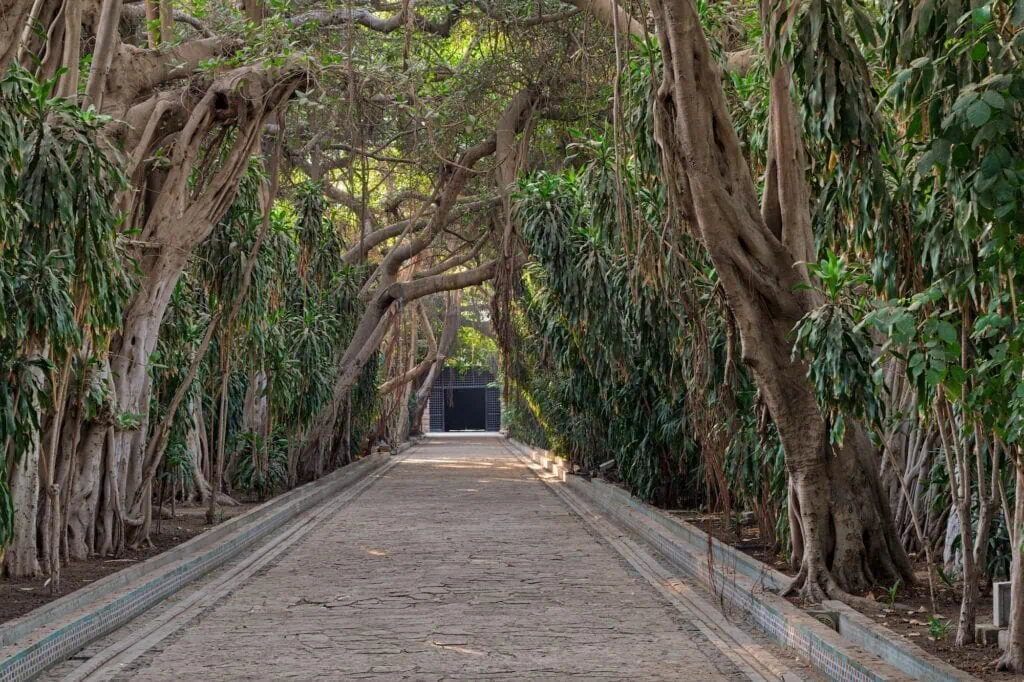
No, the gardens at Manial Palace are accessed through the standard admission ticket and are considered part of the overall historic complex. The gardens were carefully designed by Prince Mohammed Ali to complement the palace architecture and feature rare plants, fountains, and ornamental landscaping. Because the gardens and buildings were conceived as a unified artistic project, separate garden admission is generally not available. Allow at least 30 minutes to explore the outdoor areas.
Photography is generally permitted throughout much of Manial Palace, but interior photography may require an additional ticket or fee beyond standard admission. The palace contains richly decorated rooms, rare furnishings, and historic artifacts that are subject to museum regulations. Exterior photography in the gardens and around the palace facades is typically included with entry. Always check current rules upon arrival, as photography policies and fees can change over time.
Taxi, ride-sharing services, or private transportation are the most convenient ways to reach Roda Island from central Cairo. The palace sits on the Nile island of Al-Manial, roughly 5 to 8 km from areas such as Tahrir Square, depending on your starting point. Travel times typically range from 15 to 30 minutes, though Cairo traffic can significantly increase journey times during peak hours. Morning departures usually provide the smoothest access.
Yes, guided tours in English are commonly available, and additional languages can often be arranged with advance notice. Because Manial Palace combines Ottoman, Mamluk, Persian, Andalusian, and Moroccan architectural influences, expert interpretation adds valuable historical context that many visitors would otherwise miss. Multilingual guides can explain the significance of Prince Mohammed Ali’s collections and design choices in greater detail. Advance arrangements provide the widest language options.
Manial Palace offers a residential and aristocratic perspective on Islamic art, unlike Cairo’s larger religious monuments such as mosques and citadels. Built between 1899 and 1929, the complex showcases how historic Islamic architectural traditions were adapted in the modern era. Visitors see furnished living spaces, personal collections, and private gardens rather than exclusively religious or military structures. This creates a more intimate view of elite Egyptian life during the late monarchy period.
Yes, Manial Palace combines easily with several nearby attractions for a full day of sightseeing in Cairo. The historic Nilometer on Roda Island is only a short distance away, while Old Cairo attractions such as the Hanging Church, Ben Ezra Synagogue, and the Coptic Museum can often be reached within 15 to 20 minutes by car. Grouping these sites together creates a well-rounded itinerary focused on Egyptian history, architecture, and culture.
Modest and comfortable clothing is recommended when visiting Manial Palace, particularly because the complex includes a historic mosque and religious elements. Lightweight clothing is ideal during warmer months, while comfortable walking shoes help when exploring the gardens and multiple buildings. Unlike active religious sites, strict dress requirements are generally not enforced throughout the palace. Visitors should still dress respectfully to match the cultural and historical character of the attraction.
Basic storage and security facilities are typically available for larger bags and personal belongings at Manial Palace. As with many museums and heritage sites in Egypt, visitors may be asked to undergo security screening before entry. Traveling with only essential items makes it easier to move comfortably between the palace buildings, gardens, and exhibition areas. Check current procedures upon arrival, as storage policies can vary depending on security requirements.
Is the palace accessible for visitors with mobility limitations?
A: Manial Palace offers partial accessibility, but some sections present challenges due to stairs, uneven surfaces, and the historic nature of the buildings. Constructed in the early 20th century, the complex was not originally designed with modern accessibility standards in mind. Garden pathways and certain ground-level areas are generally easier to navigate than upper floors. Visitors with specific mobility needs should contact the museum in advance to discuss available accommodations.
Standard admission generally includes access to the palace buildings, museum collections, mosque, gardens, and outdoor areas throughout the Manial Palace complex. Visitors can explore the architectural styles, royal reception halls, personal collections, and landscaped grounds created by Prince Mohammed Ali. Additional charges may apply for certain photography privileges or special exhibitions if offered. Checking current ticket details before visiting helps avoid surprises and ensures access to all desired areas.
Yes, visitors can usually purchase books, postcards, and selected souvenirs related to Manial Palace and Islamic art. Available items often include publications on Prince Mohammed Ali, Cairo architecture, decorative arts, and Egyptian cultural heritage. The selection is typically smaller than what is found at major national museums, but it provides useful resources for visitors seeking deeper historical context. Popular items can sell out during busy tourism periods.

Design Your Custom Tour
Explore Egypt your way by selecting only the attractions you want to visit