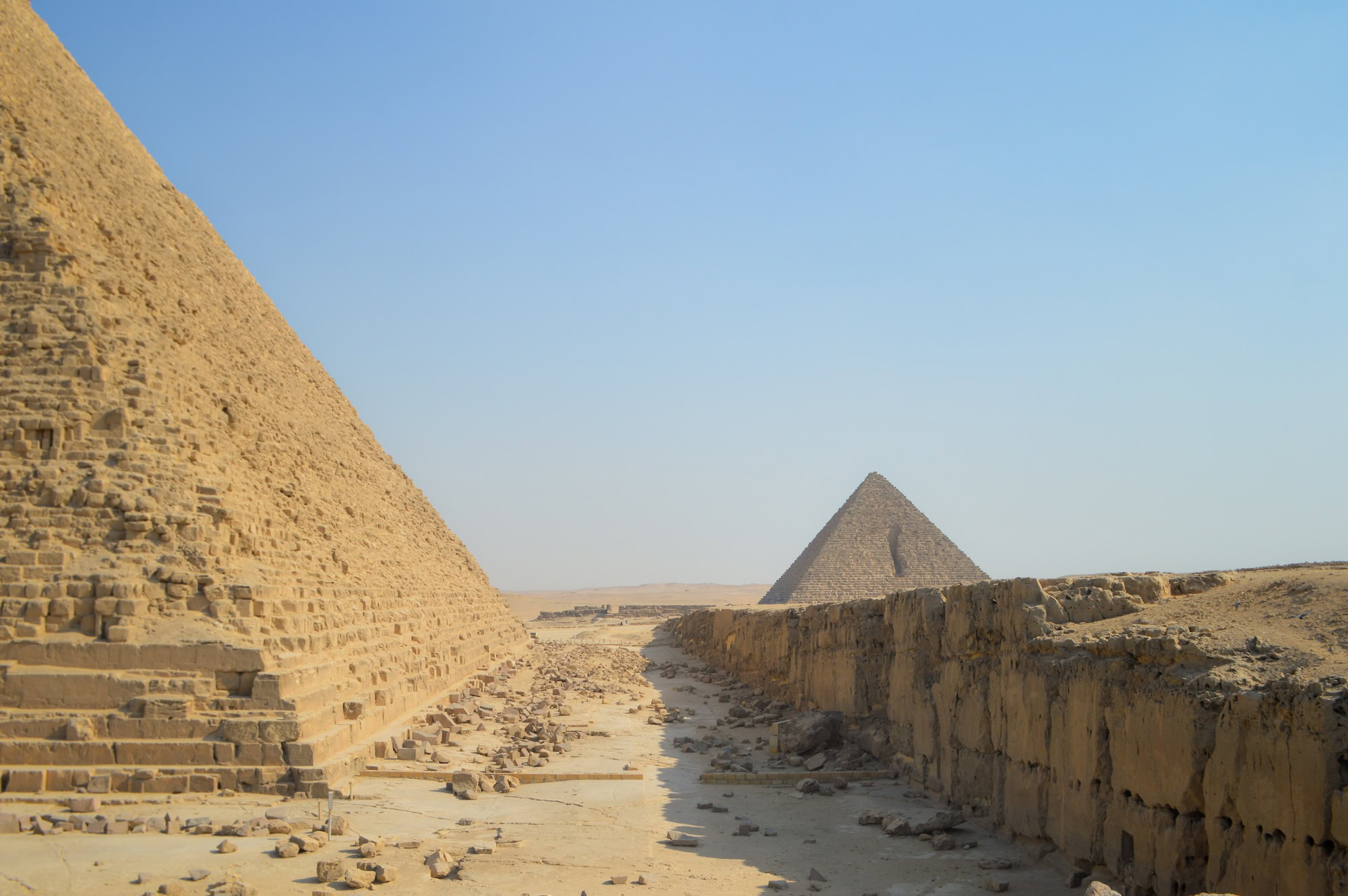
Famous Ancient Egyptian Architecture: Monuments that Defined a Civilization
Ancient Egypt built the world’s most enduring legacy in stone.
Thousands of years after pharaohs ruled the Nile, their architectural achievements continue to captivate travelers and scholars alike. From the mathematical precision of the Great Pyramid of Giza to the artistic splendor of Karnak Temple, Egyptian monuments represent humanity’s earliest triumph over engineering limitations. These structures weren’t just buildings—they were cosmic statements carved in limestone and granite, designed to bridge the mortal world with the eternal realm of gods.
We’ve spent decades guiding visitors through these ancient marvels, watching faces light up when they first glimpse the Sphinx or step into the shadowed halls of Abu Simbel. Each monument tells a story of ambition, devotion, and technical mastery that modern architects still study today.
The Great Pyramid of Giza: Ancient Wonder
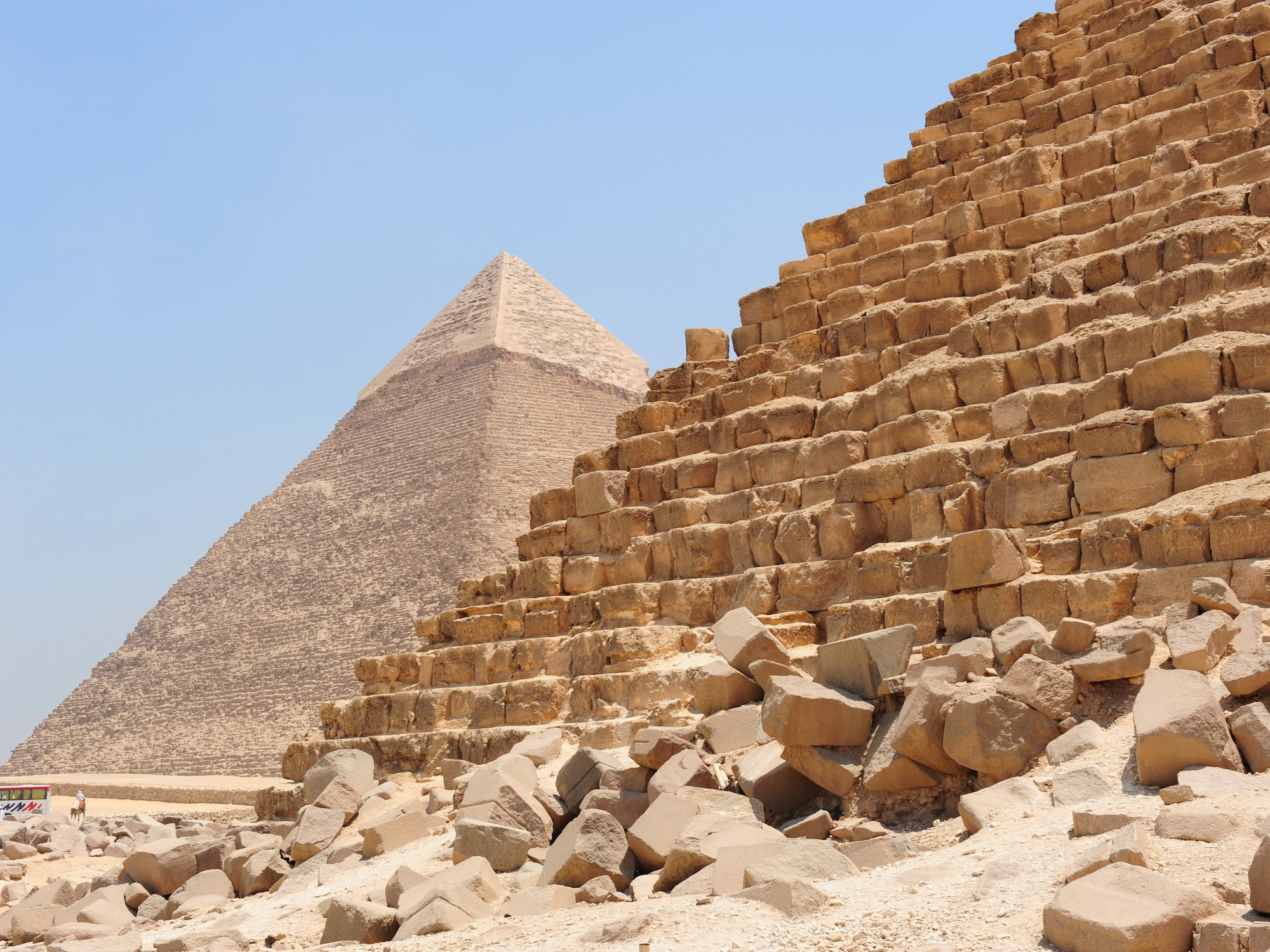
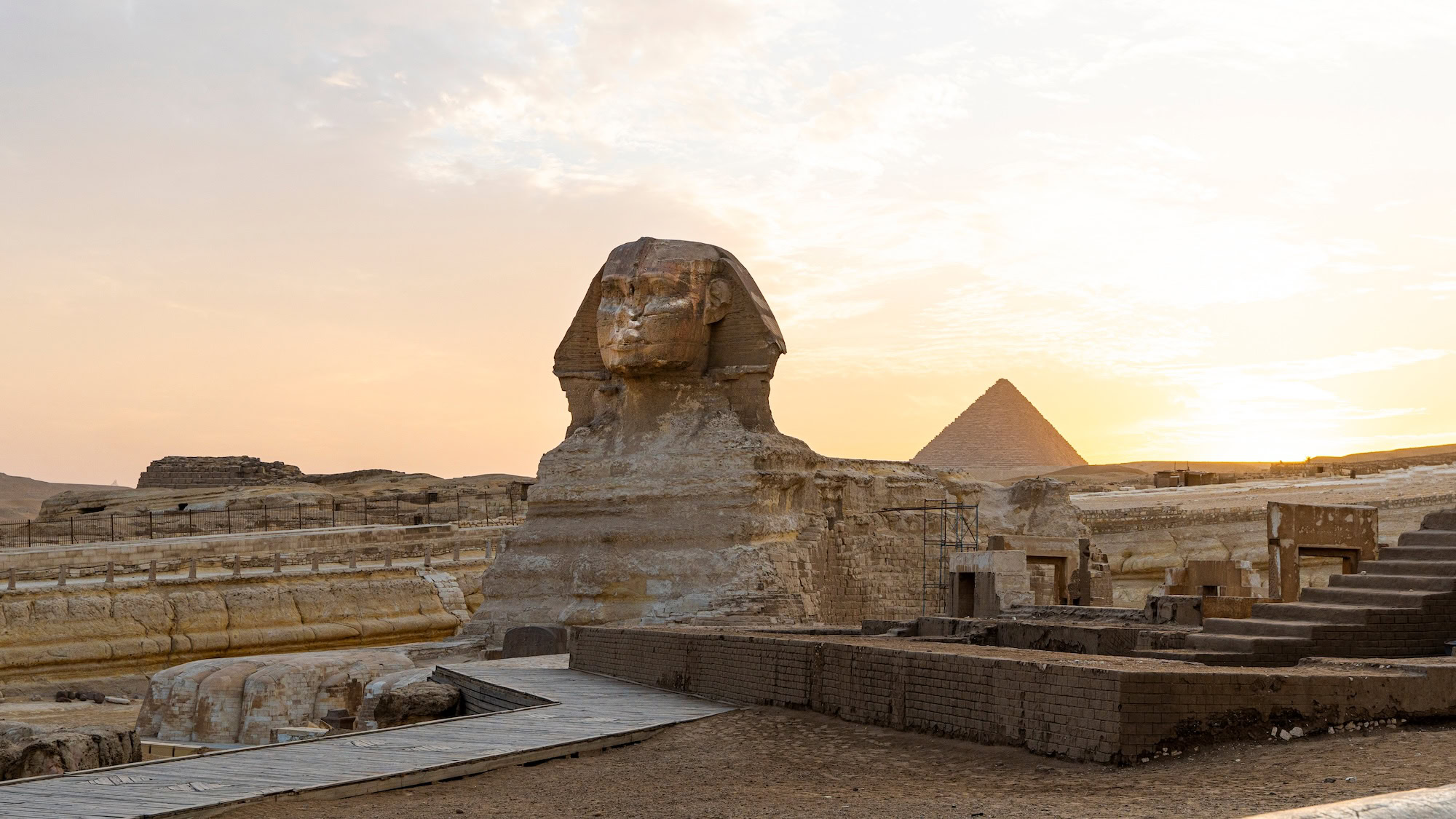
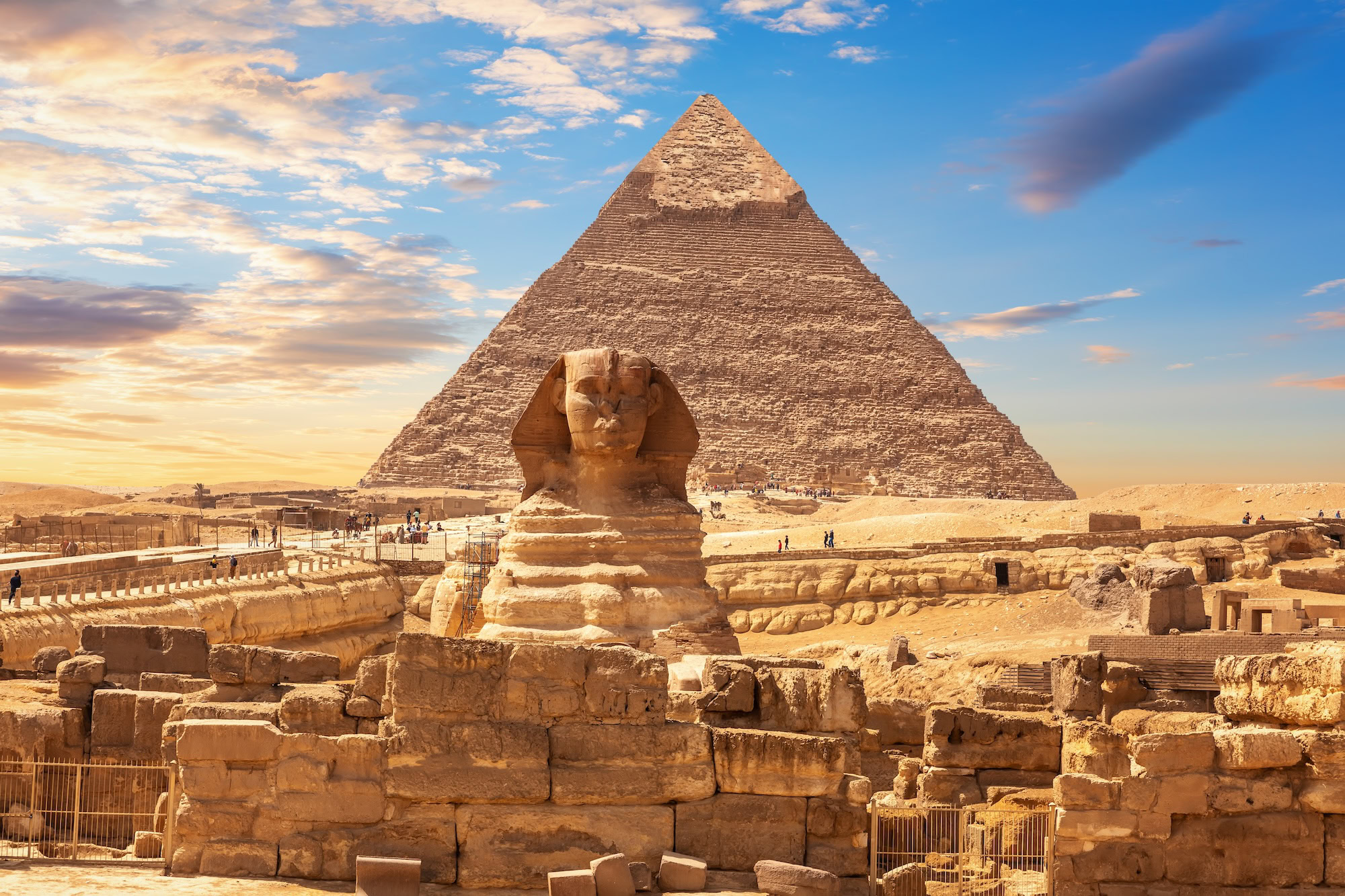
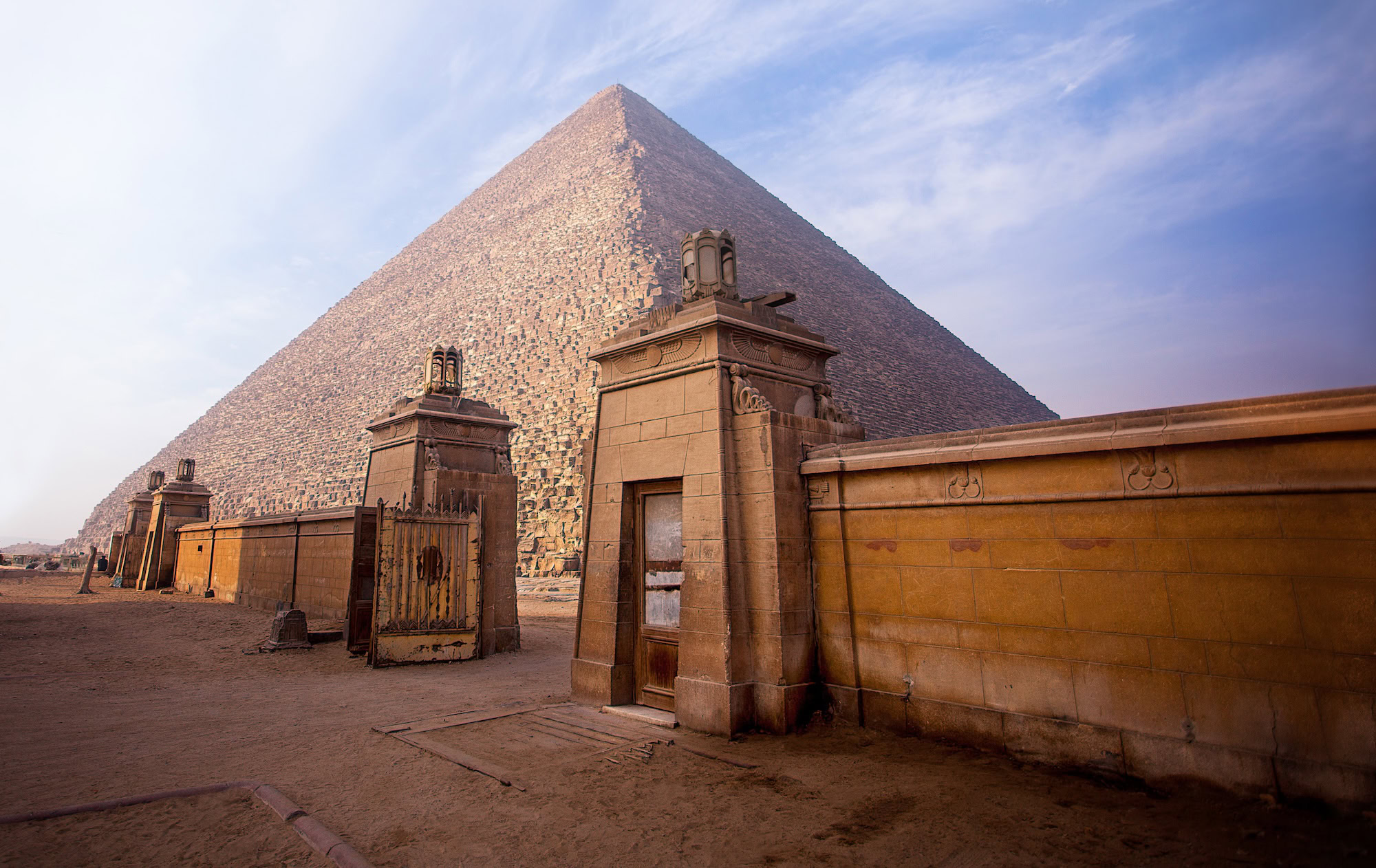
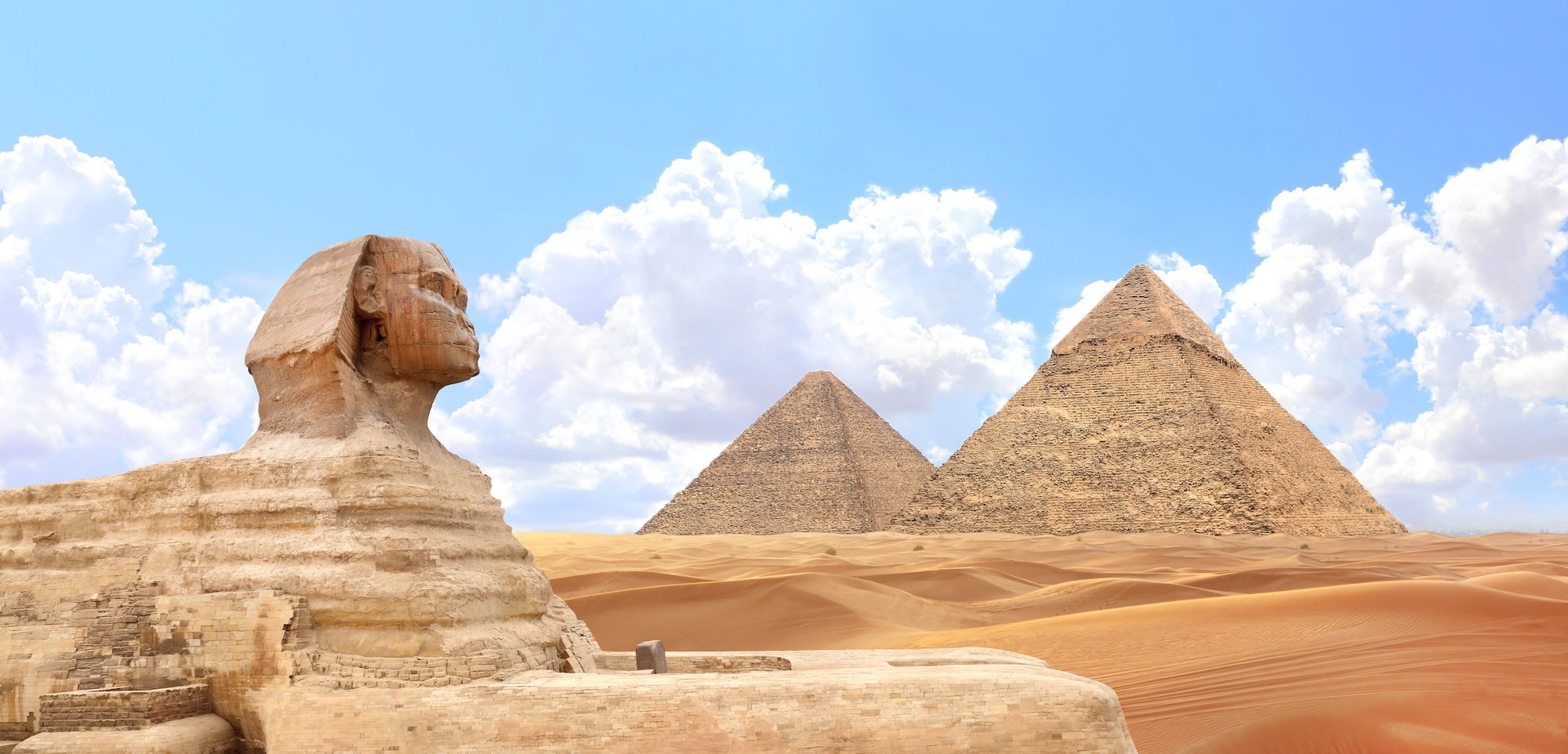
Standing at the edge of modern Cairo, the Great Pyramid commands respect through sheer mathematical perfection. Built for Pharaoh Khufu around 2580 BCE, this limestone giant originally rose 481 feet into the desert sky. Each of its 2.3 million stone blocks weighs between 2.5 and 15 tons, fitted together with precision that leaves gaps thinner than a knife blade.
Engineering Marvel That Defied Limits
The pyramid’s base covers 13 acres with sides aligned to cardinal directions within 3/60th of a degree—accuracy that GPS technology struggles to match. Ancient Egyptian architects achieved this using copper tools, wooden rollers, and mathematical principles that wouldn’t be rediscovered until centuries later. The internal chamber system, including the King’s Chamber and mysterious shafts pointing to specific stars, reveals astronomical knowledge that guided both construction and religious purpose.
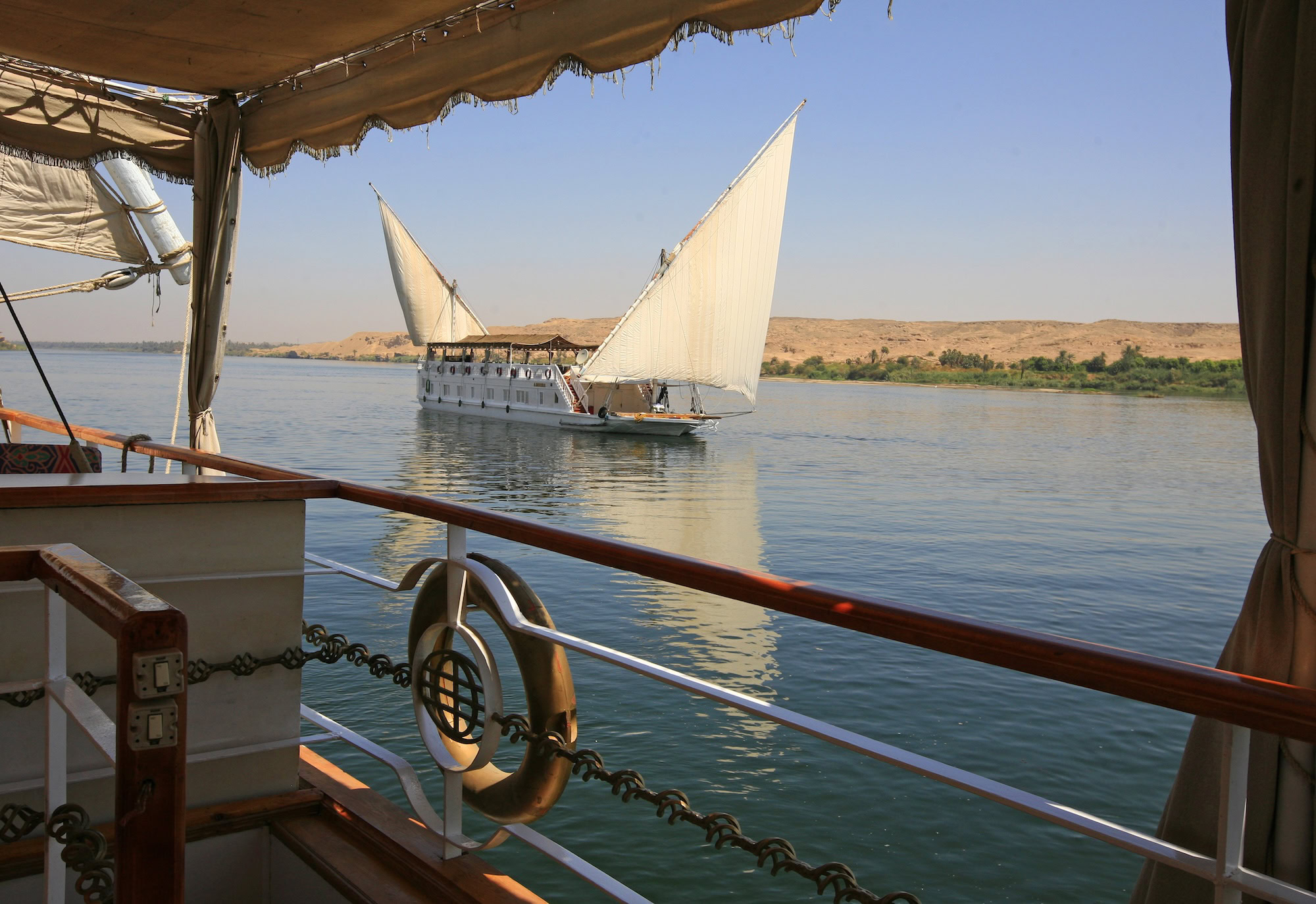
Workers transported stones from quarries 500 miles south using Nile barges during flood season. Recent discoveries suggest they used internal ramps rather than external ones, solving the puzzle of how massive blocks reached the pyramid’s peak. The entire project required approximately 20,000 workers over two decades.
Companion Pyramids and Sphinx Complex
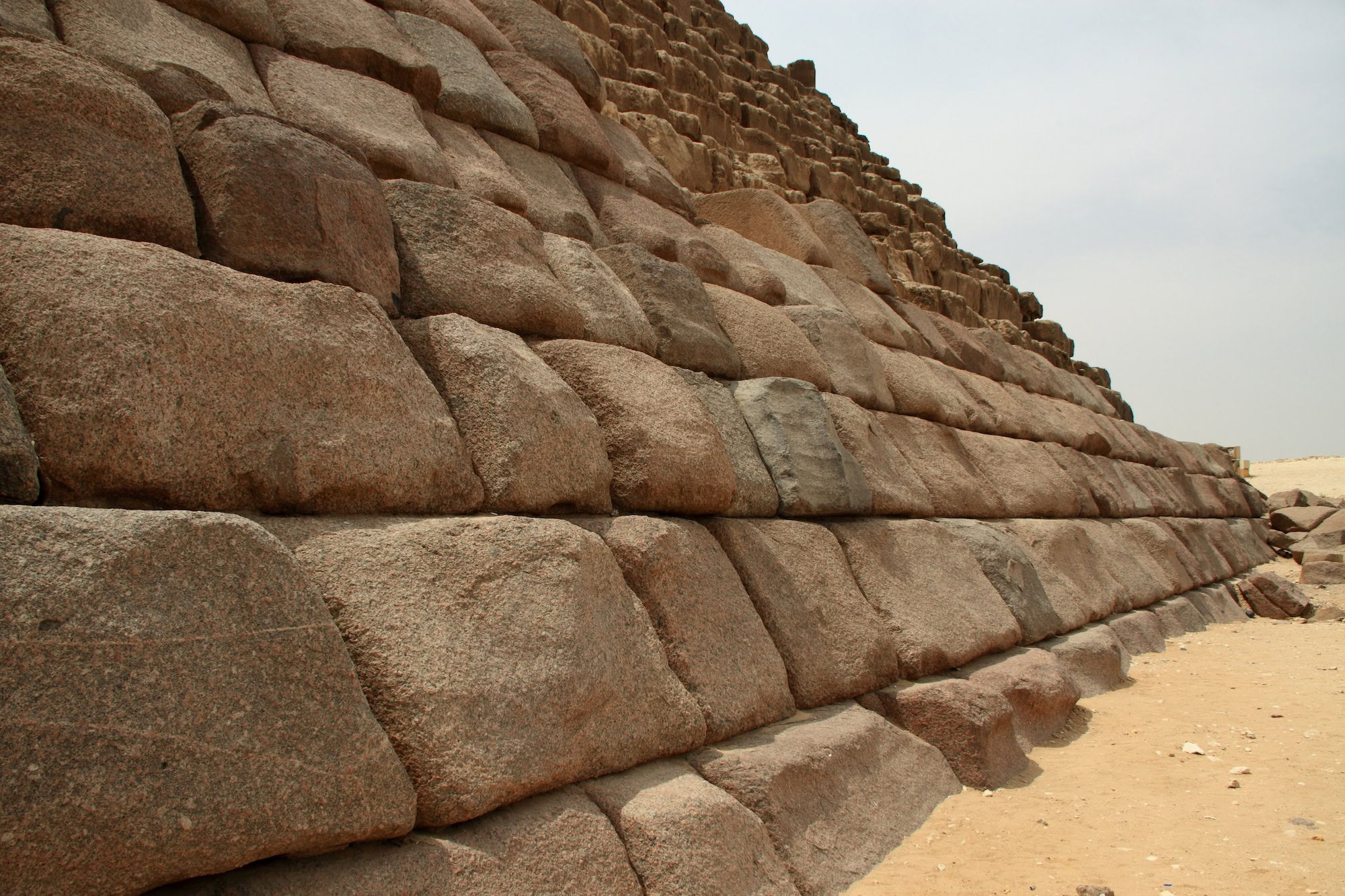
Khafre’s pyramid, though smaller at 448 feet, appears taller due to elevated ground placement. Its granite casing stones near the apex remain intact, showing how all three Giza pyramids once gleamed white across the desert. Menkaure’s pyramid, the smallest at 215 feet, compensates with elaborate granite and limestone facing that required extraordinary craftsmanship.
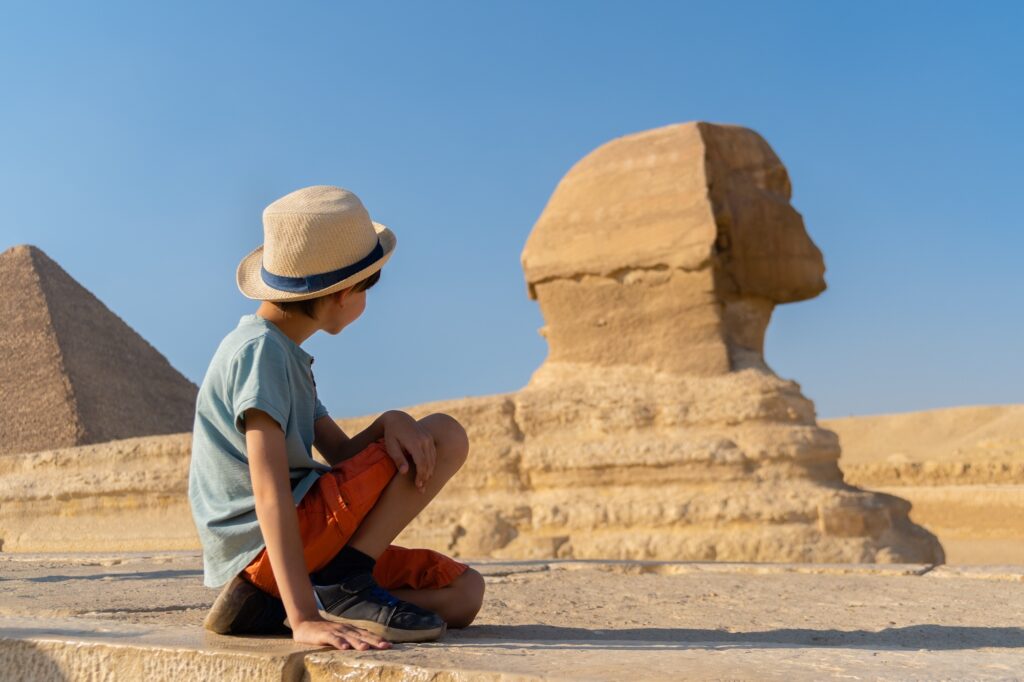
The Great Sphinx guards this necropolis with leonine body and human face, carved from a single limestone outcrop. Recent geological studies suggest water erosion patterns that spark ongoing debates about construction timelines. The Sphinx’s missing nose, contrary to Napoleon legends, disappeared centuries before European exploration began.
Temple Architecture: Where Gods Walked
Egyptian temples functioned as earthly residences for deities, designed according to strict cosmic principles that reflected divine order. Unlike pyramids built for eternity, temples served active religious communities for millennia, expanding and evolving under successive pharaohs.
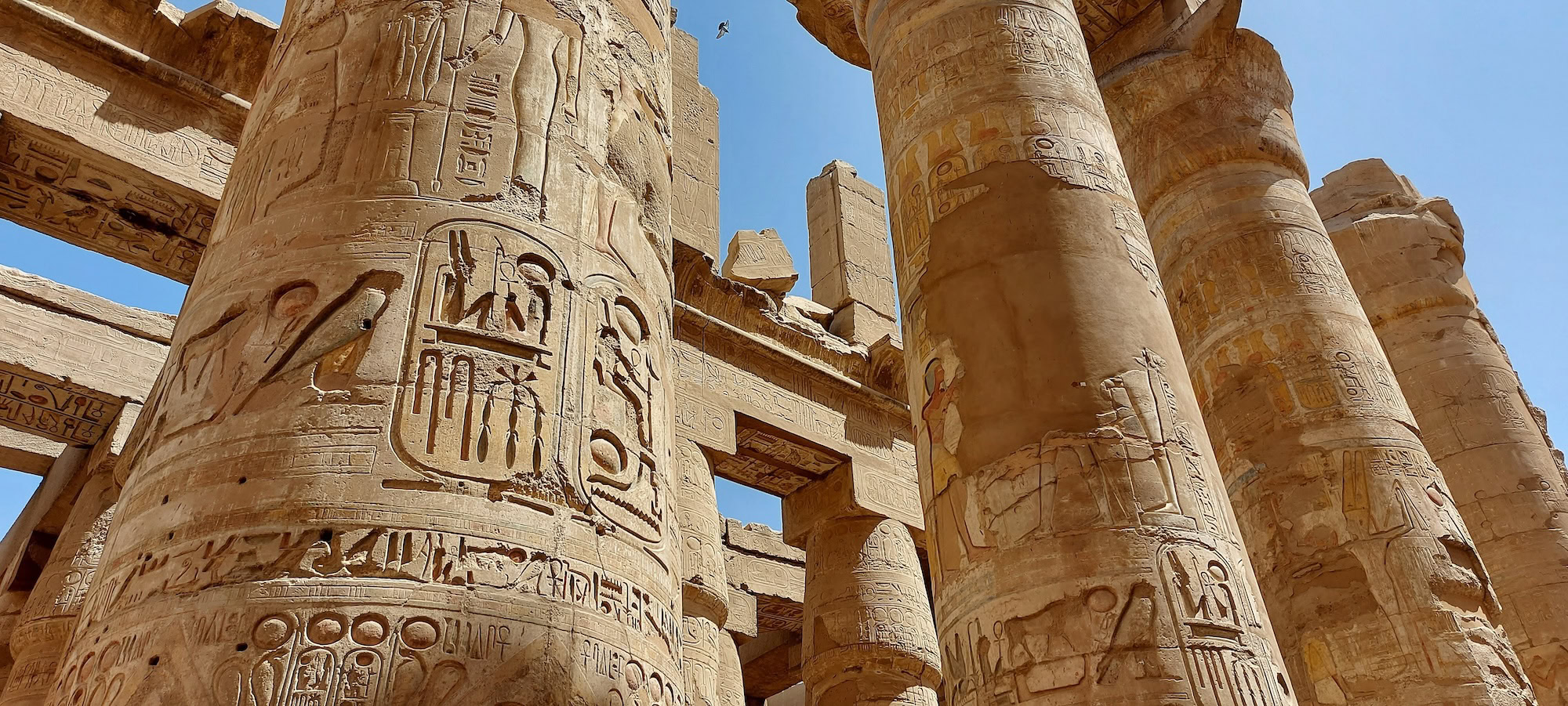
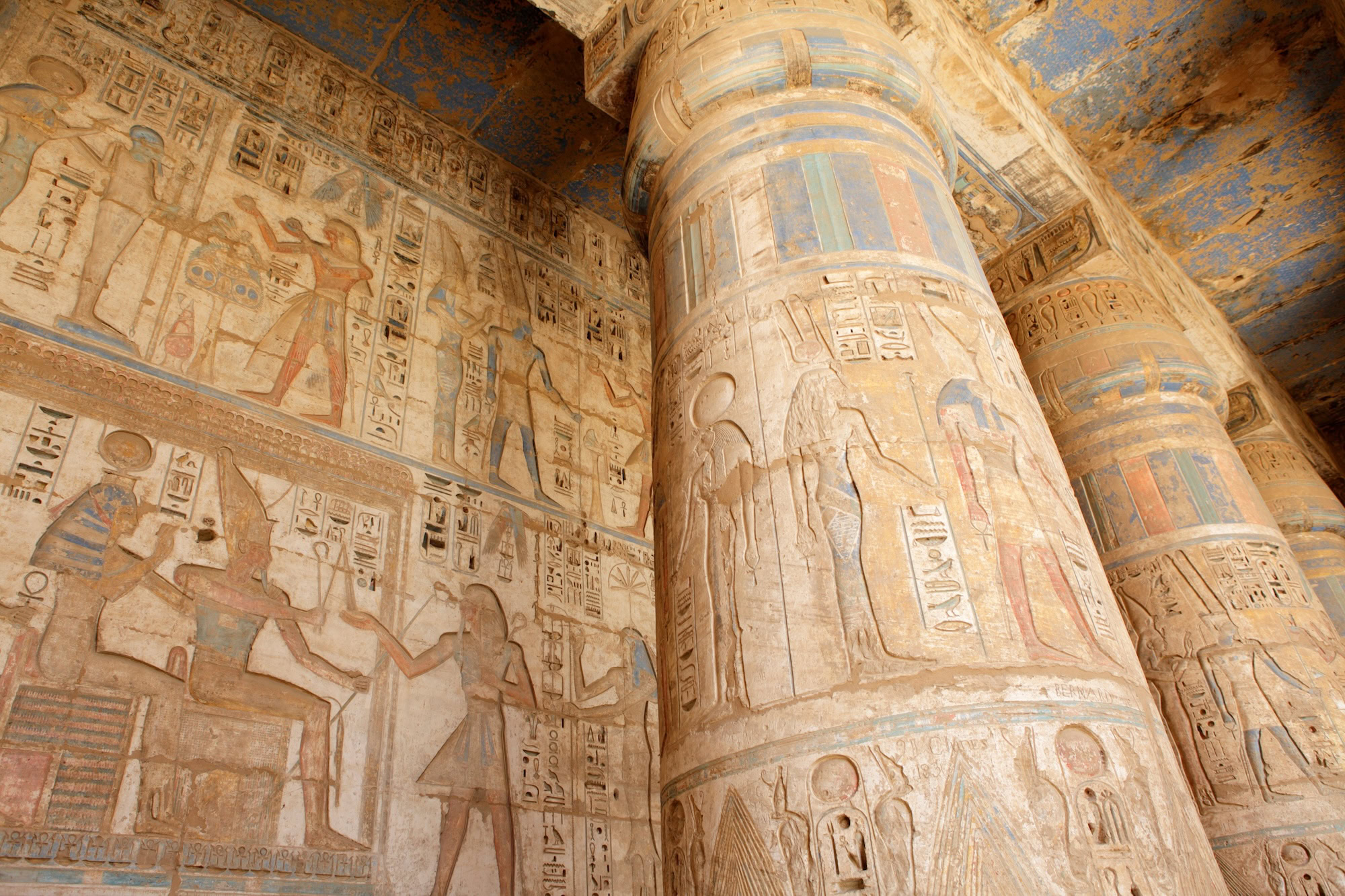
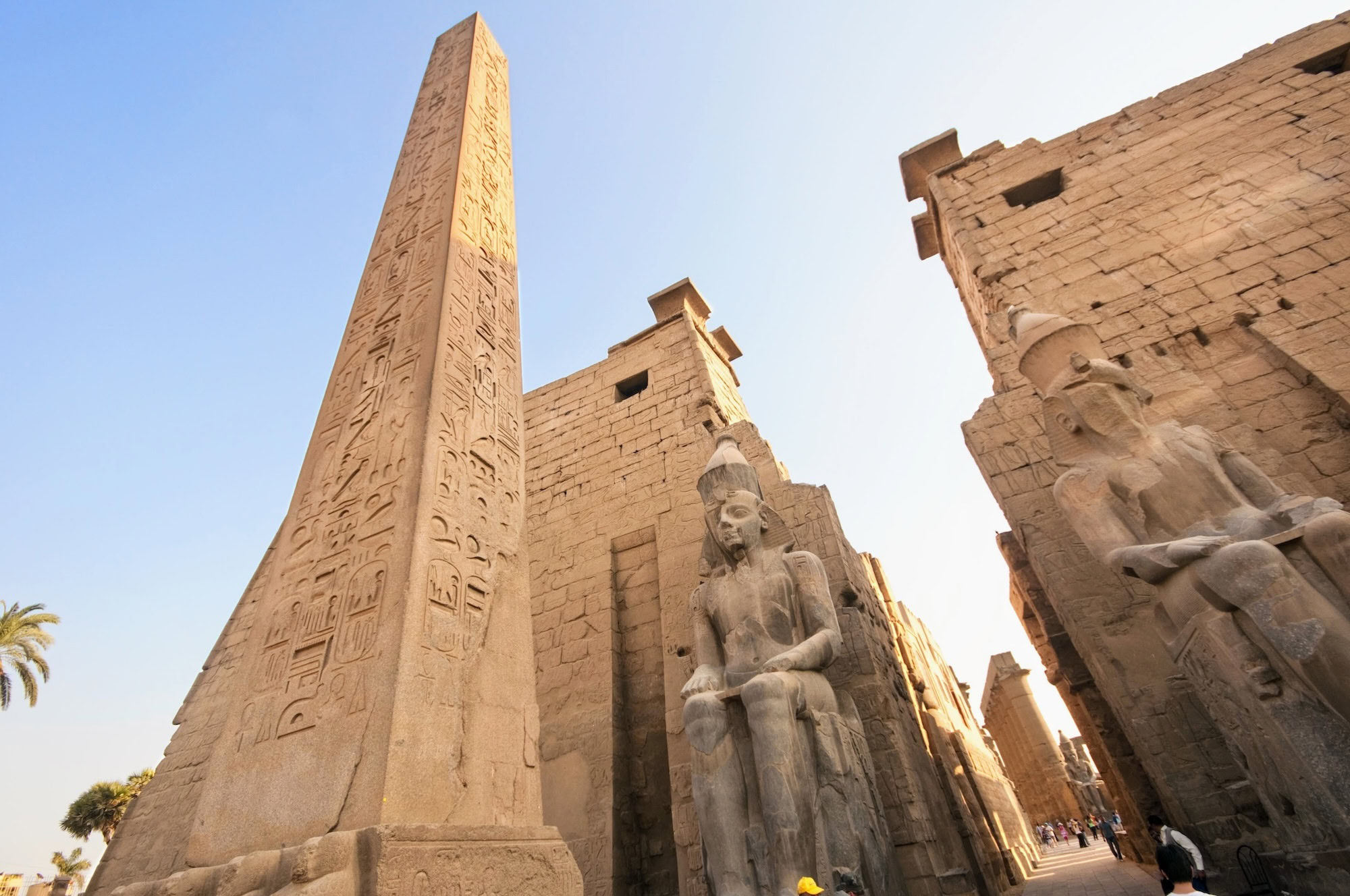
Karnak Temple complex near Luxor represents temple architecture at its most ambitious scale. Construction spanned 2,000 years, with each ruler adding halls, obelisks, and sanctuaries to honor Amun-Ra. The Great Hypostyle Hall contains 134 columns, each thick enough that 100 people could stand on top. Sunlight filtering through clerestory windows creates dramatic shadows that shift throughout the day, turning stone into living theater.
Sacred Geometry and Cosmic Alignment
Temple layouts followed precise mathematical ratios based on sacred geometry. The sanctuary, housing the god’s statue, occupied the complex’s deepest, darkest point—representing the primordial mound where creation began. Successive halls grew larger and brighter as they approached the entrance, symbolizing emergence from cosmic chaos into divine light.
Priests performed daily rituals of awakening, feeding, and clothing divine statues, maintaining ma’at (cosmic balance) through ceremony. These rituals occurred in spaces designed for acoustic amplification, where whispered prayers could carry across vast halls. Wall reliefs depicted pharaohs making offerings to gods, ensuring divine approval of royal authority.
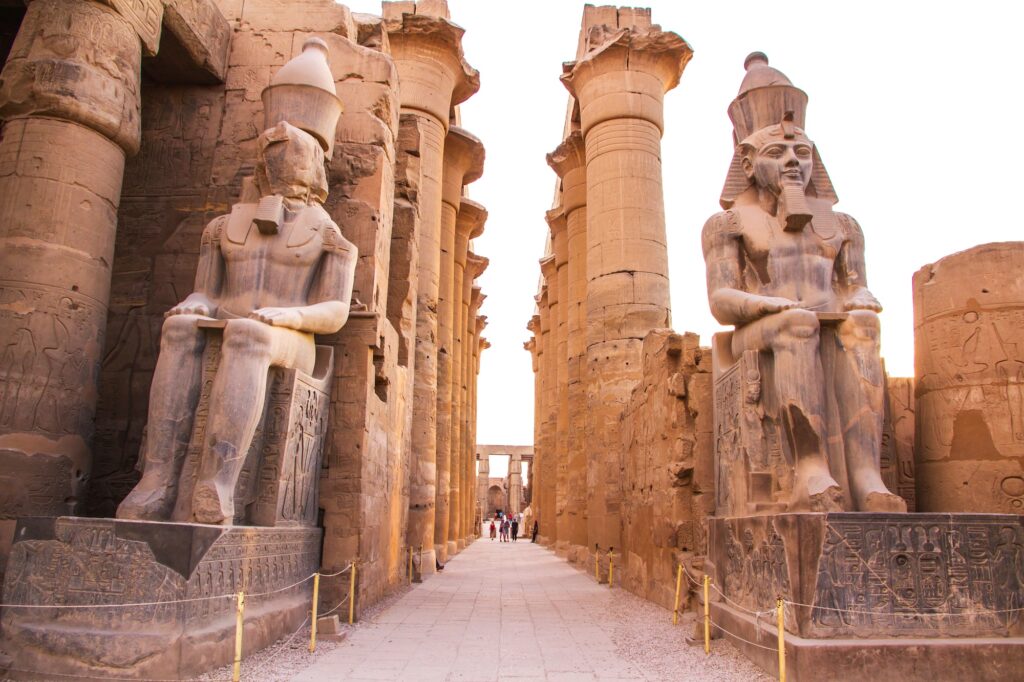
Luxor Temple’s alignment with the Nile’s flood patterns demonstrates how Egyptian architects integrated natural cycles into sacred architecture. During Opet Festival, priests carried Amun’s statue from Karnak to Luxor along the Avenue of Sphinxes, a 1.7-mile processional route lined with ram-headed guardians.
Abu Simbel Temples: Ramesses Power Monument
Carved directly from Nubian sandstone cliffs, Abu Simbel represents ancient Egyptian architecture at its most dramatic. Ramesses II commissioned these twin temples around 1264 BCE as declarations of divine kingship and Egyptian dominance over Nubia’s gold-rich territories.
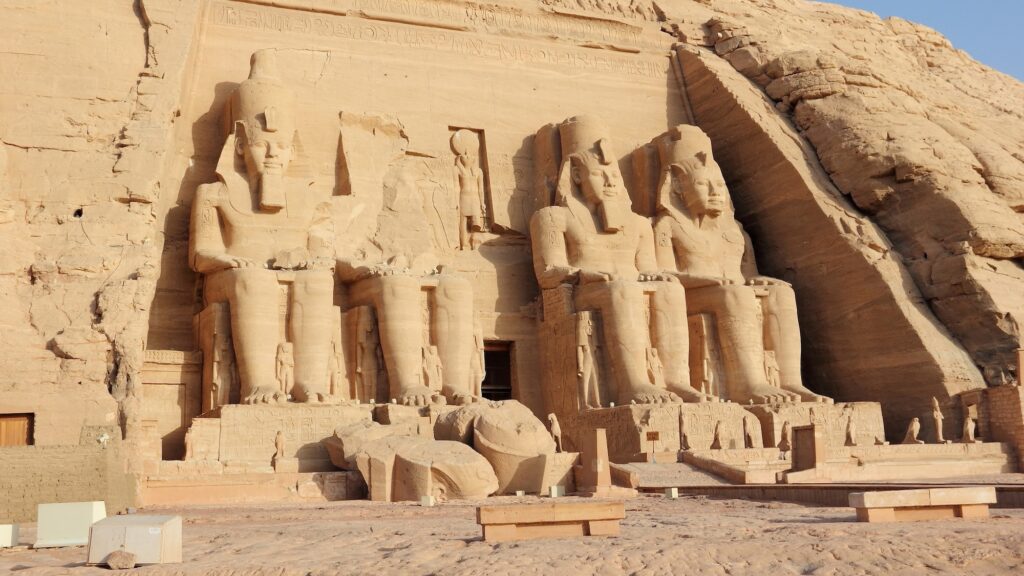
The Great Temple’s facade features four colossal statues of Ramesses, each standing 65 feet tall. Ancient architects calculated their proportions to create optical illusions—the seated figures appear perfectly proportioned from ground level, though their heads are actually oversized to compensate for viewing angle distortion. Smaller figures of royal family members stand between the pharaoh’s legs, emphasizing his protective authority.
Hidden Engineering Genius
Twice yearly, on February 22nd and October 22nd, sunrise penetrates the temple’s 185-foot interior corridor to illuminate three of four statues in the inner sanctuary. The fourth figure, representing Ptah, god of darkness, remains perpetually shadowed. This astronomical alignment likely corresponded to Ramesses’ birthday and coronation date, though exact historical records remain incomplete.
The smaller temple, dedicated to Queen Nefertari and goddess Hathor, breaks architectural convention by depicting the queen at equal height with her pharaoh husband. Interior reliefs show Nefertari performing religious ceremonies typically reserved for rulers, suggesting her exceptional political influence.
UNESCO’s 1960s rescue operation, moving both temples block by block before Aswan High Dam flooding, proved that ancient precision could be matched by modern determination. Engineers cut the monuments into 1,036 pieces, some weighing 30 tons, then reassembled them 210 feet higher with millimeter accuracy.
Valley of Kings: Underground Eternal Architecture
New Kingdom pharaohs abandoned pyramid building for hidden underground tombs in the Valley of the Kings. This architectural shift reflected changing religious beliefs and practical security concerns—pyramids advertised treasure locations to potential grave robbers.
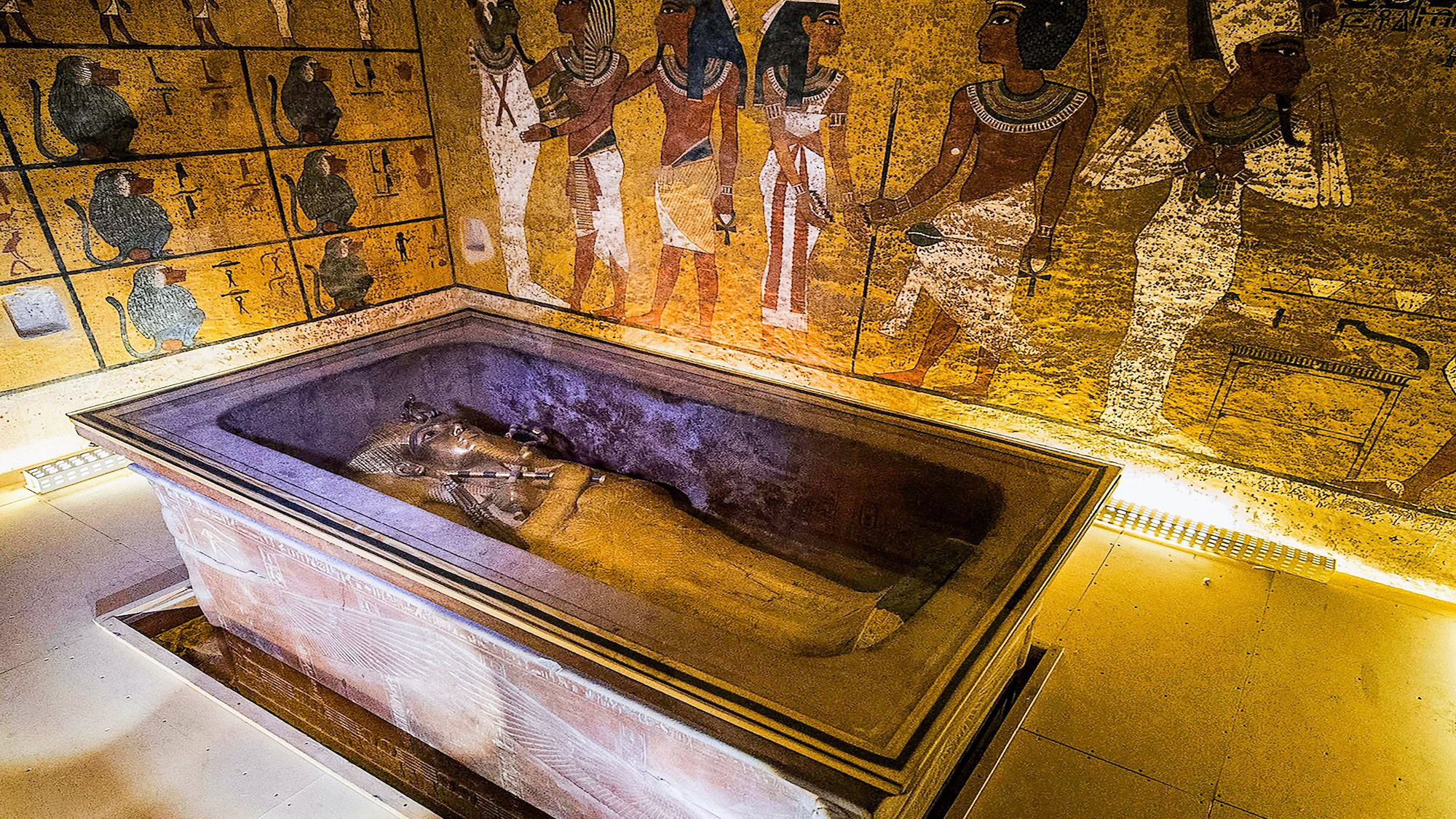
Tomb architects carved elaborate underground networks following specific religious texts like the Amduat, which guided pharaohs through the underworld’s twelve-hour night journey. KV62, Tutankhamun’s tomb, though small and hastily prepared, preserved the only intact royal burial assemblage ever discovered. Its four golden shrines nested like Russian dolls around the pharaoh’s sarcophagus, each decorated with protective spells and divine imagery.
Artistic Architecture in Stone
Ramesses VI’s tomb (KV9) stretches 380 feet into the limestone hillside with walls covered in complete Books of the Dead. The astronomical ceiling depicts Nut, sky goddess, swallowing the sun each evening and giving birth to it each dawn. Corridor walls show precise mathematical calculations of stellar movements, proving that tomb architects were also accomplished astronomers.
Seti I’s tomb (KV17), the valley’s longest at 446 feet, features pillared halls supported by elaborate painted columns. Hidden chambers contained canopic equipment and royal furniture, while false corridors misled grave robbers. The burial chamber’s vaulted ceiling contains the earliest complete star chart found in Egypt, mapping constellations visible from Theban latitude.
Temple of Hatshepsut: Architectural Revolution
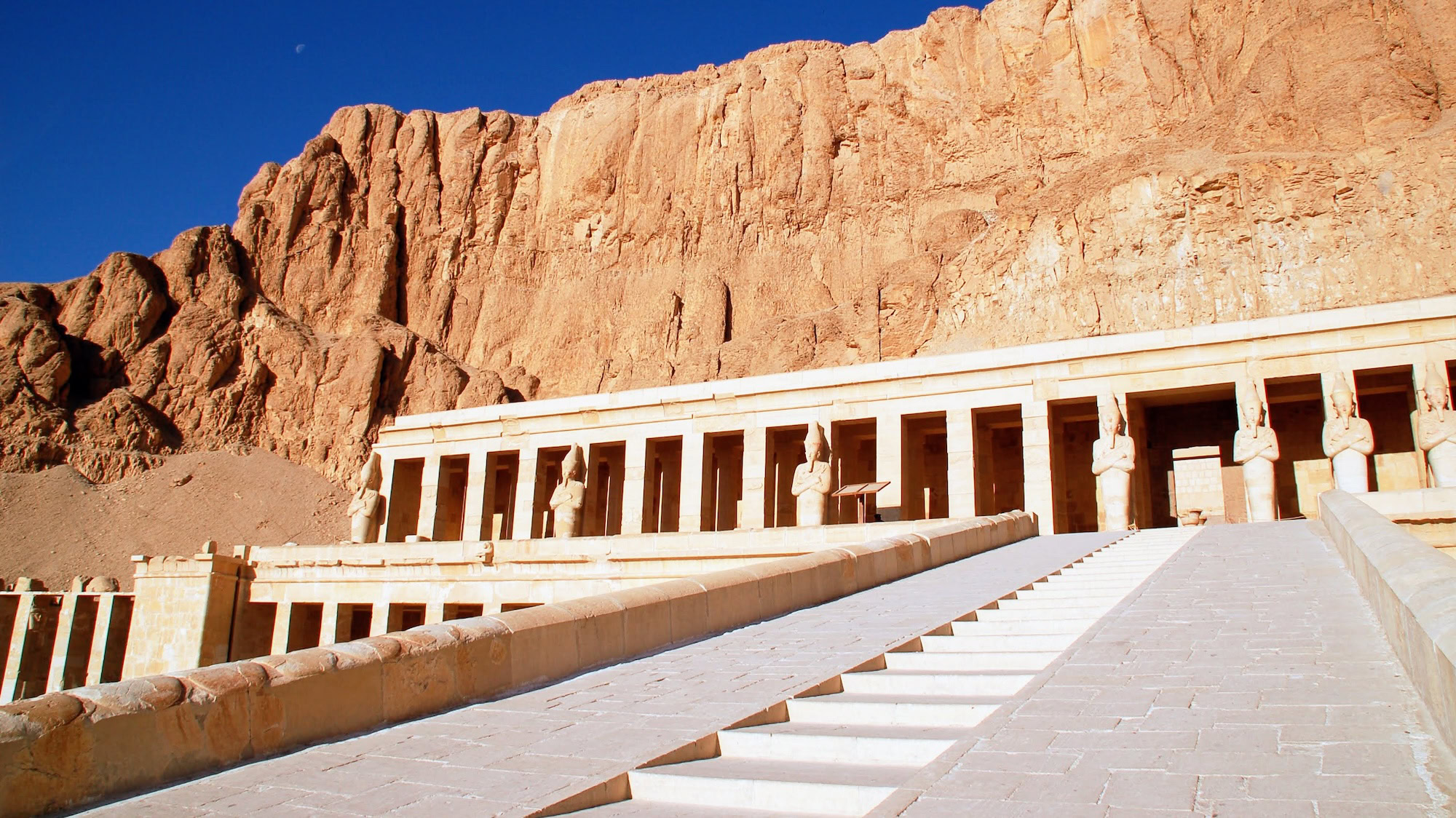
Queen Hatshepsut’s mortuary temple at Deir el-Bahari revolutionized Egyptian architecture by integrating natural rock formations into building design. Rather than competing with the imposing cliffs, architect Senenmut created terraced structures that appeared to grow organically from the mountainside.
Three ascending levels connected by ramps create visual harmony between human construction and natural landscape. The middle terrace’s famous Punt Reliefs document trading expeditions to East Africa, showing myrrh trees, exotic animals, and foreign peoples in unprecedented detail. These scenes transformed temple walls into historical documents preserved for millennia.
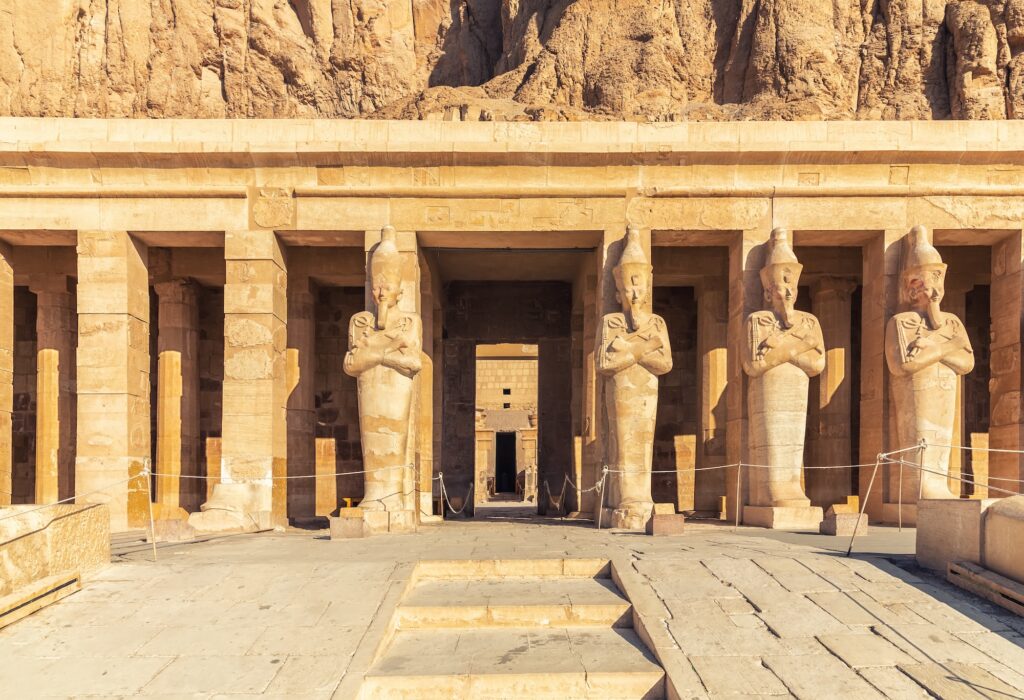
Hatshepsut’s obelisks at Karnak Temple, quarried from single granite blocks in Aswan, required innovative transportation techniques. Ancient records describe specially designed barges capable of carrying 323-ton stone monuments 130 miles down the Nile. The standing obelisk reaches 97 feet and remains the world’s tallest ancient obelisk still in its original location.
Breaking Architectural Gender Barriers
Female pharaohs faced unique architectural challenges in representing divine authority traditionally associated with male rulers. Hatshepsut’s portraits progressively adopted masculine pharaonic attributes—false beard, royal nemes headdress, and muscular torso—while retaining subtle feminine features. Temple reliefs show her performing traditionally male ceremonies like the Sed festival and ritual cattle sacrifice.
The temple’s birth colonnade depicts Hatshepsut’s divine conception by Amun-Ra, establishing religious legitimacy for female rule. These unprecedented scenes required new artistic conventions, as Egyptian art had never before depicted goddess mothers and divine births in royal contexts.
Pyramid of Djoser: Monumental Architecture Origins
Imhotep’s Step Pyramid at Saqqara launched monumental stone architecture around 2630 BCE. This revolutionary design transformed traditional mud-brick mastaba tombs into the world’s first large-scale stone building, standing 204 feet tall in six distinct steps.
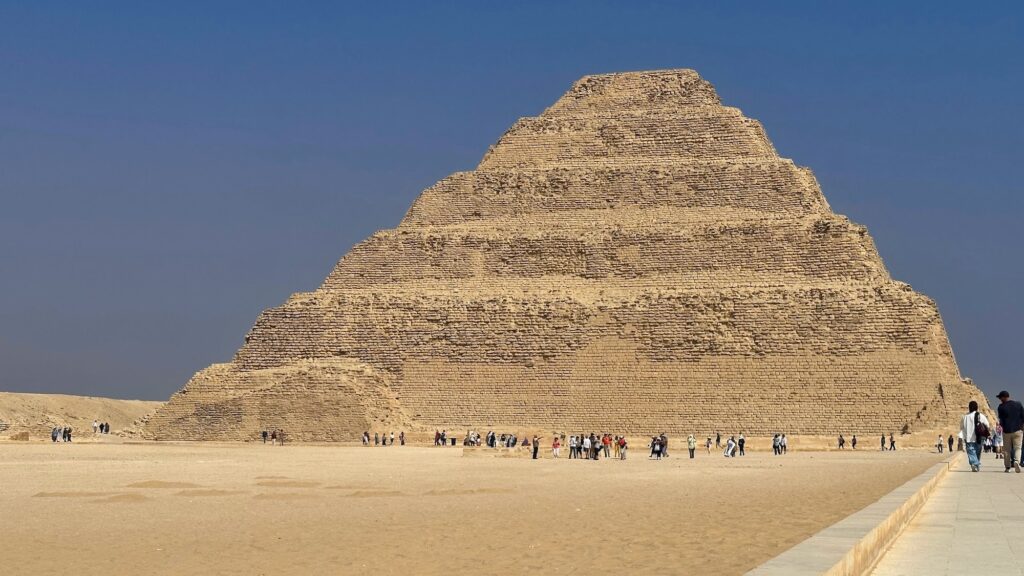
The surrounding complex enclosed 37 acres with elaborate courtyards, chapels, and storage facilities needed for the pharaoh’s eternal afterlife. Underground chambers extend 90 feet below ground, containing 11 shaft tombs for royal family members. Blue faience tiles decorating subterranean walls create the world’s oldest known interior decoration using glazed ceramics.
Imhotep’s architectural innovations included fluted columns mimicking bundled papyrus reeds, corbelled roofs that supported massive stone weights, and false doors allowing the deceased pharaoh’s ka (spiritual essence) to move between worlds. These elements became standard features in later Egyptian monuments.
Temple of Edfu: Ptolemaic Perfection
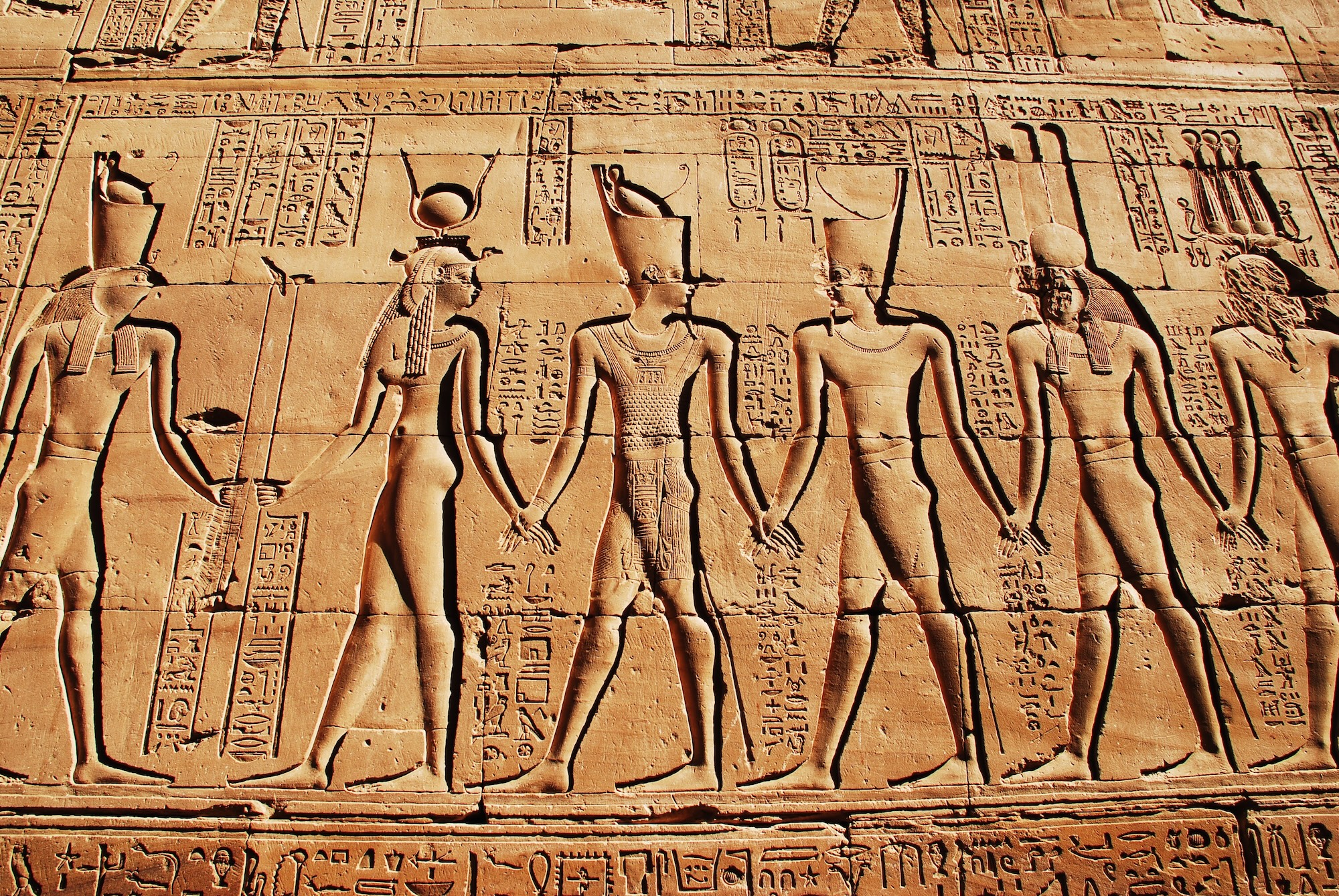
The Temple of Edfu, dedicated to falcon-god Horus, represents the best-preserved major temple in Egypt. Built during Ptolemaic rule (237-57 BCE), it follows traditional Egyptian architectural principles while incorporating Greek organizational efficiency.
Standing 118 feet tall, the temple’s massive pylon gateway depicts Ptolemy XII smiting enemies before Horus—continuing pharaonic artistic traditions under foreign rule. The interior hypostyle hall contains 18 columns with elaborate floral capitals, each uniquely carved with lotus, papyrus, and palm motifs.
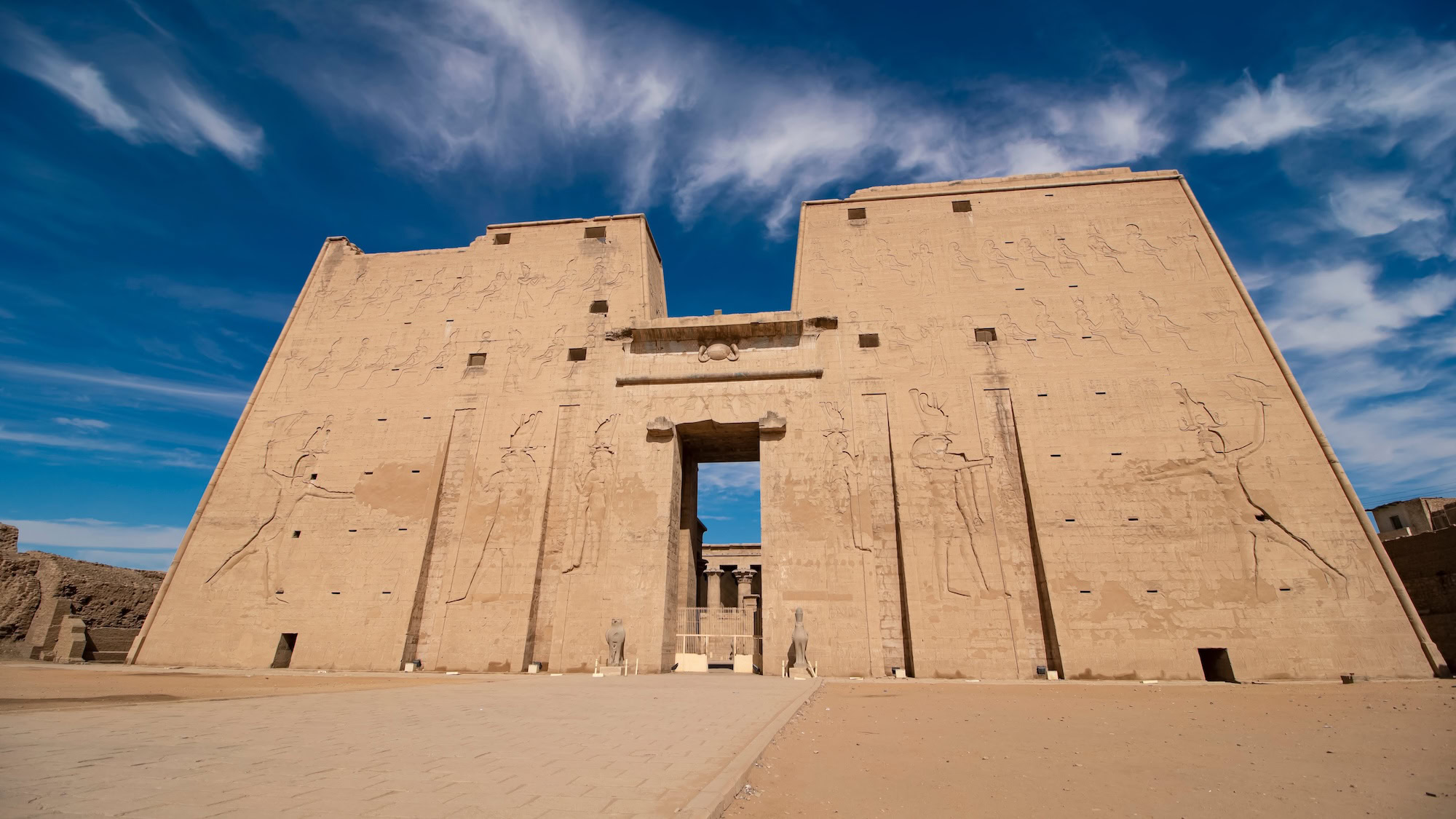
Hieroglyphic inscriptions covering the walls preserve ancient Egyptian building rituals, including foundation ceremonies, wall consecrations, and temple dedication procedures. These texts provide modern scholars with detailed information about Egyptian construction practices and religious ceremonies that archaeological evidence alone cannot reveal.
Colossi of Memnon: Silent Theban Sentinels
Two massive quartzite statues of Amenhotep III, each weighing 720 tons, once guarded his mortuary temple on Thebes’ west bank. Standing 60 feet tall, these monuments demonstrate ancient Egyptian sculpture at colossal scale, transported 420 miles from quarries near modern Cairo.
The northernmost colossus became famous during Roman times for producing musical sounds at dawn, caused by thermal expansion of cracked stone. This acoustic phenomenon attracted ancient tourists including emperors Hadrian and Septimius Severus, who left inscriptions documenting their visits. Roman repairs in 199 CE silenced the statue, ending its reputation as the “singing Memnon.”
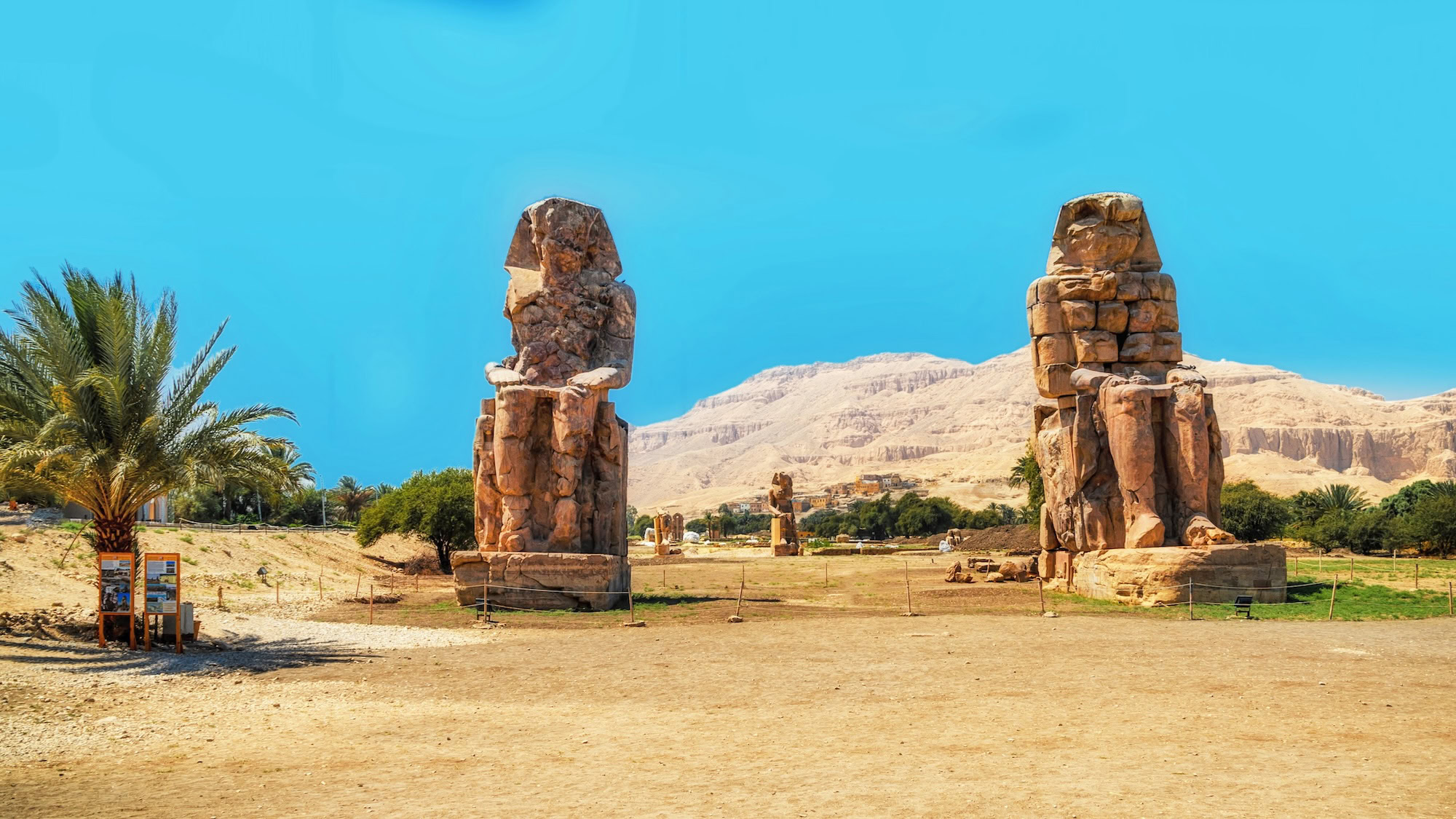
Recent archaeological work has revealed the original temple complex covering 86 acres—larger than Karnak Temple. Amenhotep III’s architects created this vast religious center during Egypt’s most prosperous period, when tribute from conquered territories funded unprecedented building projects.
Engineering Achievements in Stone Transport
Moving 720-ton statues required sophisticated engineering knowledge that ancient Egyptian architects had perfected over centuries. Wooden rollers, copper tools, and precisely coordinated labor forces could accomplish tasks that challenge modern construction equipment. The statues’ perfect preservation despite 3,400 years of Nile floods, earthquakes, and tourist handling testifies to superior carving techniques.
Original paint traces reveal that these monuments once gleamed with bright colors—red skin, black hair, white clothing, and gold jewelry created lifelike appearances that must have impressed ancient visitors. The partial restoration of Amenhotep III’s mortuary temple continues to reveal architectural details buried for millennia.
Ancient Egyptian architecture was built to inspire awe — and it still does.
Step inside temples, tombs, and monuments shaped by millennia of history with our expertly crafted Egypt tour packages.
Frequently Asked Questions
When were the most famous ancient Egyptian monuments built?
The Great Pyramid of Giza was constructed around 2580 BCE, while most major temples like Karnak and Luxor were built and expanded over centuries during the New Kingdom period (1550-1077 BCE).
What materials did ancient Egyptian architects use for their monuments?
Limestone and sandstone were primary building materials, with granite used for obelisks, sarcophagi, and architectural details requiring exceptional durability and precision carving.
How long did it take to build the Great Pyramid of Giza?
Archaeological evidence suggests approximately 20 years of continuous construction, requiring around 20,000 workers including skilled craftsmen, engineers, and seasonal laborers during Nile flood periods.
Why did ancient Egyptians stop building pyramids?
New Kingdom pharaohs chose hidden underground tombs in the Valley of the Kings for better security against grave robbers, while religious beliefs evolved toward more elaborate temple complexes.
What is the best-preserved ancient Egyptian temple?
The Temple of Edfu, dedicated to Horus, remains the most complete major temple due to protective sand burial until modern archaeological excavation began in the 1860s.
How did ancient Egyptians achieve such precise astronomical alignments?
Egyptian architects used sophisticated astronomical observations, copper surveying instruments, and mathematical calculations to align monuments with cardinal directions and celestial events with remarkable accuracy.
What was the religious purpose of ancient Egyptian temples?
Temples served as earthly homes for gods where priests performed daily rituals of feeding, clothing, and caring for divine statues to maintain cosmic balance (ma’at).
Can visitors still enter the Great Pyramid’s internal chambers?
Yes, though access requires separate tickets and involves crawling through narrow passages. The King’s Chamber and Grand Gallery remain accessible to tourists willing to navigate the challenging interior route.
How were massive stone blocks transported for pyramid construction?
Ancient Egyptians used Nile barges during flood season to transport stones from distant quarries, then employed ramps, rollers, and coordinated labor teams to position blocks with precision.
What makes Abu Simbel’s solar alignment so remarkable?
Twice yearly, sunrise penetrates 185 feet into the temple to illuminate three specific statues in the inner sanctuary, likely corresponding to Ramesses II’s birthday and coronation anniversary.
Why are ancient Egyptian monuments still standing after thousands of years?
Egypt’s dry climate, skilled engineering using interlocking stone blocks without mortar, and massive construction scale created structures capable of withstanding earthquakes, floods, and human interference.
What role did the Nile River play in ancient Egyptian architecture?
The Nile provided transportation for massive stone blocks, seasonal flooding that freed agricultural workers for construction projects, and fertile silt that supported the population necessary for monumental building campaigns.
Design Your Custom Tour
Explore Egypt your way by selecting only the attractions you want to visit