

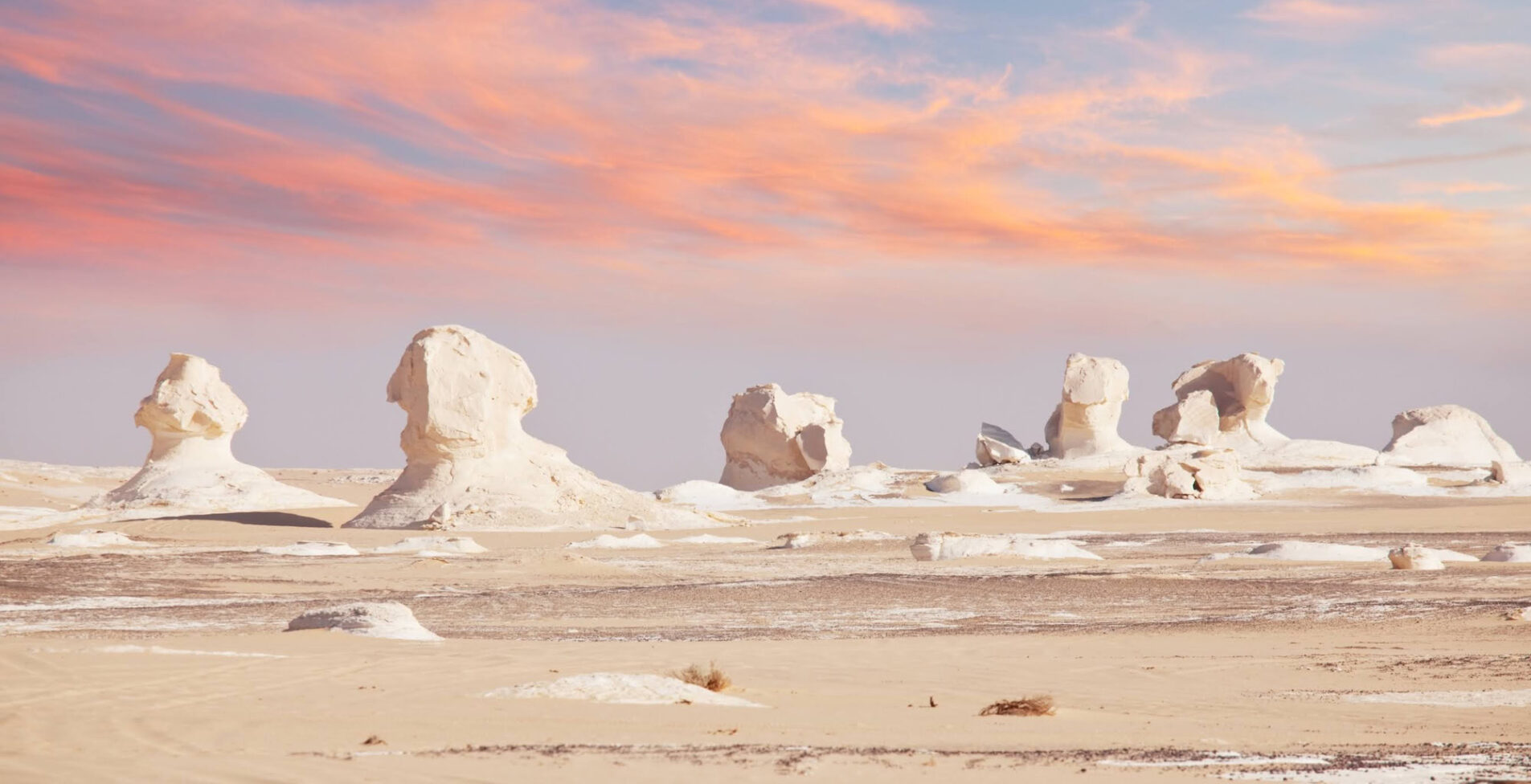
Egypt’s most surreal landscape, four hours from Cairo
White Desert Tours
Trade the monuments for a landscape from another planet with our White Desert Tours. Wind-carved chalk formations, the volcanic Black Desert, Crystal Mountain, and hot-spring oases lie just four hours west of Cairo, best experienced with a night of camping under some of the clearest skies on Earth. Every tour runs with your own private guide and 4×4, from a 3-day camping escape to a 13-day Sahara-and-Nile journey.
Your Guide to Egypt’s White Desert
Cairo’s dusty streets fade into memories when your 4×4 vehicle turns toward the Western Desert.
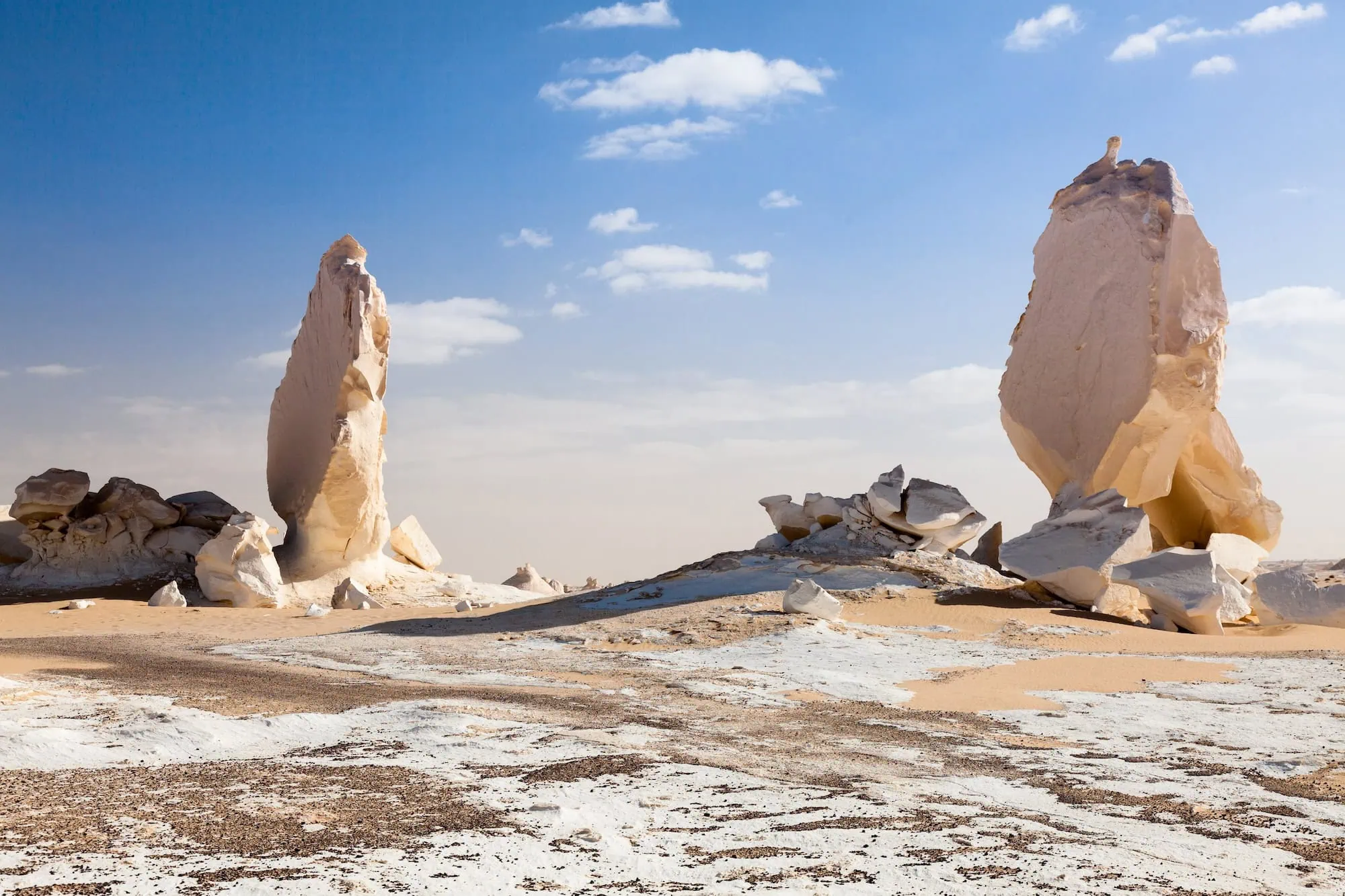
The White Desert National Park stretches across 3,010 square kilometers (1,162 square miles) of Egypt’s most surreal landscape, where limestone formations create an otherworldly experience just four hours from Cairo. Unlike the golden dunes most travelers expect, this protected area showcases nature’s artistry through chalk-white sculptures carved by millennia of wind and sand. We’ve guided thousands of adventurers through these mystical formations, watching their amazement as reality transforms into something from another planet.
Planning your white desert expedition requires understanding the seasonal variations, choosing between camping styles, and selecting guides who truly know the terrain’s hidden treasures.
Table of Contents
What Makes Egypt’s White Desert Extraordinary
The Western Desert reveals its secrets gradually as you journey deeper into Farafra Oasis territory. Temperatures drop dramatically after sunset, creating perfect stargazing conditions where the Milky Way appears with stunning clarity against the unpolluted sky. Crystal Mountain stands as a natural waypoint, its quartz formations catching sunlight like a beacon across the desert floor.
Geological Wonders Beyond Imagination
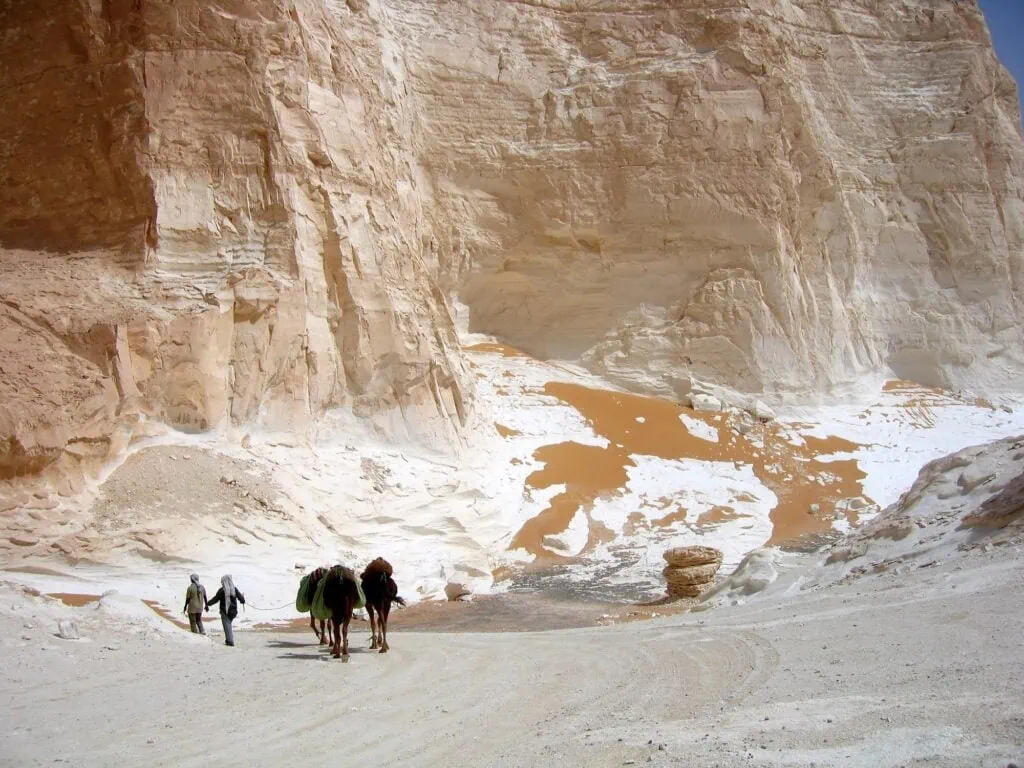
Chalk formations create natural sculptures resembling mushrooms, chickens, and abstract art pieces scattered across the desert floor. These limestone masterpieces formed over millions of years through a combination of sea-level changes and wind erosion that continues shaping new formations today. The contrast between brilliant white chalk and deep blue sky creates photographic opportunities that professional nature photographers travel internationally to capture.
Some formations reach heights of 15 meters (49 feet), creating natural shelters where Bedouin families have rested for generations during desert crossings.
The Black Desert Experience
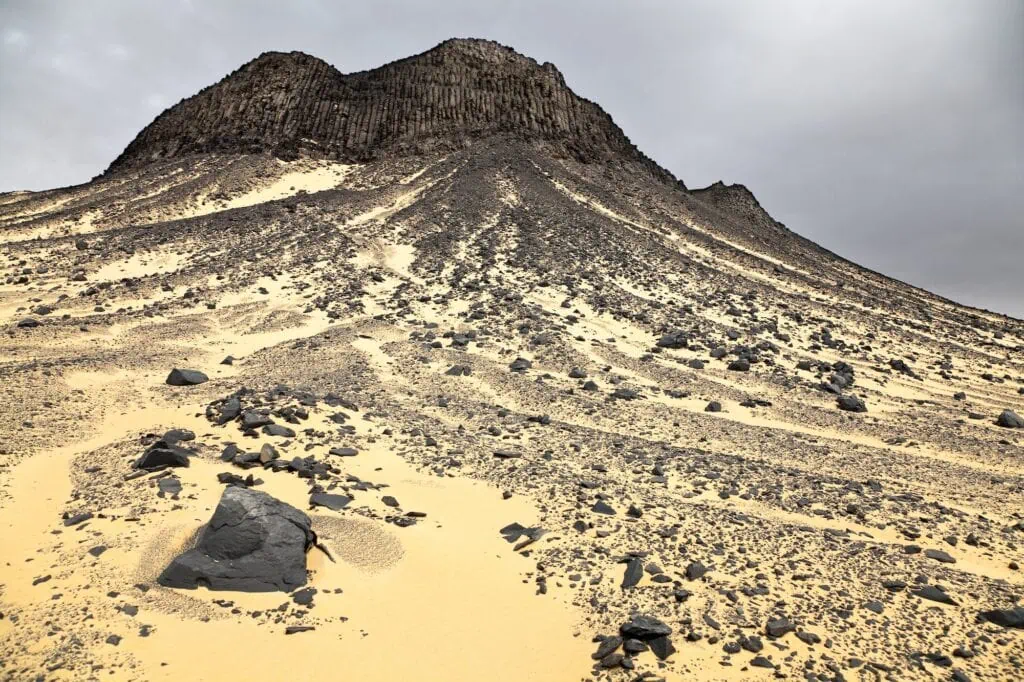
Before reaching the white formations, most tours include stops at the Black Desert, where volcanic activity left iron-rich rocks scattered across darker terrain. This dramatic landscape transition prepares visitors for the White Desert’s ethereal beauty while showcasing Egypt’s diverse geological history. The temperature difference between black rock surfaces and surrounding sand can exceed 20°C (36°F) during midday hours.
Bahariya Oasis: Your Gateway
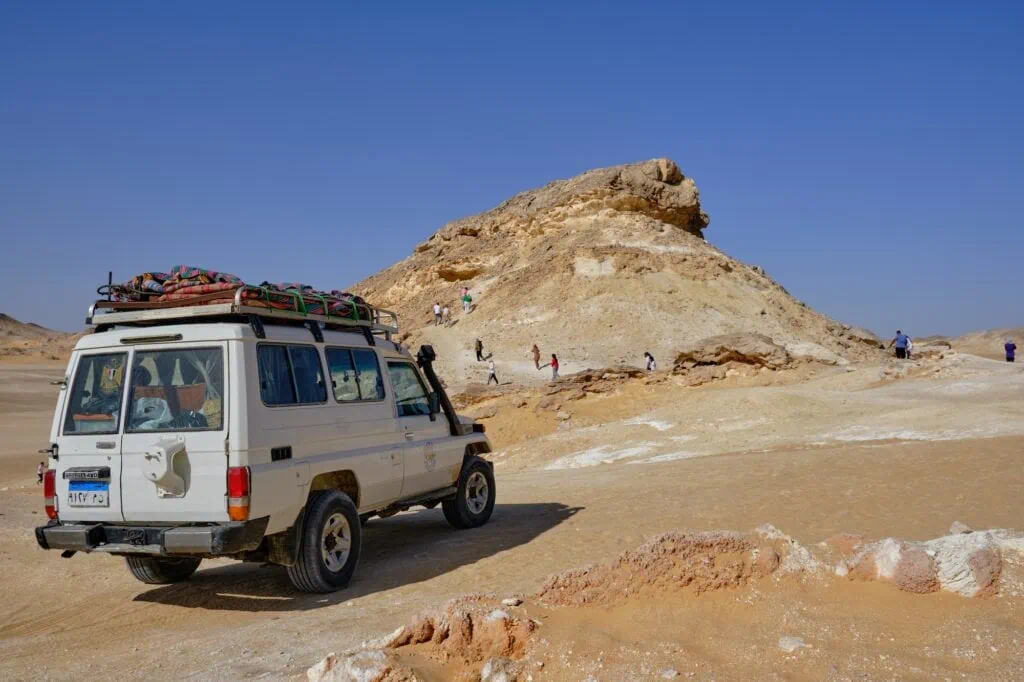
Bahariya Oasis serves as the primary departure point for White Desert expeditions, offering hot springs, palm groves, and traditional Bedouin hospitality before your desert adventure begins. The oasis provides essential supplies, vehicle maintenance, and cultural orientation that enhances your understanding of desert life. Local families have operated tourism businesses here for over 35 years, passing knowledge through generations about safe desert navigation and weather patterns.
Planning Your Desert Safari Adventure
Desert expeditions require careful timing and preparation to maximize comfort while ensuring safety across changing weather conditions. We recommend visiting between October and April when daytime temperatures range from 20-25°C (68-77°F) and nighttime temperatures drop to 5-10°C (41-50°F), creating ideal conditions for both exploration and camping under the stars.
Three-Day Escapes vs. Longer Expeditions
Three-day tours focus on the essential White Desert experience, with stops at Crystal Mountain and the Black Desert and one or two nights of camping among the formations, perfect for travellers with limited time. Longer expeditions of six to eight days add the full oasis circuit, from Bahariya and Farafra to the remote formations rarely visited on shorter tours. Longer journeys allow time for camel riding experiences and deeper cultural exchanges with Bedouin guides who share traditional stories around evening campfires.
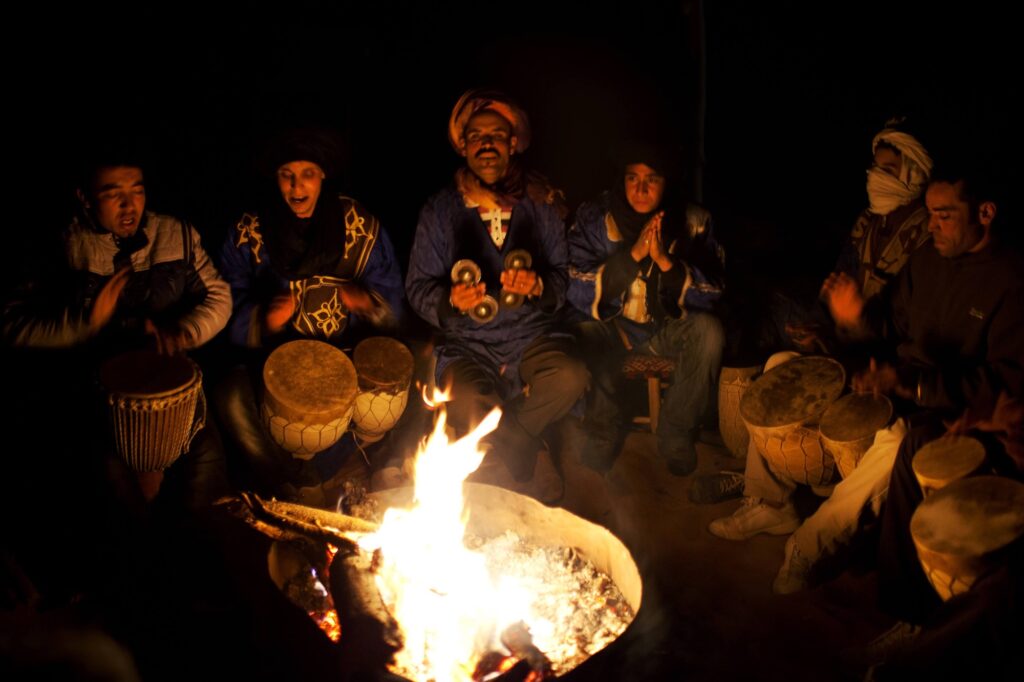
The extra day transforms your adventure from sightseeing into cultural immersion where desert survival techniques and astronomical knowledge become part of your education.
Equipment and What to Bring
Desert temperatures fluctuate dramatically between day and night, requiring layered clothing that adapts to changing conditions throughout your journey. Warm sleeping bags rated for 0°C (32°F) are essential even during warmer months, as clear desert skies allow rapid heat loss after sunset. Sunscreen with SPF 50+ protection prevents severe burns from reflected sunlight off white chalk surfaces that intensify UV exposure beyond normal desert levels.
Comfortable hiking boots with ankle support help navigate uneven terrain safely while protecting feet from sharp limestone edges hidden beneath sand. Photographers should bring extra batteries, as cold temperatures drain power faster and sand can damage electronic equipment without proper protection.
Camping Under the Desert Stars
Nothing prepares you for the profound silence of a White Desert night, when city noise becomes just a memory and stars reveal themselves in numbers impossible to see elsewhere. Spending a night camping in the White Desert is, for many, the most unforgettable part of the journey.
Professional desert camping setups include comfortable bedding, full weather protection, and gourmet meals prepared by experienced camp cooks, transforming simple ingredients into memorable dining around crackling fires.
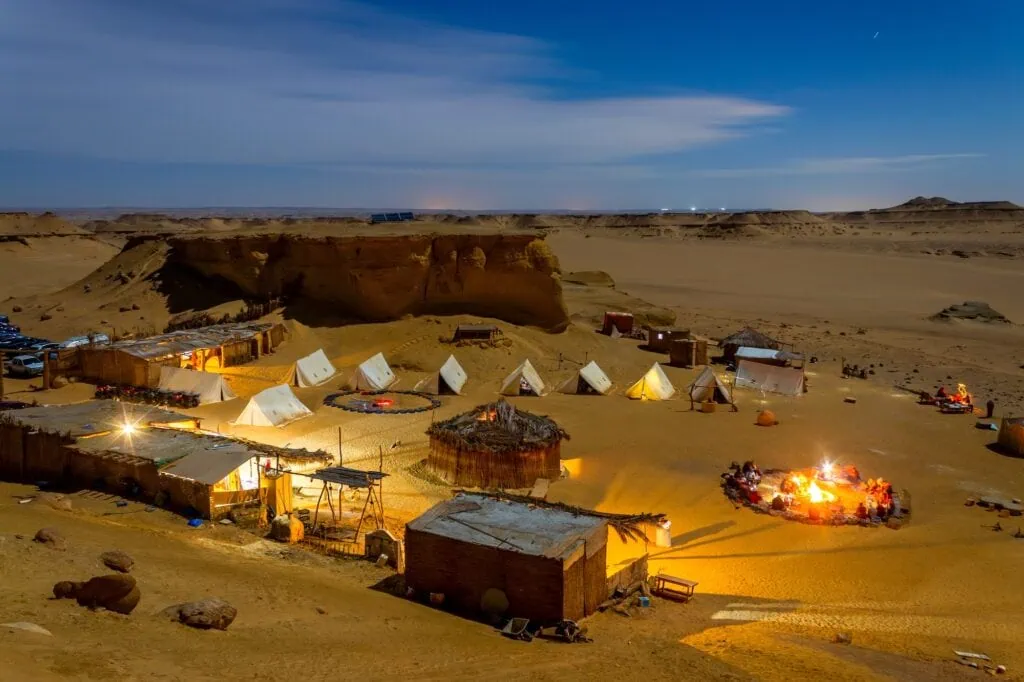
Bedouin families bring traditional knowledge about reading weather patterns, finding water sources, and navigating by celestial landmarks that guided desert travelers for centuries before modern GPS technology. Our camping locations are carefully selected for wind protection, scenic sunrise views, and proximity to the most photogenic formations for early morning photography sessions.
Facilities and Comfort in the Desert
Modern desert camping balances authentic wilderness experience with essential comforts that ensure restful nights and enjoyable days. Private bathroom facilities, comfortable sleeping arrangements, and protection from wind and sand allow travelers to focus on the natural beauty rather than survival concerns. Meals include fresh ingredients transported daily from Cairo markets, ensuring quality nutrition throughout your adventure.
Solar-powered lighting systems provide illumination for evening activities while preserving the natural darkness essential for astronomical observation. Hot beverages and warm meals become especially appreciated as temperatures drop and desert winds pick up after sunset.
Photography and Stargazing Opportunities
The White Desert offers world-class astrophotography conditions where the Milky Way appears as a brilliant arc across unpolluted skies free from light pollution. Professional photographers often visit specifically for these celestial displays, capturing images impossible to achieve near populated areas. Dawn and dusk provide golden hour lighting that transforms white limestone into warm, glowing sculptures perfect for landscape photography.
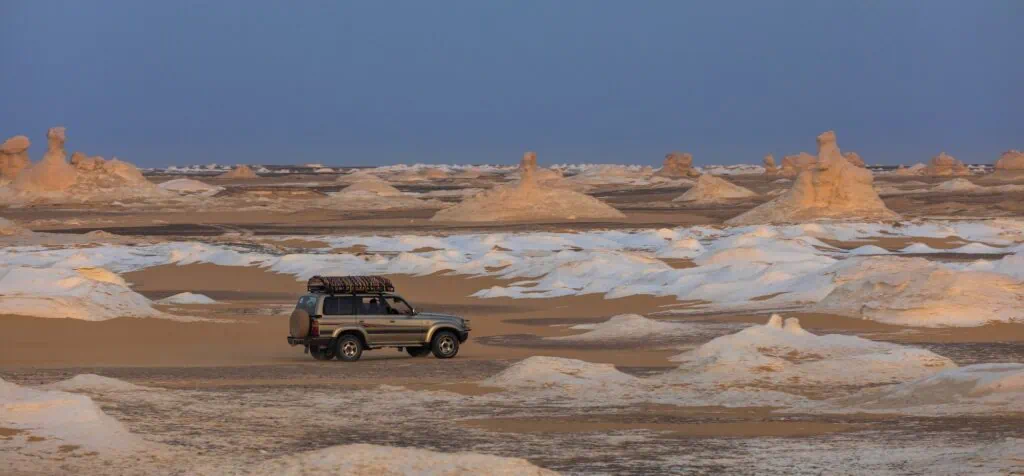
We provide guidance on optimal camera settings for both daytime formations and nighttime sky photography, helping amateur photographers achieve professional-quality results during their desert adventure.
Cultural Connections with Bedouin Traditions
Bedouin guides share generations of accumulated knowledge about desert survival, weather prediction, and navigation techniques developed through centuries of nomadic life across Egypt’s Western Desert. These cultural exchanges transform simple camping trips into educational experiences where traditional stories, desert philosophy, and practical survival skills blend into unforgettable evening entertainment around campfires.
Local families demonstrate traditional bread baking in sand ovens, tea preparation ceremonies, and handicraft techniques that reflect authentic Bedouin culture rather than tourist-oriented performances. Many guides speak multiple languages including Arabic, English, and German, facilitating meaningful communication that deepens cultural understanding throughout your journey.
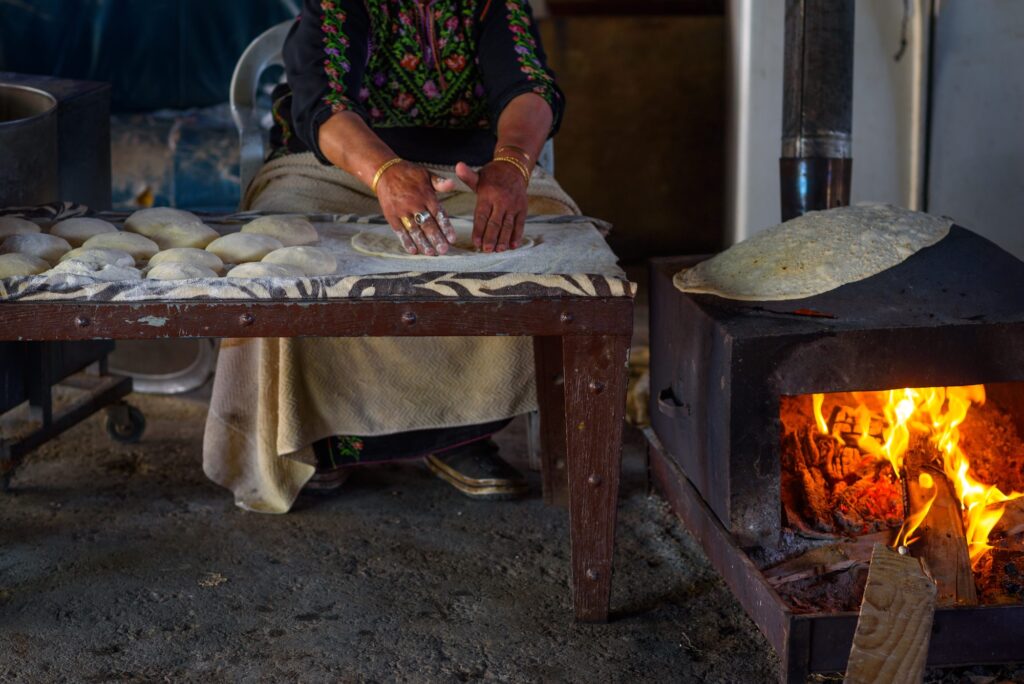
The hospitality traditions of desert peoples create welcoming environments where strangers become temporary family members sharing meals, stories, and mutual respect for the harsh but beautiful landscape that shapes their daily lives. These personal connections often become the most treasured memories from White Desert expeditions.
Best Times to Visit Throughout the Year
October through April provides optimal weather, with comfortable daytime temperatures and clear night skies perfect for stargazing and photography. Summer, from May through September, brings intense heat regularly exceeding 40°C (104°F) at midday, making desert activities demanding without careful preparation and hydration.
Spring months (March-May) offer transitional weather that can be unpredictable, with occasional sandstorms that limit visibility and create challenging driving conditions across desert terrain.
Health and Safety Considerations
Desert environments require increased water consumption, typically 3-4 liters per person per day to prevent dehydration in dry air and elevated temperatures. Sun protection becomes critical as reflected light from white chalk surfaces doubles UV exposure compared to normal desert conditions. Pre-existing respiratory conditions may be aggravated by fine sand particles, so travelers with asthma or similar concerns should consult healthcare providers before departure.
Our guides carry first aid equipment, satellite communication devices, and extra food and water supplies as standard safety precautions for all desert expeditions. Clear emergency procedures are in place for all remote areas, with evacuation routes planned in advance should a serious medical situation arise.
We maintain 24/7 customer support and coordinate with local authorities to ensure traveler safety throughout all desert adventures, drawing on decades of experience operating in challenging environments.
Make the White Desert Part of a Journey Designed Just for You
From the silence of the desert to the energy of Cairo and the timeless beauty of the Nile, your Egypt trip should feel effortless, personal, and unforgettable. With a fully customized itinerary, you decide where to go, how long to stay, and what to experience, while we handle every detail behind the scenes.
Travel privately, comfortably, and with complete peace of mind, knowing everything is tailored around you.
Frequently Asked Questions
White Desert tours typically cost between $150 and $250 per person for a 2-day, 1-night expedition, while longer 3-day programs often range from $300 to $450 depending on vehicle type, accommodation style, and group size. Prices usually include four-wheel-drive transportation, desert permits, camping equipment, meals, and guide services. Private departures cost more because fuel and logistics are spread across fewer travelers. Winter departures between November and February are often the most expensive because demand for desert camping rises significantly.
The White Desert is famous for its surreal white chalk limestone formations shaped by wind erosion, while most Egyptian desert regions feature sand dunes, black volcanic rock, or flat gravel plains. Located within Egypt’s Western Desert near Farafra Oasis, the landscape resembles natural sculptures rather than traditional Sahara scenery. Mushroom-shaped rocks, towering chalk pillars, and bright white surfaces create especially dramatic sunrise and moonlight photography conditions. The geological contrast between the White Desert and nearby Black Desert makes combined tours particularly popular with travelers.
Families with children can safely visit the White Desert when traveling with experienced guides using properly equipped four-wheel-drive vehicles and established camping sites. Many operators recommend children be at least 6 years old because journeys from Cairo or Bahariya Oasis involve long driving hours and significant temperature changes between day and night. Winter tours are usually more comfortable for younger travelers because daytime temperatures remain moderate. Parents should pack extra water, layered clothing, sun protection, and snacks for remote desert conditions.
The best Milky Way visibility in the White Desert usually occurs between October and March during dark moon phases when skies remain clear and light pollution is almost nonexistent. The Western Desert’s remote location creates exceptional astrophotography conditions because nearby towns are hundreds of kilometers away. Winter nights also tend to have lower atmospheric haze, improving visibility of constellations and deep-sky features. Travelers interested in stargazing should schedule overnight camping rather than day trips because the clearest viewing begins several hours after sunset.
Travelers with limited mobility can still experience parts of the White Desert because many major rock formations are accessible by vehicle with only short walking distances required. However, uneven desert terrain, loose sand, and camping logistics can make extended exploration physically challenging for visitors with significant mobility restrictions. Some tour operators adapt itineraries with closer vehicle access and reduced walking routes near major formations. Private tours generally offer the most flexibility because schedules and stop durations can be customized around accessibility needs.
The White Desert lies approximately 500 km (310 miles) southwest of Cairo, and the journey usually takes 6 to 7 hours including the route through Bahariya Oasis. Most tours travel first on paved highways before continuing by four-wheel-drive vehicle into protected desert areas near Farafra. Because of the long distance and remote terrain, overnight stays are strongly recommended instead of attempting a rushed same-day return. Travelers combining the White Desert with Bahariya Oasis or Black Desert attractions often choose multi-day itineraries for a more balanced pace.
Standard cameras and smartphones work well in the White Desert, but tripods, lens cloths, and protective camera bags are highly recommended because sand and dust are constant environmental factors. Night photography equipment becomes especially valuable for Milky Way and long-exposure shots during overnight camping trips. Wide-angle lenses perform particularly well because the White Desert’s formations and open skies create dramatic panoramic compositions. Batteries also drain faster during cold winter nights, so carrying spare charged batteries is strongly advised for photographers.
Vegetarian and vegan meals are commonly available on White Desert camping tours when dietary requirements are communicated before departure into the Western Desert. Typical camp meals include rice, lentils, grilled vegetables, salads, tahini, beans, potatoes, and traditional Egyptian bread cooked fresh at camp. Because desert expeditions operate far from supermarkets and restaurants, advance planning is essential for accommodating allergies or specialized diets. Travelers requiring gluten-free or medically restricted meals should confirm details directly with their tour operator before booking.
Wildlife in the White Desert includes desert foxes, small reptiles, migratory birds, and occasionally Dorcas gazelles adapted to harsh Sahara conditions. Animal sightings are never guaranteed because many species remain nocturnal or avoid areas with vehicle activity during hot daylight hours. Early morning and sunset excursions generally offer the best chances for observing wildlife tracks or movement across the desert landscape. Winter months often improve visibility because cooler temperatures increase animal activity around isolated vegetation and sheltered rock formations.
White Desert tours can often be customized around interests such as astrophotography, geology, archaeology, meditation retreats, birdwatching, or extended off-road desert exploration. Private itineraries allow travelers to spend more time at formations like Crystal Mountain, the Black Desert, or remote camping areas with minimal tourist traffic. Egypt Tours Plus and similar operators can also adjust pacing, meal planning, and photography schedules for specialized experiences. Customized tours are especially valuable for travelers wanting sunrise, sunset, or Milky Way photography sessions without group time constraints.
Design Your Private Western Desert Adventure
Travel with your own expert guide, private 4×4 vehicle, and a route tailored to you.