Deir El Medina – An Ancient Egyptian Village Revealed
Step into history’s most fascinating working-class neighborhood.
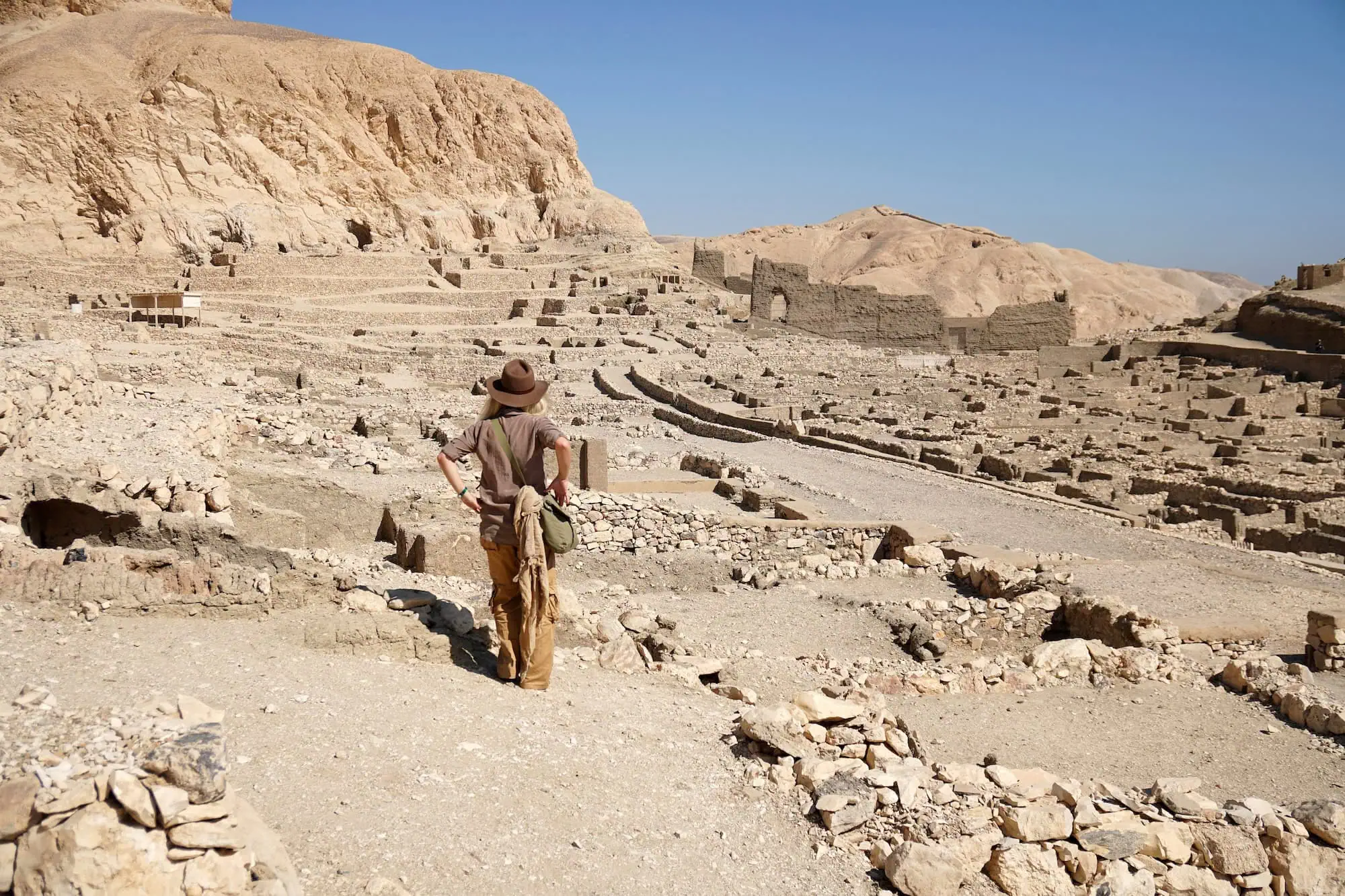
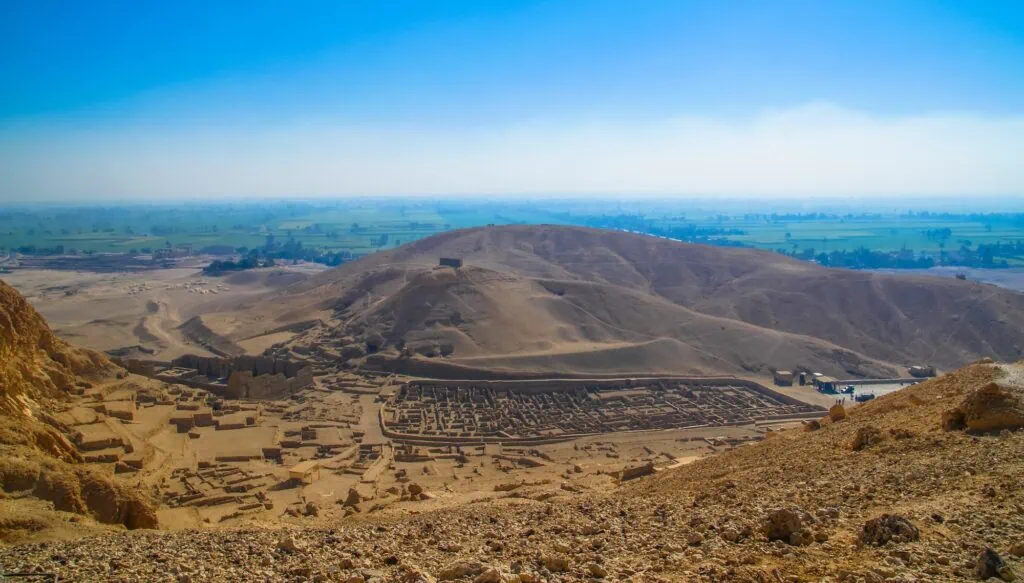
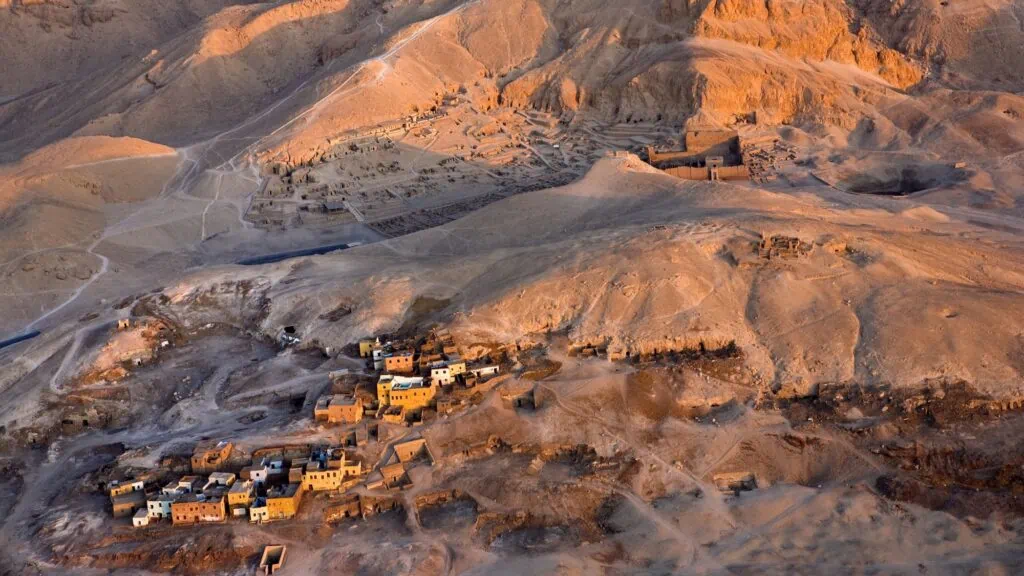
Hidden in the desert hills near Luxor lies a remarkable archaeological treasure that most visitors never hear about: Deir el-Medina. This ancient Egyptian village once housed the skilled craftsmen who carved and decorated the royal tombs in the Valley of the Kings and Queens. Unlike the grand monuments built for pharaohs, this settlement tells the story of ordinary people who created extraordinary art.
What makes this site unique isn’t just its historical importance—it’s the intimate glimpse it offers into daily life 3,000 years ago. From the first recorded labor strike in history to beautifully preserved private tombs, Deir el-Medina reveals how ancient Egyptians lived, worked, and died in ways no other archaeological site can match.
Table of Contents
Discovering Ancient Egypt’s Most Organized Workforce
The village of Pa Demi (its ancient name meaning “the town”) was no ordinary settlement. Pharaoh Amenhotep I founded this planned community around 1550 BCE as a secure base for the artisans responsible for creating royal burial chambers.
The Royal Tomb Builders
These weren’t common laborers. The residents of Deir el-Medina were elite craftsmen—painters, sculptors, architects, and foremen—who possessed the skills and security clearance to work on Egypt’s most sacred projects. They carved tombs for legendary rulers like Tutankhamun, Ramesses II, and Seti I during Egypt’s New Kingdom period.
The village operated with military-like precision. Workers were organized into two crews, each led by a foreman, with specific roles ranging from quarrymen who cut the initial chambers to artists who applied the final decorative touches. This specialization created some of the most spectacular tomb art ever discovered in the Valley of the Kings.
A Self-Contained Community
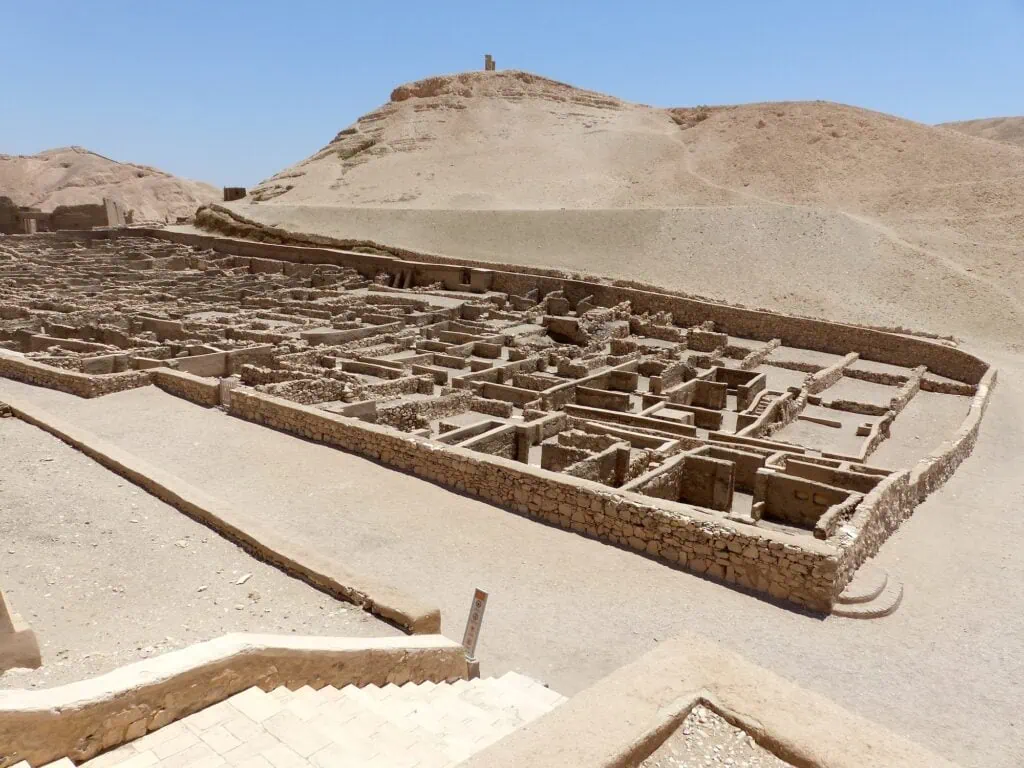
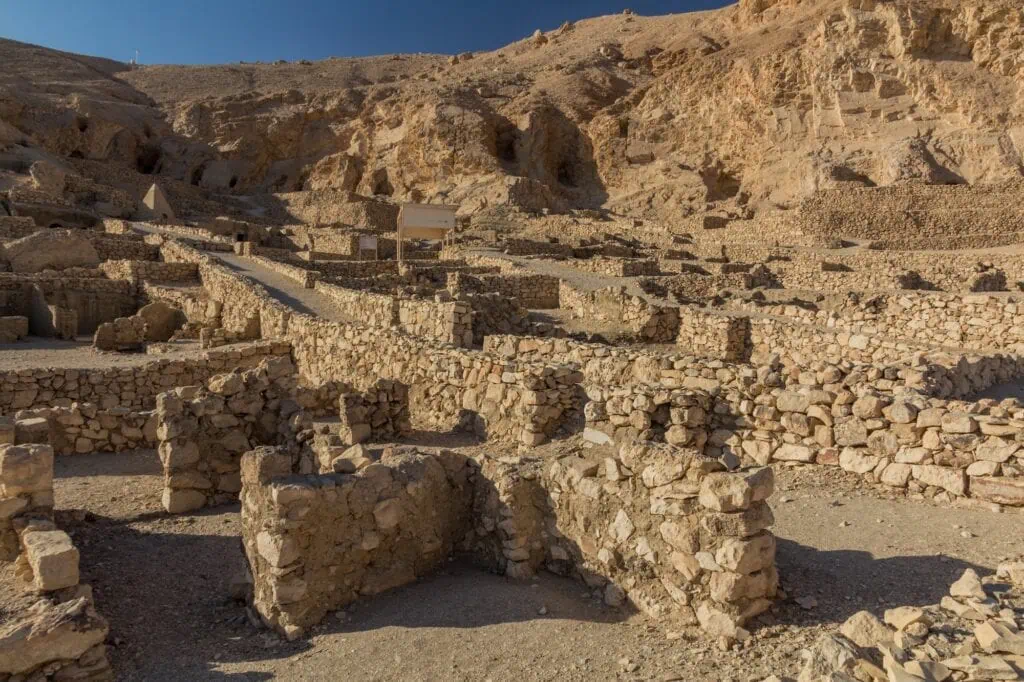
Set-maat, as the village was also known, housed approximately 400 residents at its peak. The settlement stretched across 5,600 square meters (60,300 square feet) and contained 68 houses arranged along a main street. Each dwelling reflected the social status of its occupants—higher-ranking artisans enjoyed larger homes with multiple rooms, while junior workers lived in smaller, more modest accommodations.
The community included its own water delivery system, as the desert location meant daily water imports from the Nile. Donkey caravans brought not only water but food, tools, and other necessities from nearby Thebes, making the village entirely dependent on external support systems.
Working Conditions and Schedules
Life followed a strict routine. Workers typically spent eight days at the job site, staying in stone huts near the Valley of the Kings, then returned home for two days of rest. During peak construction periods under pharaohs like Ramesses II, teams worked around the clock to meet royal deadlines.
The job wasn’t without risks. Beyond the physical dangers of working deep underground, tomb builders faced threats from grave robbers who sometimes targeted sites even during construction. Security measures included guards and careful documentation of all materials entering and leaving work sites.
Life in the World’s First Documented Labor Strike
Deir el-Medina made history in ways its residents never anticipated. Under Ramesses III, delayed grain payments led to the world’s first recorded labor strike around 1152 BCE.
The protest began when government rations failed to arrive on schedule. Rather than continue working without pay, the craftsmen laid down their tools and marched to nearby mortuary temples, demanding their overdue wages. Ancient records written on ostraca (pottery shards and limestone fragments) document their complaints: “We have come here because of hunger and thirst. We have no clothing, oil, fish, or vegetables.”
The strike succeeded. Within days, authorities delivered back pay and promised regular future payments. This victory demonstrated the workers’ collective power and established precedents for organized labor that wouldn’t reappear in recorded history for another thousand years. The incident also reveals how economic pressures during Egypt’s declining New Kingdom period affected even essential royal projects.
The documentation of this strike provides unprecedented insight into ancient Egyptian labor relations. Workers weren’t slaves but skilled professionals who understood their value and weren’t afraid to demand fair compensation. Their success shows that even in pharaonic Egypt, royal projects depended on maintaining worker satisfaction.
Unparalleled Archaeological Preservation and Discoveries
French archaeologist Bernard Bruyère’s excavations from 1922 to 1951 uncovered an archaeological goldmine. The dry desert climate preserved organic materials that typically decay elsewhere, creating an unusually complete picture of ancient daily life.
The site yielded over 5,000 ostraca and papyri—more written material than any other ancient Egyptian settlement. These documents include work schedules, legal proceedings, personal letters, shopping lists, and marriage contracts. One famous ostraca contains a worker’s complaint about his supervisor Paneb, accusing him of corruption and abuse of power.
Personal possessions survived in remarkable condition. Archaeologists found wooden furniture, leather sandals, makeup containers, mirrors, jewelry, and even leftover food. Children’s toys, including wooden dolls and spinning tops, provide touching evidence of family life in ancient times.
Religious Practices and Personal Beliefs
The village’s spiritual life centered around local deities, particularly Meretseger, the cobra goddess who protected the royal necropolis. Residents built small shrines throughout the settlement and regularly participated in religious festivals that combined official Egyptian religion with more personal, folk practices.
Archaeological evidence reveals a community deeply concerned with the afterlife. Many villagers commissioned their own elaborately decorated tombs, demonstrating both their artistic skills and their desire for eternal comfort. These private burial chambers often feature higher-quality artwork than tombs of much wealthier individuals in other locations.
Daily Social Organization
The community operated its own legal system, with local courts handling everything from property disputes to criminal cases. Records show that women enjoyed considerable legal rights, including the ability to own property, conduct business, and initiate divorce proceedings. One famous resident, Naunakhte, left a detailed will distributing her property among her children based on how well they had cared for her in old age.
Social stratification was clearly visible in housing arrangements and burial practices. Master craftsmen occupied prime locations with larger homes, while apprentices and support staff lived in smaller quarters. However, all residents enjoyed higher living standards than typical ancient Egyptian workers, reflecting their specialized skills and royal employment.
Visiting Deir el-Medina Today: What Travelers Experience
Modern visitors find a site that offers Egypt’s most intimate archaeological experience. Unlike the crowded Valley of the Kings, Deir el-Medina typically hosts fewer than 50 tourists per day, creating opportunities for genuine personal discovery.
The Village Ruins
The ancient settlement’s layout remains clearly visible. Stone foundations outline individual houses, streets, and community buildings. Walking through these ruins, visitors can easily imagine daily life as residents moved between their homes, the village well, and small workshops where they prepared tools and materials.
Interpretive signs explain the function of different areas, though the site’s remote location means fewer amenities than major tourist destinations. The absence of large tour groups creates a contemplative atmosphere that many travelers find more rewarding than visiting overcrowded monuments.
Tomb Access and Preservation
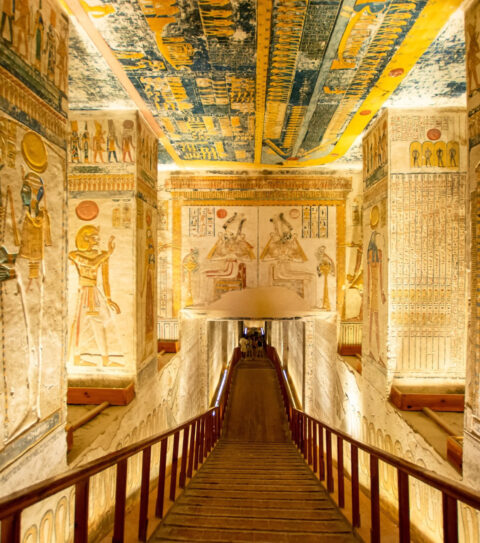
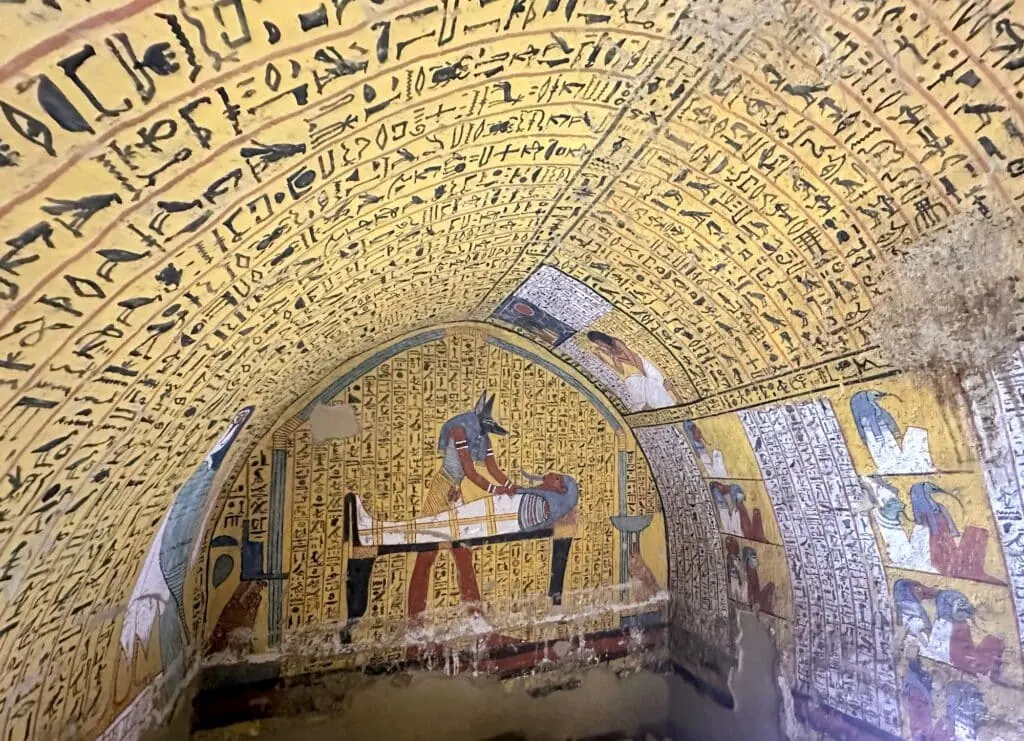
Three private tombs are open to public viewing: Sennedjem, Peshedu, and Inherka. These burial chambers showcase the artistic skills villagers applied to their own eternal resting places. The paintings remain remarkably vivid, protected by glass barriers that allow close viewing while preventing damage.
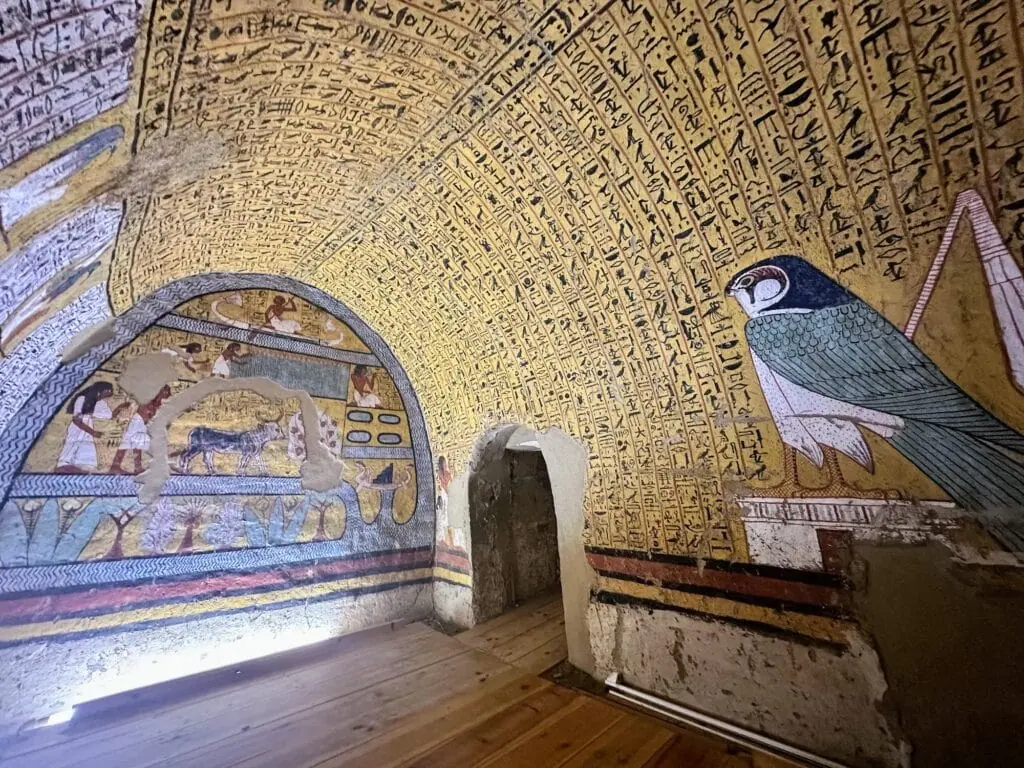
Sennedjem’s tomb particularly impresses visitors with scenes showing the deceased and his wife working in the afterlife fields. The artwork’s detail and preservation often surprises travelers who expect faded, damaged paintings. Many report that these modest private tombs contain better-preserved art than much larger royal burial chambers.
Access requires some physical flexibility. The tombs feature narrow passages, low ceilings, and steep staircases that can challenge visitors with mobility limitations. However, the intimate scale creates a personal connection with ancient individuals that massive royal tombs cannot match.
Practical Considerations
Entry tickets cost 100 Egyptian pounds (approximately $3.25 USD) and can be purchased at the site entrance. Each tomb requires a separate ticket, though combination passes offer modest savings. Site attendants expect tips of 20-50 Egyptian pounds per tomb, which helps maintain these guards’ livelihoods while ensuring proper site supervision.
The location sits about 1 kilometer (0.6 miles) from the main road to the Valley of the Queens. Most visitors arrive by taxi or as part of organized tours that include multiple West Bank sites. The walk from the parking area to the tombs takes approximately 10 minutes across uneven desert terrain.
Planning Your Visit
Early morning visits (8:00 am to 10:00 am) offer the best experience with cooler temperatures and fewer crowds. The site closes during the hottest midday hours (12:00 pm to 2:00 pm) from June through September.
The Site’s Modern Archaeological Significance
Research continues at Deir el-Medina under international archaeological teams. Recent discoveries include previously unknown ostraca that shed new light on the village’s economic relationships with surrounding communities.
Computer modeling now recreates the ancient settlement’s appearance, showing how buildings looked during the New Kingdom period. These reconstructions help visitors understand the site’s original layout and appreciate the sophistication of ancient urban planning.
The village’s documentation systems serve as models for studying other ancient working communities. Scholars use Deir el-Medina’s records to understand labor practices, family structures, and economic systems throughout pharaonic Egypt. This research influences modern understanding of how large-scale construction projects functioned in the ancient world.
Conservation efforts focus on protecting the remaining structures from wind erosion and rare desert rainfall. International funding supports ongoing stabilization work and the development of improved visitor facilities that balance access with preservation needs.
Getting There and Combining with Other Sites
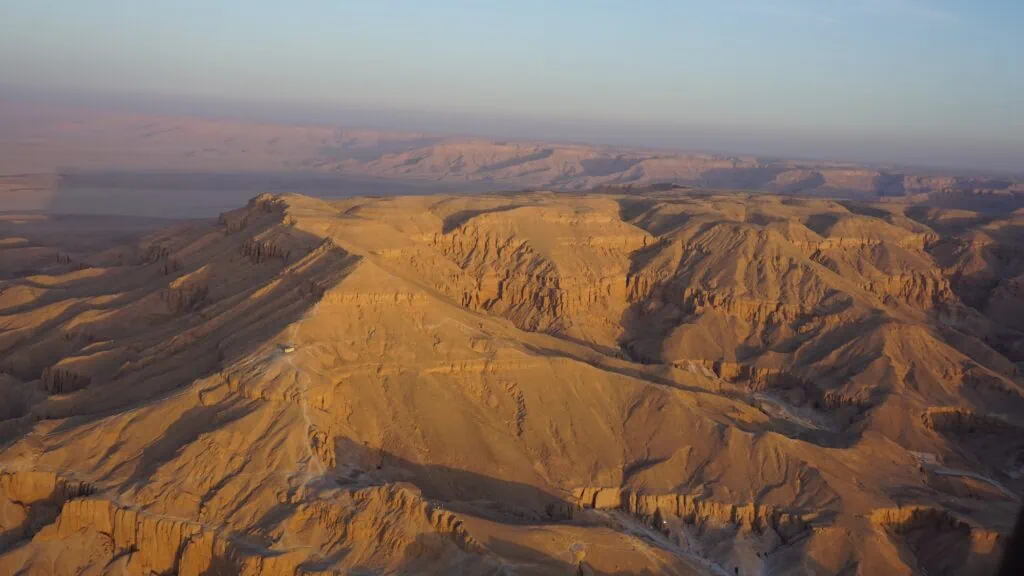
Deir el-Medina works perfectly as part of a broader West Bank exploration. Most visitors combine it with the Valley of the Queens, located just 2 kilometers (1.2 miles) away, creating a logical touring sequence that showcases both royal and commoner burial practices.
Transportation from central Luxor typically takes 45 minutes by taxi or tour bus. Public transportation exists but requires multiple connections and local knowledge that makes private transportation more practical for most international visitors.
The site pairs well with the Valley of the Kings, though combining all three locations (Kings, Queens, and Deir el-Medina) in a single day creates a rushed experience. We recommend dedicating at least two days to West Bank exploration, allowing sufficient time to appreciate each site’s unique character.
Many travelers find Deir el-Medina provides a perfect counterbalance to the grandeur of royal monuments. After experiencing the overwhelming scale of pharaonic tombs, the village’s human-scale architecture and intimate decoration create a more personal connection to ancient Egyptian civilization.
For visitors staying multiple days in Luxor, Deir el-Medina often becomes a favorite discovery—a place where ancient history feels most accessible and real. The combination of exceptional preservation, fascinating social history, and peaceful atmosphere creates memories that last long after returning home.
Step Into The Lives Behind The Tombs
Deir El Medina offers a rare and human perspective on ancient Egypt—where the artisans who built the great tombs lived, worked, and left behind some of the most detailed and personal art in the country. With EgyptToursPlus, we seamlessly include this unique site in a private journey that connects iconic landmarks with deeper, more meaningful discoveries.
You choose your travel dates, your pace, and the experiences that shape your route. From in-depth cultural exploration and expert-guided visits to Nile cruises and refined comfort throughout, we tailor every detail around your preferences—ensuring a smooth, immersive, and deeply personal travel experience.
Frequently Asked Questions
Most visitors should allow 2-3 hours at Deir el-Medina to explore the ancient workers’ village, walk through the settlement ruins, and visit the decorated tombs open to the public. The site is smaller than the Valley of the Kings but contains exceptionally detailed artwork and inscriptions created by the craftsmen who built royal tombs during the New Kingdom, especially under the 18th to 20th Dynasties. Travelers interested in photography or hieroglyphic scenes often stay longer. Early morning visits provide cooler temperatures and fewer crowds.
Some tombs at Deir el-Medina can feel challenging for visitors with claustrophobia because entrances often involve narrow corridors, steep stairways, and low ceilings inside compact burial chambers. Unlike larger royal tombs in the Valley of the Kings, these private tombs were designed for artisans and officials rather than pharaohs, so interior spaces are much tighter. Ventilation can also feel limited during busy periods. Visitors uncertain about confined spaces may prefer viewing only selected tombs after assessing the entrance conditions first.
Deir el-Medina tombs differ from the Valley of the Kings because they belonged to skilled workers and officials rather than pharaohs, creating a more personal and intimate artistic style. The smaller chambers often preserve vivid colors and scenes of family life, religious rituals, and daily activities rarely emphasized in royal tombs focused on divine kingship and the afterlife. Many experts consider Deir el-Medina’s paintings among the best-preserved in Luxor. Visitors also encounter significantly fewer crowds than at major royal burial sites.
Yes, Deir el-Medina can be visited independently because the site includes basic signage and a relatively straightforward layout on Luxor’s West Bank. However, many of the tomb scenes and village ruins become far more meaningful with expert interpretation explaining the lives of the artisans who built the royal necropolis nearby. Guides also identify important details easily missed by casual visitors, including rare depictions of daily labor and funerary practices. Independent visitors should still research tomb numbering and opening schedules beforehand.
Visitors to Deir el-Medina should bring comfortable walking shoes, bottled water, sunscreen, sunglasses, and small cash notes for optional attendant tips or local purchases. The site sits in Luxor’s dry desert environment where temperatures frequently exceed 35°C (95°F) outside winter months, especially after midday. Interior tomb chambers can also feel warm and confined during busy periods. Cameras are recommended because the tomb paintings remain exceptionally colorful and detailed compared to many larger Egyptian archaeological sites.
Deir el-Medina is generally not included with standard entry to larger Luxor attractions and usually requires a separate admission ticket purchased through Egypt’s antiquities ticketing system. Some broader Luxor Pass packages may provide access depending on current regulations and ticket categories, but standard West Bank tickets typically do not include the site automatically. Combination visits with nearby attractions such as Medinet Habu and the Valley of the Queens are common because of their close proximity on the West Bank.
Deir el-Medina is unique among Egyptian archaeological sites because it preserves the daily lives of ordinary skilled workers rather than focusing exclusively on kings, priests, or monumental temples. The village housed the artisans responsible for constructing royal tombs in the Valley of the Kings during the New Kingdom, particularly between approximately 1550 and 1070 BCE. Excavations uncovered homes, tools, letters, contracts, and personal religious objects that provide unusually detailed insight into ancient Egyptian society beyond the royal court.
The best time to visit Deir el-Medina is between October and March, when Luxor’s daytime temperatures are typically far more comfortable for walking and tomb exploration. Winter highs often range between 22°C and 30°C (72°F to 86°F), while summer temperatures regularly exceed 40°C (104°F) on the exposed West Bank. Morning visits also improve the experience because tomb interiors remain cooler and less crowded earlier in the day. Photographers benefit from softer sunlight during the first hours after opening.
Basic visitor facilities are available near the entrance to Deir el-Medina, including restrooms, ticket offices, and limited refreshment vendors. Compared to major sites such as Karnak Temple or the Valley of the Kings, infrastructure remains relatively simple, so visitors should not expect extensive dining or shaded rest areas within the archaeological zone itself. Carrying extra water and small snacks is strongly recommended, especially during warmer months when prolonged walking under direct sun becomes physically demanding by late morning.
Deir el-Medina lies approximately 15 km from central Luxor on the West Bank of the Nile, with travel times usually ranging from 30 to 45 minutes depending on traffic, ferry crossings, and hotel location. Most visitors reach the site by private car, taxi, organized tour vehicle, or through West Bank excursion packages combining multiple archaeological attractions. The village sits near Medinet Habu and the Valley of the Queens, making it easy to include within a full-day Luxor itinerary focused on New Kingdom history.
Yes, children can visit the tombs at Deir el-Medina, particularly older children interested in ancient Egypt, art, or archaeology. The colorful wall paintings and scenes of everyday life often feel more relatable to families than purely ceremonial royal tombs elsewhere in Luxor. Parents should supervise carefully because passageways can be narrow, ceilings low, and floors uneven inside some chambers. The desert heat on Luxor’s West Bank can also become intense quickly, so morning visits and frequent hydration are strongly recommended.
The artwork at Deir el-Medina is especially important because it presents ancient Egyptian life from the perspective of skilled workers and local officials rather than kings alone. Many tombs preserve remarkably vivid New Kingdom paintings showing farming, banquets, family scenes, religious rituals, and funerary beliefs with unusual emotional detail. The dry climate of Luxor helped protect pigments for more than 3,000 years, leaving colors surprisingly intact in several chambers. Scholars consider these tombs among Egypt’s finest examples of non-royal funerary art.
Design Your Custom Tour
Explore Egypt your way by selecting only the attractions you want to visit
Don’t miss Egypt’s greatest treasures