The Avenue of Sphinxes – An Amazing Project of Queen Hatshepsut
Ancient Egypt continues to astonish the world with each archaeological discovery.
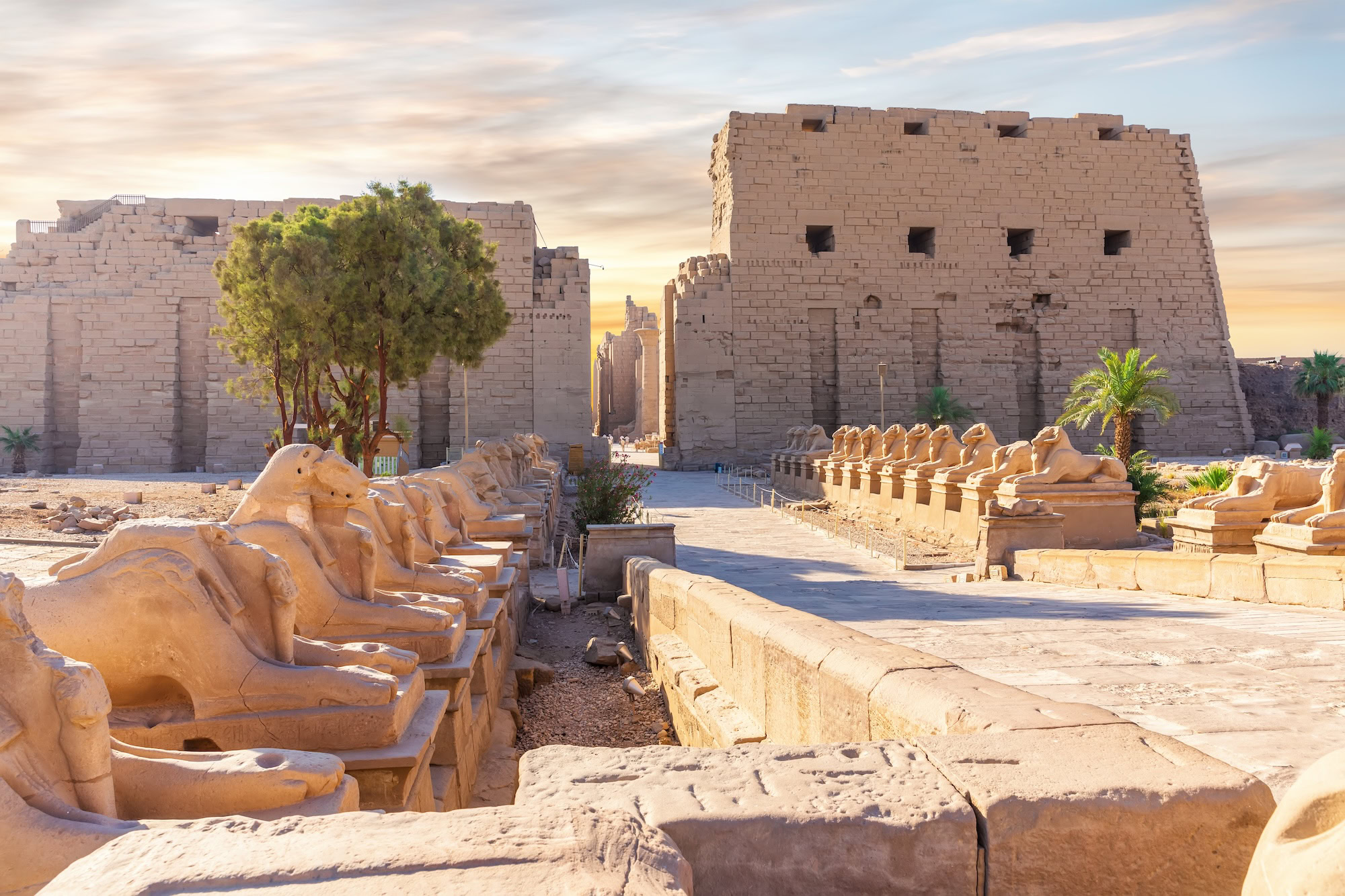
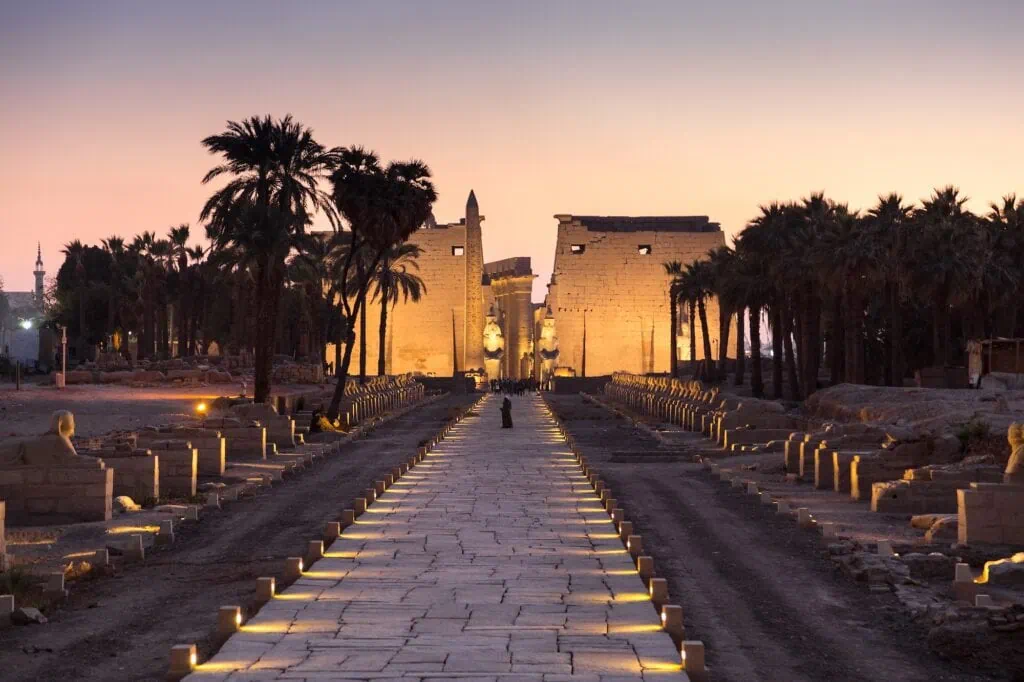
The Avenue of Sphinxes stands as one of the most magnificent ceremonial pathways ever constructed, stretching an impressive 2.7 kilometers (1.7 miles) between the magnificent temples of Karnak and Luxor. This extraordinary ancient roadway, known locally as El-Kebbash Road or the Path of God, represents over three millennia of Egyptian architectural achievement and religious devotion. Originally conceived during the New Kingdom period and completed under Pharaoh Nectanebo I, this sacred avenue once hosted some of ancient Egypt’s most important religious festivals.
Today, visitors can walk in the footsteps of pharaohs and experience firsthand the grandeur that once defined ancient Thebes. The avenue’s 2021 reopening marked a historic moment, allowing modern travelers to witness 1,057 sphinx statues that have stood sentinel over this holy path for thousands of years.
Table of Contents
Historical Origins and Construction Timeline
The Avenue of Sphinxes represents one of ancient Egypt’s most ambitious architectural projects. Queen Hatshepsut initiated the earliest phase during her remarkable 22-year reign, establishing the foundation for what would become the ancient world’s most spectacular ceremonial roadway.
The New Kingdom Foundation
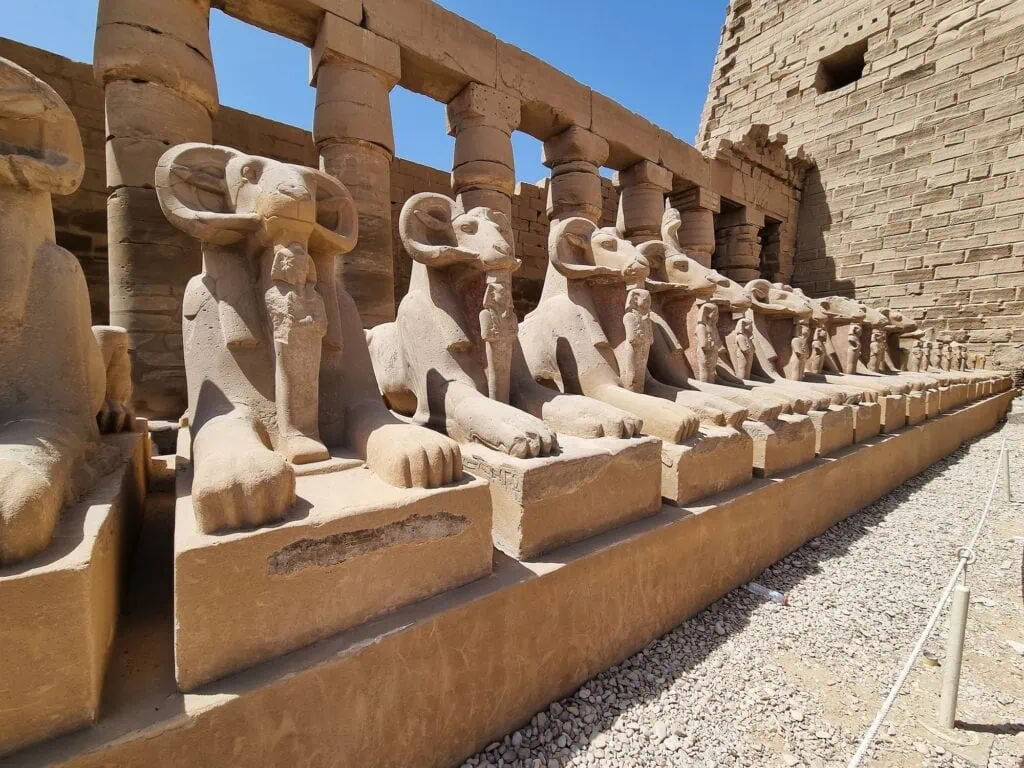
During the 18th Dynasty, Amenhotep III expanded Hatshepsut’s vision considerably. His architects designed the avenue to accommodate massive religious processions during the annual Opet Festival, when the sacred barque of Amun-Ra would travel from Karnak Temple to visit the gods at Luxor Temple. This religious journey required a pathway worthy of the gods themselves, leading to the construction of the first sphinx-lined sections.
Archaeological evidence suggests that Amenhotep III’s workers carved hundreds of ram-headed sphinxes from sandstone quarried near Aswan. These magnificent creatures, each measuring approximately 3 meters (10 feet) in length, represented the god Amun in his ram form, emphasizing the divine nature of the ceremonial path.
Late Period Completion
Pharaoh Nectanebo I of the 30th Dynasty completed the ambitious project around 380 BCE. His architects extended the avenue to its full 2.7-kilometer length, adding human-headed sphinxes in certain sections to create the diverse sculptural landscape visitors admire today. Nectanebo’s completion transformed the avenue into a unified ceremonial space connecting two of Egypt’s most important religious complexes.
The Late Period construction included sophisticated drainage systems and paved walkways designed to withstand centuries of religious processions and flooding from the annual Nile inundation.
The Three Distinct Sphinx Forms
Walking along the Avenue of Sphinxes reveals three remarkable sculptural traditions that developed across different historical periods.
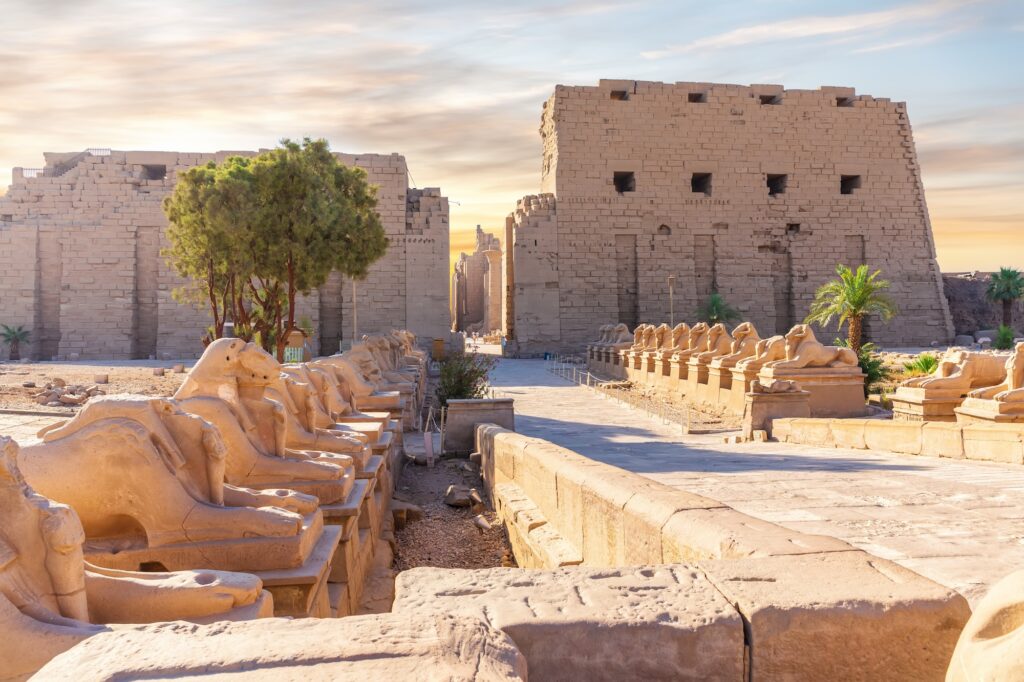
Ram-headed sphinxes dominate the northern section near Karnak Temple. These powerful creatures feature the body of a lion with the head of Amun’s sacred ram, symbolizing divine protection and royal power. Between their front paws, small statues of pharaohs stand under the ram’s protective chin, demonstrating the intimate relationship between earthly rulers and divine authority.
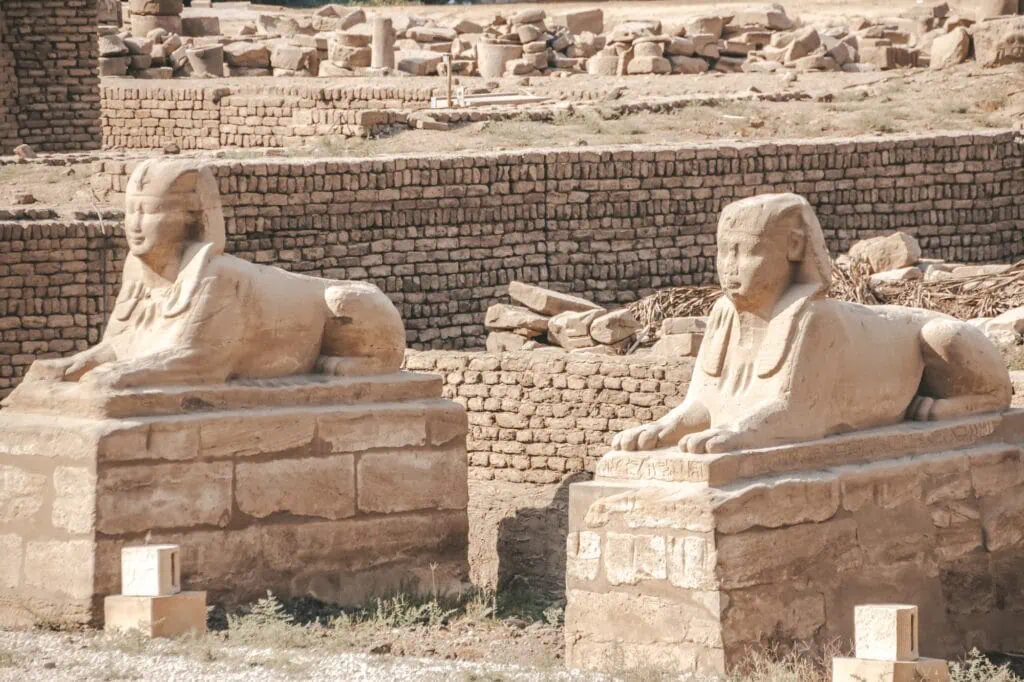
Human-headed sphinxes appear primarily in the central and southern sections. These sculptures typically bear the faces of specific pharaohs, most notably Amenhotep III and later rulers who contributed to the avenue’s construction. The human faces represent the pharaoh’s role as divine intermediary, bridging the mortal and divine realms.
The third form combines elements of both traditions, featuring sphinx bodies with various divine attributes. Some statues incorporate falcon wings or other sacred symbols, reflecting the complex religious beliefs that influenced ancient Egyptian art and architecture.
Each sphinx originally stood on a sandstone pedestal, elevating these divine guardians above the ceremonial pathway. Many pedestals still bear hieroglyphic inscriptions identifying the pharaohs who commissioned specific statues or detailing religious formulas protecting the sacred route.
Religious Significance and Opet Festival
The Avenue of Sphinxes served as the spectacular stage for ancient Egypt’s most important religious celebration. The annual Opet Festival transformed this ceremonial pathway into a river of devotion, music, and divine mystery.
During this 27-day festival, priests carried the sacred barques of Amun, Mut, and Khonsu from their sanctuary at Karnak Temple to the inner chambers of Luxor Temple. The procession included hundreds of priests, musicians, dancers, and royal officials, creating one of the ancient world’s most magnificent religious spectacles. Thousands of ordinary Egyptians lined the avenue, offering prayers and witnessing the gods’ annual journey.
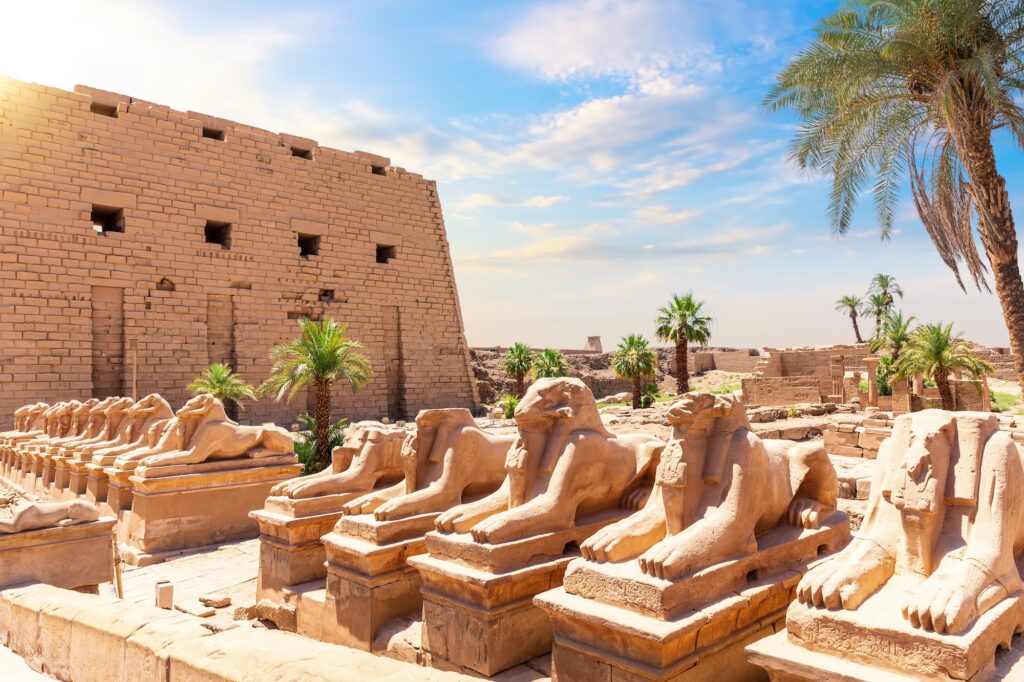
The festival symbolized the renewal of pharaonic power and divine blessing for Egypt. As the sacred barques passed between the sphinx guardians, ancient Egyptians believed they witnessed the physical manifestation of divine will on earth. The avenue’s design amplified this spiritual experience, with each sphinx serving as a protective deity ensuring safe passage for the gods.
Archaeological evidence suggests that temporary pavilions and offering tables were erected along the route during festival periods. These structures provided rest stops for the sacred procession and allowed priests to perform specific rituals at predetermined points along the journey.
Modern visitors can still sense this sacred atmosphere, particularly during early morning hours when soft sunlight illuminates the sphinx statues and creates dramatic shadows across the ancient pathway.
Modern Restoration and 2021 Reopening
The Avenue of Sphinxes underwent extensive restoration work beginning in the early 2000s, representing one of Egypt’s most ambitious archaeological projects. Dr. Zahi Hawass led the initial excavation efforts, uncovering centuries of sand and debris that had buried significant portions of the ancient pathway.
Archaeological Challenges and Discoveries
Restoration teams faced numerous challenges, including modern buildings constructed directly over ancient sections of the avenue. The Egyptian government relocated entire neighborhoods to allow archaeologists access to buried sphinx statues and original pathway stones. This massive undertaking required careful documentation of each archaeological layer, revealing fascinating insights into how different civilizations used and modified the avenue over thousands of years.
Excavations uncovered evidence of Roman and Coptic Christian modifications to the original Egyptian structures. Some sphinx statues bore Latin inscriptions, while others showed signs of deliberate damage from early Christian iconoclasts who viewed the pagan monuments as threats to their faith.
The Golden Parade Celebration
The avenue officially reopened to the public in November 2021 during the spectacular “Golden Parade” ceremony. President Abdel Fattah el-Sisi presided over festivities that included light shows, musical performances, and ceremonial processions reminiscent of ancient Egyptian religious celebrations. The reopening marked the culmination of nearly two decades of restoration work and international archaeological cooperation.
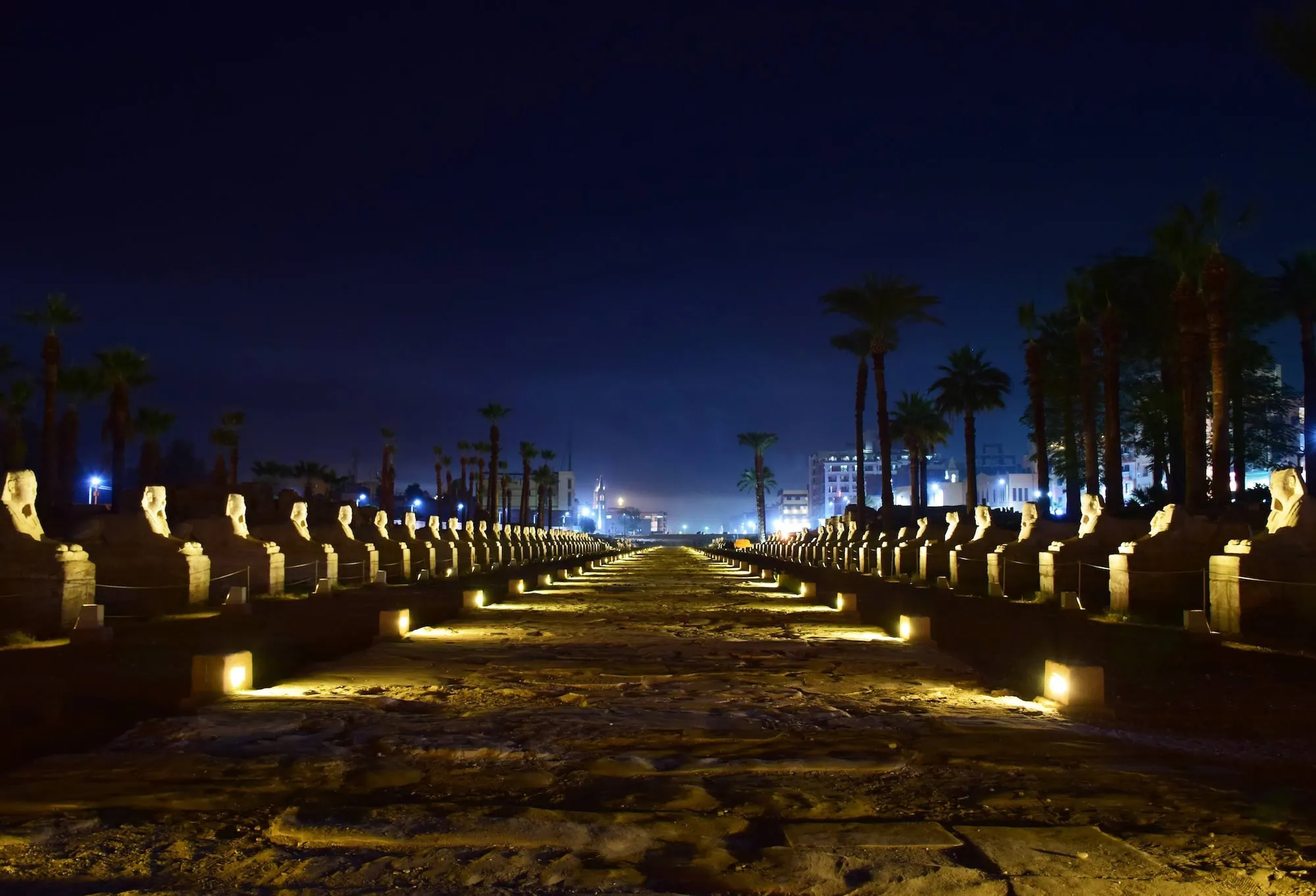
Modern lighting systems now illuminate the sphinx statues during evening hours, creating dramatic visual experiences that highlight the sculptural details and architectural sophistication of ancient Egyptian artisans. Advanced drainage systems protect the restored avenue from seasonal flooding, ensuring long-term preservation of this archaeological treasure.
Visiting the Avenue Today
We recommend beginning your Avenue of Sphinxes experience at Karnak Temple, where the ceremonial pathway originates. The northern entrance provides spectacular views of the ram-headed sphinxes that guard the approach to Amun’s great temple complex.
Walking the complete 2.7-kilometer route typically requires 45-60 minutes, depending on your pace and photography stops. The pathway features modern walkways and informational plaques in multiple languages, making navigation comfortable for international visitors. Rest areas with shaded seating appear at regular intervals, particularly important during Egypt’s warm afternoon hours.
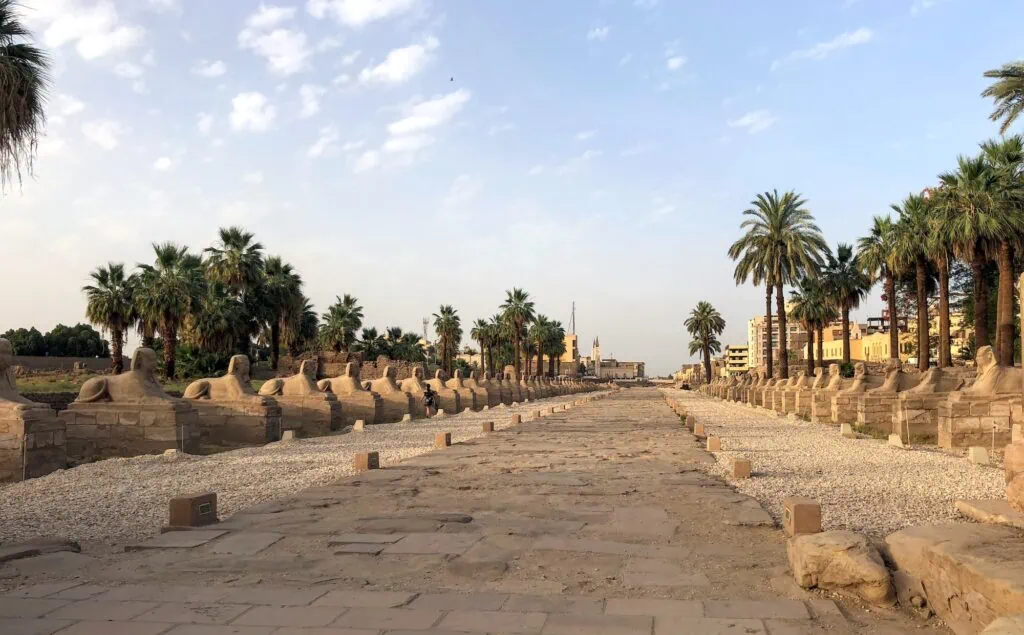
The southern terminus at Luxor Temple offers equally impressive views, with human-headed sphinxes creating a dramatic approach to the temple’s towering entrance pylon. Many visitors choose to explore both temples on the same day, using the Avenue of Sphinxes as a scenic connection between these two UNESCO World Heritage sites.
Photography opportunities abound throughout the avenue, with sunrise and sunset providing particularly stunning lighting conditions. We suggest arriving early morning around 7:00 am (07:00) to avoid crowds and experience the avenue’s peaceful atmosphere. The soft morning light creates beautiful contrasts against the sandstone sculptures, perfect for capturing memorable travel images.
For U.S. visitors, a tourist visa is required and can be obtained on arrival at Cairo International Airport for $25 USD or through the Egyptian e-visa system before travel. European visitors follow the same visa requirements, while some Latin American countries have different arrangements – we recommend checking current requirements with Egyptian consular services before departure.
Planning Your Avenue Experience
The Avenue of Sphinxes integrates perfectly with broader Luxor itineraries, allowing visitors to experience multiple archaeological wonders in a single day. We typically recommend dedicating a full morning to exploring both Karnak and Luxor temples, using the avenue as your scenic connection between these magnificent sites.
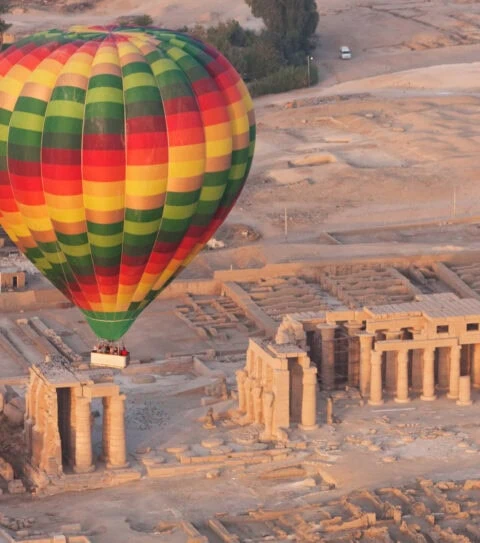
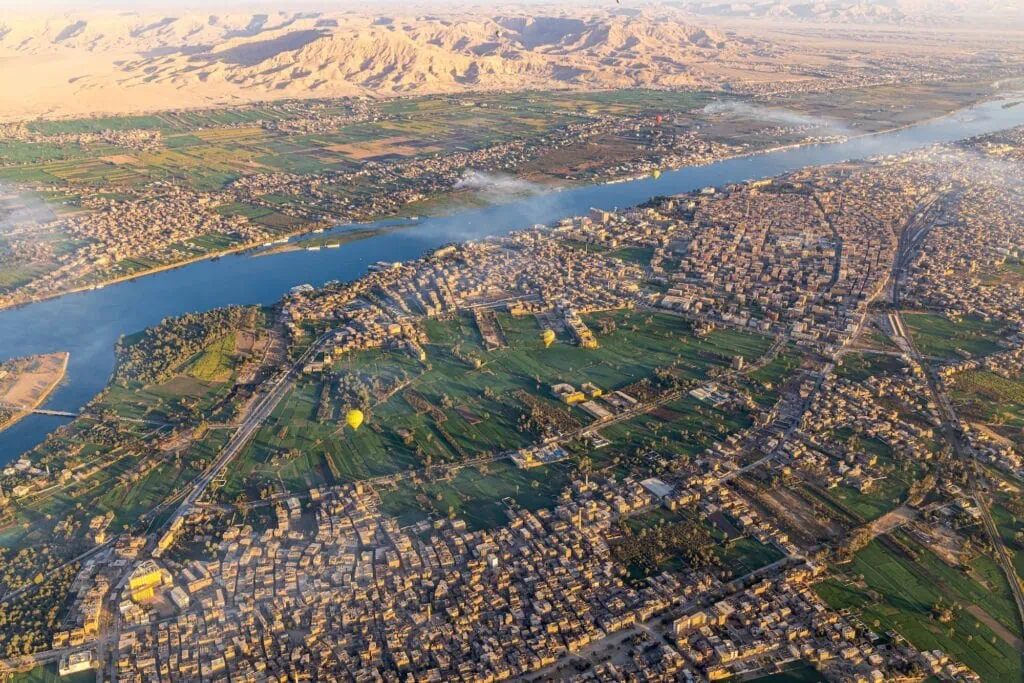
Consider combining your avenue visit with a hot air balloon flight over Luxor at sunrise, providing aerial perspectives of the ceremonial pathway and surrounding temple complexes. The contrast between ground-level exploration and bird’s-eye views creates unforgettable memories and photograph opportunities.
Temperature considerations matter significantly for outdoor exploration in Luxor. Winter months (December through February) offer the most comfortable walking conditions, with daytime temperatures around 23°C (73°F). Summer temperatures can exceed 40°C (104°F), making early morning or late afternoon visits essential for comfortable exploration.
Our private guides provide detailed historical context and archaeological insights that enhance your avenue experience significantly. With decades of expertise in Egyptian history and archaeology, our certified guides reveal hidden details and lesser-known stories that bring the ancient stones to life. We arrange personalized itineraries that match your interests and physical capabilities, ensuring optimal experiences whether you’re a first-time Egypt visitor or returning archaeological enthusiast.
Transportation between Luxor’s east and west bank attractions requires careful coordination. We provide modern, air-conditioned vehicles and experienced drivers familiar with optimal routes and timing for temple visits. Our 24/7 customer support ensures smooth logistics throughout your Luxor exploration.
Walk The Path Of Ancient Processions
The Avenue of Sphinxes is one of Luxor’s most impressive sights—an ancient ceremonial road lined with majestic statues, once connecting Karnak and Luxor Temple in grand processions. With EgyptToursPlus, we seamlessly include this iconic experience in a private journey that brings together Luxor’s most extraordinary landmarks into one unforgettable story.
You choose your travel dates, your pace, and the experiences that shape your route. From immersive historical walks to Nile cruises and refined comfort throughout, we tailor every detail around your preferences—ensuring a smooth, expertly planned, and deeply personal travel experience.
Frequently Asked Questions
Walking the full Avenue of Sphinxes typically takes 45 to 60 minutes at a relaxed pace, including stops for photography and viewing restored statues. The ceremonial road stretches approximately 2.7 km between Karnak Temple and Luxor Temple along ancient Thebes’ sacred processional route. Visitors interested in archaeology or detailed temple photography often spend significantly longer exploring side viewpoints and inscriptions. Early morning walks are generally more comfortable because Luxor temperatures can exceed 95°F (35°C) by midday during summer.
The Avenue of Sphinxes itself is generally free to walk, but entry tickets are required for Karnak Temple and Luxor Temple at either end of the processional route. Standard foreign visitor tickets for these major temple complexes typically range around $10 to $15 USD per site, depending on current Egyptian antiquities pricing and student discounts. Because the avenue directly links both temples, many travelers combine all three experiences in one itinerary. Carrying small cash denominations can simplify ticket purchases and local transactions.
Early morning around 7:00 am is widely considered the best time to visit the Avenue of Sphinxes because temperatures are cooler and crowds are significantly lighter. Soft sunrise lighting also enhances the texture of the restored limestone sphinxes and creates clearer photography conditions between Karnak and Luxor temples. During summer, daytime temperatures in Luxor frequently exceed 100°F (38°C), making midday walks considerably less comfortable. Sunset visits are also visually appealing, but mornings generally offer a quieter atmosphere.
Yes, the Avenue of Sphinxes can be visited during evening hours when modern lighting systems illuminate sections of the ancient ceremonial pathway. Nighttime lighting highlights the restored statues and creates dramatic visual contrast between the sphinx rows and nearby temple facades at Luxor and Karnak. Evening visits are often cooler and more comfortable than daytime exploration, especially from May through September when Upper Egypt experiences extreme heat. Tripods or professional photography equipment may require additional permissions near temple entrances.
Archaeologists estimate that approximately 1,057 sphinx statues originally lined the full Avenue of Sphinxes connecting Karnak Temple and Luxor Temple. Following extensive excavation and restoration projects completed in recent decades, roughly 800 statues or statue bases are now visible along different sections of the 2.7 km ceremonial road. Some sphinxes feature ram heads associated with the god Amun, while others display human-headed forms linked to royal imagery. Restoration work continues to reveal additional archaeological details beneath modern Luxor streets.
Large sections of the Avenue of Sphinxes are wheelchair accessible thanks to modern paved pathways and visitor walkways added during recent restoration projects. The route between Luxor Temple and Karnak includes relatively level surfaces in many public areas, although some ancient stone sections and uneven archaeological zones may still present challenges. Visitors with mobility limitations may benefit from entering through the main temple complexes where facilities are more developed. Early morning visits also provide cooler conditions for extended movement outdoors.
Visitors exploring the Avenue of Sphinxes should bring comfortable walking shoes, bottled water, sun protection, and a camera for temple and monument photography. The full ceremonial route extends 2.7 km through open-air archaeological terrain with limited shade between Karnak Temple and Luxor Temple. Lightweight breathable clothing is important during warmer months, while winter evenings in Luxor may require a light jacket after sunset. Sunglasses and sunscreen are especially useful because Upper Egypt’s sunlight remains intense year-round.
Guided tours of the Avenue of Sphinxes are widely available and provide valuable archaeological and historical context often missed during independent visits. Licensed Egyptologists typically explain the avenue’s ceremonial role during ancient religious festivals such as the Opet Festival, when statues and sacred boats moved between Karnak and Luxor temples. Egypt Tours Plus and similar operators commonly combine the avenue with temple visits and Nile-side sightseeing in Luxor. Guided experiences are particularly useful because restoration phases revealed multiple historical construction periods.
The Avenue of Sphinxes directly links Karnak Temple and Luxor Temple, making it one of the most important connecting monuments in ancient Thebes. Because both temples rank among Luxor’s most visited archaeological sites, the avenue naturally fits into broader itineraries that also include the Valley of the Kings, Hatshepsut Temple, and Nile cruises. The restored processional road helps visitors visualize how ancient Egyptians moved during major religious ceremonies. Exploring all three sites together creates stronger historical continuity than visiting each location separately.
Basic rest areas and seating appear along portions of the Avenue of Sphinxes, while full visitor facilities are located at Karnak Temple and Luxor Temple entrances. Travelers can typically access restrooms, cafés, souvenir shops, and bottled water vendors near the major temple complexes rather than throughout the full 2.7 km route itself. Because sections of the avenue remain open-air archaeological corridors, shaded facilities are limited between endpoints. Carrying water is strongly recommended during warmer months in Luxor.
The different sphinx forms along the Avenue of Sphinxes reflected complex religious symbolism in ancient Egyptian belief systems. Ram-headed sphinxes represented the god Amun and emphasized divine protection associated with Karnak Temple, while human-headed sphinxes often depicted pharaohs and royal authority. Some hybrid forms combined royal and divine imagery to reinforce the sacred relationship between kingship and the gods during ceremonial processions. These statues guided religious festivals such as the Opet Festival, one of ancient Thebes’ most important annual events.
Construction of the Avenue of Sphinxes began during the reign of Queen Hatshepsut in the 15th century BCE and continued through multiple dynasties for more than 1,000 years. Pharaoh Amenhotep III expanded major sections during the New Kingdom, while the avenue reached its completed form under Nectanebo I around 380 BCE during Egypt’s 30th Dynasty. The processional road connected Karnak and Luxor temples for major religious ceremonies and royal festivals. Its long construction history reflects the evolving political and religious importance of ancient Thebes.
Design Your Custom Tour
Explore Egypt your way by selecting only the attractions you want to visit
Don’t miss Egypt’s greatest treasures