Nile River Tourist Attractions
The Nile River tourist attractions of Egypt stretch from Cairo to Lake Nasser, revealing ancient temples, royal tombs, and vibrant cities shaped by thousands of years of history.
Attractions Along the Nile
Search and explore every temple, tomb, and riverside highlight along the legendary Nile.
Design Your Custom Tour
Explore Egypt your way by selecting only the attractions you want to visit
Nile River Tourist Attractions
Picture yourself floating past 5,000 years of history as golden temples rise from desert sands.
The Nile River isn’t just Egypt’s lifeline – it’s a living museum where every bend reveals monuments that have inspired travelers since ancient times. From the Valley of Kings where pharaohs rest eternally to the colossal Abu Simbel temples carved into cliffsides, the world’s longest river at 6,695 km (4,160 miles) connects civilization’s greatest architectural achievements. We’ve explored every sacred site, hidden temple, and archaeological wonder along this legendary waterway to bring you the definitive guide.
Whether you’re planning your first Egyptian adventure or returning to discover new treasures, this comprehensive overview will help you navigate the Nile’s most spectacular attractions with confidence.
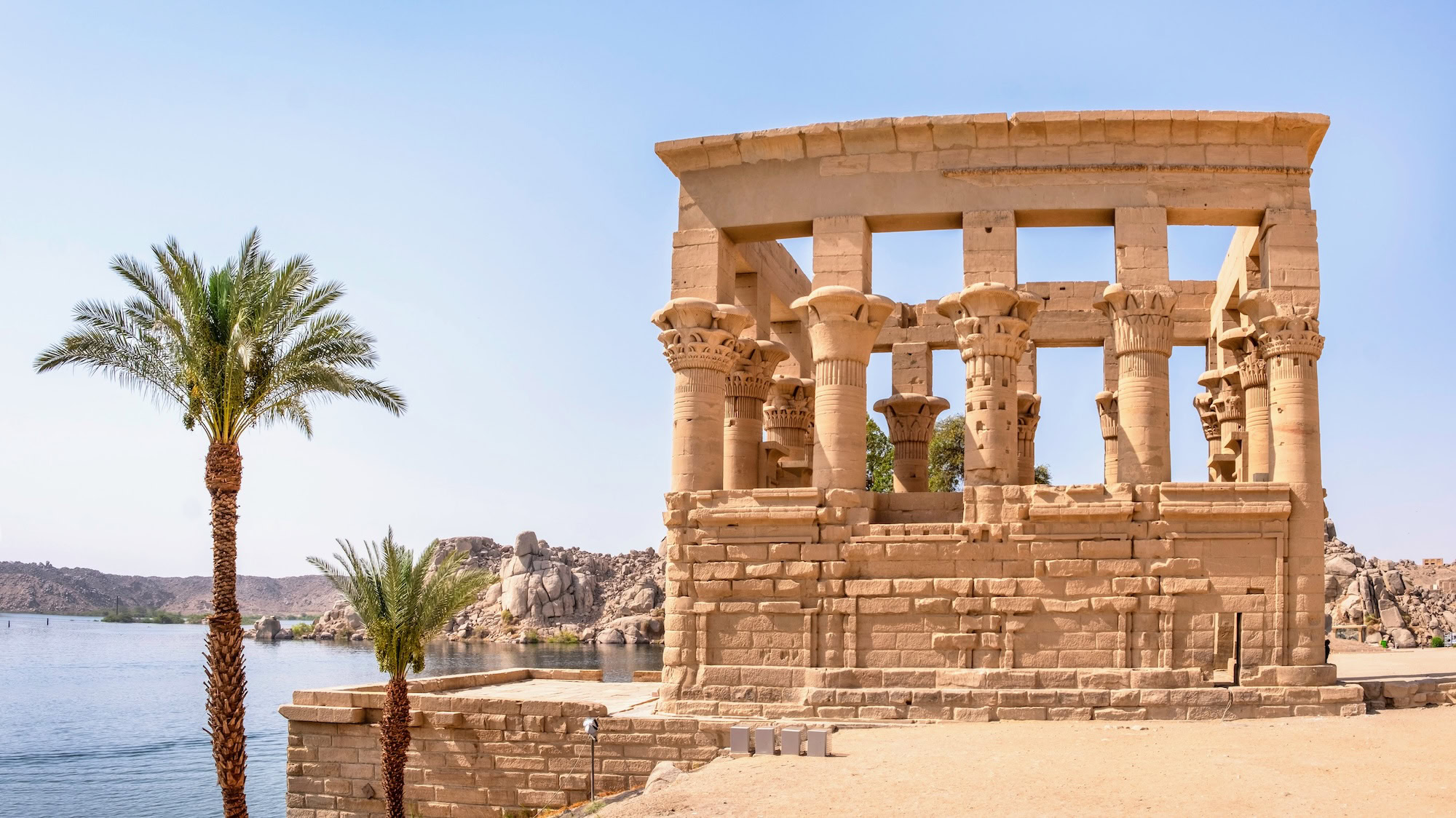
Ancient Temples That Define the Nile Experience
The Nile corridor showcases humanity’s most ambitious religious architecture, where pharaohs competed to create increasingly magnificent monuments to the gods.
Karnak Temple Complex
Karnak stands as the largest religious complex ever built, covering 200 acres (81 hectares) of sacred ground in Luxor. Construction spanned 2,000 years as successive pharaohs added pylons, obelisks, and hypostyle halls. The Great Hypostyle Hall alone contains 134 massive columns, each capable of holding 50 people on its capital.
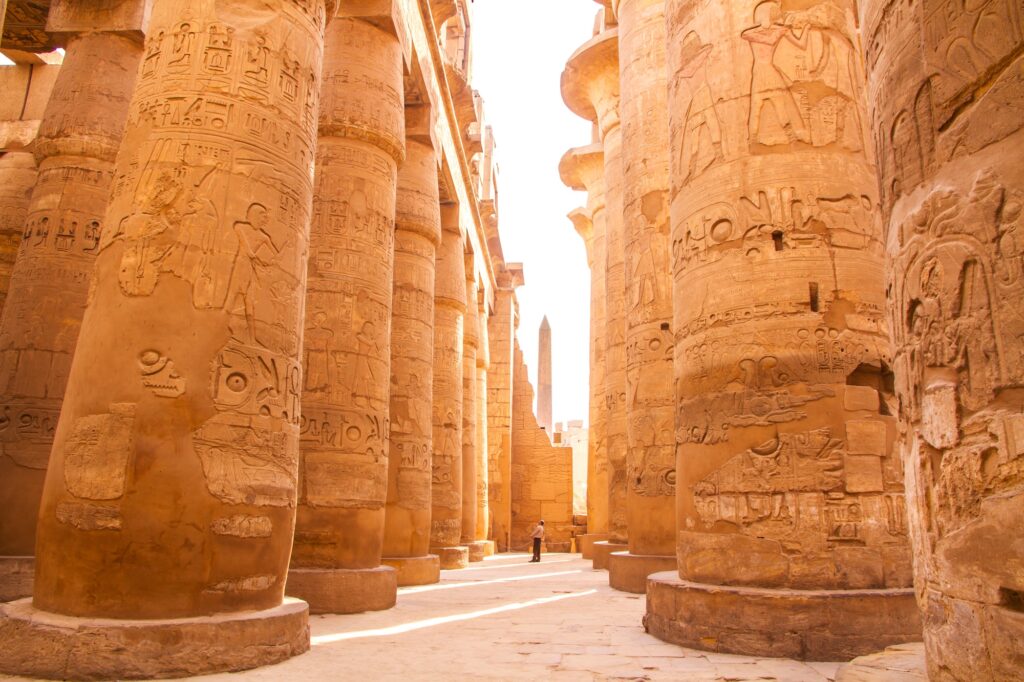
Walking through Karnak feels like entering a stone forest where hieroglyphs tell stories of divine pharaohs and cosmic battles. The Sacred Lake reflects towering obelisks at sunset, while the Avenue of Sphinxes once connected this temple to Luxor Temple 3 km (1.9 miles) away.
Luxor Temple
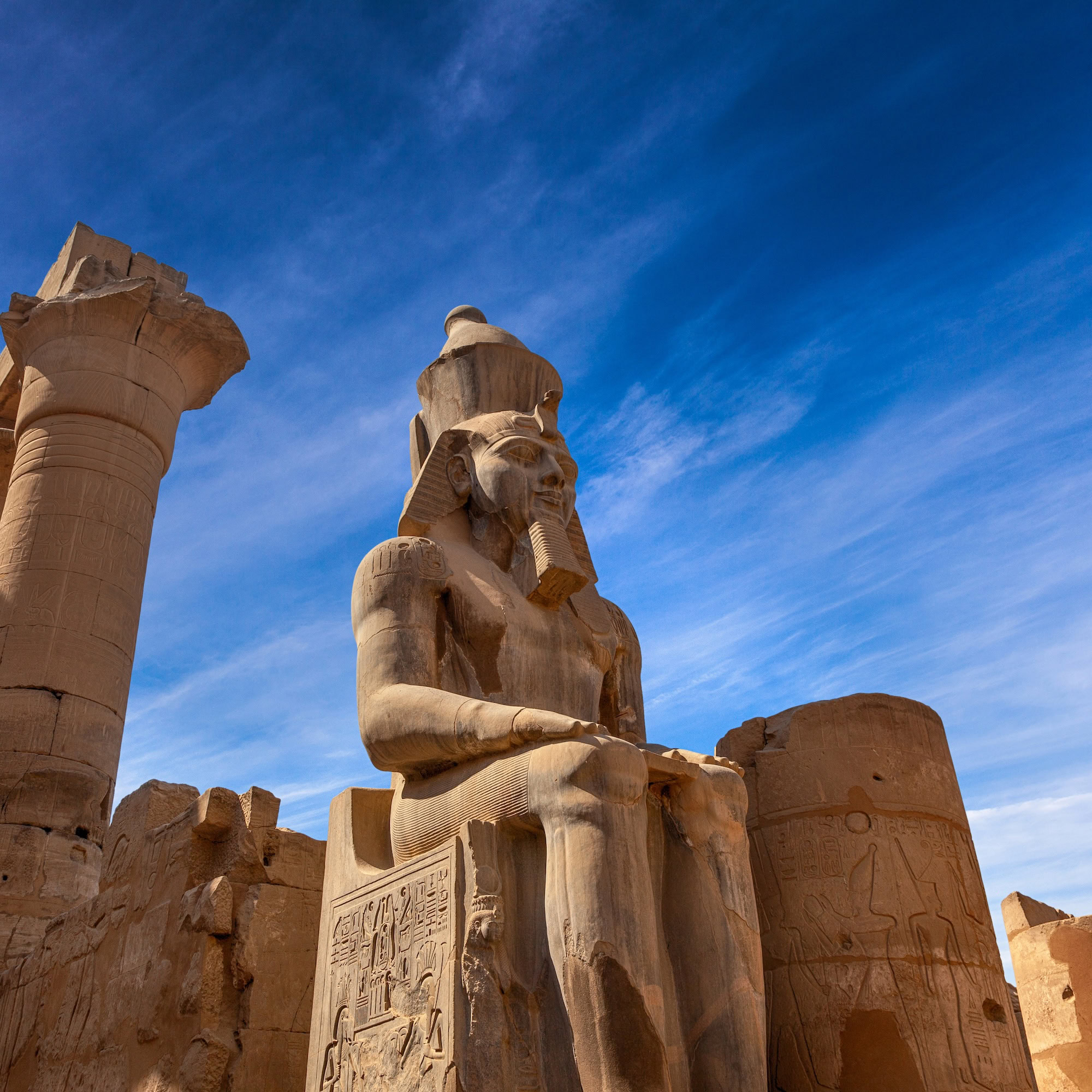
Unlike other Egyptian temples dedicated to gods, Luxor Temple celebrates the divine nature of kingship itself. Built primarily by Amenhotep III and Ramesses II, this monument illuminates beautifully at night when golden light reveals intricate carvings across its sandstone walls.
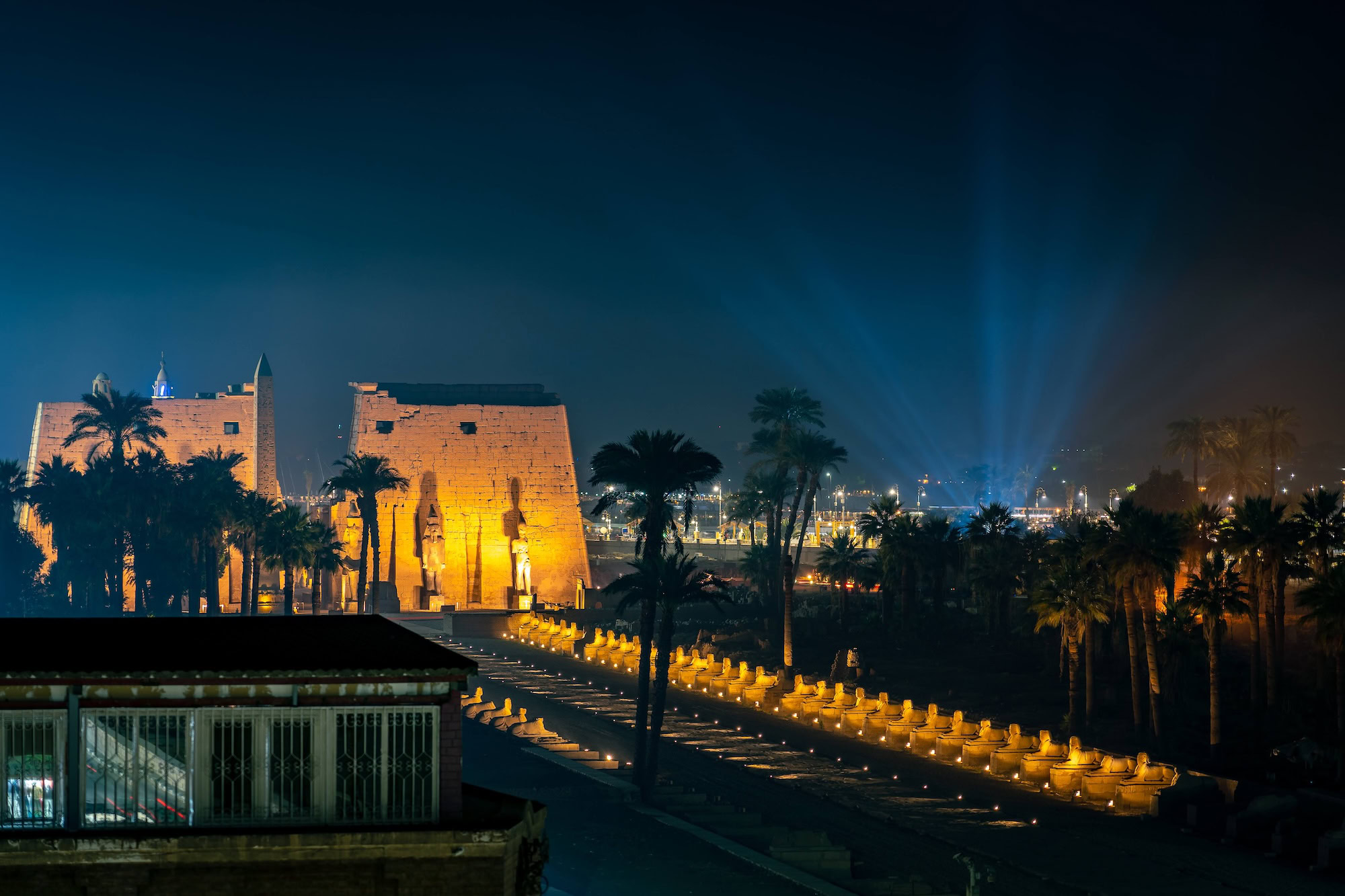
The temple’s most striking features include the 25-meter (82-foot) obelisk that still stands guard at the entrance, while its twin now graces Place de la Concorde in Paris. Alexander the Great rebuilt the sanctuary’s inner chambers, blending Egyptian and Greek architectural elements.
Abu Simbel Temples
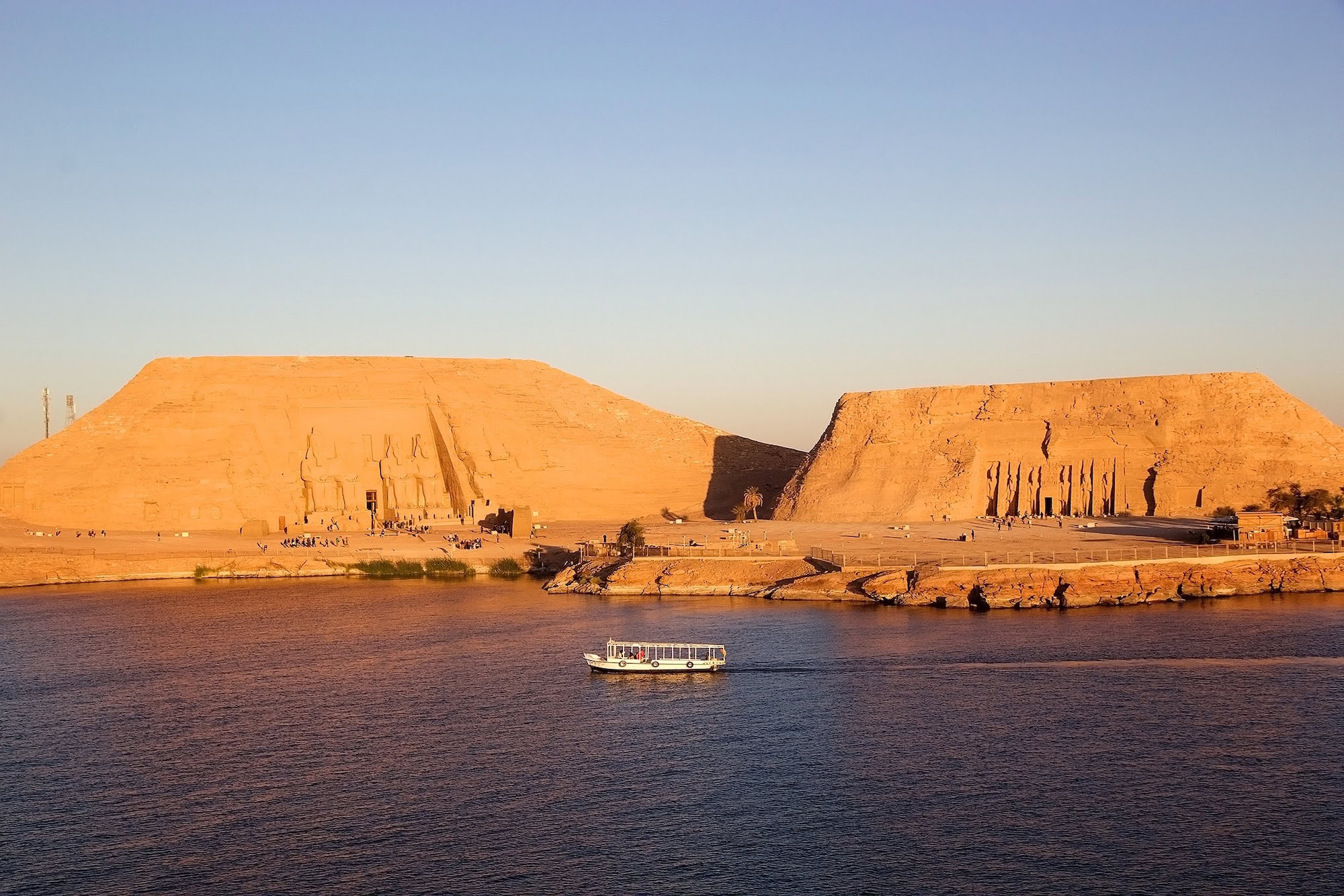
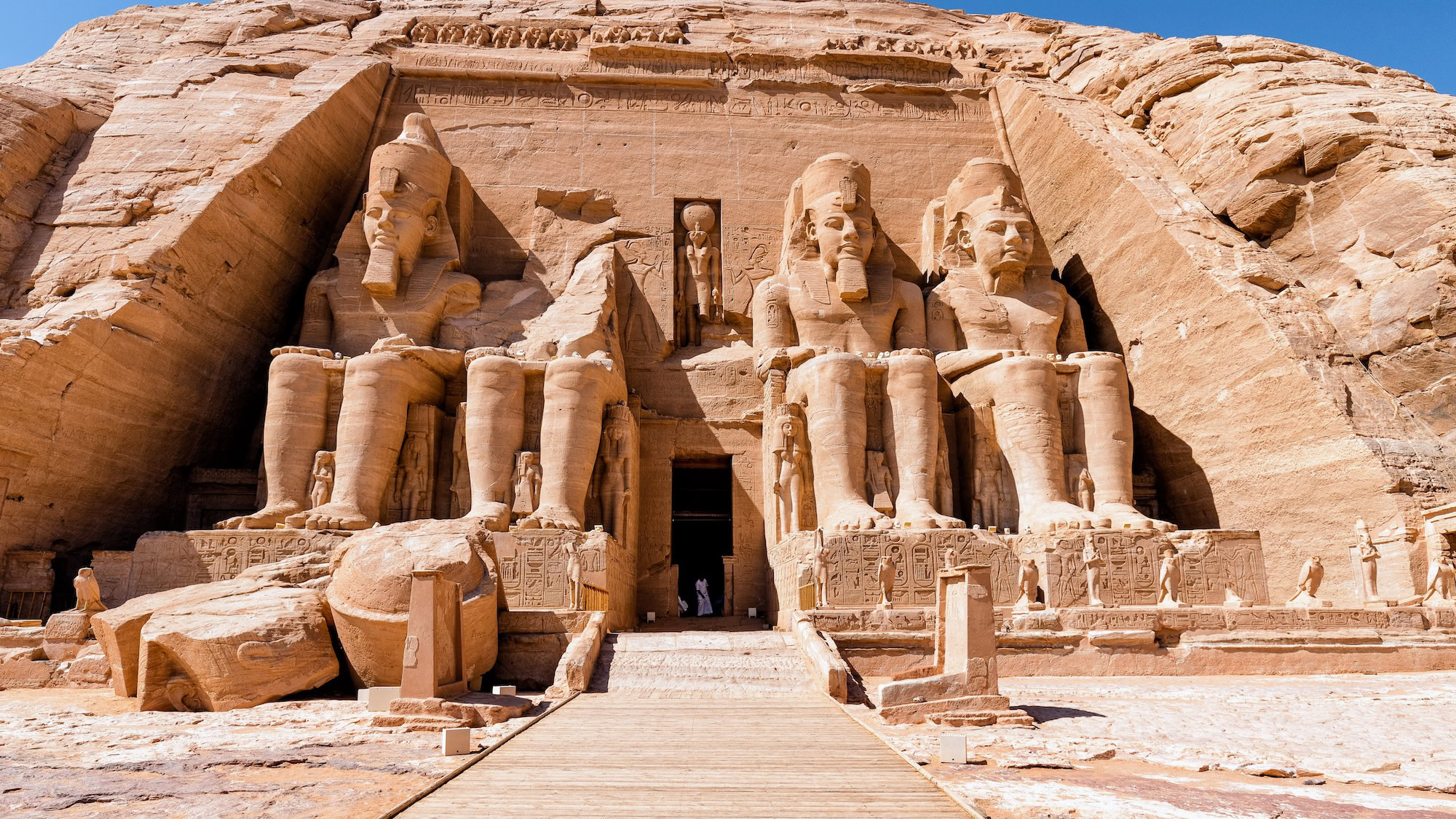
Ramesses II created his most audacious monuments at Abu Simbel, carving two complete temples directly into Nubian sandstone cliffs. Four colossal seated statues of the pharaoh, each 20 meters (66 feet) tall, guard the Great Temple entrance while the smaller temple honors his beloved queen Nefertari.
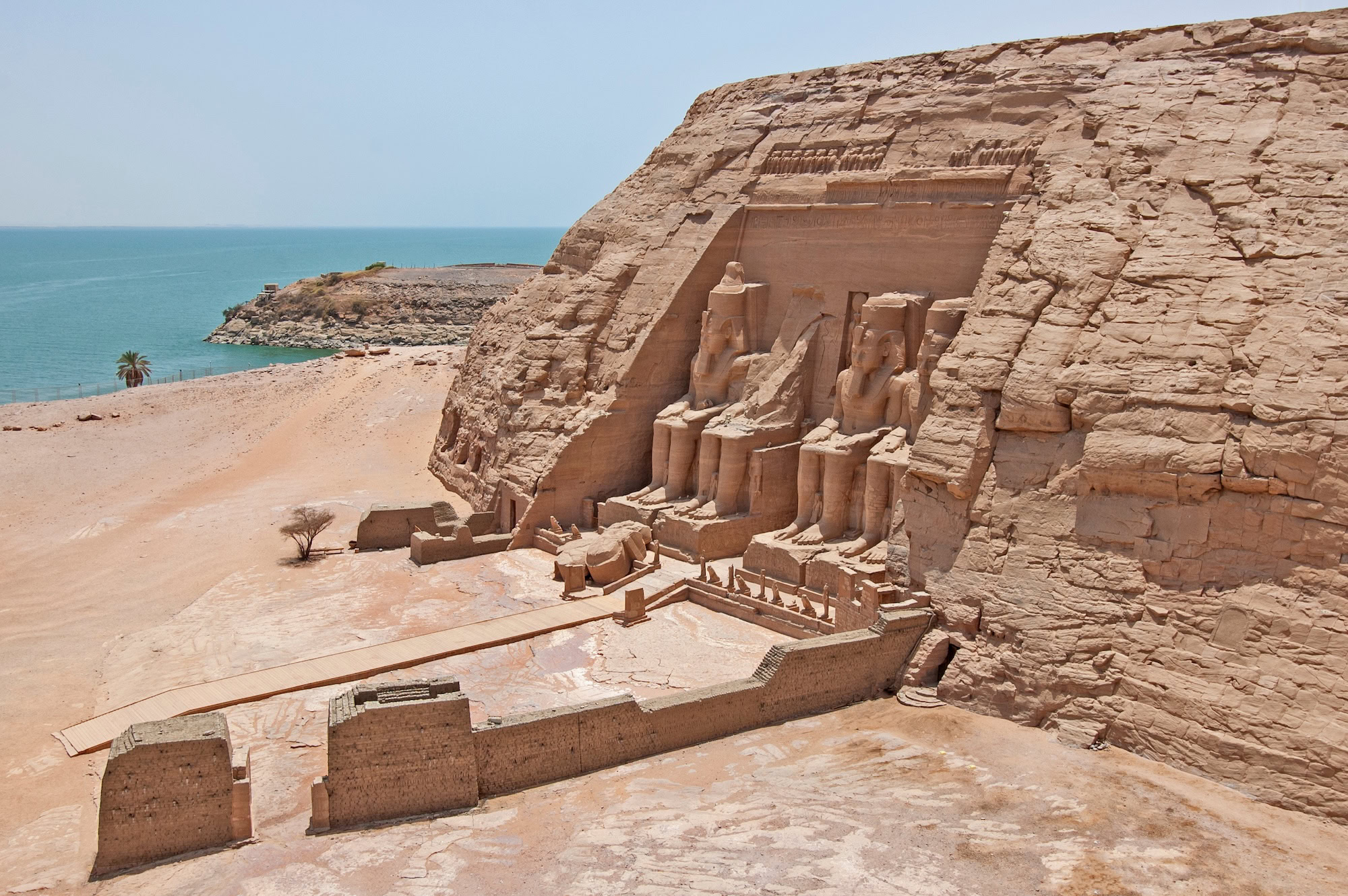
These temples nearly disappeared beneath Lake Nasser when the Aswan High Dam was built. UNESCO orchestrated an incredible rescue mission in the 1960s, cutting the monuments into blocks and reassembling them on higher ground – a feat almost as impressive as their original construction.
Temple of Hatshepsut
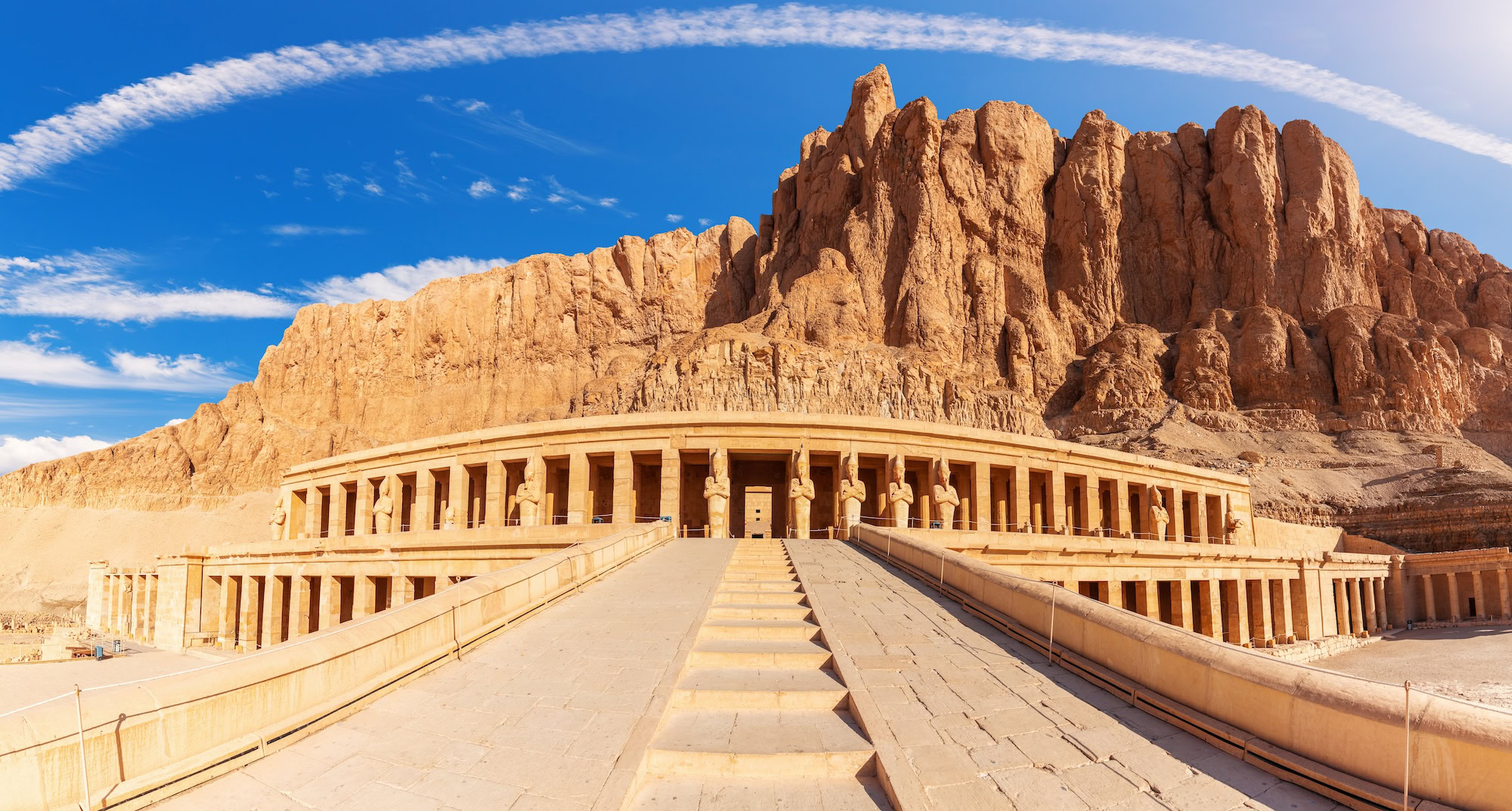
Queen Hatshepsut designed her mortuary temple as a architectural revolution, creating terraced colonnades that seem to grow from the limestone cliffs of Deir el-Bahari. This female pharaoh ruled Egypt for 22 years, and her temple reflects her innovative approach to power and design.
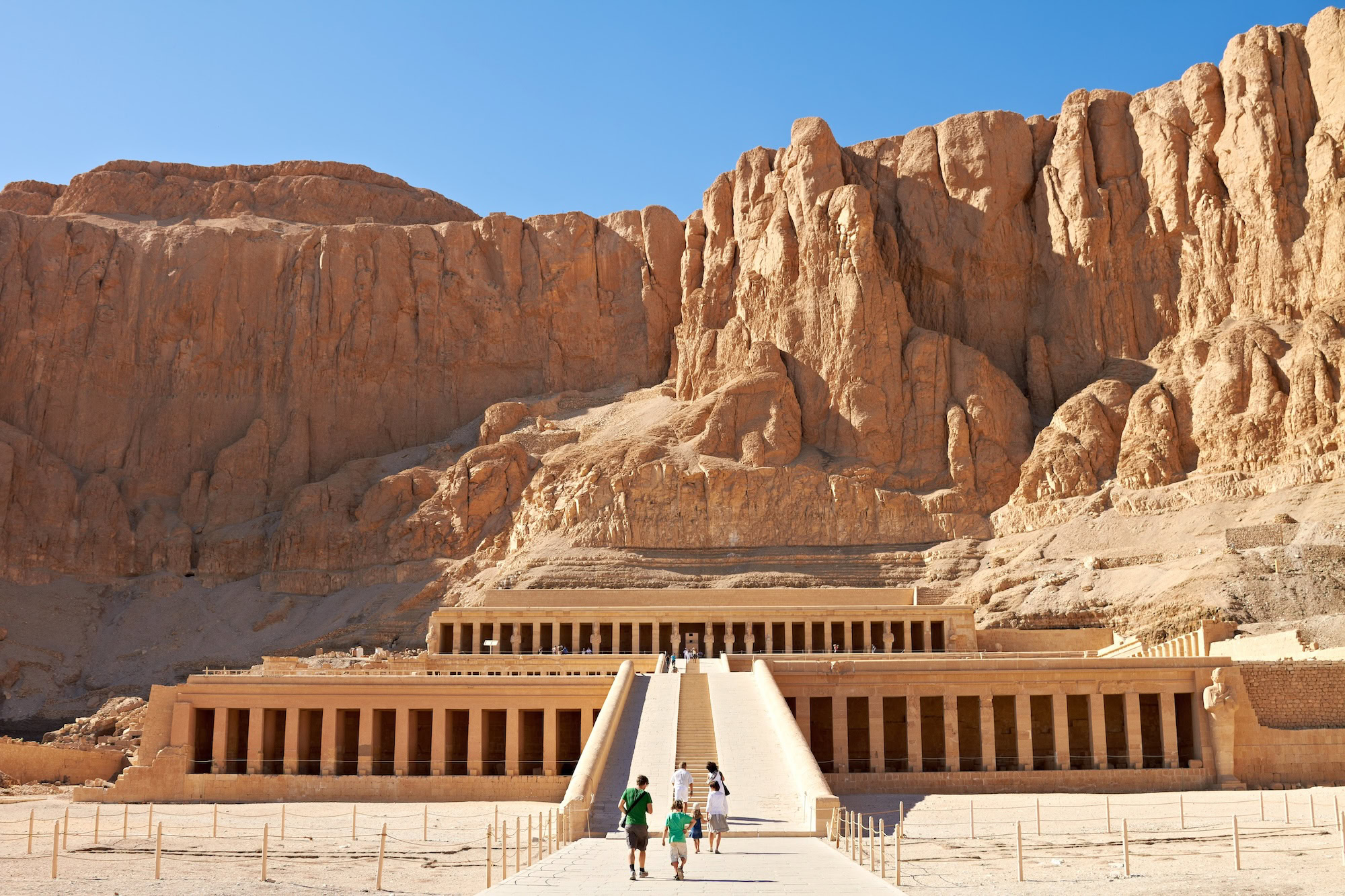
The temple’s three levels tell the story of Hatshepsut’s divine birth and her famous expedition to the mysterious land of Punt. Reliefs show exotic animals, incense trees, and precious goods that demonstrate Egypt’s far-reaching trade connections during her prosperous reign.
Valley of Kings: Royal Necropolis of Pharaohs
Hidden in a desert valley west of Luxor lies the most sacred burial ground in ancient Egypt, where 64 tombs house the mummified remains of New Kingdom pharaohs and nobles.
Tutankhamun’s tomb remains the valley’s star attraction, discovered nearly intact by Howard Carter in 1922. Though smaller than many royal tombs, KV62 contained over 5,000 precious artifacts including the famous golden burial mask. The boy king’s mummy still rests in his original sarcophagus, surrounded by the treasures he would need in the afterlife.
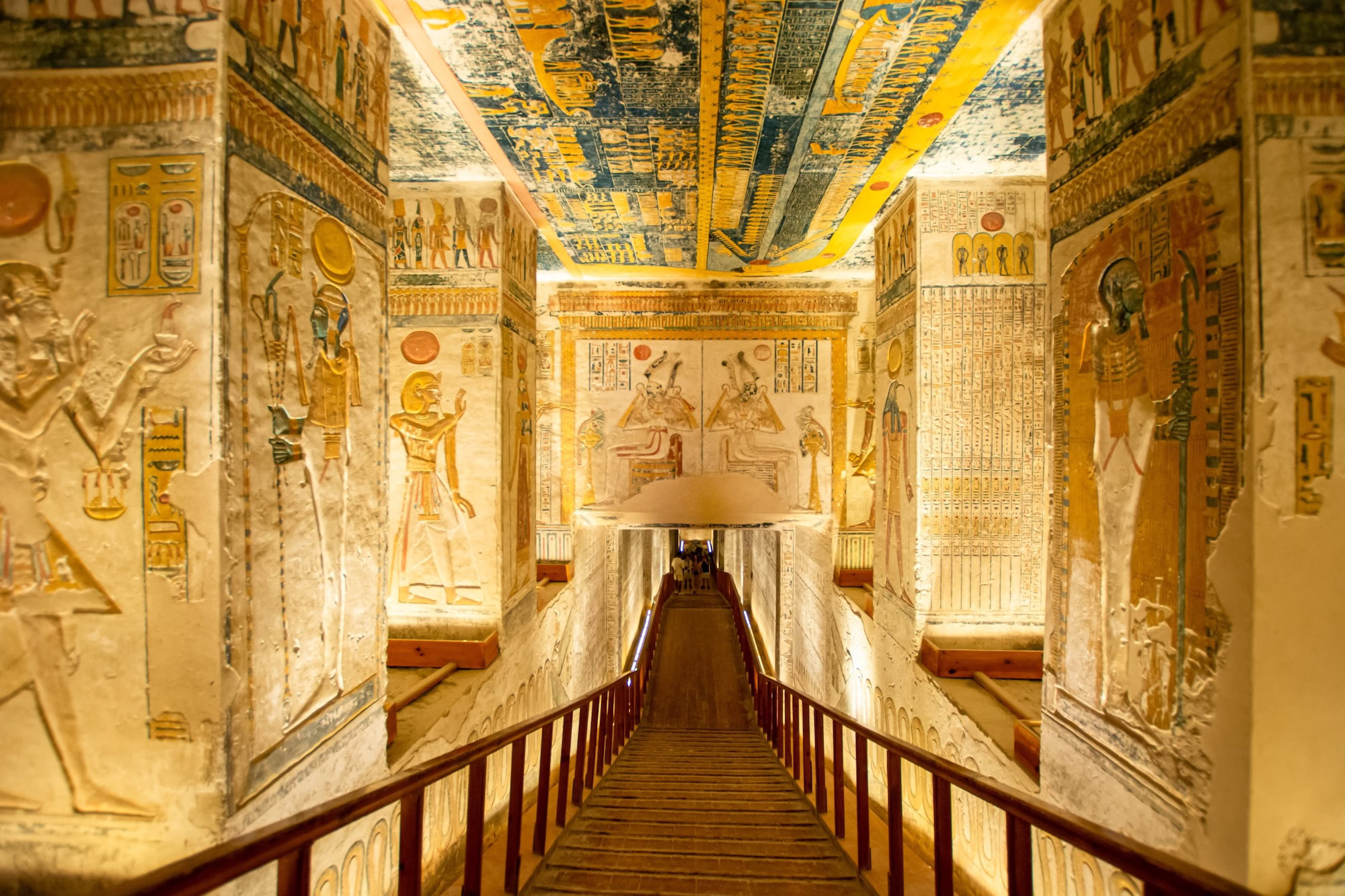
Ramesses VI’s tomb showcases the most elaborate decorative program in the valley. Astronomical texts cover the ceiling while passages from the Book of the Dead guide the pharaoh’s journey through the underworld. The tomb’s nine corridors descend 90 meters (295 feet) into the bedrock, ending in a granite sarcophagus chamber.
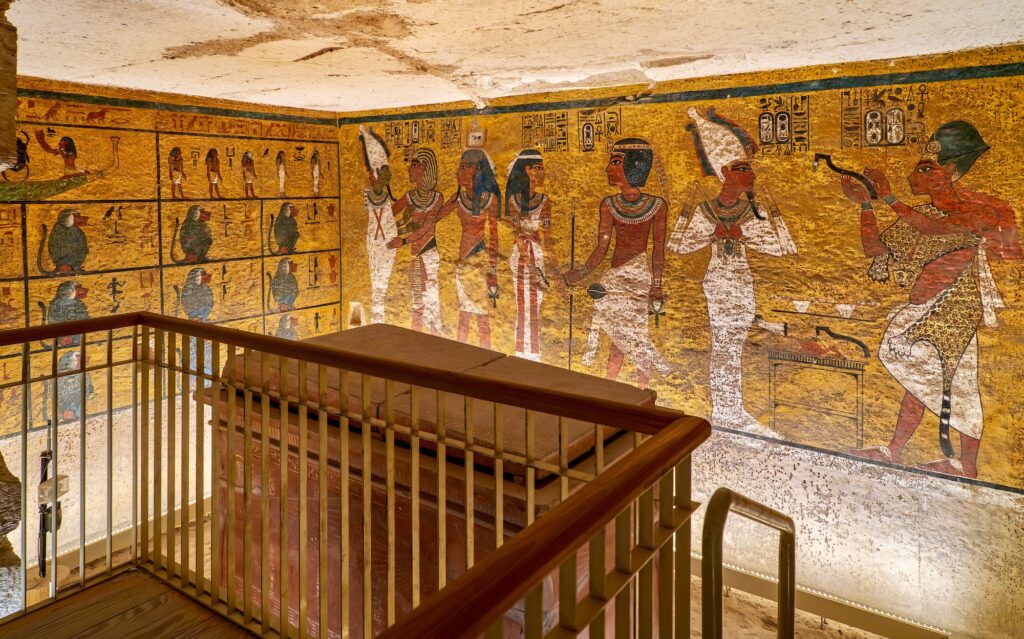
Seti I created the longest and most beautiful tomb in the valley, stretching 137 meters (449 feet) through decorated corridors and chambers. Wall paintings preserve their original colors after 3,000 years, depicting the pharaoh’s transformation into a god among the stars.
The valley continues revealing secrets to archaeologists. Recent discoveries include KV64, a 22nd Dynasty tomb containing a female singer of Amun, and ongoing excavations suggest more royal burials await discovery in this sacred landscape.
Nile Cruise Highlights Between Luxor and Aswan
The stretch between Luxor and Aswan represents the golden route of Nile navigation, where cruise ships pass temple sites that have inspired travelers for centuries.
Temple of Edfu
Dedicated to the falcon god Horus, Edfu Temple ranks as Egypt’s best-preserved ancient temple due to protective sand that buried it for centuries. Built during the Ptolemaic period, this monument demonstrates how Greek rulers adopted Egyptian religious traditions to legitimize their rule.
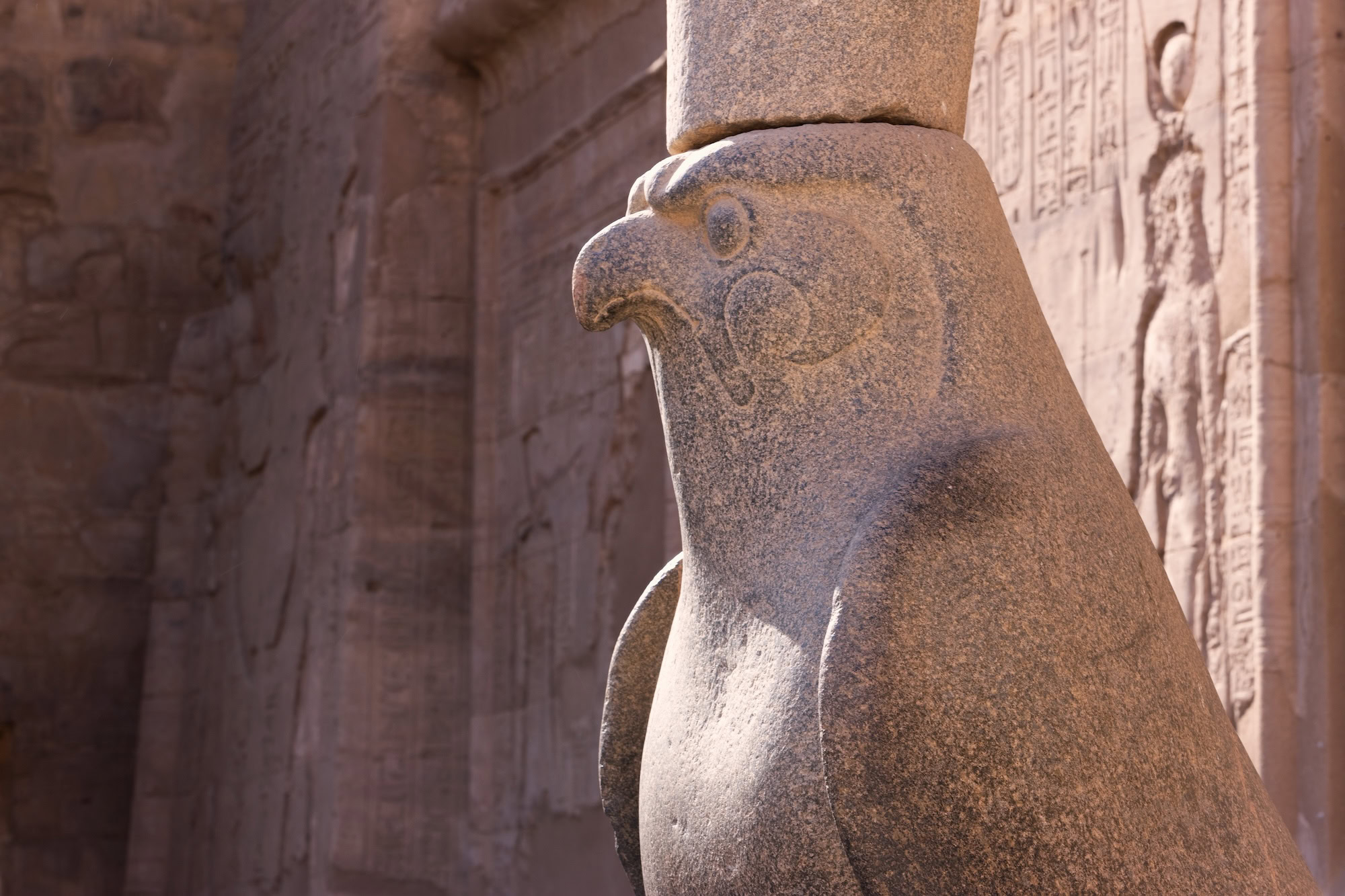
The temple walls record the mythological battle between Horus and his uncle Set, Egypt’s foundational story of good conquering evil. Annual festivals once brought thousands of pilgrims to witness sacred dramas performed in the temple’s courtyards and halls.
Kom Ombo Temple
Unique among Egyptian temples, Kom Ombo honors two gods simultaneously – Sobek the crocodile deity and Haroeris the falcon god. The temple’s symmetrical design provides separate entrances, halls, and sanctuaries for each divine resident.
Crocodile mummies in the temple’s museum reveal how ancient Egyptians worshipped these Nile predators as manifestations of divine power. Medical instruments carved on the temple walls suggest priests here also served as physicians, treating ailments with both prayer and surgery.
Philae Temple Complex
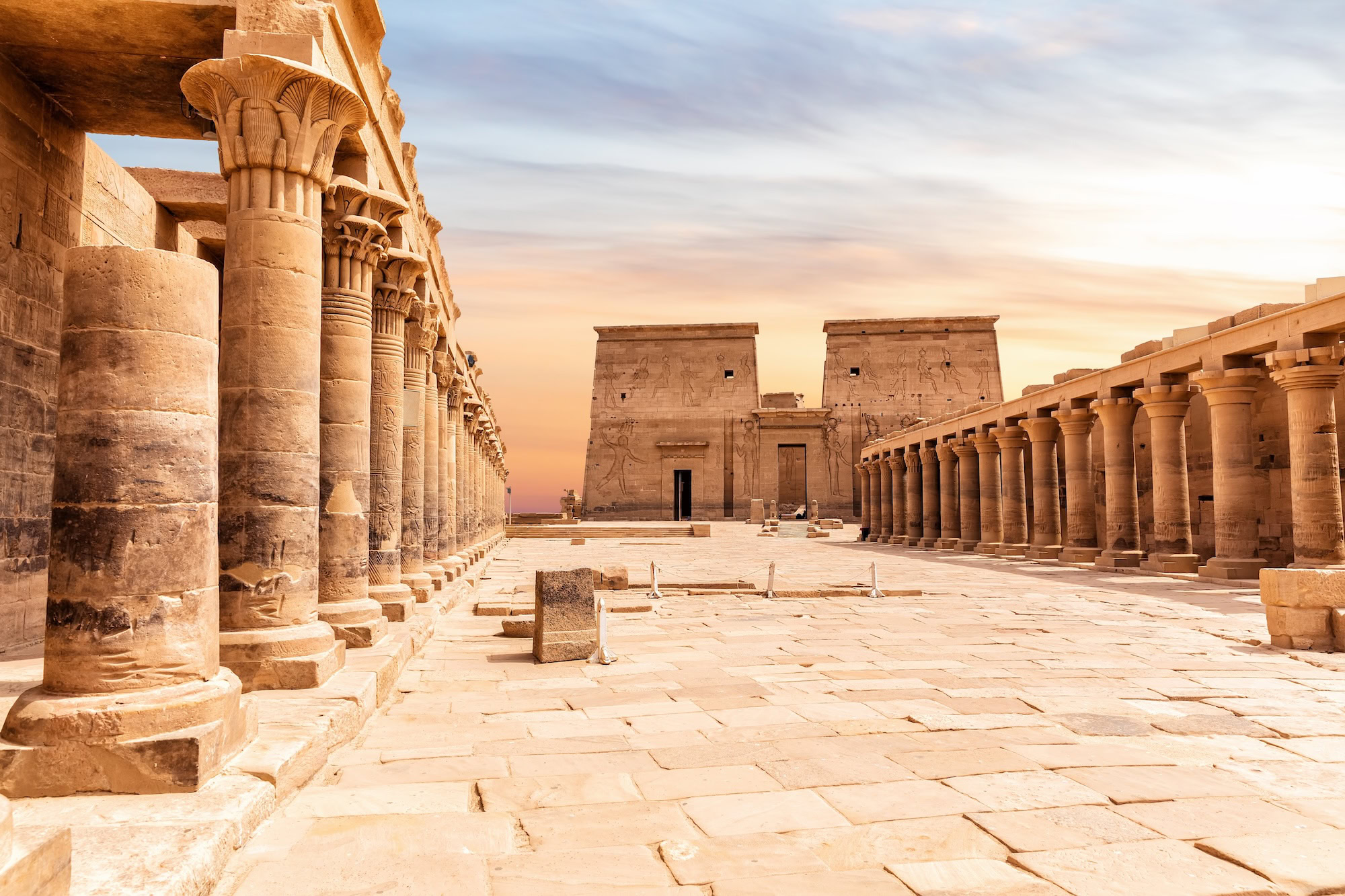
When the first Aswan Dam threatened to submerge Philae Island, UNESCO relocated this entire temple complex to nearby Agilkia Island. Dedicated to the goddess Isis, these monuments represent the last flowering of ancient Egyptian religion before Christianity’s arrival.
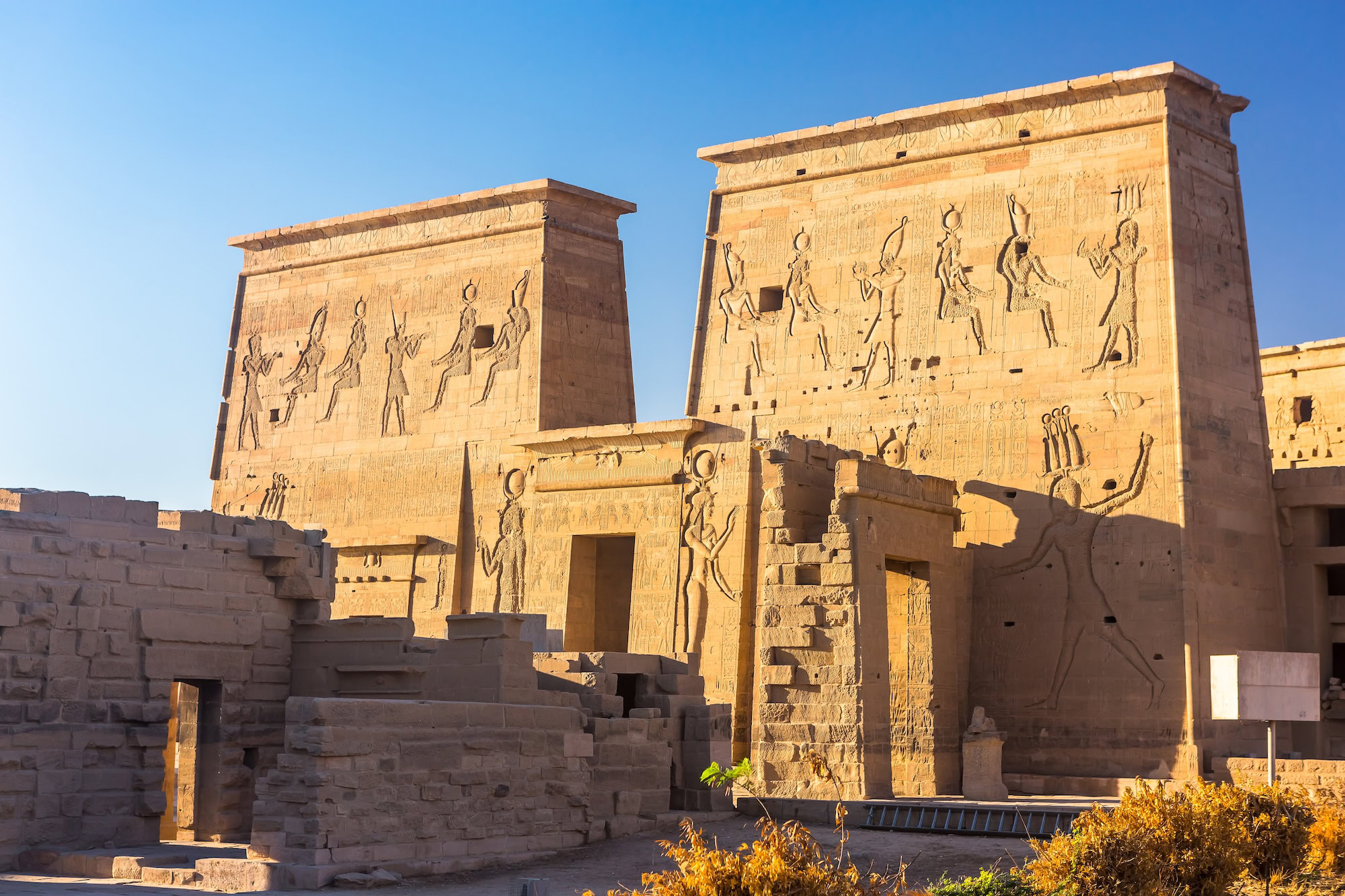
The temple’s birth house celebrates Isis as divine mother, while beautiful reliefs show her magical powers of healing and resurrection. Night sound and light shows transform the temple into a dramatic stage where ancient stories echo across the Nile’s waters.
Evening temperatures along this route typically range from 15°C to 25°C (59°F to 77°F) during peak season from October through April. We coordinate small group excursions with up to 12 participants at each site, ensuring intimate experiences with qualified Egyptologists who bring these monuments to life through expert storytelling.
Aswan: Gateway to Nubian Culture
At Egypt’s southern frontier, Aswan blends pharaonic monuments with vibrant Nubian traditions where the First Cataract once marked ancient Egypt’s boundary.
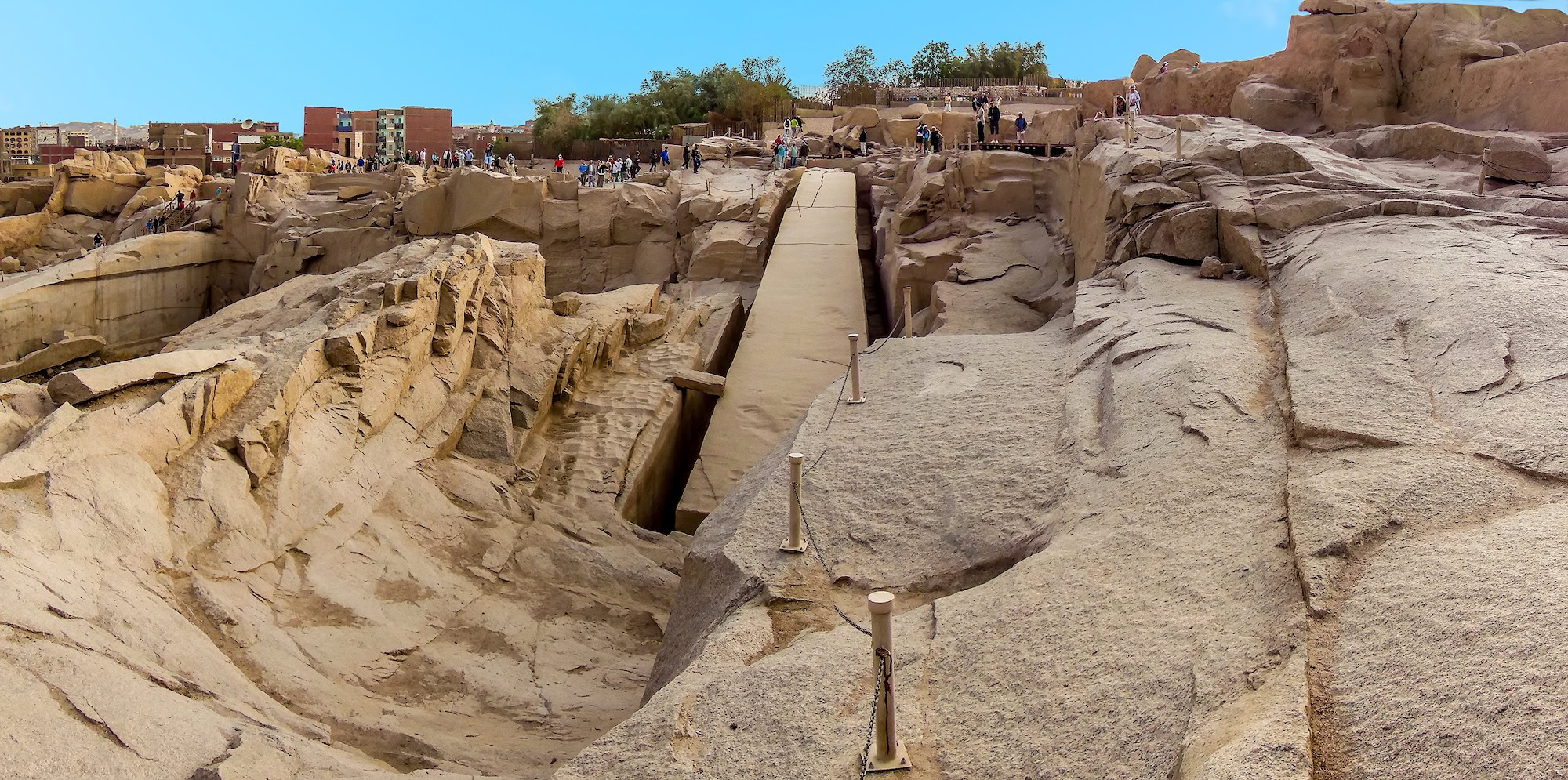
The Unfinished Obelisk lies abandoned in Aswan’s granite quarries, demonstrating how ancient Egyptians carved these monuments from solid rock. Had it been completed, this obelisk would have stood 42 meters (138 feet) tall and weighed 1,200 tons – larger than any successfully erected obelisk.
Elephantine Island contains Egypt’s oldest nilometer, where priests measured annual flood levels to predict harvest yields and set tax rates. The Aswan Museum here displays artifacts from the island’s 4,000-year history as a trading post between Egypt and Nubia.
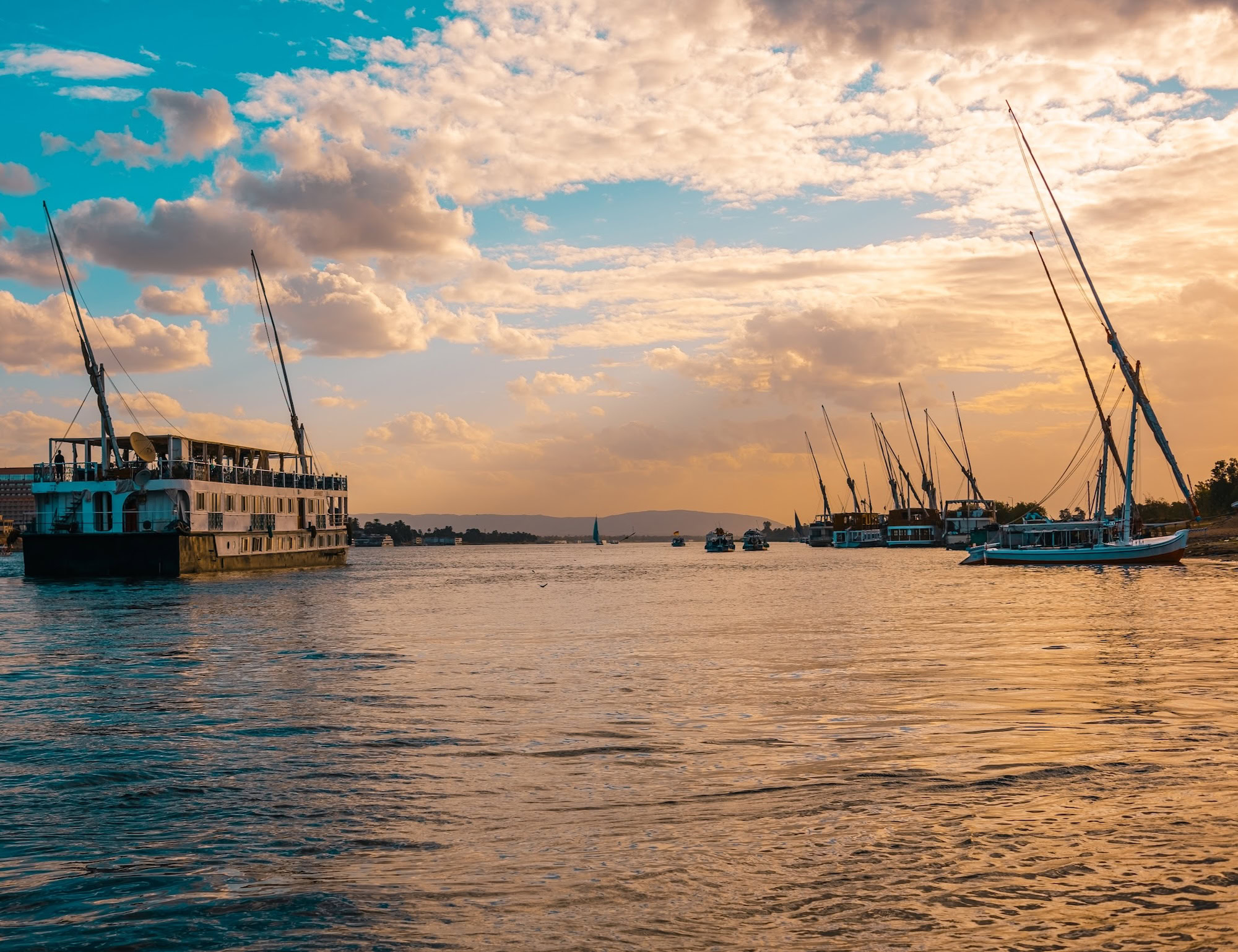
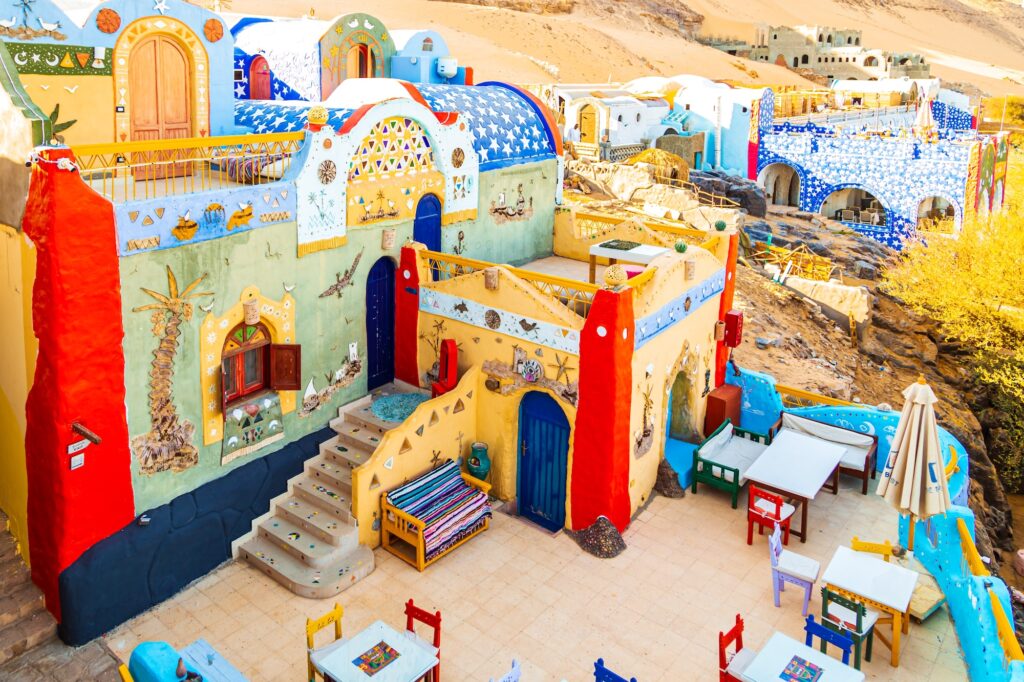
Nubian villages along Aswan’s west bank preserve cultural traditions dating back thousands of years. Colorful houses decorated with geometric patterns overlook the Nile, while residents maintain their own language, music, and customs. Traditional felucca sailboats still transport visitors using wind power that has navigated these waters since pharaonic times.
The Aswan High Dam, completed in 1970, created Lake Nasser and fundamentally changed the Nile’s character. While providing flood control and hydroelectric power, the dam also necessitated rescuing monuments like Abu Simbel and Philae from rising waters.
Modern Nile Experiences and Activities
Today’s Nile adventures combine ancient sightseeing with activities that showcase Egypt’s natural beauty and living culture.
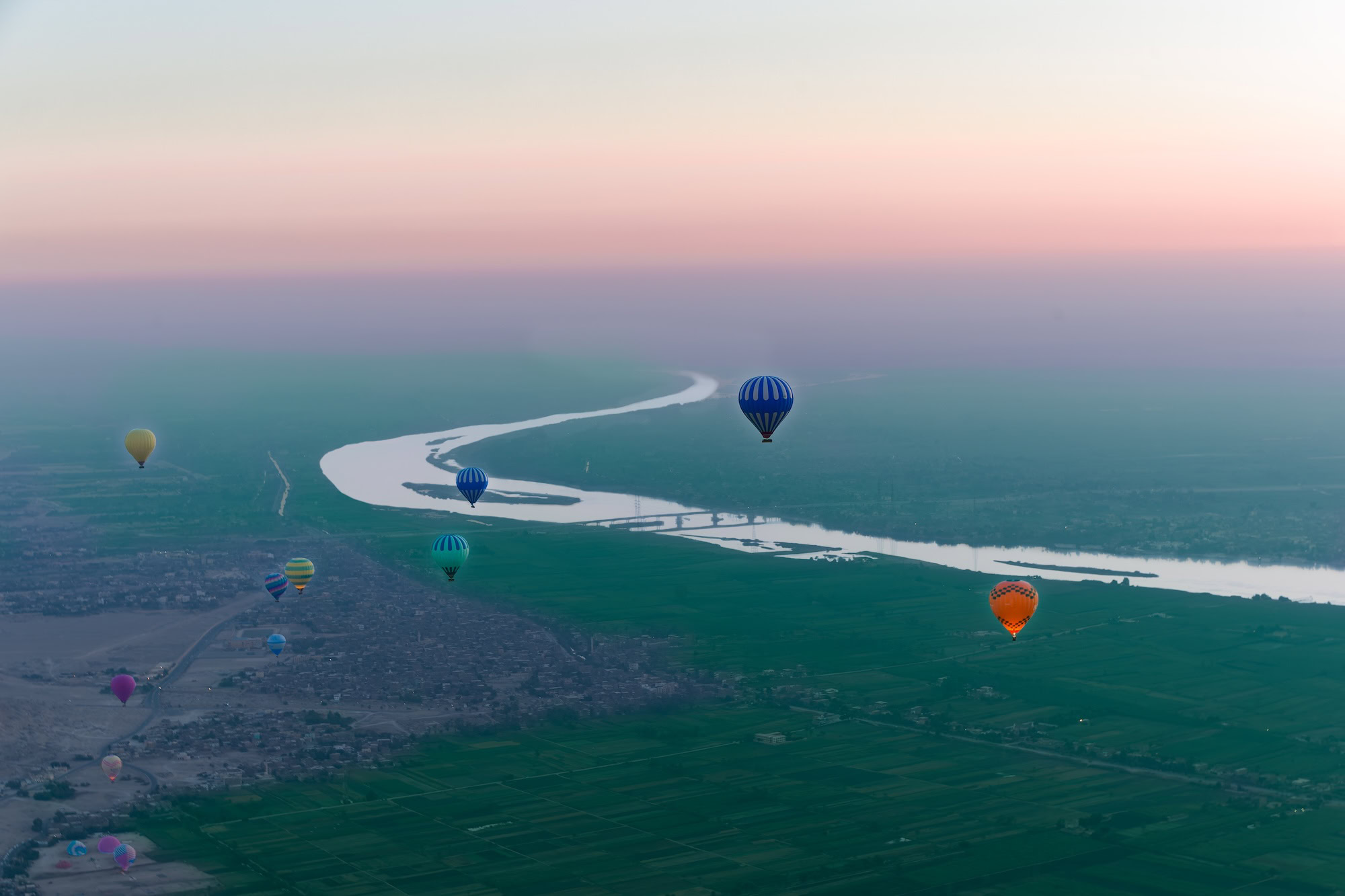
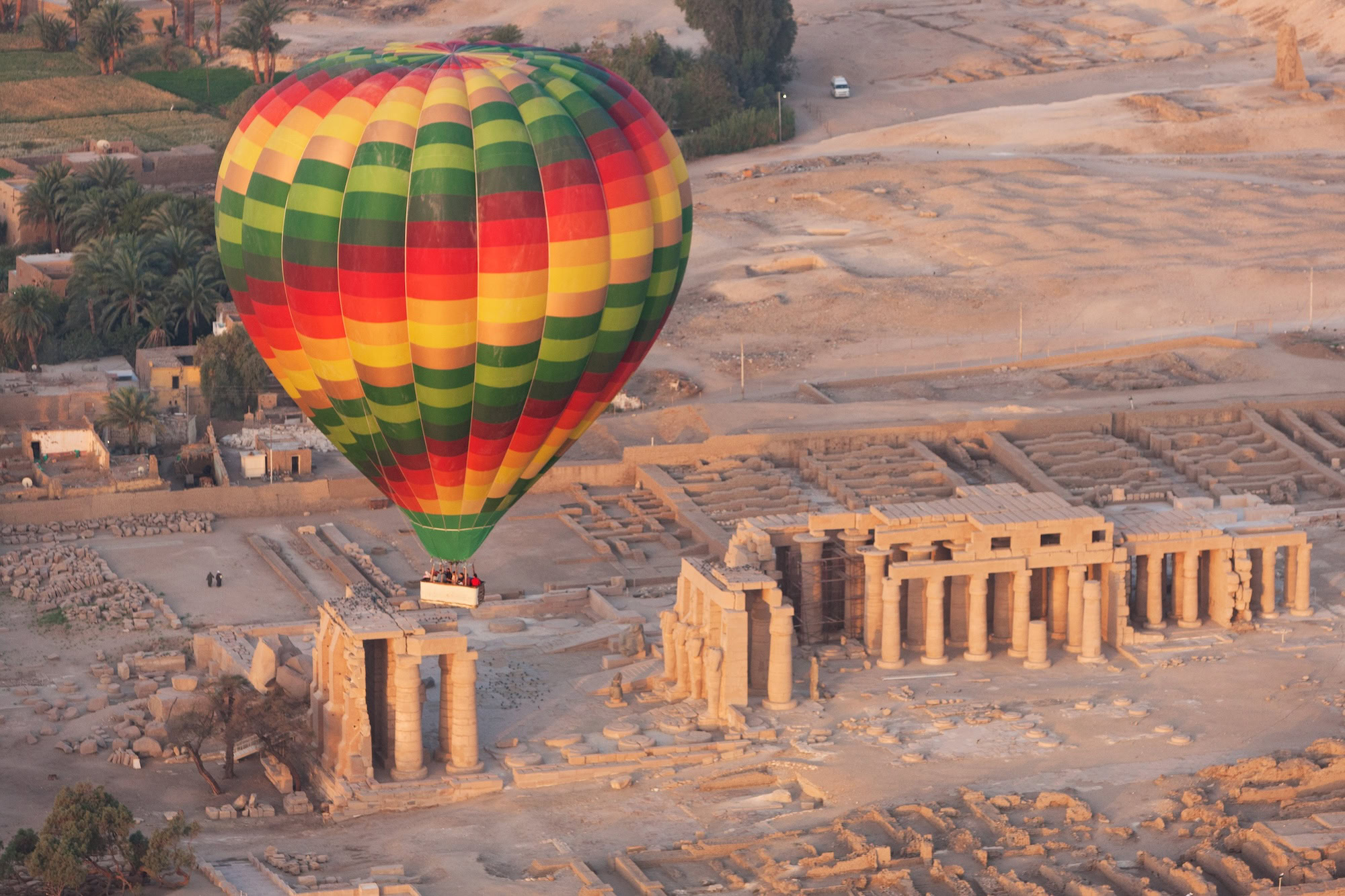
Hot air balloon rides over Luxor’s west bank provide spectacular dawn views of the Valley of Kings, Hatshepsut Temple, and Medinet Habu spreading across desert landscapes. Flights typically launch at 5:30 am (05:30) when morning thermals create ideal conditions for peaceful floating 300 meters (984 feet) above archaeological sites.
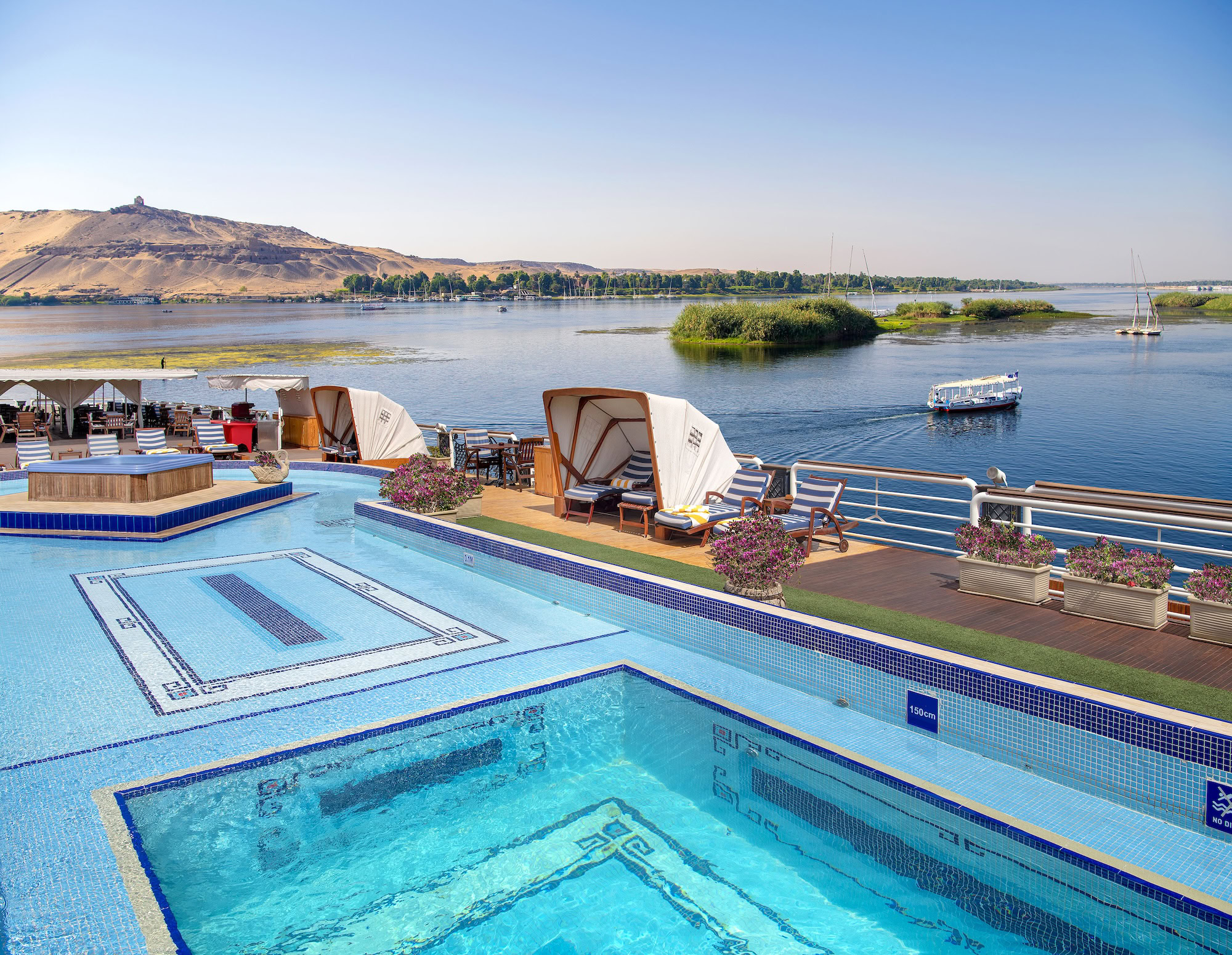
Felucca sailing offers the most traditional Nile experience, using triangular sails that have powered river transport for millennia. These wooden boats navigate between Aswan’s islands at sunset, when granite boulders glow golden and Nubian villages come alive with evening activities.
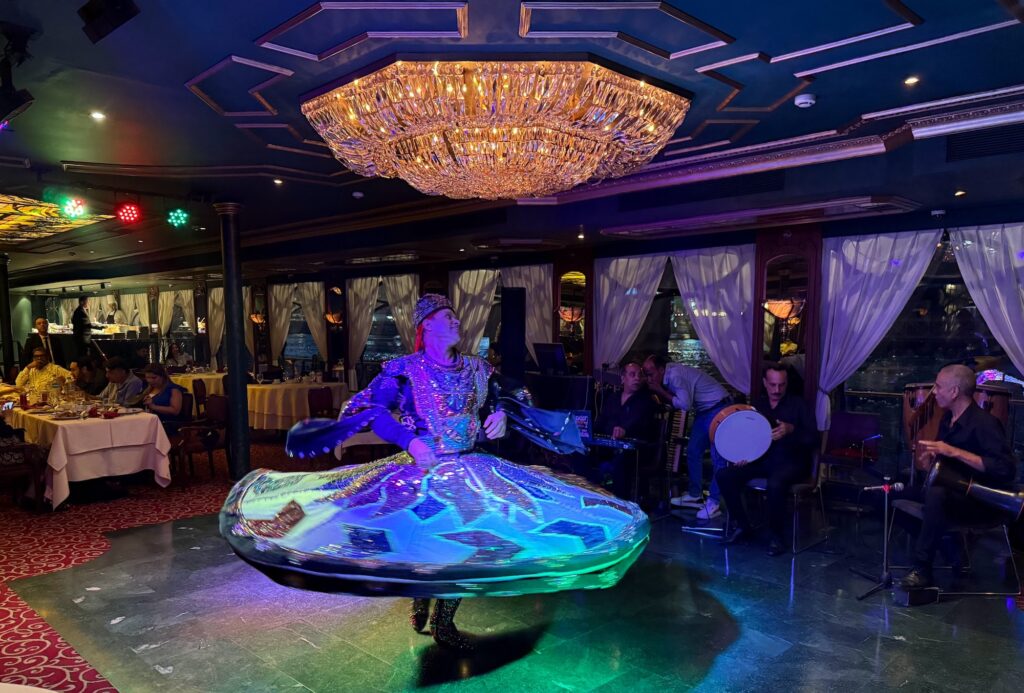
Nile dinner cruises in Cairo combine sightseeing with entertainment, featuring traditional music and dance performances while passing illuminated mosques and modern bridges. These floating restaurants serve both Egyptian specialties and international cuisine as the capital’s skyline creates a dramatic backdrop.
Archaeological tours led by qualified Egyptologists reveal hidden details invisible to casual visitors. Expert guides explain hieroglyphic inscriptions, point out astronomical alignments, and share recent discoveries that continue reshaping understanding of ancient Egyptian civilization.
Our private guides possess decades of experience interpreting Egypt’s monuments, while our modern, air-conditioned vehicles ensure comfortable transportation between sites. We provide 24/7 customer support throughout your journey, allowing you to focus entirely on experiencing these incredible attractions.
Practical Planning for Your Nile Adventure
Successful Nile exploration requires understanding seasonal patterns, entry requirements, and logistical considerations that affect your experience.
The optimal visiting period extends from October through April when daytime temperatures average 20°C to 30°C (68°F to 86°F) and evenings remain comfortable for sightseeing. Summer months from May to September bring extreme heat exceeding 40°C (104°F), making morning and late afternoon the only practical times for outdoor activities.
U.S. visitors need tourist visas obtainable upon arrival at Cairo or Luxor airports for $25, valid for 30 days. Europeans typically receive the same visa-on-arrival privileges, while Latin American visitors should check specific requirements with Egyptian consulates. Canadian and Australian citizens also qualify for airport visa services.
Photography tickets cost extra at most monuments, ranging from 100 to 300 Egyptian pounds ($3 to $10) depending on the site. Video recording requires separate permits and fees. Some tombs, including Tutankhamun’s burial chamber, charge premium entry fees of 400 Egyptian pounds ($13) but limit daily visitors to preserve delicate decorations.
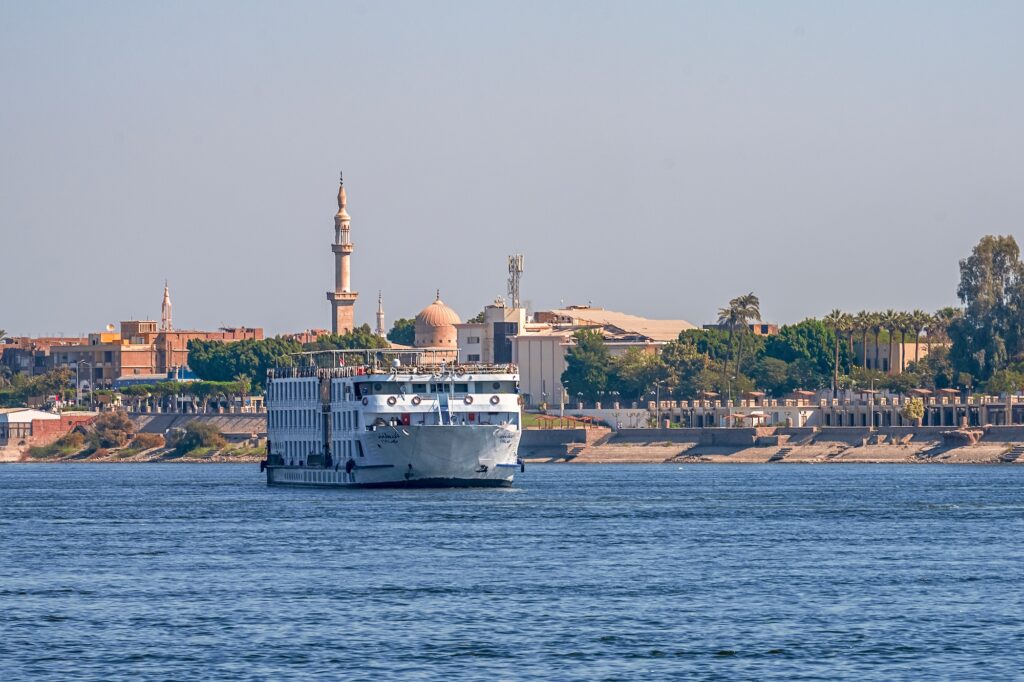
Multi-day Nile cruises between Luxor and Aswan typically include guided excursions to major temples and monuments as part of their packages. These group tours accommodate up to 12 participants with qualified guides, creating more intimate experiences than large bus tours while maintaining cost efficiency.
Temple sites generally open at 6:00 am (06:00) and close by 5:00 pm (17:00), though hours vary seasonally. Valley of Kings maintains strict visitor quotas for popular tombs, making advance booking essential during peak season. Abu Simbel requires either domestic flights from Aswan or early morning bus departures at 4:00 am (04:00) due to its remote location.
Our award-winning service includes personalized itinerary planning that maximizes your time at each site while accommodating your interests and physical abilities. We handle all logistics from airport transfers to monument tickets, ensuring seamless experiences throughout your Egyptian adventure.
Frequently Asked Questions
How long should I spend exploring Nile attractions?
Plan minimum 5-7 days to see major sites properly, though 10-14 days allows deeper exploration.
What’s the difference between Nile cruises and land-based tours?
Cruises provide floating accommodation with evening entertainment, while land tours offer more flexibility.
Are private guides worth the extra cost?
Yes – qualified Egyptologists provide expert interpretation and customize experiences to your interests.
Can I visit Abu Simbel as a day trip from Aswan?
Absolutely – domestic flights take 45 minutes each way or early morning bus tours.
Which Valley of Kings tombs should I prioritize?
Tutankhamun, Ramesses VI, and Seti I offer the best historical significance and preserved decorations.
Is photography allowed inside temples and tombs?
Most sites permit photography with additional tickets costing 100-300 Egyptian pounds.
What should I wear when visiting religious sites?
Modest clothing covering shoulders and knees is required with comfortable walking shoes.
How crowded do monuments get during peak season?
Early morning and late afternoon visits avoid largest tour groups at popular sites.
Are Nile cruises suitable for travelers with mobility limitations?
Modern cruise ships provide elevator access and customizable shore excursions.
What’s the best way to experience Nubian culture in Aswan?
Visit traditional villages, enjoy felucca rides, and attend cultural performances at local venues.
Should I book monument tickets in advance?
Yes for limited-access tombs like Tutankhamun especially during peak season December-February.
How do I distinguish authentic guides from unlicensed operators?
Licensed guides carry official identification cards and work with established tour companies.
Don’t miss Egypt’s greatest treasures
Highlights of Egypt

Design Your Custom Tour
Explore Egypt your way by selecting only the attractions you want to visit
Explore must-see sights across Sinai, the Sahara, along the Nile, and around Lake Nasser — complete regional guides.