Where sacred mountains meet the Red Sea
Sinai Attractions
The Sinai Attractions blend biblical heritage, desert wilderness, and world-class Red Sea coastline into one of Egypt’s most unique regions. With 70+ years of experience, private guides, and tailor-made itineraries, let our specialists craft your perfect journey through this remarkable peninsula.
Sinai Attractions: Sacred Mountains and World-Class Diving
The Sinai Peninsula offers experiences few places can match.
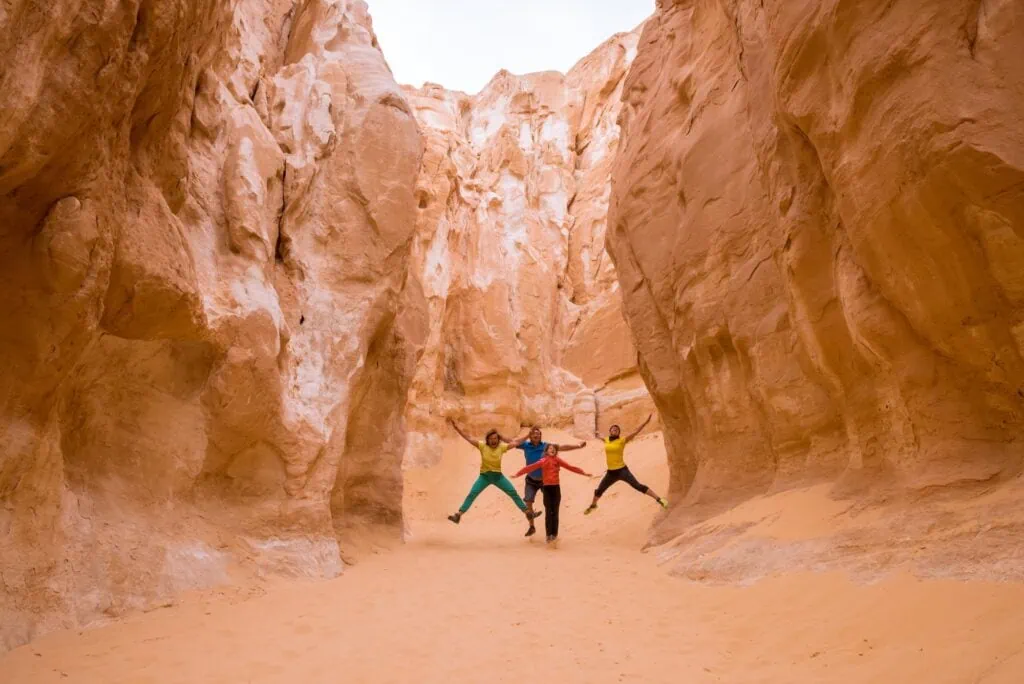
Beyond its reputation as a premier diving destination and spiritual sanctuary, the Sinai Peninsula reveals layers of history, culture, and natural beauty that have captivated travelers for millennia. From the sacred heights of Mount Sinai where Moses received the Ten Commandments to the vibrant coral reefs of the Red Sea, this triangular landmass connects continents and civilizations. Bedouin guides still lead visitors through ancient trails, while modern resort towns provide comfort and access to some of the world’s most pristine underwater ecosystems.
We’ve explored every corner of this remarkable region to bring you the essential attractions that define Sinai’s unique character.
Table of Contents
Sacred Heights: Mount Sinai and Saint Catherine’s Monastery
The spiritual heart of Sinai beats strongest around Jebel Musa (Mount Sinai), where three major world religions trace pivotal moments in their histories.
Mount Sinai Summit Experience
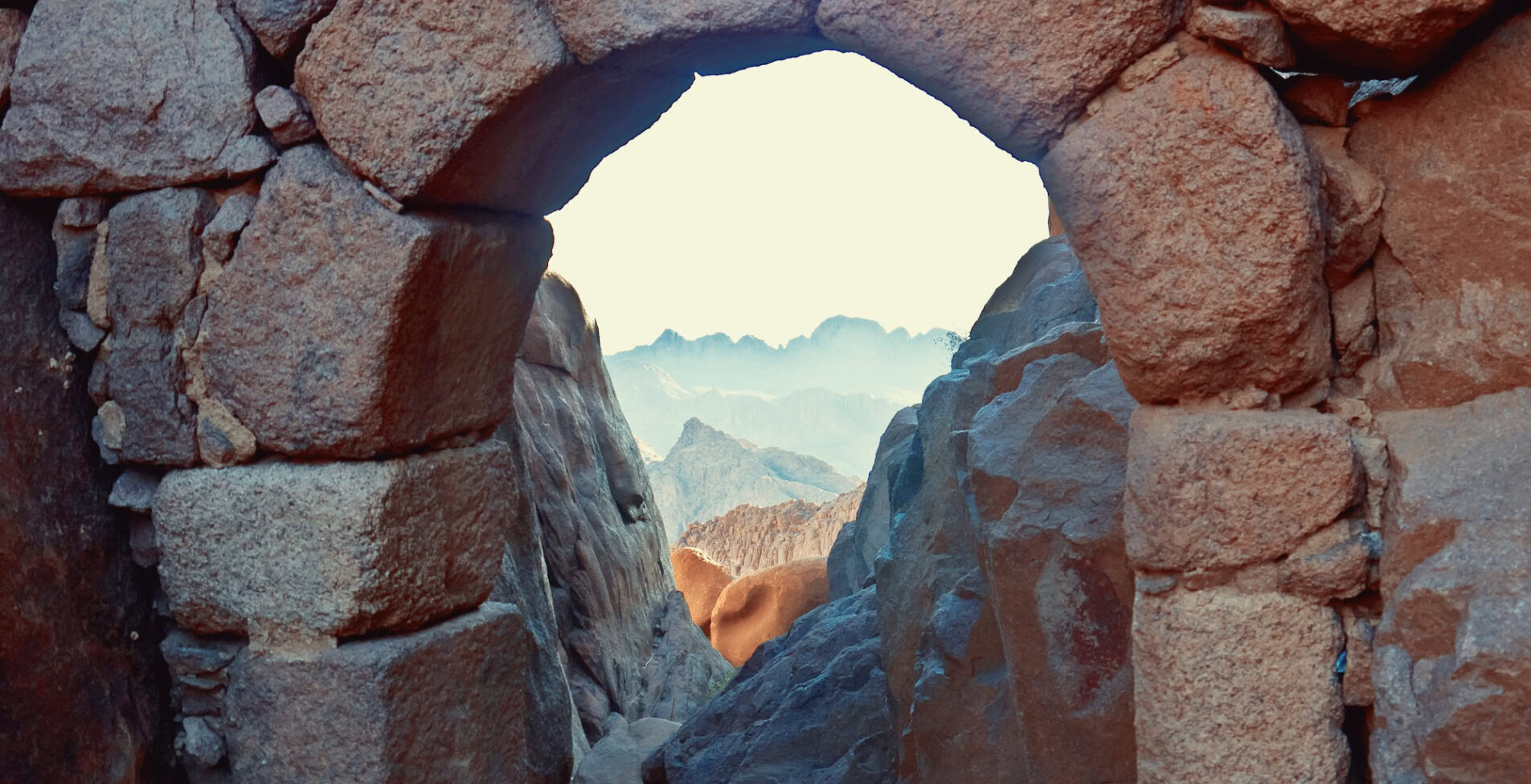
Standing at 2,285 meters (7,497 feet), Mount Sinai’s summit offers more than spectacular views across the rugged Sinai mountains. Two main routes lead to the top: the easier Camel Trail winds gradually upward in switchbacks over two hours, while the challenging Steps of Repentance follows 3,750 stone steps carved by monks as a form of penance. Both trails converge at Elijah’s Basin, a plateau where pilgrims traditionally spend the night under star-filled desert skies.
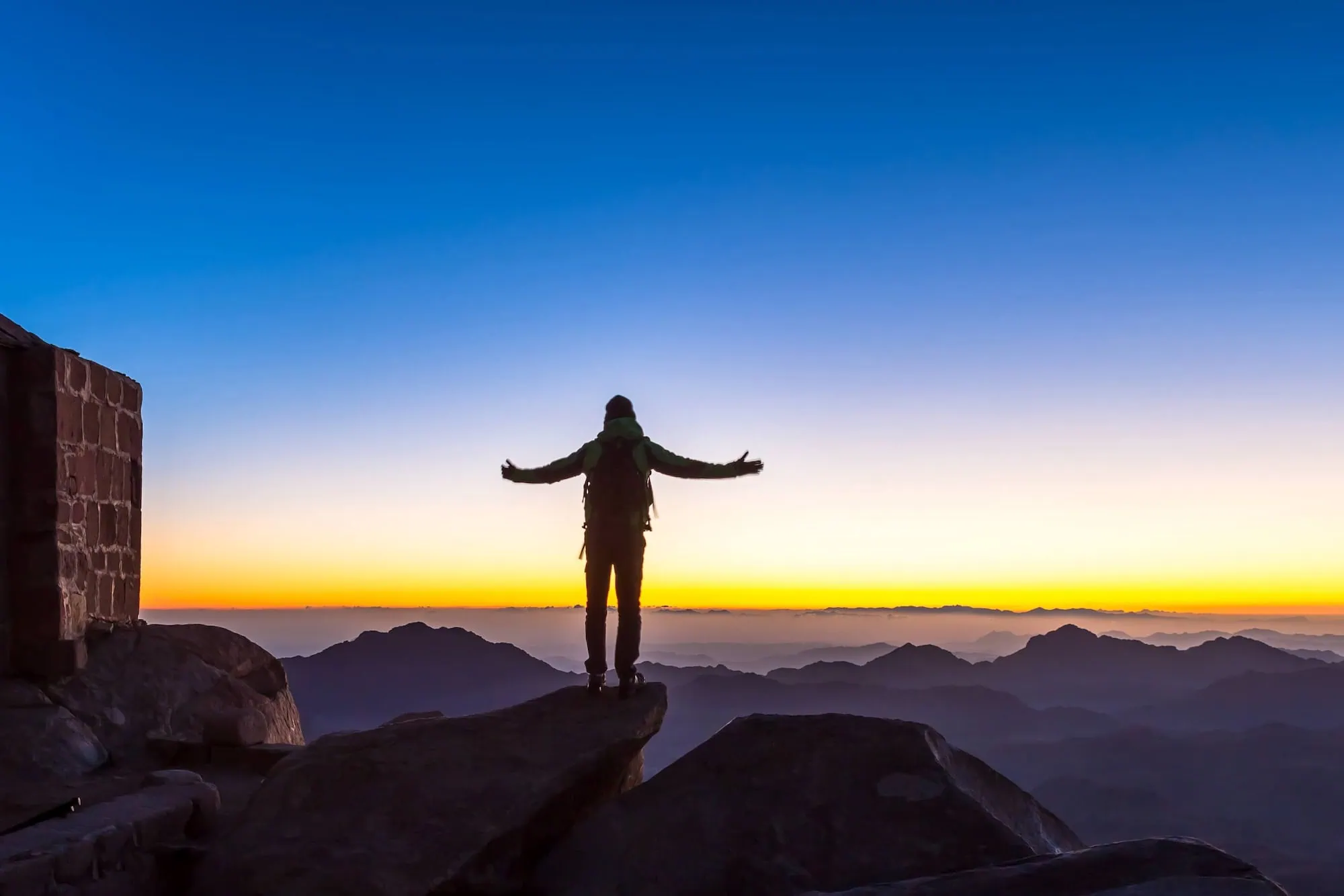
The summit itself houses both a small Greek Orthodox chapel and a mosque, reflecting the mountain’s significance across religious traditions. Most visitors time their ascent to witness sunrise from this sacred peak. The experience requires preparation – temperatures can drop to 5°C (41°F) at night, even in summer.
Saint Catherine’s Monastery
At the mountain’s base sits Saint Catherine’s Monastery, recognized as the world’s oldest continuously functioning Christian monastic community. Built in the 6th century by Emperor Justinian, this UNESCO World Heritage site preserves an extraordinary collection of Byzantine art, ancient manuscripts, and religious artifacts spanning 1,500 years.
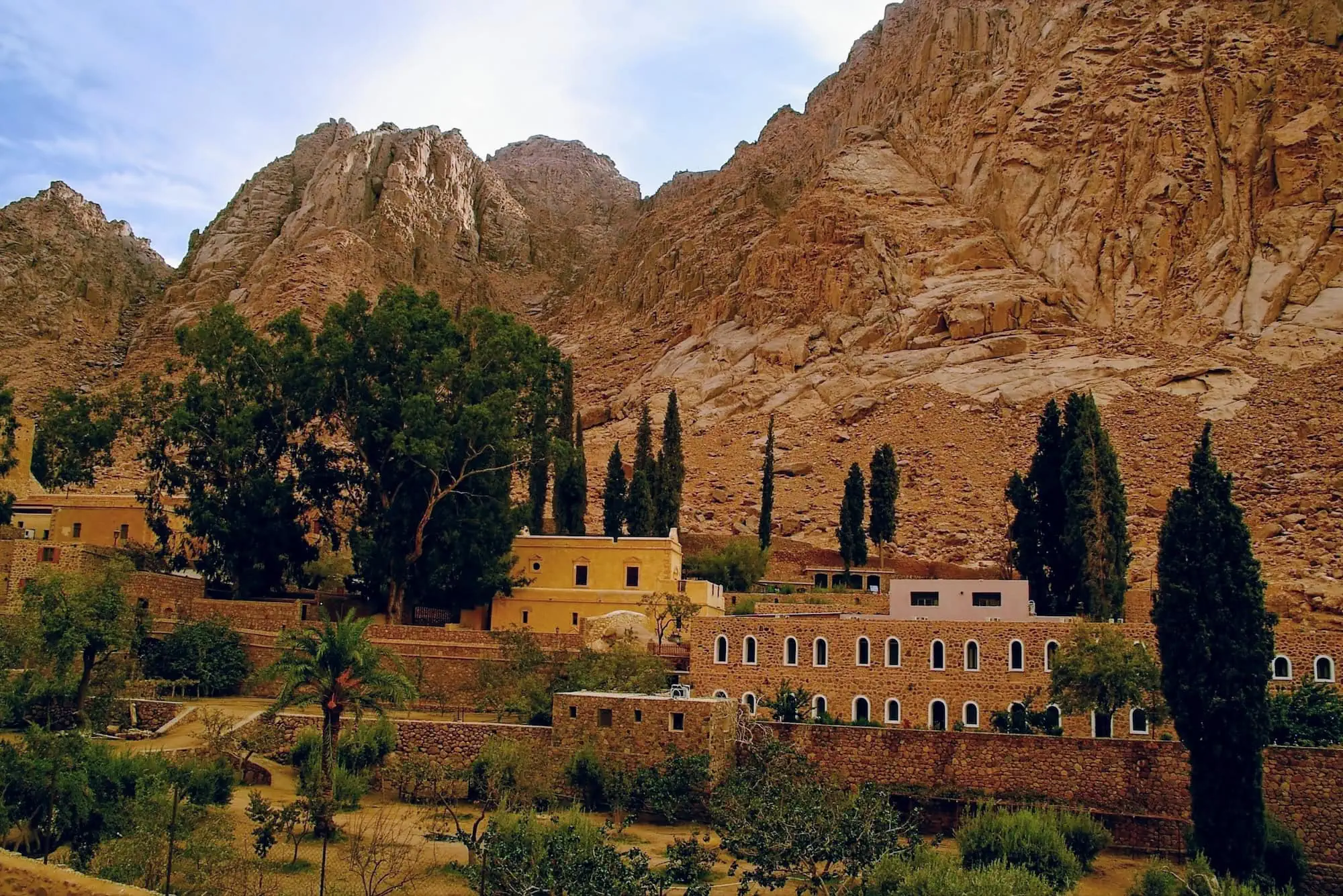
The monastery’s library contains the world’s second-largest collection of early codices and manuscripts, including texts in Greek, Arabic, Armenian, Coptic, and other languages. Visitors can view the Chapel of the Burning Bush, built over the site where tradition places Moses’ encounter with the divine. The monastery operates on strict visiting hours, opening to tourists Tuesday, Thursday, and Saturday from 9:00 am to 11:30 am (09:00-11:30).
Mount Catherine Summit
Egypt’s highest point at 2,629 meters (8,625 feet), Mount Catherine offers alpine hiking rare in this desert region. The challenging trail requires a full day and provides panoramic views across the entire Sinai Peninsula.
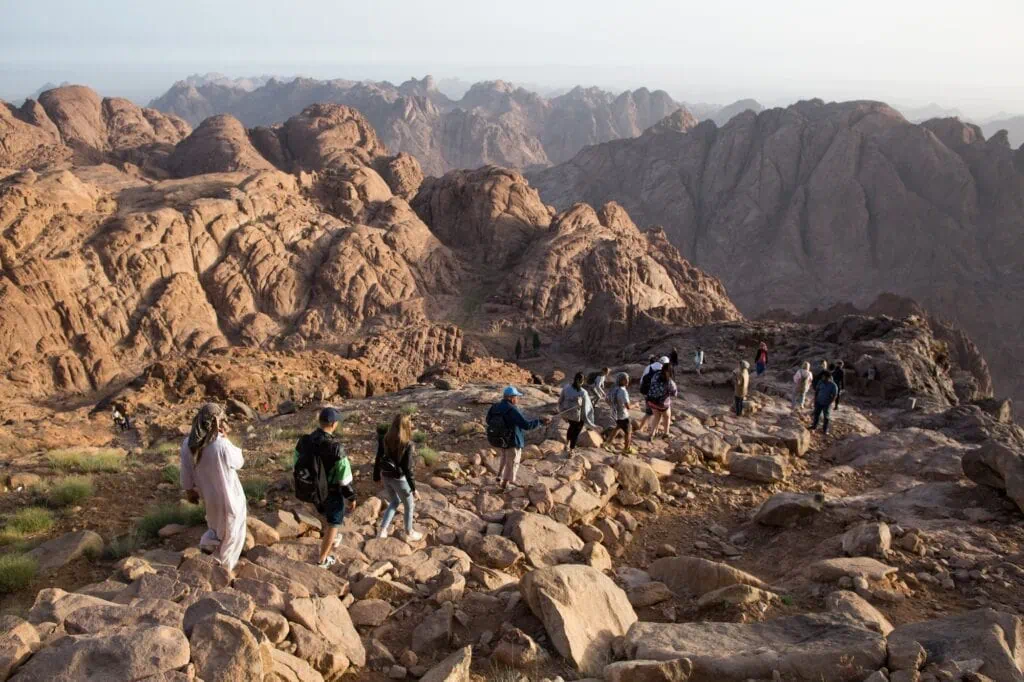
Experienced hikers describe the summit experience as deeply contemplative – the silence broken only by wind across the peaks creates an atmosphere of natural meditation.
World-Class Marine Adventures
The Red Sea coastline delivers diving and marine experiences that consistently rank among the world’s finest.
Ras Mohammed National Park
This marine reserve protects some of the most biodiverse coral reefs on Earth. The underwater walls of Ras Mohammed National Park drop dramatically from shallow coral gardens to depths exceeding 200 meters (656 feet). Marine life includes schools of barracuda, napoleon wrasse, and during certain seasons, hammerhead sharks and manta rays.
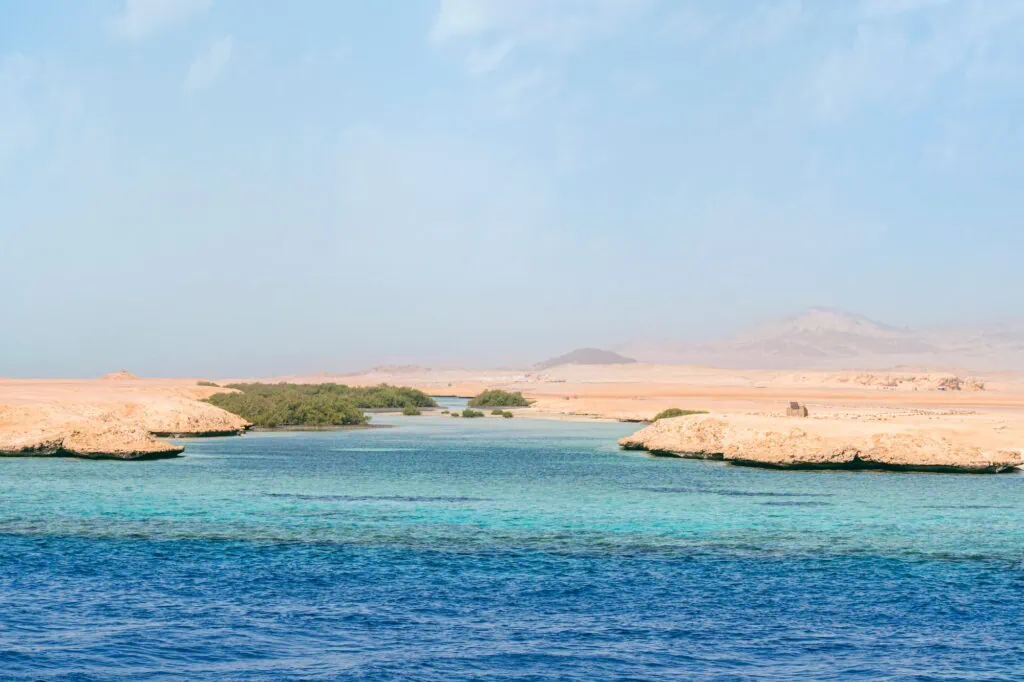
The park extends both underwater and onto land, encompassing mangrove forests and desert landscapes. Shark Reef and Yolanda Reef represent the park’s most famous diving sites, where the SS Thistlegorm wreck provides an additional underwater attraction. Snorkelers can explore shallower areas from the shore, though the best marine experiences require boat access to offshore reefs.
Blue Hole, Dahab
The Blue Hole in Dahab has achieved legendary status among free divers and technical divers worldwide. This natural underwater sinkhole drops to depths of 110 meters (361 feet) just meters from Dahab’s shoreline. The site gained international attention through documentaries showcasing extreme diving, but it also offers excellent recreational diving and snorkeling opportunities.
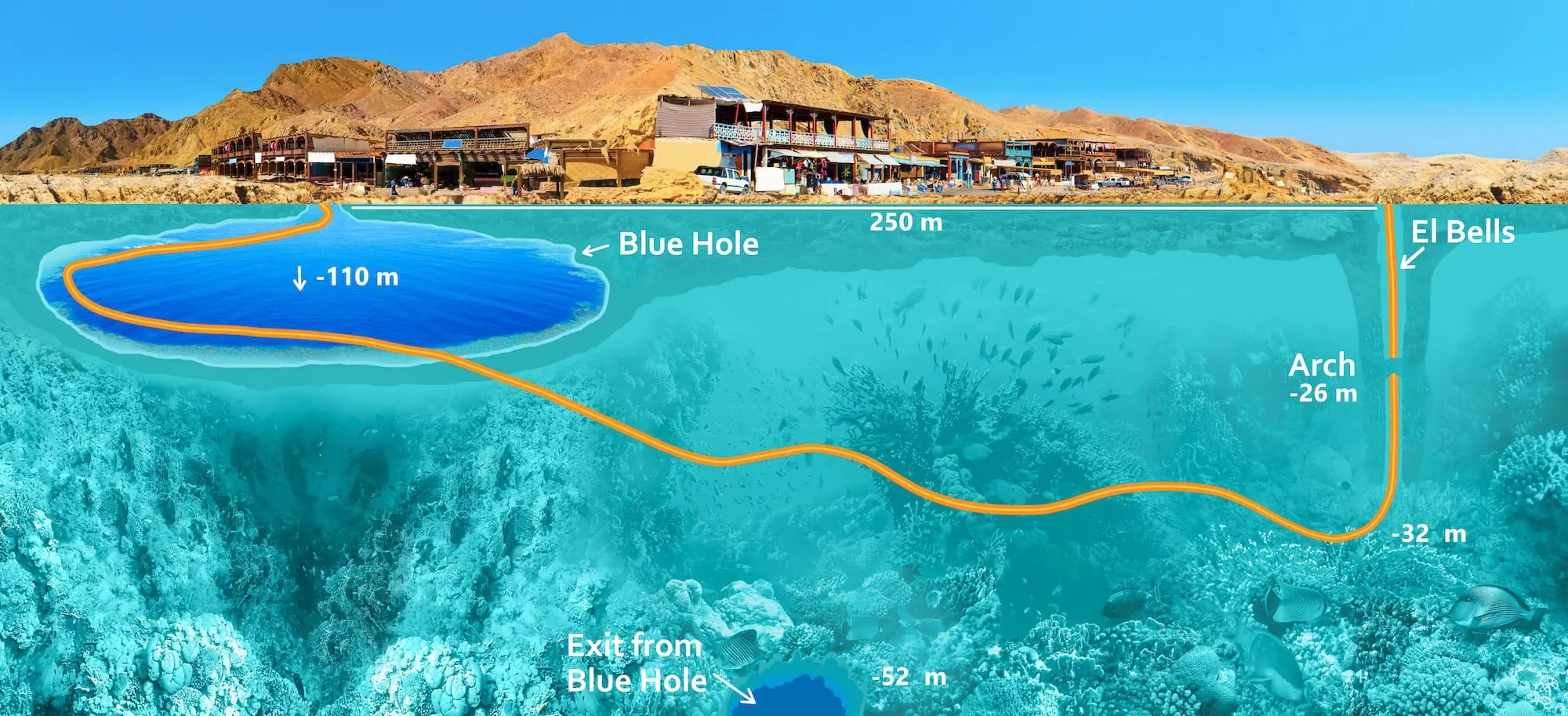
The surrounding area reflects authentic Bedouin culture, with traditional camps serving tea and meals along the coastline. Dahab’s relaxed atmosphere contrasts sharply with the luxury resort developments further south, providing insight into traditional Sinai Peninsula life.
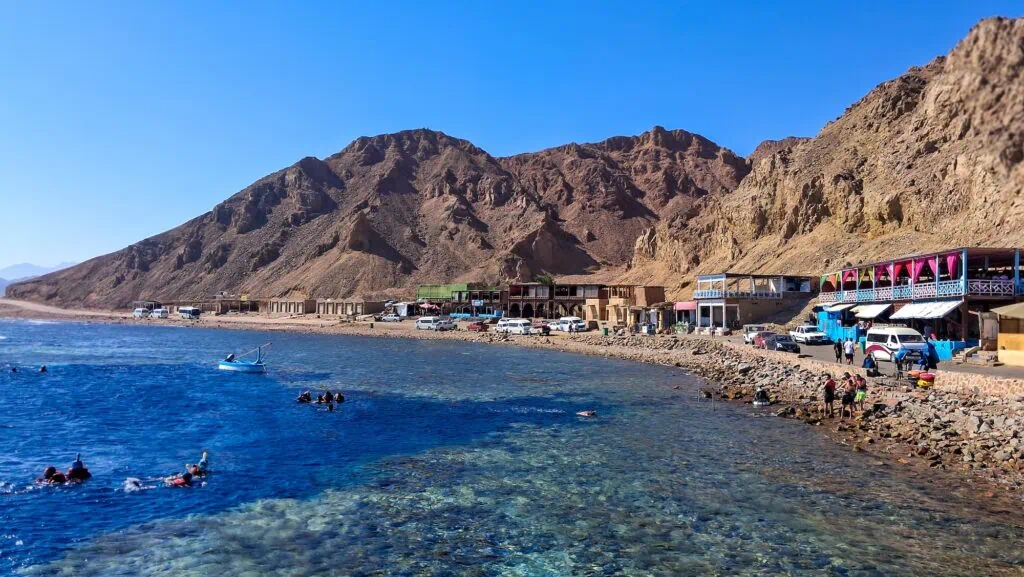
Wind conditions make Dahab exceptional for kitesurfing and windsurfing. The consistent thermal winds combined with shallow, calm lagoons create ideal learning conditions for beginners while challenging advanced riders with stronger conditions further offshore.
Desert Adventures and Geological Wonders
Sinai’s interior landscapes reveal millions of years of geological history through dramatic formations and hidden valleys.
Colored Canyon
The Colored Canyon showcases sedimentary rock layers carved over millennia into narrow passages and cathedral-like chambers. Its walls display bands of yellow, red, purple, and orange minerals, creating a natural art gallery that changes with shifting light throughout the day.
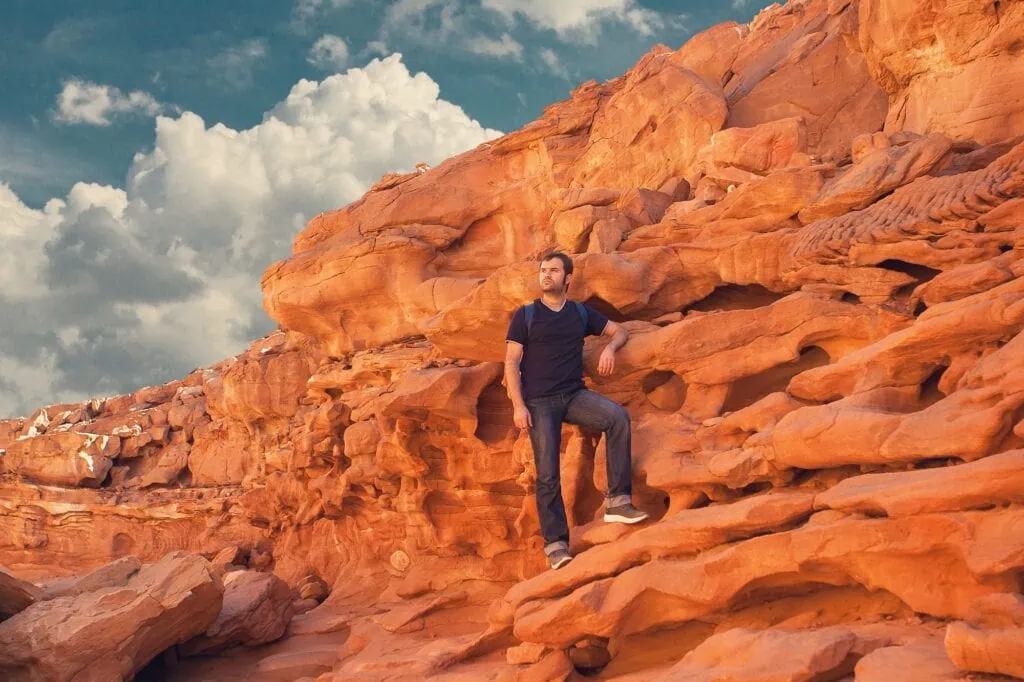
Exploring the canyon requires scrambling through narrow sections and over smooth rock surfaces. The complete journey takes 2-3 hours and involves moderate physical challenges including climbing over boulders and navigating tight passages. Photography enthusiasts find the interplay of light and color particularly rewarding during late morning hours.
Desert Safari Adventures
Traditional safari experiences connect visitors with authentic Bedouin culture while exploring Sinai’s diverse desert landscapes. These adventure tours typically combine camel riding, 4WD vehicle tours, and overnight camping under some of the clearest night skies visible anywhere.
Professional Bedouin guides share knowledge passed down through generations about desert survival, traditional medicine, and astronomical navigation. Evening programs often include traditional music, storytelling, and meals prepared using ancient techniques. The experience provides genuine cultural exchange rather than staged tourist entertainment.
Rock Climbing in Wadi Gnai
The granite cliffs of Wadi Gnai offer over 40 documented climbing routes ranging from beginner-friendly ascents to advanced technical challenges. The rock quality rivals famous climbing destinations worldwide, with solid granite providing secure holds and natural protection.
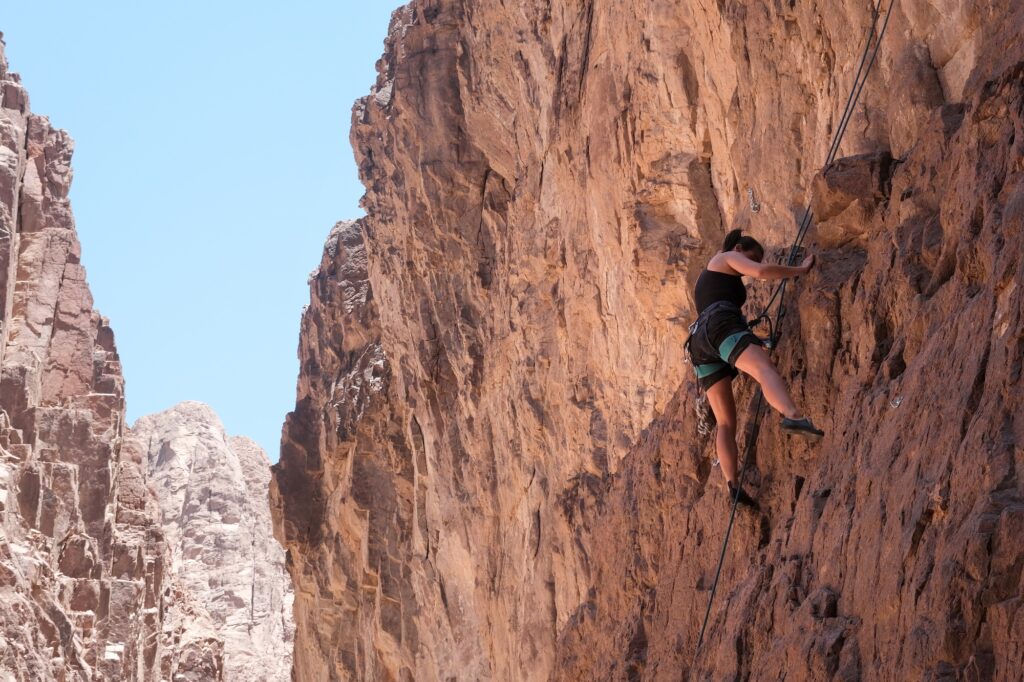
Climbing seasons extend from October through April when temperatures remain comfortable for extended exposure on rock faces. Local guides familiar with route conditions and safety protocols are essential, as medical facilities remain several hours away. The climbing combines physical challenge with spectacular desert scenery visible from higher elevations.
Coastal Resort Destinations
Modern infrastructure meets ancient landscapes in Sinai’s developed coastal regions.
Sharm El Sheikh
Sharm El Sheikh, the peninsula’s largest resort destination, offers international airport access, luxury accommodations, and organized tour services to major attractions. Naama Bay serves as the entertainment and dining center, while newer developments like Sharks Bay focus on diving access and upscale resorts.
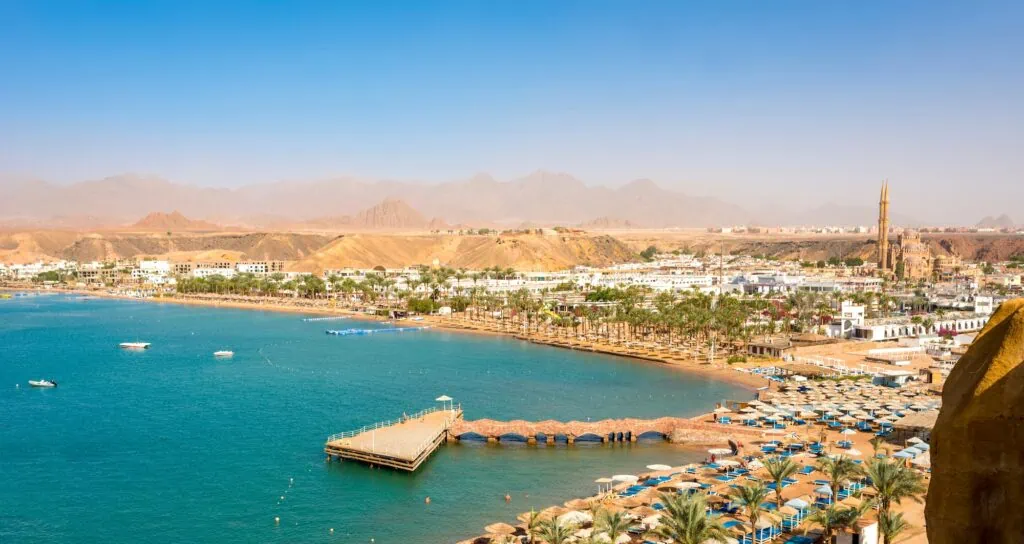
The city functions as a logistics hub for exploring the broader peninsula. Tour operators provide day trips to Saint Catherine’s Monastery, desert safaris, and diving excursions to remote reef sites. Shopping centers, restaurants, and nightlife create a cosmopolitan atmosphere unusual in this desert region.
Nuweiba and the Eastern Coast
Nuweiba maintains a more relaxed character than Sharm El Sheikh while providing access to excellent diving sites and the ferry connection to Jordan. The town serves backpackers and independent travelers seeking budget accommodations and authentic local experiences.
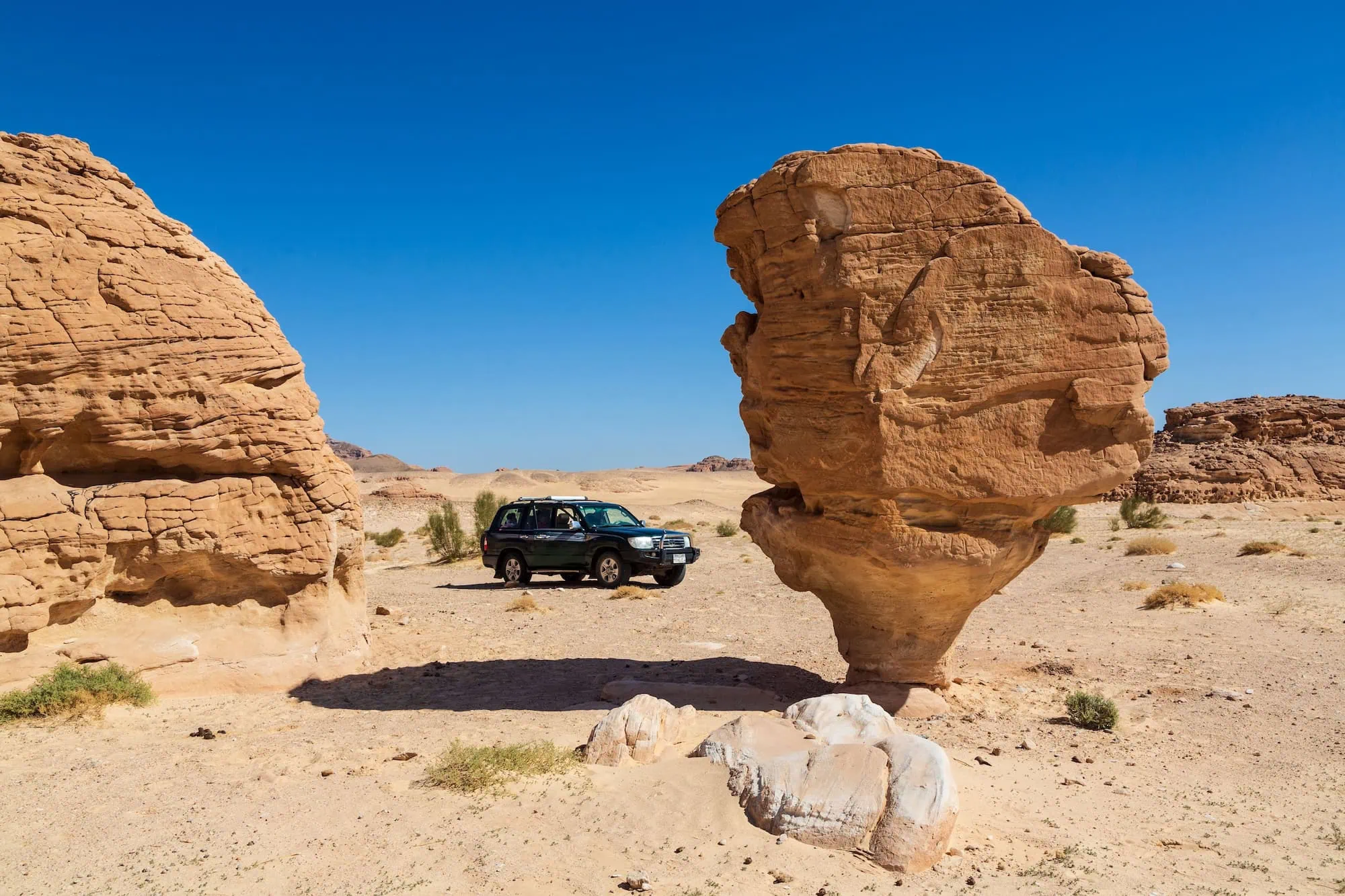
The surrounding coastline features numerous small bays and beaches accessible only by four-wheel-drive vehicles or on foot. These secluded locations offer privacy and untouched coral reefs for those willing to venture beyond established tourist areas.
Cultural Heritage and Traditional Life
Traditional Bedouin culture remains vibrant throughout Sinai, particularly in mountainous interior regions where modern development has had minimal impact.
The Jebaliya tribe, descendants of monks and Byzantine servants from Saint Catherine’s Monastery, maintains unique cultural traditions and serves as hereditary guardians of the monastery grounds. Their knowledge of mountain trails, weather patterns, and traditional crafts provides essential services for tourism while preserving ancient customs.
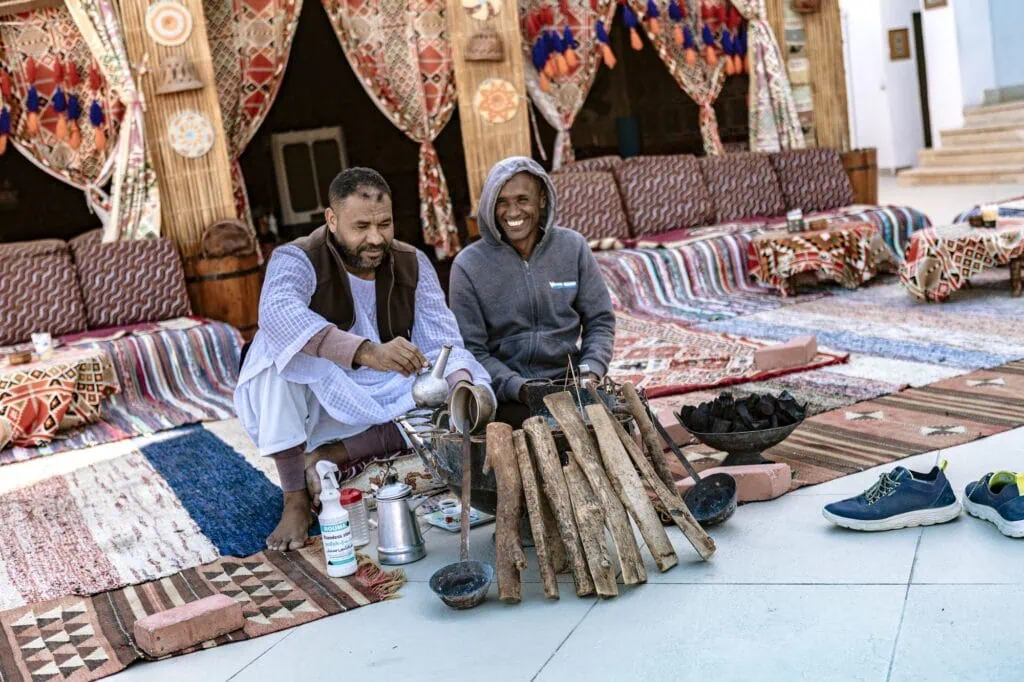
Herbal medicine practices continue under practitioners like Dr. Ahmed, who maintains traditional plant knowledge in remote mountain locations. These experiences offer insight into sustainable living practices developed over centuries in challenging desert environments.
Visitors interested in authentic cultural exchange can arrange homestays and participate in traditional activities like goat herding, bread baking, and handicraft production. These programs support local economies while providing genuine cultural learning opportunities.
Historical Sites Beyond the Main Attractions
Lesser-known historical sites throughout Sinai reward adventurous travelers with unique insights into the region’s layered past.
Moses Springs (Ain Musa)
Located along the route tradition associates with the Exodus, these natural springs have provided water for countless pilgrims throughout history. The site combines religious significance with practical importance as one of Sinai’s few reliable freshwater sources.
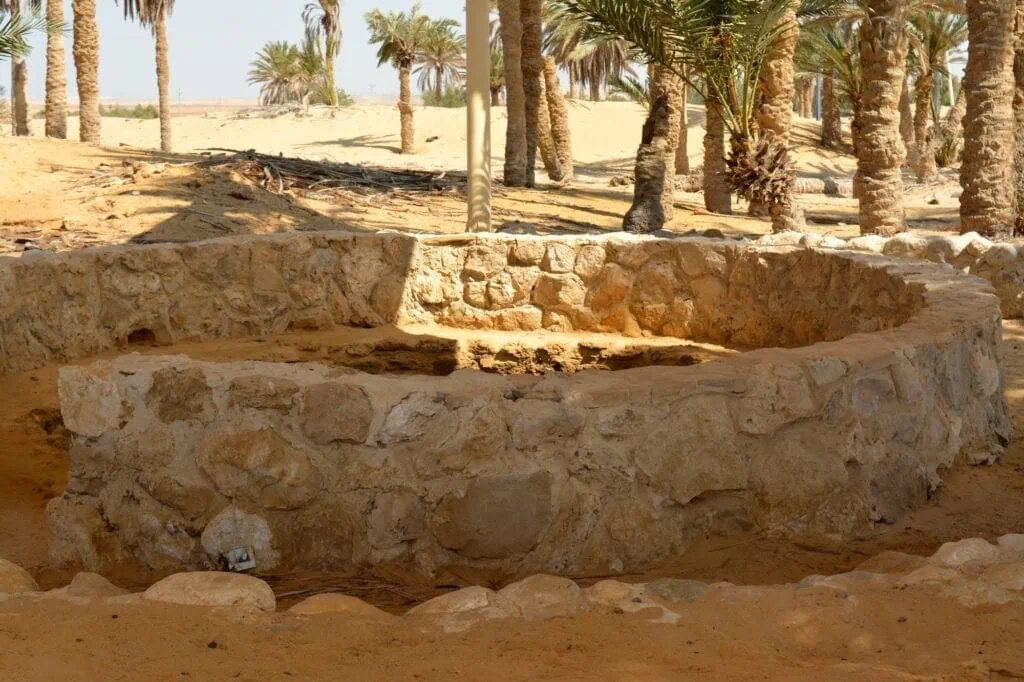
Archaeological evidence suggests continuous human habitation around the springs for over 2,000 years. Today, date palm groves and small settlements create an oasis atmosphere in the surrounding desert landscape.
Monastery of Saint Paul
This 5th-century Coptic Orthodox monastery predates Saint Catherine’s and represents some of the earliest Christian monastic traditions. The remote location requires a challenging journey but rewards visitors with extraordinary Byzantine frescoes and insights into early Christian desert spirituality.
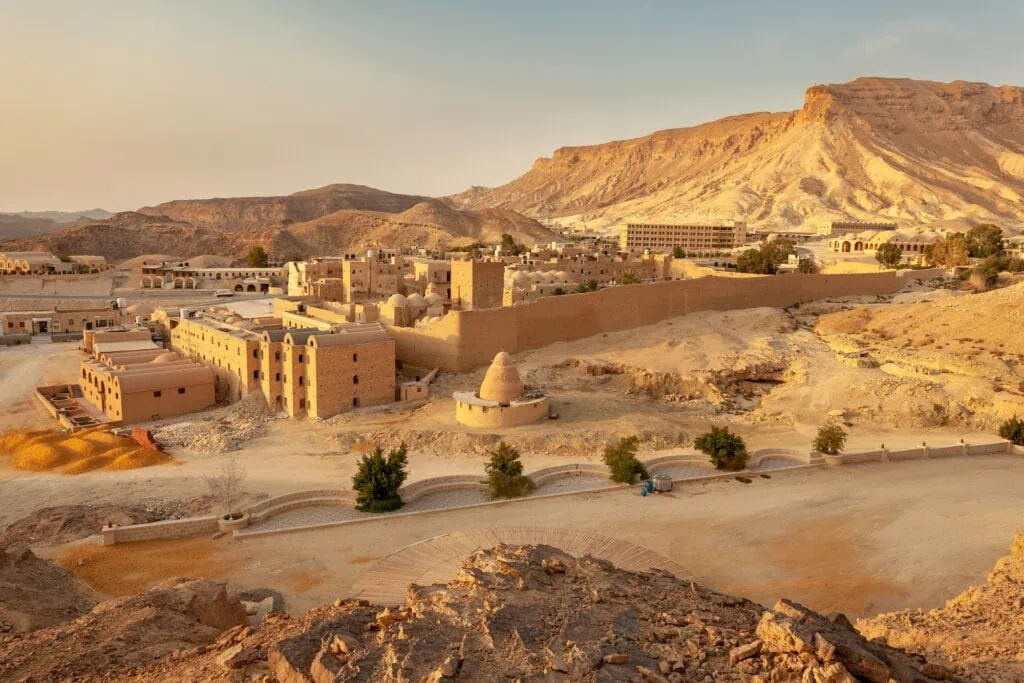
The monastery’s isolation has preserved traditions and practices unchanged for over 1,500 years. Visiting requires advance permission and respect for the contemplative atmosphere maintained by the resident monks.
Experience the Sinai With Seasoned Adventure Specialists
Few places on Earth combine sacred mountains, windswept deserts, and world-class coral reefs the way the Sinai does. Explore our Egypt adventure tours to see how we bring the Sinai attractions to life — whether that means camel treks through Wadi Feiran, sunrise at Saint Catherine’s Monastery, or diving the Red Sea by day and relaxing at a 5-star resort by night, all on an itinerary tailored entirely around you.
Frequently Asked Questions
October through April offers ideal weather with daytime temperatures of 20-25°C (68-77°F) and comfortable evenings.
The Camel Trail requires moderate fitness and takes 2-3 hours ascending, while the Steps of Repentance demands good physical condition.
Yes, shallow reef areas accommodate novice divers, though the best sites require advanced certification due to strong currents.
Bring warm layers for evening temperatures, sun protection, closed shoes for walking on rocks, and a flashlight for nighttime activities.
While not legally required, local guides enhance safety and provide geological insights due to scrambling challenges.
Yes, the shallow lagoon areas provide safe swimming and snorkeling, while Bedouin camps offer cultural experiences for all ages.
Plan 1-2 hours for the monastery tour, but arrive early as it closes at 11:30 am and operates limited visiting days.
Advanced Open Water certification opens access to most sites, while technical diving credentials are required for challenging locations.
Independent travel is possible with rental cars, though guided tours provide cultural insights and navigate permit requirements.
Sinai’s geographic position creates exceptional coral biodiversity, dramatic wall diving, and historic wreck sites in relatively compact areas.
Don’t miss Egypt’s greatest treasures
Highlights of Egypt
Design Your Custom Tour
Explore Egypt your way by selecting only the attractions you want to visit
Explore must-see sights across Sinai, the Sahara, along the Nile, and around Lake Nasser — complete regional guides.