Fully Tailored Experiences
Egypt Tours from the UK
Egypt Tours Plus has designed private Egypt tours from the UK since 1955, every itinerary tailor-made from the first draft. With direct flights putting Cairo five hours from London, Egypt is the closest the ancient world comes to Britain, and your trip is 100% customisable, with an expert Egyptologist guide and personal driver throughout. Tell our specialists the holiday you have in mind, and they will build it around you.
Your Guide to Egypt Tours from the UK
Everything British travellers need to plan a private Egypt tour from is gathered below: direct and regional flight options, the Nile cruise holidays the UK has loved for generations, the best months to escape British weather for Egyptian sunshine, how long to go for, what a tour costs and includes, visa requirements for UK passport holders, and the practicalities that keep the trip effortless once you land.
Table of Contents
Why British Travellers Choose Egypt Tours Plus
No country outside Egypt has a longer love affair with the Nile than Britain. British travellers have been sailing it, writing about it, and returning to it for more than 150 years, and Egypt remains one of the few places where five hours of flying buys a completely different world.
Egypt Tours Plus has been planning the private version of that journey since 1955, and the way we work is built around travellers who expect things done properly.
Fully Private Tours, No Fixed-Departure Groups
Every itinerary we design is for your party alone, and all touring on land is fully private with your own guide and driver throughout. The one shared element is the small-group shore excursions on a Luxury Nile Cruise, taken with fellow guests from your vessel.
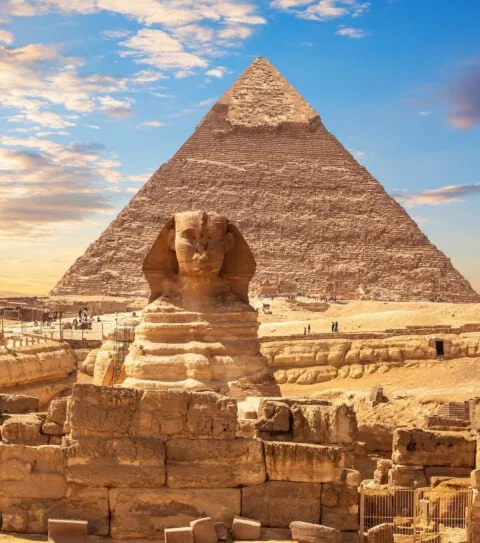
Beyond that, nothing about your holiday is communal: no coach seats, no departure dates set by a brochure, no compromise route built for fifty strangers. Take the Pyramids at your own pace, give the Egyptian Museum’s quieter rooms the hour they deserve, and change the plan mid-trip when something catches your eye.
Egyptologist Guides Who Bring the Past to Life
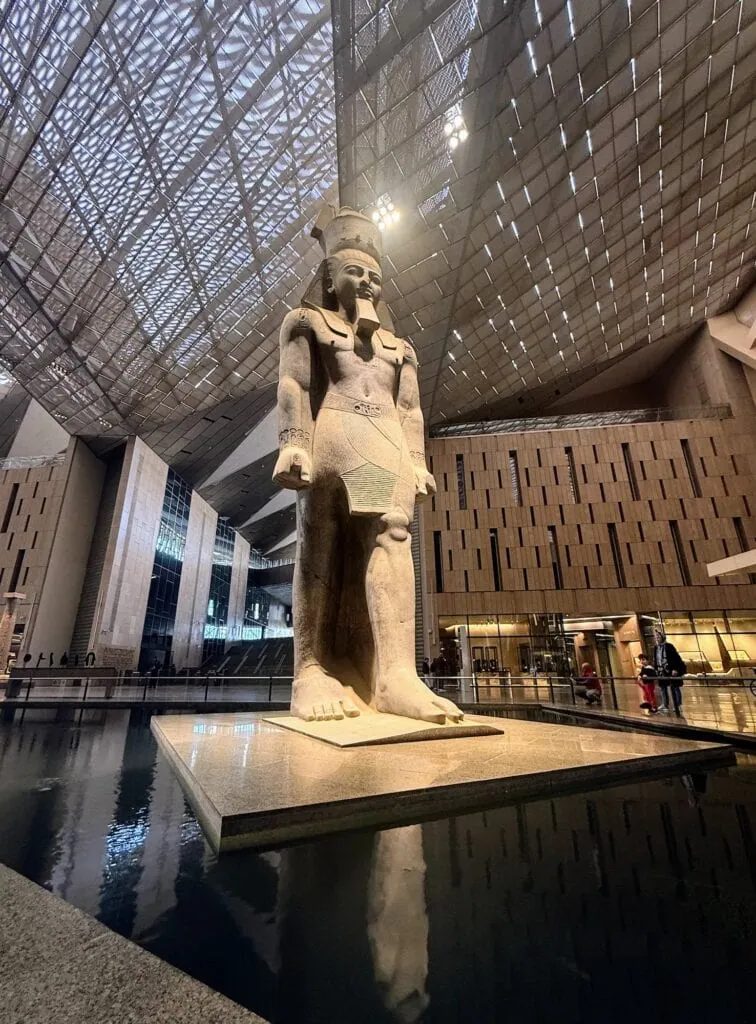
On every touring day you are accompanied by a qualified Egyptologist, someone who has spent years studying the monuments you are standing in, not a courier reading from notes. Their English is fluent, their knowledge runs deep, and they are well used to the British appetite for the full story, questions, tangents, dry humour and all. Guides in French, German, Spanish, Italian, and other languages are available on request. It is the difference between seeing Karnak and actually understanding it.
A Dedicated Travel Concierge and 24/7 Support
From your first enquiry, one named Travel Concierge owns your trip: they draft the itinerary, refine it with you round by round, and stay reachable from booking to the flight home. With Egypt just two hours ahead of the UK, planning calls and travelling-day questions both happen in real time, no waiting overnight for an answer.
And once you are in Egypt, our in-country team is on call around the clock, so a delayed train or a changed plan is fixed on the spot rather than reported afterwards.
Awarded TripAdvisor Travelers’ Choice Every Year Since 2020
Egypt Tours Plus has earned the TripAdvisor Travelers’ Choice award every year from 2020 through 2026, a distinction based purely on traveller reviews. British travellers tend to read reviews more carefully than anyone, which makes that record worth a moment of attention: six consecutive years of guests rating these trips among the best anywhere. We would rather show that track record than make claims about it, and the reviews are all there to read.
Flights from the UK to Egypt: Routes and Logistics
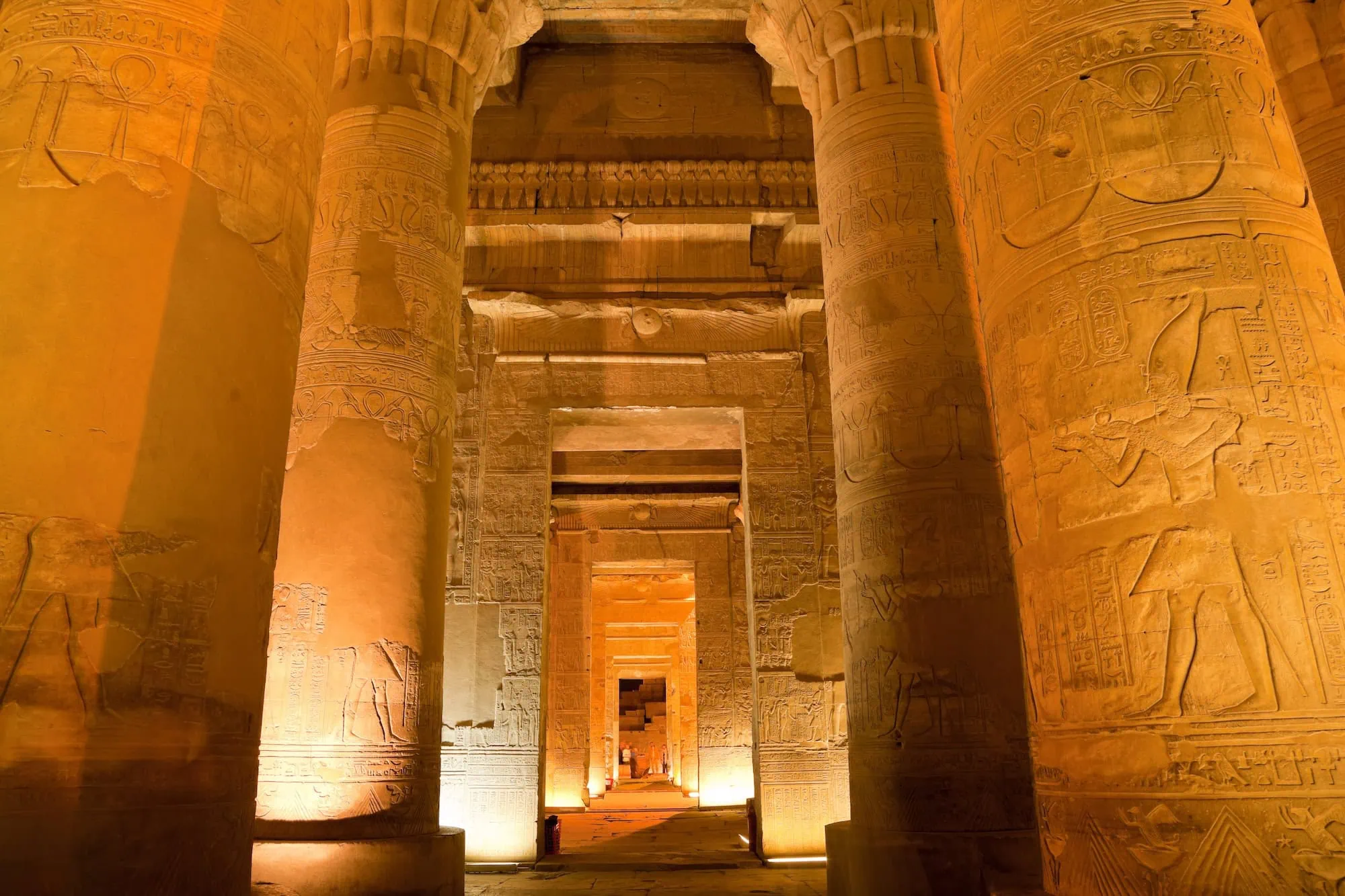
Egypt is one of the easiest long-haul-feeling destinations to reach from Britain, because it is not actually long-haul at all. Direct flights from London put Cairo about five hours away, closer than Dubai and barely further than the Canaries, and the Red Sea resorts have their own direct services from airports across the UK. Here is how the options break down.
Direct Flights from London to Cairo
Both EgyptAir and British Airways fly non-stop between London Heathrow and Cairo, with daily departures year-round and a flight time of around five hours. Between the two carriers there are typically thirty or more services a week, so timings are flexible: morning departures that land in Cairo by evening, or afternoon flights that arrive in time for a late check-in and an early start at the Pyramids.
For most British travellers on a classic Cairo-and-Nile itinerary, Heathrow direct is the simple answer.
Flying from Manchester, Birmingham, and the Regions
Outside London, the picture splits in two.
For Cairo, travellers from Manchester, Birmingham, Edinburgh, Glasgow, and other regional airports either connect through Heathrow or fly via a European hub, with Lufthansa through Frankfurt, KLM through Amsterdam, and Turkish Airlines through Istanbul all putting Cairo within eight to ten hours door to door.
For the Red Sea, it is often even easier: easyJet and TUI operate direct leisure services from a spread of UK airports to Hurghada and Sharm El Sheikh, with seasonal flights towards Luxor appearing in the winter programme. If your tour finishes with Red Sea days after Cairo and the Nile, your Travel Concierge can shape the route so you fly home directly from the coast rather than backtracking to Cairo.
One Booking, Two Airports
A detail worth knowing: your Egypt itinerary does not need to start and finish in the same city. Flying into Cairo and home from Hurghada, or arriving on a Luxor charter and departing from Cairo, is routine to arrange on the ground, since all transfers and domestic connections inside Egypt are part of the package.
The international tickets themselves are most often booked by you, which keeps you free to use Avios, pick your carrier, and choose the airports that suit where you live; your Travel Concierge will gladly point out the routings that fit your itinerary best.
Time Zone and Jet Lag
Egypt sits just two hours ahead of the UK for nearly the entire year, since both countries move their clocks in roughly the same rhythm. The practical effect is that jet lag simply is not part of this trip: you land on essentially your own body clock, and the first morning at the Pyramids feels like any other morning, only with pyramids in it. Calls home need no planning at all.
Direct seats to Cairo and the Red Sea tighten quickly around UK school holidays, especially October half term, Christmas, and Easter. If your dates are fixed to a school break, booking flights early matters more than anything else.
Popular Egypt Tour Package Options from the UK
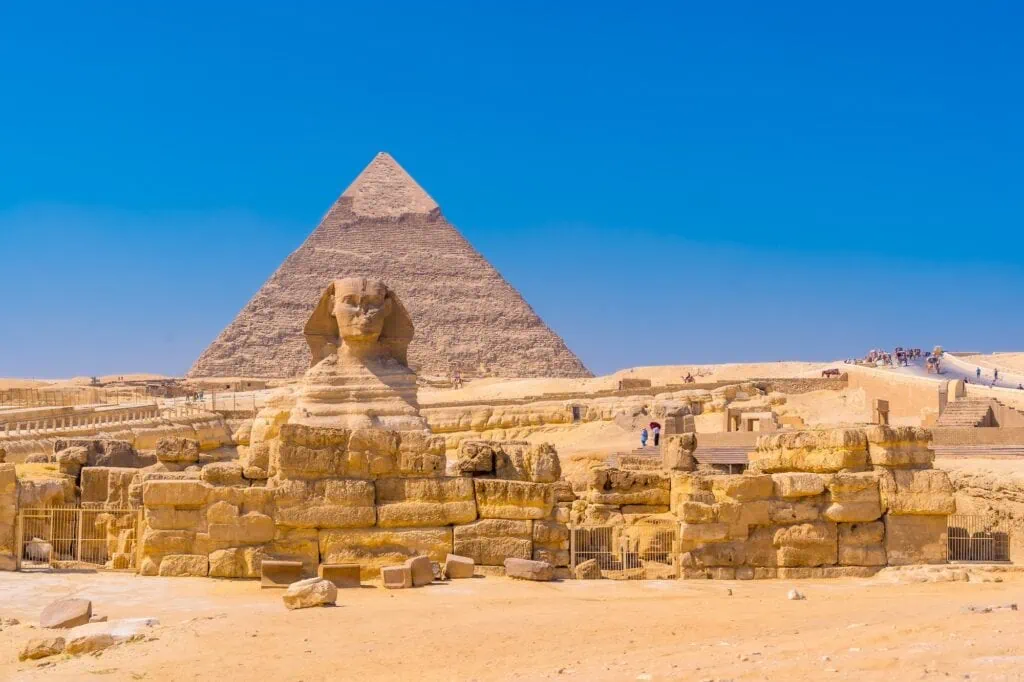
British travellers tend to arrive with one of four trips in mind, and all four are starting points rather than fixed menus. Stretch them, shorten them, or combine them until the itinerary fits your dates, your party, and the Egypt you are after.
Classic 8 to 10-Day Egypt Tour
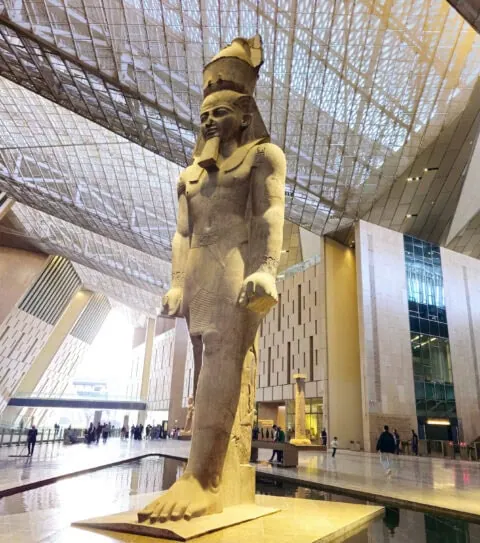
The shape most first visits take: Cairo for the Pyramids and the Grand Egyptian Museum, then south for the Nile between Luxor and Aswan, with your private Egyptologist guide and driver on every touring day. Eight days covers the essentials at a comfortable pace; ten makes room for Abu Simbel or a slower run through Cairo. The cruise at the heart of this route is a subject of its own for British travellers, and it gets its own section just below.
Egypt and Red Sea Combination
The natural second act: after the temples and the river, a few days on Egypt’s Red Sea coast round the holiday off with guaranteed sunshine and some of the clearest water anywhere. Hurghada offers the widest resort choice and the easiest flights home to the UK, Marsa Alam further south is quieter with superb reefs just offshore, and Sharm El Sheikh pairs world-class diving with the bare mountains of Sinai. A culture-first itinerary with a coastal finish usually runs 10 to 15 days in all.

Egypt and Jordan Combined
For many British travellers the question is not whether to see Petra, but whether to see it on this trip or the next. Jordan sits one short flight from Cairo, adds only three or four days, and pairs the pharaohs with the Nabataeans in a single journey, with Wadi Rum’s desert as the interlude between them. Two weeks covers both countries without hurry.

Egypt with a Longer Multi-Country Route
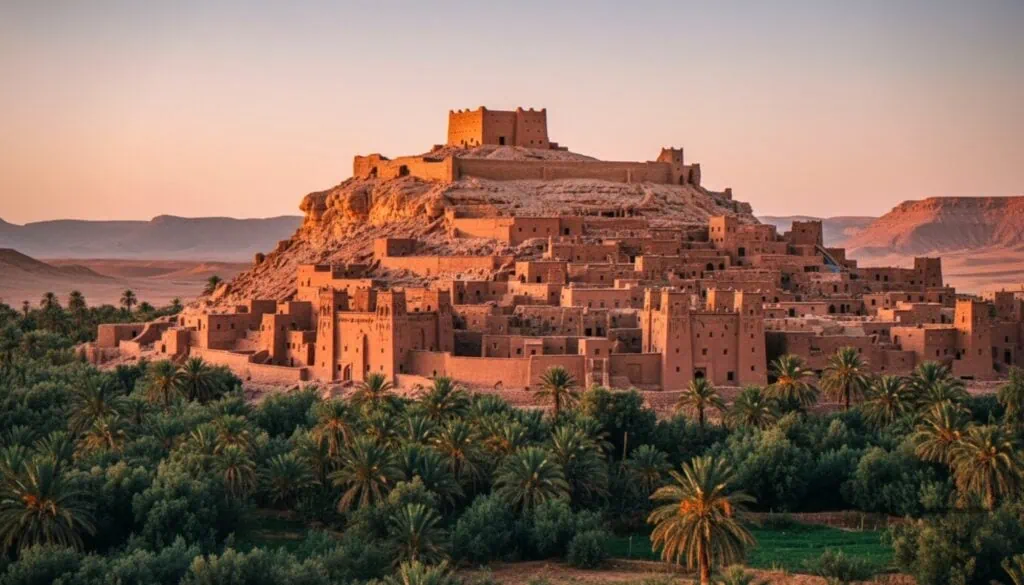
Past the fortnight, Egypt anchors some properly ambitious journeys. Greece extends the ancient world across the Aegean, Turkey adds Istanbul and Cappadocia, Dubai bolts a modern finale onto the itinerary, and Morocco, a full destination in its own right, suits the longest routes best.
Most two-country trips run 14 to 23 days, and your Travel Concierge weights the days so each country is travelled properly rather than sampled.
Nile Cruise Holidays from the UK
If a Nile cruise feels like a particularly British institution, that is because it is one. Thomas Cook ran his first organised tours up the Nile in 1869, Agatha Christie gave the voyage its most famous story, and a century and a half later the river remains the heart of nearly every Nile cruise holiday we plan from the UK. The boats have changed; the spell has not.
Today there are two distinct ways to sail it, and choosing between them shapes the whole trip.
Luxury Nile Cruises
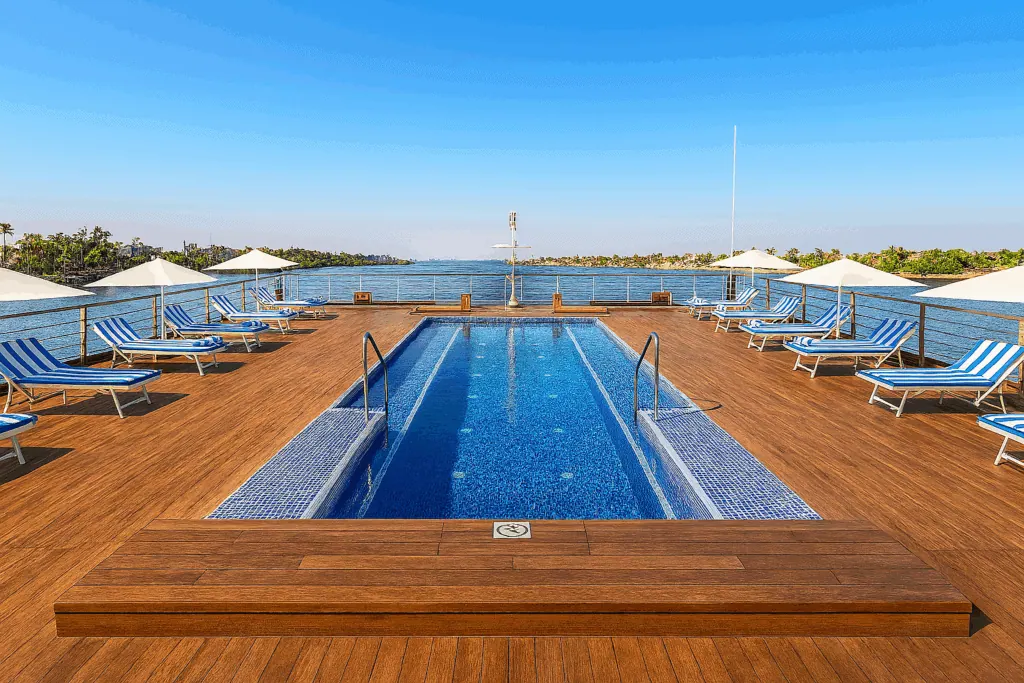
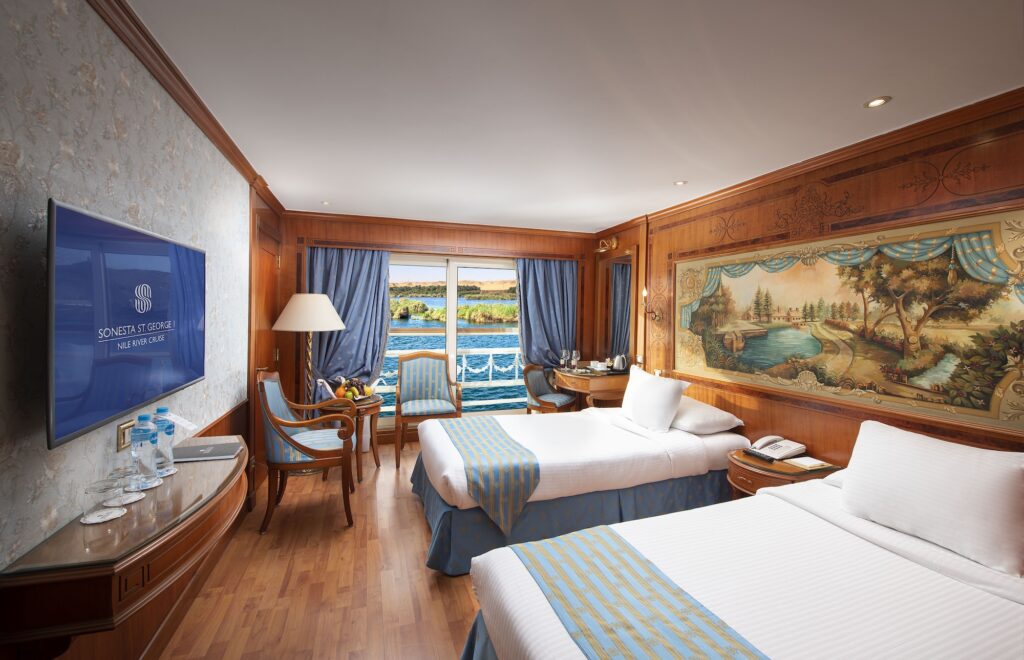
A Luxury Nile Cruise is the five-star way down the river: vessels carrying 50 to 150 guests, with panoramic cabins, pool decks, fine dining, and the temples of Luxor, Edfu, Kom Ombo, and Aswan delivered to the doorstep. The standard sailing covers four days and three nights between Luxor and Aswan, the route the classic itineraries are built around, while seven-night round trips suit travellers who want the river at full length.
It is the pick for first visits, for comfort, and for anyone who likes their ancient wonders followed by a proper dinner.
Dahabiya Nile Cruises
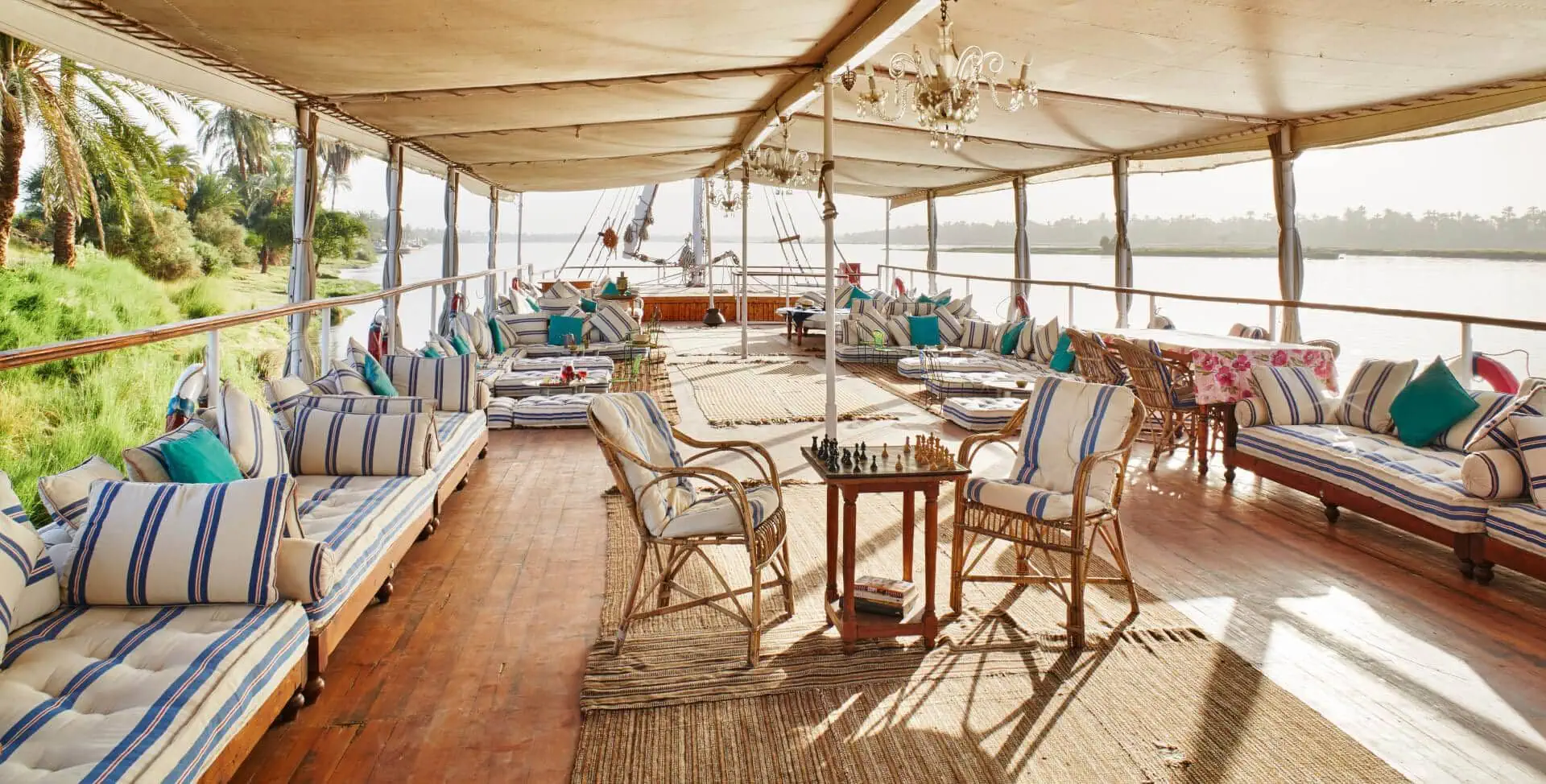
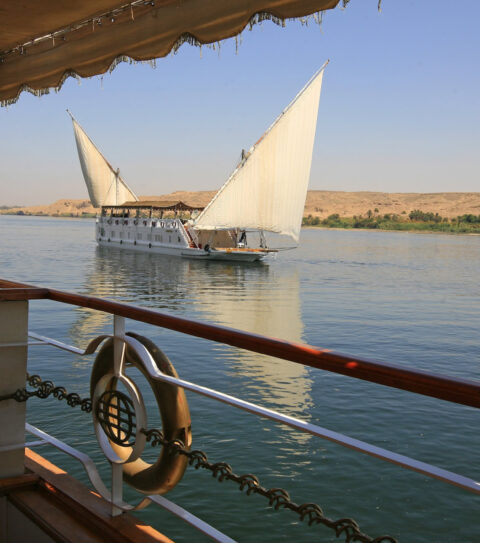
A dahabiya Nile cruise is the same river at a different tempo: traditional twin-masted sailing vessels carrying just 8 to 16 guests along the stretch between Esna and Aswan, mooring at islands and villages the larger vessels cannot reach. No engines, no entertainment programme, just canvas, current, and food cooked fresh on board.
For British travellers who remember why they fell for the idea of the Nile in the first place, often somewhere between a Christie novel and a documentary, this is the version that matches the imagination.
Cruise and Stay: Building the Full Holiday
Almost no one flies to Egypt for the cruise alone, and the packages reflect that. The classic cruise-and-stay shape pairs Cairo’s Pyramids and the Grand Egyptian Museum with the sailing, typically eight to ten days in all, and a Red Sea finish stretches it to a fortnight of culture first, coast after. A Lake Nasser cruise to Abu Simbel can extend the river chapter deeper south.
Every element is private on land, and your Travel Concierge balances the days so the cruise sits exactly where you want it in the holiday.
Best Times to Travel to Egypt from the UK
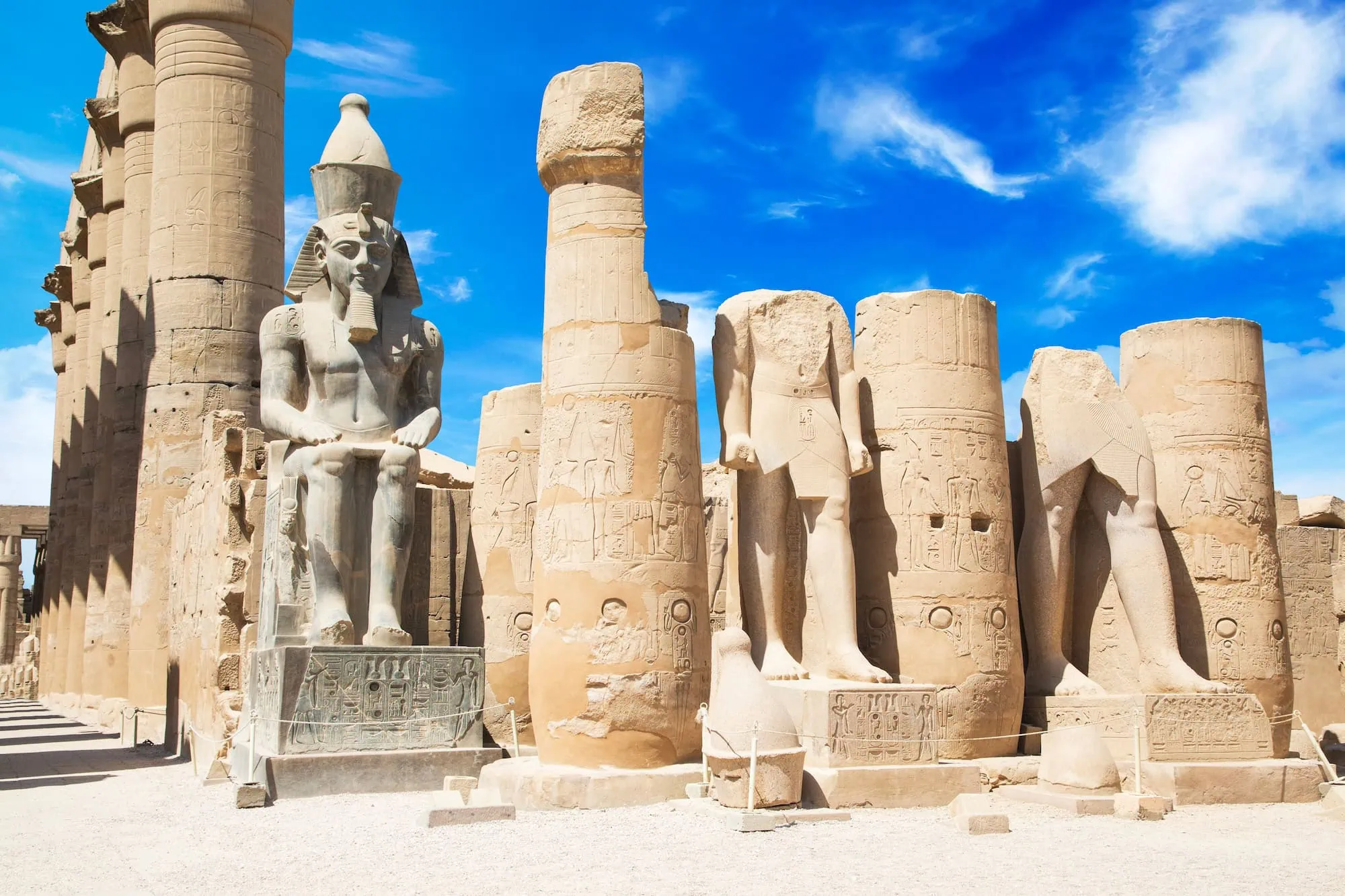
Egypt’s calendar could hardly suit Britain better if it had been designed for it. The months when Egypt is at its finest, October through April, are precisely the months when the UK is at its greyest, which is why Egypt has been a British winter-sun favourite for generations: five hours of flying swaps drizzle for dry desert air, blue skies, and 20 to 25°C at the Pyramids.
The school calendar slots in neatly too, with half terms, Christmas, and Easter all falling inside the good-weather window. Month by month, here is how to choose.
Peak Season: December and January
Midwinter at home is high season on the Nile: dry, sunny days made for temples and cruise decks, with crisp evenings that ask for a jumper rather than a coat.
The Christmas-to-New-Year stretch is the single most popular fortnight on the Egyptian calendar, and it shows in demand, with the best Luxury Nile Cruise vessels and hotels selling out months ahead at the year’s highest rates. For families tied to the Christmas school break, the rule is simple: book early and the rest of the planning is easy. January outside the New Year week offers the same weather with a little more room to breathe.
Sweet-Spot Months: October, November, February and March
These are the connoisseur’s months, and conveniently two of them contain a half term.
October brings warm, settled weather just as British clocks go back, and the autumn half term is one of the best-value family windows of the year. November is arguably perfect: mid-20s, thin crowds, and rates below the festive spike. February’s half term repeats the trick at winter’s other end, and March warms gently toward spring with the sites still pleasantly calm. If your dates are free, this is where the smart money goes.
Easter and April
April holds excellent weather, warm without the summer edge, and the Easter school holidays make it a natural family window. It is also one of Egypt’s two great demand spikes, so the same advice applies as at Christmas: confirm early, especially for cruise cabins, and consider shoulder weeks of the holiday rather than Easter week itself if your dates allow. Late April begins the slow climb toward summer heat in the south, which simply means earlier starts and unhurried afternoons.
May to September: Summer, Honestly Assessed
British summer holidays land in Egypt’s hottest months, and it is worth being straightforward about that: July and August regularly pass 35°C, and Luxor and Aswan run hotter still. Plenty of British families travel then anyway, and the formula works well: sites at dawn, the Grand Egyptian Museum and other indoor hours through midday, air-conditioning throughout, and a Red Sea finish where the sea breeze does the cooling. In return come the year’s lowest prices and the emptiest monuments.
May, June, and September are the gentler versions of the same trade, with September in particular rewarding travellers whose dates stretch past the school run.
Egypt’s two highest-demand windows are Christmas through New Year and Easter week, with the UK half terms adding sharp, short spikes of their own. The finest vessels and hotels close out four to six months ahead of the big two, so early confirmation protects both choice and price.
How Many Days for an Egypt Tour from the UK?
With Cairo five hours from London, the flight barely enters the calculation, and that changes the question. From the UK, Egypt works at almost any length, from a half-term week to a three-week grand tour, so the real decision is how much of Egypt you want this time.
One clarification first: the day counts below are days in Egypt, with your flights sitting on top, though at this distance a travel day at each end takes a far smaller bite than it does from Australia or Asia.
7 to 8-Day Egypt Tour from the UK
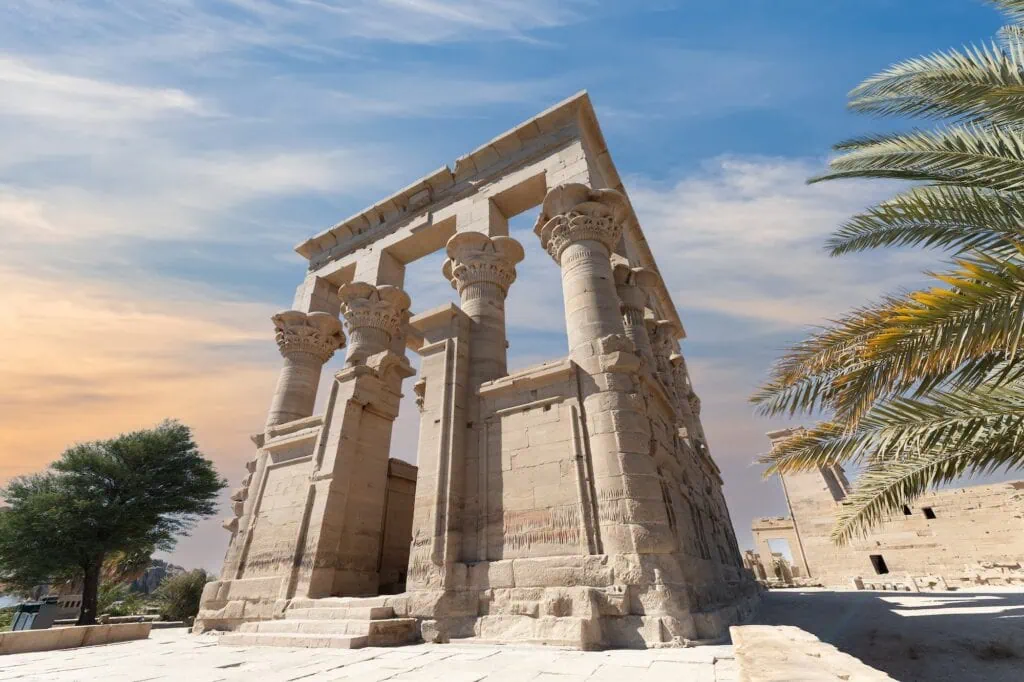
A week is genuinely enough for the essential Egypt, and the UK is one of the few markets where that is true without caveats. Cairo and the Grand Egyptian Museum, the flight south, and the classic Nile cruise between Luxor and Aswan all fit inside seven to eight days, which is why this length slots so neatly into a school half term or a single week of leave. Short, yes, but nothing about it feels cut down.
Our Egypt tours in 8 days show the shape.
10 to 12-Day Egypt Tour from the UK
The step most travellers take once they price the difference, since the flights cost the same whether you stay a week or a fortnight. Ten days adds Abu Simbel or slower Cairo time to the classic route; twelve opens a genuine second chapter, with Red Sea days after the temples, a Lake Nasser cruise, or the seven-night sailing instead of the standard three. For a first visit without a school calendar attached, this range is the sweet spot.
Browse our 10-day Egypt itineraries and 12-day Egypt holidays.
14-Day Egypt Tour from the UK
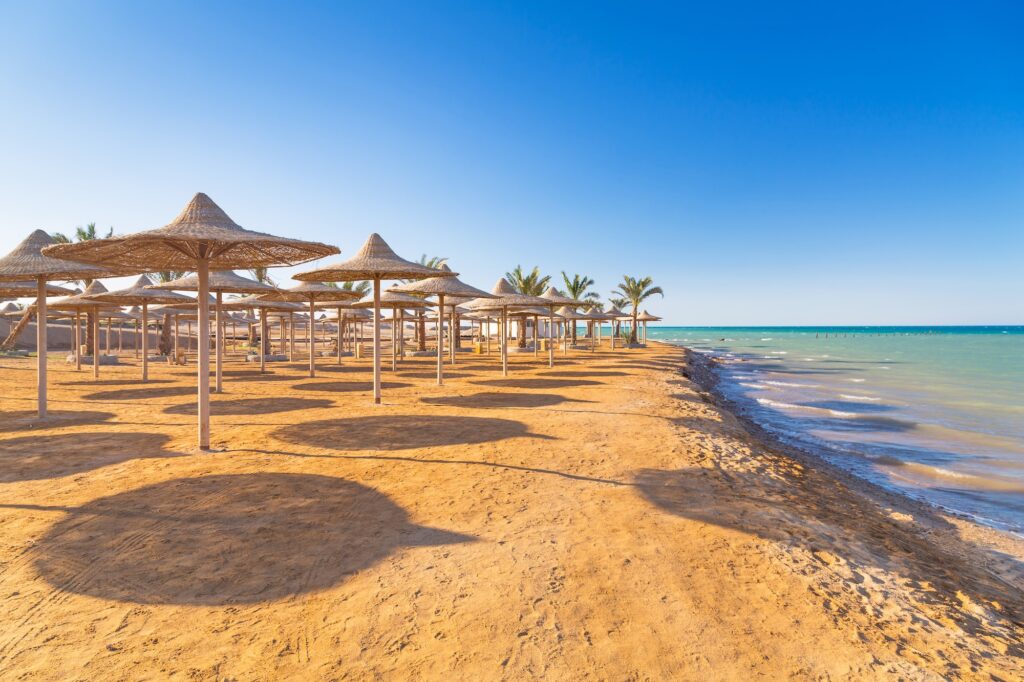
A fortnight, the most British of holiday lengths, opens two directions. Deeper into Egypt: the Western Desert oases, the full-length river (including Abu Simbel and Lake Nasser), the quieter temples day trips never reach. Or across a border: Egypt anchoring a two-country journey, most naturally with Jordan, where Petra sits a short flight from Cairo. Two very different fortnights, and neither feels stretched.
Our two-week Egypt tours cover both.
15+ Days: The Longer Routes
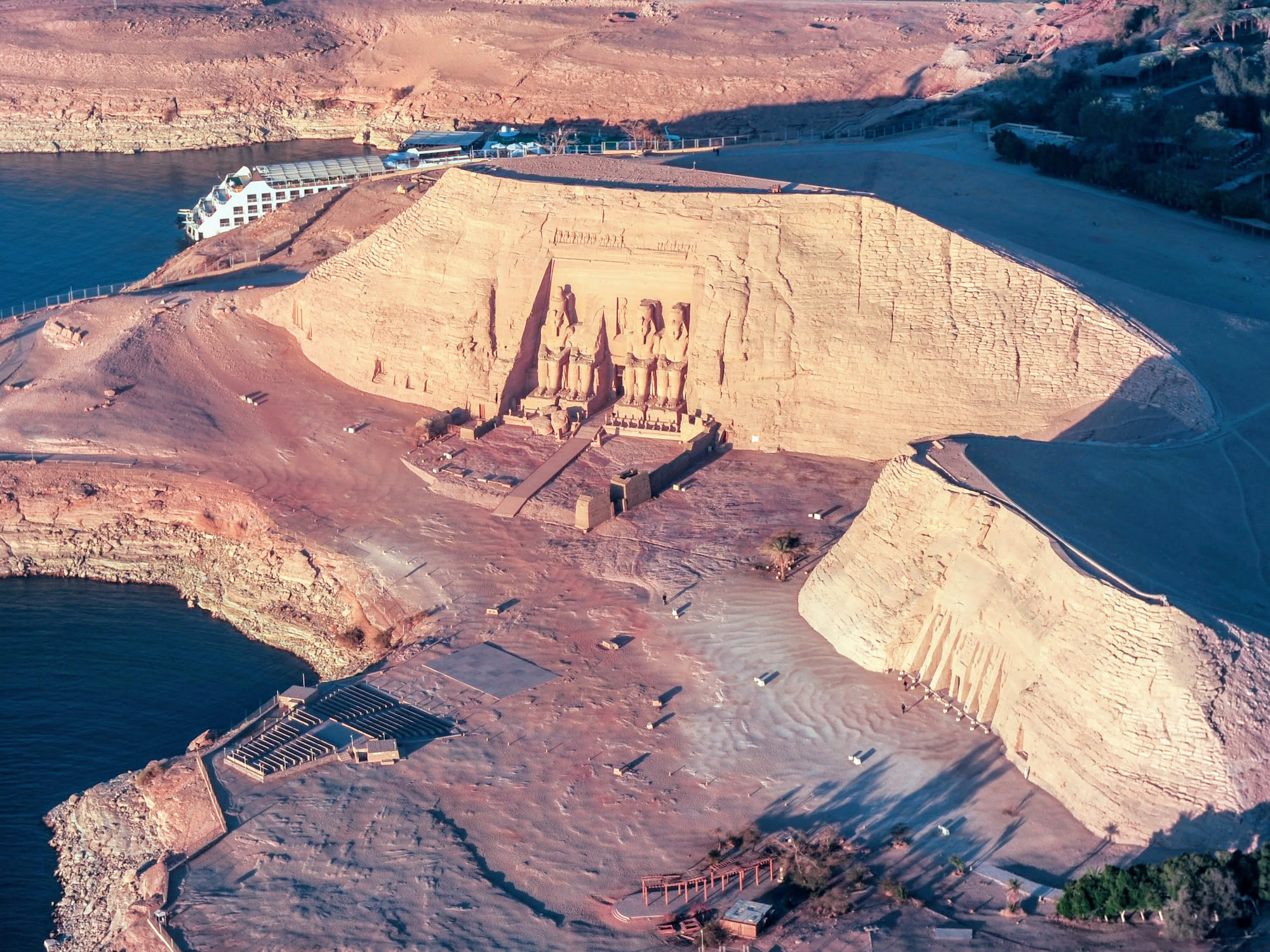
Past two weeks, Egypt becomes the anchor of a proper grand tour: Greece or Turkey extending the ancient world, Dubai as a modern coda, Morocco for the longest itineraries. Most two-country trips run 14 to 23 days, three countries longer again, and your Travel Concierge weights the legs so each country is travelled rather than ticked.
Our 15-day Egypt travel packages and Egypt multi-country routes show how they come together.

Egypt Tour Package Inclusions and Pricing
Your quote from Egypt Tours Plus is a single figure for the entire Egypt stay, and it is deliberately complete. It covers your hotels in the category you choose, every domestic flight inside Egypt, the Nile cruise or dahabiya leg with all meals aboard, and the service at the centre of it all: a private Egyptologist guide on each touring day, your own driver and air-conditioned vehicle, every transfer from first landing to final departure, and entrance tickets to the headline sites. Breakfast comes with every hotel night, and our in-country support line is staffed around the clock for as long as you are in Egypt.
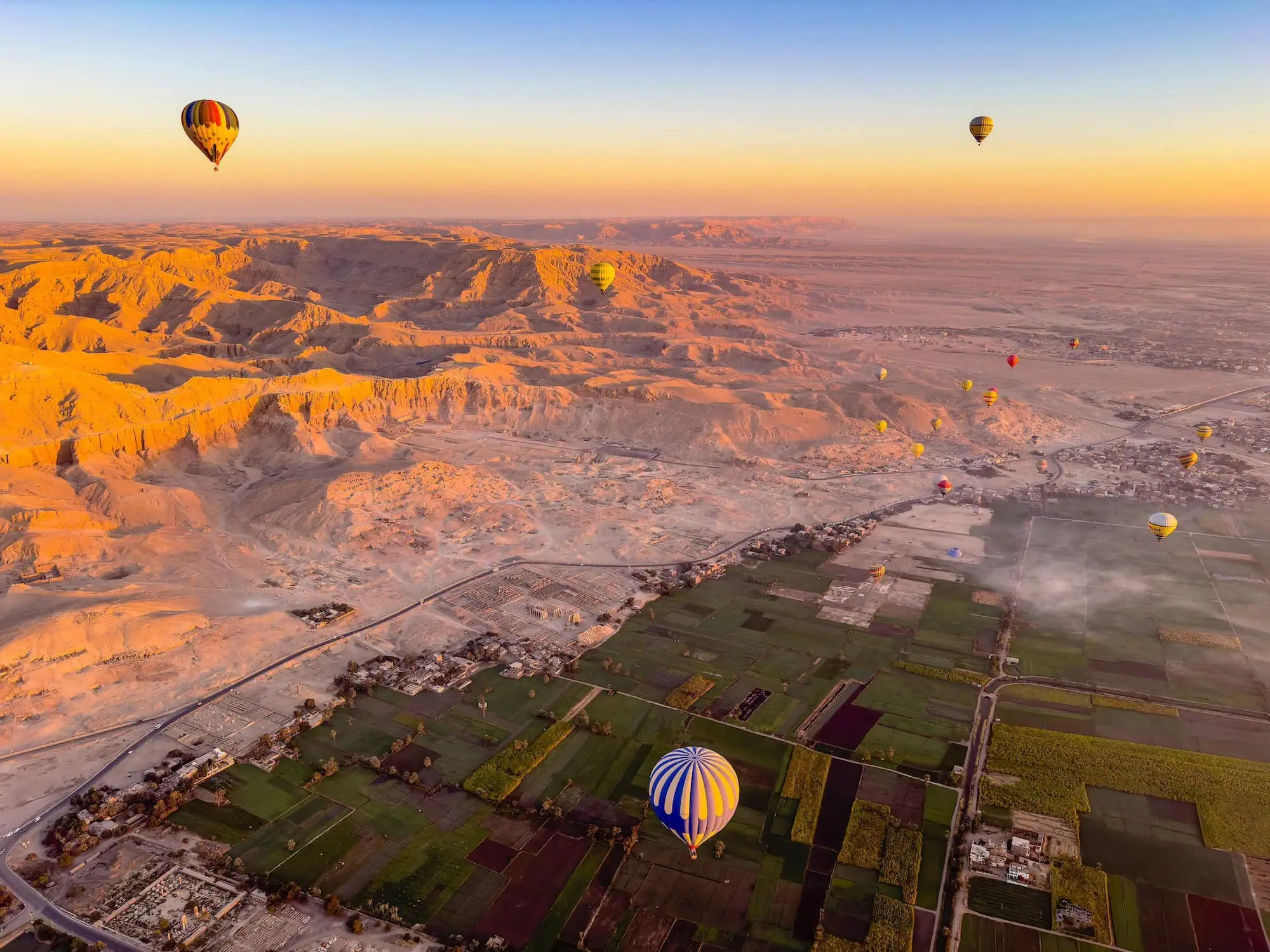
What sits outside the quote is brief and predictable: your international flights between the UK and Egypt, travel insurance, the Egyptian visa (US$25, roughly £19), lunches and dinners away from the cruise, drinks, and the customary tipping for guide, driver, and crew. Optional experiences such as a dawn balloon flight over Luxor or special-entry tombs are priced openly when you ask for them, never slipped in afterwards.
What an Egypt Tour Costs
Every itinerary is built to order, so pricing comes as ranges rather than a tariff. Per person per day, based on two sharing:
- Mid-range: US$200 to US$350 per person per day. Well-chosen four-star hotels, a standard Luxury Nile Cruise vessel, and the full private guide-and-driver service.
- Premium: US$400 to US$600 per person per day. Five-star properties, superior vessels or a dahabiya, and finer dining and touring throughout.
- Luxury: US$600 to US$1,000 and up per person per day. Egypt’s best suites and vessels, private charters, and the most exclusive access available.
In sterling, those bands work out to roughly £150 to £260, £300 to £450, and £450 to £750 and up per person per day at recent exchange rates. Treat the pound figures as orientation, since the rate moves; your Travel Concierge prices your actual itinerary precisely. To browse in pounds throughout, switch the site’s currency to GBP using the selector in the menu, and every tour price you see will display in sterling.
One budgeting note: over Christmas through New Year and Easter week, the leading hotels and Luxury Nile Cruise vessels run 25 to 50 percent above mid-season, with the UK half terms adding shorter spikes of their own. The sweet-spot months covered earlier buy the same Egypt for noticeably less, which is one reason November remains the connoisseur’s pick.
UK-Specific Practical Information
Egypt Visa Requirements for UK Citizens
British passport holders need a tourist visa for Egypt, and the official e-visa is the tidiest route: apply online before you fly, pay US$25 (about £19) for a single entry valid for 30 days, and travel with the printed approval. Allow at least a week for processing. The same visa is sold on arrival at Cairo and the Red Sea airports, which works perfectly well, though the e-visa skips the queue. Your passport needs six months’ validity beyond your travel dates and a blank page for the stamp.
If Jordan is part of your route, your Travel Concierge will flag what that leg requires.
British Embassy in Cairo
The British Embassy sits at 7 Ahmed Ragheb Street in Garden City, central Cairo, on +20 2 2791 6000. The same number works around the clock: outside office hours, select “Help for British nationals” and a consular officer answers 24/7. Save it before you travel as a sensible precaution, though for anything short of a genuine emergency, your Egypt Tours Plus team on the ground is the faster first call.
The Foreign, Commonwealth & Development Office publishes its current Egypt travel advice at gov.uk, worth a read before departure.
Time Zone
Egypt is just two hours ahead of the UK for nearly the whole year, since both countries change their clocks in roughly the same rhythm. Jet lag is a non-event, and calling home requires no arithmetic: your evening in Luxor is teatime in Britain.
Travel Insurance and Health Cover
One detail catches British travellers out: your GHIC or EHIC card is no use in Egypt, as it covers European healthcare schemes only.
Private travel insurance is therefore essential, with overseas medical treatment and emergency evacuation as the must-haves alongside cancellation and baggage cover. UK travellers are spoilt for choice, with Aviva, AXA, Staysure, Post Office, and comparison sites all offering suitable policies.
If your trip includes Red Sea snorkelling or diving, or a desert excursion, check those activities are covered as standard rather than as paid extras.
Credit Cards and Currency
Egypt runs on the Egyptian pound (EGP), and cash plays a bigger part than it does at home, where contactless covers nearly everything. Visa and Mastercard are accepted at hotels, established restaurants, and by Egypt Tours Plus itself, but tips, bazaars, and small purchases want cash, and US dollars are happily taken for larger buys.
ATMs are widespread in Cairo and the tourist centres, and the exchange rate in Egypt beats anything offered at a UK airport, so there is no need to buy Egyptian pounds before you go. Around £150 to £300 per person, exchanged as you travel or spent as dollars, comfortably covers tips and incidentals.
Let your bank know your dates so your cards stay open, and note that some UK banks’ fee-free travel cards earn their keep here.
Health and Vaccinations
No vaccinations are required to enter Egypt from the UK, though the NHS’s Travel Health Network (TravelHealthPro) suggests being current on routine jabs, with hepatitis A and typhoid worth discussing with your GP or a travel clinic depending on your plans. Drink bottled or filtered water only, which your hotels and cruise supply as standard, and apply the usual judgement to salads and street food in the first days.
Pack regular medication in its original packaging with enough for the whole trip.
Phone and Internet
Since UK networks dropped inclusive EU-style roaming for most plans, Egypt roaming charges vary wildly by provider, so check yours before assuming. The reliable money-saver is an eSIM bought before departure or a local SIM from Vodafone Egypt, Orange, or Etisalat, picked up at the airport in minutes with your passport. Hotels and Nile cruise vessels nearly always include Wi-Fi.
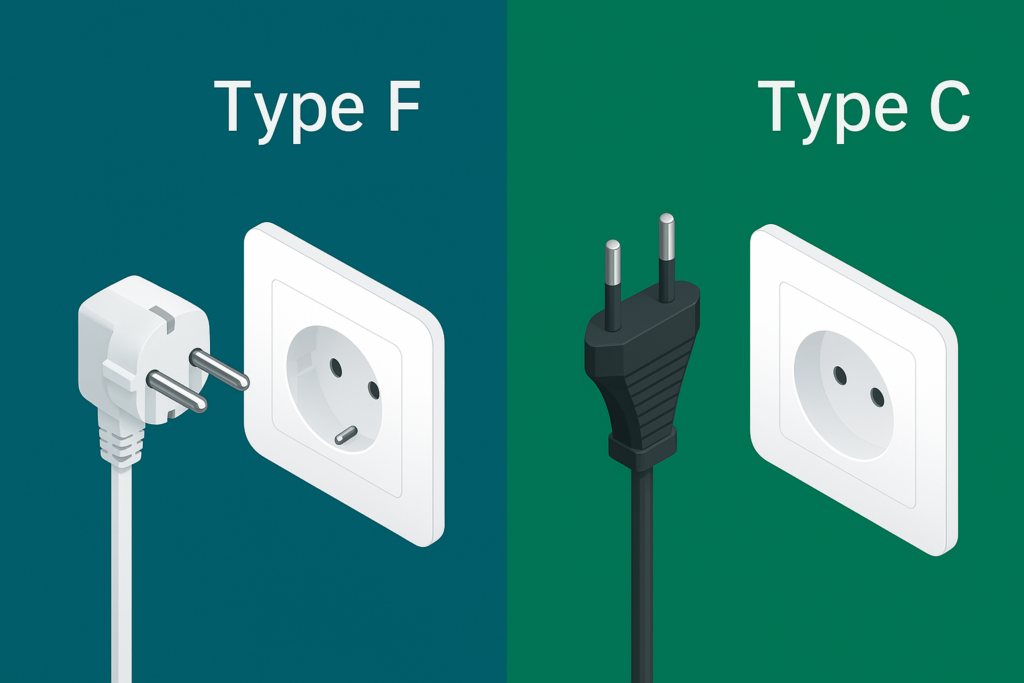
One packing note: Egypt uses the round two-pin Type C and F sockets at 220 volts, so your UK Type G plugs need a travel adapter, while the voltage itself matches what your chargers already handle.
Your Egypt Tour from the UK, Designed Around You
Every journey we plan from the UK begins with a blank page rather than a brochure. A half-term week built around the school calendar, a classic cruise-and-stay with Cairo first and the river after, a fortnight that pairs Egypt with Jordan, or something nobody has asked us for yet: your dedicated Travel Concierge designs it for your party, your dates, and your idea of a holiday.
Tell us roughly when you can travel and what draws you to Egypt, and your first-draft itinerary lands within 1 to 12 hours. From there it is a conversation, typically two to four rounds of refinements, occasionally more, with no commitment and nothing to pay while the plan takes shape. We finalise only when you are 100% happy with it.
Egypt Tours Plus has held the TripAdvisor Travelers’ Choice award every year from 2020 through 2026 and has been designing private journeys since 1955, for travellers from Britain and around the world.
Frequently Asked Questions
Ten to twelve days is the range most first-time British visitors settle on. It covers Cairo, the Grand Egyptian Museum, and the classic Nile cruise between Luxor and Aswan without hurry, with room for Abu Simbel or a slower day where you fancy one.
That said, the UK is one of the few markets where a single week genuinely works: with only five hours of flying, seven to eight days delivers the essential Egypt without feeling cut down.
For a Red Sea finish, plan from around twelve days; to add Jordan, a fortnight gives both countries their due.
No. The package covers everything within Egypt, including all domestic flights between Egyptian cities, while the international tickets between the UK and Egypt are booked by you.
Most British travellers prefer it that way: you choose your carrier, collect Avios where they fit, and fly from the airport that suits where you live. Your Travel Concierge will happily point out the routings that match your itinerary, including flying home directly from the Red Sea.
From touchdown onwards, everything is arranged: transfers, hotels, your private guide and driver, the cruise, entrance tickets, and 24/7 support.
Yes. EgyptAir and British Airways both fly non-stop between London Heathrow and Cairo, with daily departures year-round and a flight time of around five hours.
For the Red Sea, easyJet and TUI operate direct leisure flights from a range of UK airports to Hurghada and Sharm El Sheikh, with seasonal winter services towards Luxor.
Travellers outside London can also reach Cairo via European hubs such as Frankfurt, Amsterdam, or Istanbul, typically eight to ten hours door to door.
Yes. UK passport holders need a tourist visa, and the official e-visa is the easiest route: apply online before departure, pay US$25 (about £19) for a single entry valid for 30 days, and carry the printed approval.
Allow at least a week for processing. The same visa is also sold on arrival at Cairo and the Red Sea airports, though the e-visa spares you the queue after the flight.
Your passport needs six months’ validity beyond your travel dates and a blank page for the stamp.
Egypt’s main tourist regions, Cairo, the Nile valley, Luxor, Aswan, and the Red Sea coast, are well set up for visitors, with tourist police at the major sites and millions of travellers passing through safely each year.
Our itineraries stay within these established regions and do not include North Sinai, which carries official travel warnings. Travelling privately with your own guide and driver, rather than on public transport, adds a further layer of reassurance.
Read the FCDO’s current Egypt advice at gov.uk before you travel. Our in-country team is also on call around the clock for the whole of your stay.
On land, fully private. Through Cairo, Luxor, Aswan, and everywhere else on the itinerary, it is your party alone with your own Egyptologist guide and personal driver: no fixed departures, no coach, no strangers.
The one exception is the Nile cruise. Shore excursions from a Luxury Nile Cruise vessel run as small-group visits of around 12 guests per Egyptologist, shared with fellow passengers from your ship. Fully private excursions can be arranged at additional cost, and on a dahabiya, with just 8 to 16 guests aboard, excursions feel essentially private by nature.
Beyond the cruise stops, everything runs entirely on your terms, and we would rather spell that distinction out than have it surprise you on the river.
Egypt is two hours ahead of the UK for almost the entire year, since both countries move their clocks in roughly the same rhythm.
In practice that means no jet lag worth the name: you land on essentially your own body clock and start sightseeing the next morning as normal.
Keeping in touch is effortless too, with your evening in Egypt landing at teatime back home.
October to April, which conveniently mirrors Britain’s worst weather. Egypt serves dry air, blue skies, and 20 to 25°C through the months the UK spends under cloud, which is exactly why it has been a winter-sun favourite for generations.
The October and February half terms are excellent family windows, November is arguably the connoisseur’s month, and Christmas and Easter bring the best conditions alongside the highest demand, so book those early.
July and August are genuinely hot, regularly past 35°C, but the formula of dawn starts, indoor hours at midday, and a Red Sea finish makes the summer holidays workable, at the year’s lowest prices.
Every itinerary is built to order, so prices come as ranges. Per person per day, based on two sharing: mid-range runs US$200 to $350, premium US$400 to $600, and luxury US$600 to $1,000 and up.
In sterling that is roughly £150 to £260, £300 to £450, and £450 to £750 per person per day at recent rates, though the exchange rate moves.
The tier mainly determines your hotel category, the cruise vessel, and how exclusive the experiences run. Your Travel Concierge prices your actual itinerary precisely in the quote.
Three to six months ahead is comfortable for most trips, securing your preferred hotels and cruise vessel while flights from the UK still price sensibly.
For Christmas, Easter, or a half term, aim for six months or more. These are the windows when Egypt’s best vessels and properties sell out first, and direct flight seats tighten alongside them.
Shorter notice often still works, so it costs nothing to ask. Your Travel Concierge will tell you straight what your dates allow.
You need insurance, and no, your GHIC or EHIC card does not work in Egypt: it covers European healthcare arrangements only, which catches many British travellers out.
Choose a policy with overseas medical treatment and emergency evacuation alongside the usual cancellation and baggage cover. Aviva, AXA, Staysure, the Post Office, and the comparison sites all offer suitable options.
If your trip includes Red Sea snorkelling or diving, or a desert excursion, check those activities sit inside the policy as standard rather than as paid add-ons.
Yes. UK-issued Visa and Mastercard are accepted for tour payment, and your Travel Concierge walks you through the secure steps when you confirm.
In Egypt, cards work at hotels and established restaurants, but cash does far more of the daily work than at home, covering tips, bazaars, and small purchases. Tell your bank your dates, and note that a fee-free travel card earns its keep here.
Around £150 to £300 per person, exchanged into Egyptian pounds on arrival or spent as US dollars, covers tips and incidentals comfortably.
October to April is the prime cruising season, when the river is calm, the days are warm rather than hot, and the temple stops are at their most comfortable. November and February offer the best balance of weather, value, and space on deck.
Christmas, New Year, and Easter sailings are the most sought-after of the year and sell out four to six months ahead, so those dates reward early booking.
Summer cruises run too, at the year’s lowest rates, with air-conditioned vessels and early-morning temple calls making the heat entirely manageable.
Completely. Customisation is the starting point, since every itinerary is private and built from scratch.
From the UK that has recently meant photography-led routes timed for the light, a seven-night sailing for travellers who wanted the river at full length, family half-term trips paced for children, honeymoons on a dahabiya, accessible itineraries with the right support, and Egypt-and-Jordan fortnights. If it can be done well, it can be built in.
Tell your Travel Concierge what matters most, and the holiday is designed around exactly that.
Design Your Custom Tour
Explore Egypt your way by selecting only the attractions you want to visit