Can I Visit the Pyramids in Egypt?
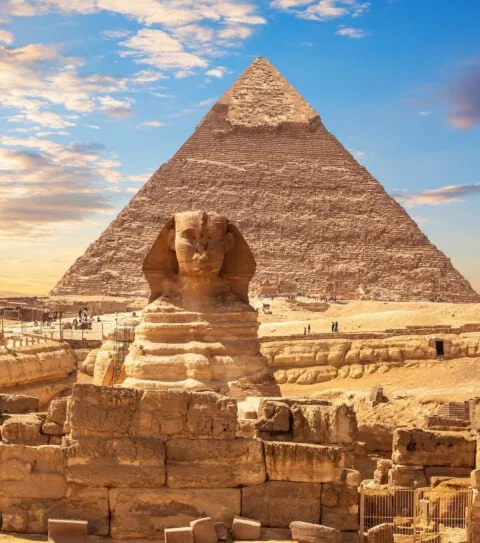
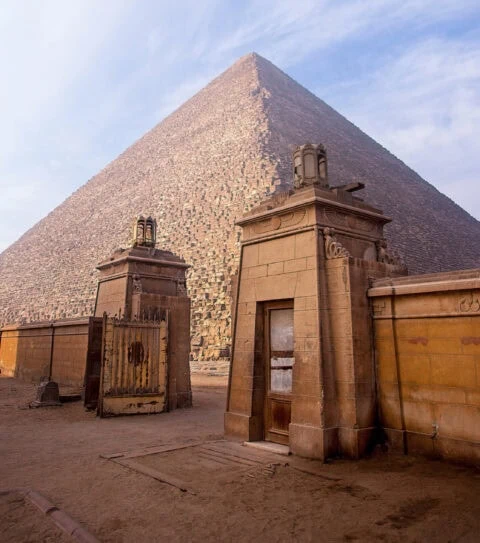
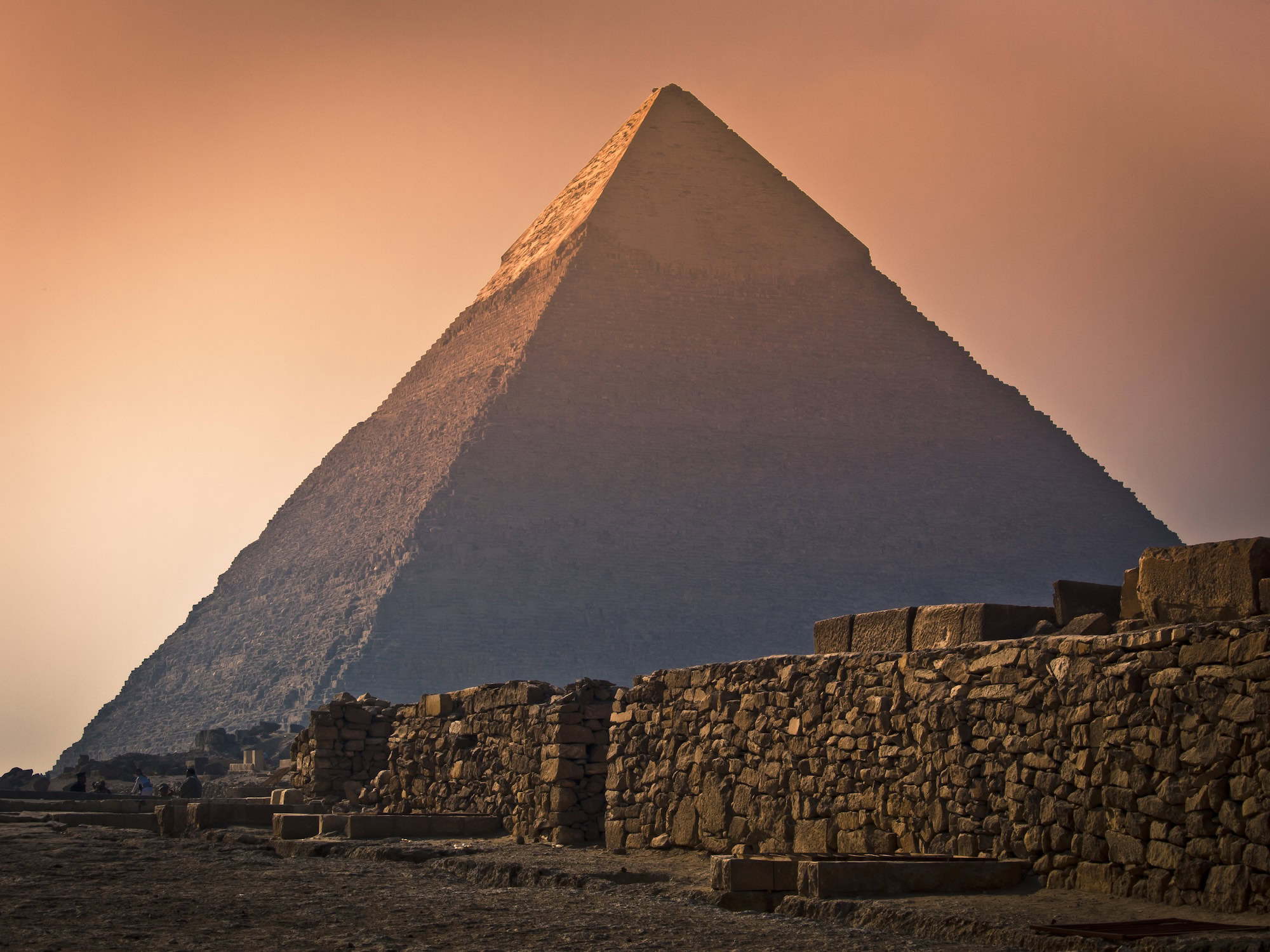
Yes, you can absolutely visit the pyramids in Egypt. The Great Pyramids of Giza stand just 15 kilometers (9.3 miles) from downtown Cairo, welcoming millions of visitors each year who come to witness one of the Seven Wonders of the Ancient World.
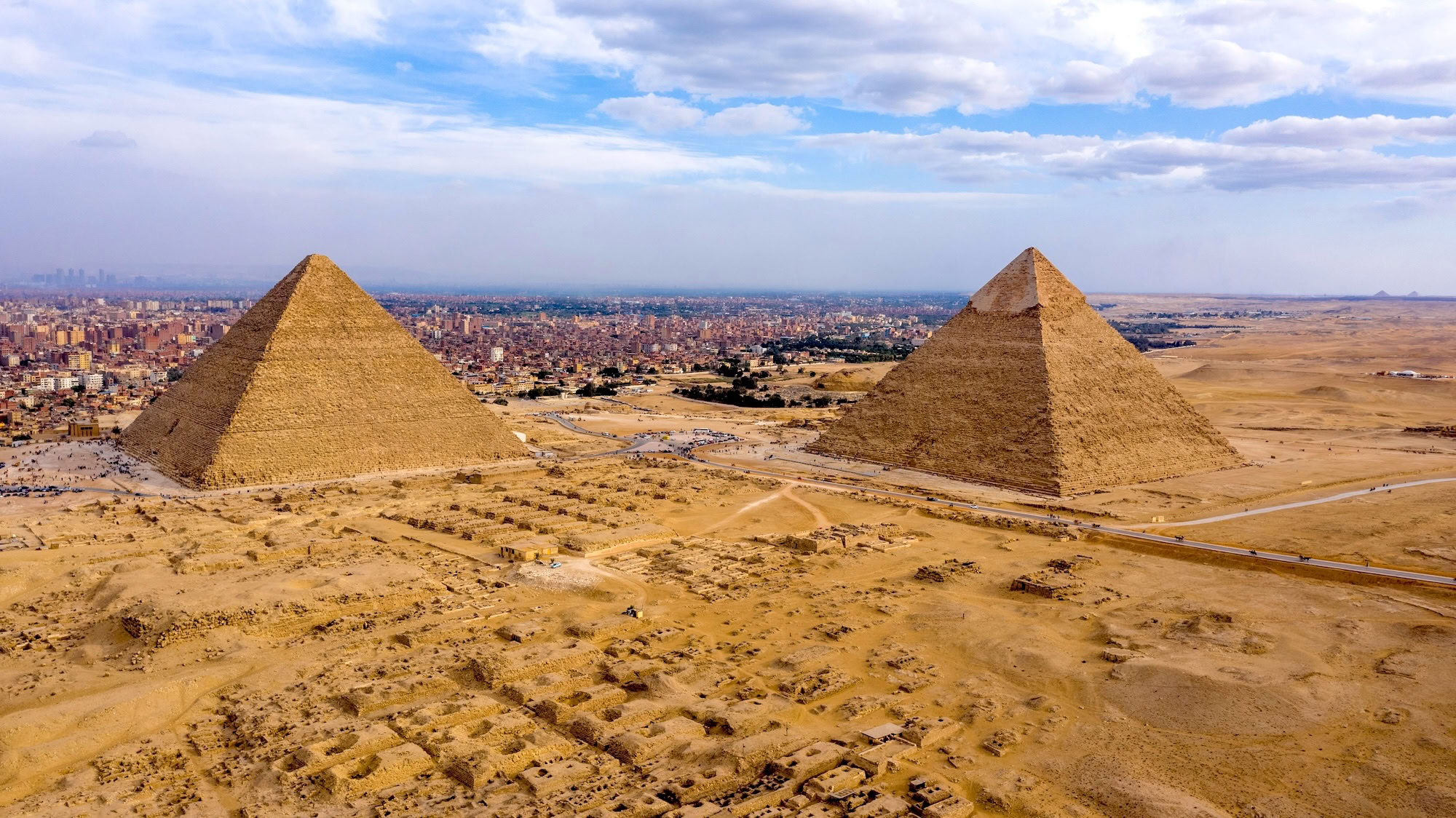
We’ve been guiding travelers through this extraordinary experience for decades, and the magic never fades. These 4,500-year-old monuments remain as accessible today as they are awe-inspiring, though proper planning transforms a good visit into an unforgettable journey. Whether you’re dreaming of exploring the King’s Chamber deep within the Great Pyramid or simply want to stand in the shadow of these colossal structures, your Egyptian adventure awaits with the right preparation.
Table of Contents
Planning Your Visit to Giza
Getting to the pyramids requires surprisingly little effort once you understand the basics. Most international flights land at Cairo International Airport, putting you within an hour of the Giza Complex depending on traffic and your chosen transportation method.
Transportation from Cairo
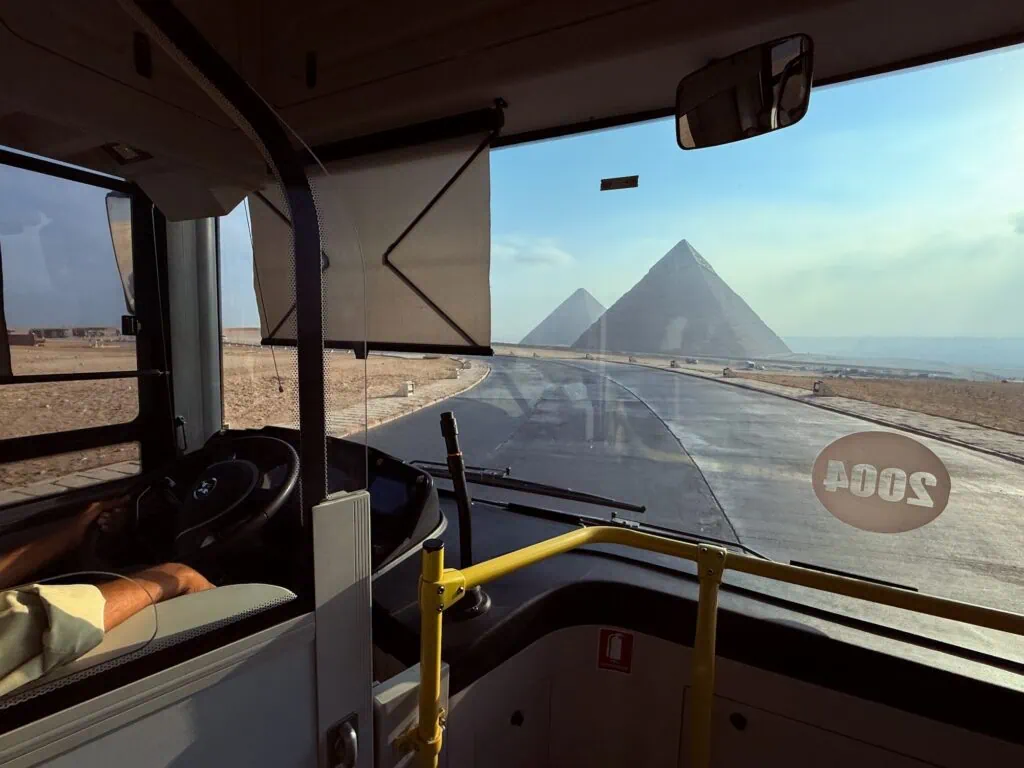
Taxis and ride-hailing apps like Uber offer the most flexible approach, typically charging 150-300 Egyptian pounds ($5-10 USD) for the 30-45 minute journey. We recommend confirming the fare beforehand to avoid any confusion. Many visitors find guided tours provide the smoothest experience, as they handle all transportation logistics while adding expert commentary along the way.
Optimal Visiting Times
The Giza Complex opens daily from 8:00 am to 5:00 pm (08:00-17:00), with last entry at 4:00 pm (16:00). Early morning visits between 8:00-10:00 am (08:00-10:00) offer cooler temperatures around 25°C (77°F) and fewer crowds, making photography easier and the experience more intimate.
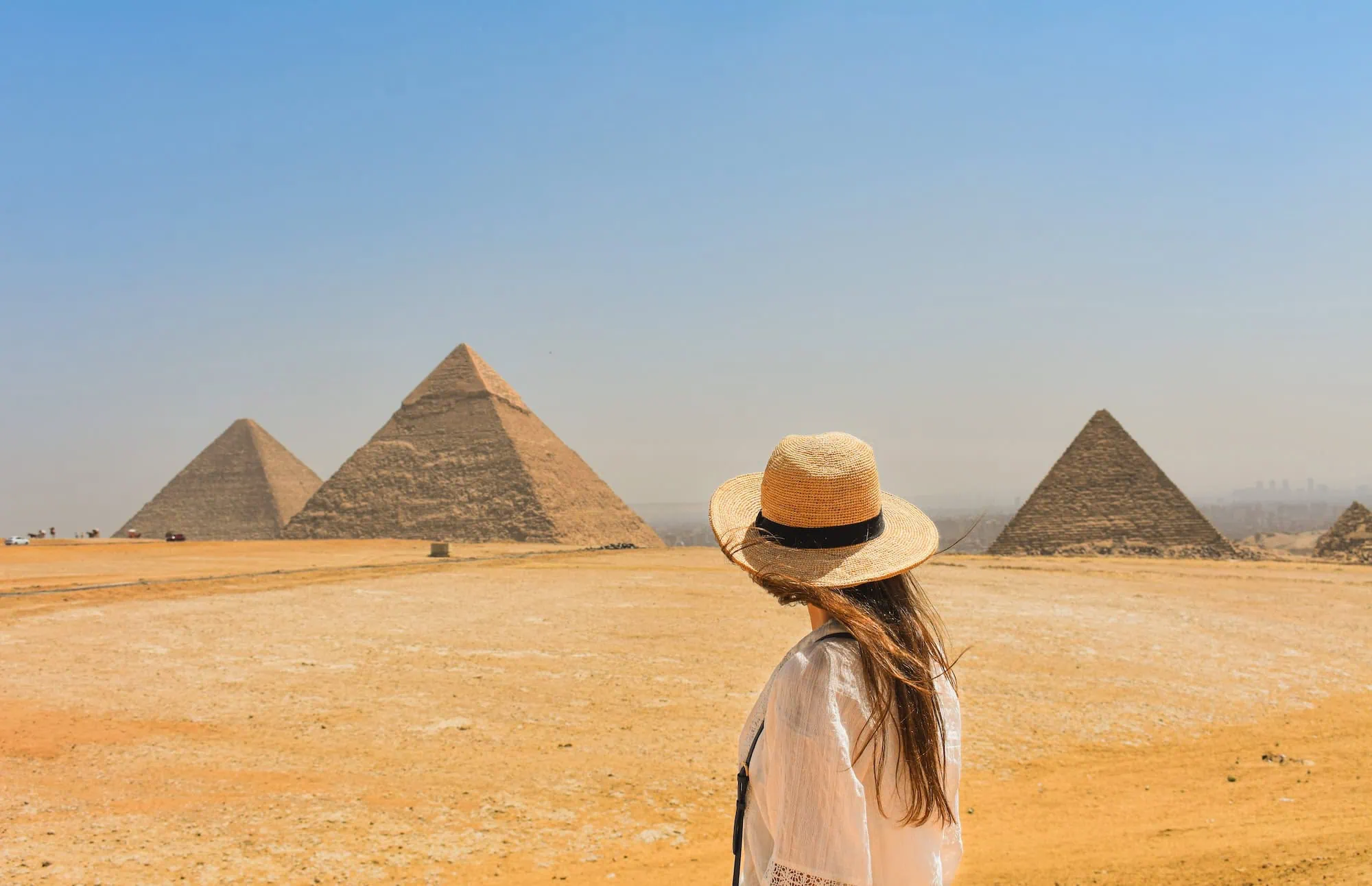
General admission tickets cost 200 Egyptian pounds (approximately $6.50 USD) for international visitors. However, if you want to enter the pyramids themselves, separate tickets are required for each monument. The Great Pyramid interior costs an additional 400 Egyptian pounds ($13 USD), while Khafre Pyramid access runs 100 Egyptian pounds ($3.20 USD).
Desert conditions demand preparation. Comfortable walking shoes with good grip handle the sandy, uneven terrain around the monuments. Sun protection becomes crucial during midday hours when temperatures can reach 35°C (95°F) or higher. We always recommend bringing water, though vendors throughout the complex sell refreshments.
Inside the Ancient Pyramids
The experience of entering a 4,500-year-old pyramid defies description until you’re actually crawling through narrow passages toward chambers that once held pharaohs. The Great Pyramid’s interior reveals an intricate network of passages leading to three main chambers: the subterranean chamber carved into bedrock, the Queen’s Chamber (likely a ceremonial space rather than an actual burial room), and the King’s Chamber housing the granite sarcophagus.
Your journey begins through the Descending Passage, a cramped corridor requiring you to duck-walk for approximately 100 meters. The Grand Gallery opens dramatically overhead – a corbelled ceiling masterpiece rising 8.6 meters (28 feet) high that showcases the ancient builders’ engineering genius.
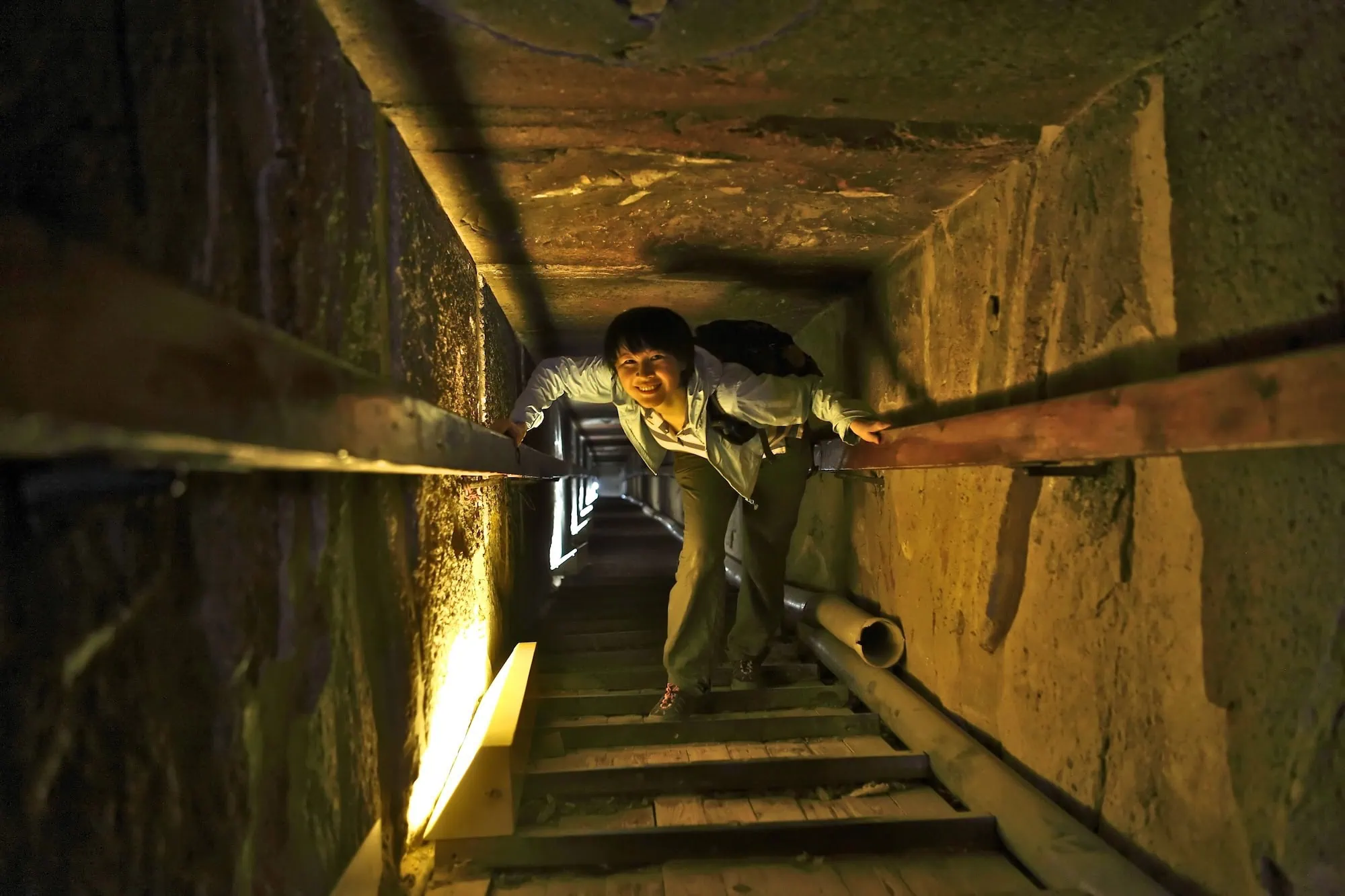
Physical demands shouldn’t be underestimated. The passages remain hot and humid year-round, with temperatures inside reaching 30-32°C (86-90°F) regardless of outside weather. Claustrophobia affects some visitors in the narrow corridors, particularly the 1.2-meter (4-foot) high passage leading to the King’s Chamber. Anyone with mobility issues, heart conditions, or breathing difficulties should carefully consider whether interior exploration suits their abilities.
Recent archaeological discoveries continue adding excitement to these ancient spaces. In 2017, scientists using cosmic-ray imaging detected a large void within the Great Pyramid, possibly another undiscovered chamber. While this space remains inaccessible to tourists, it demonstrates that these monuments still hold secrets waiting to be unveiled.
Guided Tours vs Independent Exploration
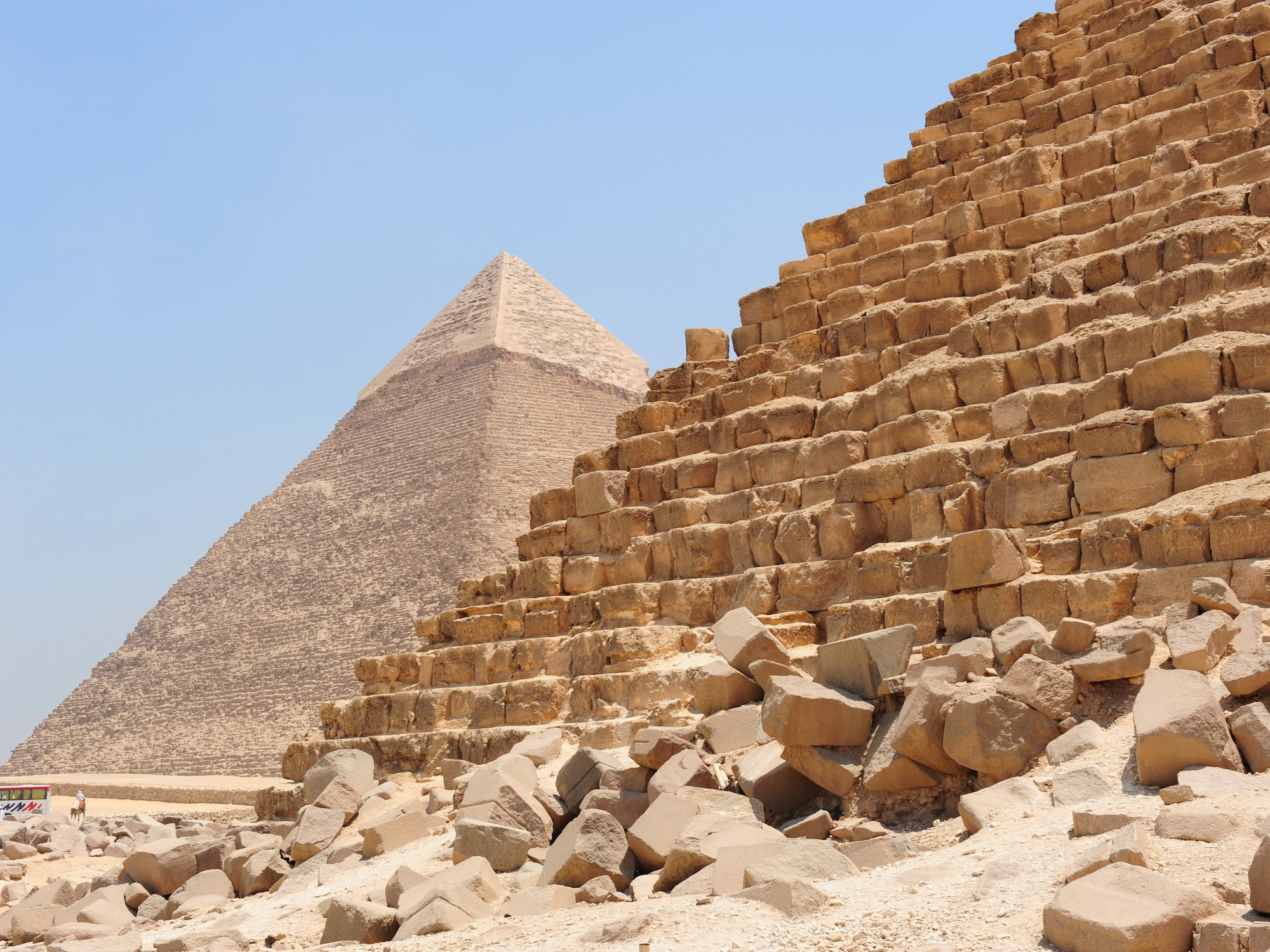
Choosing between a guided experience and independent exploration significantly shapes your pyramid visit, with each approach offering distinct advantages depending on your travel style and interests. Expert guides transform stone structures into living history. A qualified Egyptologist can explain the astronomical alignments connecting these monuments to ancient Egyptian religious beliefs, detail the construction techniques that moved 2.3-million stone blocks, and share recent discoveries that continue reshaping our understanding of this civilization.
Many visitors find the cultural context invaluable – learning why pyramid texts guided pharaohs through the afterlife or how the Giza complex relates to the broader necropolis spanning both sides of the Nile. Language barriers often challenge independent visitors when dealing with site vendors or navigating the complex. Professional guides handle these interactions smoothly while ensuring you understand ticketing options for different pyramid interiors.
Self-guided exploration offers complete control over your schedule and experience intensity. You can spend hours photographing the Sphinx from different angles, or simply sit quietly absorbing the atmosphere without group time constraints. The complex provides clear signage in multiple languages, making navigation straightforward for confident travelers.
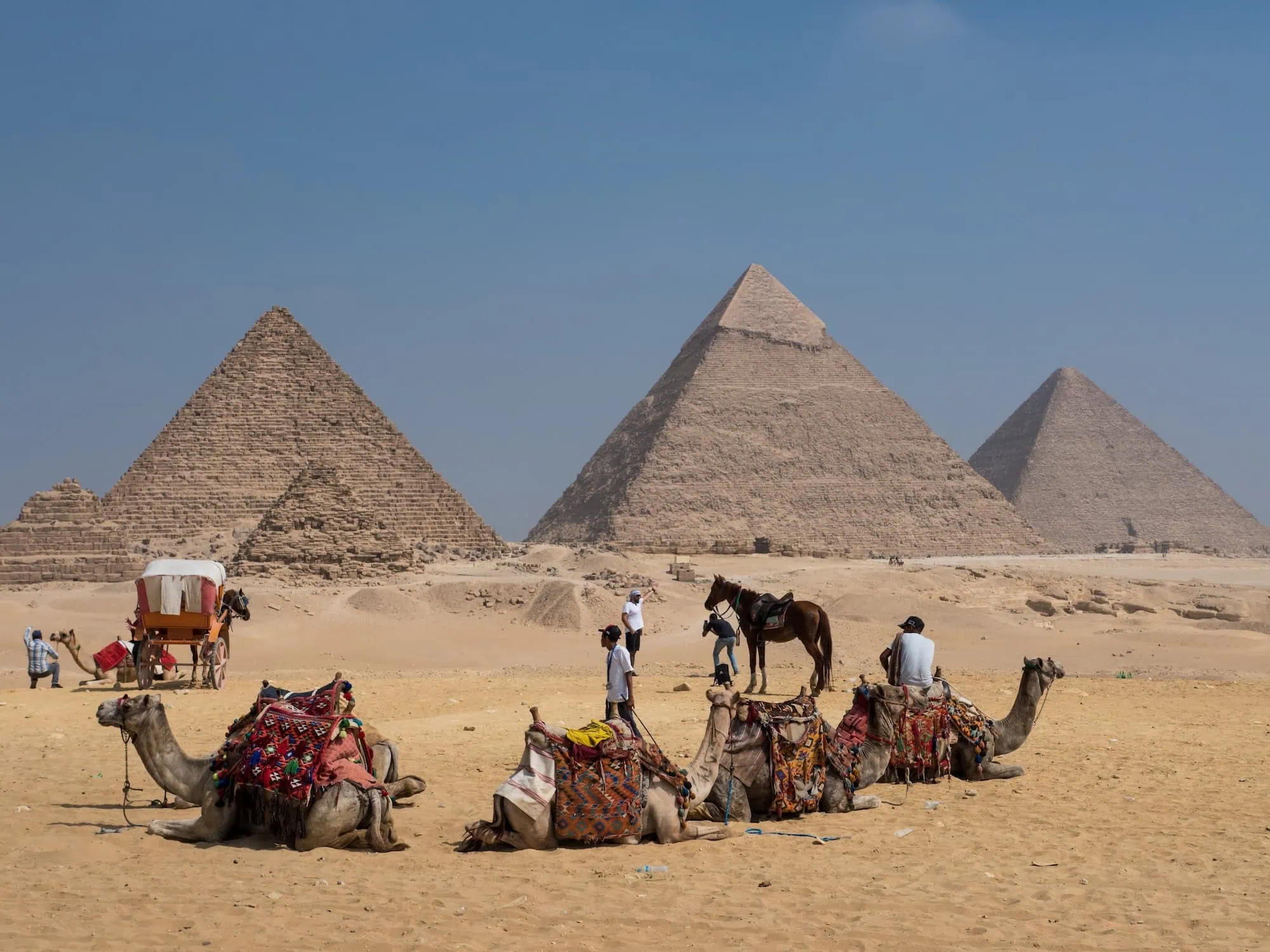
However, aggressive souvenir vendors can make independent visits challenging for some travelers. Having a guide creates a buffer against persistent sales approaches, allowing you to focus entirely on the monuments rather than managing unwanted interactions. We offer intimate group experiences with maximum 12 participants, providing professional guidance while maintaining the personal attention that large tour groups cannot match.
Essential Practical Tips
Temperature management becomes your biggest ally during any Giza visit. Early morning hours provide the most comfortable conditions, with temperatures starting around 20°C (68°F) in winter months and 25°C (77°F) during summer. By midday, desert heat can reach 40°C (104°F) in summer, making shade precious and water essential.
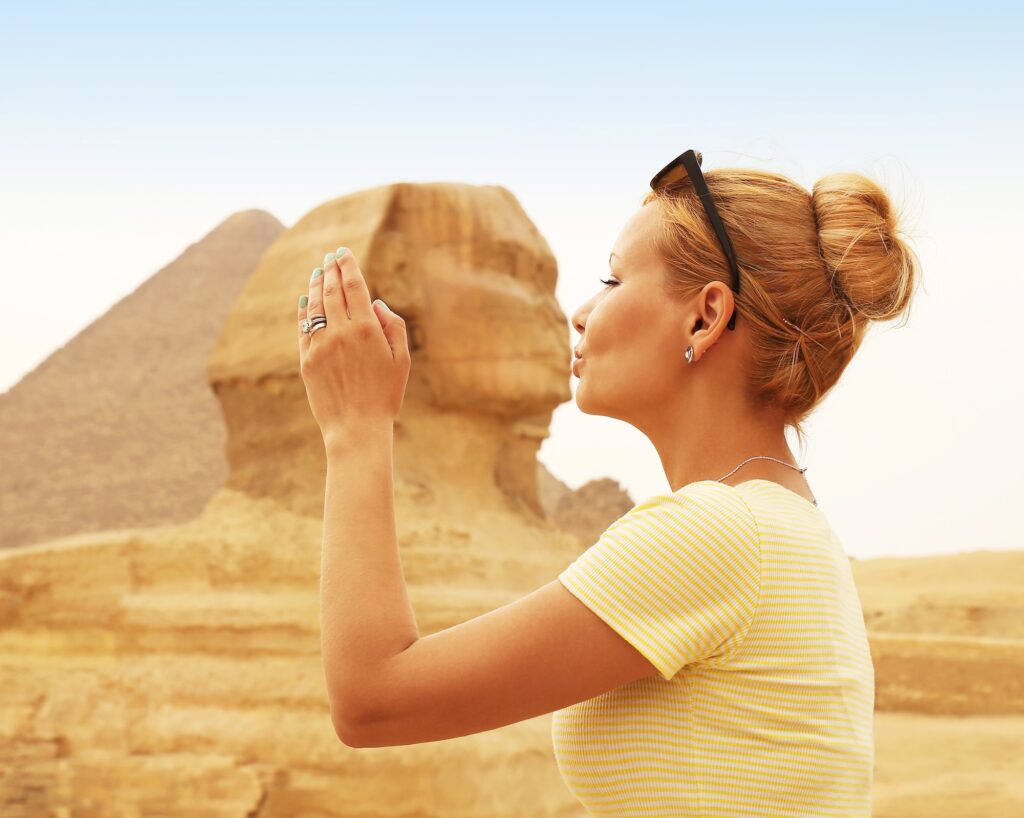
Dress codes require modest clothing covering shoulders and knees, both out of cultural respect and practical sun protection. Sturdy, closed-toe shoes with good traction handle the sandy surfaces and stone steps safely. Many visitors underestimate the walking distances within the complex – the area spans approximately 2.5 square kilometers (1 square mile), with significant distances between major monuments.
Photography restrictions vary by location within the complex. General outdoor photography requires no special permits, but interior pyramid photography needs additional tickets costing 300 Egyptian pounds ($10 USD) per monument. Professional equipment like tripods or external lighting requires advance permission from the Ministry of Tourism and Antiquities. Security measures include bag searches at the entrance and metal detectors before entering any pyramid interior.
Physical Requirements
Pyramid interior visits demand specific physical preparations. The ascending passage to the Grand Gallery requires climbing bent over for approximately 47 meters (154 feet) at a 26-degree angle. The King’s Chamber passage drops to just 1.2 meters (4 feet) high, requiring most adults to crawl or duck-walk. These conditions, combined with high humidity and limited air circulation, can challenge visitors with respiratory issues or mobility limitations.
Rest stops become crucial during interior exploration. The Grand Gallery provides the only space where you can stand fully upright between entrance and the King’s Chamber. We recommend taking your time and listening to your body throughout the experience. Golden hour lighting transforms the pyramids into photographic gold. Sunrise shots capture the monuments emerging from morning mist, while sunset photography benefits from warm, directional light highlighting the limestone blocks’ texture.
Beyond the Great Pyramids
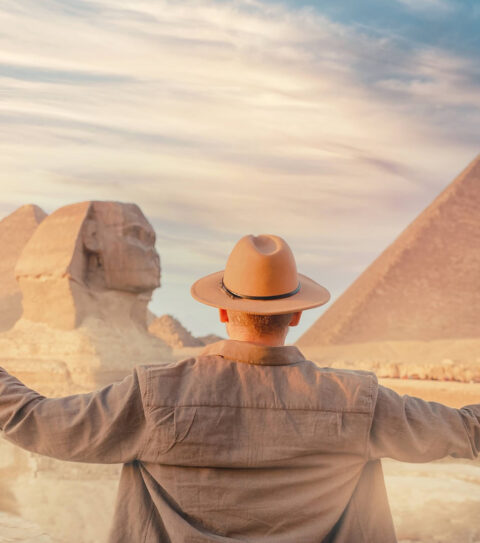
The Giza Complex encompasses far more than the three famous pyramids, offering a full day of exploration for visitors who venture beyond the iconic monuments. This 73-meter (240-foot) long limestone guardian has watched over the complex for over 4,500 years. Recent restoration work has stabilized the structure while preserving its ancient character. The Sphinx’s face, likely representing Pharaoh Khafre, shows clear signs of ancient repairs, suggesting its importance was recognized even in antiquity.
Three smaller pyramids stand beside the Great Pyramid, traditionally attributed to Khufu’s wives and family members. While much smaller than their famous neighbors, these structures showcase the same construction techniques on a more intimate scale. Visitors can often explore these monuments with fewer crowds, providing a more contemplative experience of ancient Egyptian burial practices.
The reconstructed cedar boat discovered in a sealed pit beside the Great Pyramid offers insights into ancient Egyptian beliefs about the afterlife journey. This 43.6-meter (143-foot) vessel was likely intended to carry the pharaoh’s soul across the heavens. The climate-controlled museum protects this 4,600-year-old artifact while providing detailed explanations of its discovery and reconstruction process.
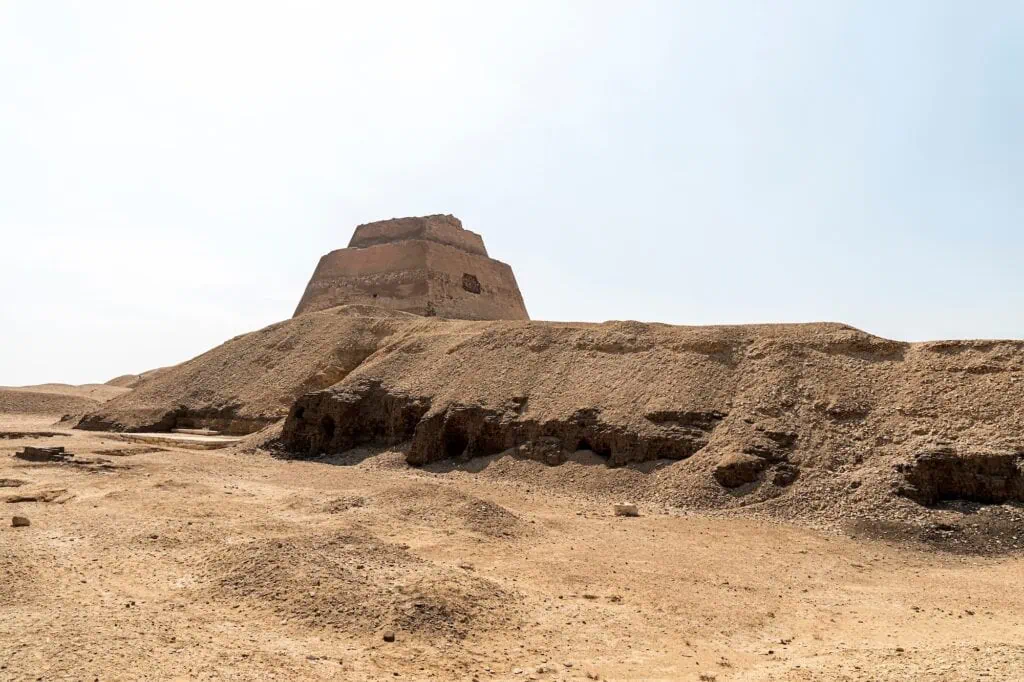
The mastaba tombs surrounding the pyramids housed high-ranking officials and nobility who wanted eternal proximity to their pharaohs. These rectangular structures feature hieroglyphic decorations and false doors designed to allow the deceased’s spirit to travel between worlds. Several tombs remain open to visitors, offering colorful wall paintings depicting daily life in ancient Egypt.
Modern Facilities
Recent infrastructure improvements have enhanced the visitor experience without compromising the site’s archaeological integrity. Clean restrooms, first-aid stations, and wheelchair-accessible paths serve travelers with diverse needs. The visitor center provides air-conditioned relief from desert heat while offering educational displays about ongoing archaeological work and conservation efforts.
Souvenir shops within the complex sell everything from postcards to replica artifacts, though prices tend to be higher than similar items in Cairo markets. ATMs and currency exchange services handle financial needs, accepting major international cards alongside Egyptian pounds.
Visa and Entry Requirements
U.S. visitors can obtain a tourist visa upon arrival at Cairo International Airport for $25 USD, valid for 30 days with single entry. The e-visa option, available online for the same price, allows you to complete paperwork in advance and skip airport lines. Your passport must have at least six months’ remaining validity and one blank page for the visa stamp.
European Union citizens enjoy the same visa-on-arrival privileges as Americans, with identical pricing and requirements. Most European passports receive the standard 30-day tourist visa without additional documentation. Latin American visitors from countries including Brazil, Argentina, and Mexico can also obtain visas on arrival, though some nationalities may require advance approval.
We recommend checking current requirements with the Egyptian consulate in your home country, as policies can change seasonally. Canadian and Australian citizens follow the same process as U.S. visitors, with visa-on-arrival available for $25 USD or advance e-visa applications accepted online.
Immigration and customs at Cairo International Airport typically process international visitors within 30-45 minutes during normal hours. Pre-arranged transportation through your hotel or tour operator streamlines the airport-to-Giza journey, avoiding potential confusion with local taxi negotiations. Currency exchange booths at the airport offer competitive rates for small amounts, though larger exchanges often get better rates in Cairo city center.
Frequently Asked Questions
Plan at least 2-3 hours for a basic visit to the Pyramids of Giza, and 4-6 hours if you want to enter pyramid interiors, visit the Great Sphinx, and explore surrounding viewpoints. The Giza Plateau covers a large area west of Cairo, and walking between major attractions takes time, especially during busy periods. Visitors interested in photography, camel rides, or guided tours often spend half a day at the site. Arrive early to avoid peak heat and tour-group crowds.
Yes, visitors can enter the Great Pyramid of Khufu, the Pyramid of Khafre, and the Pyramid of Menkaure when interior access is available, but each requires a separate ticket. Entrance fees vary and are subject to change, with premium access to the Great Pyramid typically costing more than the smaller pyramids. Capacity limits are often enforced to protect the monuments and improve visitor flow. Purchase interior tickets early in the day, especially during peak season.
Yes, the Pyramids of Giza are suitable for children, particularly in the open-air areas surrounding the pyramids and the Great Sphinx. Young visitors often enjoy the scale of the monuments, camel rides, and panoramic viewpoints. However, pyramid interiors can be challenging because of steep passageways, confined spaces, and limited ventilation. Families with younger children may prefer spending most of their time outdoors and entering only selected monuments.
October through April is generally the best time to visit the Pyramids of Giza, with daytime temperatures often ranging from 15°C to 25°C (59°F to 77°F). Cooler weather makes walking across the exposed desert plateau far more comfortable than during the summer months, when temperatures can exceed 35°C (95°F). Winter also offers clearer conditions for photography and sightseeing. Morning visits typically provide the most pleasant experience.
Yes, food and drink options are available near the Pyramids of Giza, including snack kiosks, cafés, and several restaurants overlooking the pyramid complex. Choices range from bottled water and light refreshments to traditional Egyptian dishes and international meals. Prices within tourist areas are often higher than elsewhere in Cairo. Eating before arrival or scheduling lunch at a nearby restaurant can make your visit more comfortable and efficient.
Cameras are generally allowed at the Giza Plateau, but photography inside pyramid interiors may require a separate ticket or be subject to specific regulations. Rules can change depending on conservation policies and the monument involved. Flash photography is often restricted in sensitive archaeological spaces to help preserve ancient surfaces. Check the latest photography policies when purchasing tickets and keep your camera easily accessible for exterior panoramic viewpoints.
Yes, transportation from the Pyramids of Giza back to Cairo is readily available throughout operating hours. Taxis, ride-hailing services such as Uber and Careem, and organized tour transportation frequently serve the area. The pyramid complex is located approximately 15-20 km from central Cairo, and travel times typically range from 30 minutes to over an hour depending on traffic. Pre-arranging transportation can simplify departure during busy afternoon periods.
Yes, guided tours are often worth the additional cost because they provide historical context, site navigation assistance, and deeper insight into ancient Egyptian civilization. A qualified Egyptologist can explain the construction of the pyramids, the role of Pharaoh Khufu, and the significance of nearby monuments such as the Great Sphinx. Visitors frequently gain far more from the experience than they would through independent exploration alone. Guides also help maximize limited visiting time.
Visitors with mobility limitations can access many outdoor areas of the Giza Plateau, but pyramid interiors present significant challenges. Entering the pyramids typically involves steep ramps, narrow passages, uneven flooring, and low ceilings that are not wheelchair accessible. Exterior viewing areas, visitor facilities, and many photo locations are easier to reach. Travelers with mobility concerns should discuss accessibility options in advance and focus on the site’s outdoor highlights.
Yes, the Pyramids of Giza remain open during Ramadan, and many travelers enjoy visiting during this period. Some operating hours, restaurant schedules, and service patterns may be adjusted to accommodate the holy month. Tourist attractions generally continue functioning normally, although local customs should be respected, particularly around eating and drinking in public during daylight hours. Check current opening times before your visit and plan accordingly.
Booking pyramid interior tickets in advance is recommended during busy travel periods, especially between December and February when visitor numbers are highest. While tickets are often available on-site, daily visitor limits can affect availability for popular monuments such as the Great Pyramid of Khufu. Organized tours frequently secure access in advance, reducing uncertainty. If entering a pyramid is a priority, avoid waiting until the last minute.
Yes, restroom facilities are available at the Pyramids of Giza complex, including locations near the main entrance and key visitor service areas. Facilities are generally maintained for the large number of domestic and international tourists who visit the site each year. Because the archaeological zone covers a substantial area, it is wise to use facilities when available rather than waiting until later in your visit. Carry small denominations of Egyptian pounds for convenience.
Explore our most popular guides and expert tips to make your trip safe, smooth, and unforgettable.
Plan Your Egypt Adventure with Confidence
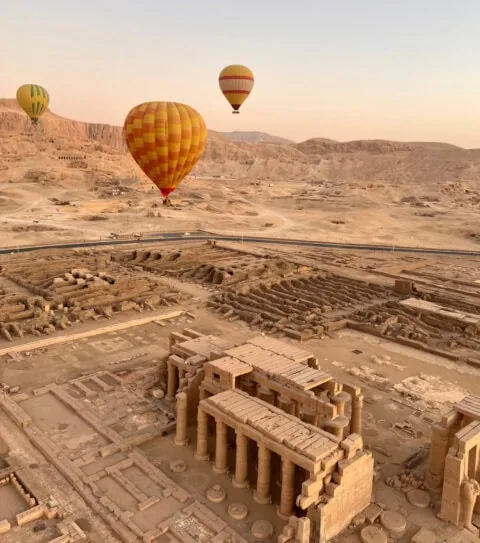
How to Plan a Trip Egypt
Step-by-step guide to help you plan the perfect Egypt trip — from routes and budget to booking.
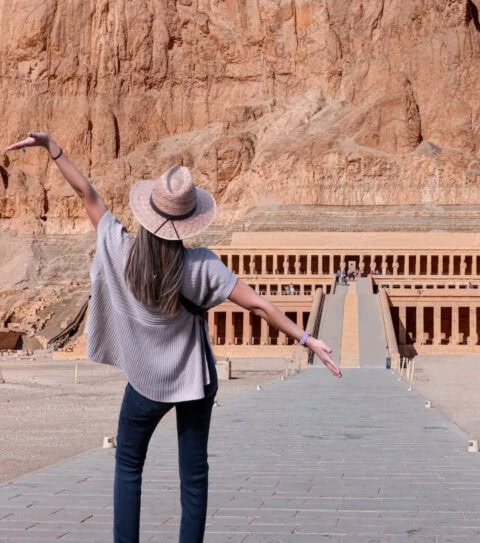
Best Time to Visit Egypt
Learn the best months to visit Egypt based on weather, crowds, and local travel experiences.
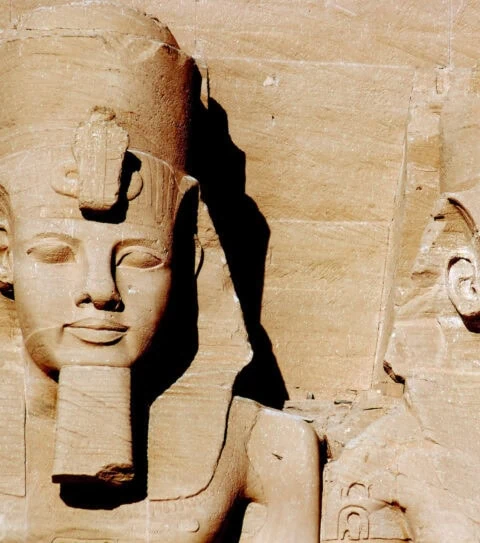
Must Visit Places in Egypt
Explore Egypt’s top sights — from pyramids to temples — and hidden gems worth seeing.
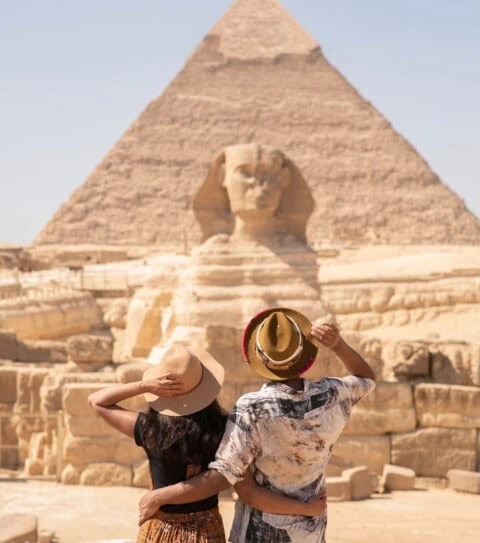
Top-Rated Egypt Tours
Handpicked private tours with local guides — our most loved and best-reviewed experiences.
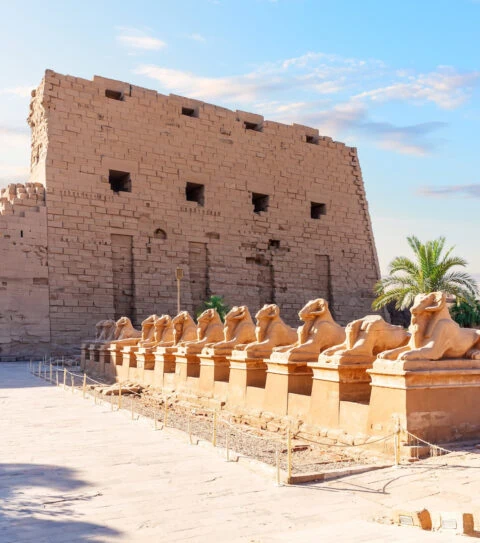
How Many Days to Visit Egypt?
Find out how many days you need in Egypt — from quick trips to full itineraries.
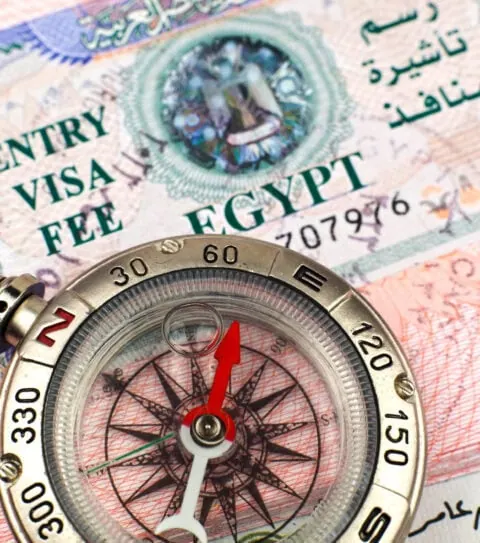
Egypt Visa Requirements
Check if you need a visa and get simple, up-to-date entry info based on your nationality.

Is it Safe to Travel to Egypt?
Is Egypt safe? Get honest safety tips, area advice, and what to know before you travel.
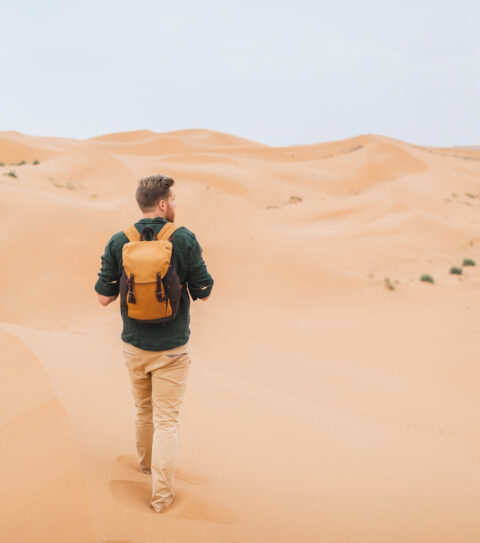
What to Pack for Egypt
A quick packing guide with essentials, cultural tips, and clothing advice for your Egypt trip.
Design Your Custom Tour
Explore Egypt your way by selecting only the attractions you want to visit