

Abydos Temple – One of the Oldest Sacred Ancient Cities Discovered
Sacred monuments rise from desert sands where pharaohs once ruled.
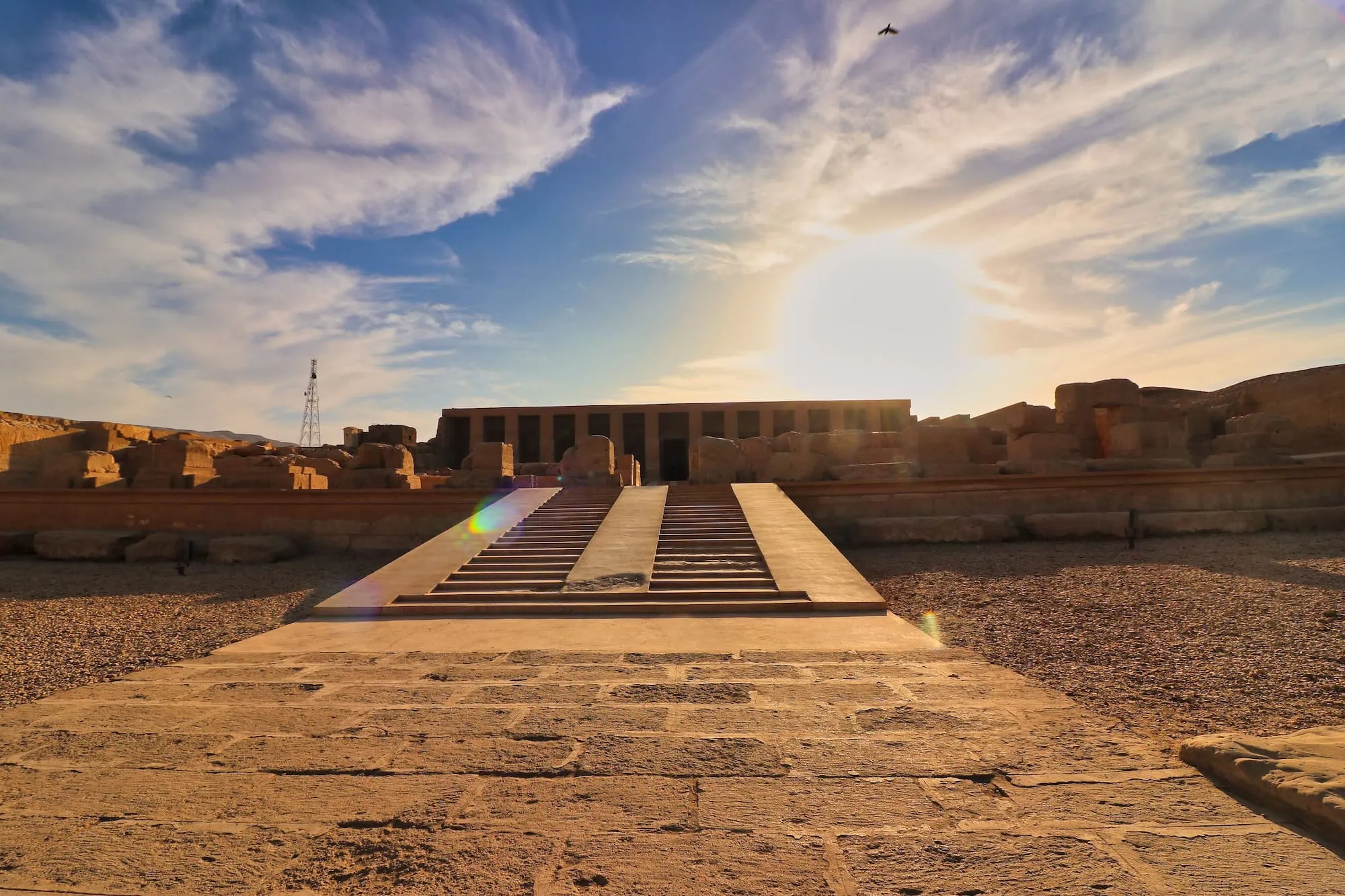
Abydos stands as one of Egypt’s most spiritually significant archaeological sites, where ancient rulers sought eternal connection with Osiris, god of the afterlife. This sacred landscape in Upper Egypt served as both royal cemetery and pilgrimage destination for over 3,000 years. From the earliest dynastic burials to elaborate temple complexes, Abydos reveals the heart of ancient Egyptian religious beliefs and royal power.
Our expert guides bring this mystical site to life, sharing stories that span from Egypt’s first kings to the magnificent temples that still inspire wonder today.
Table of Contents
Why Abydos Holds Special Place in Egyptian History
Royal burials began here before the pyramids existed. The ancient Egyptians called this place “Abdju,” meaning “the hill of the symbol or reliquary,” referring to the sacred tomb of Osiris himself.
Egypt’s First Royal Cemetery
Archaeological evidence reveals that Egypt’s earliest pharaohs chose Abydos as their eternal resting place. The Umm el-Qa’ab necropolis contains tombs dating to the First Dynasty, including possible burial sites of legendary rulers like Narmer and Aha. These mud-brick mastaba tombs represent humanity’s first experiments with monumental royal architecture.
Recent excavations have uncovered elaborate grave goods, including ivory labels with the earliest known hieroglyphic inscriptions. Wine jars, furniture, and servants’ graves surround royal burial chambers, suggesting complex beliefs about afterlife provisions.
Osiris Mythology Takes Root
Legend places Osiris’s head burial at Abydos after his mythical dismemberment by Set. This connection transformed the site into ancient Egypt’s most sacred pilgrimage destination. Wealthy Egyptians built cenotaphs here to ensure their spiritual connection with Osiris, believing proximity would guarantee resurrection.
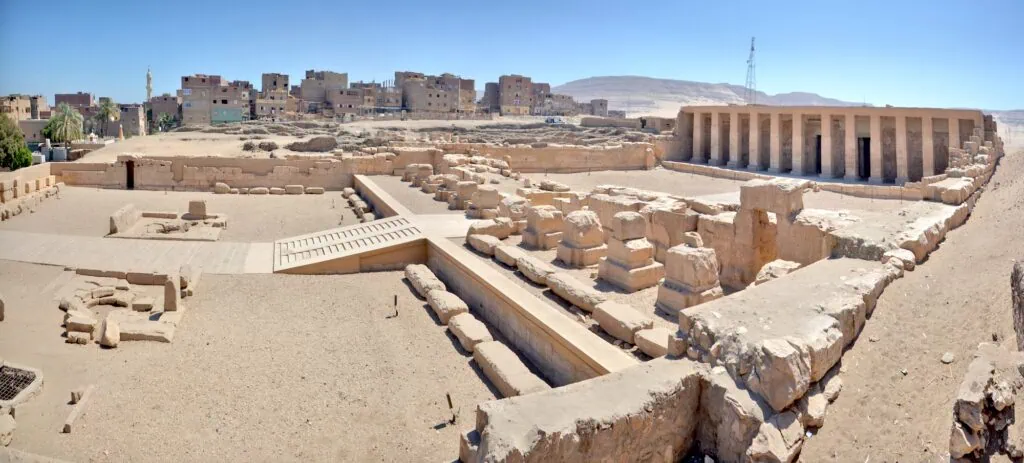
The annual Osiris festivals drew thousands of pilgrims who participated in mystery plays reenacting the god’s death and resurrection. These dramatic performances reinforced religious beliefs while strengthening social bonds across Egyptian society.
Archaeological Significance Today
Modern researchers continue uncovering Abydos’s secrets through systematic excavations. The University of Pennsylvania and Yale University joint expedition has documented extensive settlement patterns, revealing how this sacred city functioned as both religious center and administrative hub.
Current preservation efforts focus on protecting fragile mud-brick structures from environmental threats while maintaining site accessibility for international visitors.
Temple of Seti I: Architectural Masterpiece
The Temple of Seti I represents New Kingdom architectural achievement at its finest. Seven sanctuaries dedicated to different deities create a unique floor plan unlike any other Egyptian temple.
Exquisite relief carvings cover interior walls with scenes depicting Seti I’s divine kingship and religious ceremonies. The famous Abydos King List chronologically records pharaonic names from Menes to Seti I, providing crucial historical documentation. However, certain controversial rulers like Hatshepsut and Akhenaten were deliberately omitted from this official record.
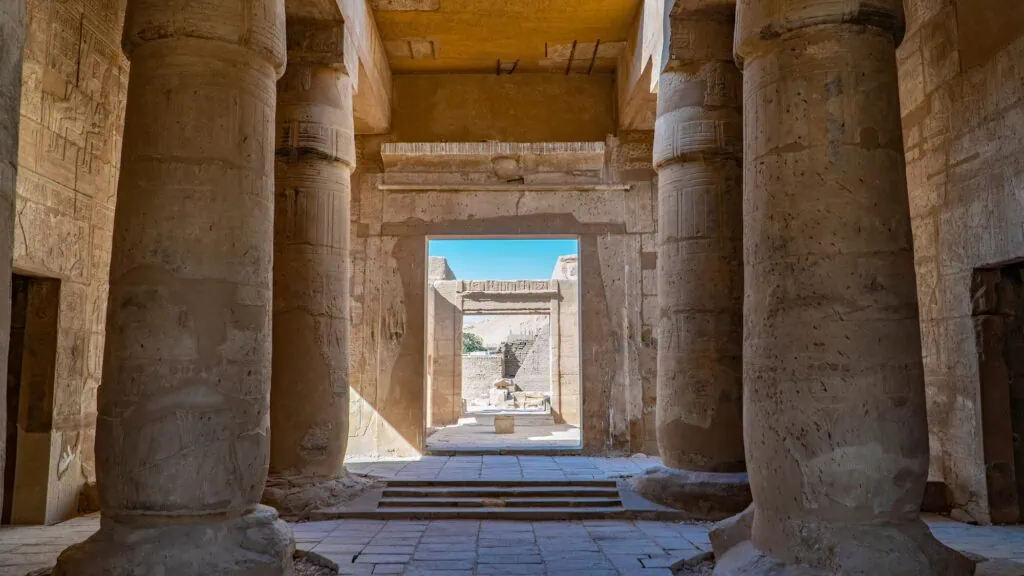
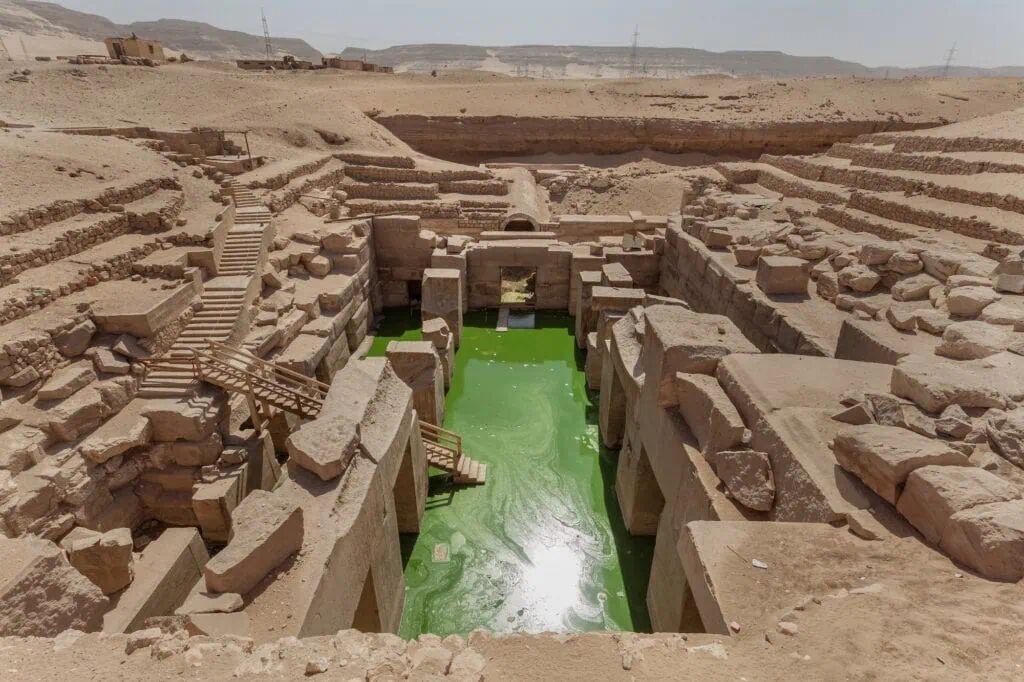
Deep beneath the temple lies the mysterious Osireion, a symbolic tomb of Osiris featuring massive granite blocks and underground chambers. Water still fills lower levels, creating an otherworldly atmosphere that enhances the structure’s mystical purpose. Some scholars suggest this enigmatic building predates Seti I’s temple, though dating remains controversial.
Temple of Ramesses II: Royal Legacy
Ramesses II constructed his own temple complex adjacent to his father’s monument, demonstrating dynastic continuity and personal devotion. Though less preserved than Seti I’s temple, significant portions remain, including colorful wall paintings depicting royal offerings to various gods.
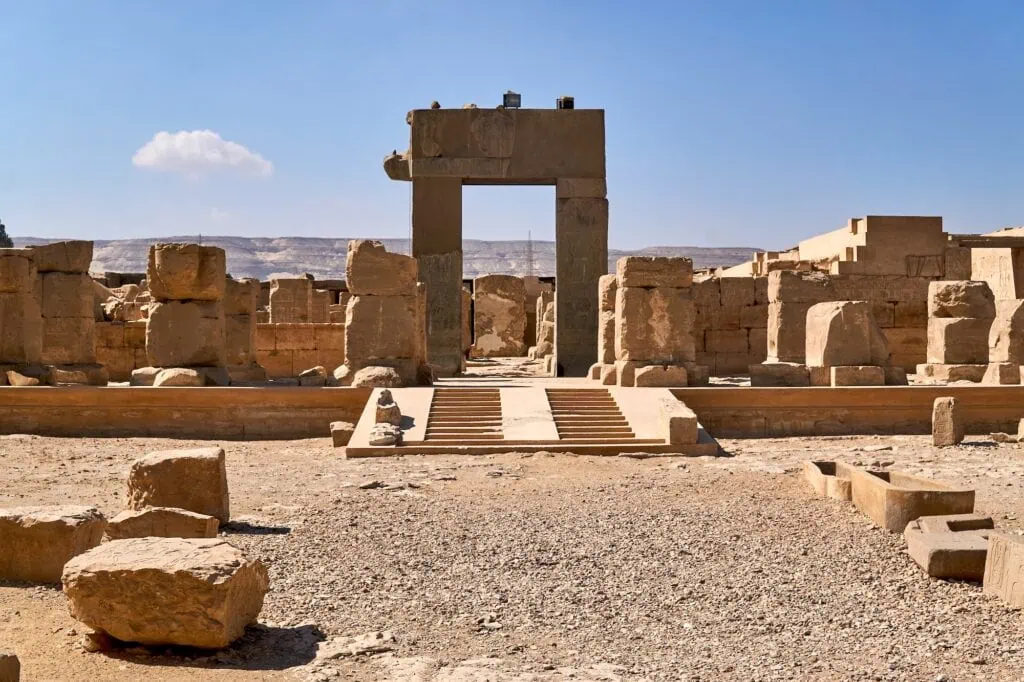
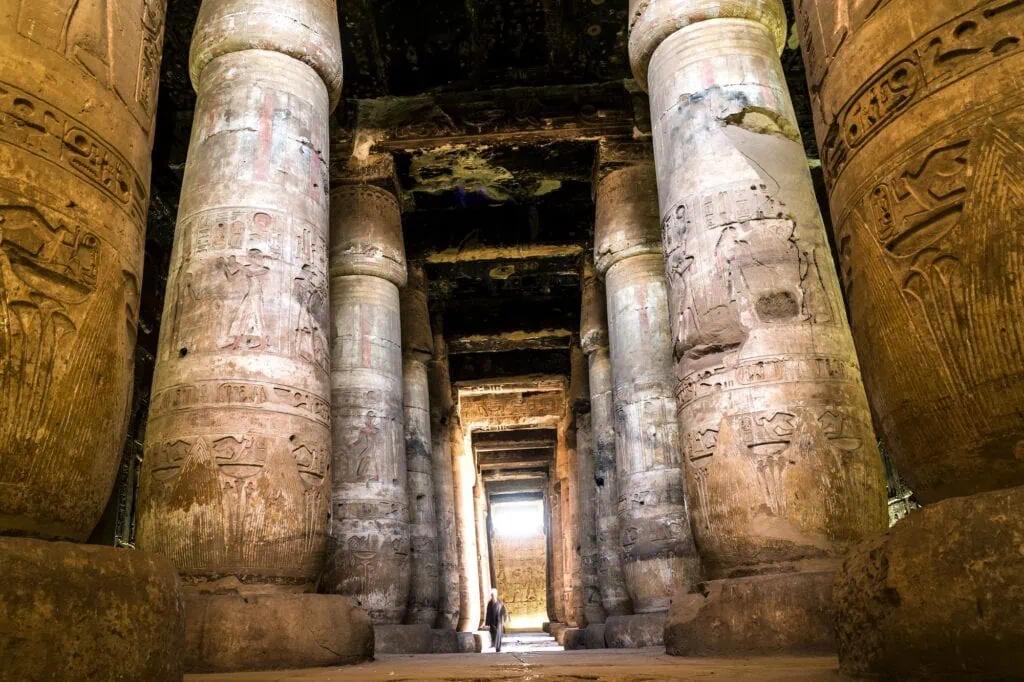
The temple’s hypostyle hall features papyrus-shaped columns supporting massive stone blocks carved with hieroglyphic texts praising Ramesses II’s military victories and religious piety. Archaeological surveys have revealed extensive storage rooms and administrative areas surrounding the main temple, indicating this complex served multiple functions beyond pure worship.
Visiting Abydos: Practical Travel Information
Abydos location sits approximately 160 km (100 miles) north of Luxor in Upper Egypt’s Sohag Governorate. Most visitors combine Abydos with nearby Dendera Temple for an efficient day trip exploring two remarkable ancient sites.
Getting There
Private transportation offers the most comfortable option for reaching Abydos from Luxor, taking roughly 2.5 hours each way. We arrange modern, air-conditioned vehicles with professional drivers familiar with desert roads and local conditions.
Tourist police checkpoints monitor the route for visitor safety, and our drivers coordinate with authorities to ensure smooth passage. The desert highway provides scenic views of rural Egyptian life, including traditional villages and agricultural areas along the Nile Valley.
Best Time to Visit
Winter months from November through March provide ideal weather conditions with temperatures ranging from 15-25°C (59-77°F). Early morning arrivals at 8:00 am (08:00) allow maximum exploration time before afternoon heat intensifies.
Spring and autumn months offer acceptable conditions, though temperatures can reach 35°C (95°F) by midday. Summer visits require careful planning due to extreme heat, with temple exploration best limited to early morning hours before 10:00 am (10:00).
What to Expect
Temple complex exploration typically requires 2-3 hours for thorough appreciation of architectural details and historical significance. Our qualified Egyptologist guides explain hieroglyphic meanings, architectural evolution, and religious symbolism throughout your visit.
Combining with Dendera
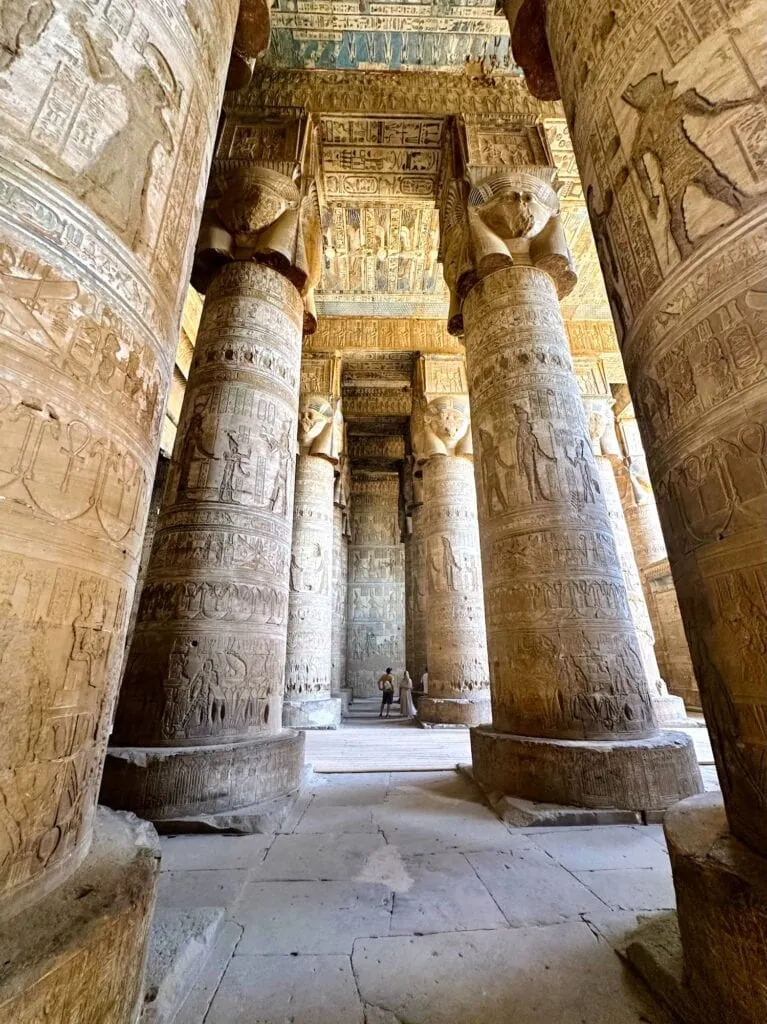
Dendera Temple lies approximately 60 km (37 miles) from Abydos, making these sites perfect companions for ambitious day trips. The combined journey showcases different periods of Egyptian temple architecture and religious evolution.
Dendera’s Ptolemaic-era construction contrasts beautifully with Abydos’s New Kingdom monuments, providing comprehensive understanding of Egyptian architectural development spanning centuries.
Conservation Challenges and Modern Research
International organizations collaborate with Egyptian authorities to preserve Abydos’s fragile monuments against environmental threats and human encroachment.
Environmental Threats
Rising groundwater levels threaten foundation stability of ancient structures. Climate change brings increased temperature fluctuations that crack stone surfaces and accelerate deterioration. Wind-blown sand requires constant removal from carved relief surfaces to prevent abrasive damage.
Agricultural expansion encroaches on archaeological zones, potentially destroying undiscovered remains. Illegal dumping and uncontrolled development pressure site boundaries, requiring vigilant monitoring and enforcement.
Research Partnerships
American Research Center in Egypt coordinates international archaeological projects while training local specialists in modern excavation techniques. Digital documentation projects create detailed 3D models preserving architectural details for future generations.
Ground-penetrating radar surveys reveal buried structures without destructive excavation, guiding targeted research priorities. These non-invasive techniques have identified previously unknown tombs and settlement areas awaiting future exploration.
Conservation laboratories on-site treat fragile artifacts immediately after discovery, preventing deterioration during transportation. Local craftsmen learn traditional restoration techniques to maintain authentic repair methods using period-appropriate materials.
Planning Your Abydos Adventure
Visa Requirements
U.S. citizens require tourist visas obtainable upon arrival at Cairo International Airport for $25 USD, valid for 30 days. European Union citizens enjoy similar visa-on-arrival privileges with equivalent fees and duration. Latin American visitors should verify specific requirements with Egyptian consulates, as policies vary by country.
Processing typically takes 15-30 minutes during peak travel seasons. We recommend carrying exact cash amounts and passport photos to expedite airport procedures.
What to Bring
Comfortable walking shoes with good traction help navigate uneven temple floors and sandy areas. Sun protection including wide-brimmed hats and high-SPF sunscreen proves essential for desert conditions.
Water bottles keep visitors hydrated during temple exploration, though refreshments are available at site entrances. Small backpacks accommodate cameras, guidebooks, and personal items without hindering movement through narrow temple passages.
Why Choose Egypt Tours Plus for Your Abydos Journey
Our decades of expertise in Egyptian archaeological sites ensures you experience Abydos’s profound significance through knowledgeable interpretation and seamless logistics. Private vehicles eliminate crowded tour bus restrictions, allowing flexible scheduling that maximizes your temple exploration time.
Award-winning customer service includes 24/7 support throughout your Egyptian adventure. Personal Egyptologist guides share passion for ancient history while ensuring your safety and comfort during desert travel.
Tailored itineraries combine Abydos with complementary sites like Dendera or Luxor’s monuments, creating comprehensive archaeological experiences. Modern vehicles equipped with air conditioning and safety features ensure comfortable transportation across Upper Egypt’s challenging terrain.
Unlock The Sacred Legacy Of Abydos Temple
Abydos Temple is one of Egypt’s most spiritually significant and visually captivating sites—where intricate carvings and the famous King List connect you directly to the lineage of ancient pharaohs. With Egypt Tours Plus, we seamlessly include this extraordinary destination in a private journey that goes beyond the usual маршруtes, linking hidden gems with Egypt’s most iconic landmarks.
You choose your travel dates, your pace, and the experiences that shape your route. From in-depth temple exploration and expert guidance to comfortable travel and curated experiences throughout, we tailor every detail around your preferences—ensuring a smooth, enriching, and deeply personal journey.
Frequently Asked Questions
Plan 3-4 hours for a meaningful Abydos visit because the temple complex contains extensive reliefs, the famous Abydos King List, multiple chapels, and richly carved halls built by Seti I and Ramesses II. Visitors interested in hieroglyphs or photography often stay longer, especially inside the temple’s well-preserved interior chambers where colors remain visible after more than 3,000 years. Abydos is approximately 160 km north of Luxor, so travel time should also factor into your day itinerary. Arrive early to avoid midday heat and tour-bus congestion.
Independent visits to Abydos are possible, but most travelers choose guided tours because the site sits in a relatively remote desert area about 2.5 to 3 hours by road from Luxor. Professional guides explain complex Osiris mythology, royal inscriptions, and historical details that are easy to overlook without context. Organized transportation also simplifies navigation, checkpoints, and timing when combining Abydos with Dendera Temple in one excursion. Travelers driving independently should start early and carry sufficient water for the journey.
Abydos stands apart from most Egyptian temples because it functioned both as a major cult center for Osiris and as one of Egypt’s earliest royal burial regions. Ancient Egyptians believed Abydos was closely connected to the afterlife, so pilgrims traveled there for centuries seeking spiritual association with Osiris, god of resurrection. The Temple of Seti I contains some of Egypt’s finest raised relief carvings and the famous Abydos King List naming pharaohs from Menes onward. Its religious importance rivaled cities such as Thebes and Memphis during certain periods.
Abydos can be an engaging site for children, especially older kids interested in mythology, colorful wall carvings, and stories about ancient Egyptian gods and kings. The temple’s preserved reliefs of Osiris rituals, sacred boats, and royal ceremonies create a more visually accessible experience than some heavily ruined archaeological sites. Families should prepare for long driving distances from Luxor and limited shade around the complex, particularly during warmer months when temperatures often exceed 35°C (95°F). Bring snacks, hats, and plenty of drinking water.
Modern archaeological exploration at Abydos began in the mid-19th century, with major excavations led by French Egyptologist Auguste Mariette during the 1850s. Later work by Flinders Petrie and other international teams uncovered royal tombs, temples, inscriptions, and settlement remains spanning thousands of years of Egyptian history. Excavations continue today under Egyptian and foreign archaeological missions because Abydos remains one of the country’s richest religious and funerary landscapes. New discoveries still emerge regularly from surrounding desert areas and buried structures.
Visitors to Abydos should wear lightweight but modest clothing that covers shoulders and knees, along with comfortable walking shoes suitable for uneven stone flooring and desert dust. Temperatures in Upper Egypt frequently exceed 30°C (86°F) outside winter months, so breathable fabrics, sunglasses, and sun hats are strongly recommended. Interior temple chambers can feel cooler and darker than the surrounding open courtyards, especially during morning visits. Closed-toe shoes provide better stability on worn ancient surfaces and scattered stone debris.
Abydos complements major Upper Egypt sites such as Luxor and Dendera by illustrating different aspects of ancient Egyptian religion, kingship, and temple design across multiple dynasties. While Luxor emphasizes monumental state temples and royal tombs, Abydos centers on Osiris worship and pilgrimage traditions connected to the afterlife. Many travelers combine Abydos and Dendera in a single day because both lie north of Luxor along the Nile Valley corridor. Together, the sites provide a broader understanding of Egyptian spiritual and architectural evolution.
Abydos offers basic visitor facilities including restrooms, parking areas, ticket offices, and limited refreshment vendors near the temple entrance. The site remains less commercialized than larger destinations such as Karnak or Abu Simbel, so travelers should not expect extensive restaurants, air-conditioned cafes, or large souvenir markets nearby. Carrying bottled water, snacks, and sun protection is strongly recommended, particularly during longer visits or summer excursions. Most organized tours from Luxor include transportation and scheduled comfort stops along the route.
Touching the walls at Abydos is strictly prohibited because skin oils, moisture, and repeated contact gradually damage ancient reliefs and painted surfaces that are more than 3,000 years old. Many carvings inside the Temple of Seti I remain exceptionally preserved precisely because conservation authorities limit physical interaction with the stone. Even minor abrasion can permanently erode delicate hieroglyphic details and traces of original pigment. Photography provides a safer way to study and document the temple’s artwork without harming the monument.
Cameras with strong low-light performance and image stabilization work especially well at Abydos because many interior chambers contain dimly lit reliefs and detailed carvings without strong artificial lighting. Wide-angle lenses help capture narrow temple halls, while zoom lenses are useful for photographing ceiling details and elevated inscriptions from a respectful distance. Tripods may require special permission from Egyptian antiquities authorities depending on current regulations. Carry spare batteries and memory cards because extended photography sessions inside the temple often last several hours.
Standard tourist entry tickets are sufficient for most visitors to Abydos, including general sightseeing and personal photography under current site regulations. Special permits are typically required only for commercial filming, professional photography setups, academic research projects, or drone use, all of which must be coordinated in advance with Egypt’s Ministry of Tourism and Antiquities. Regulations can change depending on conservation work or security measures at the site. Travelers planning professional media production should confirm requirements before arrival in Egypt.
Weather significantly affects Abydos visits because the temple sits in Upper Egypt’s desert climate, where summer daytime temperatures often exceed 40°C (104°F) between June and August. Early morning departures from Luxor provide the most comfortable exploration conditions and softer lighting for photography inside temple courtyards. Winter months from November through February offer the best overall climate, with daytime temperatures typically ranging between 20°C and 28°C (68°F to 82°F). Sand, dust, and strong sunlight make hats and sunglasses essential year-round.
Design Your Custom Tour
Explore Egypt your way by selecting only the attractions you want to visit