

The King Abdullah Mosque in Amman – A Spectacular Jordanian Gem
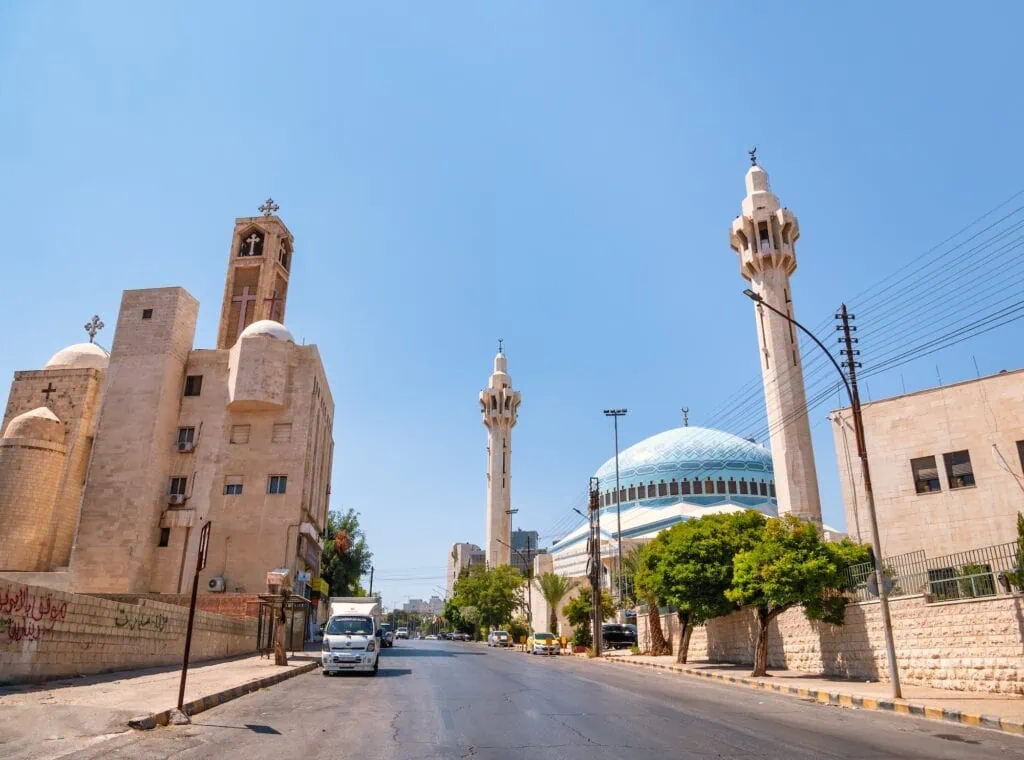
Standing majestically in the heart of Jordan’s capital, King Abdullah Mosque draws thousands of visitors each year with its striking blue dome, visible from across the city.
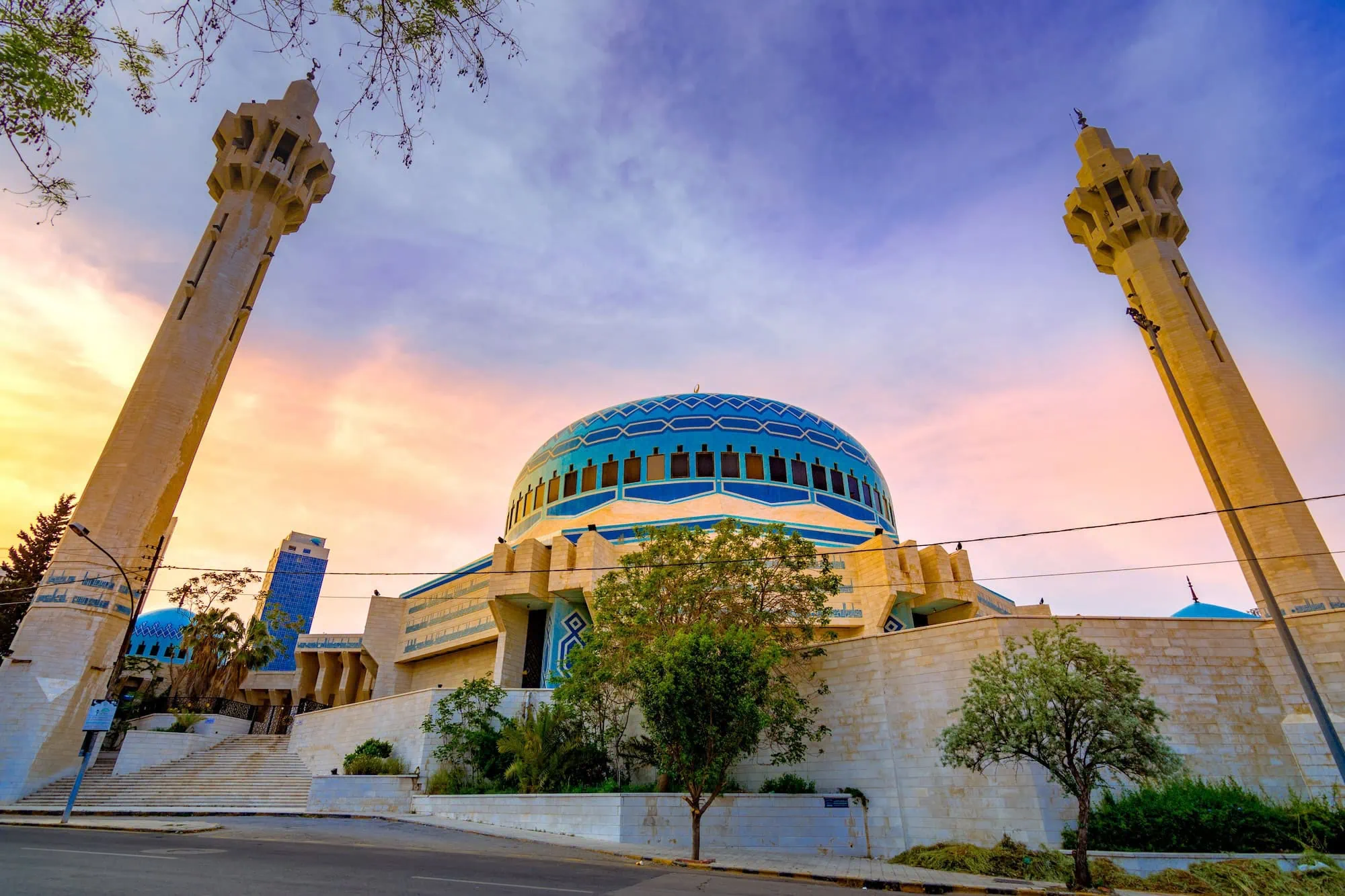
Built between 1982 and 1989 as a tribute to King Abdullah I—the founder of modern Jordan—this architectural landmark blends traditional Islamic design with contemporary craftsmanship. The mosque functions both as an active place of worship and a major cultural site, welcoming Muslims and non-Muslims alike to explore its impressive interior and gain insight into Islamic heritage.
Its unique status as the only mosque in Amman open to non-Muslim visitors makes it an essential stop for anyone looking to understand Jordanian culture on a deeper level.
The King Abdullah Mosque is often included in our Egypt and Jordan itinerary tours, where cultural experiences in Amman are combined with iconic destinations such as Petra, Wadi Rum, and Egypt’s ancient monuments.
At Egypt Tours Plus, we’ve guided countless travelers through important religious and cultural sites across the Middle East. We understand the importance of proper preparation, and this guide will help you visit with both confidence and respect.
Table of Contents
Architectural Splendor and Design Features
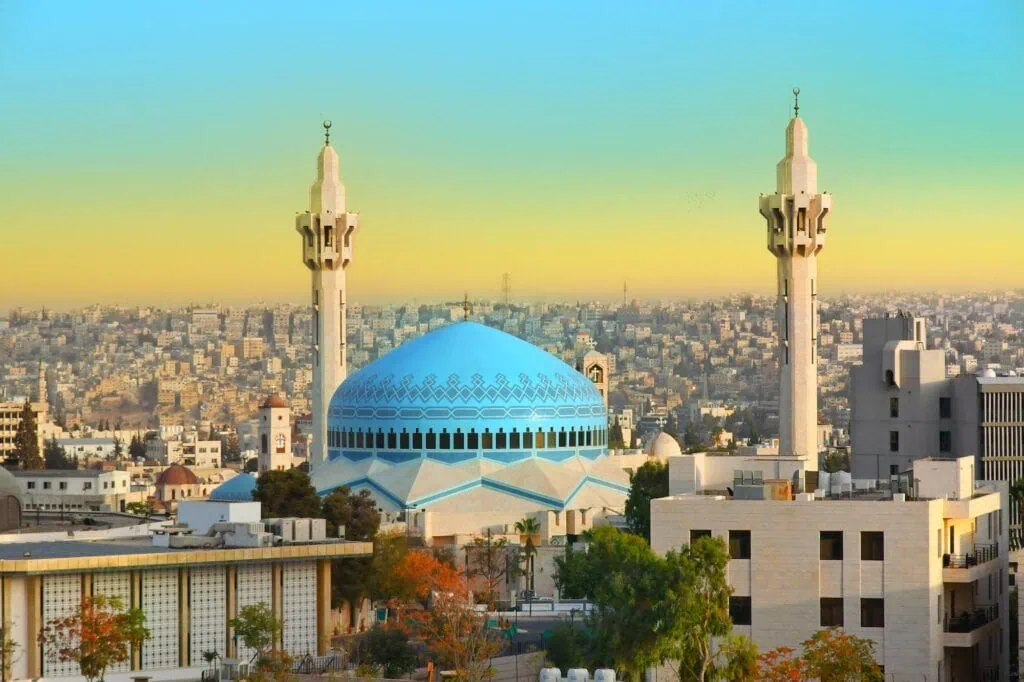
The mosque’s most recognizable feature is its magnificent blue mosaic dome, spanning an impressive 35 meters in diameter and visible from virtually anywhere in central Amman.
The Iconic Blue Dome
Crafted from thousands of individual ceramic tiles in varying shades of blue, the dome represents one of the finest examples of modern Islamic architectural artistry. The intricate mosaic work creates a mesmerizing pattern that shifts and shimmers as the light changes throughout the day.
Two elegant minarets flank the main structure, rising gracefully skyward to complete the mosque’s distinctive silhouette.
Interior Design and Prayer Hall
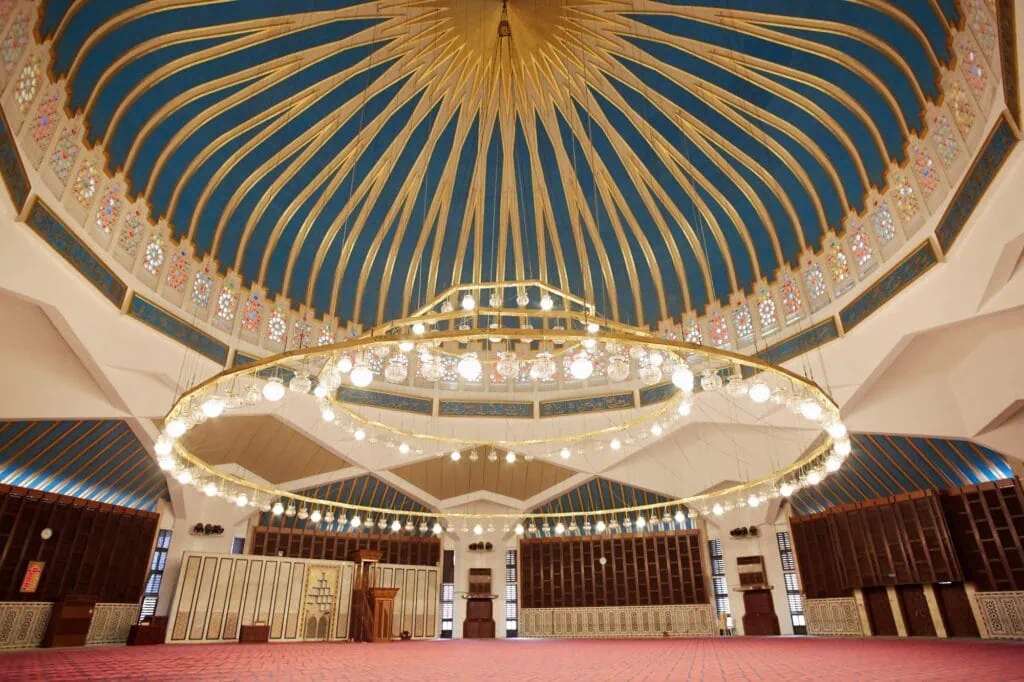
The octagonal prayer hall accommodates up to 10,000 worshippers across multiple levels, featuring soaring ceilings adorned with Quranic verses in beautiful Arabic calligraphy. Rich carpets in deep blues and golds cover the floors, while crystal chandeliers cast a warm glow throughout the vast interior space.
The mihrab, indicating the direction of Mecca, showcases exceptional stonework and geometric patterns typical of Islamic design traditions.
Traditional Islamic Architecture Elements
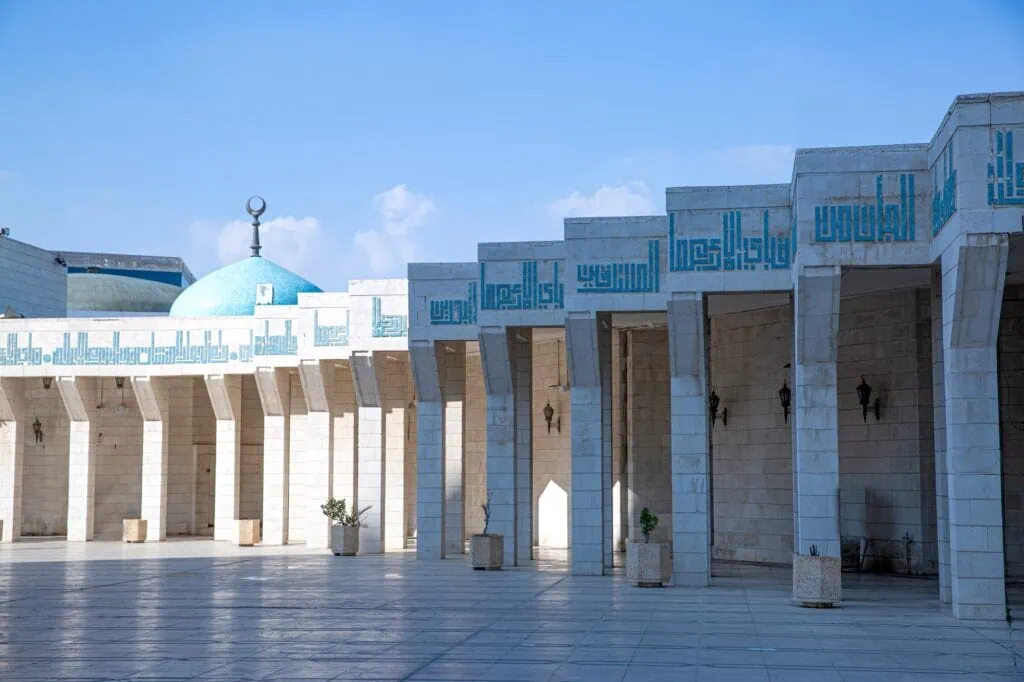
Master craftsmen incorporated traditional Islamic architectural principles throughout the structure, including geometric patterns, arabesque designs, and careful attention to proportional harmony. The building materials blend local Jordanian limestone with imported marble and decorative elements, creating a structure that feels both timeless and thoroughly contemporary.
Visitor Information and Practical Details
The mosque welcomes visitors daily except during Friday prayers and major Islamic holidays. Opening hours are 8:00 am (08:00) to 5:00 pm (17:00) Saturday through Thursday, with adjusted hours on Fridays when the building opens to tourists at 10:00 am (10:00).
Entry to King Abdullah Mosque is free for all visitors, though donations are appreciated to support ongoing maintenance and community programs. The small Islamic museum located within the complex charges a modest entrance fee of 2 Jordanian Dinars (approximately $3 USD).
Non-Muslim visitors can explore freely during designated hours, but must observe proper dress codes and behavioral guidelines out of respect for the active place of worship.
Dress Code Requirements
All visitors must dress modestly when entering the mosque grounds. Men should wear long pants and shirts that cover their arms, avoiding shorts, tank tops, or revealing clothing.
Women must cover their hair, arms, and legs completely – loose-fitting clothing that covers from wrist to ankle is required. The mosque provides free abayas and headscarves for female visitors who arrive without appropriate covering, though bringing your own modest attire is recommended for comfort.
Historical Significance and Cultural Context
King Hussein dedicated this magnificent mosque to honor his grandfather, King Abdullah I, who founded the Hashemite Kingdom of Jordan following World War I. The timing of construction during the 1980s reflected Jordan’s growing prosperity and the royal family’s commitment to preserving Islamic culture while embracing modernity.
The mosque stands in the Abdali neighborhood, a area that has since developed into one of Amman’s most important commercial and cultural districts. Its construction marked a significant moment in Jordan’s architectural evolution, demonstrating how traditional Islamic design principles could be adapted for contemporary religious buildings.
The project took seven years to complete, with skilled craftsmen from across the Middle East contributing their expertise to create this masterpiece.
King Abdullah I’s legacy as a unifying figure in Arab politics and his role in establishing Jordan’s independence gives the mosque deep cultural resonance beyond its architectural beauty. Visitors often remark on the sense of peaceful reverence that permeates the space, reflecting the monarch’s vision of Islamic faith as a source of unity and strength.
Memorial and Museum
The on-site museum displays artifacts related to King Abdullah I’s life and Jordan’s early history as an independent nation. Exhibits include personal belongings, historical photographs, and documents chronicling the formation of modern Jordan.
Audio guides are available in Arabic, English, and several other languages, providing detailed commentary on the historical significance of various items.
Planning Your Visit Experience
Most visitors spend between 45 minutes to 1.5 hours exploring the mosque and museum, depending on their level of interest in Islamic architecture and Jordanian history.
Best Times to Visit
Early morning visits between 9:00 am (09:00) and 11:00 am (11:00) offer the most peaceful experience, with fewer crowds and excellent lighting for photography. Late afternoon visits around 3:00 pm (15:00) provide beautiful natural lighting as the sun illuminates the blue dome from the west.
Avoid visiting during prayer times, particularly the midday Friday prayers when large congregations gather for weekly services.
Photography Guidelines
Photography is permitted in most areas of the mosque, including the prayer hall and courtyard, but flash photography is prohibited to maintain the contemplative atmosphere. Respectful photography of architectural details and interior spaces is welcomed, though visitors should avoid photographing worshippers or disrupting ongoing religious activities.
Guided Tours and Educational Programs
While independent exploration is encouraged, guided tours led by knowledgeable local guides provide valuable insights into Islamic architectural principles, religious practices, and Jordanian history. These tours typically last 30-45 minutes and can be arranged through the visitor center or various tourism agencies in Amman.
The guides speak multiple languages and are particularly skilled at explaining Islamic customs to international visitors.
Accessibility and Transportation
King Abdullah Mosque is easily accessible by taxi, private car, or public transportation from anywhere in Amman. The mosque is located in the Abdali area, approximately 4 kilometers (2.5 miles) from downtown Amman and 2 kilometers (1.2 miles) from the major hotel district.
Ample parking is available on the mosque grounds, with designated spaces for tour buses and private vehicles. The main entrance and prayer hall are wheelchair accessible, with ramps and wide doorways accommodating visitors with mobility challenges.
Restroom facilities include accessible options, and the staff is trained to assist visitors with special needs.
Public bus routes 7 and 12 stop within walking distance of the mosque, making it accessible for budget-conscious travelers. Taxi rides from central Amman typically cost 3-5 Jordanian Dinars, while ride-sharing services like Uber and Careem operate throughout the city. For visitors staying in the downtown area, the mosque makes an excellent starting point for exploring other nearby attractions.
Cultural Etiquette and Respectful Behavior
Understanding proper mosque etiquette enhances your visit while showing respect for the religious and cultural significance of the space. Remove shoes before entering carpeted prayer areas and carry them with you or place them in designated areas near the entrance.
Interaction Guidelines
Maintain a quiet, reverent demeanor throughout your visit, speaking in hushed tones and moving slowly through the prayer hall. If you encounter worshippers engaged in prayer, give them ample space and avoid walking directly in front of them.
Non-Muslims are welcome to observe Islamic prayer practices from a respectful distance, but should not attempt to participate or mimic religious rituals.
Children are welcome but should be supervised closely to ensure they understand the importance of maintaining quiet, respectful behavior. The vast interior spaces can be exciting for young visitors, but running or loud play is inappropriate in this sacred setting.
Combining Your Visit with Other Amman Attractions
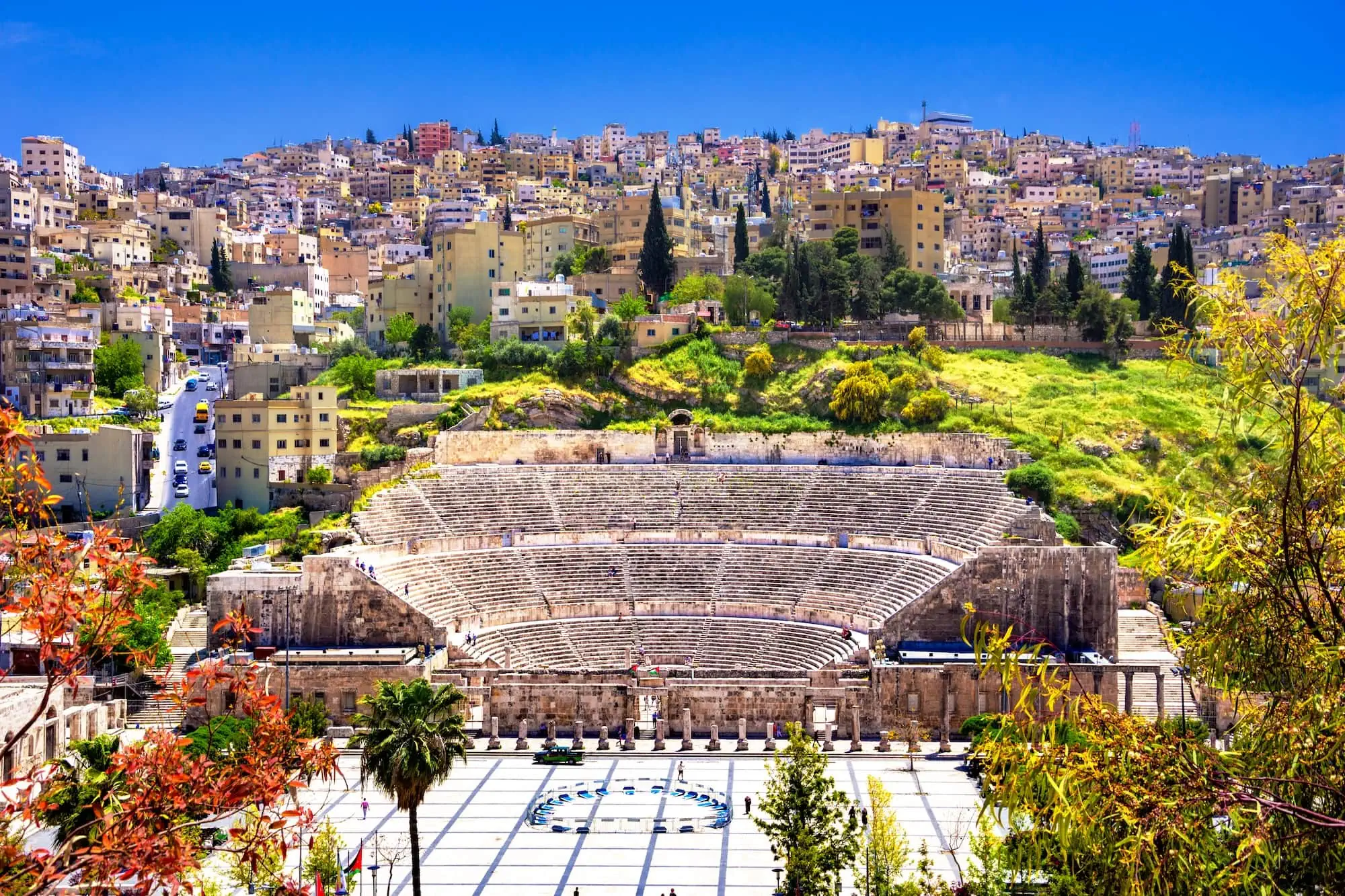
The mosque’s central location makes it an ideal starting point for exploring other key sites in Amman. The Roman Theatre, just 15 minutes away by car, offers a compelling contrast between ancient Roman and Islamic architectural traditions.
The Jordan Museum, located only 10 minutes from the mosque, houses some of the country’s most important archaeological treasures, including artifacts from Petra and other historic sites. Nearby, the bustling downtown souks provide an authentic glimpse into modern Jordanian daily life, with opportunities to shop for traditional crafts, spices, and textiles.
As part of a broader journey through Jordan tourist attractions, Amman offers a rich mix of history, culture, and contemporary experiences within a compact area. Rainbow Street—known for its cafés, restaurants, and cultural venues—is easily accessible and perfect for relaxing after your visit. The Royal Automobile Museum, showcasing King Hussein’s private collection, adds a unique perspective on modern Jordanian history.
At Egypt Tours Plus, we specialize in designing culturally immersive itineraries across the Middle East. Our expert guides highlight the connections between Jordan’s Islamic heritage and Egypt’s rich religious traditions, helping travelers experience the region in a deeper, more meaningful way.
Whether you’re planning a full Jordan itinerary or combining your trip with Egypt’s iconic Islamic landmarks, our experience ensures a seamless and enriching journey.
Frequently Asked Questions
The mosque is open Saturday through Thursday from 8:00 am to 5:00 pm, and Fridays from 10:00 am to 5:00 pm.
Entry to the mosque is free, though the small Islamic museum charges 2 Jordanian Dinars.
Yes, King Abdullah Mosque is the only mosque in Amman that welcomes non-Muslim visitors to explore the interior spaces.
Women must wear modest clothing covering arms and legs completely, plus a headscarf. Free abayas are provided if needed.
Most visitors spend 45 minutes to 1.5 hours exploring the mosque and museum, depending on their level of interest.
Yes, photography is permitted in most areas, but flash photography is prohibited to maintain the peaceful atmosphere.
Ample free parking is available on the mosque grounds, with spaces for both cars and tour buses.
Yes, guided tours in multiple languages can be arranged through the visitor center or local tourism agencies.
Early morning (9:00-11:00 am) or late afternoon (around 3:00 pm) offer the best lighting and fewer crowds.
Yes, the main entrance and prayer hall feature ramps and wide doorways for wheelchair accessibility.
Children are welcome but must be supervised to ensure quiet, respectful behavior throughout the visit.
The mosque is accessible by taxi (3-5 JD), public buses (routes 7 and 12), or ride-sharing services like Uber.
Design Your Custom Tour
Explore Egypt and Jordan your way by selecting only the attractions you want to visit