

Mosque of Muhammad Ali – The Alabaster Mosque
The Muhammad Ali Mosque, locally known as the Alabaster Mosque, represents one of Egypt’s most significant 19th-century monuments.
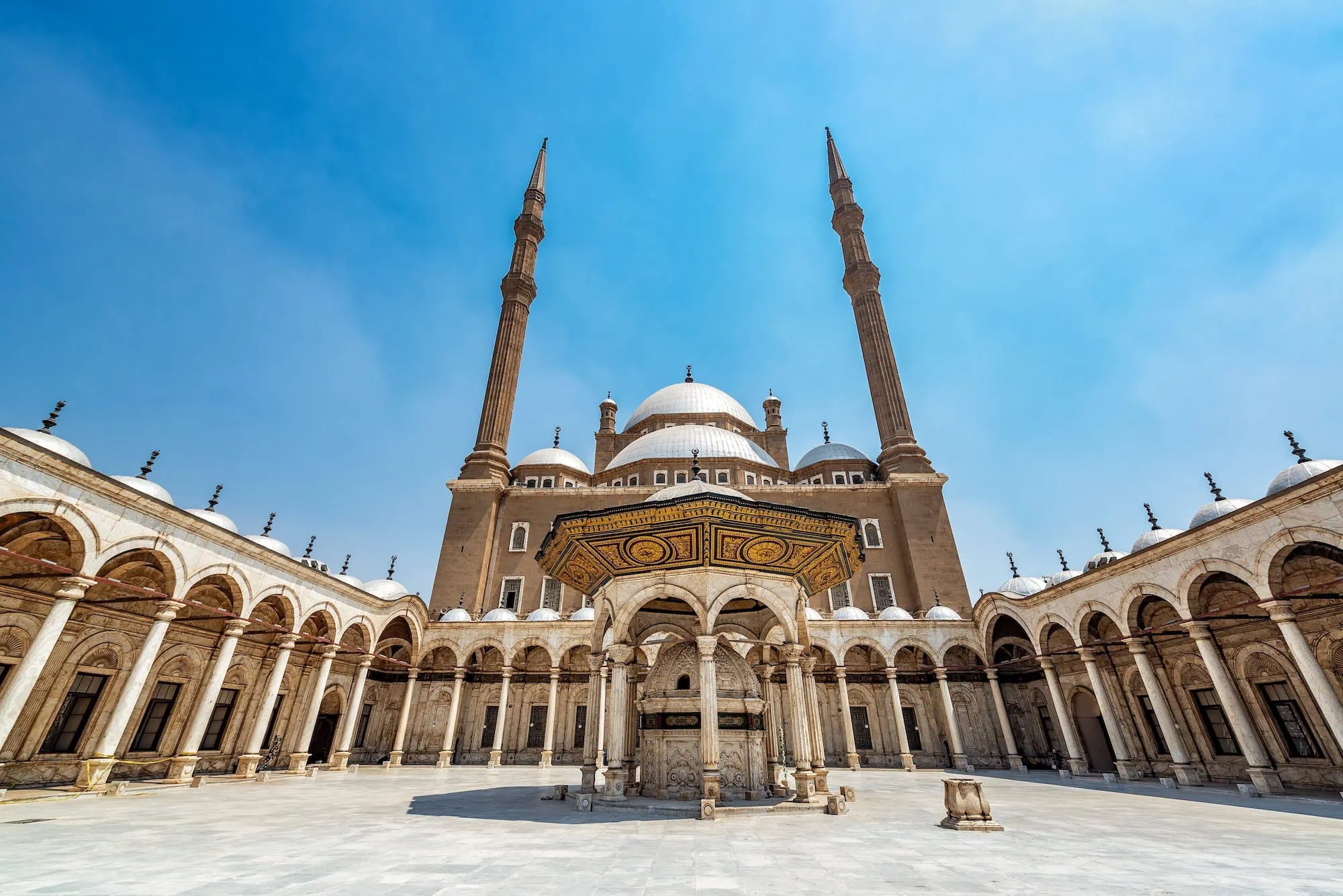
Built between 1832 and 1857, this stunning Ottoman-influenced structure was commissioned by Muhammad Ali Pasha as a bold statement of modernization and independence. The mosque’s distinctive alabaster covering and towering minarets create an unmistakable silhouette against Cairo’s ancient landscape.
We’ve guided countless travelers through this magnificent site, watching their faces light up as they discover its rich history and breathtaking architecture. Standing majestically atop the Saladin Citadel, this architectural wonder dominates Cairo’s skyline.
Table of Contents
Architectural Marvel of Ottoman Design
The mosque exemplifies a remarkable fusion of Turkish architectural traditions with Egyptian craftsmanship. Muhammad Ali Pasha deliberately chose the Sultan Ahmed Mosque in Istanbul as his design inspiration, creating a visual connection to the Ottoman Empire while asserting his quasi-independent rule over Egypt.
Central Dome and Supporting Structure
The magnificent central dome rises 52 meters (171 feet) above the prayer hall, supported by four impressive semi-domes that create a sense of ascending grandeur. This design follows the classical Ottoman model, where the central space opens dramatically upward. The dome’s interior features intricate geometric patterns and Arabic calligraphy, with natural light filtering through strategically placed windows.
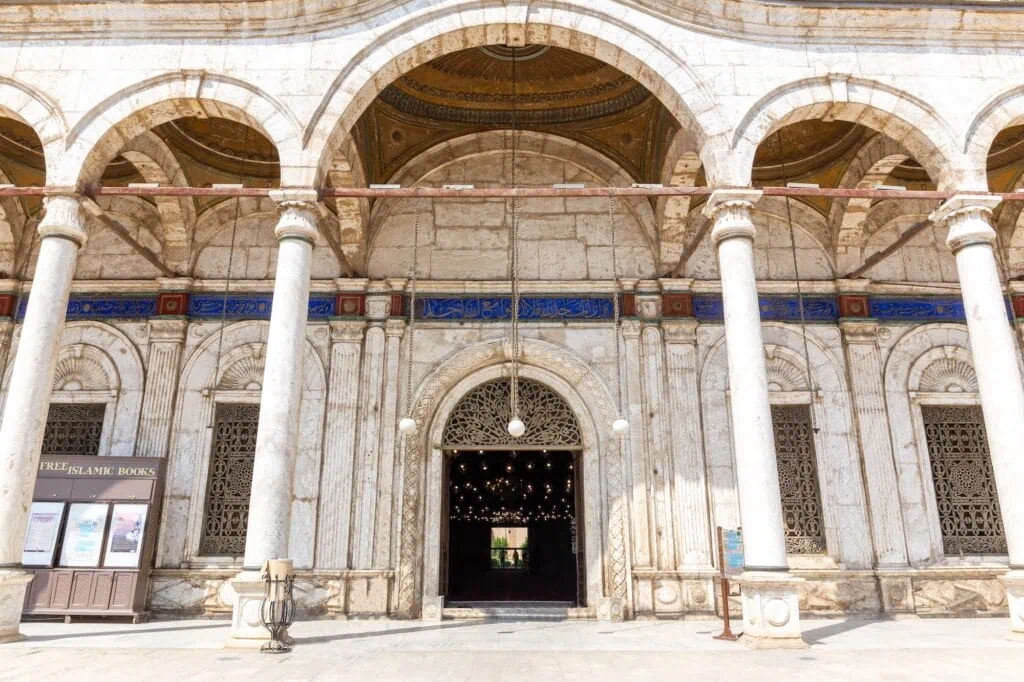
The supporting pillars, crafted from imported marble, bear the massive weight while maintaining visual elegance. The architectural engineering demonstrates Ottoman mastery of dome construction techniques adapted to Egyptian materials and climate conditions.
Iconic Twin Minarets
Rising 84 meters (276 feet) into the Cairo sky, the mosque’s two cylindrical minarets rank among Egypt’s tallest. These Ottoman-style towers feature three balconies each, accessed by internal spiral staircases. The minarets’ pencil-thin silhouette differs markedly from the square-based minarets typical of Mamluk architecture.
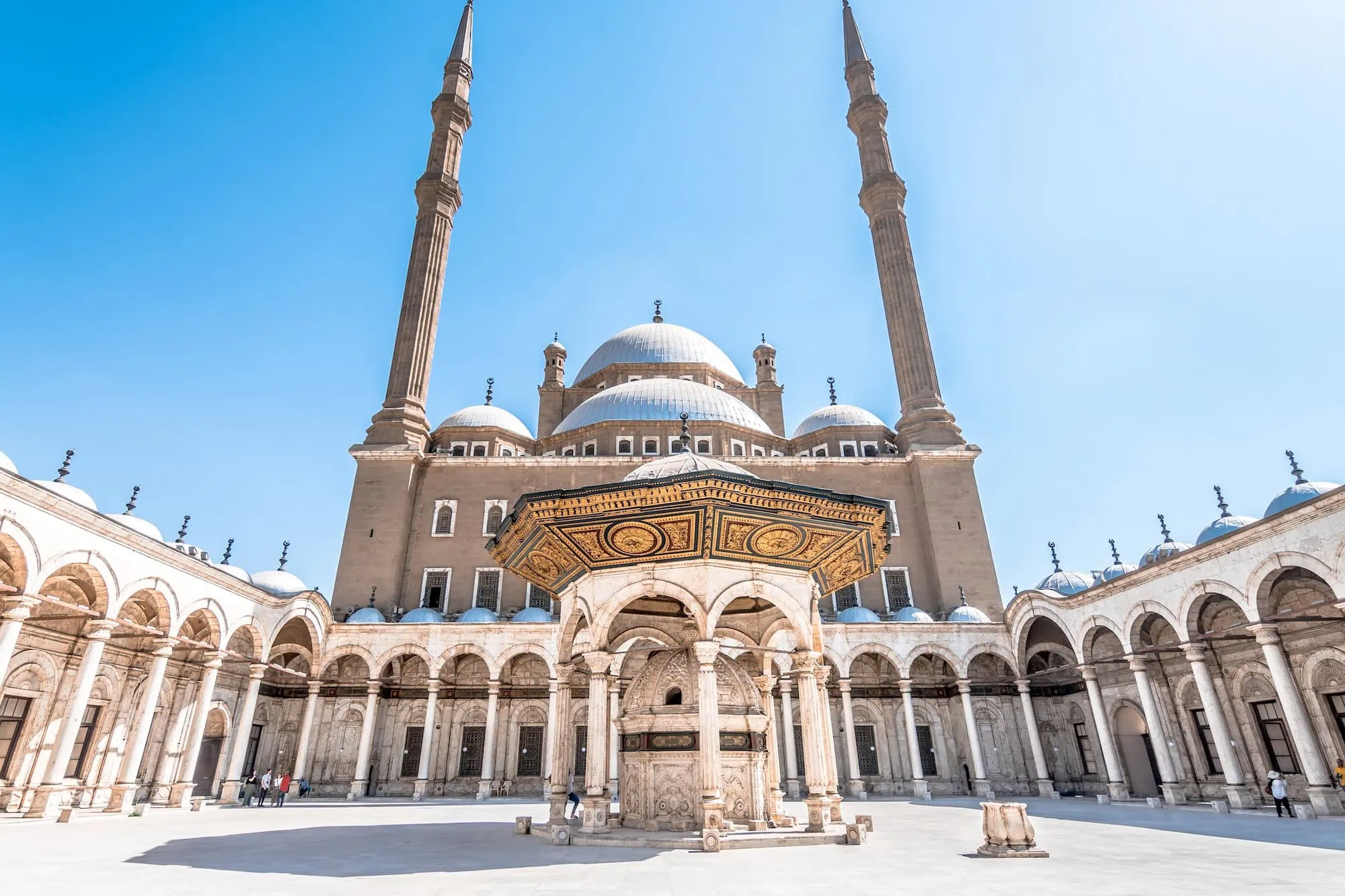
Their height serves both practical and symbolic purposes – the call to prayer reaches far across the city, while their imposing presence announces the mosque’s significance. The careful proportions create visual harmony with the central dome structure.
Alabaster Cladding and Materials
The mosque earned its popular name from the extensive use of alabaster throughout its interior and exterior surfaces. This translucent stone, quarried from Upper Egypt, creates a warm, luminous quality that changes throughout the day as sunlight shifts. The main structure combines limestone foundations with alabaster cladding, while marble accents highlight doorways and mihrab areas.
Turkish craftsmen supervised the alabaster work, ensuring authentic Ottoman finishing techniques. The material choice reflects both practical considerations and aesthetic ambitions, creating surfaces that glow with inner light during different times of day.
Historical Context and Political Symbolism
Muhammad Ali Pasha’s decision to build this mosque carried deep political implications that extended far beyond religious devotion. The mosque’s construction began in 1832, during a period when Muhammad Ali was consolidating power and modernizing Egypt along European lines. By choosing to build on the Citadel site, he deliberately razed existing Mamluk buildings, symbolically erasing the previous dynasty’s legacy.
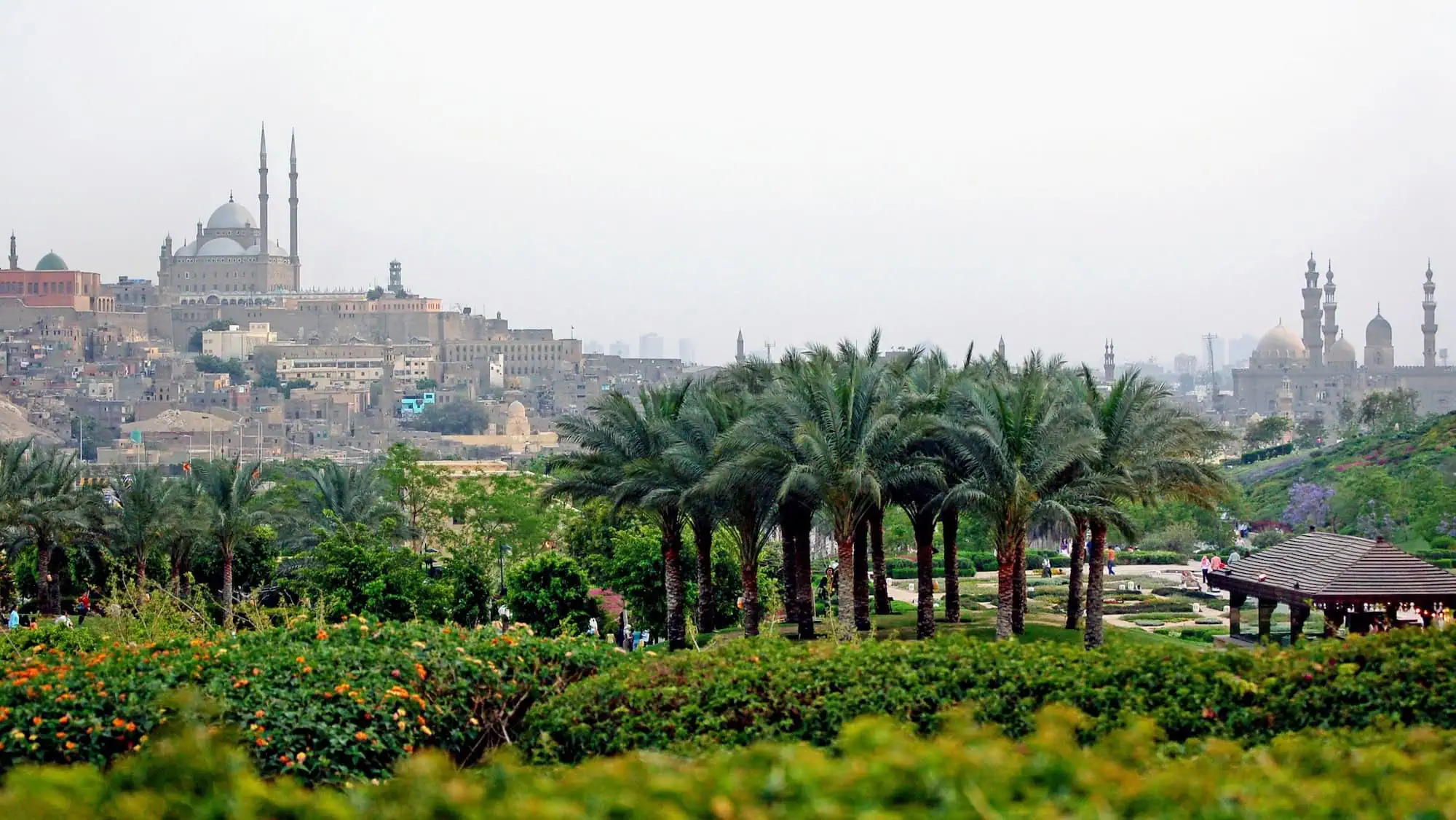
The mosque served as a visual rebuke to traditional Islamic architecture in Egypt, instead embracing Ottoman aesthetics that aligned with Muhammad Ali’s political affiliations. This architectural choice reflected broader modernization efforts including European military advisors, new educational institutions, and modern industries throughout Egypt.
European Diplomatic Connections
The mosque contains fascinating evidence of 19th-century diplomatic exchanges. A French-made copper clock tower stands in the courtyard, gifted by King Louis Philippe of France in 1845. This gift was part of a cultural exchange that saw Egypt present France with an obelisk now standing in Paris’s Place de la Concorde.
These exchanges highlight Egypt’s growing international connections during Muhammad Ali’s reign. The clock tower represents the broader diplomatic relationships that shaped modern Egypt’s development and integration with European powers.
Interior Splendor and Decorative Elements
Beyond its imposing exterior, the mosque’s interior showcases exceptional Ottoman decorative arts. The vast prayer hall accommodates thousands of worshippers beneath soaring vaulted ceilings. The mihrab, indicating the direction of Mecca, features intricate marble inlay work and gold leaf detailing. The minbar (pulpit) displays masterful woodcarving techniques brought from Turkish workshops.
Natural light enters through carefully positioned windows, creating dramatic lighting effects throughout the day. The prayer hall’s acoustics were designed to carry the imam’s voice clearly to all corners without amplification, demonstrating sophisticated understanding of architectural sound engineering.
Ornate Chandeliers and Lighting
Massive crystal chandeliers suspended from the central dome create one of the mosque’s most memorable visual elements. These Austrian-made fixtures, installed during the 1930s restoration, replace the original Ottoman oil lamps. The chandeliers’ placement follows Islamic geometric principles while providing practical illumination.
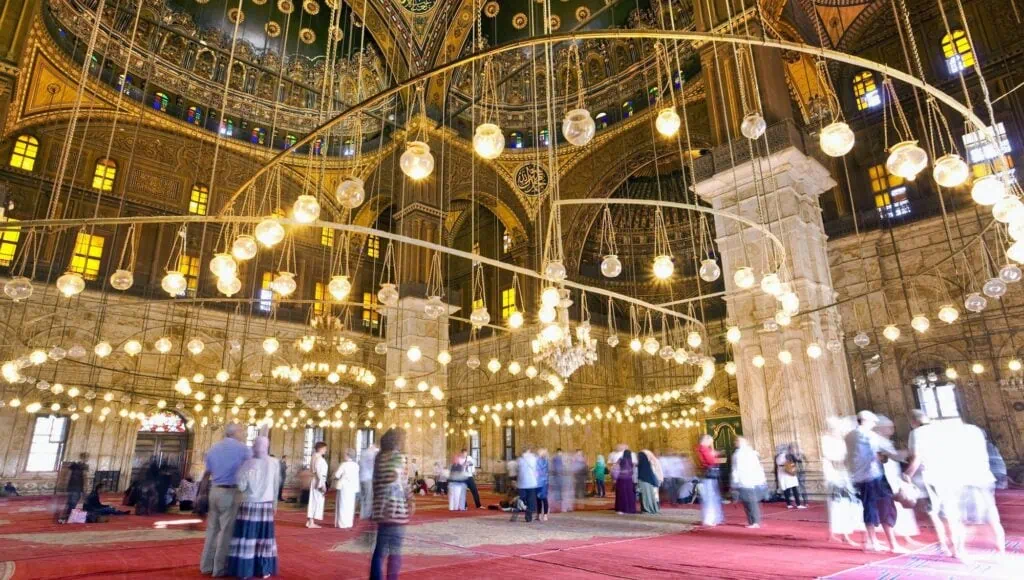
Their crystal prisms cast rainbow patterns across the alabaster surfaces during afternoon prayers. The lighting design creates an ethereal atmosphere that enhances the spiritual experience while showcasing the architectural details.
Tomb of Muhammad Ali
The mosque’s southeast corner houses Muhammad Ali Pasha’s tomb, constructed from rare Carrara marble. The tomb chamber features a distinctive octagonal design topped by a smaller dome. Intricate Arabic calligraphy covers the marble surfaces, recording verses from the Quran and commemorating Muhammad Ali’s achievements.
The tomb’s placement within the mosque follows Ottoman royal burial traditions, honoring the ruler while maintaining the space’s primary religious function. This integration reflects the mosque’s dual role as both religious center and political monument.
Major Restoration and Preservation
Between 1931 and 1939, King Farouk I commissioned extensive restoration work to address structural concerns. The restoration involved both Egyptian and European engineers who discovered significant foundation problems. The original builders had underestimated the Citadel’s limestone bedrock challenges, leading to settling and cracking throughout the structure.
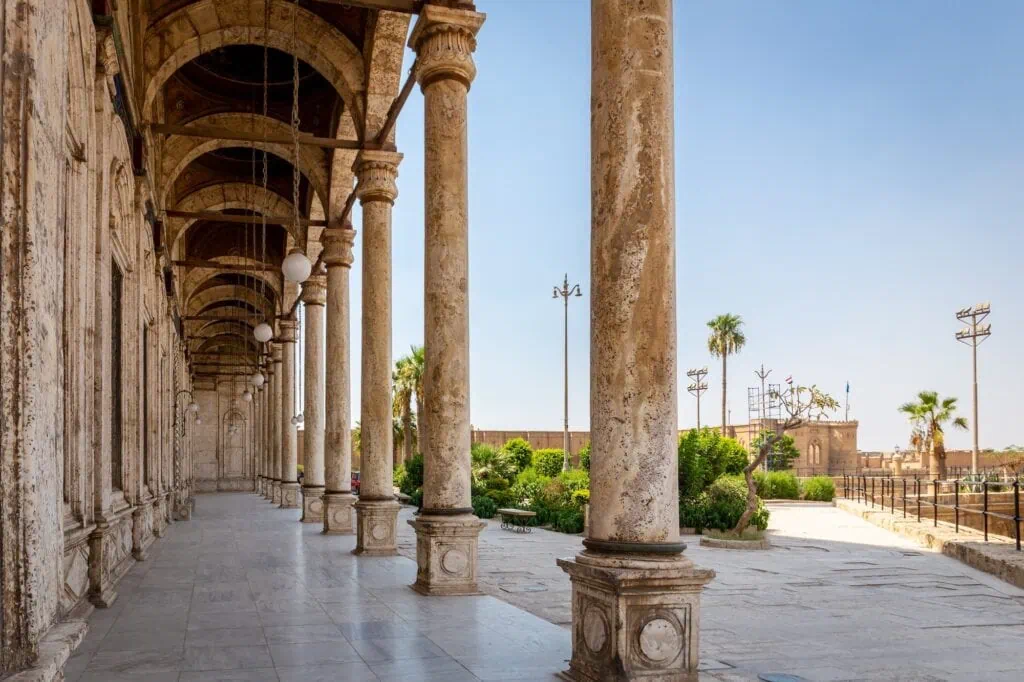
The restoration team reinforced the foundations using modern concrete techniques while preserving the mosque’s historical integrity. During this period, workers replaced damaged alabaster sections and restored the interior decorations. The project also installed modern electrical systems and improved drainage around the building’s perimeter, ensuring the mosque’s survival through the 20th century.
Visiting Experience and Practical Information
We recommend allowing 60-90 minutes for a thorough mosque visit, though photography enthusiasts often spend considerably longer. The mosque operates daily from 9:00 am to 5:00 pm (09:00 to 17:00), with entry included in the general Citadel admission ticket. Visitors must remove shoes before entering the prayer hall, and plastic shoe covers are provided.
Dress code requirements include covering shoulders and legs, with head coverings required for women. The mosque remains active for daily prayers, so certain areas may be temporarily restricted during prayer times. The site offers exceptional photography opportunities, particularly from the courtyard where the dome and minarets frame perfectly against the sky.
Interior photography is permitted, though flash photography is discouraged to preserve the decorative elements. The mosque’s elevated Citadel location provides panoramic views across Islamic Cairo, making it an ideal spot for cityscape photography.
Accessibility and Facilities
The mosque grounds accommodate wheelchair users through ramp access from the Citadel’s main entrance. However, the prayer hall’s raised platform requires assistance for mobility-impaired visitors. Clean restroom facilities operate near the mosque entrance, and a small gift shop offers books about Islamic architecture and Egyptian history.
Architectural Influence and Legacy
The Muhammad Ali Mosque influenced mosque design throughout modern Egypt and the broader Islamic world. Its success inspired other 19th-century rulers to commission Ottoman-style religious buildings, spreading this architectural approach across North Africa. The mosque demonstrates how traditional Islamic design principles can adapt to different cultural contexts while maintaining spiritual authenticity.
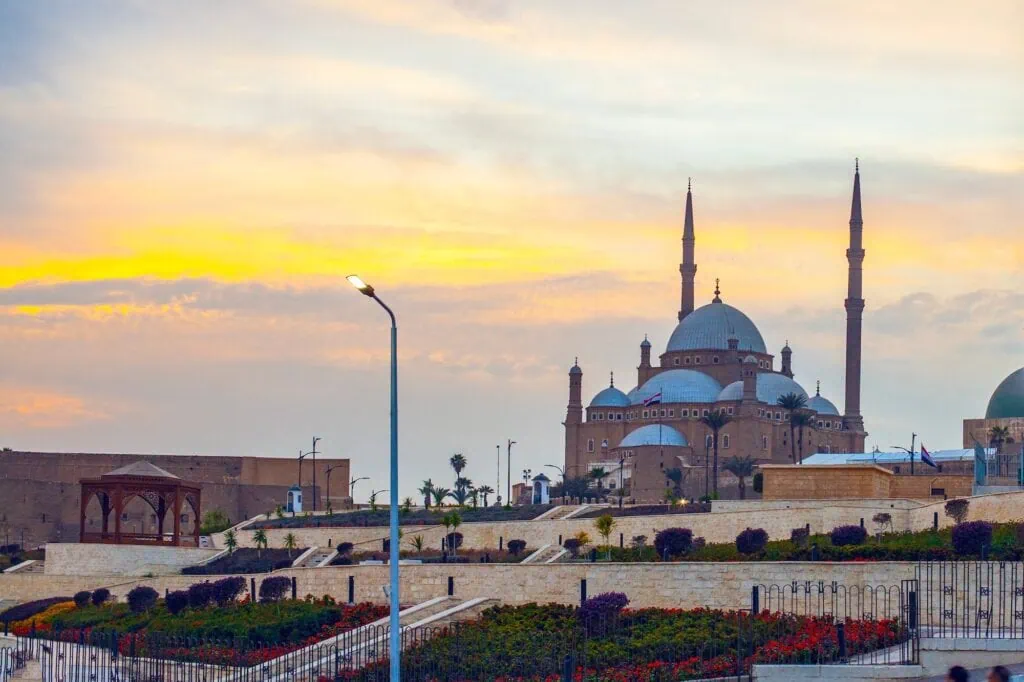
Modern Egyptian architects continue studying its construction techniques, particularly the integration of imported materials with local building traditions. The building’s preservation success has established it as a model for maintaining historic Islamic monuments, with restoration techniques developed during the 1930s project influencing preservation approaches throughout the Middle East and North Africa.
Comparison with Contemporary Mosques
While smaller than Istanbul’s Sultan Ahmed Mosque, the Muhammad Ali Mosque achieves remarkable visual impact through its strategic Citadel positioning. The building’s proportions create a sense of monumentality that rivals much larger structures. Its architectural success lies in adapting Ottoman design principles to Egyptian materials and craftmanship traditions.
This creates something distinctly local yet internationally sophisticated, representing a unique moment in Islamic architectural history where political ambition, religious devotion, and artistic excellence converged in one magnificent structure.
Planning Your Expert-Guided Visit
Our decades of experience guiding travelers through Egypt’s Islamic monuments ensures you’ll discover details that independent visitors often miss. We arrange private tours that combine the mosque visit with other Citadel highlights, creating comprehensive cultural experiences tailored to your interests. Our expert guides explain the historical context while pointing out architectural features that showcase the building’s remarkable craftsmanship.
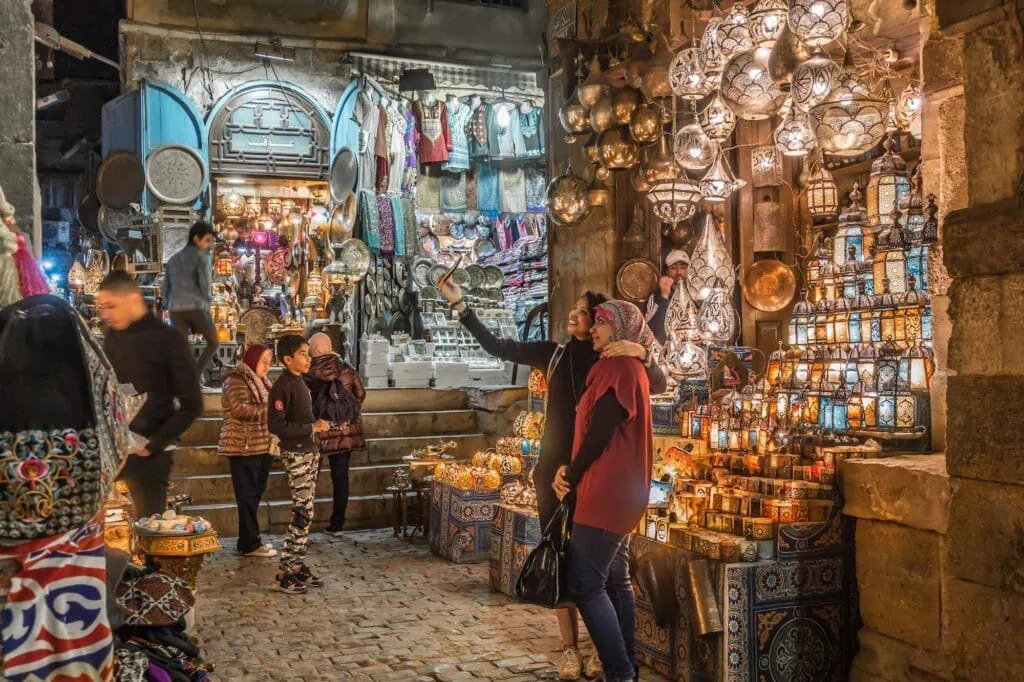
The mosque visit integrates perfectly with broader Islamic Cairo exploration, including nearby attractions like the Sultan Hassan Mosque and Khan el-Khalili bazaar. We coordinate timing to avoid crowds while ensuring you experience the mosque during optimal lighting conditions for photography. Our modern, air-conditioned vehicles provide comfortable transportation throughout Cairo, with personal drivers who understand the city’s complex traffic patterns.
Take In Cairo’s Iconic Skyline From Above
The Mosque of Muhammad Ali rises majestically above Cairo, offering sweeping views and a striking blend of Ottoman elegance and Egyptian history. With Egypt Tours Plus, we seamlessly include this landmark in a private journey that connects the Citadel, Old Cairo, and the city’s most iconic cultural highlights.
You choose your travel dates, your pace, and the experiences that shape your route. From guided city exploration and historic landmarks to curated experiences and refined comfort throughout, we tailor every detail around your preferences—ensuring a smooth, enriching, and deeply personal travel experience.
Frequently Asked Questions
Most visitors should allow 60 to 90 minutes to properly explore the Muhammad Ali Mosque, including the central prayer hall, marble courtyard, and panoramic Citadel viewpoints overlooking Cairo. Built between 1830 and 1848 inside the Cairo Citadel, the mosque contains large domes, Ottoman-style architecture, and detailed alabaster surfaces that reward slower exploration and photography. Travelers combining the mosque with other Citadel museums typically spend at least half a day at the complex. Morning visits usually offer cooler temperatures and lighter crowds.
Citadel admission tickets generally include access to the Muhammad Ali Mosque, the Citadel grounds, and several museums and historic structures within the fortified complex. Visitors can typically enter sites such as the National Military Museum, the Police Museum, and panoramic terraces overlooking Islamic Cairo. Originally expanded by Salah ad-Din (Saladin) in the 12th century, the Citadel served as Egypt’s seat of government for nearly 700 years. Combined tickets make it practical to explore multiple attractions during one visit.
Visitors entering the Muhammad Ali Mosque must wear modest clothing that covers shoulders and knees, and women are expected to cover their hair inside the prayer hall. Shoes must also be removed before entering carpeted worship areas in accordance with Islamic customs observed in active mosques throughout Egypt. Lightweight scarves are usually sufficient for head covering, and modest clothing is especially important during Friday prayers and religious holidays. Comfortable slip-on shoes make repeated entry and exit easier during tours.
Late afternoon between approximately 3:00 pm and 4:30 pm is widely considered the best time to photograph the Muhammad Ali Mosque. During these hours, lower sunlight filters through stained-glass windows and reflects across the mosque’s alabaster walls, creating warmer interior tones and softer courtyard shadows. The elevated Citadel position also provides sweeping views across Cairo toward landmarks such as the Sultan Hassan Mosque and distant Giza Plateau. Early morning offers fewer visitors, but afternoon lighting is usually more dramatic for photography.
Visitors can usually enter the Muhammad Ali Mosque during prayer times, although access to certain sections may be temporarily restricted while worship services are taking place. As an active Sunni mosque inside Cairo’s Citadel, the site observes the five daily Islamic prayers practiced throughout Egypt. Non-Muslim visitors are generally asked to remain quiet and avoid crossing directly in front of worshippers during active prayer sessions. Midday Friday visits often experience the largest crowds because of congregational prayers.
The Muhammad Ali Mosque was heavily inspired by Istanbul’s Sultan Ahmed Mosque, commonly called the Blue Mosque, but differs in scale, setting, and visual impact. Built in Ottoman style during the 19th century, Cairo’s mosque uses a central dome flanked by semi-domes and slender minarets similar to those in Istanbul. However, its elevated Citadel location roughly 200 meters above Cairo creates panoramic city views that are unique in Egypt. The extensive alabaster interior also gives the mosque a distinctly Egyptian character.
Parts of the Muhammad Ali Mosque and Citadel complex are wheelchair accessible, particularly the large courtyard areas and many exterior pathways. However, some raised sections of the prayer hall and older stone surfaces may require assistance because portions of the 19th-century structure were not originally designed for modern accessibility standards. Sloped ramps exist in several public areas, but uneven paving stones can still present challenges. Visitors with mobility concerns should allow additional time for navigating the Citadel grounds comfortably.
The alabaster used inside the Muhammad Ali Mosque creates a distinctive translucent glow that changes noticeably throughout the day as sunlight enters the structure. Much of the stone was sourced from Upper Egypt and applied extensively across interior walls and columns during construction in the 19th century under Muhammad Ali Pasha. Unlike ordinary limestone, alabaster partially diffuses natural light, producing softer reflections and warmer tones inside the prayer hall. Late afternoon sunlight often creates the mosque’s most visually striking atmosphere.
Guided tours of the Muhammad Ali Mosque are commonly available in English, French, German, Spanish, Arabic, and several other major languages used by international travelers visiting Cairo. Licensed Egyptologist and Islamic history guides typically explain Ottoman architecture, Citadel history, and the political role of Muhammad Ali Pasha in 19th-century Egypt. Egypt Tours Plus can also combine Citadel visits with Islamic Cairo walking tours for broader historical context. Guided visits are especially useful because many symbolic architectural details are easy to overlook independently.
Most travelers should budget 2 to 3 hours to explore the Cairo Citadel complex, including the Muhammad Ali Mosque, military museums, defensive walls, and panoramic viewpoints. Originally fortified by Salah ad-Din in the 12th century, the Citadel covers a large elevated area overlooking historic Cairo and contains attractions from multiple historical periods. Visitors interested in architecture, military history, or photography may spend even longer inside the complex. Early arrivals generally experience cooler weather and shorter security lines.
The French clock tower inside the Citadel was a diplomatic gift from King Louis Philippe of France to Muhammad Ali Pasha in 1845. The exchange formed part of broader 19th-century cultural relations between Egypt and France, including Egypt’s earlier gift of the Luxor Obelisk that now stands at Place de la Concorde in Paris. Although the clock mechanism reportedly functioned poorly for much of its history, the tower remains an important symbol of Egypt’s growing international connections during Muhammad Ali’s modernization era.
The Muhammad Ali Mosque combines exceptionally well with other Islamic Cairo landmarks, including Sultan Hassan Mosque, Al-Rifa’i Mosque, Ibn Tulun Mosque, and Khan el-Khalili bazaar. Most of these sites are located within a relatively compact section of historic Cairo, allowing travelers to experience centuries of Islamic architecture, religious history, and urban culture within a single day. The Citadel itself sits only a short drive from many Mamluk and Ottoman monuments. Starting early helps avoid heavy afternoon traffic between sites.
Don’t miss Egypt’s greatest treasures
Highlights of Egypt

Design Your Custom Tour
Explore Egypt your way by selecting only the attractions you want to visit