

Karak Castle – One Of The Largest Crusader Castles Ever Built
Standing guard over the ancient King’s Highway for nearly nine centuries, Karak Castle remains one of Jordan’s most impressive medieval landmarks.
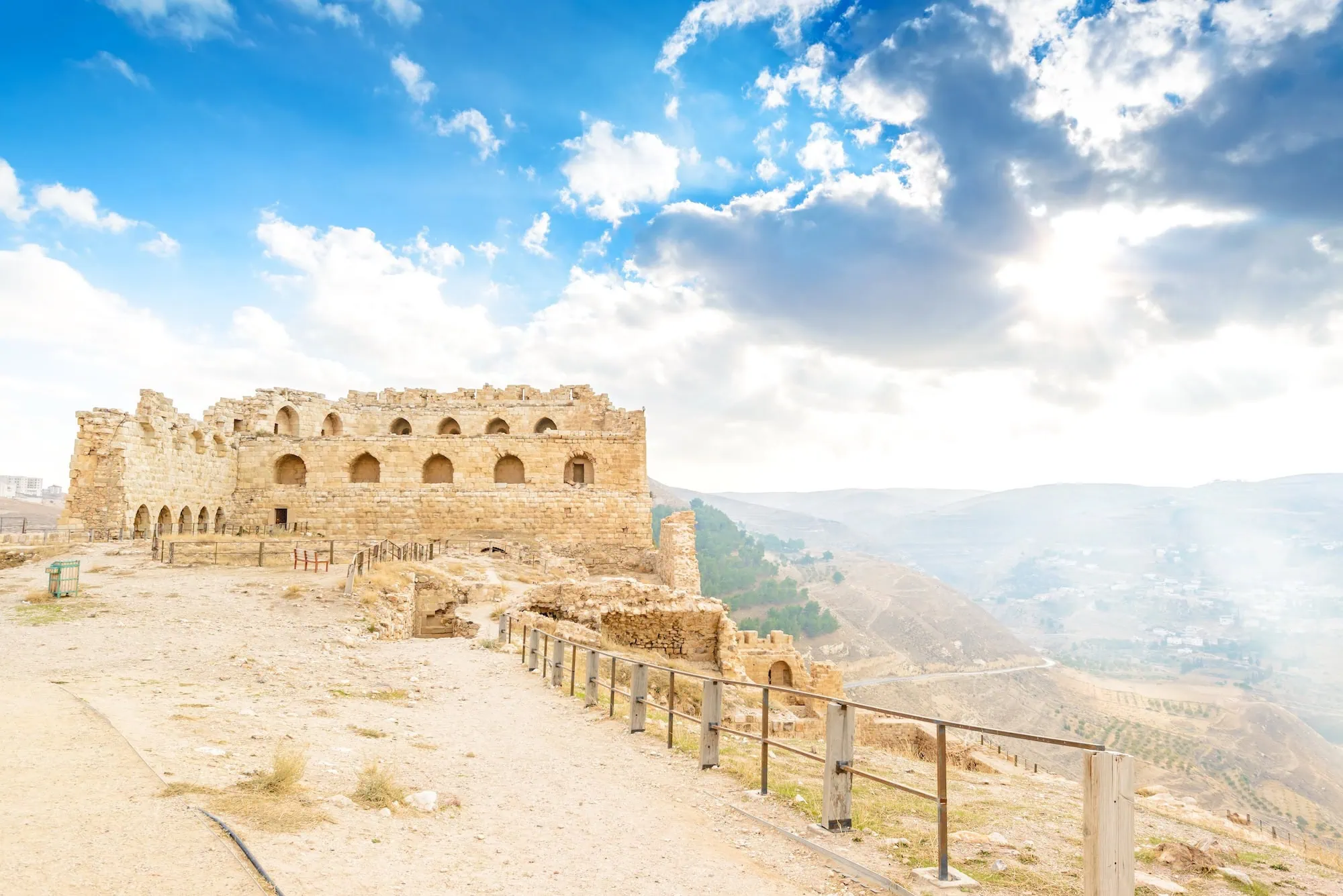
Constructed in the 1140s by Crusader rulers who recognized the strategic importance of controlling trade routes between Damascus and Mecca, this vast fortress played a central role in some of the medieval era’s most dramatic conflicts. From the ruthless rule of Raynald of Châtillon to the relentless sieges led by Saladin, Karak’s massive stone walls have witnessed battles that helped shape the region’s history.
Today, visitors can walk through the same underground corridors where Crusader knights once prepared for battle and climb towering ramparts that offer sweeping views across the surrounding valleys—bringing centuries of history vividly to life.
For a deeper journey that connects Karak Castle with Petra, Wadi Rum, and Egypt’s iconic sites, discover our Egypt and Jordan combined tours.
Table of Contents
Crusader Origins and Strategic Importance
Pagan the Butler, lord of the region under the Kingdom of Jerusalem, initiated construction of Karak Castle around 1142. The site’s elevation provided unparalleled control over the King’s Highway, the vital trade artery connecting Egypt with Syria and beyond.
Architectural Mastery of Medieval Defense
The original Crusader design showcased advanced military engineering for its time. Builders used massive stone blocks quarried from local limestone, creating walls up to 3 meters thick in some sections. The spur castle design maximized defensive capabilities while providing internal space for a substantial garrison.
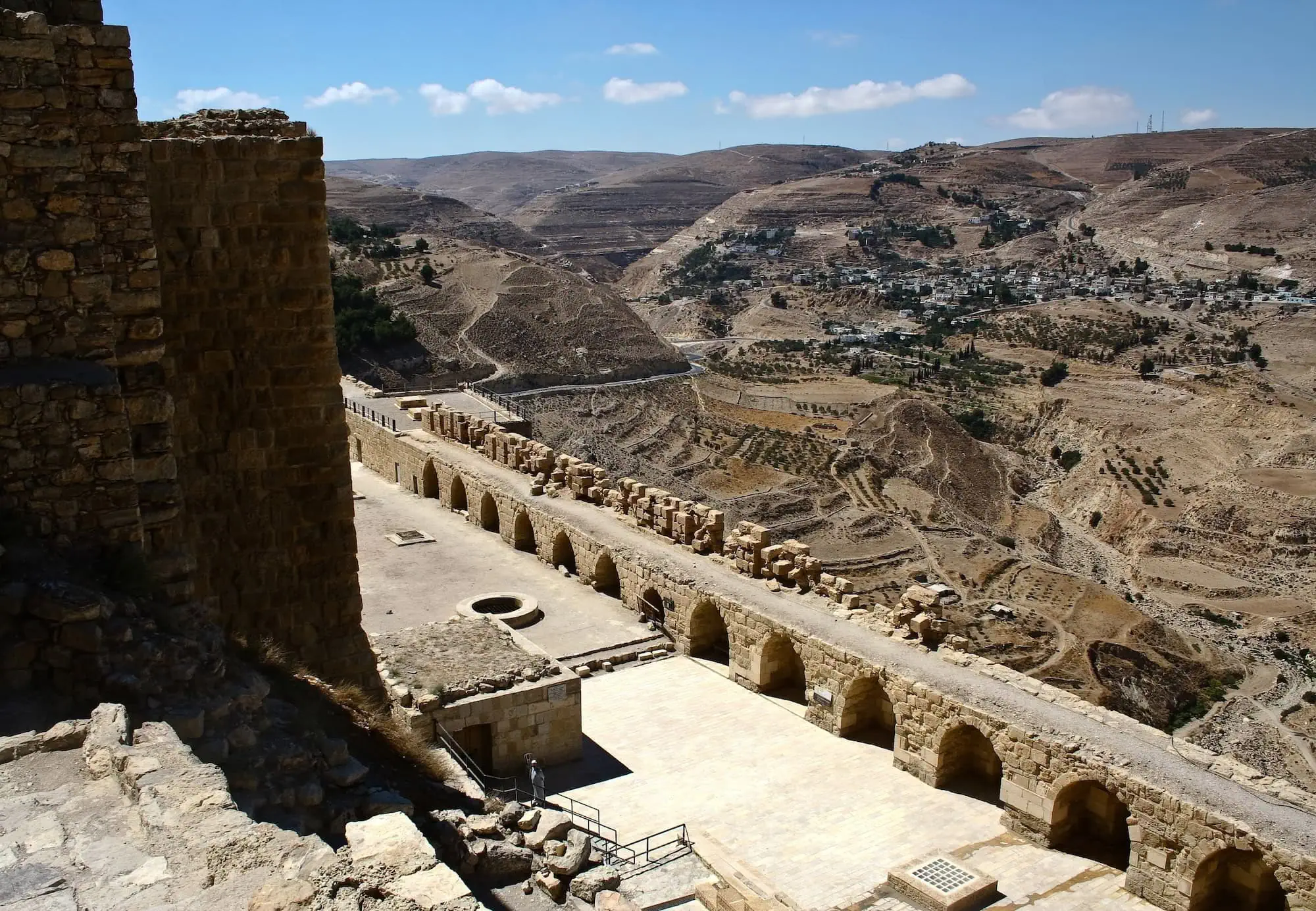
Seven levels extended deep into the bedrock, connected by narrow staircases and corridors designed to confuse attackers. Storage chambers carved from solid rock could sustain a siege lasting months, while the upper courtyards featured facilities for horses, armories, and living quarters.
Controlling the King’s Highway
From Karak’s elevated position 900 meters above sea level, defenders could monitor caravans traveling between Damascus and Egypt for kilometers in both directions. This strategic advantage generated enormous wealth through taxation and tribute, making the castle one of the richest fiefdoms in the Crusader states.
The fortress commanded views eastward to the desert approaches and westward toward the Dead Sea, ensuring no enemy force could approach undetected. Control of this position meant controlling the economic lifeline of the entire region.
The Raynald Years: Terror and Defiance
Raynald of Châtillon’s acquisition of Karak through marriage in 1176 marked the beginning of the castle’s most infamous period. His aggressive policies and brutal treatment of Muslim merchants traveling the King’s Highway escalated tensions throughout the region.
Raynald violated truces with particular cruelty. He captured merchant caravans, enslaved pilgrims traveling to Mecca, and launched devastating raids into Arabia that reached unprecedented distances. His naval expedition into the Red Sea threatened the holy cities of Mecca and Medina, an act that Muslim leaders considered unforgivable sacrilege.
The lord of Karak’s defiance of diplomatic agreements ultimately provided Saladin with justification for renewed warfare against the Crusader states. When Baldwin IV of Jerusalem attempted to restrain Raynald’s aggression, the distance from Jerusalem to Karak made effective control nearly impossible.
Contemporary Arab chroniclers described Raynald as the most hated Crusader leader, whose name became synonymous with treachery and violence. His actions from Karak Castle directly contributed to the chain of events leading to the Battle of Hattin in 1187.
Saladin’s Sieges and Ayyubid Expansion
The 1183 Siege
Saladin’s first major assault on Karak Castle occurred during the wedding celebrations of Raynald’s stepson. The Ayyubid army surrounded the fortress while festivities continued within the walls. According to chroniclers, wedding gifts included food sent to Saladin’s camp in a gesture of medieval courtesy that highlighted the complex codes of conduct even during warfare.
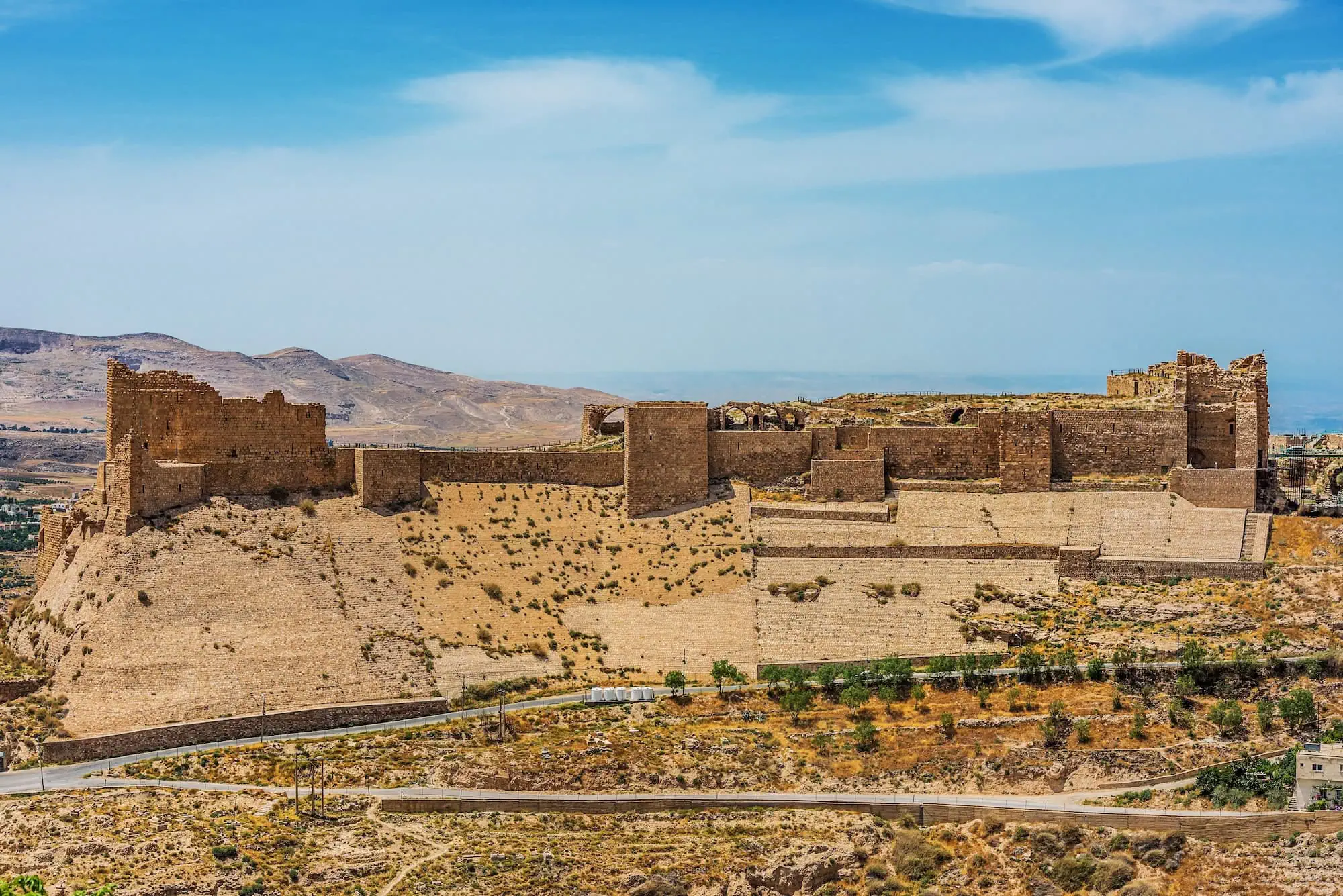
Despite months of siege, the castle’s defensive design and substantial food stores enabled the garrison to withstand the assault. Saladin’s engineers attempted to undermine the walls, but the fortress’s foundation in solid bedrock made such tactics ineffective.
Final Conquest in 1188
Following victory at Hattin and Raynald’s execution, Saladin returned to Karak with renewed determination. The castle’s isolated position, previously its greatest strength, became a liability when no relief force could break through Ayyubid-controlled territory.
The surrender negotiations reflected the castle’s continued strategic value. Rather than destroying the fortress, Saladin immediately began incorporating Karak into his expanding network of regional defenses. Ayyubid governors who succeeded Crusader lords maintained the castle’s military functions while adapting its administration to Islamic governmental structures.
Ayyubid and Mamluk Transformations
Under Ayyubid rule, Karak Castle underwent significant modifications that enhanced both its defensive capabilities and administrative functions. New construction added Islamic architectural elements while preserving the fortress’s essential military character.
Mamluk Architectural Additions
The Mamluk period brought the most extensive renovations in the castle’s history. Engineers added new towers, expanded the underground network, and constructed additional defensive walls that created multiple layers of protection. These improvements reflected evolving military technology and siege techniques.
Mamluk builders introduced innovative defensive features including murder holes, trap doors, and concealed archery positions throughout the complex. The grand stone archway at the main entrance dates from this period, demonstrating the sophisticated stonework that characterized Mamluk construction.
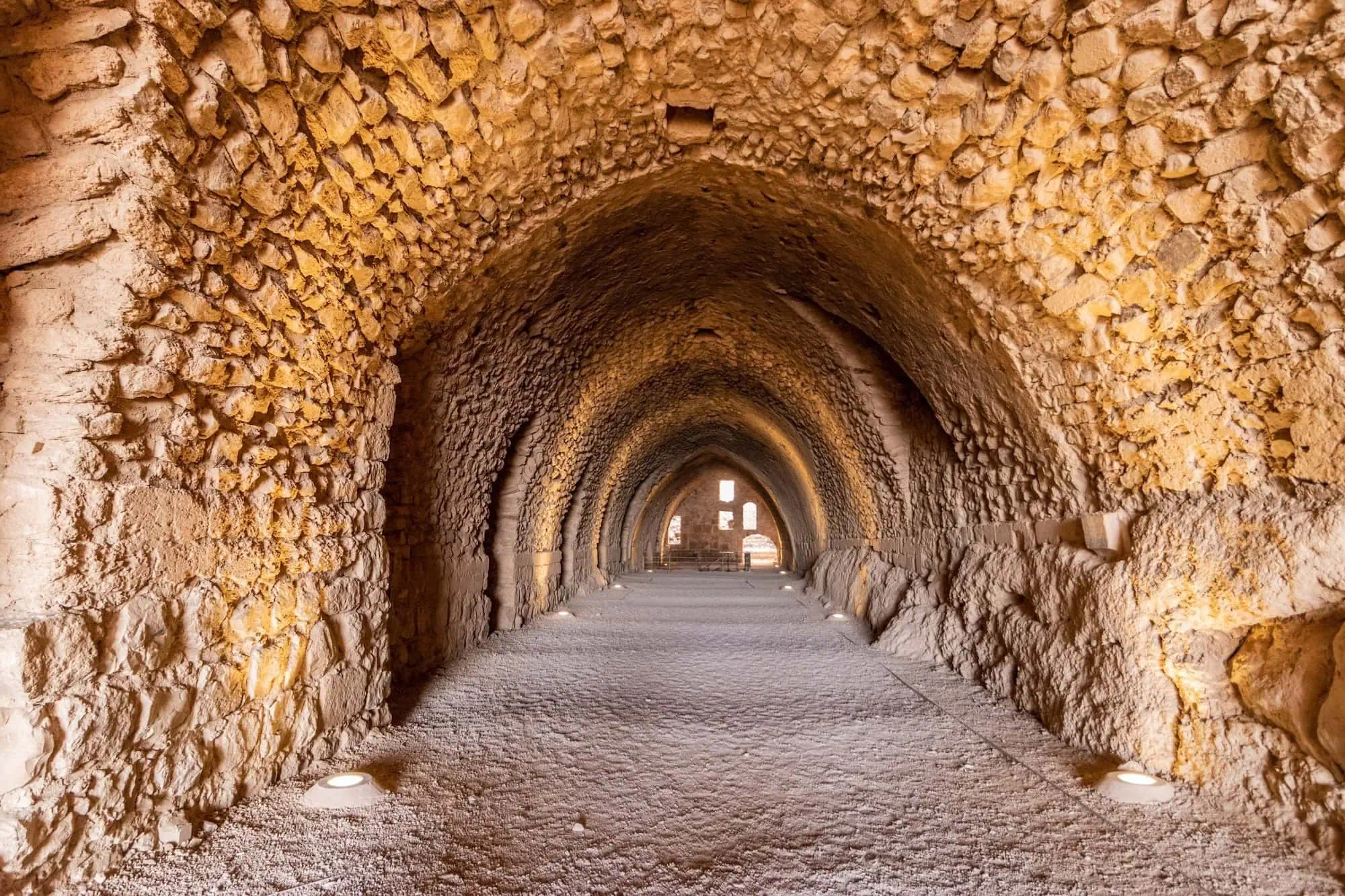
New residential quarters accommodated larger garrisons while administrative buildings served the castle’s role as a regional governmental center. The Mamluks maintained Karak’s function as a key fortress controlling southern trade routes, but adapted its operations to support their centralized military system.
Exploring the Castle Today
Walking through Karak Castle reveals nine centuries of continuous military use across multiple civilizations. Each level tells part of the fortress’s complex story, from Crusader great halls to Mamluk defensive innovations.
The entrance through the imposing outer walls leads visitors into a maze of corridors and chambers that once housed hundreds of soldiers, horses, and supplies. Stone archways frame spectacular views across the valley toward the Dead Sea, the same vantage points that allowed medieval defenders to spot approaching armies.
Underground passages extend seven levels into the bedrock, creating a subterranean world complete with kitchens, stables, and storage chambers. Narrow staircases worn smooth by centuries of use connect different sections, while ventilation shafts provided air circulation throughout the complex. Visitors should bring flashlights to explore the darker sections safely, as lighting remains limited in the deepest chambers.
The castle’s museum displays artifacts recovered during archaeological excavations, including weapons, pottery, and architectural fragments that illustrate daily life across different historical periods. Information panels provide context for the site’s significance within the broader history of the Crusades and medieval Middle Eastern conflicts.
Planning Your Visit to Karak Castle
Practical Information and Access
Karak Castle opens daily from 8:00 AM (08:00) to 6:30 PM (18:30) throughout the year, with extended hours during summer months. Entry fees are 0.25 JD for Jordanian nationals and 2 JD for foreign visitors, though the Jordan Pass provides free admission for international tourists.
The castle stands approximately 140 kilometers south of Amman, accessible via the Desert Highway or the more scenic King’s Highway route. Public transportation connects Amman to Karak city, though buses run infrequently. Private transportation provides greater flexibility for exploring the surrounding region.
What to Expect During Your Exploration
Comfortable walking shoes are essential for navigating uneven stone surfaces and steep staircases throughout the complex. The castle’s multiple levels require considerable walking, and some passages involve climbing or ducending narrow steps carved directly into the bedrock.
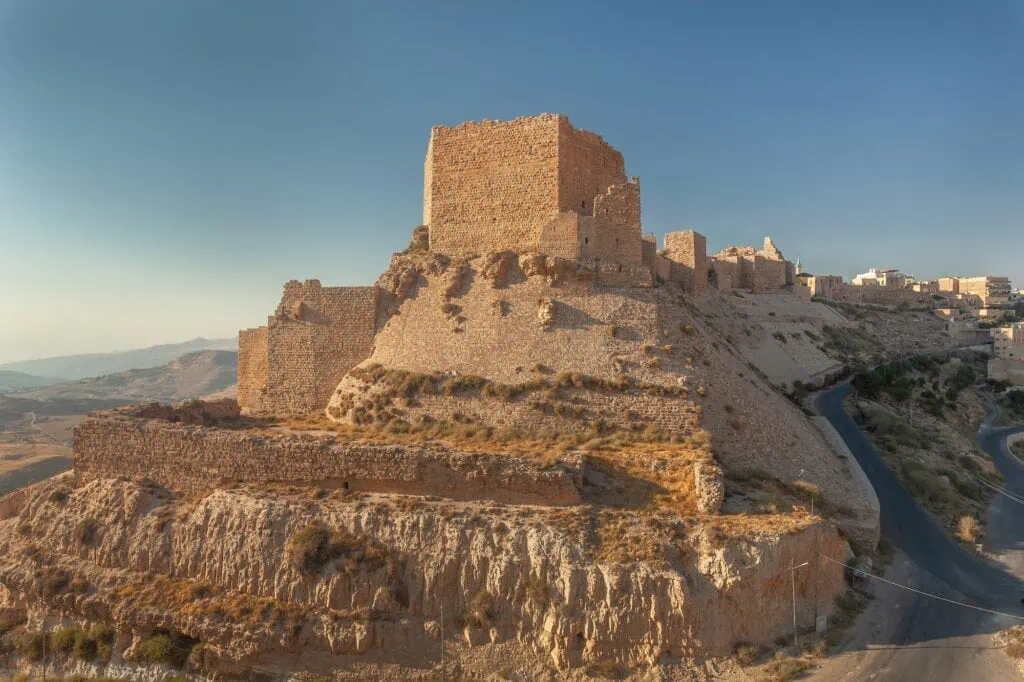
Early morning or late afternoon visits offer the best lighting for photography while avoiding midday heat. The exposed hilltop location provides little shade, so sun protection becomes important during warmer months. Winter visits can be quite cold due to the elevated location and stone construction.
Allow at least two hours for a thorough exploration of the main chambers and defensive structures. History enthusiasts often spend longer examining architectural details and reading informational displays throughout the site.
Beyond the Castle Walls
A visit to Karak Castle can easily be extended to include more of the region’s standout Jordan tourist attractions, adding depth and variety to your experience.
The modern city of Al Karak offers several complementary highlights. The Al Karak Archaeological Museum showcases artifacts spanning the region’s long history, while walks through the old city reveal traditional architecture, local craftsmanship, and everyday Jordanian life.
Nearby restaurants provide a chance to enjoy authentic Jordanian cuisine, combining local flavors with genuine hospitality. Beyond the city, the surrounding area includes additional historical sites and natural landscapes, making it ideal for travelers who want to explore beyond the main landmark.
Photography opportunities are equally rewarding. In addition to the castle itself, visitors can capture sweeping views over the Jordan Valley, the Dead Sea, and the surrounding desert terrain—landscapes that have shaped the region’s strategic importance for thousands of years. These diverse settings make Karak and its surroundings some of the most visually compelling Jordan tourist attractions.
Frequently Asked Questions
Most visitors need 2-3 hours to explore the main levels and chambers thoroughly.
The castle involves considerable walking on uneven surfaces and steep stairs.
Comfortable walking shoes, flashlight for underground passages, sun protection, and water.
Self-guided exploration is possible with informational displays throughout the site.
Early morning or late afternoon visits offer better lighting and cooler temperatures.
Karak represents one of the largest and best-preserved Crusader castles in Jordan.
Basic facilities including restrooms and a small visitor center are available.
The castle showcases Crusader, Ayyubid, and Mamluk architectural periods spanning 900 years.
Photography is permitted in most areas of the castle.
140 kilometers south of Amman, 180 kilometers north of Petra.
The fortress controlled the crucial King’s Highway trade route during major conflicts.
Several hotels and guesthouses operate in Karak city providing convenient bases.
Design Your Custom Tour
Explore Egypt and Jordan your way by selecting only the attractions you want to visit